

Exceptional Antiques.
Extraordinary Gifts.
Spotlight

Binoculars

Black Forest
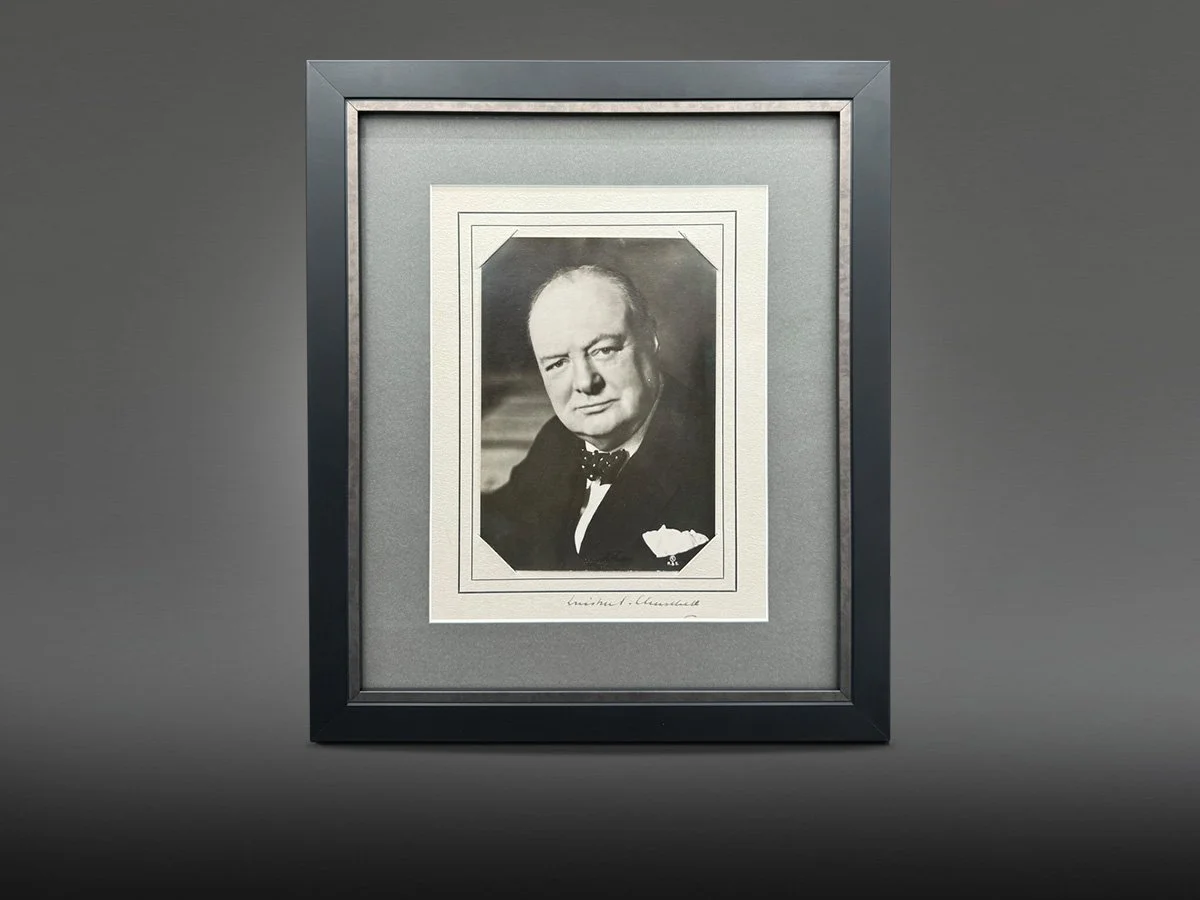
Churchill

Louis Vuitton

Clocks
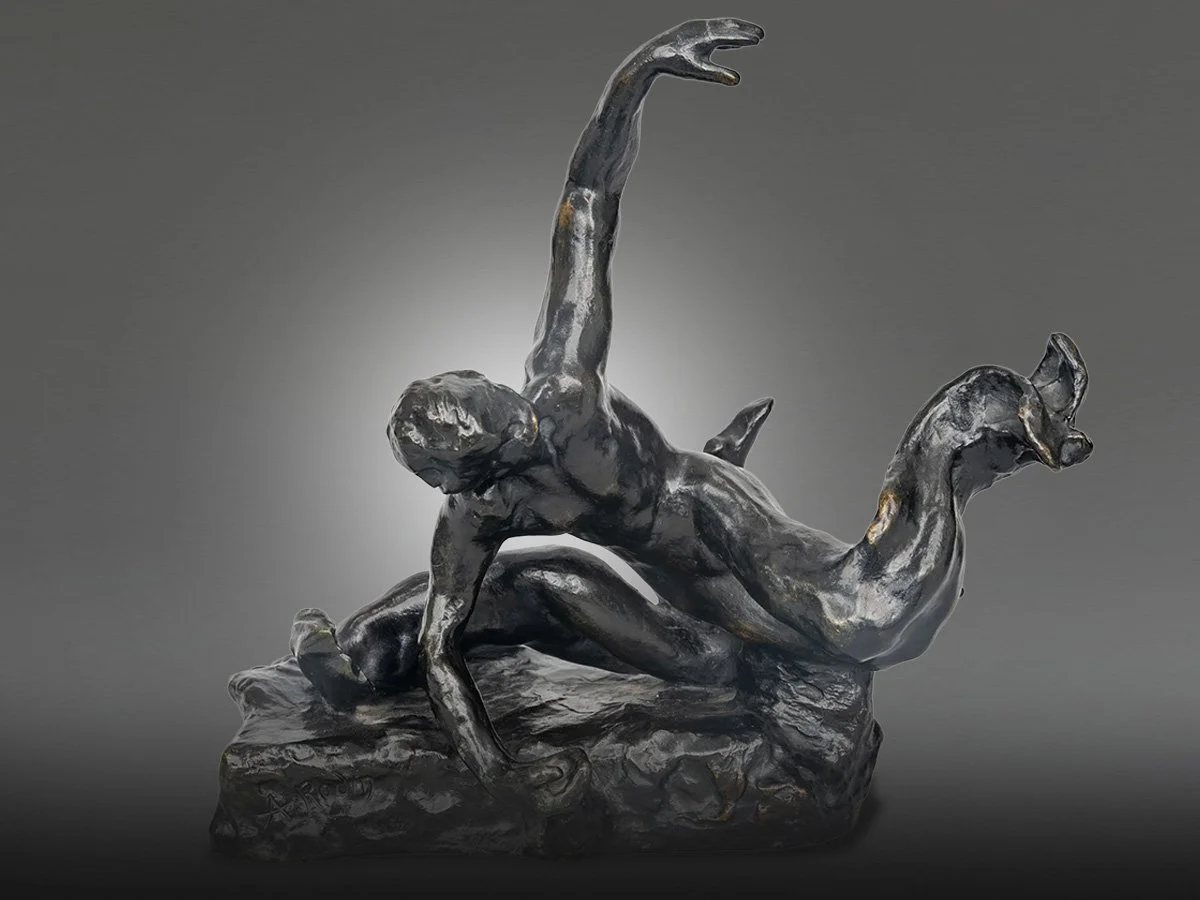
Sculptures & Works of Art
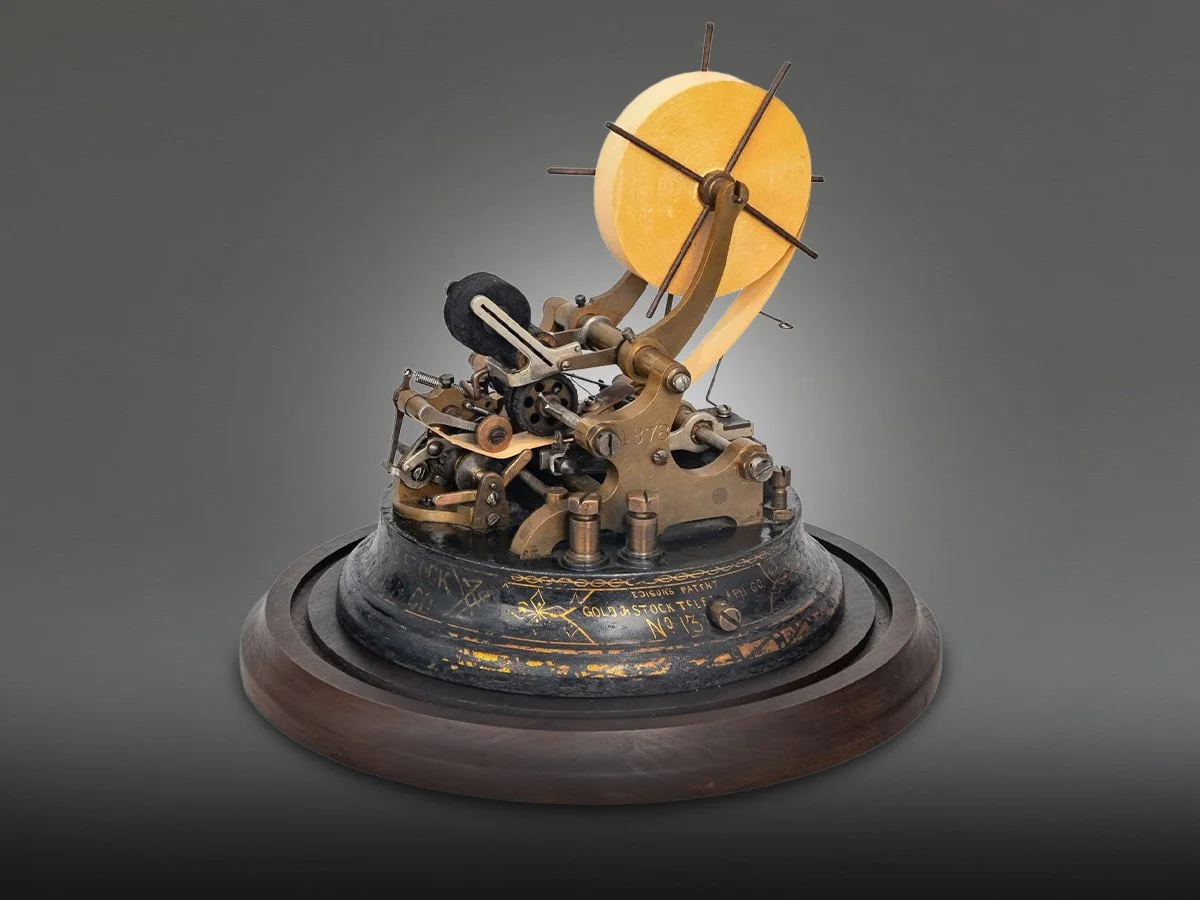
Vintage Stock Tickers
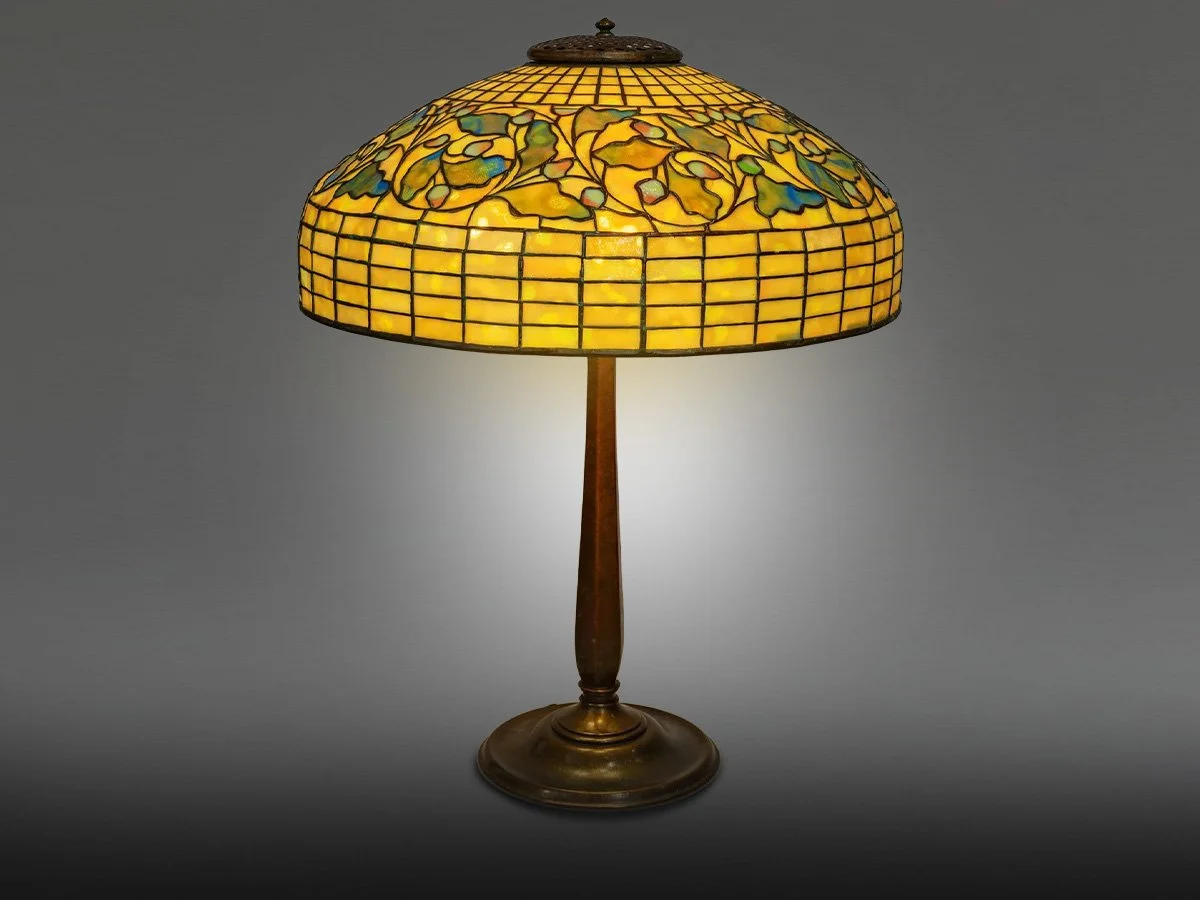
Tiffany Lamps

Contemporary Art

Aviation

Luxury Barware

Vintage Gaming

Silver

Models

Weaponry & Armor

Vintage Lighting

Crystal
Browse All
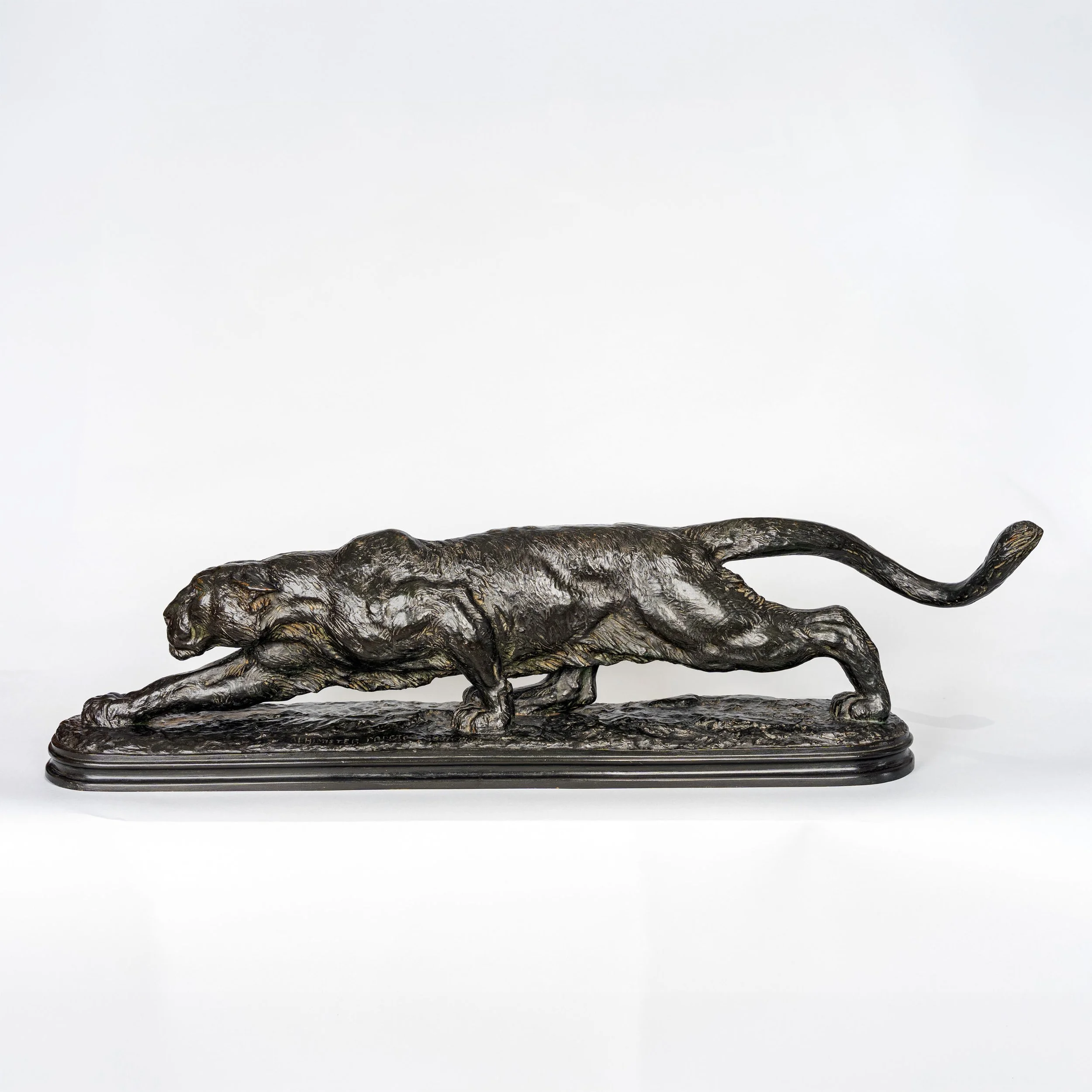
Alexander Phimister Proctor (1860-1950), Stalking Panther (The Roosevelt Panther), bronze with dark brown patina, cast by the lost-wax method by Roman Bronze Works, New York, circa 1902. Inscribed A PHIMISTER PROCTOR 1891·1902 and COPYRIGHT, stamped CIRE PERDUE CAST. ROMAN BRONZE WORKS N3. Height 9 1/2 inches, length 38 1/4 inches, depth 6 inches.
Proctor conceived the subject after an 1887 hunting expedition in the Flat Tops of the Colorado Rockies, where he shot an adult mountain lion and spent several days sketching it in camp. He modeled the panther in New York in 1891 and 1892, working from studies at the Central Park menagerie and from dissection, and refined the composition in Paris in the mid-1890s. The present form, with the tail lowered and more curved, the body closer to the ground and the jaw brought forward in line with the nose, is the third and best-known version of the model, a study of predatory motion toward unseen prey.
Roman Bronze Works, the first American foundry to specialize in lost wax casting, produced twenty-two known casts of the model between 1900 and 1915. The present bronze carries cast number 3. The example in the Metropolitan Museum of Art, cast number 4 of circa 1902, is published in the Proctor literature as the earliest known cast of that production, and the foundry ledgers at the Amon Carter Museum record the model from cast number 8, in 1904. The drilled and incised eyes of the present cast, with the iris and pupil defined, are characteristic of early lost-wax casts and distinguish them from the blank eyes of later production.
The model is known in the literature as the Roosevelt Panther. On February 26, 1909, members of President Theodore Roosevelt’s Tennis Cabinet, acting through Henry L. Stimson, presented a cast of the Panther to the President as their farewell gift at the close of his administration, and the group was photographed with the bronze at the President’s feet on the White House lawn on March 1, 1909. That cast, a Jno. Williams sand cast of a slightly later variant of the model, remains at Sagamore Hill, Roosevelt’s home at Oyster Bay.
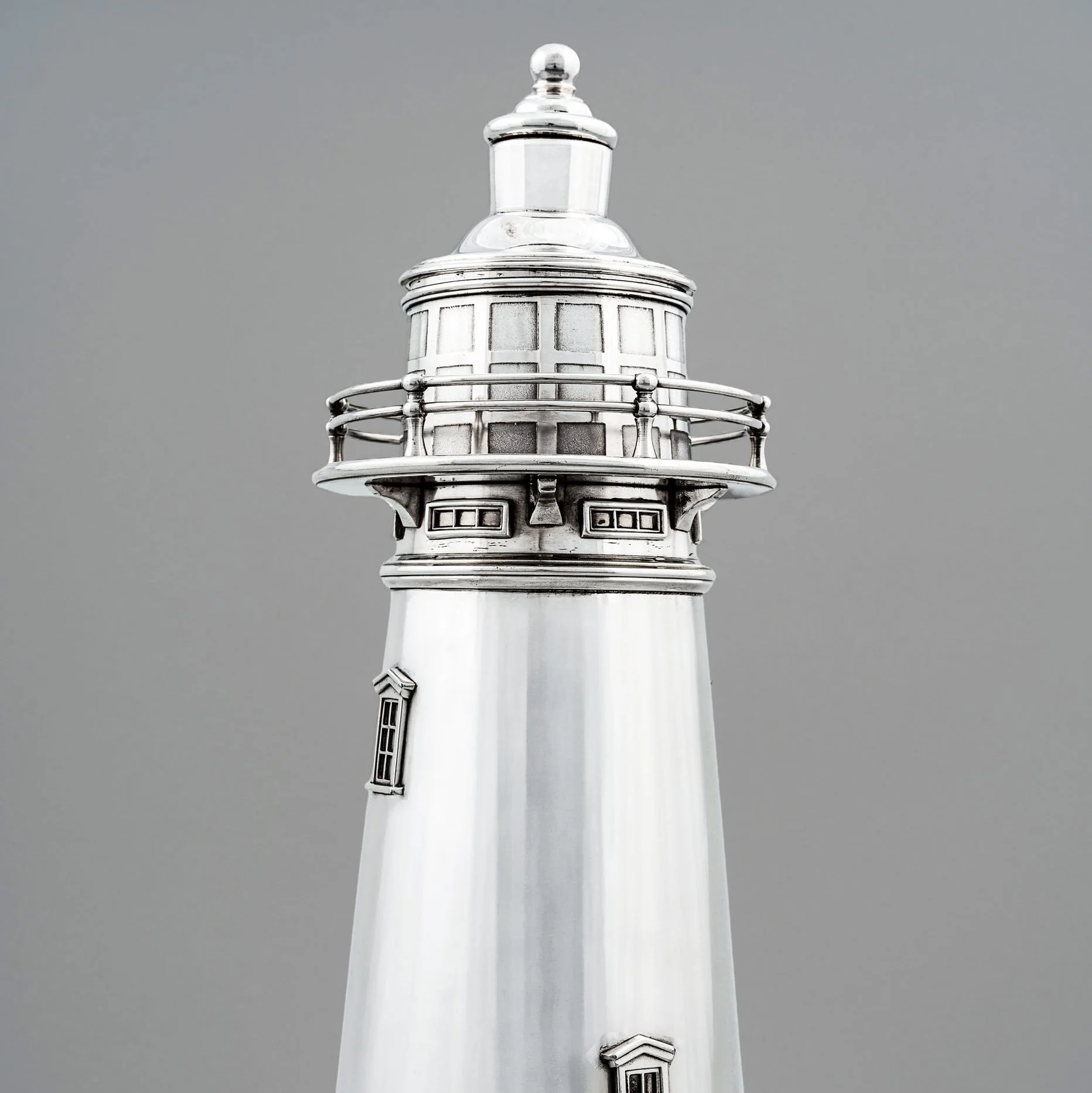
Among all the figural cocktail shakers of the great cocktail age, none is more celebrated than the lighthouse. Produced by the International Silver Company of Meriden, Connecticut, under its Meriden S.P. Co. mark and patented on January 11, 1927, the model takes its form from Boston Light, the first lighthouse established in America, and was made only briefly at the height of the era. An example is held in the Museum of Fine Arts, Boston.
The conceit is carried through with remarkable conviction. The tapering silver-plated tower rises past two pedimented dormer windows to the keeper's gallery, encircled by a freestanding double railing on turned stanchions above a run of portholes. The lantern room, with frosted panels simulating glazing, lifts off as the cap, and the domed roof with ball finial conceals the pourer. Filled and set on the bar, it is architecture; in hand, it is a working shaker of generous capacity. The shaker was made in two sizes, and this is the classic model 343; the monumental version towers over 20 inches and appears only rarely.
The model's fame has made it one of the most reproduced cocktail shakers, and later chrome and silver-plate copies circulate widely. The present example is an original of the period, bearing the correct Meriden S.P. Co. mark for International Silver, the model number, and the January 1927 patent date struck to the base.
This example has survived unusually well. The gallery railing, the first casualty on most surviving examples, is complete and true; the dormers and portholes are crisp, and the frosted lantern panels retain their original finish.
Condition: Excellent. Original frosted finish to the lantern panels. Gallery railing complete and straight. Plating bright with only minor surface wear consistent with age. Cap and pourer fitting correctly.
Height: 14 in.
Literature: Stephen Visakay, Vintage Bar Ware: Identification and Value Guide, Collector Books, 1997.
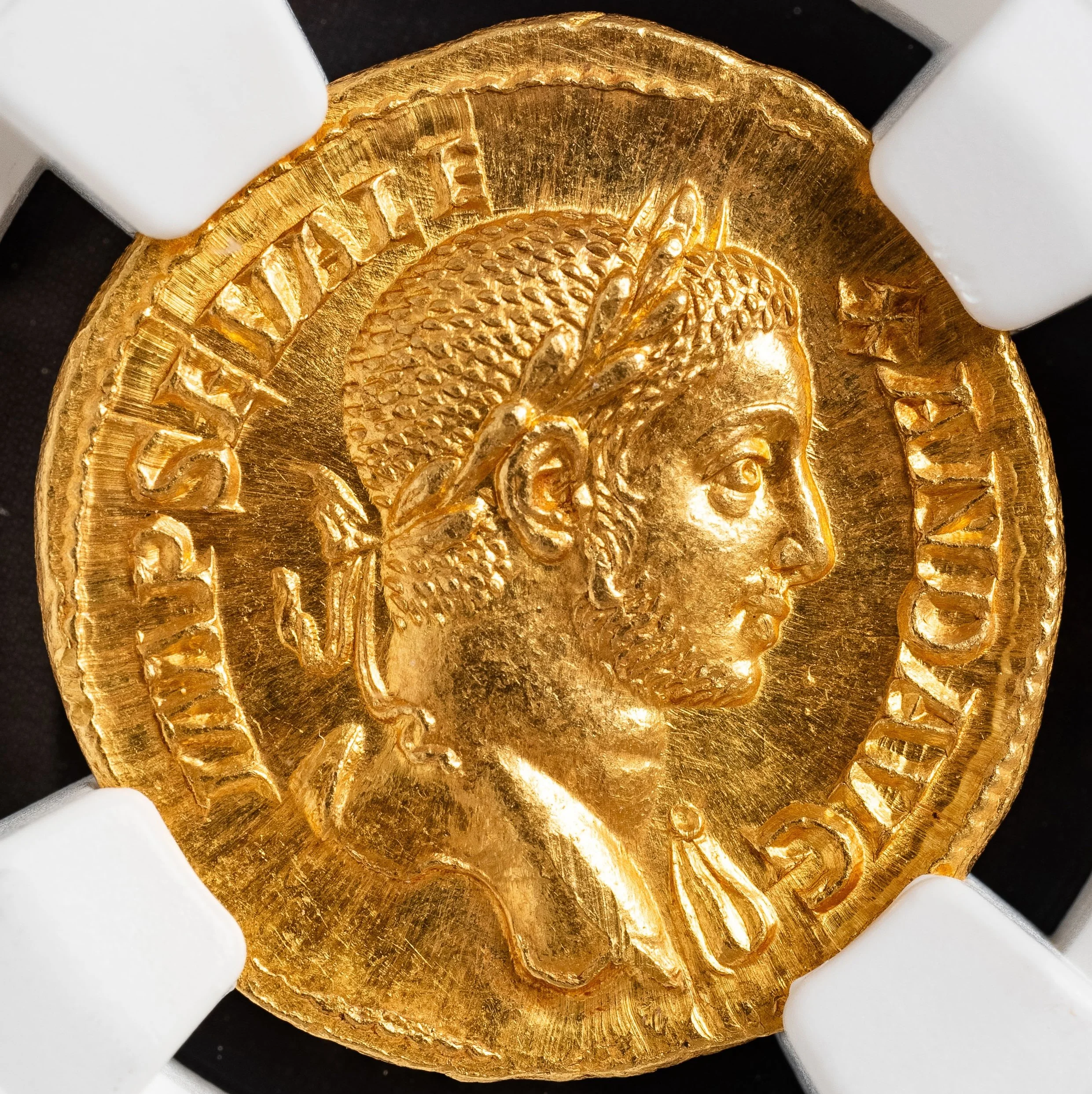
A gold aureus of the emperor Severus Alexander, struck at Rome in AD 230. The coin weighs 5.80 grams and is graded Choice Mint State by NGC, with a full strike of 5/5, surfaces of 4/5, and the Fine Style designation reserved for dies of superior artistry.
The obverse bears the laureate and draped bust of the young emperor facing right, seen from behind, with the drapery knotted at the left shoulder, within the legend IMP SEV ALEXAND AVG. The portrait shows the sensitive, almost boyish features that the mint of Rome gave the last of the Severan emperors, and the quality of the engraving is what earned the Fine Style designation.
The reverse shows the emperor in the guise of Romulus, the founder of Rome, radiate, in tunic and military cloak, advancing right with a transverse spear in his right hand and a trophy of captured arms over his left shoulder. The legend, P M TR P VIIII COS III P P, records his ninth tribunician power and third consulship and dates the coin precisely to AD 230. The date gives the image its edge. Severus Alexander had come to the throne at thirteen after the murder of his cousin Elagabalus and ruled under the guidance of his mother, Julia Mamaea. In 230, the armies of Ardashir I, founder of the new Sassanid Persian dynasty, broke into Roman Mesopotamia and laid siege to the frontier city of Nisibis, thereby facing its most serious eastern threat in a generation. A coin showing the gentle young emperor as Romulus, the city's founder and first warrior, was a statement of resolve from a regime under pressure. Alexander campaigned in the east in the years that followed, and his murder by his own troops in 235 ended the Severan dynasty and opened the fifty years of upheaval historians call the Crisis of the Third Century. This aureus belongs to the last confident moment before that storm.
Reference: RIC IV.2 103; Calicó 3121
Examples of the type are held by
The American Numismatic Society, New York
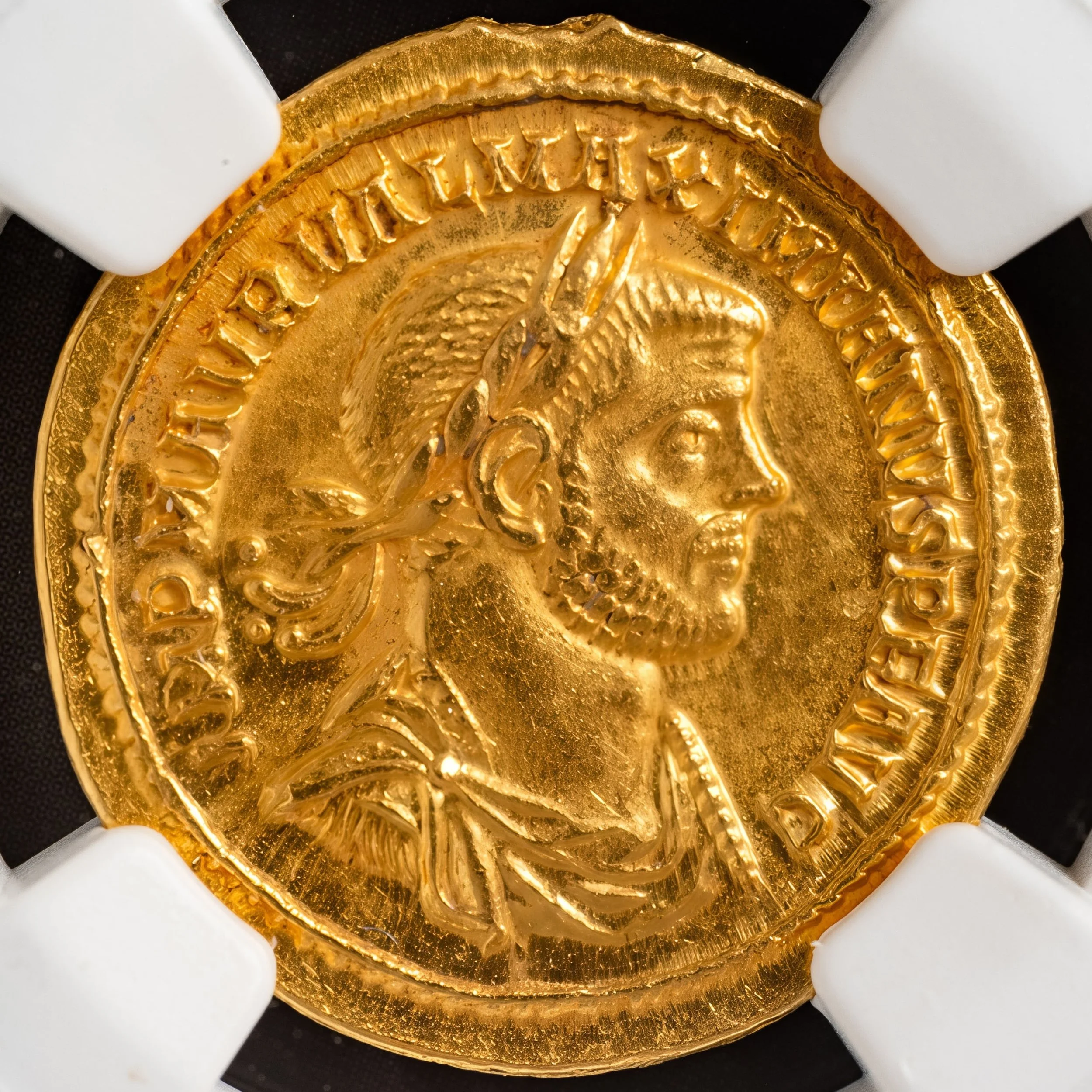
A gold aureus of the emperor Maximian, struck at the mint of Rome in the early years of his reign, circa AD 286–294. The coin weighs 5.50 grams and is graded Mint State by NGC, with a full strike of 5/5 and surfaces of 4/5.
The obverse carries the laureate, draped, and cuirassed bust of Maximian facing right, within his full titulature, IMP C M AVR VAL MAXIMIANVS P F AVG. The portrait is a fine example of the soldier-emperor style of the late third century, with the close-cropped beard and heavy features of a career officer from the Danube frontier.
The reverse shows Jupiter standing left, nude but for a chlamys over the shoulder, a thunderbolt in his outstretched right hand and a long scepter in his left, with the legend IOVI CONSERVAT AVGG, to Jupiter, preserver of the Augusti. The doubled G is the key to the coin. It marks the plural, two Augusti, and places the issue after 1 April 286, when Diocletian raised Maximian from Caesar to co-emperor and divided the burden of the empire between them. The partnership was sealed in religious terms. Diocletian took the title Iovius, placing himself under the protection of Jupiter, the ruler of the gods, while Maximian took Herculius, placing himself under Hercules, the god of strength who earned his divinity through labor. The choice fit the man. Maximian was the fighting half of the partnership, the commander who crushed the Bagaudae revolt in Gaul and campaigned across the Rhine while Diocletian governed, and the court orators praised him as a Hercules toiling on earth while Jupiter ruled above. A coin of the Herculian emperor honoring Jupiter is therefore the junior colleague paying public homage to the patron god of the senior, the theology of the two-man empire stated in a single reverse. The full weight of 5.50 grams reflects the strengthened standard of sixty aurei to the Roman pound, a weight increase introduced at the time of Maximian's elevation.
Reference: RIC V.2 492
Examples of the type are held by
The American Numismatic Society, New York
The Bibliothèque nationale de France, Paris
The American Numismatic Society specimen weighs 5.45 grams; the present coin, at 5.50 grams, is the heavier of the two.
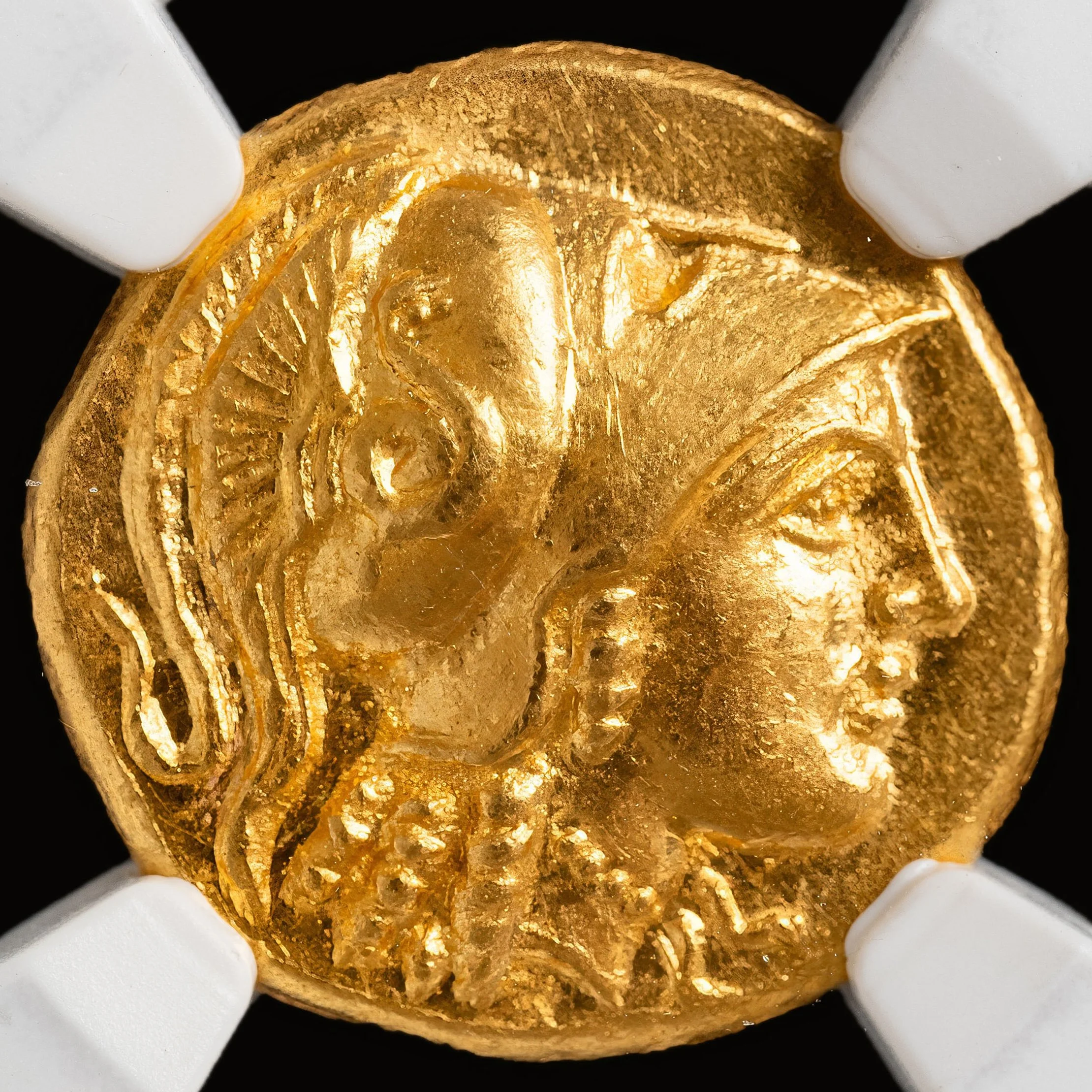
A gold stater of Alexander the Great, struck at an uncertain Greek or Macedonian mint in the decades following the king's death. The obverse carries the head of Athena in a triple-crested Corinthian helmet, the bowl decorated with a coiled serpent. The reverse shows Nike, the winged goddess of victory, standing with a wreath in her outstretched right hand and a stylis, the mast of a warship, in her left, beside the legend ΑΛΕΞΑΝΔΡΟΥ, "of Alexander." In the field are the two control marks of this issue, an ant to the left and an eight-rayed star below the goddess's wing.
The ant is among the rarest images on all Greek coinage, and its pairing with the star is thought to allude to some local legend whose meaning is now lost. The combination has intrigued scholars since the nineteenth century. Ludvig Müller, cataloging the Alexander coinage in 1855, read the two marks as civic badges and argued the coin was struck jointly by Apollonia and Acrothoon, two towns on Mount Athos, the ant standing for Apollonia and the star for the city at the holy mountain's summit. Modern scholarship no longer reads control marks as city emblems, and Martin Price returned the mint to "uncertain" in his 1991 corpus, but the puzzle Müller tried to solve remains open: a tiny insect, chosen deliberately by a mint official twenty-three centuries ago, for reasons no surviving source explains.
The type is scarce. Five examples are recorded in PELLA, the American Numismatic Society's corpus of the Alexander coinage in public collections, and market appearances are correspondingly few.
The coin weighs 8.59 grams and measures 18 millimeters. It is graded Choice Mint State (Ch MS) by NGC, Strike 5/5, Surface 4/5, certification 4877406-011.
Reference: Price 831.
Other examples of this type are held in the following collections:
The British Museum, London
The Ashmolean Museum, Oxford
The American Numismatic Society, New York
The Harvard Art Museums, Cambridge
The Münzkabinett, Vienna
At 8.59 grams, the present coin is identical in weight to the Ashmolean example, deposited at Oxford by New College in 1907.
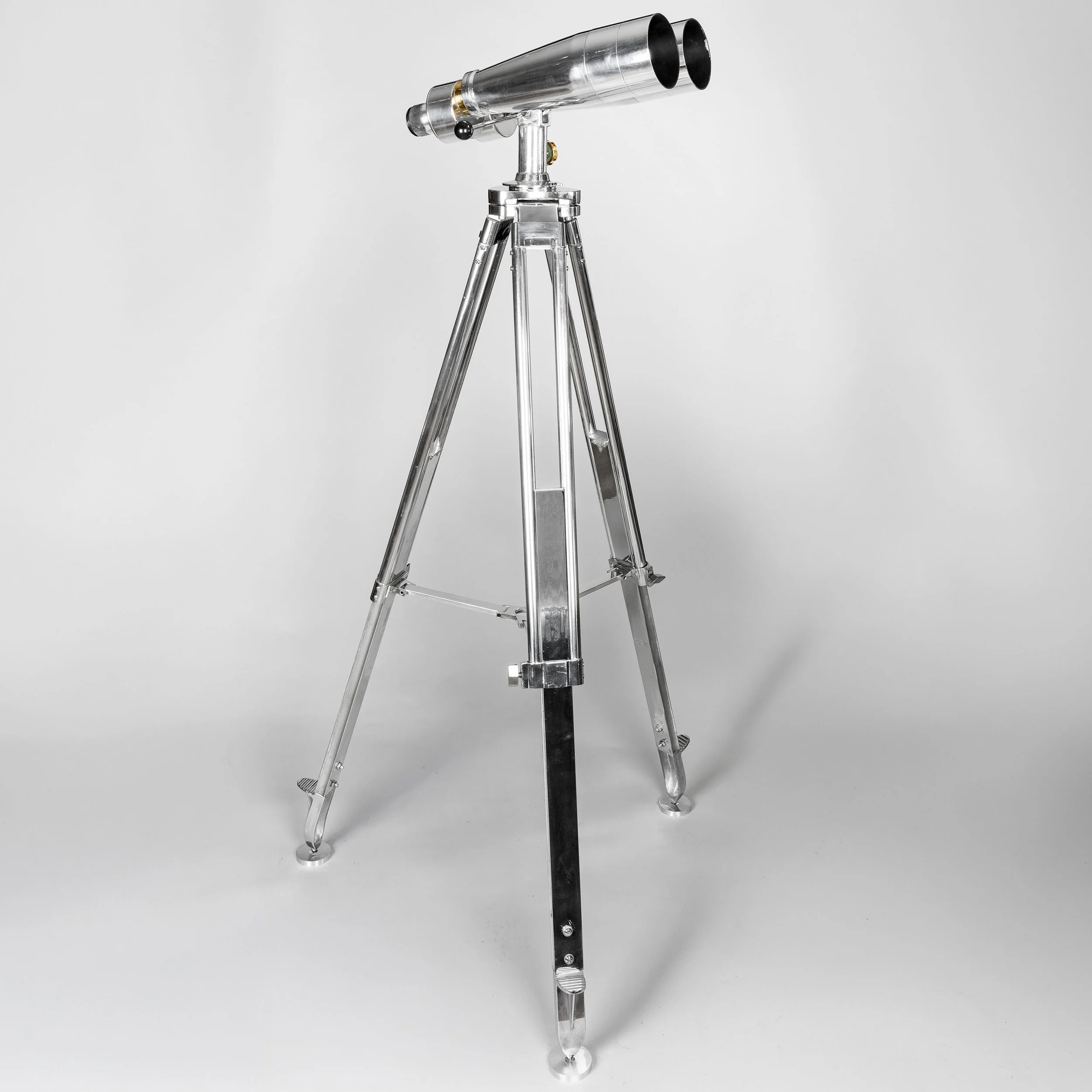
A pair of Fuji Meibo 15×80 big-eye binoculars by Fuji Photo Optical Co., Japan, 1950s, on an original 1970s field tripod. The data plate carries Fuji’s script Meibo trademark, the 15×80 designation with its 4-degree field, and the maker’s name in English with Made in Japan beneath.
The 15×80 is the classic Japanese big eye, the pattern carried aboard Imperial Navy ships in the Second World War and continued by Fuji after the war for maritime and coastal observation. At 15× magnification, the 80mm objectives deliver a steady, detailed image, equally suited to a horizon, a mountainside, or the night sky. Each objective gathers roughly three and a half times the light of a typical 42mm modern binocular, which is why these instruments are still sought out for their image.
The straight eyepieces each carry a knurled focusing ring, and brass collars join the prism housings to the barrels. The glasses sit directly on a single polished pillar, with a black ball lever at the side and a brass knurled clamp on the column, and long sunshades run forward over the objectives. The tripod has telescoping legs, a folding spreader, foot treadles, and disc feet.
The binoculars have been fully restored. They were completely disassembled, the optical glass polished, the optics reset to factory standards, and the body hand-polished to a mirror finish. The optics are bright and clear, and focus and movement operate smoothly.
Alexander Phimister Proctor (1860-1950), Stalking Panther (The Roosevelt Panther), bronze with dark brown patina, cast by the lost-wax method by Roman Bronze Works, New York, circa 1902. Inscribed A PHIMISTER PROCTOR 1891·1902 and COPYRIGHT, stamped CIRE PERDUE CAST. ROMAN BRONZE WORKS N3. Height 9 1/2 inches, length 38 1/4 inches, depth 6 inches.
Proctor conceived the subject after an 1887 hunting expedition in the Flat Tops of the Colorado Rockies, where he shot an adult mountain lion and spent several days sketching it in camp. He modeled the panther in New York in 1891 and 1892, working from studies at the Central Park menagerie and from dissection, and refined the composition in Paris in the mid-1890s. The present form, with the tail lowered and more curved, the body closer to the ground and the jaw brought forward in line with the nose, is the third and best-known version of the model, a study of predatory motion toward unseen prey.
Roman Bronze Works, the first American foundry to specialize in lost wax casting, produced twenty-two known casts of the model between 1900 and 1915. The present bronze carries cast number 3. The example in the Metropolitan Museum of Art, cast number 4 of circa 1902, is published in the Proctor literature as the earliest known cast of that production, and the foundry ledgers at the Amon Carter Museum record the model from cast number 8, in 1904. The drilled and incised eyes of the present cast, with the iris and pupil defined, are characteristic of early lost-wax casts and distinguish them from the blank eyes of later production.
The model is known in the literature as the Roosevelt Panther. On February 26, 1909, members of President Theodore Roosevelt’s Tennis Cabinet, acting through Henry L. Stimson, presented a cast of the Panther to the President as their farewell gift at the close of his administration, and the group was photographed with the bronze at the President’s feet on the White House lawn on March 1, 1909. That cast, a Jno. Williams sand cast of a slightly later variant of the model, remains at Sagamore Hill, Roosevelt’s home at Oyster Bay.
Among all the figural cocktail shakers of the great cocktail age, none is more celebrated than the lighthouse. Produced by the International Silver Company of Meriden, Connecticut, under its Meriden S.P. Co. mark and patented on January 11, 1927, the model takes its form from Boston Light, the first lighthouse established in America, and was made only briefly at the height of the era. An example is held in the Museum of Fine Arts, Boston.
The conceit is carried through with remarkable conviction. The tapering silver-plated tower rises past two pedimented dormer windows to the keeper's gallery, encircled by a freestanding double railing on turned stanchions above a run of portholes. The lantern room, with frosted panels simulating glazing, lifts off as the cap, and the domed roof with ball finial conceals the pourer. Filled and set on the bar, it is architecture; in hand, it is a working shaker of generous capacity. The shaker was made in two sizes, and this is the classic model 343; the monumental version towers over 20 inches and appears only rarely.
The model's fame has made it one of the most reproduced cocktail shakers, and later chrome and silver-plate copies circulate widely. The present example is an original of the period, bearing the correct Meriden S.P. Co. mark for International Silver, the model number, and the January 1927 patent date struck to the base.
This example has survived unusually well. The gallery railing, the first casualty on most surviving examples, is complete and true; the dormers and portholes are crisp, and the frosted lantern panels retain their original finish.
Condition: Excellent. Original frosted finish to the lantern panels. Gallery railing complete and straight. Plating bright with only minor surface wear consistent with age. Cap and pourer fitting correctly.
Height: 14 in.
Literature: Stephen Visakay, Vintage Bar Ware: Identification and Value Guide, Collector Books, 1997.
A gold aureus of the emperor Severus Alexander, struck at Rome in AD 230. The coin weighs 5.80 grams and is graded Choice Mint State by NGC, with a full strike of 5/5, surfaces of 4/5, and the Fine Style designation reserved for dies of superior artistry.
The obverse bears the laureate and draped bust of the young emperor facing right, seen from behind, with the drapery knotted at the left shoulder, within the legend IMP SEV ALEXAND AVG. The portrait shows the sensitive, almost boyish features that the mint of Rome gave the last of the Severan emperors, and the quality of the engraving is what earned the Fine Style designation.
The reverse shows the emperor in the guise of Romulus, the founder of Rome, radiate, in tunic and military cloak, advancing right with a transverse spear in his right hand and a trophy of captured arms over his left shoulder. The legend, P M TR P VIIII COS III P P, records his ninth tribunician power and third consulship and dates the coin precisely to AD 230. The date gives the image its edge. Severus Alexander had come to the throne at thirteen after the murder of his cousin Elagabalus and ruled under the guidance of his mother, Julia Mamaea. In 230, the armies of Ardashir I, founder of the new Sassanid Persian dynasty, broke into Roman Mesopotamia and laid siege to the frontier city of Nisibis, thereby facing its most serious eastern threat in a generation. A coin showing the gentle young emperor as Romulus, the city's founder and first warrior, was a statement of resolve from a regime under pressure. Alexander campaigned in the east in the years that followed, and his murder by his own troops in 235 ended the Severan dynasty and opened the fifty years of upheaval historians call the Crisis of the Third Century. This aureus belongs to the last confident moment before that storm.
Reference: RIC IV.2 103; Calicó 3121
Examples of the type are held by
The American Numismatic Society, New York
A gold aureus of the emperor Maximian, struck at the mint of Rome in the early years of his reign, circa AD 286–294. The coin weighs 5.50 grams and is graded Mint State by NGC, with a full strike of 5/5 and surfaces of 4/5.
The obverse carries the laureate, draped, and cuirassed bust of Maximian facing right, within his full titulature, IMP C M AVR VAL MAXIMIANVS P F AVG. The portrait is a fine example of the soldier-emperor style of the late third century, with the close-cropped beard and heavy features of a career officer from the Danube frontier.
The reverse shows Jupiter standing left, nude but for a chlamys over the shoulder, a thunderbolt in his outstretched right hand and a long scepter in his left, with the legend IOVI CONSERVAT AVGG, to Jupiter, preserver of the Augusti. The doubled G is the key to the coin. It marks the plural, two Augusti, and places the issue after 1 April 286, when Diocletian raised Maximian from Caesar to co-emperor and divided the burden of the empire between them. The partnership was sealed in religious terms. Diocletian took the title Iovius, placing himself under the protection of Jupiter, the ruler of the gods, while Maximian took Herculius, placing himself under Hercules, the god of strength who earned his divinity through labor. The choice fit the man. Maximian was the fighting half of the partnership, the commander who crushed the Bagaudae revolt in Gaul and campaigned across the Rhine while Diocletian governed, and the court orators praised him as a Hercules toiling on earth while Jupiter ruled above. A coin of the Herculian emperor honoring Jupiter is therefore the junior colleague paying public homage to the patron god of the senior, the theology of the two-man empire stated in a single reverse. The full weight of 5.50 grams reflects the strengthened standard of sixty aurei to the Roman pound, a weight increase introduced at the time of Maximian's elevation.
Reference: RIC V.2 492
Examples of the type are held by
The American Numismatic Society, New York
The Bibliothèque nationale de France, Paris
The American Numismatic Society specimen weighs 5.45 grams; the present coin, at 5.50 grams, is the heavier of the two.
A gold stater of Alexander the Great, struck at an uncertain Greek or Macedonian mint in the decades following the king's death. The obverse carries the head of Athena in a triple-crested Corinthian helmet, the bowl decorated with a coiled serpent. The reverse shows Nike, the winged goddess of victory, standing with a wreath in her outstretched right hand and a stylis, the mast of a warship, in her left, beside the legend ΑΛΕΞΑΝΔΡΟΥ, "of Alexander." In the field are the two control marks of this issue, an ant to the left and an eight-rayed star below the goddess's wing.
The ant is among the rarest images on all Greek coinage, and its pairing with the star is thought to allude to some local legend whose meaning is now lost. The combination has intrigued scholars since the nineteenth century. Ludvig Müller, cataloging the Alexander coinage in 1855, read the two marks as civic badges and argued the coin was struck jointly by Apollonia and Acrothoon, two towns on Mount Athos, the ant standing for Apollonia and the star for the city at the holy mountain's summit. Modern scholarship no longer reads control marks as city emblems, and Martin Price returned the mint to "uncertain" in his 1991 corpus, but the puzzle Müller tried to solve remains open: a tiny insect, chosen deliberately by a mint official twenty-three centuries ago, for reasons no surviving source explains.
The type is scarce. Five examples are recorded in PELLA, the American Numismatic Society's corpus of the Alexander coinage in public collections, and market appearances are correspondingly few.
The coin weighs 8.59 grams and measures 18 millimeters. It is graded Choice Mint State (Ch MS) by NGC, Strike 5/5, Surface 4/5, certification 4877406-011.
Reference: Price 831.
Other examples of this type are held in the following collections:
The British Museum, London
The Ashmolean Museum, Oxford
The American Numismatic Society, New York
The Harvard Art Museums, Cambridge
The Münzkabinett, Vienna
At 8.59 grams, the present coin is identical in weight to the Ashmolean example, deposited at Oxford by New College in 1907.
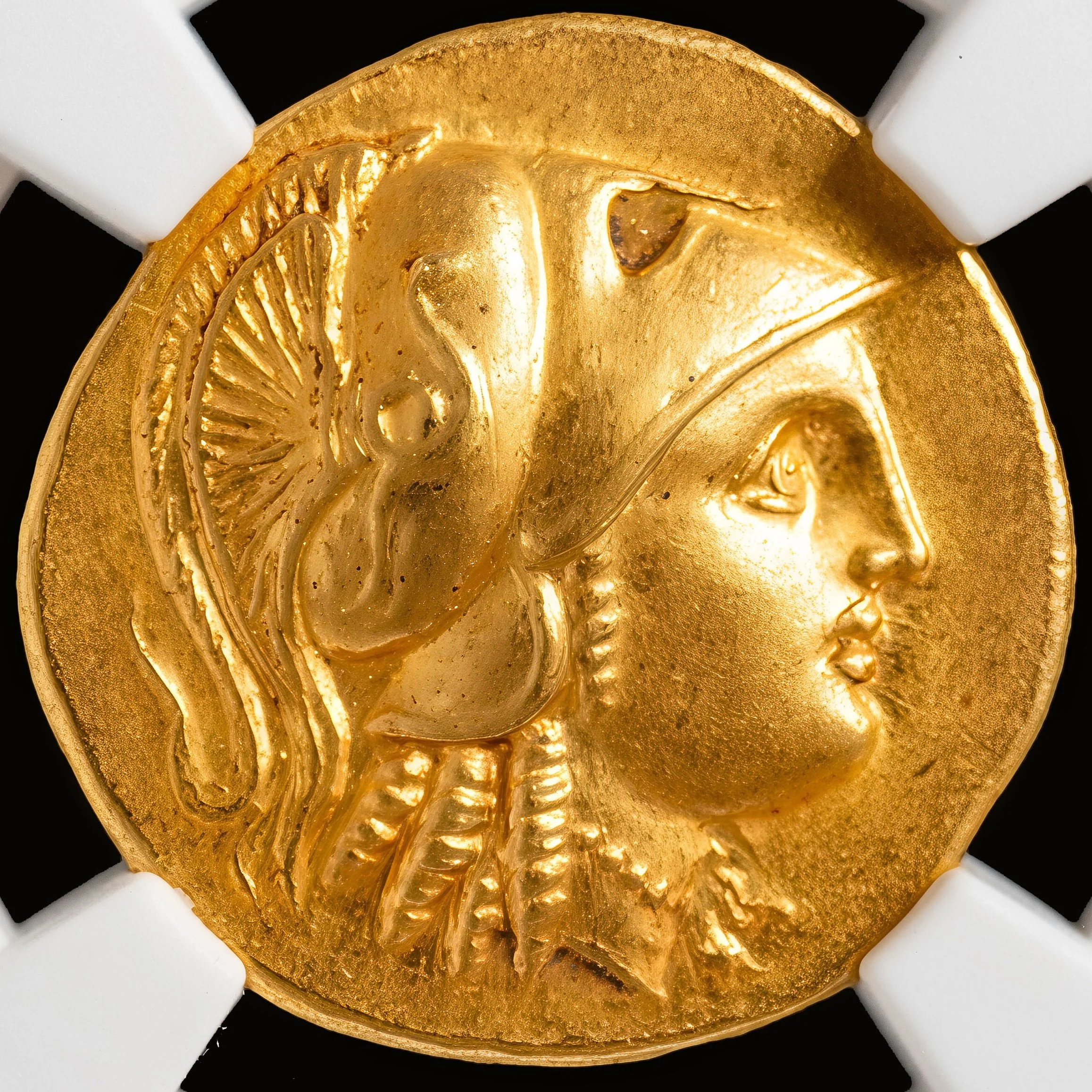
A gold stater of Alexander the Great, struck at the royal mint of Amphipolis in the late fourth century BC. The obverse carries the head of Athena in a triple-crested Corinthian helmet, the bowl decorated with a coiled serpent, her hair falling in corkscrew curls over her left shoulder. The reverse shows Nike, the winged goddess of victory, standing with a wreath in her outstretched right hand and a stylis, the mast of a warship, cradled in her left arm, beside the legend ΑΛΕΞΑΝΔΡΟΥ, "of Alexander." In the left field is the control mark of this issue, a trident head, the emblem of Poseidon.
Alexander introduced the Athena and Nike stater as the gold coinage of his empire, and the mints continued striking it in his name long after his death in 323 BC. Martin Price dated this issue to circa 330 to 320 BC, spanning the king's final years, while more recent scholarship places it under Cassander, circa 310 to 301 BC, the ruler who governed Macedon after Alexander's line was extinguished yet kept the conqueror's name on his gold. Either way, the coin belongs to the great Macedonian series struck at Amphipolis, the principal royal mint, within living memory of Alexander himself.
The coin weighs 8.59 grams and measures 19 millimeters. It is graded MS★ by NGC: Strike 5/5, Surface 4/5; the star denotes exceptional eye appeal. Certification 4885147-009.
Reference: Price 175.
Other examples of this type are held in the following collections:
The British Museum, London
The American Numismatic Society, New York
The Münzkabinett, Berlin
The Swiss National Museum, Zurich
At 8.59 grams, the present coin sits at the center of the recorded weight range for the type.
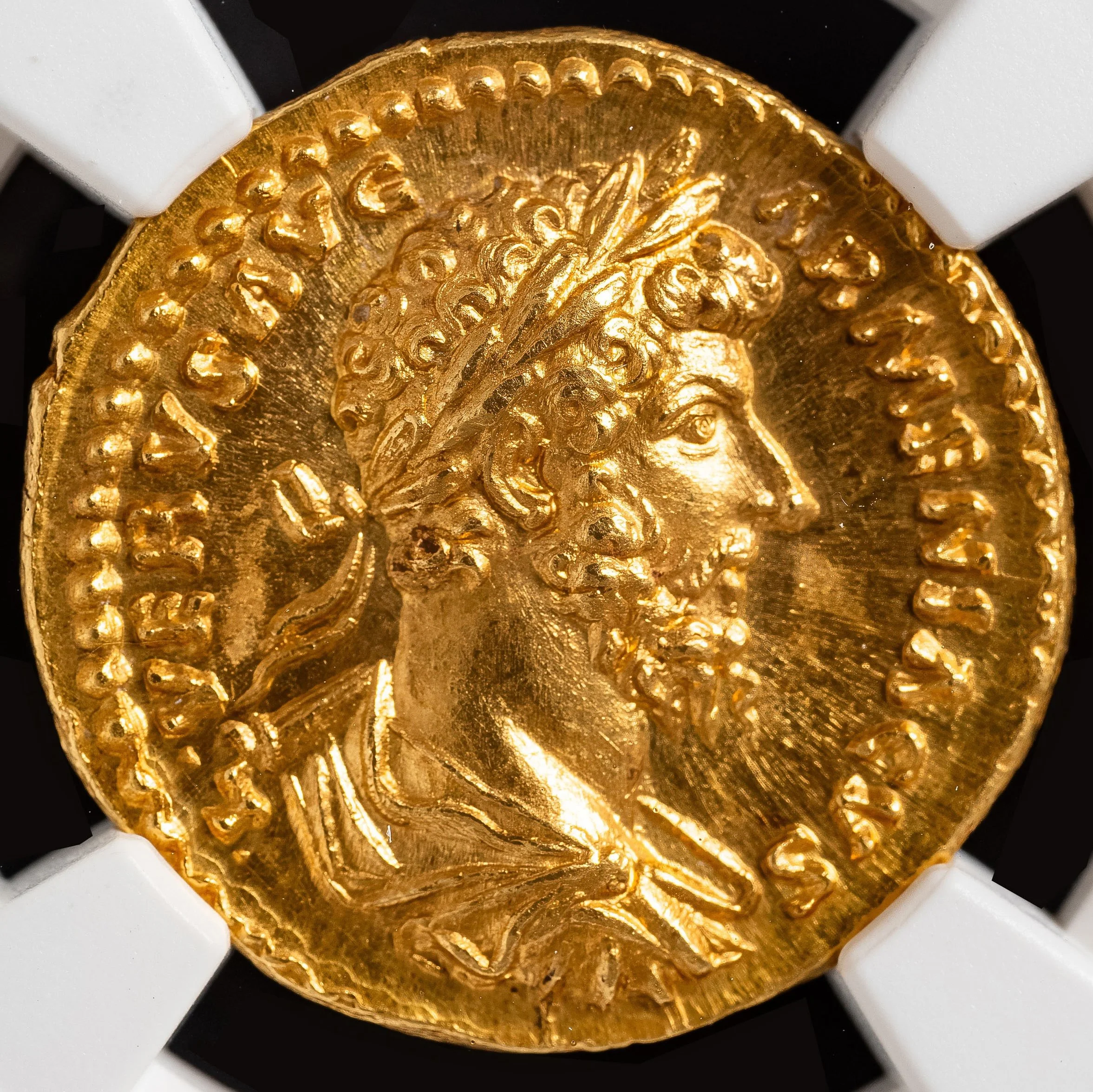
A Roman gold aureus of Lucius Verus, struck at Rome in AD 164 and certified by NGC as Gem Mint State, Strike 5/5, Surface 5/5, with the Fine Style designation, the highest combination of grades NGC Ancients awards short of a star. The coin weighs 7.28 grams, certification number 2100935-001.
The obverse bears the laureate, draped, and cuirassed bust of Verus facing right, the wreath ribbon trailing at the nape, with the legend L VERVS AVG ARMENIACVS. The reverse reads TR P IIII IMP II COS II and shows Victory, winged and half-draped, standing front with her head turned right, inscribing VIC AVG on a shield she steadies atop a palm tree.
The coin commemorates the campaign that earned Verus his title. When the Parthian king Vologases IV invaded Armenia in 161, expelling its Roman client king, Marcus Aurelius sent his co-emperor east. Roman forces under Statius Priscus retook Armenia and captured its capital, Artaxata, in 163, and Verus was hailed Armeniacus, a title he accepted with some reluctance, having directed the war from Antioch rather than the front. The shield Victory inscribes on this reverse is the official record of that victory, rendered in gold.
Portraits of Verus in this quality are seldom encountered. The engraving is unusually sensitive, the tight curls and full beard of the young emperor rendered with the depth of relief that earned the Fine Style designation, and the surfaces are essentially as struck. References: Calicó 2177; RIC III 525; BMC 296 note; Cohen 247 var.
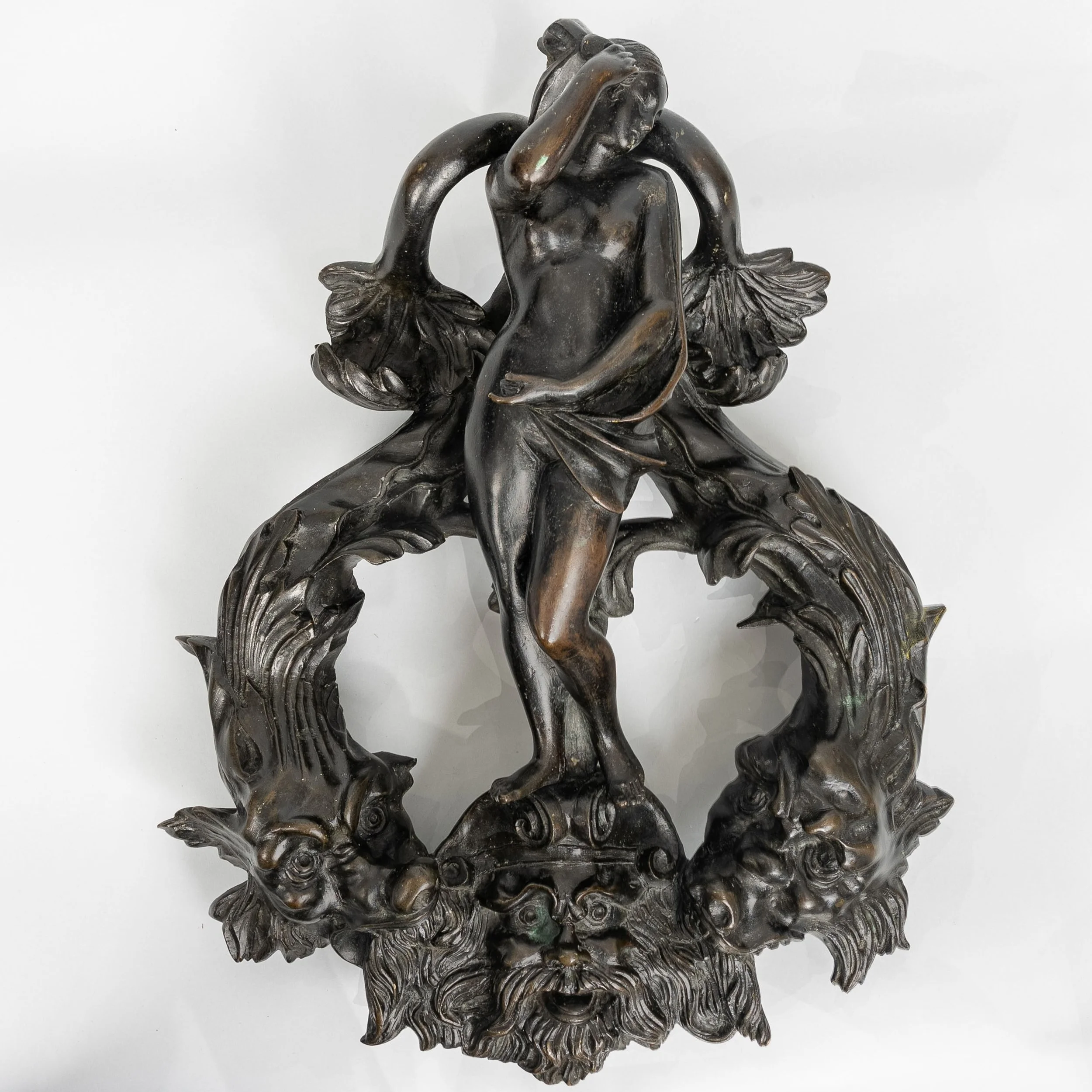
A large Italian bronze door knocker, or battente, of Venus Anadyomene, after a model of circa 1600, probably Venetian. The goddess is modeled fully in the round, one hand raised to her hair as she rises from the sea, drapery gathered at her hips, standing on a scrolled console above a bearded mask of Oceanus. Two dolphins rise at her sides, their arched bodies forming the loop of the knocker and their tails breaking into acanthus. Measuring 17 1/2 inches high by 14 inches wide and weighing approximately 38 pounds, it is a piece of sculpture that has spent its life on a door.
The construction is that of the earliest examples of the type. Figure and frame were cast together in a single, thick-walled pour by the lost-wax process, with the interior left open and irregular. The forged iron striker was set into the mould and the bronze poured around it, so the knocker was conceived as a working object from the wax stage, and the striker head, forged square, has been rounded by years of use against the strike boss on the reverse. The chasing is selective in the seventeenth-century manner: the hair worked in fine detail, the fingers and toes finished down to their nails, other passages left as cast. The cast is, on the evidence of its construction, of the seventeenth or early eighteenth century.
The surface tells the same story. The black patina is rubbed through to a warm bronze exactly where hands have gripped it for generations, along the goddess's leg and on the noses of the dolphins, while the reverse carries the green corrosion and iron staining of long service out of doors. Traces of old door paint survive in the crevices of the pivot lugs, left by painters working around a knocker that was never taken down, and the pivot bolt was replaced later, as fittings on a door in daily use are.
A cast of this model hung on the doors of the Hotel Porges in Paris, the mansion built in 1892 for Jules Porges, the diamond magnate whose Kimberley mining company was absorbed into De Beers in the great amalgamation of 1889. The house was built to hold his collection, its gallery hung with Rembrandt, Rubens, Van Dyck and Frans Hals, with Renaissance bronzes and enamels beneath them, and it was on the doors of that house that Eugène Atget photographed the model around 1901, paired with a pendant Neptune on the opposite leaf. The type belongs to the great tradition of figural knockers made for Venetian palace doors in the decades around 1600, when the finest were treated as sculpture and passed among collections accordingly.

A French Industrial Series automaton clock in the form of a submarine, by André Guilmet, Paris, circa 1890. The black patinated hull, riveted throughout, rides atop a cast-bronze sea on an oval plinth of green onyx with a gilt rim. The silvered conning tower houses the movement behind a gilt-bezelled enamel dial, and the deck carries a full complement of fittings in gilt and silvered bronze: boarding ladders, railings, an anchor with chains, a copper vent cowl, a binnacle compass, and a stern davit crane with a winding wheel. A funnel-form thermometer stands amidships, its scale printed in English, indicating an example made for the export market. It measures 23 inches long, 15 inches high, and 10 inches deep, 58.5 by 38 by 25.5 cm.
The clock is a two-motion automaton. When wound, the conning tower rotates, and the stern propeller turns beneath the counter, both driven by the same train that powers the clock, so the vessel is animated whenever it is running.
The submarine is the rarest subject in Guilmet's nautical group, which also included a quarterdeck, a lighthouse, and a battleship. When this model was designed, no such vessel existed in service yet, and its true ancestor is literary. Jules Verne's Twenty Thousand Leagues Under the Sea of 1870 gave the public the Nautilus, an elongated cigar-shaped hull of riveted plates with a raised pilot house and a platform where Captain Nemo takes the air, and the illustrations by Alphonse de Neuville and Édouard Riou for the first illustrated Hetzel edition fixed that image in the popular imagination. The clock reads as the Nautilus made domestic, the same spindle hull, raised tower, and railed deck, translated to the drawing room. Reality only caught up afterward: France launched the Gymnote, her first working electric submarine, in 1888, and the larger Gustave Zédé followed in 1893. This is a mythical ship assembled from the fittings of real ones, machinery presented as spectacle.
The example survives in exceptional condition, the gilding bright, the patina unrubbed, and the chains and deck fittings complete. The series is discussed in Derek Roberts, Mystery, Novelty and Fantasy Clocks, 1999, pp. 253-270.
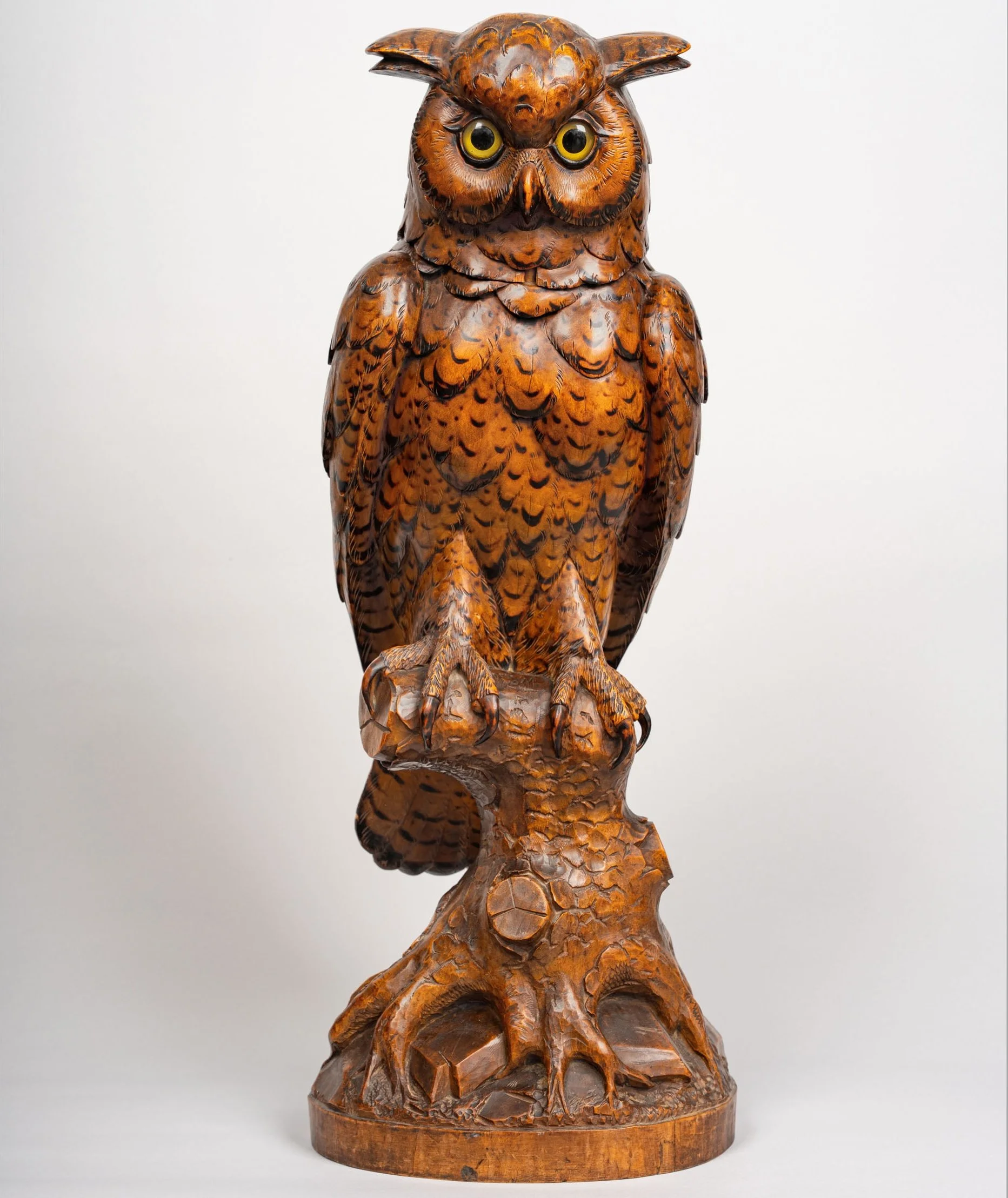
A life-sized carved eagle owl, attributed to the Ruef Brothers of Brienz, Switzerland, circa 1880, standing 28 inches high. The bird is carved in linden wood and perched upright on a cut branch rising from a rocky outcrop, the whole cut from a single block with a turned circular base. Ear tufts raised, wings folded, talons gripping the branch, it fixes the viewer with yellow glass eyes set into deeply carved facial discs.
What distinguishes this owl is the treatment of the plumage. Every feather is carved individually and then worked with a heated iron, the edges and barring scorched into the wood so that the graduated breast, the mottled crown, and the darker flight feathers read in tone as well as relief. This burning of the surface is the technique most closely associated with the Ruef workshop, whose birds of prey were a specialty of the Brienz trade, and the attribution rests on that handling together with the composition and the scale. The piece is unsigned.
The head is made separately and lifts off at the neck, a construction the carver has concealed within the ruff of feathers at the throat. It is not hinged, and the body is not hollowed out for use as a tobacco jar or humidor, which is consistent with the piece's size. The separate head allowed the carver to work the face and the body from blocks of different grain, and it is a feature worth knowing when a piece of this model is examined.
Carving of this ambition came out of Brienz in the Bernese Oberland, where the Ruef Brothers worked alongside Johann Huggler, Hans Huggler-Wyss, and Walter Mader in the decades when the international exhibitions at Vienna, Philadelphia, Paris, and Chicago carried Swiss carving to an American and English clientele. We discuss the Ruef workshop and the scorching technique in our article on the masters of the Black Forest, and in the reference we co-authored on the subject, Swiss Carvings: The Art of the Black Forest, 1820 to 1940.
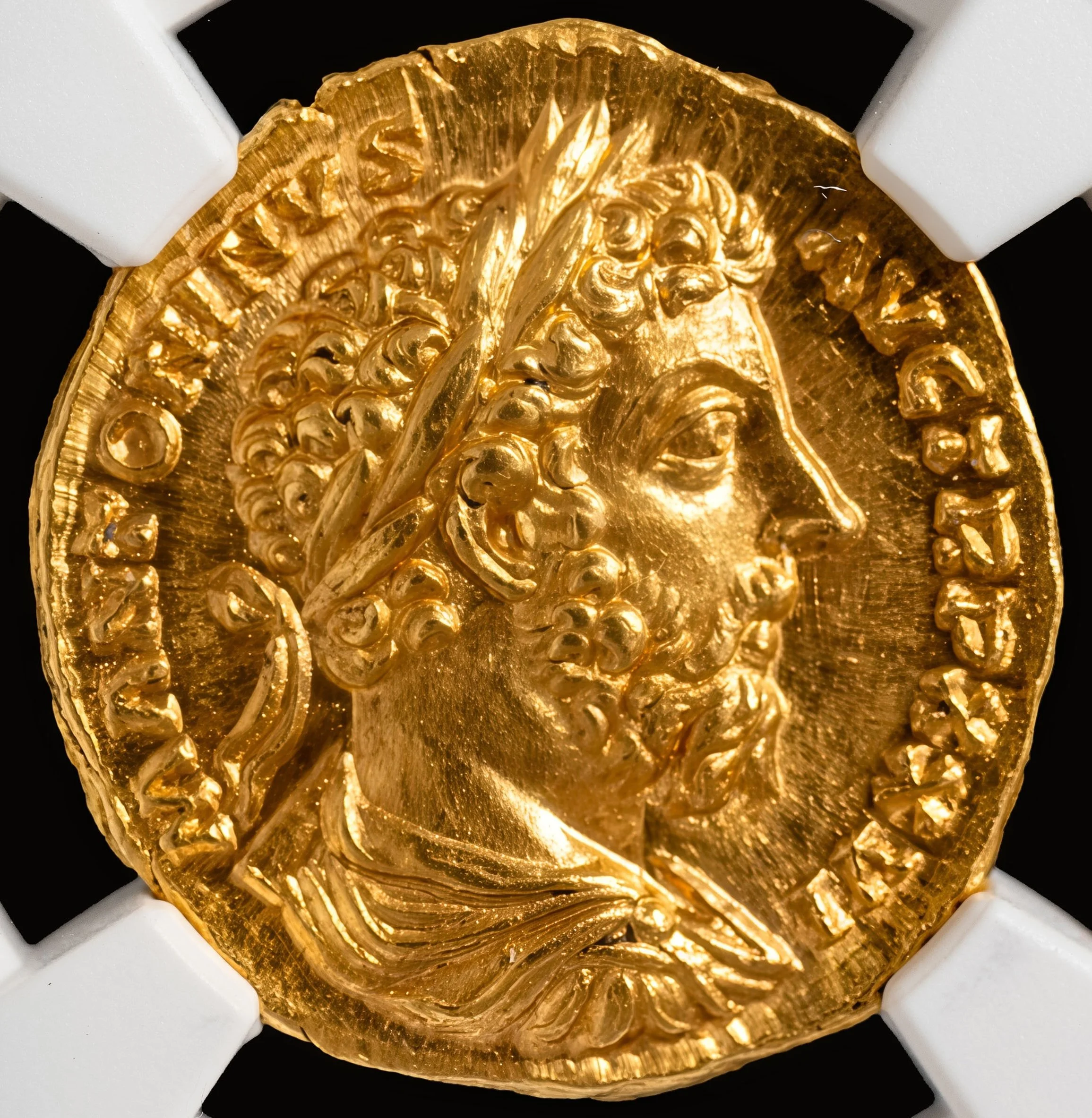
A gold aureus of the emperor Marcus Aurelius, struck at the mint of Rome in AD 172, at the height of the Marcomannic Wars on the Danube frontier. The obverse carries the laureate, draped portrait of the mature, bearded emperor with the legend M ANTONINVS AVG TR P XXVI. The reverse, reading IMP VI COS III, shows one of the boldest images in his coinage: the emperor standing in military dress, a reversed spear in his left hand and the thunderbolt of Jupiter gripped in his raised right, while Victory advances behind him with a palm frond to crown him with laurel.
The thunderbolt is the weapon of the supreme god, and an emperor shown wielding it is being assimilated to Jupiter himself, a step beyond the conventional imagery of divine favor. The type belongs to the years of the celebrated miracles of the northern wars, the lightning that destroyed an enemy siege engine and the rainstorm that saved a surrounded Roman army, both later carved on the Column of Marcus Aurelius in Rome. These are also the seasons in which the emperor, in winter quarters on the Danube, was writing the private notebook the world now knows as the Meditations.
The coin is graded Choice Mint State by NGC, Strike 4 of 5, Surface 5 of 5, with the Fine Style designation, certification 2100934-002, weight 7.19 grams. Scarcely circulated in eighteen centuries, it preserves the reverse composition with unusual clarity, the thunderbolt fully legible in the emperor's hand.
The type is cited as RIC III 265, with Calicó 1872, BMCRE 566 var., Biaggi 856 and Mazzini 308. Examples rest in the British Museum, the American Numismatic Society in New York, and the Kunsthistorisches Museum in Vienna, the last from the Bachofen collection, and the type is absent from the great published cabinets of Adda and Jameson. It is a coin found in the finest institutional collections and seldom in the market.
The aureus is exhibited in our Aspen gallery alongside a bronze reduction of the equestrian Marcus Aurelius of the Capitoline, cast in Rome in 1866, the emperor in gold and in bronze side by side.
The coin is considered at greater length, together with the equestrian bronze, in our article The Philosopher Emperor: Marcus Aurelius in Bronze, Gold, and Ink.
Latest Arrivals
Antique Louis Vuitton Trunks & Luggage
Louis Vuitton established his Paris atelier in 1854, and within a generation had built the most celebrated name in luxury travel — its monogram canvas, flat-topped trunk construction, and signature brass hardware becoming the defining language of elite travel for the century that followed. The golden age of the Vuitton trunk spans roughly 1880 to 1940, encompassing the great ocean liner crossings, the Orient Express, and the colonial and expeditionary travel of the late nineteenth and early twentieth centuries.
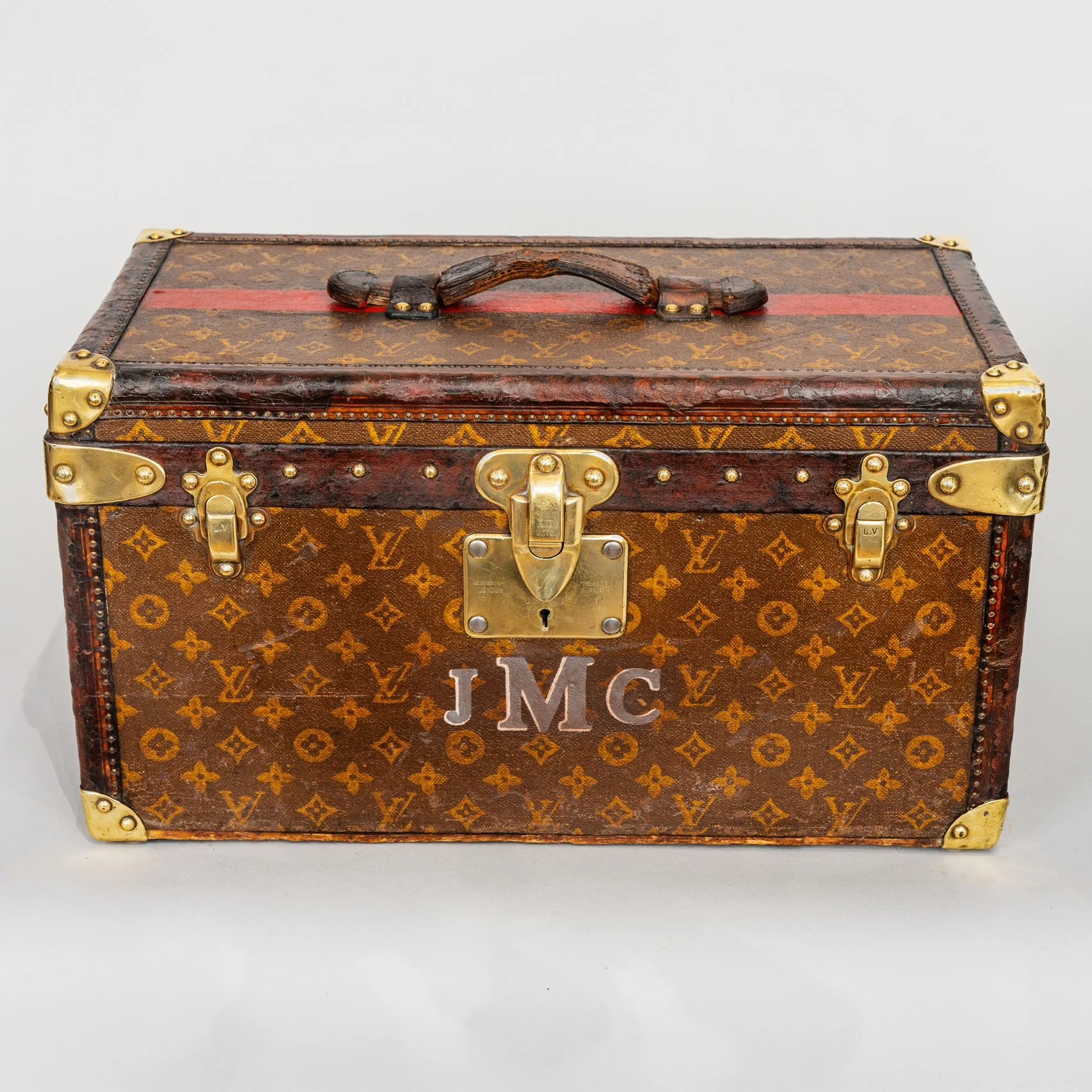
A small Louis Vuitton trunk in the classic LV monogram canvas, retaining its original brass hardware, leather trim, and painted initials throughout. The exterior is fitted with stamped brass hardware, a central lock, two swing-latch clasps, and brass corner protectors at all eight corners. The dark leather-trimmed borders are studded with domed brass nails, and a painted red lozenge stripe runs the full width of the lid. The dark leather carry handle is original.
The front bears the original owner's painted initials JMC in silver. The central lock is engraved with the maker's addresses, 149 New Bond Street, London and 1 Rue Scribe, Paris, the address Louis Vuitton occupied from 1871 until 1914, consistent with the dating of this piece.
The lid interior is lined in the original cream quilted linen, studded in a diamond lattice with brass tacks. The body is lined in the maker's natural linen canvas.
Dimensions: 20 inches long, 11 inches deep, 11 inches tall.
For a larger Louis Vuitton piece bearing the same 1 Rue Scribe, Paris address, see our 1905–1910 steamer trunk produced exclusively for John Wanamaker.
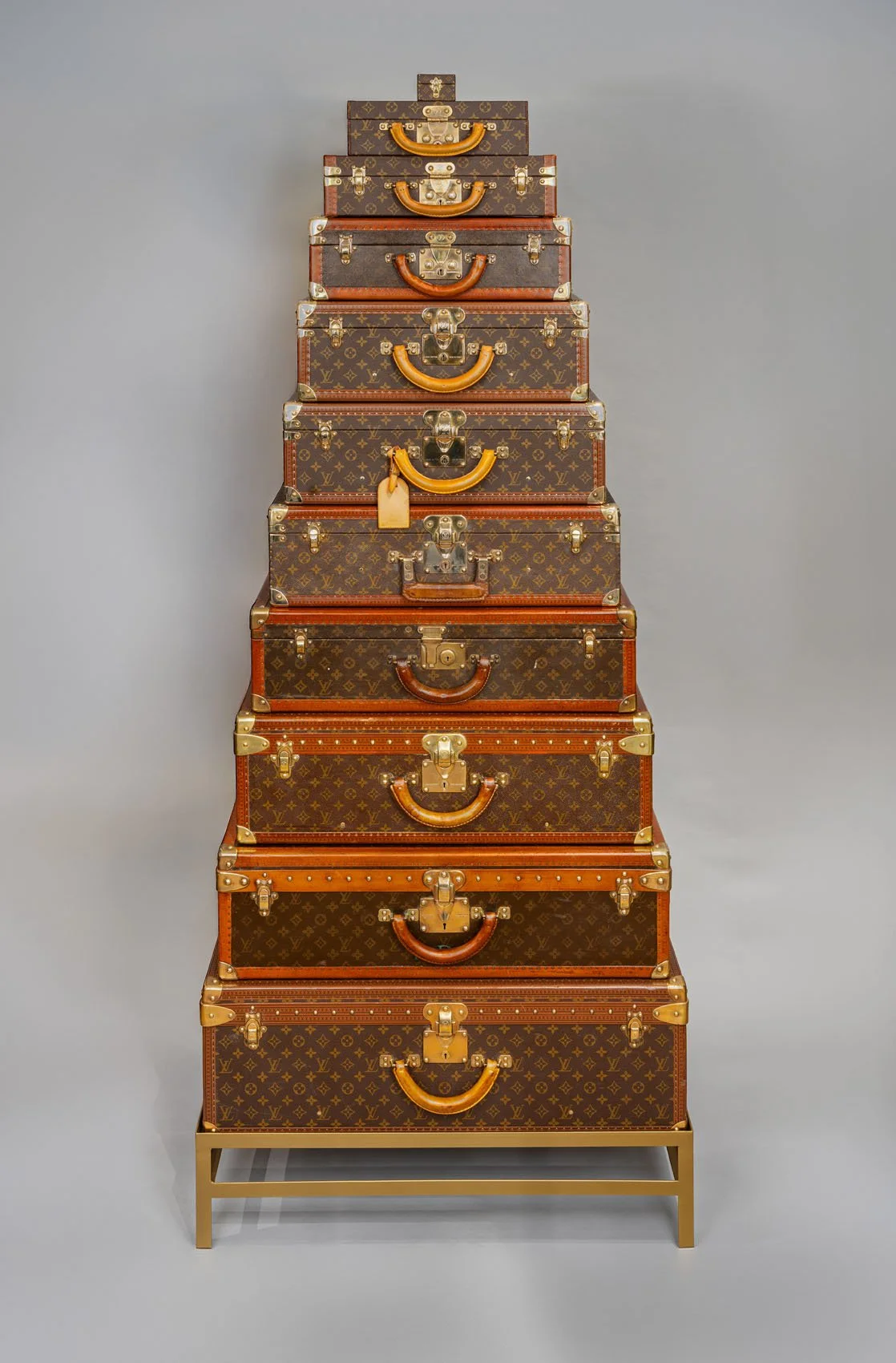
Assembled over two years, this graduated stack brings together eleven vintage Louis Vuitton monogram canvas trunks, arranged largest to smallest and rising as a single sculptural tower on a custom stand made expressly for the purpose. The trunks span the 1920s through the 1970s, each in monogram canvas with lozine edging, natural leather trim, and brass fittings, and together they trace half a century of the house's most enduring design. Every trunk in the stack is an exceptional example in its own right, selected for condition as much as for proportion, with the brass hardware hand-polished to a warm, even shine. To compose a stack of this kind is the work of patience rather than purchase, since the trunks must descend in even steps of size while holding to a consistent character, and pieces of the right quality and proportion appear only rarely. The custom stand raises the ensemble clear of the floor, so that it reads less as luggage than as sculpture, a true work of art for the home, commanding as the focal point of an entrance hall, a stair, a gallery, or a grand dressing room. Offered as a single lot, it is a rare opportunity to acquire, in a single moment, what is otherwise the patient work of years.
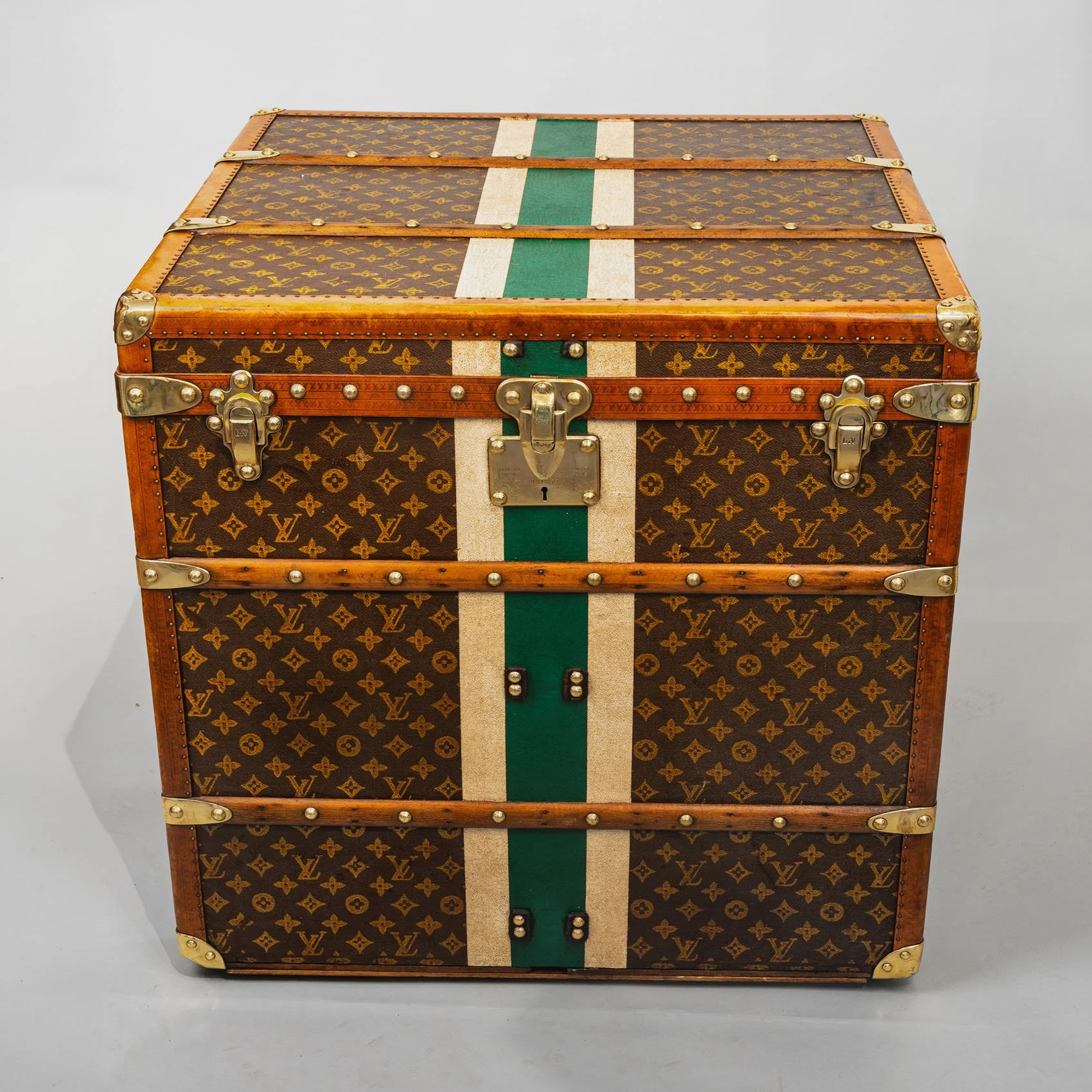
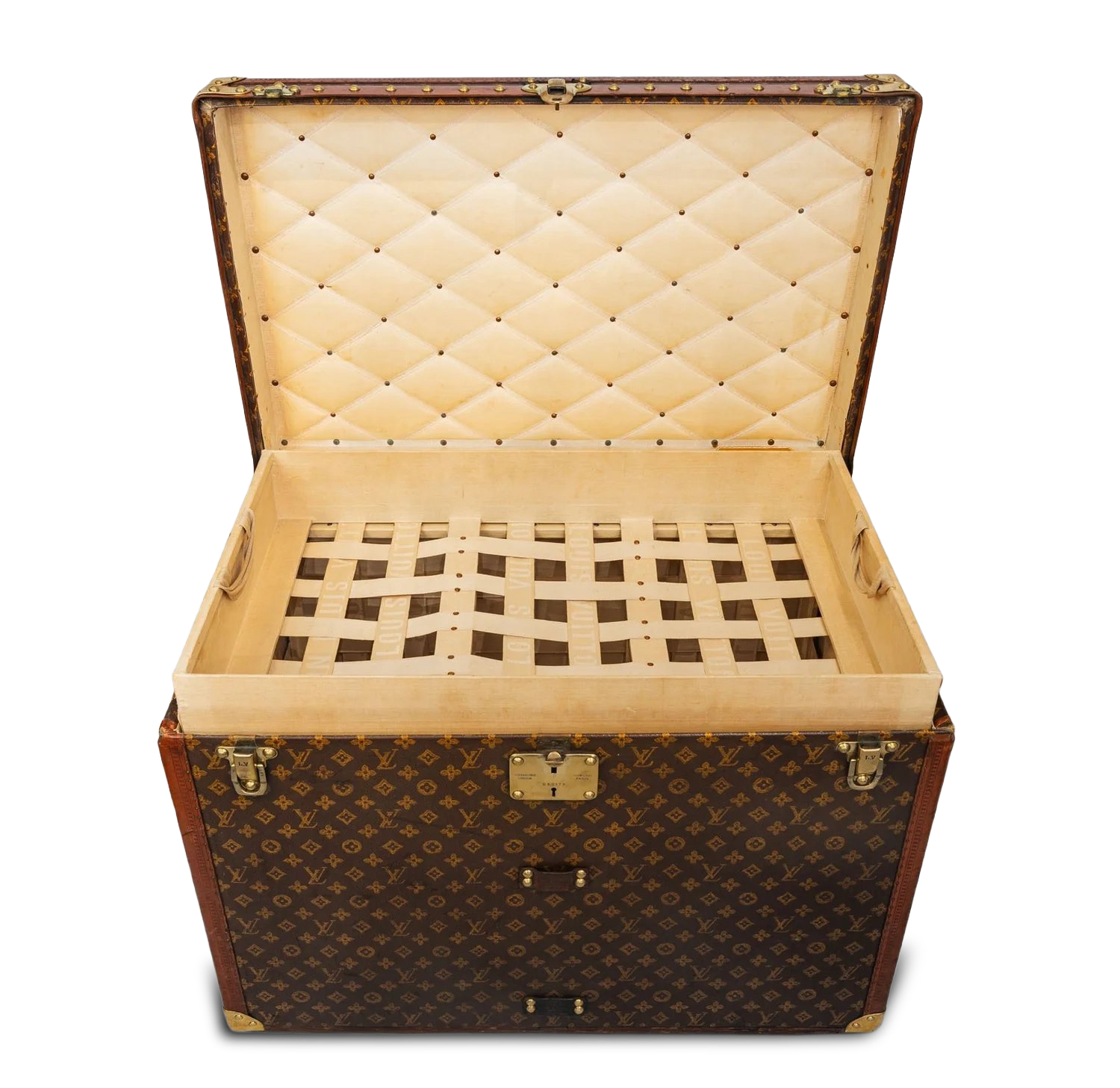
This rare Louis Vuitton monogram canvas double hat trunk, dating to the 1920s, is distinguished by its bold green and cream painted stripe and represents one of the most striking and scarce forms of early 20th-century luxury travel luggage.
Covered in the house’s iconic monogram canvas, the trunk is bound with lozine leather trim, brass edges, and reinforced corner mounts. The domed lid is secured by leather slats, while the front retains its central brass lock stamped ‘Louis Vuitton’ and flanked by spring latches. Leather side handles complete the form, combining durability with refined construction.
The interior is lined in quilted canvas and retains its original fitted double “cage” with webbed supports, designed to secure multiple hats in transit. This specialized system prevented crushing while allowing air circulation—an essential innovation at a time when hats formed a central element of both men’s and women’s dress.
Double hat trunks of this scale were produced in very limited numbers and typically executed as special commissions. Their larger proportions, combined with bold painted livery such as the present example, ensured immediate recognition during travel and give the piece a commanding sculptural presence today.
Produced during the golden age of travel, Louis Vuitton revolutionized luggage design with purpose-built forms tailored to the needs of an international clientele. The malle à chapeaux stands among the most sophisticated of these creations, reflecting both technical ingenuity and refined taste.
Today, double hat trunks remain among the rarest and most desirable Vuitton models, prized for their scale, bespoke nature, and strong decorative appeal. Examples retaining original interiors and distinctive painted decoration are increasingly scarce.
Explore additional Louis Vuitton trunks, including explorer trunks, library trunks, and other rare bespoke examples from the golden age of travel.
Condition
Very good overall condition, with a richly developed patina to the monogram canvas and leather trim consistent with age and use. The painted stripe remains vibrant and well-preserved. Brass hardware with light surface wear and oxidation. Interior clean and complete, retaining the original fitted double hat “cage” with expected signs of use.
Dimensions:
26”width x 25.5”height x 24.5”depth
Literature
Comparable examples of Louis Vuitton hat trunks and specialized travel cases are illustrated in:
Pierre Léonforte and Eric Pujalet-Plaà, Louis Vuitton: 100 Legendary Trunks, Abrams, New York, 2010.
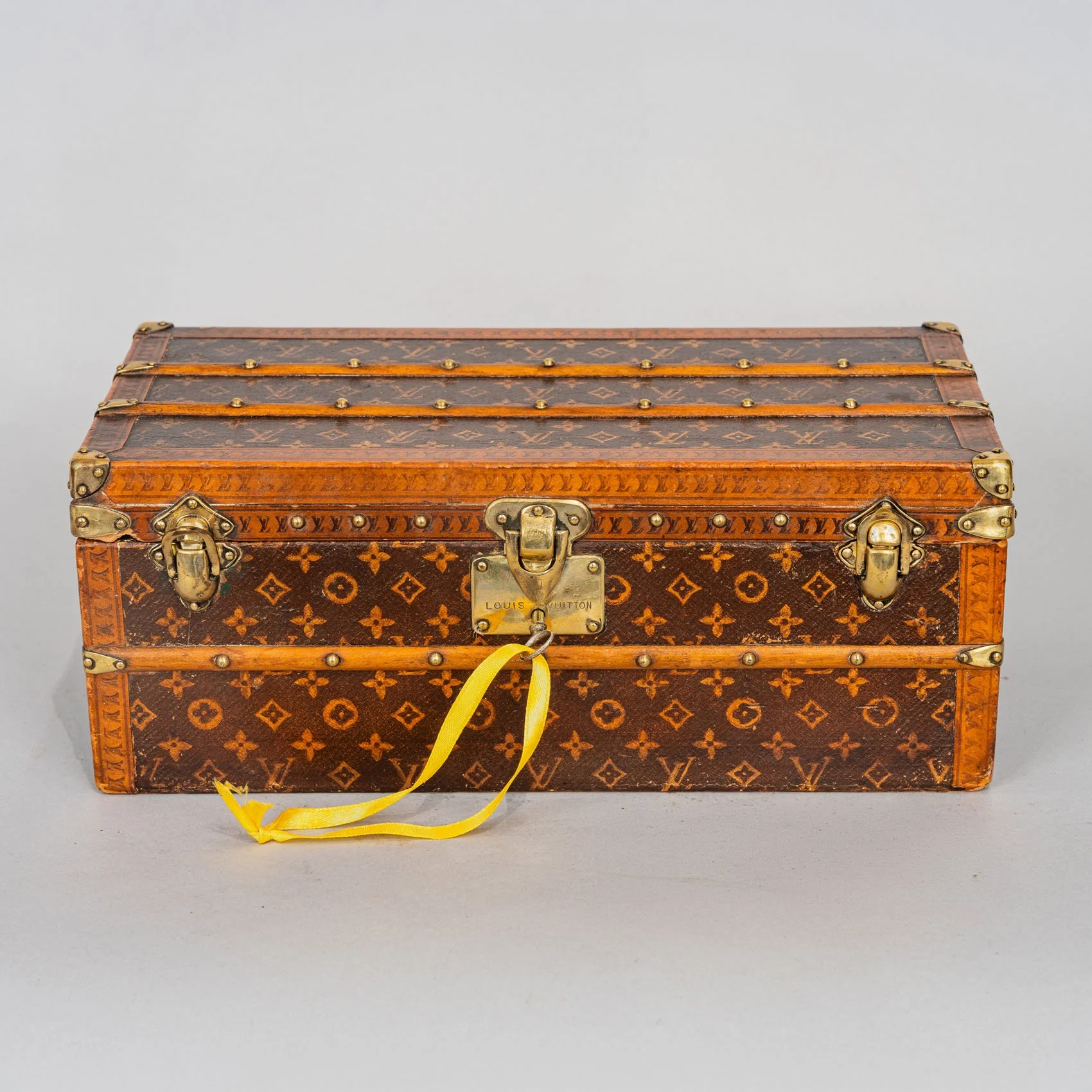
The Malle Fleurs was never sold. It appeared in no window and no catalog: it was given, personally, by Georges and Gaston-Louis Vuitton to the clients they valued most. To receive one was to be acknowledged as belonging to the innermost circle of the house, a distinction no money could buy.
The custom began in 1910. Forbidden by house rule from offering discounts to even their most loyal clients, the Vuittons devised another gesture of gratitude: instead of a bouquet, flowers planted in a miniature trunk in the house monogram. By the 1920s and 1930s it had become one of the most coveted status symbols in Paris. The soprano Marthe Chenal received hers in 1922, in the very years of the present example, and Georges Vuitton himself was photographed examining a flower trunk around 1930. The custom continued until the early 1980s.
This example, circa 1920, is built in papier-mâché, covered in the monogram paper finish, the more refined specification reserved for these gift objects rather than the canvas used in commercial trunk production. It is trimmed with the LV pattern edging and fitted with brass corner guards, side clasps, a stamped lock plate, and leather handles, and, as a survival of the greatest rarity, the original key, still on its yellow ribbon. The interior is lined in French marbled paper, swirling greens, golds, purples, and creams, a theatrical reveal that shows the piece was conceived from the outset as a jewelry or decorative box rather than a planter.
Flower trunks of this period, with the key present, are among the most collectible of all Vuitton objects and appear on the market only rarely.
Condition: Very good, consistent with age. Honest patina to the monogram paper, brass hardware complete, handles sound, marbled lining rich throughout. Original key on yellow ribbon.
Dimensions: 11 in. width x 5 1/2 in. depth x 4 1/4 in. height
Literature: Pierre Léonforte and Éric Pujalet-Plaà, Louis Vuitton: 100 Legendary Trunks, New York, 2010, p. 334, "Trunk for Flowers, Georges and Gaston-Louis Vuitton, Paris, 1910," including the photograph of Georges Vuitton examining a flower trunk, c.1930.
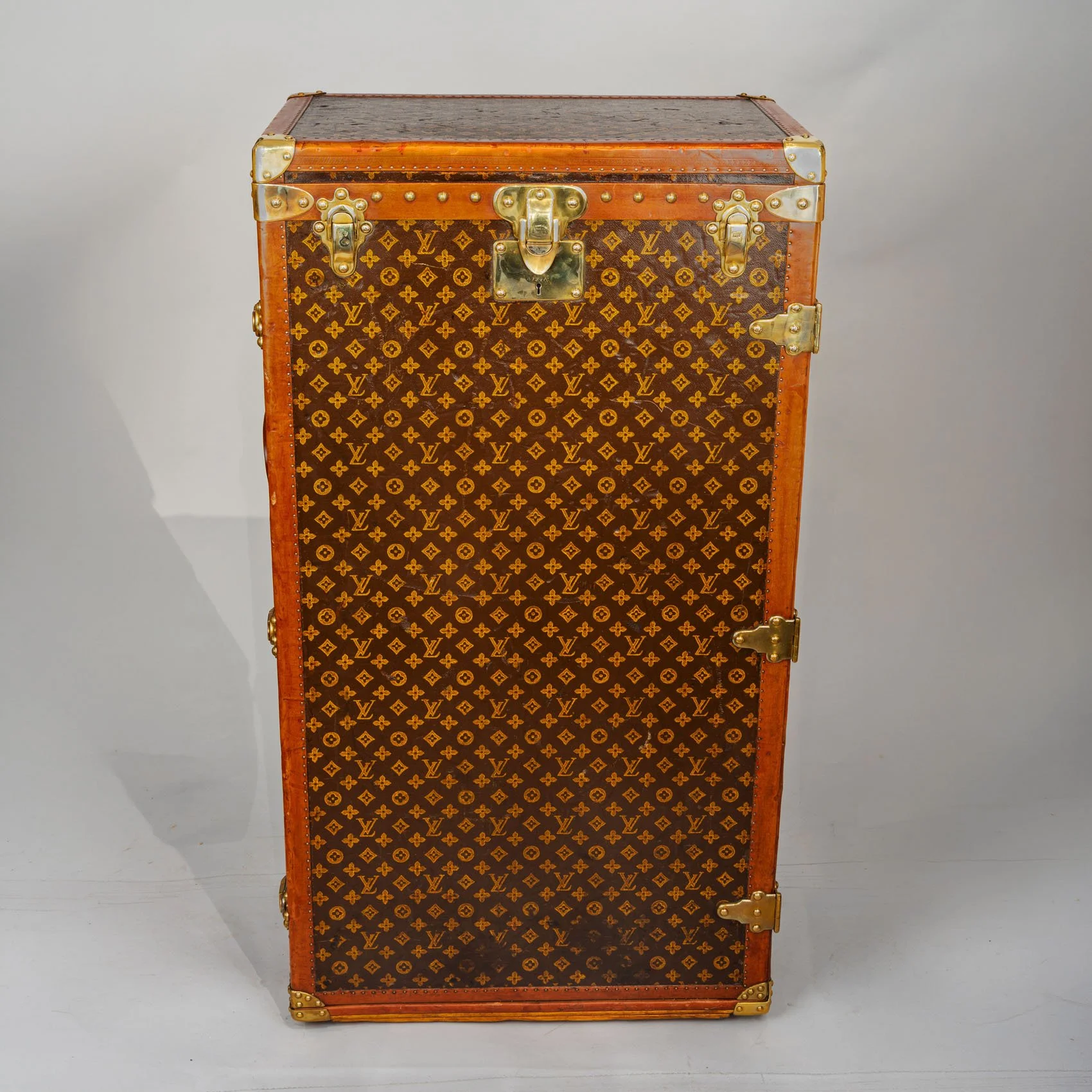
This rare Louis Vuitton monogram canvas shoe trunk, dating to the 1920s, represents one of the most sophisticated and highly specialized forms of early twentieth-century luxury travel luggage.
Constructed in the house's iconic monogram canvas with lozine leather trim, the trunk is reinforced with brass-bound edges and corner mounts, and fitted with a central brass lock and multiple latches. The side door opens to reveal an exceptionally well-preserved interior, fully fitted with a series of individual drawers, each with leather pulls and label frames, above a larger compartment below.
Designed as a portable wardrobe for footwear, the trunk reflects Louis Vuitton's remarkable innovation during the golden age of travel. Each drawer functions as an individual shoebox, allowing pairs to be stored securely while remaining immediately accessible, an elegant solution to the demands of an increasingly mobile and style-conscious clientele.
As recorded in period accounts, Vuitton developed such compartmentalized interiors to protect delicate personal effects while maintaining order in transit. The form was first created for the soprano Lily Pons, whose celebrated commission was designed to carry some thirty pairs of shoes, and the house subsequently produced trunks of this type for other discerning clients. The present example belongs to that lineage: closely related to the Pons original in form and function, though a distinct trunk in its own right.
Examples of shoe trunks with complete fitted drawer systems were produced in limited numbers and often executed as bespoke commissions. With its intact interior and exceptional state of preservation, the present example stands as a rare and highly functional expression of Vuitton's craftsmanship and the culture of refined travel in the early twentieth century. Today, such trunks are among the most desirable Vuitton forms, combining architectural presence with a direct connection to the lifestyle of an international elite.
Condition: Very good overall, with a well-developed patina to the monogram canvas and leather trim consistent with age and use. Brass hardware shows light surface wear and oxidation. The interior is exceptionally well-preserved and complete, retaining the full set of fitted drawers with minor, as expected, wear.
Dimensions: 45 in. high × 24 in. wide × 16 in. deep
Literature: Pierre Léonforte and Éric Pujalet-Plaà, 100 Legendary Trunks: Louis Vuitton, Abrams, New York, 2010 (see the discussion of specialized shoe trunks and compartmentalized interiors, pp. 252–253).
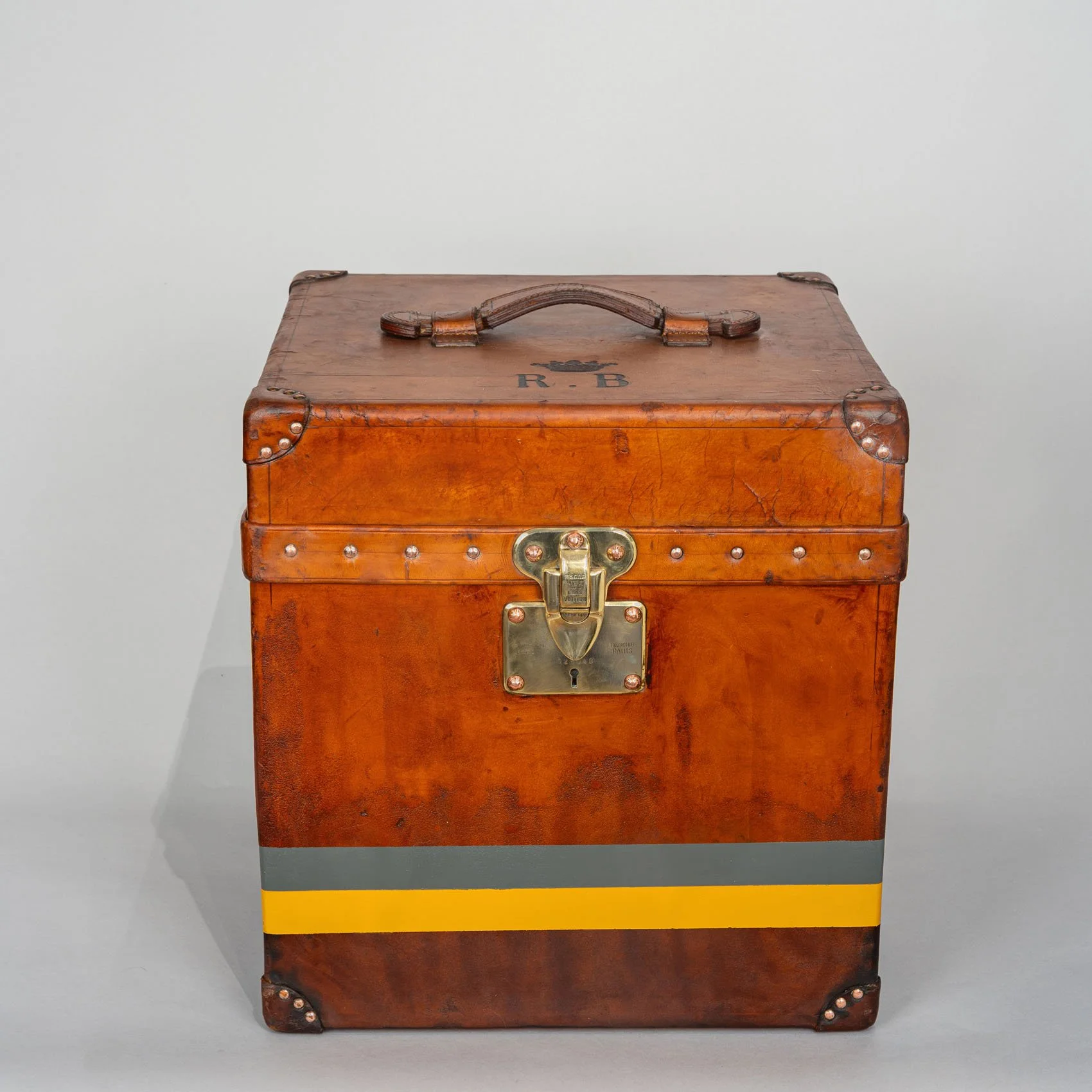
A Louis Vuitton hat trunk, the malle à chapeau, in untreated cuir naturel, early twentieth century. Of square form, bound with riveted leather bands and fitted with a brass lockplate and protective corner mounts, the lid centered with a leather handle and stenciled R.B. beneath a coronet, the body encircled by grey and yellow painted identification stripes for immediate recognition in transit. The leather has matured to the deep, varied patina these pieces were designed to acquire, each one uniquely with use, and the interior is lined in cream canvas retaining the Louis Vuitton label.
By the turn of the twentieth century, Vuitton was particularly attentive to the safe transport of hats, essential elements of formal dress, and the malle à chapeau was developed precisely for this purpose, its structured interior preserving delicate forms through rail and steamship journeys. Bespoke examples were made for distinguished patrons, among them the hatboxes commissioned for William Twombley in Paris in 1895, and the coronet stenciled above the initials here points to a titled original owner. Cuir naturel examples with original personalization are among the most sought-after forms of early Vuitton luggage.
Condition: Very good. Beautifully developed patina with wear consistent with age and use; brass hardware with an attractive aged surface; lining present and clean with light age toning; structurally sound.
Dimensions: 15 in. width x 16.5 in. height x 13.75 in. depth
Literature: Florence Müller, Louis Vuitton: 100 Legendary Trunks, New York, 2010; Pierre Léonforte, Louis Vuitton: The Birth of Modern Luxury, Paris, 2004
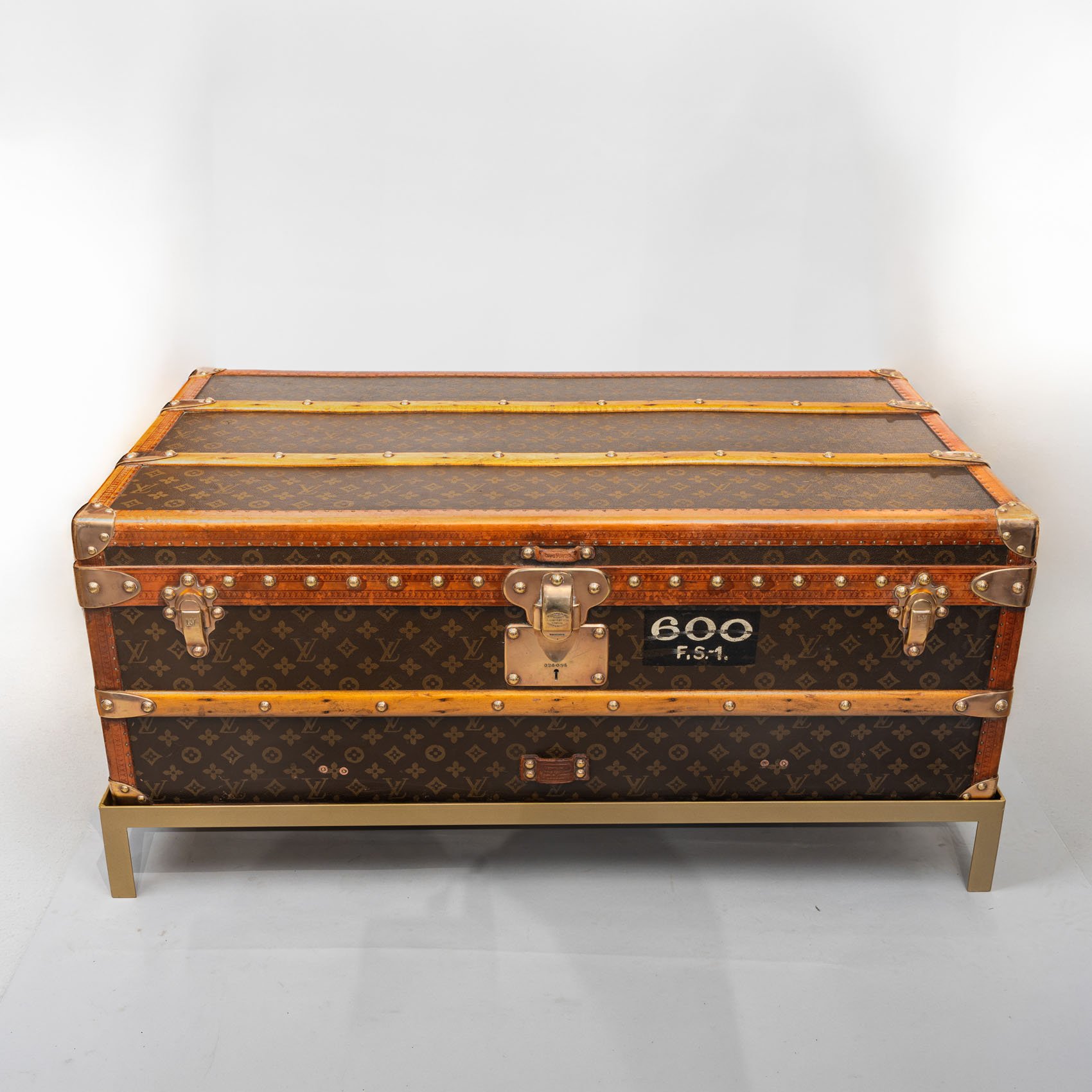
The cabin trunk is the form that defined transatlantic travel in its golden age — engineered to a reduced height that allowed it to slide beneath the berth of a first-class stateroom aboard the great ocean liners of the early twentieth century, keeping a traveler's essentials within reach for the duration of a crossing that might last five days or more. This handsome example, dating to the 1920s and produced in Louis Vuitton's Paris atelier, retains on its front face the original stencilled designation "600 F.S.-1" — almost certainly a stateroom or cabin assignment from its days aboard a passenger vessel, a marking applied by the ship's baggage handlers to ensure correct routing and delivery. It is a detail that transforms a fine trunk into a specific historical object: one that crossed oceans, was handled by porters, and was delivered to a first-class cabin by people who knew exactly what it was and who it belonged to.
The exterior is executed in monogram canvas with the natural wood slat banding characteristic of 1920s production, lozine leather trim with the embossed LV border running the full perimeter, and the full complement of original brass hardware — central lock plate, flanking clasps, corner guards, and studded borders. The lock plate is stamped with the serial number 075075. The canvas presents with the characteristic warm, rich patina of a piece that has lived a full life in honest use, while retaining the structural integrity of Vuitton's exceptional construction throughout.
The interior is lined and fitted, preserving the original configuration in which the trunk traveled. The piece is presented on a custom brass stand — the same clean rectangular profile as Vuitton's own display mounts — which elevates it to coffee table height while allowing the lid to open freely, providing storage of considerable capacity.
Cabin trunks with clear, legible period stencilling documenting their original shipboard use are a specific and sought-after category within the Vuitton collecting market. The combination of the "600 F.S.-1" designation, the serial number, and the original hardware and interior in this condition represents a piece of genuine travel history.
Stencilling: 600 F.S.-1 (original shipboard cabin designation) Serial No.: 075075 Dimensions: 13 × 36 × 20 in Stand: Custom brass, purpose-made
Condition: Very good overall, consistent with age and honest use. Monogram canvas strong throughout with rich, even patina. Natural wood slat banding and lozine trim structurally sound. Brass hardware complete — lock plate, clasps, corner guards, and studs all present. Serial number 075075 on lock plate. Stencilling "600 F.S.-1" bold and fully legible. Interior lining and fittings present and intact. Custom brass stand present and structurally sound.
Literature:
Paul-Gérard Pasols, Louis Vuitton: Malletier à Paris, Paris, 1987
Florence Müller, Louis Vuitton: 100 Legendary Trunks, New York, 2010
Pierre Léonforte, Louis Vuitton: The Birth of Modern Luxury, Paris, 2004
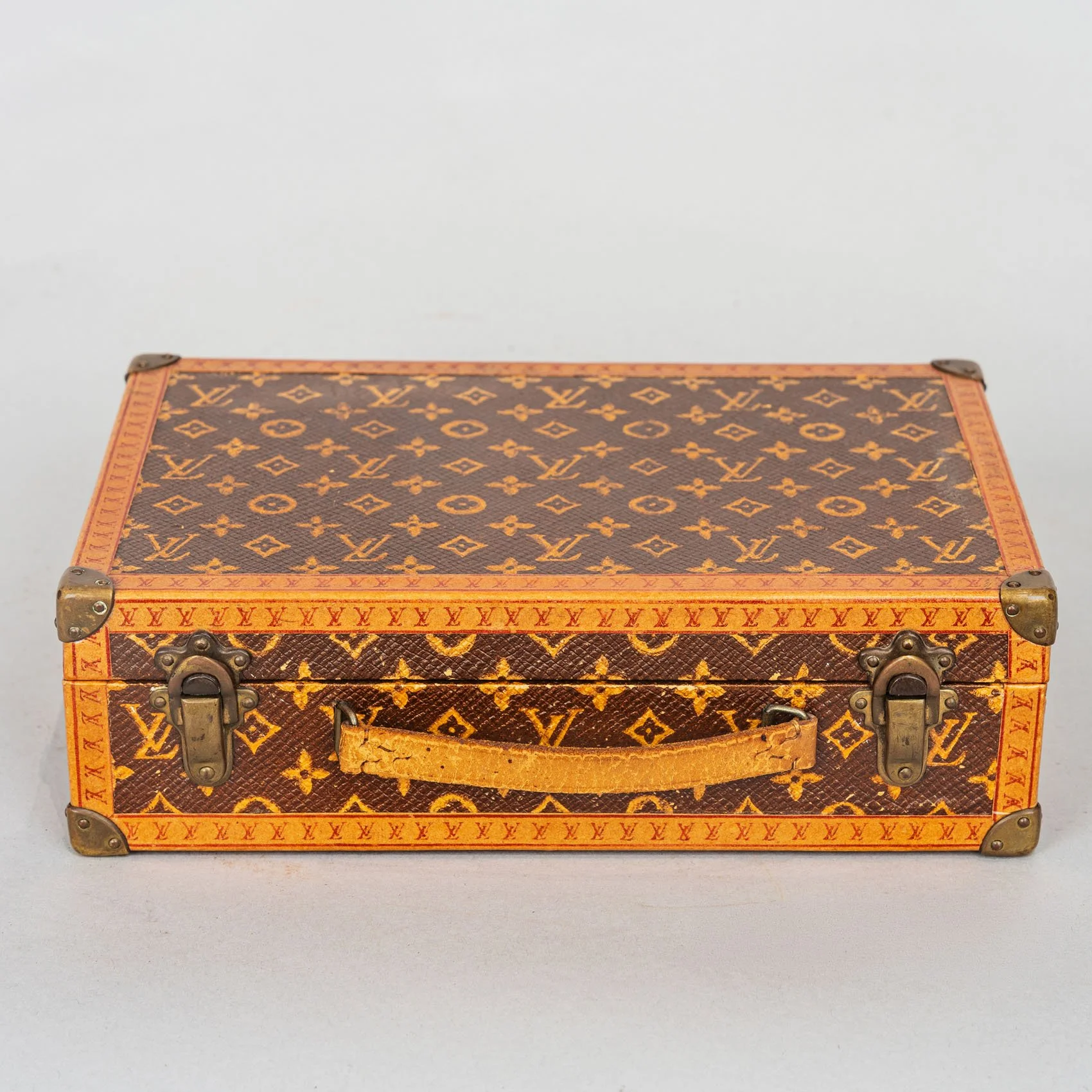
This small jewelry case shares its construction directly with the celebrated flower trunks produced from around 1910 — the same printed monogram paper laminated over a lightweight board core, the same grained natural leather interior, the same L.Vuitton maker's stamp. It belongs to the same rarefied tier of Vuitton production as those objects reserved for the maison's most valued clients, conceived for the dressing table rather than the hold, and built with a delicacy that reflects its purpose entirely.
The exterior features the classic LV monogram in the warm ochre-and-brown palette of early twentieth-century production, with the characteristic LV-initialed border stripe in red and gold running along all edges. Brass lozenge-form lock clasps secure the lid at either side, matched by brass corner protectors at all eight corners. The vachetta leather handle has developed a deep honey patina consistent with careful use over many decades.
The interior is lined throughout in grained natural leather, a single central divider creating two shallow compartments ideally proportioned for jewelry, watches, or small valuables. The inner corner bears the stamped maker's mark L.Vuitton, associated with early pieces predating the fuller address stamps of later production.
At 9 inches wide, 5 inches deep, and 3½ inches tall, this is a personal object of the first order.
Dimensions: 9 in. wide × 5 in. deep × 3½ in. tall (22.9 × 12.7 × 8.9 cm)
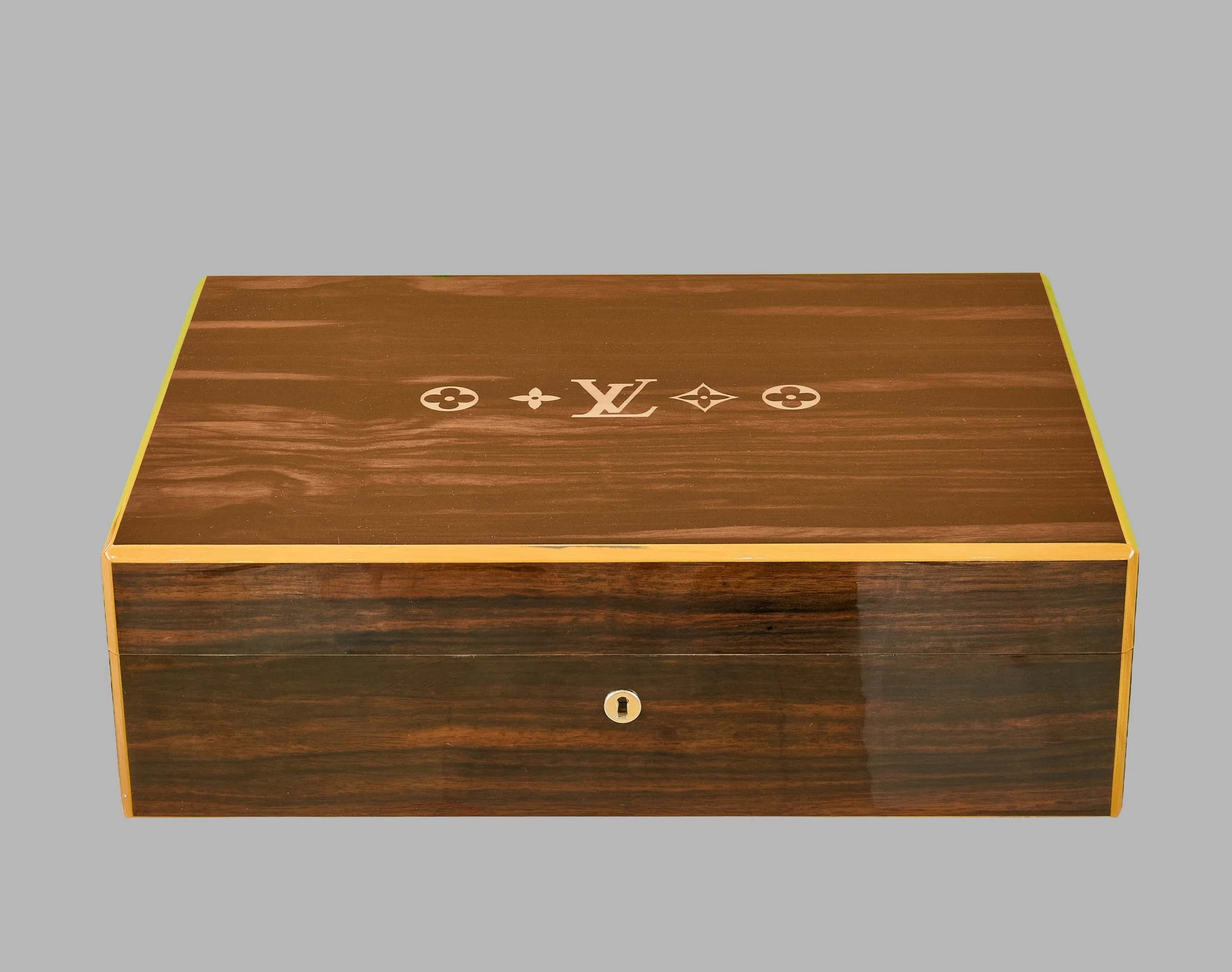
Louis Vuitton cigar humidor, the case in mahogany with a Macassar ebony veneer and pear wood accents, the high-gloss lid centered with the Louis Vuitton monogram, its flowers, quatrefoils, and initials worked in pear wood inlay, with a brass escutcheon to the front.
The interior is lined throughout in cedar and fitted with a removable divided tray, a gilt Louis Vuitton Paris hygrometer set into the lid, and a Credo Precision 70 humidification system; here, a pair of units is retained in their original wrapping. A brass plaque is engraved with "Louis Vuitton,” and the humidor retains its Louis Vuitton Cadeau booklet. Made in France.
Condition: excellent, unused.
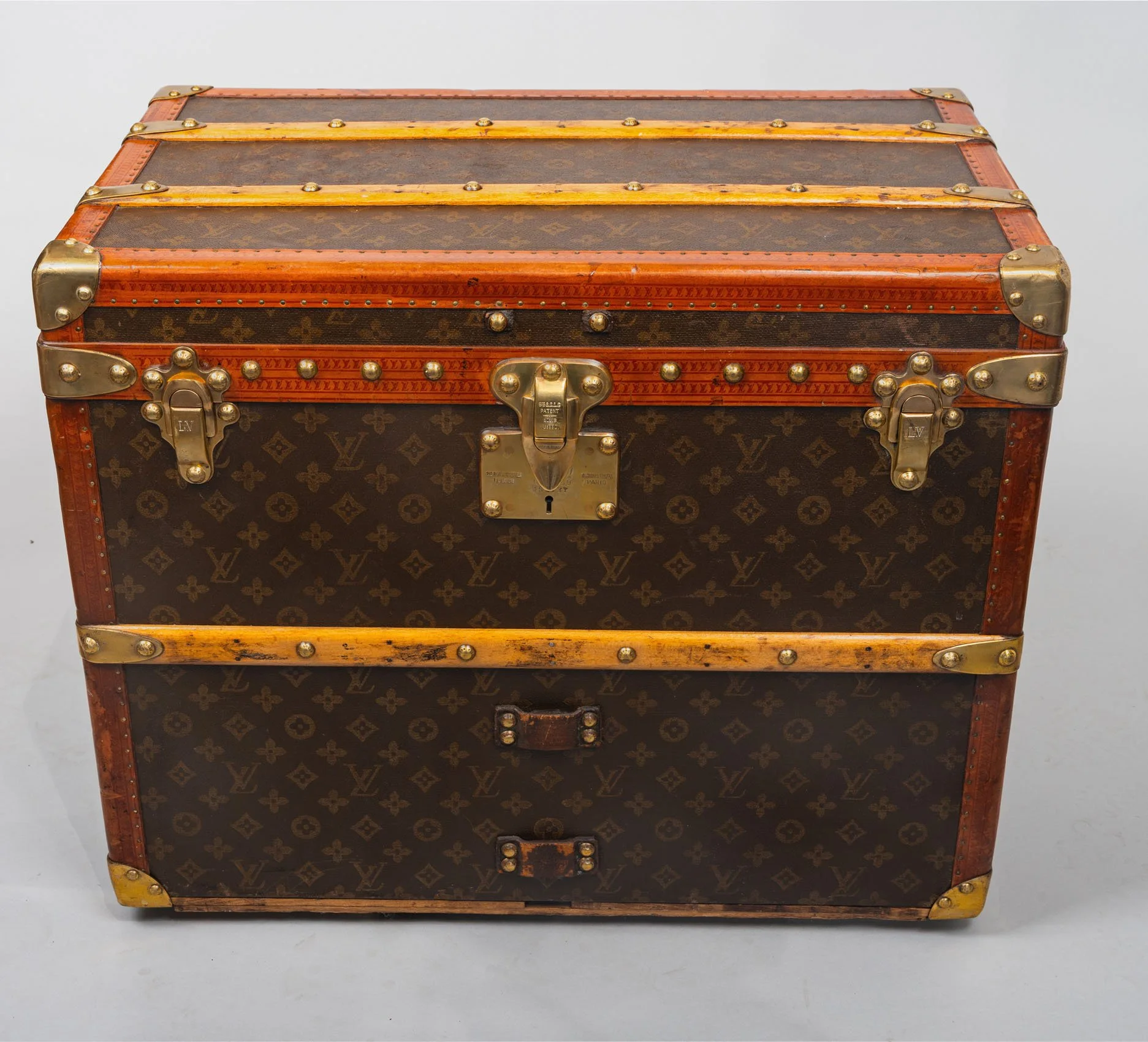
A Louis Vuitton shoe trunk in monogram canvas, made in Paris in the 1920s, with original brass hardware, leather trim, and exposed wooden slats. Leather side handles. The interior retains its original lining and is fitted with three removable trays and compartments for organized footwear storage.
Designed specifically for the transport of shoes, trunks of this form allowed multiple pairs to travel securely and accessibly on extended journeys, in an era when wardrobes traveled in full. They were Vuitton's answer to an increasingly mobile and sophisticated clientele in the early twentieth century, and function less as luggage than as portable dressing systems.
Examples retaining their original interior fittings and hardware, as here, are increasingly scarce, and the survival of these elements adds considerably to the historical integrity and desirability of the piece.
Condition: Wear consistent with age and use; overall very good with strong presentation.
Dimensions: 24 in. wide x 19.5 in. high x 15 in. deep
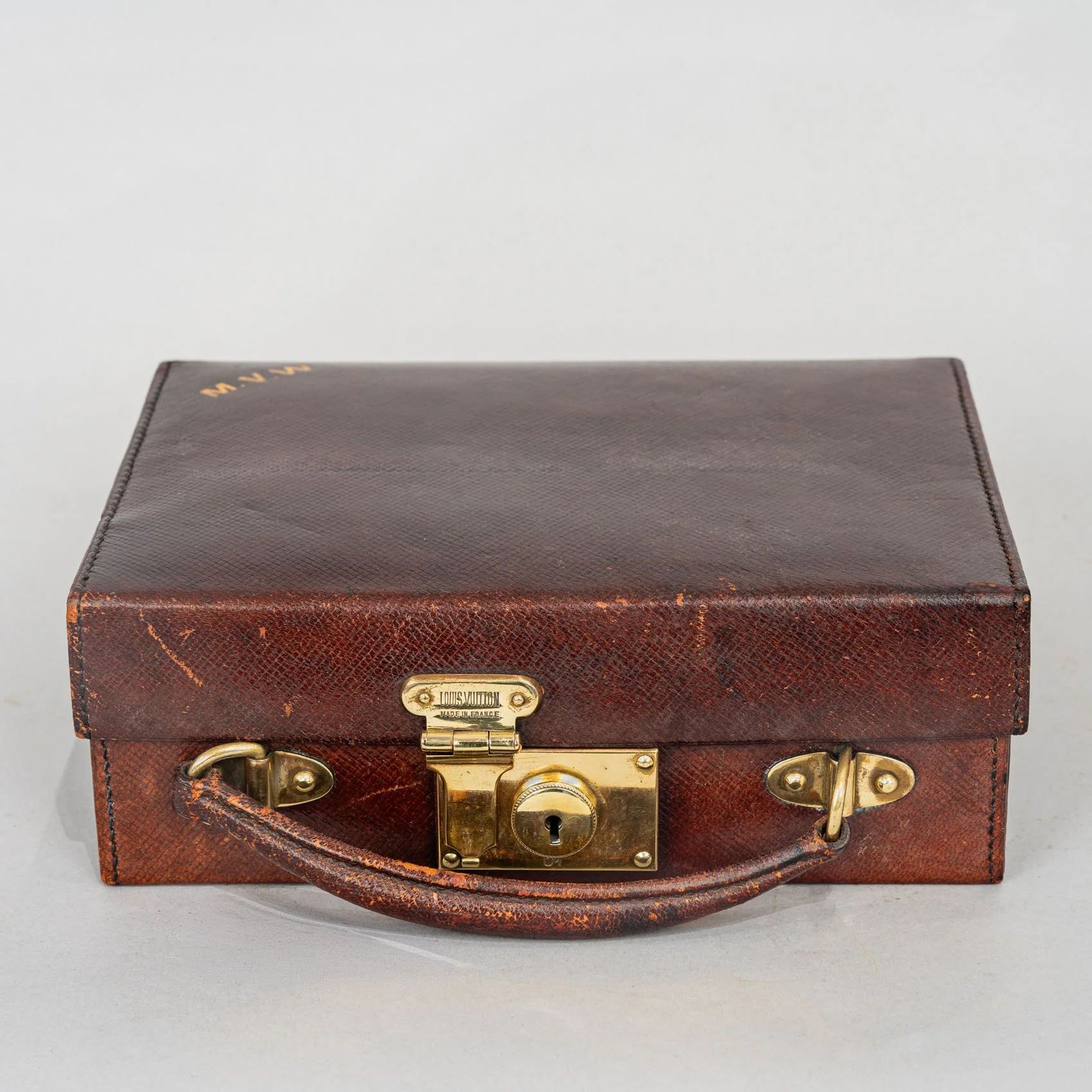
Among the most intimate objects the Louis Vuitton atelier produced, the fitted jewelry case shows the house at its most refined, made not for the rigors of travel but for the private world of its owner. This example, in natural-grain leather with a royal blue velvet interior, is one of the finest of its type we have encountered.
The brass lock plate, stamped Louis Vuitton Made in France, is functional, with the side clasps and leather carry handle present and sound. In the upper-left corner of the lid, the owner's monogram, M.V.W, is stamped in gold. Natural leather pieces of this type were made to order for individual clients rather than kept in stock, and the monogram marks this as a bespoke commission.
The interior is in perfect original condition, remarkable for a piece of this age. The fitted compartments are lined in royal blue velvet of deeply saturated, unfaded color, a central open section flanked by two padded compartments with rolls for rings or bracelets, and the blue silk lid lining is clean and intact. The contrast between the warm chestnut exterior and the vivid blue interior is entirely as made. Serial number 800580 is stamped on the interior leather; the hardware style and serial number place the case in the 1930s.
For the serious Vuitton collector, a natural-leather jewelry case from this period in this state of preservation is an exceptional find.
Condition: Excellent; honest unrestored condition with rich, even patina and no structural losses. No key.
Dimensions: 8 in. width x 6 in. depth x 3 in. height
Literature: Paul-Gérard Pasols, Louis Vuitton: Malletier à Paris, Paris, 1987; Florence Müller, Louis Vuitton: 100 Legendary Trunks, New York, 2010; Pierre Léonforte, Louis Vuitton: The Birth of Modern Luxury, Paris, 2004
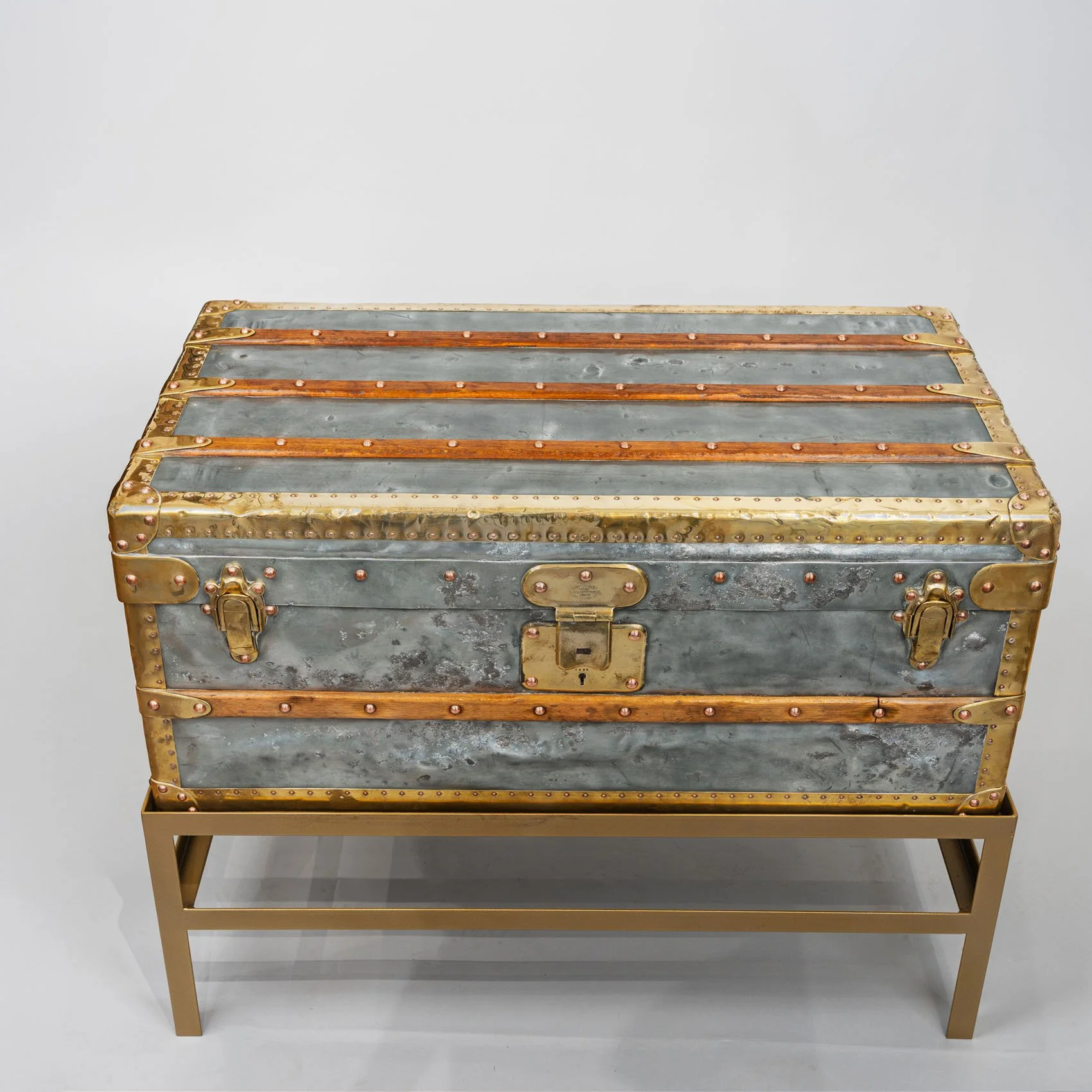
By the 1880s, Louis Vuitton had already transformed the luggage of Europe's most discerning travelers. His striped and Damier checkerboard canvas trunks had become the standard of the transatlantic crossing, the grand hotel, and the continental express. But for a different class of traveler, canvas was not enough: the diplomat, the explorer, the colonial administrator, the naturalist bound for equatorial Africa or the South China Sea. The enemy was not the baggage handler or the rain-wet quayside. It was heat, humidity, tropical insects, and the months-long sea voyage that preceded any destination worthy of the name expedition. For these clients, Vuitton developed one of the most technically ambitious objects in the history of luggage: the zinc-clad hermetic trunk.
This exceptional example, dating to circa 1880–1895, is constructed on a wooden carcass fully sheathed in zinc, a material chosen with precision for its impermeability, its resistance to the corrosive effects of tropical humidity, and its ability to form a near-hermetic seal that kept its contents dry and secure through months at sea. The zinc panels are reinforced with hardwood slats, the characteristic structural element of the Vuitton trunk, translated here into an exceptional material context. Brass mounts, rivets, and the original lock hardware complete the exterior, fittings chosen to resist the very conditions the zinc itself was designed to defeat.
The flat-top form reflects Vuitton's revolutionary approach to travel luggage, a configuration that allowed for efficient stacking in the hold of a steamship or the luggage van of a colonial railway, and that had already distinguished the house from the domed-top makers of an earlier generation. In the zinc trunk, this practical logic is taken to its extreme: a case built not for convenience but for survival, intended to arrive at its destination intact, regardless of what the journey demanded.
More than a century after it was made, the zinc exterior presents a surface of extraordinary character, soft oxidation across the panels creating a nuanced, almost mineral patina that contrasts with the warm tones of the aged hardwood slats and the deep, even burnish of the brass hardware. This is not deterioration; it is the record of a life fully lived, and it is entirely beyond the reach of any reproduction. The interior retains its original Louis Vuitton, Paris label, the authenticating detail that confirms both maker and period, and one that survives in a form decades of expeditionary use might easily have destroyed.
Zinc "Explorer" trunks were produced in limited numbers for a highly specialized clientele and were never part of Vuitton's mainstream production. As documented in Pierre Léonforte and Éric Pujalet-Plaà's 100 Legendary Trunks: Louis Vuitton, they were designed specifically for travel to the tropics and the colonies, offering protection unavailable from any other form of luggage then in existence. Their survival rate is low. Examples retaining original structure, hardware, and interior label in this condition are, by any measure, scarce.
Interior Label: Louis Vuitton, Paris (original, present, and legible)
Provenance: Private collection
Dimensions: 13 in. high × 30 in. wide × 17 in. deep
Condition: Very good overall, structurally solid and stable throughout, with sound hardwood slats and all brass mounts, rivets, and lock hardware present. The zinc exterior carries a rich, even, fully stable oxidation patina with no structural losses, and the original Louis Vuitton, Paris interior label remains present and legible over honest age toning to the lining.
Literature:
Florence Müller, Louis Vuitton: 100 Legendary Trunks, New York, 2010
Pierre Léonforte, Louis Vuitton: The Birth of Modern Luxury, Paris, 2004
Paul-Gérard Pasols, Louis Vuitton: Malletier à Paris, Paris, 1987
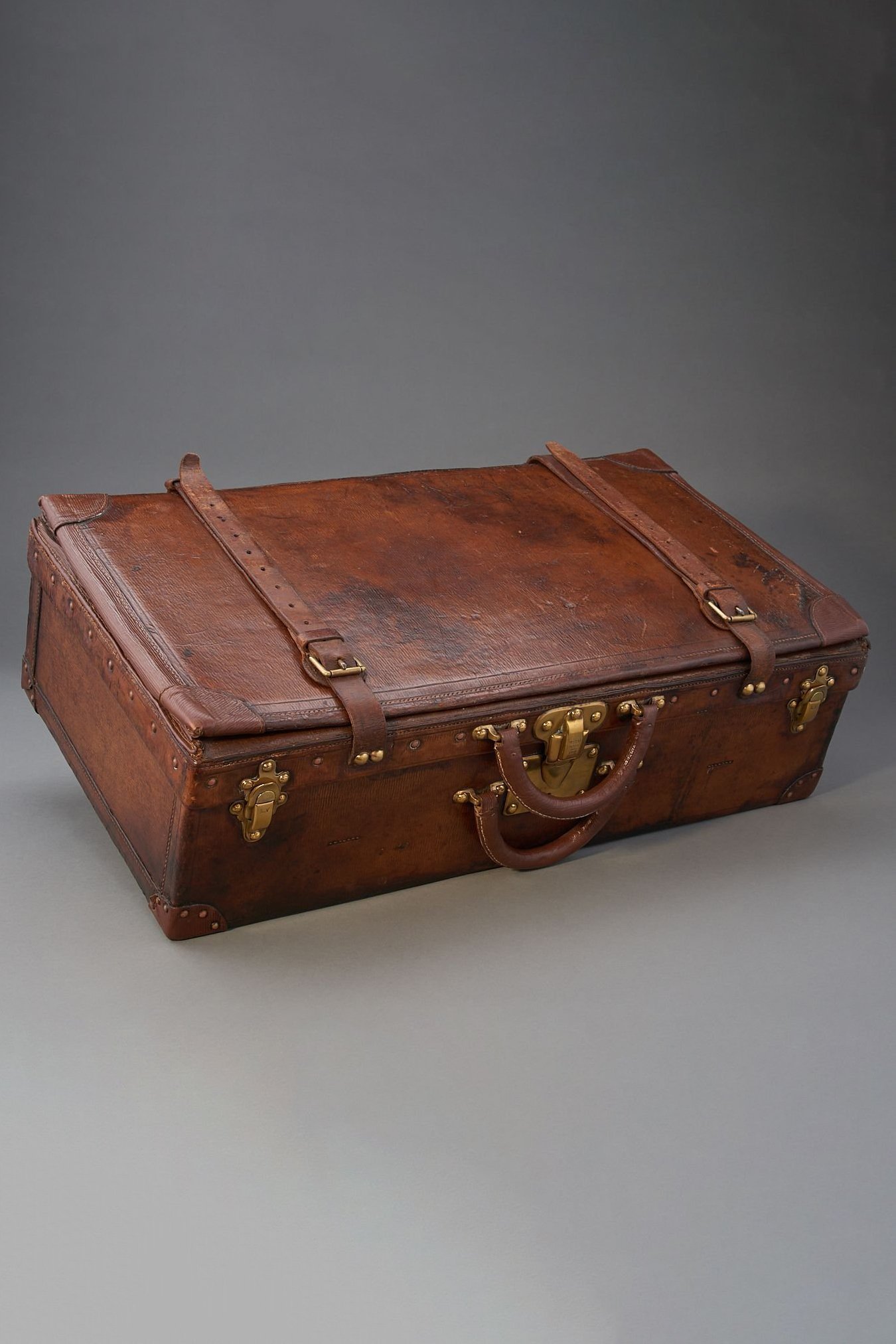
When Louis Vuitton opened his London shop circa 1885, he encountered for the first time the luggage traditions of the English gentleman — a culture of travel defined by practicality, restraint, and the finest materials. His response was characteristically creative: he studied the English forms, improved upon them, and designed a model specifically for his British clientele. He named it, with elegant simplicity, the "London" — a roomy, expandable suitcase conceived for the era of railway travel, lighter in construction than the great steamer trunks, and engineered for the particular demands of a clientele accustomed to moving between country house, city club, and continental hotel with equal efficiency.
This rare example of the Malle Vache — the full cowhide trunk — is precisely that model. Executed entirely in cowhide rather than the monogram canvas that defined the majority of Vuitton's production, it represents the more exclusive and less commonly encountered strand of the house's output: a material choice that speaks to a client for whom the discreet richness of untreated leather was preferable to the house's more immediately recognisable canvas. The surface has acquired over more than a century the deep, burnished patina that only full cowhide develops — warm, complex, and entirely irreproducible by any means other than time.
The lock plate, centrally positioned on the front face, is stamped with the full dual-address legend: 1 Rue Scribe, Paris — the celebrated maison across from the Grand Hôtel, occupied until 1914 — and 149 New Bond Street, London, the house's English address from the late nineteenth century. The presence of both addresses confirms a production date of circa 1900–1910, within the most refined period of the house's pre-war craftsmanship. The exterior is further fitted with brass corner guards, studded borders, and the original leather carry handle. Two leather straps with brass buckles traverse the exterior top, providing additional security in transit — a configuration specific to the suitcase forms of this period.
The interior is the finest feature of this already exceptional piece. The cream linen lining is present and intact throughout — and, remarkably, the original fitted leather document and accessory pouch survives, strapped to the lid interior by its original leather buckle straps, fully functional and structurally sound. This interior pouch — designed to hold papers, tickets, and personal documents within immediate reach — is among the most frequently lost fittings in Vuitton suitcases of this period. Its survival here, in original condition with all straps intact, transforms this from a fine object into a document of the highest completeness.
The piece is catalogued in Florence Müller's Louis Vuitton: 100 Legendary Trunks at pages 106–107, confirming its status as one of the documented forms in the Vuitton canon.
Lock Plate Addresses: 1 Rue Scribe, Paris & 149 New Bond Street, London (pre-1914) Material: Full cowhide Dimensions: 26.5 × 18 × 8 in
Condition: Very good overall, consistent with age. Full cowhide exterior retains its original surface with deep, rich patina throughout — warm, even, and fully intact with no cracks or structural losses. Brass hardware complete — corner guards, lock plate, studs, and buckles all present. Lock plate stamping reading "1 Rue Scribe, Paris / 149 New Bond Street, London" clear and legible. Exterior leather straps present and functional. Carry handle present with good structure. Interior cream linen lining intact. Original fitted leather document pouch present in the lid, with all leather buckle straps intact and functional — an exceptional survival. A complete and unrestored example of the highest order.
Literature:
Florence Müller, Louis Vuitton: 100 Legendary Trunks, New York, 2010, pp. 106–107
Paul-Gérard Pasols, Louis Vuitton: Malletier à Paris, Paris, 1987
Pierre Léonforte, Louis Vuitton: The Birth of Modern Luxury, Paris, 2004
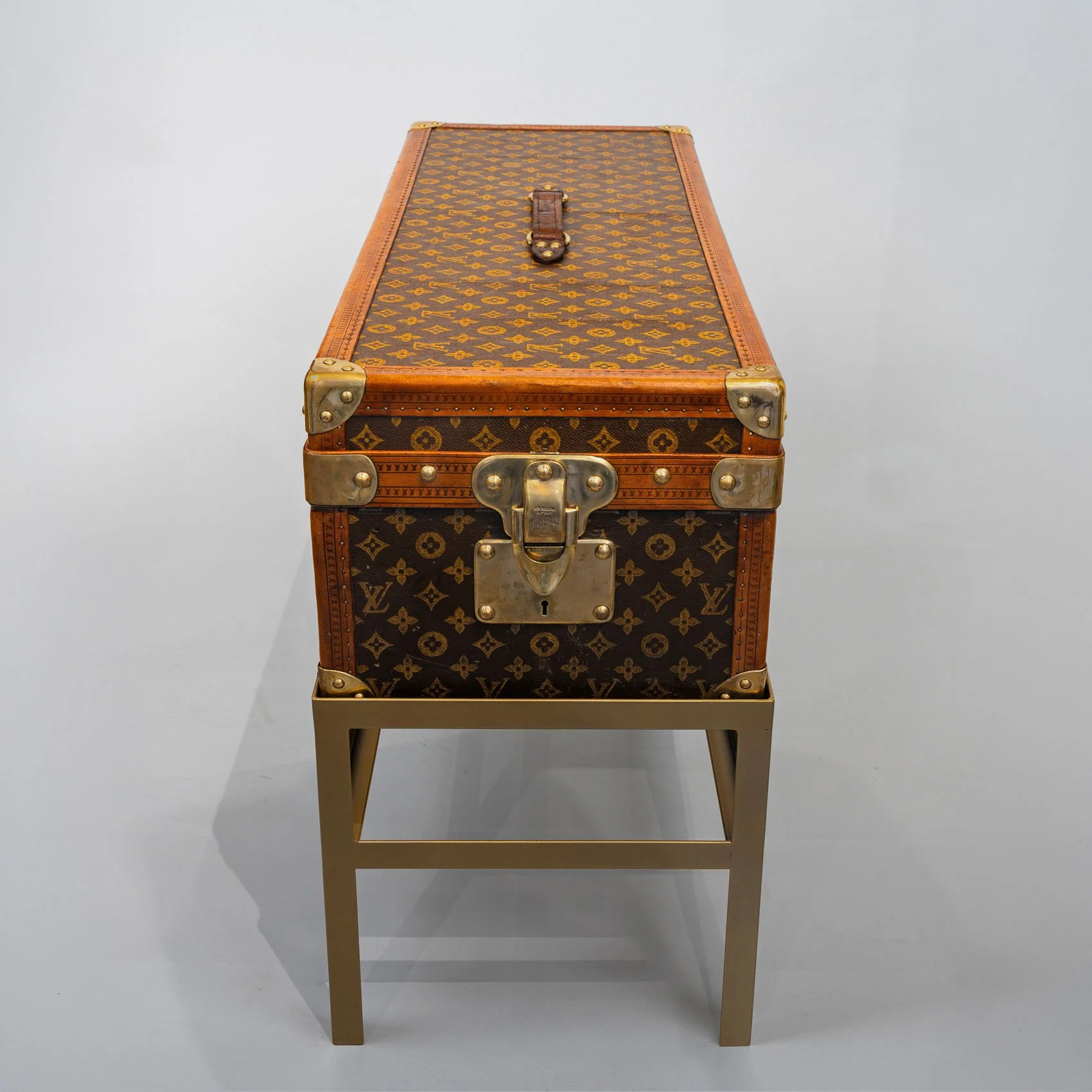
In 1911, Cambridge University Press completed publication of the Eleventh Edition of the Encyclopaedia Britannica, twenty-nine volumes drawing on more than 1,500 contributors, and still regarded as the finest single edition of the work ever published. In the same year, Louis Vuitton produced a trunk designed to carry it, and stamped the interior lid with the words that define the present example: "Specially made for the Encyclopaedia Britannica by Louis Vuitton."
That inscription transforms the trunk from a rare specialized object into a primary document, a manufacturer's statement of purpose applied at the moment of production and surviving intact after more than a century. It confirms not merely that the model was designed to house the Encyclopaedia Britannica, but that it was produced under a specific commission between the two houses.
The trunk is constructed in Louis Vuitton's monogram canvas, here in the smaller-scale, higher-density pattern of the period, with embossed lozine border trim, reinforced brass corner guards, and a large central brass lock plate. The top-mounted leather handle retains its original structure. The form is long, low, and proportioned to hold the volumes in a single fitted layer, a configuration so specific to its purpose that no other use would have suggested it. The trunk is presented on a purpose-made brass stand that raises it to console height, the volumes visible along the full length of the open case.
The interior is lined in the house's period fabric and fitted for the volumes it was designed to hold. Twenty-eight volumes of the Eleventh Edition, published by Cambridge University Press, are present in the original fitted configuration.
Library trunks of this model were produced in very small numbers. Examples in any condition are rare; examples retaining their original volumes are rarer still. An example bearing the original commission inscription in the interior lid is, to the best of our knowledge, without precedent in the current market.
Interior lid inscription: "Specially made for the Encyclopaedia Britannica by Louis Vuitton"
Contents: Eleventh Edition, Encyclopaedia Britannica, Cambridge University Press, twenty-eight volumes in the original fitted interior
Provenance: Private collection, United States
Stand: Purpose-made brass
Height: 10½ in (26.5 cm)
Width: 35 in (89 cm)
Depth: 13 in (33 cm)
Condition: Very good overall. The monogram canvas shows honest wear consistent with age and travel; structure and hardware are well preserved throughout. Lozine trim intact. Brass hardware complete, with corner guards, lock plate, and handle all present. The interior lid inscription is present and legible, the fitted interior intact, and twenty-eight volumes present.
Literature
Pierre Léonforte and Éric Pujalet-Plaà, Louis Vuitton: 100 Legendary Trunks, New York, 2010, p. 253.
Paul-Gérard Pasols, Louis Vuitton: The Birth of Modern Luxury, New York, 2005.

By the 1940s, Louis Vuitton's monogram canvas had been in continuous production for half a century — refined, standardised, and recognised across the baggage halls of the world's great hotels, ocean liners, and railway termini as the unambiguous mark of a certain kind of traveler. The shoe trunk of this period represents the house's luggage craft at its most purposeful: a form dedicated entirely to the organised transport of footwear, engineered with the same precision that Vuitton brought to every specialised case in his range.
This handsome example, dating to the 1940s, carries on its front face the owner's initials M.B.K. in bold red paint — a personalisation that was as much a practical necessity as a statement of ownership, ensuring immediate identification among the considerable quantities of luggage that accompanied a well-appointed traveler of the period. The canvas, characteristically darker and more compressed than the warmer tones of the 1920s production, presents with the deep, rich patina of a piece that has been honestly used and honestly aged.
The exterior is structured with natural wood slat banding in the warm honey tone characteristic of the post-war years, leather trim, and the full complement of original brass hardware — corner guards, central lock plate and clasp, flanking clasps, and studded borders. The leather side handle is present and retains good structure. On the lower section, two original leather pull-tab straps — the characteristic fittings of the Vuitton shoe trunk form — provide access to the lower trays.
The interior is the defining feature of this piece. Three individual layers of purpose-built shoe trays, each lined in the original felt, provide organised storage for a substantial collection of footwear — a configuration that reflects both the practical demands of extended travel and the social requirements of a wardrobe that might encompass day shoes, evening shoes, and sporting footwear simultaneously. The suede and orange canvas lining of the interior body is present and intact, the combination of textures characteristic of Vuitton's premium shoe trunk production of this period.
Shoe trunks with original three-layer felt tray interiors intact, named owner initials, and complete hardware in this condition represent a consistently desirable category in the Vuitton collecting market — the interior configuration, so frequently disturbed or lost over decades of use, survives here in remarkable completeness.
Owner's Initials: M.B.K. (red paint, front face) Dimensions: 24 × 15.5 × 20 in
Condition: Very good. Monogram canvas strong and intact with deep, even patina characteristic of 1940s production. Natural wood slat banding present and structurally sound. Leather trim intact throughout. Brass hardware complete and bright — corner guards, lock plate, clasps, and studs all present. Owner's initials "M.B.K." in red paint bold and fully legible. Interior exceptional: three original felt-lined shoe trays present and intact. Suede and orange canvas interior lining present and clean. Lower leather pull-tab straps present and functional. A well-preserved example retaining its complete original interior.
Literature:
Paul-Gérard Pasols, Louis Vuitton: Malletier à Paris, Paris, 1987
Florence Müller, Louis Vuitton: 100 Legendary Trunks, New York, 2010
Pierre Léonforte, Louis Vuitton: The Birth of Modern Luxury, Paris, 2004

Louis Vuitton Bespoke Matched Pair of Natural Leather Fitted Suitcases, circa 1920s–1930s
Among the most visually striking and least commonly encountered of all Louis Vuitton variants, natural leather suitcases represent a departure from the standard Vuitton repertoire, available only to those who sought something entirely their own. Produced as bespoke commissions rather than stock items, they were the most expensive option in the Vuitton catalog — and the most vulnerable to the ravages of time, which makes surviving examples in fine original condition correspondingly rare.
This exceptional matched pair — two suitcases in graduated sizes, presented together as they were originally commissioned — is executed throughout in natural leather, its warm tone having deepened over the decades into the complex, burnished surface that characterizes the finest aged leather goods. That both cases survive together in matched condition with complementary hardware is itself a rarity: the attrition of time and successive ownership separates matched luggage sets with near-certainty, and pairs of this completeness are correspondingly uncommon on the market.
The construction of each case follows Vuitton's characteristic flat-top suitcase configuration: brass corner guards, studded borders, central lock plate with flanking clasps, and the original leather carry handles. The brass hardware on both cases is well-matched in tone, consistent with original production.
The interior of the larger case retains its original lining, clean and fully intact, with the fitted dividers still in place. The original Louis Vuitton, Paris interior label is present and legible — a detail of both authenticating and historical significance. The smaller case retains its own interior lining.
A matched pair of Louis Vuitton natural leather suitcases in this condition, with original interiors and labels, is an opportunity that rarely presents itself. For the serious Vuitton collector or the interior designer seeking a statement piece of the highest quality, this pair has no equal.
Canvas: Natural leather
Condition: Very good overall, consistent with age, offered as a matched pair. Natural leather in both cases retains its distinctive warm tone with deep, even patina and no structural losses. Brass hardware present and complete on both cases — corner guards, lock plates, clasps, and studs all in place. Original leather carry handles are present on both cases. Larger case: interior lining clean and intact, original fitted dividers present, Louis Vuitton Paris interior label present and legible. Smaller case: interior lining present.
Literature: Paul-Gérard Pasols, Louis Vuitton: Malletier à Paris, Paris, 1987; Florence Müller, Louis Vuitton: 100 Legendary Trunks, New York, 2010; Pierre Léonforte, Louis Vuitton: The Birth of Modern Luxury, Paris, 2004
A small Louis Vuitton trunk in the classic LV monogram canvas, retaining its original brass hardware, leather trim, and painted initials throughout. The exterior is fitted with stamped brass hardware, a central lock, two swing-latch clasps, and brass corner protectors at all eight corners. The dark leather-trimmed borders are studded with domed brass nails, and a painted red lozenge stripe runs the full width of the lid. The dark leather carry handle is original.
The front bears the original owner's painted initials JMC in silver. The central lock is engraved with the maker's addresses, 149 New Bond Street, London and 1 Rue Scribe, Paris, the address Louis Vuitton occupied from 1871 until 1914, consistent with the dating of this piece.
The lid interior is lined in the original cream quilted linen, studded in a diamond lattice with brass tacks. The body is lined in the maker's natural linen canvas.
Dimensions: 20 inches long, 11 inches deep, 11 inches tall.
For a larger Louis Vuitton piece bearing the same 1 Rue Scribe, Paris address, see our 1905–1910 steamer trunk produced exclusively for John Wanamaker.
Assembled over two years, this graduated stack brings together eleven vintage Louis Vuitton monogram canvas trunks, arranged largest to smallest and rising as a single sculptural tower on a custom stand made expressly for the purpose. The trunks span the 1920s through the 1970s, each in monogram canvas with lozine edging, natural leather trim, and brass fittings, and together they trace half a century of the house's most enduring design. Every trunk in the stack is an exceptional example in its own right, selected for condition as much as for proportion, with the brass hardware hand-polished to a warm, even shine. To compose a stack of this kind is the work of patience rather than purchase, since the trunks must descend in even steps of size while holding to a consistent character, and pieces of the right quality and proportion appear only rarely. The custom stand raises the ensemble clear of the floor, so that it reads less as luggage than as sculpture, a true work of art for the home, commanding as the focal point of an entrance hall, a stair, a gallery, or a grand dressing room. Offered as a single lot, it is a rare opportunity to acquire, in a single moment, what is otherwise the patient work of years.
This rare Louis Vuitton monogram canvas double hat trunk, dating to the 1920s, is distinguished by its bold green and cream painted stripe and represents one of the most striking and scarce forms of early 20th-century luxury travel luggage.
Covered in the house’s iconic monogram canvas, the trunk is bound with lozine leather trim, brass edges, and reinforced corner mounts. The domed lid is secured by leather slats, while the front retains its central brass lock stamped ‘Louis Vuitton’ and flanked by spring latches. Leather side handles complete the form, combining durability with refined construction.
The interior is lined in quilted canvas and retains its original fitted double “cage” with webbed supports, designed to secure multiple hats in transit. This specialized system prevented crushing while allowing air circulation—an essential innovation at a time when hats formed a central element of both men’s and women’s dress.
Double hat trunks of this scale were produced in very limited numbers and typically executed as special commissions. Their larger proportions, combined with bold painted livery such as the present example, ensured immediate recognition during travel and give the piece a commanding sculptural presence today.
Produced during the golden age of travel, Louis Vuitton revolutionized luggage design with purpose-built forms tailored to the needs of an international clientele. The malle à chapeaux stands among the most sophisticated of these creations, reflecting both technical ingenuity and refined taste.
Today, double hat trunks remain among the rarest and most desirable Vuitton models, prized for their scale, bespoke nature, and strong decorative appeal. Examples retaining original interiors and distinctive painted decoration are increasingly scarce.
Explore additional Louis Vuitton trunks, including explorer trunks, library trunks, and other rare bespoke examples from the golden age of travel.
Condition
Very good overall condition, with a richly developed patina to the monogram canvas and leather trim consistent with age and use. The painted stripe remains vibrant and well-preserved. Brass hardware with light surface wear and oxidation. Interior clean and complete, retaining the original fitted double hat “cage” with expected signs of use.
Dimensions:
26”width x 25.5”height x 24.5”depth
Literature
Comparable examples of Louis Vuitton hat trunks and specialized travel cases are illustrated in:
Pierre Léonforte and Eric Pujalet-Plaà, Louis Vuitton: 100 Legendary Trunks, Abrams, New York, 2010.
The Malle Fleurs was never sold. It appeared in no window and no catalog: it was given, personally, by Georges and Gaston-Louis Vuitton to the clients they valued most. To receive one was to be acknowledged as belonging to the innermost circle of the house, a distinction no money could buy.
The custom began in 1910. Forbidden by house rule from offering discounts to even their most loyal clients, the Vuittons devised another gesture of gratitude: instead of a bouquet, flowers planted in a miniature trunk in the house monogram. By the 1920s and 1930s it had become one of the most coveted status symbols in Paris. The soprano Marthe Chenal received hers in 1922, in the very years of the present example, and Georges Vuitton himself was photographed examining a flower trunk around 1930. The custom continued until the early 1980s.
This example, circa 1920, is built in papier-mâché, covered in the monogram paper finish, the more refined specification reserved for these gift objects rather than the canvas used in commercial trunk production. It is trimmed with the LV pattern edging and fitted with brass corner guards, side clasps, a stamped lock plate, and leather handles, and, as a survival of the greatest rarity, the original key, still on its yellow ribbon. The interior is lined in French marbled paper, swirling greens, golds, purples, and creams, a theatrical reveal that shows the piece was conceived from the outset as a jewelry or decorative box rather than a planter.
Flower trunks of this period, with the key present, are among the most collectible of all Vuitton objects and appear on the market only rarely.
Condition: Very good, consistent with age. Honest patina to the monogram paper, brass hardware complete, handles sound, marbled lining rich throughout. Original key on yellow ribbon.
Dimensions: 11 in. width x 5 1/2 in. depth x 4 1/4 in. height
Literature: Pierre Léonforte and Éric Pujalet-Plaà, Louis Vuitton: 100 Legendary Trunks, New York, 2010, p. 334, "Trunk for Flowers, Georges and Gaston-Louis Vuitton, Paris, 1910," including the photograph of Georges Vuitton examining a flower trunk, c.1930.
This rare Louis Vuitton monogram canvas shoe trunk, dating to the 1920s, represents one of the most sophisticated and highly specialized forms of early twentieth-century luxury travel luggage.
Constructed in the house's iconic monogram canvas with lozine leather trim, the trunk is reinforced with brass-bound edges and corner mounts, and fitted with a central brass lock and multiple latches. The side door opens to reveal an exceptionally well-preserved interior, fully fitted with a series of individual drawers, each with leather pulls and label frames, above a larger compartment below.
Designed as a portable wardrobe for footwear, the trunk reflects Louis Vuitton's remarkable innovation during the golden age of travel. Each drawer functions as an individual shoebox, allowing pairs to be stored securely while remaining immediately accessible, an elegant solution to the demands of an increasingly mobile and style-conscious clientele.
As recorded in period accounts, Vuitton developed such compartmentalized interiors to protect delicate personal effects while maintaining order in transit. The form was first created for the soprano Lily Pons, whose celebrated commission was designed to carry some thirty pairs of shoes, and the house subsequently produced trunks of this type for other discerning clients. The present example belongs to that lineage: closely related to the Pons original in form and function, though a distinct trunk in its own right.
Examples of shoe trunks with complete fitted drawer systems were produced in limited numbers and often executed as bespoke commissions. With its intact interior and exceptional state of preservation, the present example stands as a rare and highly functional expression of Vuitton's craftsmanship and the culture of refined travel in the early twentieth century. Today, such trunks are among the most desirable Vuitton forms, combining architectural presence with a direct connection to the lifestyle of an international elite.
Condition: Very good overall, with a well-developed patina to the monogram canvas and leather trim consistent with age and use. Brass hardware shows light surface wear and oxidation. The interior is exceptionally well-preserved and complete, retaining the full set of fitted drawers with minor, as expected, wear.
Dimensions: 45 in. high × 24 in. wide × 16 in. deep
Literature: Pierre Léonforte and Éric Pujalet-Plaà, 100 Legendary Trunks: Louis Vuitton, Abrams, New York, 2010 (see the discussion of specialized shoe trunks and compartmentalized interiors, pp. 252–253).
A Louis Vuitton hat trunk, the malle à chapeau, in untreated cuir naturel, early twentieth century. Of square form, bound with riveted leather bands and fitted with a brass lockplate and protective corner mounts, the lid centered with a leather handle and stenciled R.B. beneath a coronet, the body encircled by grey and yellow painted identification stripes for immediate recognition in transit. The leather has matured to the deep, varied patina these pieces were designed to acquire, each one uniquely with use, and the interior is lined in cream canvas retaining the Louis Vuitton label.
By the turn of the twentieth century, Vuitton was particularly attentive to the safe transport of hats, essential elements of formal dress, and the malle à chapeau was developed precisely for this purpose, its structured interior preserving delicate forms through rail and steamship journeys. Bespoke examples were made for distinguished patrons, among them the hatboxes commissioned for William Twombley in Paris in 1895, and the coronet stenciled above the initials here points to a titled original owner. Cuir naturel examples with original personalization are among the most sought-after forms of early Vuitton luggage.
Condition: Very good. Beautifully developed patina with wear consistent with age and use; brass hardware with an attractive aged surface; lining present and clean with light age toning; structurally sound.
Dimensions: 15 in. width x 16.5 in. height x 13.75 in. depth
Literature: Florence Müller, Louis Vuitton: 100 Legendary Trunks, New York, 2010; Pierre Léonforte, Louis Vuitton: The Birth of Modern Luxury, Paris, 2004
Swiss Black Forest Carvings
Daniels Antiques has been collecting and dealing in Swiss Black Forest carvings for over four decades. Simon Daniels is co-author of Swiss Carvings: The Art of the Black Forest, 1820–1940 (2006), the standard reference work on the subject, and every piece in the collection is informed by specialist research, first-hand connoisseurship, and a deep engagement with the field's provenance.
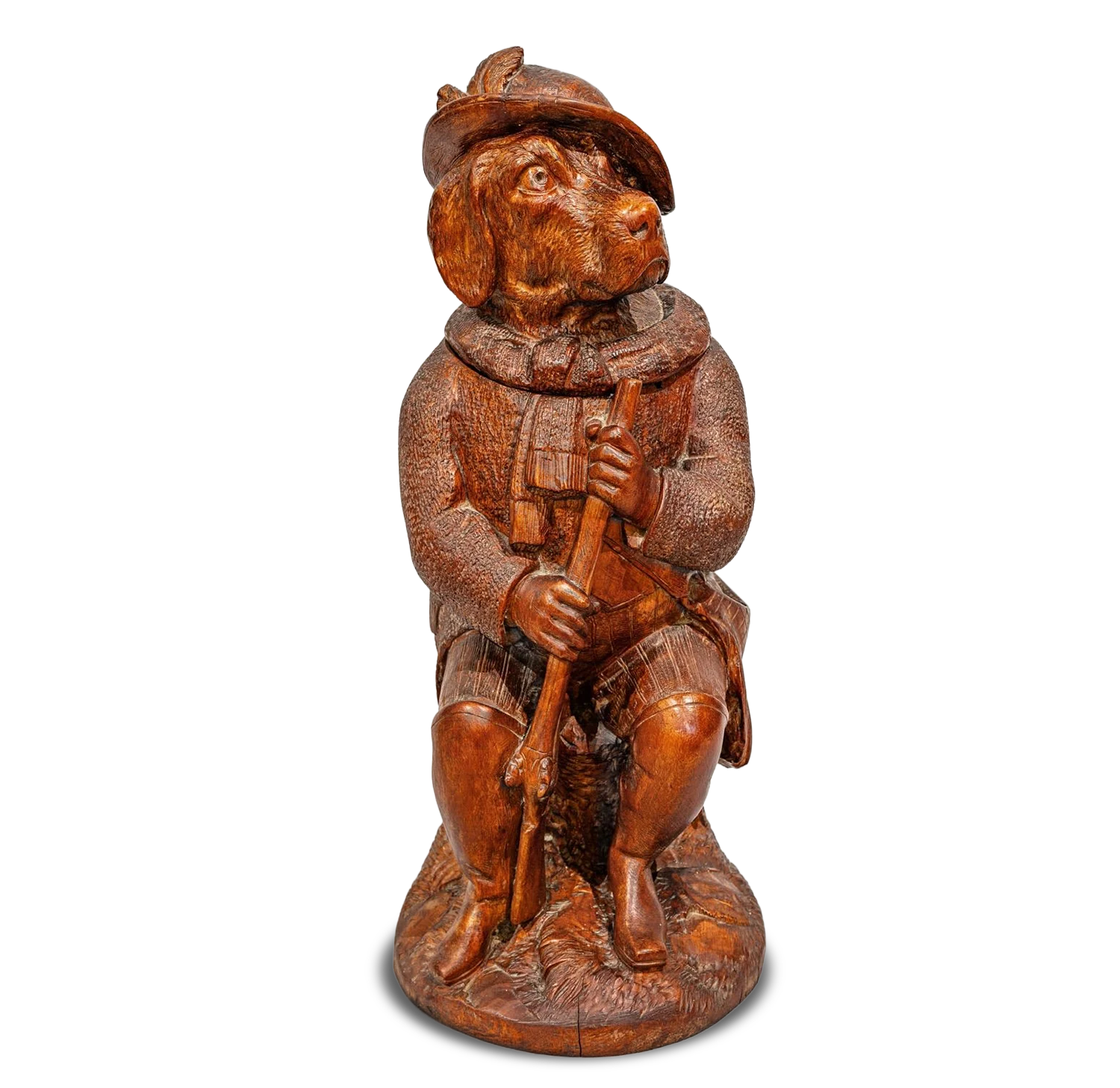
A life-sized carved eagle owl, attributed to the Ruef Brothers of Brienz, Switzerland, circa 1880, standing 28 inches high. The bird is carved in linden wood and perched upright on a cut branch rising from a rocky outcrop, the whole cut from a single block with a turned circular base. Ear tufts raised, wings folded, talons gripping the branch, it fixes the viewer with yellow glass eyes set into deeply carved facial discs.
What distinguishes this owl is the treatment of the plumage. Every feather is carved individually and then worked with a heated iron, the edges and barring scorched into the wood so that the graduated breast, the mottled crown, and the darker flight feathers read in tone as well as relief. This burning of the surface is the technique most closely associated with the Ruef workshop, whose birds of prey were a specialty of the Brienz trade, and the attribution rests on that handling together with the composition and the scale. The piece is unsigned.
The head is made separately and lifts off at the neck, a construction the carver has concealed within the ruff of feathers at the throat. It is not hinged, and the body is not hollowed out for use as a tobacco jar or humidor, which is consistent with the piece's size. The separate head allowed the carver to work the face and the body from blocks of different grain, and it is a feature worth knowing when a piece of this model is examined.
Carving of this ambition came out of Brienz in the Bernese Oberland, where the Ruef Brothers worked alongside Johann Huggler, Hans Huggler-Wyss, and Walter Mader in the decades when the international exhibitions at Vienna, Philadelphia, Paris, and Chicago carried Swiss carving to an American and English clientele. We discuss the Ruef workshop and the scorching technique in our article on the masters of the Black Forest, and in the reference we co-authored on the subject, Swiss Carvings: The Art of the Black Forest, 1820 to 1940.
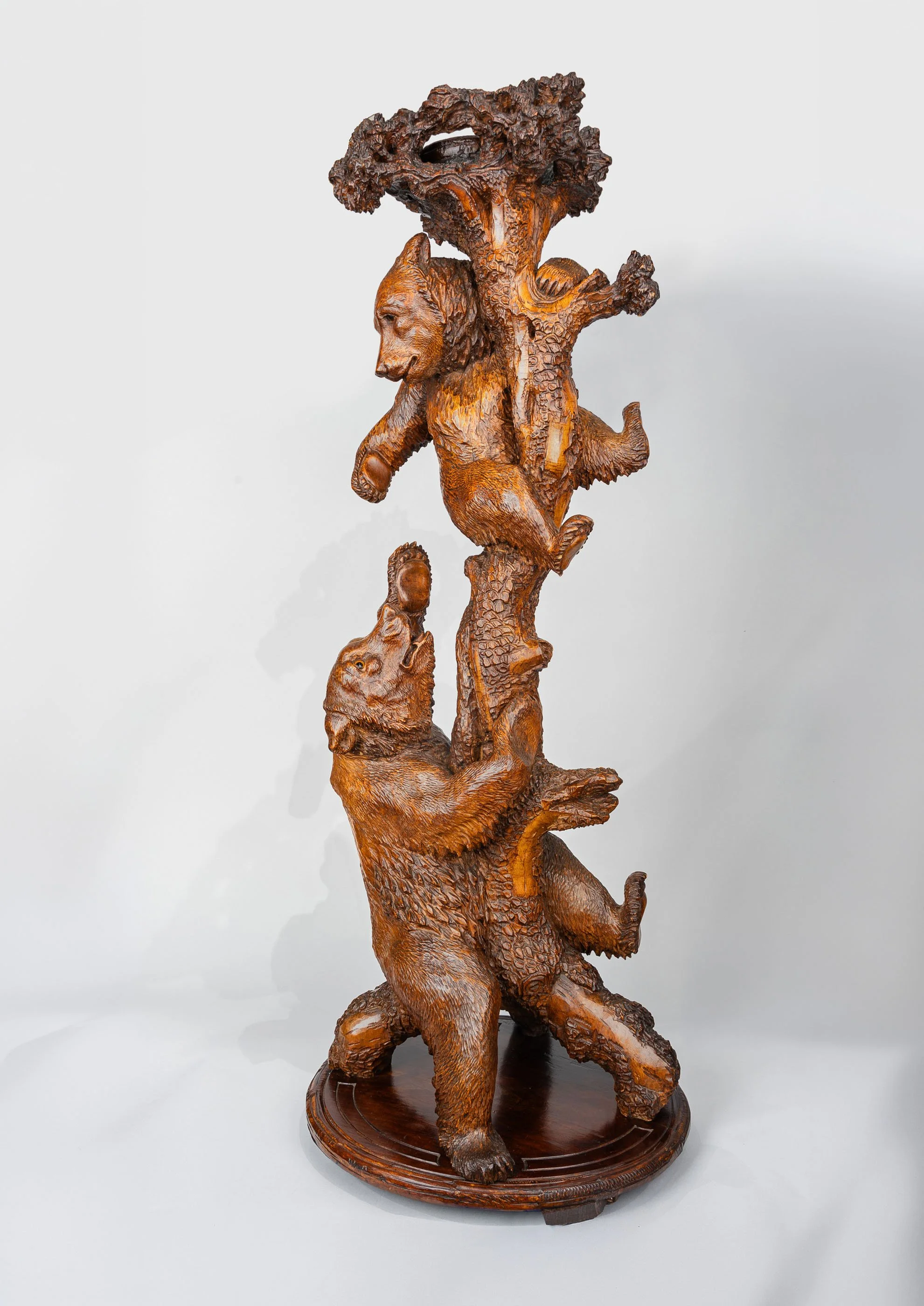
A large and theatrical Swiss Black Forest jardinière in carved linden wood, circa 1870, formed as two bears at a gnarled tree, the crown of which opens into a naturalistic basin for a plant or palm.
A young bear scrambles up the trunk, forelegs thrown over a branch, glancing back at the adult below, who rears upright against the tree, head thrown back and mouth open, one forepaw raised toward the escaping climber. Both bears carry inset glass eyes, and the carving moves confidently between textures, the dense fur of the animals, the scaled bark of the trunk, and the burled, leafy crown of the basin, the whole rising from a molded circular base.
The bear is the emblematic subject of Brienz carving, and jardinières of this scale belong to the upper end of its production, sculptural furniture made for the salons and winter gardens of the hotel age. A single-bear jardinière of similar style is illustrated on page 121 of Swiss Carvings; the present example, over three and a half feet tall and fully carved from every angle, holds a room as few functional objects of the period can.
Dimensions: 43"height
Literature
Jay Arenski, Simon Daniels, and Michael Daniels, Swiss Carvings: The Art of the Black Forest, 1820–1940 (2006), p. 121, where a single-bear jardinière of similar style is illustrated.
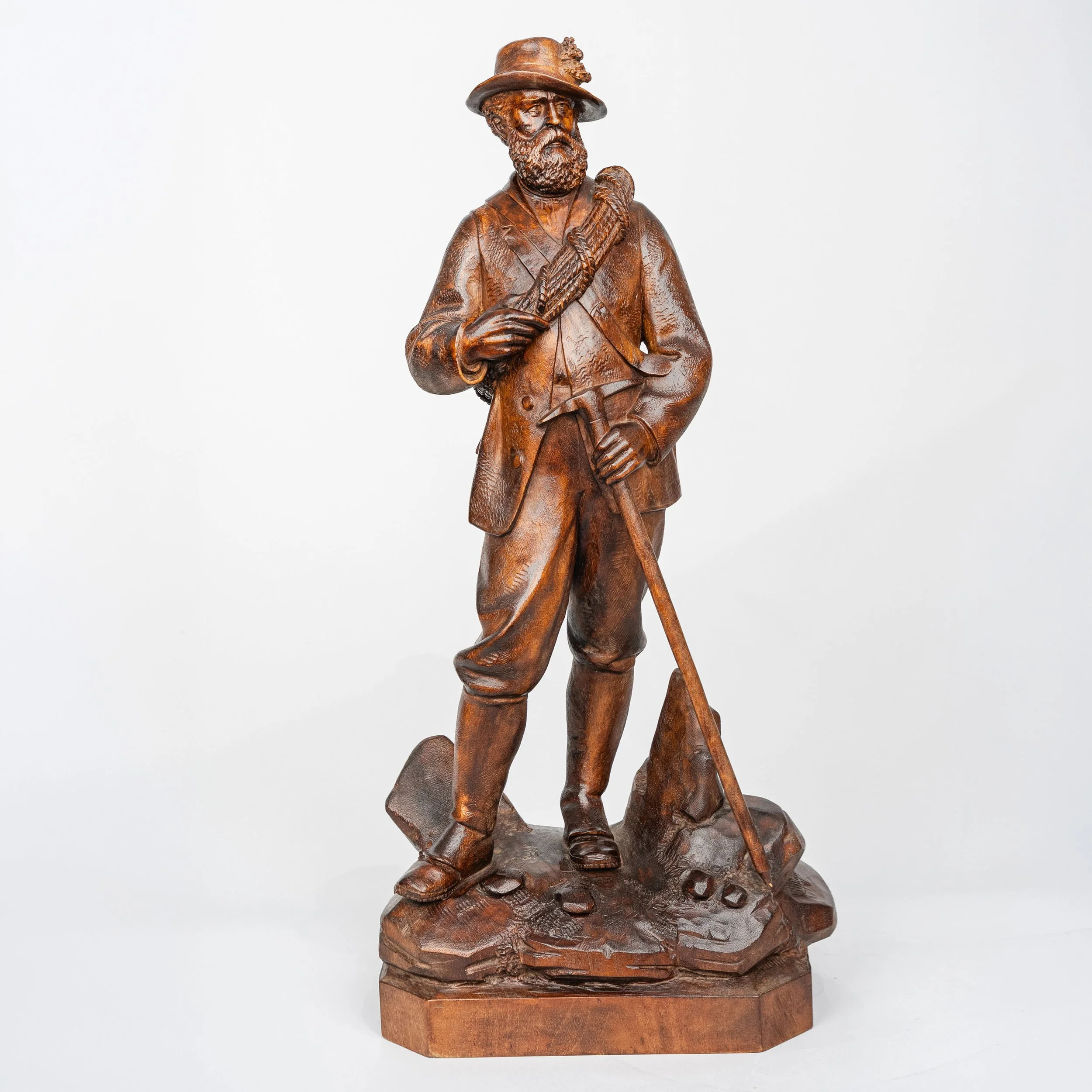
A fine carved walnut figure of an alpine hunter by Johann Huggler of Brienz, the pre-eminent master of the Swiss Black Forest carving tradition, stamped with his initials JH to the rear of the boot, circa 1870.
The hunter stands at ease on a naturalistic rocky outcrop, a bearded man of the mountains caught in a moment of rest rather than pursuit. He wears a hat dressed with traditional alpine flowers, an open jacket over a buttoned waistcoat, breeches, and tall boots, a mountaineering staff planted against the rocks in his right hand, a coiled rope slung over his shoulder, and a binocular case carried at his hip. The carving holds its quality through every surface: the varied texturing of jacket, waistcoat, and breeches, the weave of the coiled rope, the individually rendered stones of the base, and above all the face, alert, weathered, and fully characterized, a portrait of a type Huggler knew from life in the Bernese Oberland.
The rear of the hunter's boot bears a stamped JH, the mark Johann Huggler used in the early period of his career, before the Huggler family began retailing their own work. Stamped examples from these years are rare, and the mark places the figure firmly in the 1870s, the decade of Huggler's finest independent carving. Huggler stands at the summit of the Brienz school; his works were shown at the great international exhibitions of the nineteenth century, and signed or stamped examples consistently represent the highest standard of the tradition. We have had the privilege of handling deeply personal works by Huggler, and the present figure shows the same authority brought to a subject at the heart of alpine life.
Dimensions: 19"height
Condition: Very good overall.
Literature
Jay Arenski, Simon Daniels, and Michael Daniels, Swiss Carvings: The Art of the Black Forest, 1820–1940 (2006).
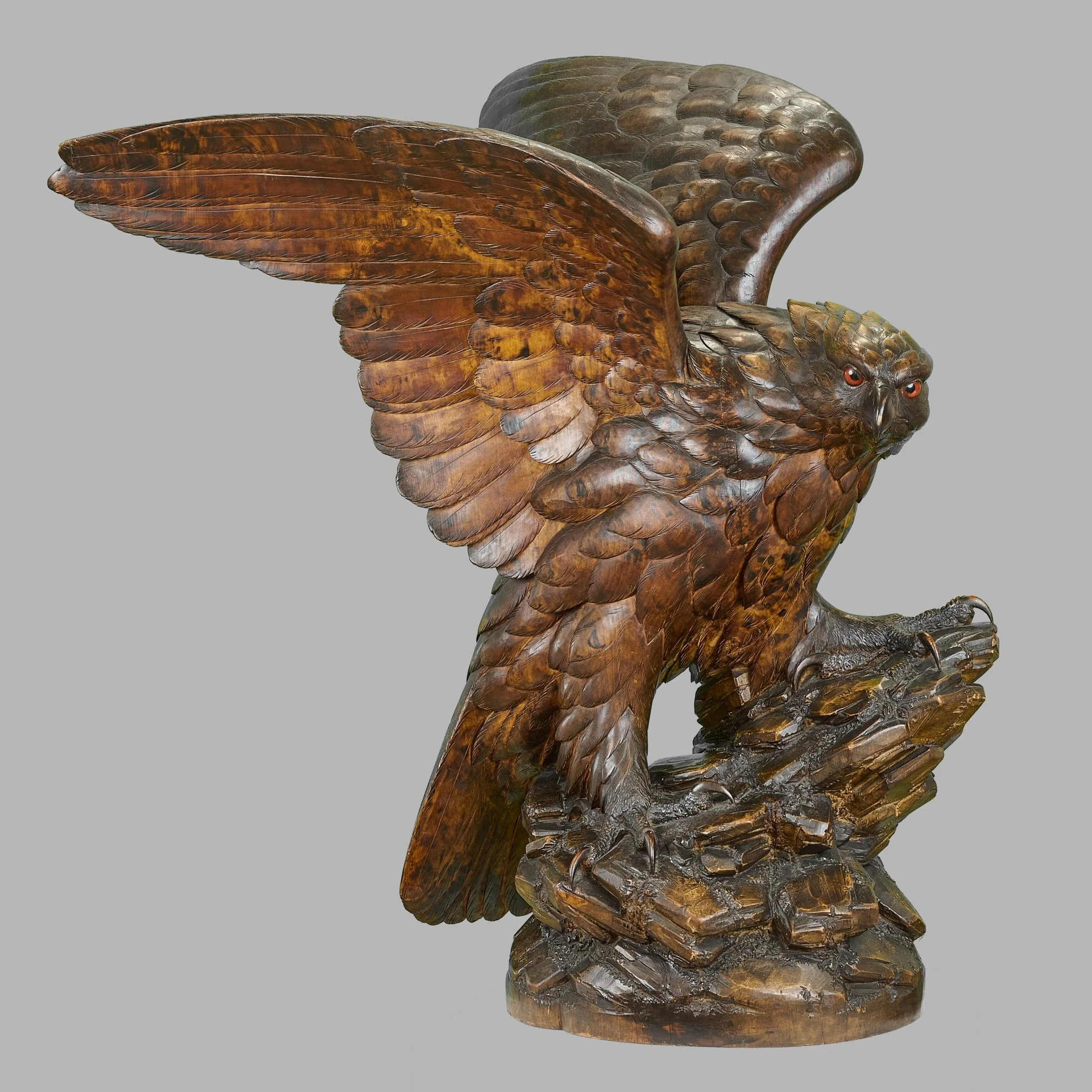
A large and powerfully modeled Swiss Black Forest carving of a golden eagle, attributed to the Ruef Brothers of Brienz and carved from linden wood, the bird shown alighting on a rocky outcrop with wings raised and head turned, with inset glass eyes. The eagle ranks with the bear and the owl among the defining subjects of the Brienz tradition, demanding both anatomical command and sustained technical control across a single block of work, and stands among the most ambitious forms the workshops produced.
The carving is worked with exceptional attention to the plumage, each feather individually defined and layered from the fine covert feathers of the breast to the broad primaries of the outstretched wings. The graduated coloring of the plumage was achieved not by applied stain but by scorching the surface of the wood with heated irons, a characteristic Brienz technique that produced the warm tonal transitions seen across the wings and body. The head is finely detailed, with a sharply hooked beak and inset glass eyes that lend the bird its alert, arresting expression, and the figure is raised on a naturalistically carved base of rocky strata.
The Ruef Brothers were among the most accomplished of the Brienz carvers, recorded alongside the Huggler family among the workshops whose work defined the finest period of the tradition and documented in the standard literature, including Swiss Carvings: The Art of the Black Forest, 1820–1940. The present eagle is attributed to them on the strength of its scale, the confidence of its modeling, and the quality of its finish, each consistent with their documented work in this subject.
The carving is in excellent original condition, retaining its surface and glass eyes, with the crisp definition of the featherwork fully preserved and the warm coloring undisturbed. Wear is minor and consistent with age.
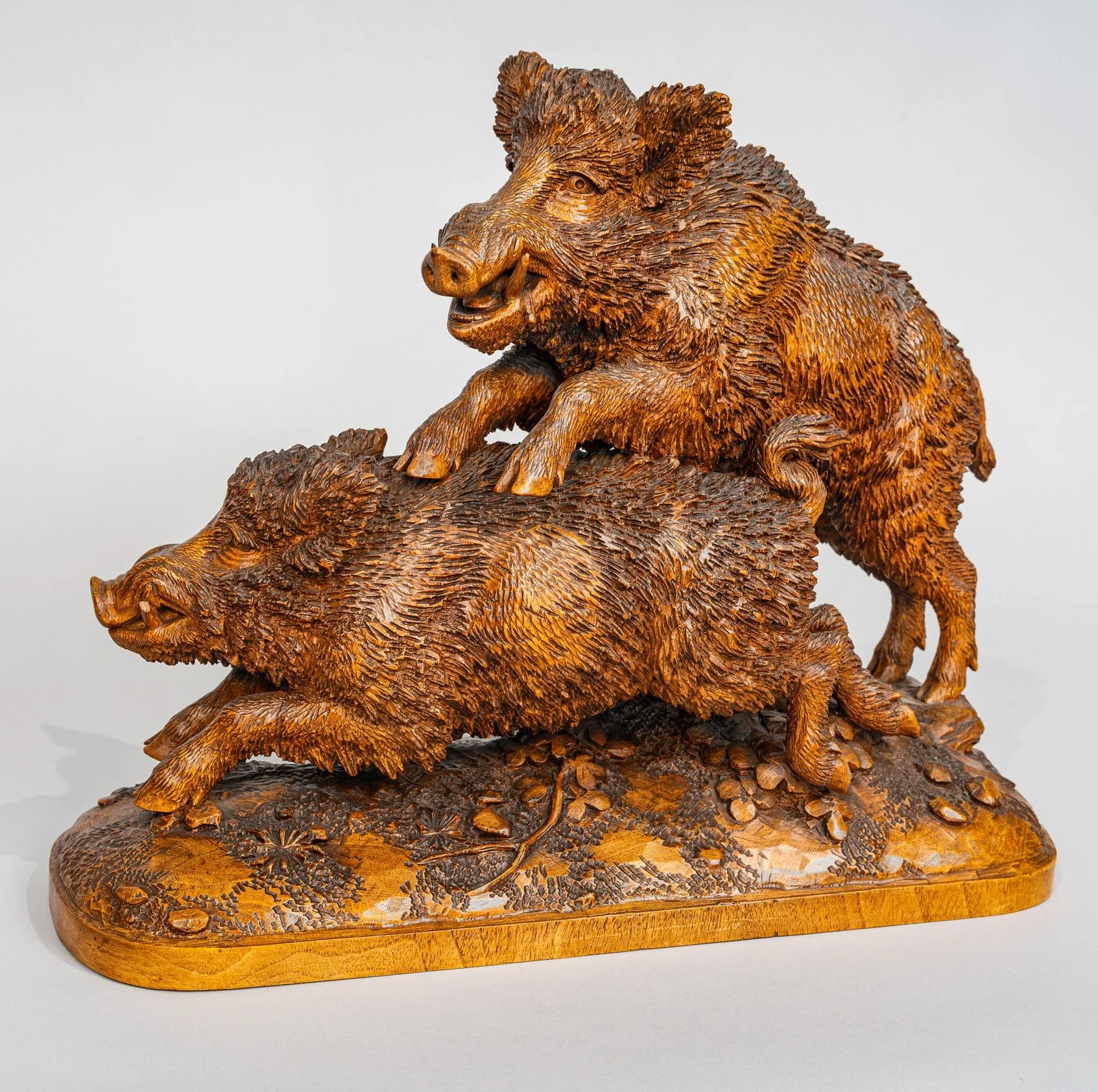
Two wild boars startled into sudden flight, one leaping across the back of the other in a single explosive instant, carved in walnut at Brienz, circa 1870.
The composition captures the precise moment of alarm. The lower animal lunges forward, forelegs extended, head thrust low to the ground, while the second vaults across its back, unable to stop or turn — the two figures locked together in motion, compact yet charged, conveying with remarkable economy the raw urgency of the animals.
Each bristled coat is articulated through dense, directional toolwork, thousands of individual marks describing the coarse, layered hair and the shifting musculature beneath. Tusks, alert eyes and flared snouts are sharply defined, and the depth of cutting varies deliberately across the surfaces, producing the contrasts of light and shadow that animate the group and reward close examination. The figures stand on an integrally carved base of forest undergrowth — stones, moss and ground cover — and the warm walnut patina deepens the relief throughout.
The group belongs to the height of the Brienz industry's reputation, around 1870, when the workshops of Huggler, Binder and their contemporaries were showing at the great world's fairs and collected across Europe and America. Animal subjects of this naturalistic ambition represented the apex of the tradition, and groups of this quality are rare on the market.
Condition: Very good; rich original patina, surface carving complete and crisp, no restorations or repairs noted, minor wear consistent with age.
Dimensions: 14 in. width x 12 in. height x 5 in. depth
Literature: Jay Arenski, Simon Daniels, and Michael Daniels, Swiss Carvings: The Art of the Black Forest, 1820–1940 (2006).
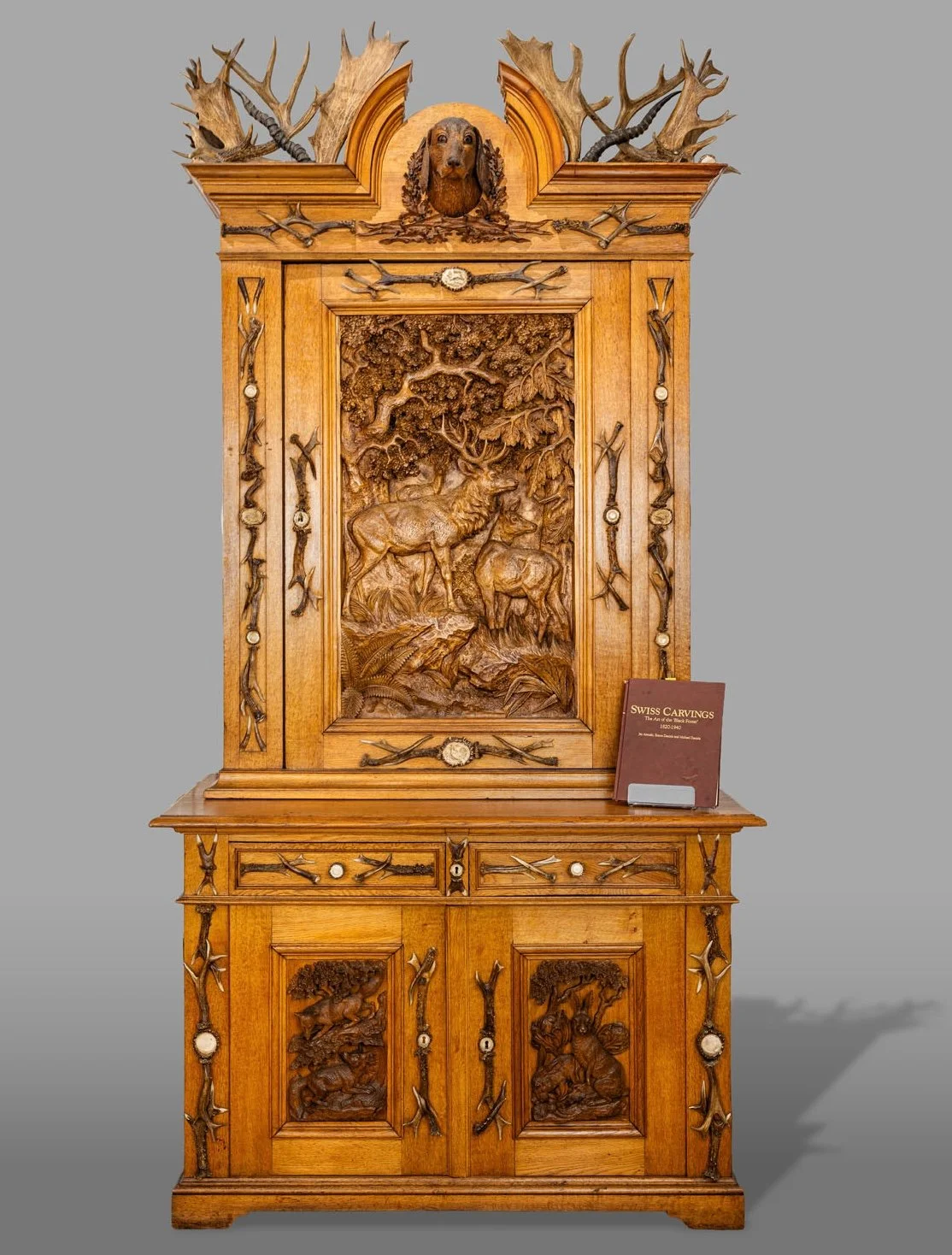
A hunting cabinet of exceptional ambition, nine feet tall, in two parts — among the most complete expressions of the Black Forest Jagdschrank to appear on the market in recent years.
The upper case is dominated by a deeply carved high-relief panel of a stag, hind and fawn in a dense Alpine forest, the composition built in layered planes — foreground undergrowth, mid-ground figures, a receding canopy of oak and pine — that draw the eye continuously through the scene. The stag stands alert and full-antlered, the hind attentive at his shoulder, the fawn part-sheltered in the undergrowth, and the surface textures of coat, bark, leaf and mossy ground are achieved through the fine, varied tool work that separates the best Brienz production from the broader regional trade.
The surround matches the panel. Antler-mounted columns frame the case, set at intervals with carved bone medallions of miniature wildlife subjects, among them a capercaillie. The cornice carries a hound's head with glass eyes within an arched pediment, flanked by two pairs of full stag antlers, and a further antler branch between cornice and panel bears one more medallion. Below, two cupboard doors carry their own relief panels — foxes in woodland to the left, hares beneath a tree to the right — framed by antler handles, with a pair of drawers above set with bone escutcheons to match.
The Jagdschrank — the Black Forest gun cabinet — was purpose-built to house firearms and hunting equipment, and served equally as a prestige display in the hunting lodges and great interiors of the late nineteenth century — the meeting point of fine furniture-making and sculptural carving. The most ambitious examples were made for a clientele of European aristocracy and American collectors, and shown at the international exhibitions in Paris, Vienna and Chicago; demand for them has never lapsed.
Condition: Very good for the scale and age; warm original patina to the oak, carved panels complete and crisp, antler and horn mounts intact, glass eyes to the hound's head present, minor age-consistent wear, no significant losses or restorations noted.
Dimensions: 52 in. width x 26 in. depth x 108 in. height
Literature: Jay Arenski, Simon Daniels, and Michael Daniels, Swiss Carvings: The Art of the Black Forest, 1820–1940 (2006).
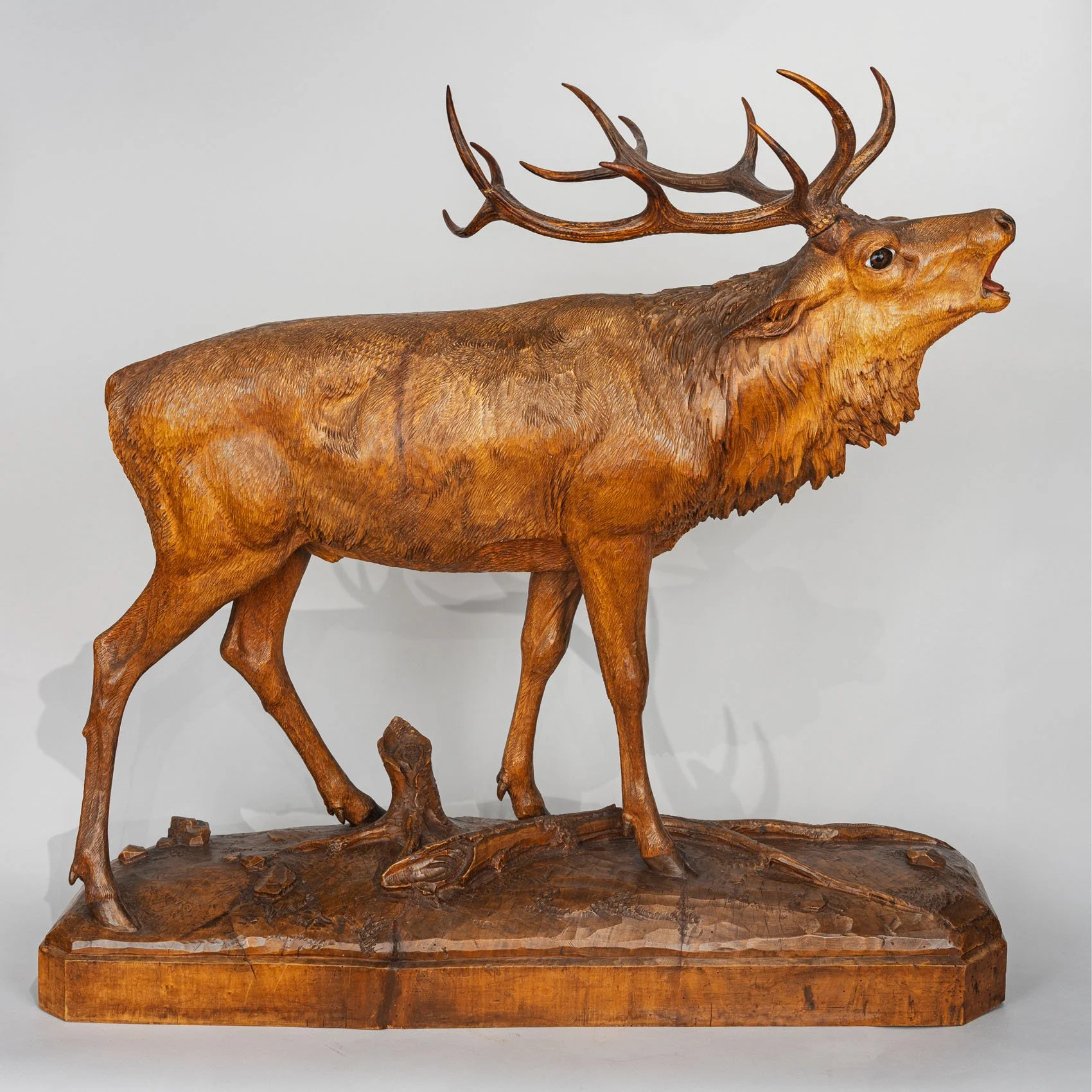
A monumental carving of a bellowing red deer stag, standing in full arrest with head raised and mouth open at the height of the rut, one of the most demanding subjects in the Brienz repertoire. It is worked in linden wood on a base of rocky Alpine terrain, the coat articulated across the entire surface in dense, directional tool marks that shift in depth and orientation from the neck mane to the flank, the musculature of the shoulders and haunches modeled with sculptural authority. The eyes are inset glass, a hallmark of the finest Brienz work; the open mouth has a painted interior, and the separately made antlers render each tine, burr, and beam with naturalistic precision.
The pose is one of three through which the workshops defined the red deer, alongside the startled stag, alert upon detecting danger, and the Monarch of the Glen, statant after Landseer's painting of 1851. All three are documented in the standard reference on the subject: Huggler Frères exhibited both a Monarch of the Glen and a stag of the present pose at the Paris international exhibition of 1900, reproduced in The Art Journal Illustrated Catalog of that year, and a life-size example of the startled pose, c.1870, completes the record. The present carving invites direct comparison with that exhibited stag, singled out by contemporary reviewers as a quite remarkable piece of realistic work.
Though unsigned, it is consistent with the leading Brienz workshops of the closing decades of the nineteenth century, when firms of this rank, Ed. Binder & Co. among them, supplied the great country houses of Britain and the collectors of the Gilded Age. Carvings of this scale and quality are rarely encountered today.
Condition: Excellent. Minor historic repairs to the antlers, consistent with age and handling. Warm, even patina throughout.
Dimensions: 35 in. length x 10 in. depth x 34 in. height
Literature: Jay Arenski, Simon Daniels and Michael Daniels, Swiss Carvings: The Art of the Black Forest, 1820–1940, 2006, cf. figs. 51–52, p. 54 (Huggler Frères, Paris 1900); fig. 115, p. 82 (life-size startled stag, c.1870)
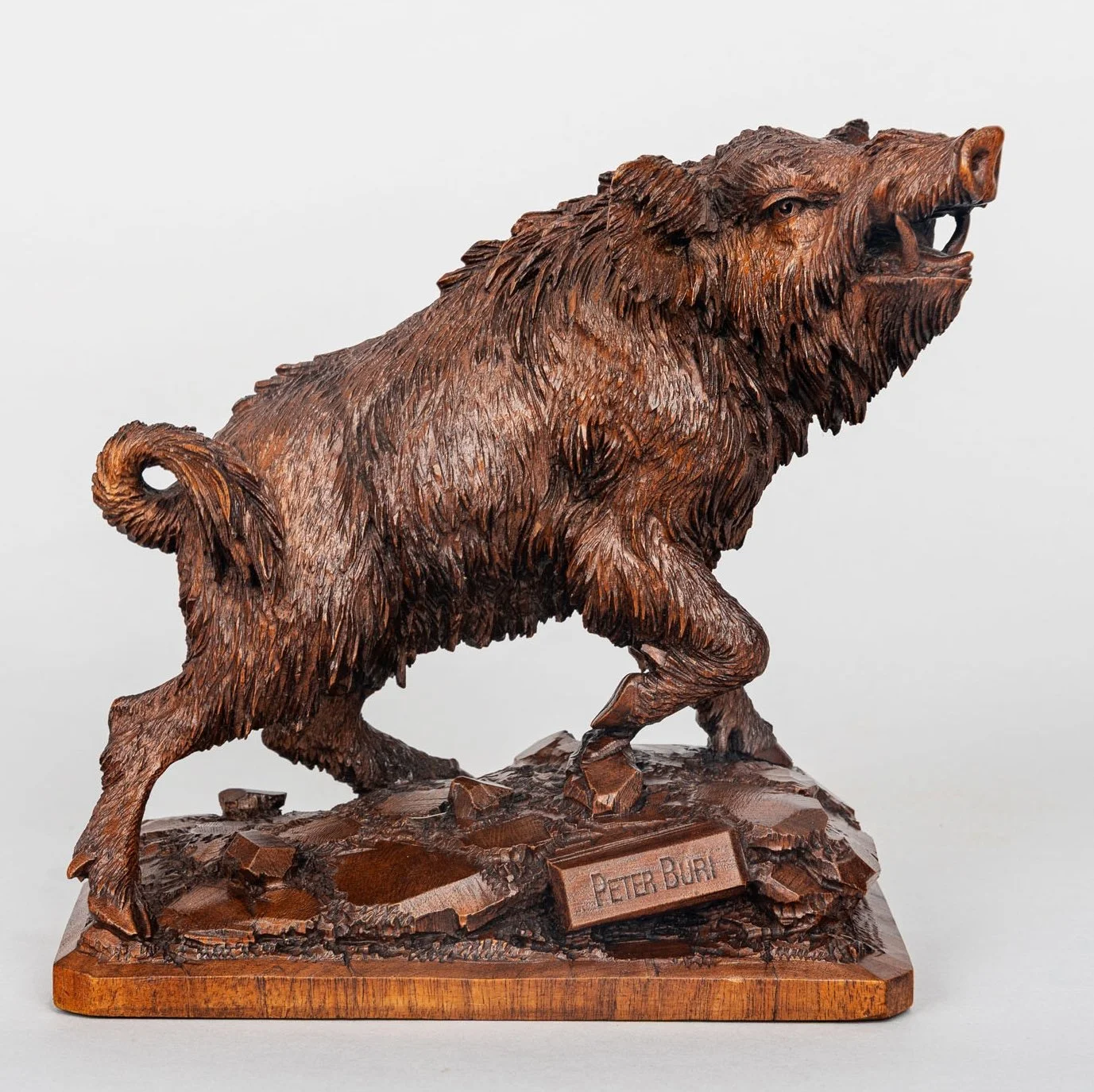
A rare and exceptionally fine signed work by Johann Huggler, the pre-eminent master of the Swiss Black Forest carving tradition: a walnut wild boar striding with head raised and jaws open.
The animal is powerfully modeled. Dense, directional toolwork describes the coarse bristles of the coat, deeply undercut at the belly and legs, over musculature that is fully understood, and the head, with its open jaws, tusks, and alert eye, carries the animal's character with real force. The integrally carved rocky base is stamped J. HUGGLER LAUTERBRUNNEN on one side and the retailer Peter Buri on the other, with paired marks that record both the carver and the piece's passage through the Swiss retail trade of the period.
Johann Huggler (1834–1912) stands at the summit of the Brienz school. His works were shown at the great international exhibitions of the nineteenth century, and signed examples of his animal sculpture appear only rarely on the market. The present boar is directly related to the exhibition model illustrated on page 57 of Swiss Carvings, thereby placing it among his most celebrated works.
Condition:
Very good overall. The walnut retains a rich original patina throughout. Carving complete and crisply preserved. Both stamps, J. HUGGLER, LAUTERBRUNNEN and Peter Buri, clear and legible. Minor wear consistent with age; no restorations noted.
Dimensions: 8” long, 7.5” tall.
Literature
Jay Arenski, Simon Daniels, and Michael Daniels, Swiss Carvings: The Art of the Black Forest, 1820–1940 (2006), p. 57, where a closely related exhibition model of a wild boar is illustrated.
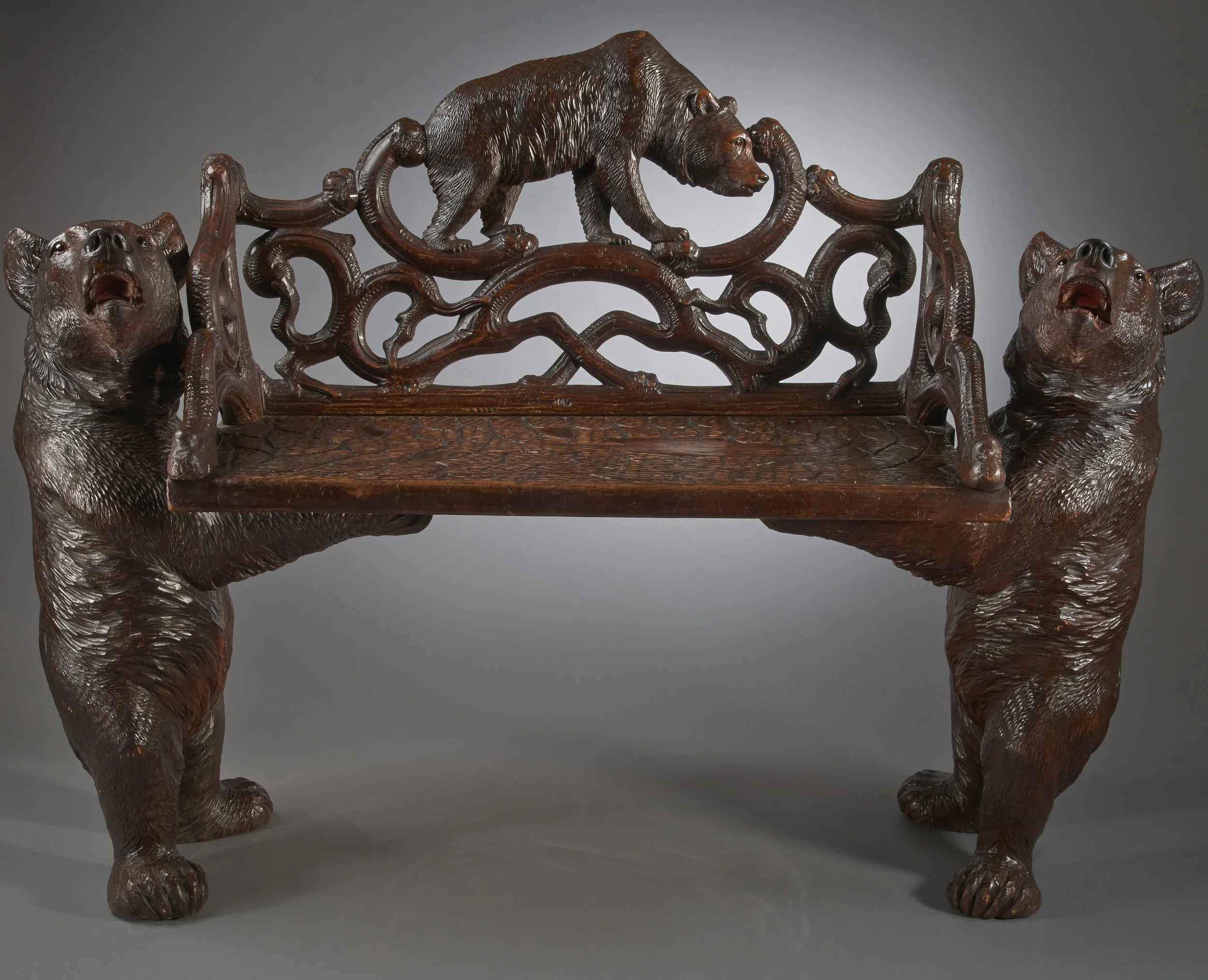
Among the most celebrated productions of the Brienz workshops, the bear bench stands as a supreme test of the carver's art — at once functional and entirely sculptural. This fine linden wood example, circa 1870, meets both demands with distinction.
At either end, a standing bear, carved fully in the round with commanding anatomical authority, rises on its hind legs to receive the seat rail — head thrown back, mouth open, the teeth and red-stained tongue rendered with disconcerting naturalism, the dense fur differentiated to follow the musculature and the coat's directional growth. Between them, the seat is carved to simulate woven cane.
The back is a tour de force of pierced work: deeply undercut, interlaced branches forming a scrolling openwork panel, presided over by a strolling bear in high relief along the crest rail — head lowered, weight forward, utterly self-possessed. The contrast between the energy of his stride and the fluid ornament beneath shows genuine sophistication.
Benches of this quality drew sustained attention at the international exhibitions of the late 19th century, where Swiss carvers demonstrated their technical supremacy to collectors and institutional buyers across Europe and America. Comparable examples are illustrated in Swiss Carvings: The Art of the Black Forest, 1820–1940.
Condition: Excellent, commensurate with age. Linden wood mellowed to a deep, even tone. Glass eyes intact on all three bears. Pierced back and branch-work complete with no losses. Teeth and stained tongues intact on both supporting bears. No restoration noted.
Literature: Jay Arenski, Simon Daniels and Michael Daniels, Swiss Carvings: The Art of the Black Forest, 1820–1940, Antique Collectors' Club, Woodbridge, Suffolk, 2006 — see fig. 225 (p. 140) and fig. 241 (p. 146) for closely comparable examples.
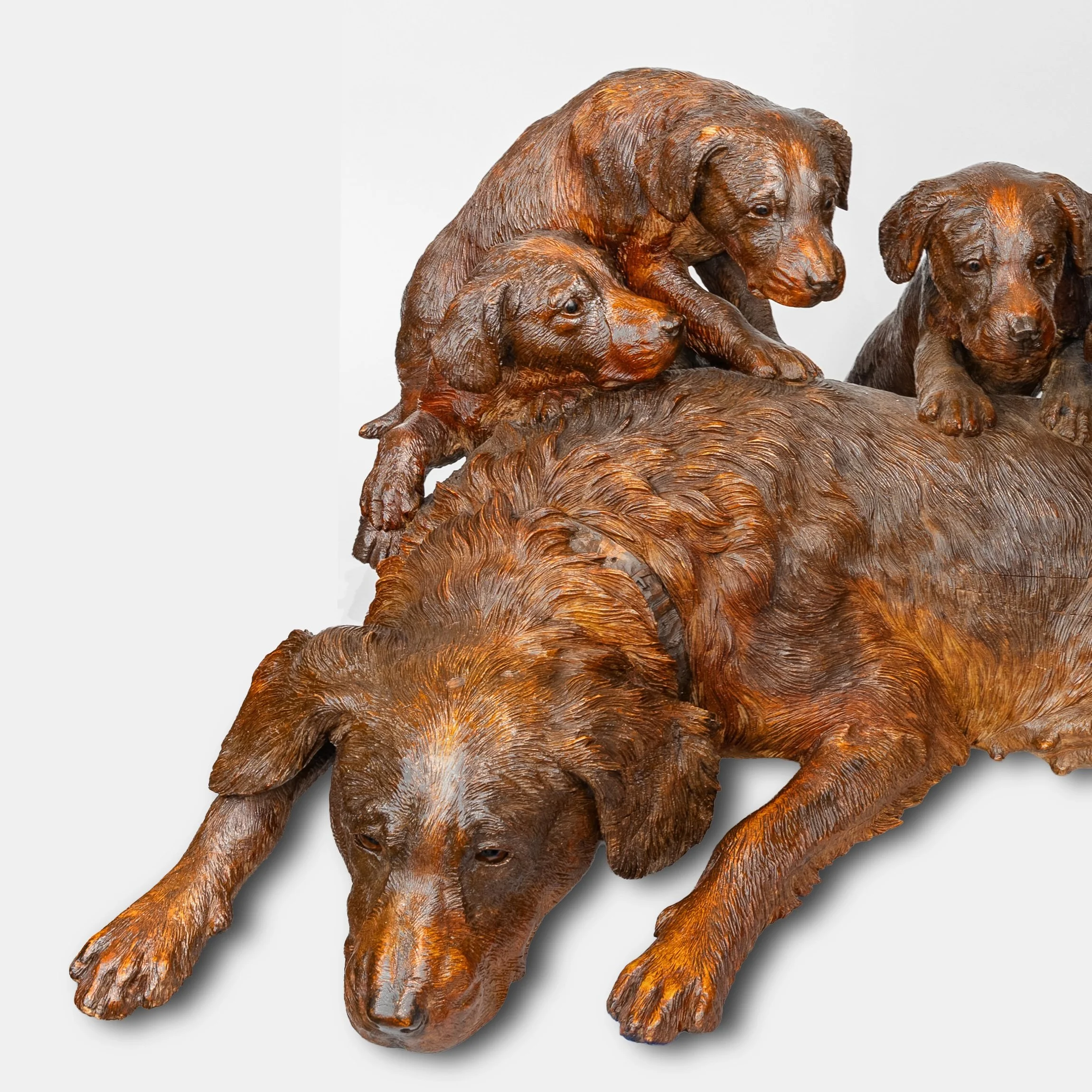
A fine and rare sculptural group by Walter Mader of Brienz, one of the most accomplished masters of the Swiss Black Forest carving tradition, depicting a recumbent hound with four puppies clambering across her back, carved in mountain maple on an exceptional scale.
The mother lies stretched at rest, her head sunk between extended forelegs with the patient, weary calm of a nursing animal. Her coat is built up in long, sweeping tool strokes that follow the lie of the fur, and a studded collar is carved at her neck with the same care given to the figures themselves, placing her firmly in the working life of a real dog. Her teats are visible along the underside, the carver recording the plain truth of a mother with a litter, without sentiment or evasion.
Across her back the four puppies pile and jostle, each with inset glass eyes and each individually observed: one rests its chin drowsily against her shoulder, another braces a forepaw and noses forward mid-climb, a third stares out with wide, unguarded curiosity, and the fourth cocks its head as if deciding whether to join the game. The soft modeling of their faces, the paws and ears falling every which way, all speak to observation from life rather than workshop formula.
The group is unsigned, as is common for Brienz work of this period; the attribution rests on its direct correspondence in model, composition, and handling to Mader's documented dog groups, including a closely related example of the same subject previously sold by Daniels Antiques. Mader's feeling for dogs was no workshop convention: his lifelong friendship with Johann Huggler, the pre-eminent master of the Brienz school, was bound up with the loss of his own beloved dog, Nase, in the Alpine tragedy of 1871, commemorated in Huggler's carved portrait of the animal, which we have also had the privilege of handling. That intimacy with his subject carried Mader's dog groups to the international exhibitions of the nineteenth century in London, Paris, and the United States, and it is felt in every figure of the present work, among the most compelling dog subjects of the Black Forest tradition.
Dimensions: 36"length x 20"depth x 15"height
Literature
Jay Arenski, Simon Daniels, and Michael Daniels, Swiss Carvings: The Art of the Black Forest, 1820–1940 (2006).
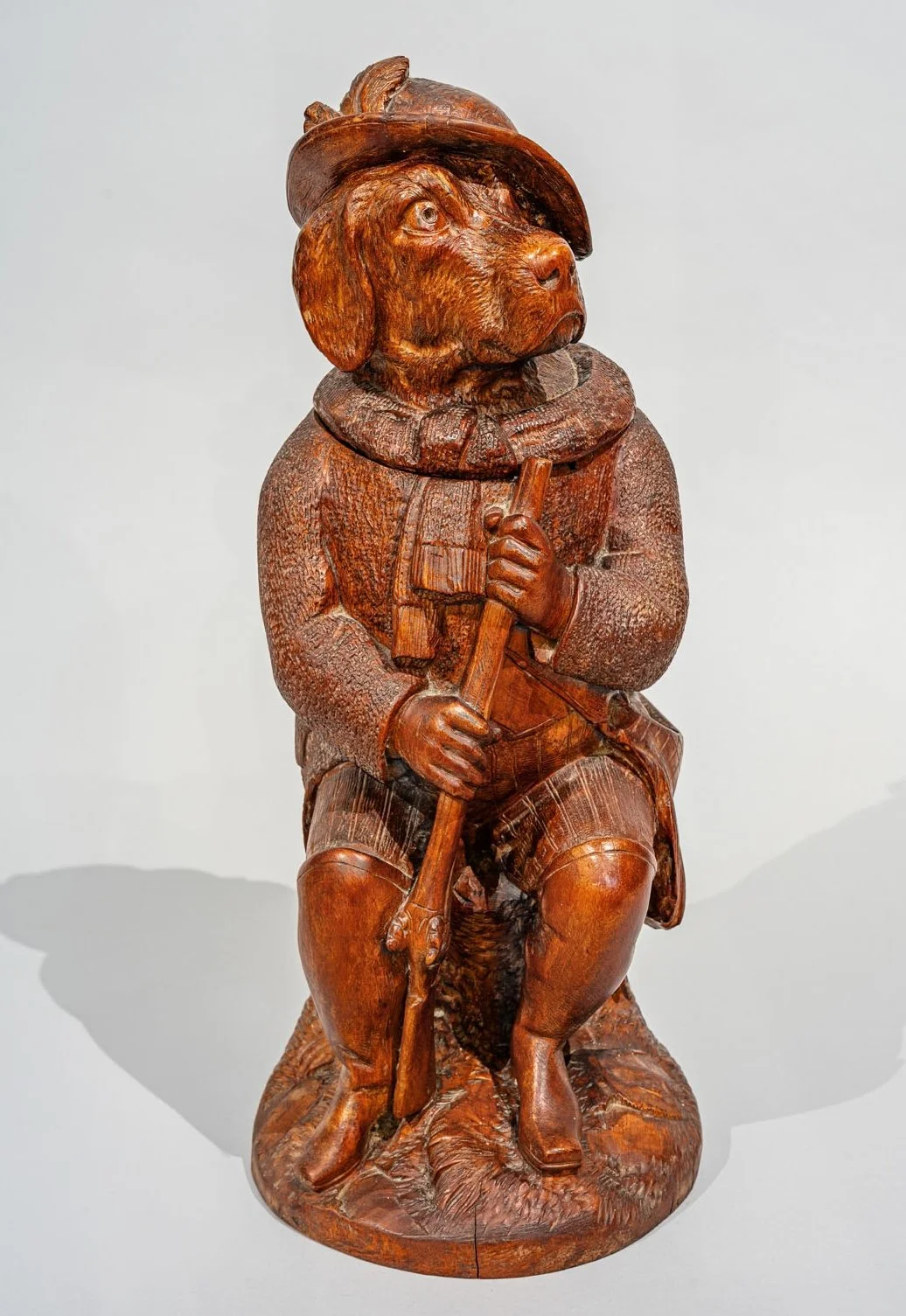
An exceptional example of Black Forest carving at its most inventive: an anthropomorphic hound dressed as a hunter, seated on a tree stump, forming a figural tobacco jar with the head as a removable lid, carved in walnut at Brienz and dated 1870.
The hound sits on a carved tree stump on a naturalistic oval base, in a caped hunting coat and feathered hat, a rifle held at his side, a fringed game bag at his flank rendered in precise crosshatch that plays against the rougher texture of the coat — cloth, fur and leather each given its own surface treatment.
The expression is the piece's great achievement. Where the companion fox hunter carries a quality of knowing cunning, this hound is altogether different: world-weary, slightly doleful, the eyes drooping with the resignation of a dog who has been out in all weathers and expects nothing better — comic sympathy achieved through affectionate observation rather than caricature.
The head lifts cleanly at the collar to reveal the tobacco compartment, the join concealed in the cape's modeling so that, when closed, the figure reads as a complete sculptural whole. The walnut retains a warm patina that deepens the contrasts and shows off the toolwork. Dated 1870, it was produced at the height of the Brienz industry's reputation, when the workshops of the Bernese Oberland were exhibiting at the world fairs and collected across Europe and America.
A companion piece, an anthropomorphic fox tobacco jar also dated 1870, is available separately; the two share the subject, date, and evident workshop origin.
Condition: Very good; rich original patina.
Height: 17 in.
Literature: Jay Arenski, Simon Daniels, and Michael Daniels, Swiss Carvings: The Art of the Black Forest, 1820–1940 (2006).
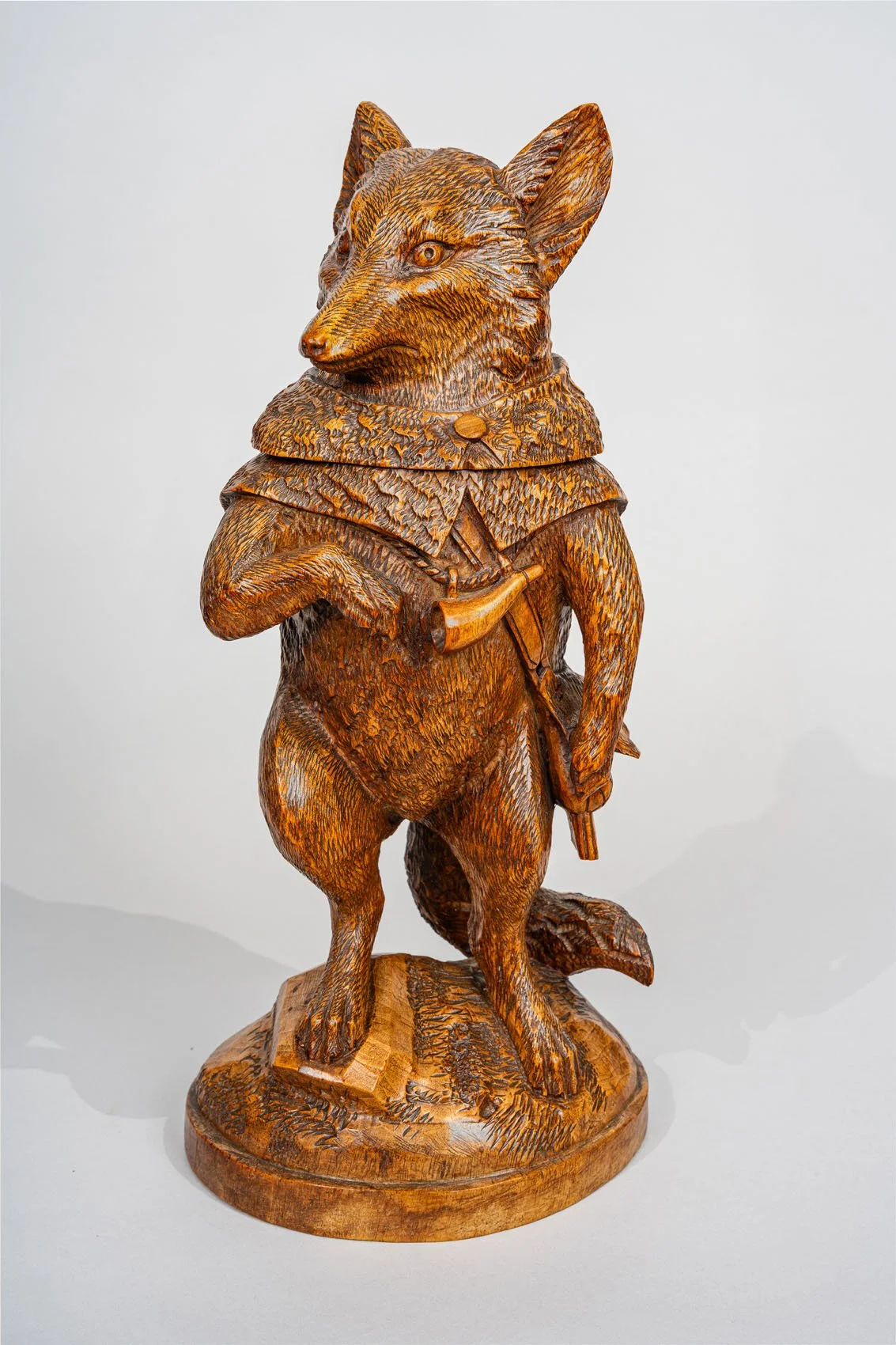
A rare and entirely captivating example of Black Forest carving at its most inventive: an anthropomorphic fox dressed as a hunter, standing upright as a figural tobacco jar, the head forming a hinged lid, carved in walnut at Brienz and dated 1870.
The fox stands on a circular naturalistic base in a short hunter's cape, a hunting horn at his side, the accessories of the chase rendered in miniature with the same precision as the figure itself. The posture is composed and self-possessed, the weight carried with the easy authority of a carver who understood both animals and human movement. The fur is worked in dense, directional tool marks that convey texture and underlying volume, the garments differentiated through smoother, more restrained modeling — the contrast between cloth and fur handled with the subtlety that marks the best Brienz work. The face is sharply individualized: alert, watchful, carrying the knowing character the fox owes to the medieval cycle of Reynard, whose cunning protagonist gave nineteenth-century collectors the imaginative context for figures like this one, produced at Brienz for both the domestic market and for export to Britain and America, where the hunting culture that animates the piece was equally well understood.
The head opens on a hinge at the collar to reveal the tobacco compartment, the join disguised in the modeled fur of the cape collar so that, closed, the figure reads as a seamless sculptural whole; the hinge is original and fully functional, a detail that speaks to the construction as much as the carving. The walnut retains a warm patina developed over a century and a half. Dated 1870, the piece comes from the height of the Brienz industry's reputation, when the workshops of Huggler, Binder and their contemporaries were exhibiting at the great world's fairs.
A companion piece, an anthropomorphic hound-hunter tobacco jar also dated 1870, is available separately; the two share the subject, date, and evident workshop origin.
Condition: Very good; rich original patina, carving complete and crisp, hinged head lid fully functional, eyes original, all elements original, interior in original unlined state, minor wear consistent with age, no restorations noted.
Height: 16 in.
Literature: Jay Arenski, Simon Daniels, and Michael Daniels, Swiss Carvings: The Art of the Black Forest, 1820–1940 (2006).
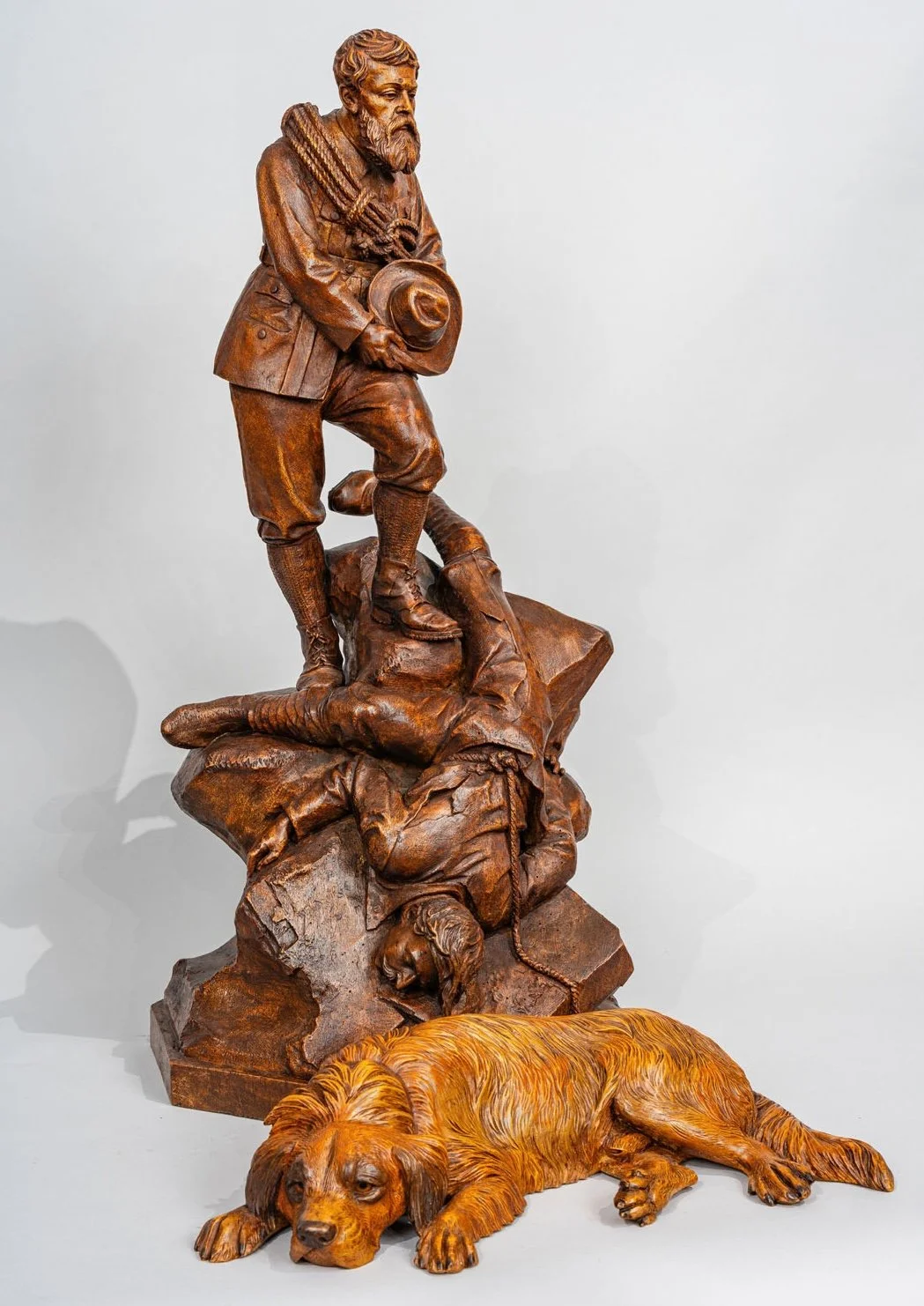
Two walnut carvings by Johann Huggler (1834–1912), made in the same year, for the same reason, and offered together.
In the winter of 1871, Huggler’s younger brother Albert, his closest companion and fellow carver, was lost in a climbing accident in the mountains above Brienz. Among those who joined the search was his friend, the carver Walter Mader, with his dog Nase, but the dog too was lost in the mountains.
Around 1873, Huggler carved the memorial. He stands at the summit of a rocky ledge, rope coiled at his shoulder and hat held to his chest, while below him Albert lies fallen across the rocks, bound with rope, his head lowered to the stone. The composition rises on a strong vertical axis and is restrained throughout, an act of remembrance rather than a scene, with the rope, the boot lacing and the grain of the rock carved in close detail.
At Christmas 1873, Mader gave Huggler a pup, said to be part wolf, which Huggler named Gestank. Huggler answered with a portrait of Nase, carved for Mader. The long-haired hound lies at rest, the coat worked in flowing tool strokes, the face an individual likeness rather than a type. Huggler usually left his work unstained, but here, in concession to Mader, who stained his own, he added light coloring in the dog's natural tones. On the underside he burned a mark of two mountain slopes crossed by two vertical lines.
Mader’s journal, as preserved in the Mader family, records the gift: “He comes early in the year… and as we sit by the fire, he places in my hands a wrapped cloth. Inside I hold what I have missed, Nase. He has carved my dear dog back to life… beneath, the slopes of two, marked twice, for Albert and for Nase, taken by the mountain…”
Huggler was the leading carver of the Brienz tradition, exhibiting at the Exposition Universelle in Paris and the World’s Columbian Exposition in Chicago. These two works, made for private reasons and never intended for sale, show a side of his art that the exhibition pieces do not. Both will be illustrated in the forthcoming updated edition of Swiss Carvings.
Condition: Both are in walnut and in very good condition, with original surface. The carving is complete and crisp, and the burned mark beneath the Nase carving is present and legible. Minor wear consistent with age is present, and no restorations were noted.
Literature: For Johann Huggler, see Jay Arenski, Simon Daniels and Michael Daniels, Swiss Carvings: The Art of the Black Forest, 1820–1940, Antique Collectors’ Club, 2006.
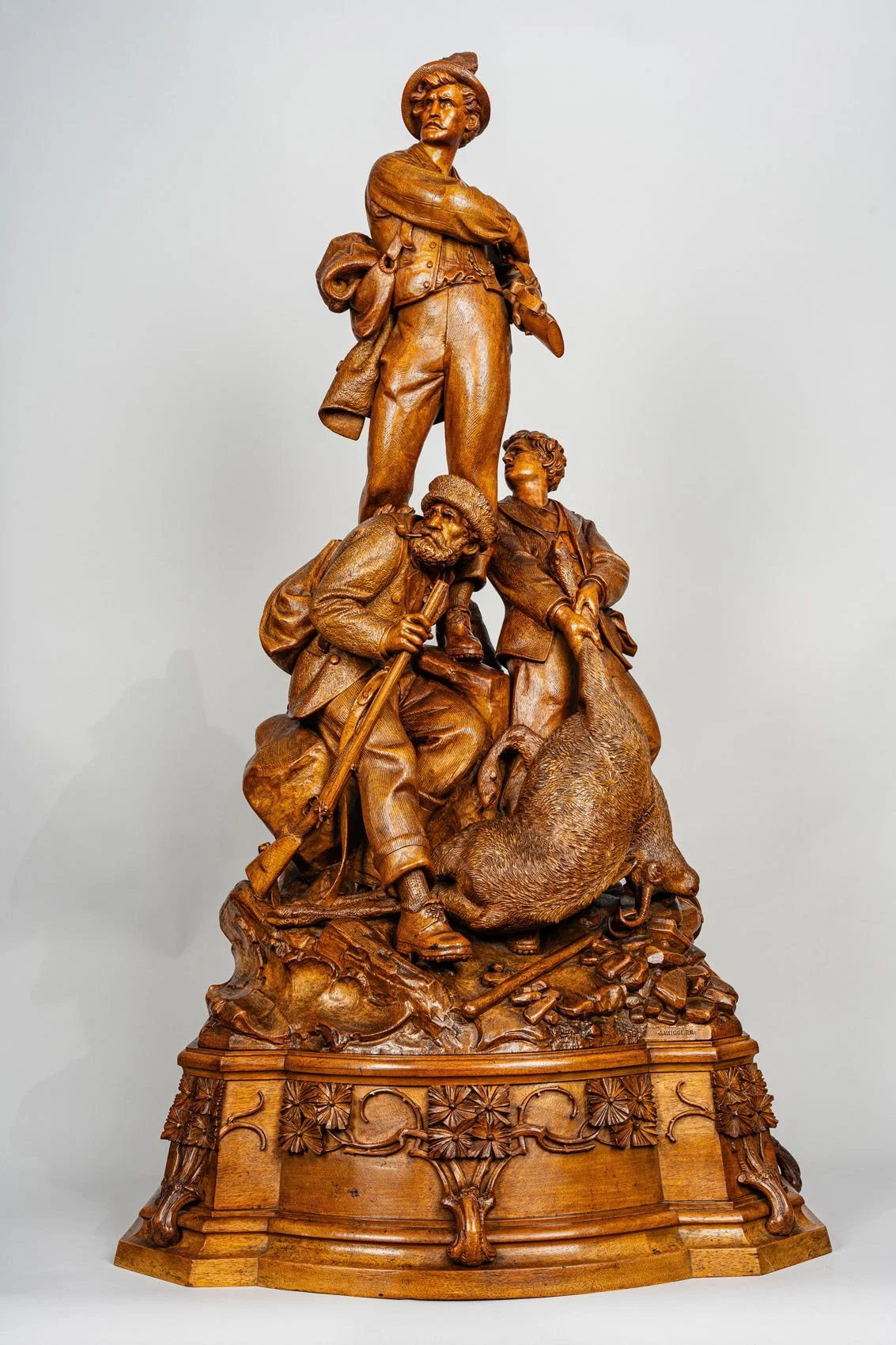
A monumental walnut group by Johann Huggler (1834–1912), the pre-eminent master of the Brienz carving tradition, conceived as a meditation on the three ages of man within an Alpine chamois hunt. It carries two forms of the master's signature: the stamped J. HUGGLER on the plinth edge, and his cursive autograph scratched into the underside of the base — a personal mark, distinct from the workshop stamp, that speaks to what this work meant to its maker.
The composition rises 48 inches as a vertical narrative. At the summit, a young hunter stands triumphant, arms crossed, feathered hat, game bag full of birds; below to the left an older bearded figure crouches with pipe and rifle, watching upward with a lifetime's experience; a second younger figure completes the generational triangle; and at the base the chamois lies fallen among rocks, scattered equipment and a carved woodcock. Each surface takes its own tool treatment — the knitted stocking of the elder's leg, the chamois fur, the feathers, the rock grain — and the carved rosette-and-scrollwork plinth signals exhibition-level ambition. The subject was personal: Huggler was known in Brienz not only as the master carver but as an unapologetic poacher, and he is believed to have cast himself and his companions in the group, the figures glancing outward with the alertness of hunters who remain aware of authority even in triumph.
The carving was purchased directly from the family firm, Huggler Huggler of Interlaken, on 14 March 1925 by Herr Walter Ords of Remscheid, and the original receipt survives with the work: catalog number H.H. 468, Jägergruppe 3 Jäger, 1,000 Swiss Francs, the Canton Bern revenue stamp intact. It then passed by descent through three generations of the same family — among the most complete provenances recorded for any Swiss Black Forest carving.
Huggler exhibited at the great international exhibitions, the Exposition Universelle in Paris and the World's Columbian Exposition of 1893, where Brienz work was judged not as craft but as sculpture. Large figural groups of this ambition, doubly signed and documented to the day of sale, stand at the summit of the tradition.
Condition: Very good for the scale and age; warm original patina, all figures complete and crisp, both signatures legible, minor wear consistent with age, no significant losses or restorations noted.
Provenance: Purchased from Huggler Huggler, Interlaken, by Walter Ords, Remscheid, 14 March 1925 (original receipt, H.H. 468); thence by direct descent through three generations.
Literature: Jay Arenski, Simon Daniels, and Michael Daniels, Swiss Carvings: The Art of the Black Forest, 1820–1940 (2006).
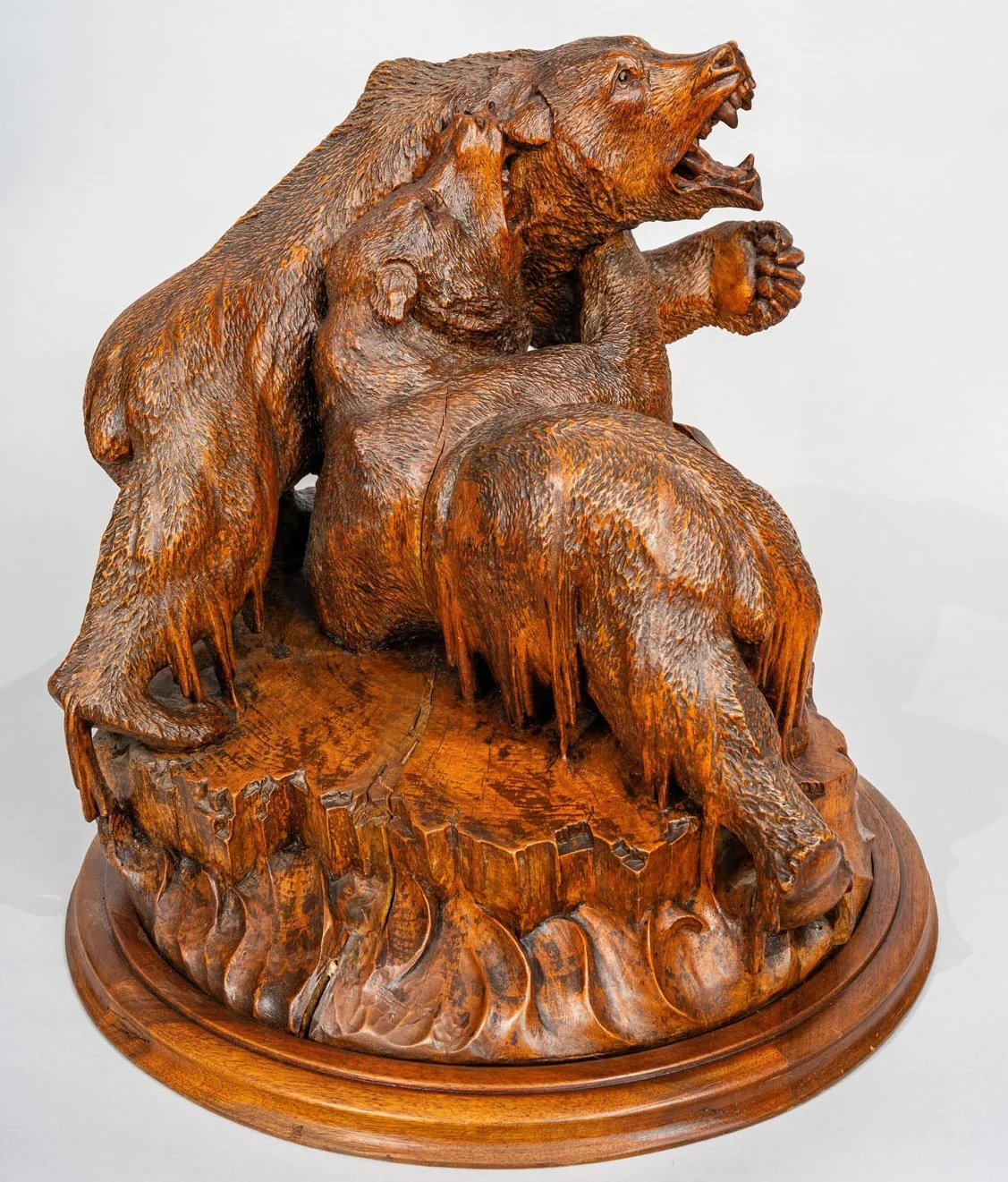
Two bears locked in combat on a fractured ice floe, carved fully in the round in walnut at Brienz, circa 1870.
The subject is unusual. Brienz bears are most often shown at rest, climbing, or at play; here two animals fight in earnest, bodies interlocked, weight pressing against weight. One rears with jaws thrown open, the mouth articulated with individual teeth and tongue — anatomical work few masters of the tradition attempted at this scale — while the second braces forward, forelimbs raised, the pair forming a taut, compressed composition.
The fur is the master stroke. Instead of the dry, bristled coat of the standard Brienz bear, the hair is carved wet: elongated, downward strokes along the undersides of both animals suggest coats plastered flat, matted and dripping from a fight in the water. It is observation, not formula, and it turns an accomplished animal sculpture into the record of a specific moment. The base completes the story, a fractured floe whose angular planes and fissures set off the dense organic texture of the animals above, and the group sits on a turned oval plinth, rewarding examination from every angle. The walnut carries a warm, deep patina throughout.
Work of this ambition came from a small number of masters in the later nineteenth century, shown at the great international exhibitions and collected across Europe and America. Groups of this intensity are rare on the market.
Condition: Very good; rich, even original patina, carving complete and crisp across all principal elements, minor age-consistent wear, no significant losses or restorations noted.
Height: 15 in.
Literature: Jay Arenski, Simon Daniels, and Michael Daniels, Swiss Carvings: The Art of the Black Forest, 1820–1940 (2006).
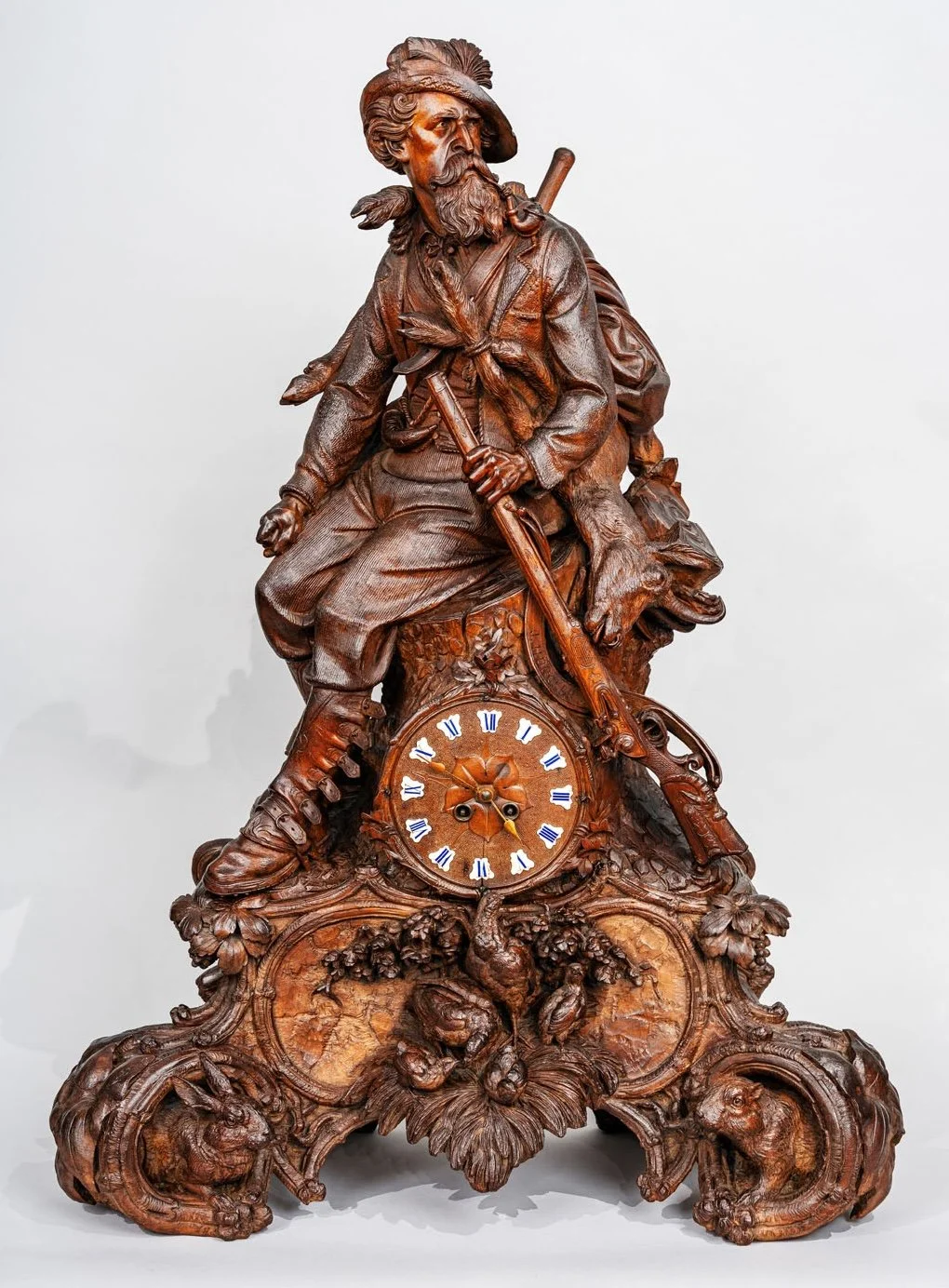
A figural mantel clock of exceptional scale by Johann Huggler of Brienz, among the most celebrated masters of Swiss Black Forest carving, signed on the rifle stock.
A bearded hunter sits above the dial, rifle resting diagonally across his figure, a pipe at his lips. He wears a feathered hat, layered hunting garments, and buckled leather boots, each rendered with the close observation that distinguishes Huggler's finest work from the broader Brienz production. The strongly individualized face reflects the tradition of Huggler modeling his hunters on his own likeness. A chamois, slung in the bag at his back, is the day's quarry carried home from the high Alps.
Below, oak leaves, pine cones, acorns, and woodland foliage fill every surface, with partridge and chicks clustered beneath the dial in high relief. The base extends outward through scrolling rocaille forms, each terminating in a cartouche: a rabbit to the left, a ground squirrel to the right. The enamel dial is set with individual petal-shaped chapter rings, blue Roman numerals on white against the warm walnut.
Johann Huggler and the Brienz Tradition
Johann Huggler (1834–1912) stands among the foremost figures of the Brienz school, and his hunter figures were his most admired productions. Signed examples are rare on the market and consistently represent the highest level of achievement in the medium.
A near-identical clock was exhibited by the Huggler workshop at the Paris Exposition Universelle of 1900, where it was photographed for The Art Journal; that example is illustrated in Swiss Carvings: The Art of the Black Forest, 1820–1940, the standard reference on the subject, co-authored by Simon Daniels of this gallery. The present clock is an earlier rendering of the same model, one the workshop held in such regard that it remained its showpiece at the close of the century.
Condition: Very good overall. The walnut retains a rich, original patina. The carving is complete and crisply preserved across all principal elements. The movement is present and in working order. Enamel dial intact.
Dimensions: 27" width x 37" height x 11" depth
Signature: Signed J. Huggler on the rifle stock.
Literature: cf. Jay Arenski, Simon Daniels, and Michael Daniels, Swiss Carvings: The Art of the Black Forest, 1820–1940 (2006), pl. 52, illustrating the near-identical clock exhibited by Huggler Bros. at the Paris Exposition Universelle of 1900, photographed for The Art Journal.
A life-sized carved eagle owl, attributed to the Ruef Brothers of Brienz, Switzerland, circa 1880, standing 28 inches high. The bird is carved in linden wood and perched upright on a cut branch rising from a rocky outcrop, the whole cut from a single block with a turned circular base. Ear tufts raised, wings folded, talons gripping the branch, it fixes the viewer with yellow glass eyes set into deeply carved facial discs.
What distinguishes this owl is the treatment of the plumage. Every feather is carved individually and then worked with a heated iron, the edges and barring scorched into the wood so that the graduated breast, the mottled crown, and the darker flight feathers read in tone as well as relief. This burning of the surface is the technique most closely associated with the Ruef workshop, whose birds of prey were a specialty of the Brienz trade, and the attribution rests on that handling together with the composition and the scale. The piece is unsigned.
The head is made separately and lifts off at the neck, a construction the carver has concealed within the ruff of feathers at the throat. It is not hinged, and the body is not hollowed out for use as a tobacco jar or humidor, which is consistent with the piece's size. The separate head allowed the carver to work the face and the body from blocks of different grain, and it is a feature worth knowing when a piece of this model is examined.
Carving of this ambition came out of Brienz in the Bernese Oberland, where the Ruef Brothers worked alongside Johann Huggler, Hans Huggler-Wyss, and Walter Mader in the decades when the international exhibitions at Vienna, Philadelphia, Paris, and Chicago carried Swiss carving to an American and English clientele. We discuss the Ruef workshop and the scorching technique in our article on the masters of the Black Forest, and in the reference we co-authored on the subject, Swiss Carvings: The Art of the Black Forest, 1820 to 1940.
A large and theatrical Swiss Black Forest jardinière in carved linden wood, circa 1870, formed as two bears at a gnarled tree, the crown of which opens into a naturalistic basin for a plant or palm.
A young bear scrambles up the trunk, forelegs thrown over a branch, glancing back at the adult below, who rears upright against the tree, head thrown back and mouth open, one forepaw raised toward the escaping climber. Both bears carry inset glass eyes, and the carving moves confidently between textures, the dense fur of the animals, the scaled bark of the trunk, and the burled, leafy crown of the basin, the whole rising from a molded circular base.
The bear is the emblematic subject of Brienz carving, and jardinières of this scale belong to the upper end of its production, sculptural furniture made for the salons and winter gardens of the hotel age. A single-bear jardinière of similar style is illustrated on page 121 of Swiss Carvings; the present example, over three and a half feet tall and fully carved from every angle, holds a room as few functional objects of the period can.
Dimensions: 43"height
Literature
Jay Arenski, Simon Daniels, and Michael Daniels, Swiss Carvings: The Art of the Black Forest, 1820–1940 (2006), p. 121, where a single-bear jardinière of similar style is illustrated.
A fine carved walnut figure of an alpine hunter by Johann Huggler of Brienz, the pre-eminent master of the Swiss Black Forest carving tradition, stamped with his initials JH to the rear of the boot, circa 1870.
The hunter stands at ease on a naturalistic rocky outcrop, a bearded man of the mountains caught in a moment of rest rather than pursuit. He wears a hat dressed with traditional alpine flowers, an open jacket over a buttoned waistcoat, breeches, and tall boots, a mountaineering staff planted against the rocks in his right hand, a coiled rope slung over his shoulder, and a binocular case carried at his hip. The carving holds its quality through every surface: the varied texturing of jacket, waistcoat, and breeches, the weave of the coiled rope, the individually rendered stones of the base, and above all the face, alert, weathered, and fully characterized, a portrait of a type Huggler knew from life in the Bernese Oberland.
The rear of the hunter's boot bears a stamped JH, the mark Johann Huggler used in the early period of his career, before the Huggler family began retailing their own work. Stamped examples from these years are rare, and the mark places the figure firmly in the 1870s, the decade of Huggler's finest independent carving. Huggler stands at the summit of the Brienz school; his works were shown at the great international exhibitions of the nineteenth century, and signed or stamped examples consistently represent the highest standard of the tradition. We have had the privilege of handling deeply personal works by Huggler, and the present figure shows the same authority brought to a subject at the heart of alpine life.
Dimensions: 19"height
Condition: Very good overall.
Literature
Jay Arenski, Simon Daniels, and Michael Daniels, Swiss Carvings: The Art of the Black Forest, 1820–1940 (2006).
A large and powerfully modeled Swiss Black Forest carving of a golden eagle, attributed to the Ruef Brothers of Brienz and carved from linden wood, the bird shown alighting on a rocky outcrop with wings raised and head turned, with inset glass eyes. The eagle ranks with the bear and the owl among the defining subjects of the Brienz tradition, demanding both anatomical command and sustained technical control across a single block of work, and stands among the most ambitious forms the workshops produced.
The carving is worked with exceptional attention to the plumage, each feather individually defined and layered from the fine covert feathers of the breast to the broad primaries of the outstretched wings. The graduated coloring of the plumage was achieved not by applied stain but by scorching the surface of the wood with heated irons, a characteristic Brienz technique that produced the warm tonal transitions seen across the wings and body. The head is finely detailed, with a sharply hooked beak and inset glass eyes that lend the bird its alert, arresting expression, and the figure is raised on a naturalistically carved base of rocky strata.
The Ruef Brothers were among the most accomplished of the Brienz carvers, recorded alongside the Huggler family among the workshops whose work defined the finest period of the tradition and documented in the standard literature, including Swiss Carvings: The Art of the Black Forest, 1820–1940. The present eagle is attributed to them on the strength of its scale, the confidence of its modeling, and the quality of its finish, each consistent with their documented work in this subject.
The carving is in excellent original condition, retaining its surface and glass eyes, with the crisp definition of the featherwork fully preserved and the warm coloring undisturbed. Wear is minor and consistent with age.
Two wild boars startled into sudden flight, one leaping across the back of the other in a single explosive instant, carved in walnut at Brienz, circa 1870.
The composition captures the precise moment of alarm. The lower animal lunges forward, forelegs extended, head thrust low to the ground, while the second vaults across its back, unable to stop or turn — the two figures locked together in motion, compact yet charged, conveying with remarkable economy the raw urgency of the animals.
Each bristled coat is articulated through dense, directional toolwork, thousands of individual marks describing the coarse, layered hair and the shifting musculature beneath. Tusks, alert eyes and flared snouts are sharply defined, and the depth of cutting varies deliberately across the surfaces, producing the contrasts of light and shadow that animate the group and reward close examination. The figures stand on an integrally carved base of forest undergrowth — stones, moss and ground cover — and the warm walnut patina deepens the relief throughout.
The group belongs to the height of the Brienz industry's reputation, around 1870, when the workshops of Huggler, Binder and their contemporaries were showing at the great world's fairs and collected across Europe and America. Animal subjects of this naturalistic ambition represented the apex of the tradition, and groups of this quality are rare on the market.
Condition: Very good; rich original patina, surface carving complete and crisp, no restorations or repairs noted, minor wear consistent with age.
Dimensions: 14 in. width x 12 in. height x 5 in. depth
Literature: Jay Arenski, Simon Daniels, and Michael Daniels, Swiss Carvings: The Art of the Black Forest, 1820–1940 (2006).
A hunting cabinet of exceptional ambition, nine feet tall, in two parts — among the most complete expressions of the Black Forest Jagdschrank to appear on the market in recent years.
The upper case is dominated by a deeply carved high-relief panel of a stag, hind and fawn in a dense Alpine forest, the composition built in layered planes — foreground undergrowth, mid-ground figures, a receding canopy of oak and pine — that draw the eye continuously through the scene. The stag stands alert and full-antlered, the hind attentive at his shoulder, the fawn part-sheltered in the undergrowth, and the surface textures of coat, bark, leaf and mossy ground are achieved through the fine, varied tool work that separates the best Brienz production from the broader regional trade.
The surround matches the panel. Antler-mounted columns frame the case, set at intervals with carved bone medallions of miniature wildlife subjects, among them a capercaillie. The cornice carries a hound's head with glass eyes within an arched pediment, flanked by two pairs of full stag antlers, and a further antler branch between cornice and panel bears one more medallion. Below, two cupboard doors carry their own relief panels — foxes in woodland to the left, hares beneath a tree to the right — framed by antler handles, with a pair of drawers above set with bone escutcheons to match.
The Jagdschrank — the Black Forest gun cabinet — was purpose-built to house firearms and hunting equipment, and served equally as a prestige display in the hunting lodges and great interiors of the late nineteenth century — the meeting point of fine furniture-making and sculptural carving. The most ambitious examples were made for a clientele of European aristocracy and American collectors, and shown at the international exhibitions in Paris, Vienna and Chicago; demand for them has never lapsed.
Condition: Very good for the scale and age; warm original patina to the oak, carved panels complete and crisp, antler and horn mounts intact, glass eyes to the hound's head present, minor age-consistent wear, no significant losses or restorations noted.
Dimensions: 52 in. width x 26 in. depth x 108 in. height
Literature: Jay Arenski, Simon Daniels, and Michael Daniels, Swiss Carvings: The Art of the Black Forest, 1820–1940 (2006).


Colorado
Aspen
Founded in 1978 by Michael Daniels, Daniels Antiques Aspen opened in downtown Aspen on the Hyman Ave mall in 1998. The shop is run by Michael and Simon Daniels. After publishing a collector’s book on “Swiss Carvings The Art of The Black Forest” in 2006 we have continued to build and curate exceptional collections. Today these collections span from the decorative to historical. Sir Winston Churchill to Prohibition cocktail shakers.
Address
431 E Hyman Ave,
Aspen, CO 81611
Hours
By Appointment. Please text Simon for information and appointments.

Florida
Las Olas
Daniels Antiques has maintained a presence in South Florida since 1978, making it one of the longest-established luxury antiques businesses in the region. The Las Olas gallery — situated on Fort Lauderdale's most celebrated boulevard — is run by Jonathan Daniels, whose twenty-five years in the trade have made him a respected authority on vintage gaming machines, Art Deco lighting, and Second World War binoculars. The collection spans the full breadth of the Daniels inventory: from early cast iron slot machines and original WWII anti-aircraft binoculars to vintage Louis Vuitton trunks and Swiss Black Forest carvings of the highest order.
Front Office:
(954) 522-2420
Jonathan Daniels (Owner):
(954) 319-2481
Email: lasolas@danielsantiques.com
Address
617 E Las Olas Blvd,
Fort Lauderdale, FL 33301
Hours
Monday–Friday
11am–5pm
A pair of Fuji Meibo 15×80 big-eye binoculars by Fuji Photo Optical Co., Japan, 1950s, on an original 1970s field tripod. The data plate carries Fuji’s script Meibo trademark, the 15×80 designation with its 4-degree field, and the maker’s name in English with Made in Japan beneath.
The 15×80 is the classic Japanese big eye, the pattern carried aboard Imperial Navy ships in the Second World War and continued by Fuji after the war for maritime and coastal observation. At 15× magnification, the 80mm objectives deliver a steady, detailed image, equally suited to a horizon, a mountainside, or the night sky. Each objective gathers roughly three and a half times the light of a typical 42mm modern binocular, which is why these instruments are still sought out for their image.
The straight eyepieces each carry a knurled focusing ring, and brass collars join the prism housings to the barrels. The glasses sit directly on a single polished pillar, with a black ball lever at the side and a brass knurled clamp on the column, and long sunshades run forward over the objectives. The tripod has telescoping legs, a folding spreader, foot treadles, and disc feet.
The binoculars have been fully restored. They were completely disassembled, the optical glass polished, the optics reset to factory standards, and the body hand-polished to a mirror finish. The optics are bright and clear, and focus and movement operate smoothly.