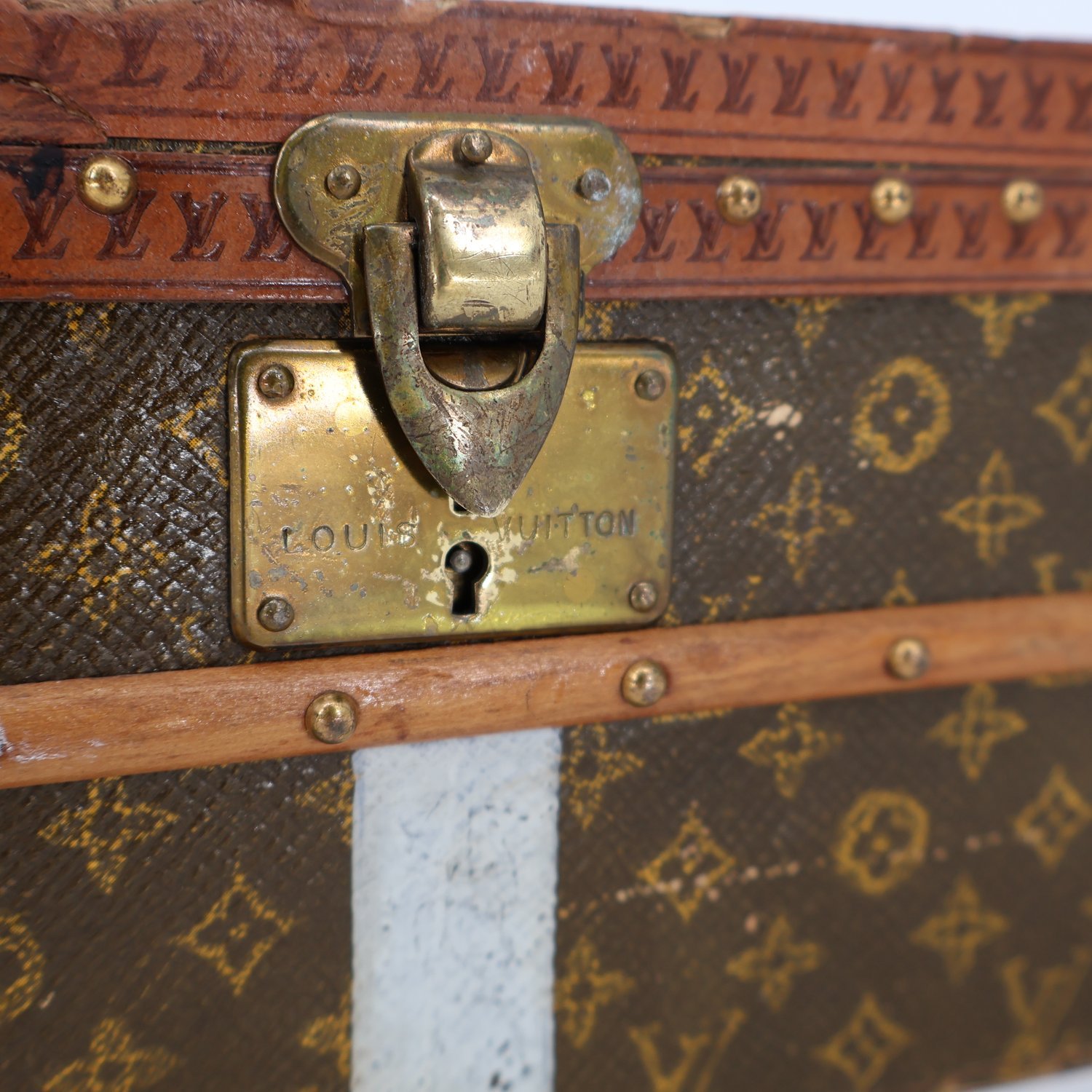
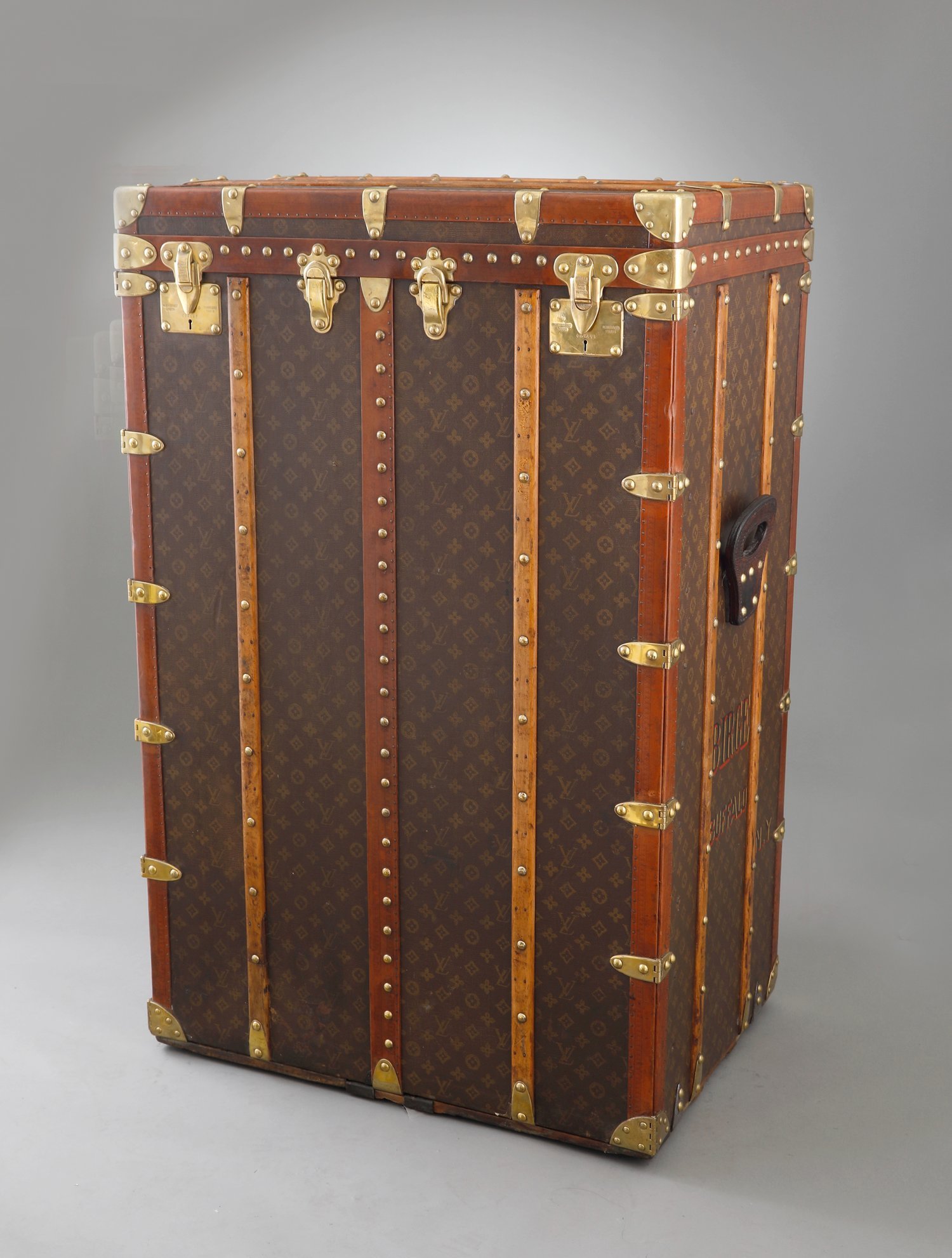
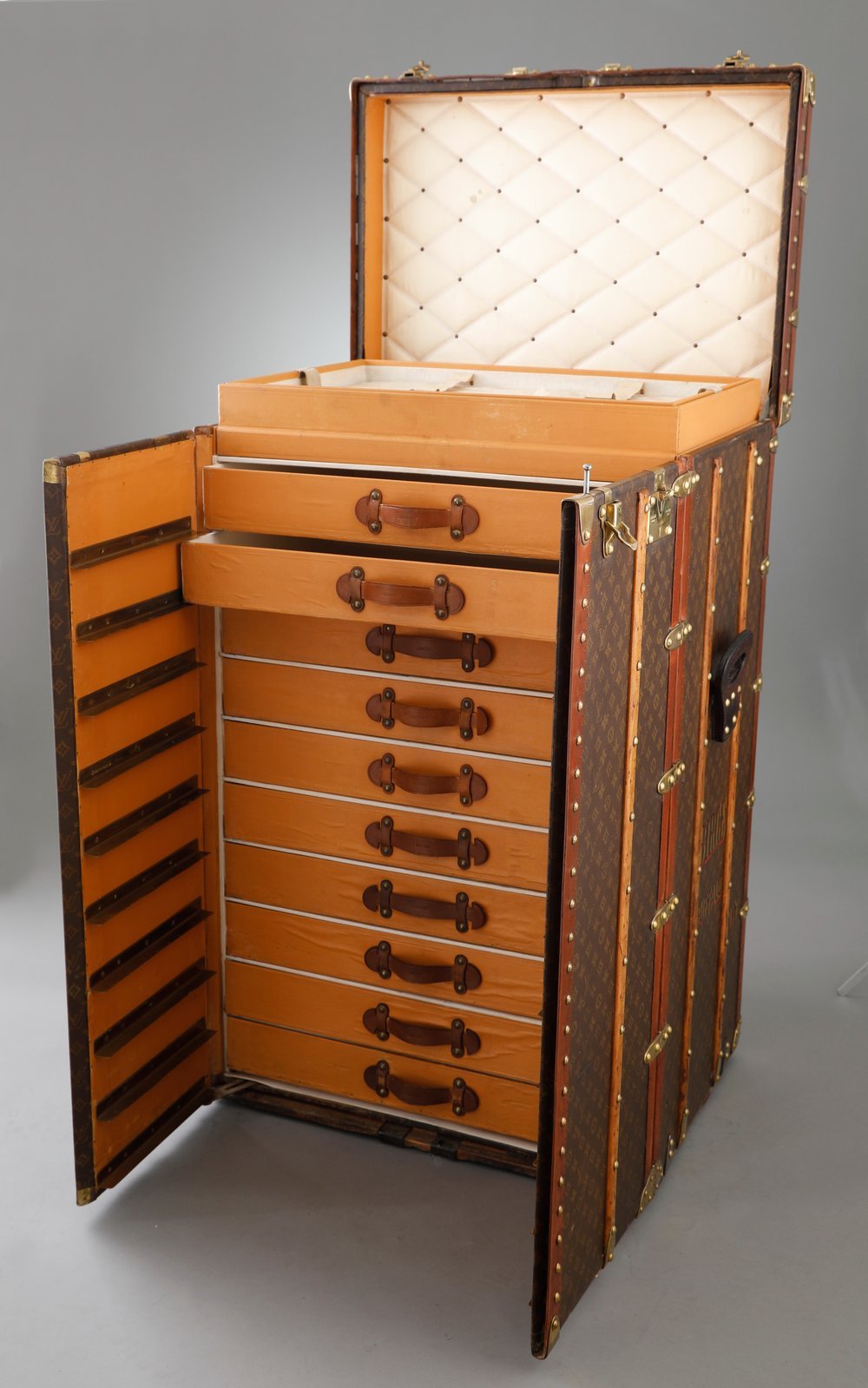
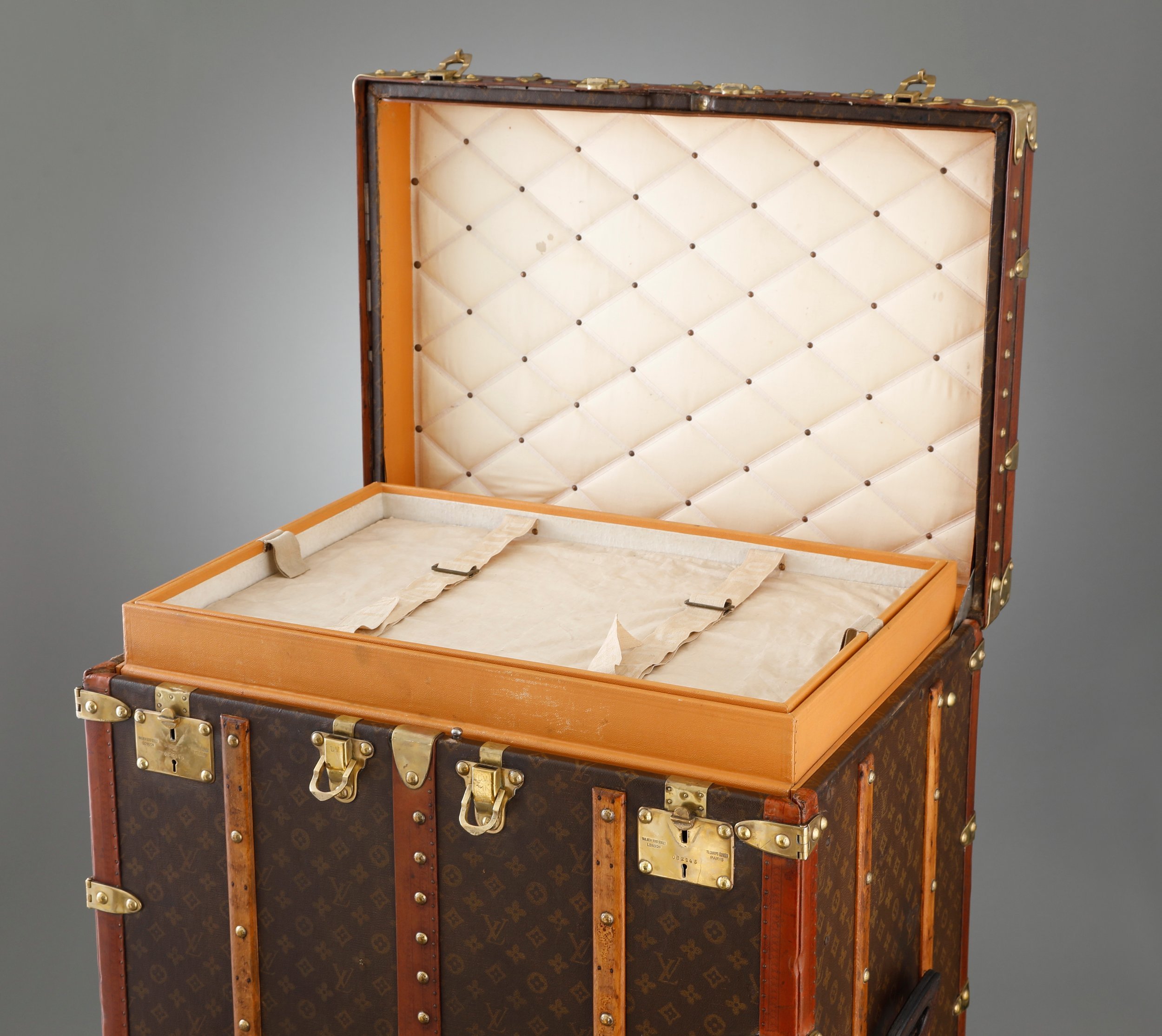
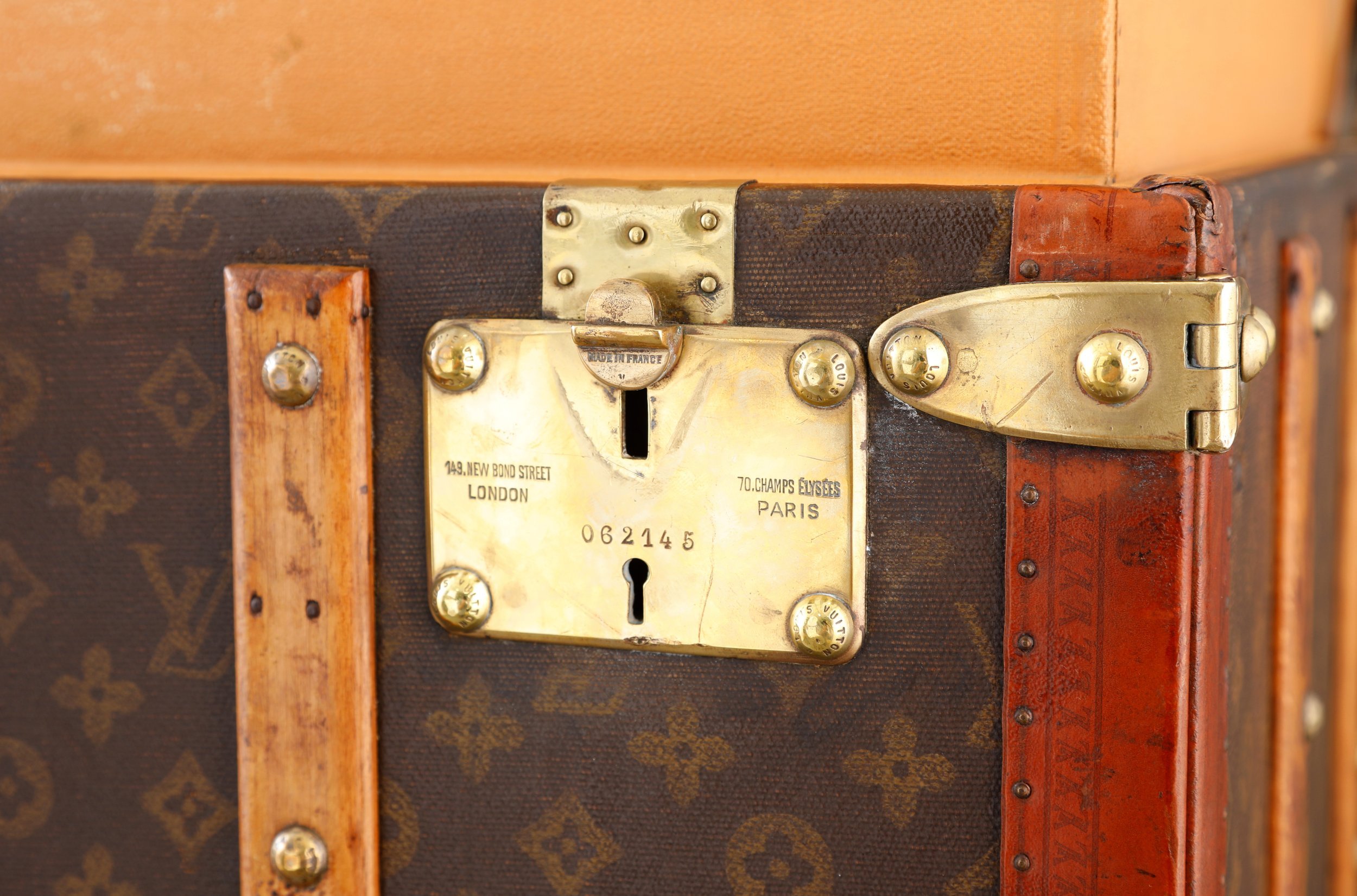
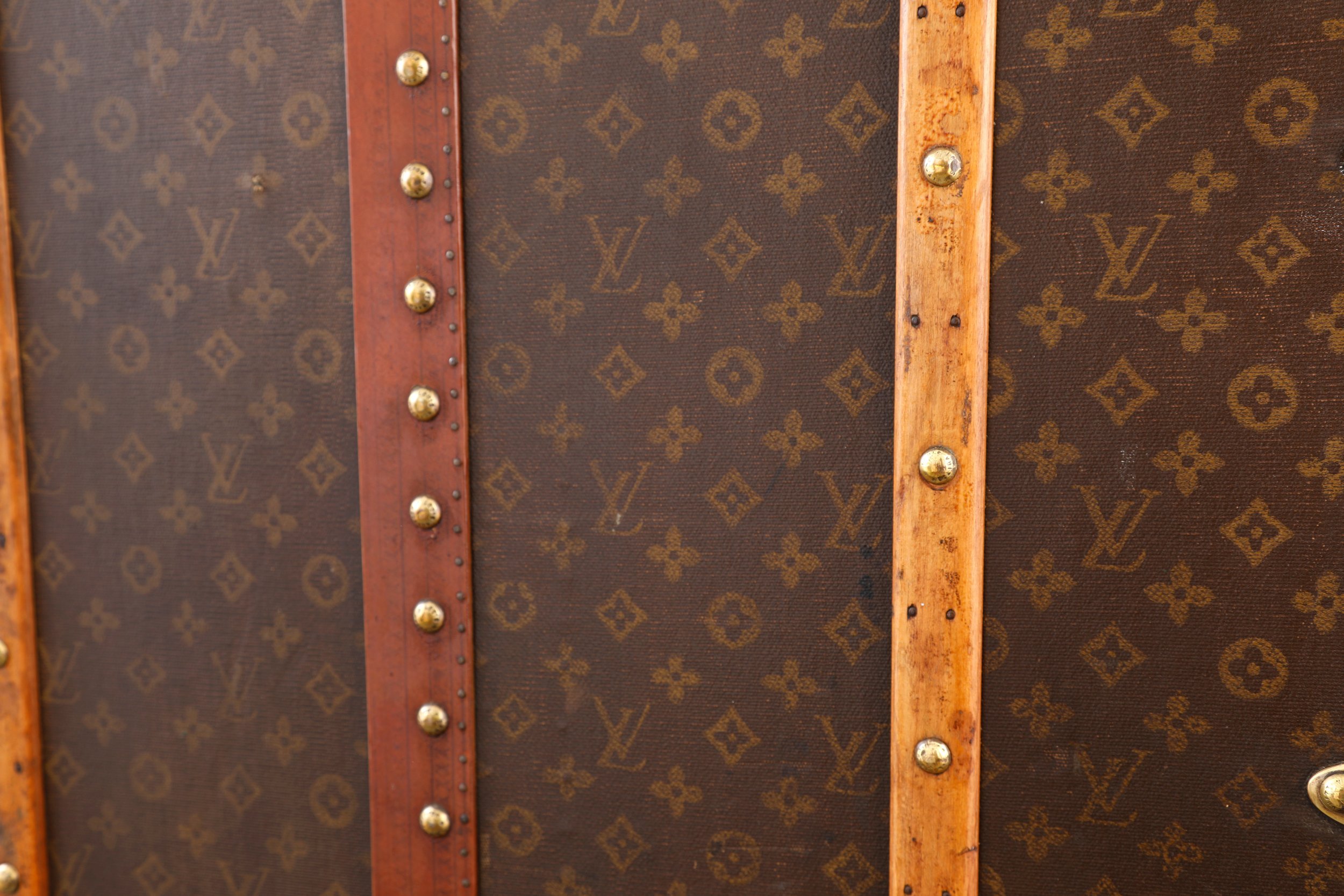
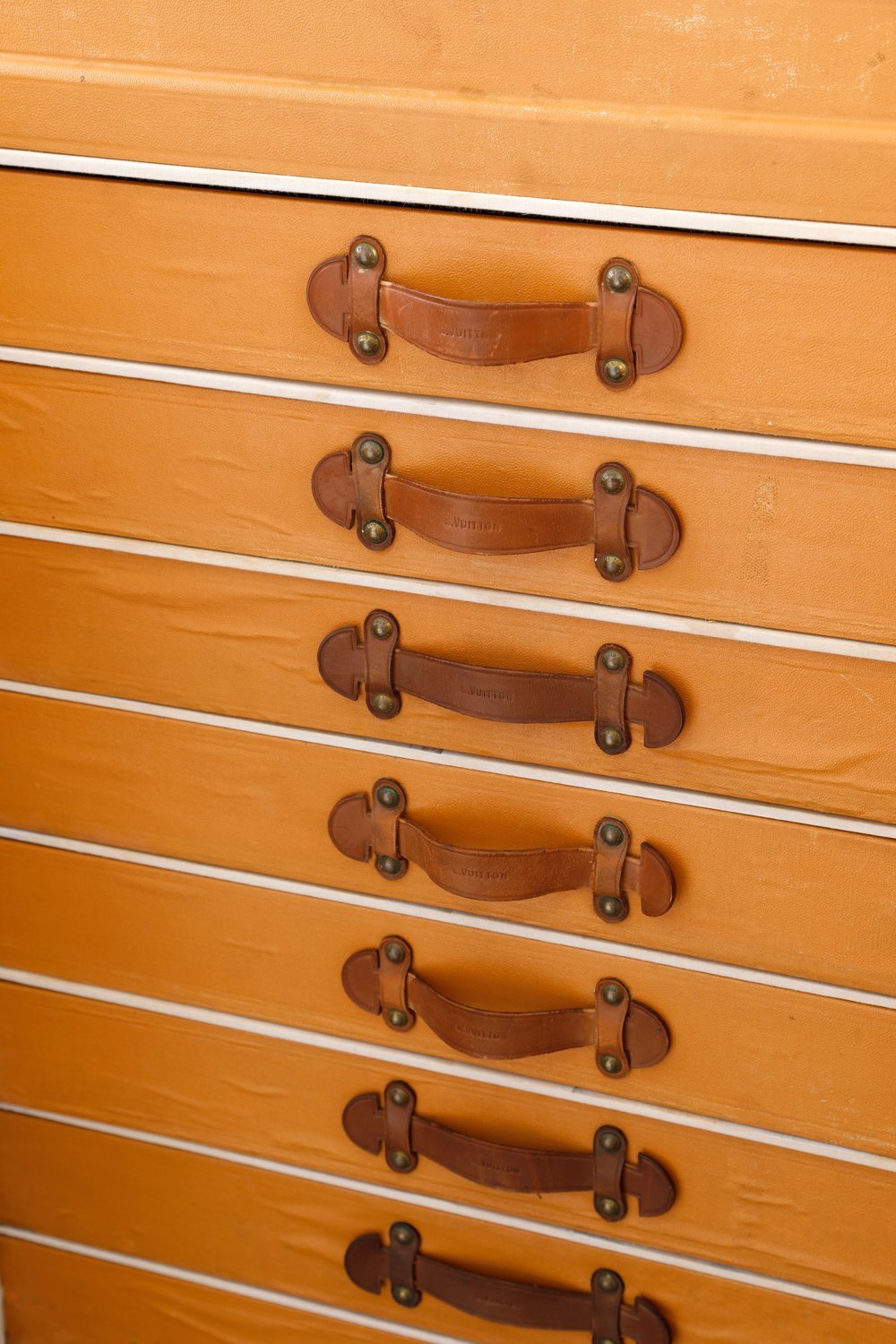
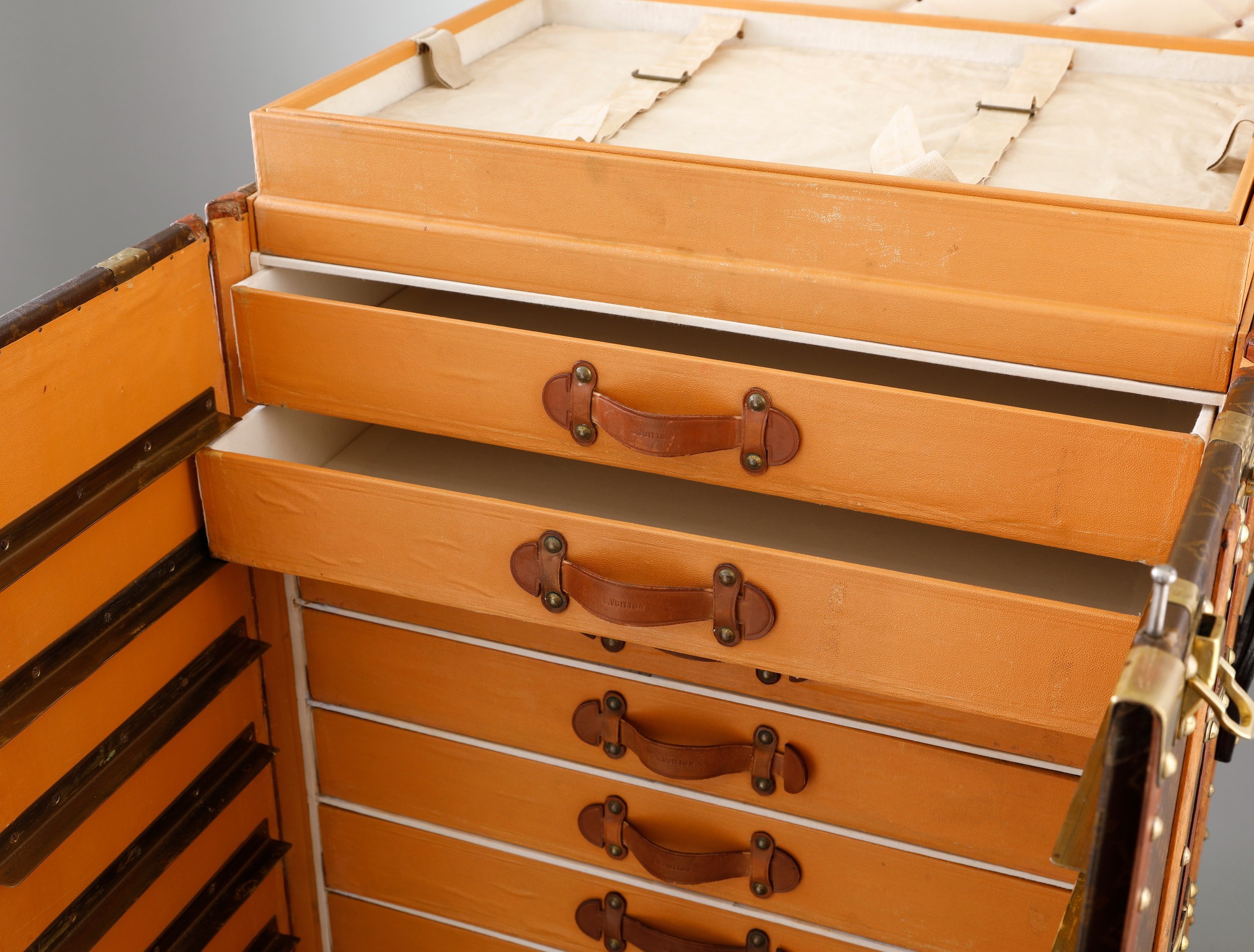
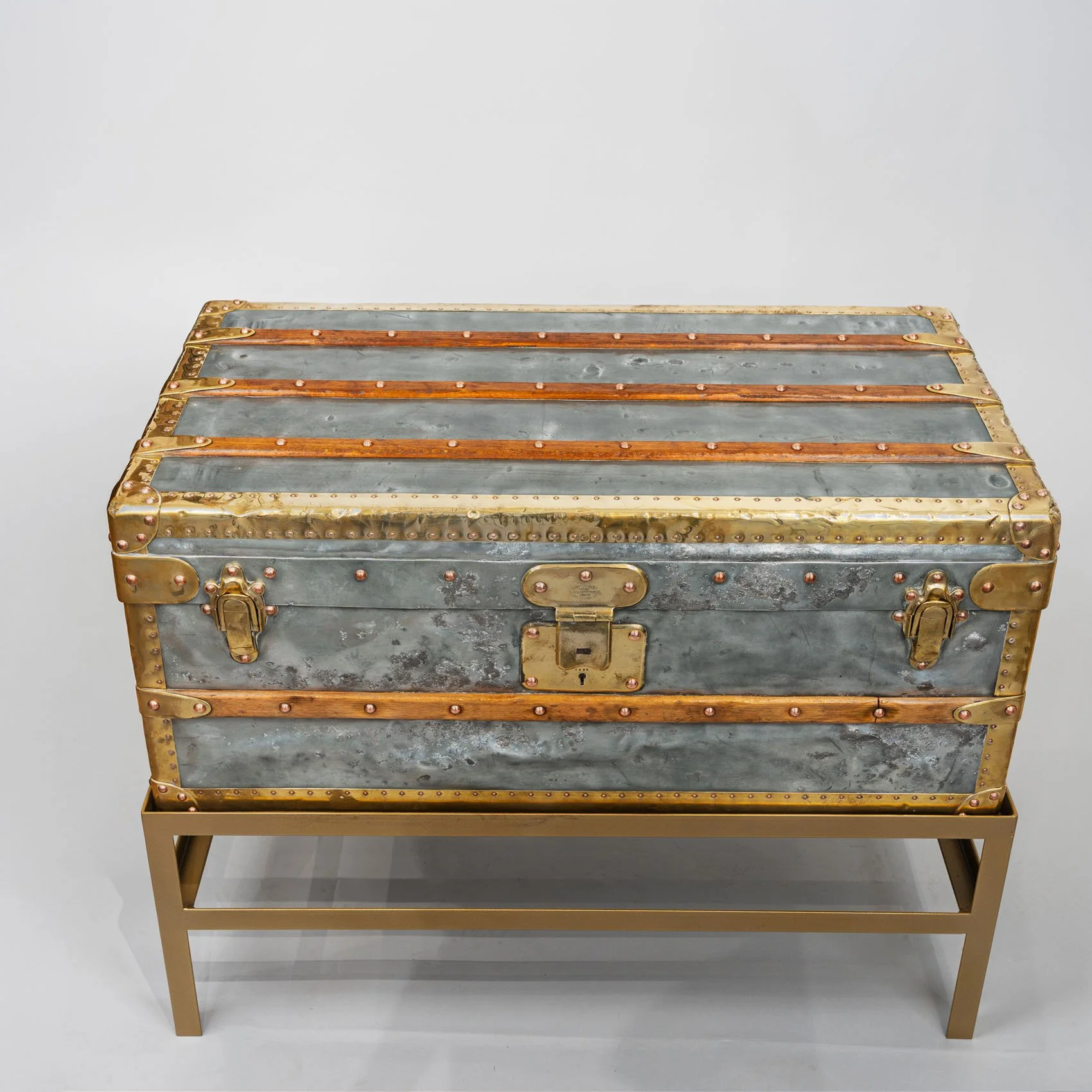
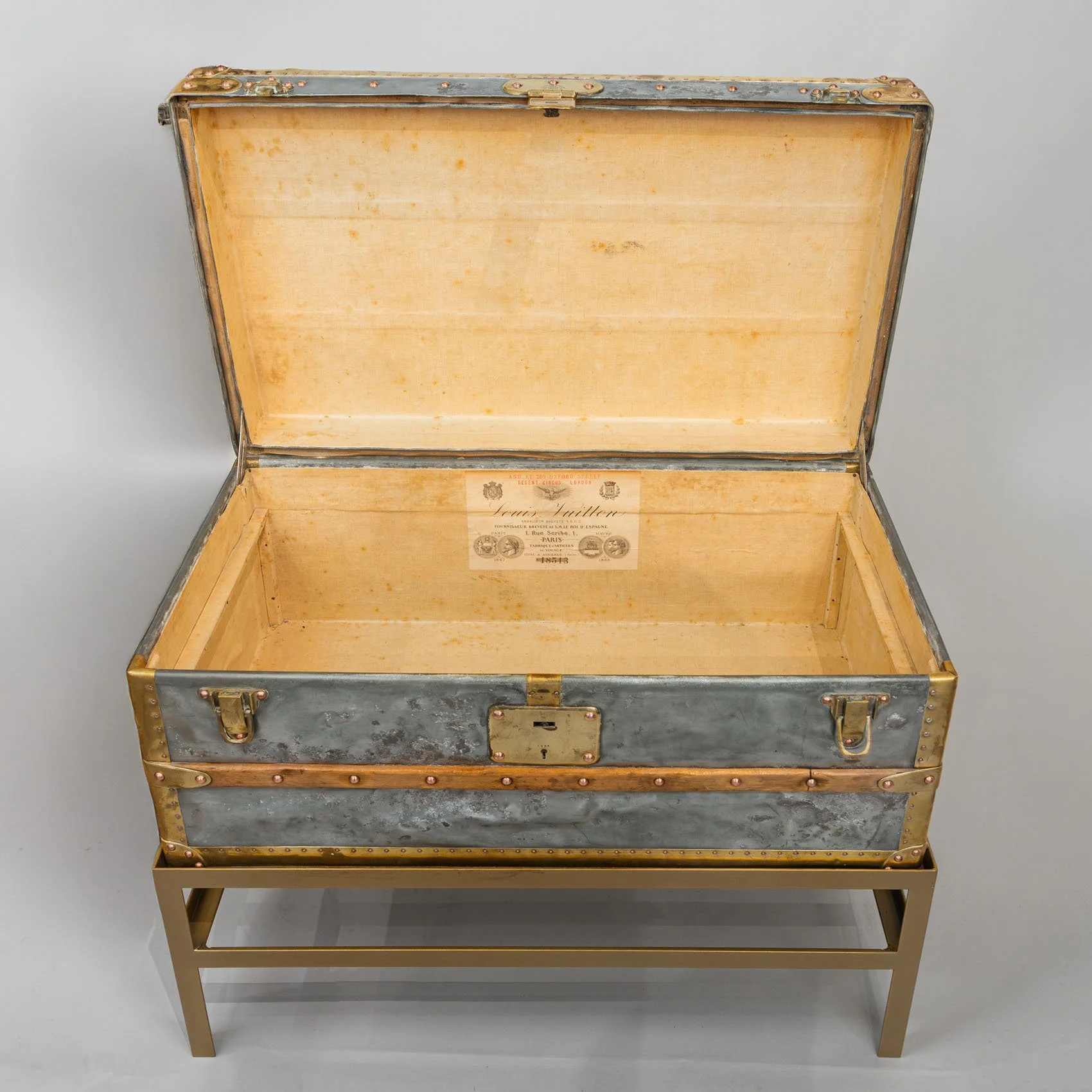
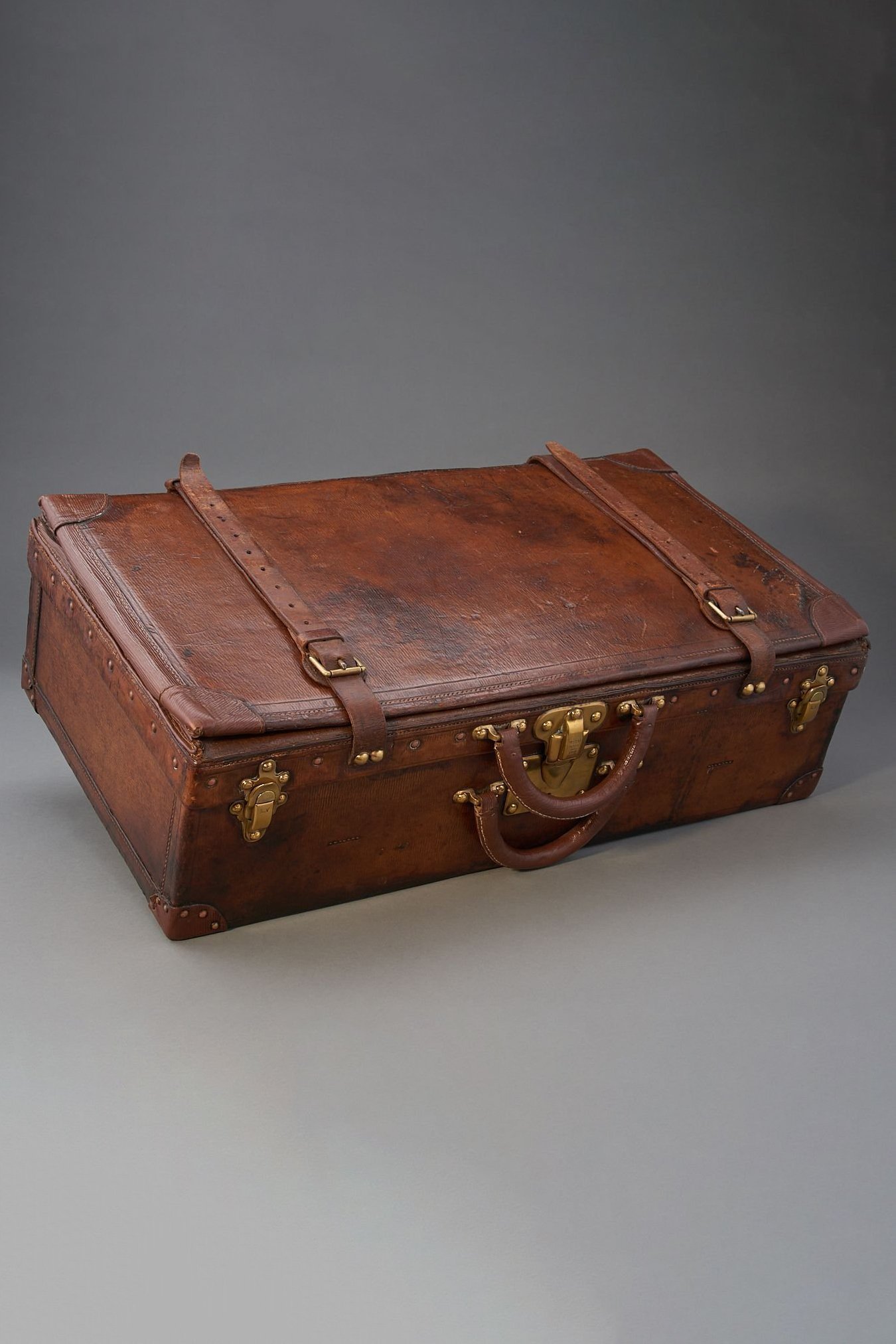
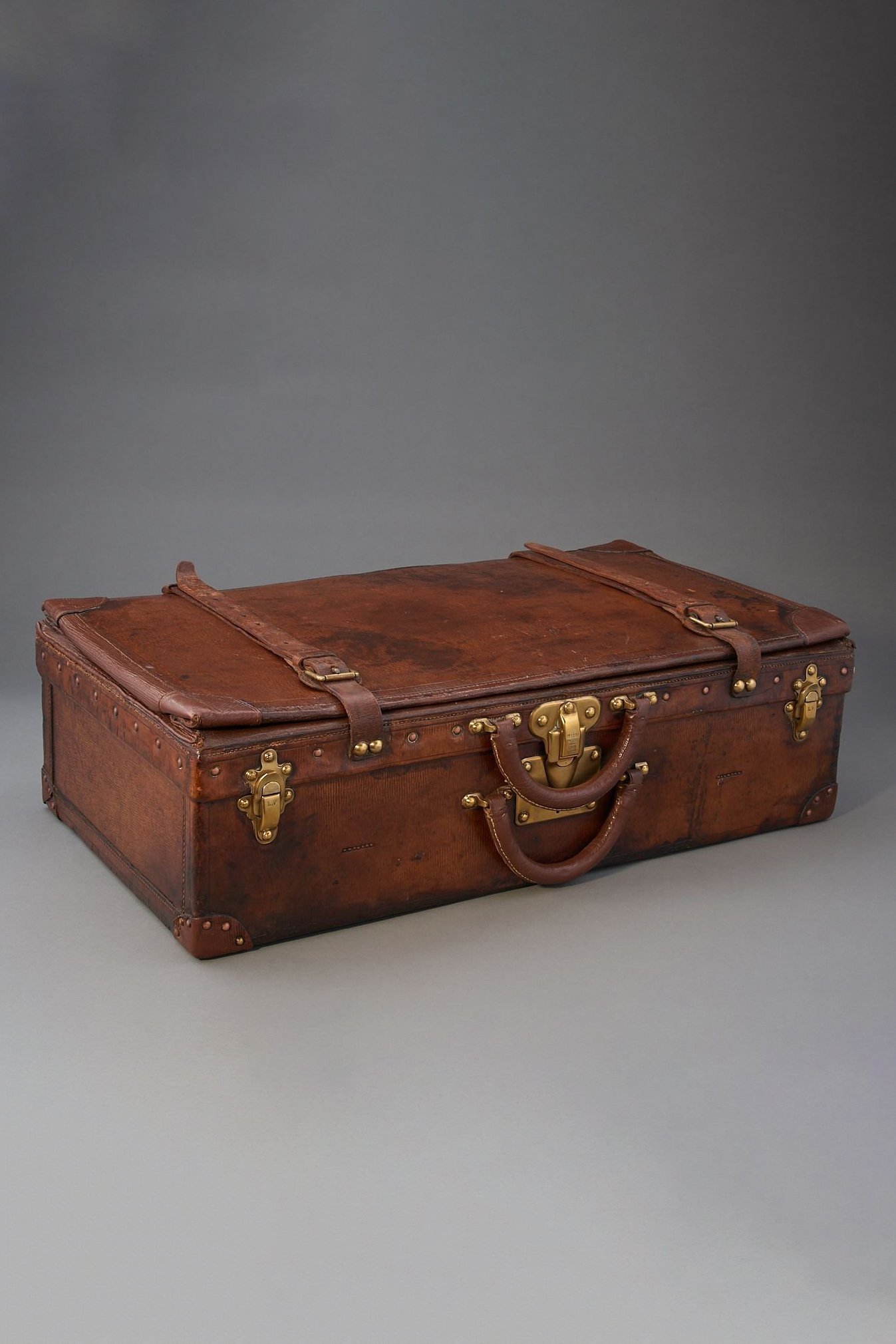
A Louis Vuitton hat trunk, the malle à chapeau, in untreated cuir naturel, early twentieth century. Of square form, bound with riveted leather bands and fitted with a brass lockplate and protective corner mounts, the lid centered with a leather handle and stenciled R.B. beneath a coronet, the body encircled by grey and yellow painted identification stripes for immediate recognition in transit. The leather has matured to the deep, varied patina these pieces were designed to acquire, each one uniquely with use, and the interior is lined in cream canvas retaining the Louis Vuitton label.
By the turn of the twentieth century, Vuitton was particularly attentive to the safe transport of hats, essential elements of formal dress, and the malle à chapeau was developed precisely for this purpose, its structured interior preserving delicate forms through rail and steamship journeys. Bespoke examples were made for distinguished patrons, among them the hatboxes commissioned for William Twombley in Paris in 1895, and the coronet stenciled above the initials here points to a titled original owner. Cuir naturel examples with original personalization are among the most sought-after forms of early Vuitton luggage.
Condition: Very good. Beautifully developed patina with wear consistent with age and use; brass hardware with an attractive aged surface; lining present and clean with light age toning; structurally sound.
Dimensions: 15 in. width x 16.5 in. height x 13.75 in. depth
Literature: Florence Müller, Louis Vuitton: 100 Legendary Trunks, New York, 2010; Pierre Léonforte, Louis Vuitton: The Birth of Modern Luxury, Paris, 2004
A Louis Vuitton hat trunk, the malle à chapeau, in untreated cuir naturel, early twentieth century. Of square form, bound with riveted leather bands and fitted with a brass lockplate and protective corner mounts, the lid centered with a leather handle and stenciled R.B. beneath a coronet, the body encircled by grey and yellow painted identification stripes for immediate recognition in transit. The leather has matured to the deep, varied patina these pieces were designed to acquire, each one uniquely with use, and the interior is lined in cream canvas retaining the Louis Vuitton label.
By the turn of the twentieth century, Vuitton was particularly attentive to the safe transport of hats, essential elements of formal dress, and the malle à chapeau was developed precisely for this purpose, its structured interior preserving delicate forms through rail and steamship journeys. Bespoke examples were made for distinguished patrons, among them the hatboxes commissioned for William Twombley in Paris in 1895, and the coronet stenciled above the initials here points to a titled original owner. Cuir naturel examples with original personalization are among the most sought-after forms of early Vuitton luggage.
Condition: Very good. Beautifully developed patina with wear consistent with age and use; brass hardware with an attractive aged surface; lining present and clean with light age toning; structurally sound.
Dimensions: 15 in. width x 16.5 in. height x 13.75 in. depth
Literature: Florence Müller, Louis Vuitton: 100 Legendary Trunks, New York, 2010; Pierre Léonforte, Louis Vuitton: The Birth of Modern Luxury, Paris, 2004

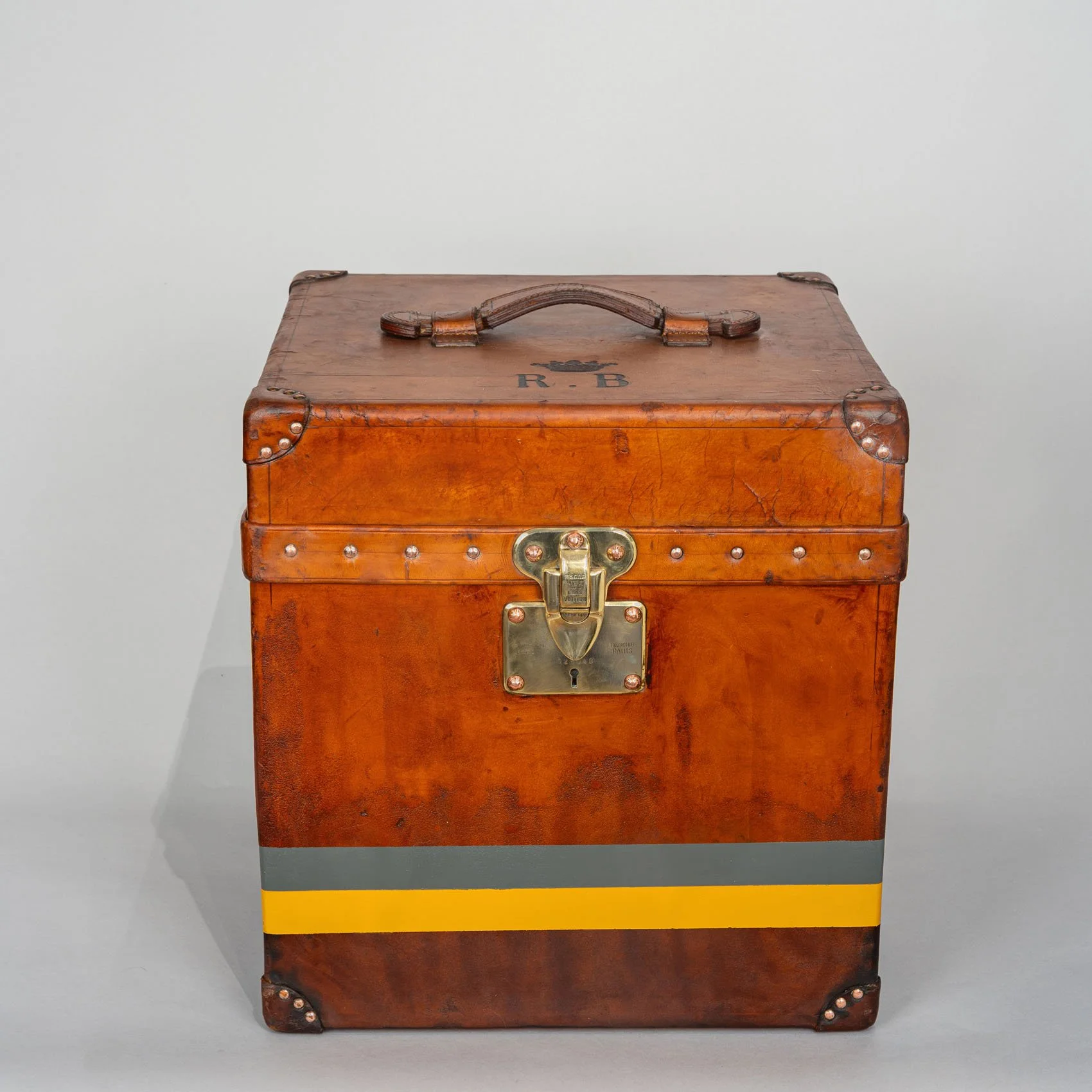 Image 1 of 3
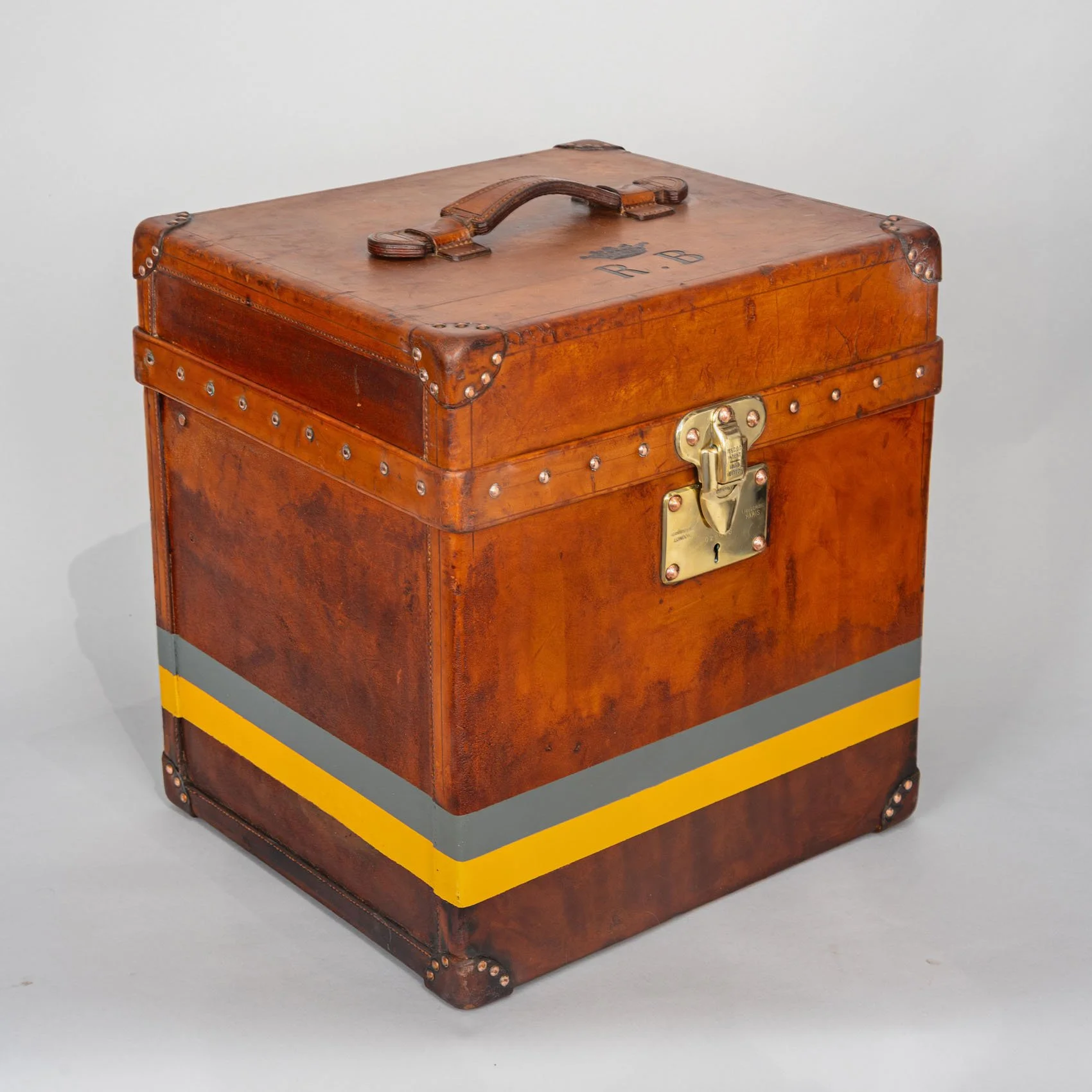 Image 2 of 3
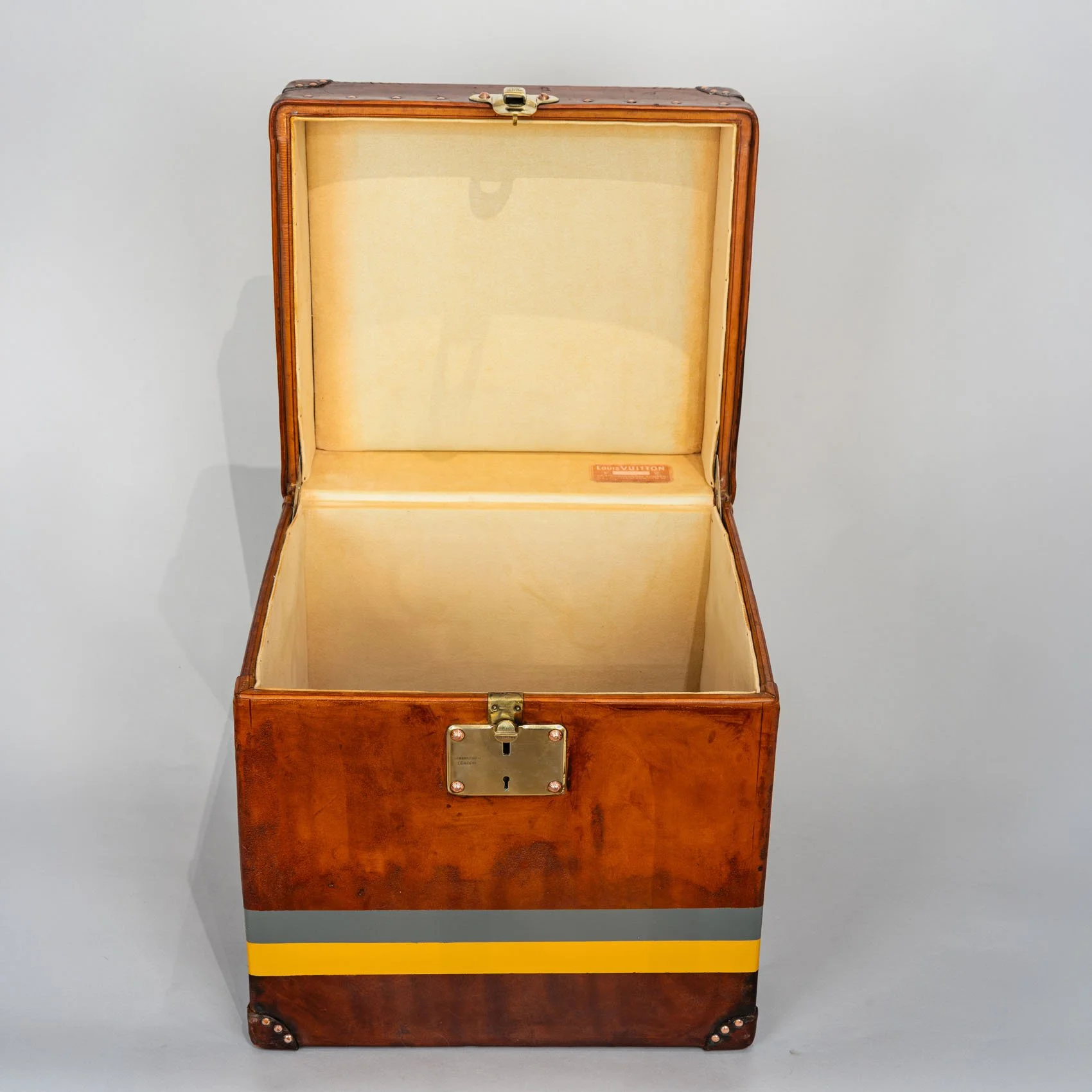 Image 3 of 3