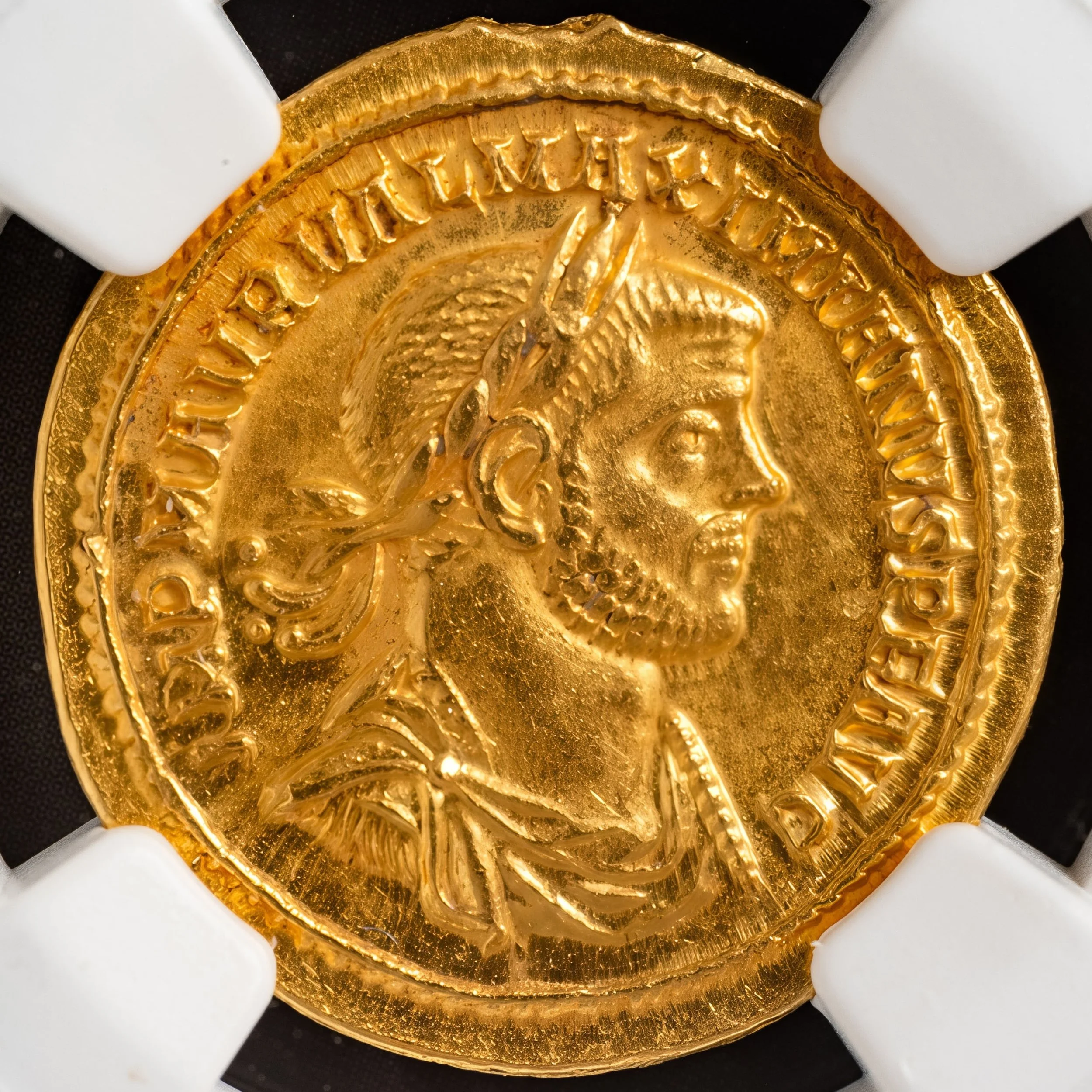
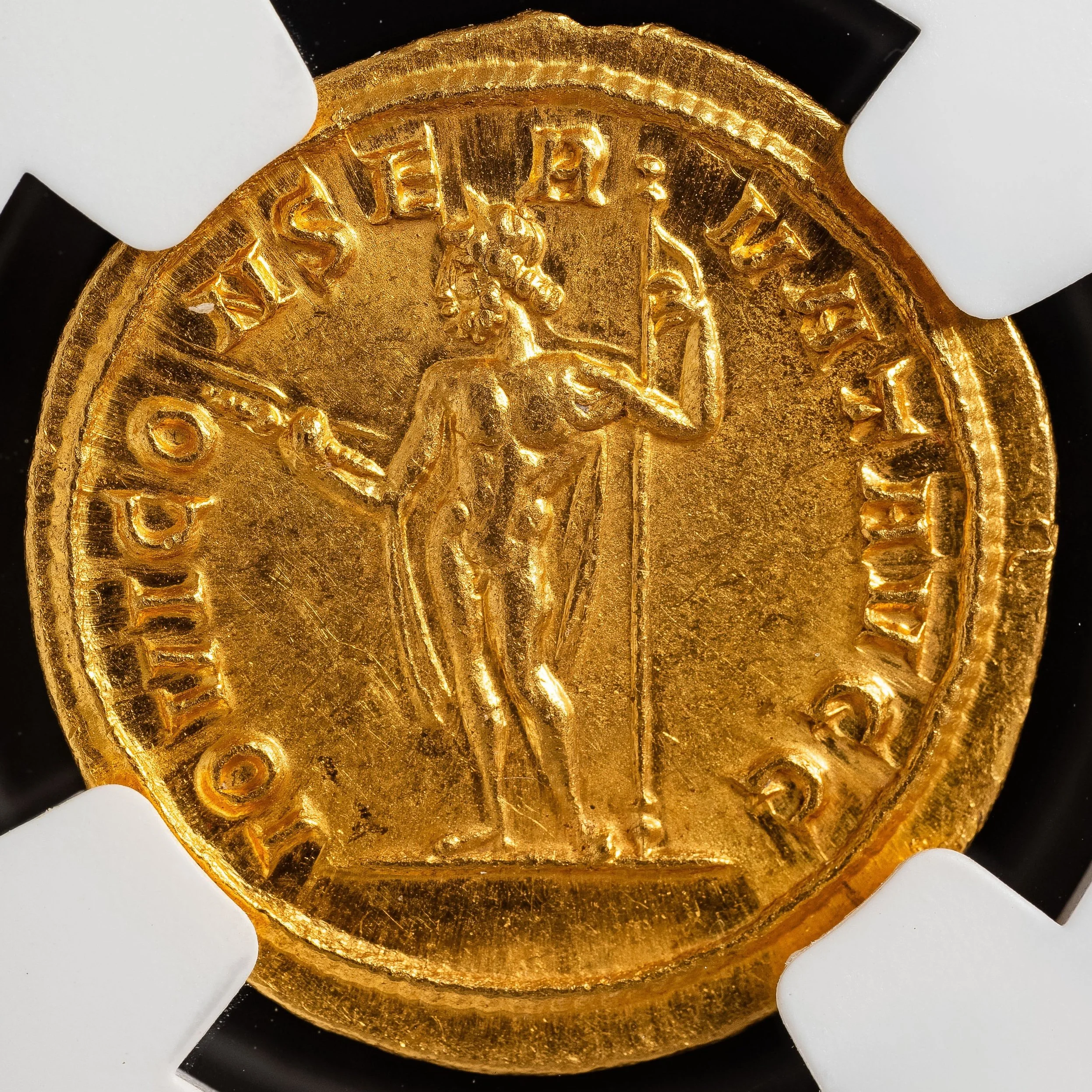
A gold stater of Alexander the Great, struck at an uncertain Greek or Macedonian mint in the decades following the king's death. The obverse carries the head of Athena in a triple-crested Corinthian helmet, the bowl decorated with a coiled serpent. The reverse shows Nike, the winged goddess of victory, standing with a wreath in her outstretched right hand and a stylis, the mast of a warship, in her left, beside the legend ΑΛΕΞΑΝΔΡΟΥ, "of Alexander." In the field are the two control marks of this issue, an ant to the left and an eight-rayed star below the goddess's wing.
The ant is among the rarest images on all Greek coinage, and its pairing with the star is thought to allude to some local legend whose meaning is now lost. The combination has intrigued scholars since the nineteenth century. Ludvig Müller, cataloging the Alexander coinage in 1855, read the two marks as civic badges and argued the coin was struck jointly by Apollonia and Acrothoon, two towns on Mount Athos, the ant standing for Apollonia and the star for the city at the holy mountain's summit. Modern scholarship no longer reads control marks as city emblems, and Martin Price returned the mint to "uncertain" in his 1991 corpus, but the puzzle Müller tried to solve remains open: a tiny insect, chosen deliberately by a mint official twenty-three centuries ago, for reasons no surviving source explains.
The type is scarce. Five examples are recorded in PELLA, the American Numismatic Society's corpus of the Alexander coinage in public collections, and market appearances are correspondingly few.
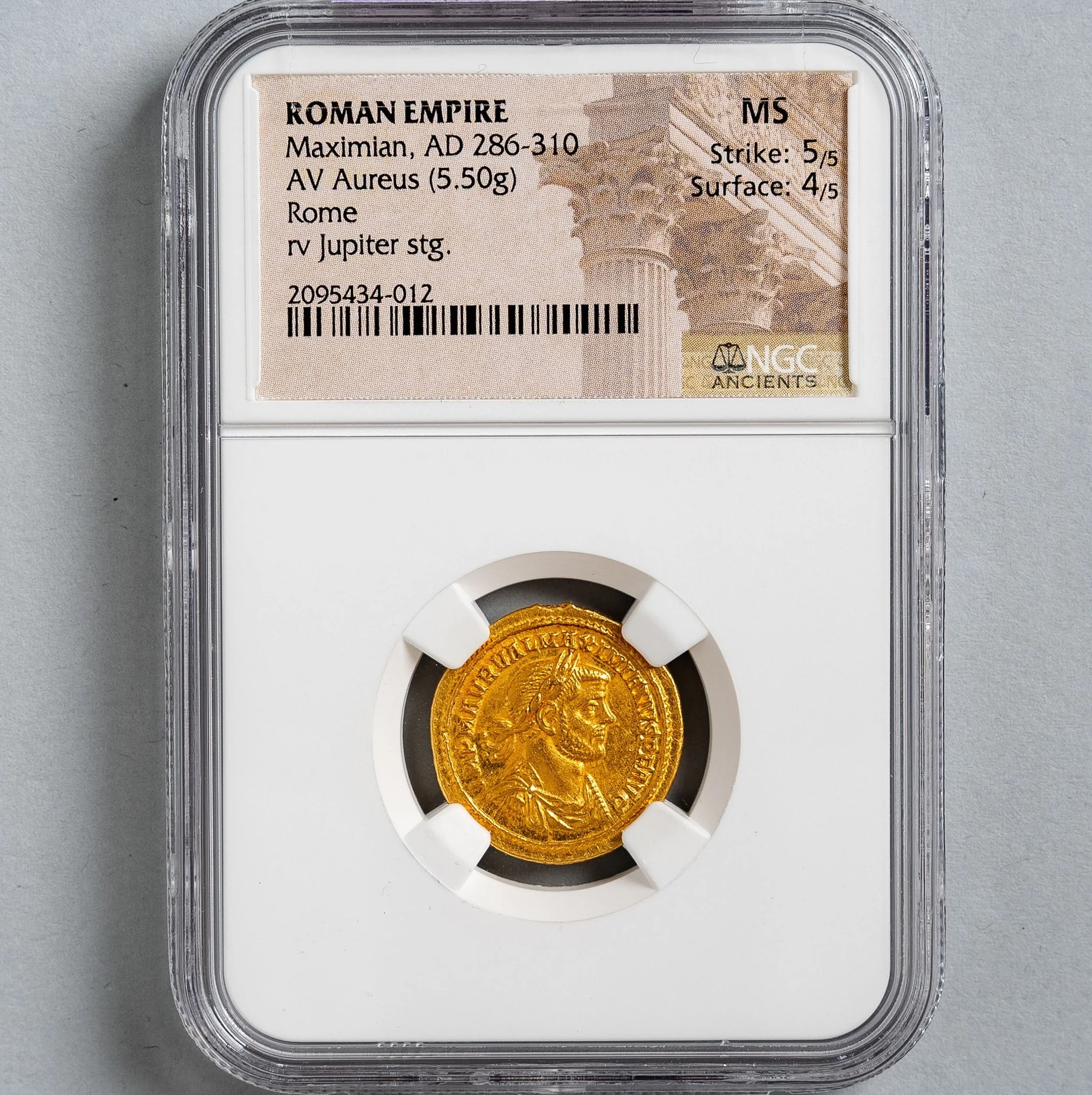
The coin weighs 8.59 grams and measures 18 millimeters. It is graded Choice Mint State (Ch MS) by NGC, Strike 5/5, Surface 4/5, certification 4877406-011.
Reference: Price 831.
Other examples of this type are held in the following collections:
The British Museum, London
The Ashmolean Museum, Oxford
The American Numismatic Society, New York
The Harvard Art Museums, Cambridge
The Münzkabinett, Vienna
At 8.59 grams, the present coin is identical in weight to the Ashmolean example, deposited at Oxford by New College in 1907.
A gold stater of Alexander the Great, struck at an uncertain Greek or Macedonian mint in the decades following the king's death. The obverse carries the head of Athena in a triple-crested Corinthian helmet, the bowl decorated with a coiled serpent. The reverse shows Nike, the winged goddess of victory, standing with a wreath in her outstretched right hand and a stylis, the mast of a warship, in her left, beside the legend ΑΛΕΞΑΝΔΡΟΥ, "of Alexander." In the field are the two control marks of this issue, an ant to the left and an eight-rayed star below the goddess's wing.
The ant is among the rarest images on all Greek coinage, and its pairing with the star is thought to allude to some local legend whose meaning is now lost. The combination has intrigued scholars since the nineteenth century. Ludvig Müller, cataloging the Alexander coinage in 1855, read the two marks as civic badges and argued the coin was struck jointly by Apollonia and Acrothoon, two towns on Mount Athos, the ant standing for Apollonia and the star for the city at the holy mountain's summit. Modern scholarship no longer reads control marks as city emblems, and Martin Price returned the mint to "uncertain" in his 1991 corpus, but the puzzle Müller tried to solve remains open: a tiny insect, chosen deliberately by a mint official twenty-three centuries ago, for reasons no surviving source explains.
The type is scarce. Five examples are recorded in PELLA, the American Numismatic Society's corpus of the Alexander coinage in public collections, and market appearances are correspondingly few.
The coin weighs 8.59 grams and measures 18 millimeters. It is graded Choice Mint State (Ch MS) by NGC, Strike 5/5, Surface 4/5, certification 4877406-011.
Reference: Price 831.
Other examples of this type are held in the following collections:
The British Museum, London
The Ashmolean Museum, Oxford
The American Numismatic Society, New York
The Harvard Art Museums, Cambridge
The Münzkabinett, Vienna
At 8.59 grams, the present coin is identical in weight to the Ashmolean example, deposited at Oxford by New College in 1907.

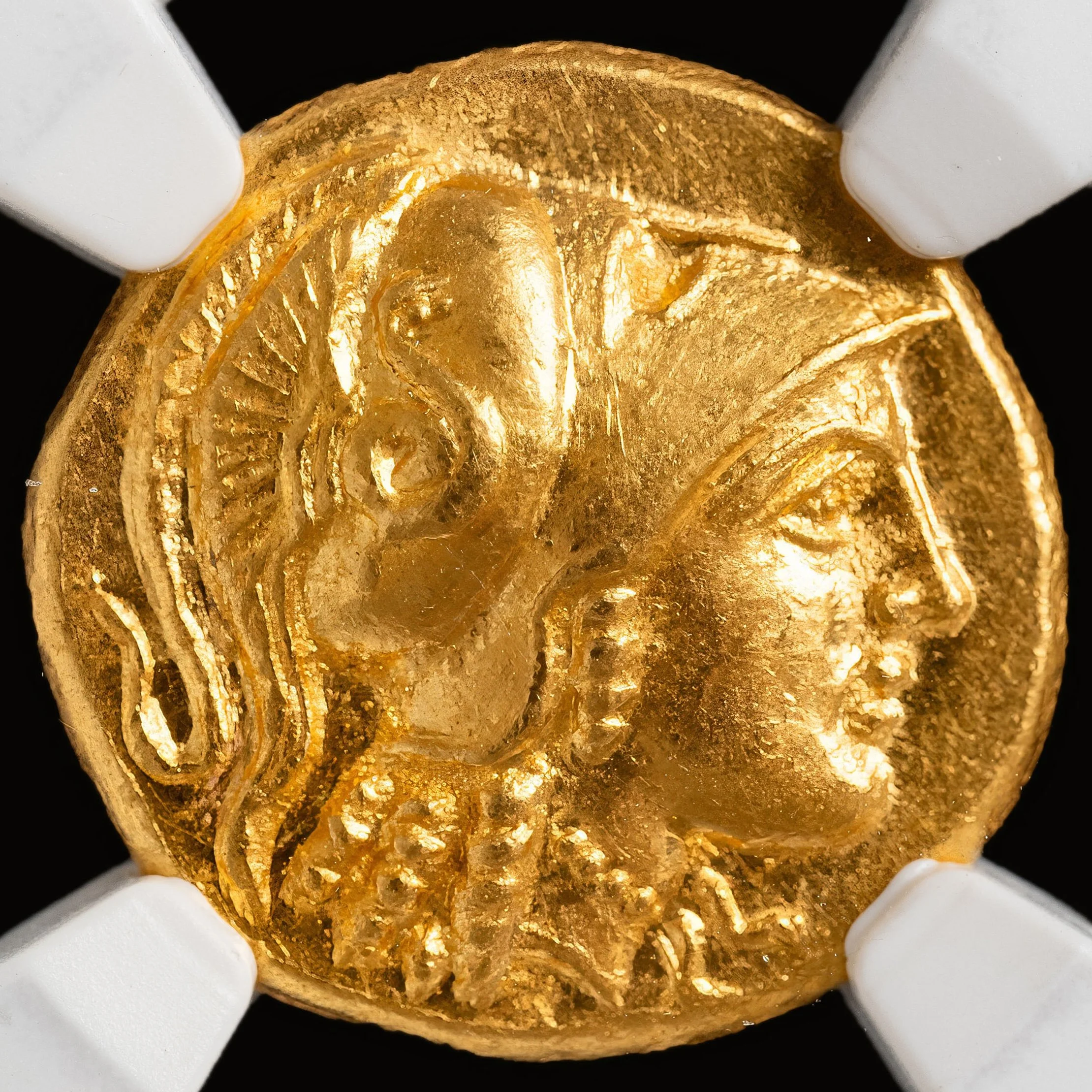 Image 1 of 3
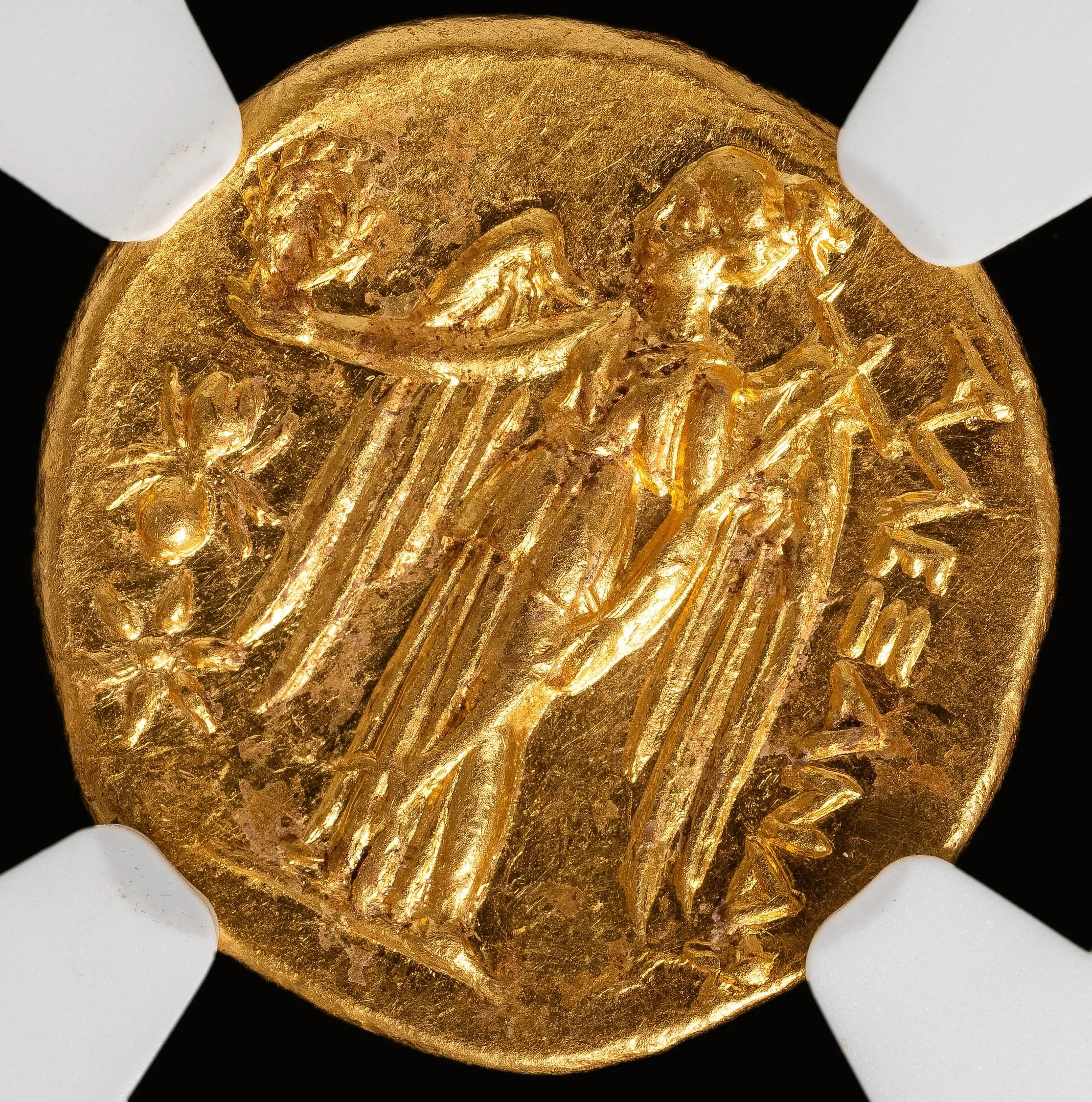 Image 2 of 3
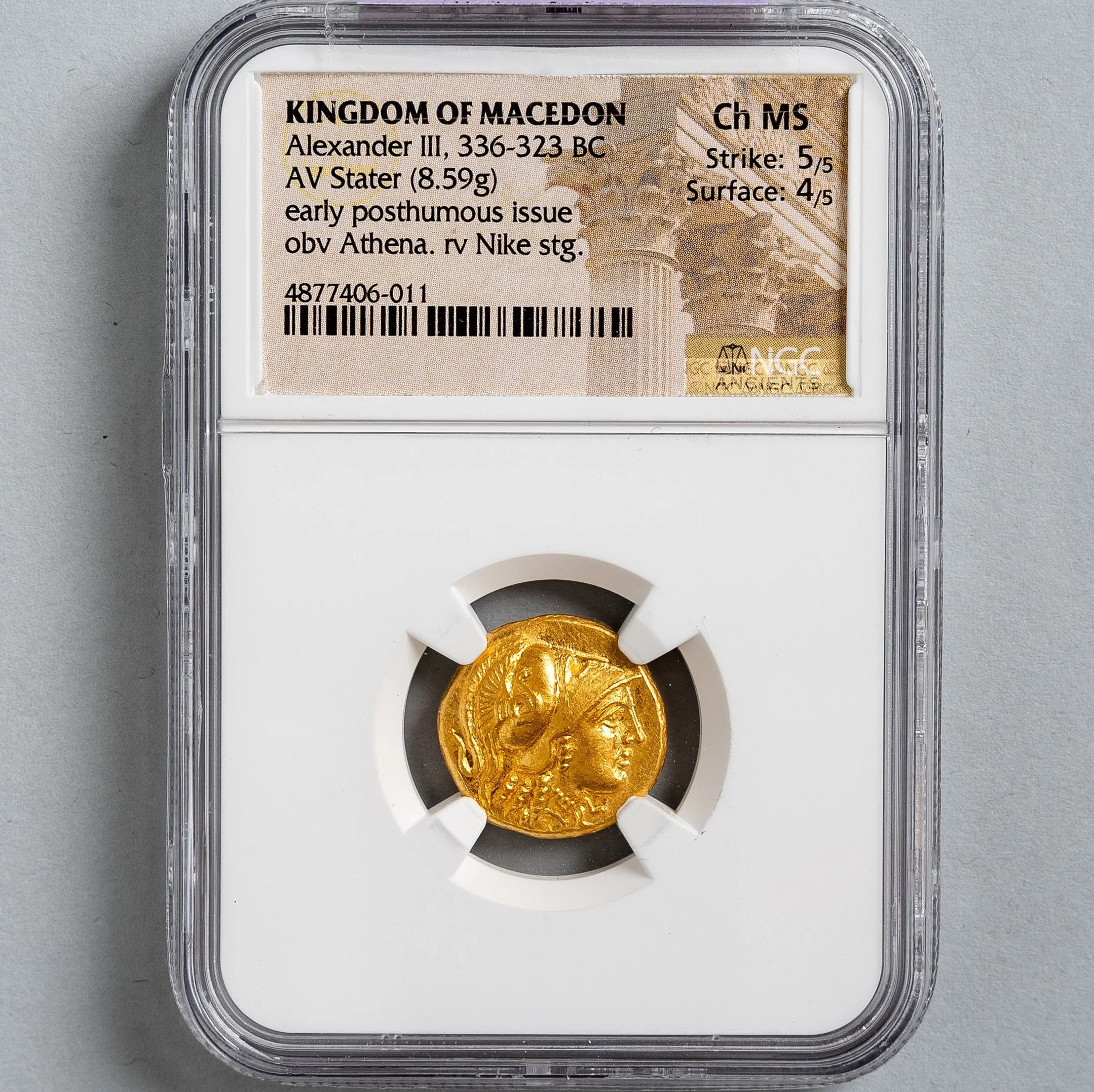 Image 3 of 3