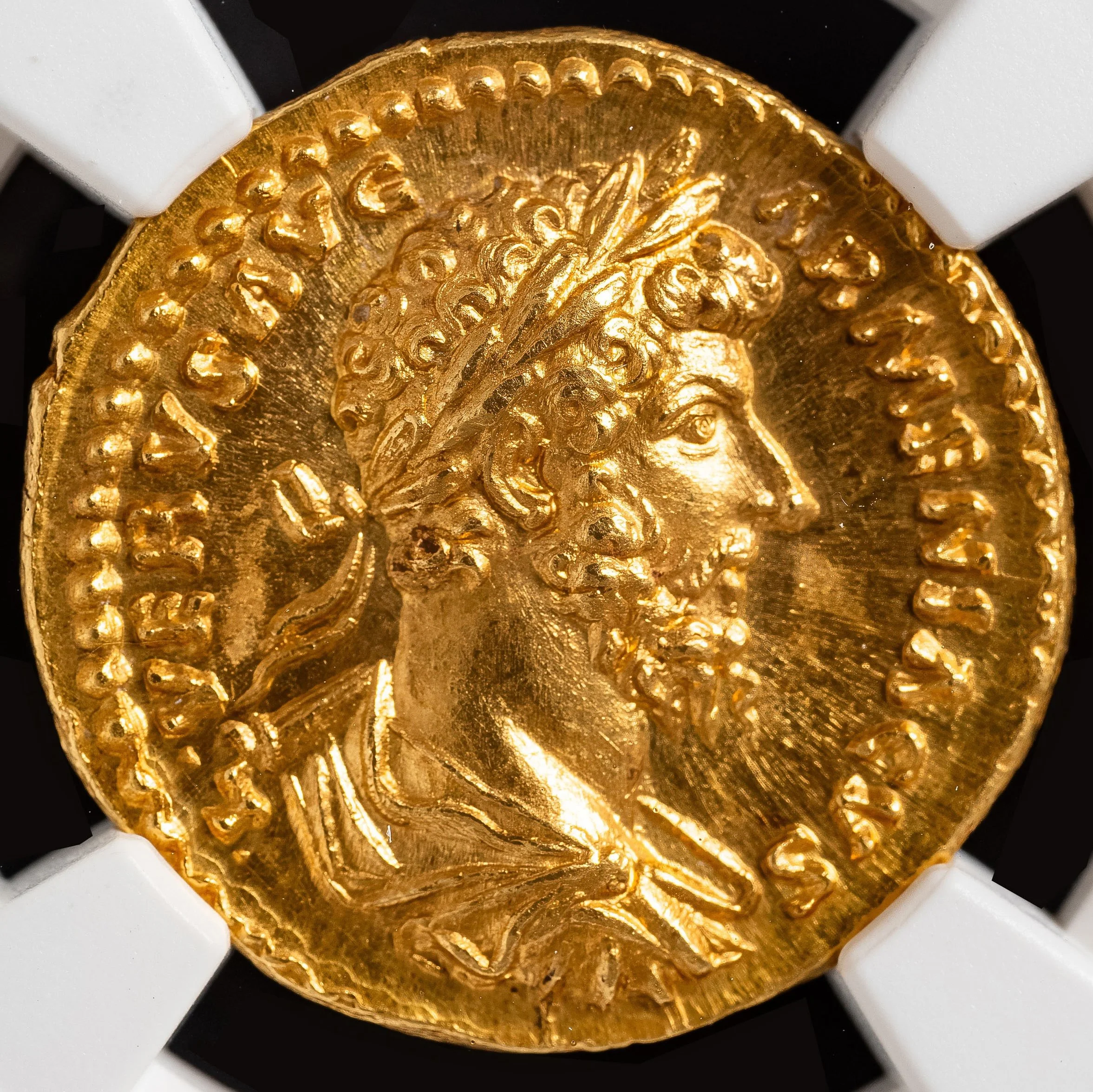
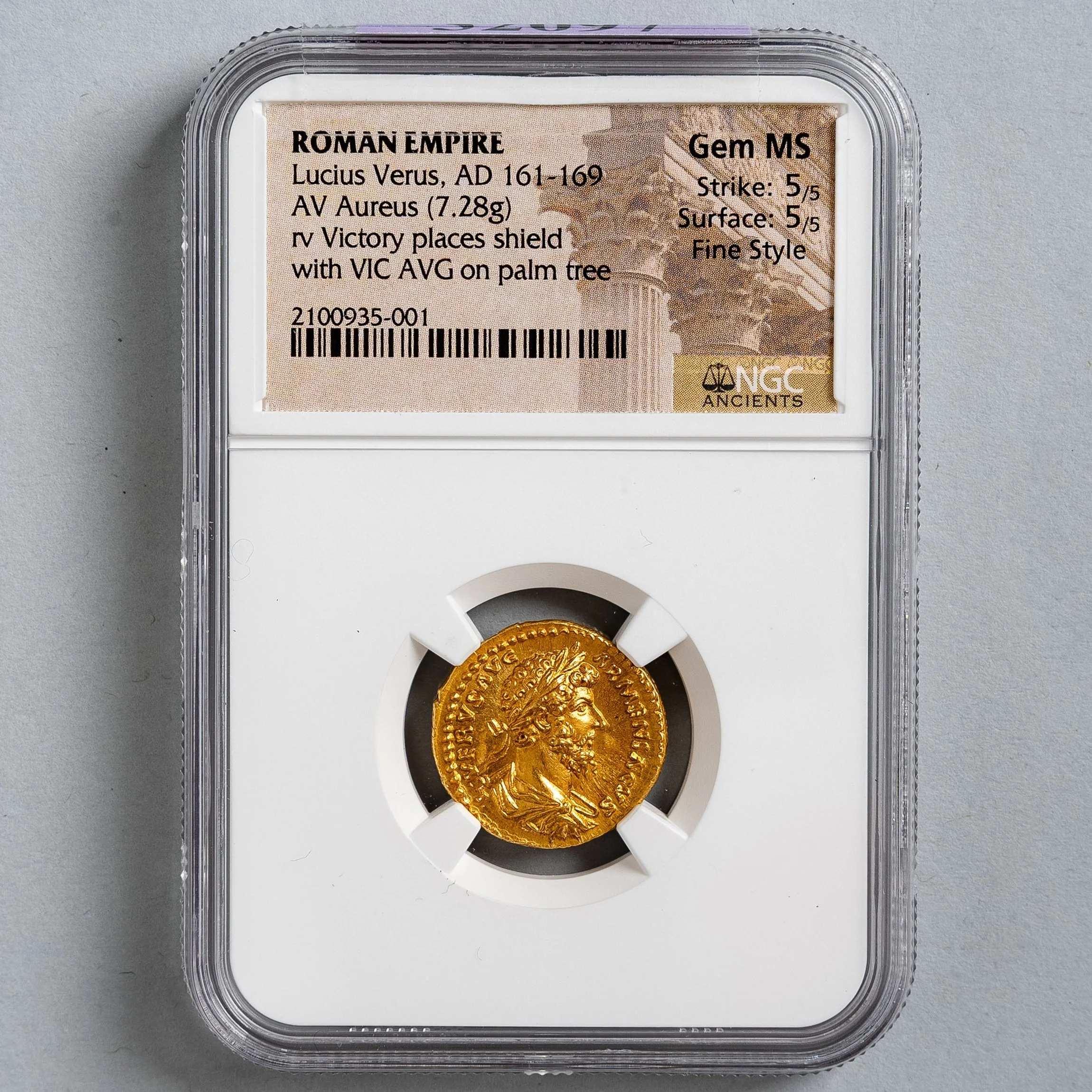
A gold aureus of the emperor Severus Alexander, struck at Rome in AD 230. The coin weighs 5.80 grams and is graded Choice Mint State by NGC, with a full strike of 5/5, surfaces of 4/5, and the Fine Style designation reserved for dies of superior artistry.
The obverse bears the laureate and draped bust of the young emperor facing right, seen from behind, with the drapery knotted at the left shoulder, within the legend IMP SEV ALEXAND AVG. The portrait shows the sensitive, almost boyish features that the mint of Rome gave the last of the Severan emperors, and the quality of the engraving is what earned the Fine Style designation.
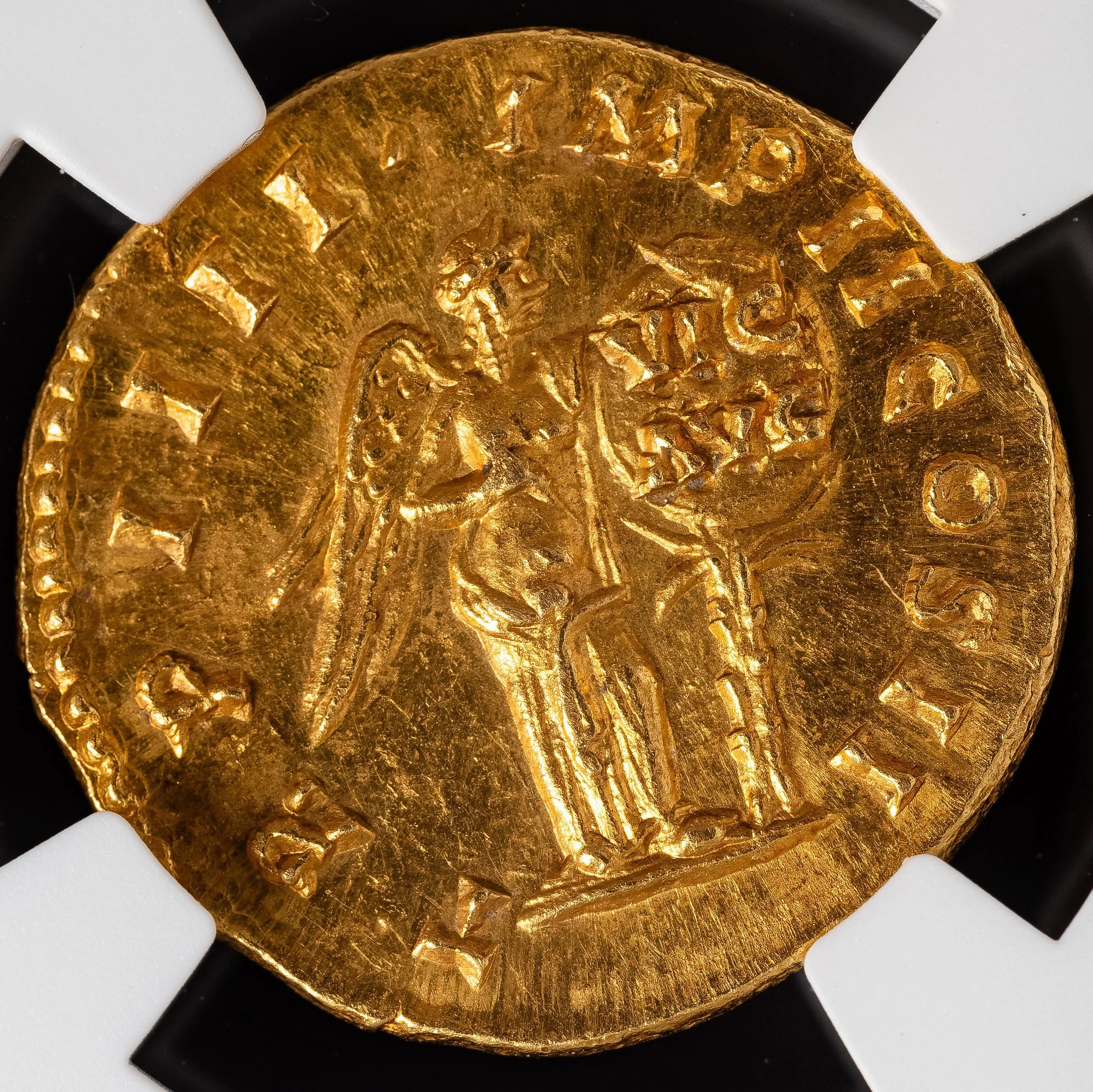
The reverse shows the emperor in the guise of Romulus, the founder of Rome, radiate, in tunic and military cloak, advancing right with a transverse spear in his right hand and a trophy of captured arms over his left shoulder. The legend, P M TR P VIIII COS III P P, records his ninth tribunician power and third consulship and dates the coin precisely to AD 230. The date gives the image its edge. Severus Alexander had come to the throne at thirteen after the murder of his cousin Elagabalus and ruled under the guidance of his mother, Julia Mamaea. In 230, the armies of Ardashir I, founder of the new Sassanid Persian dynasty, broke into Roman Mesopotamia and laid siege to the frontier city of Nisibis, thereby facing its most serious eastern threat in a generation. A coin showing the gentle young emperor as Romulus, the city's founder and first warrior, was a statement of resolve from a regime under pressure. Alexander campaigned in the east in the years that followed, and his murder by his own troops in 235 ended the Severan dynasty and opened the fifty years of upheaval historians call the Crisis of the Third Century. This aureus belongs to the last confident moment before that storm.
Reference: RIC IV.2 103; Calicó 3121
Examples of the type are held by
The American Numismatic Society, New York
A gold aureus of the emperor Severus Alexander, struck at Rome in AD 230. The coin weighs 5.80 grams and is graded Choice Mint State by NGC, with a full strike of 5/5, surfaces of 4/5, and the Fine Style designation reserved for dies of superior artistry.
The obverse bears the laureate and draped bust of the young emperor facing right, seen from behind, with the drapery knotted at the left shoulder, within the legend IMP SEV ALEXAND AVG. The portrait shows the sensitive, almost boyish features that the mint of Rome gave the last of the Severan emperors, and the quality of the engraving is what earned the Fine Style designation.
The reverse shows the emperor in the guise of Romulus, the founder of Rome, radiate, in tunic and military cloak, advancing right with a transverse spear in his right hand and a trophy of captured arms over his left shoulder. The legend, P M TR P VIIII COS III P P, records his ninth tribunician power and third consulship and dates the coin precisely to AD 230. The date gives the image its edge. Severus Alexander had come to the throne at thirteen after the murder of his cousin Elagabalus and ruled under the guidance of his mother, Julia Mamaea. In 230, the armies of Ardashir I, founder of the new Sassanid Persian dynasty, broke into Roman Mesopotamia and laid siege to the frontier city of Nisibis, thereby facing its most serious eastern threat in a generation. A coin showing the gentle young emperor as Romulus, the city's founder and first warrior, was a statement of resolve from a regime under pressure. Alexander campaigned in the east in the years that followed, and his murder by his own troops in 235 ended the Severan dynasty and opened the fifty years of upheaval historians call the Crisis of the Third Century. This aureus belongs to the last confident moment before that storm.
Reference: RIC IV.2 103; Calicó 3121
Examples of the type are held by
The American Numismatic Society, New York

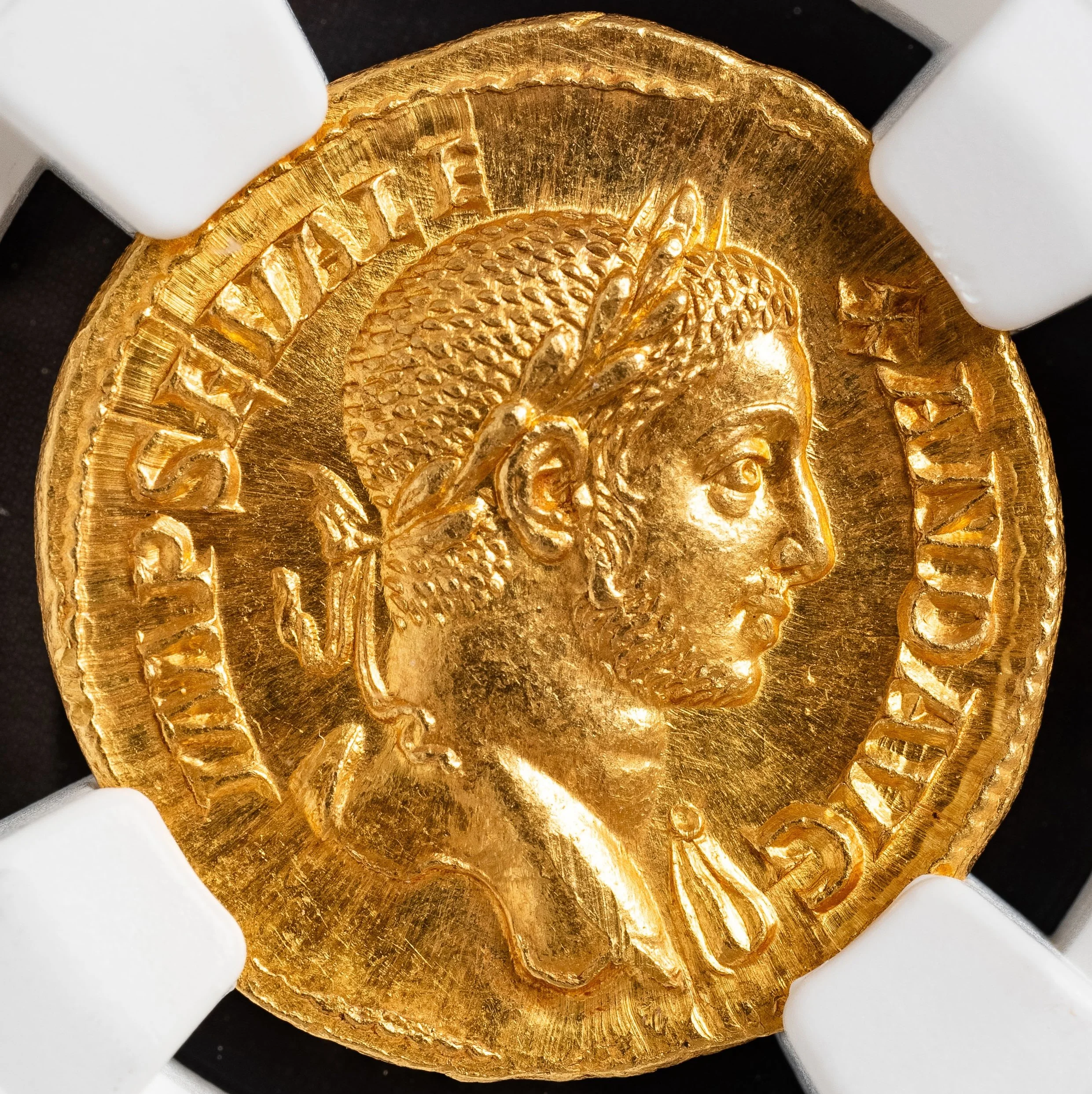 Image 1 of 3
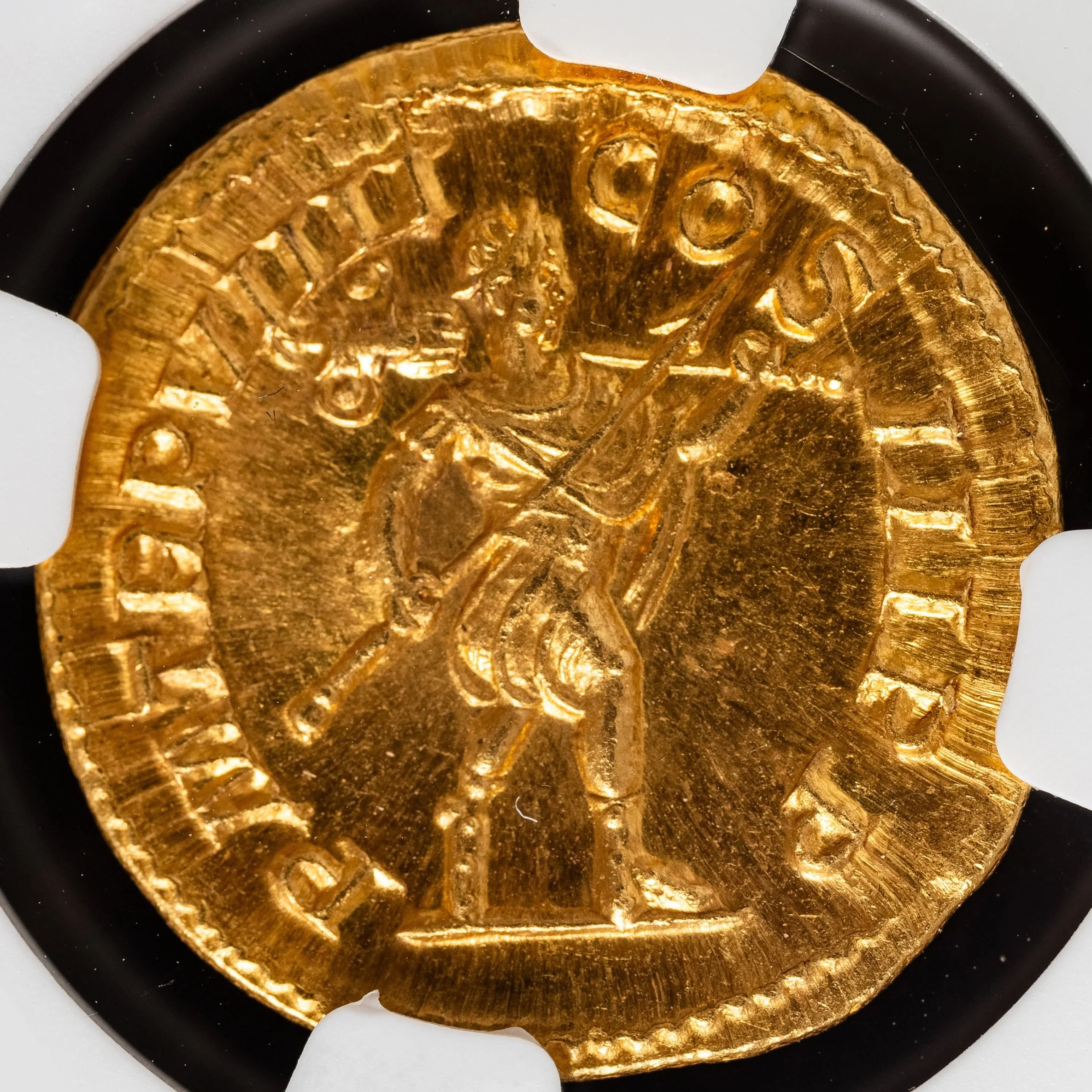 Image 2 of 3
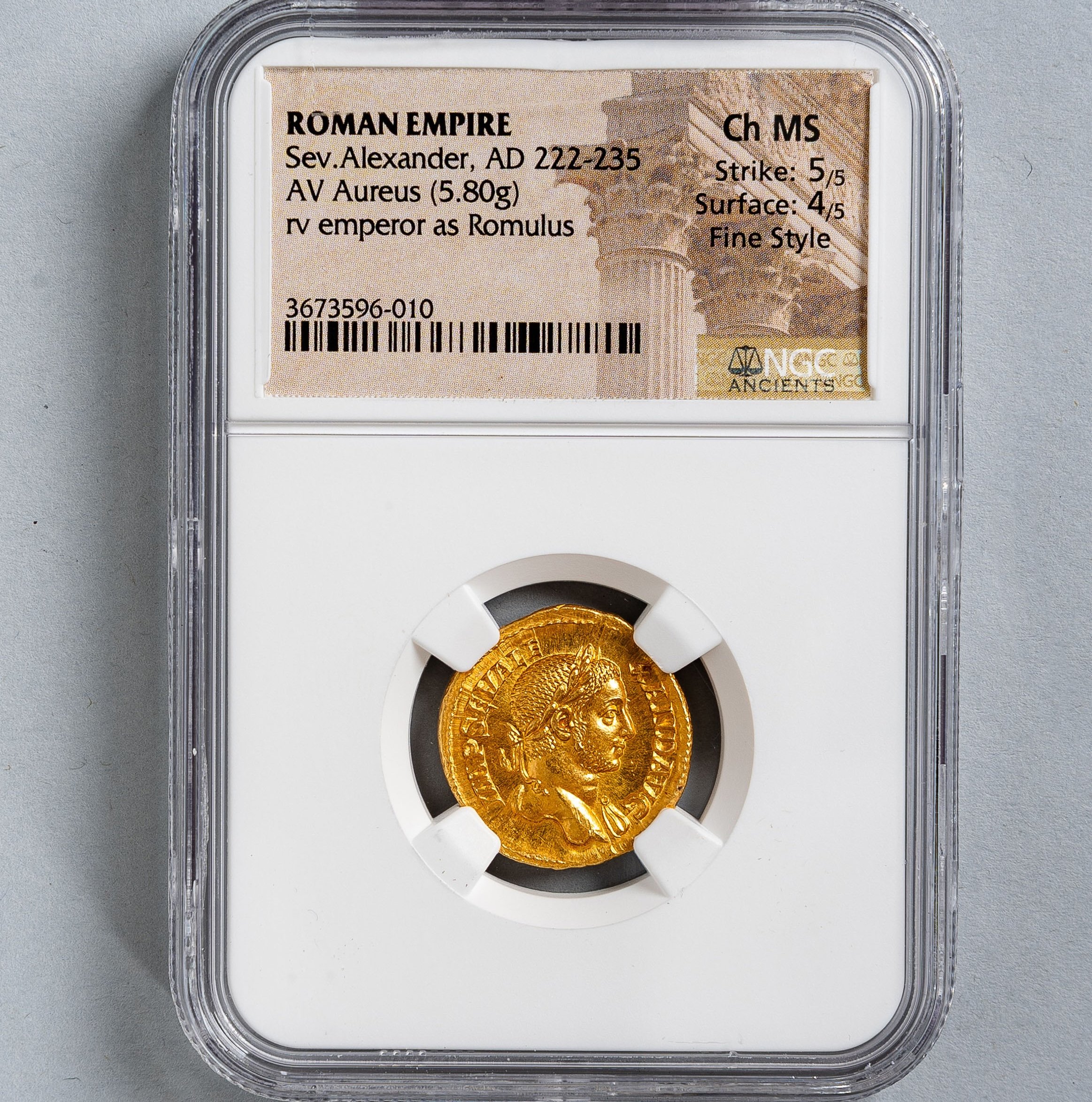 Image 3 of 3