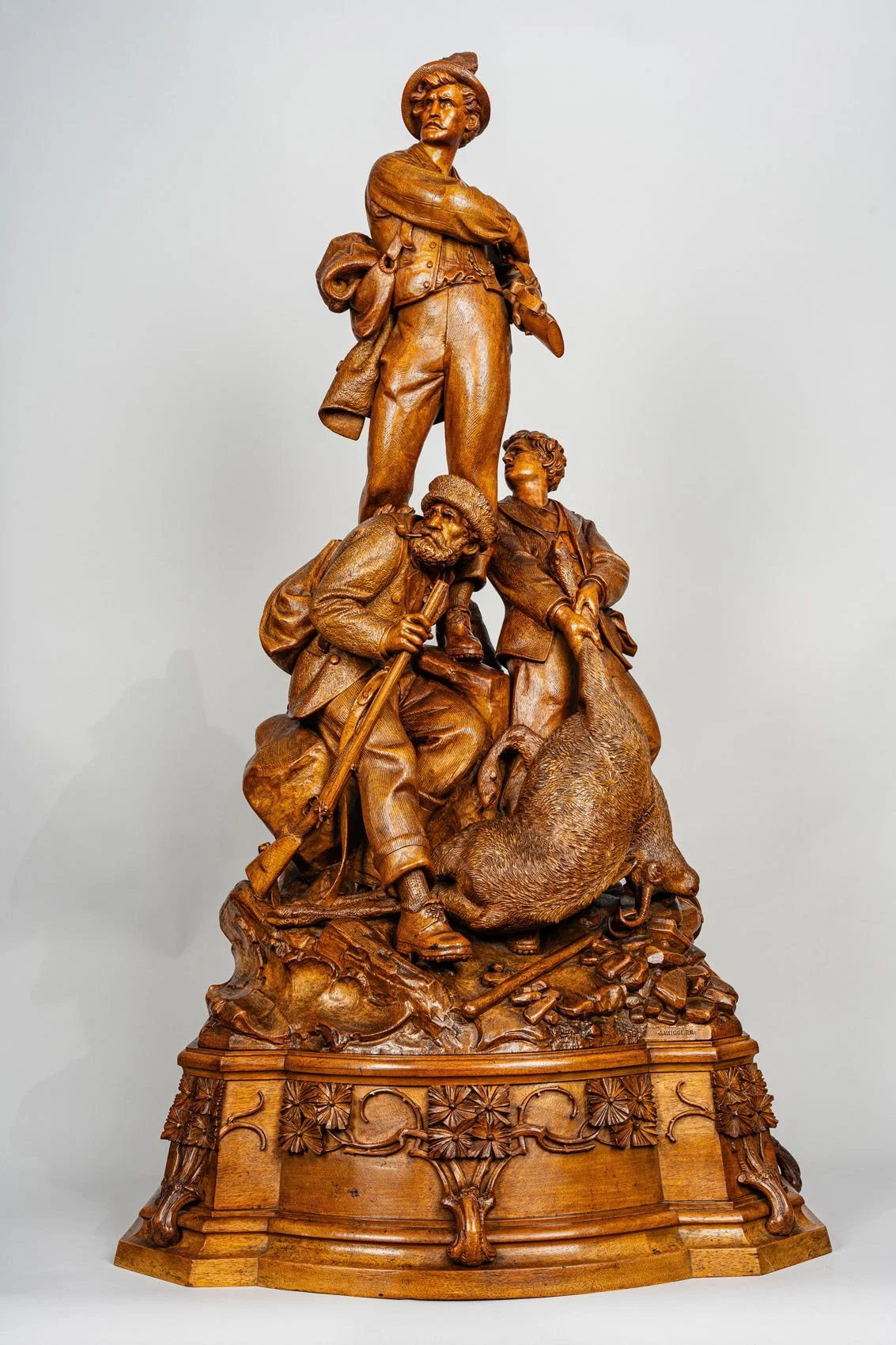
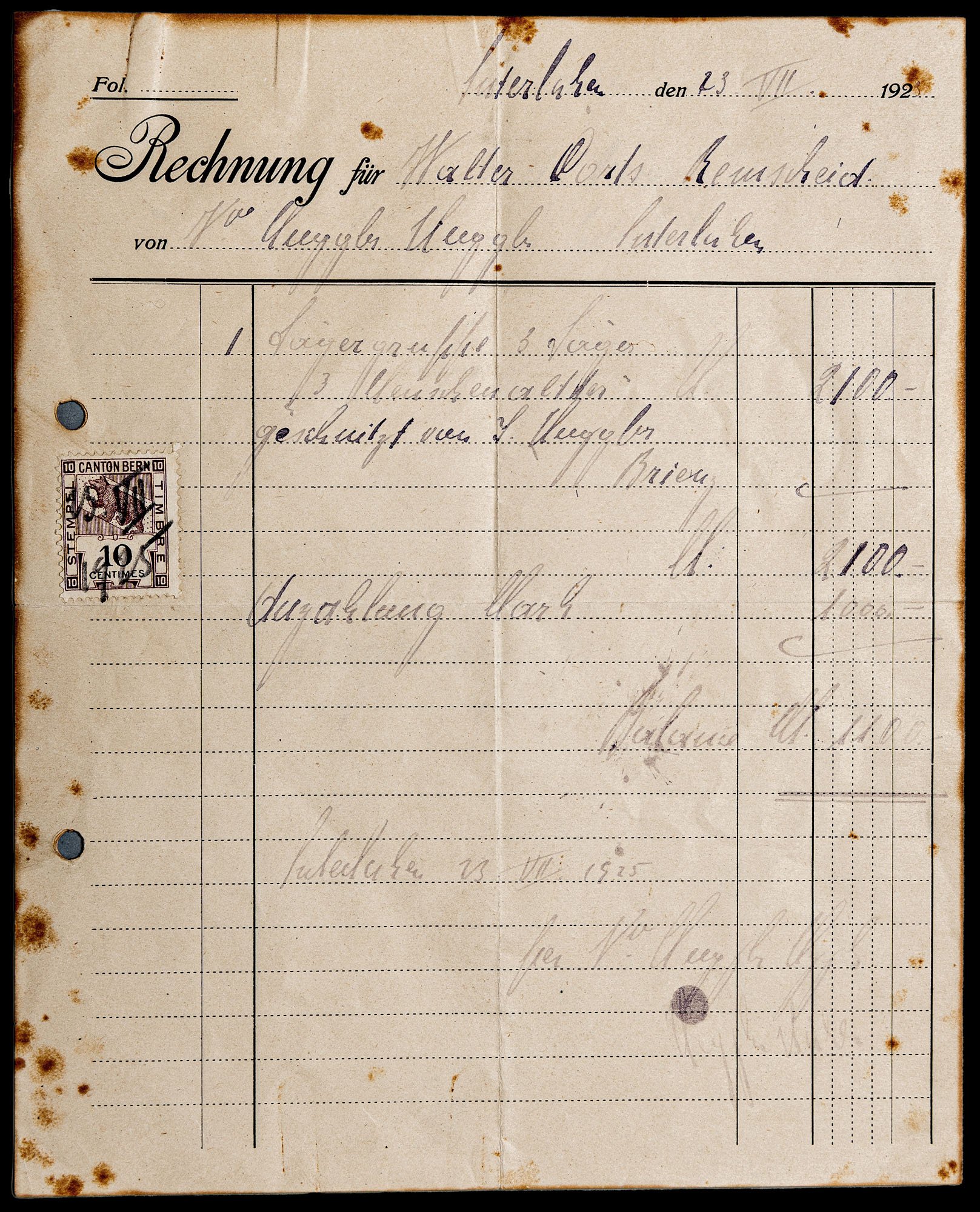
A figural mantel clock of exceptional scale by Johann Huggler of Brienz, among the most celebrated masters of Swiss Black Forest carving, signed on the rifle stock.
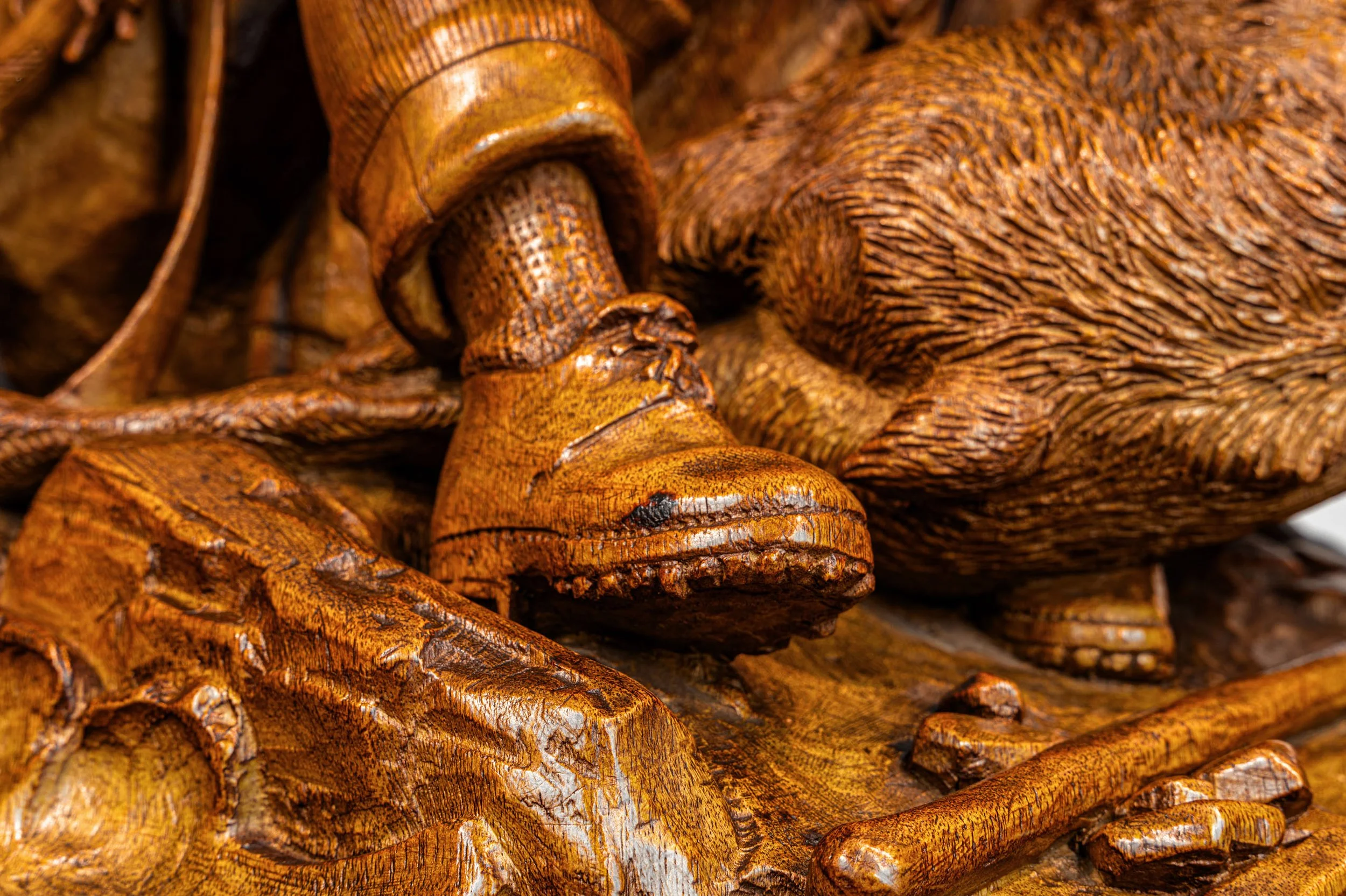
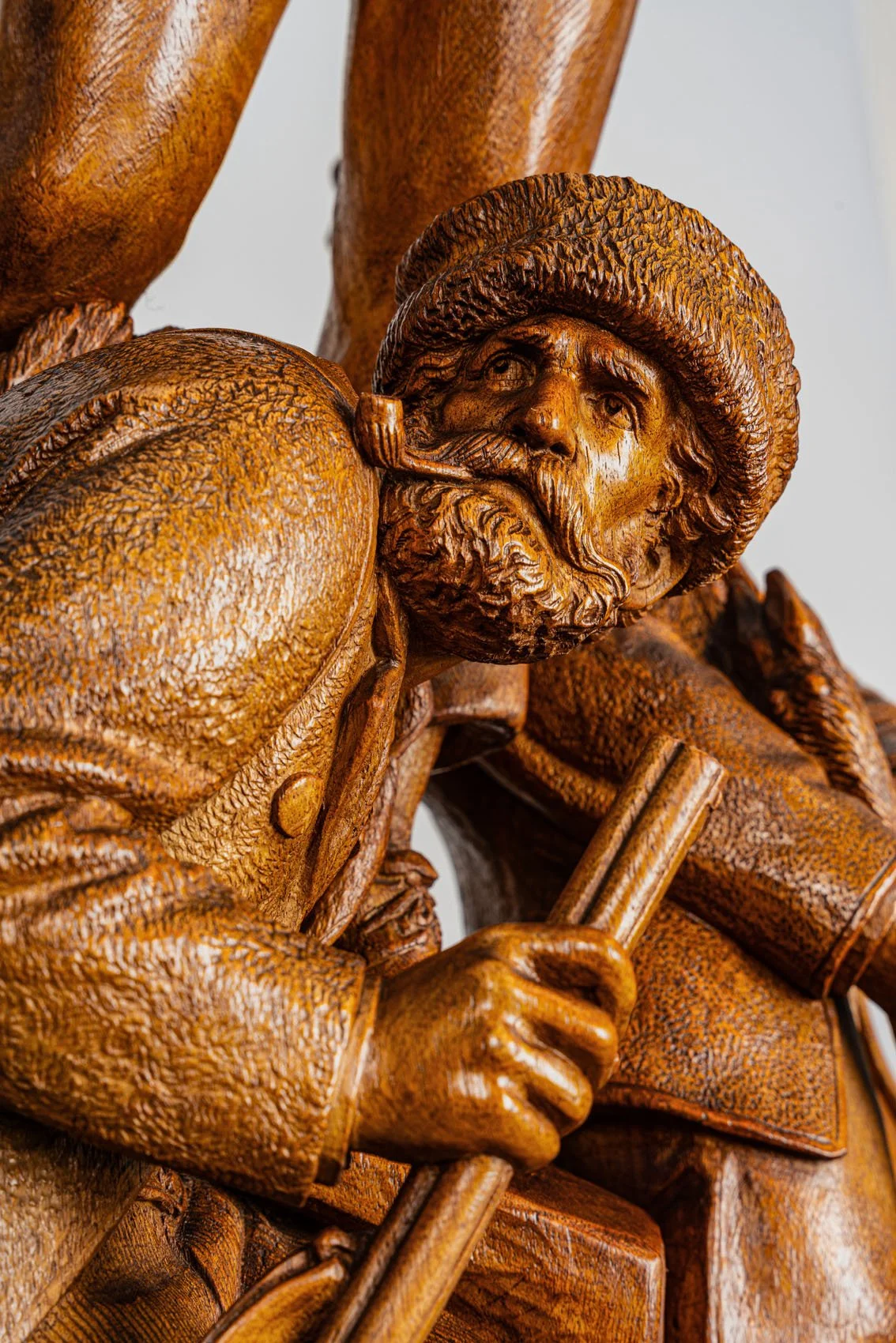
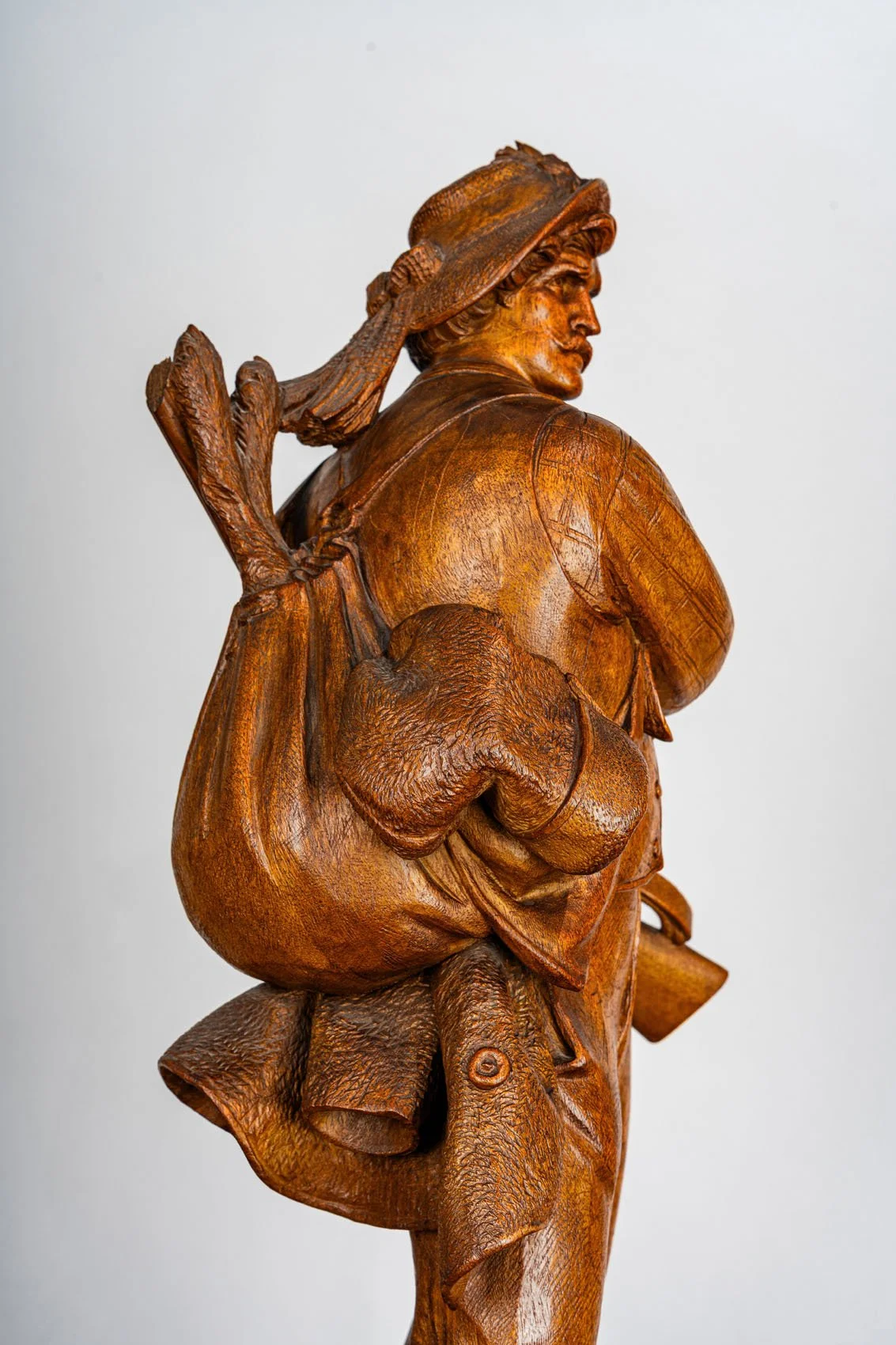
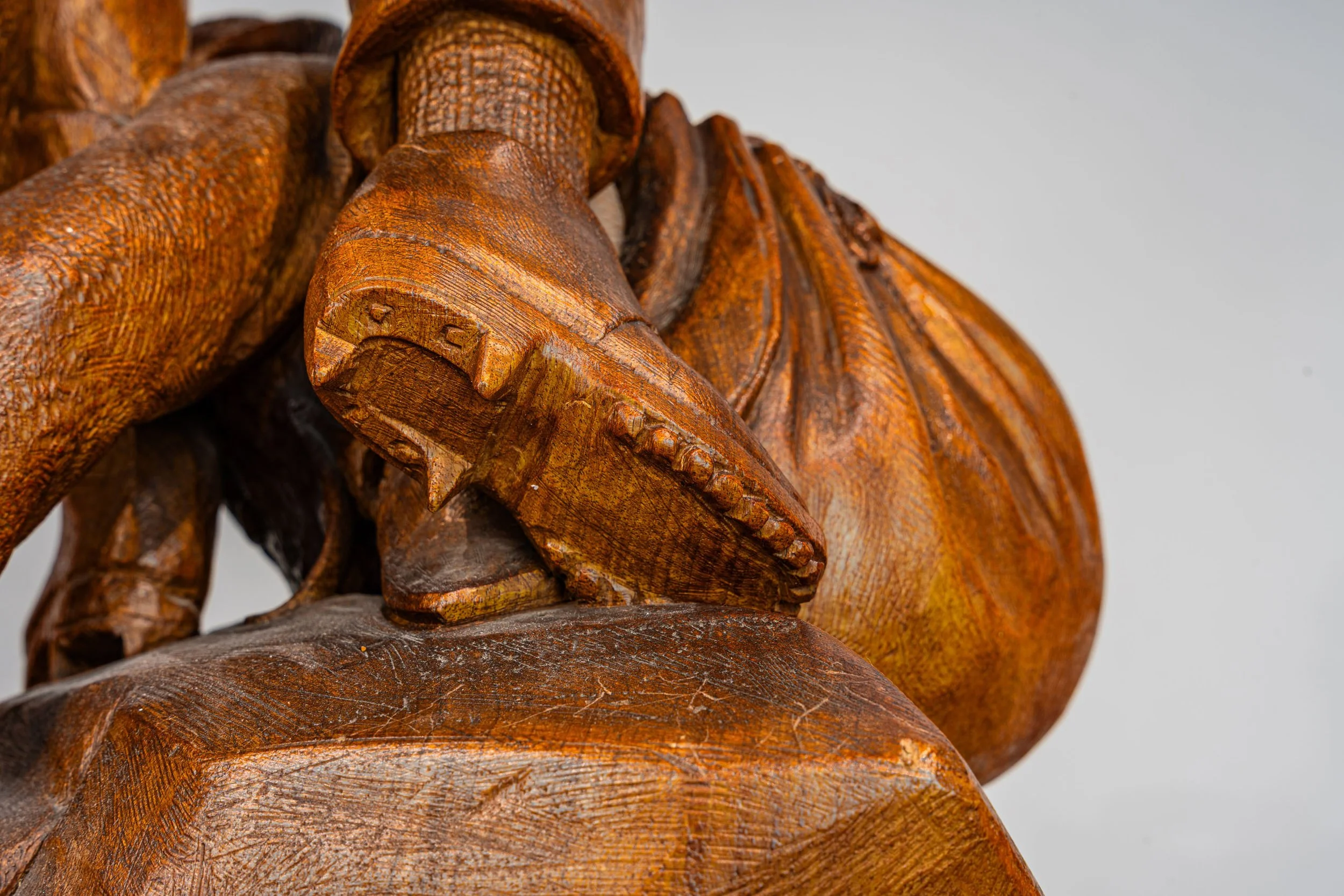
A bearded hunter sits above the dial, rifle resting diagonally across his figure, a pipe at his lips. He wears a feathered hat, layered hunting garments, and buckled leather boots, each rendered with the close observation that distinguishes Huggler's finest work from the broader Brienz production. The strongly individualized face reflects the tradition of Huggler modeling his hunters on his own likeness. A chamois, slung in the bag at his back, is the day's quarry carried home from the high Alps.
Below, oak leaves, pine cones, acorns, and woodland foliage fill every surface, with partridge and chicks clustered beneath the dial in high relief. The base extends outward through scrolling rocaille forms, each terminating in a cartouche: a rabbit to the left, a ground squirrel to the right. The enamel dial is set with individual petal-shaped chapter rings, blue Roman numerals on white against the warm walnut.
Johann Huggler and the Brienz Tradition
Johann Huggler (1834–1912) stands among the foremost figures of the Brienz school, and his hunter figures were his most admired productions. Signed examples are rare on the market and consistently represent the highest level of achievement in the medium.
A near-identical clock was exhibited by the Huggler workshop at the Paris Exposition Universelle of 1900, where it was photographed for The Art Journal; that example is illustrated in Swiss Carvings: The Art of the Black Forest, 1820–1940, the standard reference on the subject, co-authored by Simon Daniels of this gallery. The present clock is an earlier rendering of the same model, one the workshop held in such regard that it remained its showpiece at the close of the century.
Condition: Very good overall. The walnut retains a rich, original patina. The carving is complete and crisply preserved across all principal elements. The movement is present and in working order. Enamel dial intact.
Dimensions: 27" width x 37" height x 11" depth
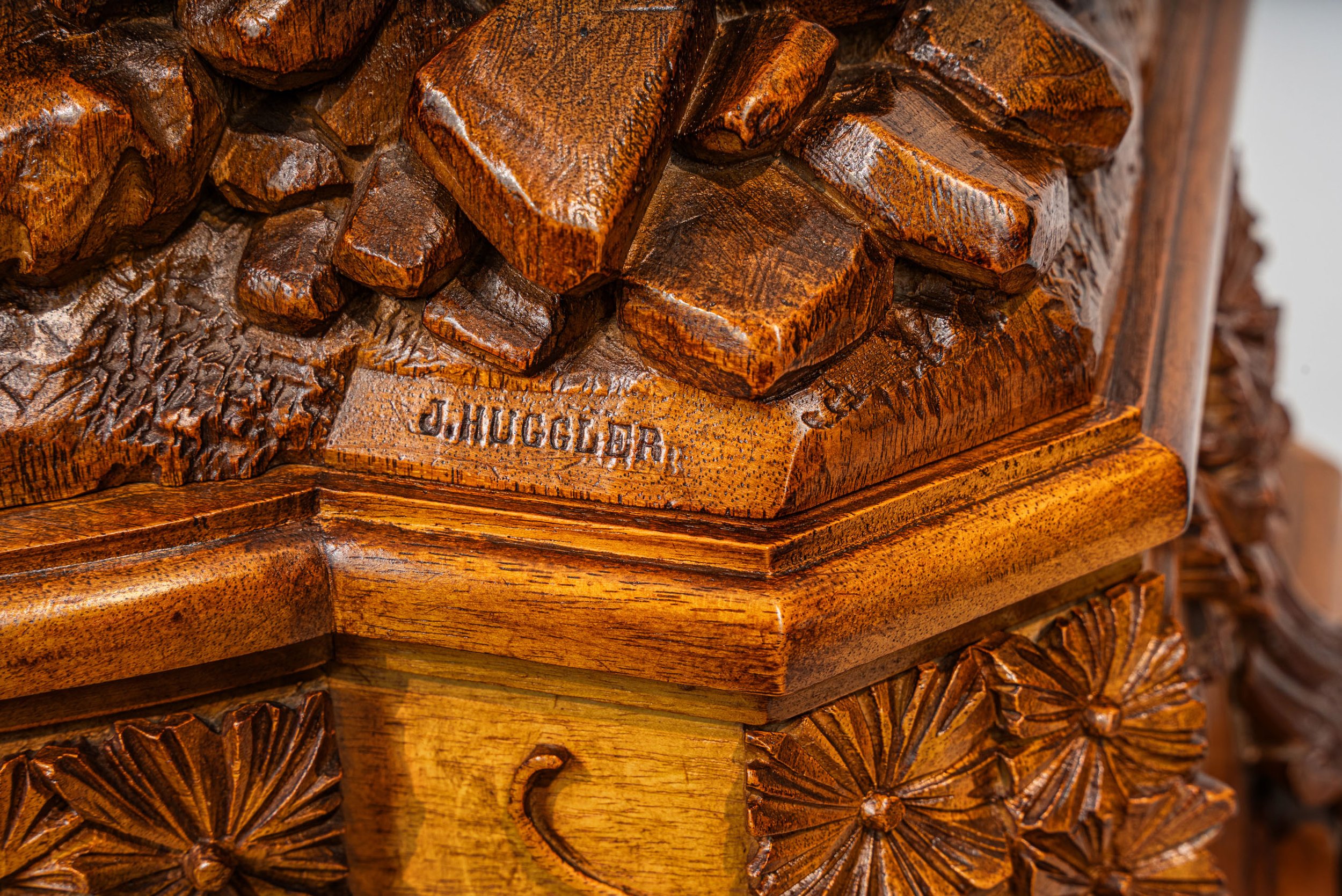
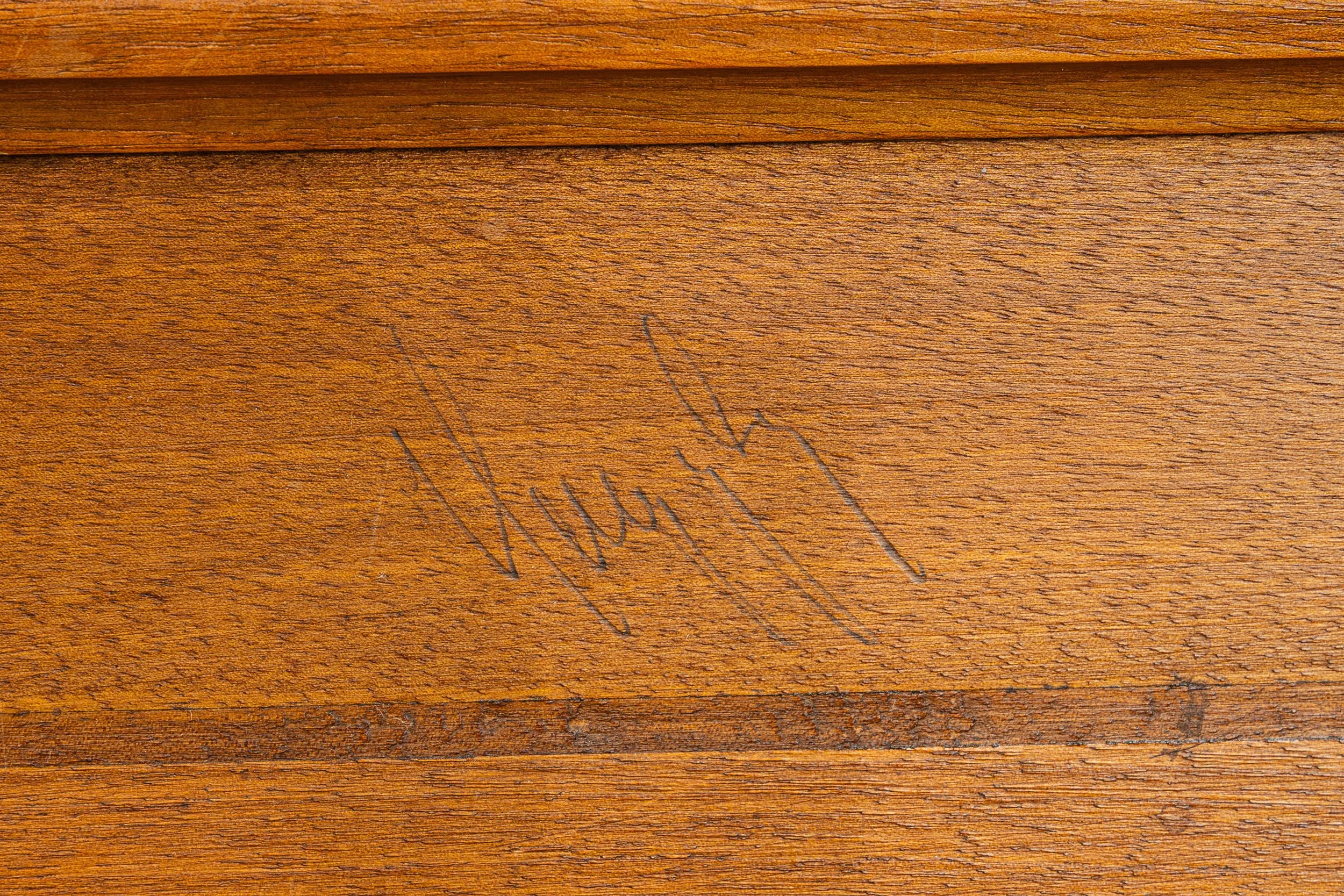
Signature: Signed J. Huggler on the rifle stock.
Literature: cf. Jay Arenski, Simon Daniels, and Michael Daniels, Swiss Carvings: The Art of the Black Forest, 1820–1940 (2006), pl. 52, illustrating the near-identical clock exhibited by Huggler Bros. at the Paris Exposition Universelle of 1900, photographed for The Art Journal.
A figural mantel clock of exceptional scale by Johann Huggler of Brienz, among the most celebrated masters of Swiss Black Forest carving, signed on the rifle stock.
A bearded hunter sits above the dial, rifle resting diagonally across his figure, a pipe at his lips. He wears a feathered hat, layered hunting garments, and buckled leather boots, each rendered with the close observation that distinguishes Huggler's finest work from the broader Brienz production. The strongly individualized face reflects the tradition of Huggler modeling his hunters on his own likeness. A chamois, slung in the bag at his back, is the day's quarry carried home from the high Alps.
Below, oak leaves, pine cones, acorns, and woodland foliage fill every surface, with partridge and chicks clustered beneath the dial in high relief. The base extends outward through scrolling rocaille forms, each terminating in a cartouche: a rabbit to the left, a ground squirrel to the right. The enamel dial is set with individual petal-shaped chapter rings, blue Roman numerals on white against the warm walnut.
Johann Huggler and the Brienz Tradition
Johann Huggler (1834–1912) stands among the foremost figures of the Brienz school, and his hunter figures were his most admired productions. Signed examples are rare on the market and consistently represent the highest level of achievement in the medium.
A near-identical clock was exhibited by the Huggler workshop at the Paris Exposition Universelle of 1900, where it was photographed for The Art Journal; that example is illustrated in Swiss Carvings: The Art of the Black Forest, 1820–1940, the standard reference on the subject, co-authored by Simon Daniels of this gallery. The present clock is an earlier rendering of the same model, one the workshop held in such regard that it remained its showpiece at the close of the century.
Condition: Very good overall. The walnut retains a rich, original patina. The carving is complete and crisply preserved across all principal elements. The movement is present and in working order. Enamel dial intact.
Dimensions: 27" width x 37" height x 11" depth
Signature: Signed J. Huggler on the rifle stock.
Literature: cf. Jay Arenski, Simon Daniels, and Michael Daniels, Swiss Carvings: The Art of the Black Forest, 1820–1940 (2006), pl. 52, illustrating the near-identical clock exhibited by Huggler Bros. at the Paris Exposition Universelle of 1900, photographed for The Art Journal.

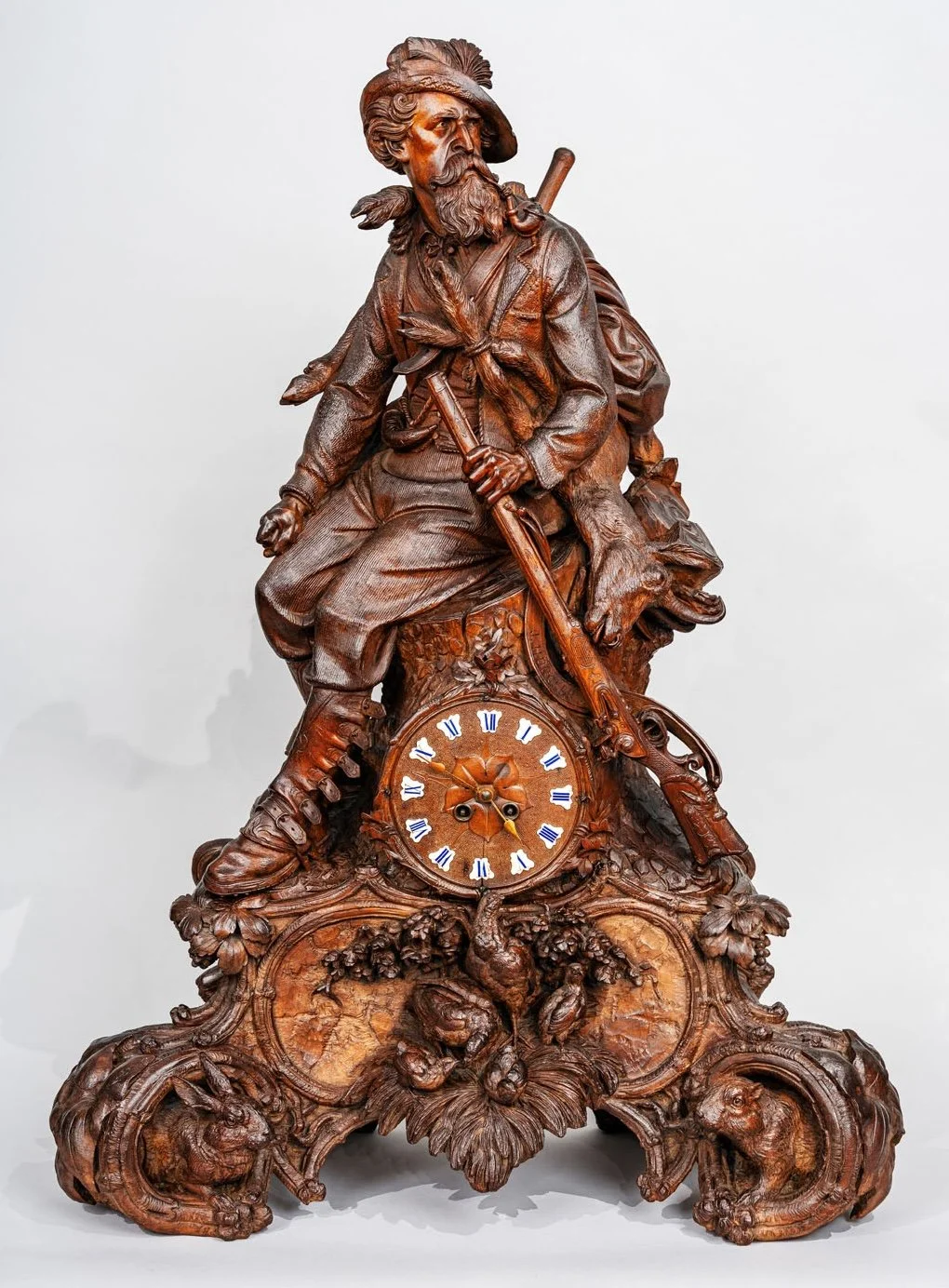 Image 1 of 6
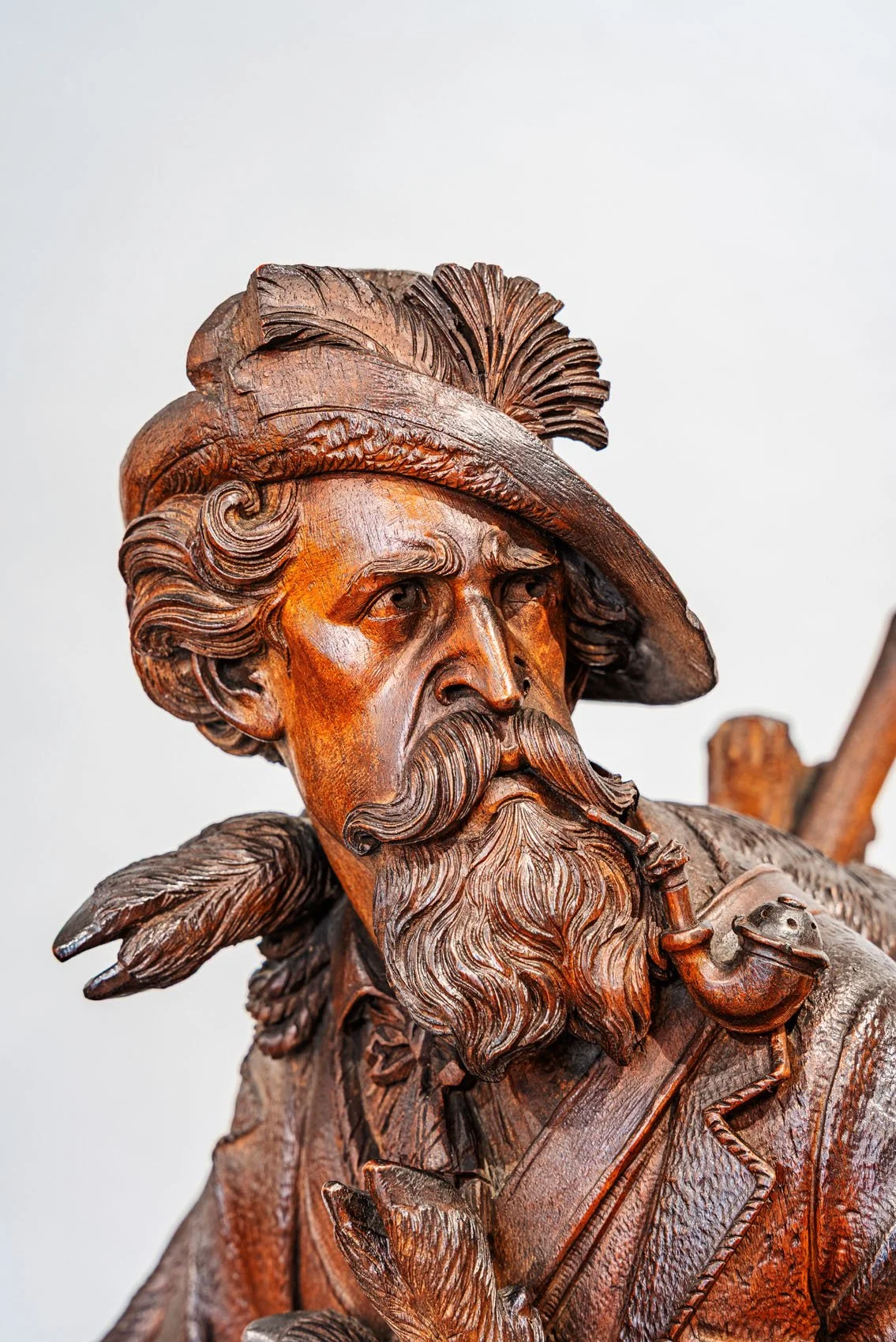 Image 2 of 6
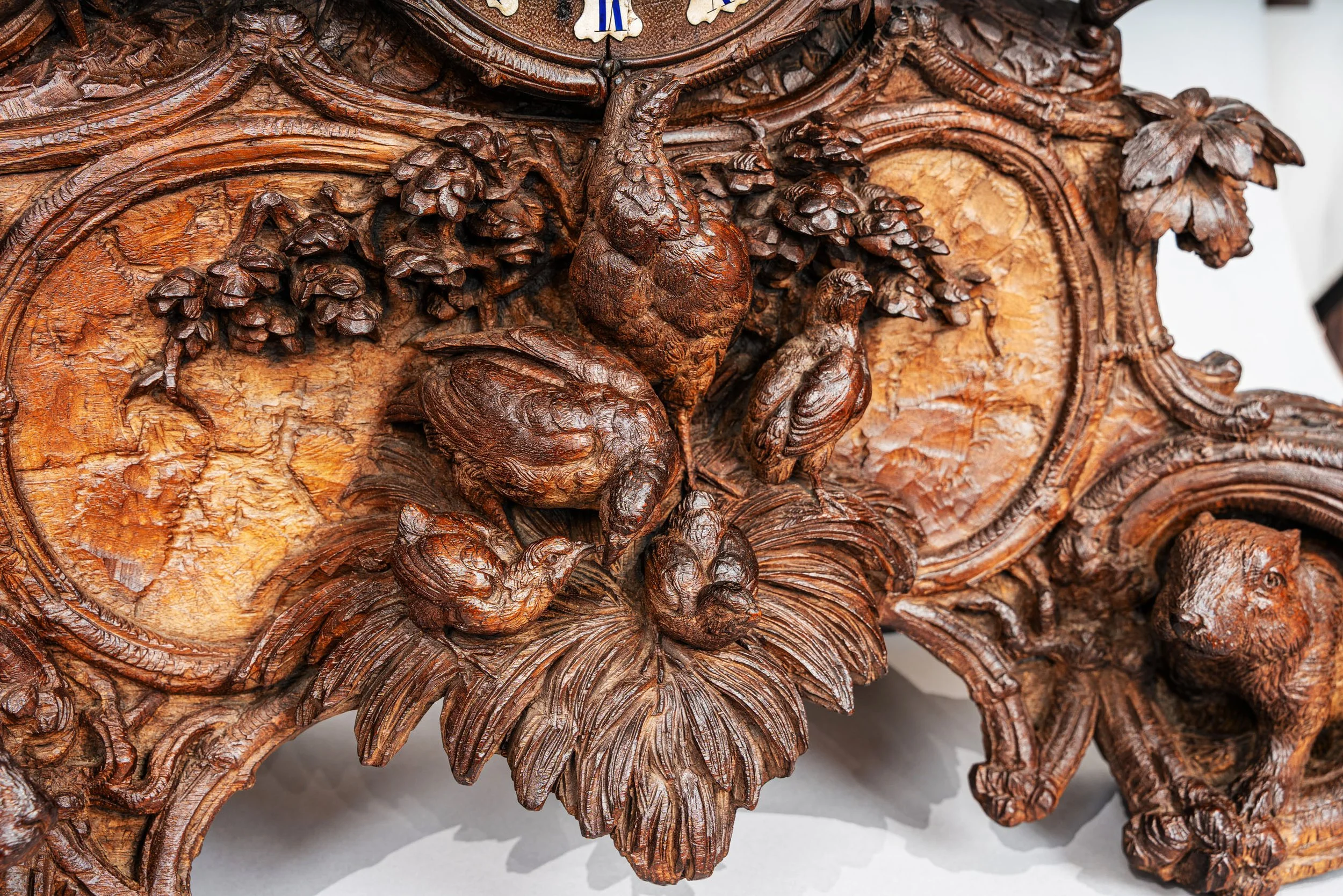 Image 3 of 6
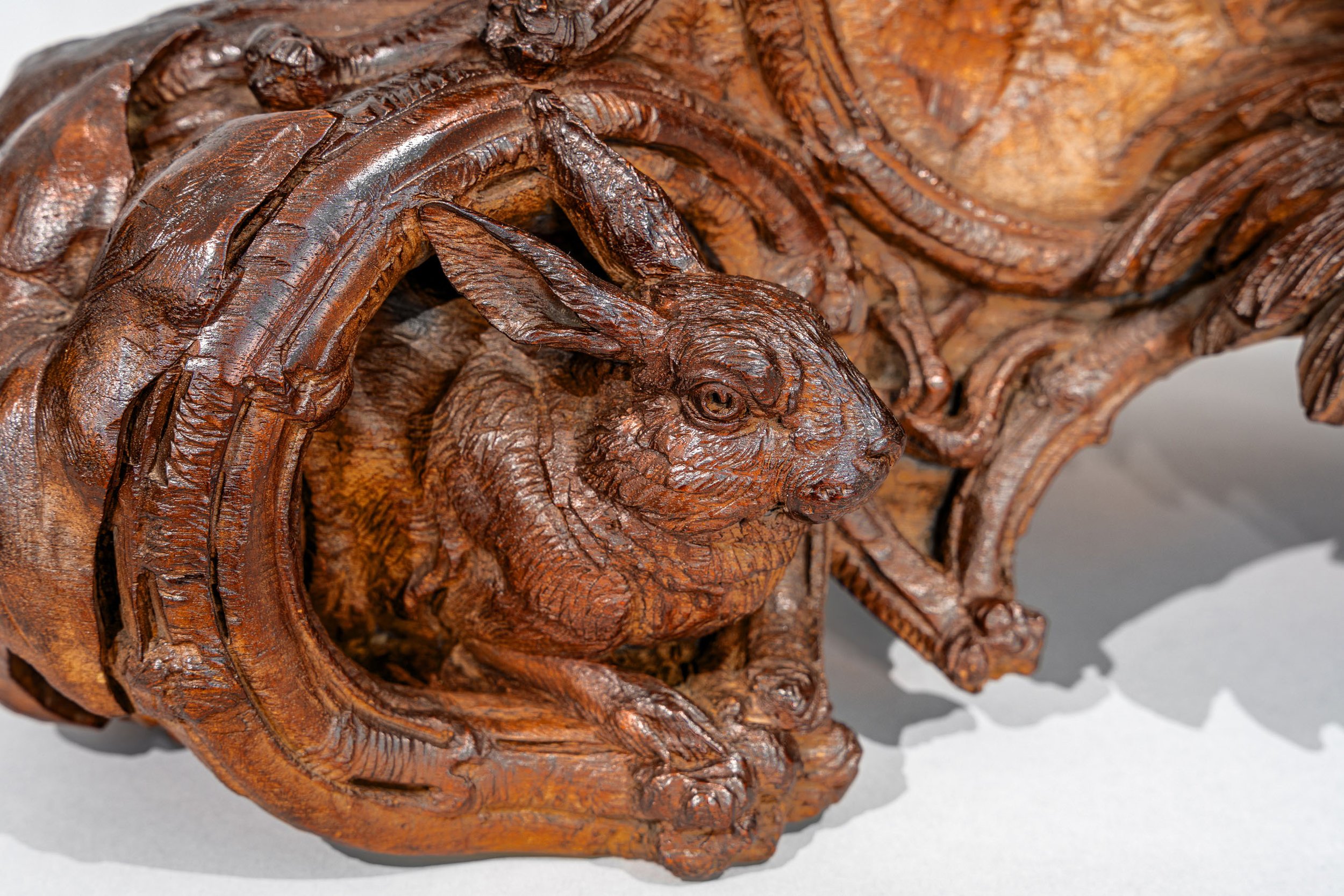 Image 4 of 6
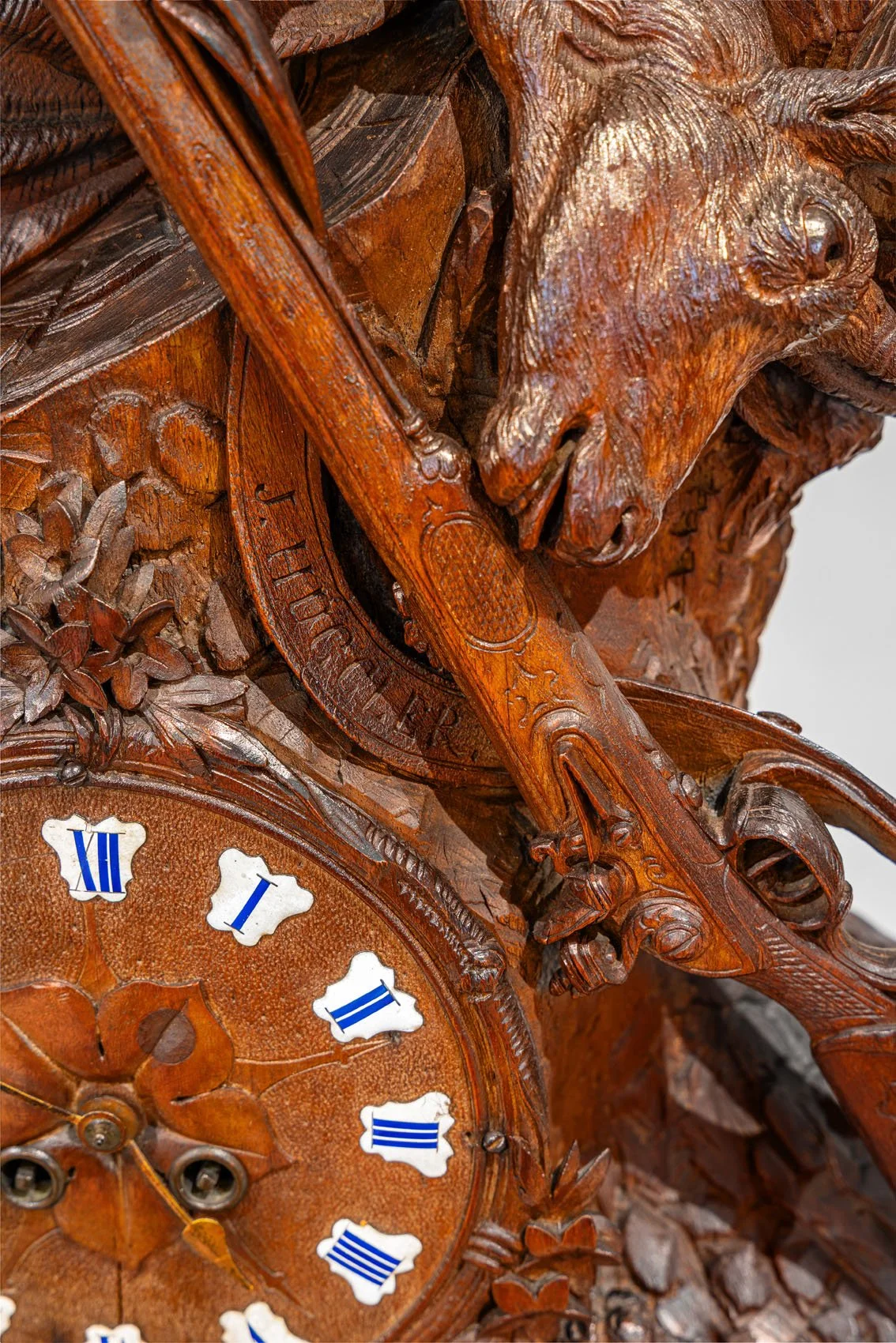 Image 5 of 6
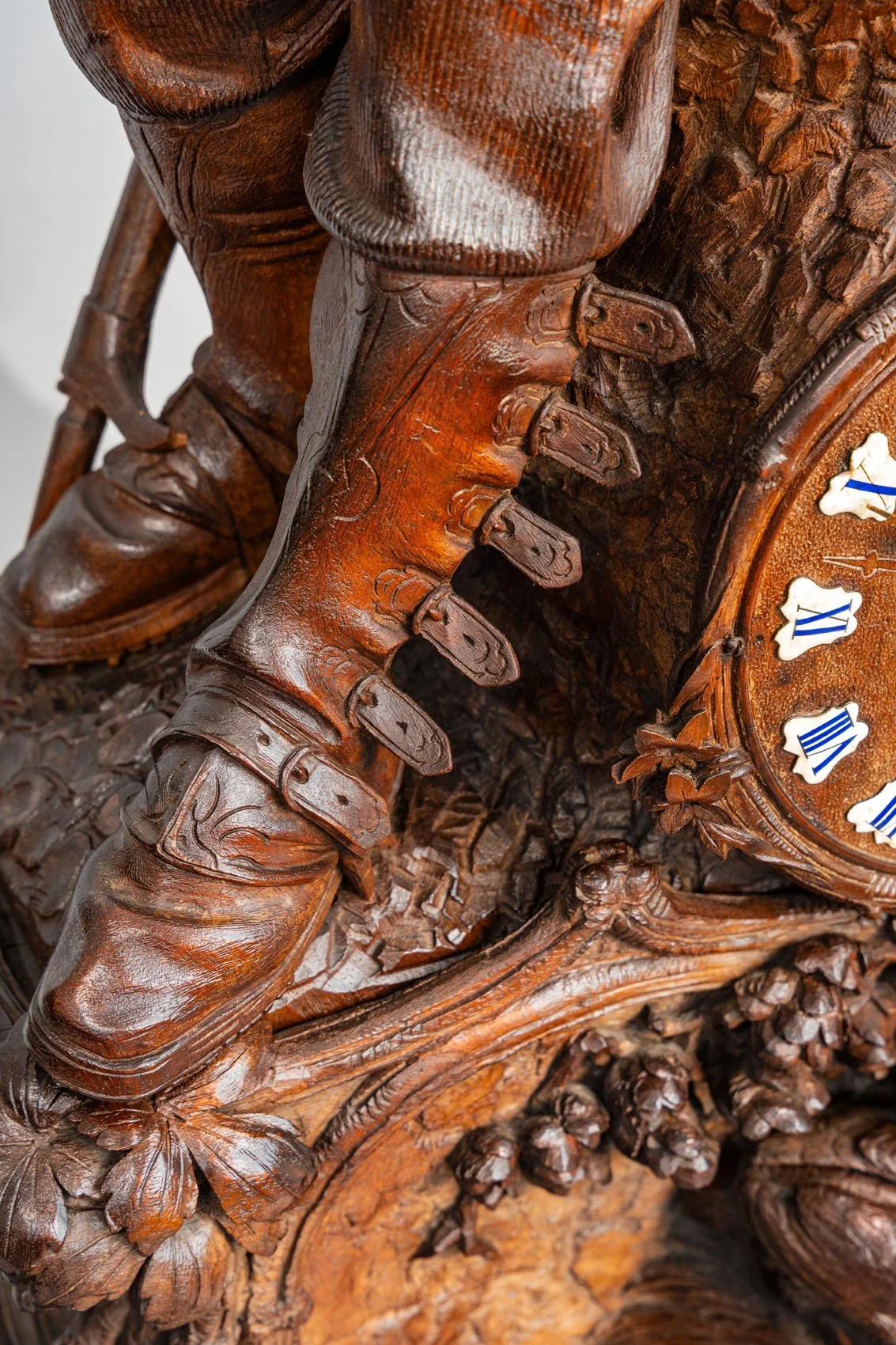 Image 6 of 6