
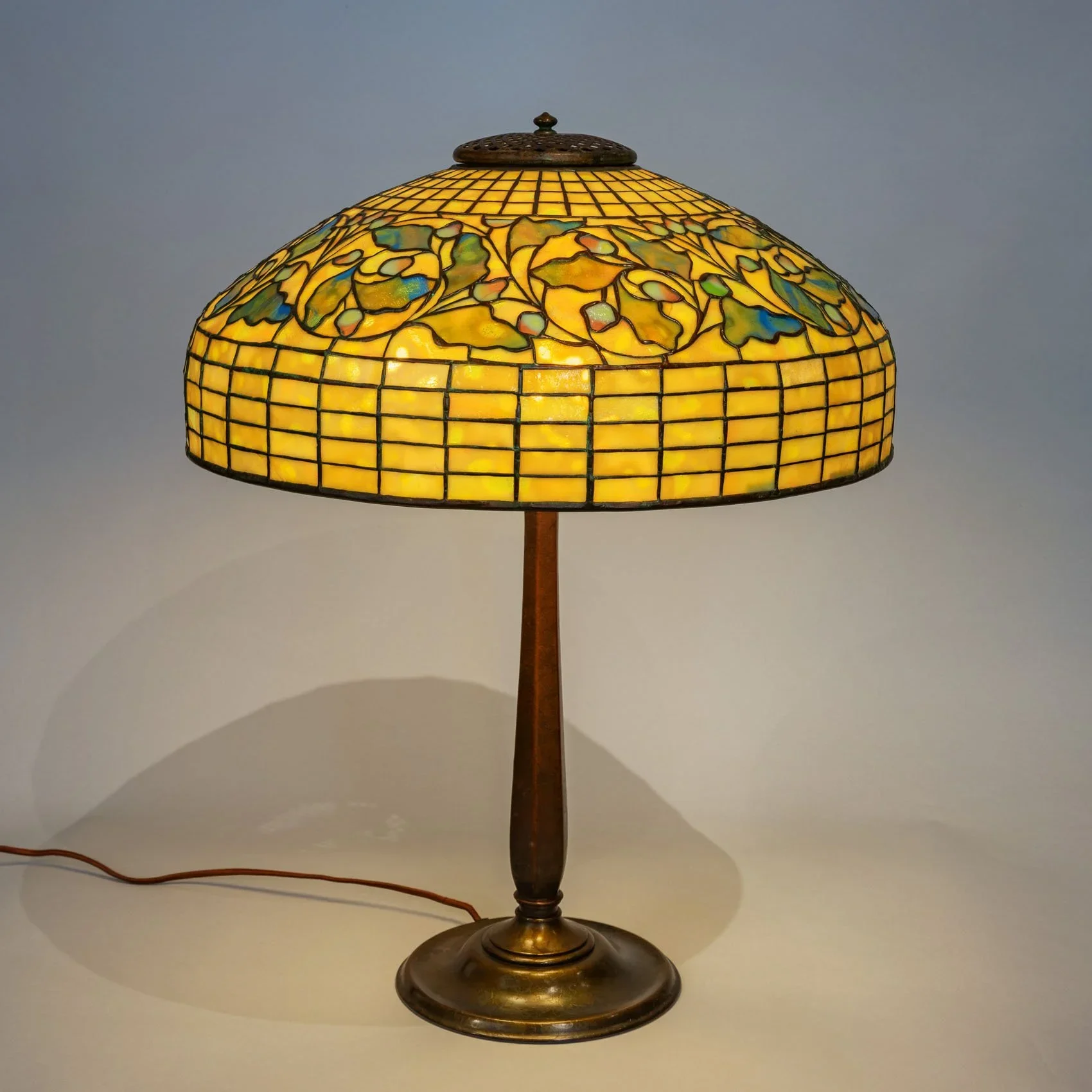
Tiffany Lamps
Tiffany Studios produced leaded glass lamps for barely three decades — from the early 1890s to the studio's closure in 1933 — yet in that time, Louis Comfort Tiffany and his designers created what many consider the most significant body of decorative glass in American art history. Working at the Corona, New York factory, teams of largely female craftswomen cut and assembled thousands of pieces of glass by hand for every shade, selecting from Tiffany's proprietary production — opalescent, granite-backed, iridescent, and chunk-jewel glass — for their optical effects as much as their color. No two lamps are identical. The Daniels Antiques collection presents a selection of lamps from the peak of the Studios' production, circa 1902–1910, each bearing the stamped signature Tiffany Studios, New York, and retaining its original patinated bronze base. Pieces range from early geometric and botanical designs to the large-scale floral compositions
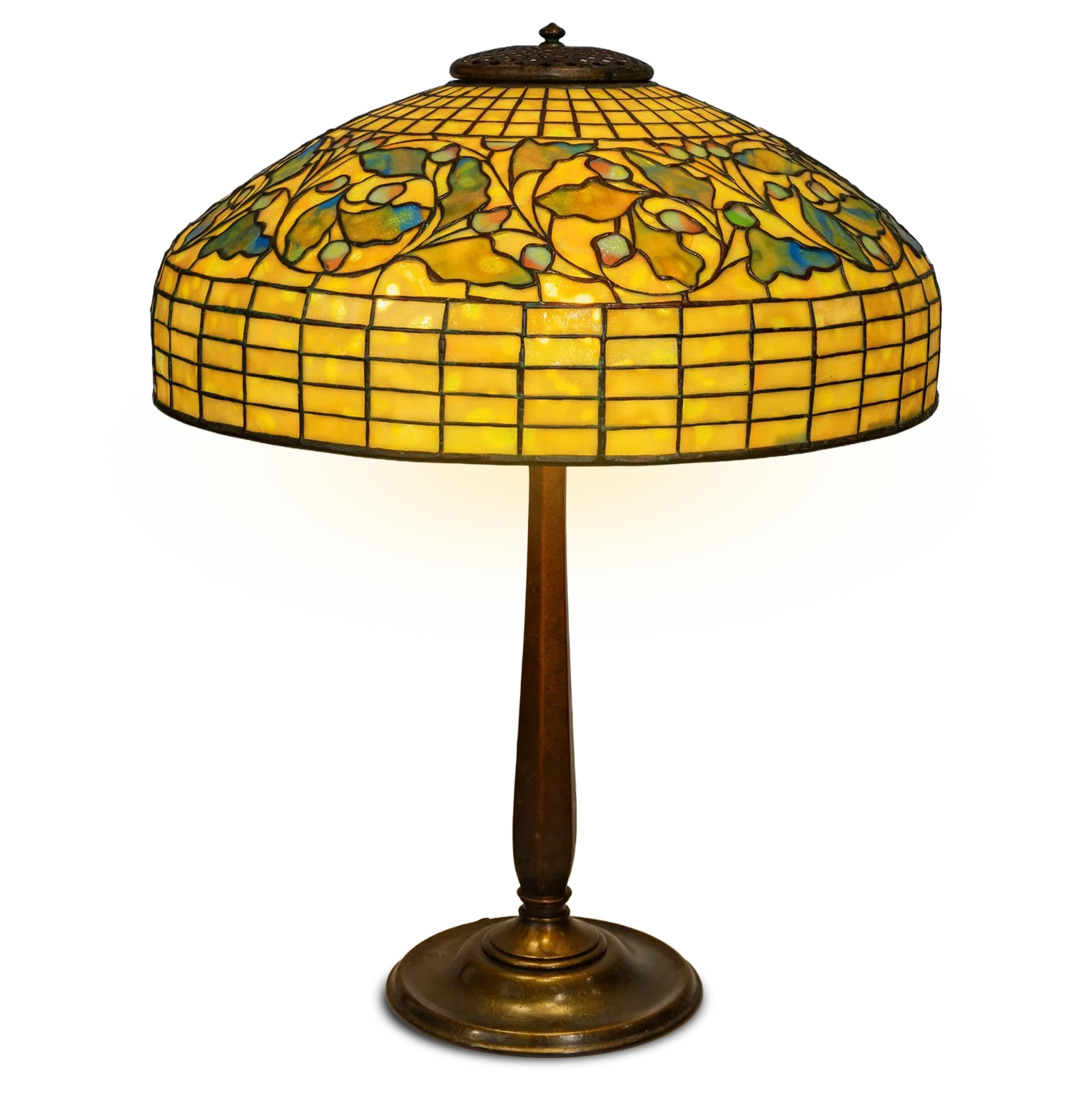

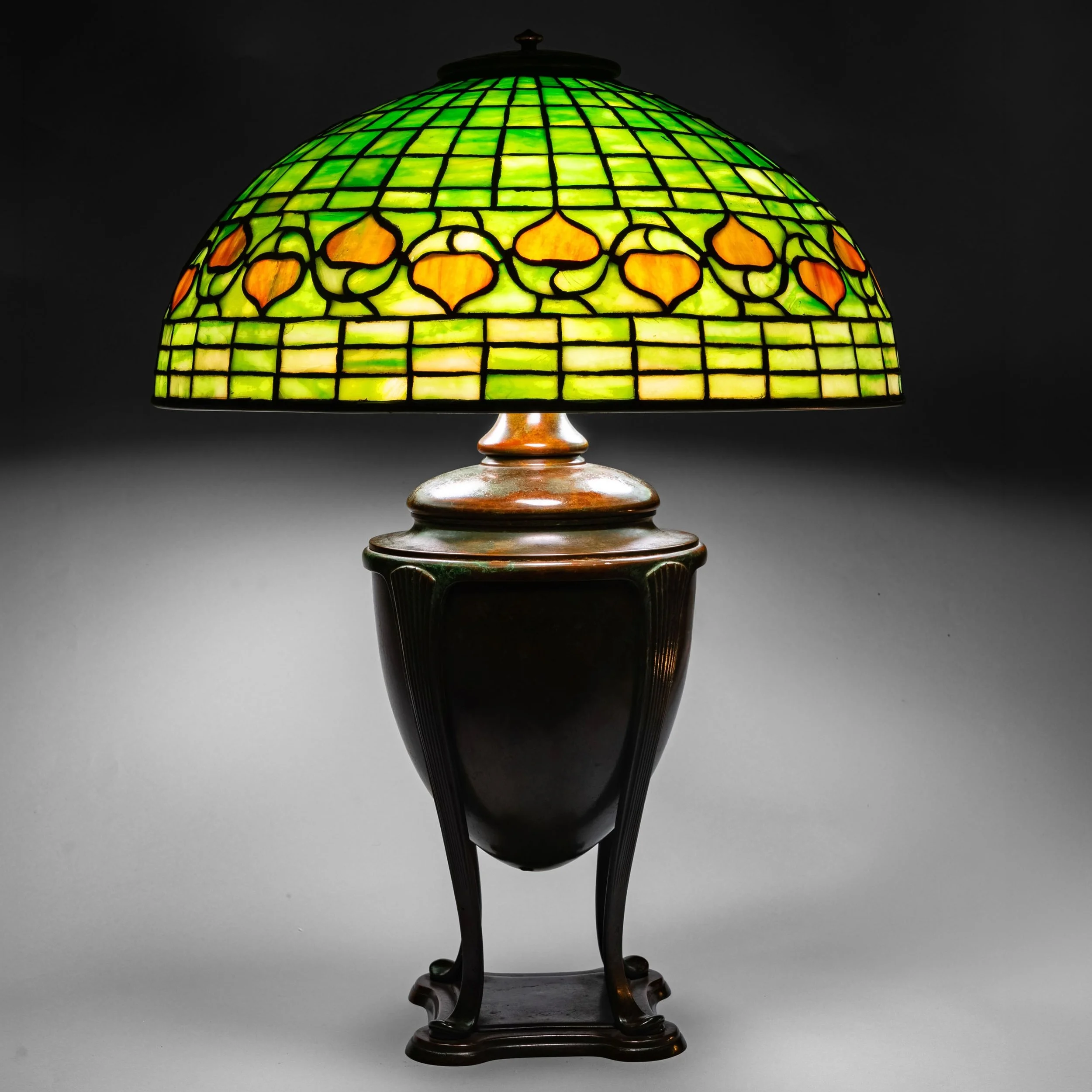
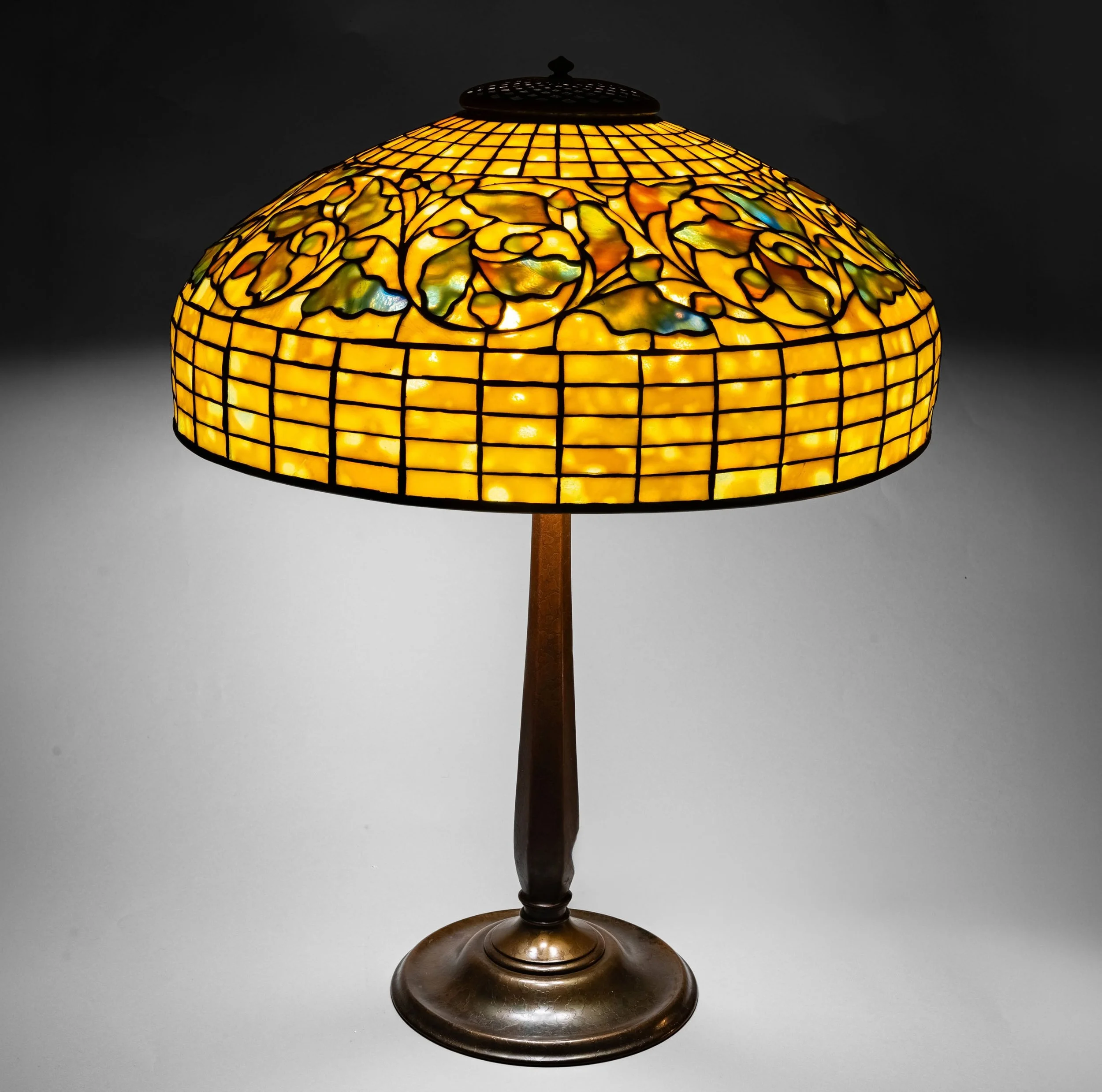
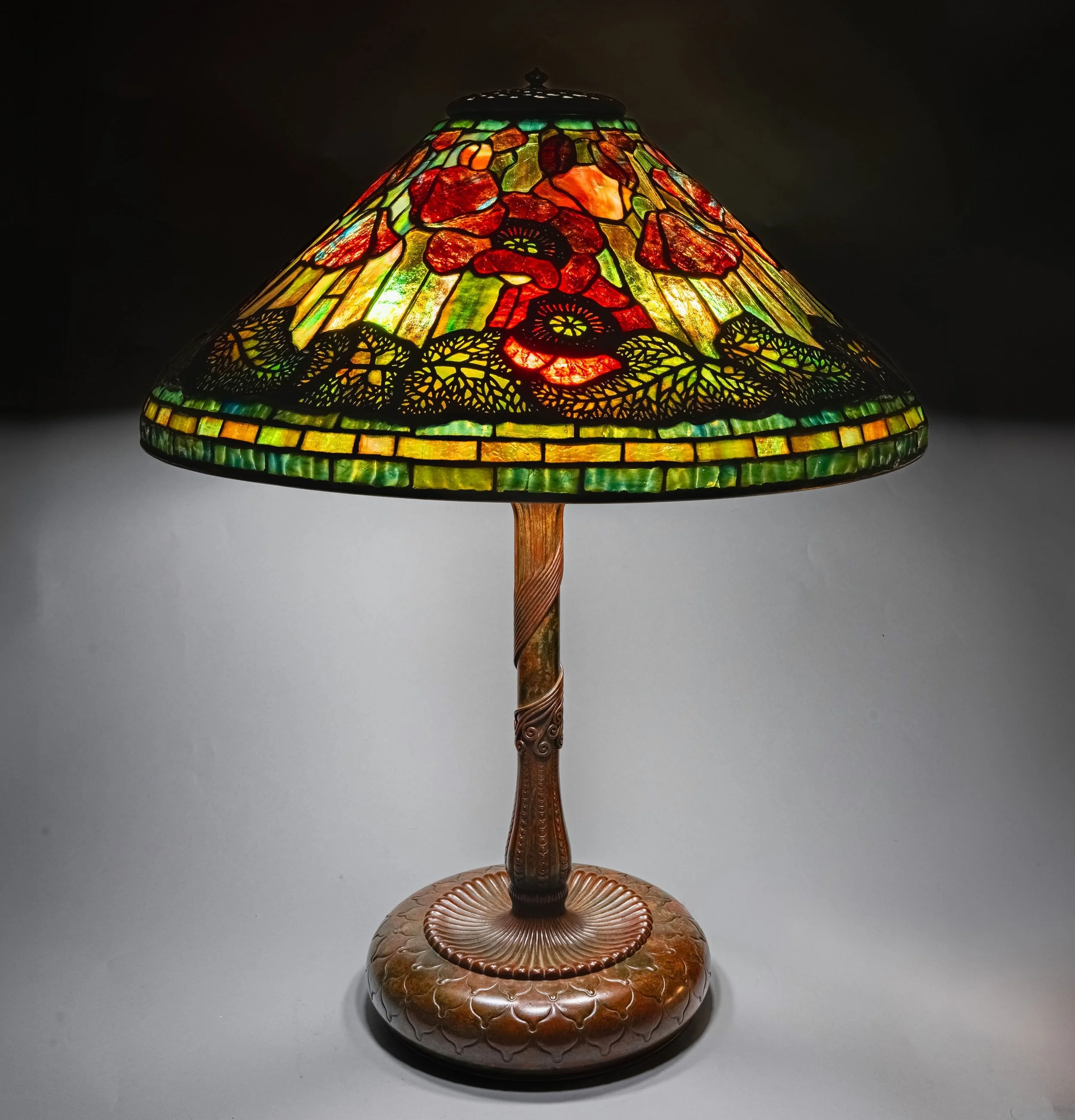
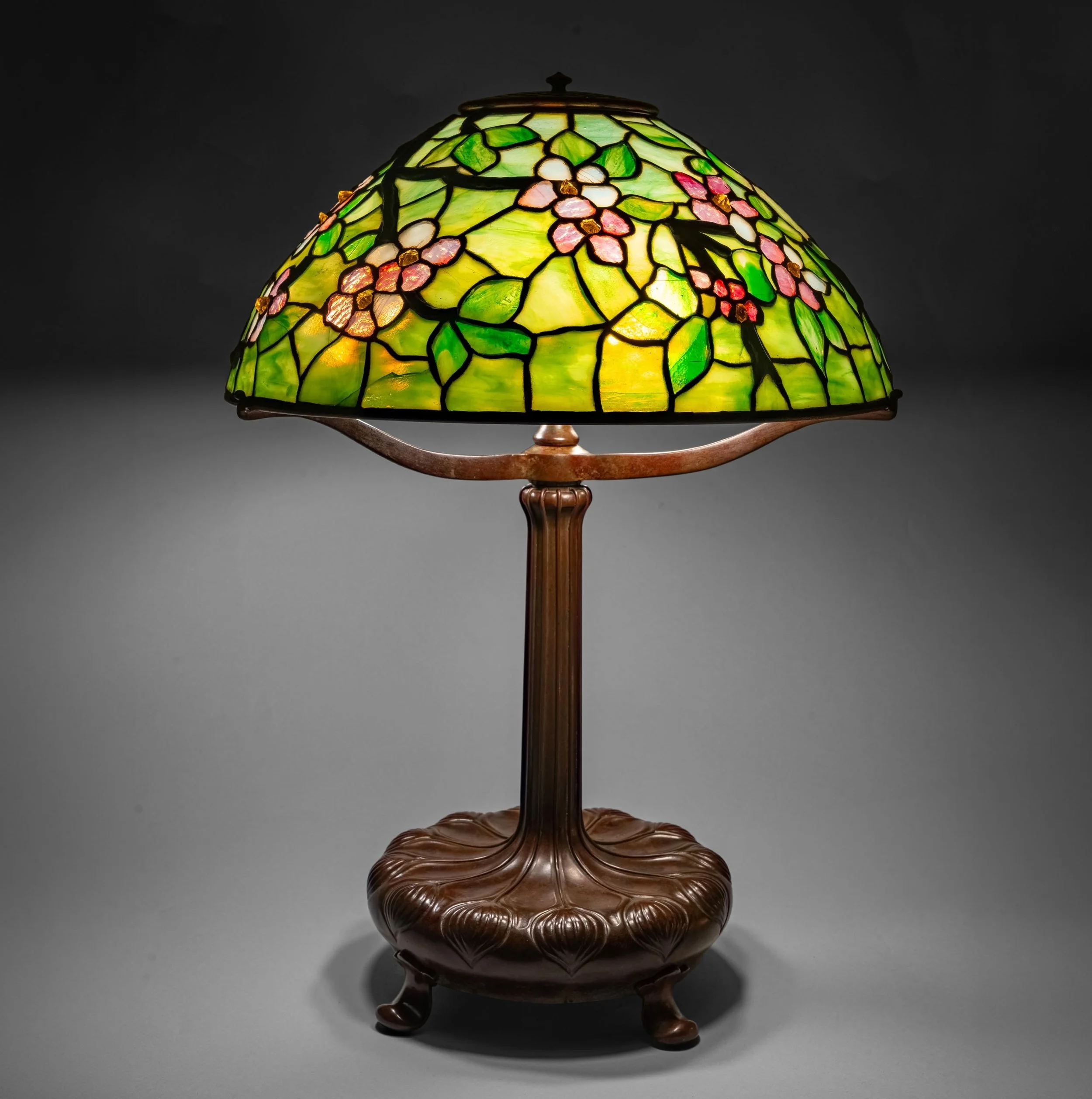

A leaded glass and patinated bronze Nautilus table lamp by Tiffany Studios, the shade constructed from glass tiles arranged in the precise logarithmic spiral of a nautilus shell, graduating from deep emerald and teal at the crown through luminous yellow-green at the center to soft cream-white at the open mouth — a color sequence that transforms entirely when lit. The patinated bronze base is cast in low relief, the slender stem curving upward to a raised floral boss at the shell's axis point. An early example of one of the most distinctive and sought-after of all Tiffany lamp designs, first patented on May 2, 1899, and exhibited that same year at Siegfried Bing's landmark Tiffany exhibition at the Grafton Galleries, London. Stamped to the underside: Tiffany Studios New York, no. 28537.
Height: 14 inches.