Two bears locked in combat on a fractured ice floe, carved fully in the round in walnut at Brienz, circa 1870.
The subject is unusual. Brienz bears are most often shown at rest, climbing, or at play; here two animals fight in earnest, bodies interlocked, weight pressing against weight. One rears with jaws thrown open, the mouth articulated with individual teeth and tongue — anatomical work few masters of the tradition attempted at this scale — while the second braces forward, forelimbs raised, the pair forming a taut, compressed composition.
The fur is the master stroke. Instead of the dry, bristled coat of the standard Brienz bear, the hair is carved wet: elongated, downward strokes along the undersides of both animals suggest coats plastered flat, matted and dripping from a fight in the water. It is observation, not formula, and it turns an accomplished animal sculpture into the record of a specific moment. The base completes the story, a fractured floe whose angular planes and fissures set off the dense organic texture of the animals above, and the group sits on a turned oval plinth, rewarding examination from every angle. The walnut carries a warm, deep patina throughout.
Work of this ambition came from a small number of masters in the later nineteenth century, shown at the great international exhibitions and collected across Europe and America. Groups of this intensity are rare on the market.
Condition: Very good; rich, even original patina, carving complete and crisp across all principal elements, minor age-consistent wear, no significant losses or restorations noted.
Height: 15 in.
Literature: Jay Arenski, Simon Daniels, and Michael Daniels, Swiss Carvings: The Art of the Black Forest, 1820–1940 (2006).
Two bears locked in combat on a fractured ice floe, carved fully in the round in walnut at Brienz, circa 1870.
The subject is unusual. Brienz bears are most often shown at rest, climbing, or at play; here two animals fight in earnest, bodies interlocked, weight pressing against weight. One rears with jaws thrown open, the mouth articulated with individual teeth and tongue — anatomical work few masters of the tradition attempted at this scale — while the second braces forward, forelimbs raised, the pair forming a taut, compressed composition.
The fur is the master stroke. Instead of the dry, bristled coat of the standard Brienz bear, the hair is carved wet: elongated, downward strokes along the undersides of both animals suggest coats plastered flat, matted and dripping from a fight in the water. It is observation, not formula, and it turns an accomplished animal sculpture into the record of a specific moment. The base completes the story, a fractured floe whose angular planes and fissures set off the dense organic texture of the animals above, and the group sits on a turned oval plinth, rewarding examination from every angle. The walnut carries a warm, deep patina throughout.
Work of this ambition came from a small number of masters in the later nineteenth century, shown at the great international exhibitions and collected across Europe and America. Groups of this intensity are rare on the market.
Condition: Very good; rich, even original patina, carving complete and crisp across all principal elements, minor age-consistent wear, no significant losses or restorations noted.
Height: 15 in.
Literature: Jay Arenski, Simon Daniels, and Michael Daniels, Swiss Carvings: The Art of the Black Forest, 1820–1940 (2006).

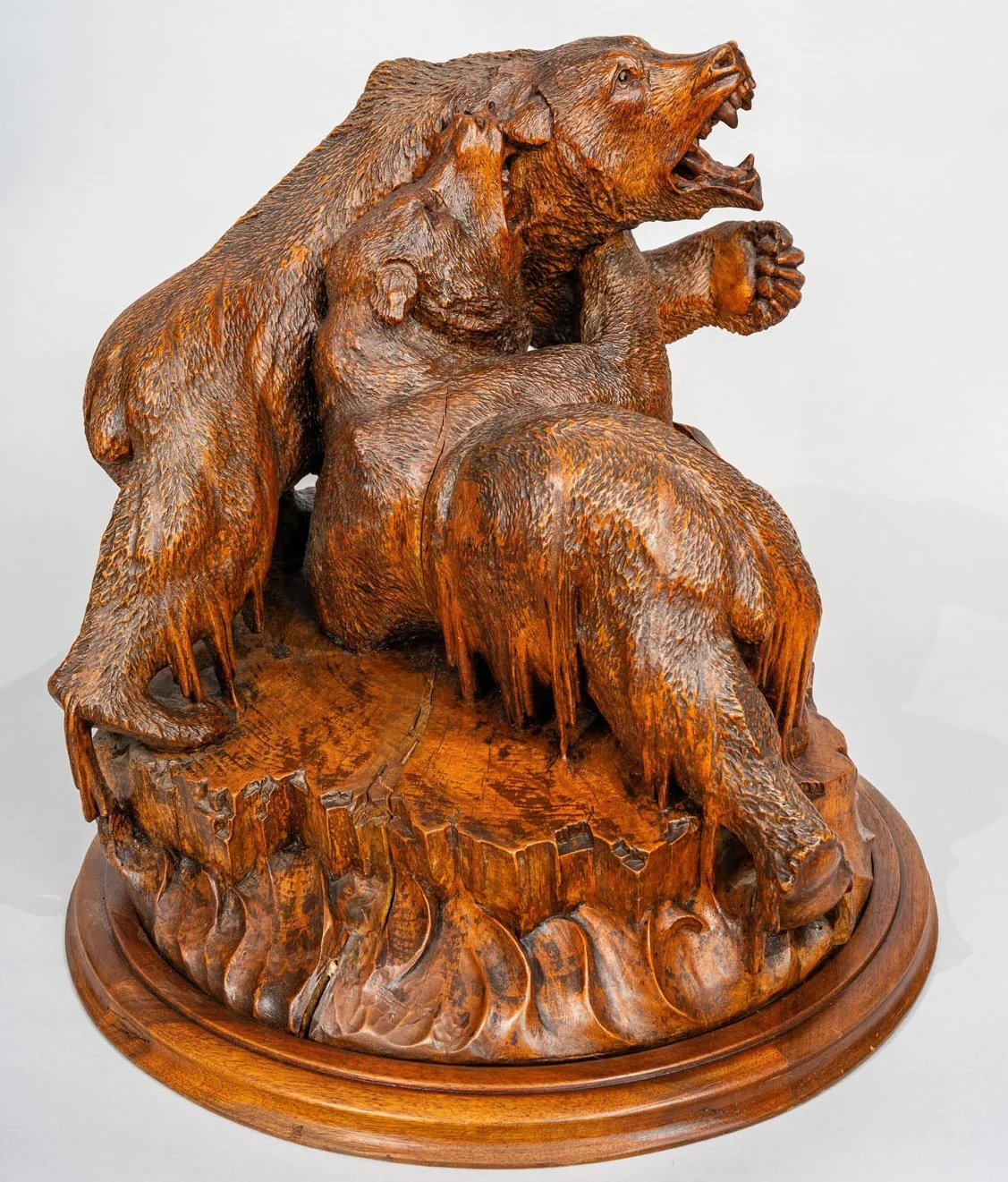 Image 1 of 4
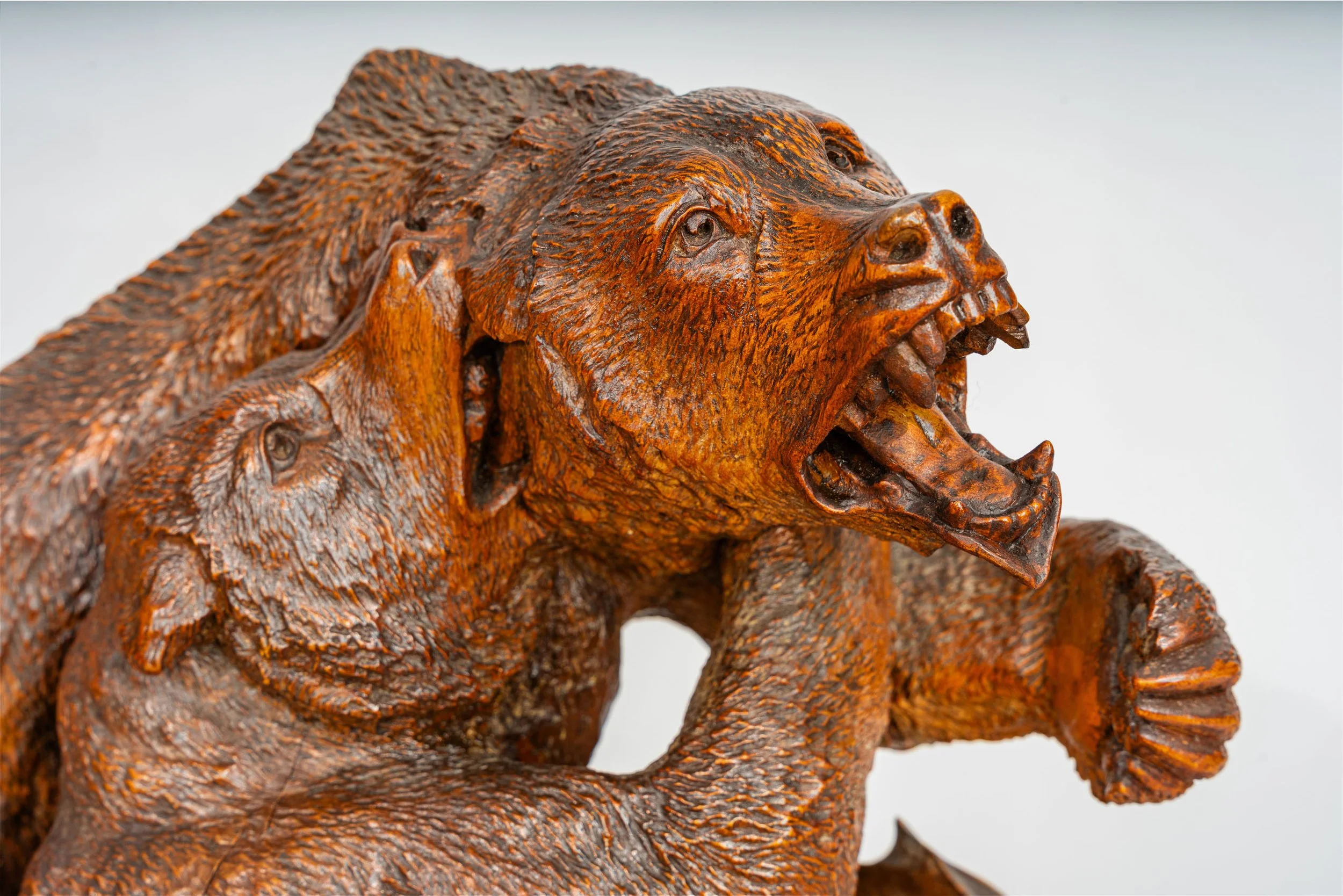 Image 2 of 4
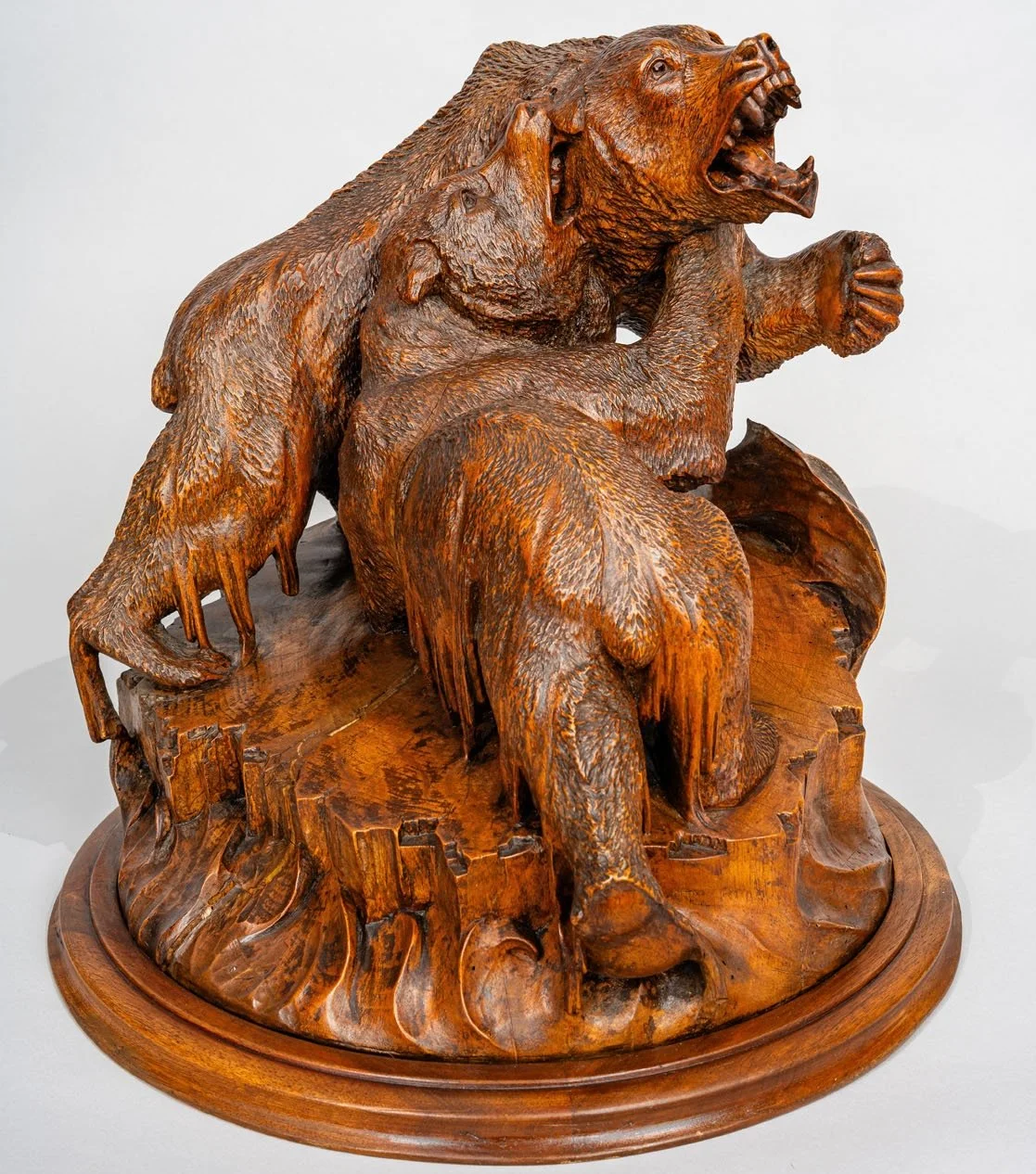 Image 3 of 4
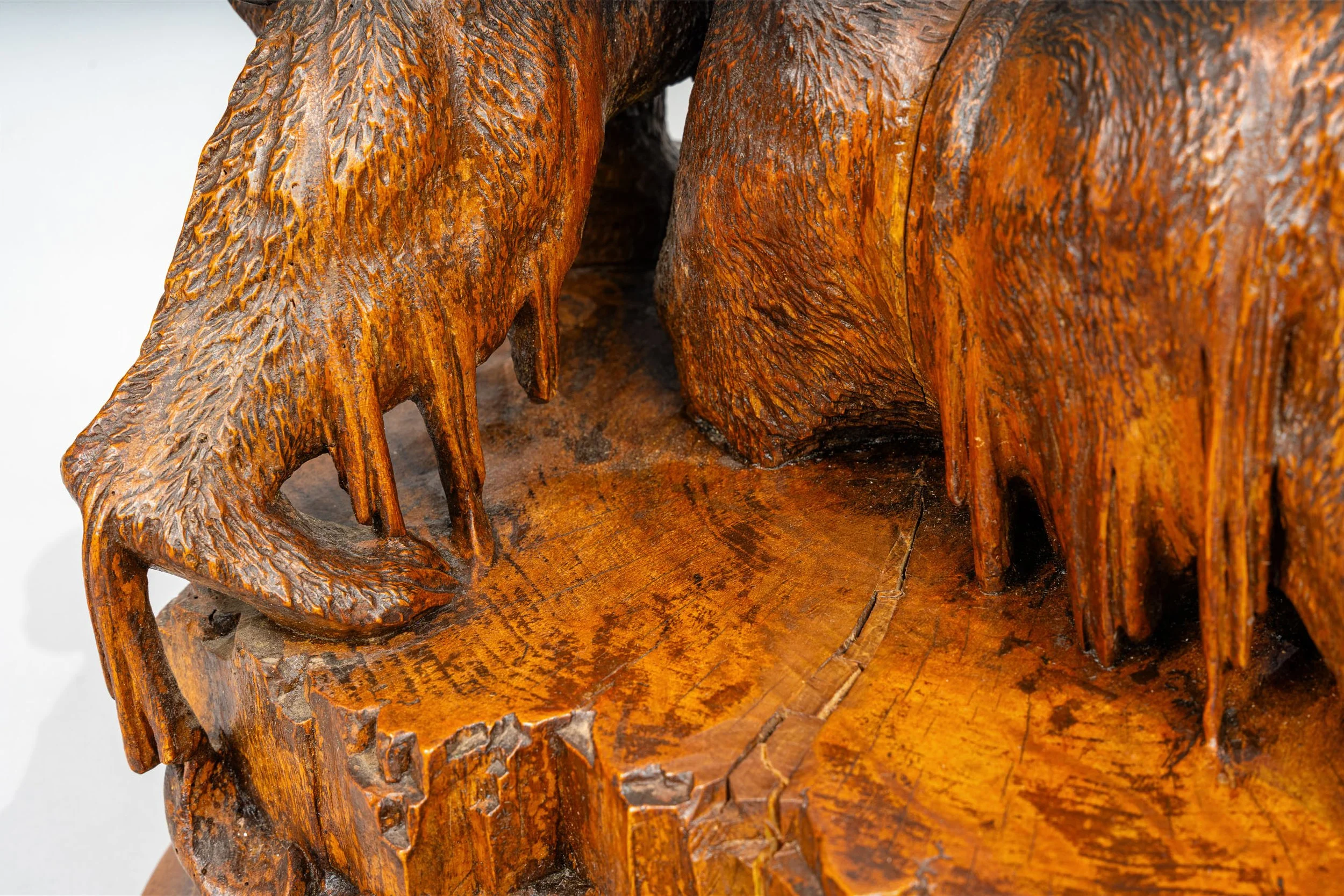 Image 4 of 4