A gold aureus of the emperor Maximian, struck at the mint of Rome in the early years of his reign, circa AD 286–294. The coin weighs 5.50 grams and is graded Mint State by NGC, with a full strike of 5/5 and surfaces of 4/5.
The obverse carries the laureate, draped, and cuirassed bust of Maximian facing right, within his full titulature, IMP C M AVR VAL MAXIMIANVS P F AVG. The portrait is a fine example of the soldier-emperor style of the late third century, with the close-cropped beard and heavy features of a career officer from the Danube frontier.
The reverse shows Jupiter standing left, nude but for a chlamys over the shoulder, a thunderbolt in his outstretched right hand and a long scepter in his left, with the legend IOVI CONSERVAT AVGG, to Jupiter, preserver of the Augusti. The doubled G is the key to the coin. It marks the plural, two Augusti, and places the issue after 1 April 286, when Diocletian raised Maximian from Caesar to co-emperor and divided the burden of the empire between them. The partnership was sealed in religious terms. Diocletian took the title Iovius, placing himself under the protection of Jupiter, the ruler of the gods, while Maximian took Herculius, placing himself under Hercules, the god of strength who earned his divinity through labor. The choice fit the man. Maximian was the fighting half of the partnership, the commander who crushed the Bagaudae revolt in Gaul and campaigned across the Rhine while Diocletian governed, and the court orators praised him as a Hercules toiling on earth while Jupiter ruled above. A coin of the Herculian emperor honoring Jupiter is therefore the junior colleague paying public homage to the patron god of the senior, the theology of the two-man empire stated in a single reverse. The full weight of 5.50 grams reflects the strengthened standard of sixty aurei to the Roman pound, a weight increase introduced at the time of Maximian's elevation.
Reference: RIC V.2 492
Examples of the type are held by
The American Numismatic Society, New York
The Bibliothèque nationale de France, Paris
The American Numismatic Society specimen weighs 5.45 grams; the present coin, at 5.50 grams, is the heavier of the two.
A gold aureus of the emperor Maximian, struck at the mint of Rome in the early years of his reign, circa AD 286–294. The coin weighs 5.50 grams and is graded Mint State by NGC, with a full strike of 5/5 and surfaces of 4/5.
The obverse carries the laureate, draped, and cuirassed bust of Maximian facing right, within his full titulature, IMP C M AVR VAL MAXIMIANVS P F AVG. The portrait is a fine example of the soldier-emperor style of the late third century, with the close-cropped beard and heavy features of a career officer from the Danube frontier.
The reverse shows Jupiter standing left, nude but for a chlamys over the shoulder, a thunderbolt in his outstretched right hand and a long scepter in his left, with the legend IOVI CONSERVAT AVGG, to Jupiter, preserver of the Augusti. The doubled G is the key to the coin. It marks the plural, two Augusti, and places the issue after 1 April 286, when Diocletian raised Maximian from Caesar to co-emperor and divided the burden of the empire between them. The partnership was sealed in religious terms. Diocletian took the title Iovius, placing himself under the protection of Jupiter, the ruler of the gods, while Maximian took Herculius, placing himself under Hercules, the god of strength who earned his divinity through labor. The choice fit the man. Maximian was the fighting half of the partnership, the commander who crushed the Bagaudae revolt in Gaul and campaigned across the Rhine while Diocletian governed, and the court orators praised him as a Hercules toiling on earth while Jupiter ruled above. A coin of the Herculian emperor honoring Jupiter is therefore the junior colleague paying public homage to the patron god of the senior, the theology of the two-man empire stated in a single reverse. The full weight of 5.50 grams reflects the strengthened standard of sixty aurei to the Roman pound, a weight increase introduced at the time of Maximian's elevation.
Reference: RIC V.2 492
Examples of the type are held by
The American Numismatic Society, New York
The Bibliothèque nationale de France, Paris
The American Numismatic Society specimen weighs 5.45 grams; the present coin, at 5.50 grams, is the heavier of the two.

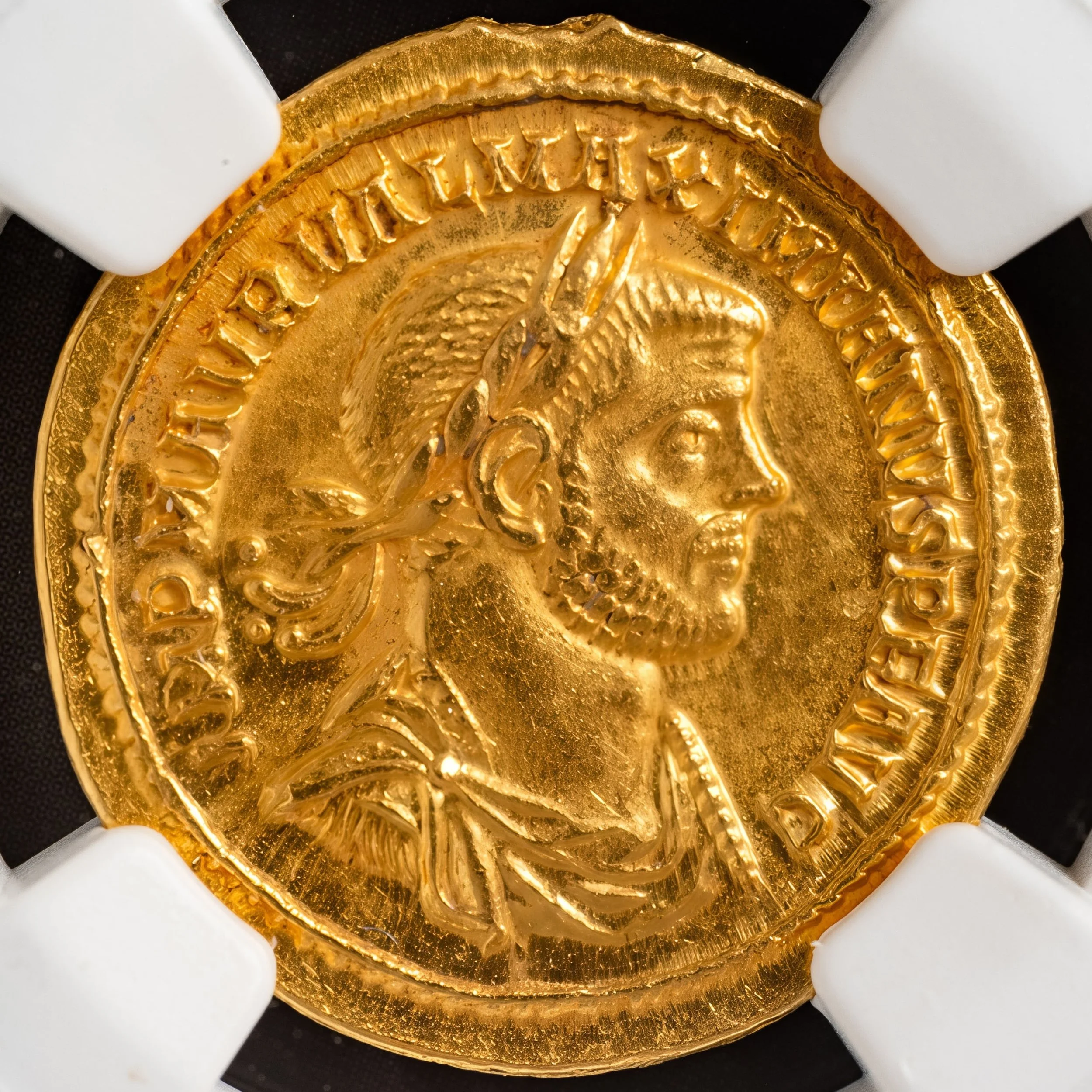 Image 1 of 3
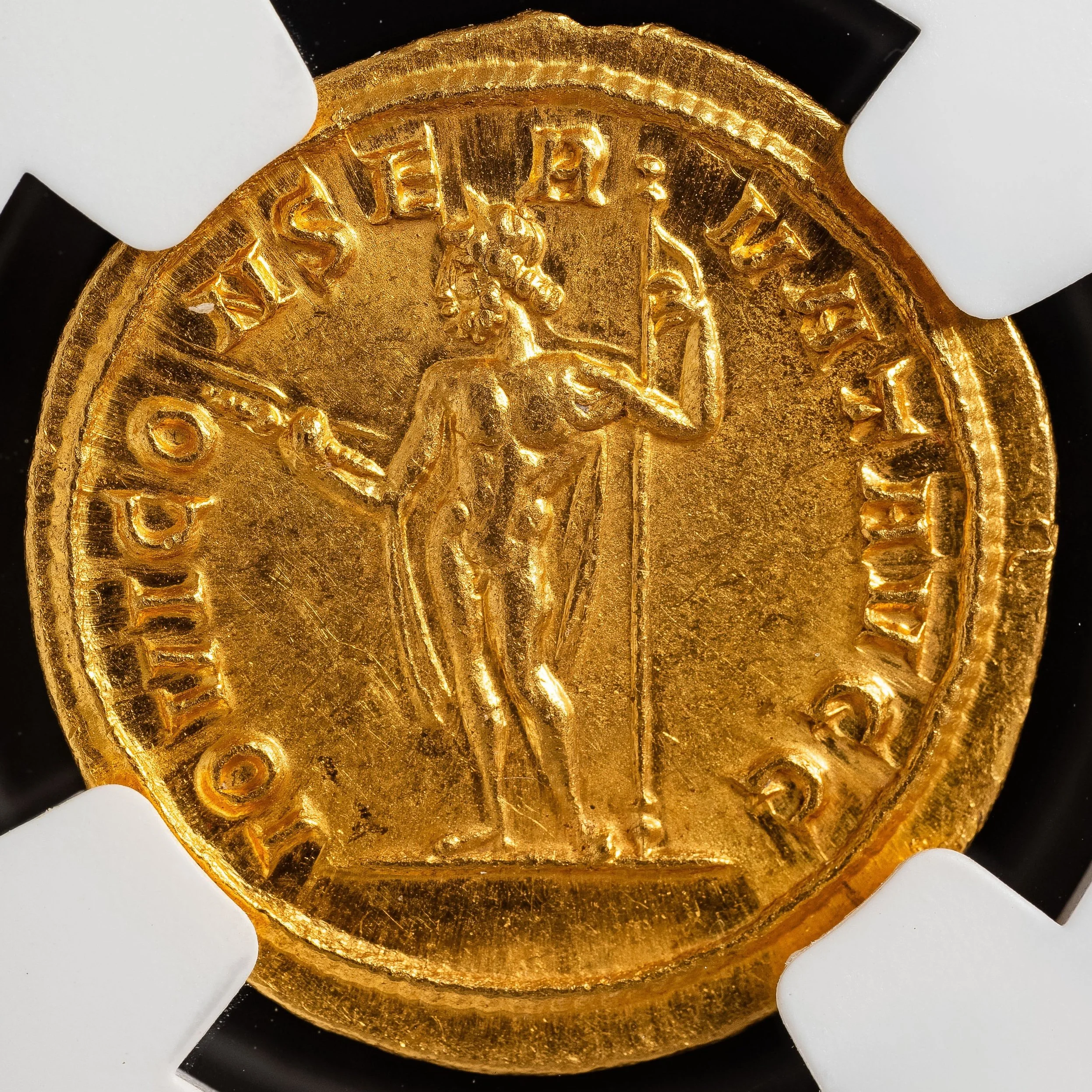 Image 2 of 3
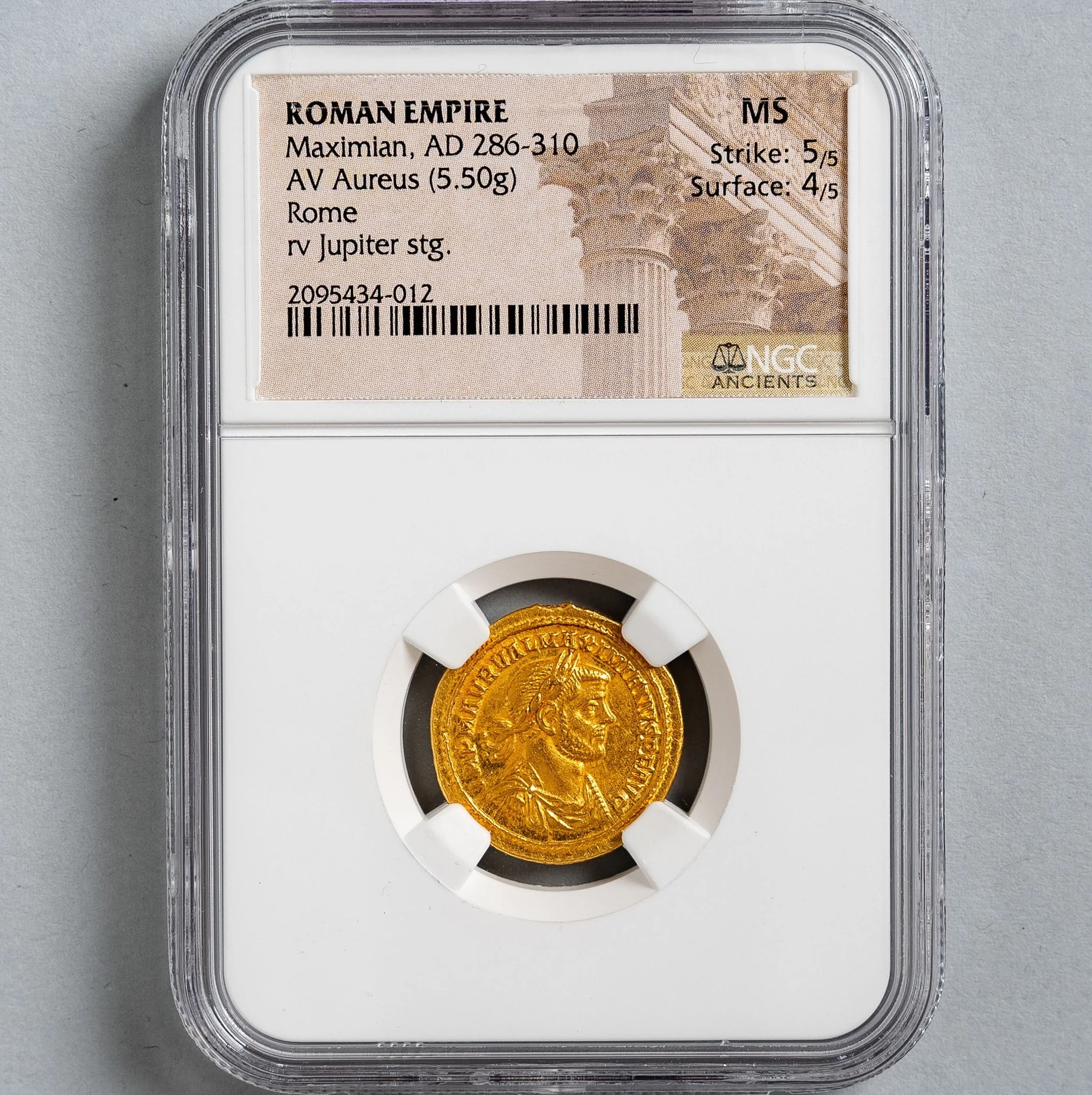 Image 3 of 3