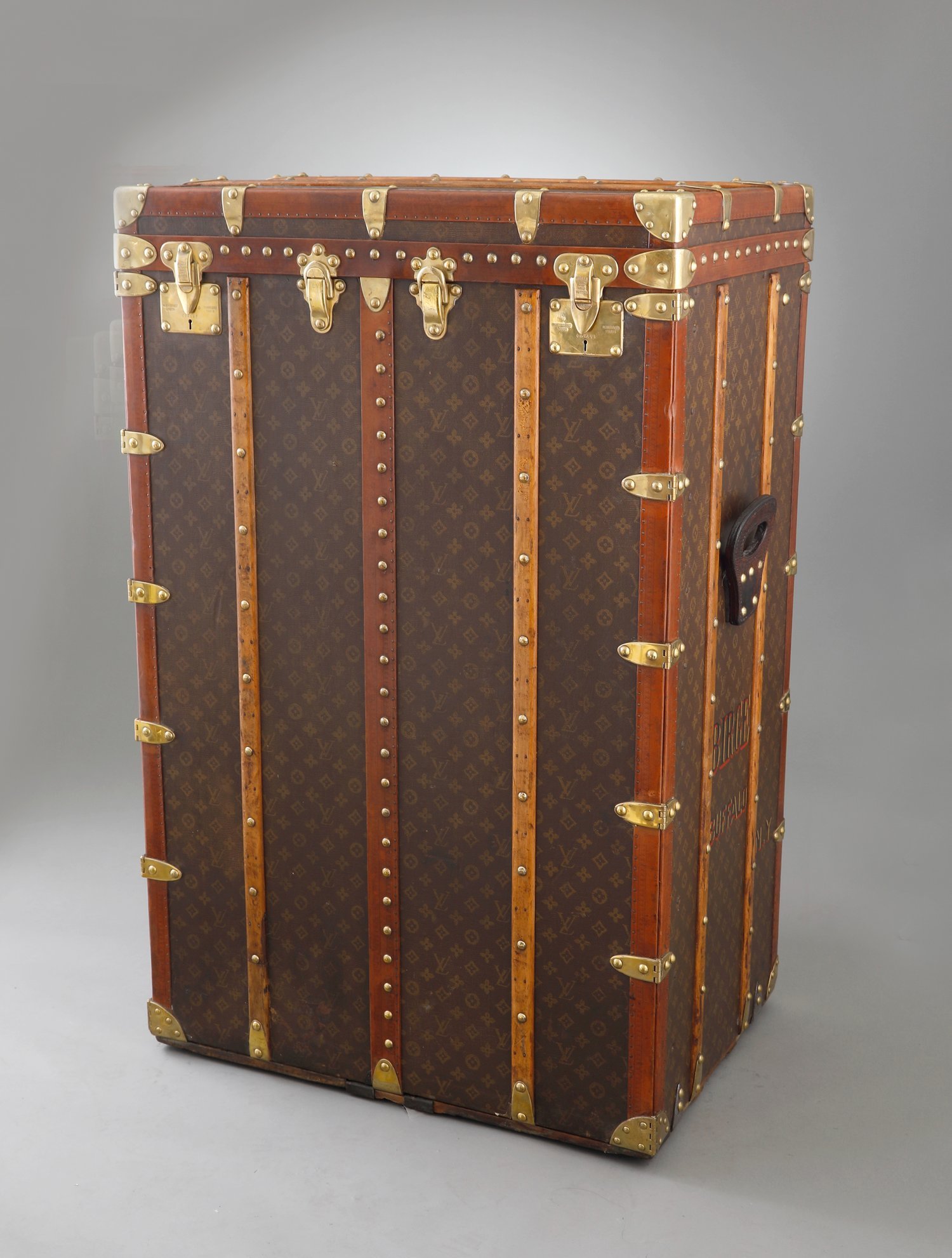
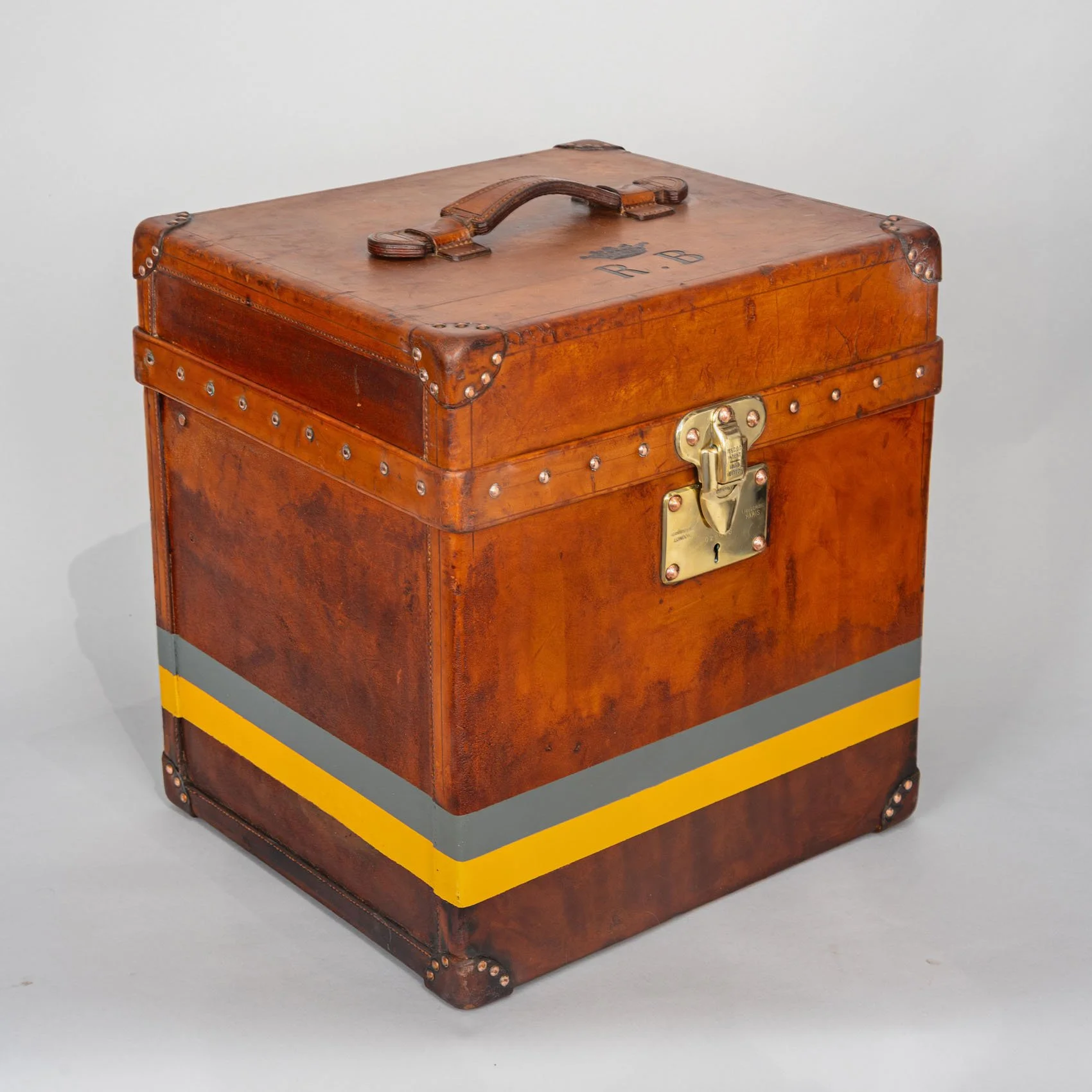
The cabin trunk is the form that defined transatlantic travel in its golden age — engineered to a reduced height that allowed it to slide beneath the berth of a first-class stateroom aboard the great ocean liners of the early twentieth century, keeping a traveler's essentials within reach for the duration of a crossing that might last five days or more. This handsome example, dating to the 1920s and produced in Louis Vuitton's Paris atelier, retains on its front face the original stencilled designation "600 F.S.-1" — almost certainly a stateroom or cabin assignment from its days aboard a passenger vessel, a marking applied by the ship's baggage handlers to ensure correct routing and delivery. It is a detail that transforms a fine trunk into a specific historical object: one that crossed oceans, was handled by porters, and was delivered to a first-class cabin by people who knew exactly what it was and who it belonged to.
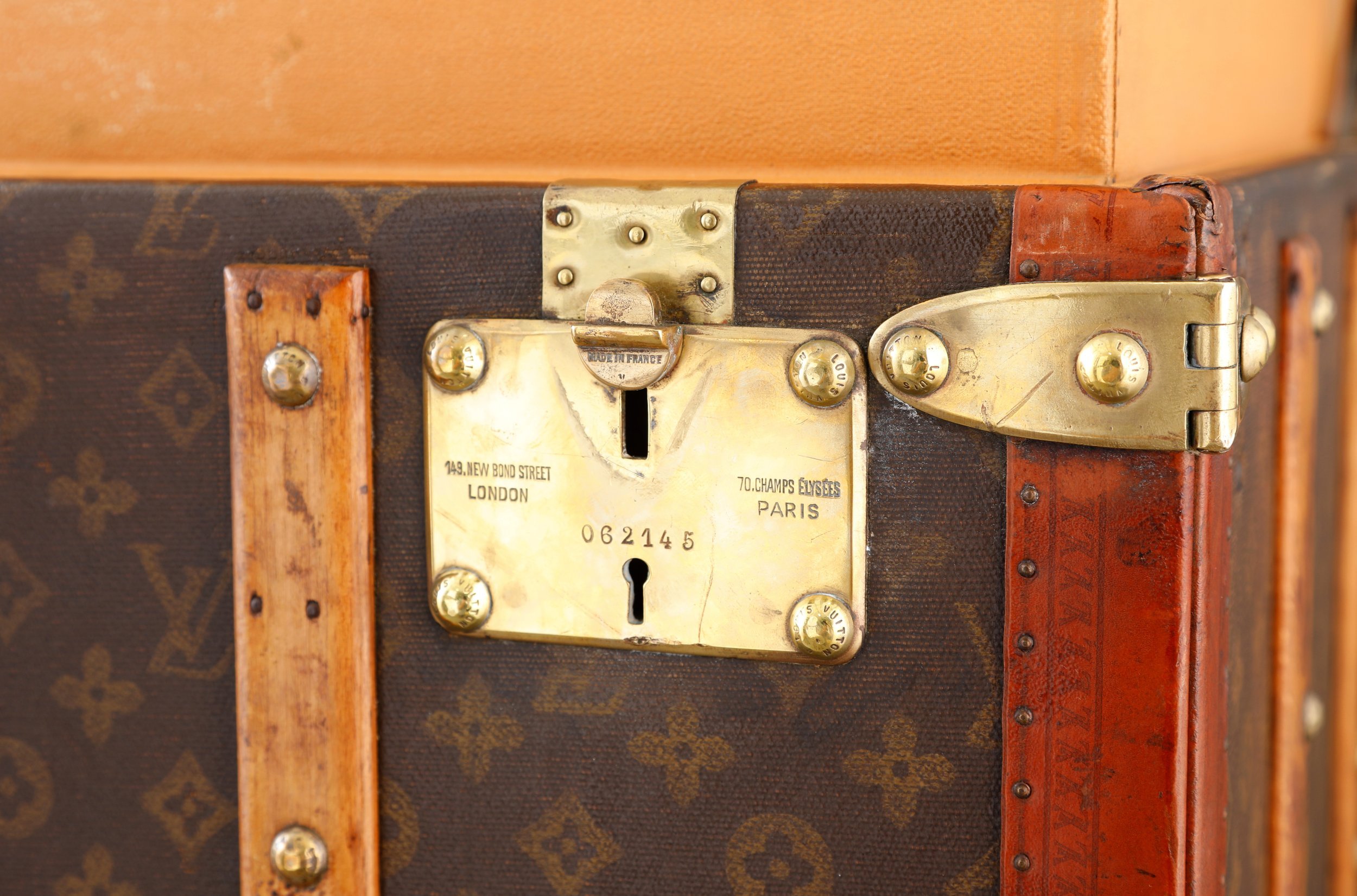
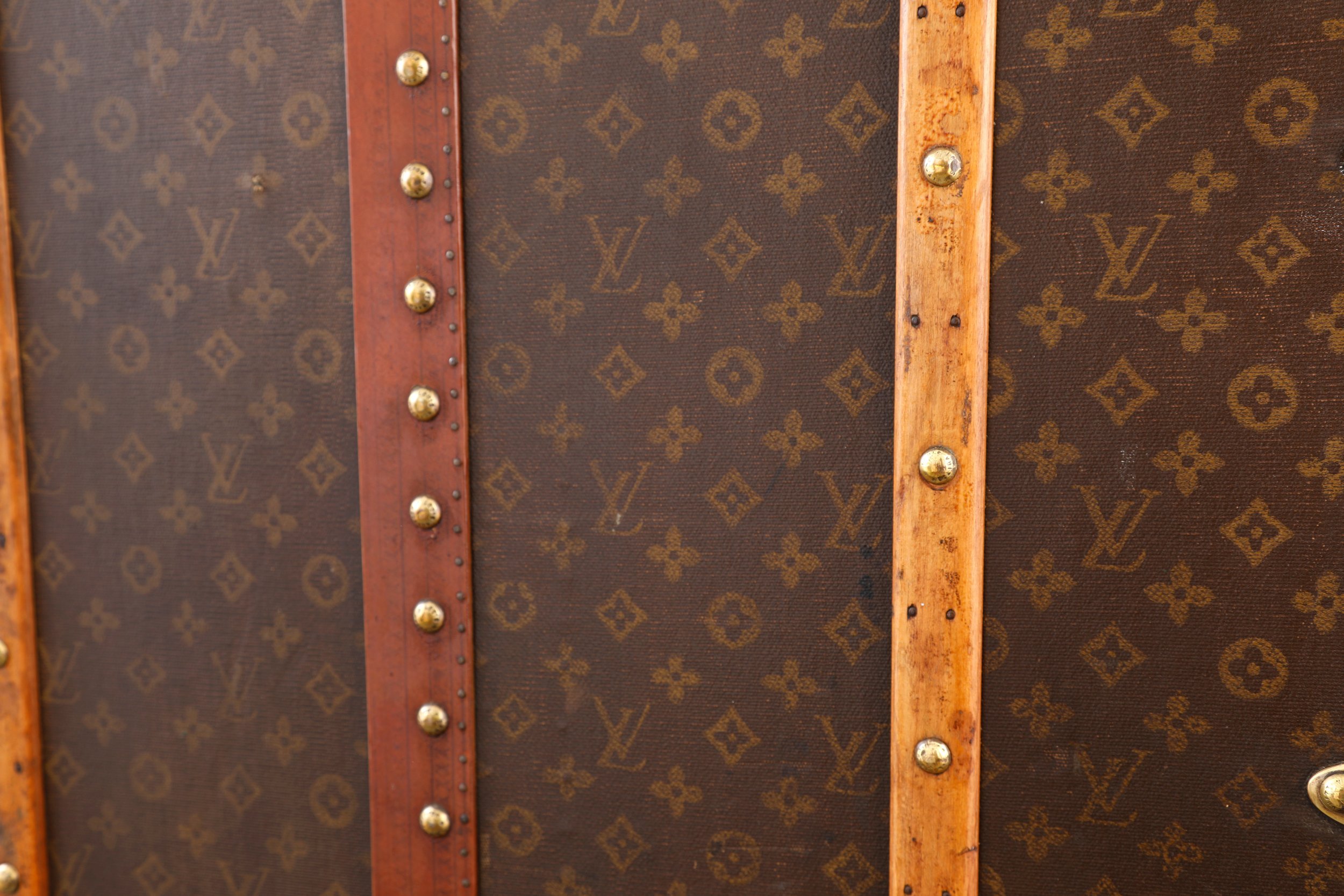
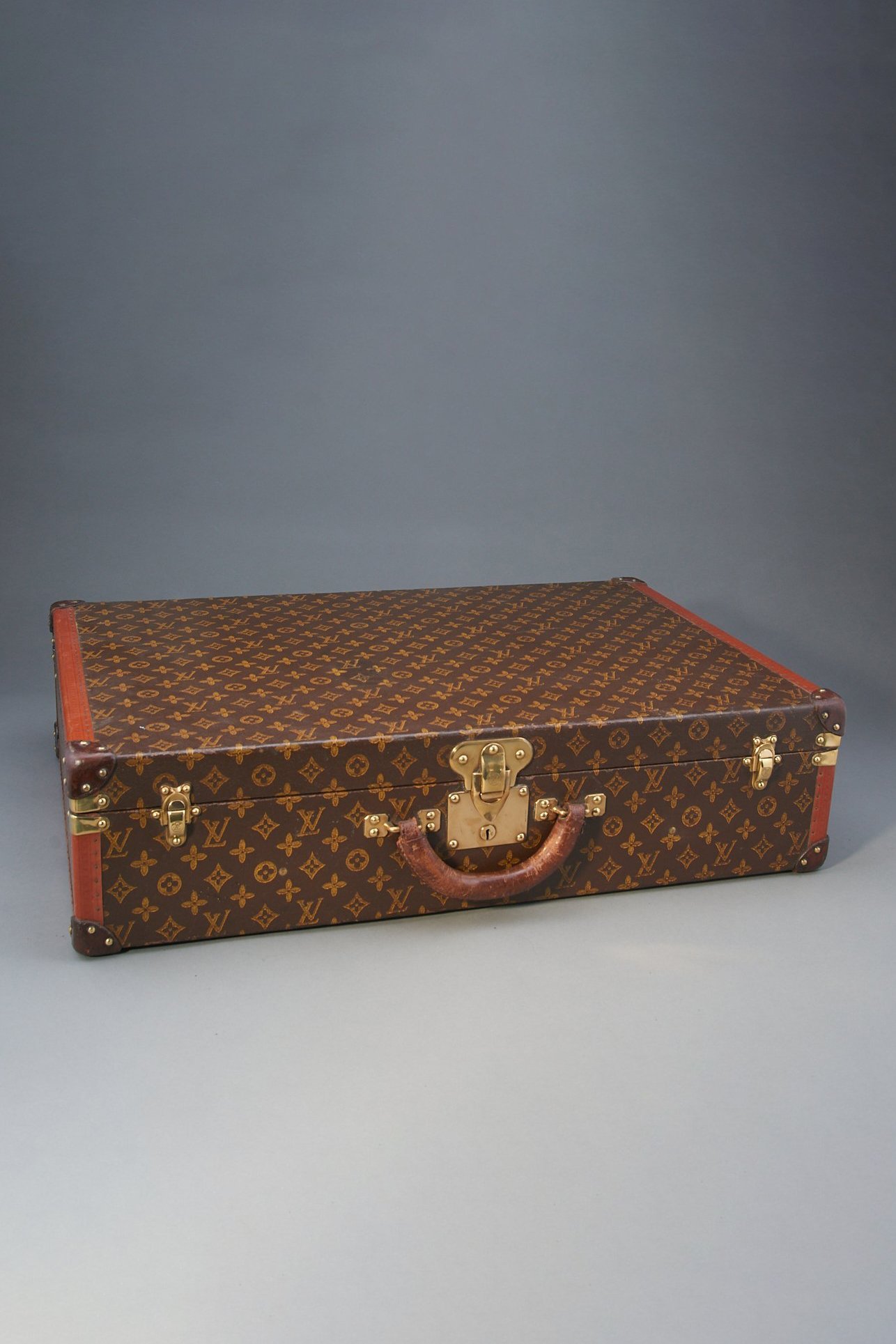
The exterior is executed in monogram canvas with the natural wood slat banding characteristic of 1920s production, lozine leather trim with the embossed LV border running the full perimeter, and the full complement of original brass hardware — central lock plate, flanking clasps, corner guards, and studded borders. The lock plate is stamped with the serial number 075075. The canvas presents with the characteristic warm, rich patina of a piece that has lived a full life in honest use, while retaining the structural integrity of Vuitton's exceptional construction throughout.
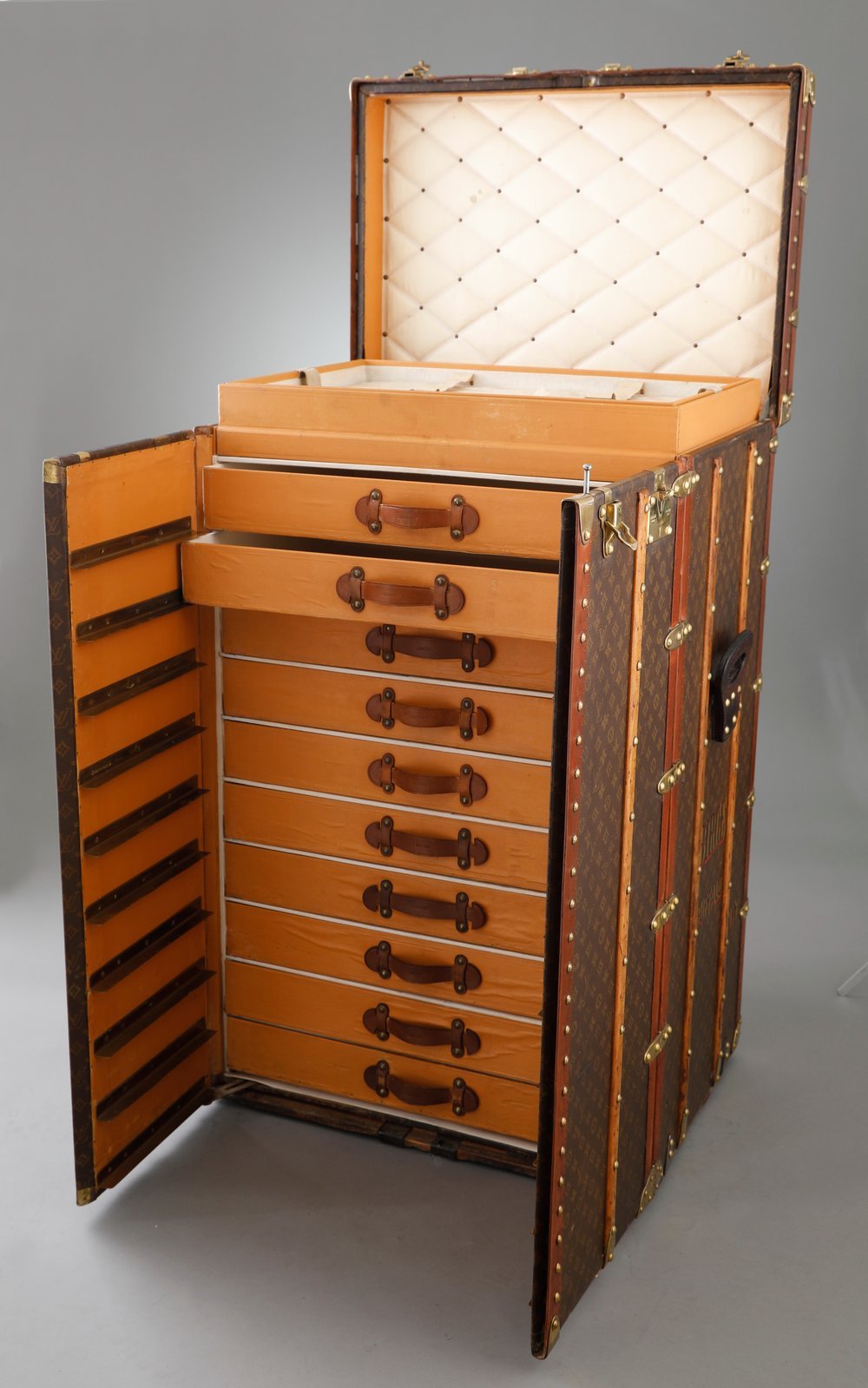
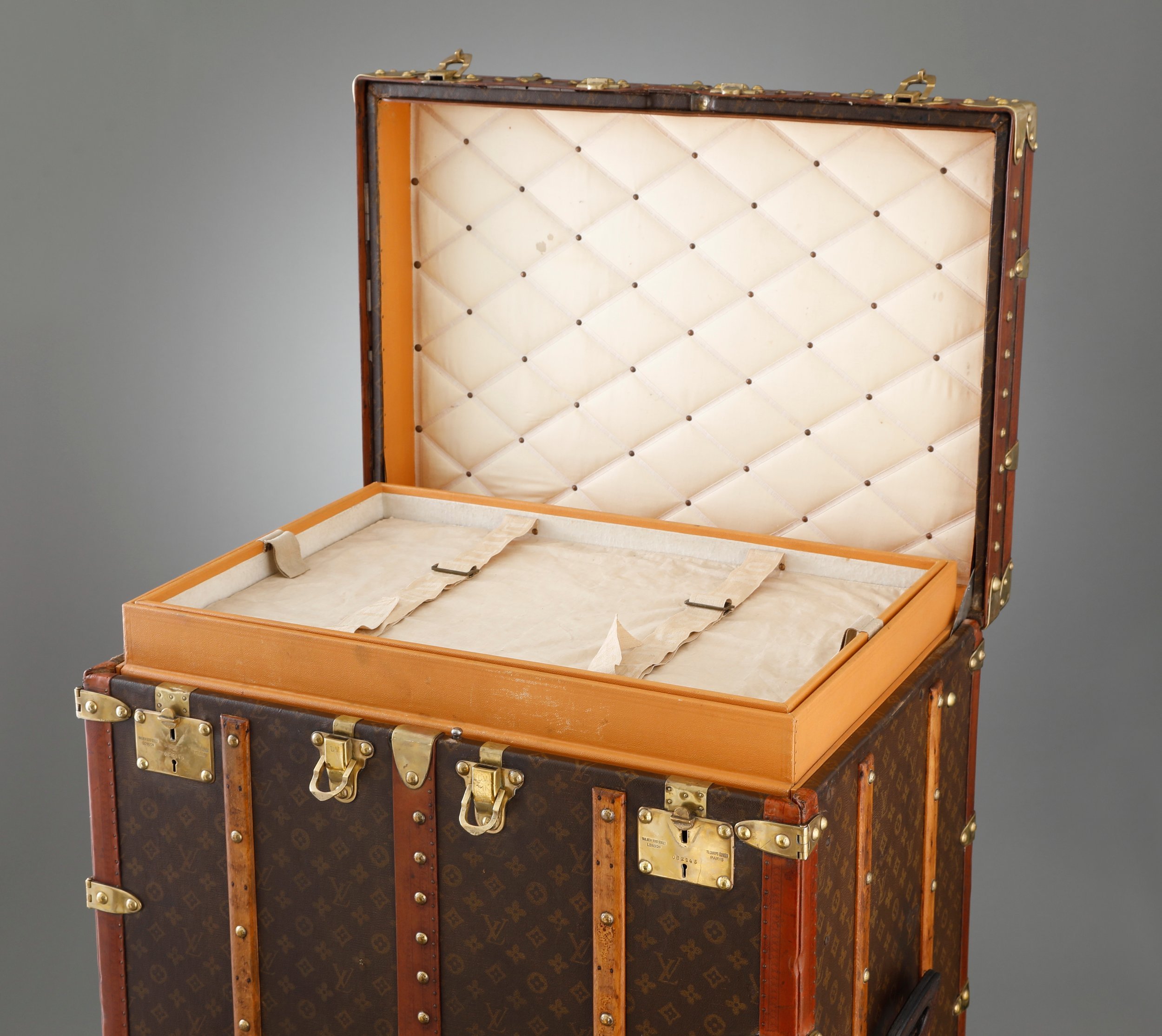
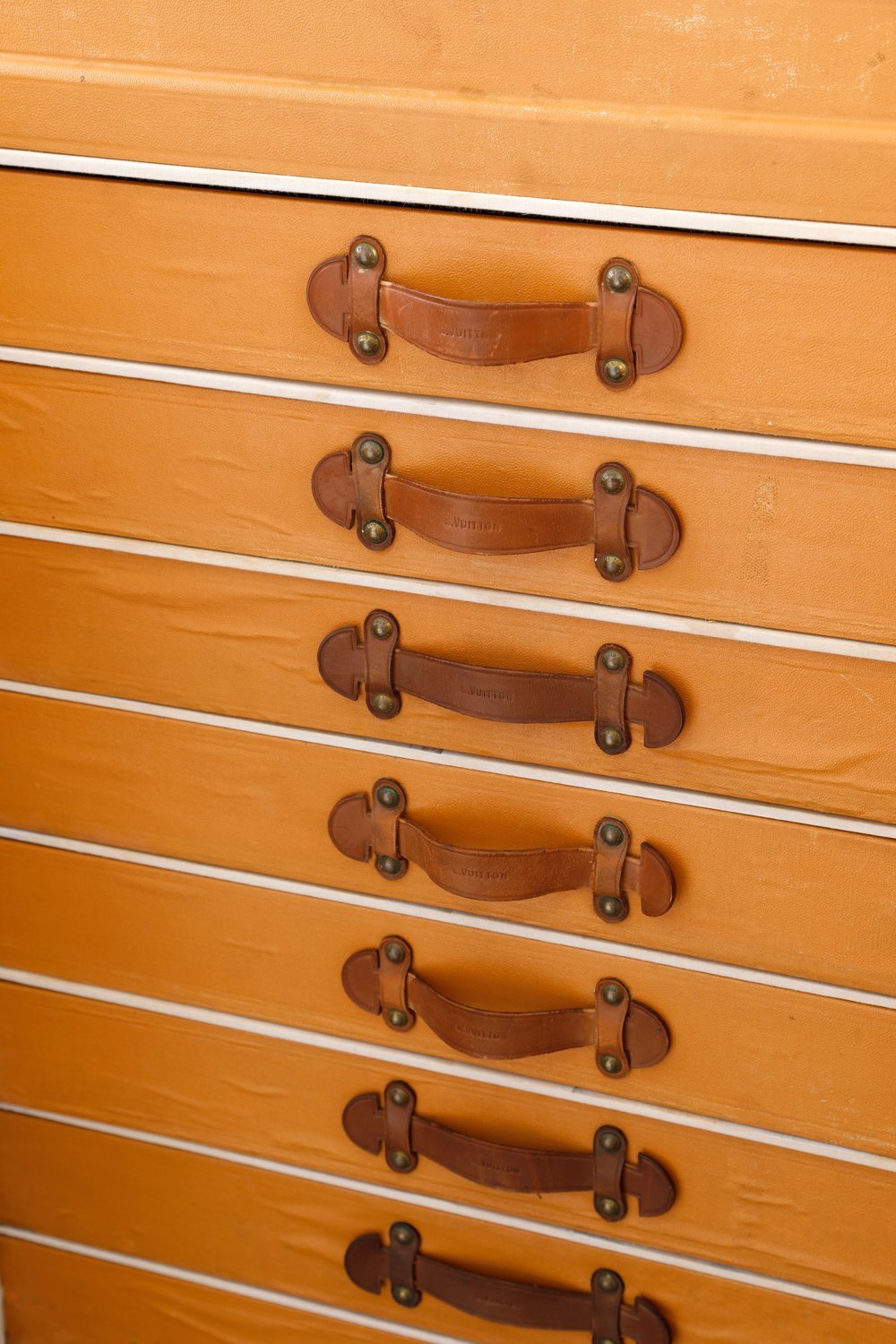
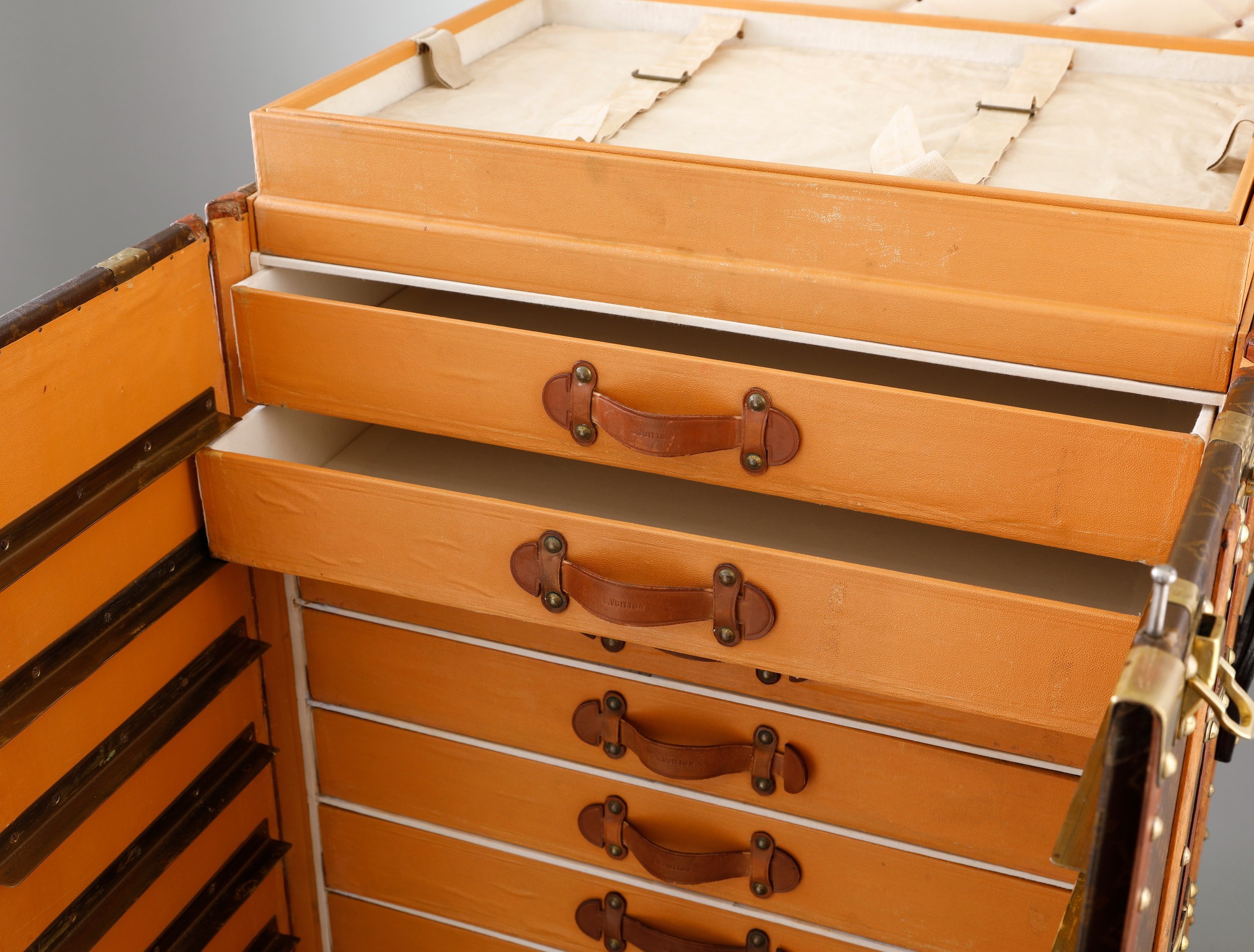
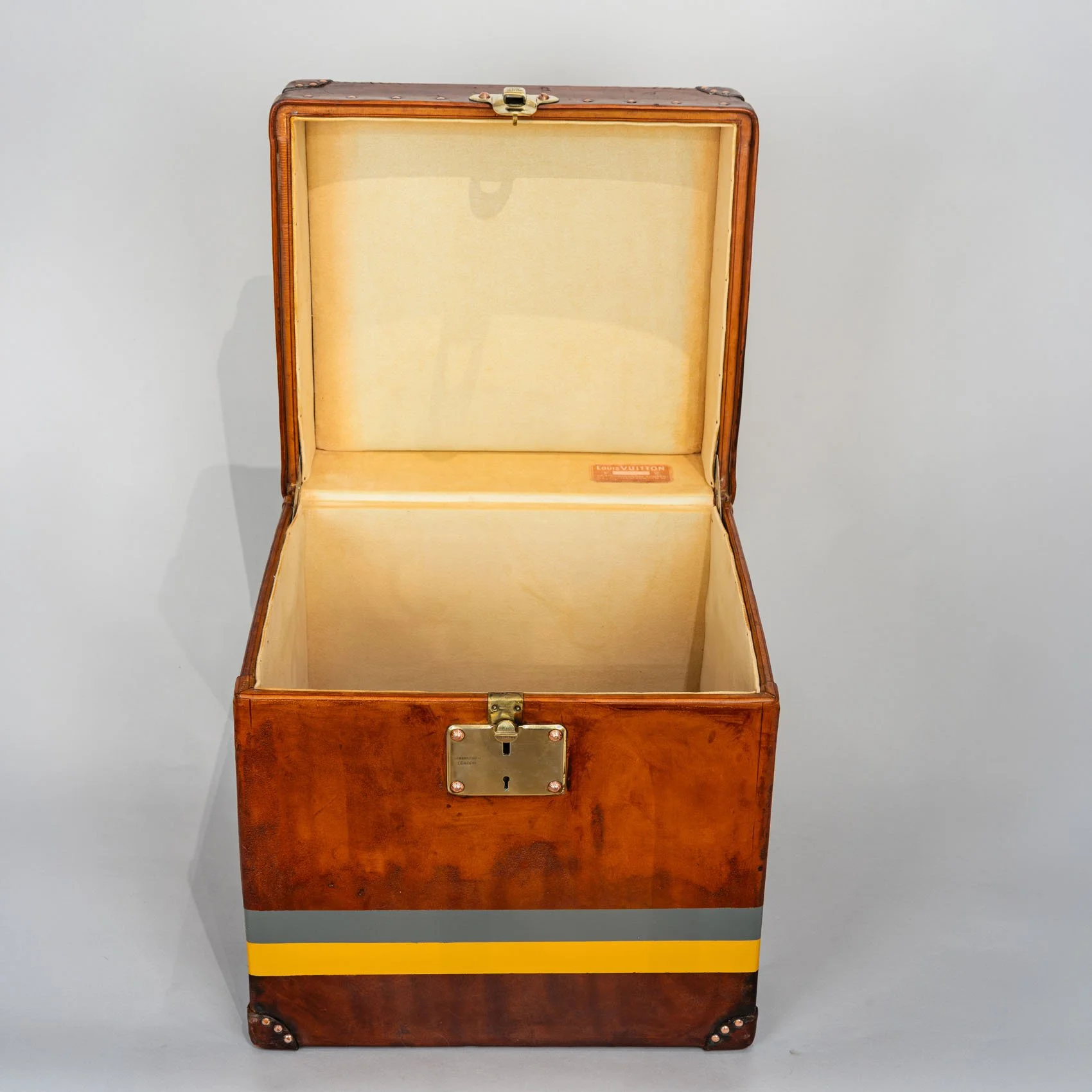
The interior is lined and fitted, preserving the original configuration in which the trunk traveled. The piece is presented on a custom brass stand — the same clean rectangular profile as Vuitton's own display mounts — which elevates it to coffee table height while allowing the lid to open freely, providing storage of considerable capacity.
Cabin trunks with clear, legible period stencilling documenting their original shipboard use are a specific and sought-after category within the Vuitton collecting market. The combination of the "600 F.S.-1" designation, the serial number, and the original hardware and interior in this condition represents a piece of genuine travel history.
Stencilling: 600 F.S.-1 (original shipboard cabin designation) Serial No.: 075075 Dimensions: 13 × 36 × 20 in Stand: Custom brass, purpose-made
Condition: Very good overall, consistent with age and honest use. Monogram canvas strong throughout with rich, even patina. Natural wood slat banding and lozine trim structurally sound. Brass hardware complete — lock plate, clasps, corner guards, and studs all present. Serial number 075075 on lock plate. Stencilling "600 F.S.-1" bold and fully legible. Interior lining and fittings present and intact. Custom brass stand present and structurally sound.
Literature:
Paul-Gérard Pasols, Louis Vuitton: Malletier à Paris, Paris, 1987
Florence Müller, Louis Vuitton: 100 Legendary Trunks, New York, 2010
Pierre Léonforte, Louis Vuitton: The Birth of Modern Luxury, Paris, 2004
The cabin trunk is the form that defined transatlantic travel in its golden age — engineered to a reduced height that allowed it to slide beneath the berth of a first-class stateroom aboard the great ocean liners of the early twentieth century, keeping a traveler's essentials within reach for the duration of a crossing that might last five days or more. This handsome example, dating to the 1920s and produced in Louis Vuitton's Paris atelier, retains on its front face the original stencilled designation "600 F.S.-1" — almost certainly a stateroom or cabin assignment from its days aboard a passenger vessel, a marking applied by the ship's baggage handlers to ensure correct routing and delivery. It is a detail that transforms a fine trunk into a specific historical object: one that crossed oceans, was handled by porters, and was delivered to a first-class cabin by people who knew exactly what it was and who it belonged to.
The exterior is executed in monogram canvas with the natural wood slat banding characteristic of 1920s production, lozine leather trim with the embossed LV border running the full perimeter, and the full complement of original brass hardware — central lock plate, flanking clasps, corner guards, and studded borders. The lock plate is stamped with the serial number 075075. The canvas presents with the characteristic warm, rich patina of a piece that has lived a full life in honest use, while retaining the structural integrity of Vuitton's exceptional construction throughout.
The interior is lined and fitted, preserving the original configuration in which the trunk traveled. The piece is presented on a custom brass stand — the same clean rectangular profile as Vuitton's own display mounts — which elevates it to coffee table height while allowing the lid to open freely, providing storage of considerable capacity.
Cabin trunks with clear, legible period stencilling documenting their original shipboard use are a specific and sought-after category within the Vuitton collecting market. The combination of the "600 F.S.-1" designation, the serial number, and the original hardware and interior in this condition represents a piece of genuine travel history.
Stencilling: 600 F.S.-1 (original shipboard cabin designation) Serial No.: 075075 Dimensions: 13 × 36 × 20 in Stand: Custom brass, purpose-made
Condition: Very good overall, consistent with age and honest use. Monogram canvas strong throughout with rich, even patina. Natural wood slat banding and lozine trim structurally sound. Brass hardware complete — lock plate, clasps, corner guards, and studs all present. Serial number 075075 on lock plate. Stencilling "600 F.S.-1" bold and fully legible. Interior lining and fittings present and intact. Custom brass stand present and structurally sound.
Literature:
Paul-Gérard Pasols, Louis Vuitton: Malletier à Paris, Paris, 1987
Florence Müller, Louis Vuitton: 100 Legendary Trunks, New York, 2010
Pierre Léonforte, Louis Vuitton: The Birth of Modern Luxury, Paris, 2004

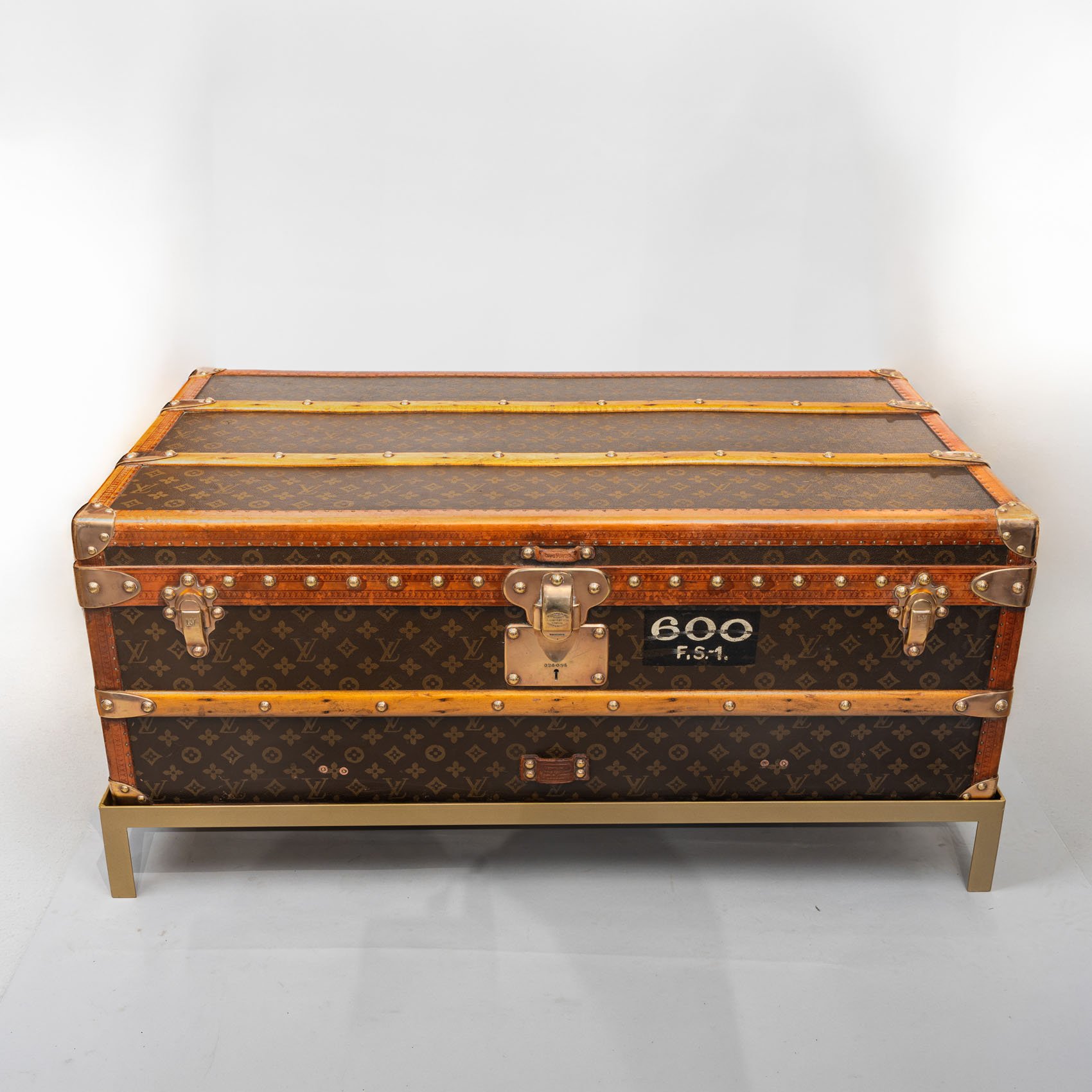 Image 1 of 2
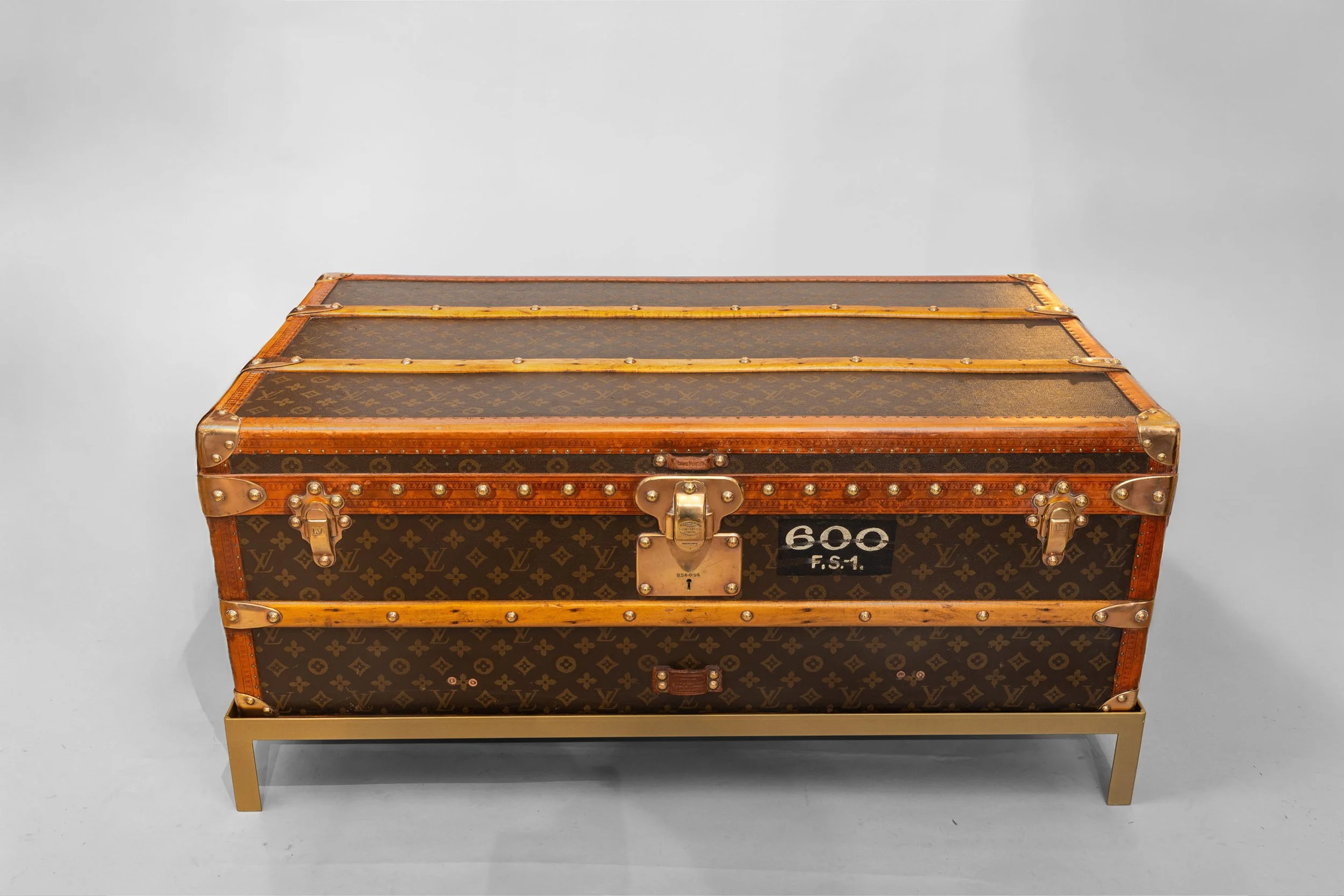 Image 2 of 2