An exceptional example of Black Forest carving at its most inventive: an anthropomorphic hound dressed as a hunter, seated on a tree stump, forming a figural tobacco jar with the head as a removable lid, carved in walnut at Brienz and dated 1870.
The hound sits on a carved tree stump on a naturalistic oval base, in a caped hunting coat and feathered hat, a rifle held at his side, a fringed game bag at his flank rendered in precise crosshatch that plays against the rougher texture of the coat — cloth, fur and leather each given its own surface treatment.
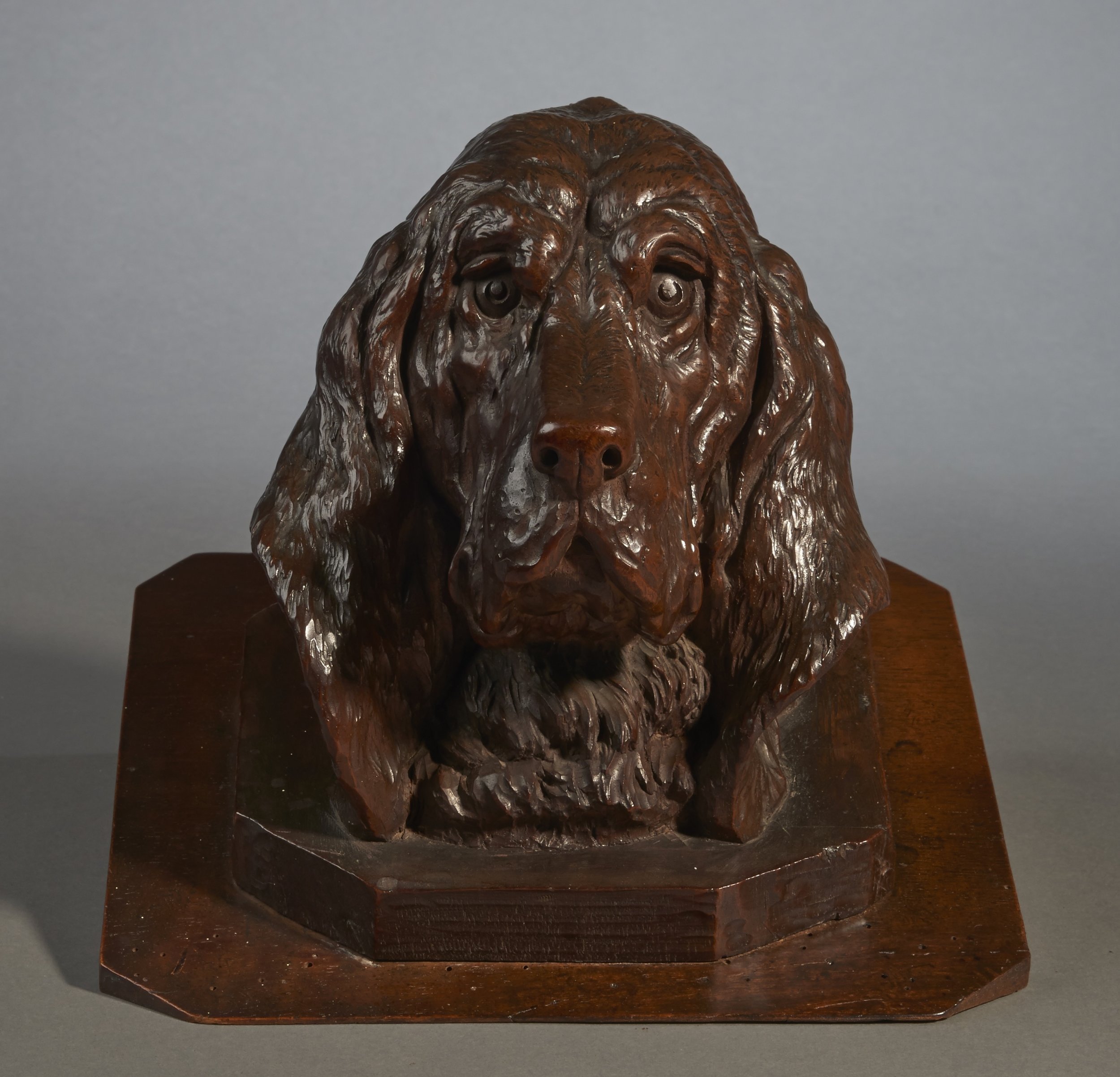
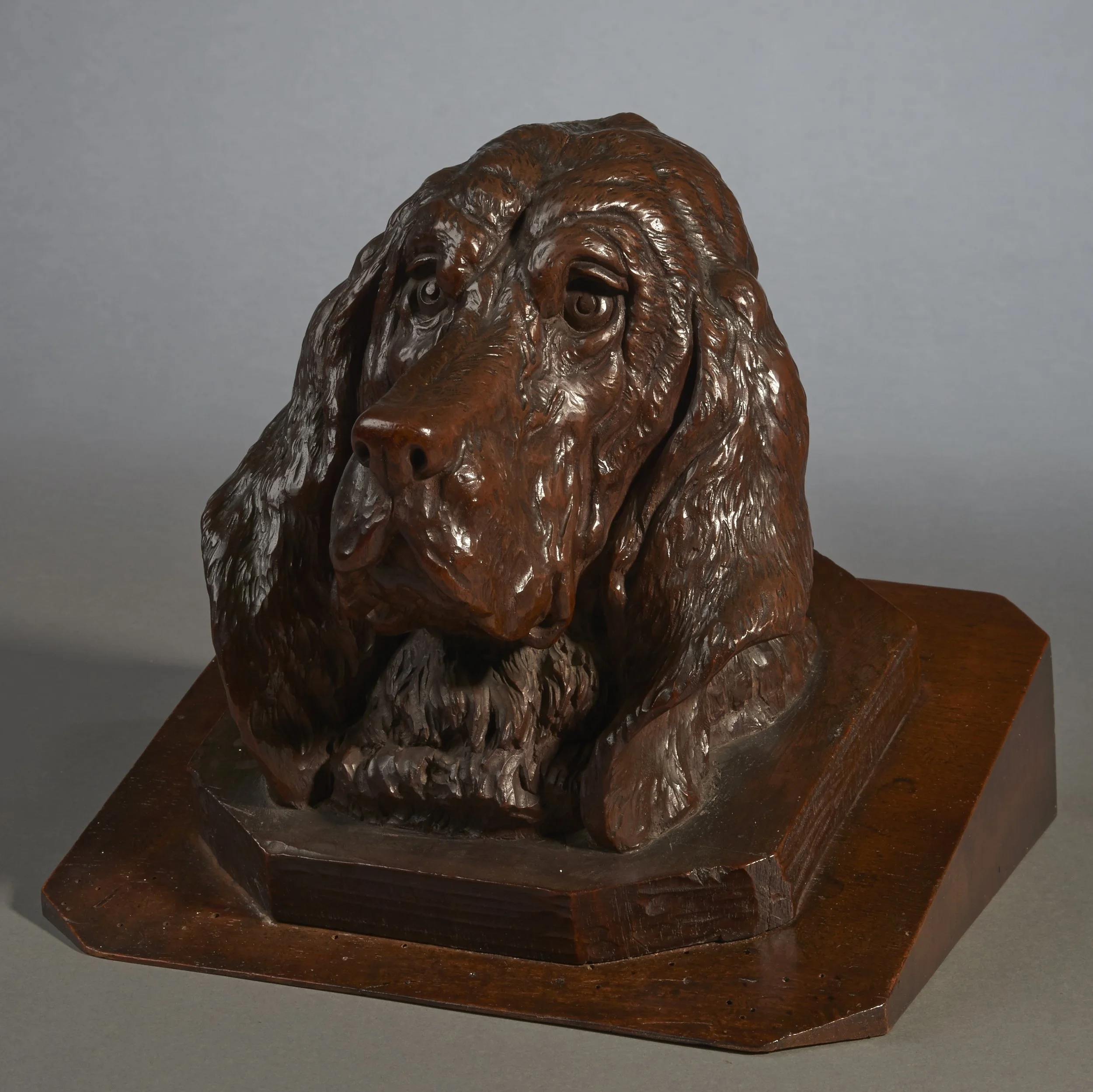
The expression is the piece's great achievement. Where the companion fox hunter carries a quality of knowing cunning, this hound is altogether different: world-weary, slightly doleful, the eyes drooping with the resignation of a dog who has been out in all weathers and expects nothing better — comic sympathy achieved through affectionate observation rather than caricature.
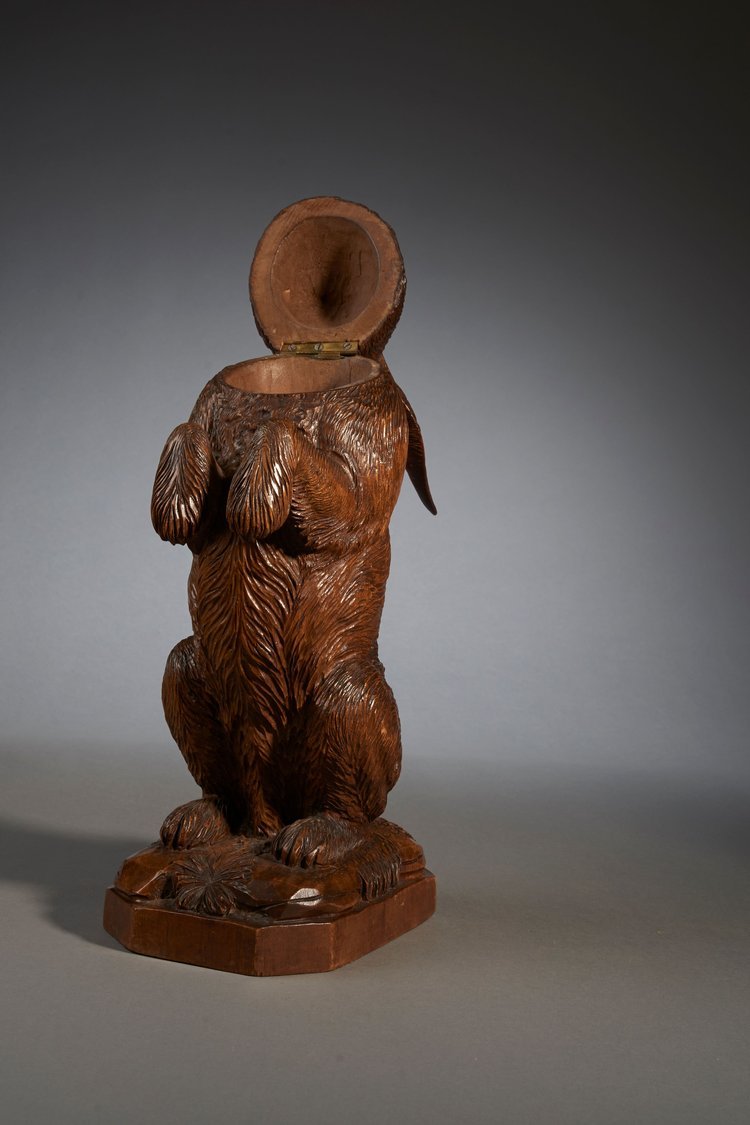
The head lifts cleanly at the collar to reveal the tobacco compartment, the join concealed in the cape's modeling so that, when closed, the figure reads as a complete sculptural whole. The walnut retains a warm patina that deepens the contrasts and shows off the toolwork. Dated 1870, it was produced at the height of the Brienz industry's reputation, when the workshops of the Bernese Oberland were exhibiting at the world fairs and collected across Europe and America.
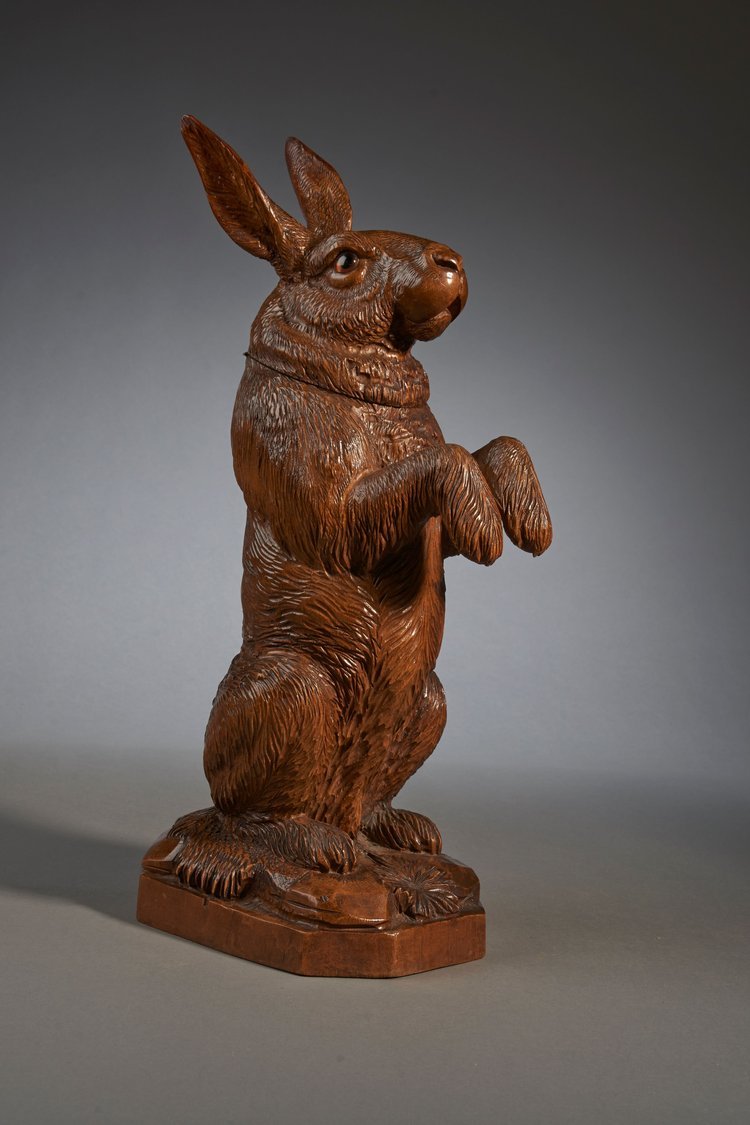
A companion piece, an anthropomorphic fox tobacco jar also dated 1870, is available separately; the two share the subject, date, and evident workshop origin.
Condition: Very good; rich original patina.
Height: 17 in.
Literature: Jay Arenski, Simon Daniels, and Michael Daniels, Swiss Carvings: The Art of the Black Forest, 1820–1940 (2006).
An exceptional example of Black Forest carving at its most inventive: an anthropomorphic hound dressed as a hunter, seated on a tree stump, forming a figural tobacco jar with the head as a removable lid, carved in walnut at Brienz and dated 1870.
The hound sits on a carved tree stump on a naturalistic oval base, in a caped hunting coat and feathered hat, a rifle held at his side, a fringed game bag at his flank rendered in precise crosshatch that plays against the rougher texture of the coat — cloth, fur and leather each given its own surface treatment.
The expression is the piece's great achievement. Where the companion fox hunter carries a quality of knowing cunning, this hound is altogether different: world-weary, slightly doleful, the eyes drooping with the resignation of a dog who has been out in all weathers and expects nothing better — comic sympathy achieved through affectionate observation rather than caricature.
The head lifts cleanly at the collar to reveal the tobacco compartment, the join concealed in the cape's modeling so that, when closed, the figure reads as a complete sculptural whole. The walnut retains a warm patina that deepens the contrasts and shows off the toolwork. Dated 1870, it was produced at the height of the Brienz industry's reputation, when the workshops of the Bernese Oberland were exhibiting at the world fairs and collected across Europe and America.
A companion piece, an anthropomorphic fox tobacco jar also dated 1870, is available separately; the two share the subject, date, and evident workshop origin.
Condition: Very good; rich original patina.
Height: 17 in.
Literature: Jay Arenski, Simon Daniels, and Michael Daniels, Swiss Carvings: The Art of the Black Forest, 1820–1940 (2006).

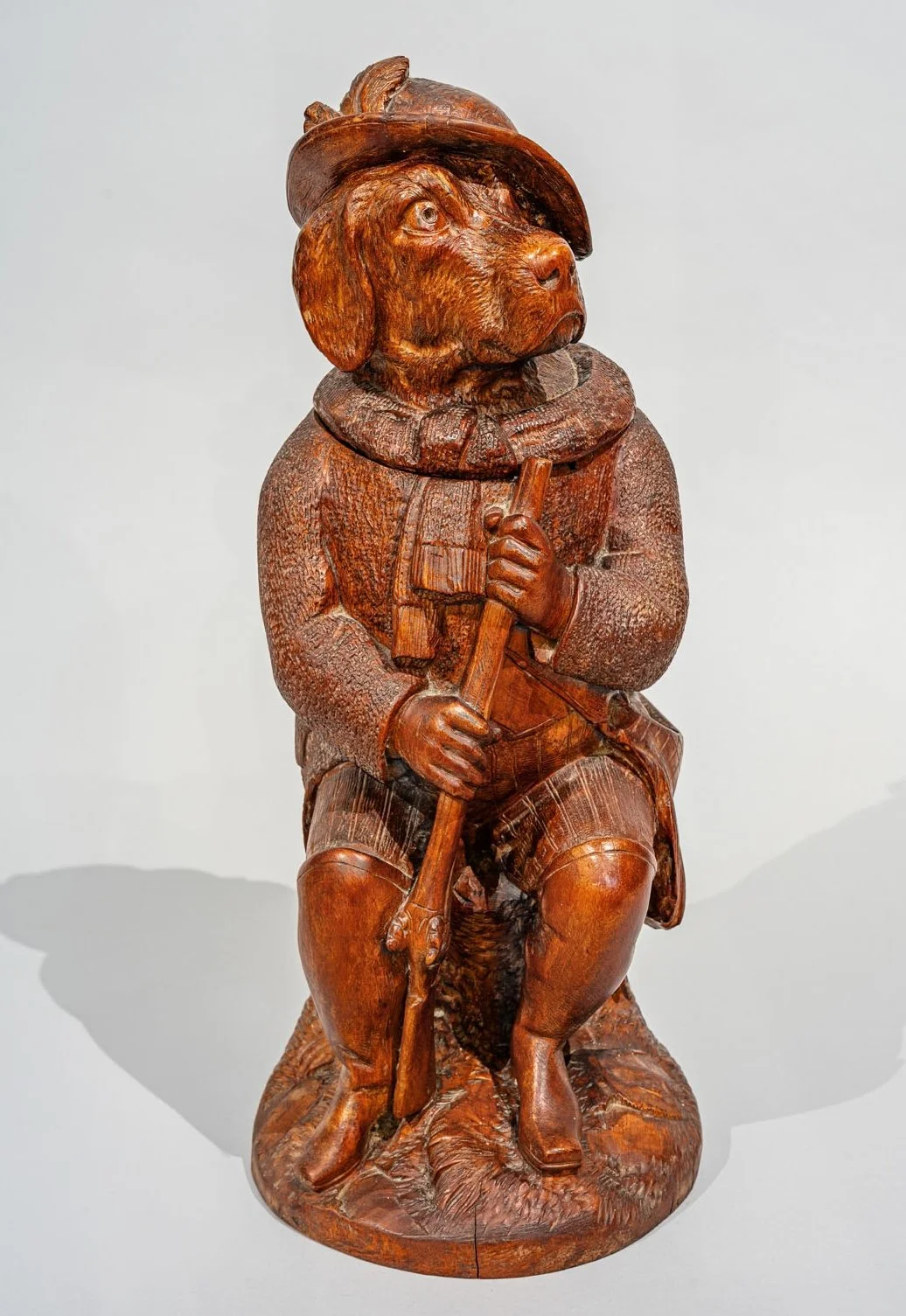 Image 1 of 5
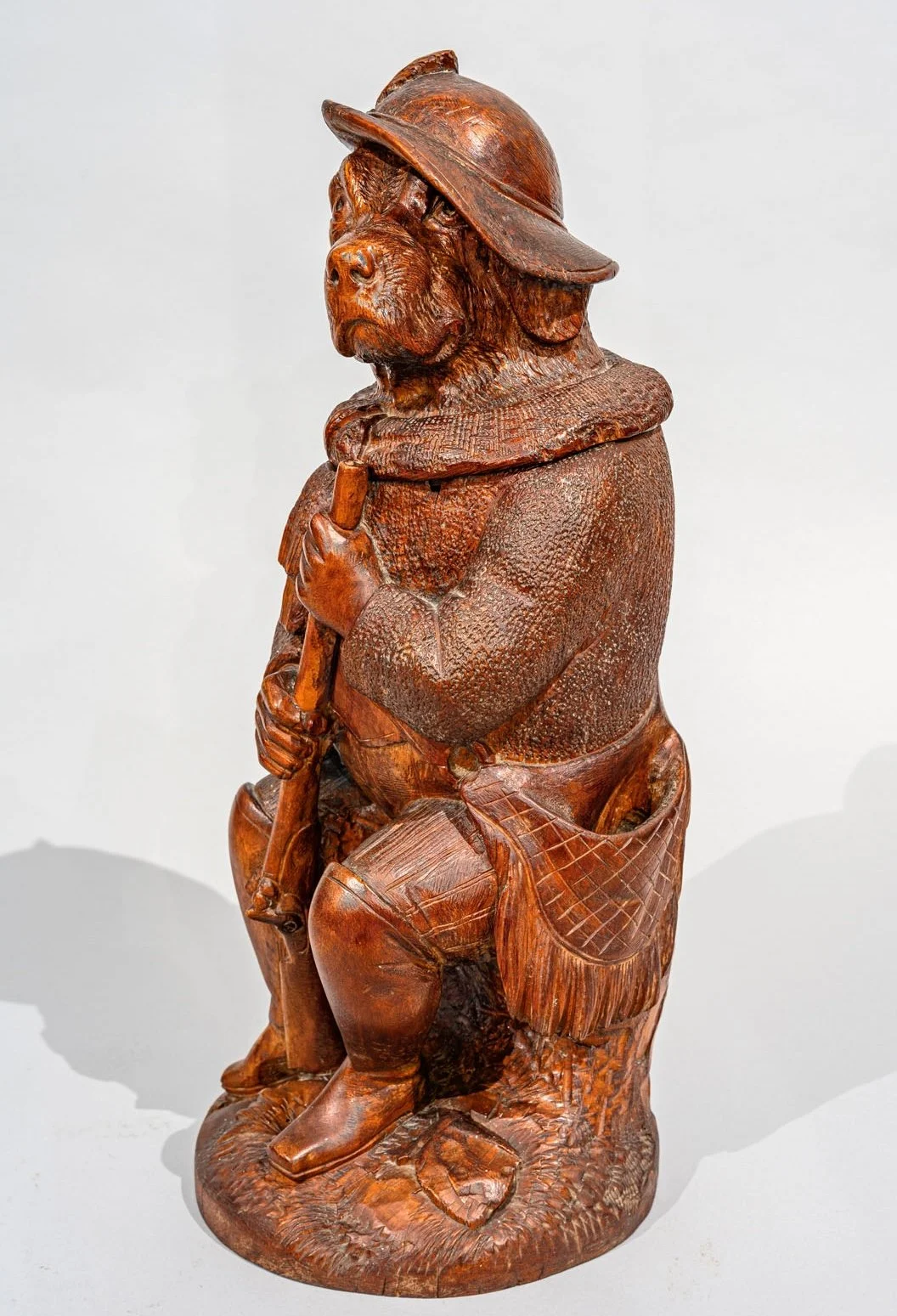 Image 2 of 5
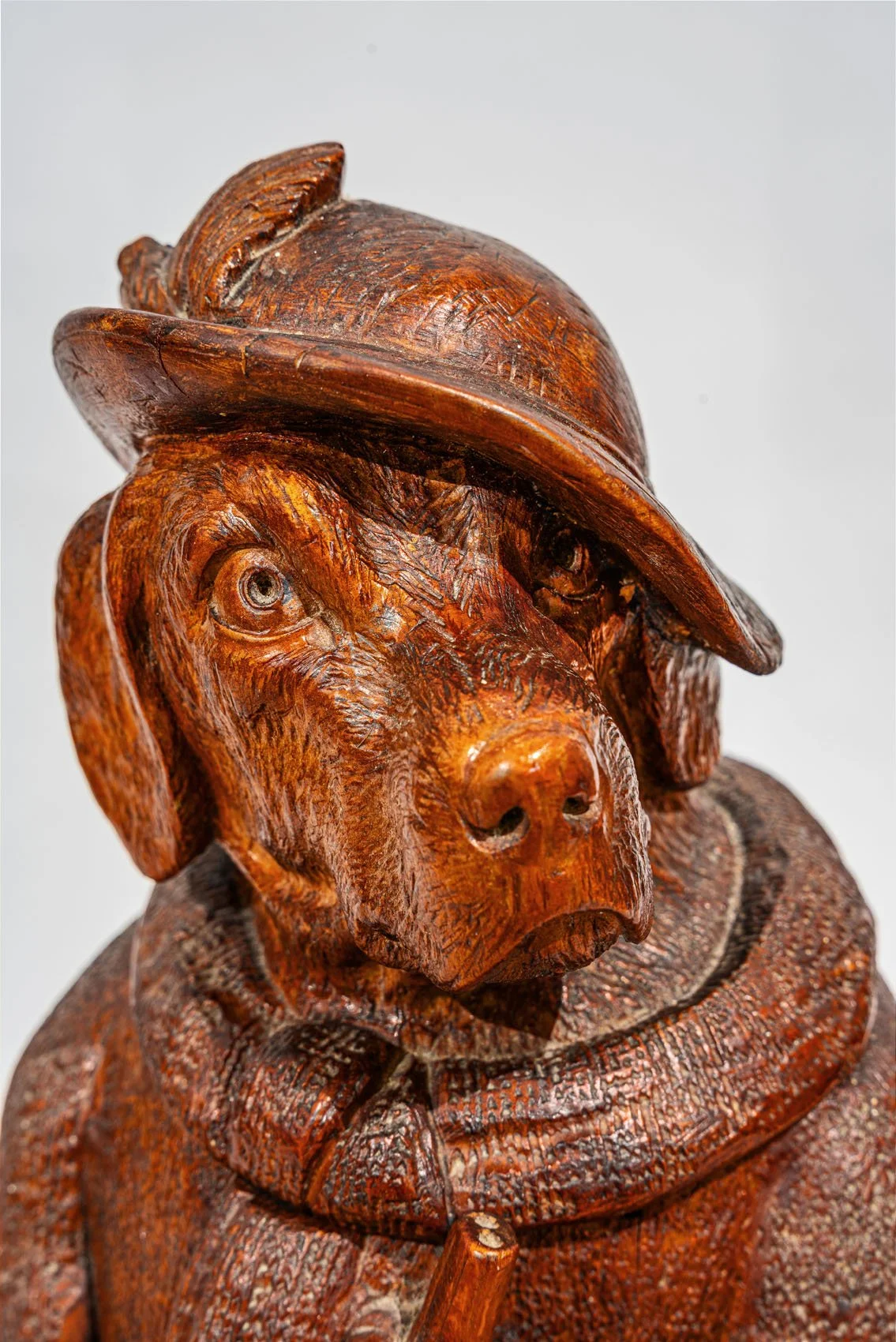 Image 3 of 5
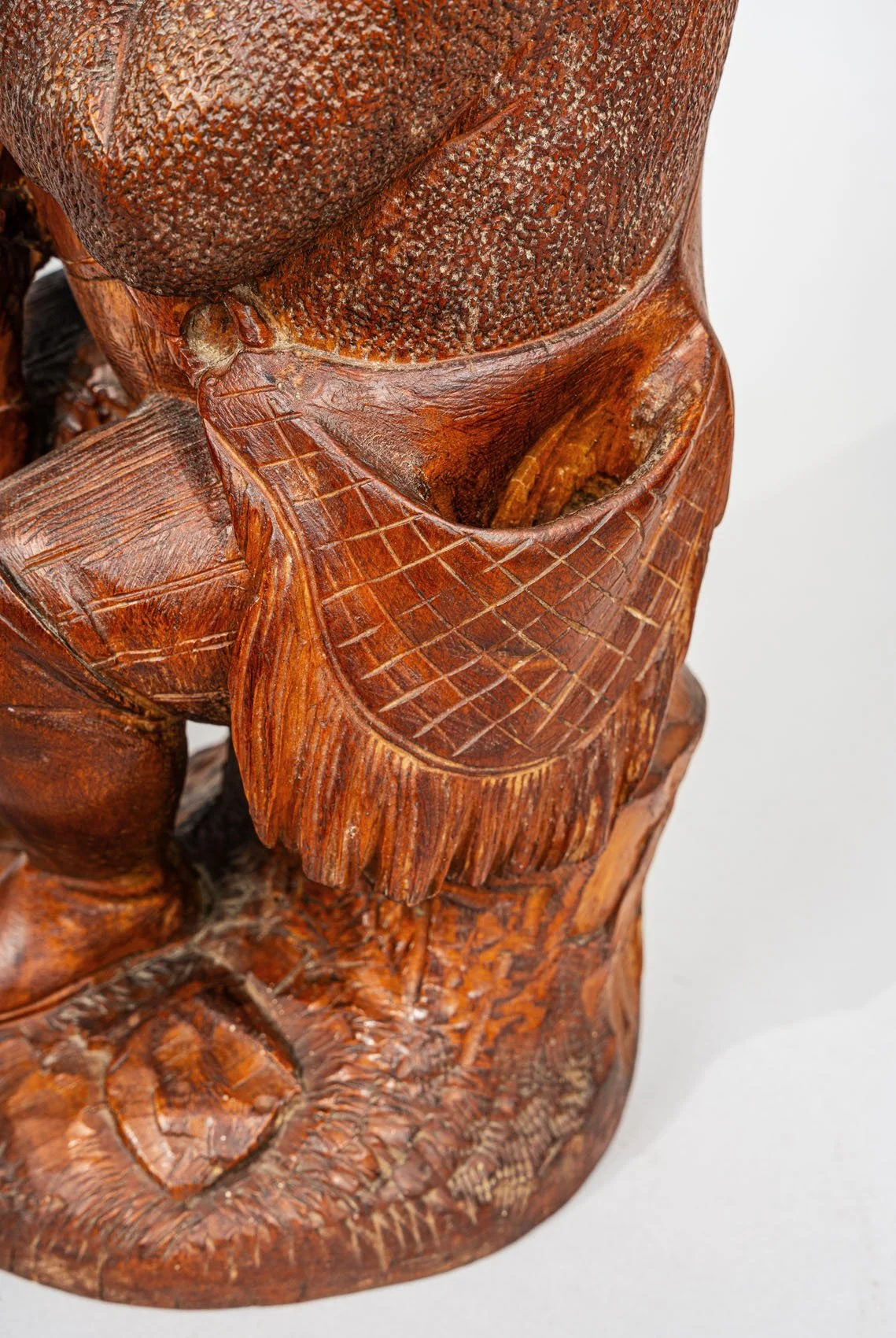 Image 4 of 5
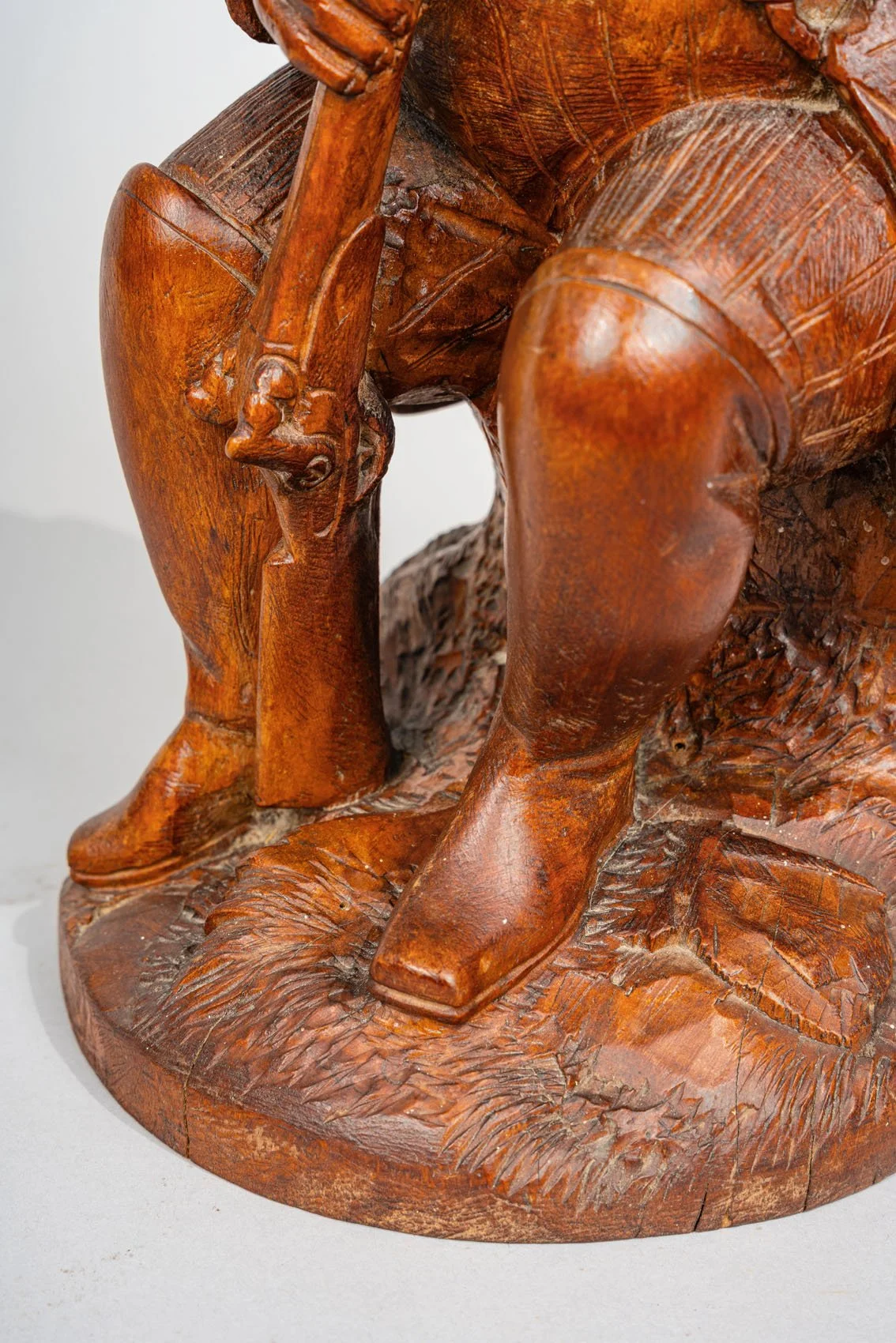 Image 5 of 5