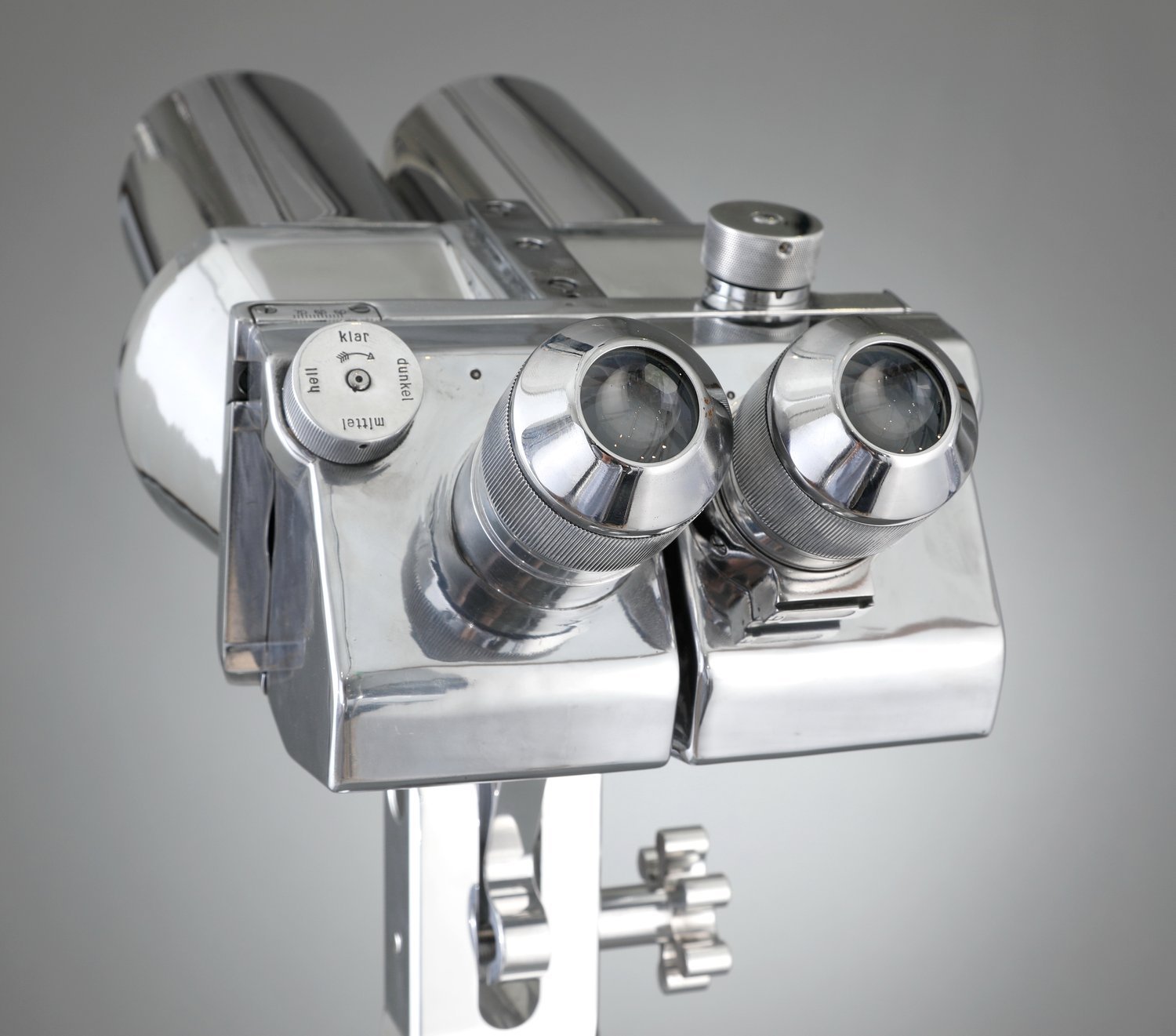
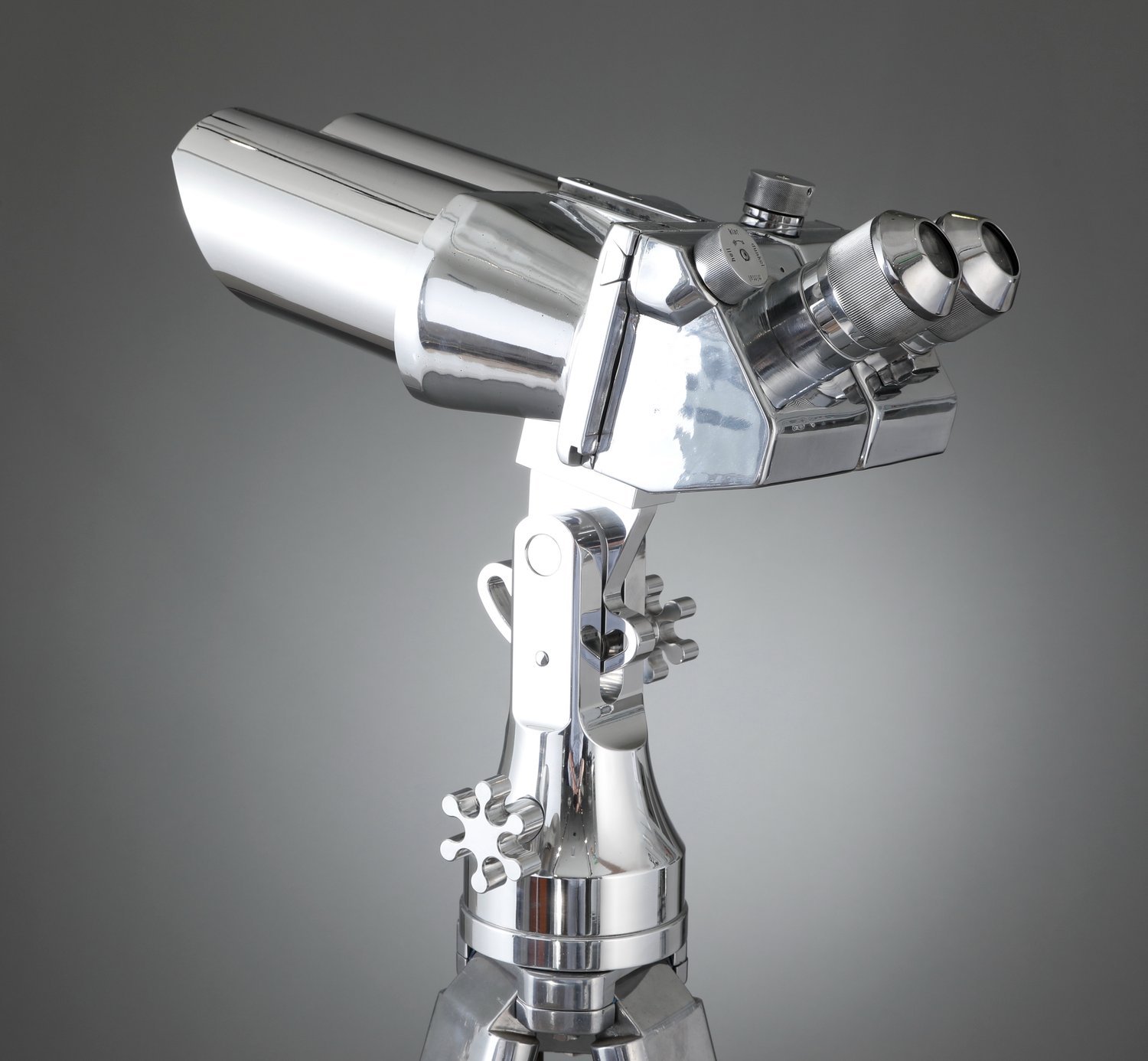
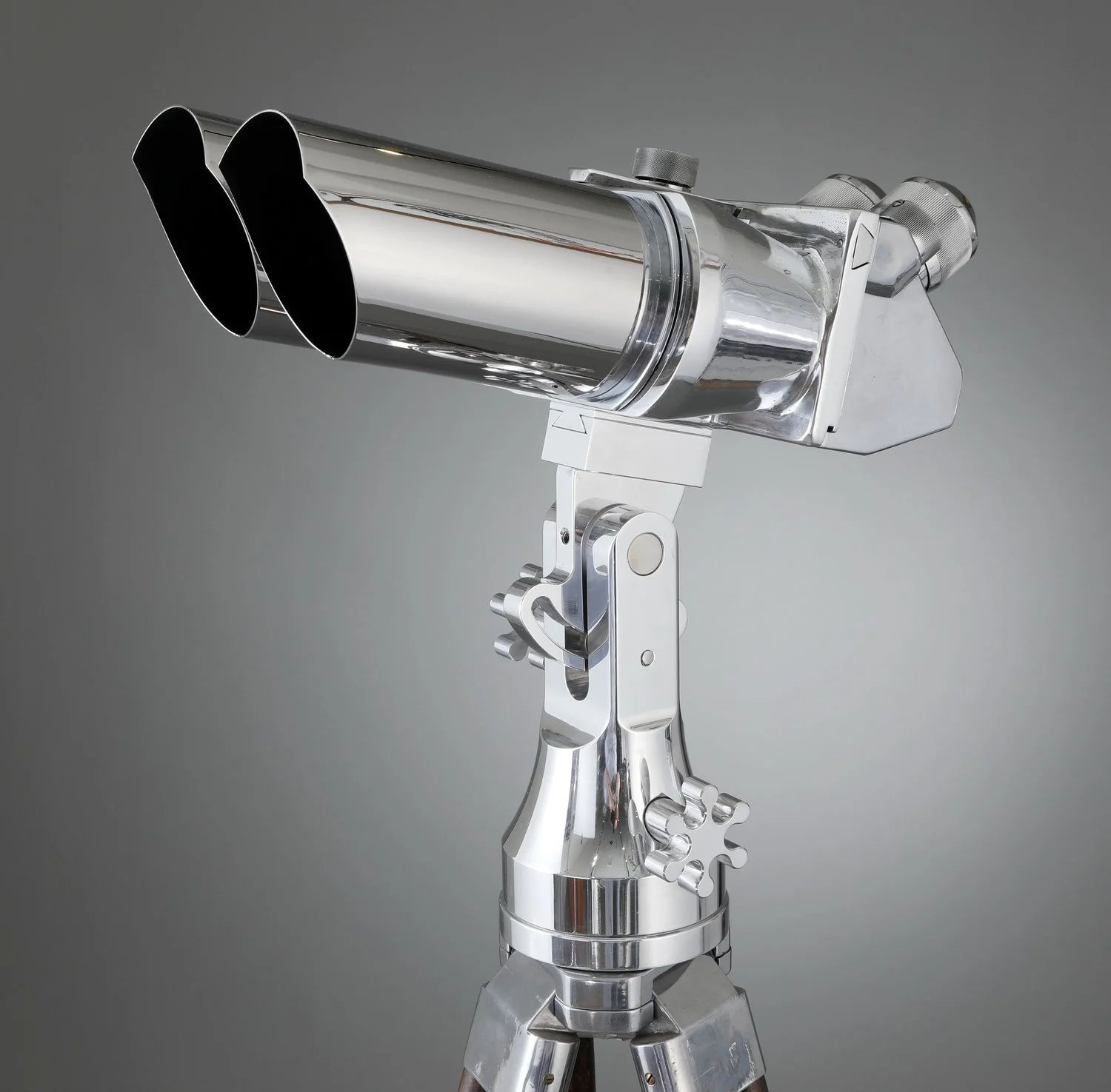
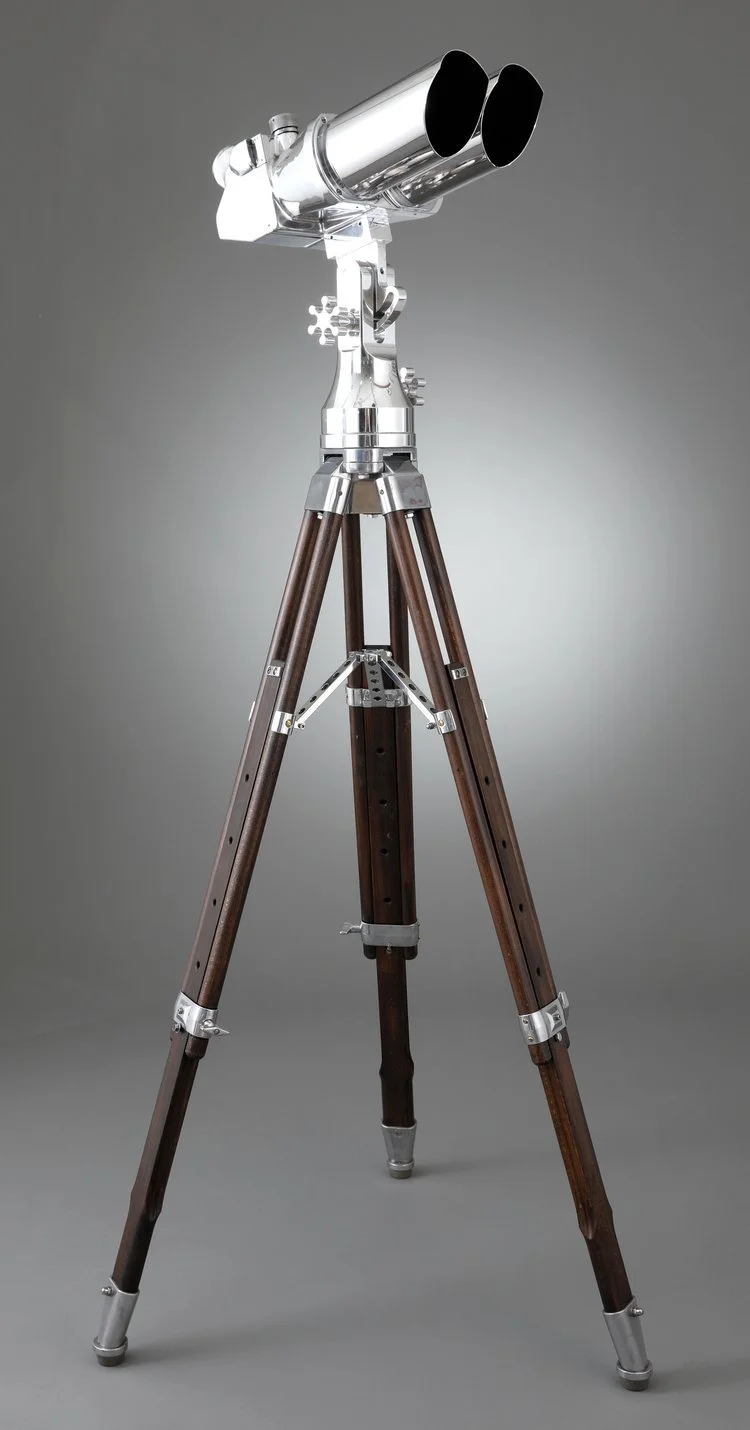
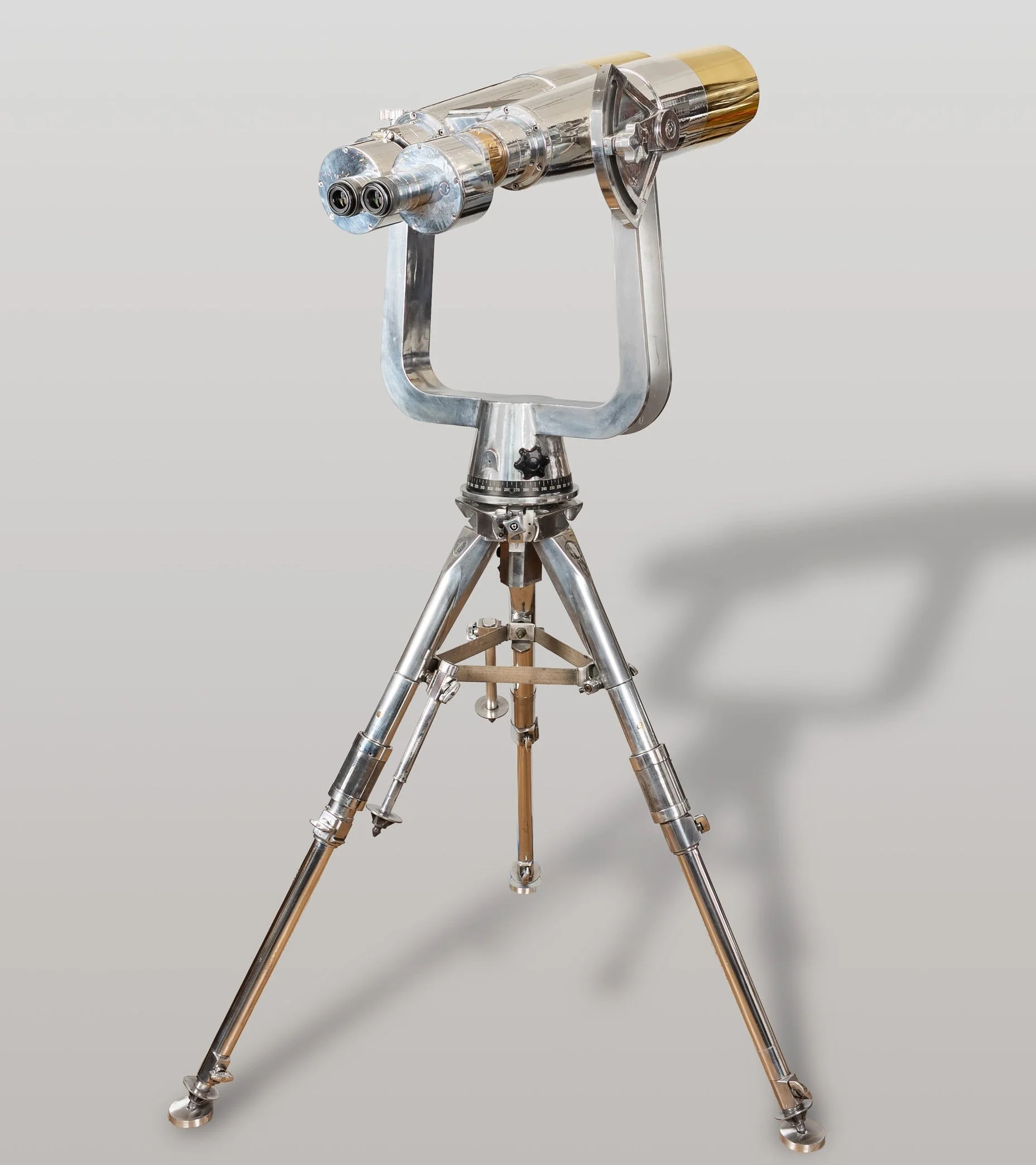
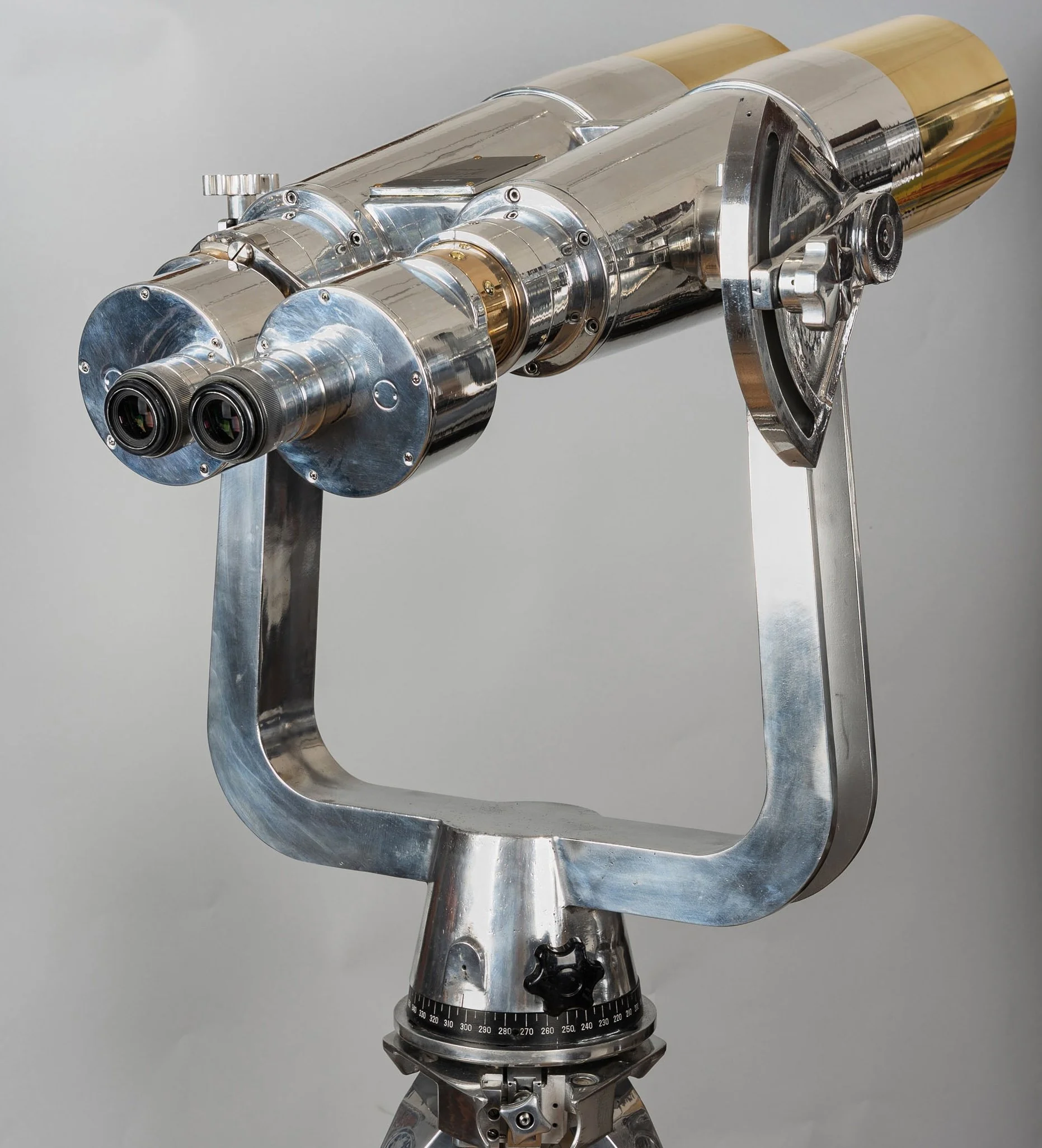
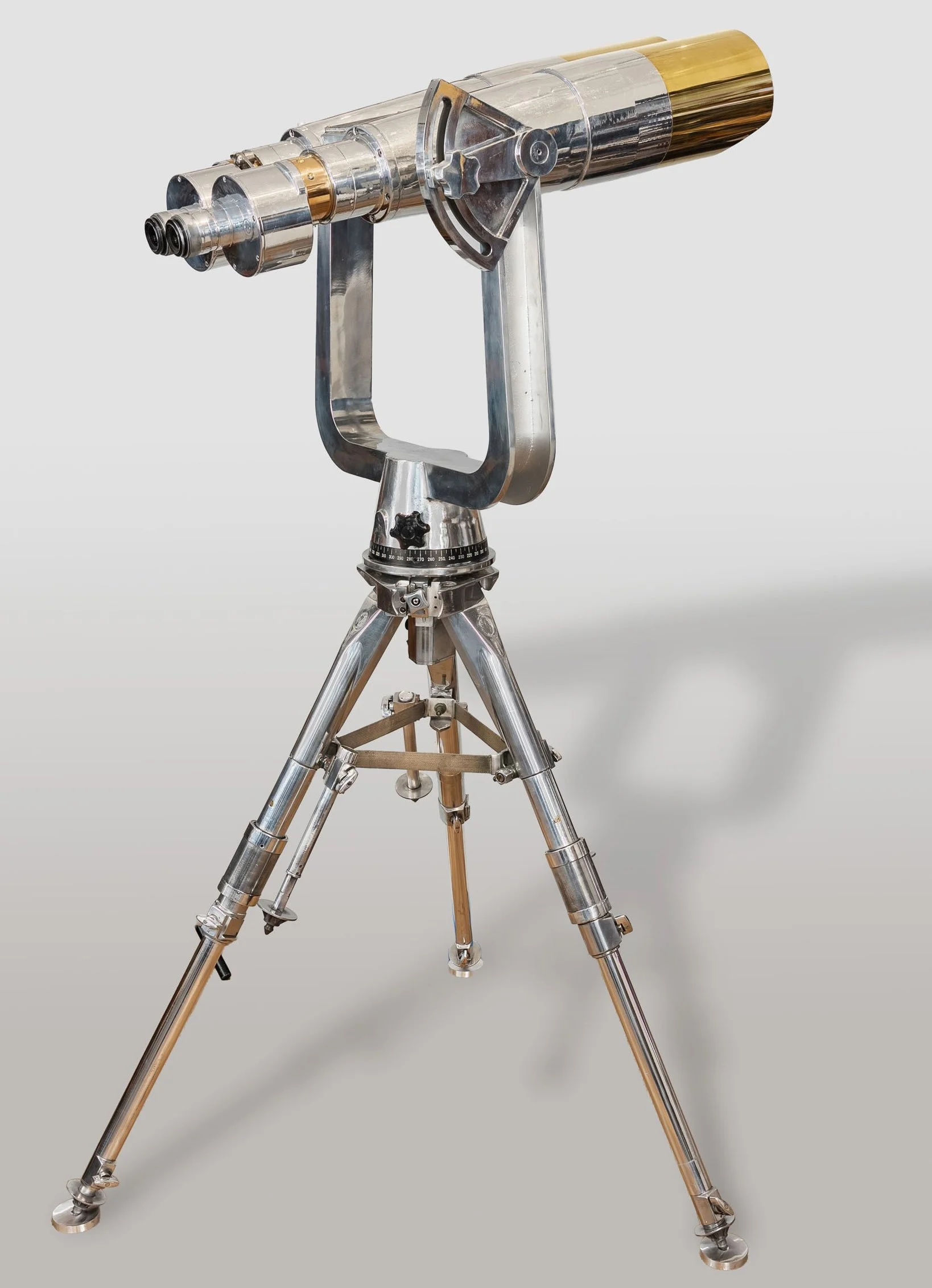
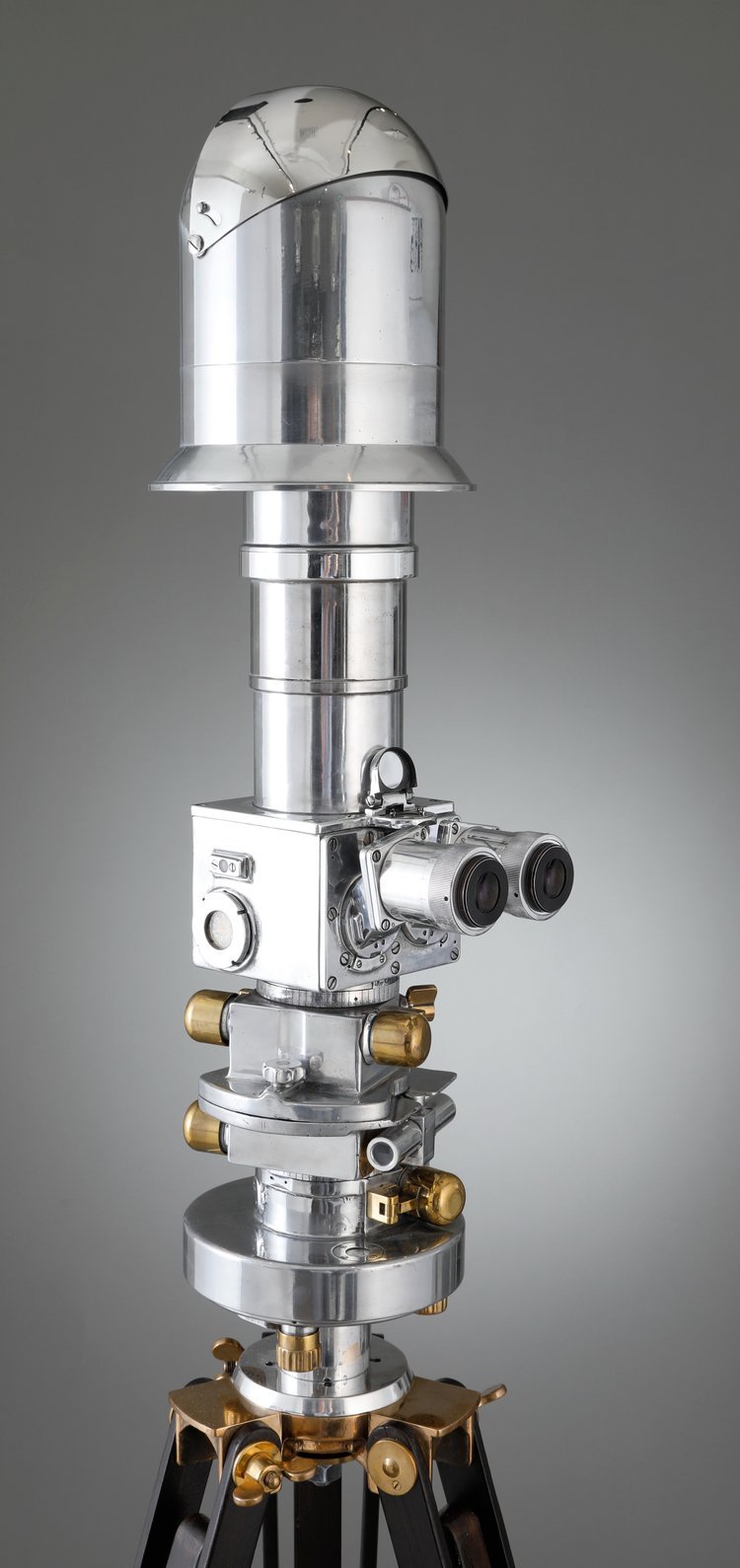
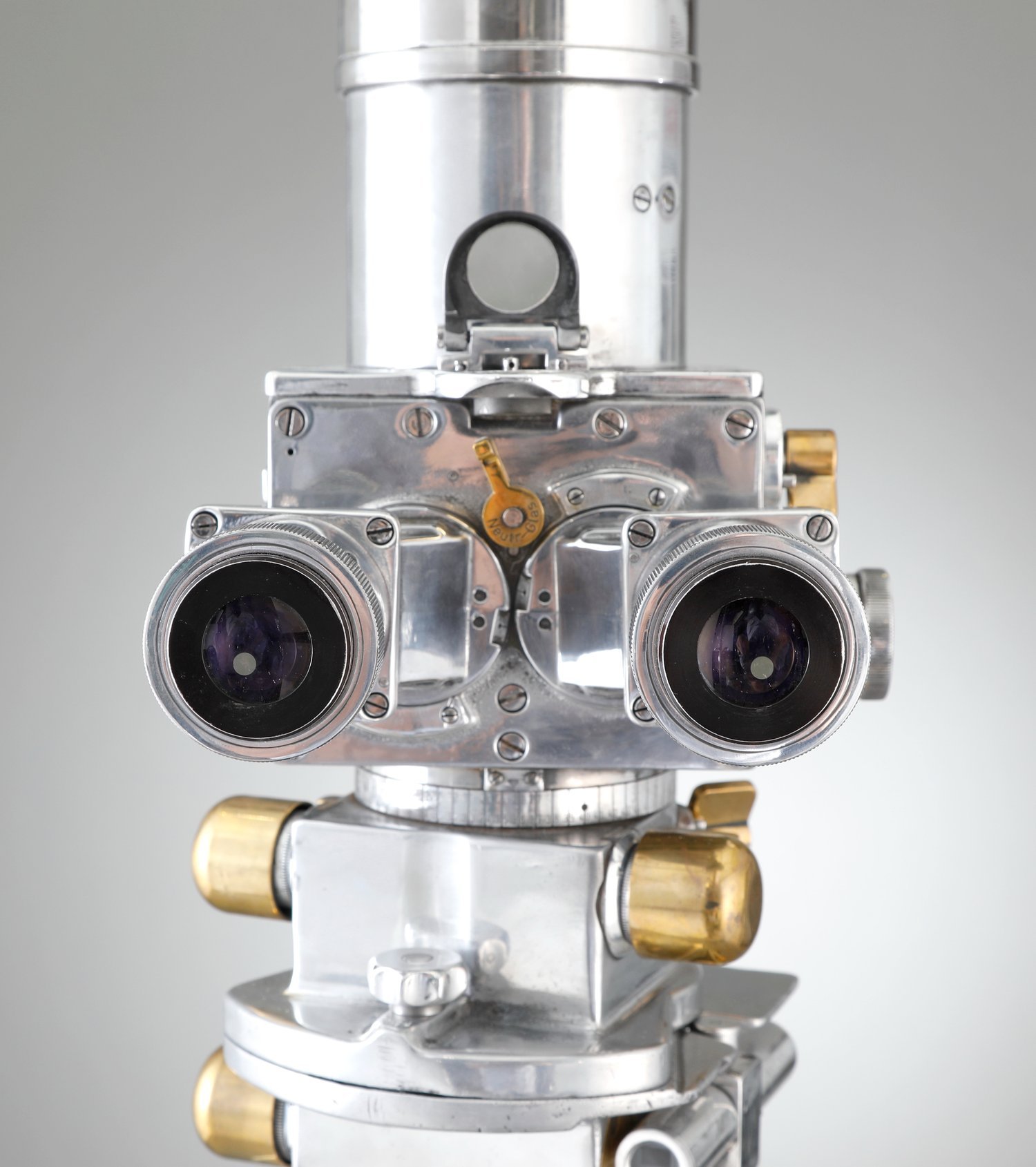
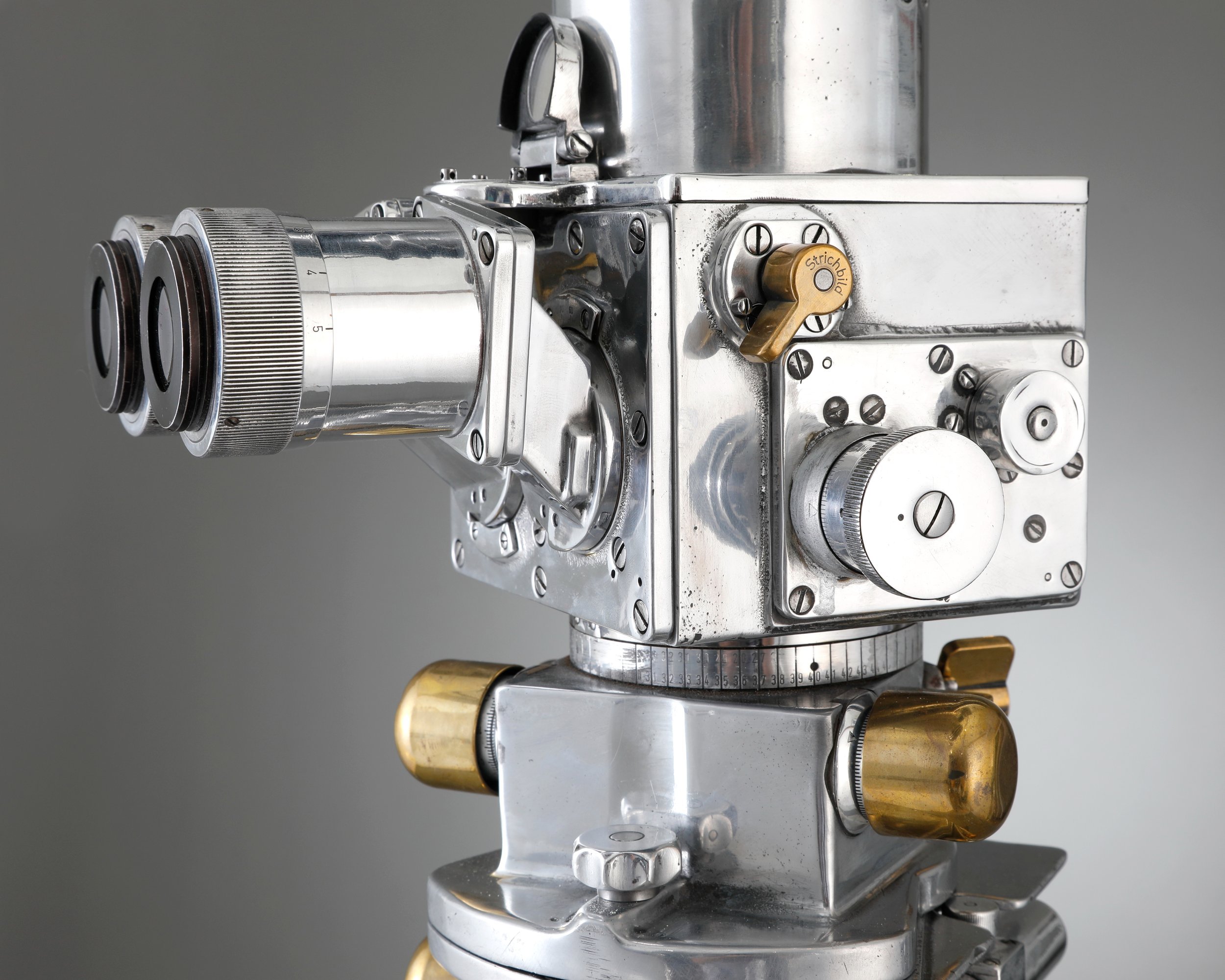
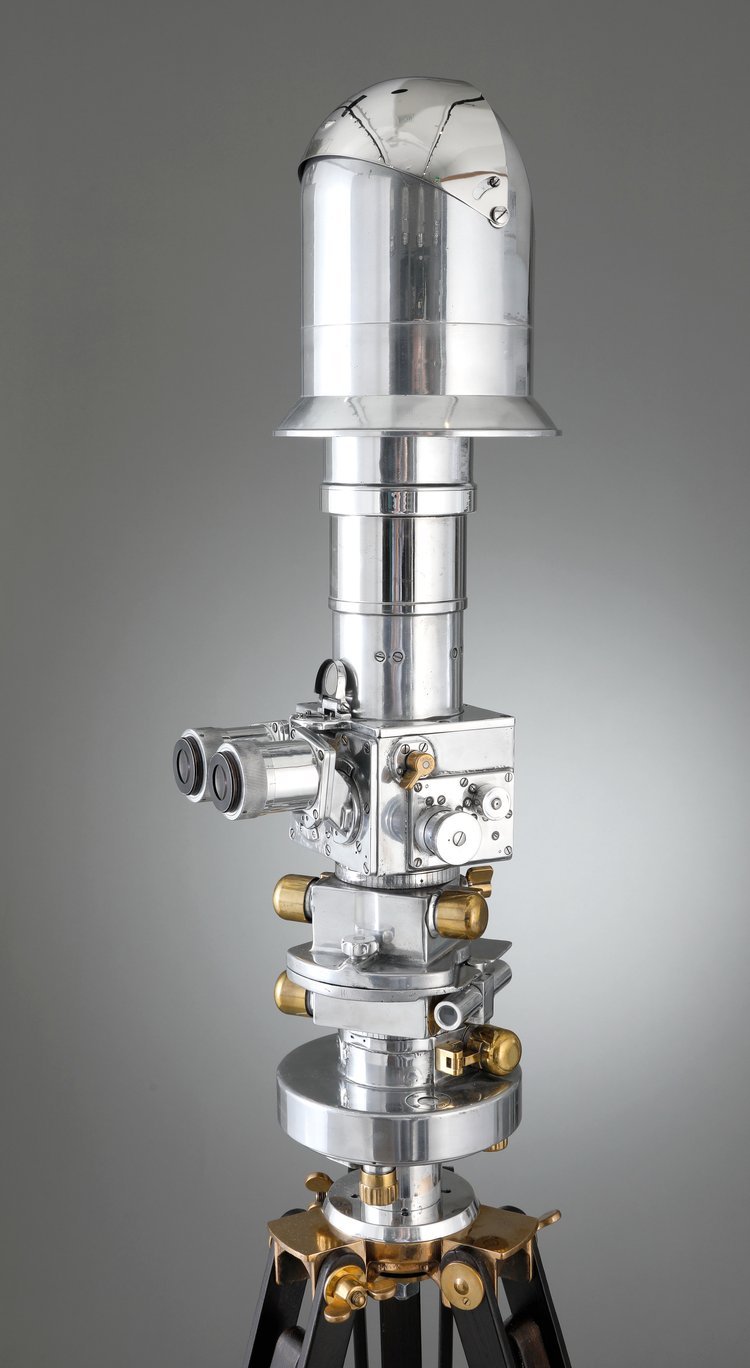
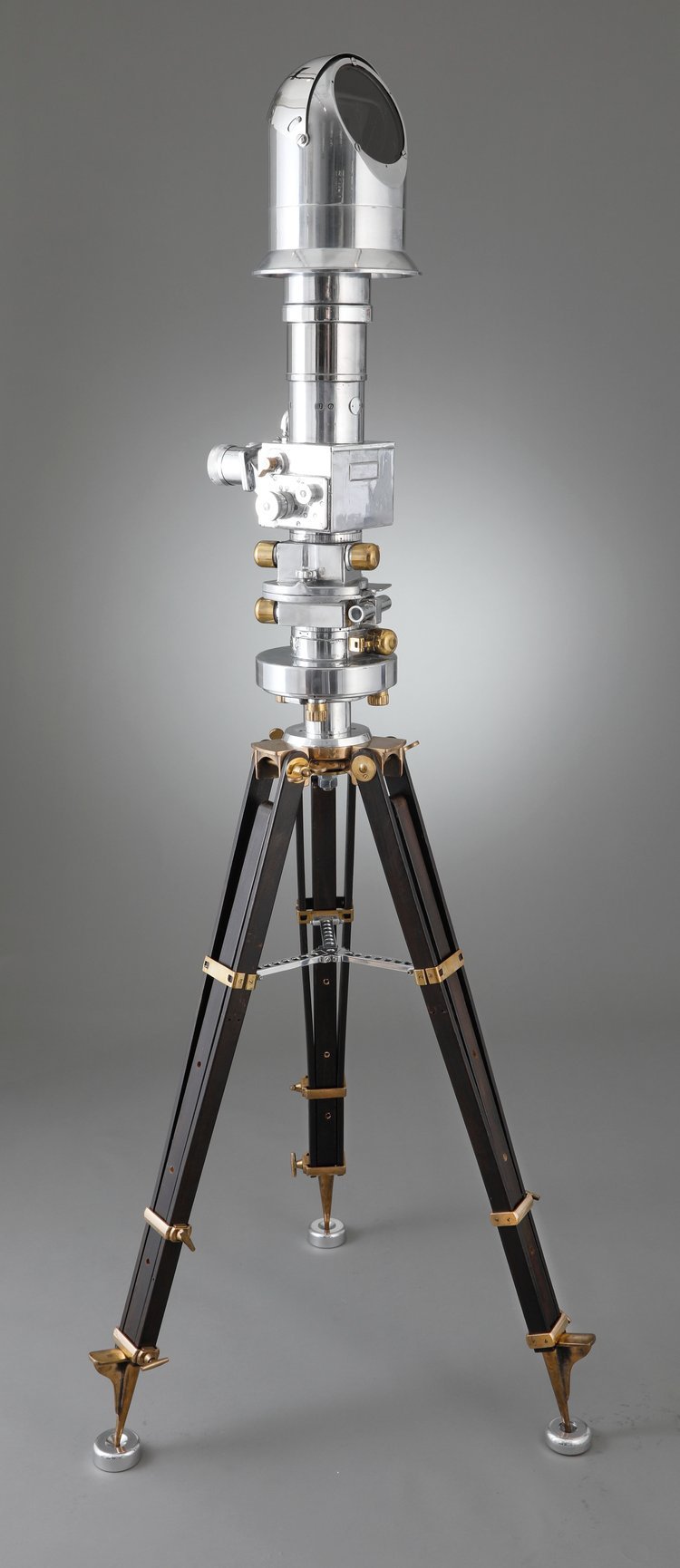
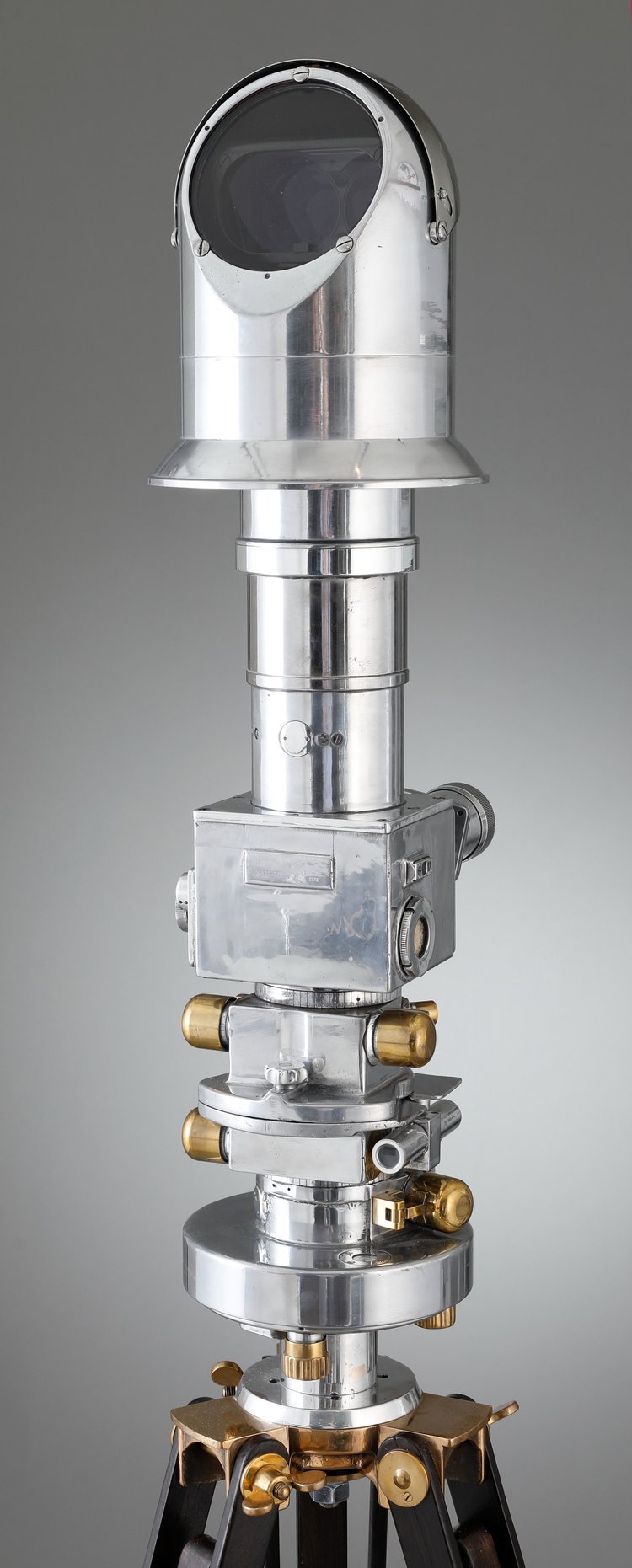
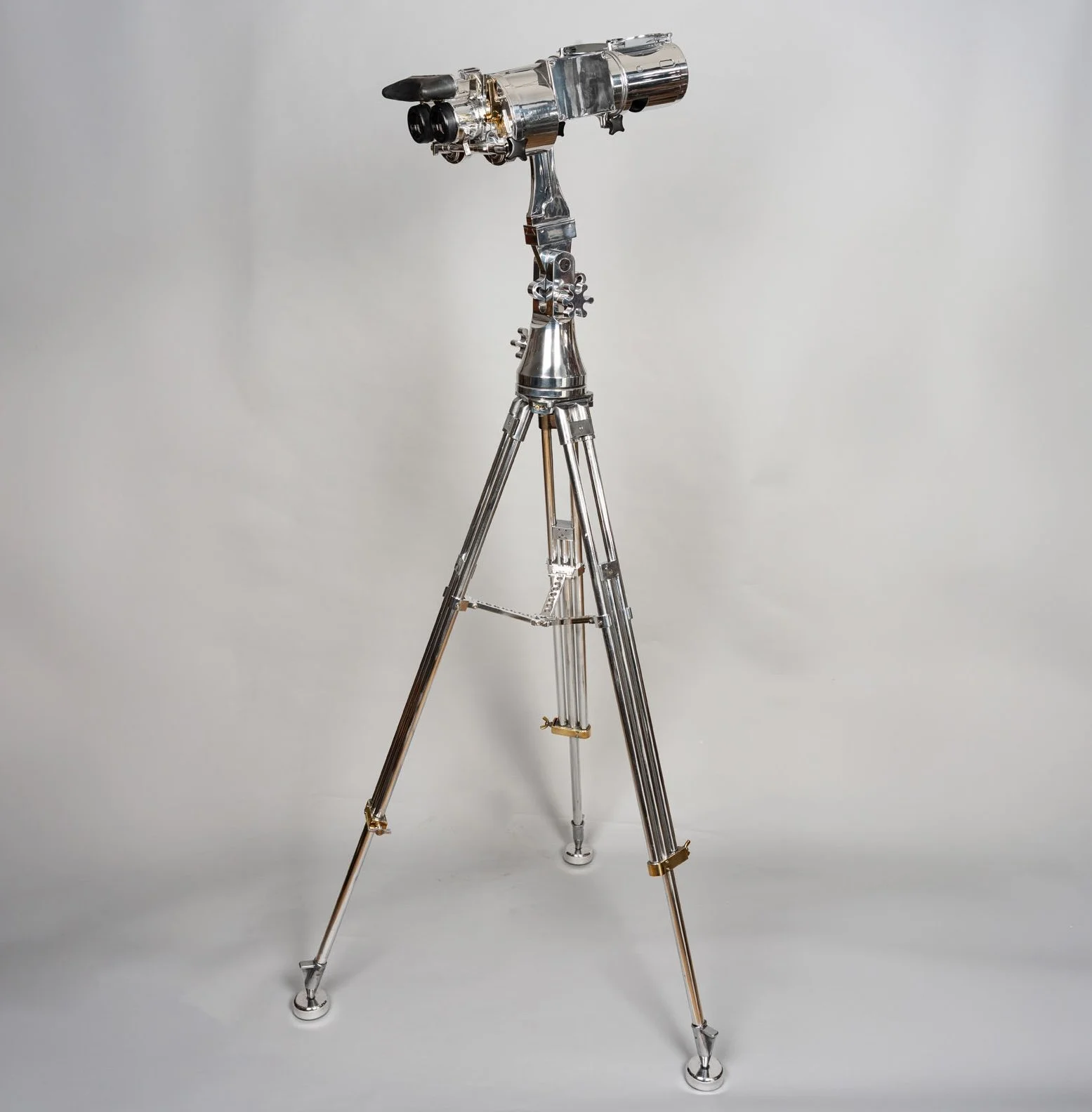
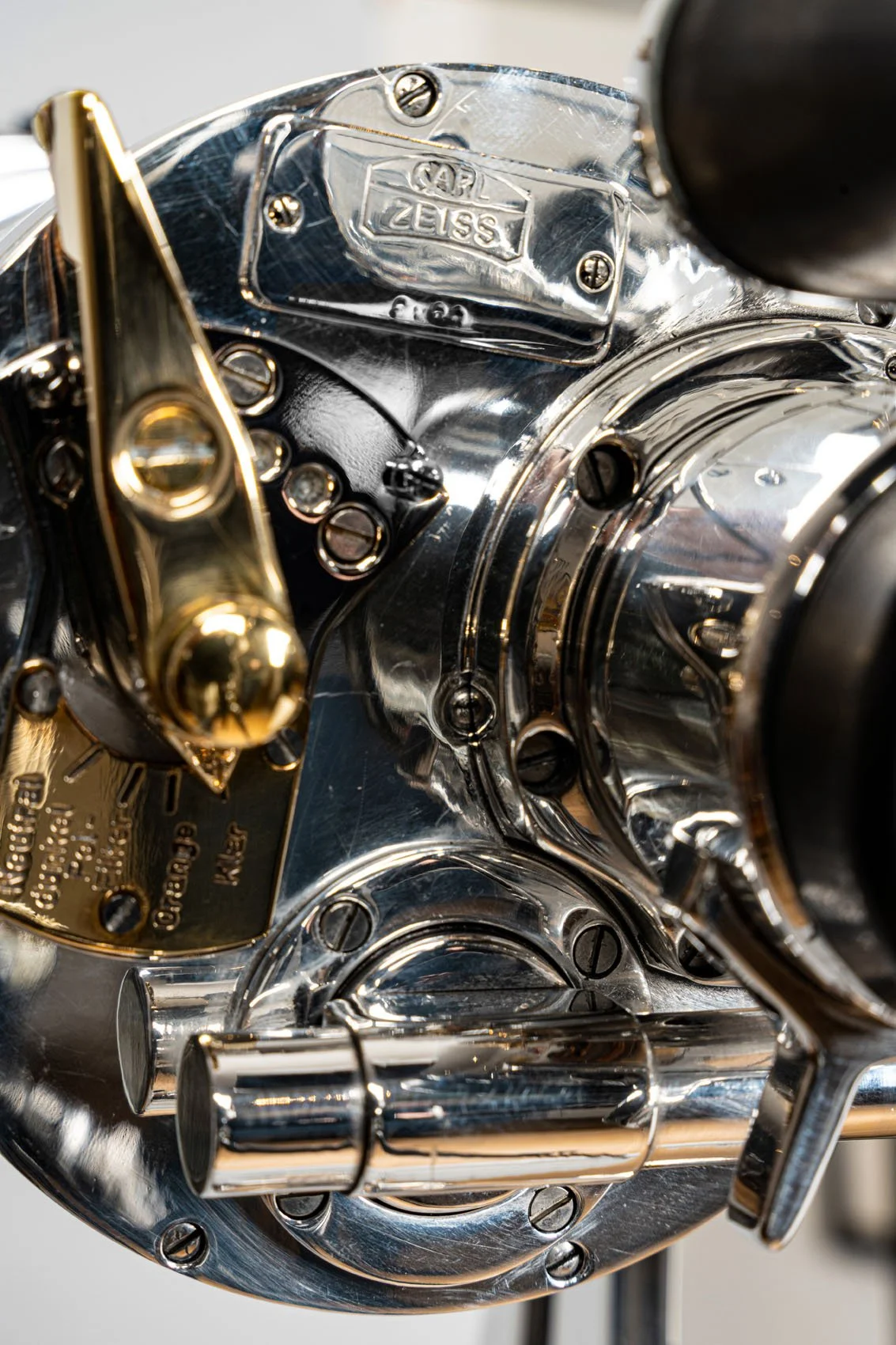
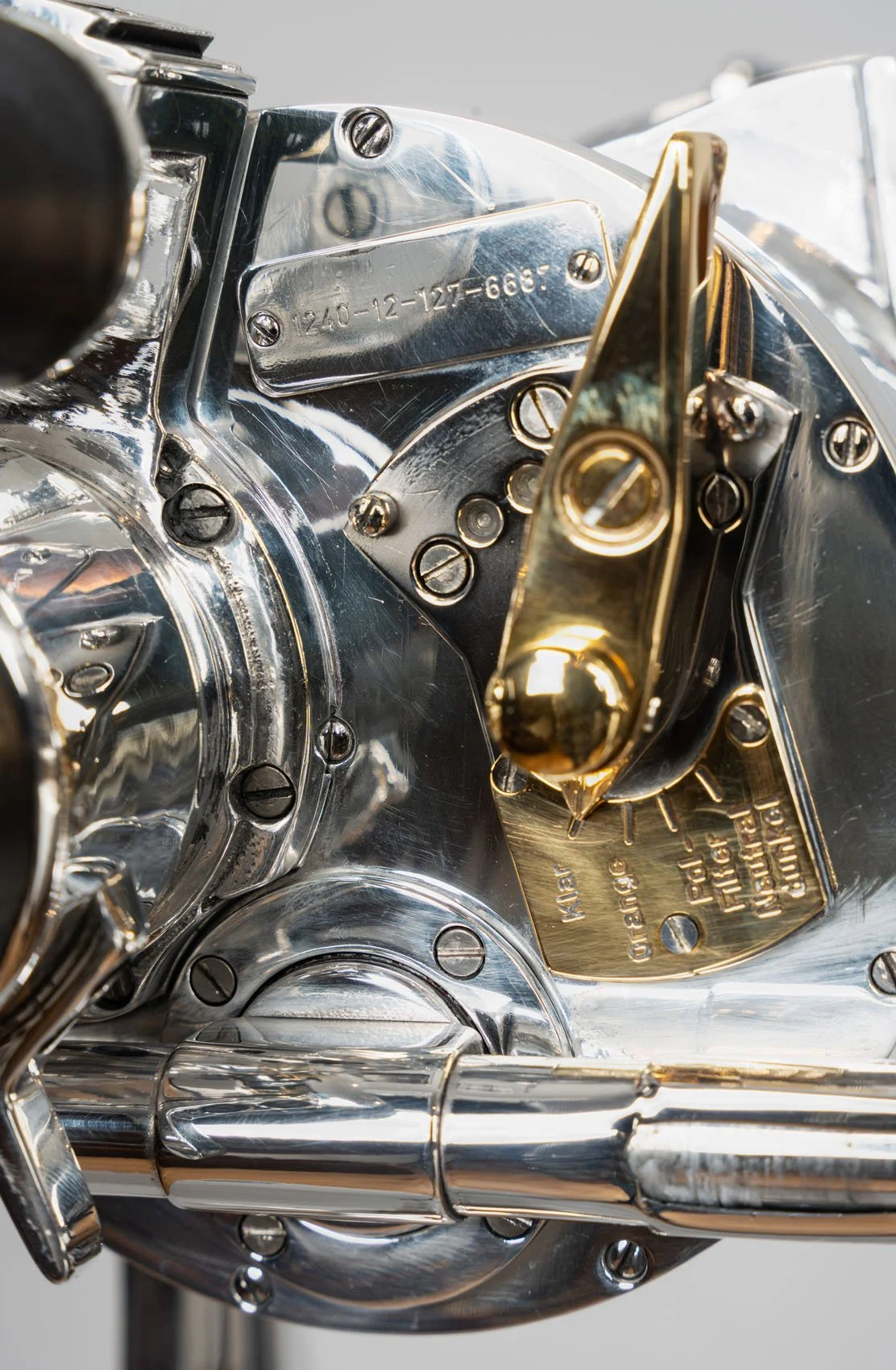
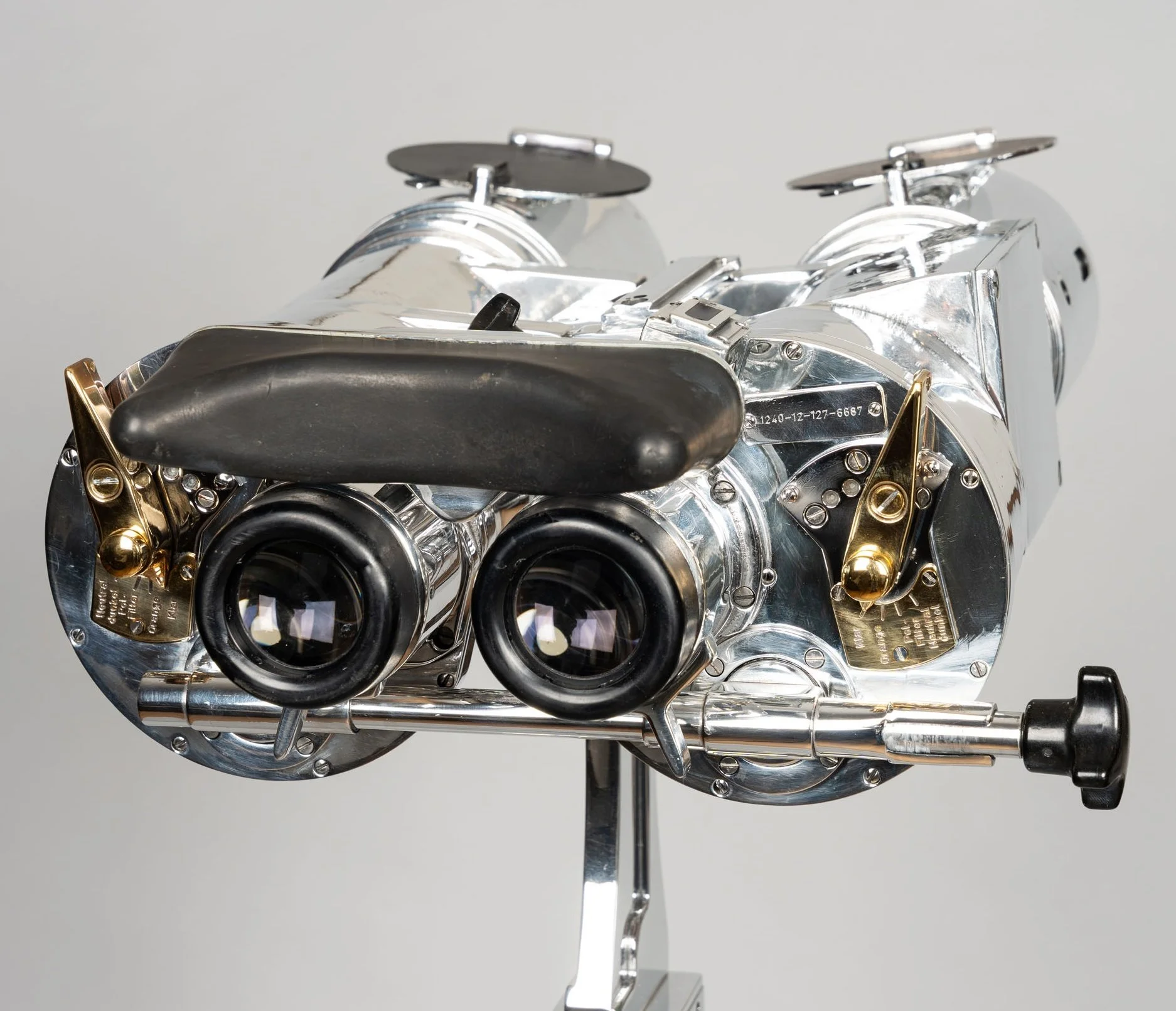
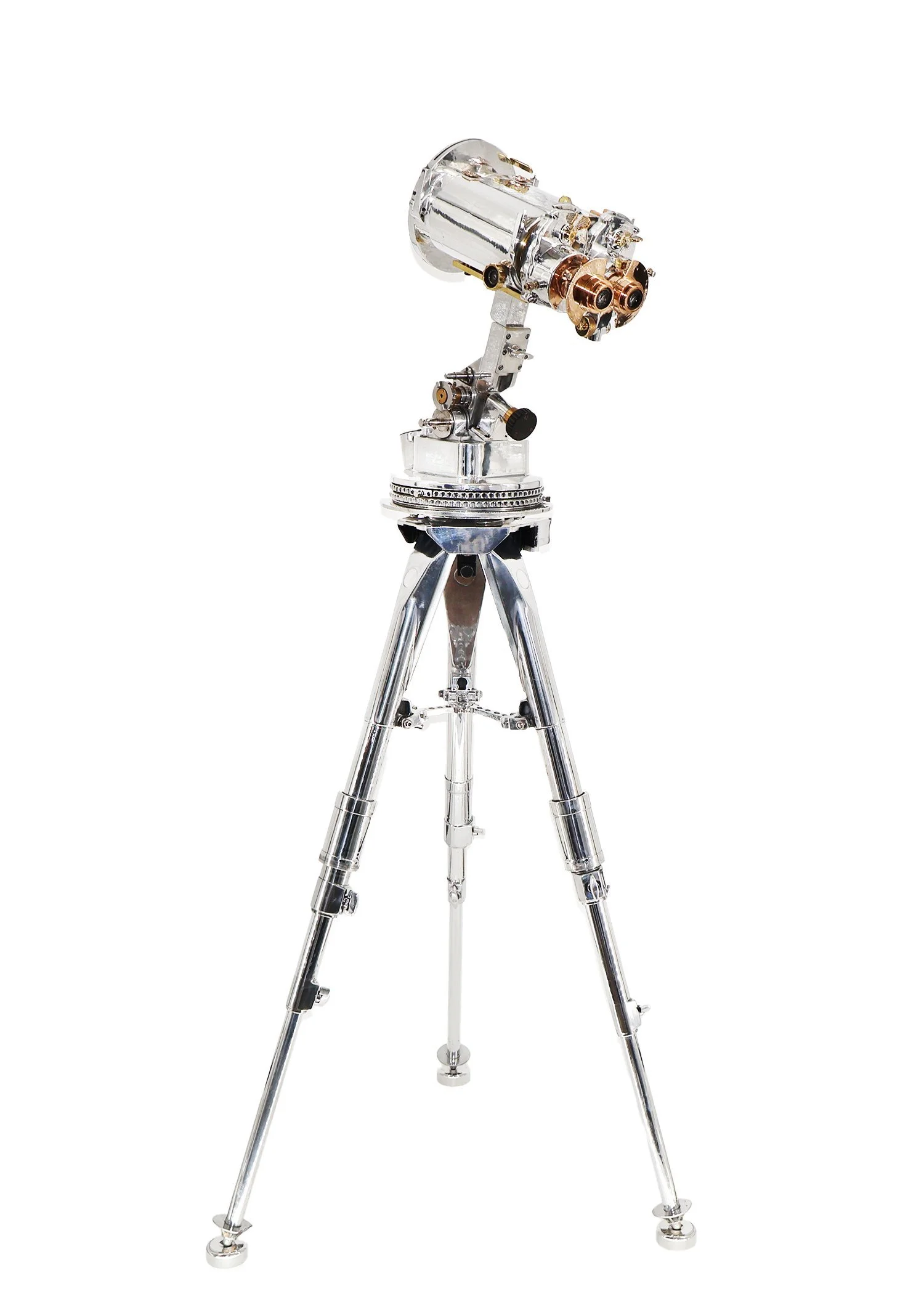
A pair of Fuji Meibo 15×80 big-eye binoculars by Fuji Photo Optical Co., Japan, 1950s, on an original 1970s field tripod. The data plate carries Fuji’s script Meibo trademark, the 15×80 designation with its 4-degree field, and the maker’s name in English with Made in Japan beneath.
The 15×80 is the classic Japanese big eye, the pattern carried aboard Imperial Navy ships in the Second World War and continued by Fuji after the war for maritime and coastal observation. At 15× magnification, the 80mm objectives deliver a steady, detailed image, equally suited to a horizon, a mountainside, or the night sky. Each objective gathers roughly three and a half times the light of a typical 42mm modern binocular, which is why these instruments are still sought out for their image.
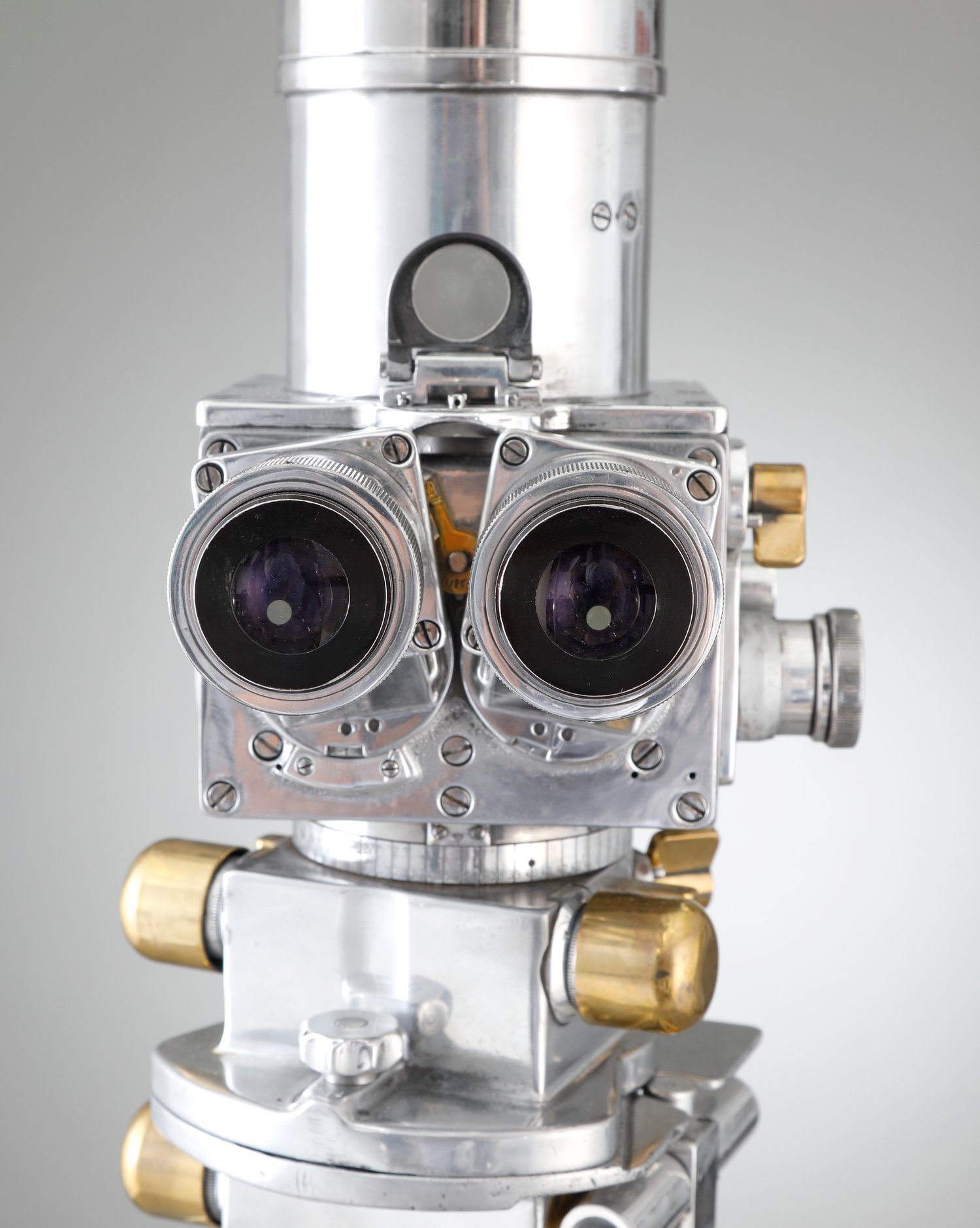
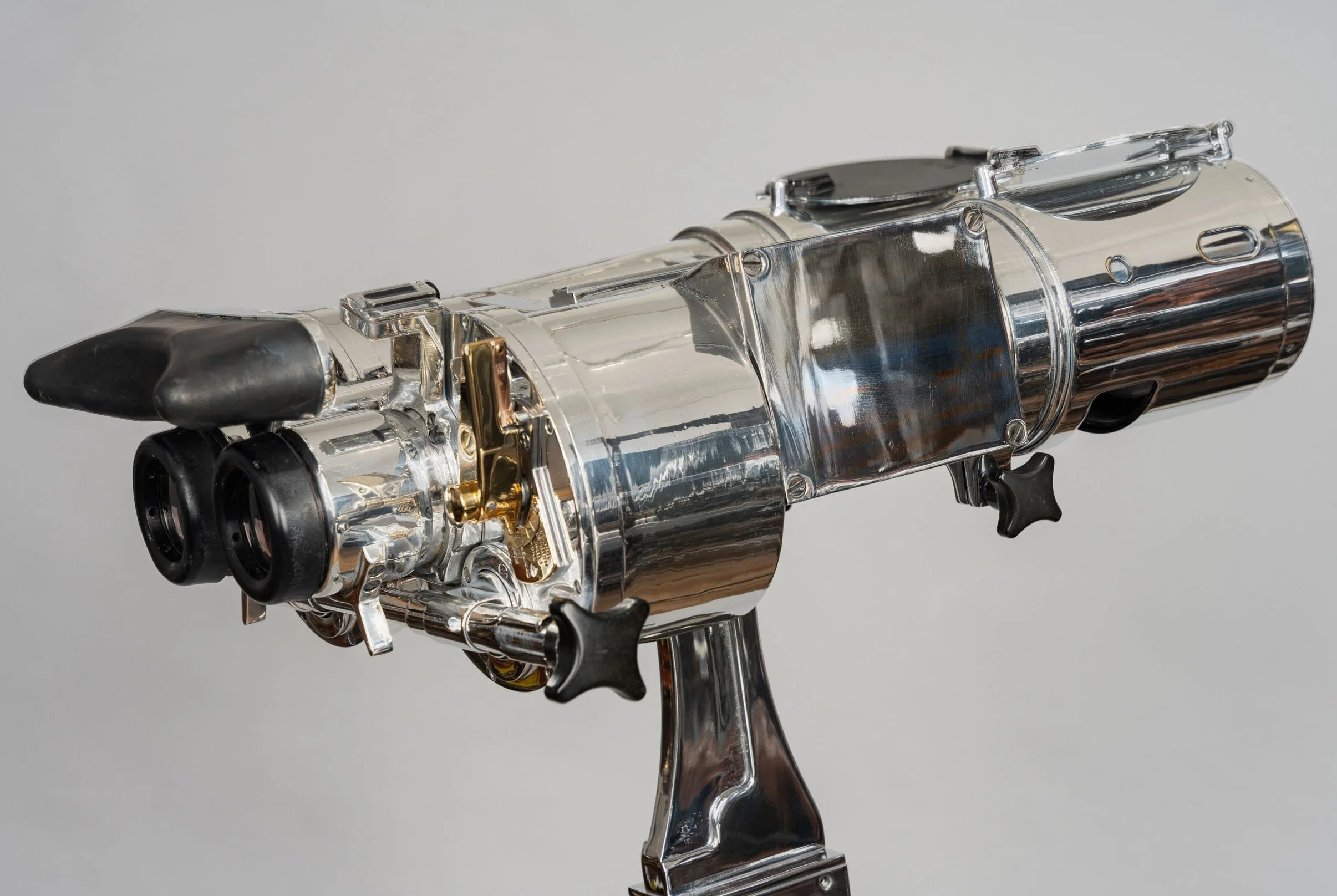
The straight eyepieces each carry a knurled focusing ring, and brass collars join the prism housings to the barrels. The glasses sit directly on a single polished pillar, with a black ball lever at the side and a brass knurled clamp on the column, and long sunshades run forward over the objectives. The tripod has telescoping legs, a folding spreader, foot treadles, and disc feet.
The binoculars have been fully restored. They were completely disassembled, the optical glass polished, the optics reset to factory standards, and the body hand-polished to a mirror finish. The optics are bright and clear, and focus and movement operate smoothly.

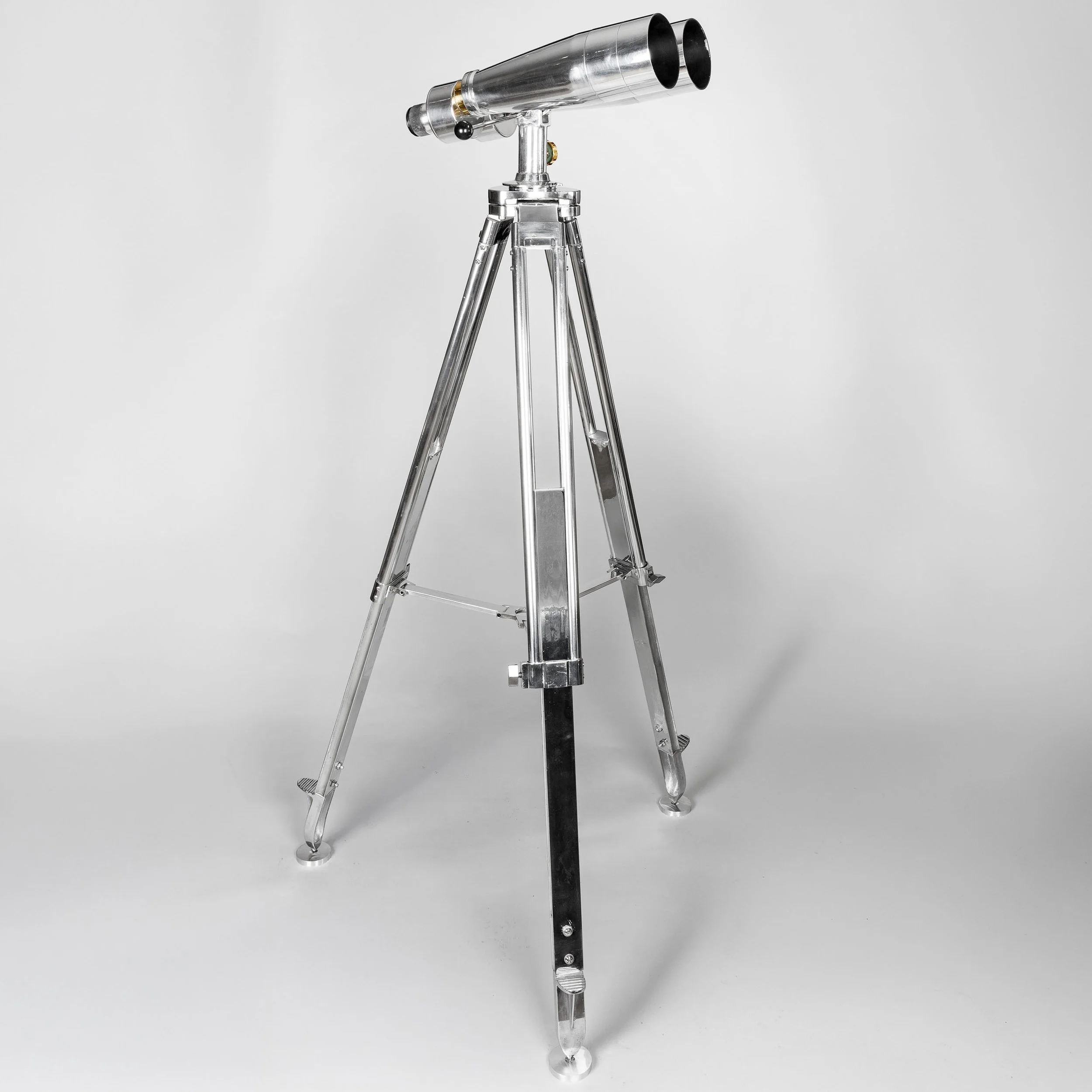 Image 1 of 4
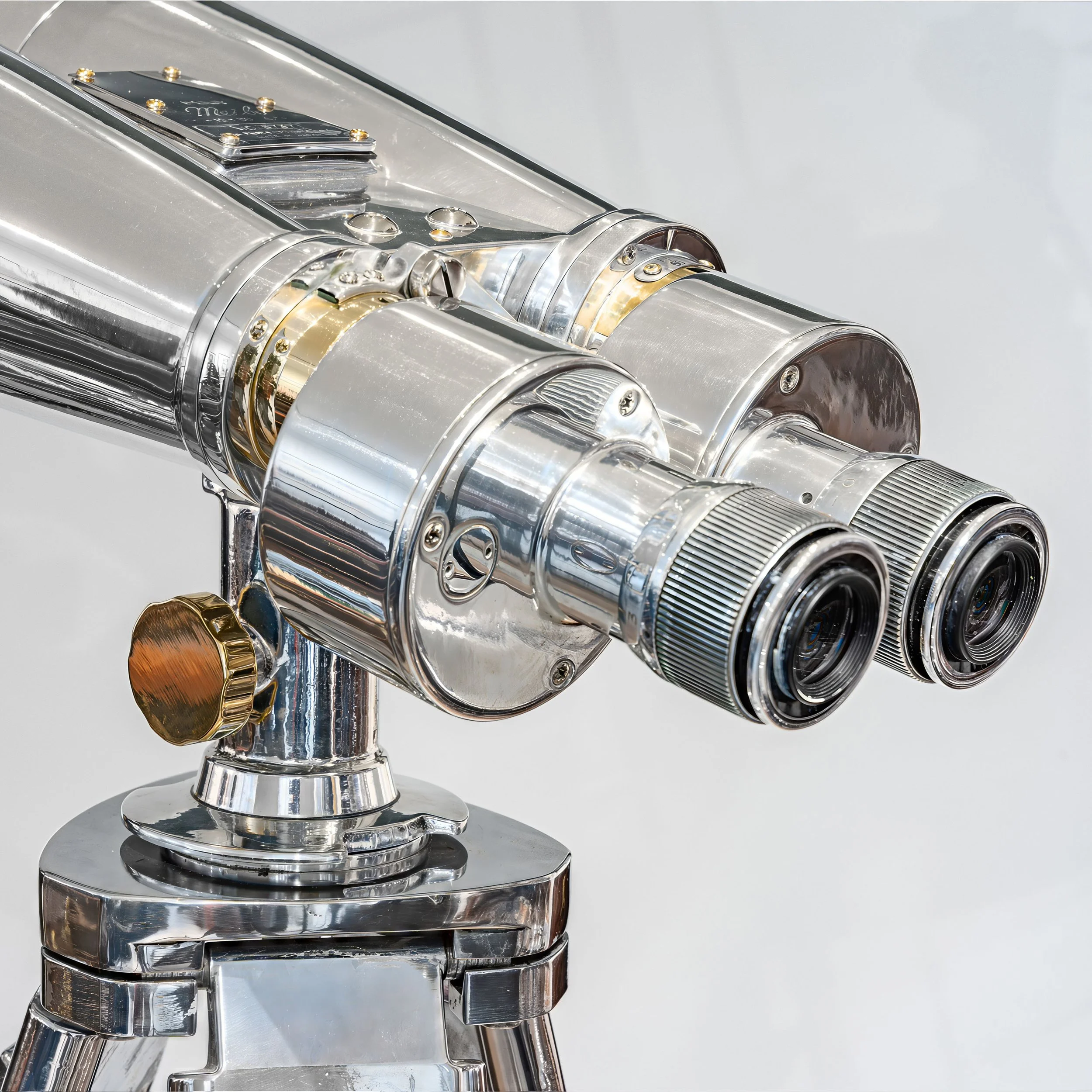 Image 2 of 4
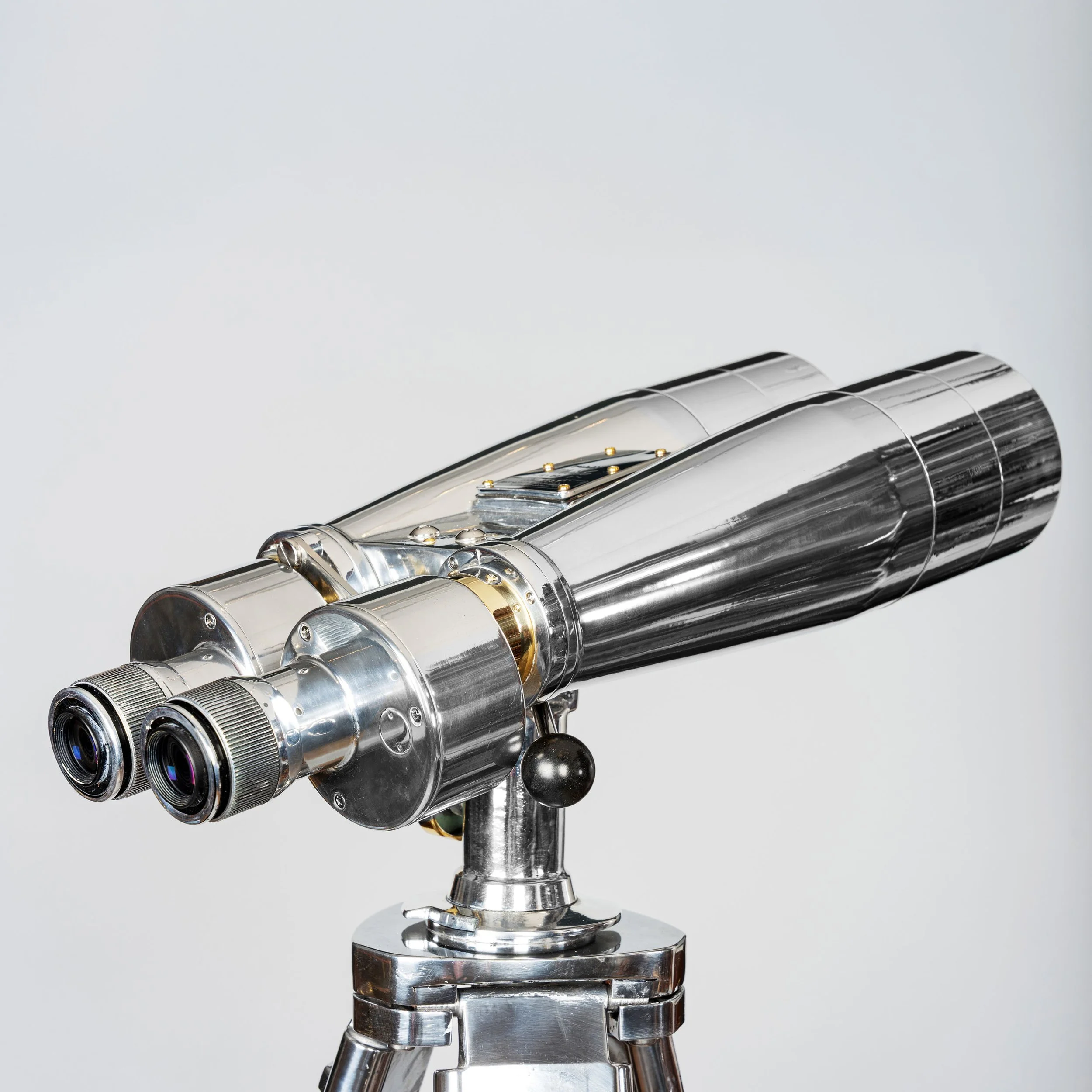 Image 3 of 4
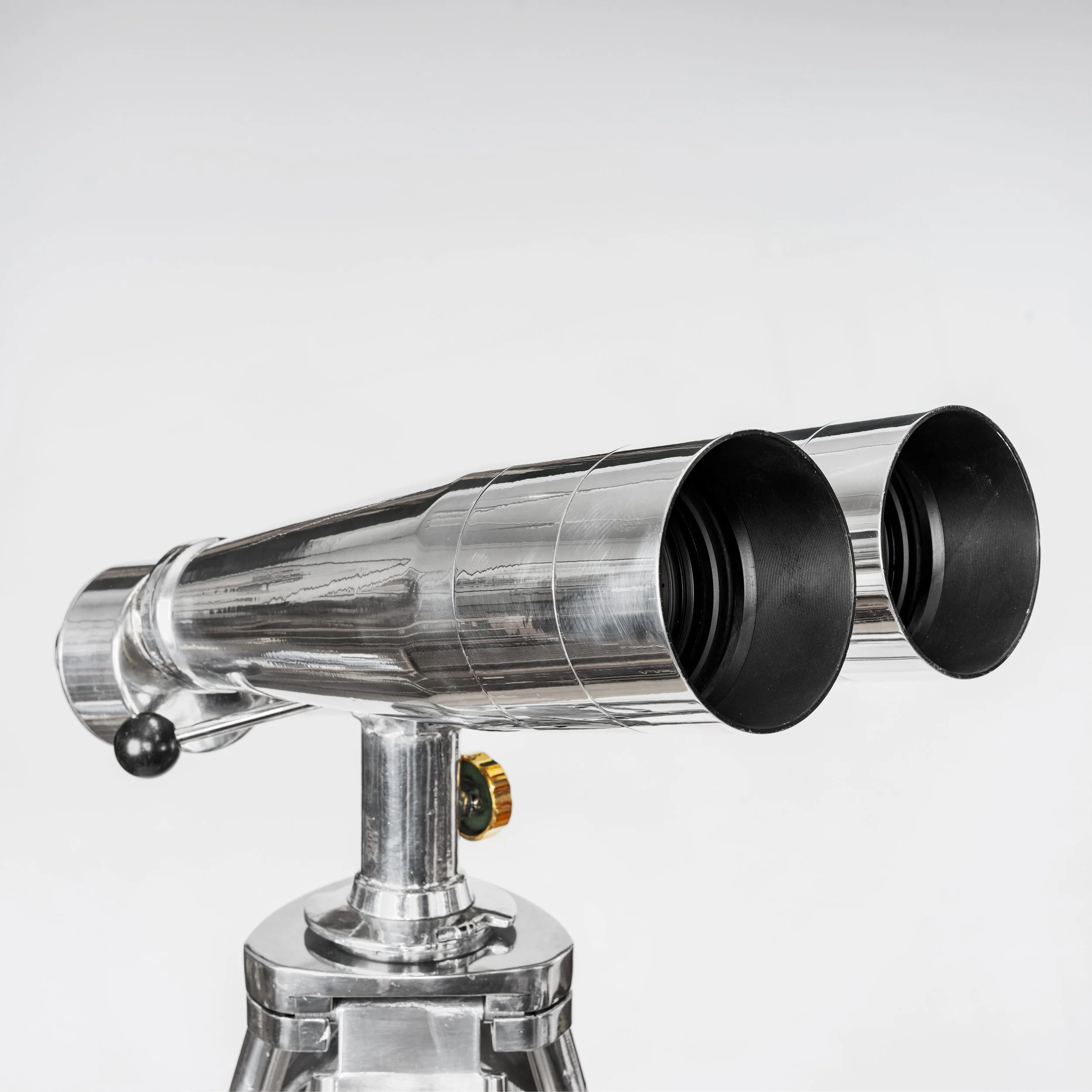 Image 4 of 4