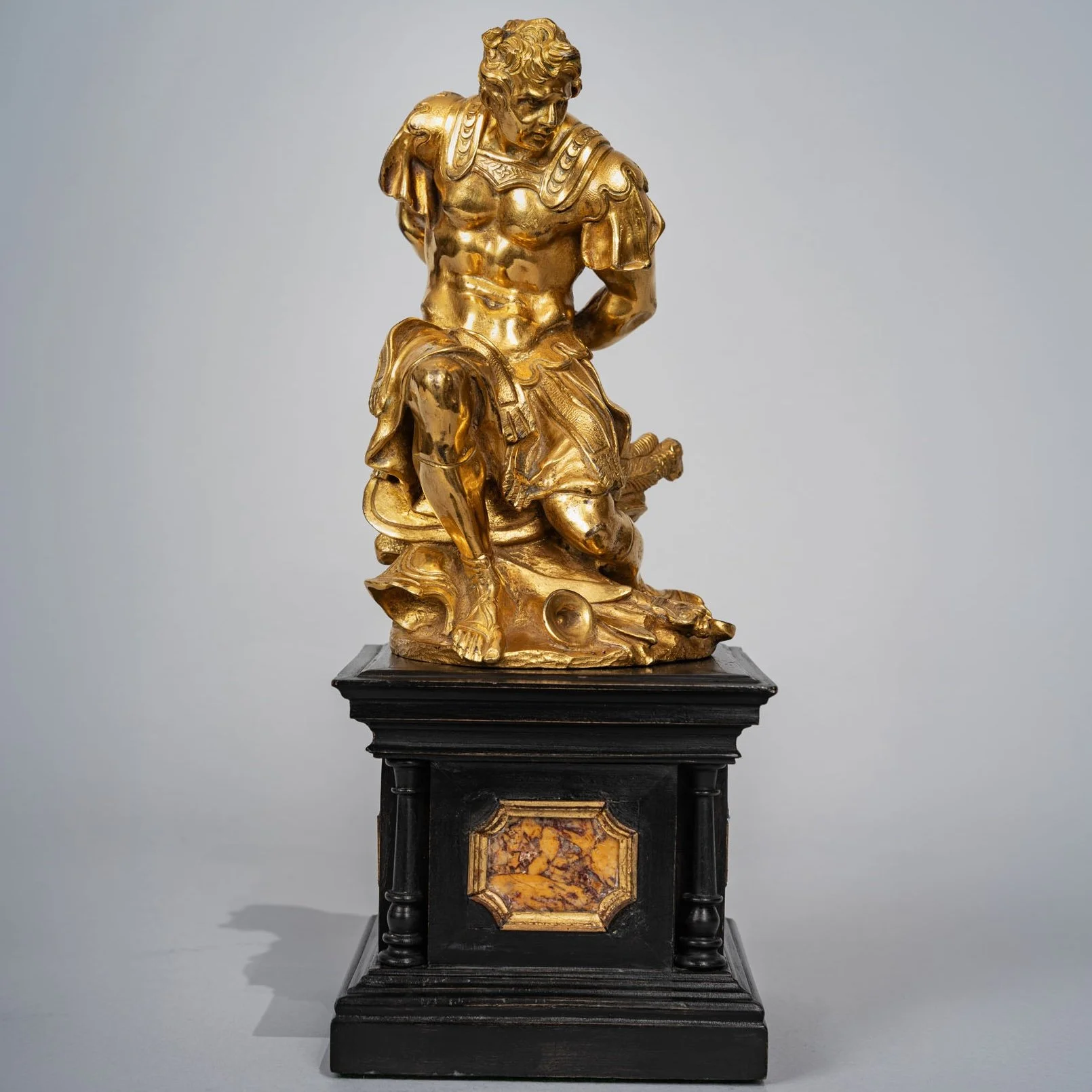
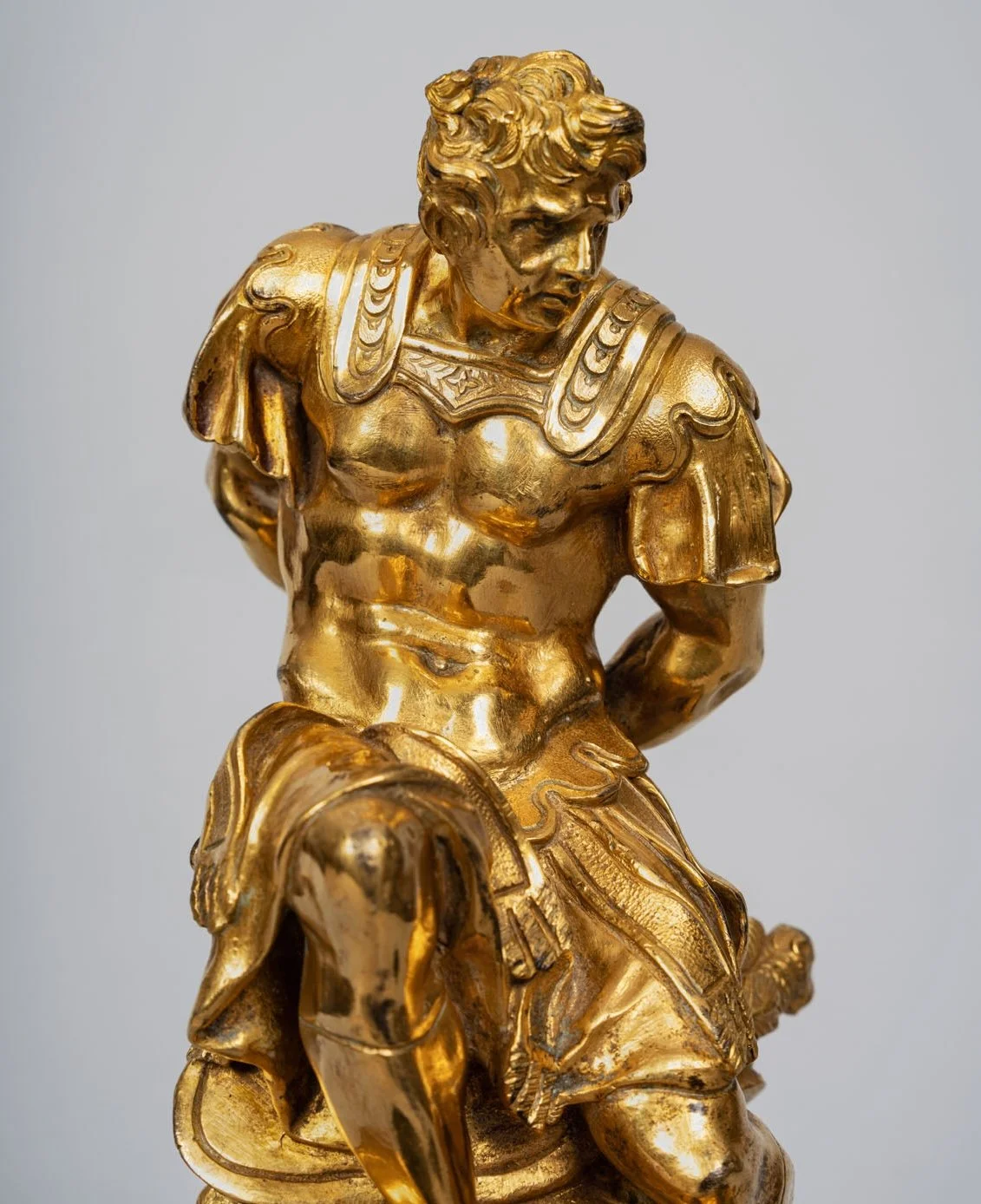
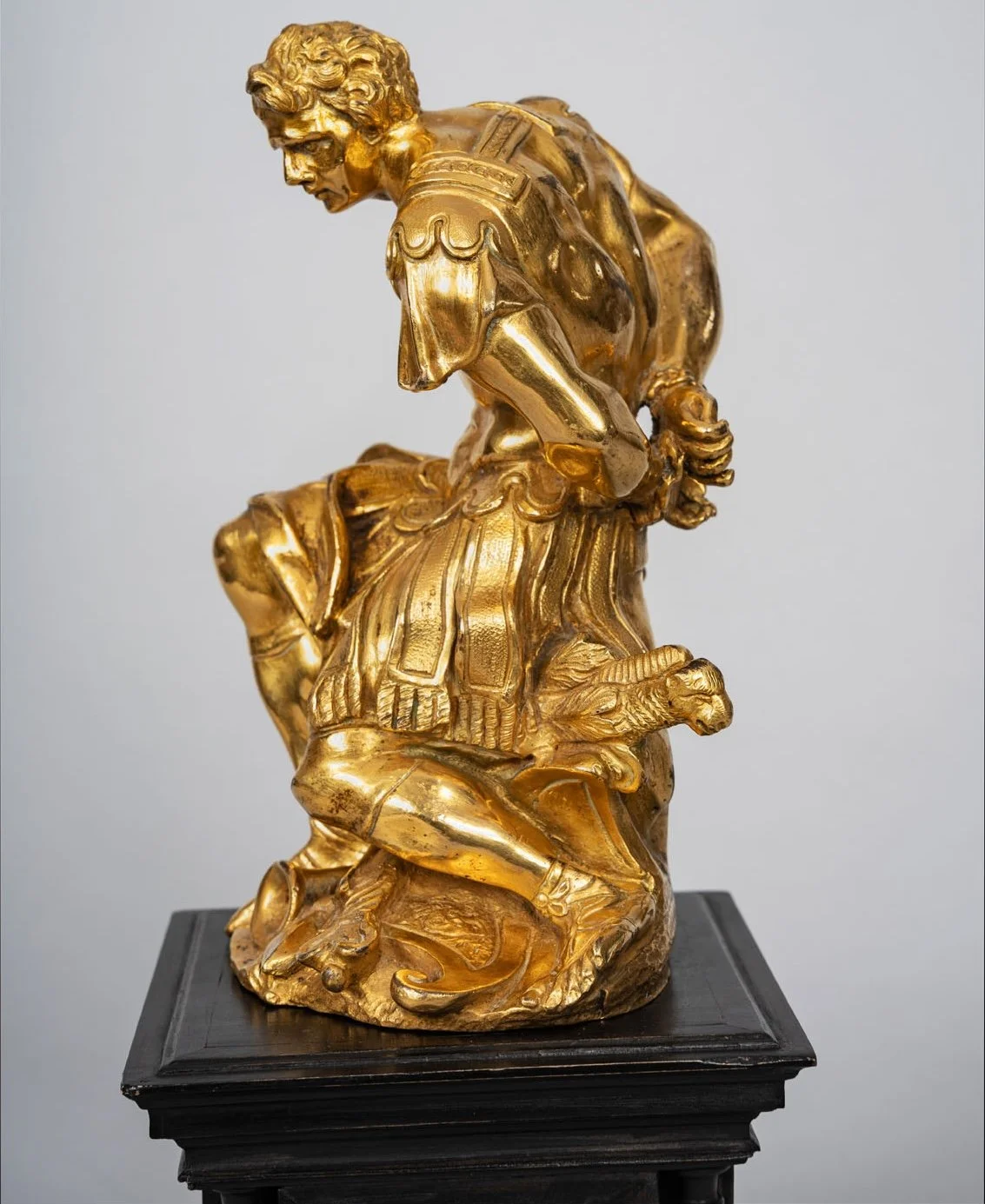
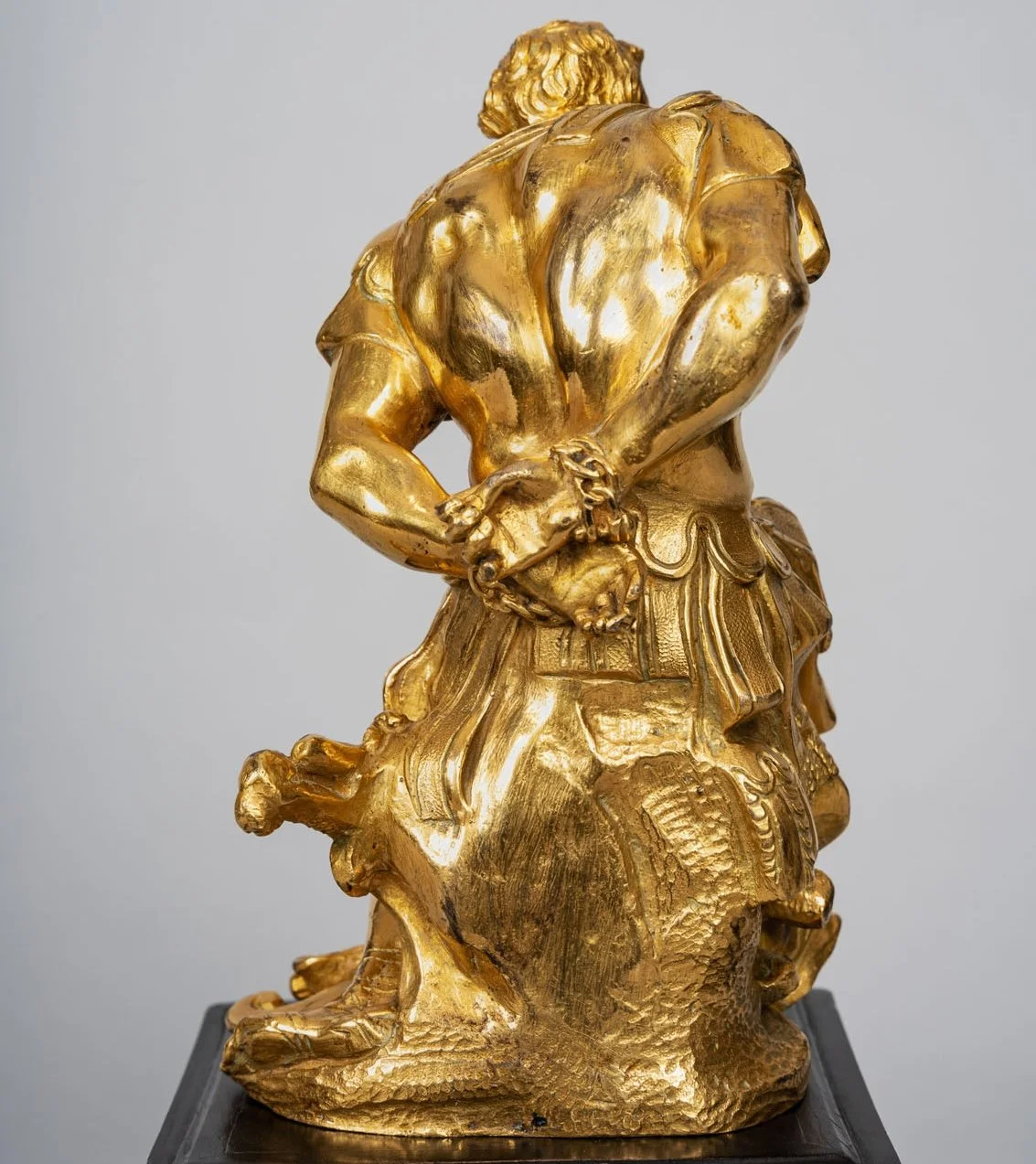
A large Italian bronze door knocker, or battente, of Venus Anadyomene, after a model of circa 1600, probably Venetian. The goddess is modeled fully in the round, one hand raised to her hair as she rises from the sea, drapery gathered at her hips, standing on a scrolled console above a bearded mask of Oceanus. Two dolphins rise at her sides, their arched bodies forming the loop of the knocker and their tails breaking into acanthus. Measuring 17 1/2 inches high by 14 inches wide and weighing approximately 38 pounds, it is a piece of sculpture that has spent its life on a door.
The construction is that of the earliest examples of the type. Figure and frame were cast together in a single, thick-walled pour by the lost-wax process, with the interior left open and irregular. The forged iron striker was set into the mould and the bronze poured around it, so the knocker was conceived as a working object from the wax stage, and the striker head, forged square, has been rounded by years of use against the strike boss on the reverse. The chasing is selective in the seventeenth-century manner: the hair worked in fine detail, the fingers and toes finished down to their nails, other passages left as cast. The cast is, on the evidence of its construction, of the seventeenth or early eighteenth century.
The surface tells the same story. The black patina is rubbed through to a warm bronze exactly where hands have gripped it for generations, along the goddess's leg and on the noses of the dolphins, while the reverse carries the green corrosion and iron staining of long service out of doors. Traces of old door paint survive in the crevices of the pivot lugs, left by painters working around a knocker that was never taken down, and the pivot bolt was replaced later, as fittings on a door in daily use are.
A cast of this model hung on the doors of the Hotel Porges in Paris, the mansion built in 1892 for Jules Porges, the diamond magnate whose Kimberley mining company was absorbed into De Beers in the great amalgamation of 1889. The house was built to hold his collection, its gallery hung with Rembrandt, Rubens, Van Dyck and Frans Hals, with Renaissance bronzes and enamels beneath them, and it was on the doors of that house that Eugène Atget photographed the model around 1901, paired with a pendant Neptune on the opposite leaf. The type belongs to the great tradition of figural knockers made for Venetian palace doors in the decades around 1600, when the finest were treated as sculpture and passed among collections accordingly.
A large Italian bronze door knocker, or battente, of Venus Anadyomene, after a model of circa 1600, probably Venetian. The goddess is modeled fully in the round, one hand raised to her hair as she rises from the sea, drapery gathered at her hips, standing on a scrolled console above a bearded mask of Oceanus. Two dolphins rise at her sides, their arched bodies forming the loop of the knocker and their tails breaking into acanthus. Measuring 17 1/2 inches high by 14 inches wide and weighing approximately 38 pounds, it is a piece of sculpture that has spent its life on a door.
The construction is that of the earliest examples of the type. Figure and frame were cast together in a single, thick-walled pour by the lost-wax process, with the interior left open and irregular. The forged iron striker was set into the mould and the bronze poured around it, so the knocker was conceived as a working object from the wax stage, and the striker head, forged square, has been rounded by years of use against the strike boss on the reverse. The chasing is selective in the seventeenth-century manner: the hair worked in fine detail, the fingers and toes finished down to their nails, other passages left as cast. The cast is, on the evidence of its construction, of the seventeenth or early eighteenth century.
The surface tells the same story. The black patina is rubbed through to a warm bronze exactly where hands have gripped it for generations, along the goddess's leg and on the noses of the dolphins, while the reverse carries the green corrosion and iron staining of long service out of doors. Traces of old door paint survive in the crevices of the pivot lugs, left by painters working around a knocker that was never taken down, and the pivot bolt was replaced later, as fittings on a door in daily use are.
A cast of this model hung on the doors of the Hotel Porges in Paris, the mansion built in 1892 for Jules Porges, the diamond magnate whose Kimberley mining company was absorbed into De Beers in the great amalgamation of 1889. The house was built to hold his collection, its gallery hung with Rembrandt, Rubens, Van Dyck and Frans Hals, with Renaissance bronzes and enamels beneath them, and it was on the doors of that house that Eugène Atget photographed the model around 1901, paired with a pendant Neptune on the opposite leaf. The type belongs to the great tradition of figural knockers made for Venetian palace doors in the decades around 1600, when the finest were treated as sculpture and passed among collections accordingly.

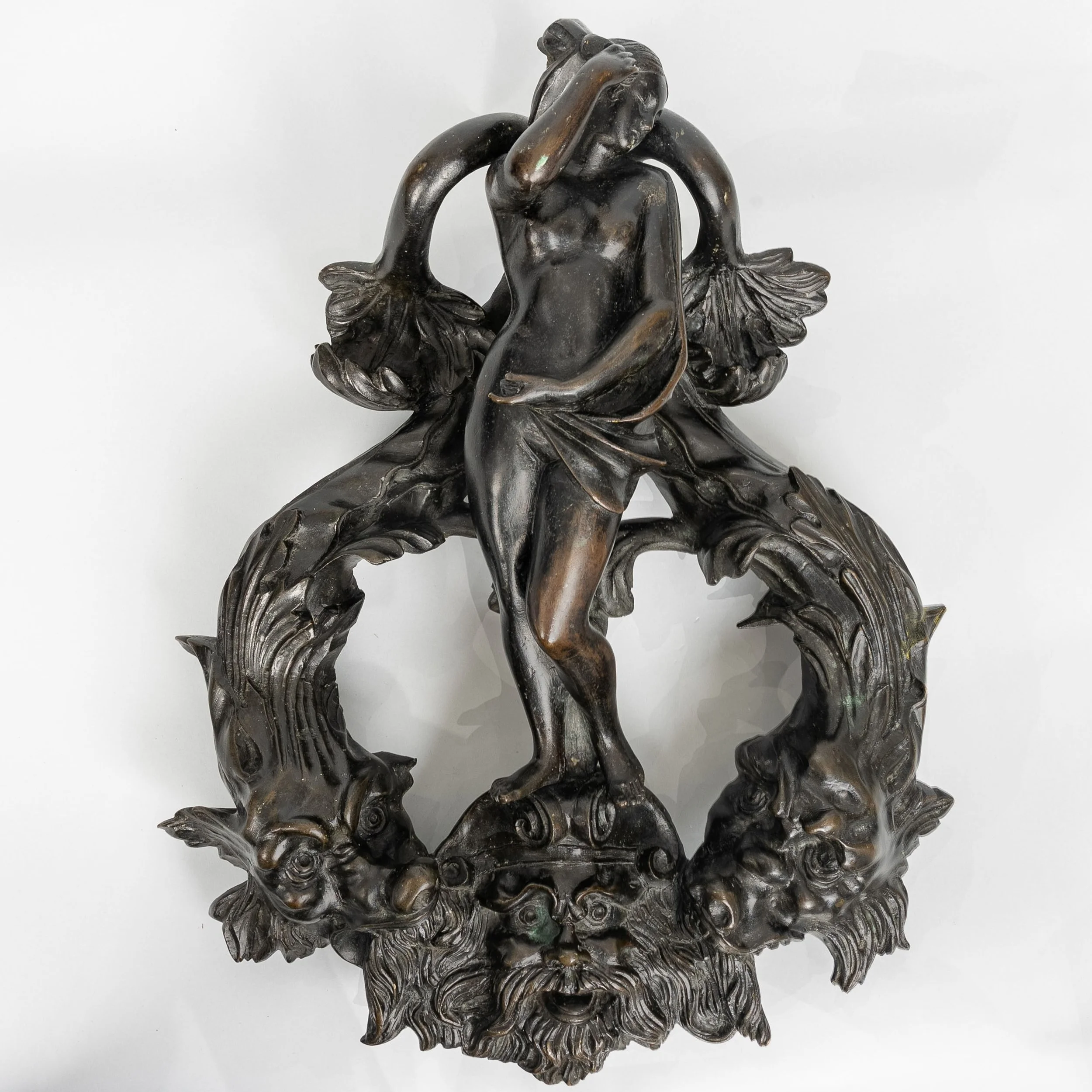 Image 1 of 7
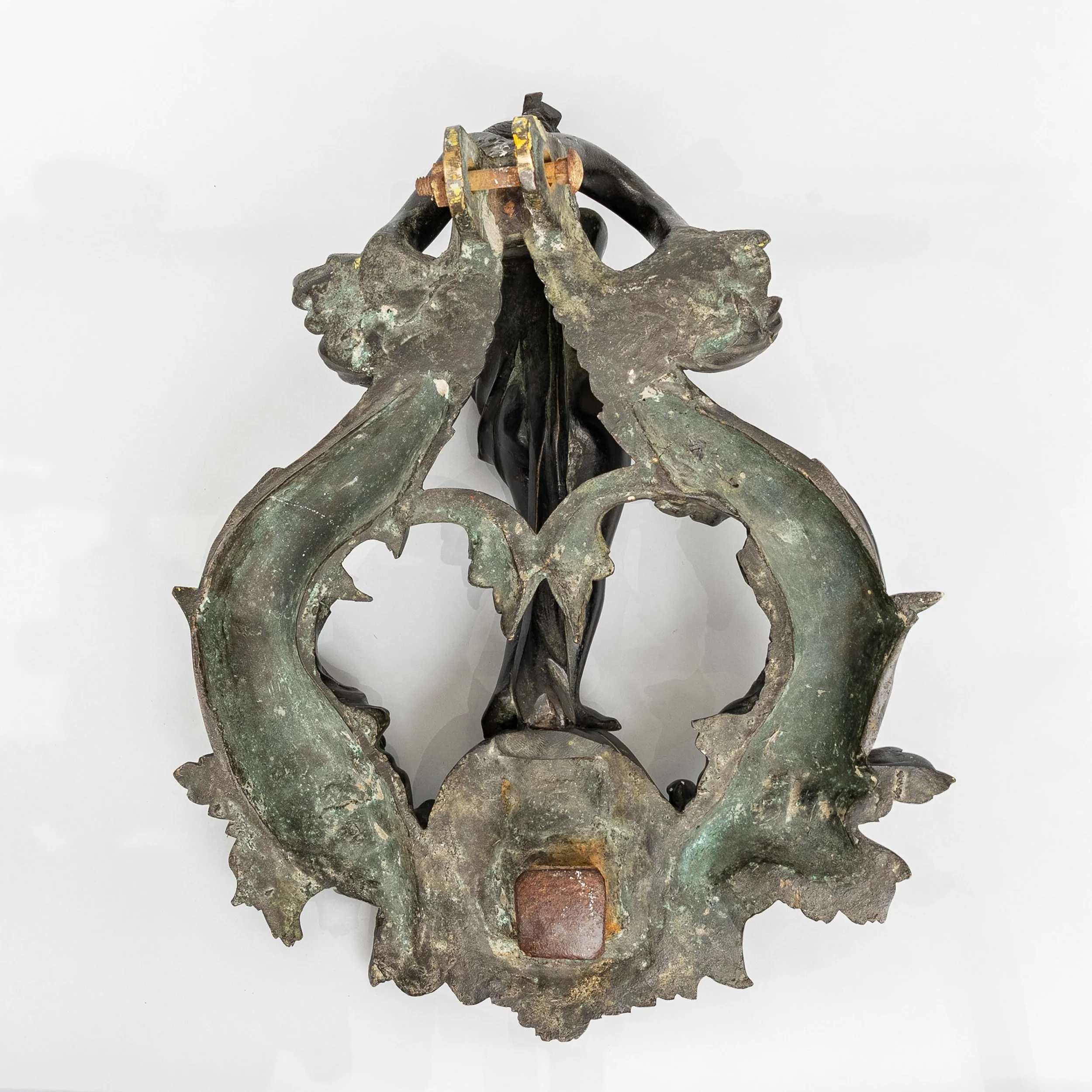 Image 2 of 7
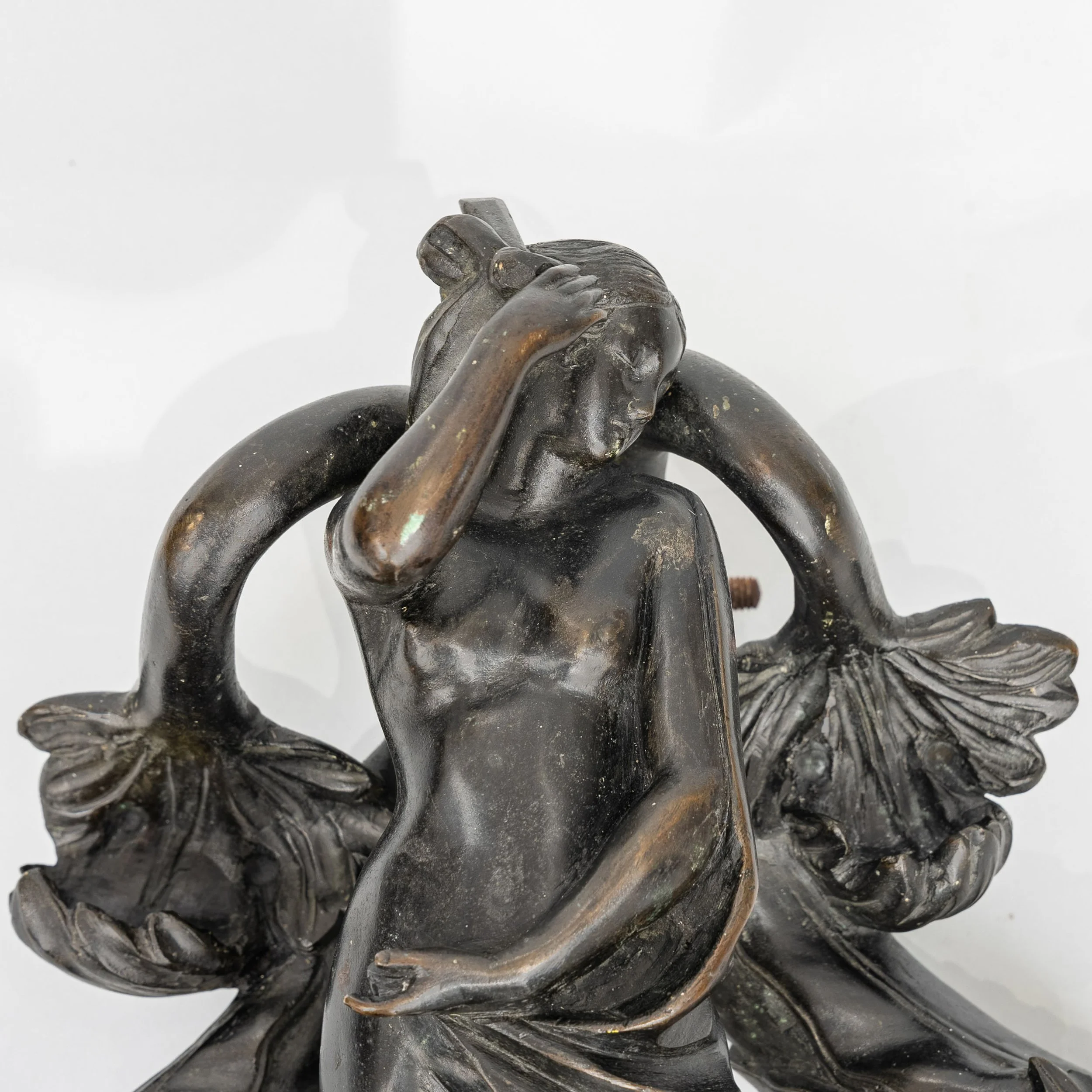 Image 3 of 7
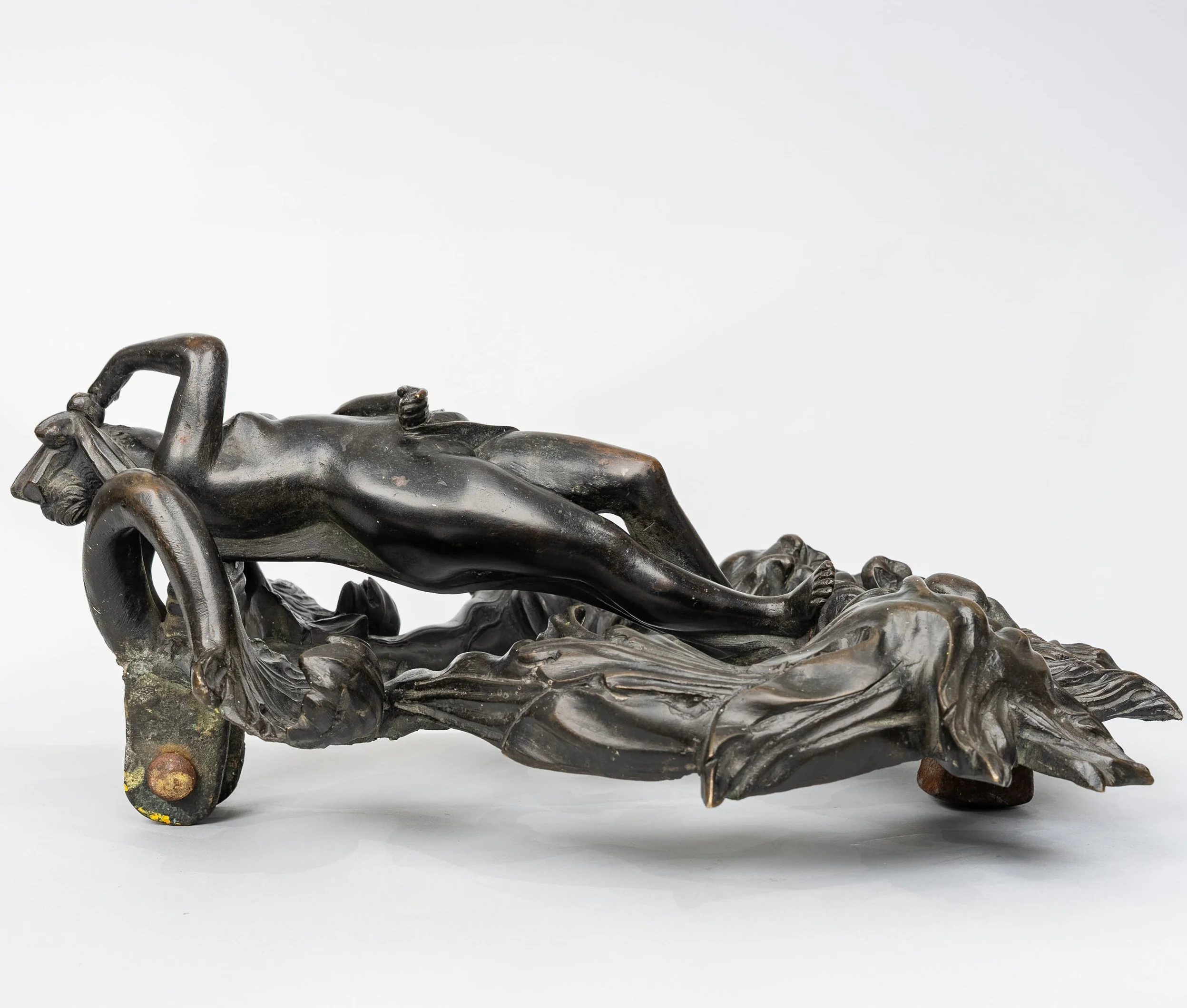 Image 4 of 7
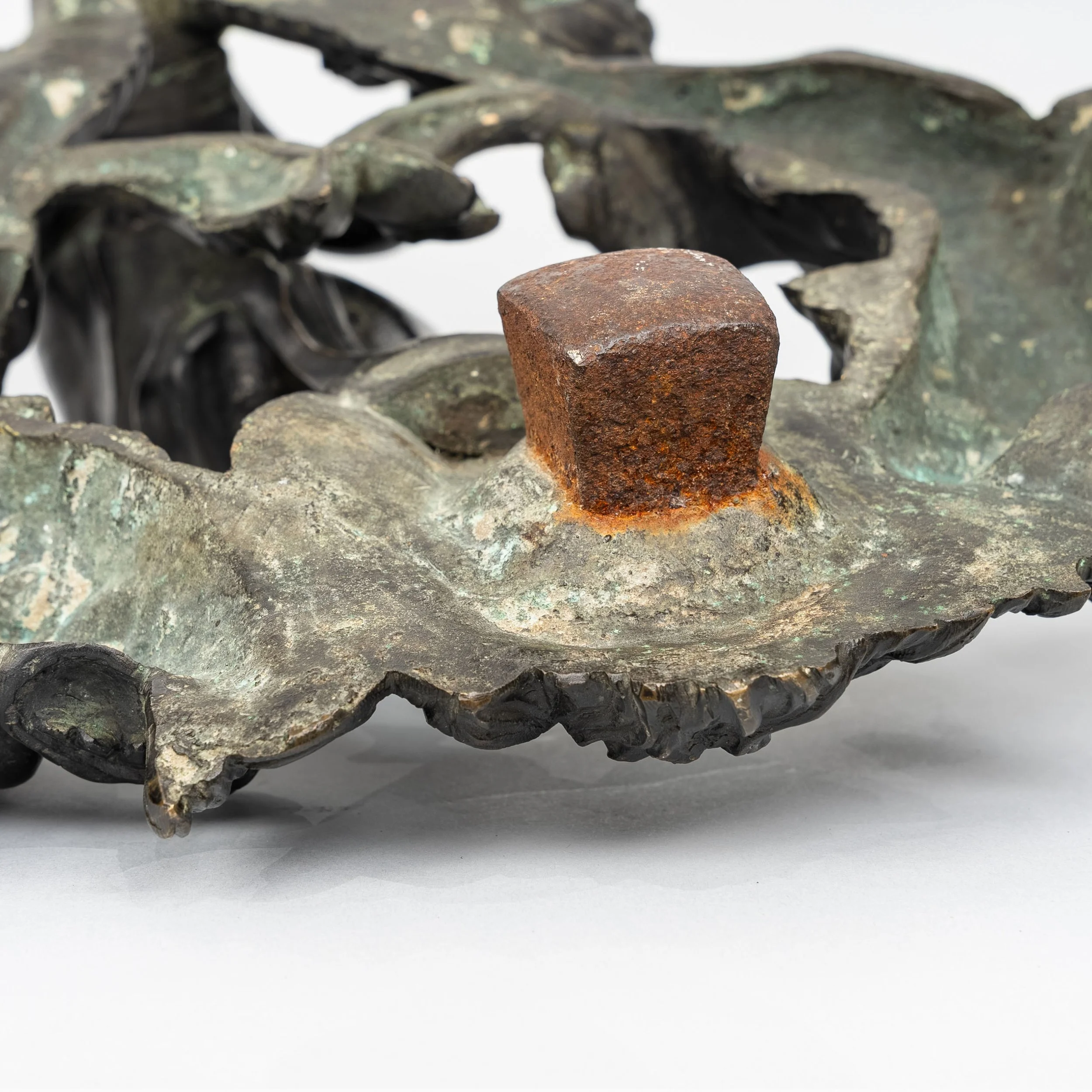 Image 5 of 7
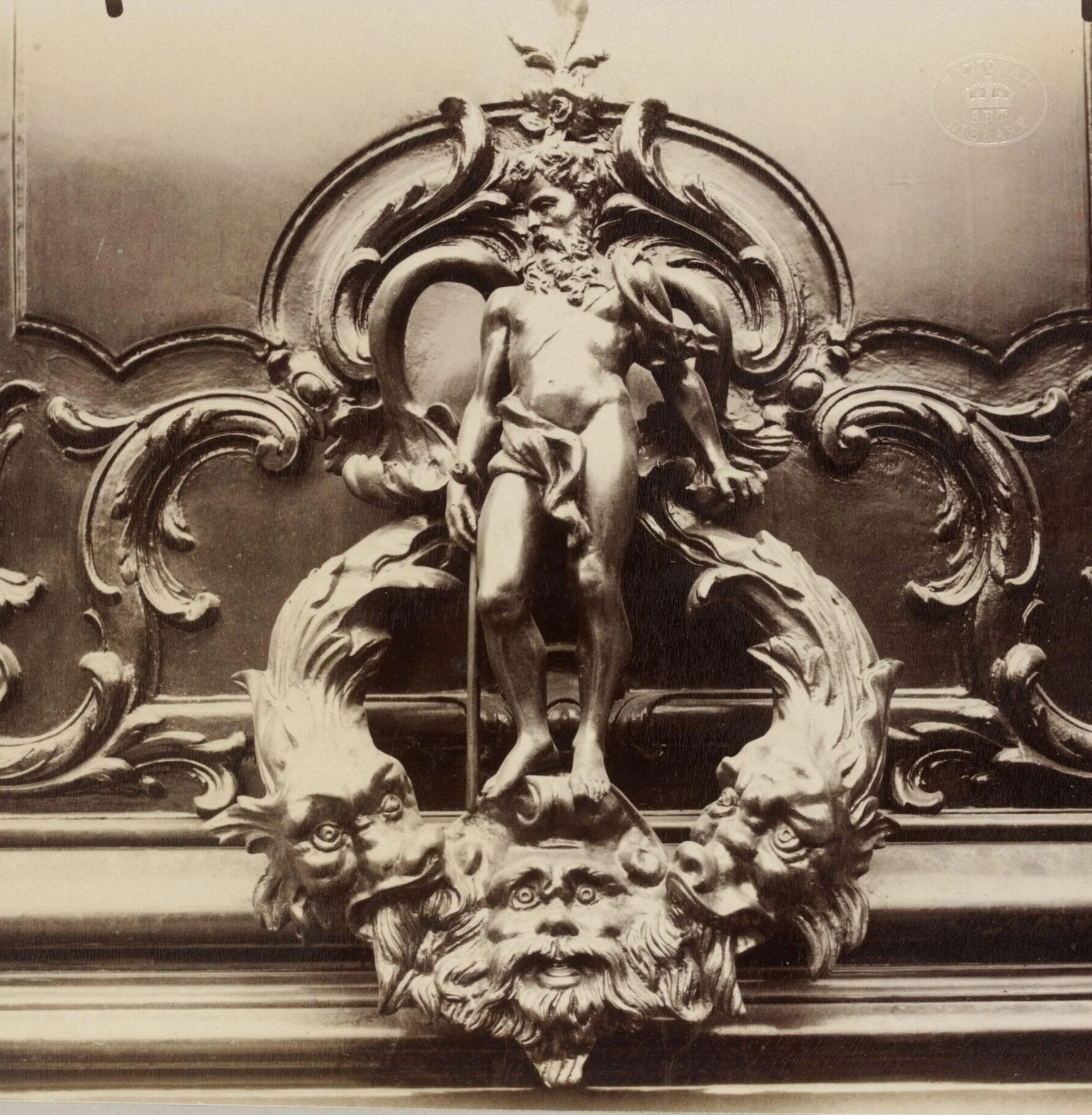 Image 6 of 7
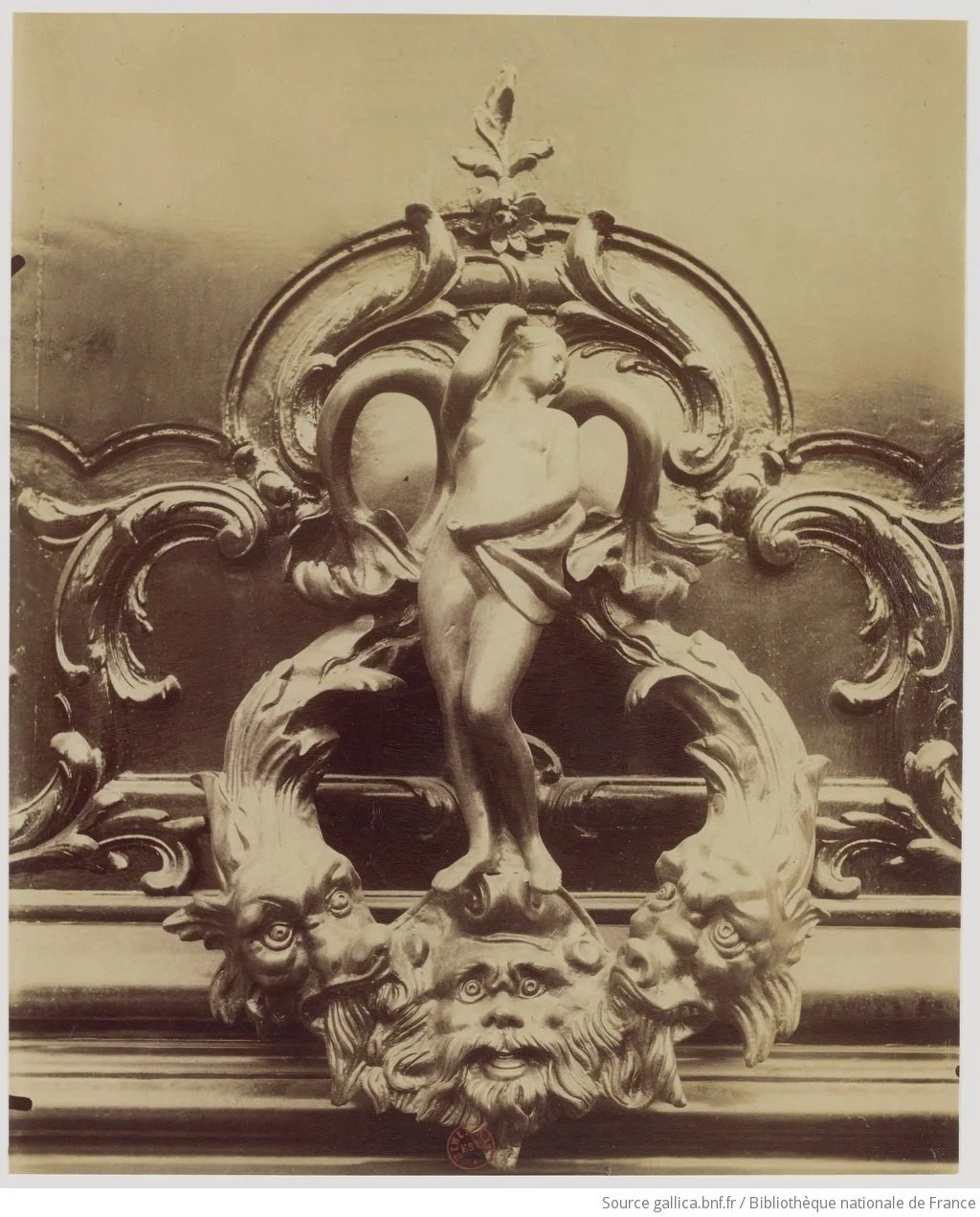 Image 7 of 7