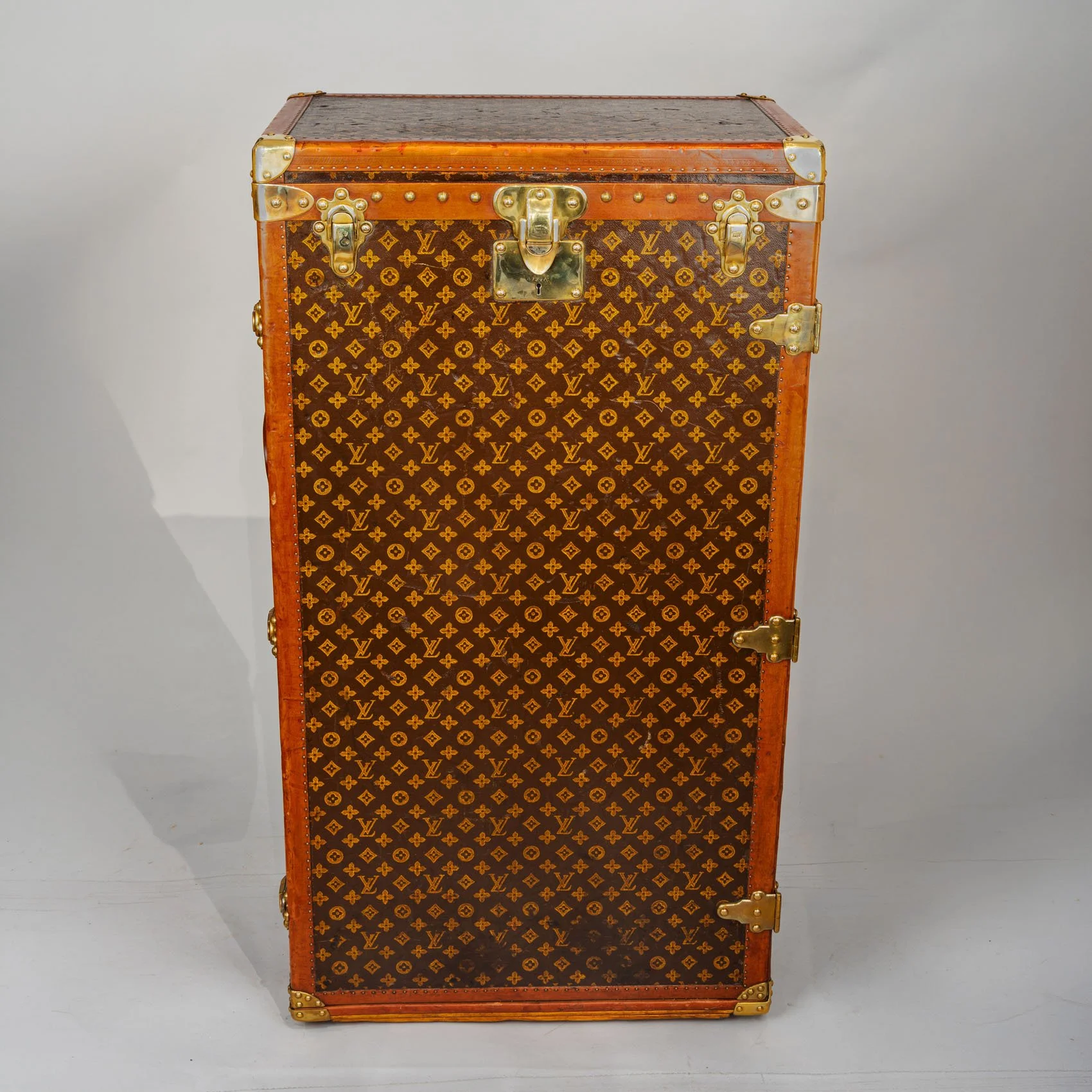
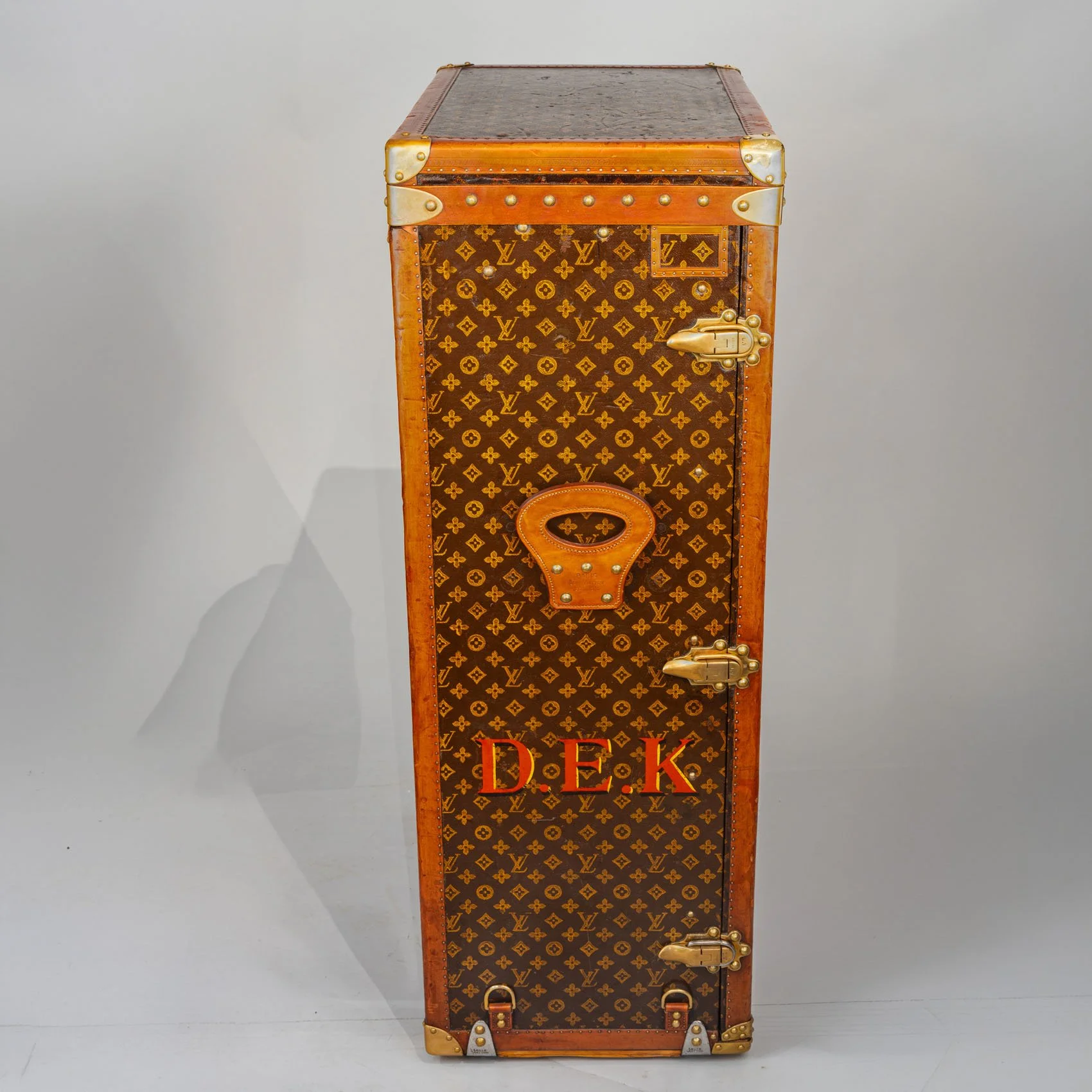
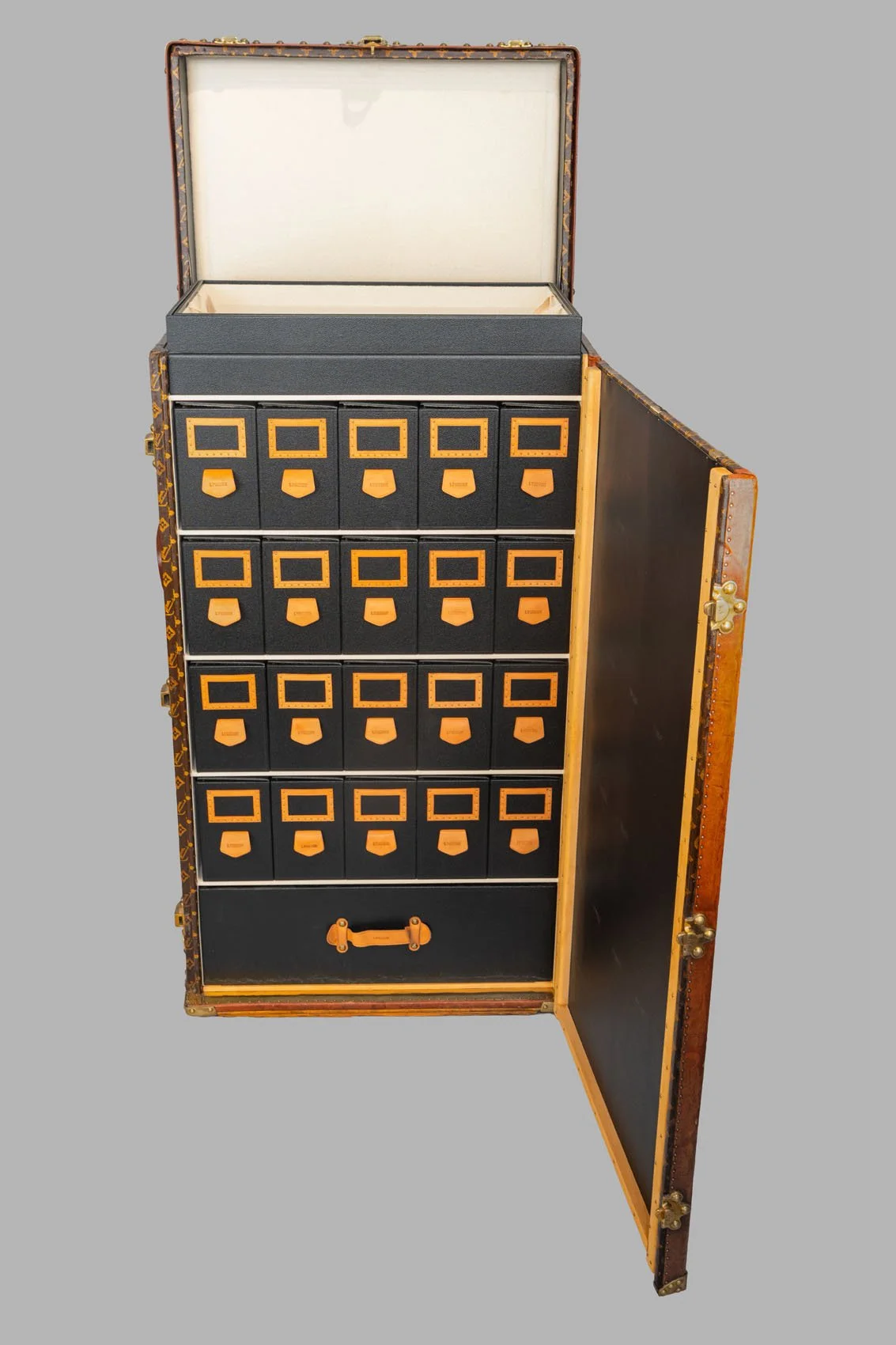
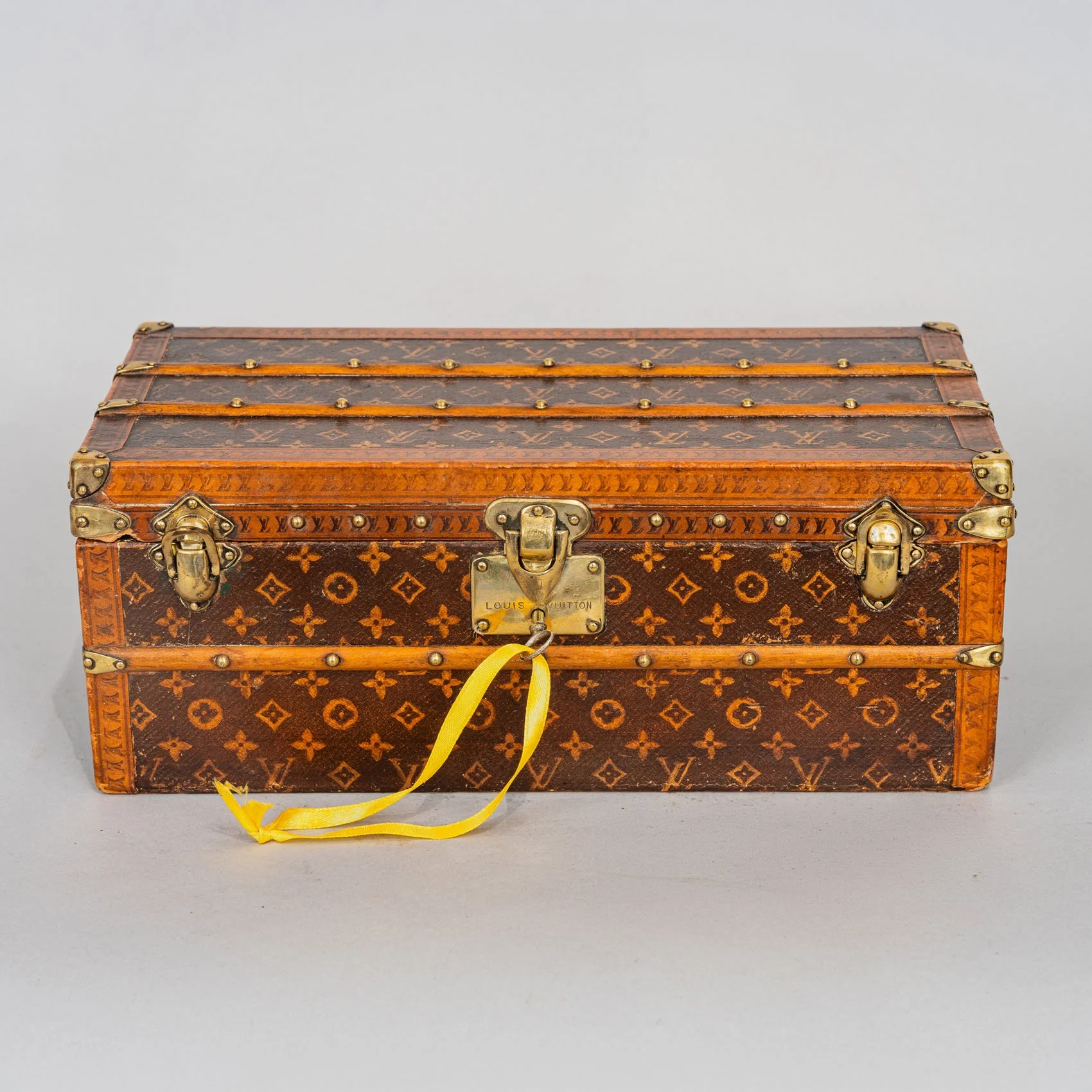
By the 1880s, Louis Vuitton had already transformed the luggage of Europe's most discerning travelers. His striped and Damier checkerboard canvas trunks had become the standard of the transatlantic crossing, the grand hotel, and the continental express. But for a different class of traveler, canvas was not enough: the diplomat, the explorer, the colonial administrator, the naturalist bound for equatorial Africa or the South China Sea. The enemy was not the baggage handler or the rain-wet quayside. It was heat, humidity, tropical insects, and the months-long sea voyage that preceded any destination worthy of the name expedition. For these clients, Vuitton developed one of the most technically ambitious objects in the history of luggage: the zinc-clad hermetic trunk.
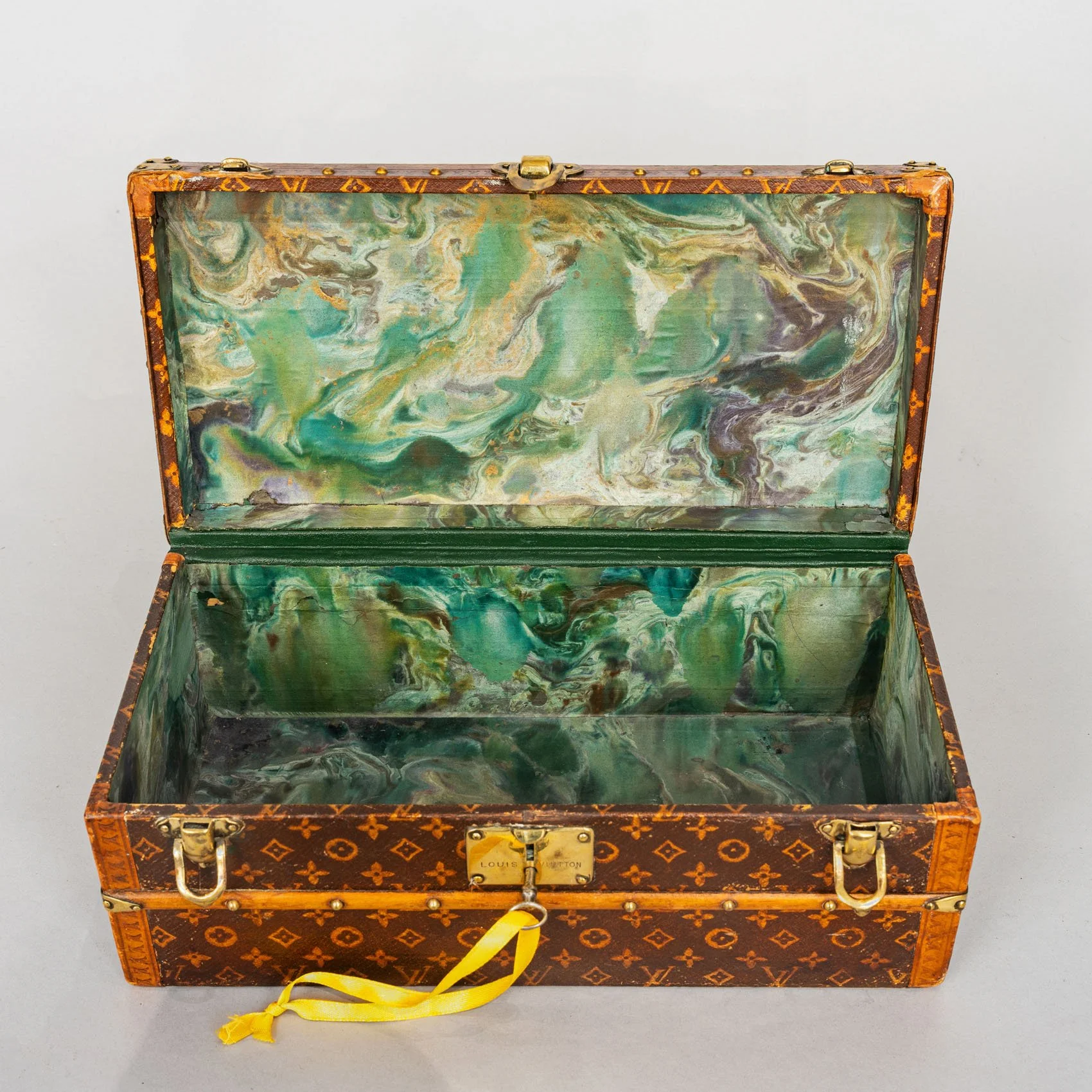
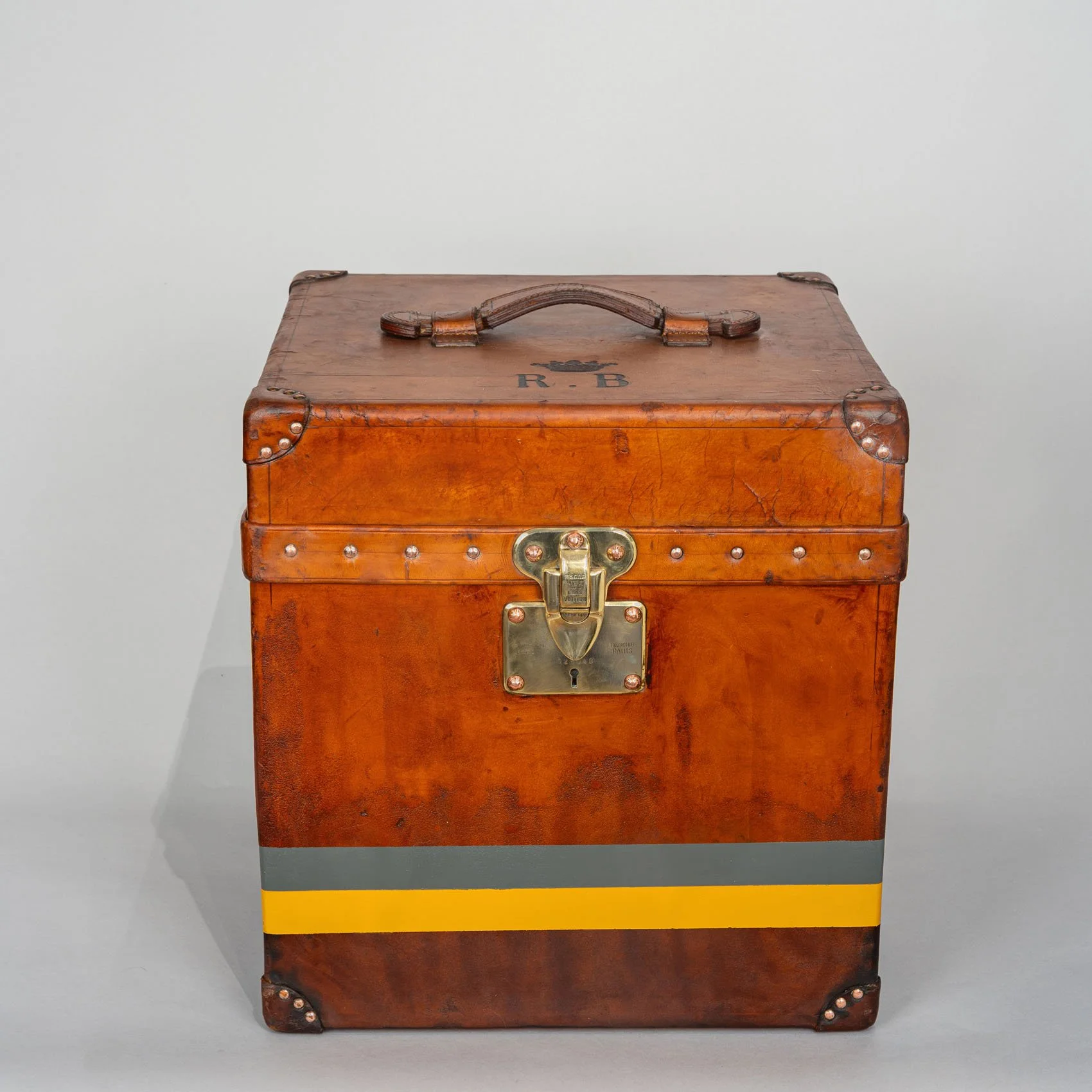
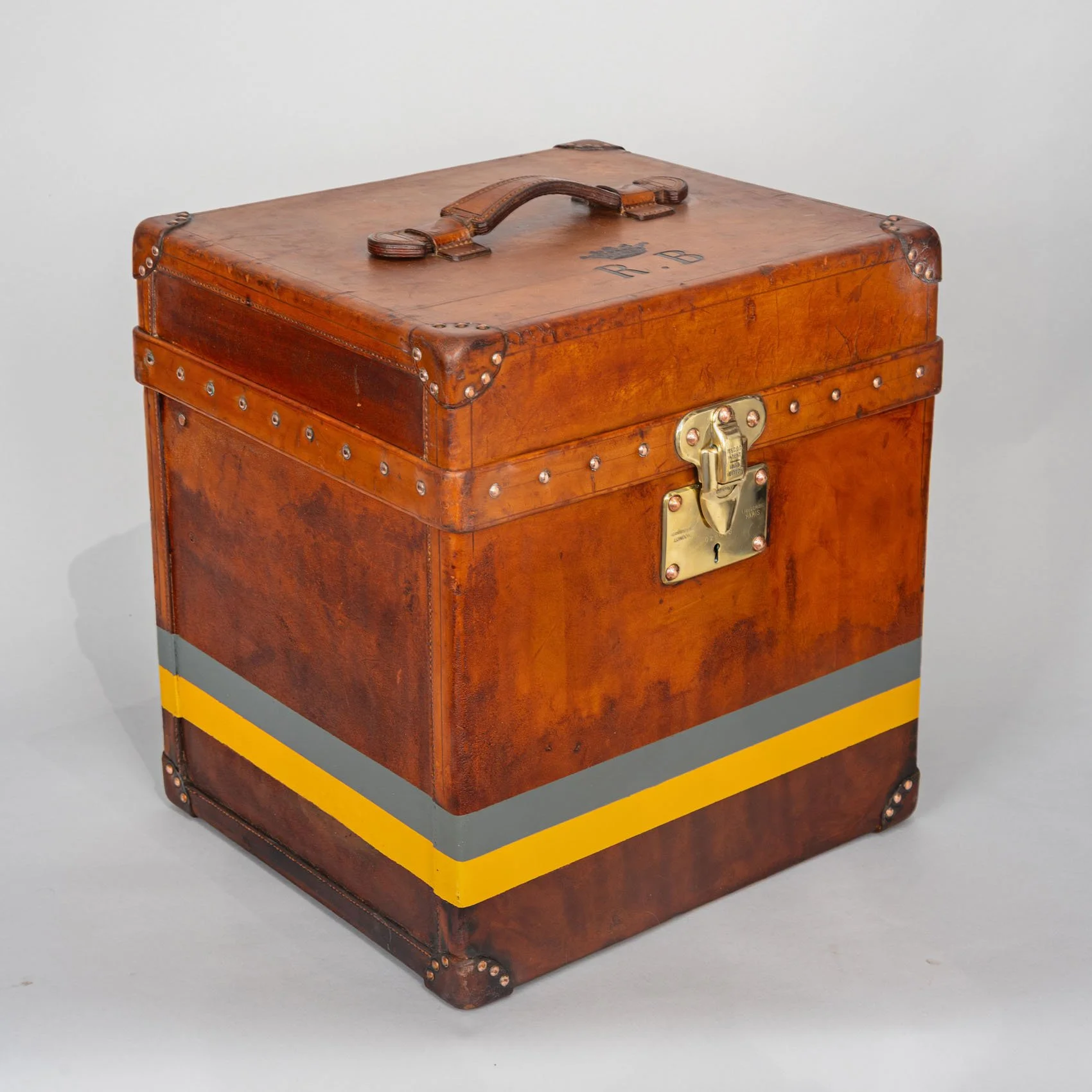
This exceptional example, dating to circa 1880–1895, is constructed on a wooden carcass fully sheathed in zinc, a material chosen with precision for its impermeability, its resistance to the corrosive effects of tropical humidity, and its ability to form a near-hermetic seal that kept its contents dry and secure through months at sea. The zinc panels are reinforced with hardwood slats, the characteristic structural element of the Vuitton trunk, translated here into an exceptional material context. Brass mounts, rivets, and the original lock hardware complete the exterior, fittings chosen to resist the very conditions the zinc itself was designed to defeat.
The flat-top form reflects Vuitton's revolutionary approach to travel luggage, a configuration that allowed for efficient stacking in the hold of a steamship or the luggage van of a colonial railway, and that had already distinguished the house from the domed-top makers of an earlier generation. In the zinc trunk, this practical logic is taken to its extreme: a case built not for convenience but for survival, intended to arrive at its destination intact, regardless of what the journey demanded.
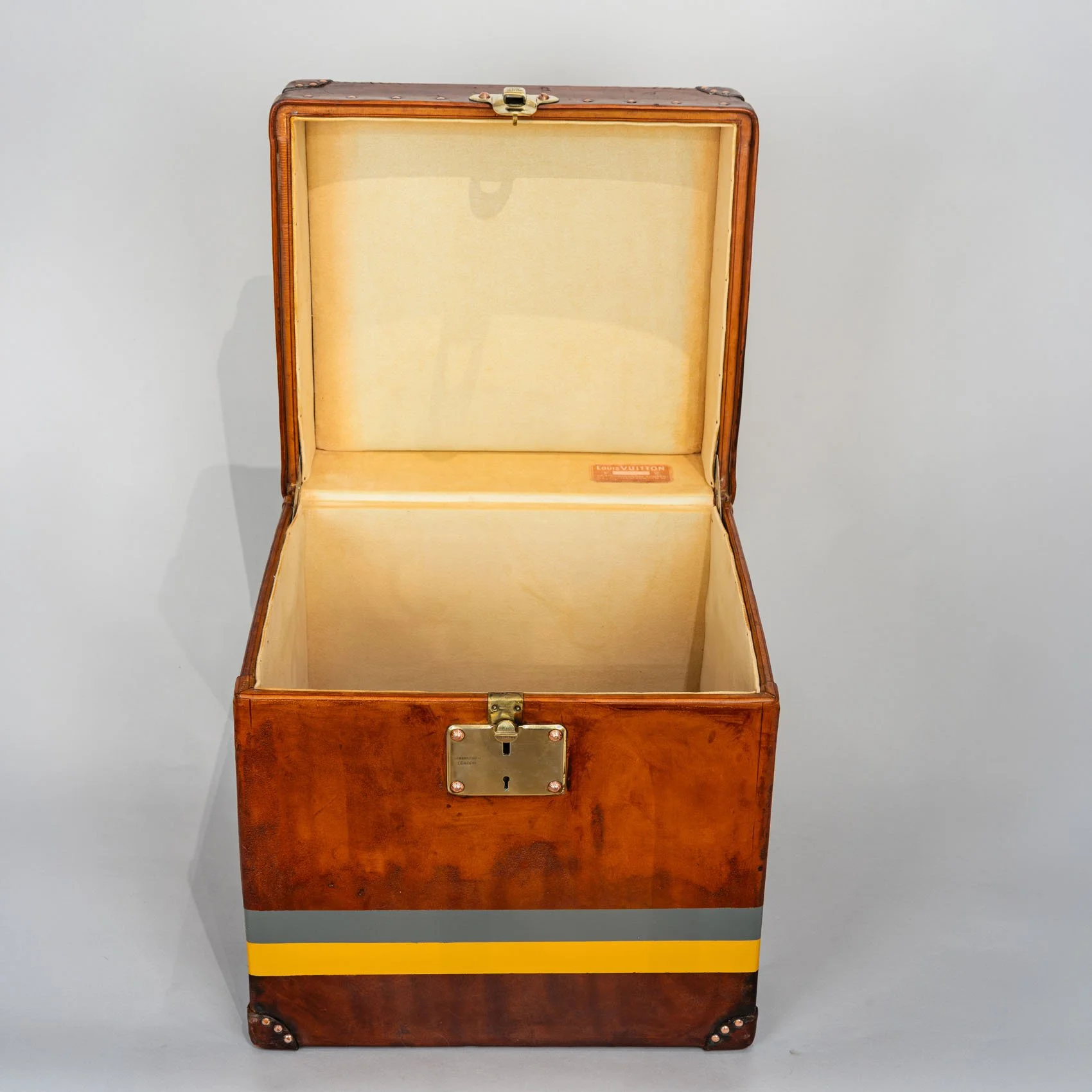
More than a century after it was made, the zinc exterior presents a surface of extraordinary character, soft oxidation across the panels creating a nuanced, almost mineral patina that contrasts with the warm tones of the aged hardwood slats and the deep, even burnish of the brass hardware. This is not deterioration; it is the record of a life fully lived, and it is entirely beyond the reach of any reproduction. The interior retains its original Louis Vuitton, Paris label, the authenticating detail that confirms both maker and period, and one that survives in a form decades of expeditionary use might easily have destroyed.
Zinc "Explorer" trunks were produced in limited numbers for a highly specialized clientele and were never part of Vuitton's mainstream production. As documented in Pierre Léonforte and Éric Pujalet-Plaà's 100 Legendary Trunks: Louis Vuitton, they were designed specifically for travel to the tropics and the colonies, offering protection unavailable from any other form of luggage then in existence. Their survival rate is low. Examples retaining original structure, hardware, and interior label in this condition are, by any measure, scarce.
Interior Label: Louis Vuitton, Paris (original, present, and legible)
Provenance: Private collection
Dimensions: 13 in. high × 30 in. wide × 17 in. deep
Condition: Very good overall, structurally solid and stable throughout, with sound hardwood slats and all brass mounts, rivets, and lock hardware present. The zinc exterior carries a rich, even, fully stable oxidation patina with no structural losses, and the original Louis Vuitton, Paris interior label remains present and legible over honest age toning to the lining.
Literature:
Florence Müller, Louis Vuitton: 100 Legendary Trunks, New York, 2010
Pierre Léonforte, Louis Vuitton: The Birth of Modern Luxury, Paris, 2004
Paul-Gérard Pasols, Louis Vuitton: Malletier à Paris, Paris, 1987
By the 1880s, Louis Vuitton had already transformed the luggage of Europe's most discerning travelers. His striped and Damier checkerboard canvas trunks had become the standard of the transatlantic crossing, the grand hotel, and the continental express. But for a different class of traveler, canvas was not enough: the diplomat, the explorer, the colonial administrator, the naturalist bound for equatorial Africa or the South China Sea. The enemy was not the baggage handler or the rain-wet quayside. It was heat, humidity, tropical insects, and the months-long sea voyage that preceded any destination worthy of the name expedition. For these clients, Vuitton developed one of the most technically ambitious objects in the history of luggage: the zinc-clad hermetic trunk.
This exceptional example, dating to circa 1880–1895, is constructed on a wooden carcass fully sheathed in zinc, a material chosen with precision for its impermeability, its resistance to the corrosive effects of tropical humidity, and its ability to form a near-hermetic seal that kept its contents dry and secure through months at sea. The zinc panels are reinforced with hardwood slats, the characteristic structural element of the Vuitton trunk, translated here into an exceptional material context. Brass mounts, rivets, and the original lock hardware complete the exterior, fittings chosen to resist the very conditions the zinc itself was designed to defeat.
The flat-top form reflects Vuitton's revolutionary approach to travel luggage, a configuration that allowed for efficient stacking in the hold of a steamship or the luggage van of a colonial railway, and that had already distinguished the house from the domed-top makers of an earlier generation. In the zinc trunk, this practical logic is taken to its extreme: a case built not for convenience but for survival, intended to arrive at its destination intact, regardless of what the journey demanded.
More than a century after it was made, the zinc exterior presents a surface of extraordinary character, soft oxidation across the panels creating a nuanced, almost mineral patina that contrasts with the warm tones of the aged hardwood slats and the deep, even burnish of the brass hardware. This is not deterioration; it is the record of a life fully lived, and it is entirely beyond the reach of any reproduction. The interior retains its original Louis Vuitton, Paris label, the authenticating detail that confirms both maker and period, and one that survives in a form decades of expeditionary use might easily have destroyed.
Zinc "Explorer" trunks were produced in limited numbers for a highly specialized clientele and were never part of Vuitton's mainstream production. As documented in Pierre Léonforte and Éric Pujalet-Plaà's 100 Legendary Trunks: Louis Vuitton, they were designed specifically for travel to the tropics and the colonies, offering protection unavailable from any other form of luggage then in existence. Their survival rate is low. Examples retaining original structure, hardware, and interior label in this condition are, by any measure, scarce.
Interior Label: Louis Vuitton, Paris (original, present, and legible)
Provenance: Private collection
Dimensions: 13 in. high × 30 in. wide × 17 in. deep
Condition: Very good overall, structurally solid and stable throughout, with sound hardwood slats and all brass mounts, rivets, and lock hardware present. The zinc exterior carries a rich, even, fully stable oxidation patina with no structural losses, and the original Louis Vuitton, Paris interior label remains present and legible over honest age toning to the lining.
Literature:
Florence Müller, Louis Vuitton: 100 Legendary Trunks, New York, 2010
Pierre Léonforte, Louis Vuitton: The Birth of Modern Luxury, Paris, 2004
Paul-Gérard Pasols, Louis Vuitton: Malletier à Paris, Paris, 1987

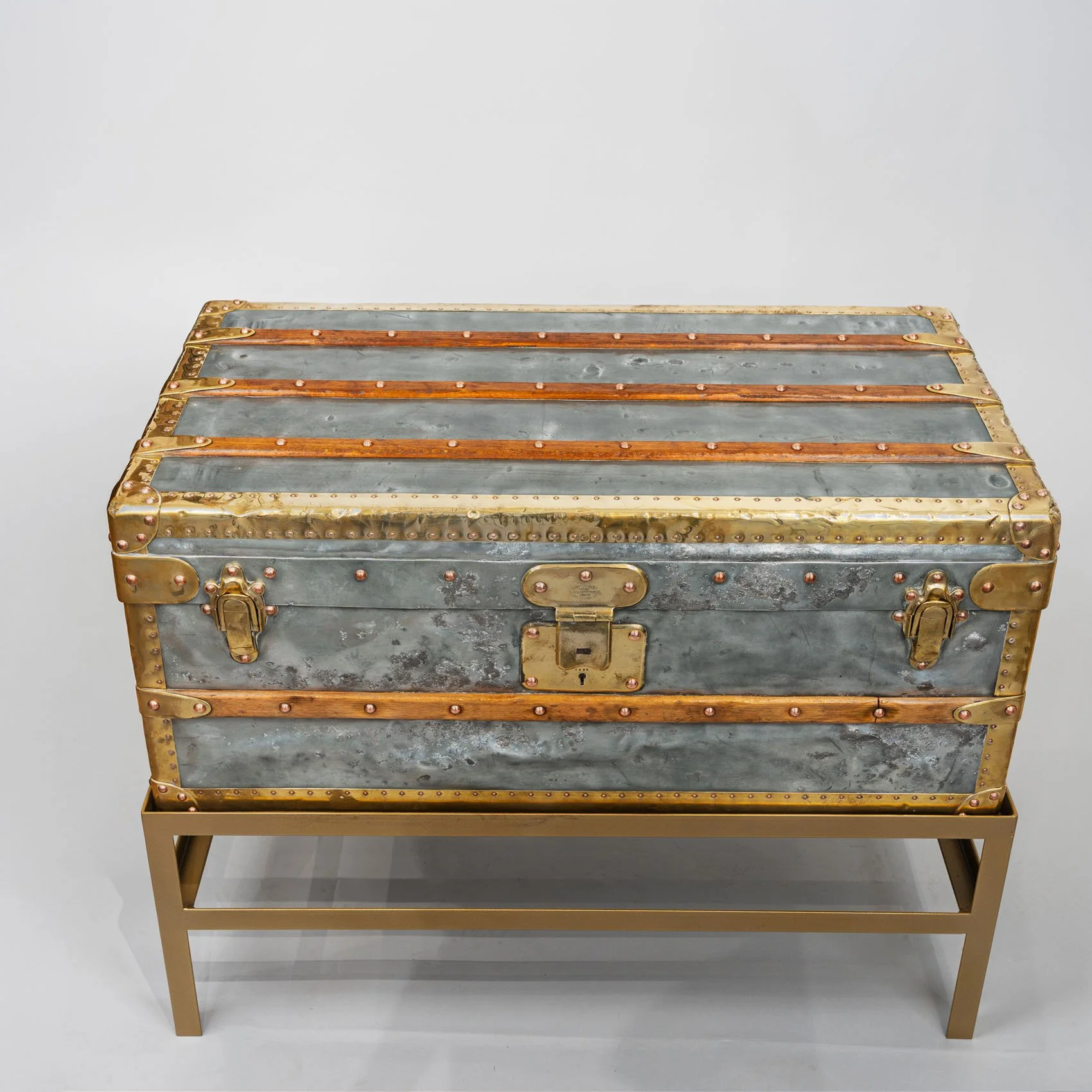 Image 1 of 2
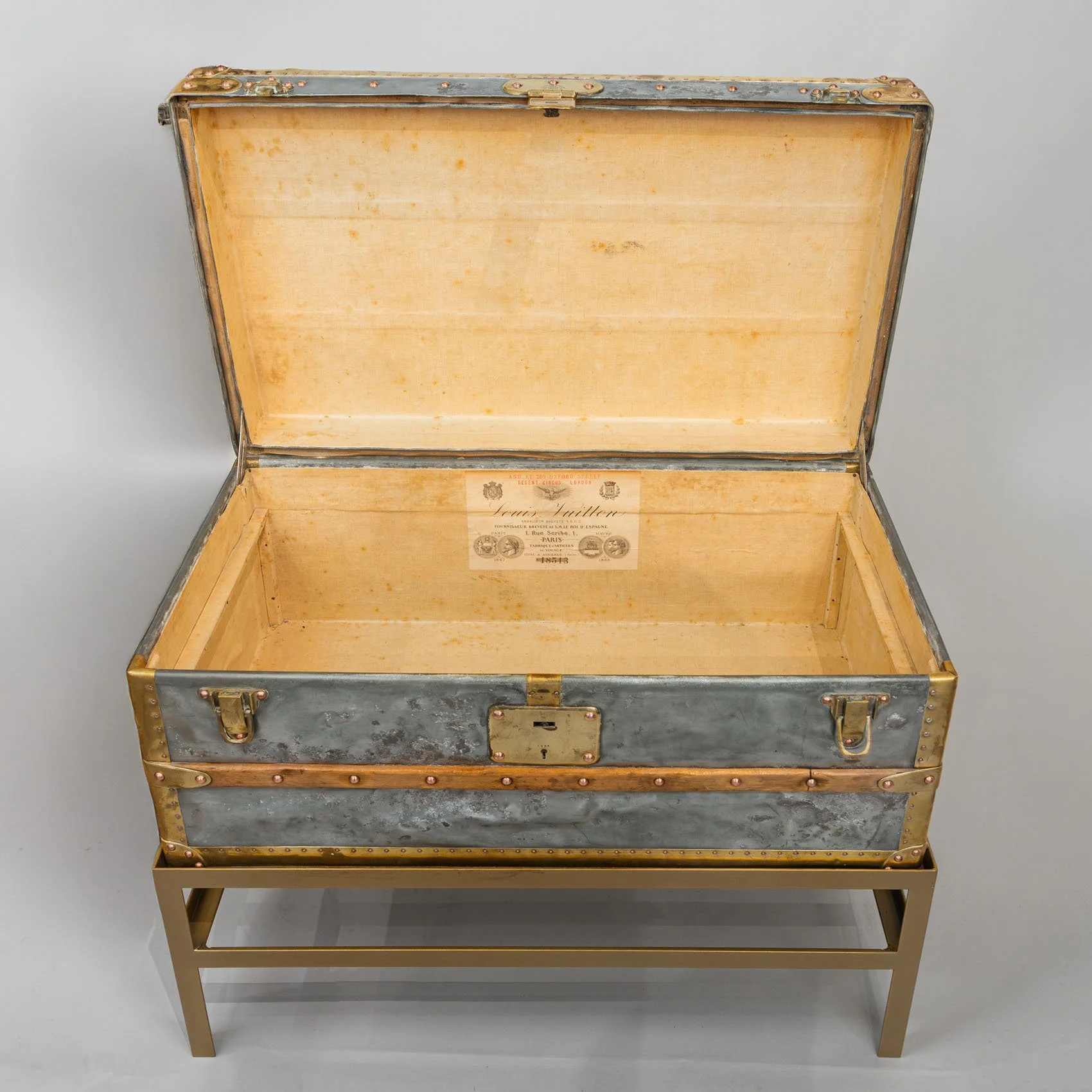 Image 2 of 2