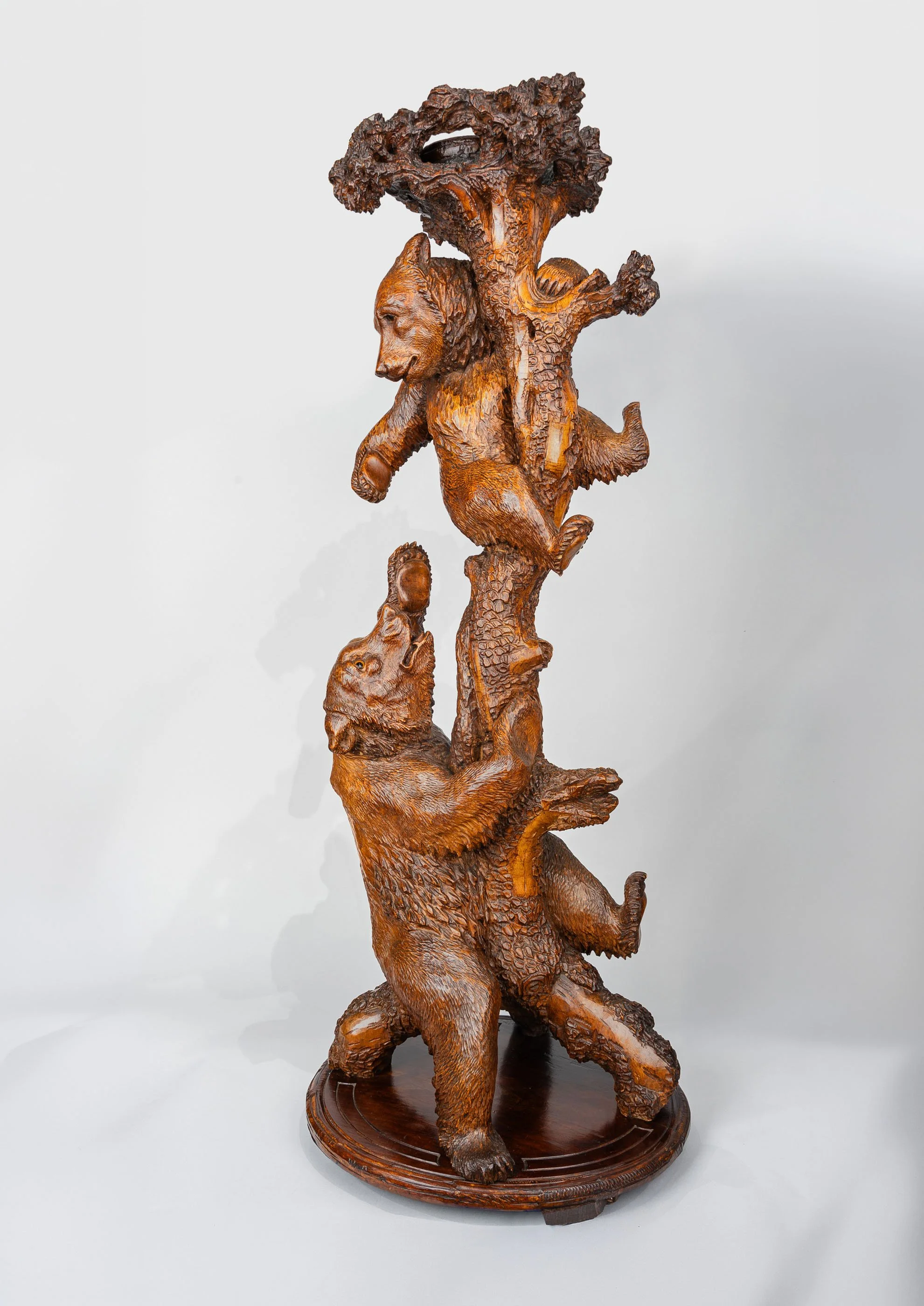
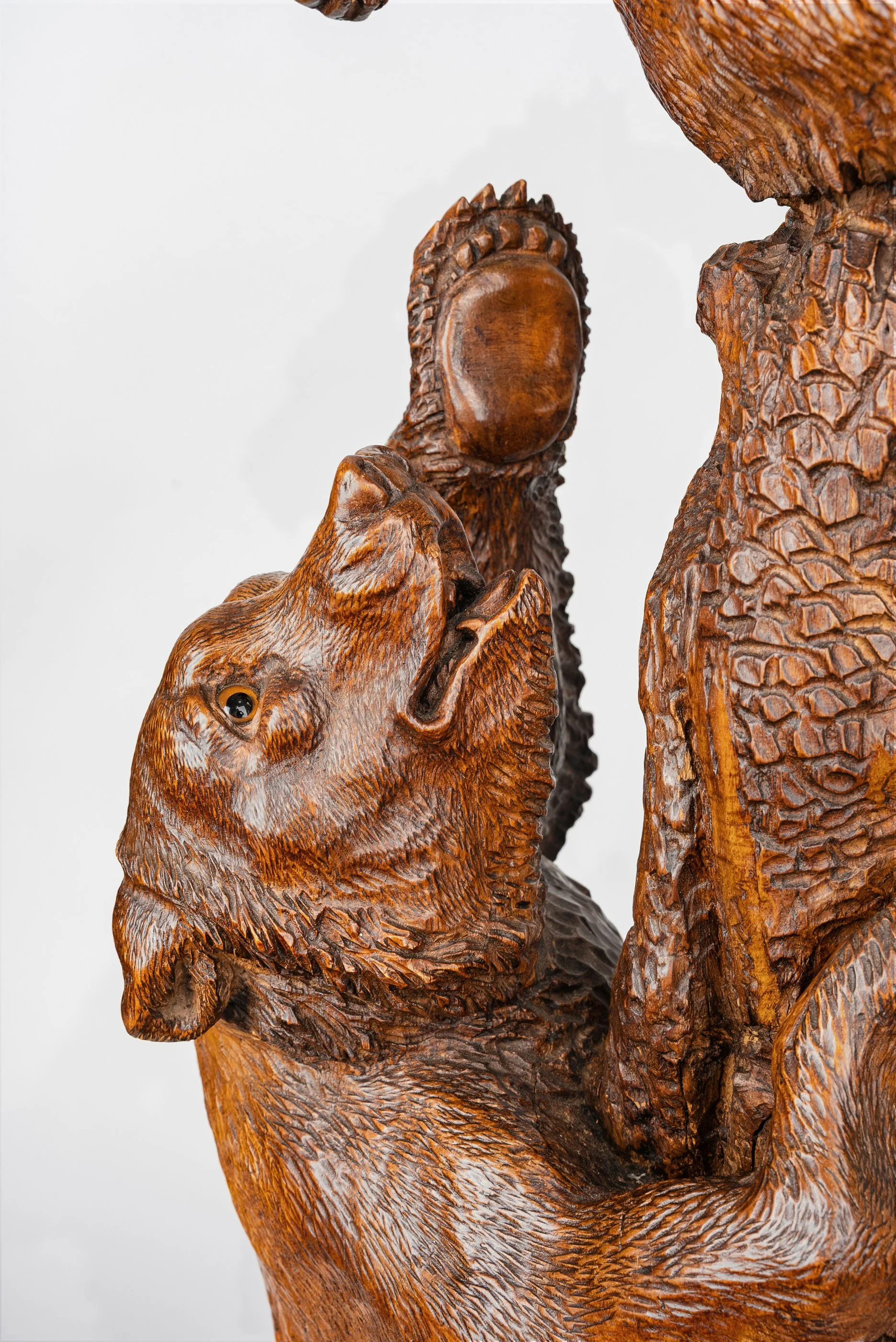
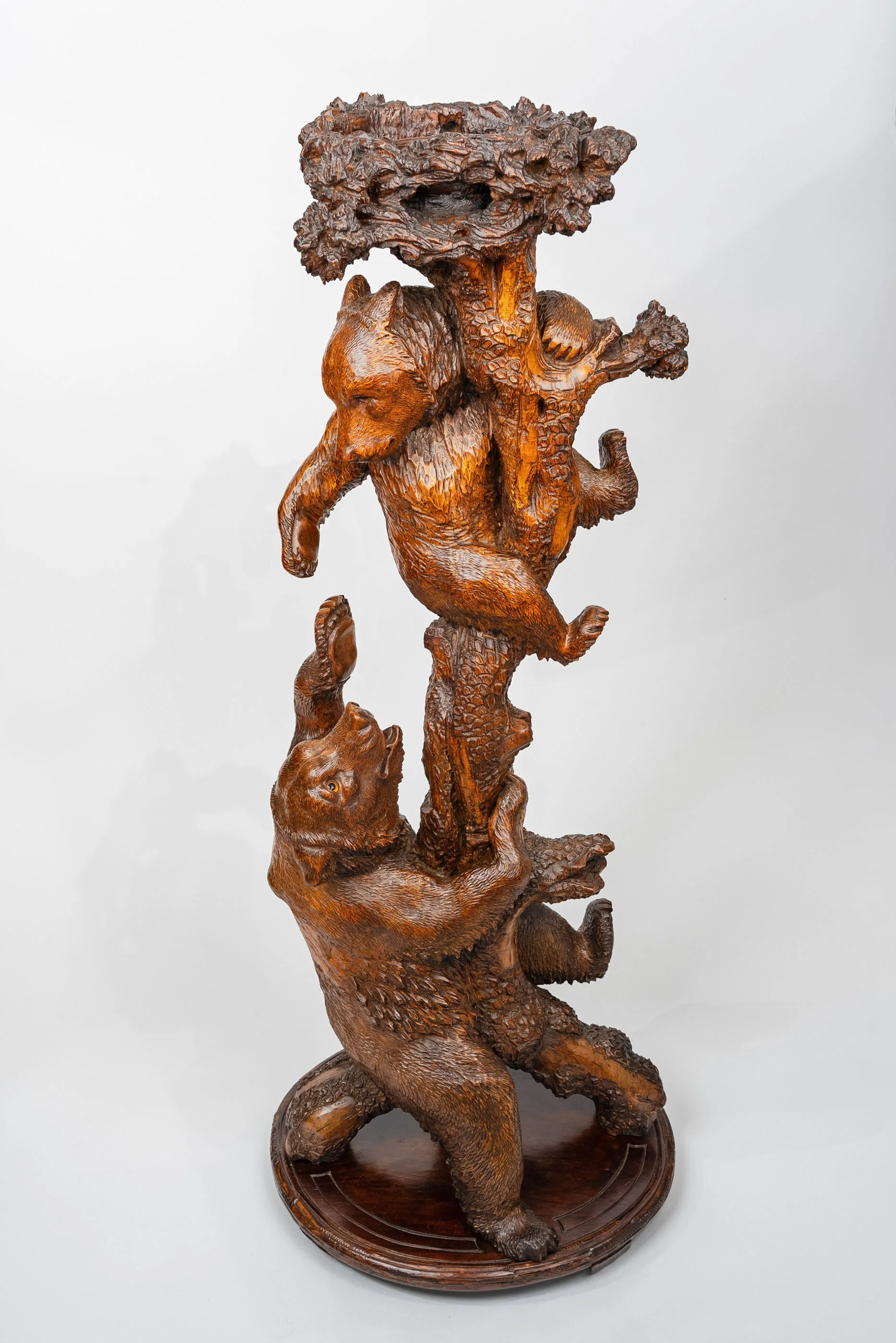
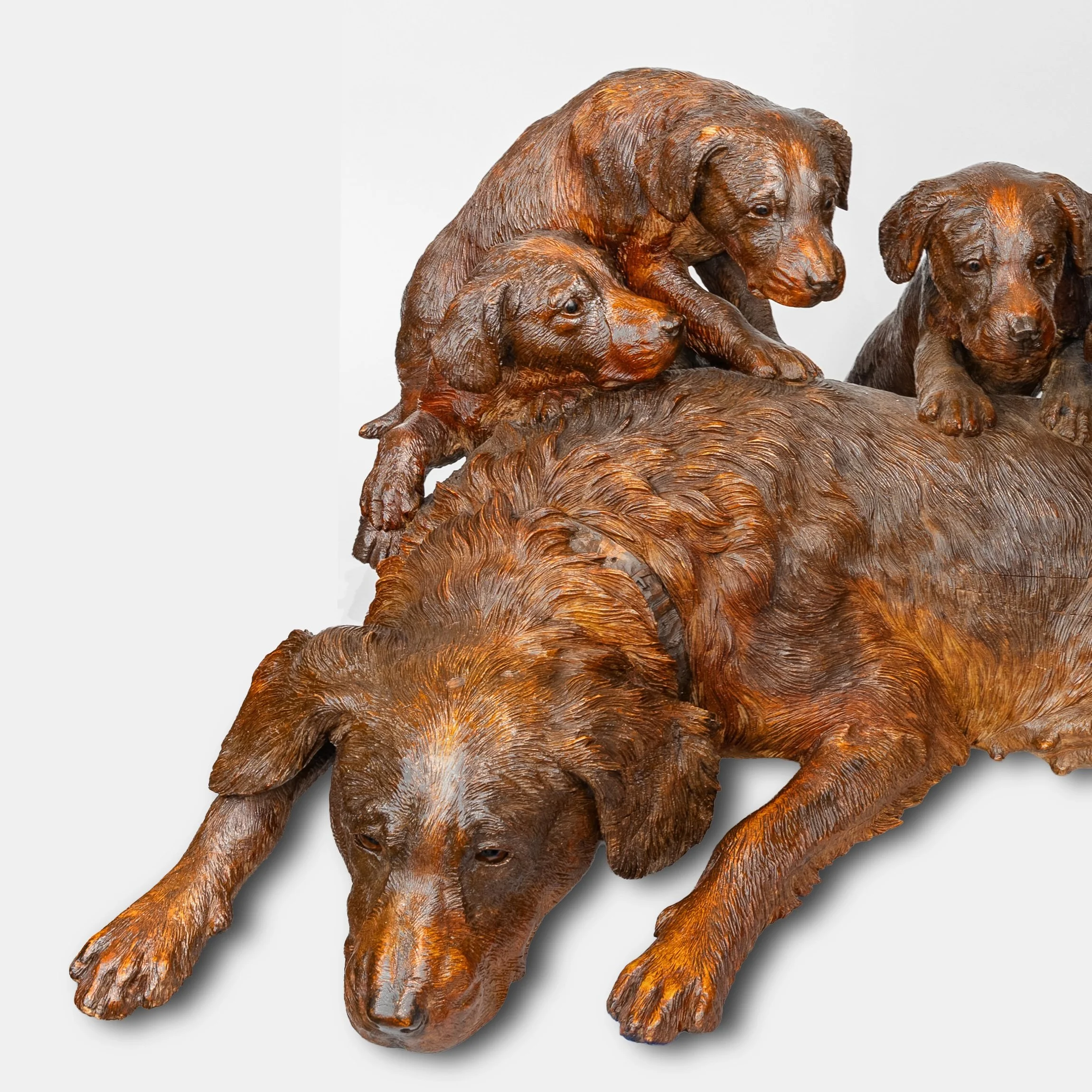
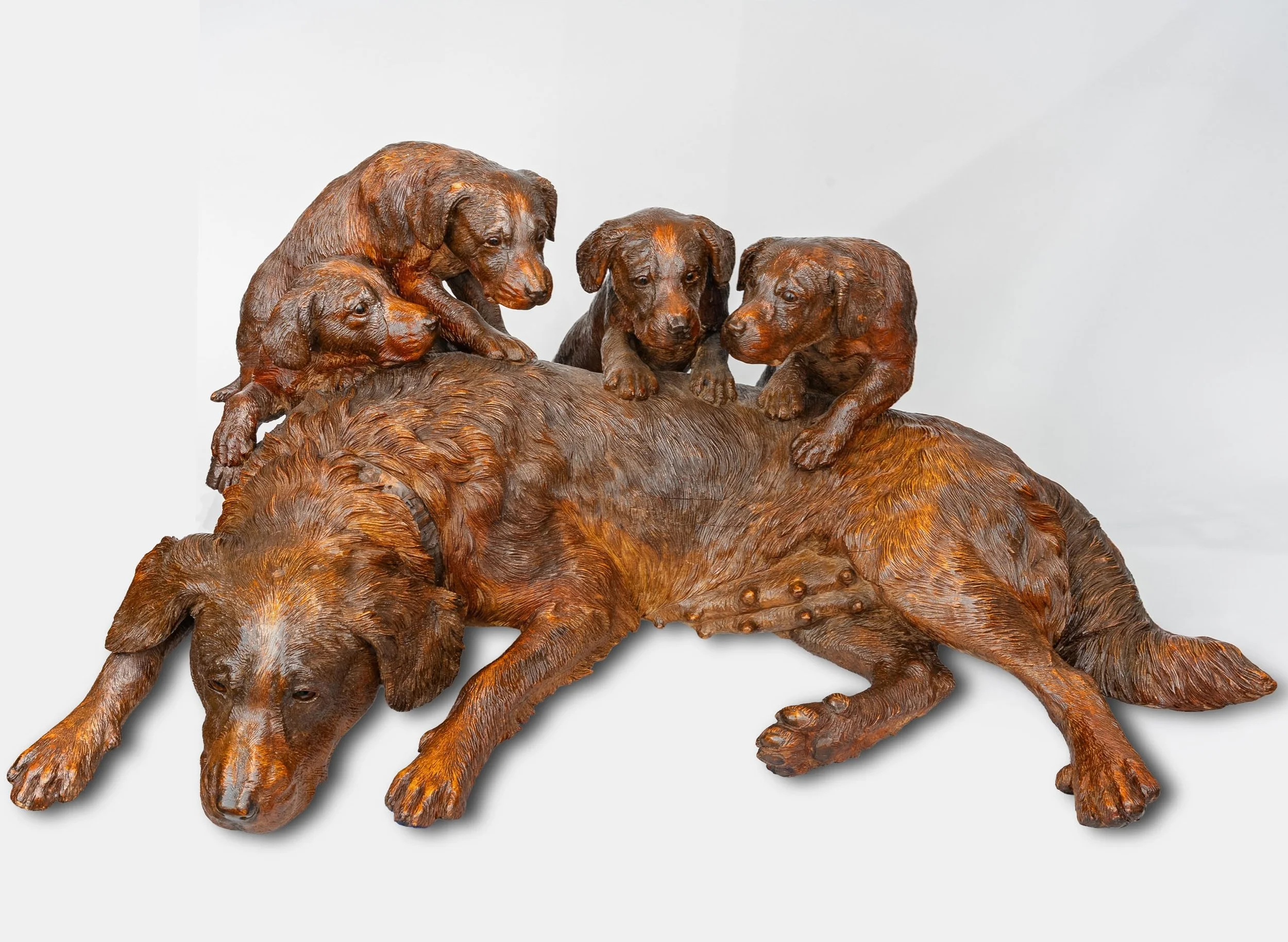
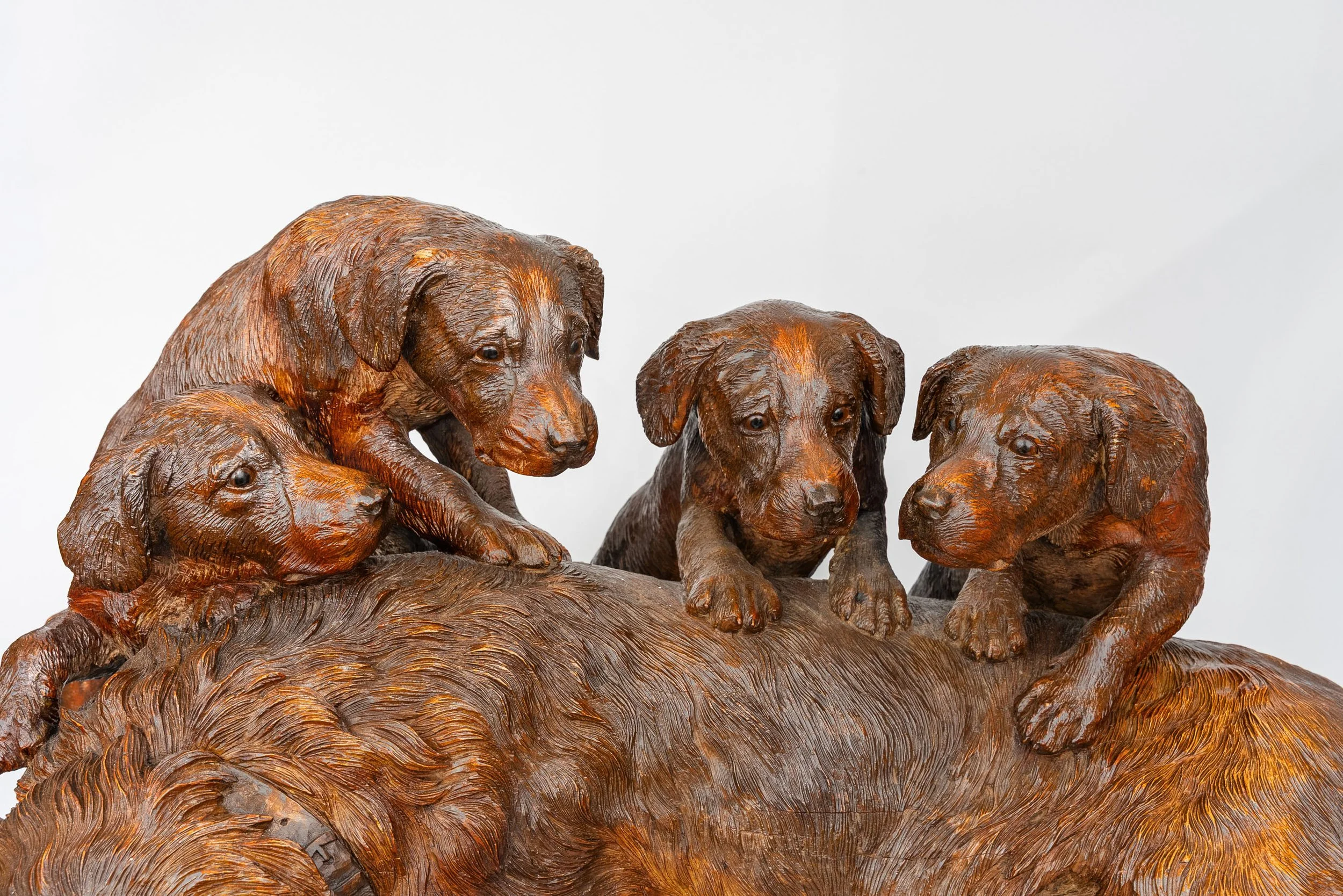
Two wild boars startled into sudden flight, one leaping across the back of the other in a single explosive instant, carved in walnut at Brienz, circa 1870.
The composition captures the precise moment of alarm. The lower animal lunges forward, forelegs extended, head thrust low to the ground, while the second vaults across its back, unable to stop or turn — the two figures locked together in motion, compact yet charged, conveying with remarkable economy the raw urgency of the animals.
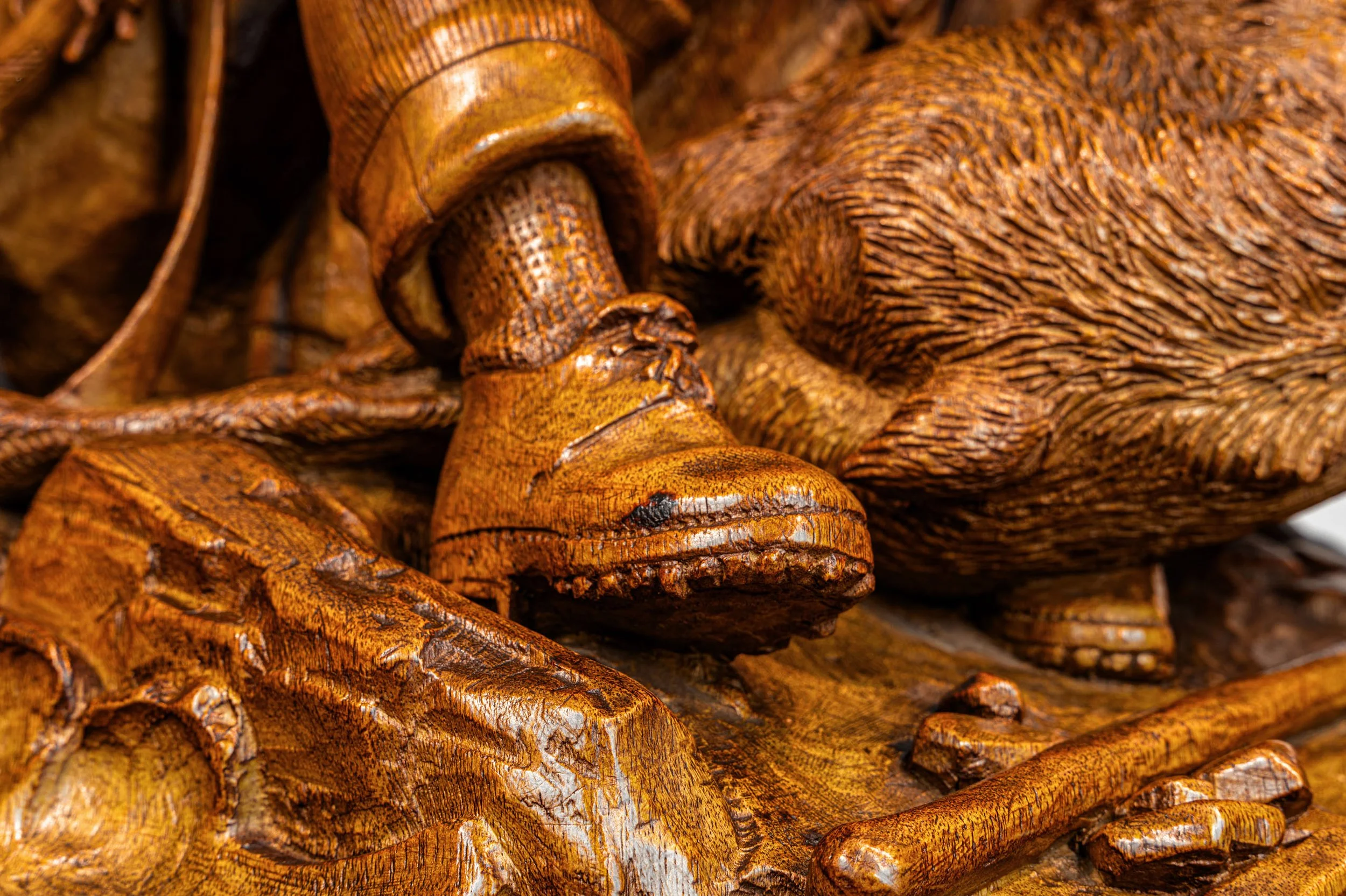
Each bristled coat is articulated through dense, directional toolwork, thousands of individual marks describing the coarse, layered hair and the shifting musculature beneath. Tusks, alert eyes and flared snouts are sharply defined, and the depth of cutting varies deliberately across the surfaces, producing the contrasts of light and shadow that animate the group and reward close examination. The figures stand on an integrally carved base of forest undergrowth — stones, moss and ground cover — and the warm walnut patina deepens the relief throughout.
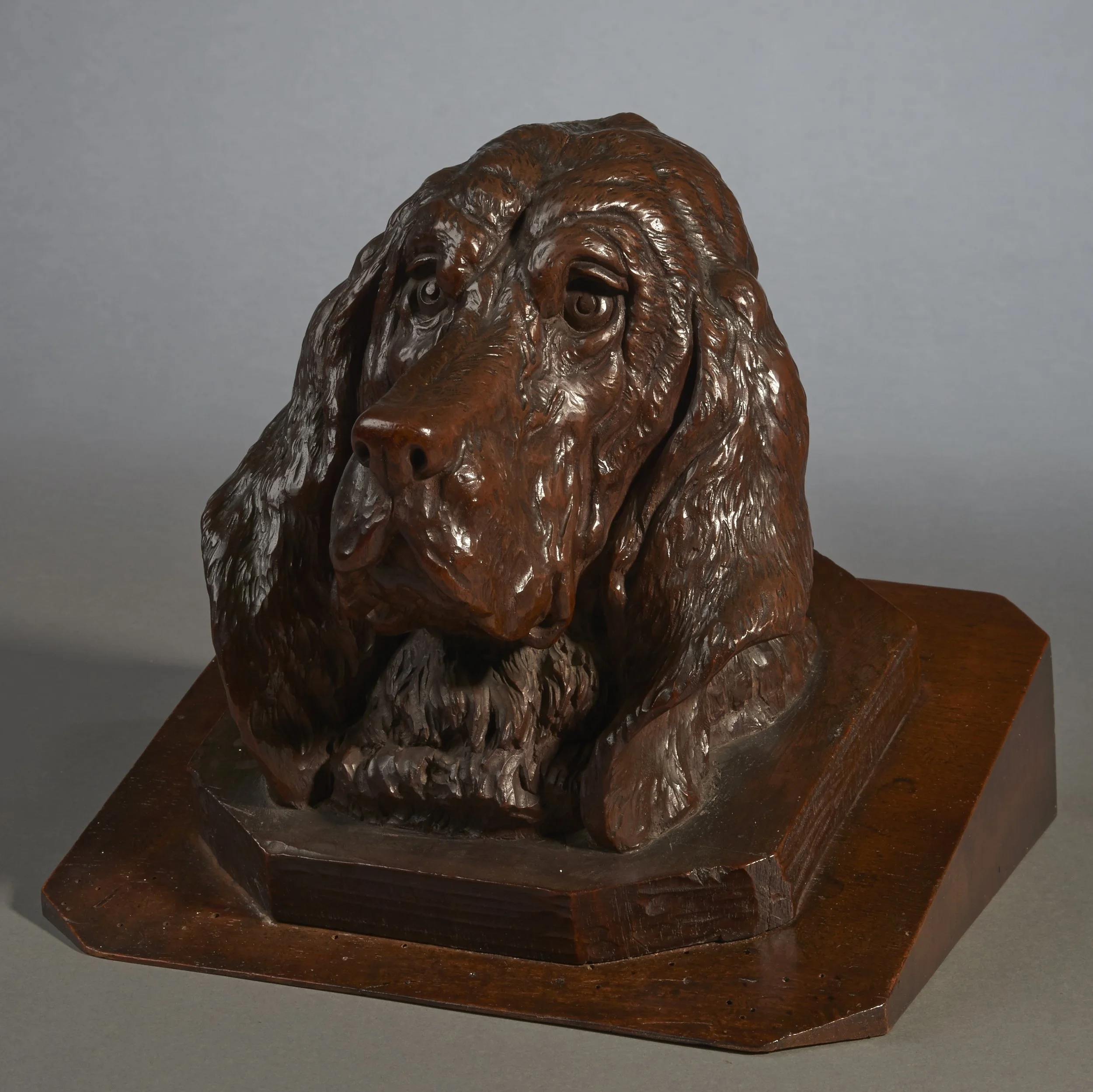
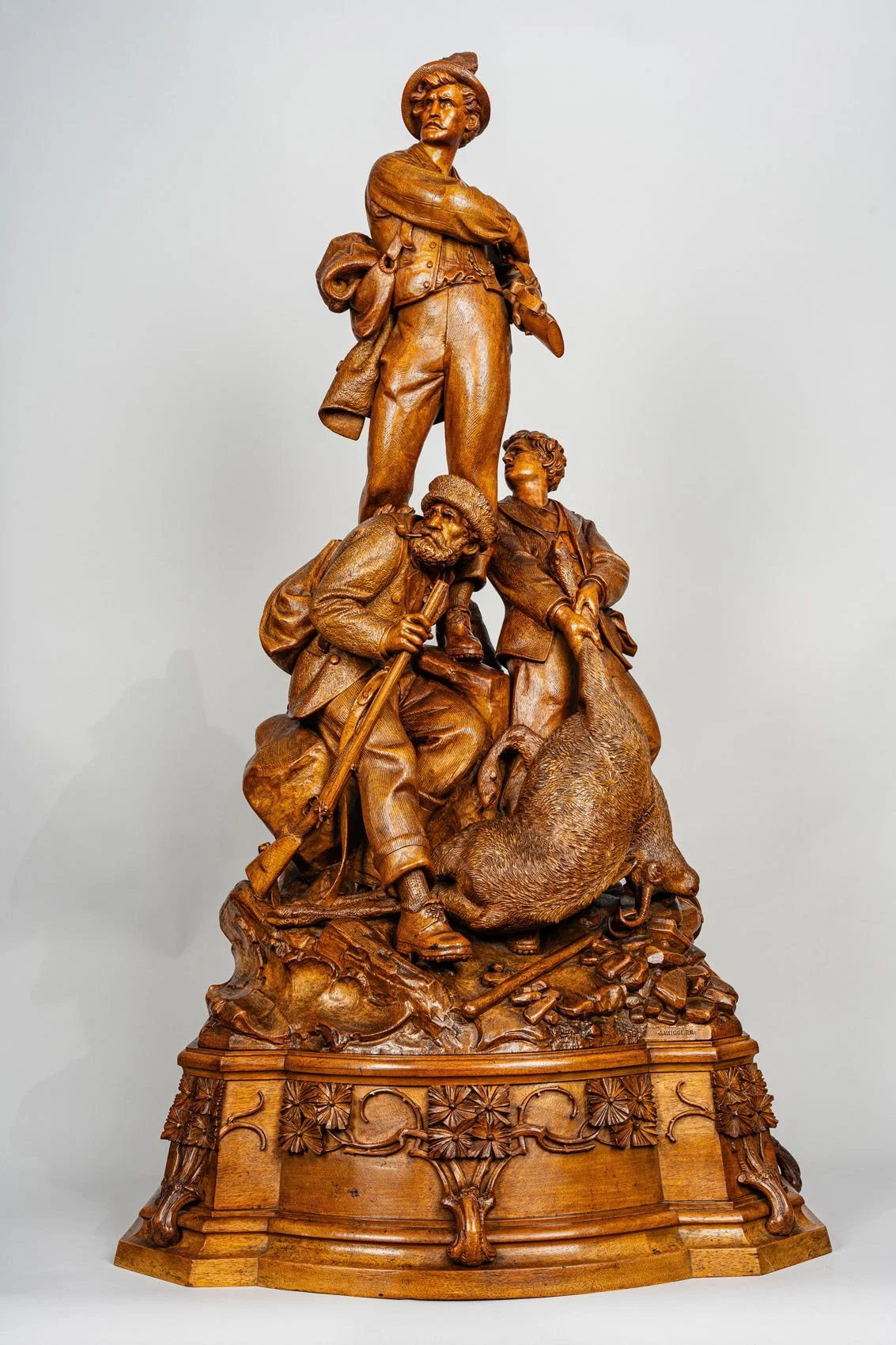
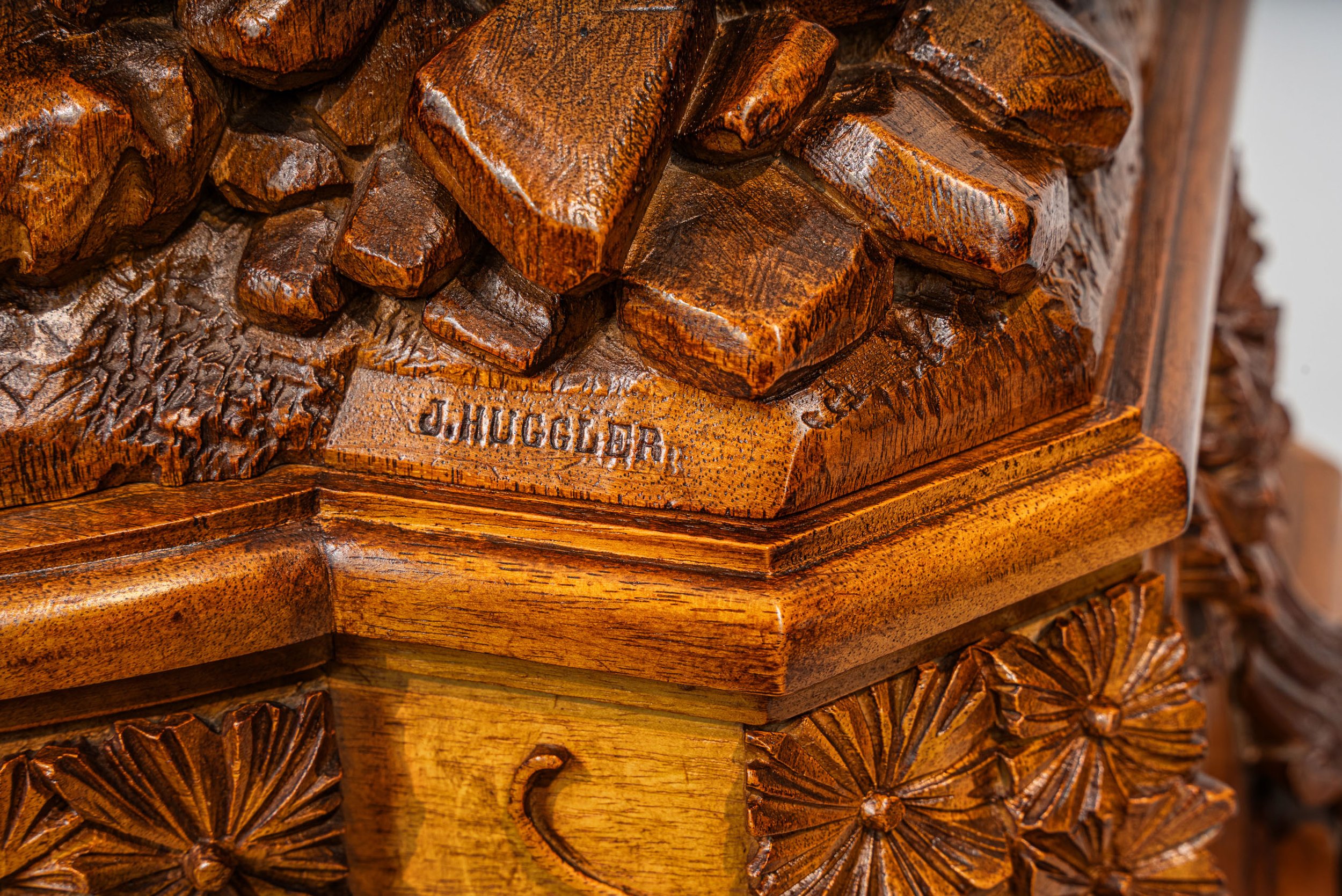
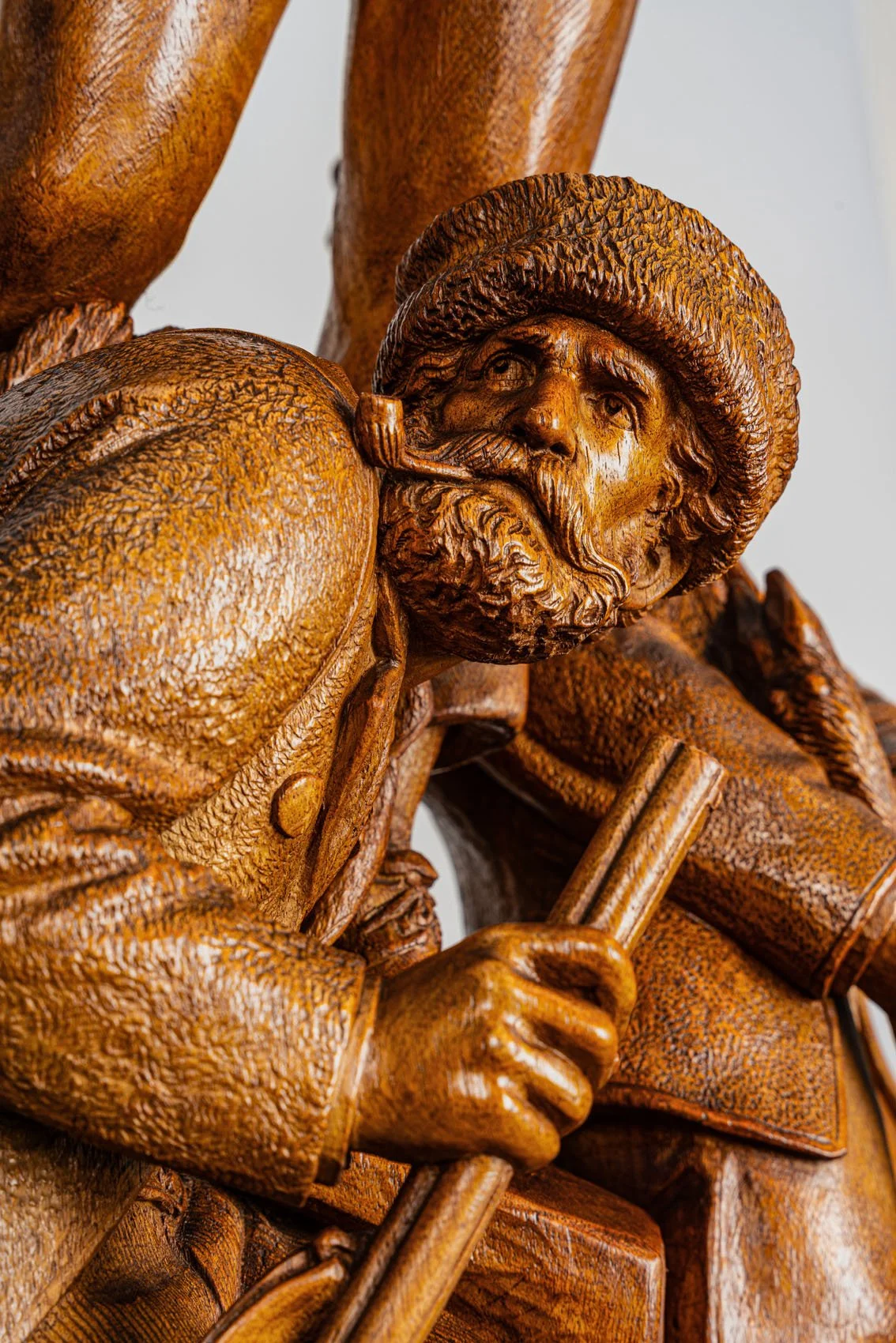
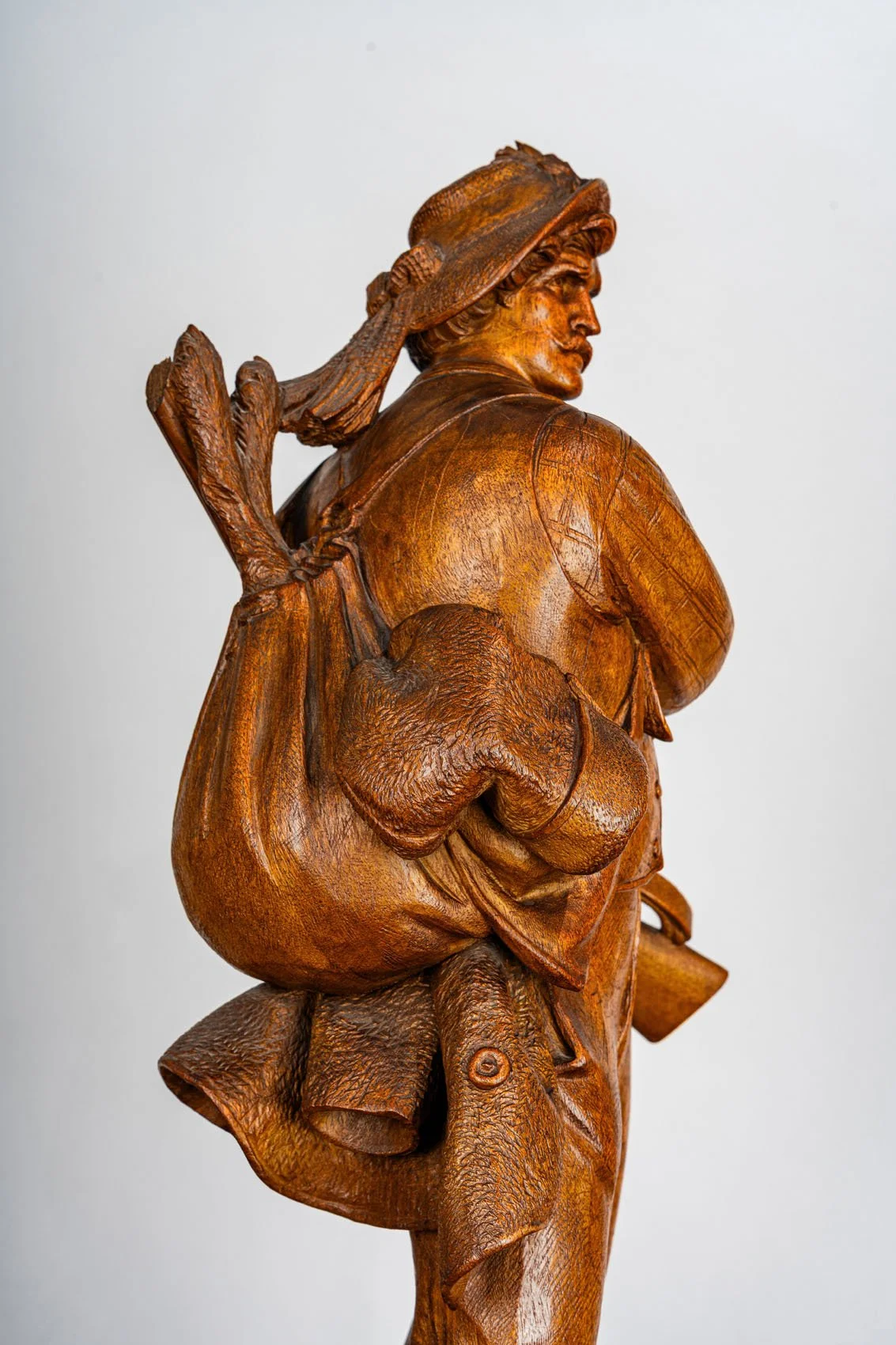
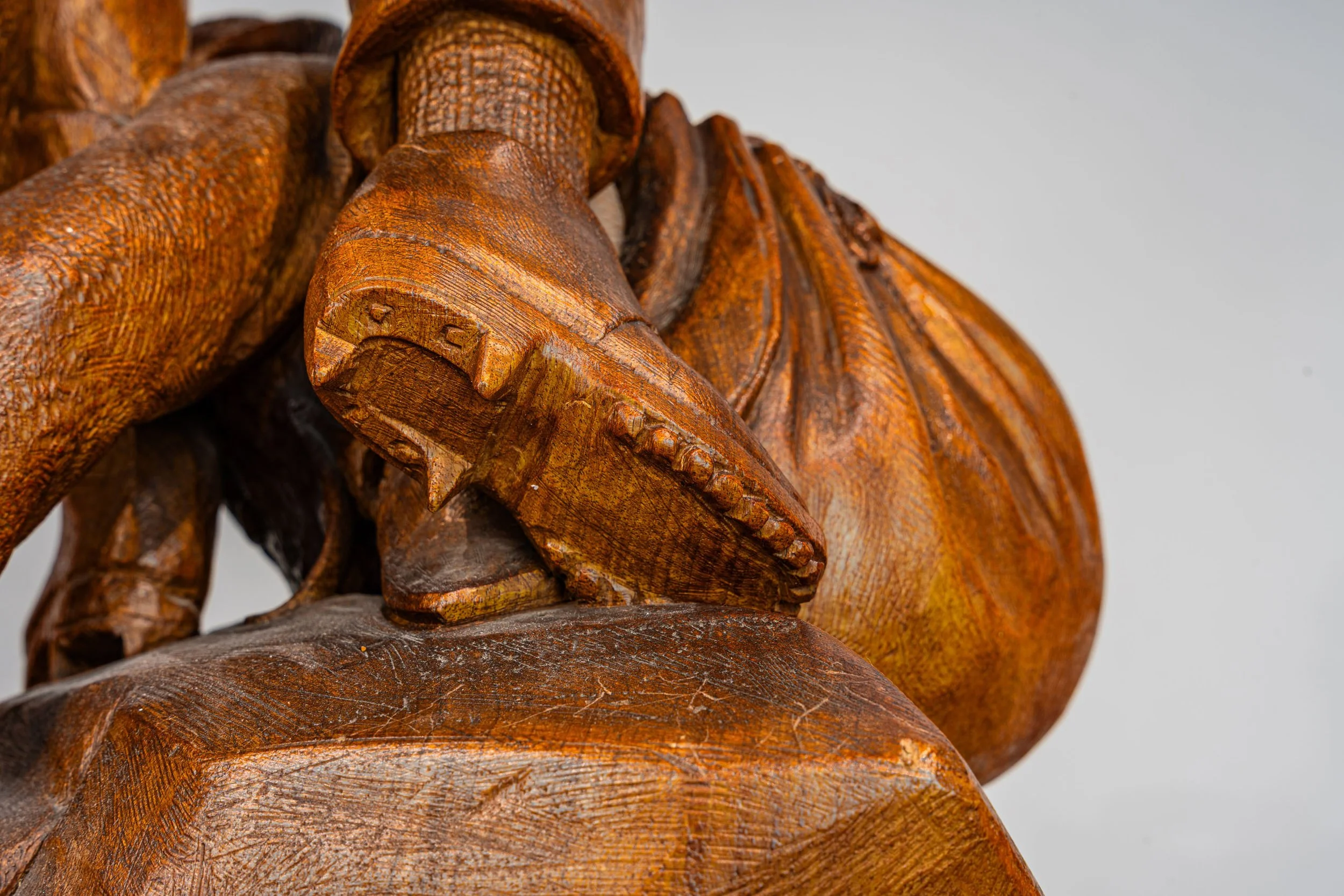
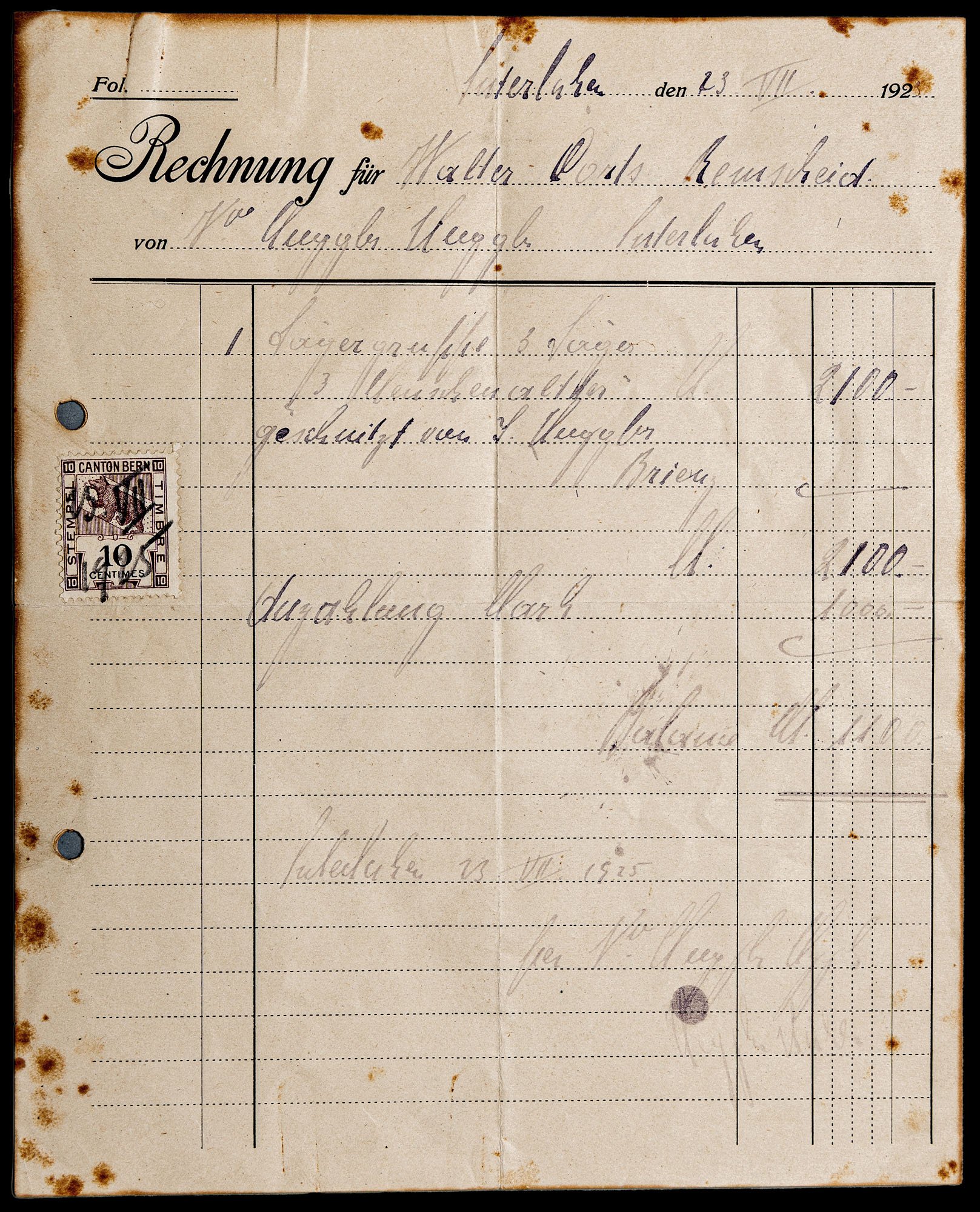
The group belongs to the height of the Brienz industry's reputation, around 1870, when the workshops of Huggler, Binder and their contemporaries were showing at the great world's fairs and collected across Europe and America. Animal subjects of this naturalistic ambition represented the apex of the tradition, and groups of this quality are rare on the market.
Condition: Very good; rich original patina, surface carving complete and crisp, no restorations or repairs noted, minor wear consistent with age.
Dimensions: 14 in. width x 12 in. height x 5 in. depth
Literature: Jay Arenski, Simon Daniels, and Michael Daniels, Swiss Carvings: The Art of the Black Forest, 1820–1940 (2006).
Two wild boars startled into sudden flight, one leaping across the back of the other in a single explosive instant, carved in walnut at Brienz, circa 1870.
The composition captures the precise moment of alarm. The lower animal lunges forward, forelegs extended, head thrust low to the ground, while the second vaults across its back, unable to stop or turn — the two figures locked together in motion, compact yet charged, conveying with remarkable economy the raw urgency of the animals.
Each bristled coat is articulated through dense, directional toolwork, thousands of individual marks describing the coarse, layered hair and the shifting musculature beneath. Tusks, alert eyes and flared snouts are sharply defined, and the depth of cutting varies deliberately across the surfaces, producing the contrasts of light and shadow that animate the group and reward close examination. The figures stand on an integrally carved base of forest undergrowth — stones, moss and ground cover — and the warm walnut patina deepens the relief throughout.
The group belongs to the height of the Brienz industry's reputation, around 1870, when the workshops of Huggler, Binder and their contemporaries were showing at the great world's fairs and collected across Europe and America. Animal subjects of this naturalistic ambition represented the apex of the tradition, and groups of this quality are rare on the market.
Condition: Very good; rich original patina, surface carving complete and crisp, no restorations or repairs noted, minor wear consistent with age.
Dimensions: 14 in. width x 12 in. height x 5 in. depth
Literature: Jay Arenski, Simon Daniels, and Michael Daniels, Swiss Carvings: The Art of the Black Forest, 1820–1940 (2006).

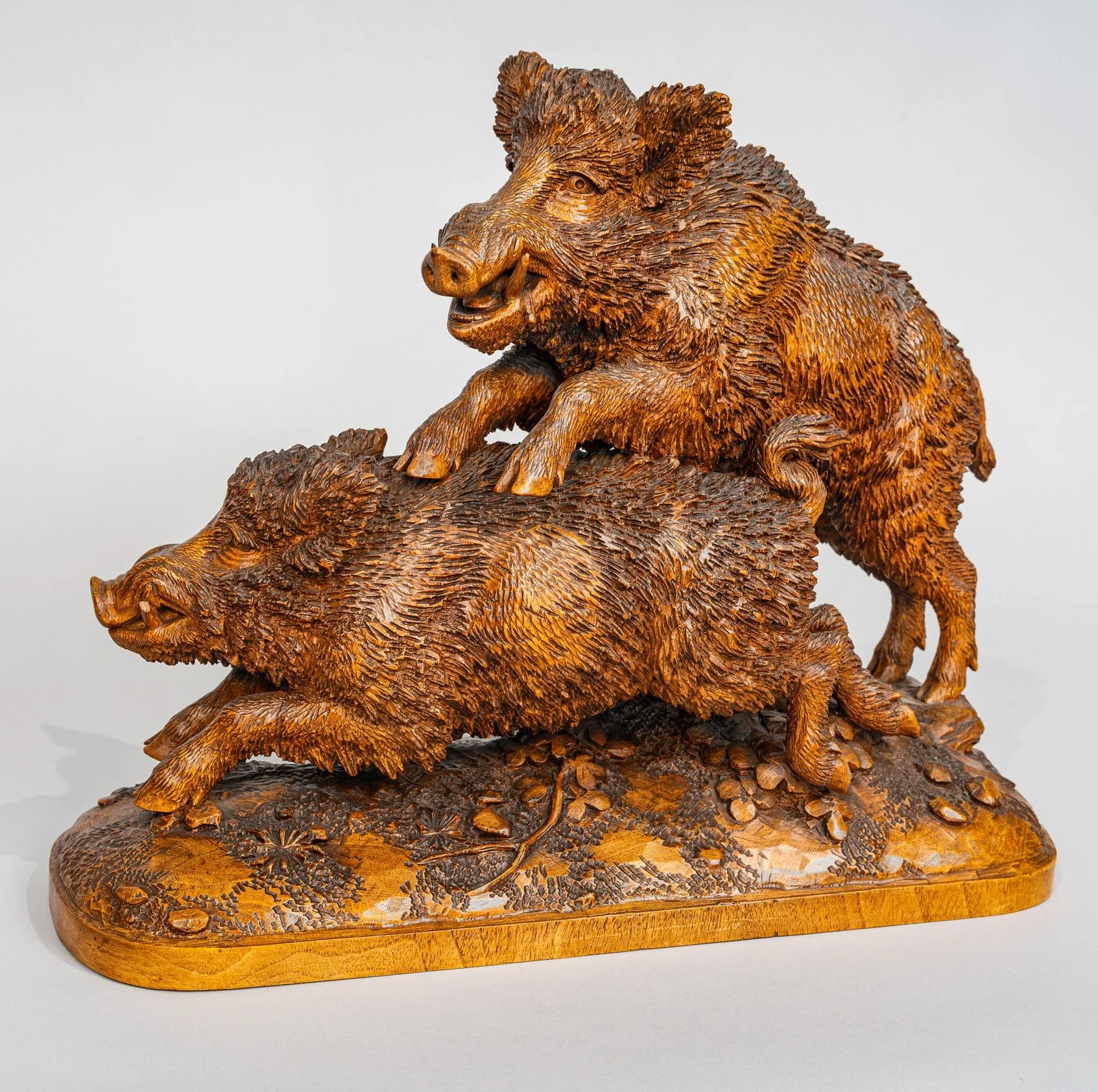 Image 1 of 3
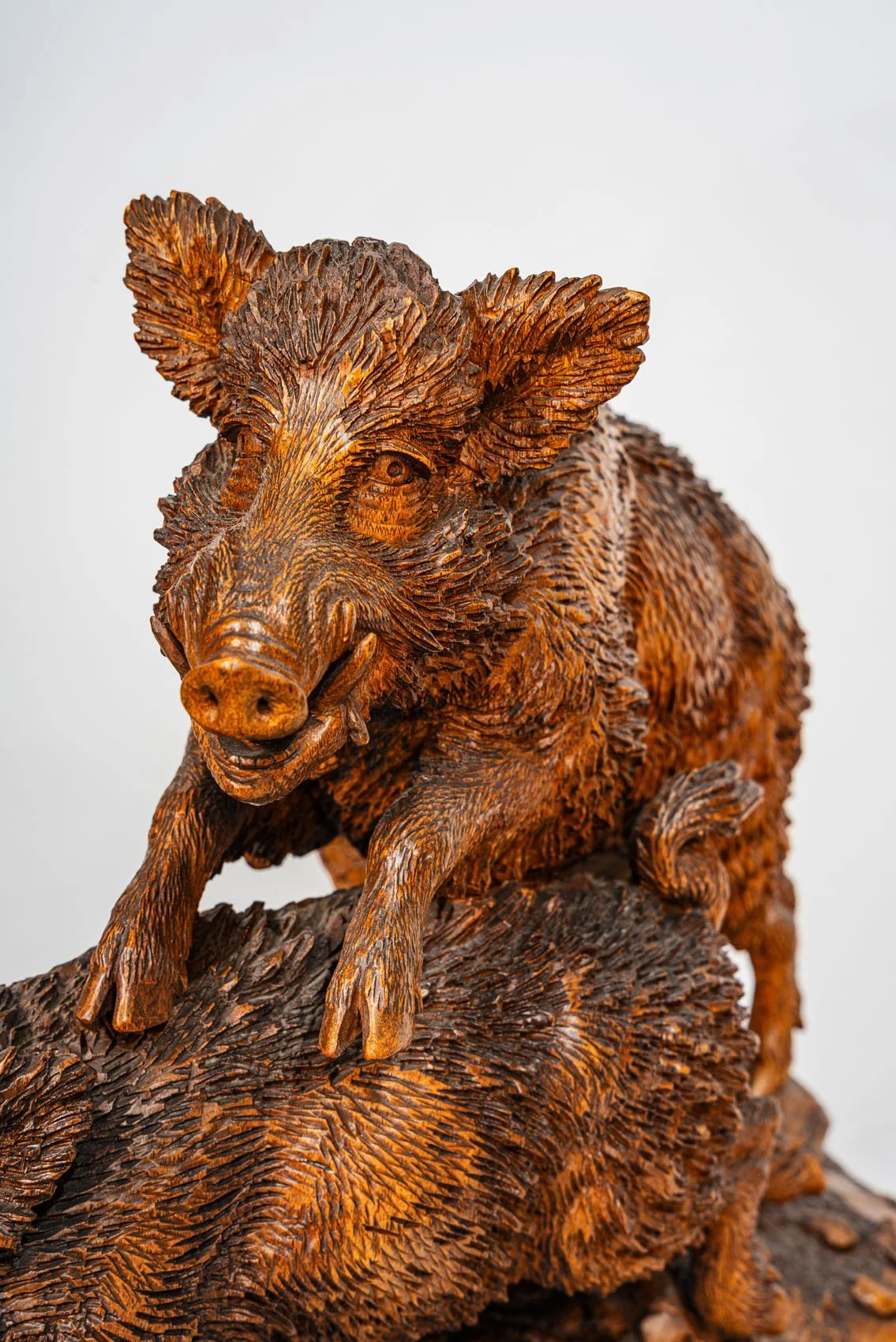 Image 2 of 3
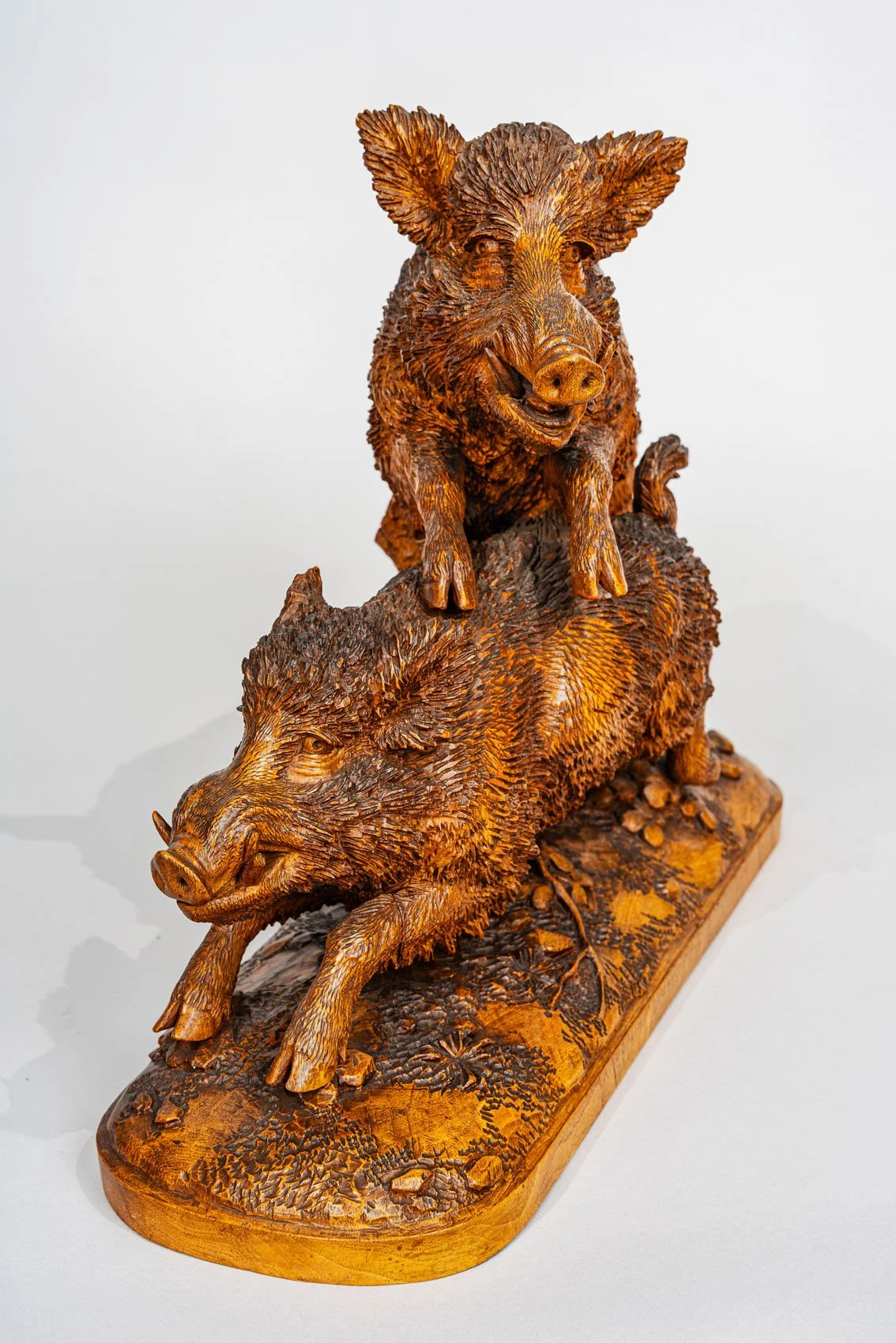 Image 3 of 3