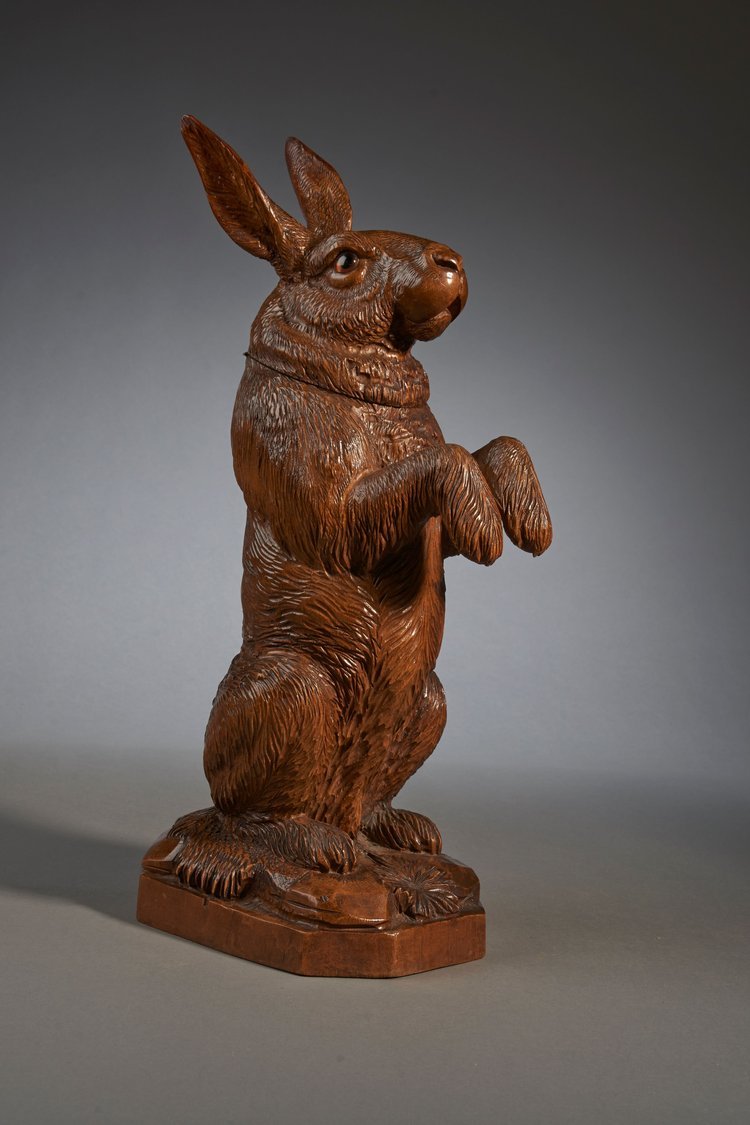
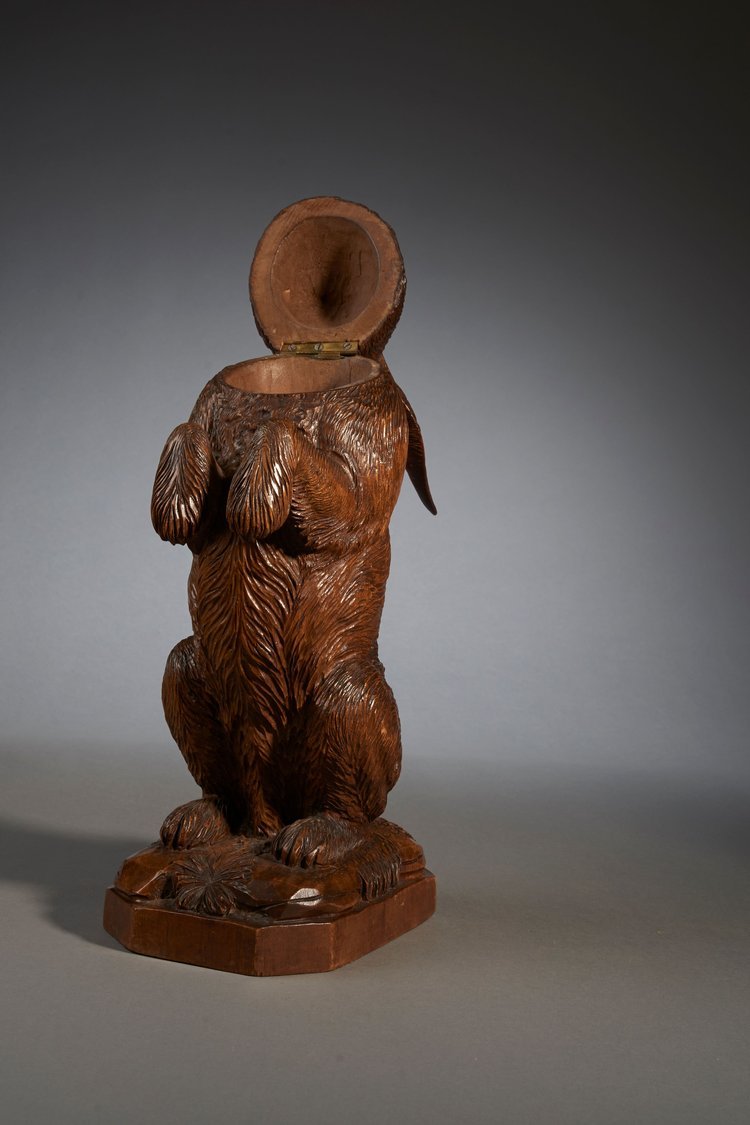
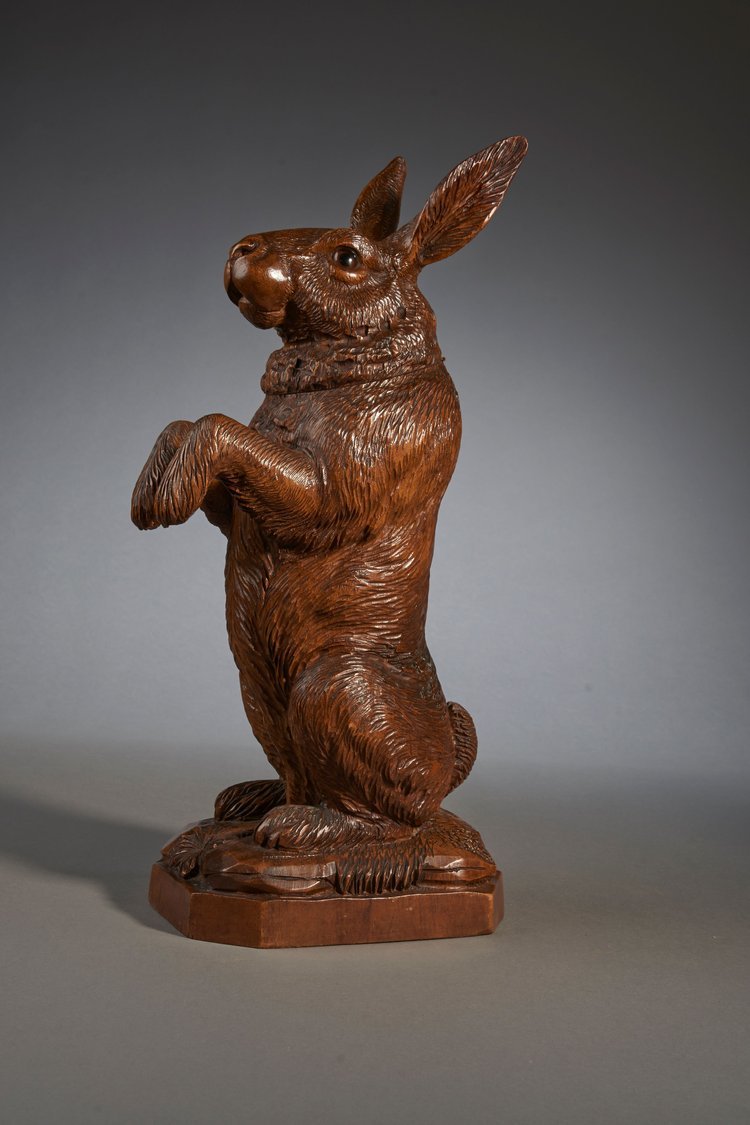
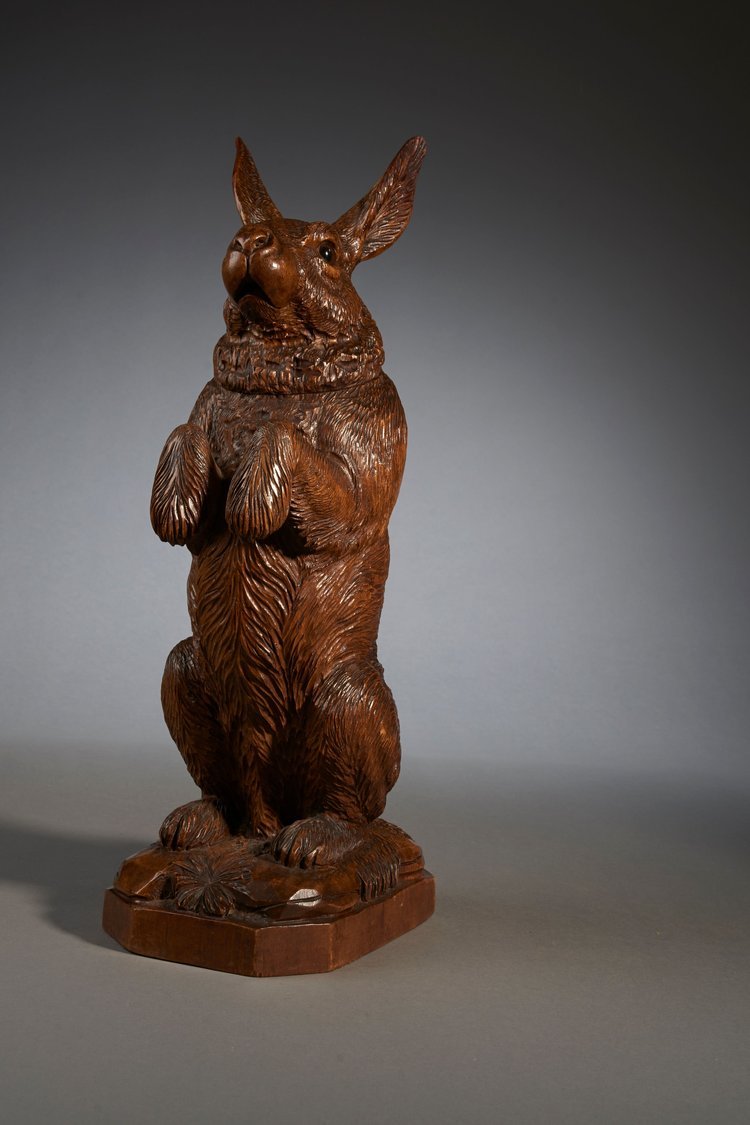
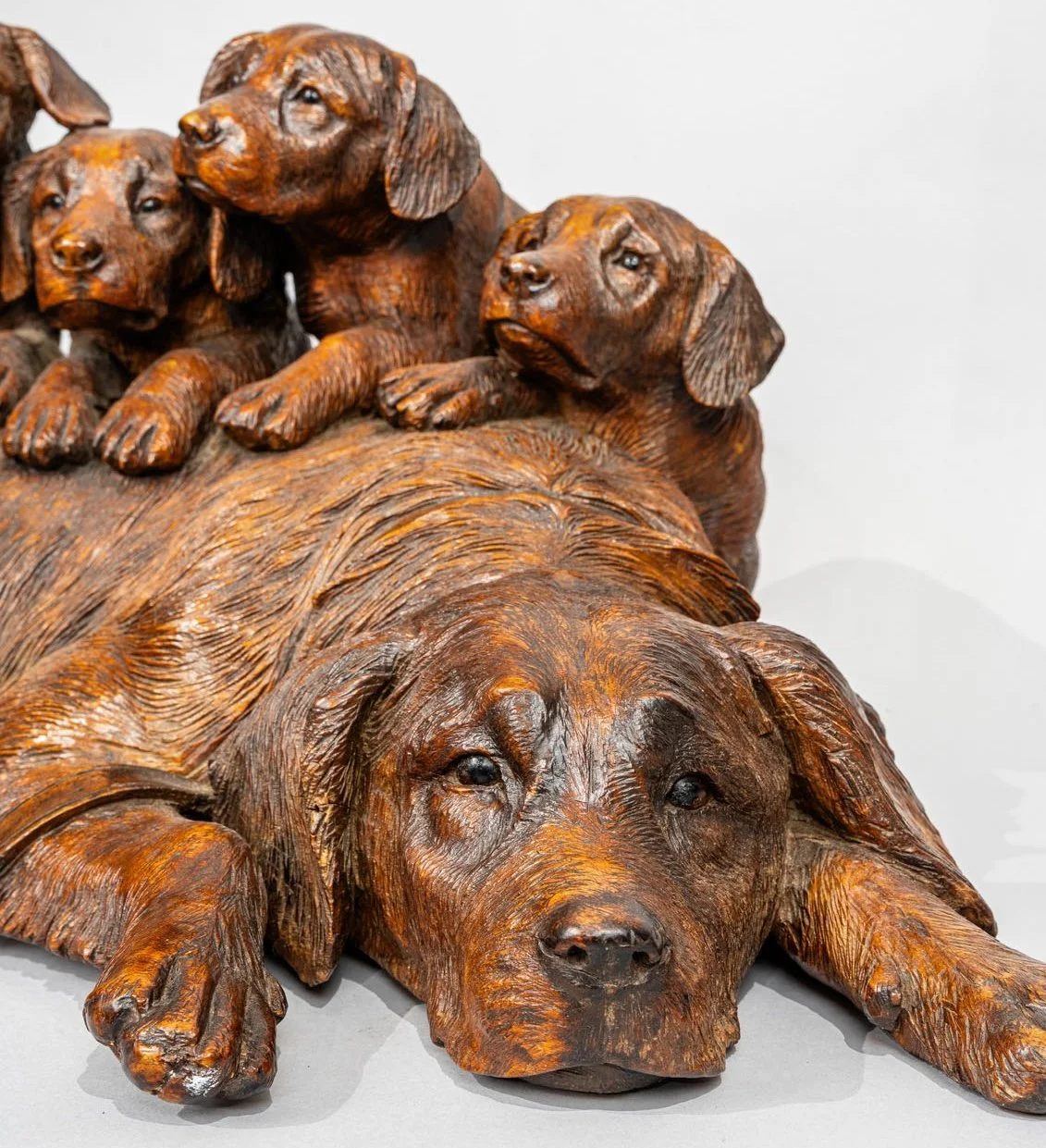
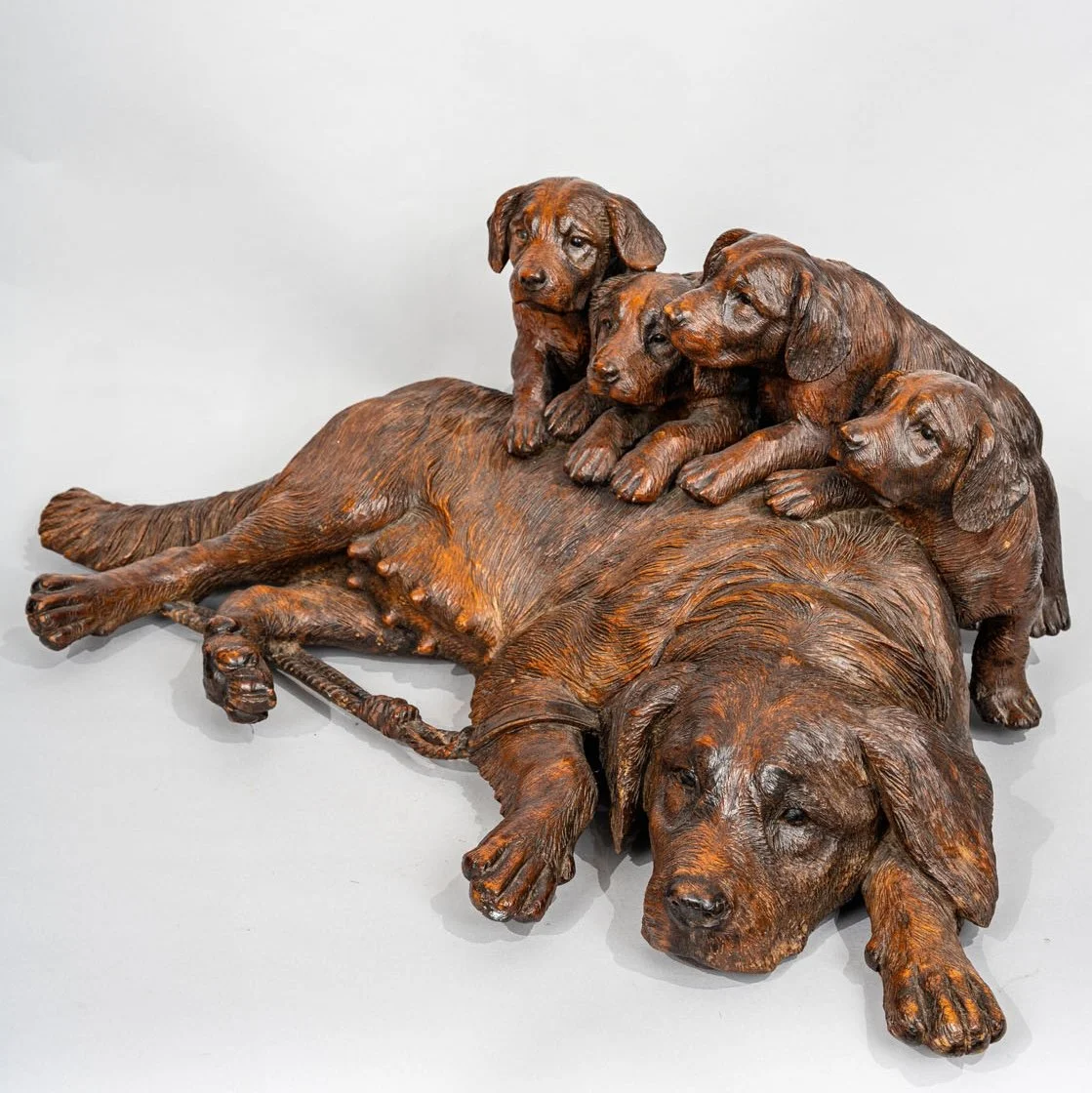
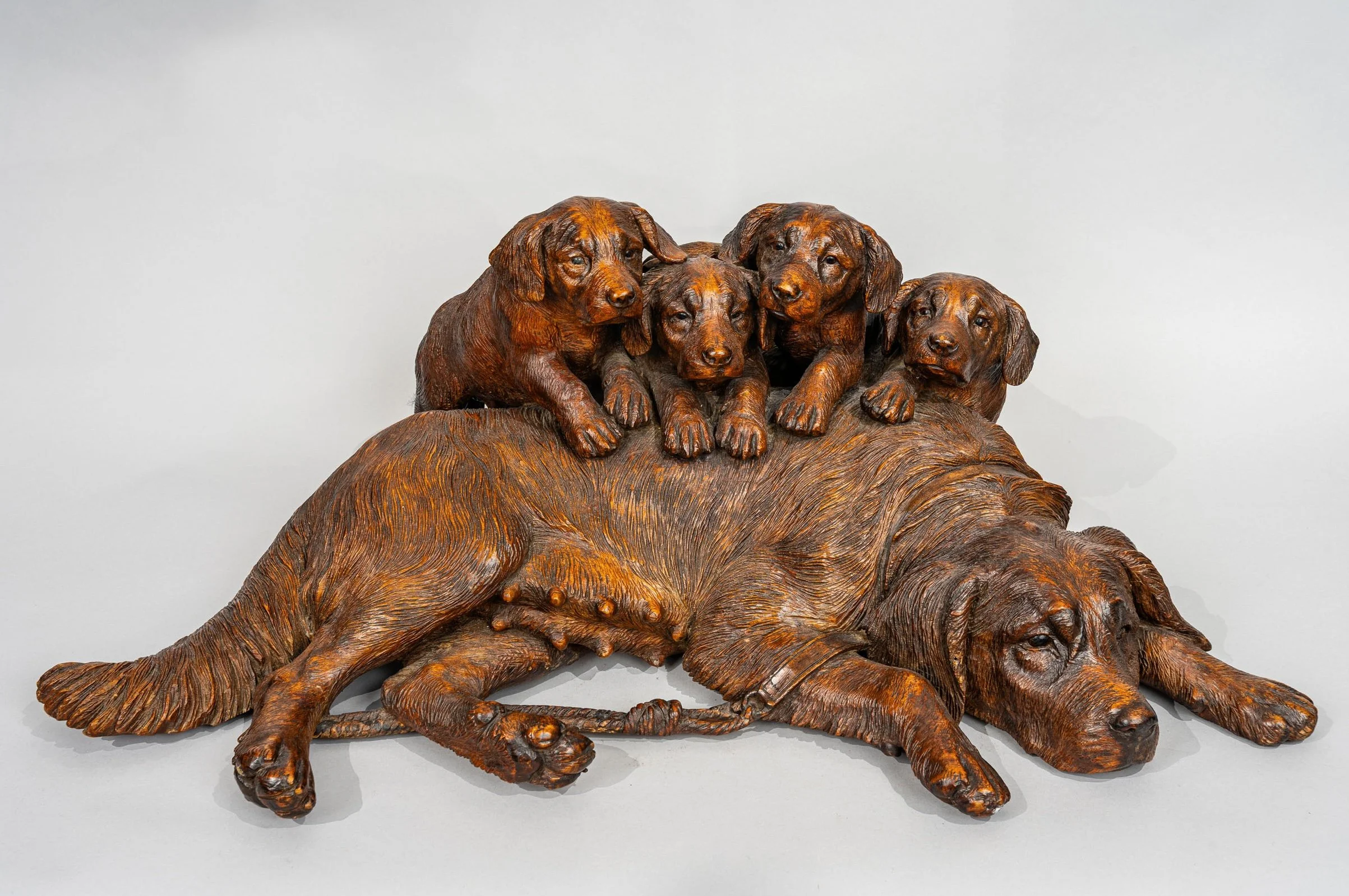
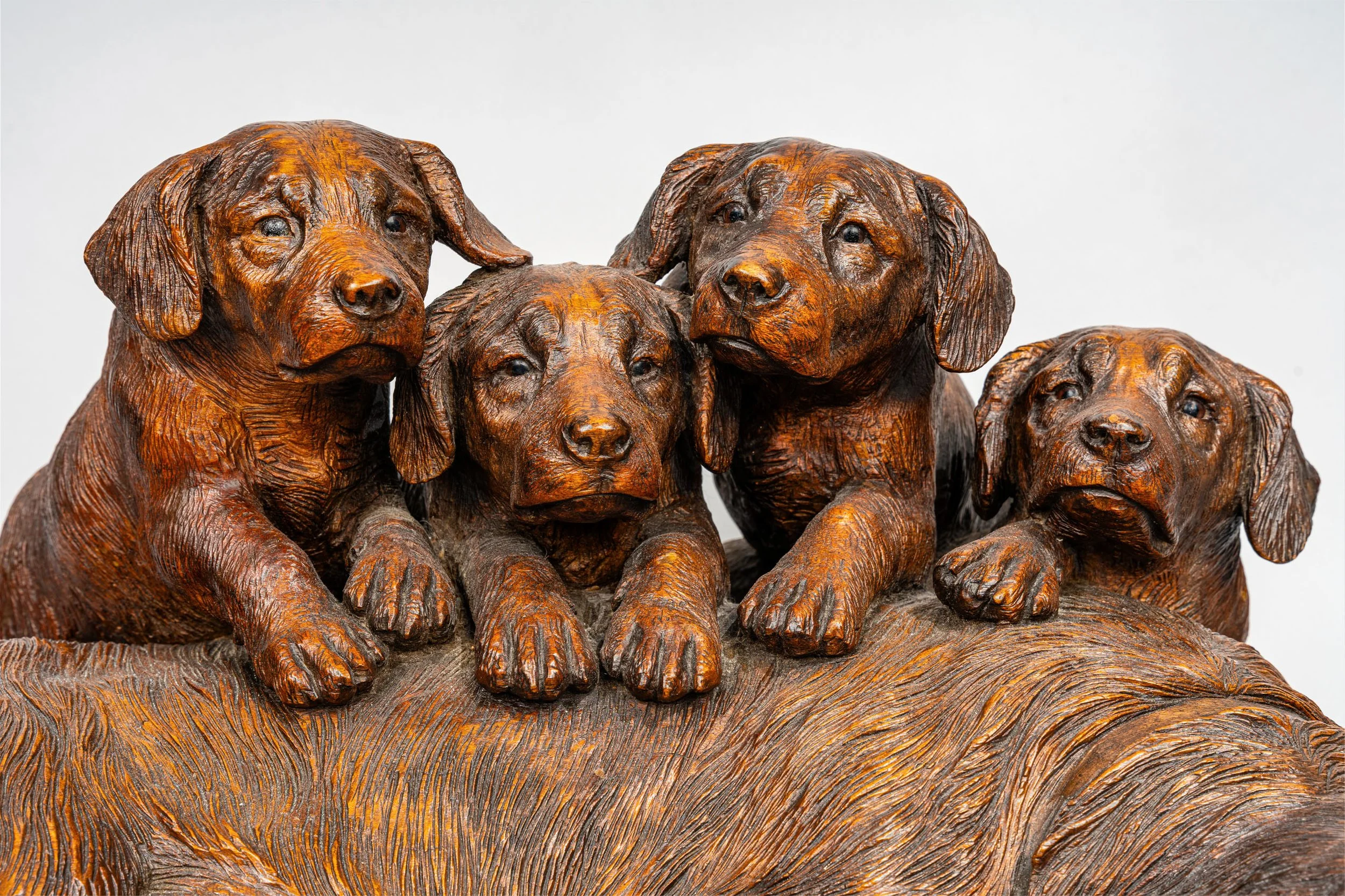
These two works are inseparable: made by the same hand, they carry a single story.
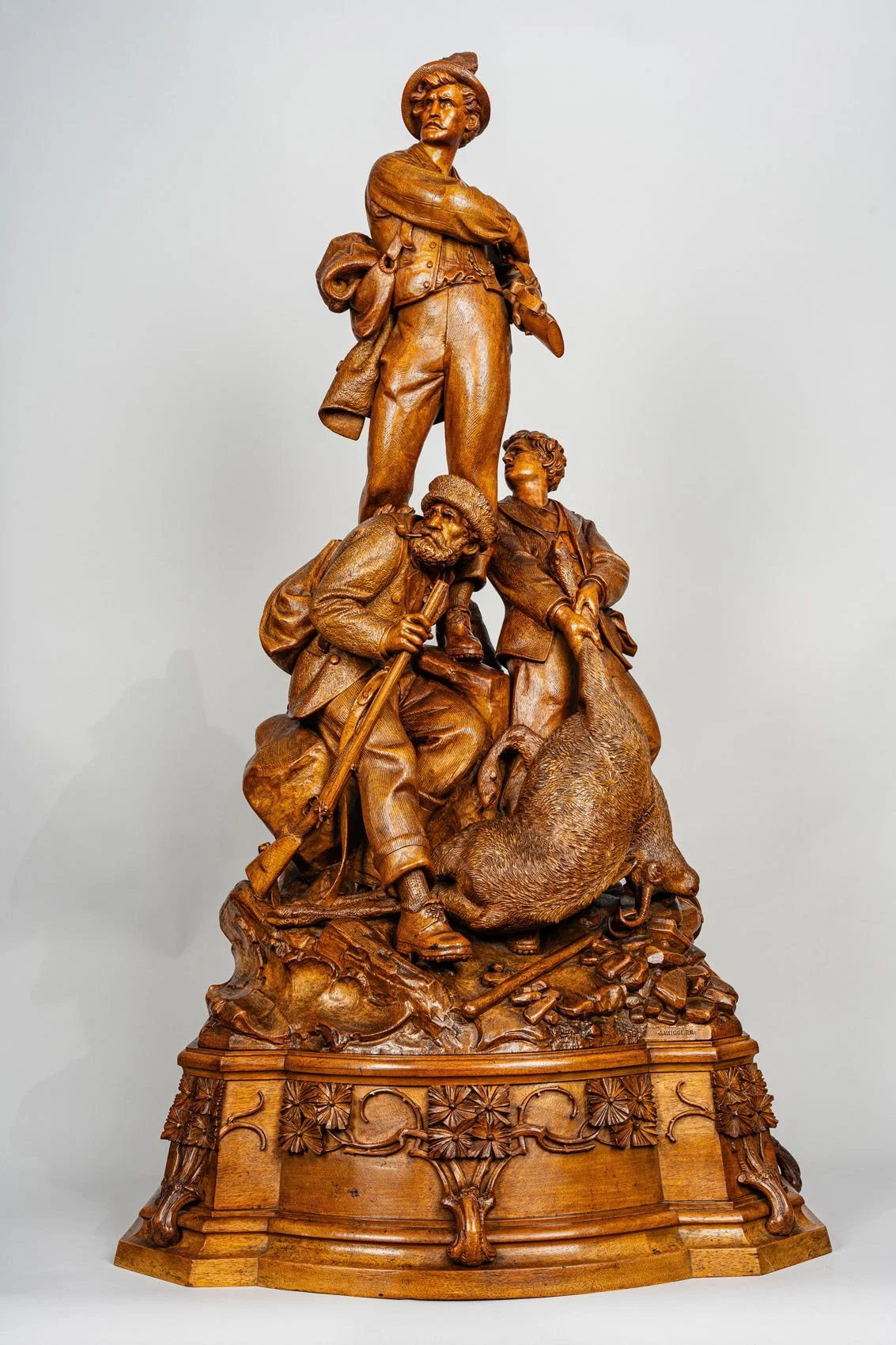
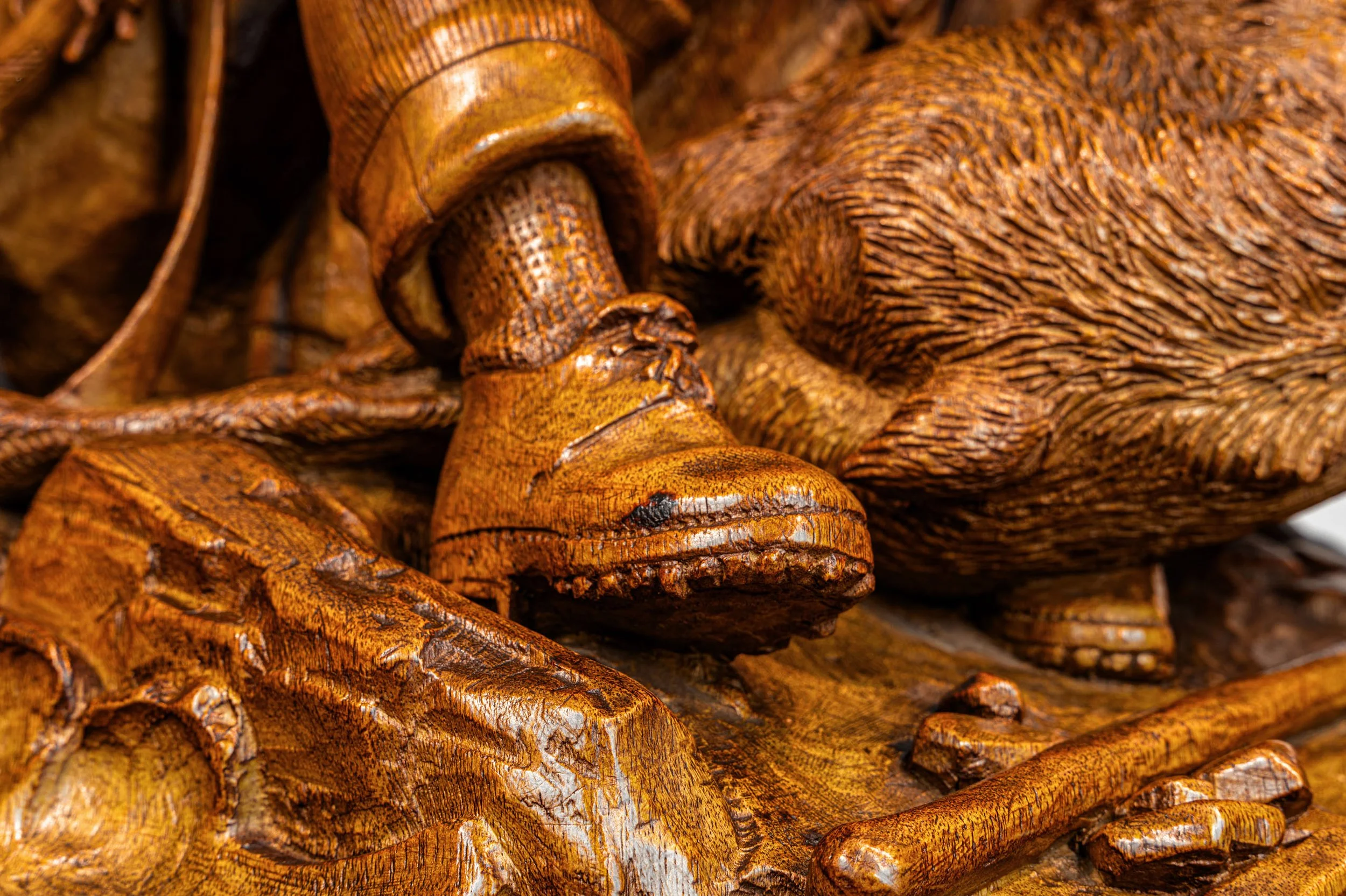
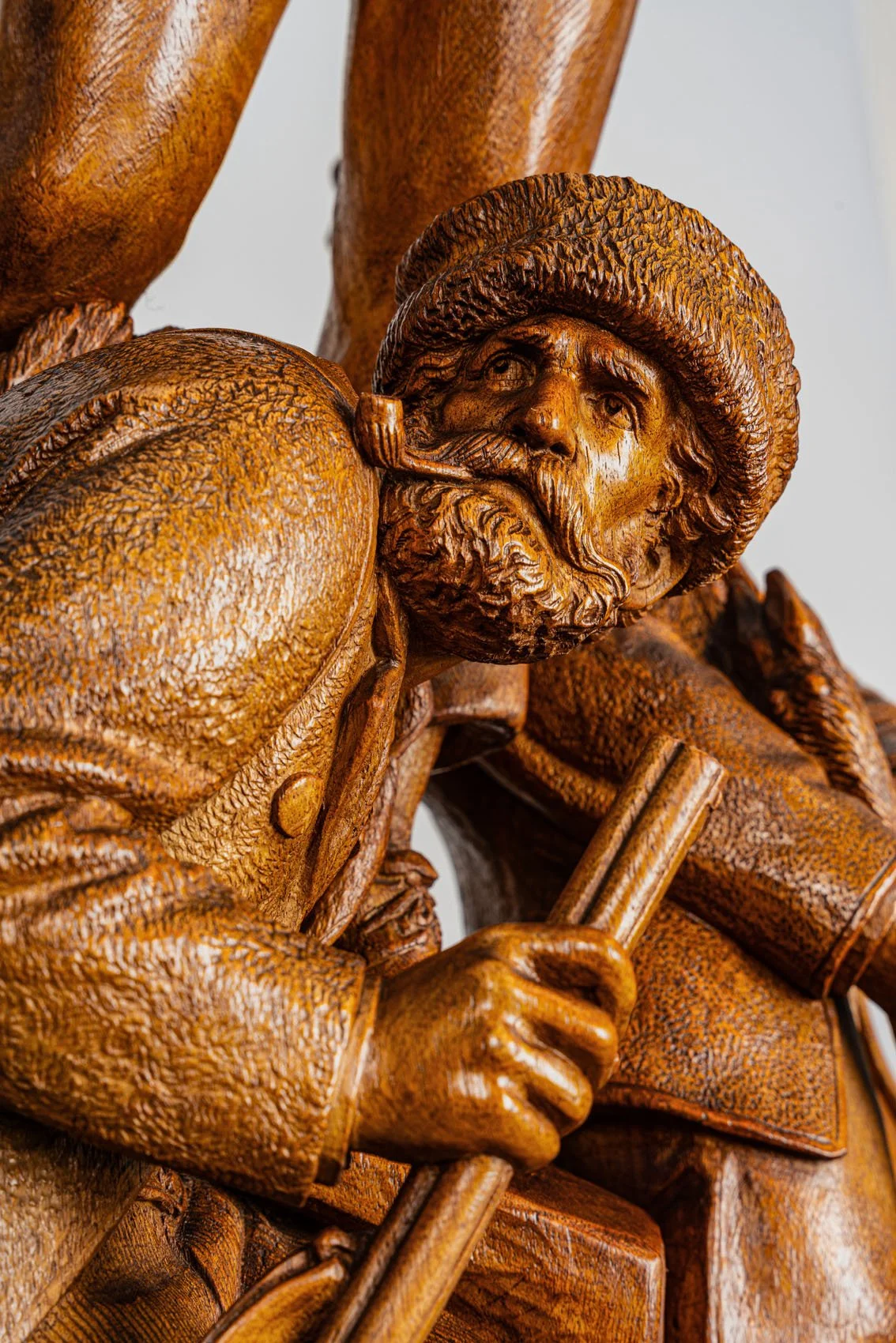
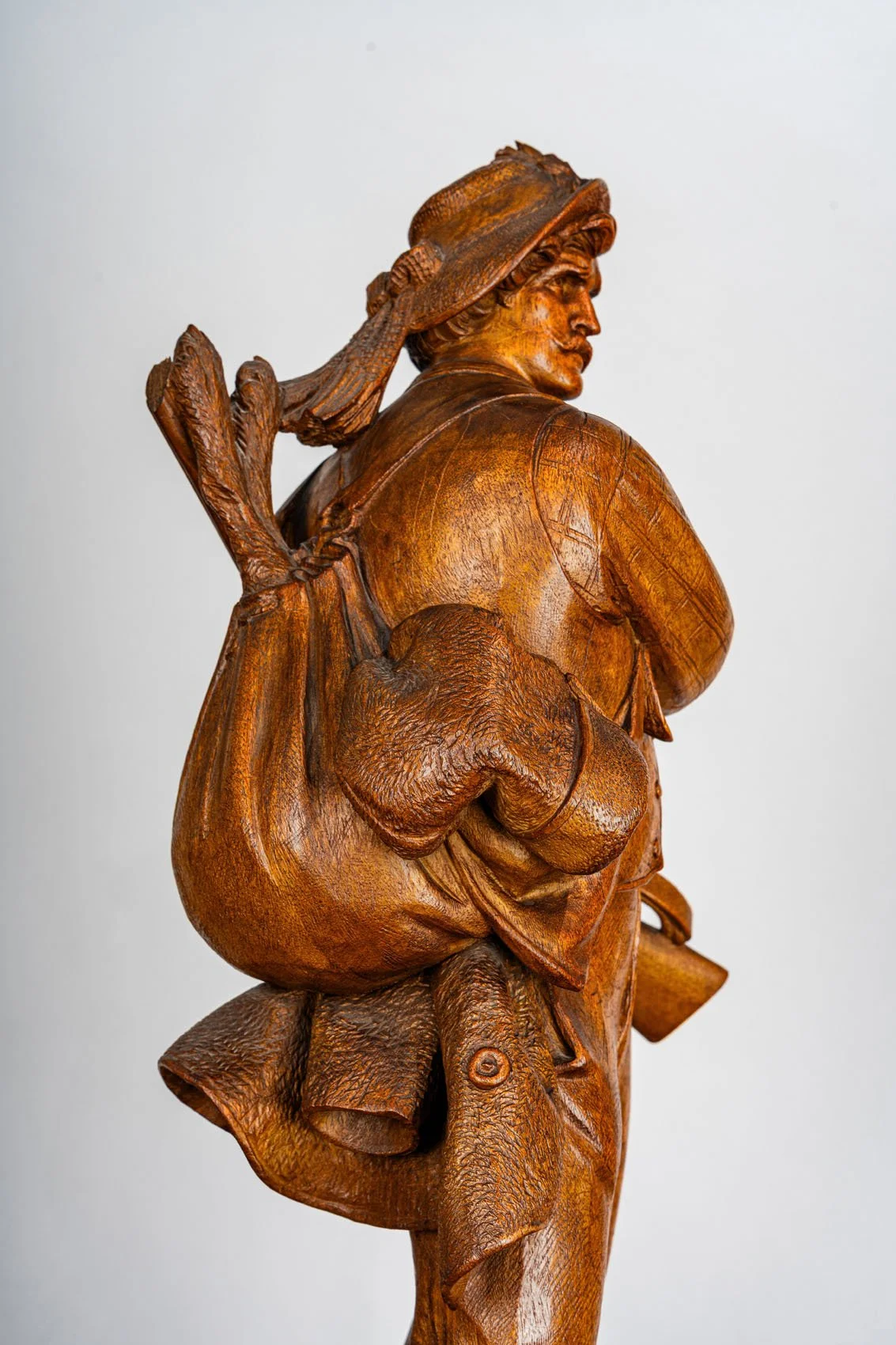
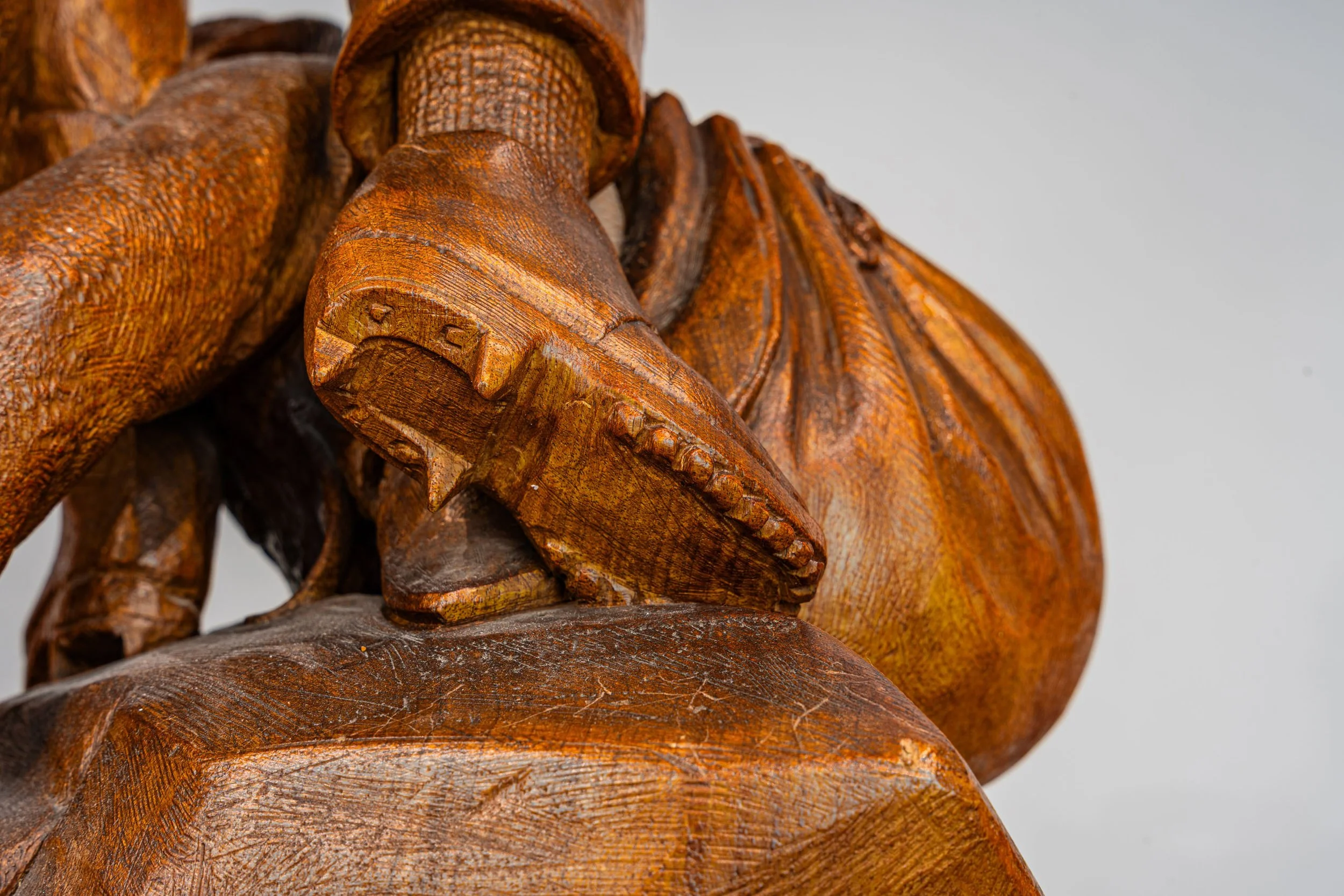
In the winter of 1871, Johann Huggler's younger brother Albert — his closest companion, collaborator and fellow carver — was lost in a climbing accident in the mountains above Brienz. The search was long and desperate; among those who joined it was Huggler's friend and fellow carver, Walter Mader, with his dog Nase, and when it ended, it had brought only loss: Albert was gone, and Nase, too, had been lost on the mountain. Around 1873, Johann returned to carving with a memorial. He stands at the summit of a rocky ledge, rope coiled at his shoulder, hat held at his chest, the posture of a man pausing in the aftermath of something irreversible; below him Albert lies fallen across the rocks, limbs slack, bound with rope, head lowered to the stone. The composition rises on a strong vertical axis, restrained and devoid of theatricality — not a scene but an act of remembrance, every detail of rope, boot lacing and rock grain carved from the deepest personal necessity.
The loss was shared, and so was the answer. At Christmas 1873, Mader, knowing Johann was not naturally drawn to dogs, presented him with a pup — said to be part wild dog, perhaps part wolf — which Johann named Gestank, and through that companionship came to understand what his friend had lost. He responded the only way he truly could: he carved Nase and placed the carving in Walter's hands. The long-haired hound lies at rest, the coat rendered in flowing tool strokes, the expression that of a portrait made from observation and affection — an individual, not a type. Huggler famously left his work unstained; here, in a quiet concession to Mader, who stained his, he introduced subtle coloration in the natural tones of the dog. On the underside he burned a simple mark, two mountain slopes crossed by two vertical lines: Albert and Nase, taken by the mountain.
Walter recorded the visit in his journal: "He comes early in the year… and as we sit by the fire, he places in my hands a wrapped cloth. Inside I hold what I have missed — Nase. He has carved my dear dog back to life… beneath, the slopes of two, marked twice — for Albert and for Nase, taken by the mountain…"
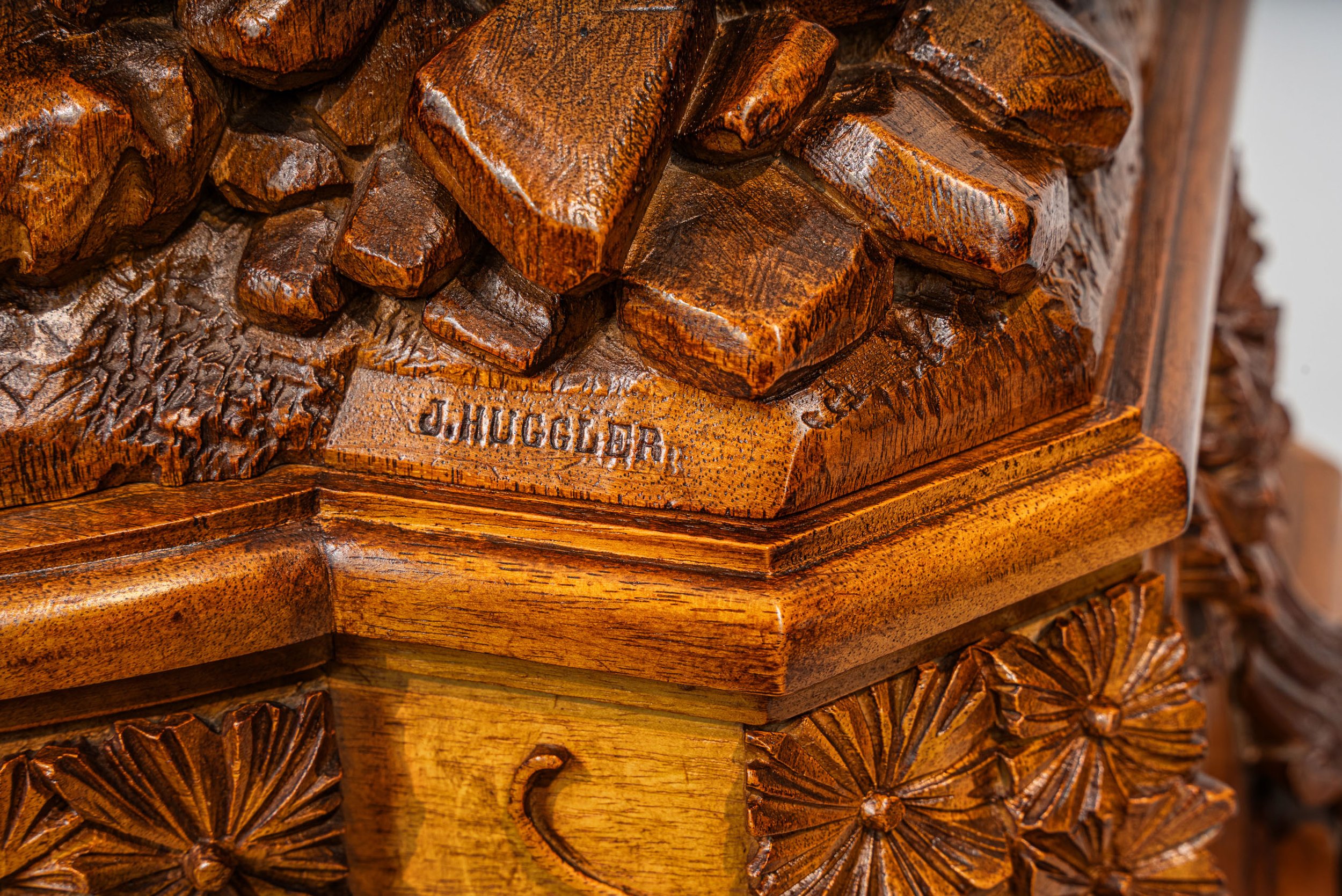
Johann Huggler (1834–1912) is the pre-eminent master of the Brienz tradition, whose work was exhibited at the Exposition Universelle in Paris and the World's Columbian Exposition in Chicago. These two works, made for private reasons and never intended for the market, reveal a dimension of his art that exhibition pieces cannot. They will be highlighted in the updated edition of Swiss Carvings: The Art of the Black Forest.
Condition: Both in walnut, very good overall; original patina, carving complete and crisp, burn mark present and legible on the underside of the Nase carving; minor wear consistent with age, no restorations noted.
Literature: Jay Arenski, Simon Daniels, and Michael Daniels, Swiss Carvings: The Art of the Black Forest, 1820–1940 (2006).
These two works are inseparable: made by the same hand, they carry a single story.
In the winter of 1871, Johann Huggler's younger brother Albert — his closest companion, collaborator and fellow carver — was lost in a climbing accident in the mountains above Brienz. The search was long and desperate; among those who joined it was Huggler's friend and fellow carver, Walter Mader, with his dog Nase, and when it ended, it had brought only loss: Albert was gone, and Nase, too, had been lost on the mountain. Around 1873, Johann returned to carving with a memorial. He stands at the summit of a rocky ledge, rope coiled at his shoulder, hat held at his chest, the posture of a man pausing in the aftermath of something irreversible; below him Albert lies fallen across the rocks, limbs slack, bound with rope, head lowered to the stone. The composition rises on a strong vertical axis, restrained and devoid of theatricality — not a scene but an act of remembrance, every detail of rope, boot lacing and rock grain carved from the deepest personal necessity.
The loss was shared, and so was the answer. At Christmas 1873, Mader, knowing Johann was not naturally drawn to dogs, presented him with a pup — said to be part wild dog, perhaps part wolf — which Johann named Gestank, and through that companionship came to understand what his friend had lost. He responded the only way he truly could: he carved Nase and placed the carving in Walter's hands. The long-haired hound lies at rest, the coat rendered in flowing tool strokes, the expression that of a portrait made from observation and affection — an individual, not a type. Huggler famously left his work unstained; here, in a quiet concession to Mader, who stained his, he introduced subtle coloration in the natural tones of the dog. On the underside he burned a simple mark, two mountain slopes crossed by two vertical lines: Albert and Nase, taken by the mountain.
Walter recorded the visit in his journal: "He comes early in the year… and as we sit by the fire, he places in my hands a wrapped cloth. Inside I hold what I have missed — Nase. He has carved my dear dog back to life… beneath, the slopes of two, marked twice — for Albert and for Nase, taken by the mountain…"
Johann Huggler (1834–1912) is the pre-eminent master of the Brienz tradition, whose work was exhibited at the Exposition Universelle in Paris and the World's Columbian Exposition in Chicago. These two works, made for private reasons and never intended for the market, reveal a dimension of his art that exhibition pieces cannot. They will be highlighted in the updated edition of Swiss Carvings: The Art of the Black Forest.
Condition: Both in walnut, very good overall; original patina, carving complete and crisp, burn mark present and legible on the underside of the Nase carving; minor wear consistent with age, no restorations noted.
Literature: Jay Arenski, Simon Daniels, and Michael Daniels, Swiss Carvings: The Art of the Black Forest, 1820–1940 (2006).

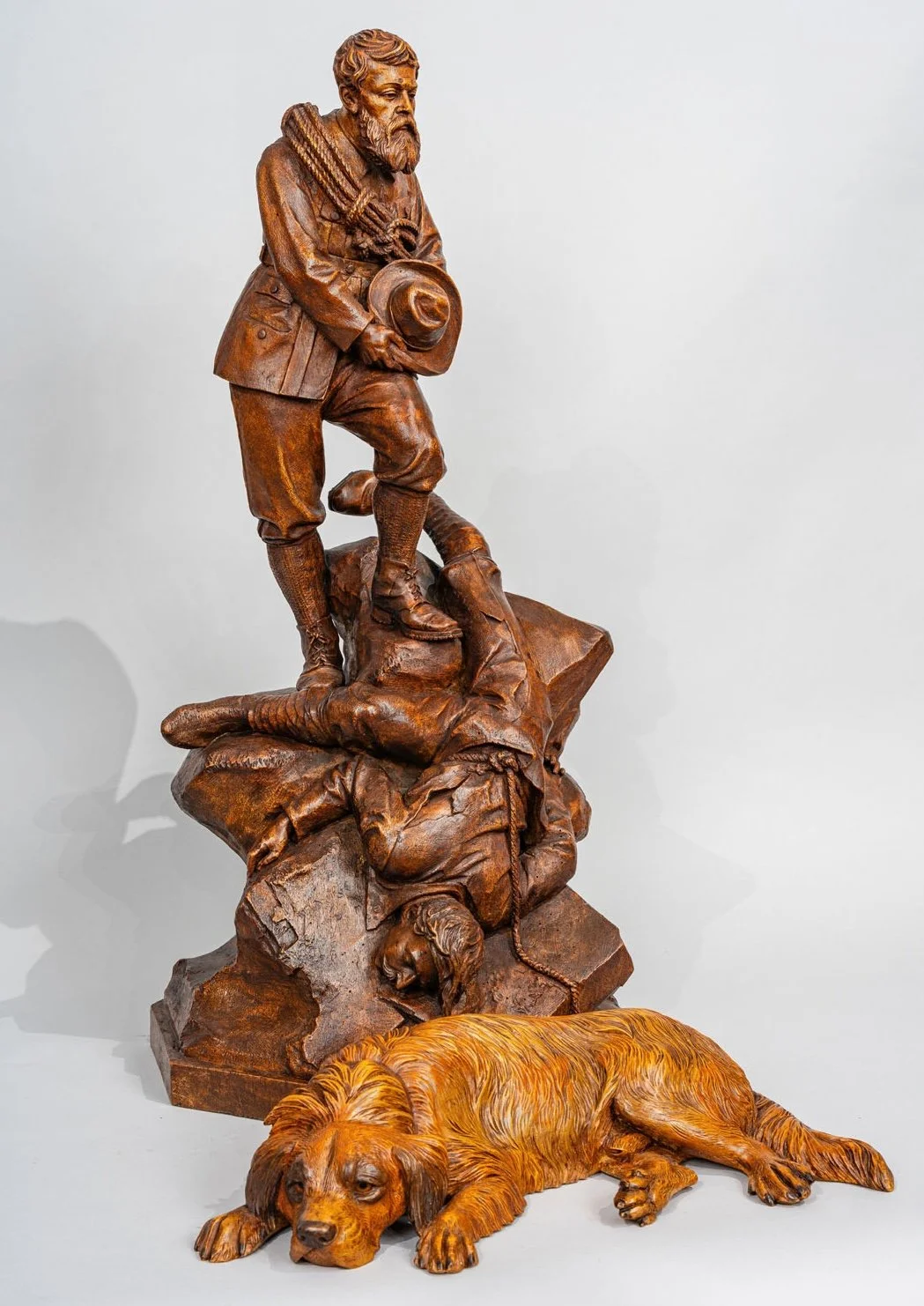 Image 1 of 6
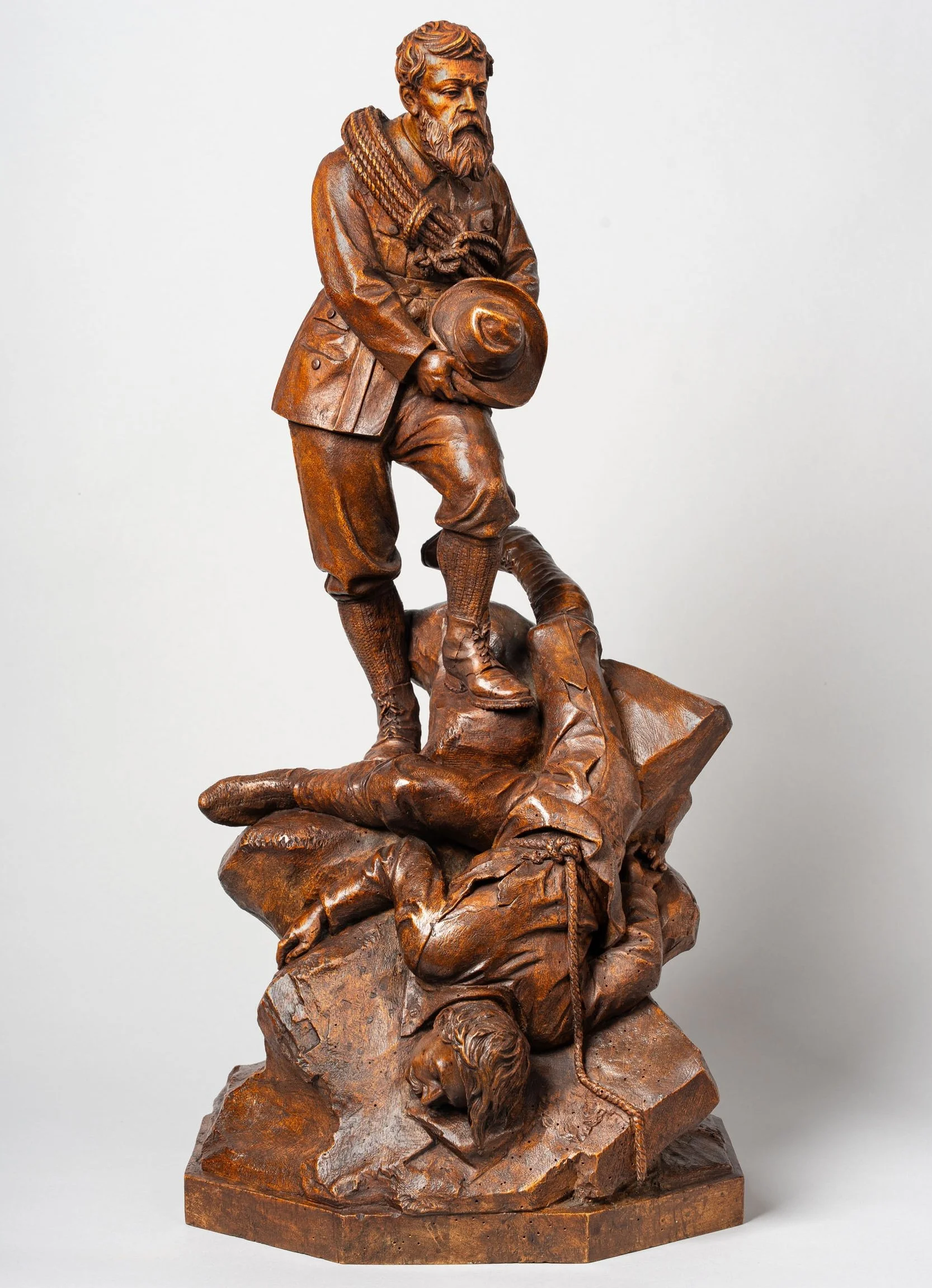 Image 2 of 6
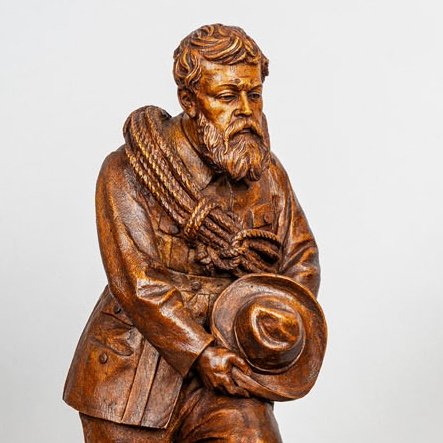 Image 3 of 6
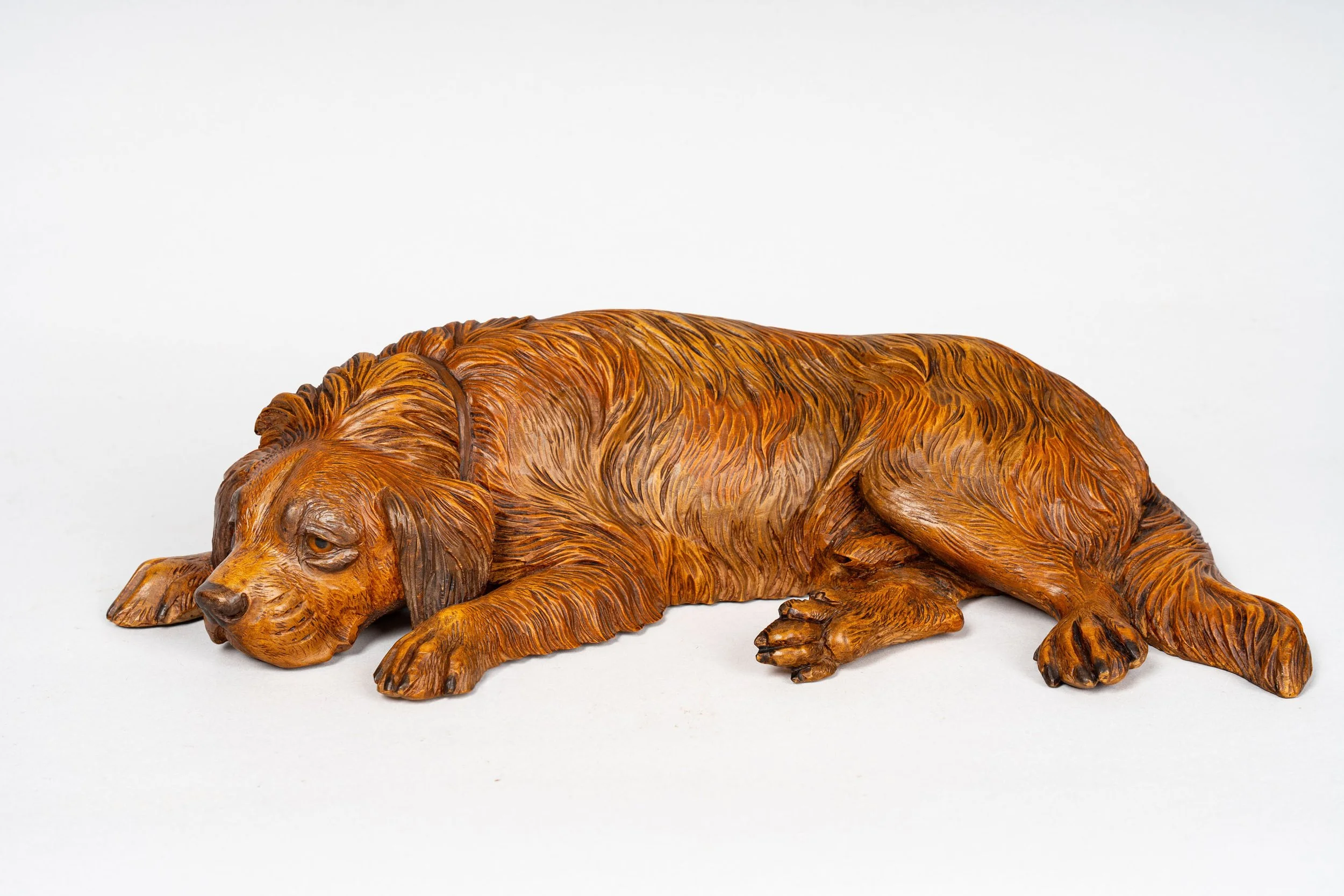 Image 4 of 6
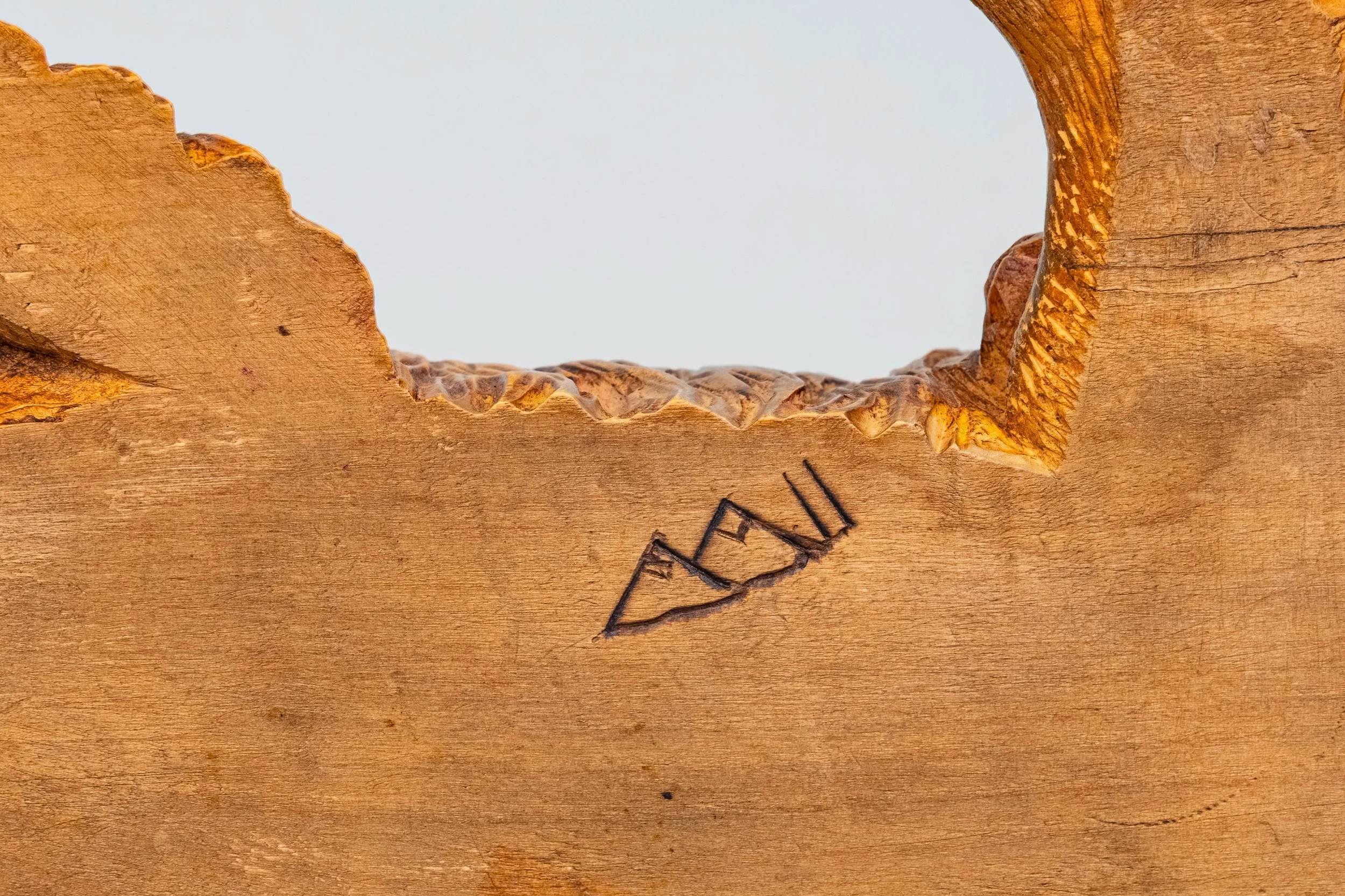 Image 5 of 6
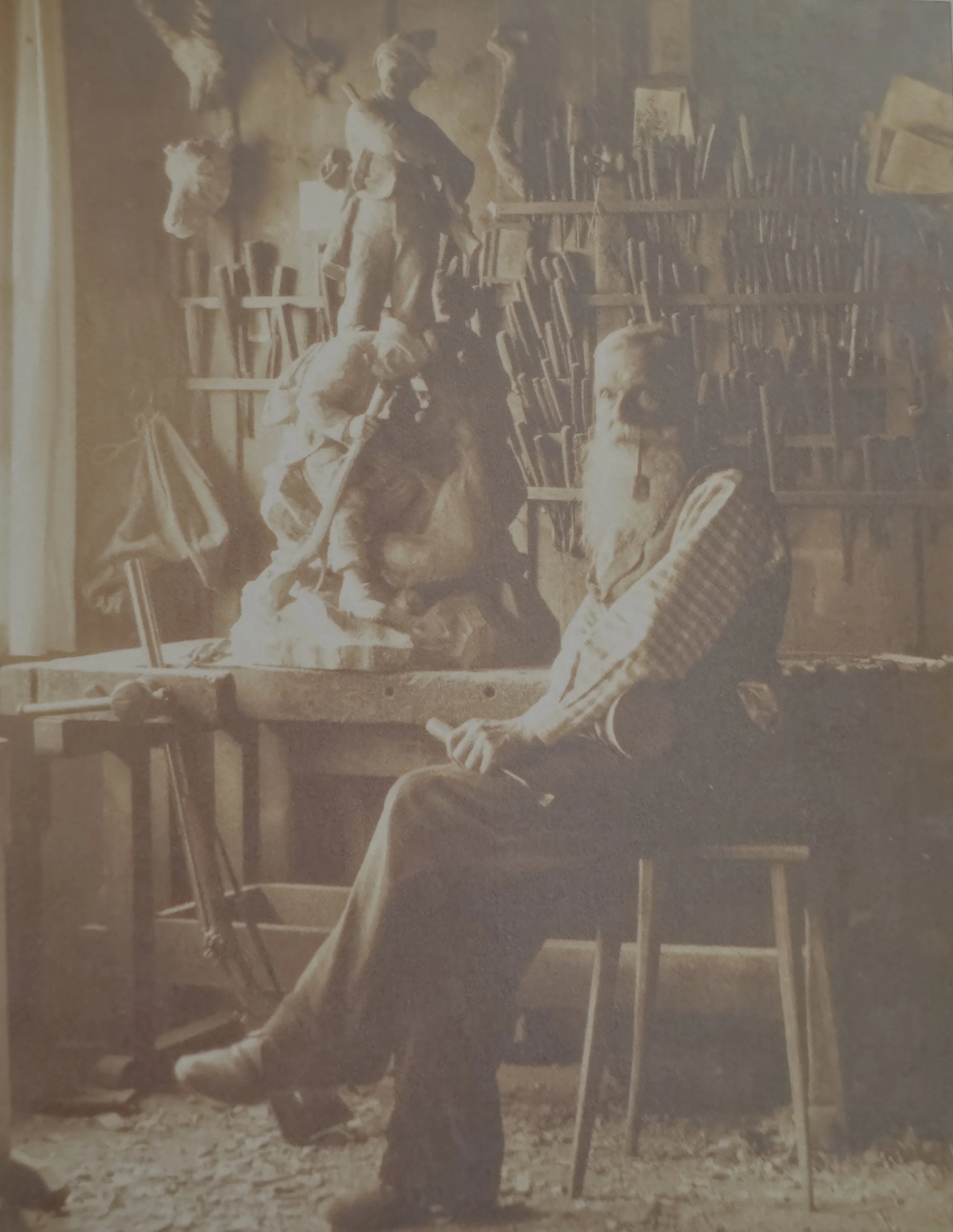 Image 6 of 6