The Malle Fleurs was never sold. It appeared in no window and no catalog: it was given, personally, by Georges and Gaston-Louis Vuitton to the clients they valued most. To receive one was to be acknowledged as belonging to the innermost circle of the house, a distinction no money could buy.
The custom began in 1910. Forbidden by house rule from offering discounts to even their most loyal clients, the Vuittons devised another gesture of gratitude: instead of a bouquet, flowers planted in a miniature trunk in the house monogram. By the 1920s and 1930s it had become one of the most coveted status symbols in Paris. The soprano Marthe Chenal received hers in 1922, in the very years of the present example, and Georges Vuitton himself was photographed examining a flower trunk around 1930. The custom continued until the early 1980s.
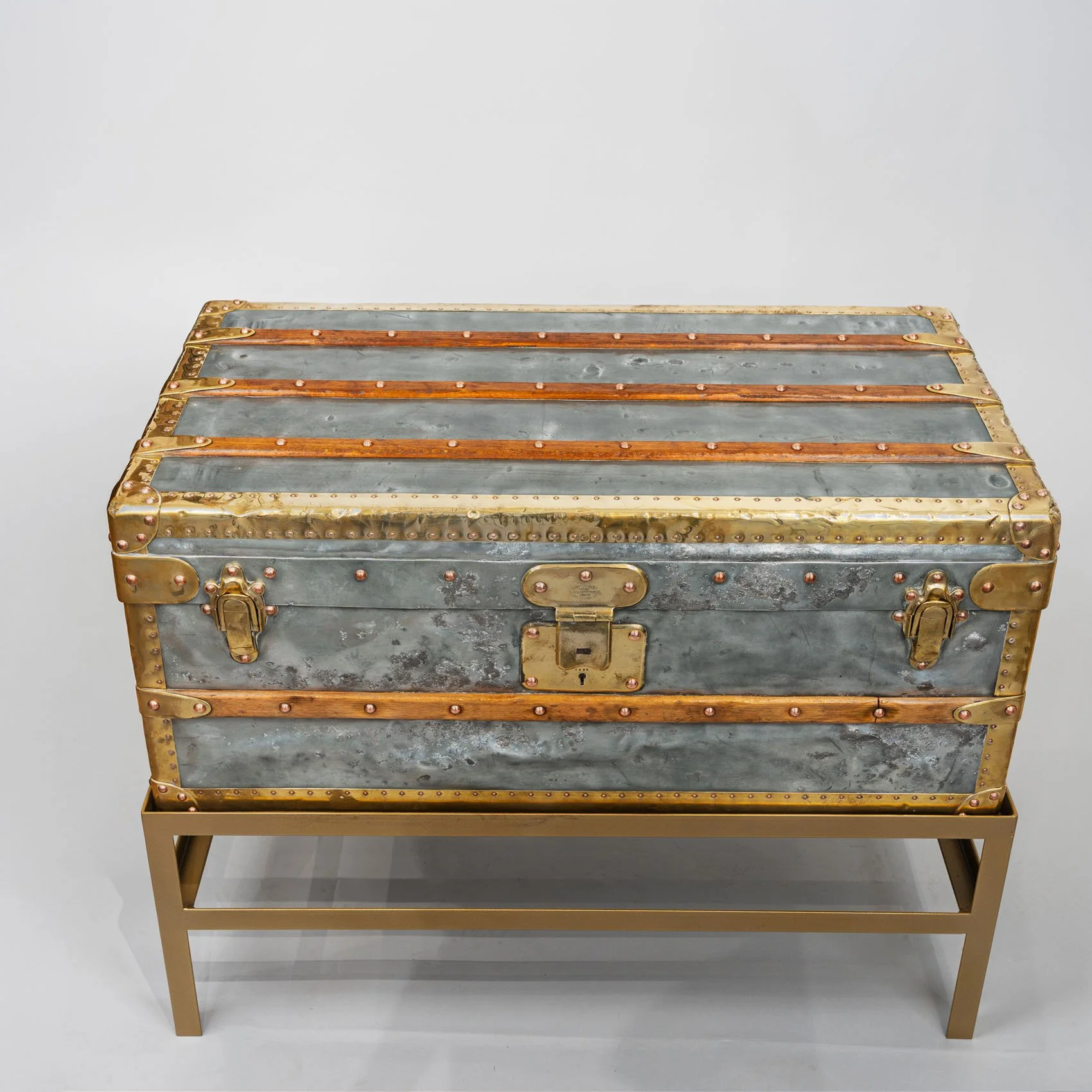
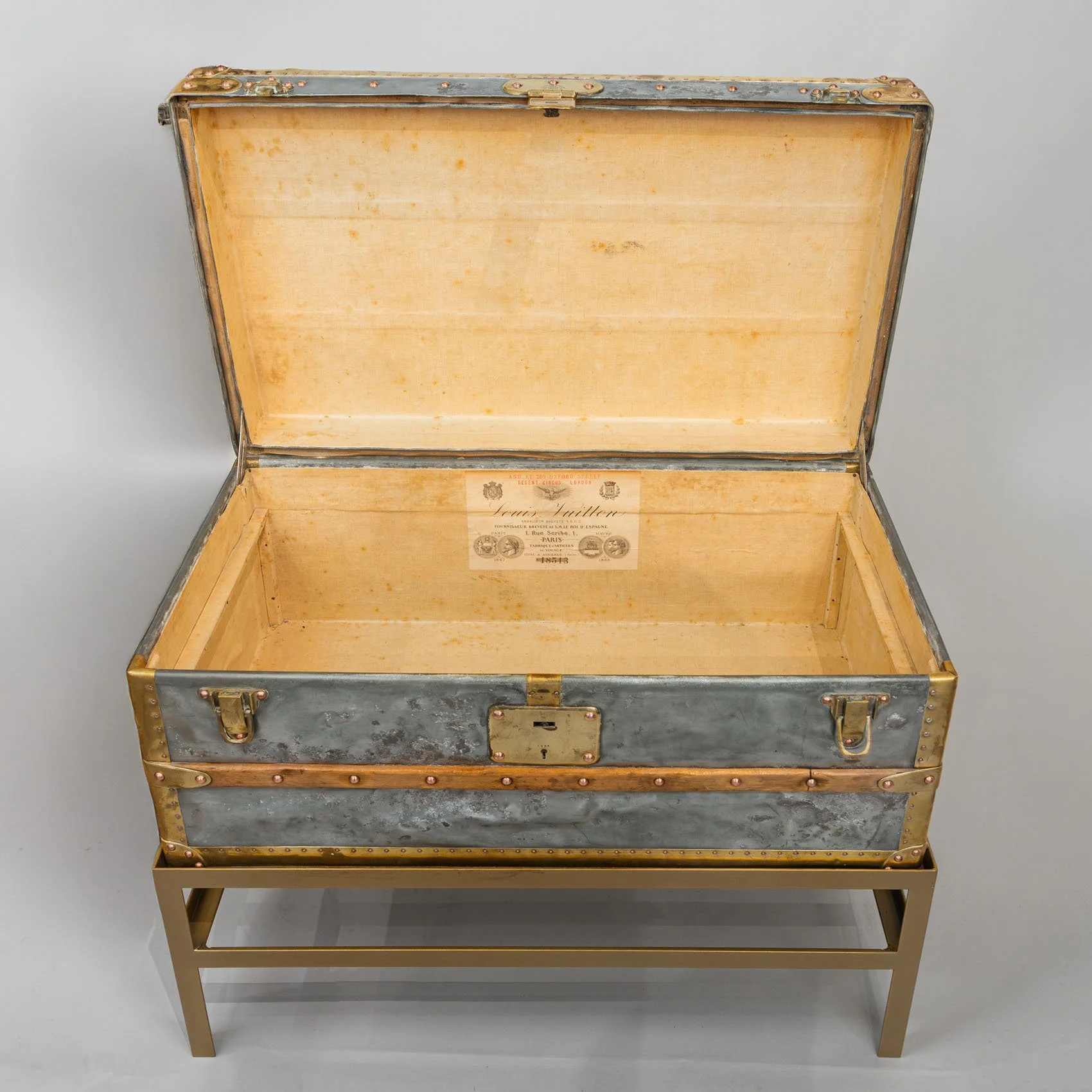
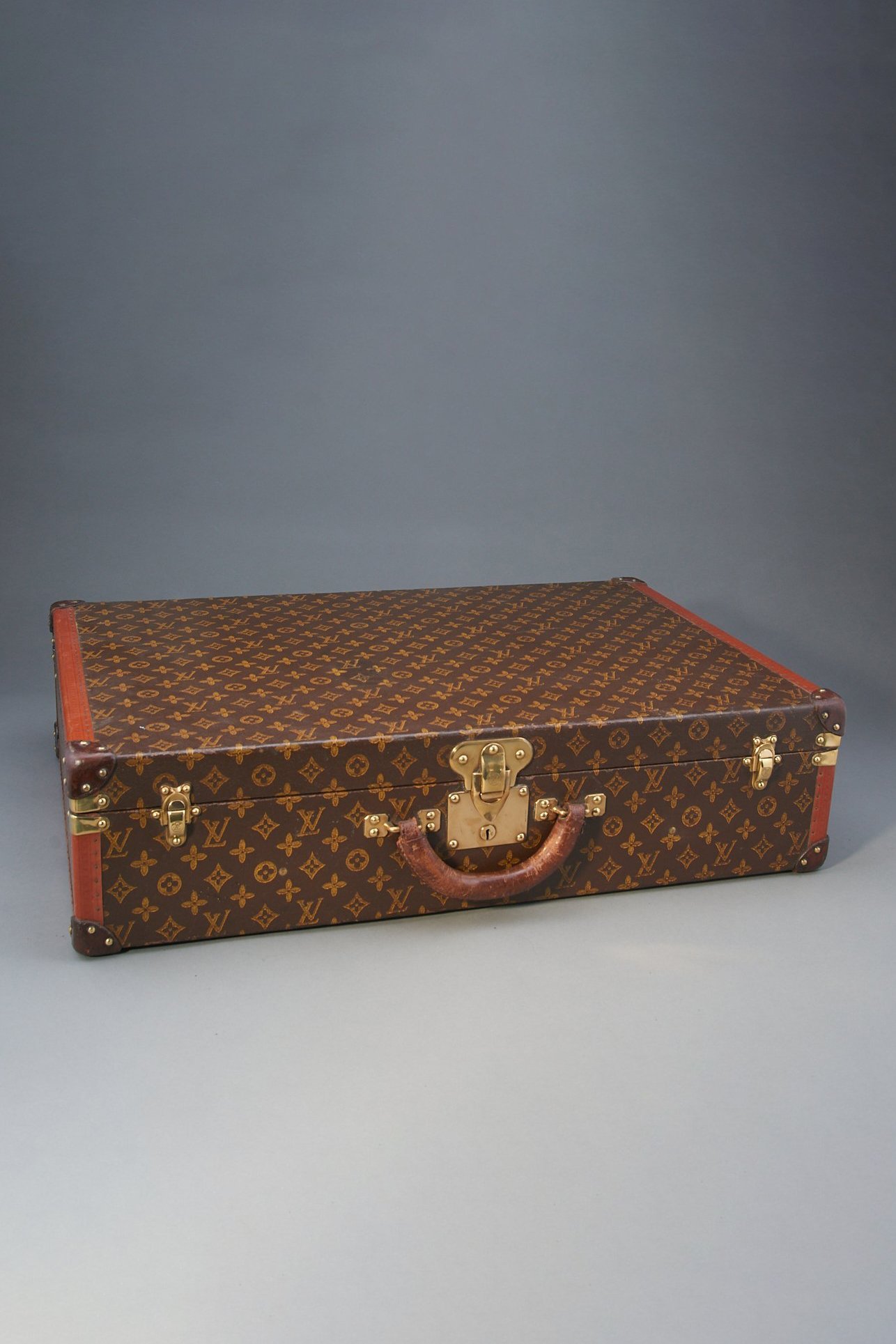
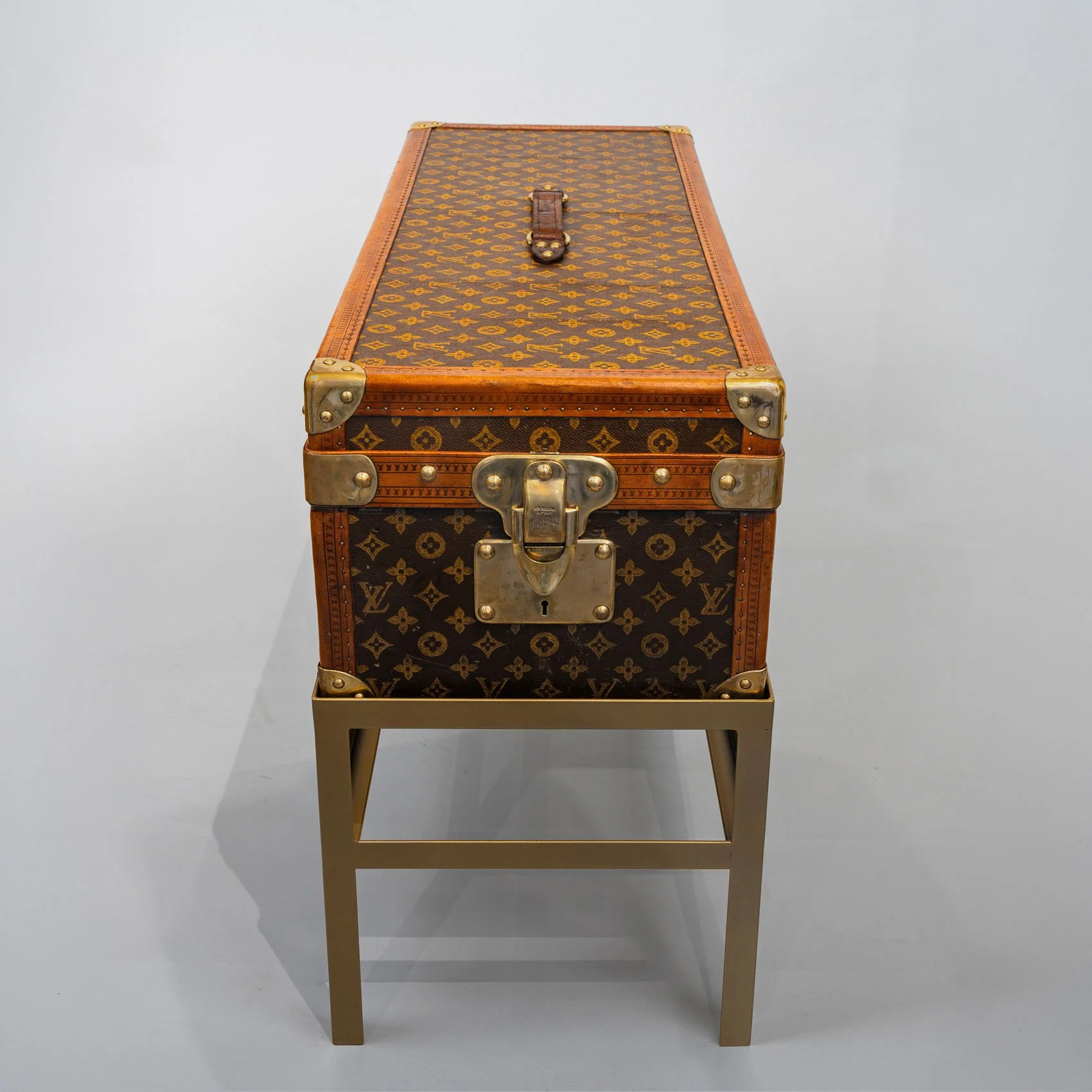
This example, circa 1920, is built in papier-mâché, covered in the monogram paper finish, the more refined specification reserved for these gift objects rather than the canvas used in commercial trunk production. It is trimmed with the LV pattern edging and fitted with brass corner guards, side clasps, a stamped lock plate, and leather handles, and, as a survival of the greatest rarity, the original key, still on its yellow ribbon. The interior is lined in French marbled paper, swirling greens, golds, purples, and creams, a theatrical reveal that shows the piece was conceived from the outset as a jewelry or decorative box rather than a planter.
Flower trunks of this period, with the key present, are among the most collectible of all Vuitton objects and appear on the market only rarely.
Condition: Very good, consistent with age. Honest patina to the monogram paper, brass hardware complete, handles sound, marbled lining rich throughout. Original key on yellow ribbon.
Dimensions: 11 in. width x 5 1/2 in. depth x 4 1/4 in. height
Literature: Pierre Léonforte and Éric Pujalet-Plaà, Louis Vuitton: 100 Legendary Trunks, New York, 2010, p. 334, "Trunk for Flowers, Georges and Gaston-Louis Vuitton, Paris, 1910," including the photograph of Georges Vuitton examining a flower trunk, c.1930.
The Malle Fleurs was never sold. It appeared in no window and no catalog: it was given, personally, by Georges and Gaston-Louis Vuitton to the clients they valued most. To receive one was to be acknowledged as belonging to the innermost circle of the house, a distinction no money could buy.
The custom began in 1910. Forbidden by house rule from offering discounts to even their most loyal clients, the Vuittons devised another gesture of gratitude: instead of a bouquet, flowers planted in a miniature trunk in the house monogram. By the 1920s and 1930s it had become one of the most coveted status symbols in Paris. The soprano Marthe Chenal received hers in 1922, in the very years of the present example, and Georges Vuitton himself was photographed examining a flower trunk around 1930. The custom continued until the early 1980s.
This example, circa 1920, is built in papier-mâché, covered in the monogram paper finish, the more refined specification reserved for these gift objects rather than the canvas used in commercial trunk production. It is trimmed with the LV pattern edging and fitted with brass corner guards, side clasps, a stamped lock plate, and leather handles, and, as a survival of the greatest rarity, the original key, still on its yellow ribbon. The interior is lined in French marbled paper, swirling greens, golds, purples, and creams, a theatrical reveal that shows the piece was conceived from the outset as a jewelry or decorative box rather than a planter.
Flower trunks of this period, with the key present, are among the most collectible of all Vuitton objects and appear on the market only rarely.
Condition: Very good, consistent with age. Honest patina to the monogram paper, brass hardware complete, handles sound, marbled lining rich throughout. Original key on yellow ribbon.
Dimensions: 11 in. width x 5 1/2 in. depth x 4 1/4 in. height
Literature: Pierre Léonforte and Éric Pujalet-Plaà, Louis Vuitton: 100 Legendary Trunks, New York, 2010, p. 334, "Trunk for Flowers, Georges and Gaston-Louis Vuitton, Paris, 1910," including the photograph of Georges Vuitton examining a flower trunk, c.1930.

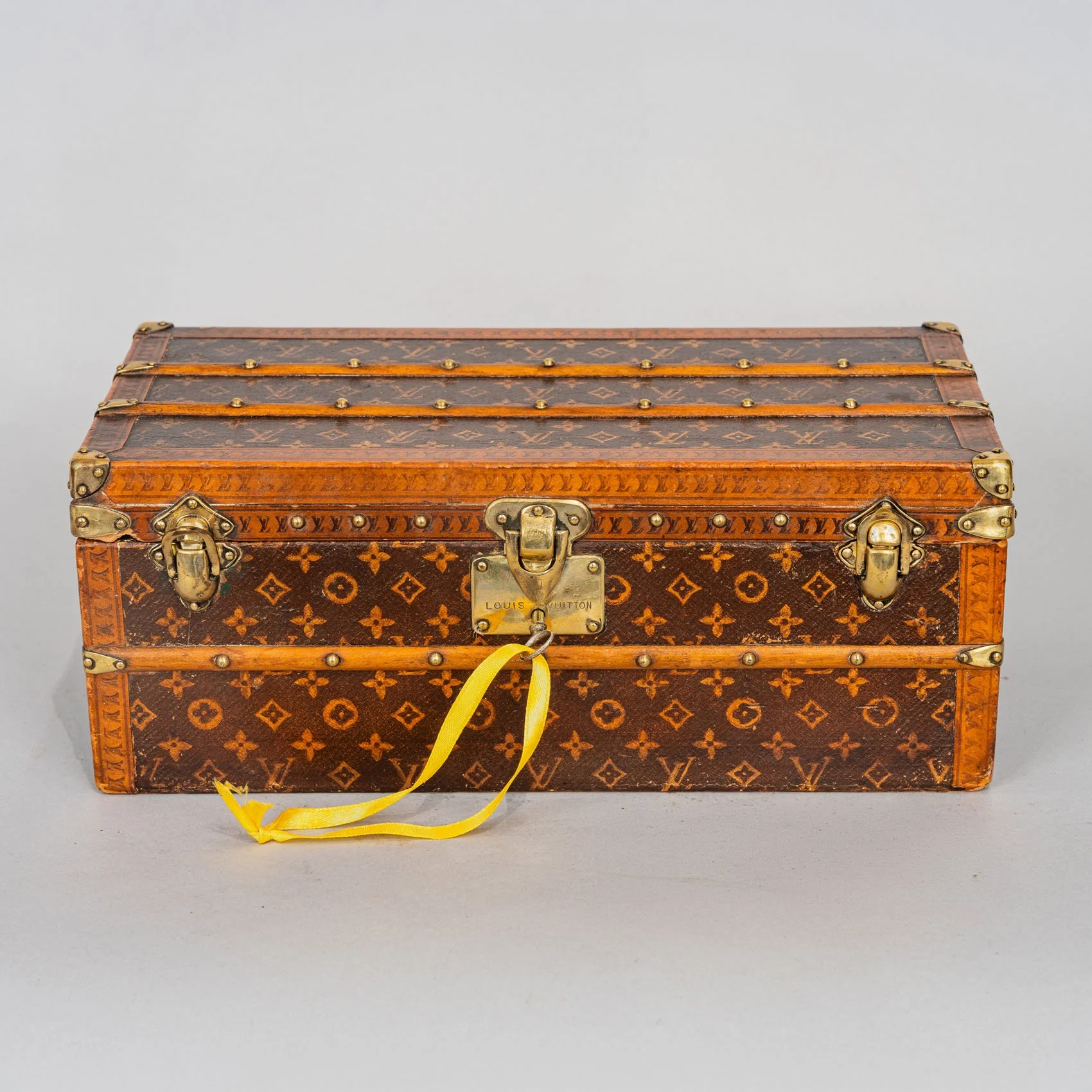 Image 1 of 2
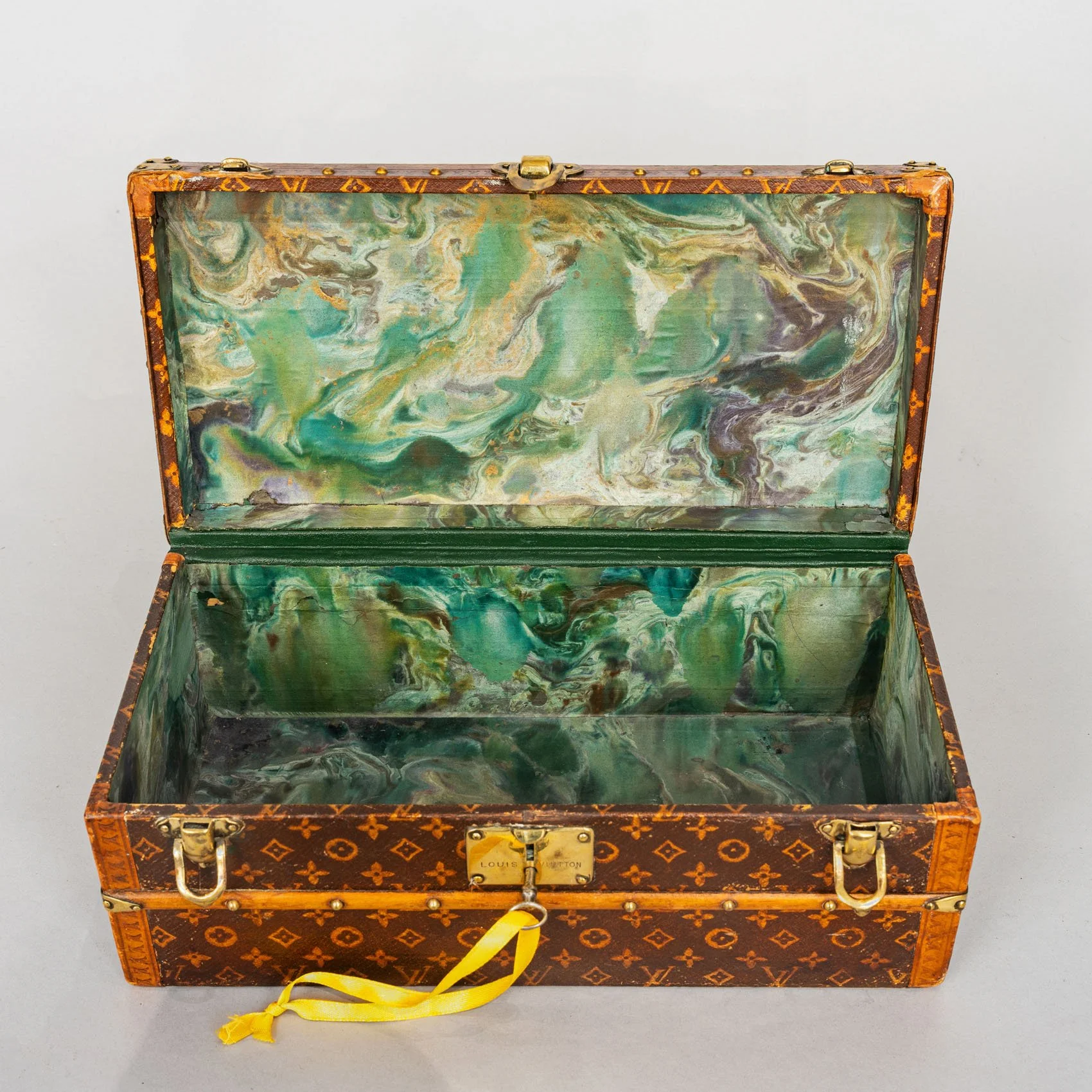 Image 2 of 2