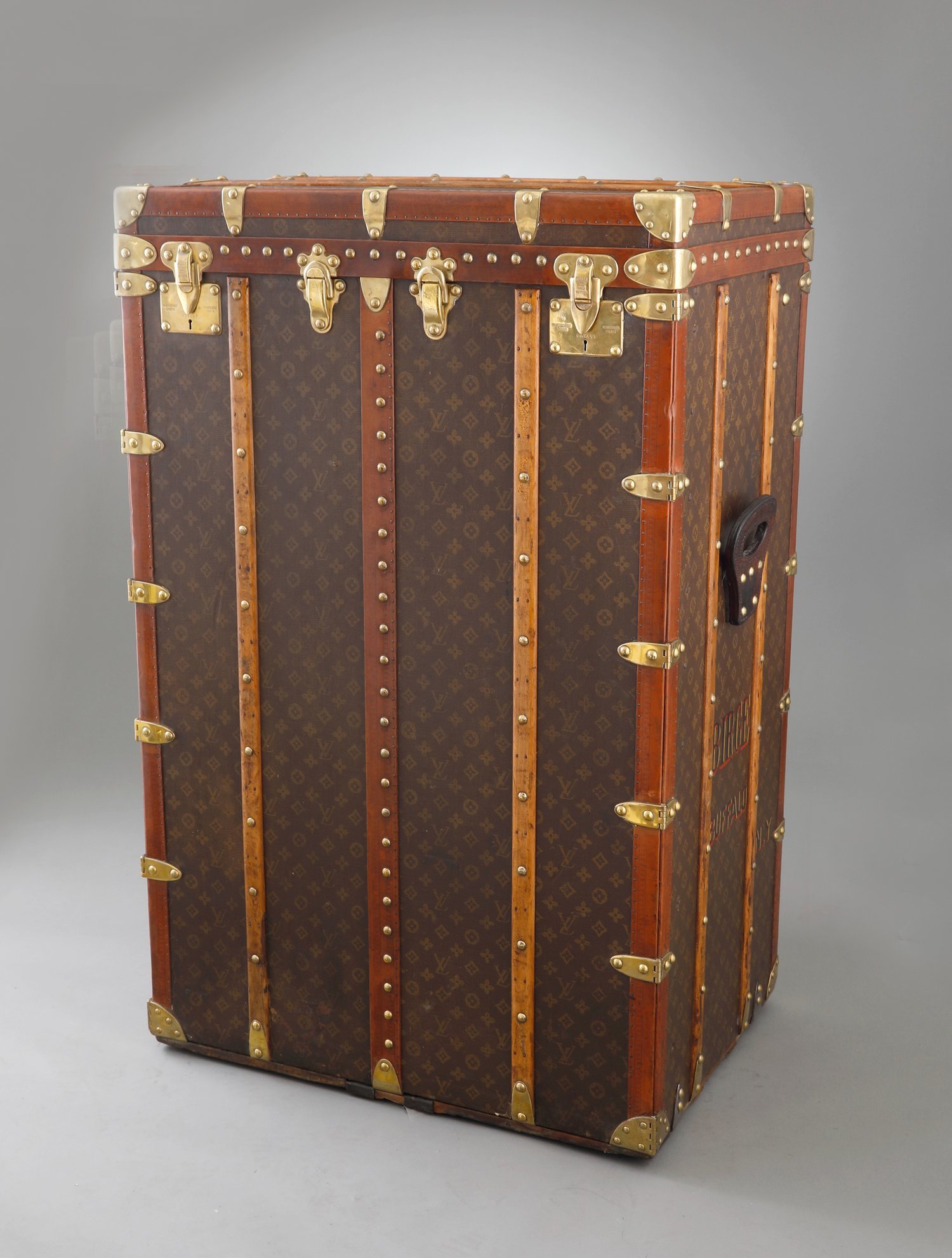
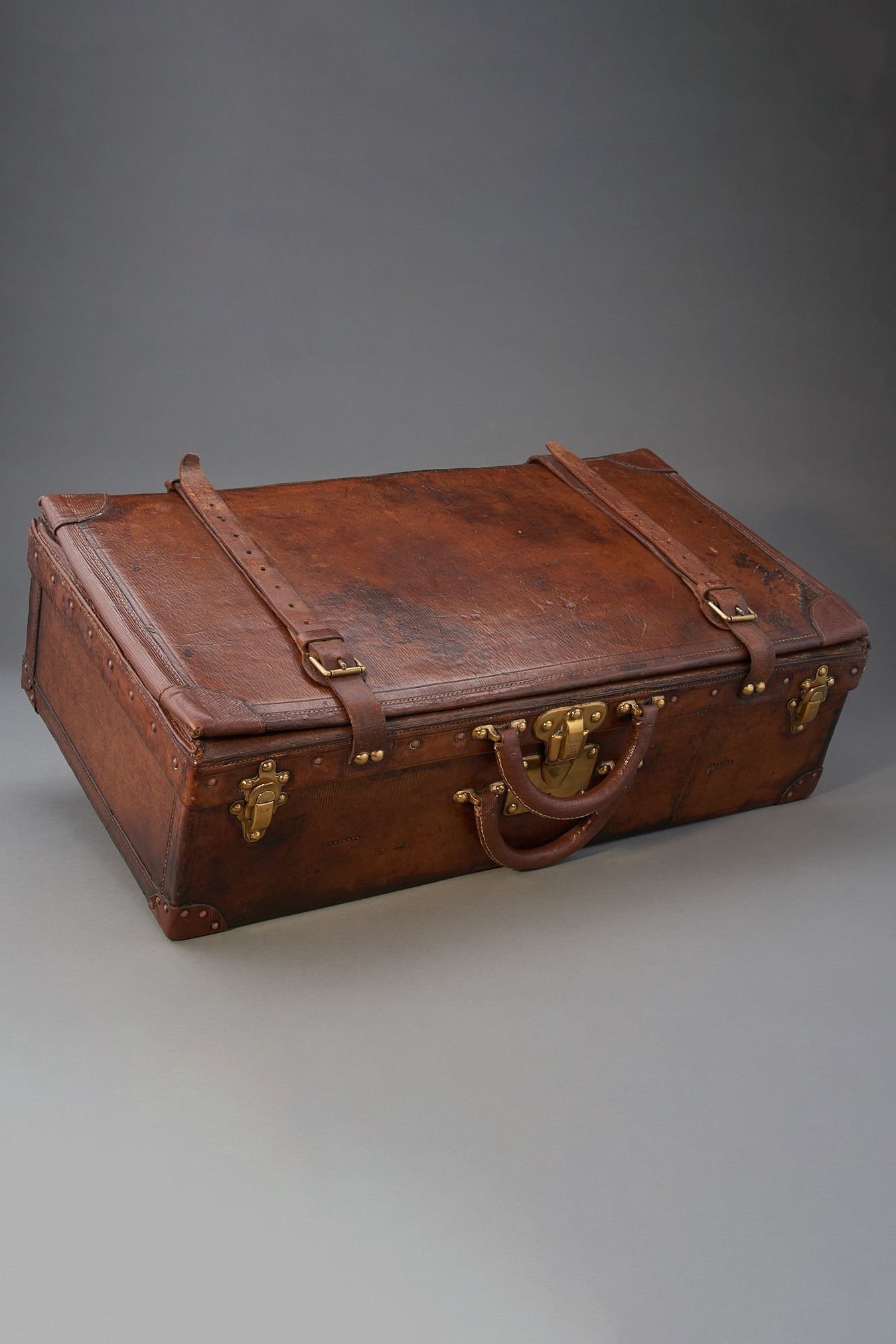
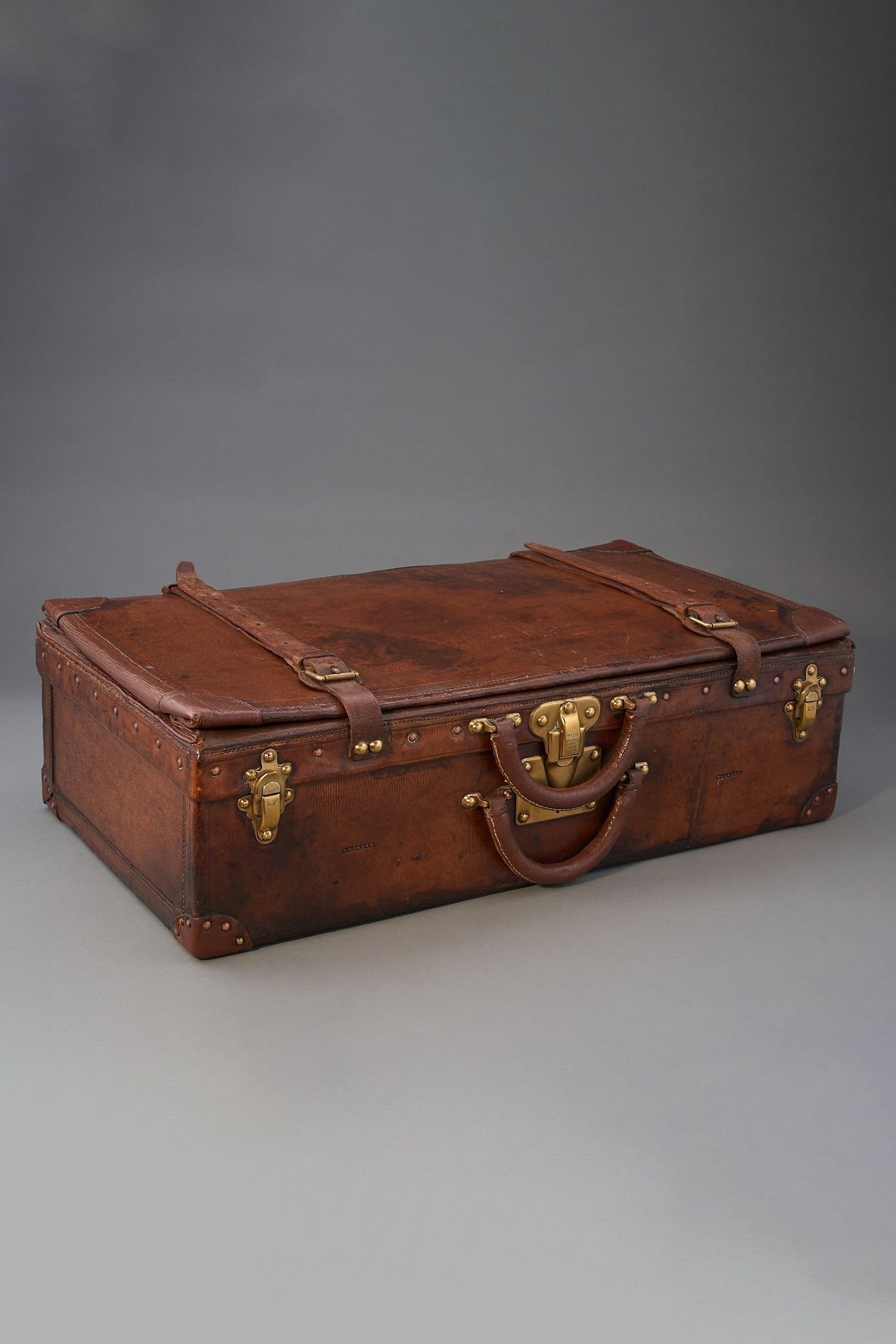
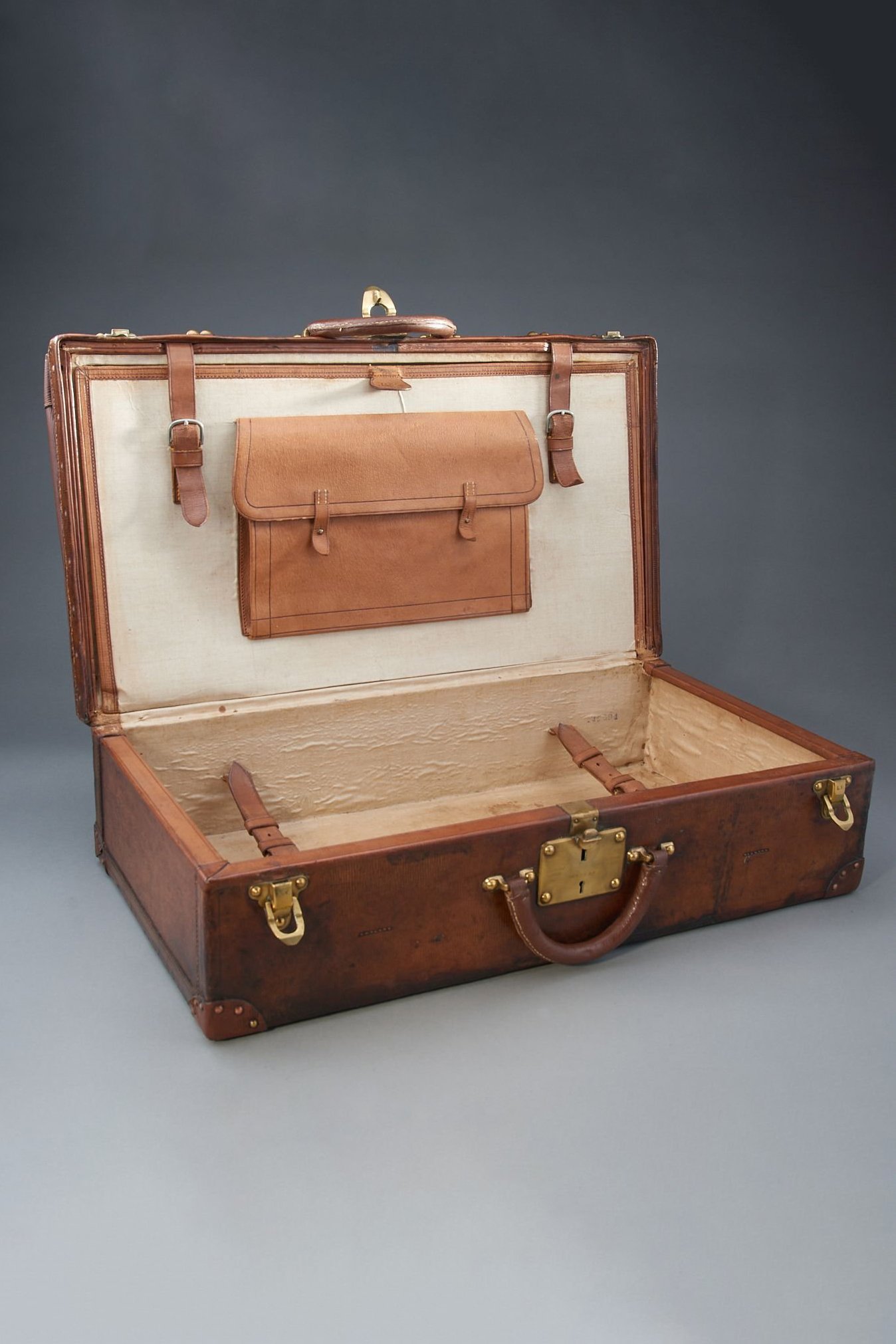
A full-size Louis Vuitton explorer’s trunk clad in zinc and bound in brass, made in Paris circa 1895, the rarest and most collectible of the Louis Vuitton steamer trunks. In the 1880s, the house began building zinc-and-copper trunks to order for its wealthiest clients: titled officers, colonial administrators, engineers, and explorers heading for Africa, Indochina, and the tropics, where canvas rotted and leather mildewed within a season. The metal skin sealed the contents against humidity and insects, and the trunk is bound entirely in brass, with no leather trim anywhere, because nothing else would stand up to the climate. Louis Vuitton supplied Pierre Savorgnan de Brazza’s Congo expeditions with zinc trunks like this, and the explorer’s trunk has been part of the house’s legend ever since.
Most surviving zinc trunks are small cabin and expedition models. A full steamer trunk of this size, with three wooden slats across the front and three across the lid, was heavy, costly, and made only to order, and very few exist.
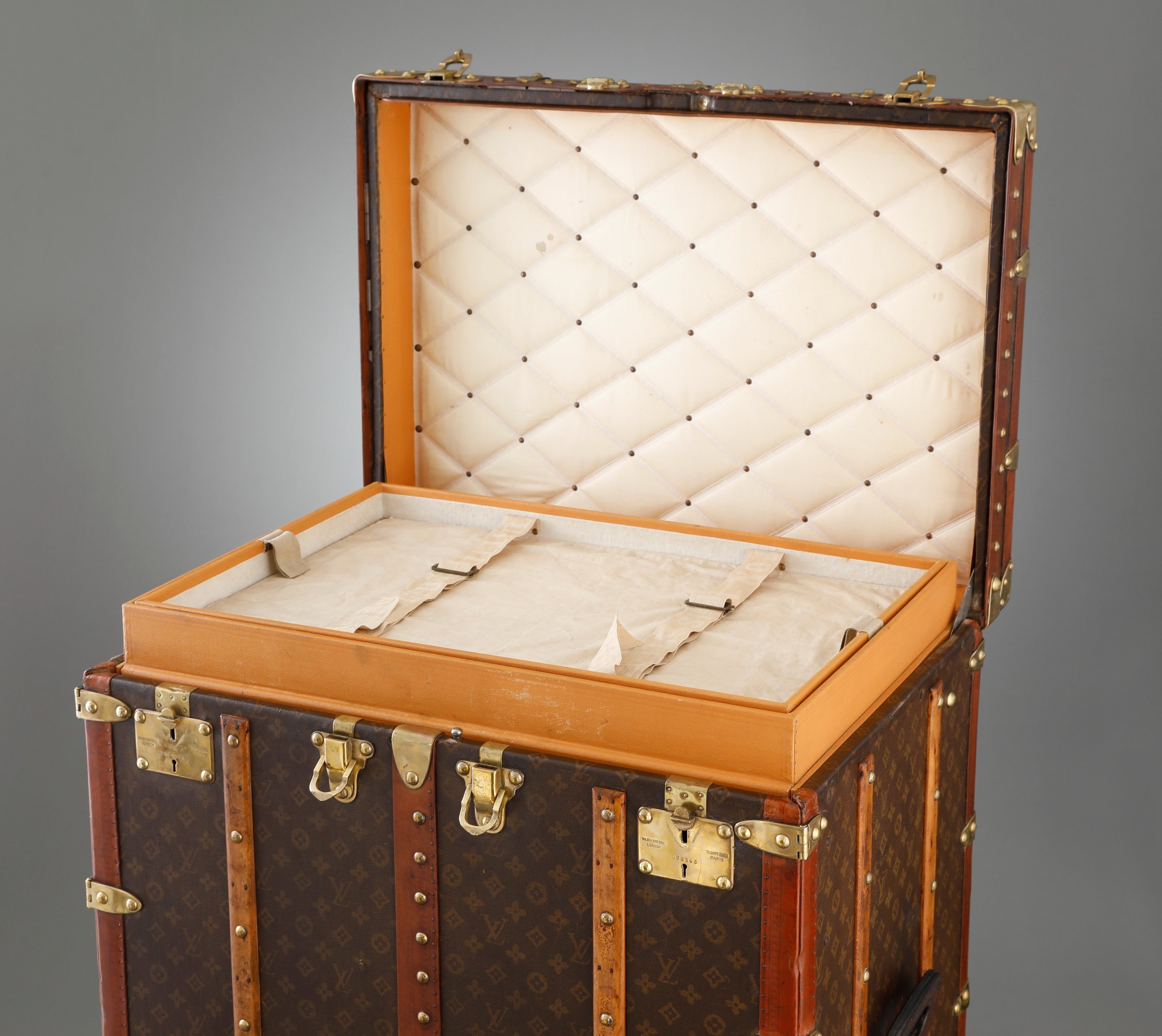
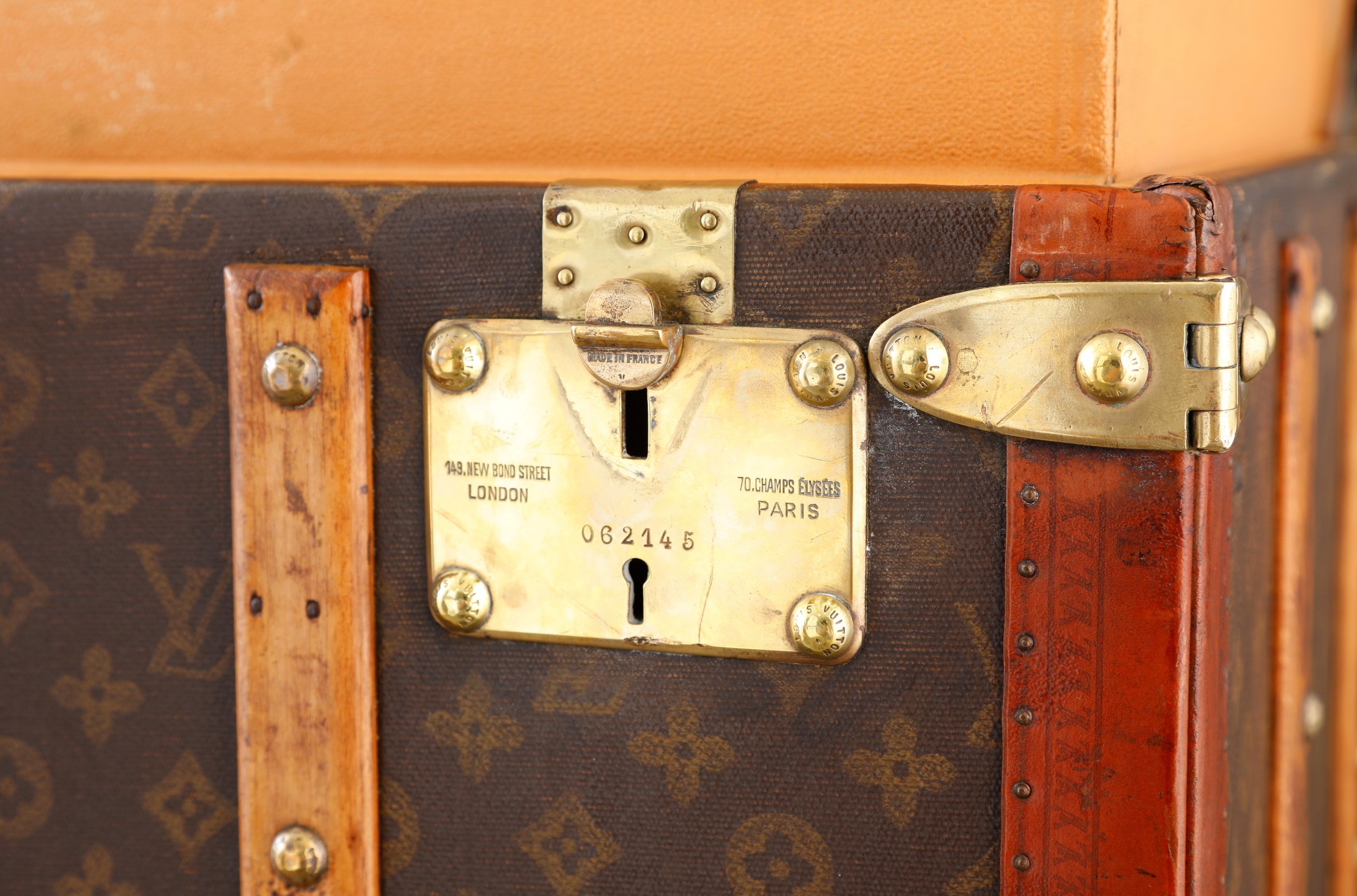
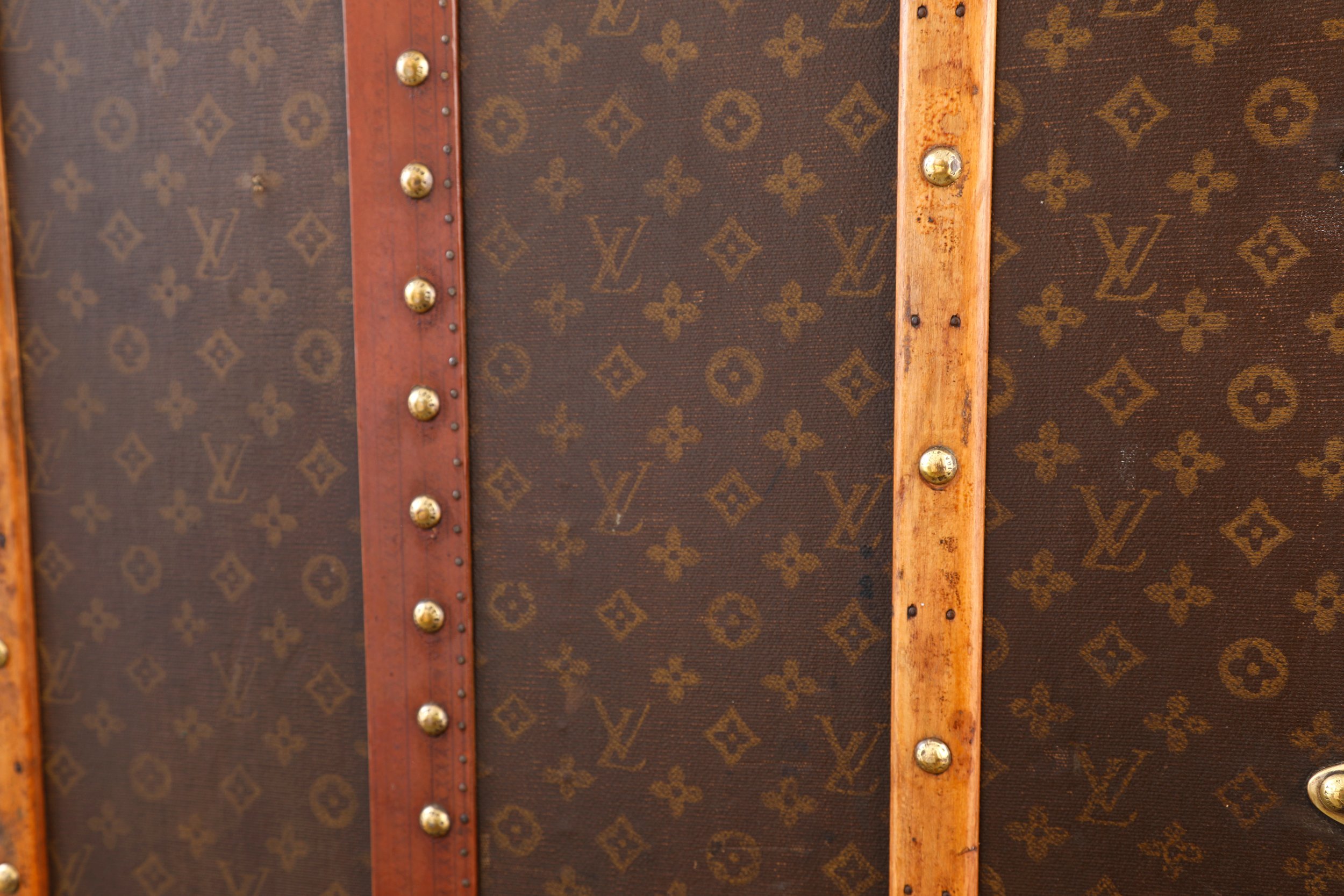
The zinc panels are framed in brass bands with brass corners, and the slats are secured with brass nails whose domed heads carry the name LOUIS VUITTON in raised letters. The main lock with its stamped clasp sits between two hasp latches, each stamped LV. The brass handle plates at either end are stamped 1 Rue Scribe Paris, Louis Vuitton, London 454 Strand, and Made in France, the last a marking that appears on French export goods after 1890.
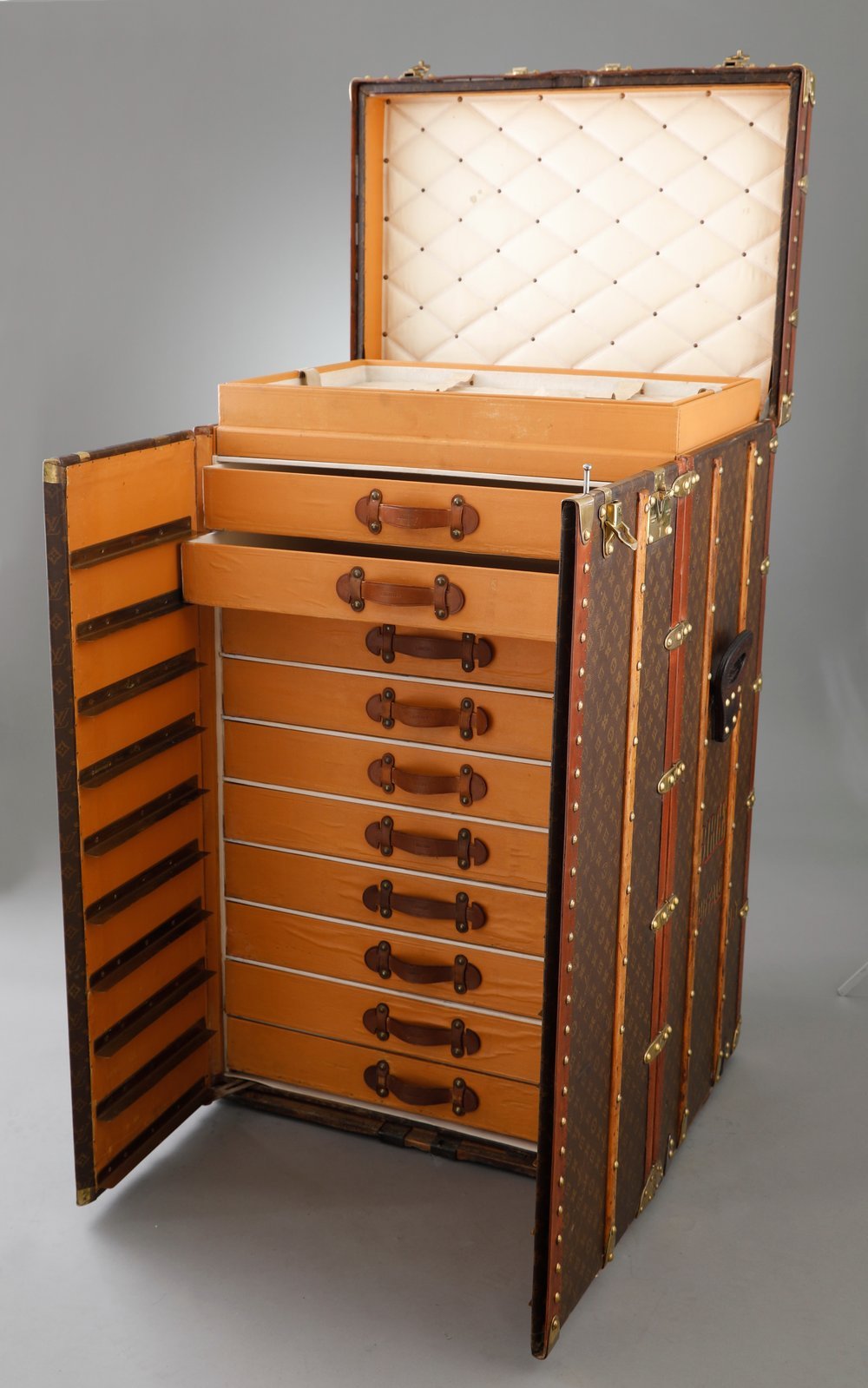
Inside, the lid carries the original paper label numbered 37946 in red. It is printed for both shops, London and Paris, under the British royal arms, the American eagle, and the Spanish royal arms, with the Prince of Wales feathers between them and the exhibition medals for Paris 1867, Havre 1868, and London 1885 below. The London address reads 289 Oxford Street, struck through with a printed bar, and 454 Strand set beneath it. Louis Vuitton opened its first London shop on Oxford Street in 1885 and moved to the Strand a few years later. Rather than discard its stock of labels, the house corrected them, and a trunk carrying a corrected label can be placed in the years immediately after the move, before fresh labels were printed. The interior keeps its original canvas lining and the runners for the tray.
The trunk has been cleaned and the brass polished. A later owner removed the painted initials. The zinc retains the dents and burnish of its traveling life, the stamped lettering on the hardware and nails is sharp throughout, and the trunk stands on casters.

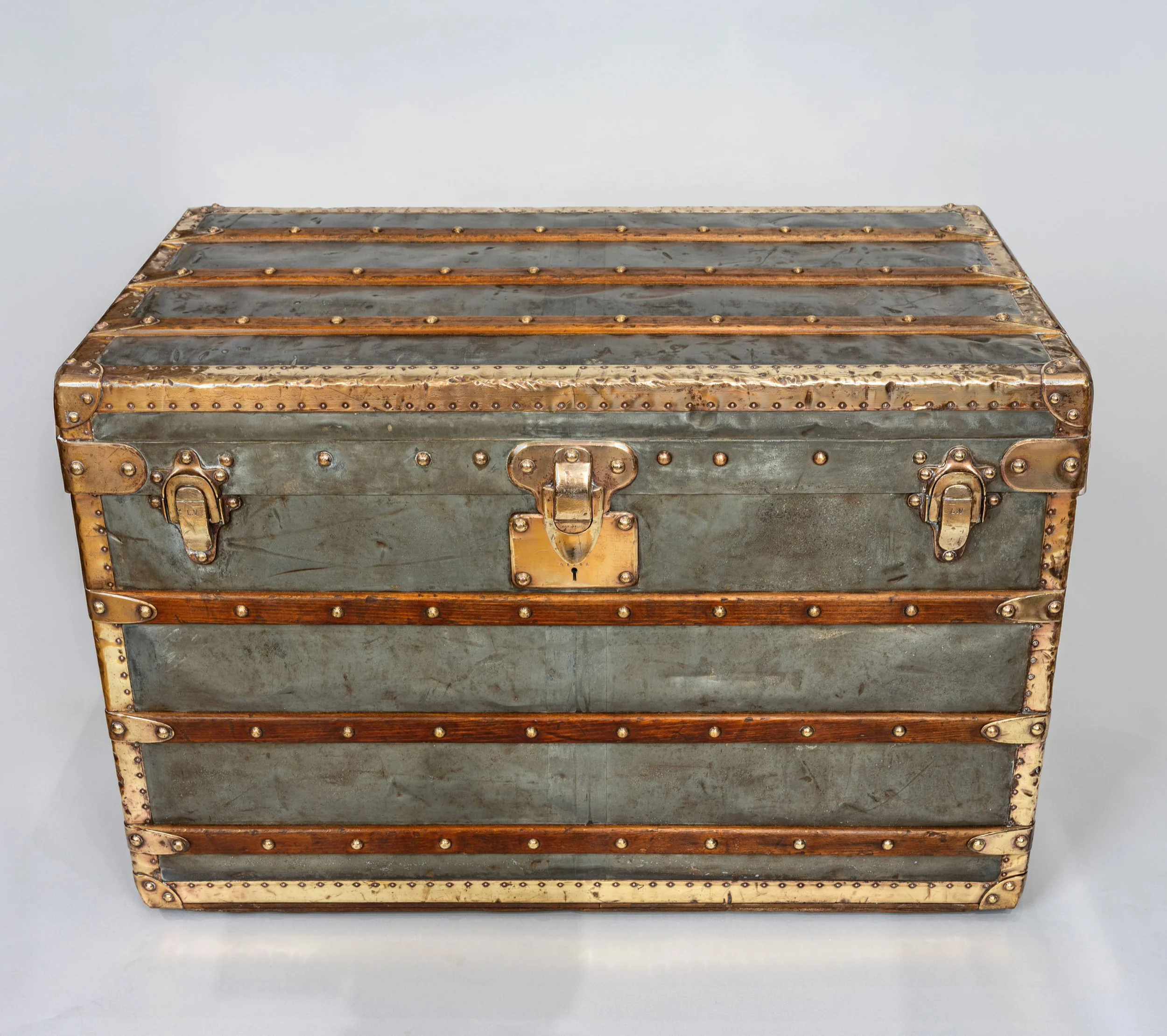 Image 1 of 6
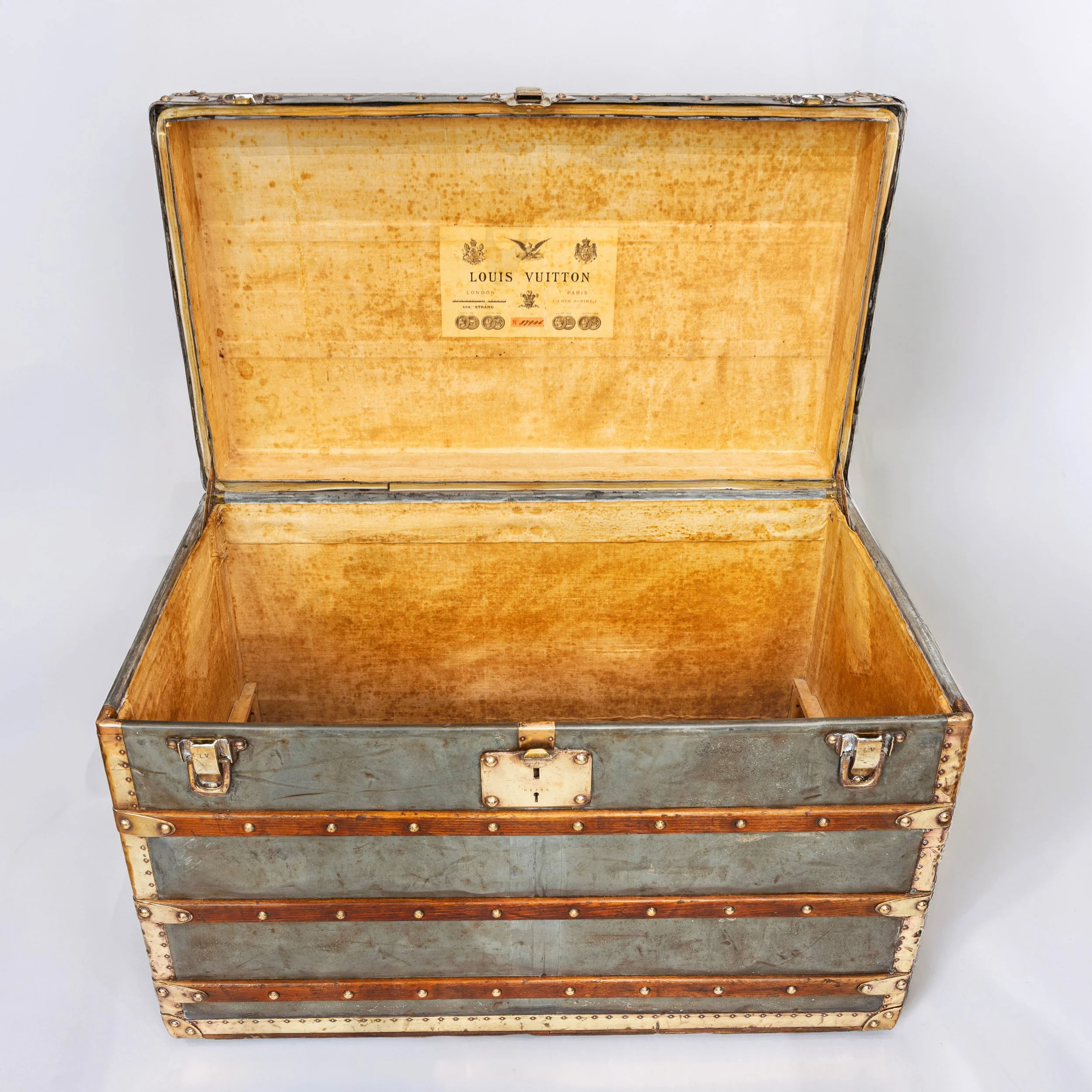 Image 2 of 6
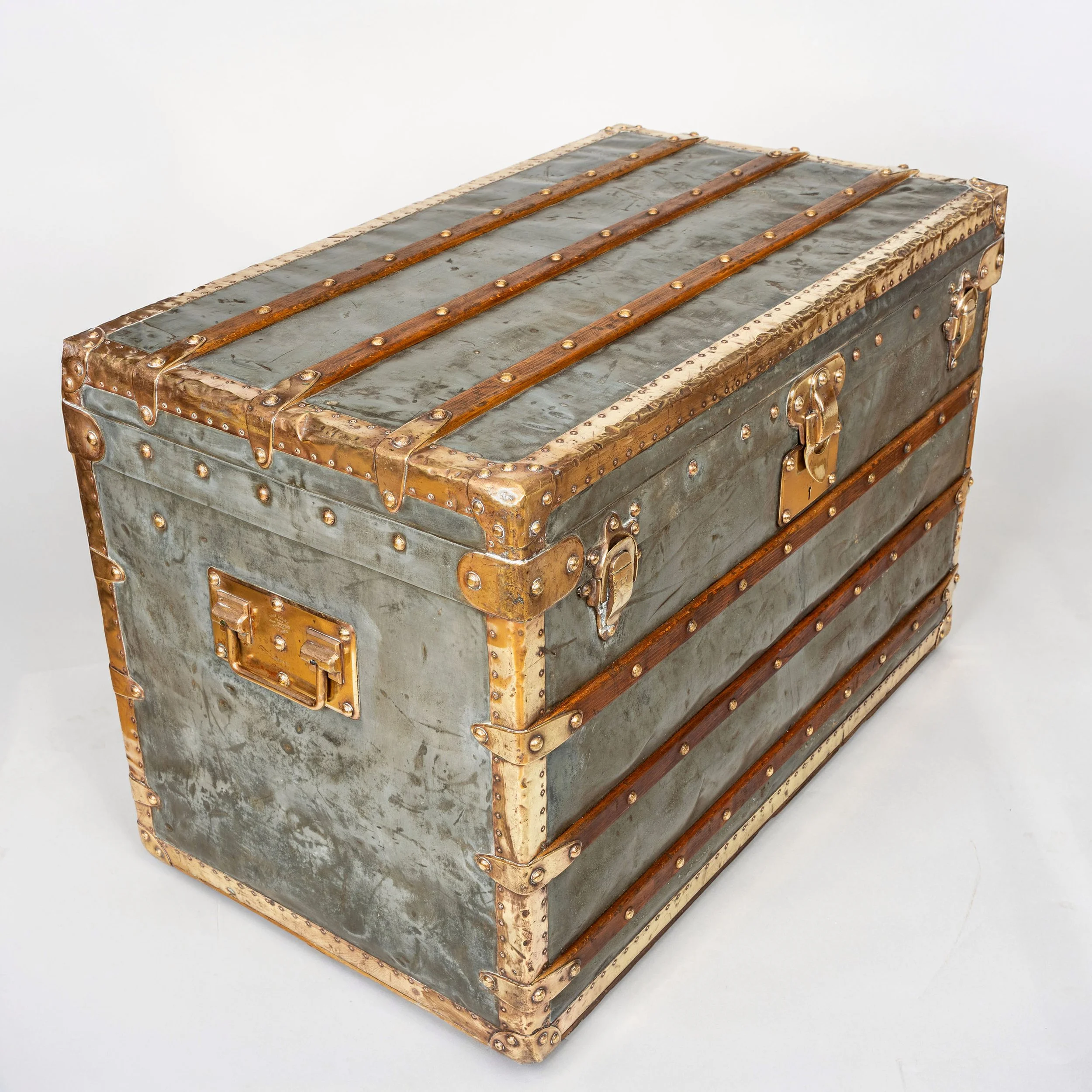 Image 3 of 6
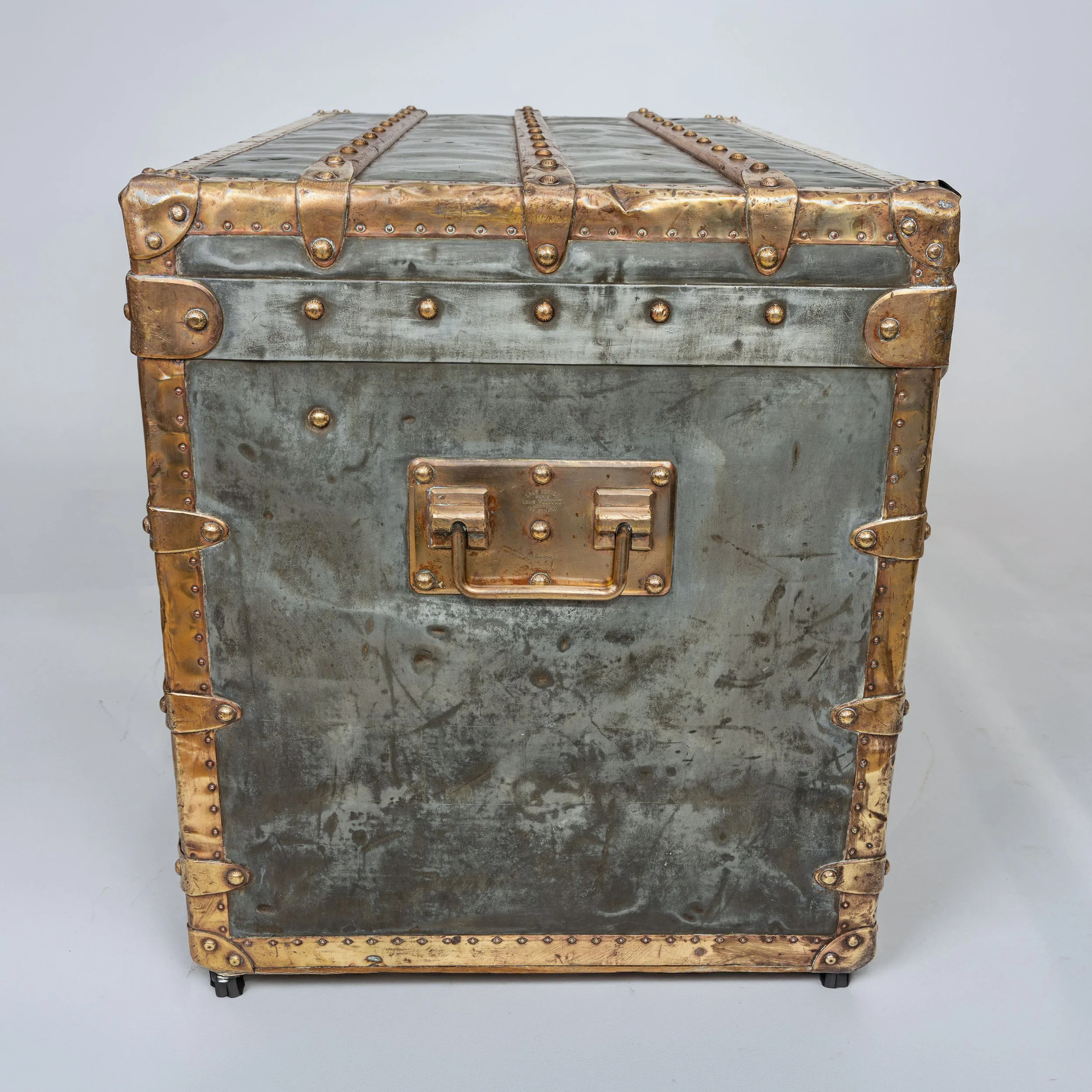 Image 4 of 6
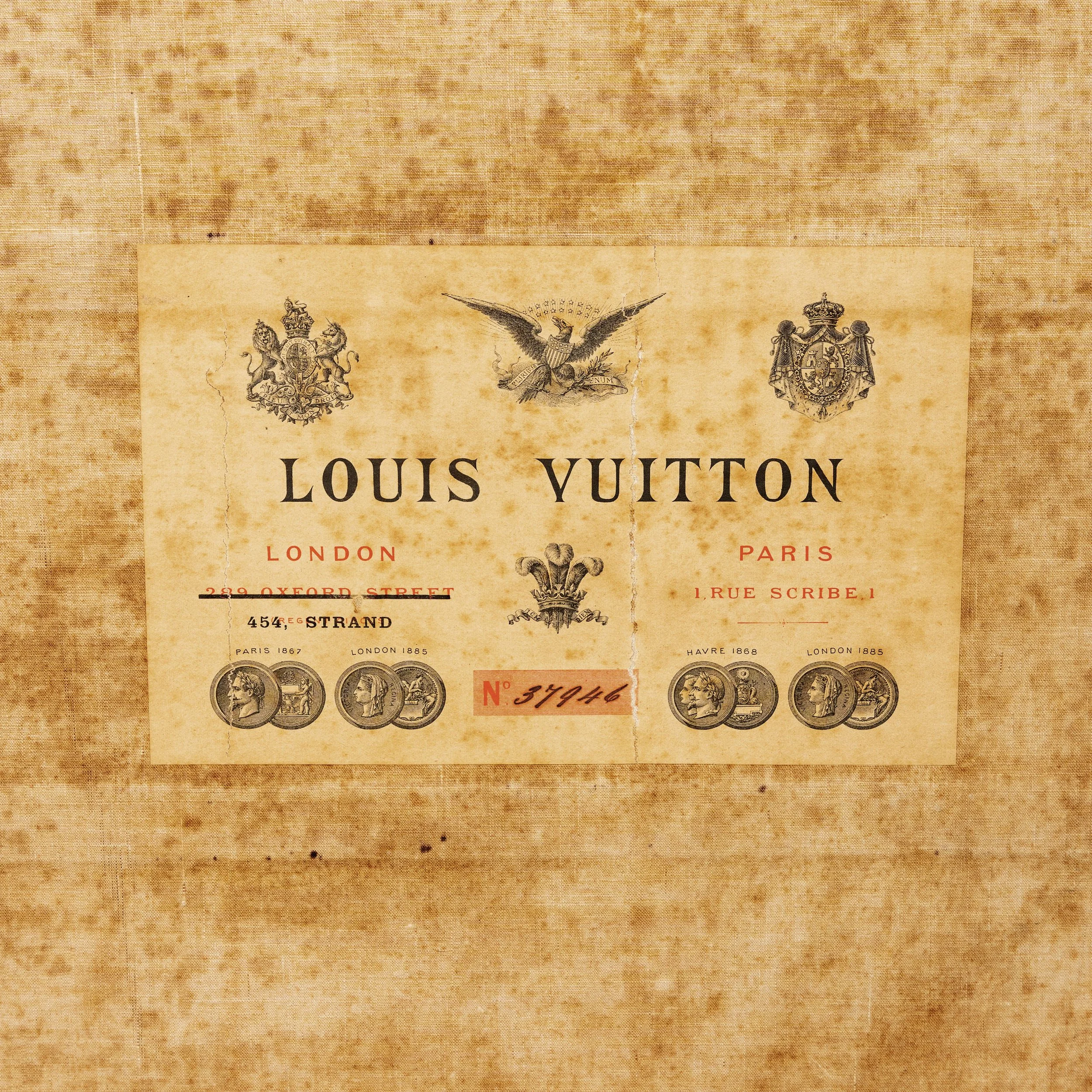 Image 5 of 6
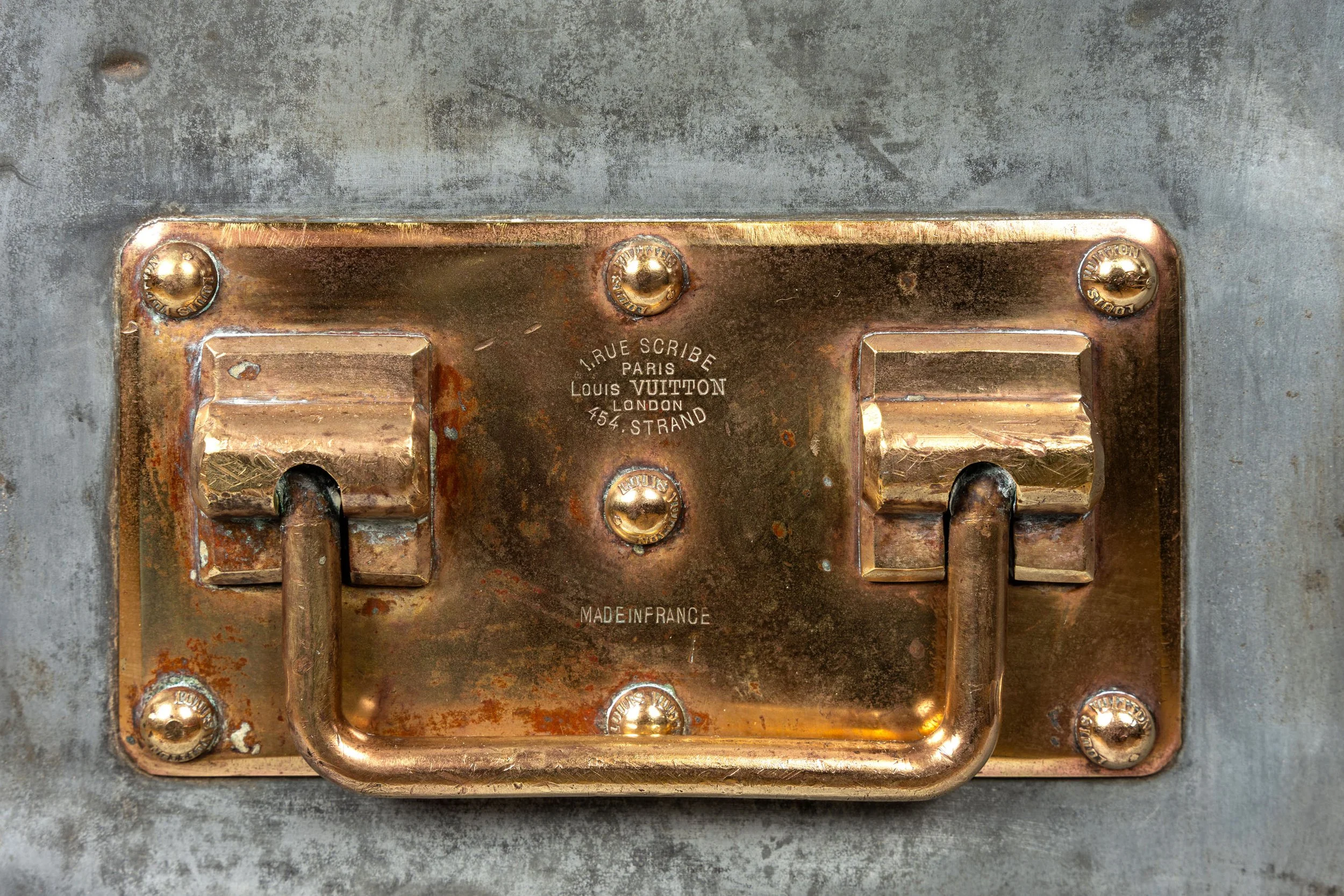 Image 6 of 6