
Selling Your Antiques: A Complete Guide to Getting the Best Result
Deciding to sell an antique is rarely a simple transaction. A friend of mine who places estate collections in Texas — and is herself an avid collector of antiques, objects, and sculpture — has a habit that says everything about the challenge. Every time a new piece arrives at her house, she takes a price tag gun and labels the base with what she paid for it. Her reasoning: "My kids will thank me one day when they're left to deal with all of this." She is right, of course, and most collectors are not nearly so organized.
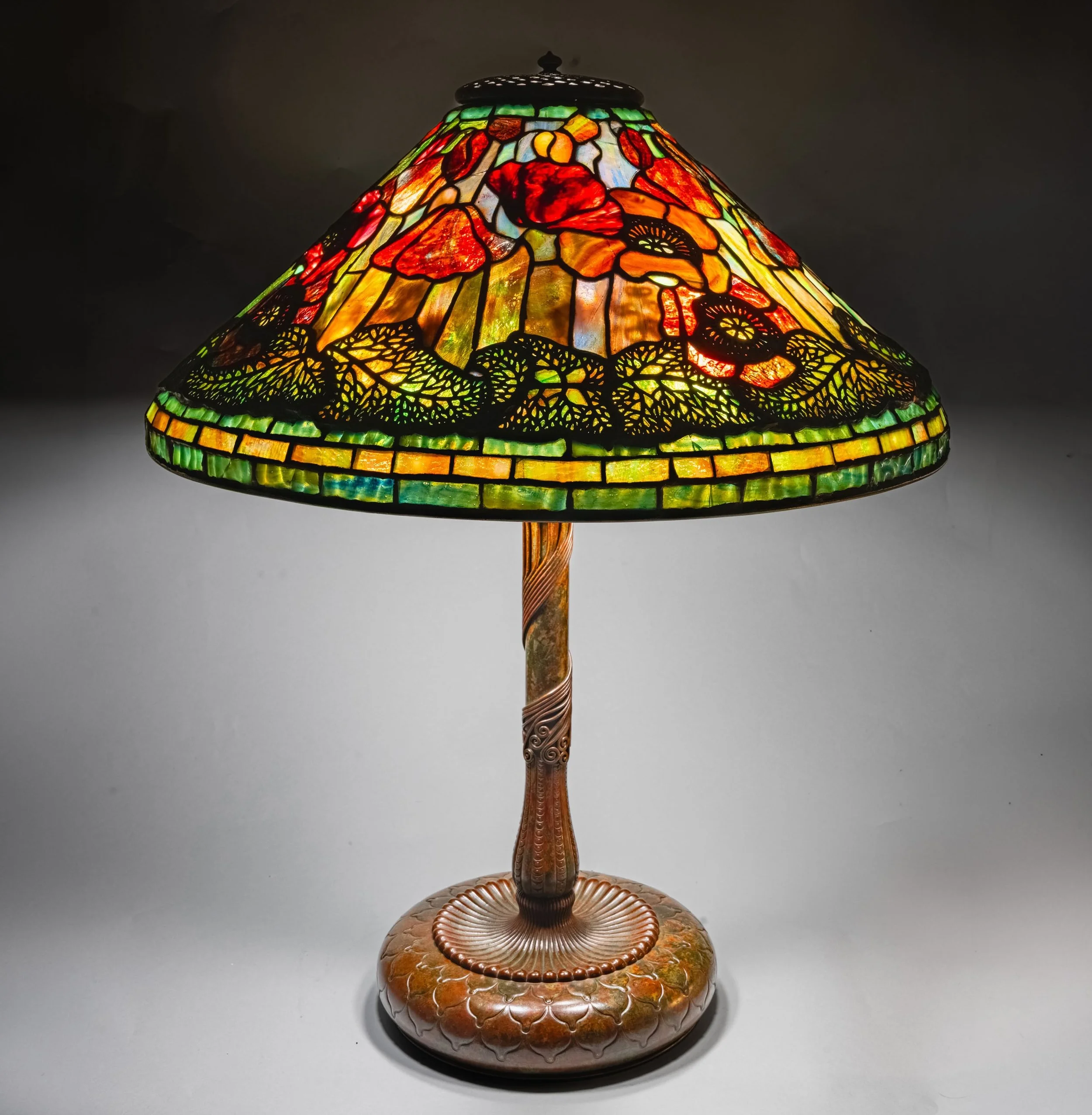
A Tiffany Studios Poppy leaded glass table lamp, one of the most sought-after examples of American Art Nouveau decorative art.
Whether you have inherited a piece you know little about, are thinning a collection you have spent decades building, or are placing an estate, the process raises the same questions every time: What is it actually worth? Who should I approach? What is the most profitable route to market? And how do I make sure I am not taken advantage of?
This guide sets out the principal routes to market, the honest advantages and disadvantages of each, and the practical steps that separate sellers who achieve strong results from those who leave money on the table — or worse, are quietly taken advantage of.
What Is an Antique? The 100 Year Rule
Before approaching the market, it helps to understand how the trade defines what you have. The conventional rule — and the one used by US Customs, most auction houses, and the antiques trade generally — is that a true antique is at least 100 years old. Objects made within the last century but before roughly 1980 are more accurately described as vintage. While many vintage pieces have real collector value, the distinction matters when it comes to import duties, insurance valuations, and how dealers and auction houses categorize and price what you are selling.
Knowing where your piece sits on that spectrum is the first step toward an accurate valuation — and toward choosing the right route to market.
The Four Main Routes to Market
1. Selling to a Specialist Dealer
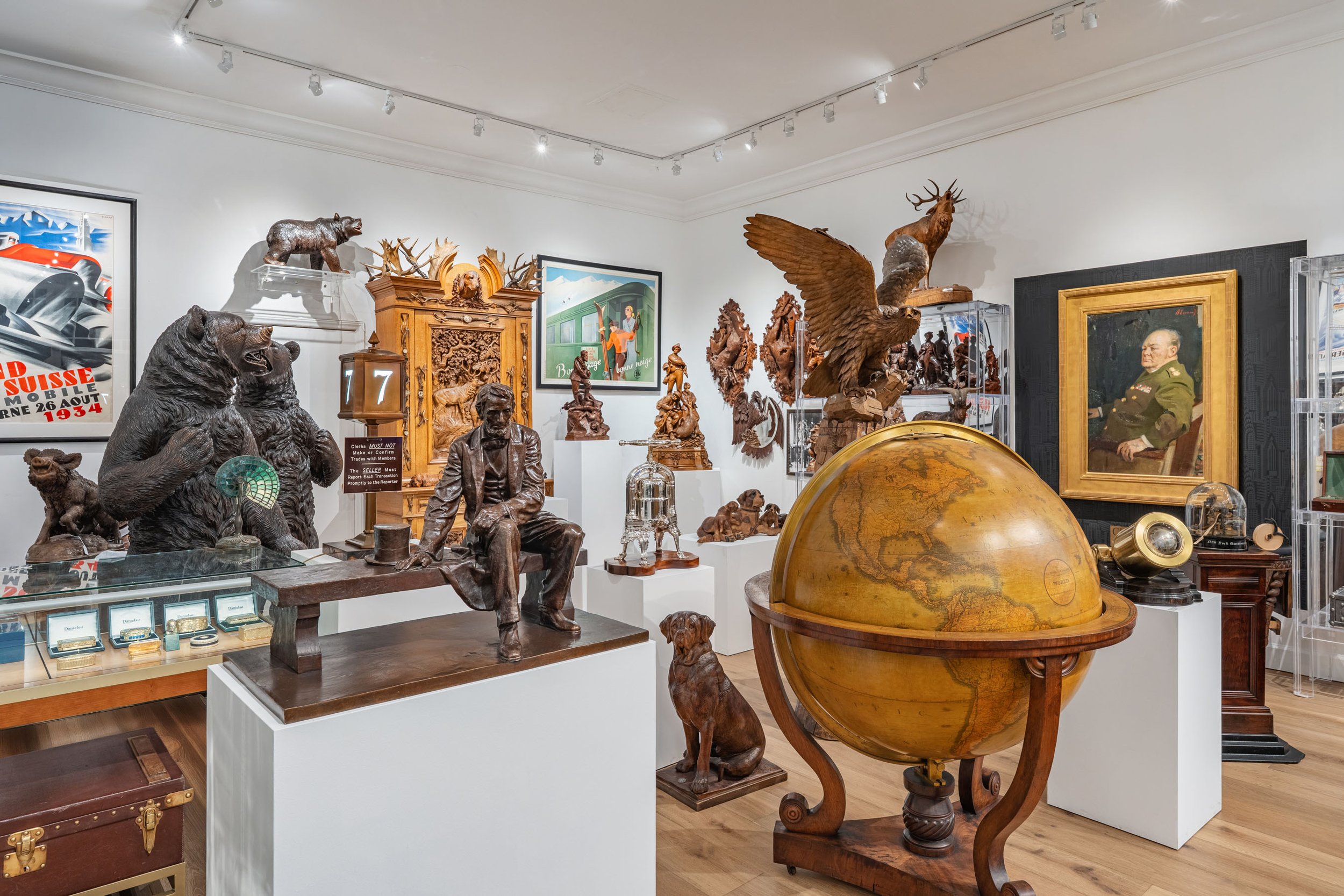
The Daniels Antiques gallery in Aspen, Colorado, shows a selection of the specialist inventory available to collectors.
A specialist dealer — one who actively buys and sells in the category your piece belongs to — is often the fastest and most straightforward route to a fair sale. The keyword is specialist. A generalist antiques shop may make an offer, but it is unlikely to reflect genuine market knowledge of your piece. A dealer who has handled twenty examples of what you own, who knows the provenance factors that move the needle, and who has an established clientele of buyers for that category is in a fundamentally different position.
The advantages are speed, certainty, and discretion. Most specialist dealers can assess a piece quickly and make an offer within days. You receive payment immediately upon agreement, with no commission deducted, no buyer's premium confusion, and no waiting for a sale to complete. Transactions are private — nothing appears at public auction, no estimates are published, and no hammer prices become part of the public record. A good specialist dealer will also tell you honestly what the piece is, what it is worth, and whether they can place it. That knowledge has value even if no transaction follows.
The trade-off is straightforward. A dealer buys to resell, and their offer will reflect that commercial reality. You will not receive the retail price the piece might eventually achieve — nor should you expect to. The premium they retain reflects the cost of their expertise, network, and time. The quality of the offer also depends entirely on the dealer's knowledge and integrity; an uninformed or unscrupulous dealer can make a lowball offer that sounds plausible to a seller with no independent reference point.
To use this route well: approach more than one dealer, and approach dealers who genuinely specialize in your category. Ask them to explain their valuation — a good dealer will. Be wary of anyone who makes a very fast offer without asking questions.
2. Selling at Auction
The major auction houses — Christie's, Sotheby's, Bonhams, Heritage Auctions — and the many regional rooms below them represent the most transparent route to market. Prices are determined publicly, and the results become part of the auction record. The major houses have global marketing reach and established collector databases for specific categories, and auction results are publicly recorded, providing a useful benchmark and helping validate provenance over time.
The costs, however, are substantial. Seller's commission typically runs between 10% and 20% of the hammer price, and buyer's premium — which affects how aggressively buyers will bid — has risen to 25–30% at the major houses. A piece that hammers at $10,000 may net the seller considerably less than they anticipated once fees are calculated. Timing is also outside your control: pieces are consigned for specific sales, which may be weeks or months away, and if a sale performs poorly, you may be asked to accept a reduced reserve — or the piece may pass and return to you unsold, at which point storage fees and return shipping costs fall to the seller. Estimates, once published, become part of the piece's history. A passed lot can stigmatize a piece — dealers and collectors are wary of objects that have failed at auction — and make subsequent private sale considerably more difficult.
To use this route well: get pre-sale estimates from more than one house. Understand the full fee structure, including any charges for photography, insurance, catalog entry, and the return of unsold lots. Set a realistic reserve, and consider whether the timing of the sale suits your piece.
3. Selling Privately
A private sale, negotiated directly between the seller and the buyer without an intermediary, offers the potential to retain the full price. In practice, finding the right buyer without professional assistance is a challenge.
The appeal is control: no commission, complete flexibility over timing and terms, and the ability to choose who the piece goes to — a real consideration for sellers with strong feelings about provenance and appropriate homes for significant objects. The difficulty is that finding the right buyer is the work itself. Without an established network of collectors and institutions, a private seller is fishing in a very small pond. Sellers who attempt private sales without an independent appraisal frequently undervalue their pieces, sometimes dramatically. The administrative burden — insurance, transport, payment security — falls entirely on the seller, and a private transaction leaves no public record, which can complicate provenance documentation for future sales.
Private sale works best when the seller already has a relationship with a prospective buyer, or when a trusted advisor can facilitate the introduction. It is rarely the right first move for a seller without specialist connections.
4. Online Platforms
eBay, 1stDibs, Chairish, Ruby Lane, and their equivalents have lowered the barrier to listing antiques for sale online. For certain categories, mid-range decorative items with broad appeal, they can be effective. For high-value or specialist pieces, they present significant risks.
The theoretical advantages are access to a large pool of buyers, seller control over listing and pricing, and relatively low barriers to entry. In practice, presentation matters enormously, and most private sellers underinvest in photography and description. Platform fees, payment processing charges, and shipping costs erode margins. Fraud and returns are a meaningful risk for high-value transactions. Authentication disputes can be costly and time-consuming to resolve. More fundamentally, for specialist categories, the right buyer may simply not be browsing these platforms — the collector prepared to pay a high price for a documented antique is typically not shopping generalist online marketplaces.
Luxury consignment platforms operate on tiered commission structures, retaining between 30% and 55% of the final sale price depending on the item and the seller's standing with the platform. For a piece selling at $5,000, that represents a substantial deduction before shipping and authentication fees are considered.
Online platforms are most effective for pieces in the $200–$2,000 range with broad appeal and straightforward descriptions. For anything with significant value, specialist provenance, or niche collector appeal, other routes will almost always produce better outcomes.
Before You Sell: The Steps That Make the Difference
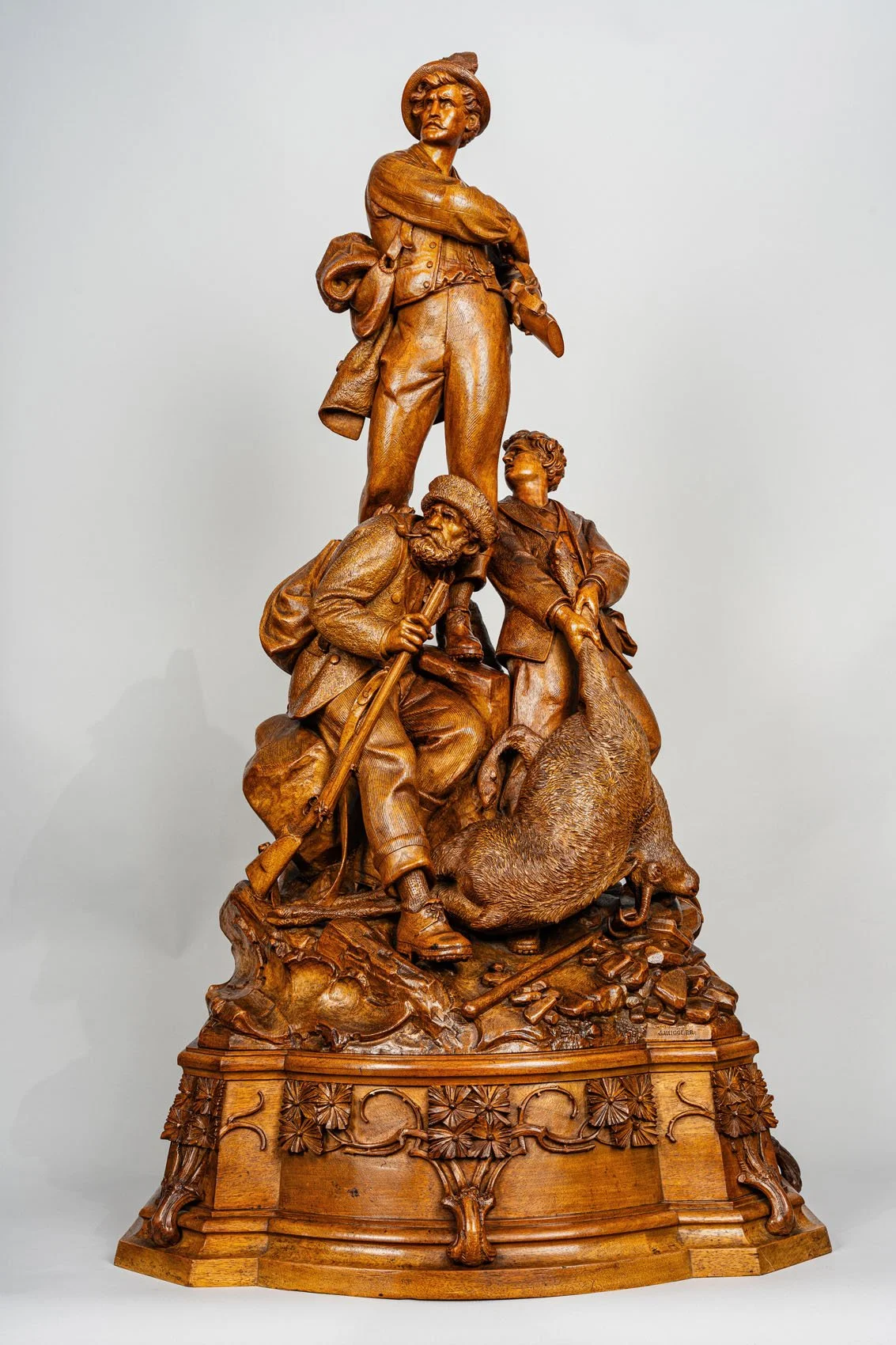
A monumental Swiss Black Forest carved group by Huggler of Brienz, depicting three generations of hunters with a fallen chamois — a piece whose attribution, date, and maker are all confirmed by original documentation.
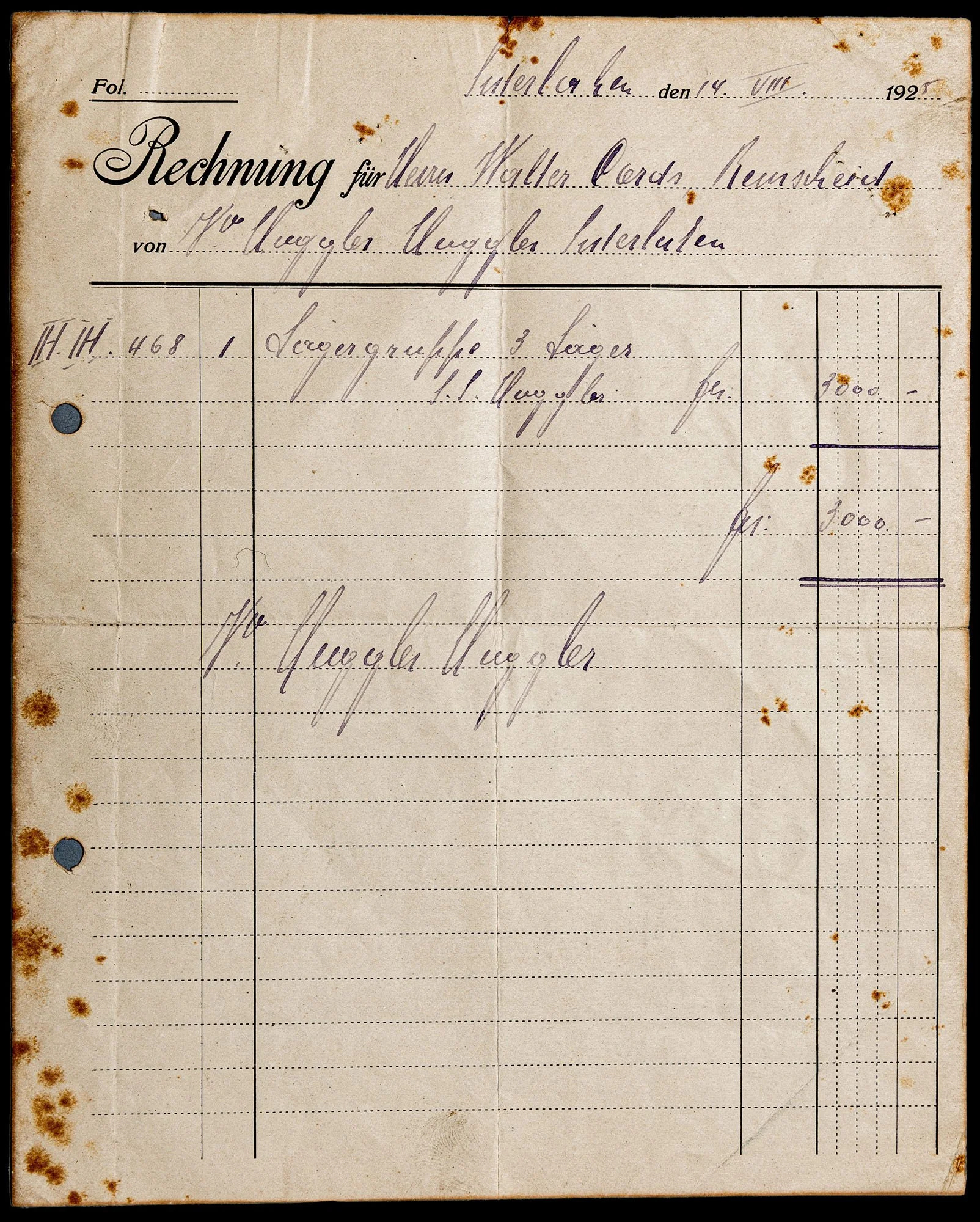
The original 1925 receipt from Huggler Frères of Interlaken, documenting the sale of this carving — precisely the kind of provenance that transforms a fine object into a fully authenticated work.
Get an independent appraisal. Before approaching any buyer or platform, understand what you have. An independent appraisal from a qualified specialist — one with no financial interest in the transaction — gives you a reference point against which to measure any offer. The cost of a professional appraisal is almost always recovered many times over in the value of the outcome.
Research the auction record. Public auction results for comparable pieces are available through databases including AskArt, Invaluable, and the major houses' own archives. A piece that has sold at auction before has a documented price history; understanding that history is basic preparation for any negotiation.
Assemble your provenance. The documented history of ownership can significantly affect value — a piece with a clear, traceable history commands a premium over one whose origins are obscure. Gather whatever documentation you have: receipts, correspondence, photographs, exhibition labels, and previous appraisals. The more complete the record, the stronger your position.
Know what you want from the sale. Speed, maximum price, discretion, and finding the right home for a significant piece are not always compatible objectives. If selling quickly for cash is the priority — a common situation with estates or inherited collections — a specialist dealer who buys outright is almost always the right route. Auction timelines rarely suit sellers in a hurry, and a private sale with an unknown buyer introduces delays and uncertainty that compound an already stressful process. Being clear about your priorities before you begin will help you choose the right route and evaluate offers accurately.
The Specialist Dealer Advantage
For serious collectors and estates dealing in pieces of genuine significance, the specialist dealer route deserves particular consideration — not because it always produces the highest number, but because it consistently produces the best outcome when all factors are weighed.
The major auction houses are exceptional for pieces of the highest rarity and value, where competitive international bidding is genuinely likely. For the broad middle ground — pieces worth between $5,000 and $250,000, in specialist categories where the right buyer is a known quantity — a specialist dealer with an established clientele will often produce a result that, net of auction fees and timing risk, exceeds what the auction route would have delivered.
The critical variable is choosing the right dealer. The relevant questions are straightforward: How long have they been active in this specific category? Can they point to comparable pieces they have handled? Do they have an existing clientele of buyers for this type of object? Are they willing to explain their valuation? A dealer who cannot answer those questions confidently is not a specialist. A dealer who can is worth your time
Selling to Daniels Antiques
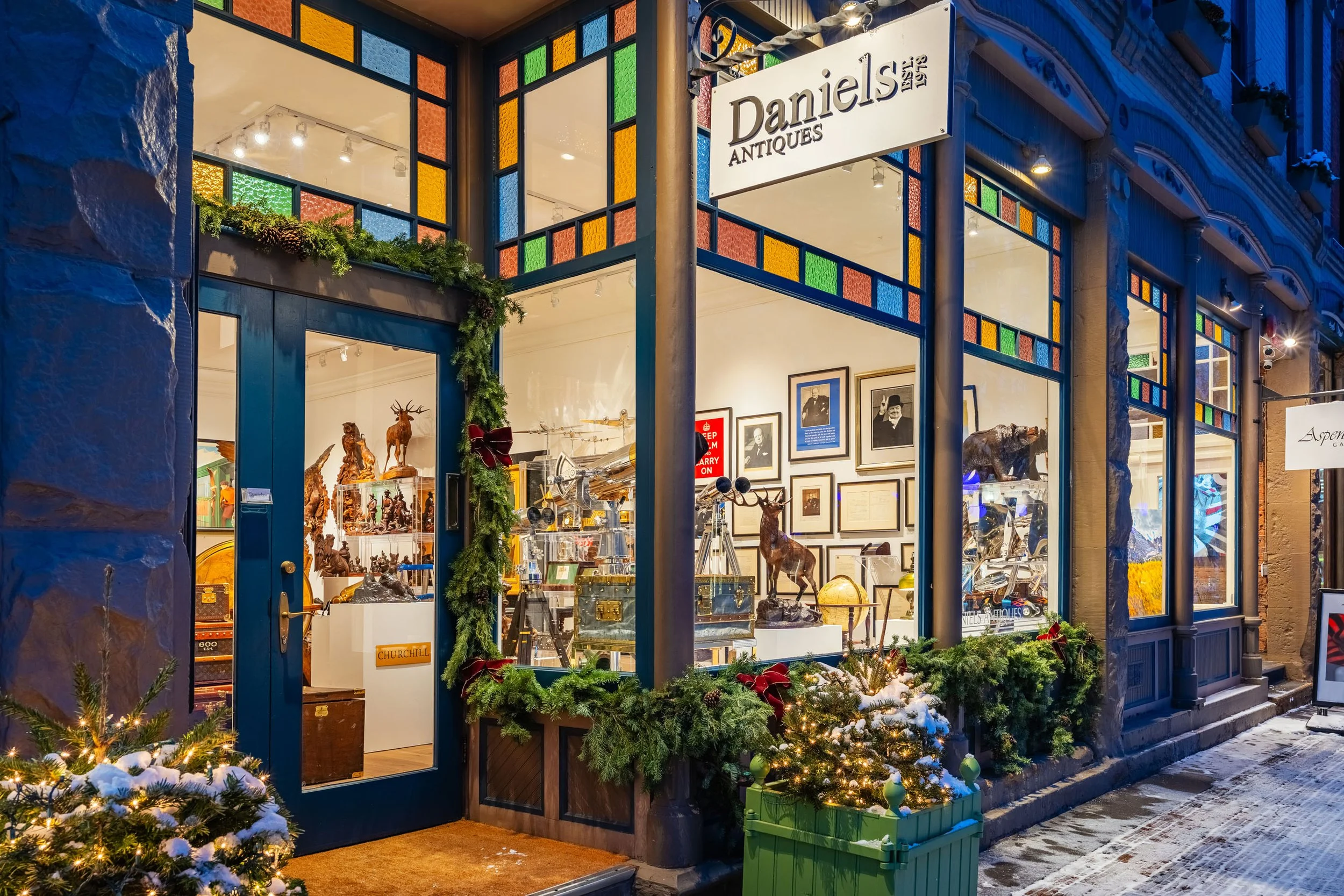
The Daniels Antiques gallery on East Hyman Avenue in Aspen, Colorado, was established in 1978.
If you are looking for a specialist who buys antiques outright for cash — no consignment, no waiting, no commission — Daniels Antiques has been acquiring exceptional objects since 1978. We work with sellers across the United States, with galleries in Aspen, Colorado, and Fort Lauderdale, Florida, and we handle every inquiry with complete discretion.
Our most active buying categories are fine art, bronzes, and sculpture; Winston Churchill historical documents, signed letters, and original paintings; Louis Vuitton trunks and travel objects; Tiffany Studios lamps and leaded glass; Swiss and Black Forest carvings; antique silver; military optics and binoculars; and luxury barware.
We buy outright. There is no commission, no waiting for a sale to complete, and no uncertainty about the outcome. Every inquiry is handled directly by Simon or Jonathan Daniels, and every transaction is conducted in complete confidence.
If you have a piece you are considering selling — a single object, a collection, or an estate — we welcome the conversation. Submit photographs and a brief description using the form on our Sell page, and we will respond within two business days.
Further Reading
If you are researching the value or significance of a specific category before approaching the market, the following articles may be useful:
The Giants of the Pacific: Japanese Big Eye Naval Binoculars
Black Forest Carvings: Comedy, Character and Naturalism from the Brienz Masters
Simon Daniels is co-owner of Daniels Antiques and co-author of Swiss Carvings: The Art of the Black Forest, 1820–1940 (Antique Collectors' Club, 2006). Daniels Antiques has galleries in Aspen, Colorado, and Fort Lauderdale, Florida.