The equestrian statue of Marcus Aurelius on the Capitoline is the only surviving bronze equestrian monument of a Roman emperor from antiquity. Cast in gilded bronze around AD 175 and standing more than thirteen feet tall, it survived the melting pots that consumed every other imperial horseman because the medieval city took the rider for Constantine. It stood for centuries outside the Lateran until 1538, when Paul III moved it to the Capitoline, and Michelangelo designed the piazza around it. It remains there today: the original is now indoors in the Capitoline Museums, with traces of its ancient gilding intact; a replica stands on the pedestal outside; and it is still an official emblem of the city of Rome.
The man on the horse wears no armor and carries no weapon. His right arm is extended in the gesture of clemency, and the sculptor gave him the face of someone who has thought about what he is doing. He had. Marcus Aurelius is the one Roman emperor whose book is still read. The Meditations were written in Greek, in camp on the Danube frontier, a private notebook of a man reminding himself how to behave while holding absolute power. Take care, he writes, that thou art not made into a Caesar, that thou art not dyed with this dye. The statue and the book describe the same person.
A bronze equestrian group of Marcus Aurelius after that monument, the emperor bearded and bareheaded in tunic and paludamentum, his right arm extended, seated without stirrups or reins upon a walking horse with the right foreleg raised. Cast in two patinations, the figure in a deep brown and the pedestal in a warm golden bronze, the pedestal with panels bearing both inscriptions, the ancient dedication and the text of Paul III, dated 1538. Signed on the plinth: A. DRESSLER HOPFGARTEN ROMA 1866. Height 24 inches.
The model belongs to the Roman reduction trade that supplied the Grand Tour from the 1750s, led by Giacomo and Giovanni Zoffoli and by Francesco Righetti, whose small bronzes after the antique rarely exceeded fifteen inches and were prized above all by the English. Into this trade came two Prussians, Wilhelm Hopfgarten and Benjamin Ludwig Jollage, who opened their studio at 94 via Due Macelli by about 1808 and within a generation were the leading bronze founders in Rome. They cast for Canova and Thorvaldsen, and supplied papal gifts to Bavaria and to Charles X. Where their predecessors had worked small, they took the same subjects and made them large, and the Marcus Aurelius was the greatest of these: ordered by the Crown Prince of Prussia in 1828, singled out by Nagler, worked from the monument by pantograph with a fidelity that extends to the veining of the horse's chest, and displayed in the workshop's street window beside the Capitoline Wolf as the two emblems of Rome. The 1837 inventory gives the window cast's height as sixty-two centimeters. The present cast stands twenty-four inches. It is the size of the piece the founders put in the window.
At Hopfgarten's death in 1860, the concern passed by will to A. Dressler, his employee and sole heir, who took the molds and plaster models with the business, kept the Hopfgarten name as a guarantee of quality, and ran the shop through the following decade. Where the Hopfgarten and Jollage production of half a century had gone out largely unsigned and is known today mostly by attribution, Dressler stamped and dated his casts. A signed and dated Hopfgarten bronze is accordingly rare, and one carrying the workshop's most ambitious model is rarer still. The present group is dated 1866, and no other dated cast of the Marcus Aurelius has been traced in the public record. It is a documented cast, from the original matrices, of the model this foundry was founded on, in the size the founders themselves chose to display.
It is exhibited in our Aspen gallery beside a gold aureus of Marcus Aurelius, struck at the Rome mint in AD 172, on which Victory crowns the emperor as he holds the thunderbolt of Jupiter.
The bronze is considered at greater length, together with the gold aureus, in our article The Philosopher Emperor: Marcus Aurelius in Bronze, Gold, and Ink.
Sources
Chiara Teolato, Hopfgarten and Jollage Rediscovered: Two Berlin Bronzists in Napoleonic and Restoration Rome, Rome, Edizioni del Borghetto, 2016, including the Jollage (1837) and Hopfgarten (1860) inventories, Archivio di Stato di Roma.
G. K. Nagler, Neues allgemeines Künstler-Lexicon, Munich, 1838.
Marcus Aurelius, Meditations, translated by George Long, 1862.
Musei Capitolini, Rome.
Daniels Antiques is always interested in acquiring Grand Tour bronzes, particularly signed examples by Zoffoli, Righetti, and the Hopfgarten foundry. Please contact us if you have a piece to sell.
The equestrian statue of Marcus Aurelius on the Capitoline is the only surviving bronze equestrian monument of a Roman emperor from antiquity. Cast in gilded bronze around AD 175 and standing more than thirteen feet tall, it survived the melting pots that consumed every other imperial horseman because the medieval city took the rider for Constantine. It stood for centuries outside the Lateran until 1538, when Paul III moved it to the Capitoline, and Michelangelo designed the piazza around it. It remains there today: the original is now indoors in the Capitoline Museums, with traces of its ancient gilding intact; a replica stands on the pedestal outside; and it is still an official emblem of the city of Rome.
The man on the horse wears no armor and carries no weapon. His right arm is extended in the gesture of clemency, and the sculptor gave him the face of someone who has thought about what he is doing. He had. Marcus Aurelius is the one Roman emperor whose book is still read. The Meditations were written in Greek, in camp on the Danube frontier, a private notebook of a man reminding himself how to behave while holding absolute power. Take care, he writes, that thou art not made into a Caesar, that thou art not dyed with this dye. The statue and the book describe the same person.
A bronze equestrian group of Marcus Aurelius after that monument, the emperor bearded and bareheaded in tunic and paludamentum, his right arm extended, seated without stirrups or reins upon a walking horse with the right foreleg raised. Cast in two patinations, the figure in a deep brown and the pedestal in a warm golden bronze, the pedestal with panels bearing both inscriptions, the ancient dedication and the text of Paul III, dated 1538. Signed on the plinth: A. DRESSLER HOPFGARTEN ROMA 1866. Height 24 inches.
The model belongs to the Roman reduction trade that supplied the Grand Tour from the 1750s, led by Giacomo and Giovanni Zoffoli and by Francesco Righetti, whose small bronzes after the antique rarely exceeded fifteen inches and were prized above all by the English. Into this trade came two Prussians, Wilhelm Hopfgarten and Benjamin Ludwig Jollage, who opened their studio at 94 via Due Macelli by about 1808 and within a generation were the leading bronze founders in Rome. They cast for Canova and Thorvaldsen, and supplied papal gifts to Bavaria and to Charles X. Where their predecessors had worked small, they took the same subjects and made them large, and the Marcus Aurelius was the greatest of these: ordered by the Crown Prince of Prussia in 1828, singled out by Nagler, worked from the monument by pantograph with a fidelity that extends to the veining of the horse's chest, and displayed in the workshop's street window beside the Capitoline Wolf as the two emblems of Rome. The 1837 inventory gives the window cast's height as sixty-two centimeters. The present cast stands twenty-four inches. It is the size of the piece the founders put in the window.
At Hopfgarten's death in 1860, the concern passed by will to A. Dressler, his employee and sole heir, who took the molds and plaster models with the business, kept the Hopfgarten name as a guarantee of quality, and ran the shop through the following decade. Where the Hopfgarten and Jollage production of half a century had gone out largely unsigned and is known today mostly by attribution, Dressler stamped and dated his casts. A signed and dated Hopfgarten bronze is accordingly rare, and one carrying the workshop's most ambitious model is rarer still. The present group is dated 1866, and no other dated cast of the Marcus Aurelius has been traced in the public record. It is a documented cast, from the original matrices, of the model this foundry was founded on, in the size the founders themselves chose to display.
It is exhibited in our Aspen gallery beside a gold aureus of Marcus Aurelius, struck at the Rome mint in AD 172, on which Victory crowns the emperor as he holds the thunderbolt of Jupiter.
The bronze is considered at greater length, together with the gold aureus, in our article The Philosopher Emperor: Marcus Aurelius in Bronze, Gold, and Ink.
Sources
Chiara Teolato, Hopfgarten and Jollage Rediscovered: Two Berlin Bronzists in Napoleonic and Restoration Rome, Rome, Edizioni del Borghetto, 2016, including the Jollage (1837) and Hopfgarten (1860) inventories, Archivio di Stato di Roma.
G. K. Nagler, Neues allgemeines Künstler-Lexicon, Munich, 1838.
Marcus Aurelius, Meditations, translated by George Long, 1862.
Musei Capitolini, Rome.
Daniels Antiques is always interested in acquiring Grand Tour bronzes, particularly signed examples by Zoffoli, Righetti, and the Hopfgarten foundry. Please contact us if you have a piece to sell.

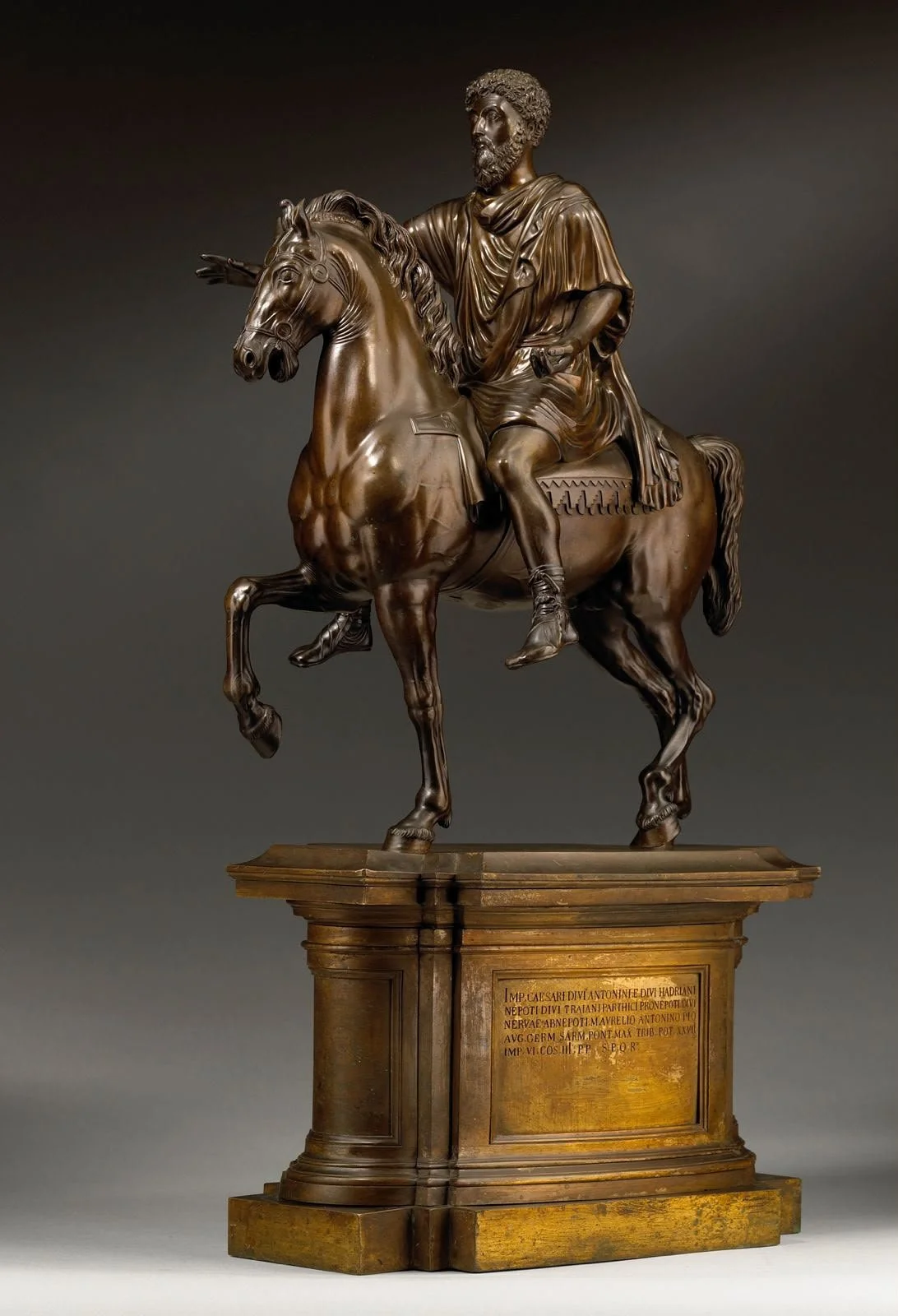 Image 1 of 6
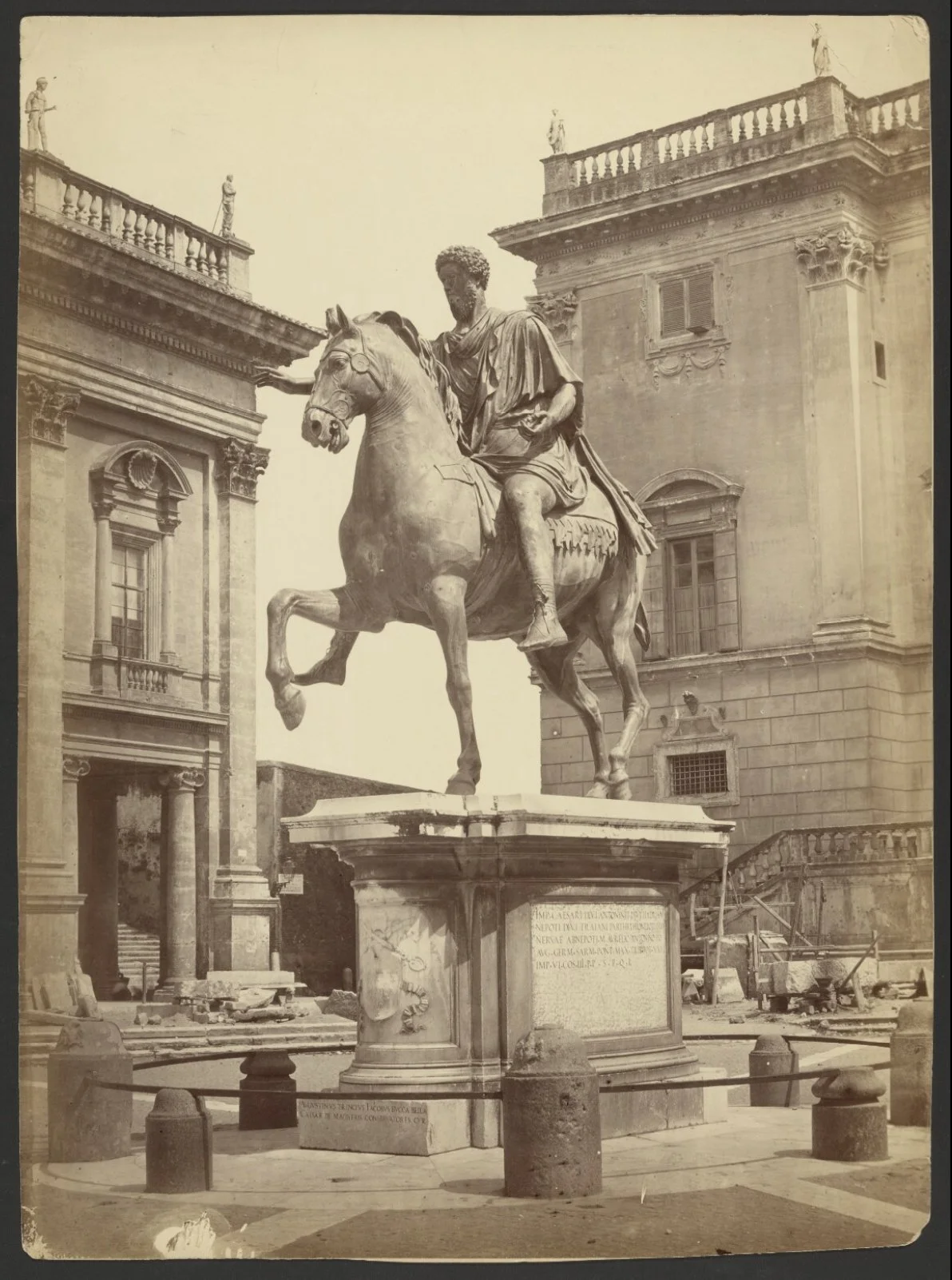 Image 2 of 6
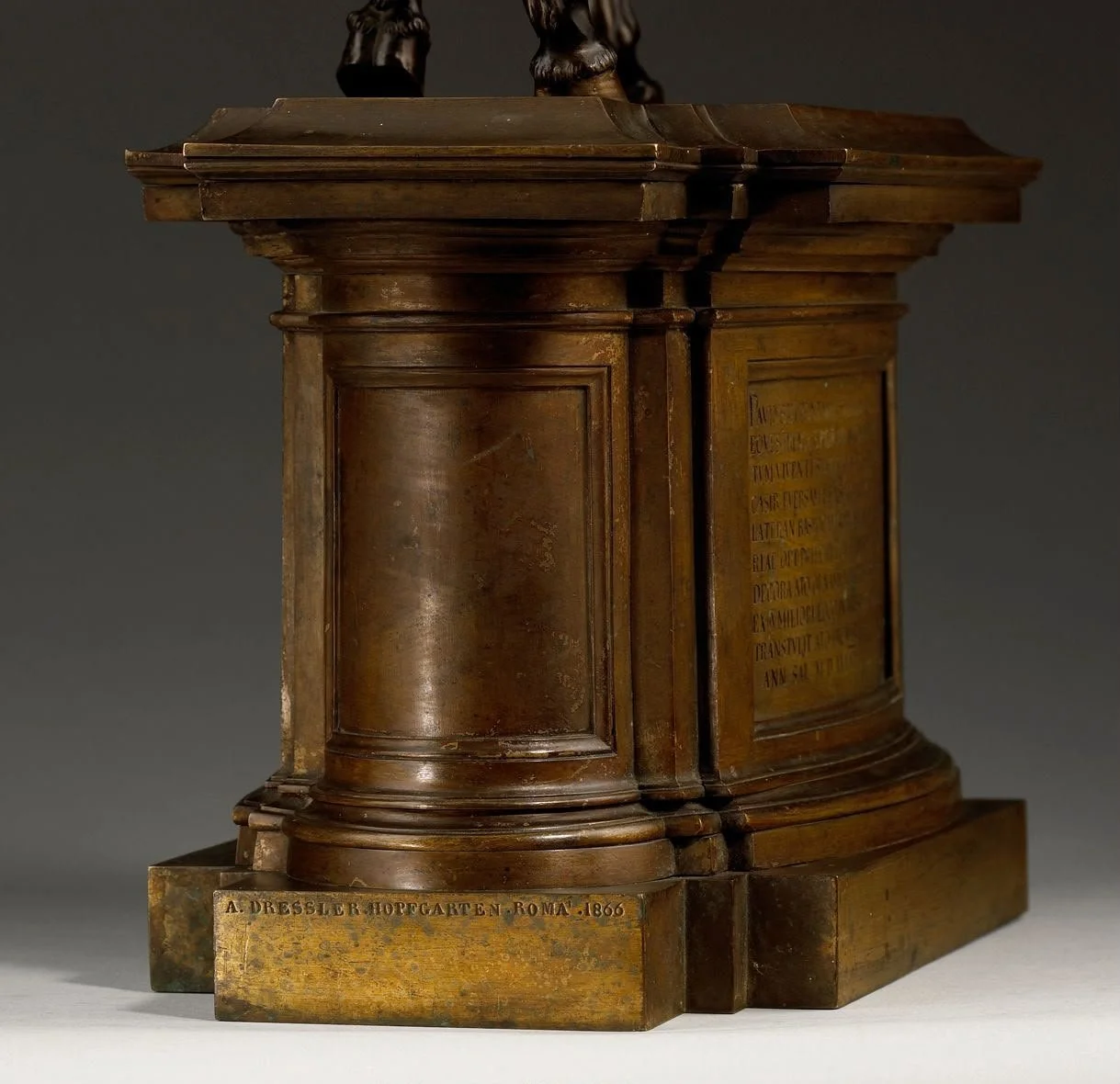 Image 3 of 6
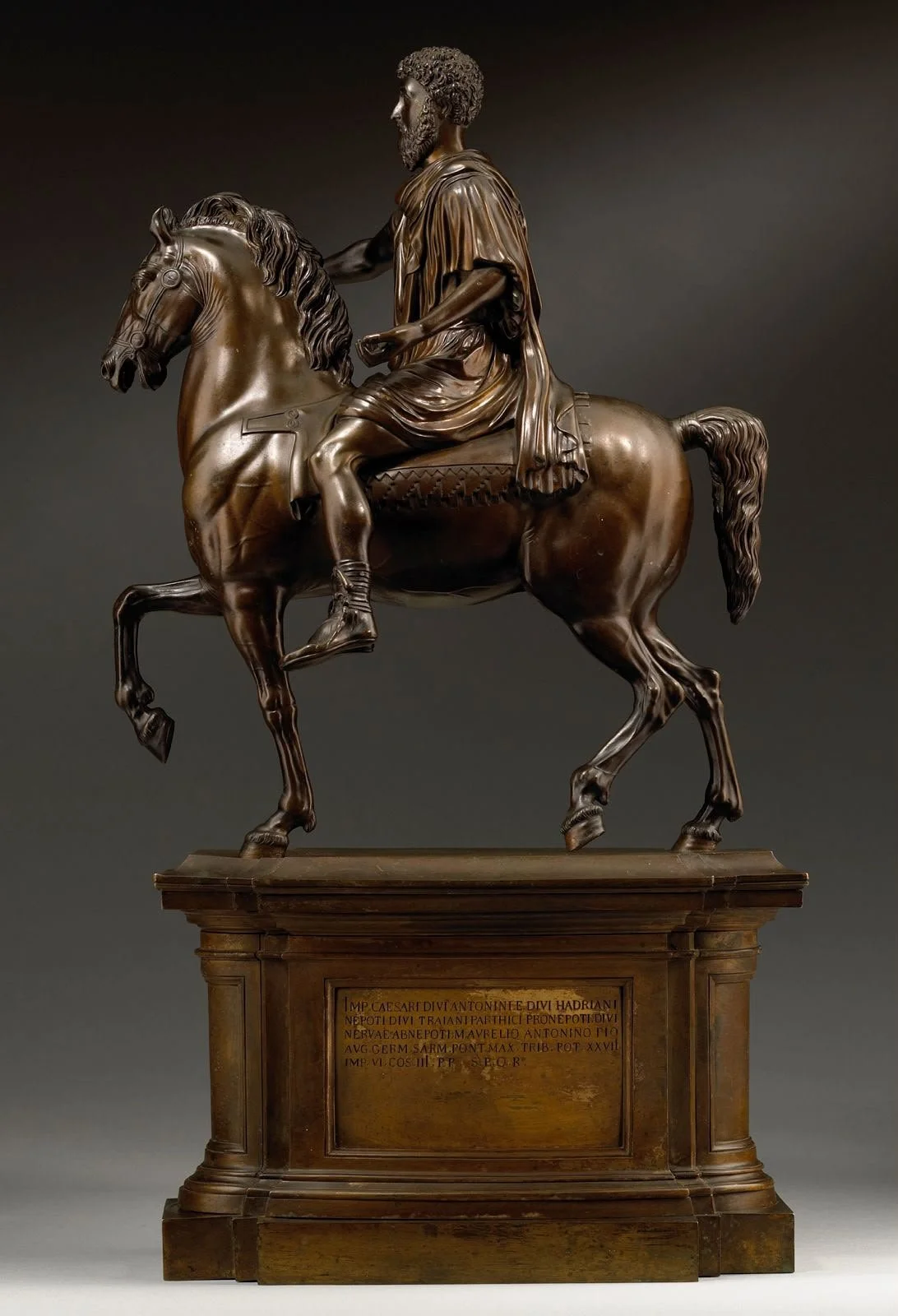 Image 4 of 6
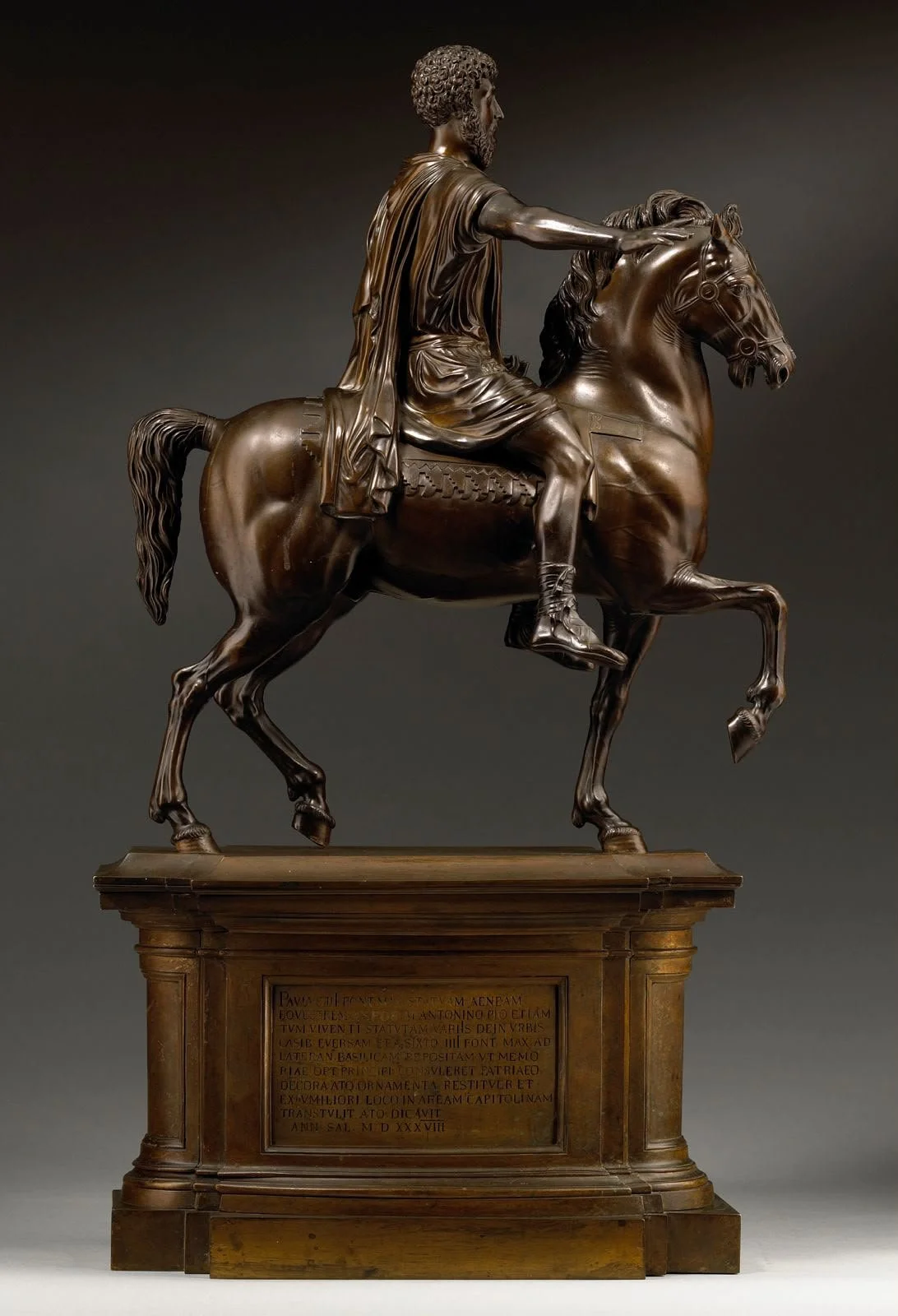 Image 5 of 6
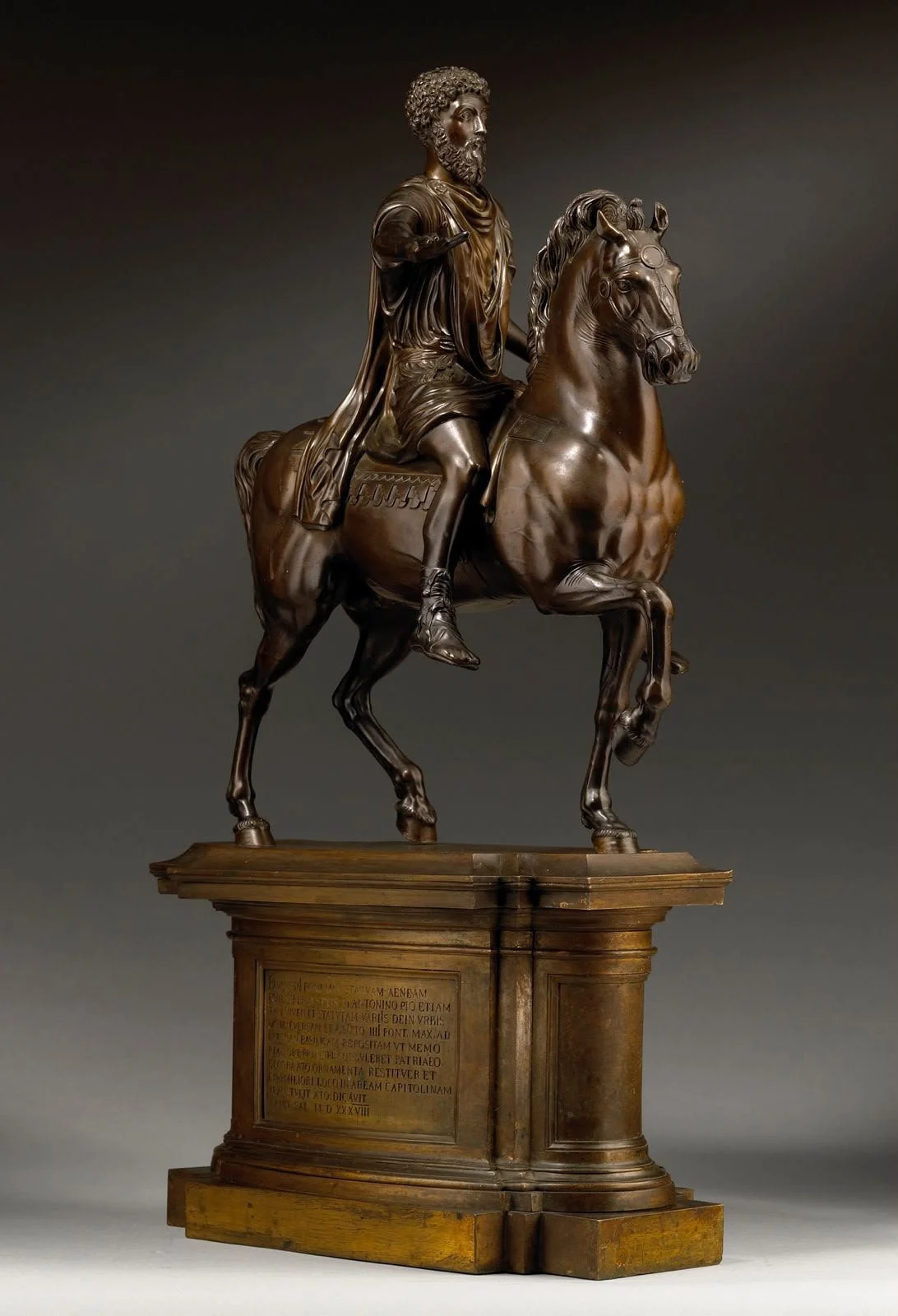 Image 6 of 6