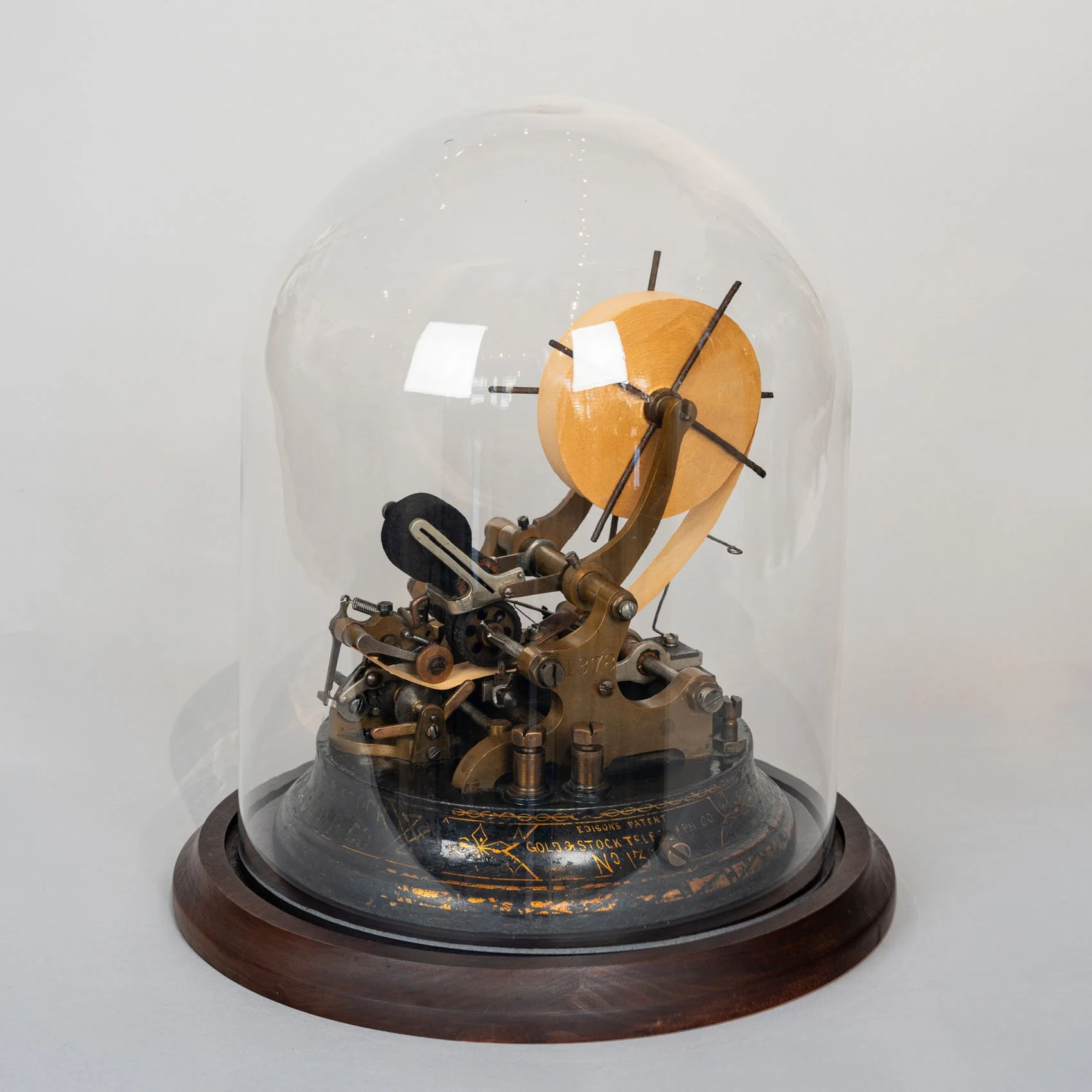
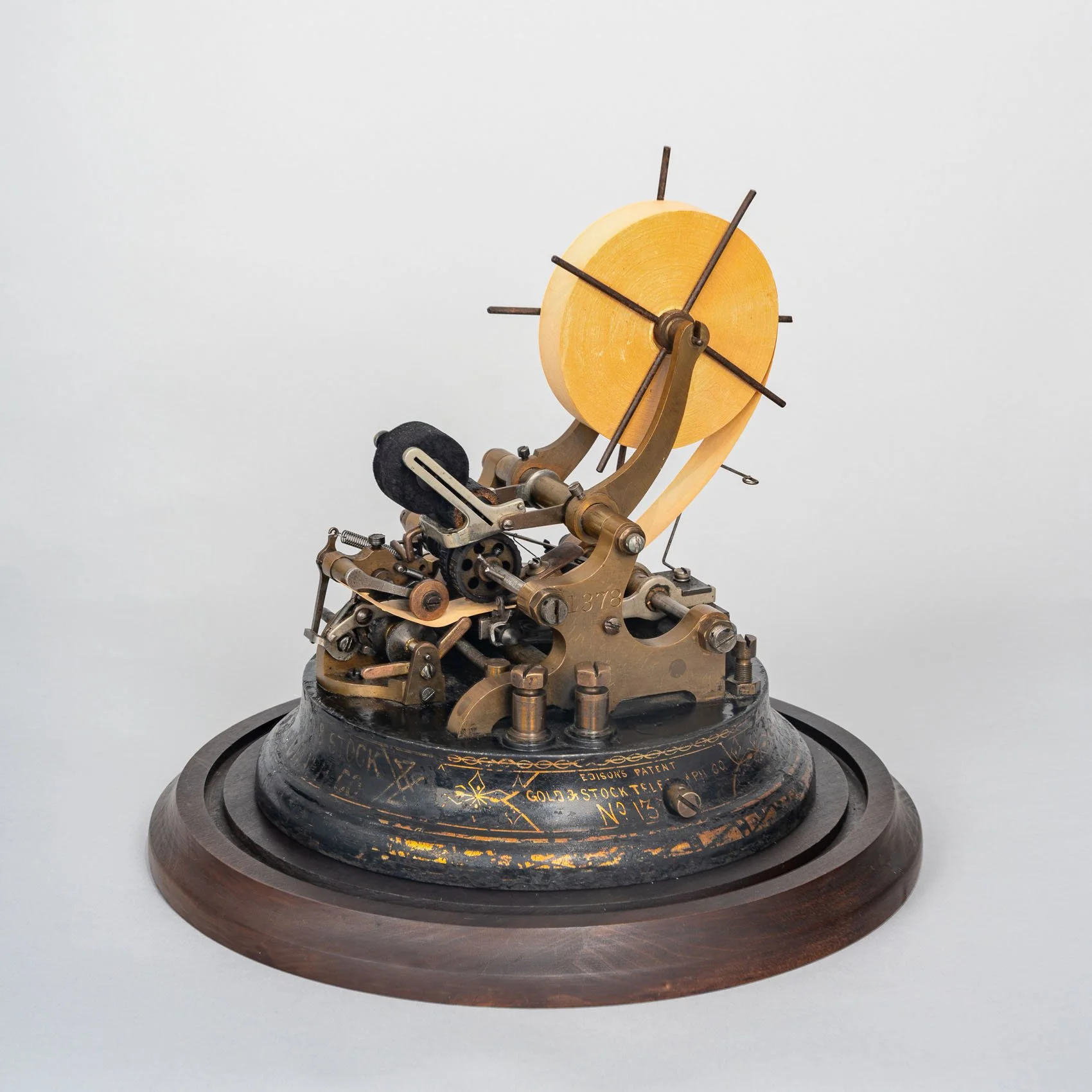
The self-winding stock ticker manufactured by Thomas A. Edison, Inc. represented the height of financial communications technology of its day, the instrument that formed the backbone of American market reporting in the early twentieth century, and operated within the nationwide ticker network of the Western Union Telegraph Company. For the broader history of these instruments and their role on Wall Street, see our article, The Pulse of Wall Street.
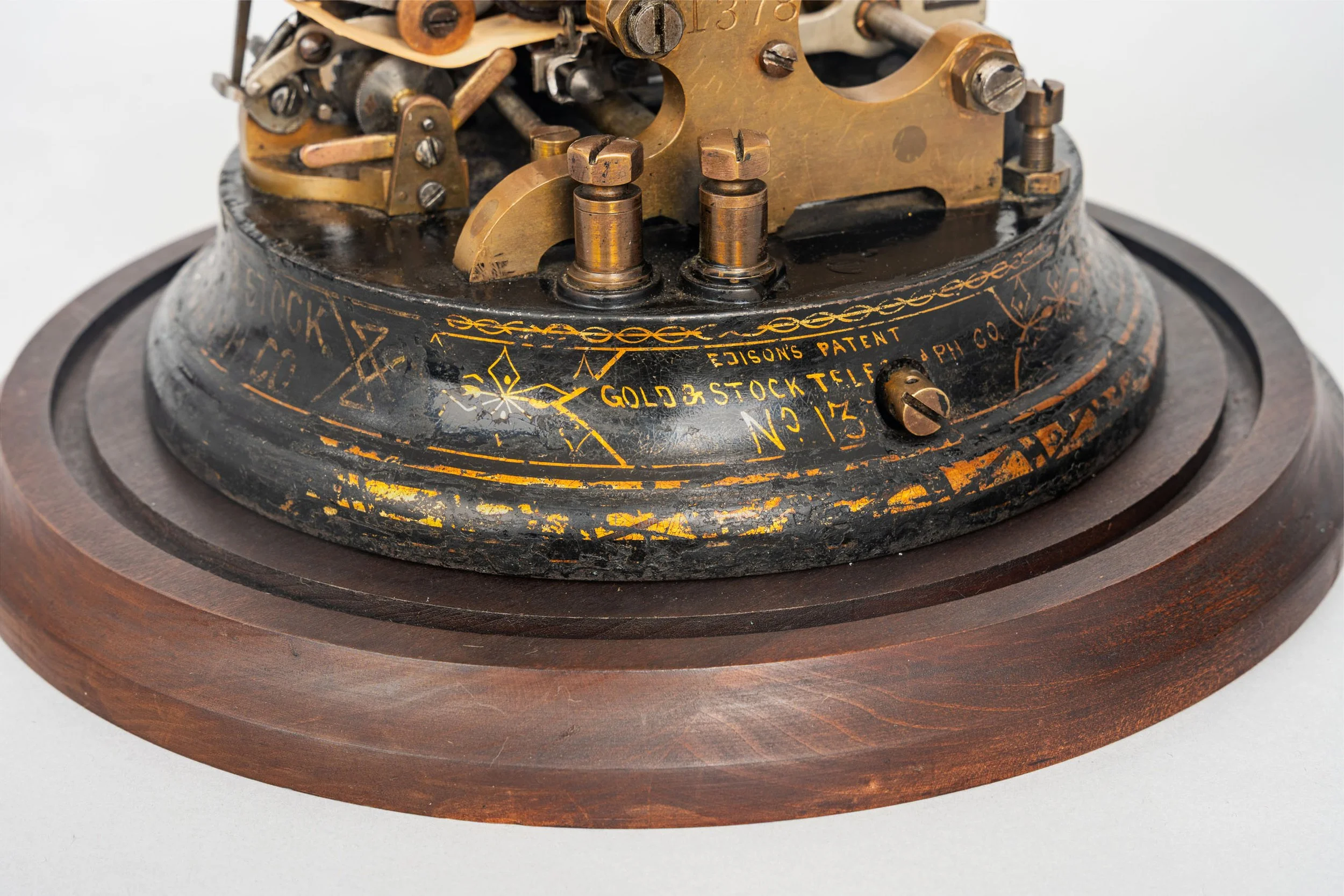
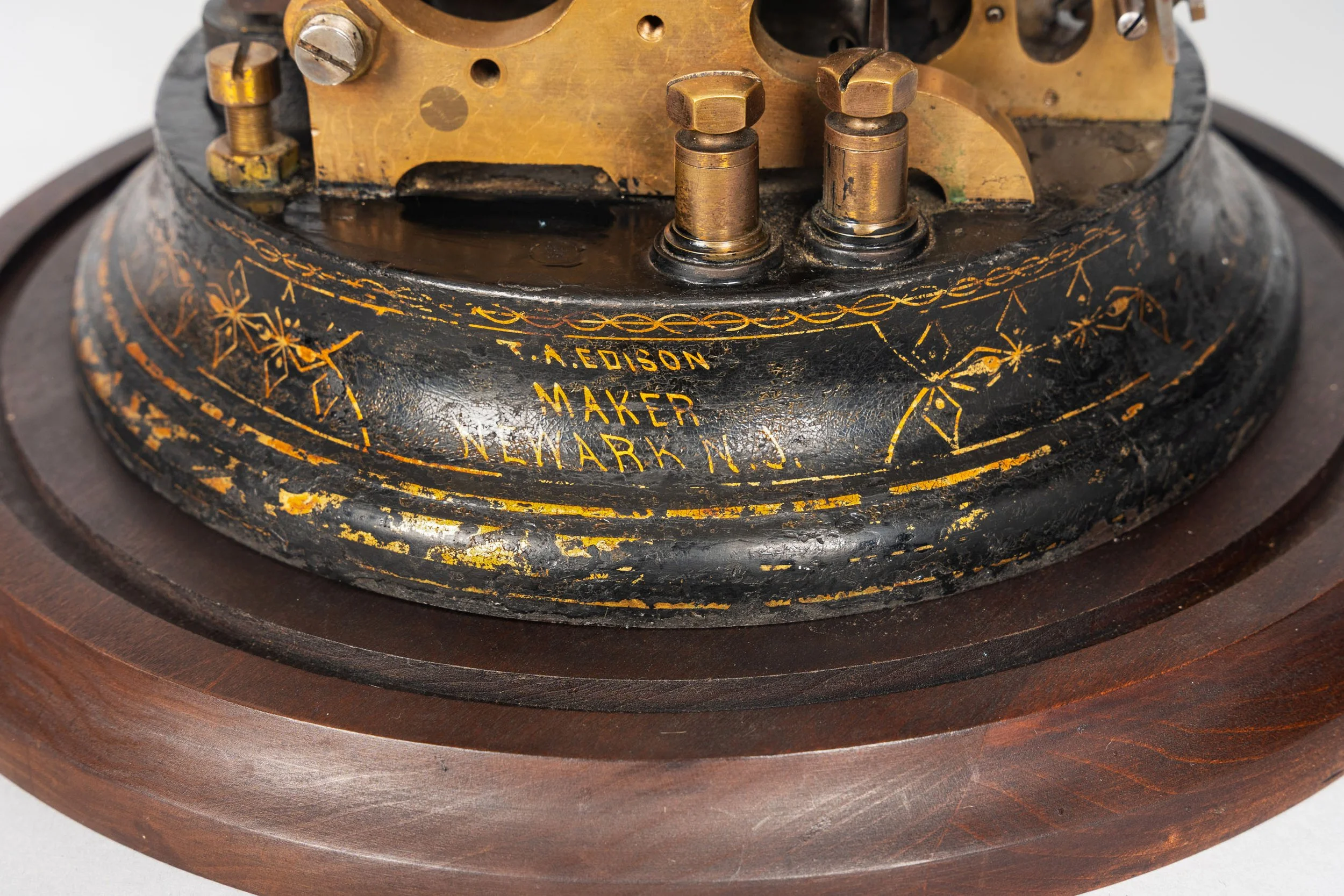
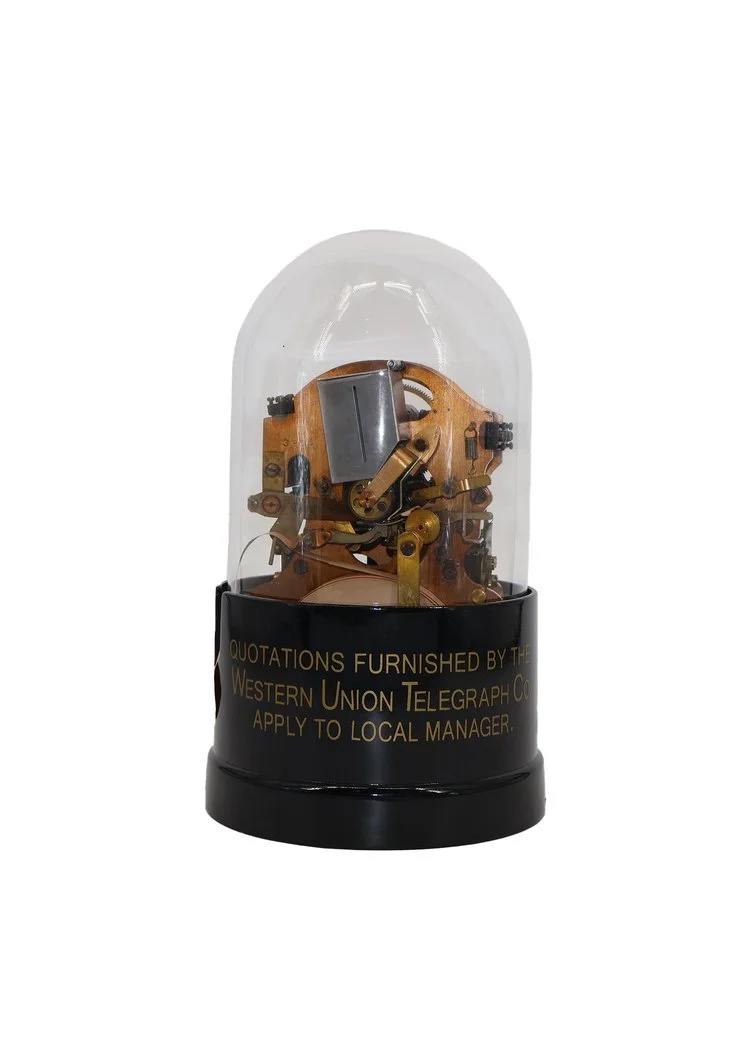
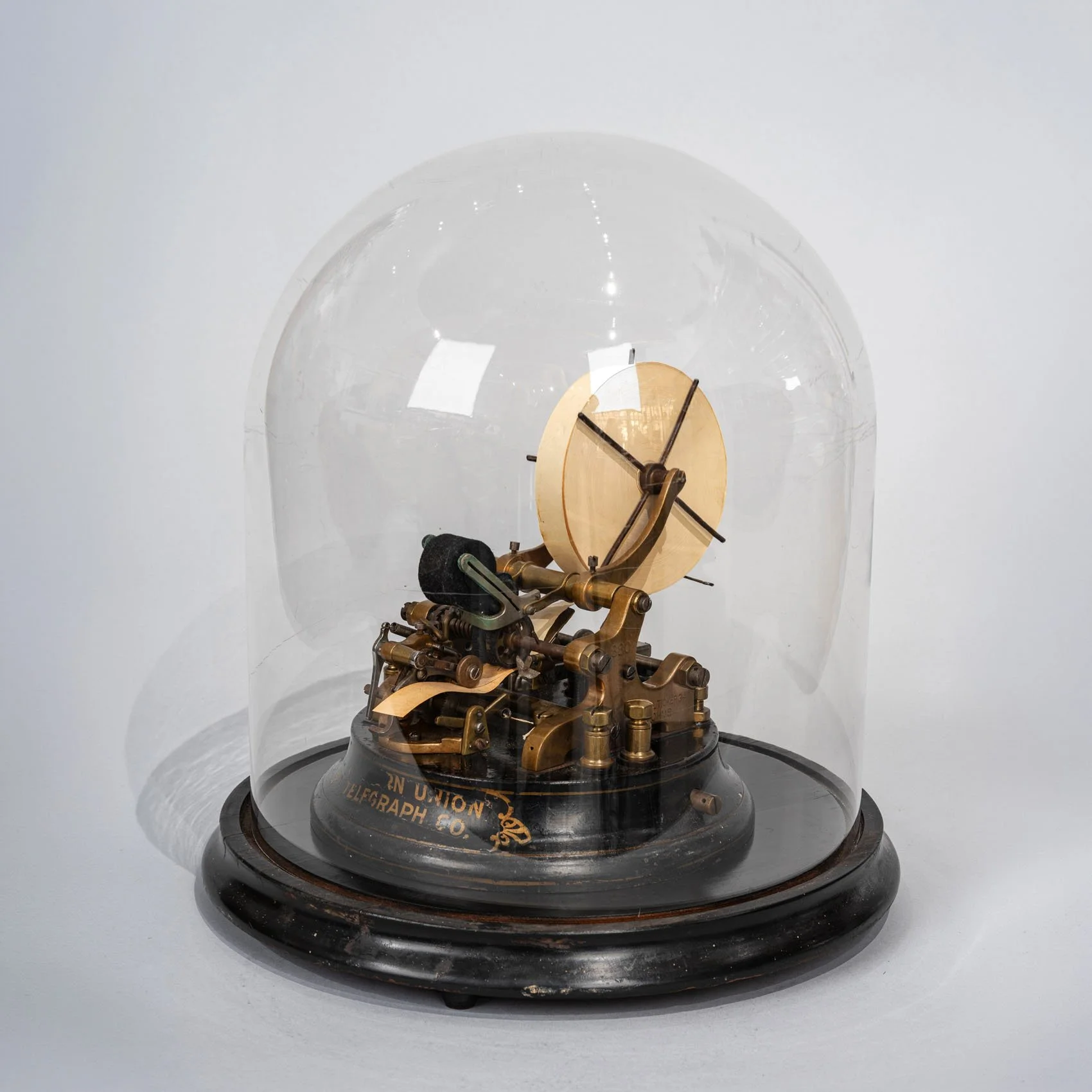
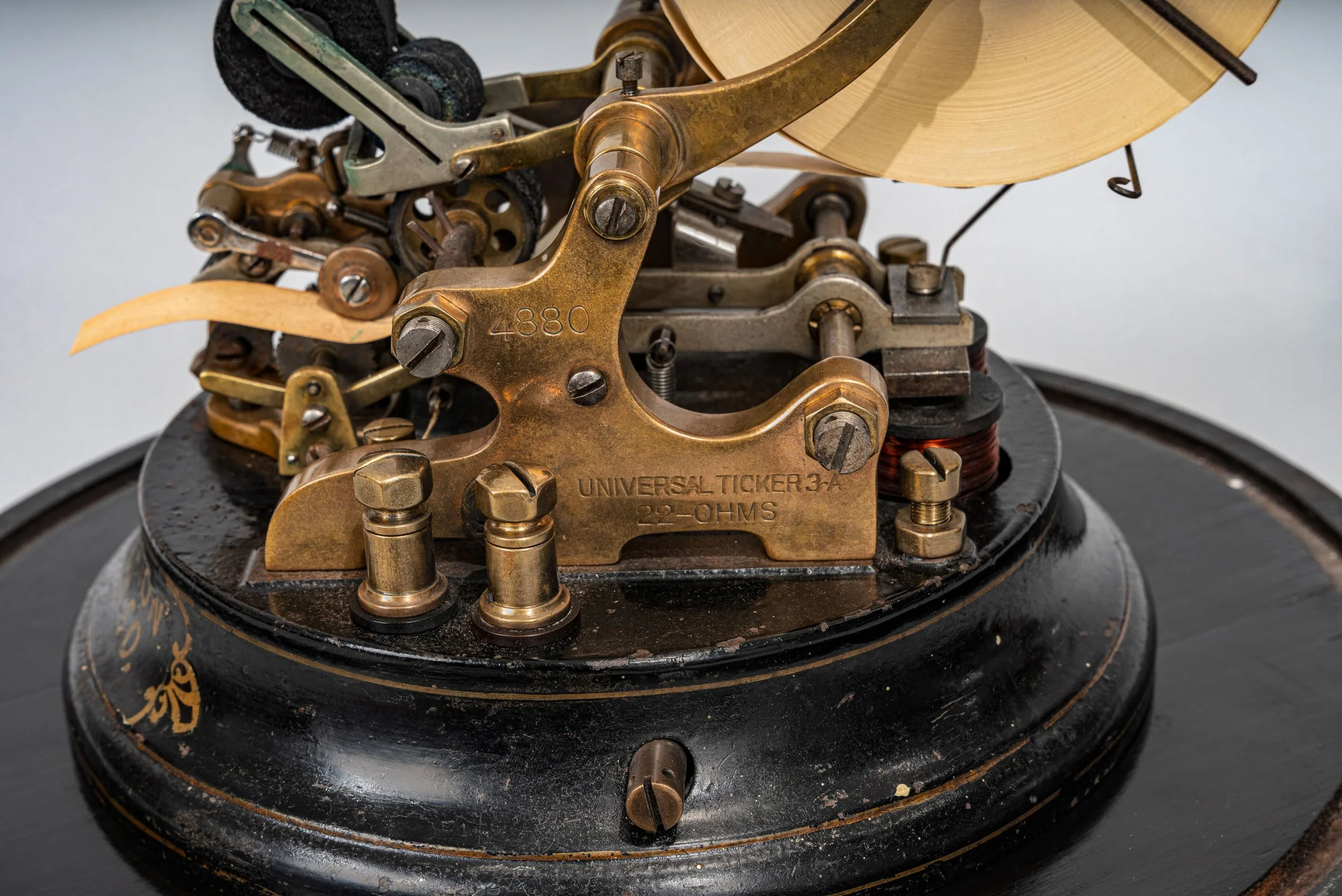
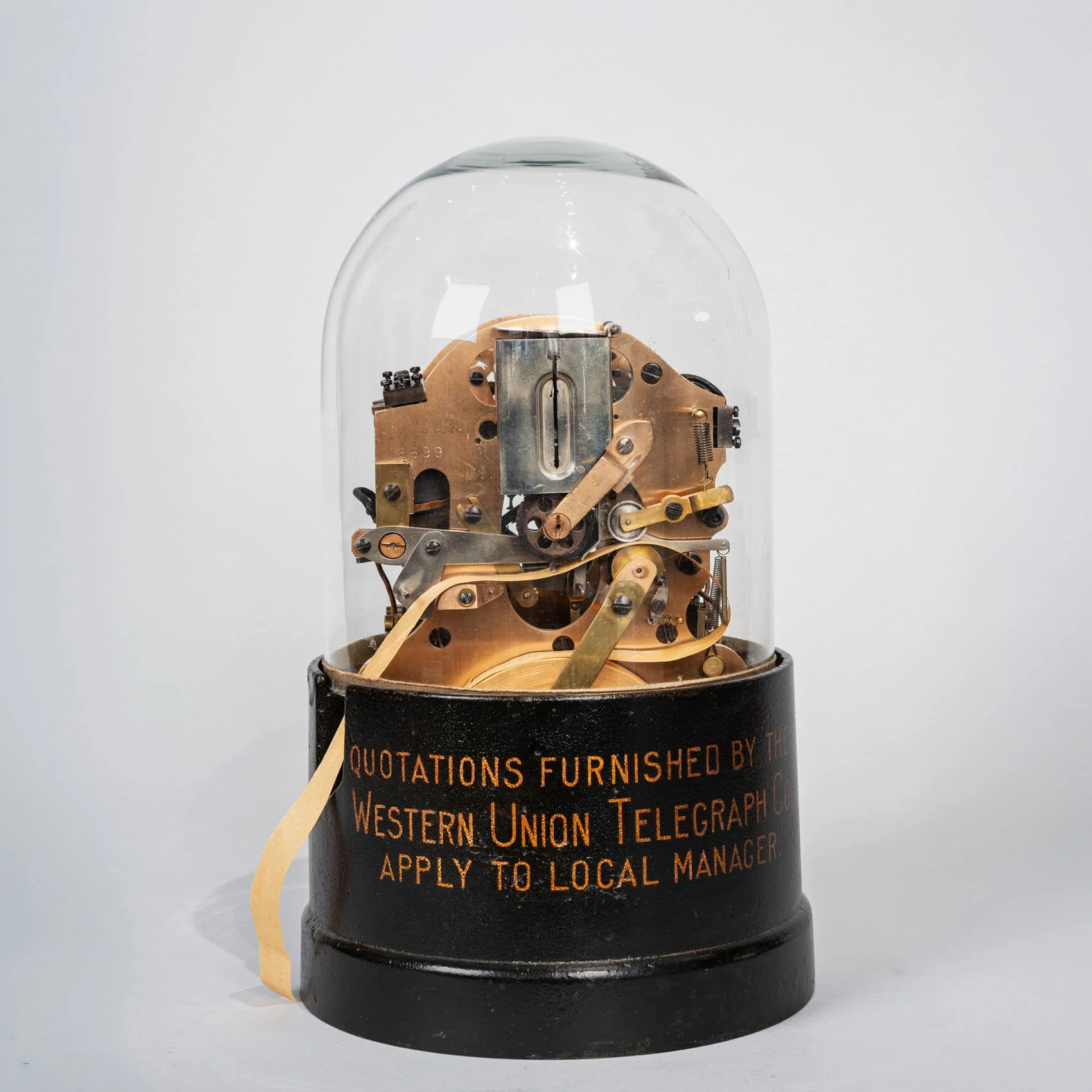
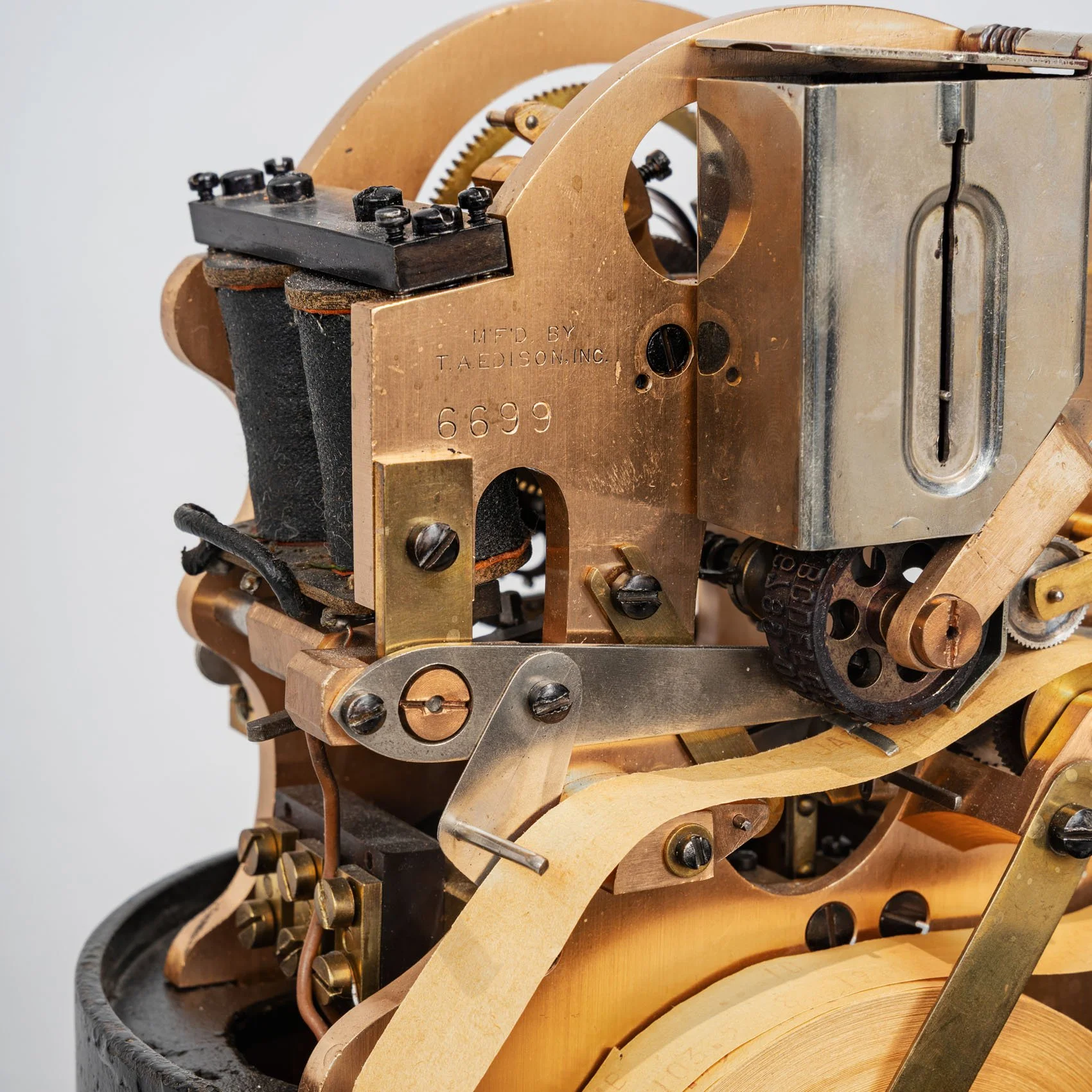
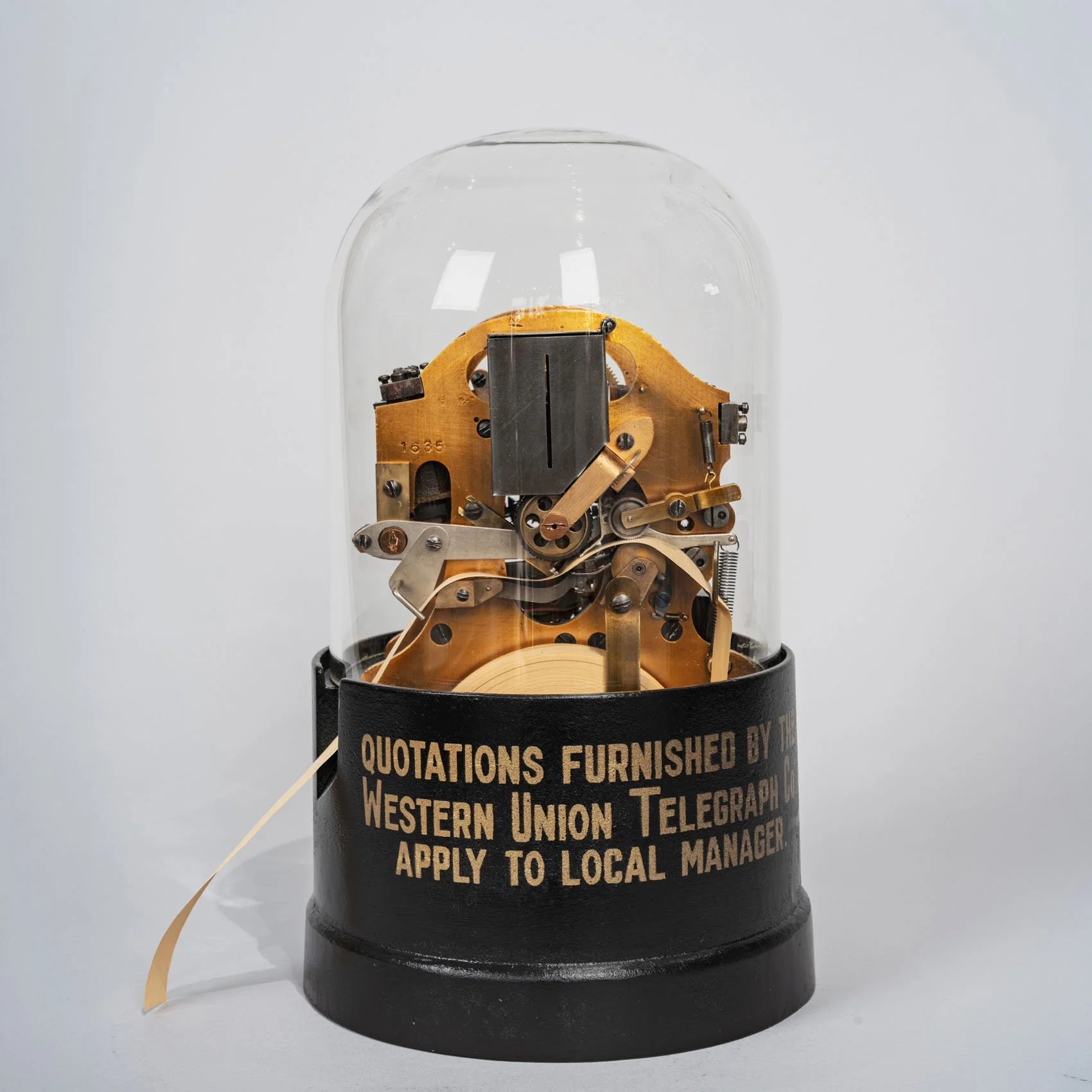
The mechanism is constructed throughout in brass and steel, stamped MFD. BY T.A. EDISON, INC., and stands beneath its original glass dome on a japanned circular base. The base carries the period Western Union service inscription, "QUOTATIONS FURNISHED BY THE WESTERN UNION TELEGRAPH CO. APPLY TO LOCAL MANAGER," a survival of exceptional rarity. Such instructions were applied to machines placed in brokerage offices and financial institutions served by Western Union's quotation service, and were routinely removed, painted over, or lost as the instruments passed through service and storage. Its retention here speaks directly to the original working context and lends the piece real immediacy.
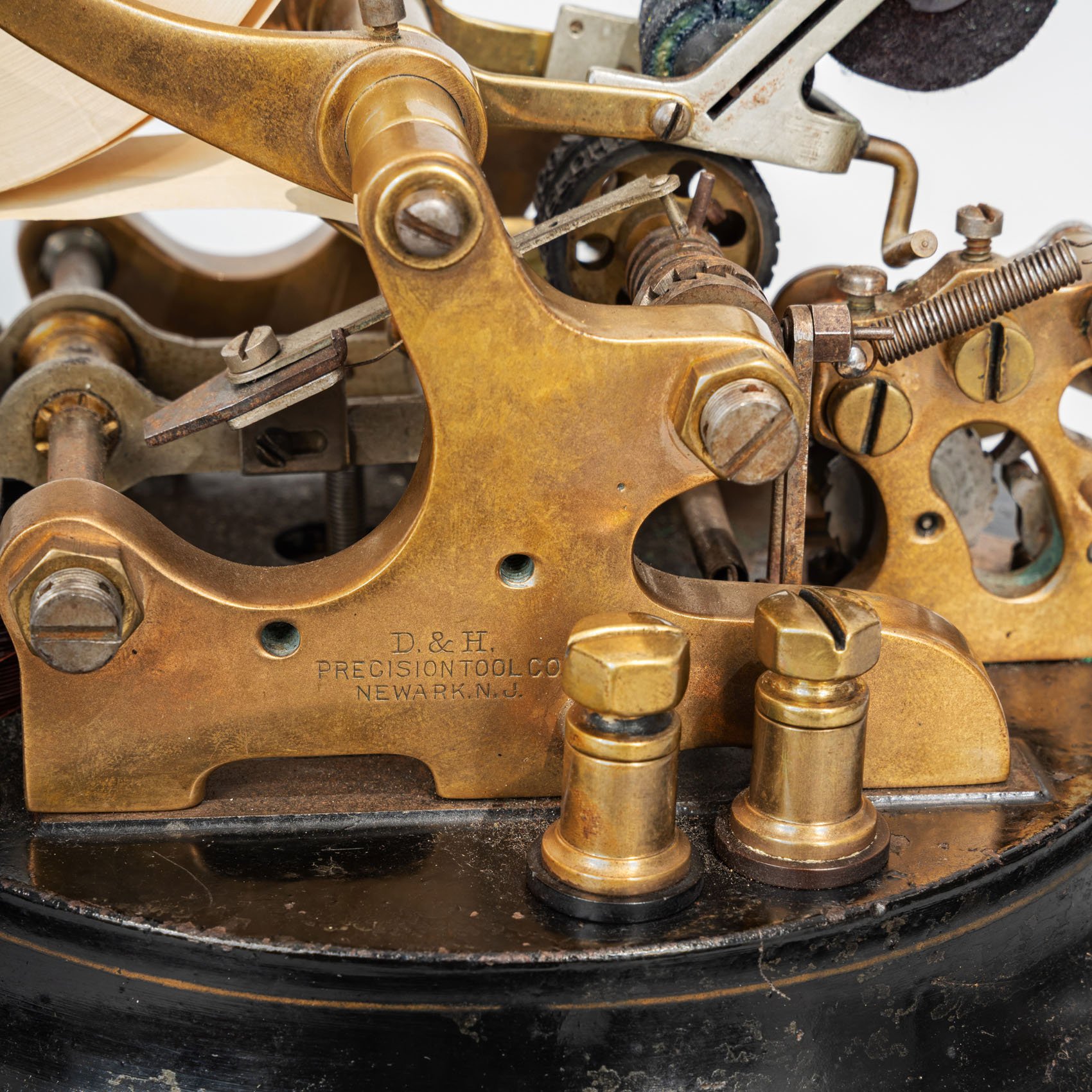
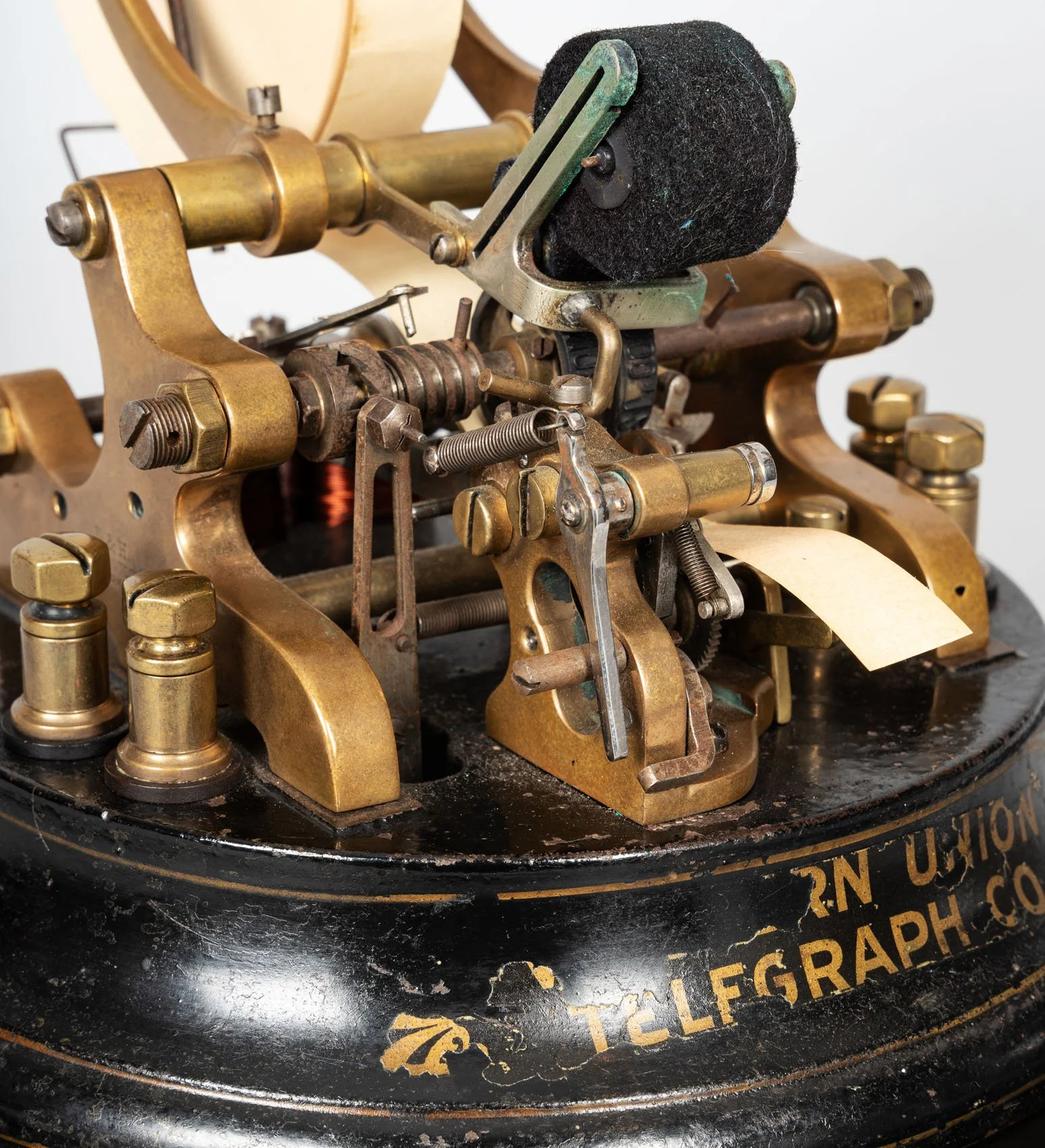
The self-winding mechanism was developed by George B. Scott and W. P. Phelps, with refinements in 1903 by J. C. Barclay and Jay R. Page that produced a more compact instrument than its predecessors, the design reaching its final form between 1915 and 1923. A late production machine, the present example incorporates a dual-roller ink system within a hinged enclosure, replacing the earlier single-roller arrangement and reflecting the continual engineering refinement that characterized these instruments throughout their working lives. While examples of this type are frequently stamped for Thomas Edison, the mark denotes manufacture by his incorporated company rather than personal invention, Edison's direct involvement in ticker design having ceased decades earlier, though the association with his name is historically authentic and remained commercially significant.
Nine principal variants were produced across the series: the 1-C, 21-C, 22-A, 30-A, 31-A, 32-A, 34-A, 35-A, and 41-A. Many machines were modified during active service, and surviving examples frequently incorporate later components without corresponding changes in their designations, reflecting the pragmatic maintenance culture of the telegraph industry.
In service, an instrument of this type received telegraphic impulses carrying quotations from the centralized exchanges and translated them into printed sequences of company abbreviations and prices on a continuous paper tape, delivering near real-time market information to subscribers across the country. Tickers of this generation remained in use on the New York Stock Exchange through the crash of October 1929, when record volume overwhelmed the system and the tape ran more than two and a half hours behind the floor, a delay that deepened the panic and hastened the faster tickers that replaced them in the following decade.
The instrument is in excellent original condition throughout. The brass-and-steel mechanism is complete and fully intact, with rich original patina, and the MFD. BY T.A. EDISON, INC. stamp remains clearly legible. The original glass dome is present and free of cracks or chips, and the japanned base retains the full Western Union service inscription in excellent condition.
The self-winding stock ticker manufactured by Thomas A. Edison, Inc. represented the height of financial communications technology of its day, the instrument that formed the backbone of American market reporting in the early twentieth century, and operated within the nationwide ticker network of the Western Union Telegraph Company. For the broader history of these instruments and their role on Wall Street, see our article, The Pulse of Wall Street.
The mechanism is constructed throughout in brass and steel, stamped MFD. BY T.A. EDISON, INC., and stands beneath its original glass dome on a japanned circular base. The base carries the period Western Union service inscription, "QUOTATIONS FURNISHED BY THE WESTERN UNION TELEGRAPH CO. APPLY TO LOCAL MANAGER," a survival of exceptional rarity. Such instructions were applied to machines placed in brokerage offices and financial institutions served by Western Union's quotation service, and were routinely removed, painted over, or lost as the instruments passed through service and storage. Its retention here speaks directly to the original working context and lends the piece real immediacy.
The self-winding mechanism was developed by George B. Scott and W. P. Phelps, with refinements in 1903 by J. C. Barclay and Jay R. Page that produced a more compact instrument than its predecessors, the design reaching its final form between 1915 and 1923. A late production machine, the present example incorporates a dual-roller ink system within a hinged enclosure, replacing the earlier single-roller arrangement and reflecting the continual engineering refinement that characterized these instruments throughout their working lives. While examples of this type are frequently stamped for Thomas Edison, the mark denotes manufacture by his incorporated company rather than personal invention, Edison's direct involvement in ticker design having ceased decades earlier, though the association with his name is historically authentic and remained commercially significant.
Nine principal variants were produced across the series: the 1-C, 21-C, 22-A, 30-A, 31-A, 32-A, 34-A, 35-A, and 41-A. Many machines were modified during active service, and surviving examples frequently incorporate later components without corresponding changes in their designations, reflecting the pragmatic maintenance culture of the telegraph industry.
In service, an instrument of this type received telegraphic impulses carrying quotations from the centralized exchanges and translated them into printed sequences of company abbreviations and prices on a continuous paper tape, delivering near real-time market information to subscribers across the country. Tickers of this generation remained in use on the New York Stock Exchange through the crash of October 1929, when record volume overwhelmed the system and the tape ran more than two and a half hours behind the floor, a delay that deepened the panic and hastened the faster tickers that replaced them in the following decade.
The instrument is in excellent original condition throughout. The brass-and-steel mechanism is complete and fully intact, with rich original patina, and the MFD. BY T.A. EDISON, INC. stamp remains clearly legible. The original glass dome is present and free of cracks or chips, and the japanned base retains the full Western Union service inscription in excellent condition.

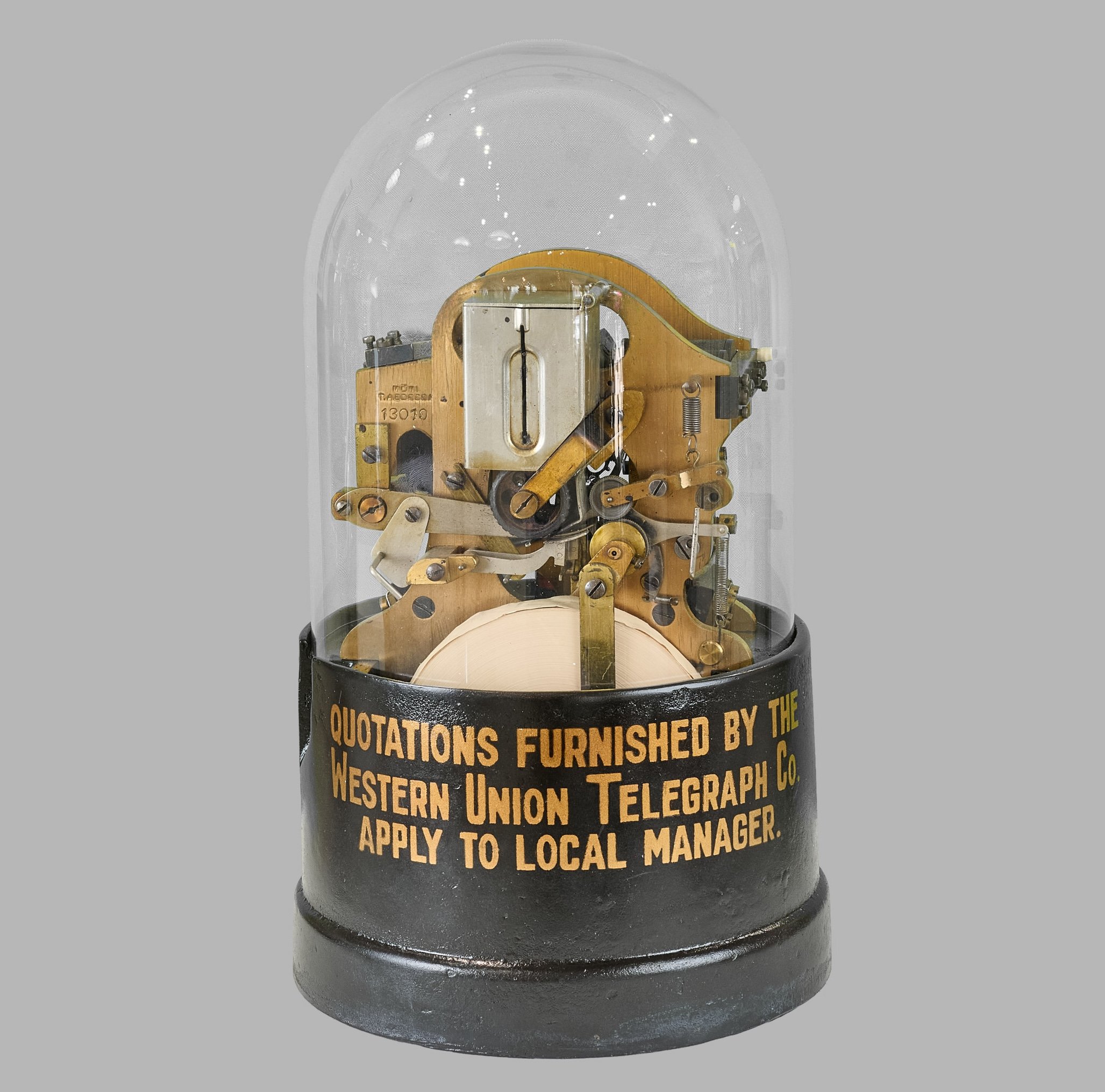 Image 1 of 5
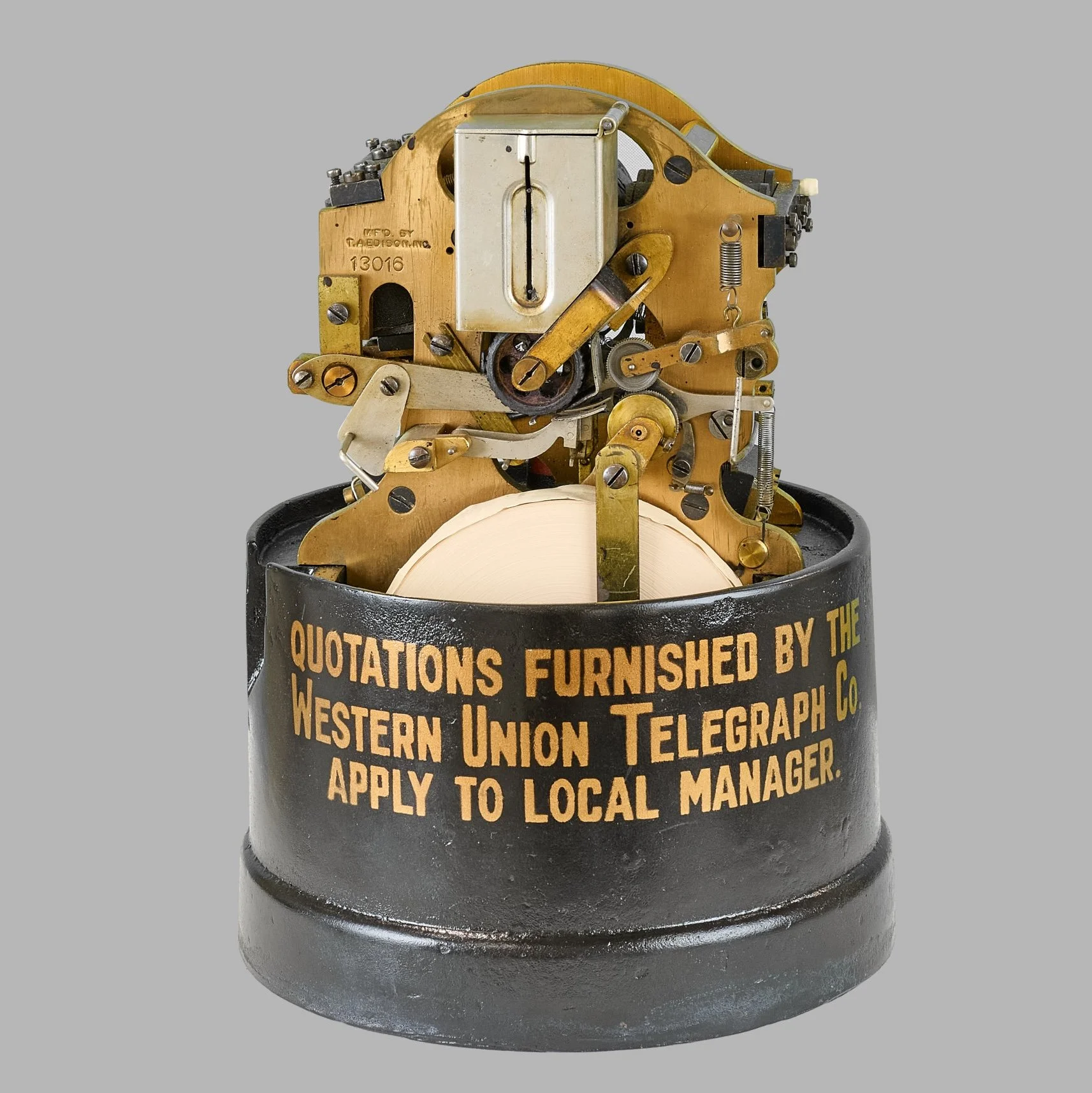 Image 2 of 5
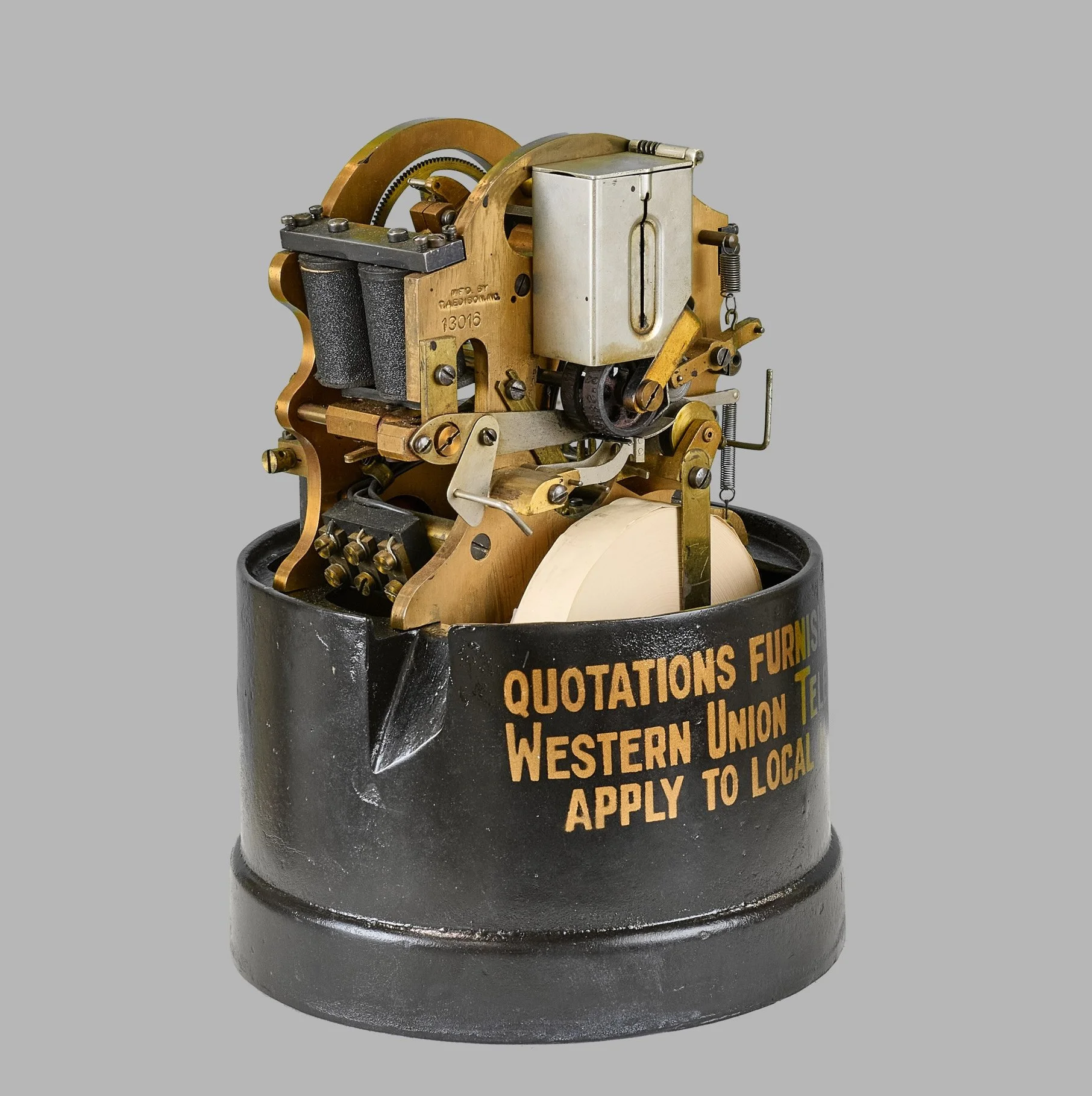 Image 3 of 5
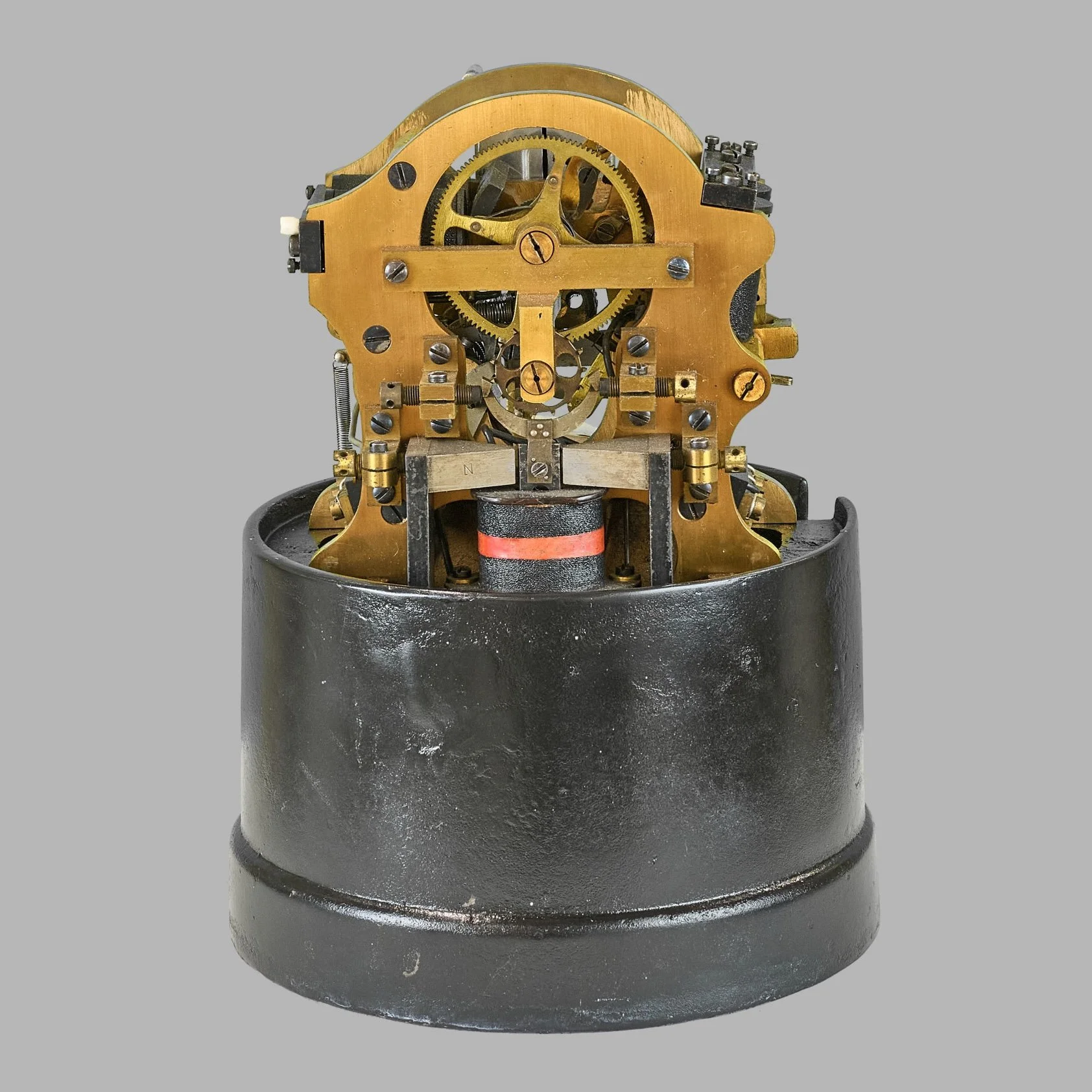 Image 4 of 5
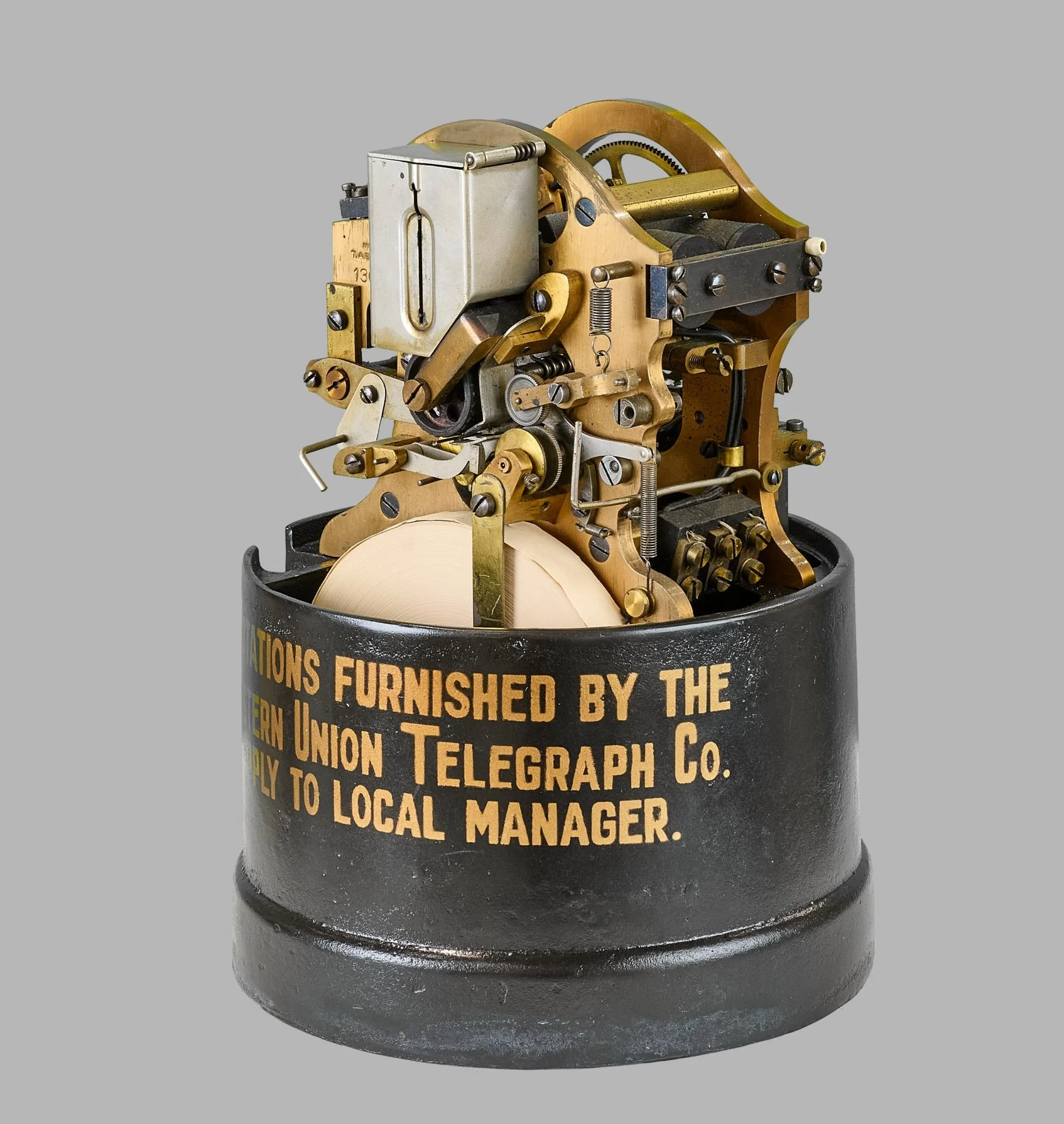 Image 5 of 5