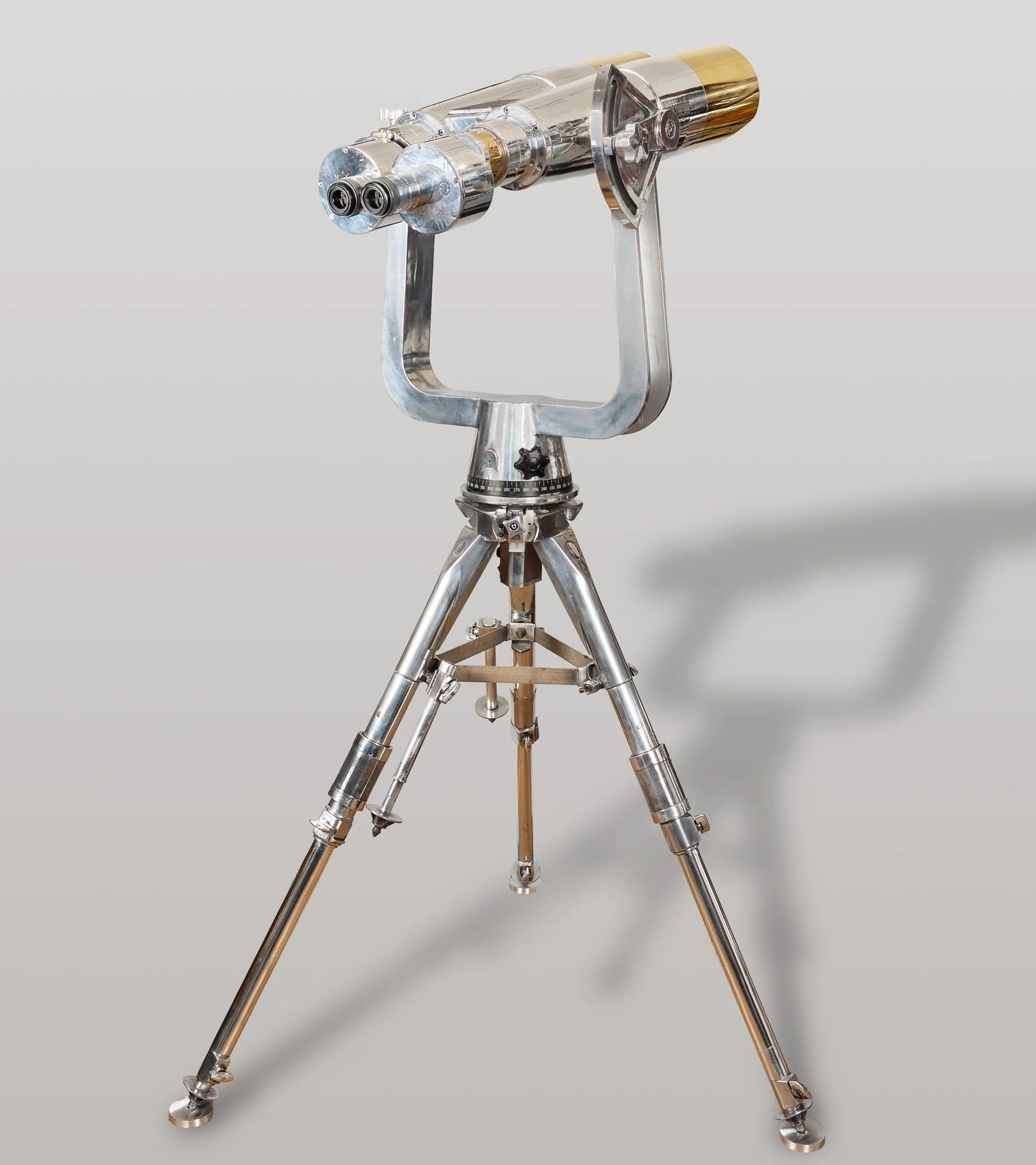
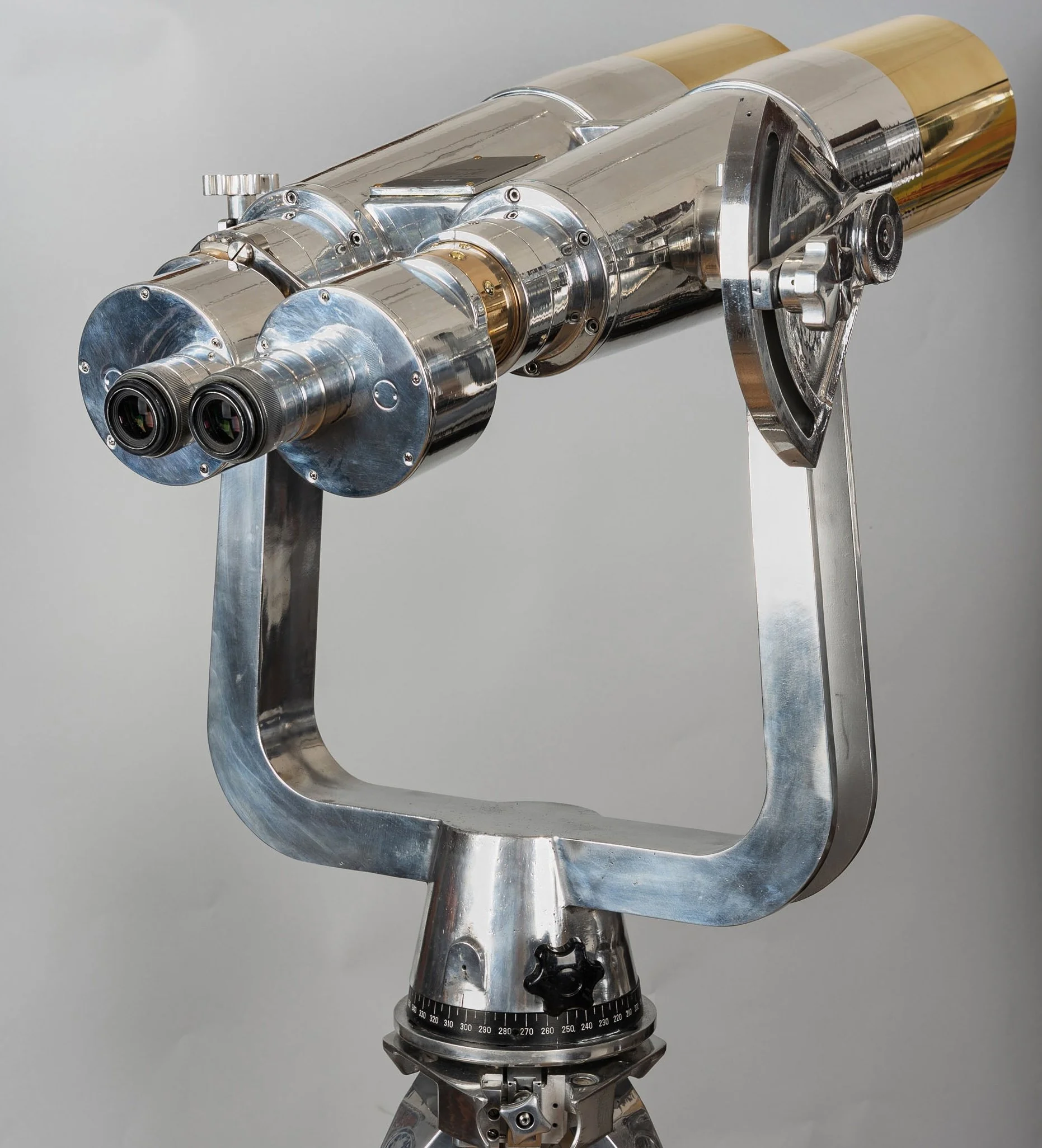
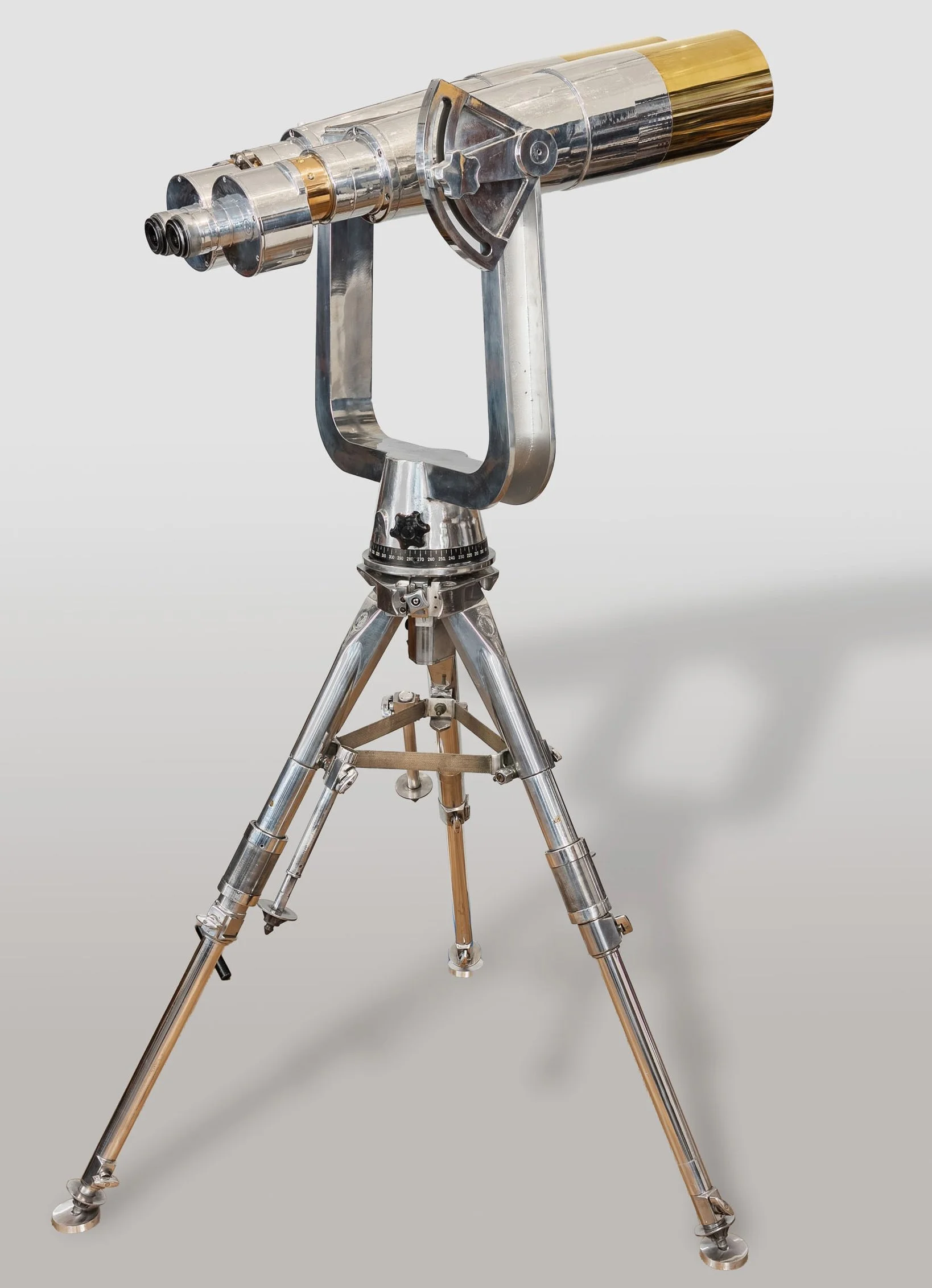
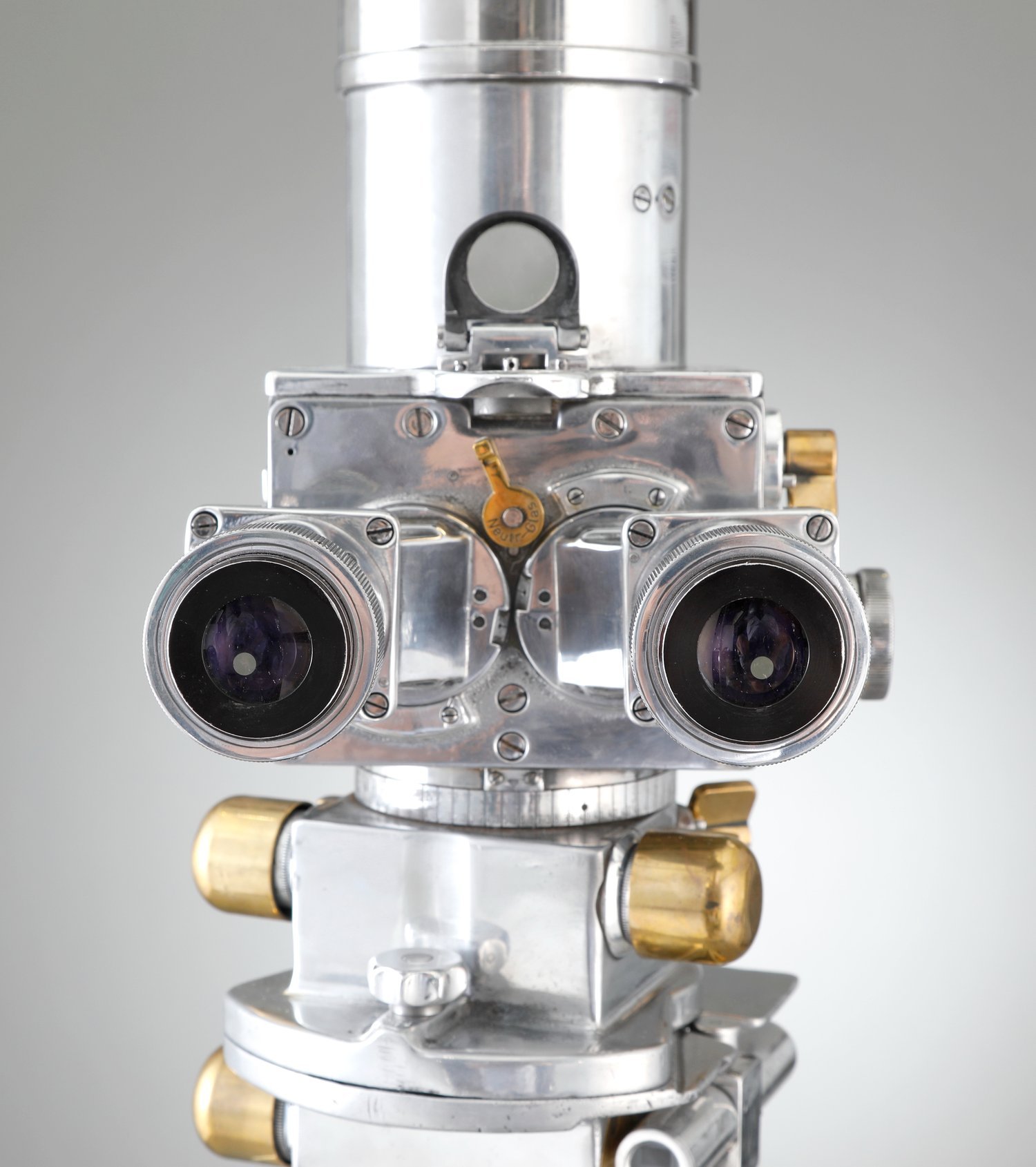
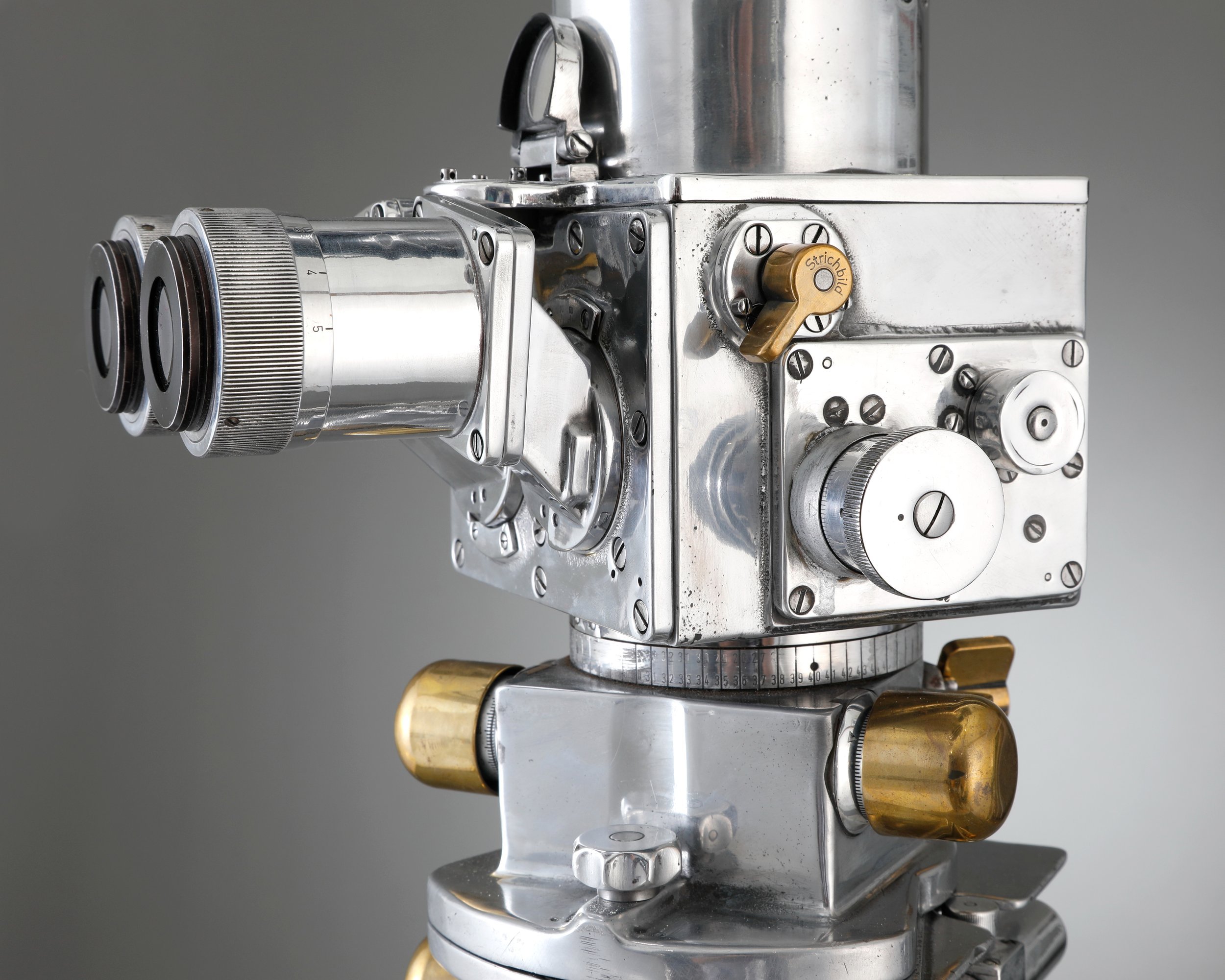
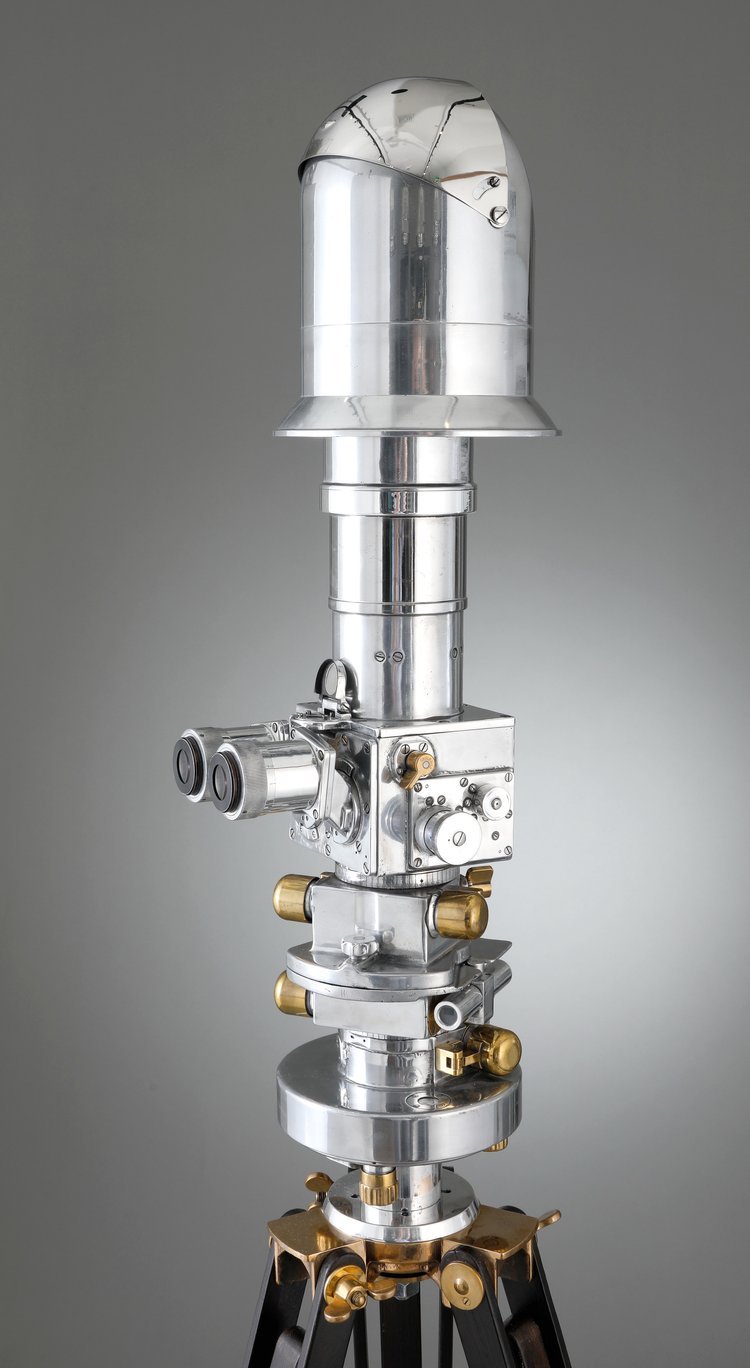
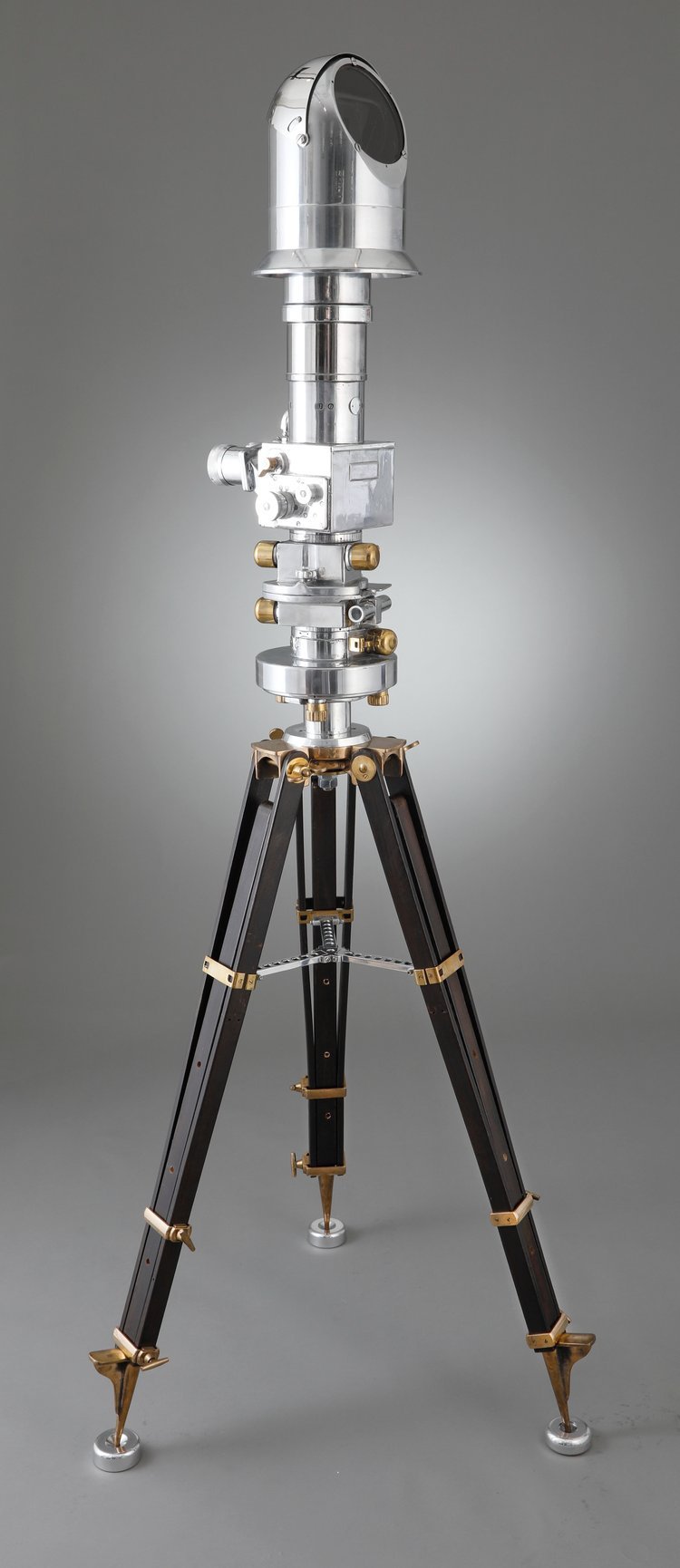
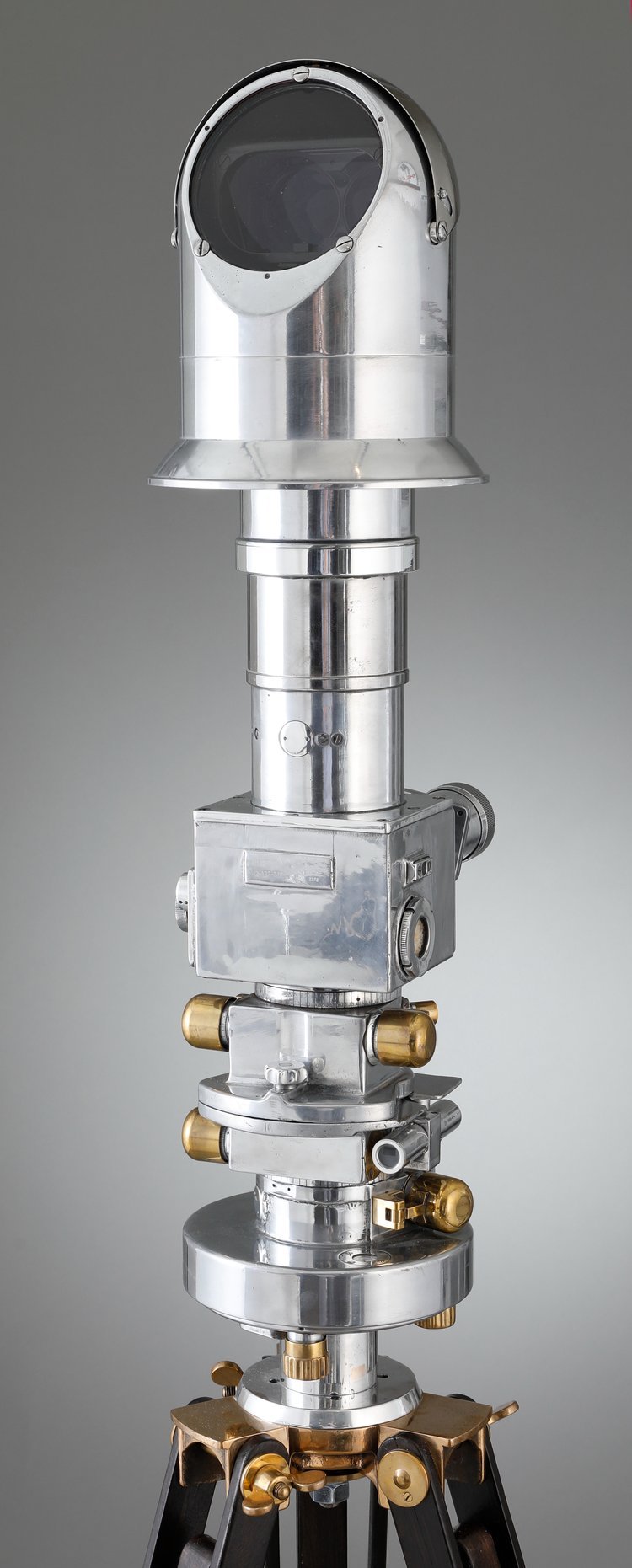
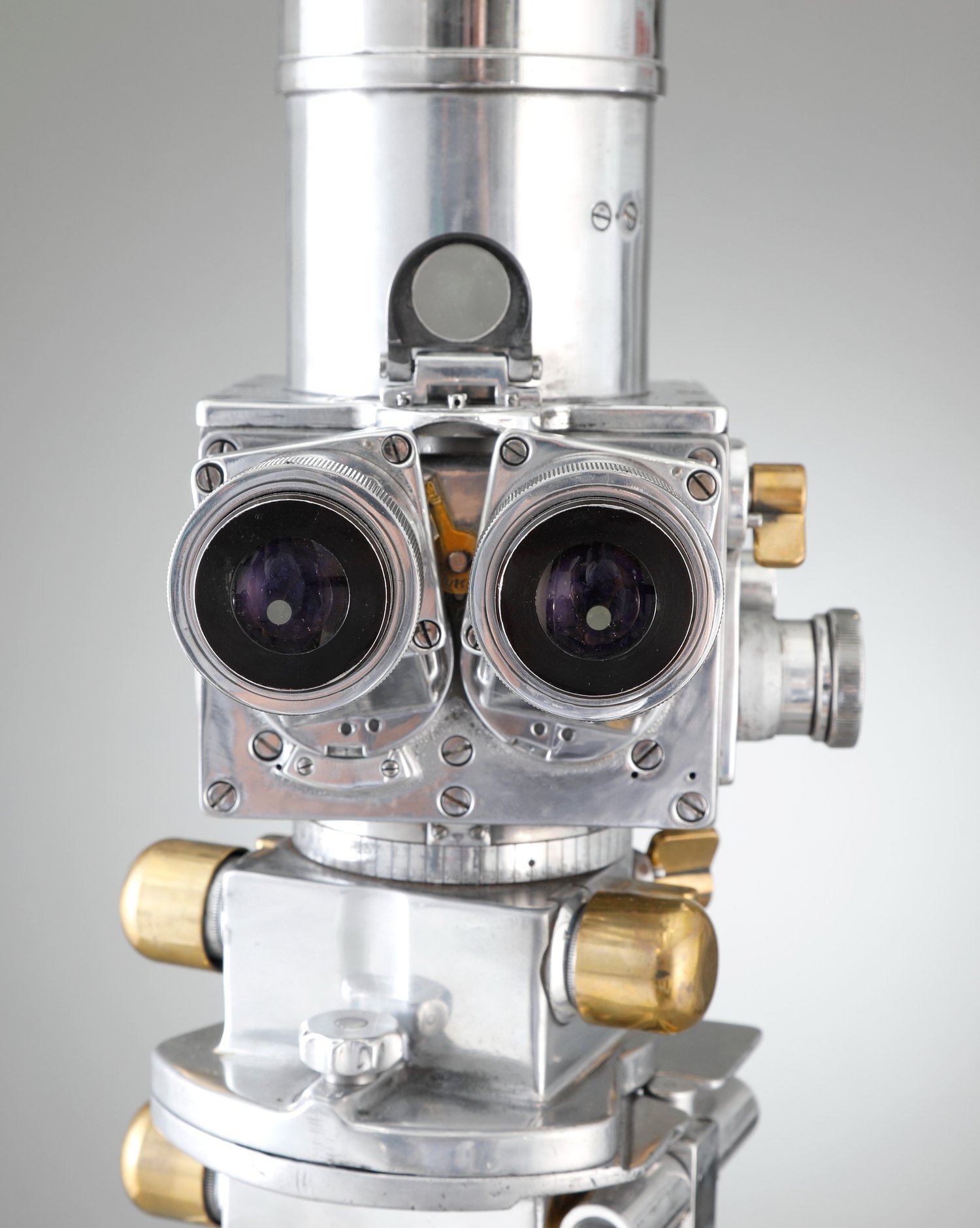
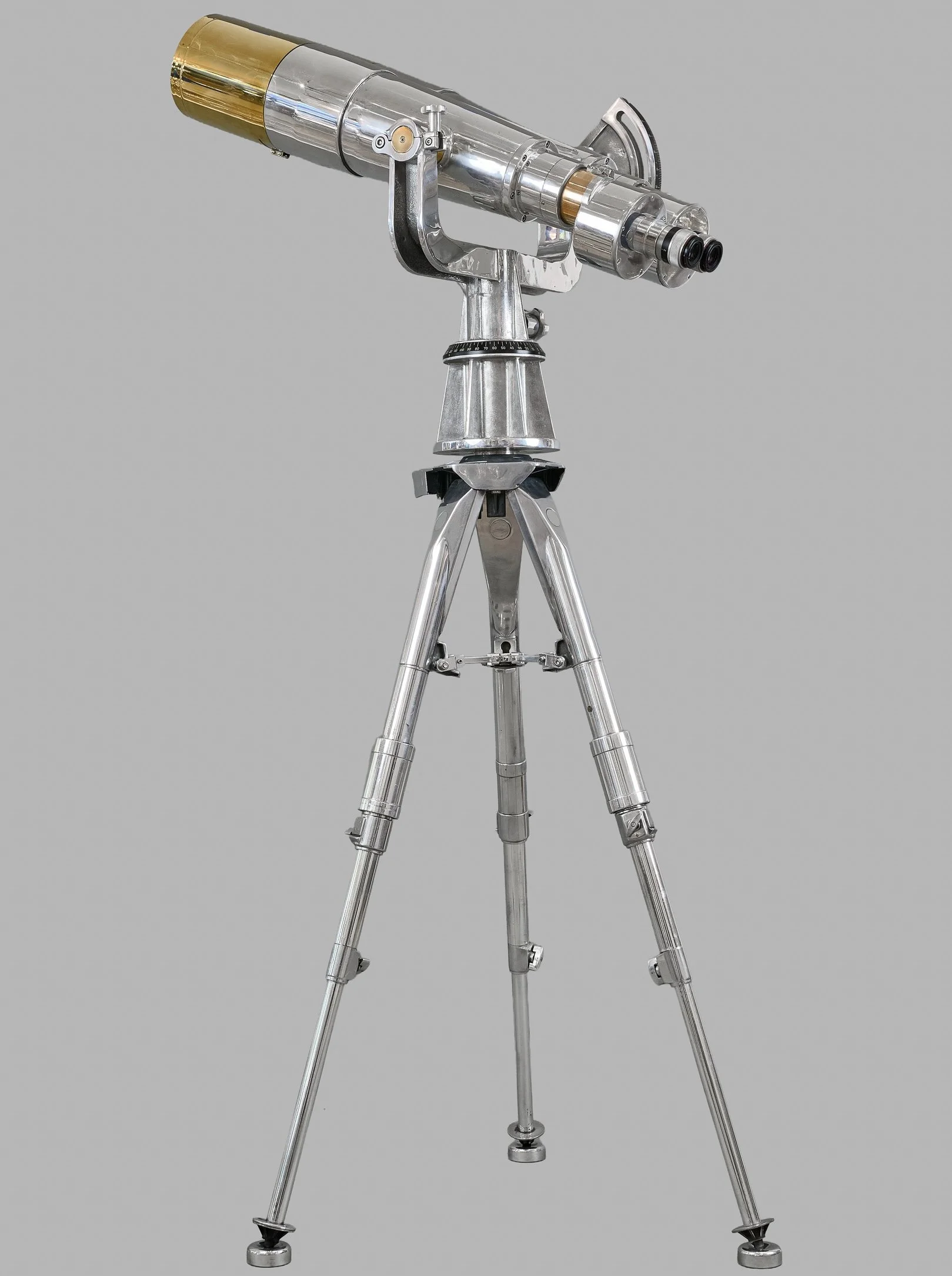
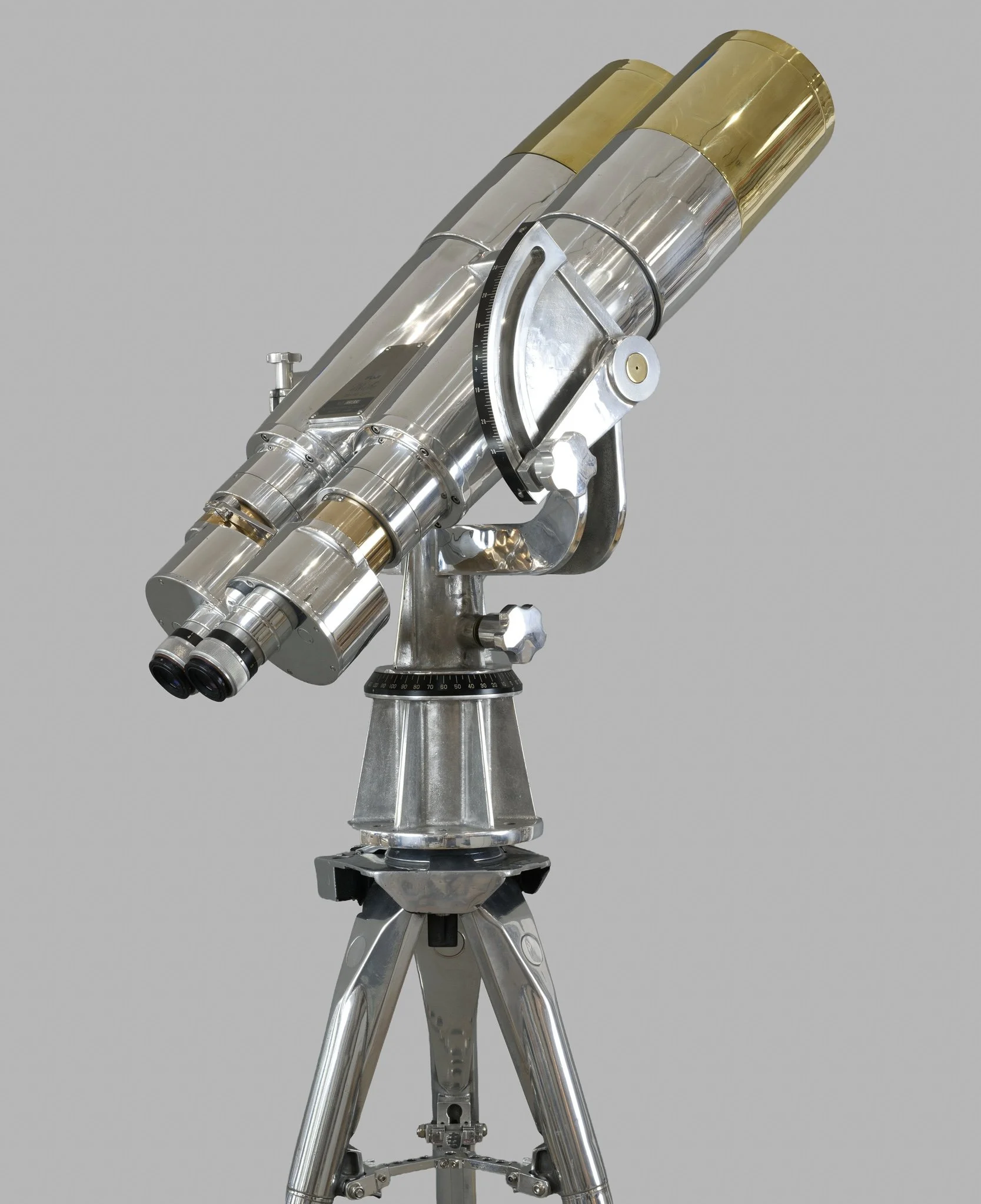
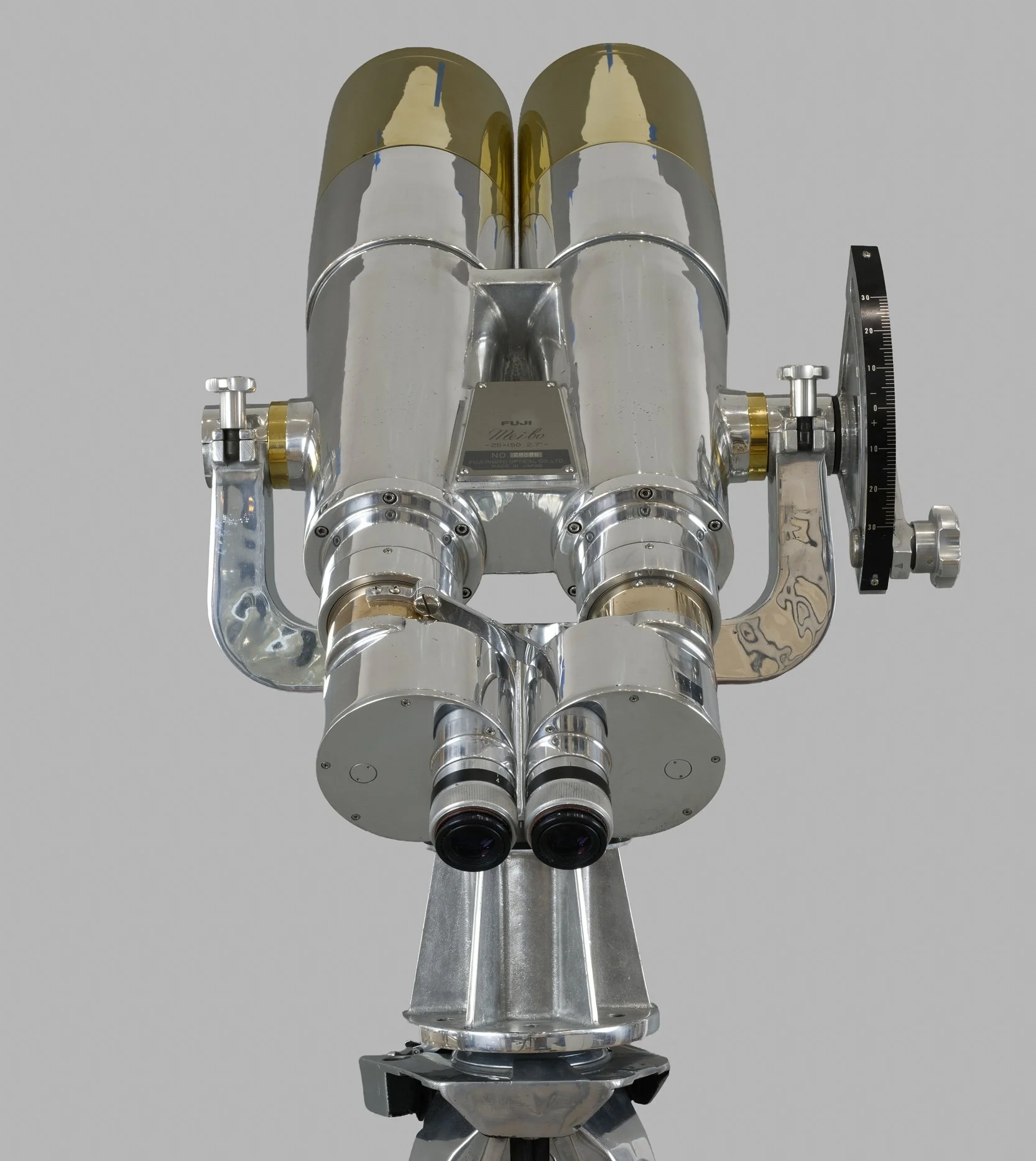
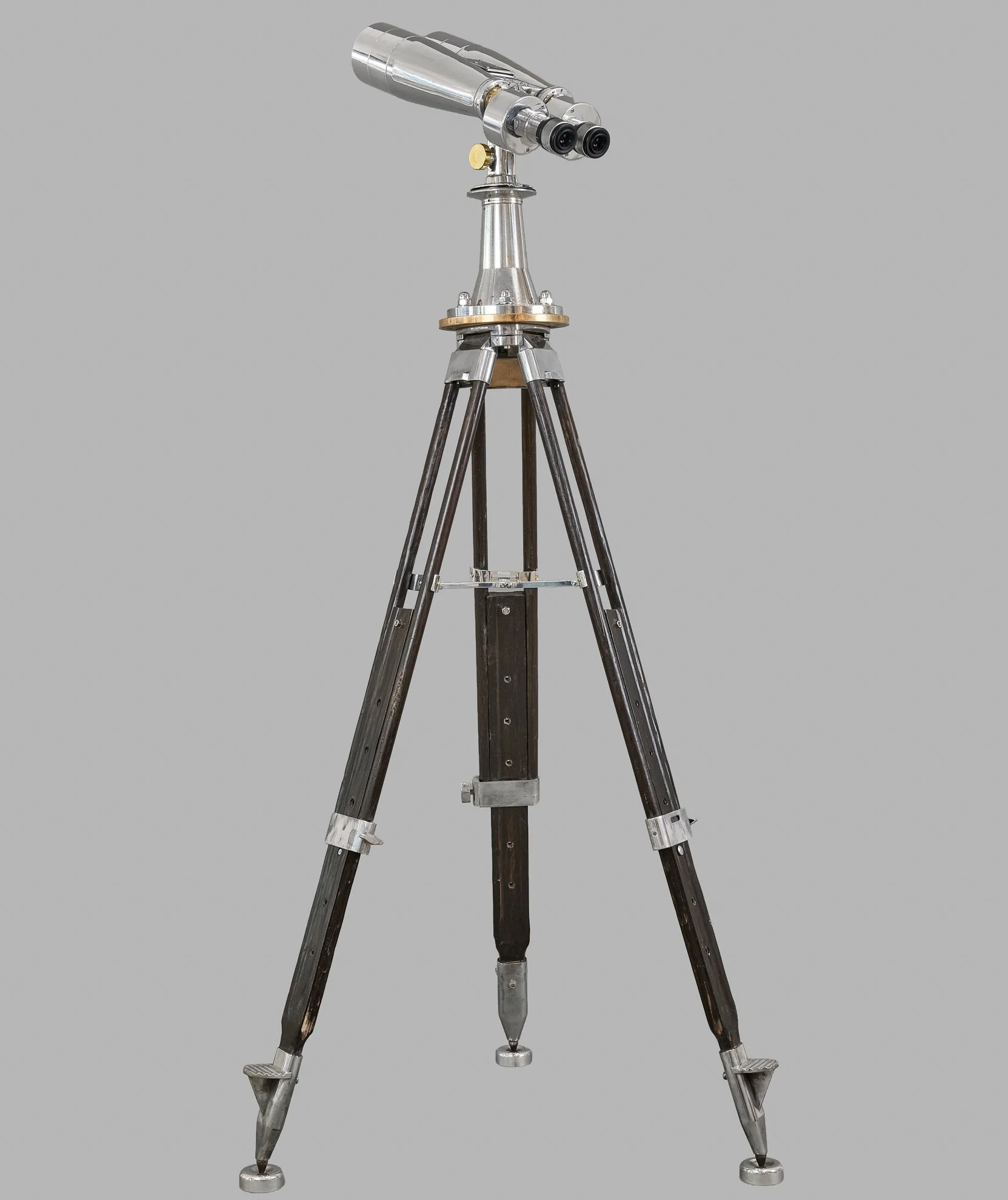
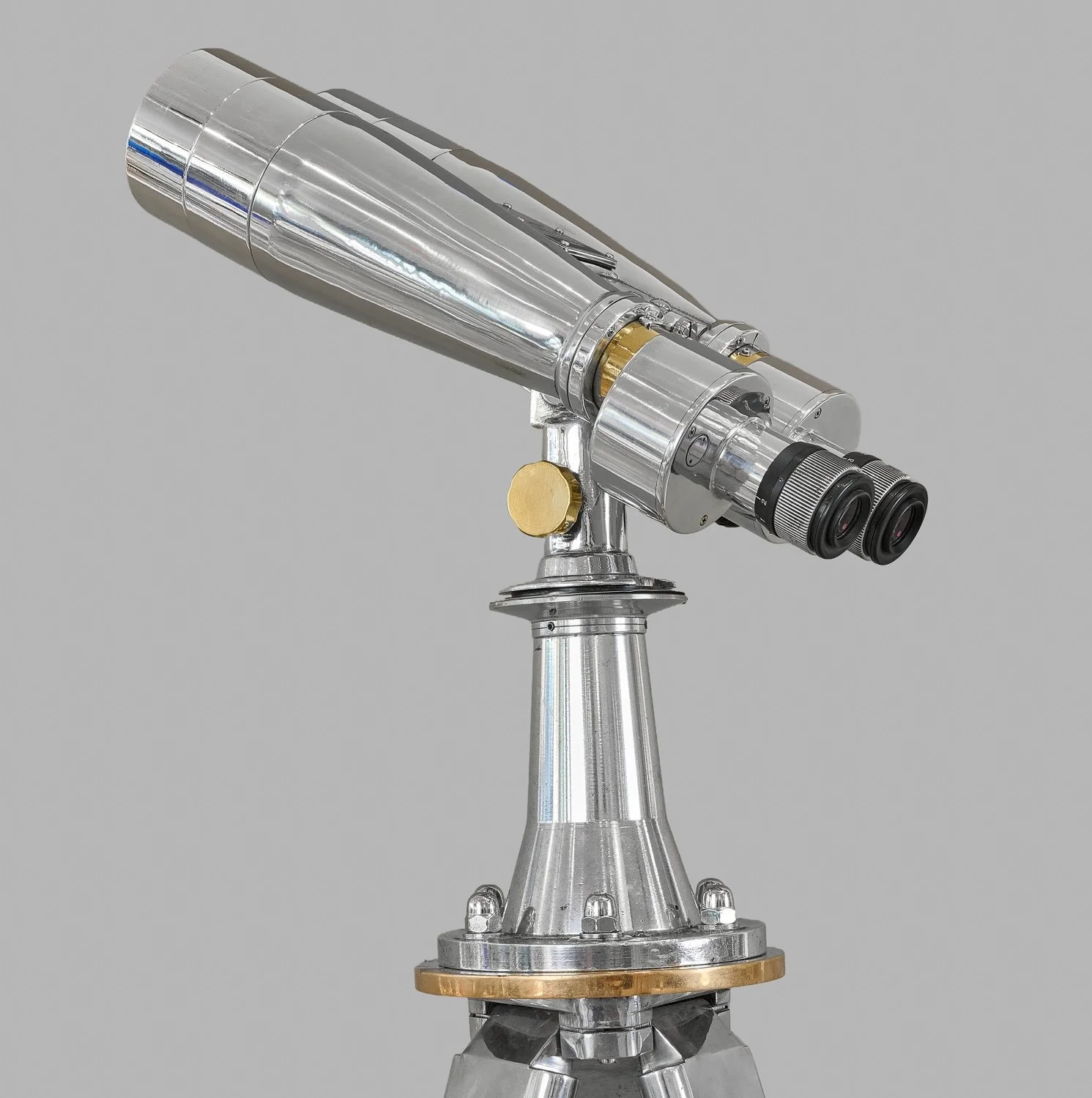
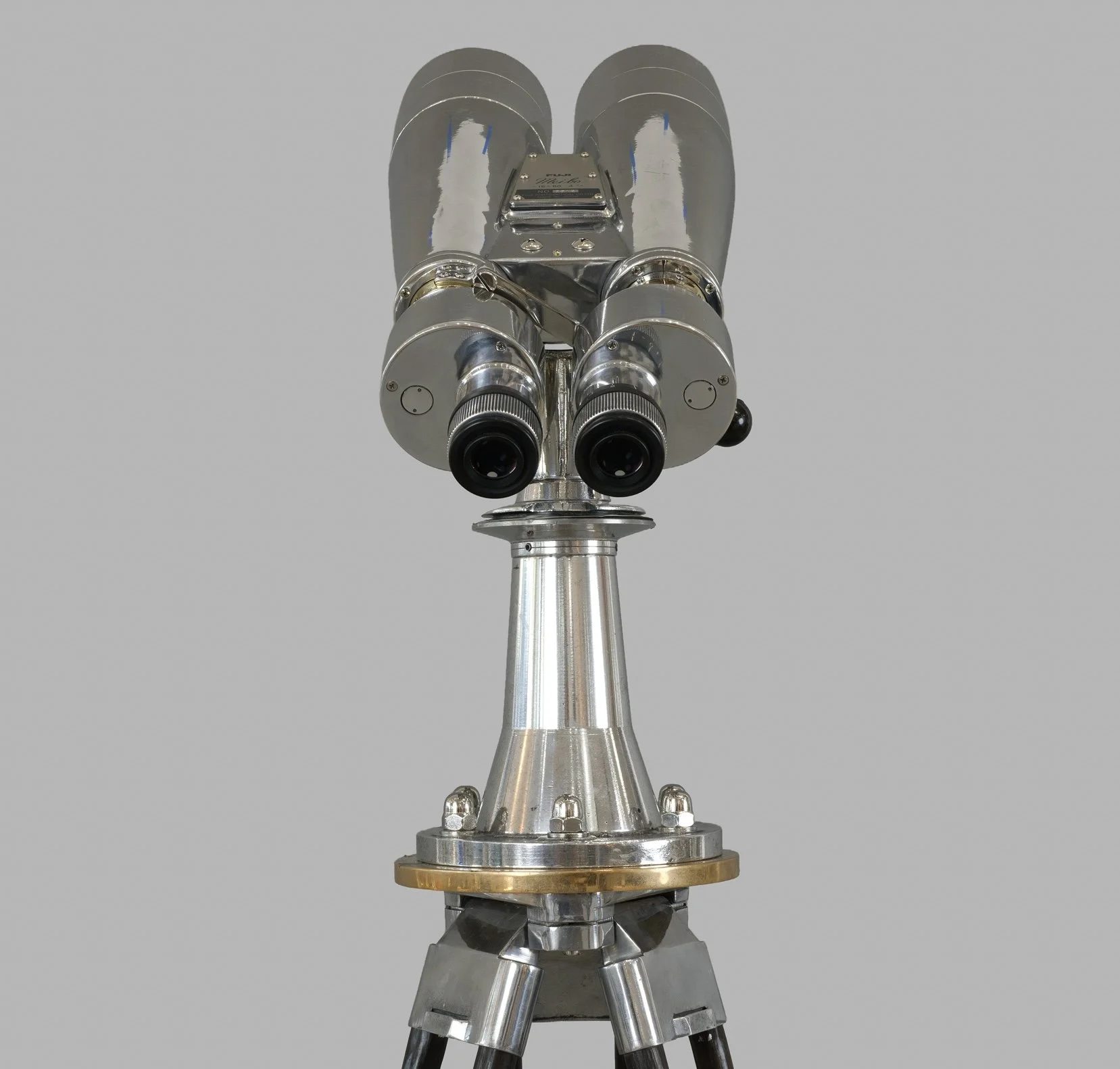
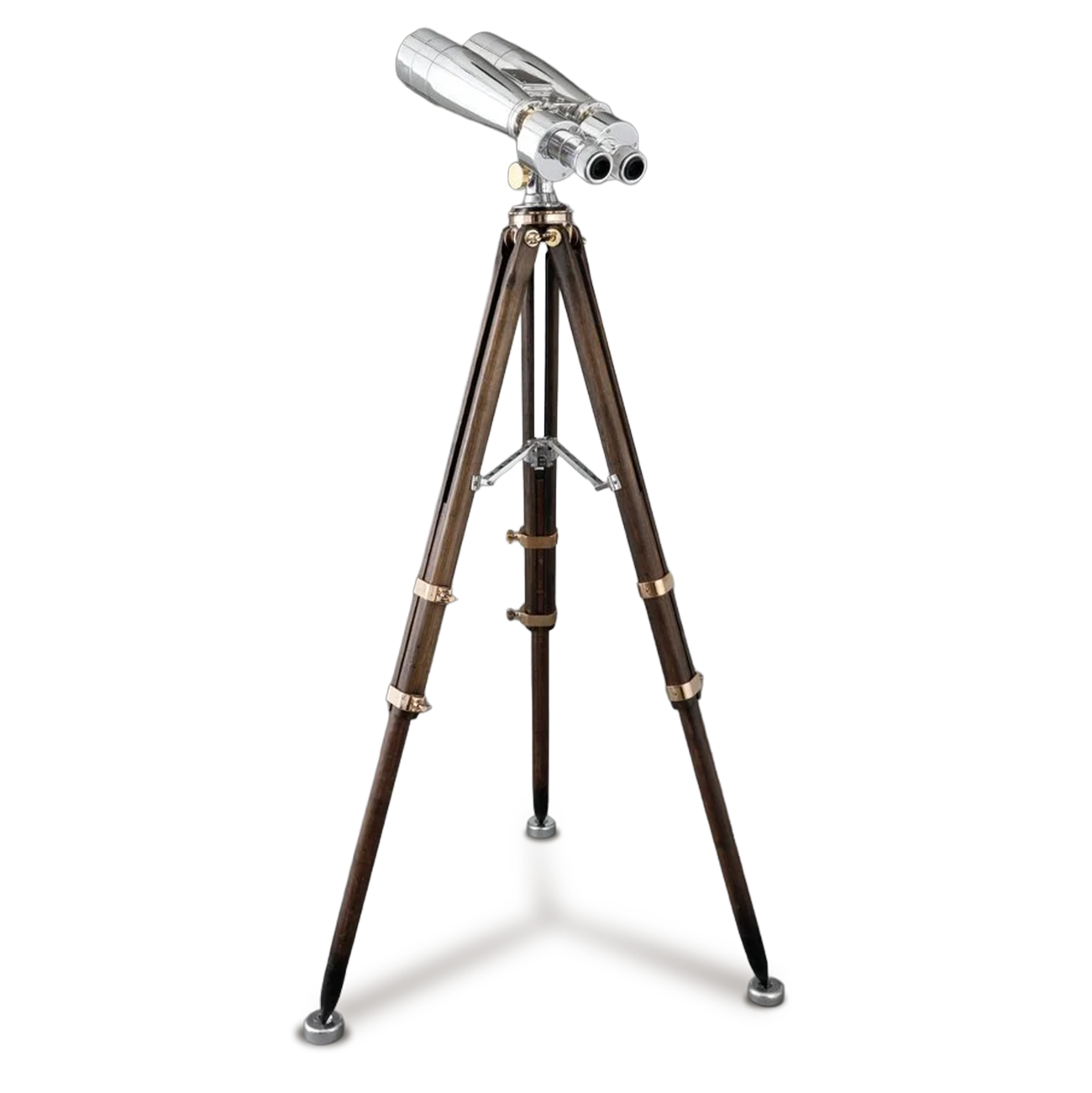
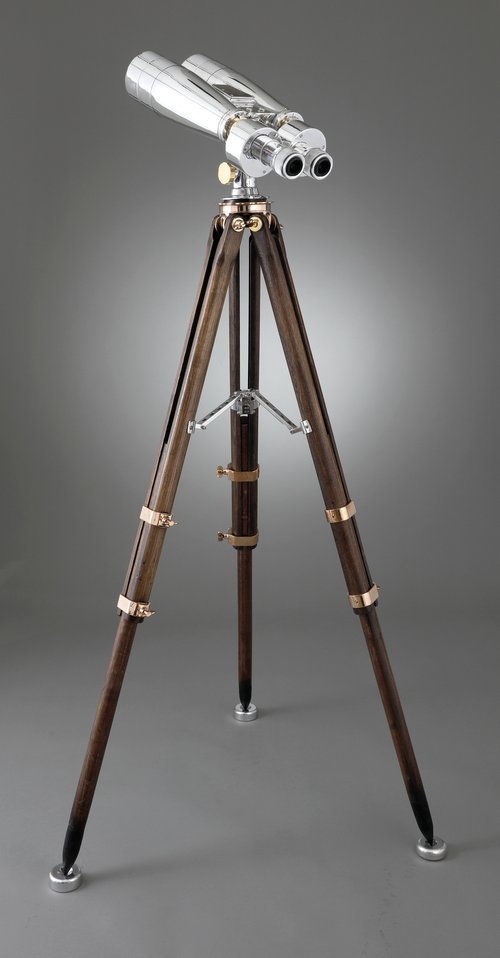
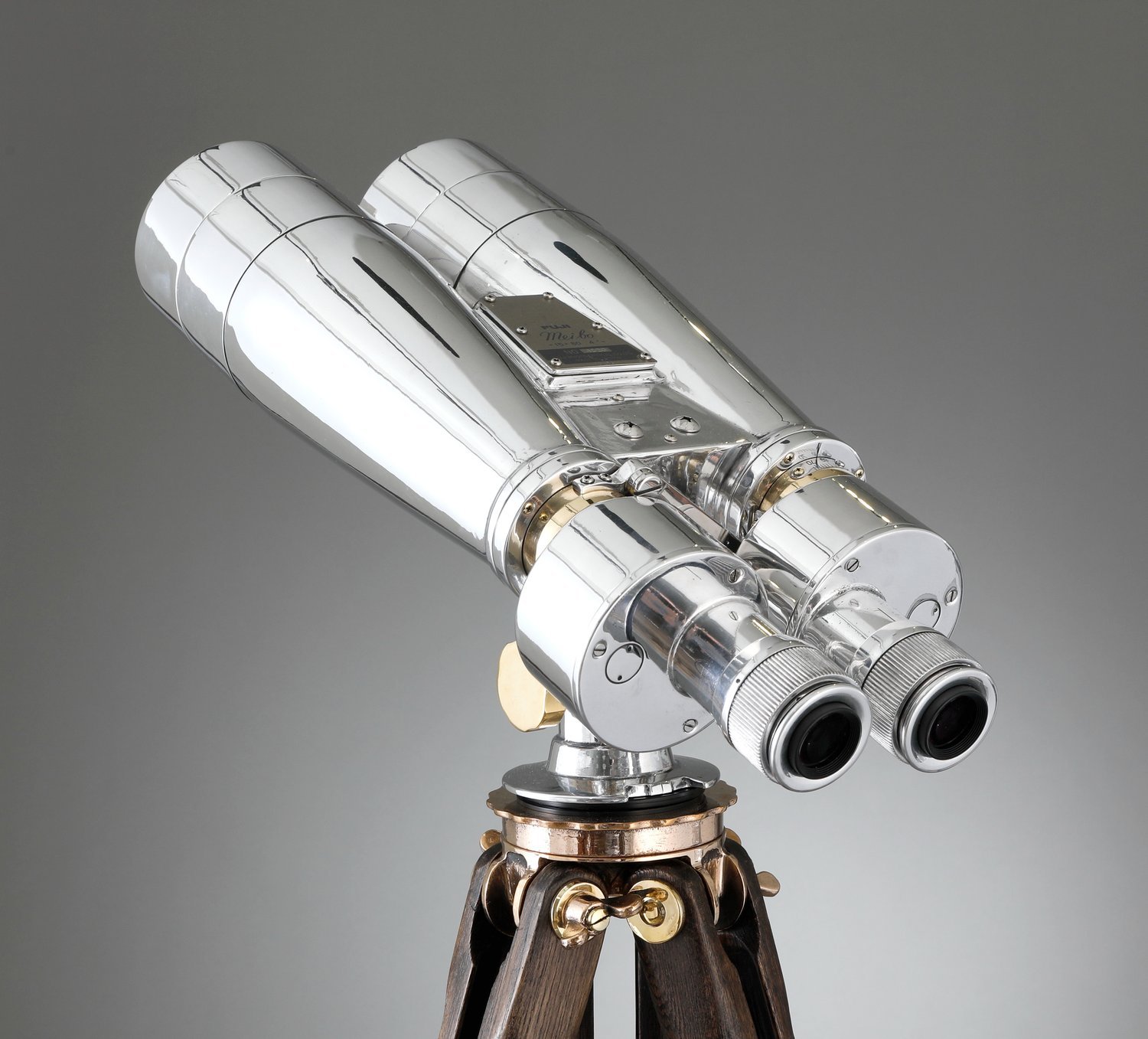
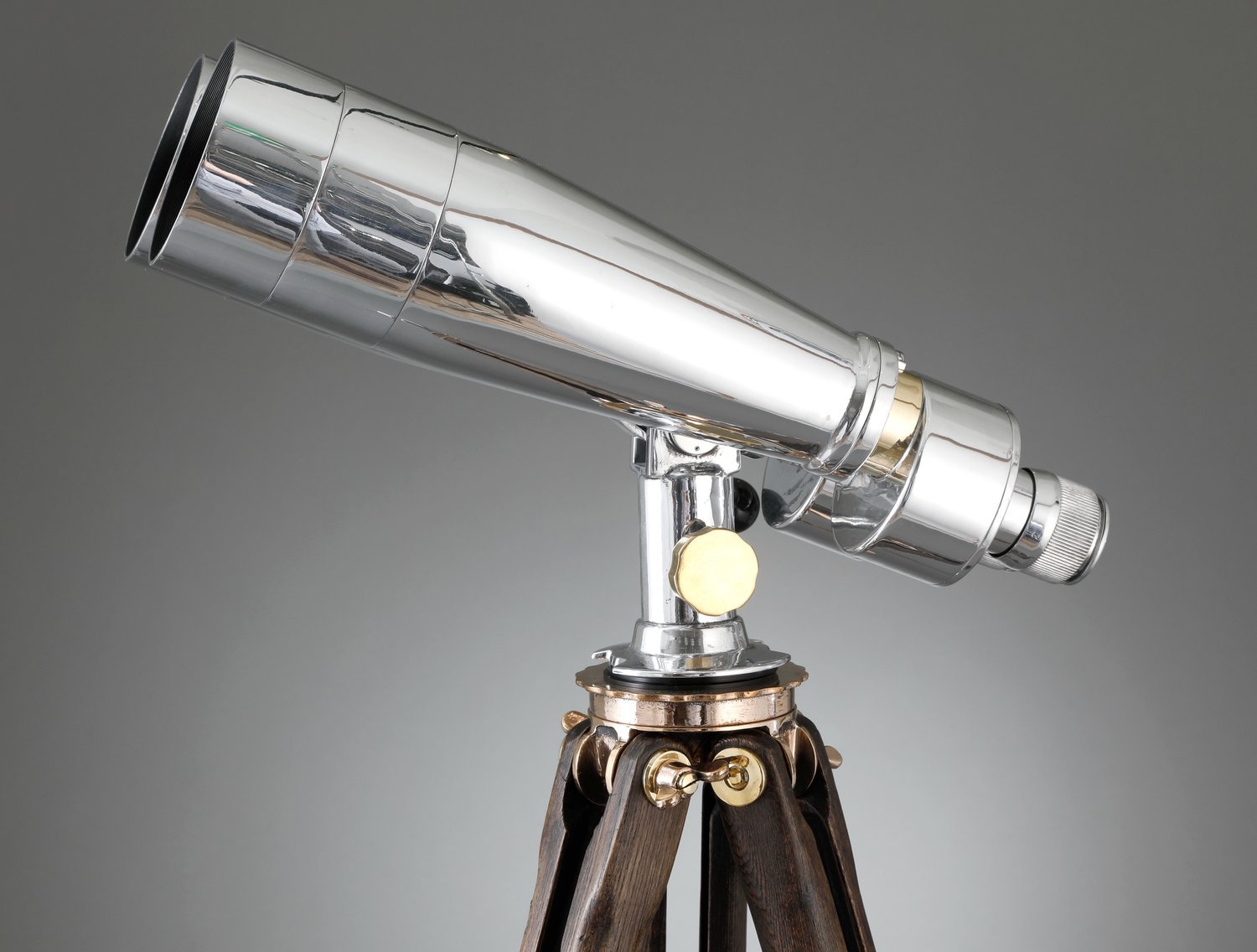
A 20×120 big eye naval binocular telescope by Nippon Kogaku — the manufacturer known today as Nikon — produced for the Imperial Japanese Navy in the 1940s. With 120-millimeter objectives and twenty times magnification, this is an instrument of exceptional resolving power, built to the exacting standards of a navy whose optical industry was among the finest in the world. The original Nikon nameplate is retained, stamped Nippon Kogaku, Made in Japan.
The Nikon 20×120 represents the largest and most powerful of Japan's wartime Big Eye instruments — the story of how Nippon Kogaku became the Imperial Navy's premier optical manufacturer is told in our essay, Japanese Big Eyes: The Imperial Navy's Giant Optics.
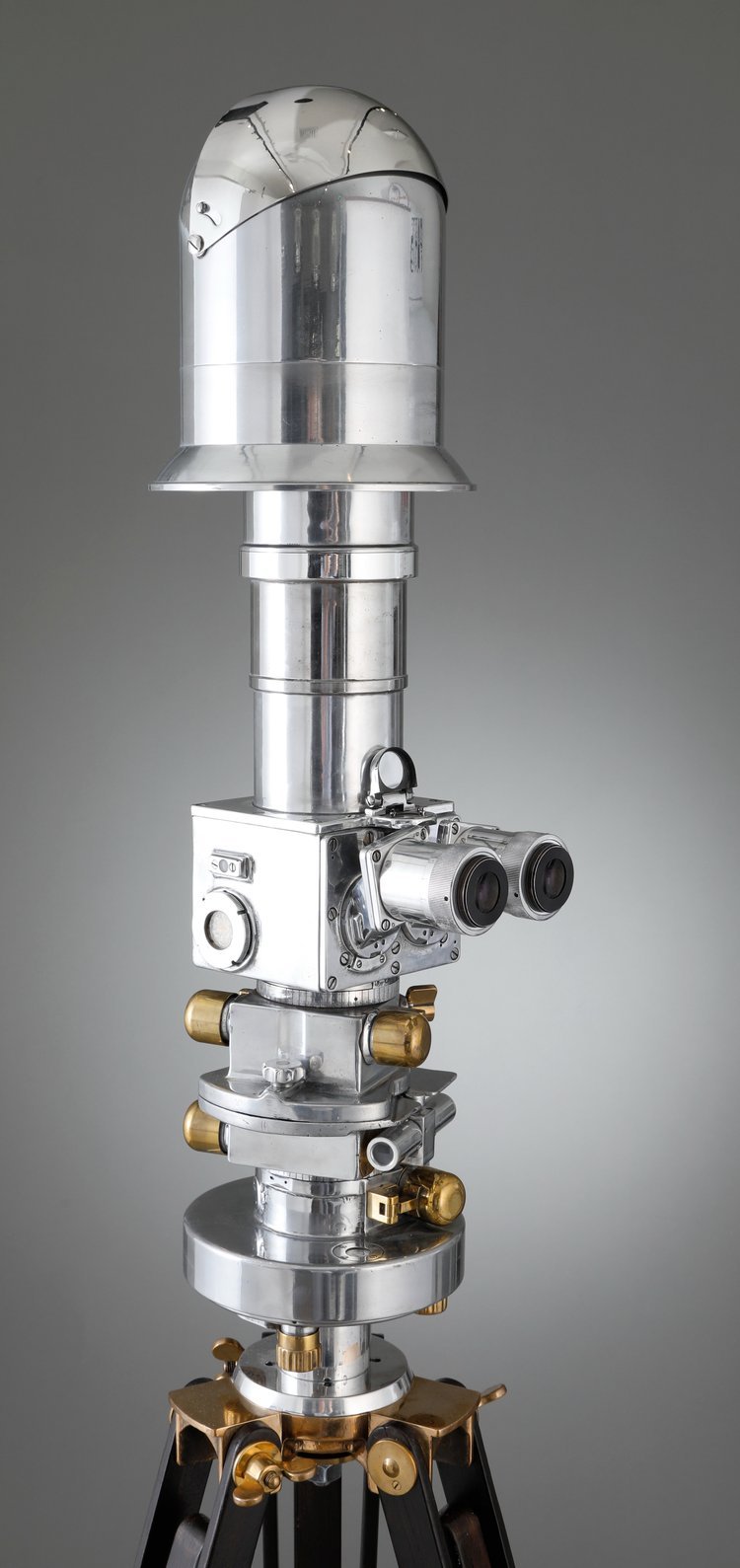
The sand-cast aluminum body has been hand-polished to a mirror finish, every surface worked to a uniform brilliance that preserves the original casting details throughout. It is presented on a Carl Zeiss field tripod of c.1940s manufacture — the two foremost optical names of the mid-twentieth century, German and Japanese, united on a single stand.
A 20×120 big eye naval binocular telescope by Nippon Kogaku — the manufacturer known today as Nikon — produced for the Imperial Japanese Navy in the 1940s. With 120-millimeter objectives and twenty times magnification, this is an instrument of exceptional resolving power, built to the exacting standards of a navy whose optical industry was among the finest in the world. The original Nikon nameplate is retained, stamped Nippon Kogaku, Made in Japan.
The Nikon 20×120 represents the largest and most powerful of Japan's wartime Big Eye instruments — the story of how Nippon Kogaku became the Imperial Navy's premier optical manufacturer is told in our essay, Japanese Big Eyes: The Imperial Navy's Giant Optics.
The sand-cast aluminum body has been hand-polished to a mirror finish, every surface worked to a uniform brilliance that preserves the original casting details throughout. It is presented on a Carl Zeiss field tripod of c.1940s manufacture — the two foremost optical names of the mid-twentieth century, German and Japanese, united on a single stand.

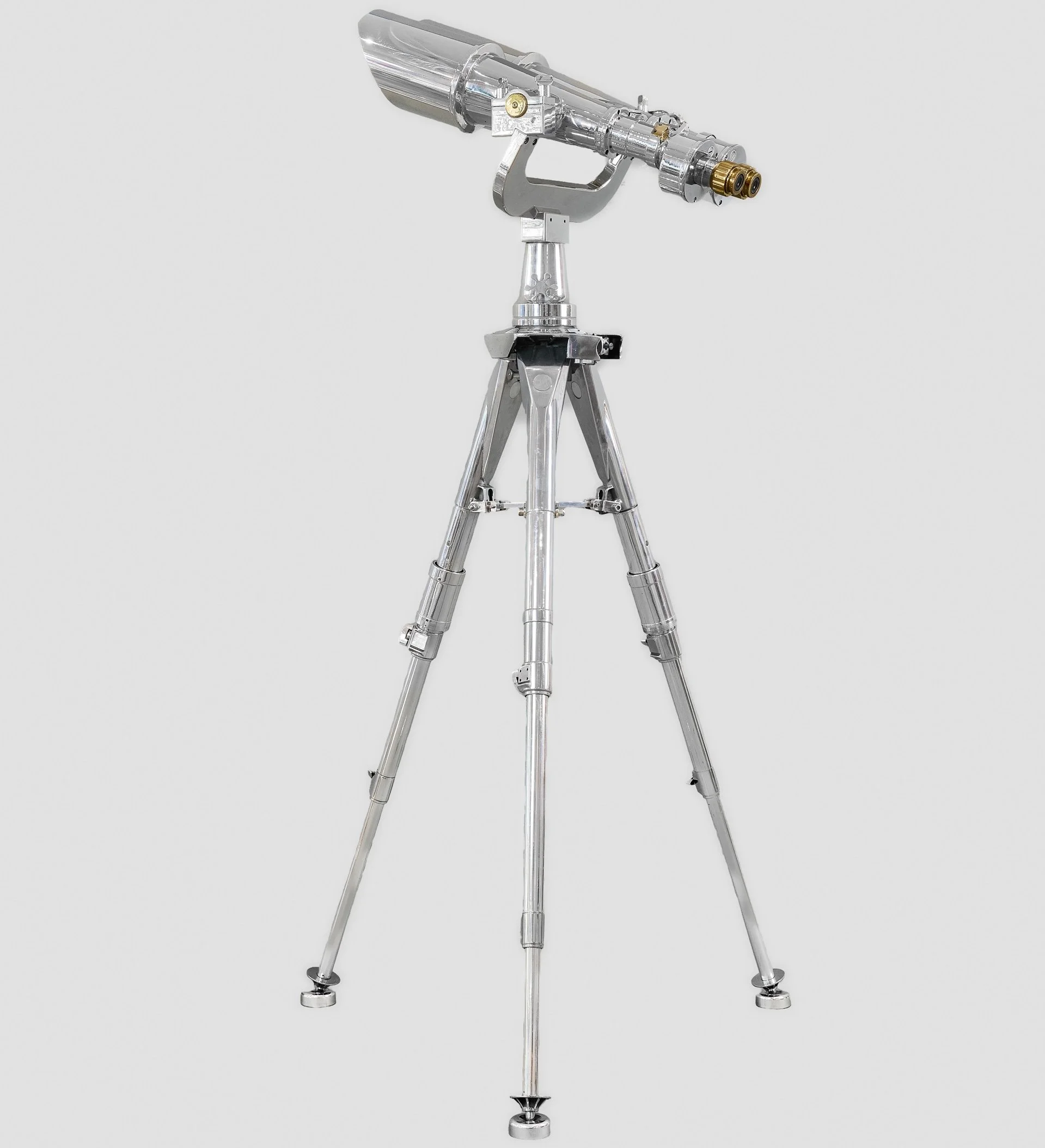 Image 1 of 3
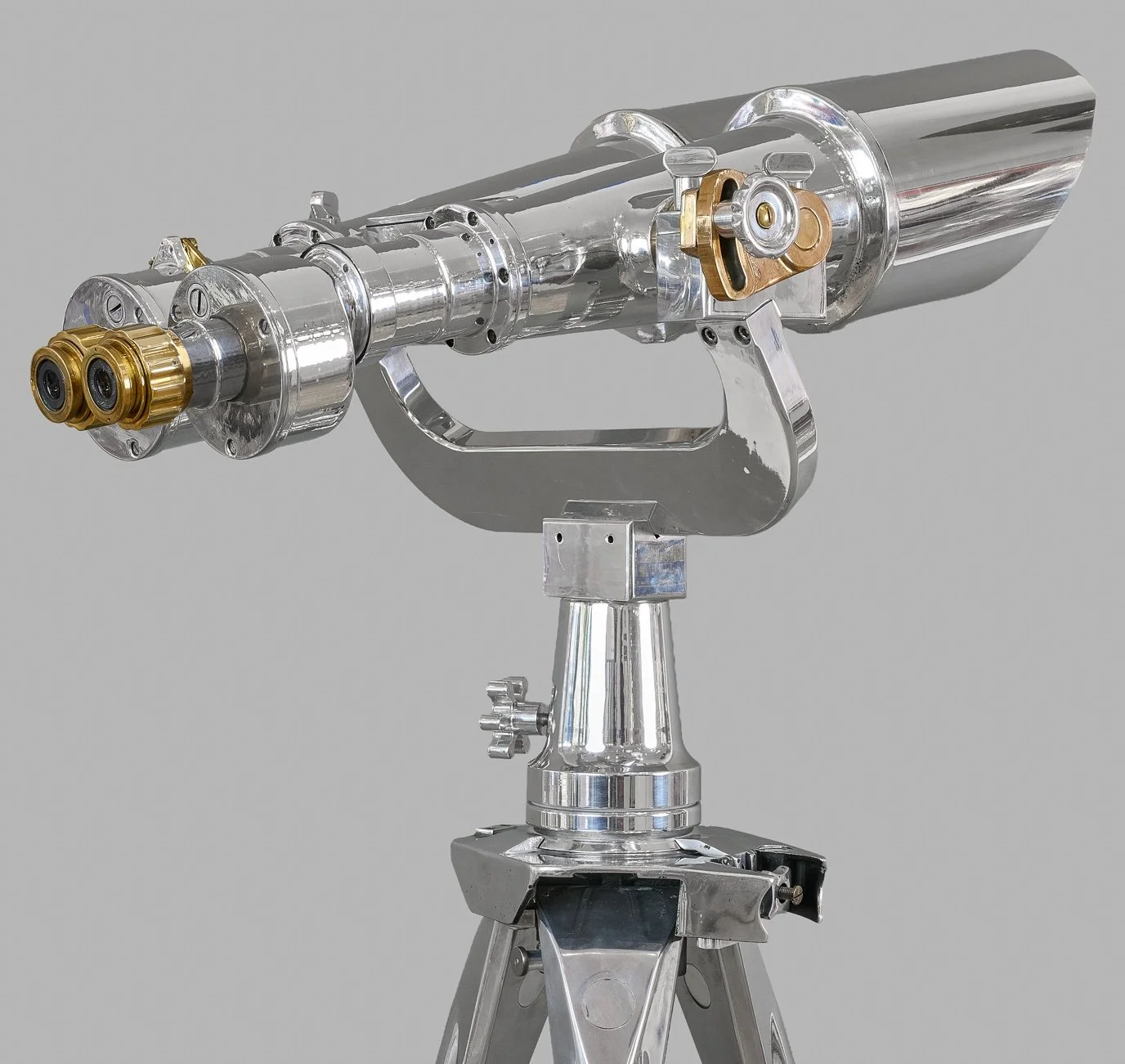 Image 2 of 3
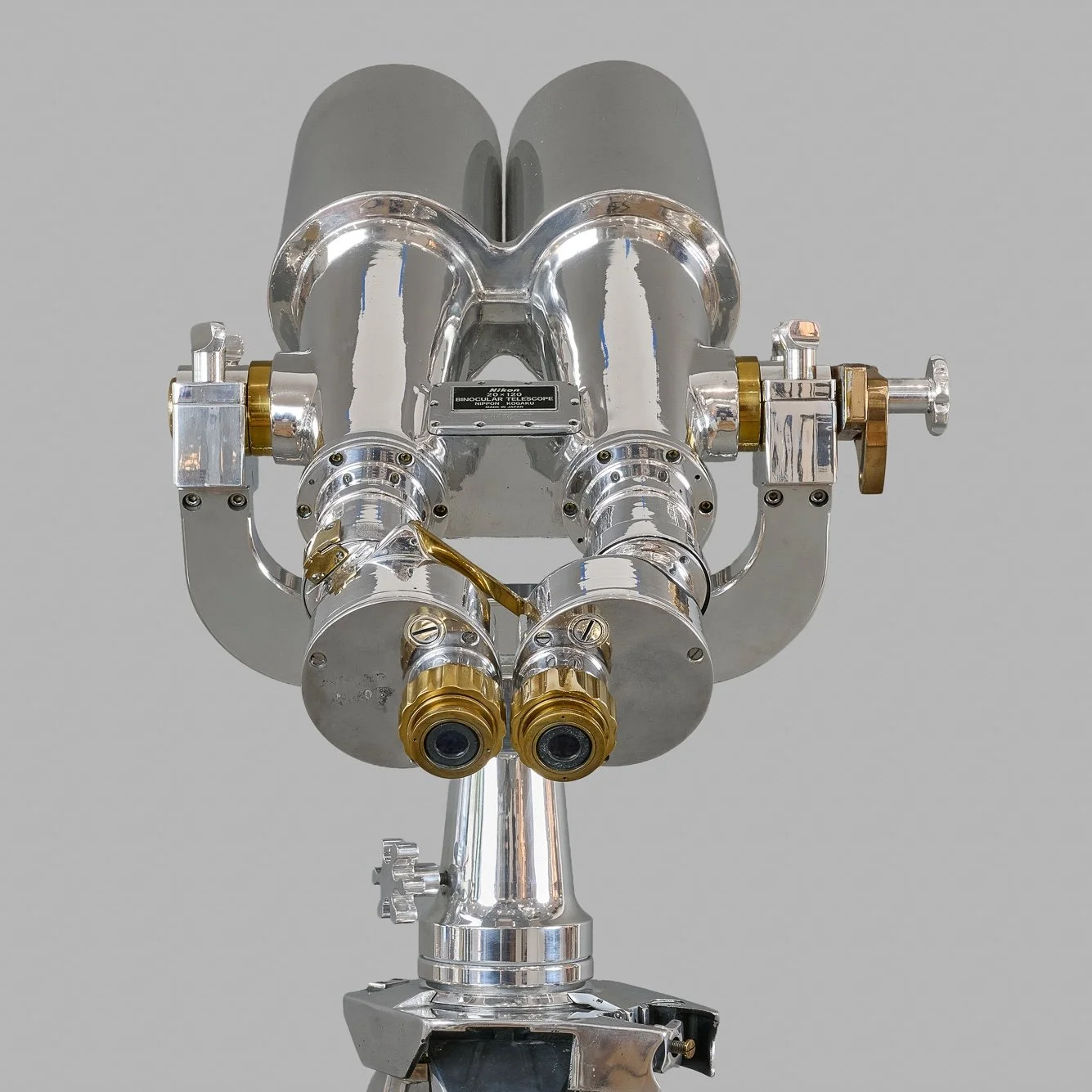 Image 3 of 3