
The Giants of the Pacific: Japanese Big Eye Binoculars, Naval Optics, and the Optical Industry That Built an Empire.
The Imperial Japanese Navy entered the Second World War with large-aperture binoculars, equal to the finest German instruments. The firms that made them — Nippon Kogaku, Toko, and Fuji Photo Optical — built an optical tradition of extraordinary depth. What survived is among the most significant military optical material in the world.
The Imperial Japanese Navy and Army entered the Second World War equipped with large aperture binoculars that were, in many respects, the equal of the finest German instruments of the period — and in sheer variety and quantity of production, surpassed every other combatant nation. The firms of Toko, Nippon Kogaku, Yashima, and Fuji Photo Optical produced instruments of extraordinary optical quality, manufactured with one-piece body castings for rigidity, charged with inert gas to resist moisture in tropical and Pacific conditions, and deployed across the full spectrum of naval operations — from fleet observation on capital ship bridges to torpedo targeting on submarines operating at depth. That these instruments are not better known in the collector community is a function of the language barrier, the destruction of Japanese industrial records at the end of the war, and the wholesale scrapping of military equipment that accompanied the Allied occupation.
The Foundations of Japanese Optical Industry.
Japan's optical industry was built with deliberate speed and considerable government direction. The first Japanese binocular manufacturer, Fujii Brothers, produced its first model in 1911; six years later, in 1917, Fujii joined with the Tokyo Measuring Instrument Works and Iwaki Glass — with Mitsubishi investment — to form Nippon Kogaku, specifically to manufacture optical munitions. Nippon Kogaku would later become Nikon. The German optical connection was central from the outset: early instruments depended on Schott glass from Jena, and in 1921, Nippon Kogaku hired eight German scientists and engineers, including Heinrich Acht as principal engineer, to redesign the company's binocular range. Between 1939 and 1944 alone, Japan purchased some 200,000 pounds of optical glass from Schott, which was transported in part by submarine, for the manufacture of fire-control instruments. The influence of German optical design — the Erfle variation eyepiece, the Porro II prism system, the air-spaced achromat objective — is visible throughout the Japanese military binocular production that followed.
The two dominant manufacturers of large-aperture binoculars were Toko (Tokyo Kogaku Kikai Kabushiki Kaisha) and Nippon Kogaku, with the latter emerging as the largest single producer.
The 80mm Instruments — The Standard of the Fleet
The foundation of the Japanese large-aperture binocular program was the 80mm objective instrument, produced in a remarkable variety of configurations. The standard straight-through 15×80 — a Porro II prism system with air-spaced achromat objectives, Erfle variation eyepiece, 4 degree real field, and 60 degree apparent field — was the most widely deployed large aperture naval binocular of the Imperial Japanese Navy. Its optical performance is consistently rated as very good by specialist authorities, and its construction, though simpler than some German equivalents, proved highly reliable in service.
The 15×80 was produced in at least three distinct configurations: the straight-through model, a 45-degree inclined ocular version by Yashima, and a 60-degree inclined version by Nippon Kogaku — all sharing the same 4-degree real field, 60-degree apparent field, and Erfle variation eyepiece.
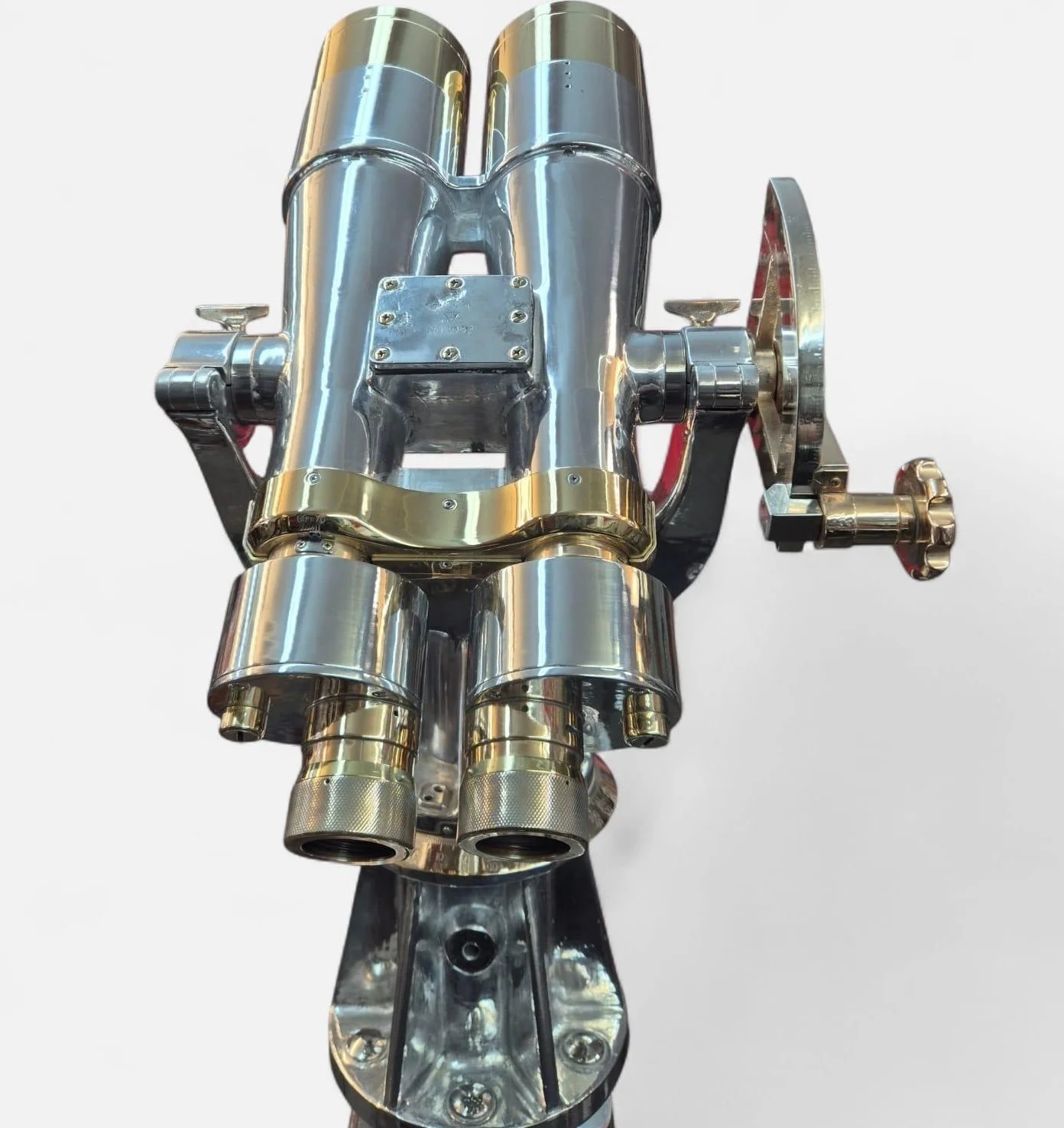
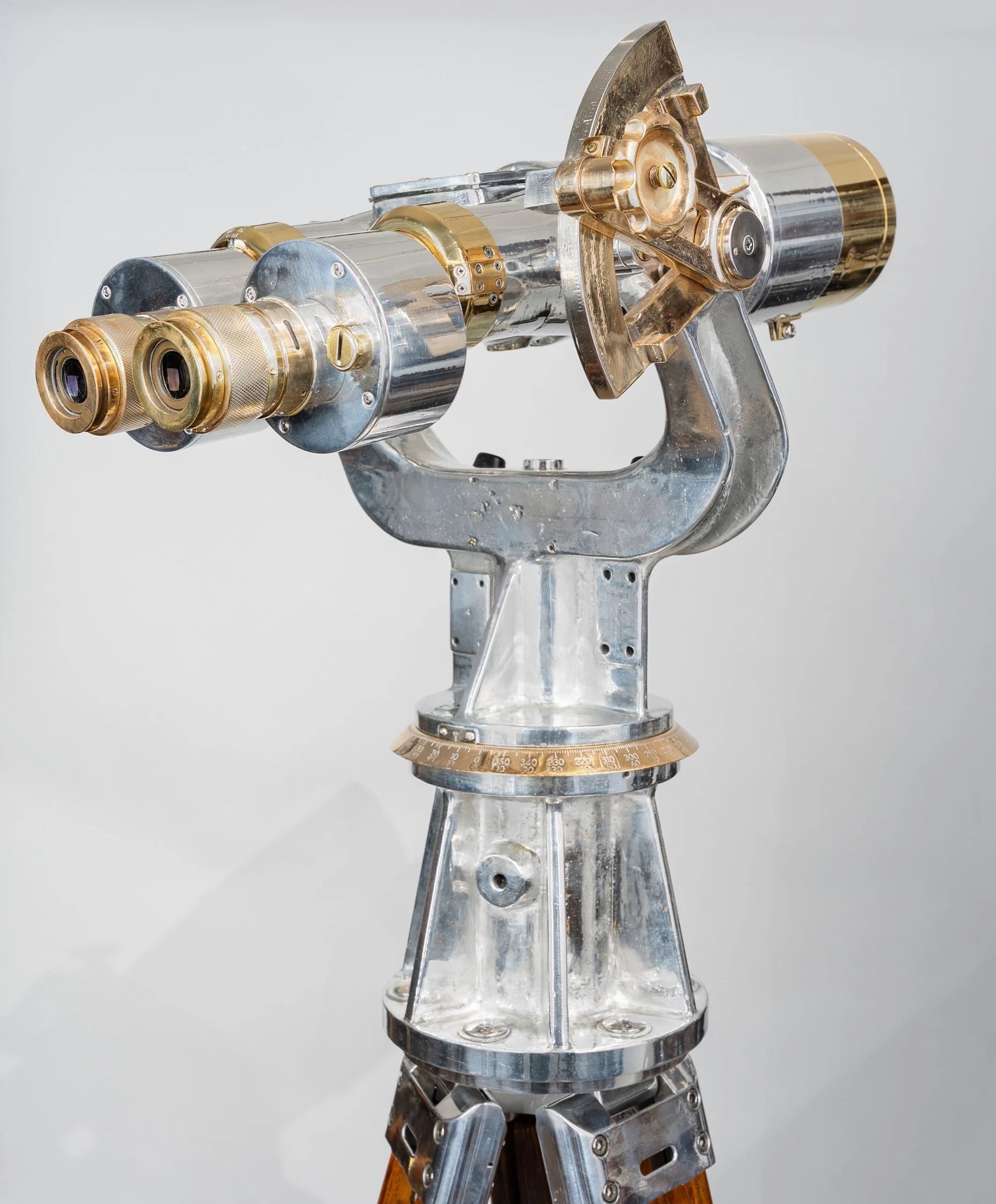
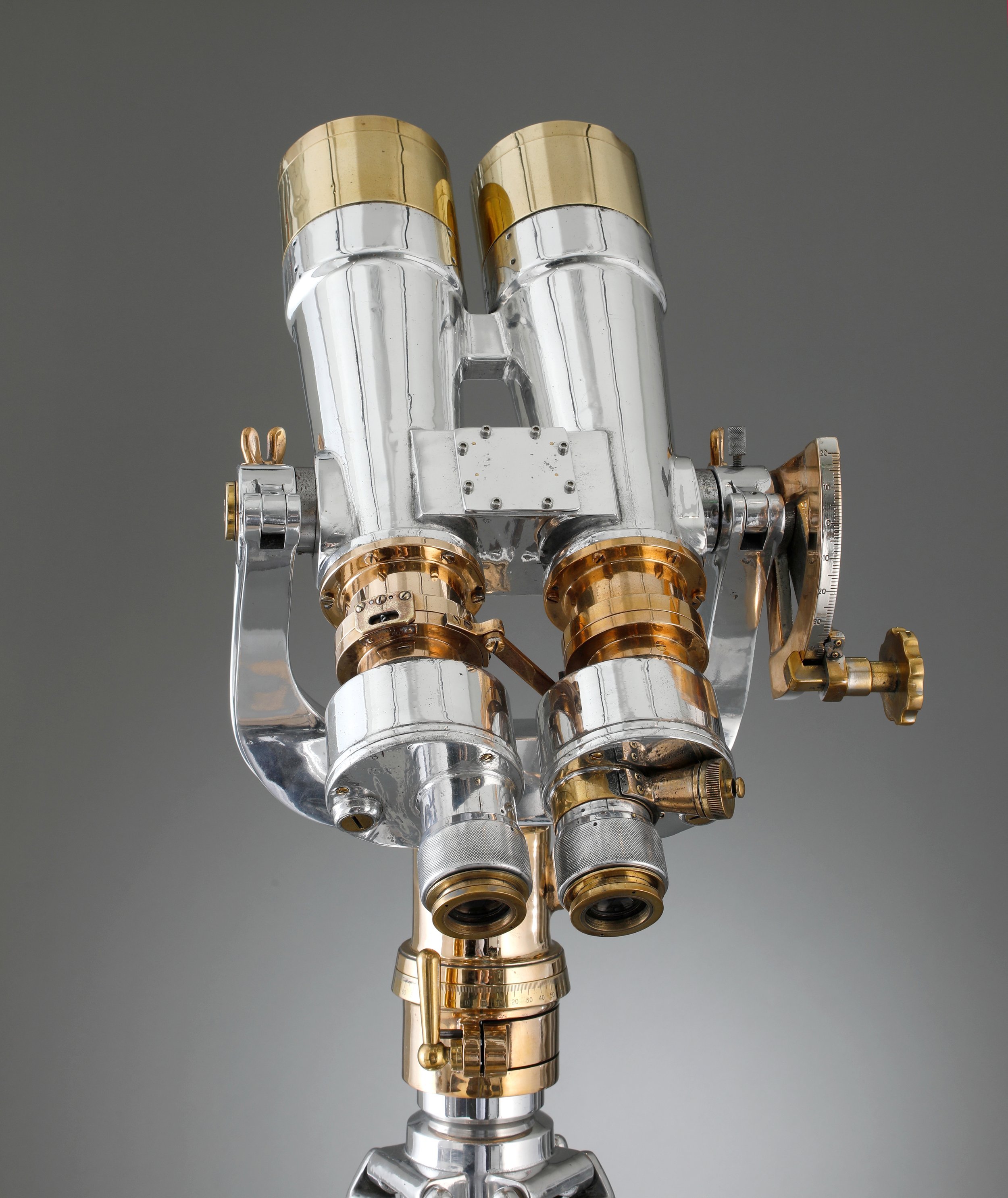
Nippon Kogaku (Nikon) 15×80, Imperial Japanese Navy, circa 1942–1944. Photographed from above on the original gimbal deck mount — a configuration that placed these instruments on towers ninety feet above the waterline on capital ships of the Imperial fleet.
The 120mm Instruments — Power and Rarity
Moving up in aperture, the Japanese 120mm binoculars represent the most operationally significant and now the rarest surviving examples of the Imperial Navy's optical program. Six distinct 120mm models are known to specialist researchers — four straight-through and two with inclined eyepieces.
The straight-through 20×120, produced by Nippon Kogaku under the Nikko mark, is the most significant of the surviving 120mm instruments. With a 3-degree field of view and the same Porro II prism system and Erfle variation eyepiece that characterized the smaller Japanese instruments, the 20×120 is, in the specialist literature's assessment, an instrument of often excellent optical performance — a rating that places it among the finest large aperture binoculars of the war period, regardless of national origin. The instrument is a scaled-up development of the 80mm series, sharing the same fundamental optical and mechanical approach but with dramatically increased light-gathering capability for night observation and long-range target acquisition.
The extreme end of Japanese 120mm production — the submarine-use variant — illustrates the operational demands the Imperial Navy placed on its optical suppliers. Encased in a thick steel jacket weighing 170 pounds, with 40mm-thick optical windows protecting the objective lenses and a watertight pressure door at the eyepiece end sealed by a handwheel, this instrument was designed for deck-mounted observation on submarines operating under sea pressure and spray. Its existence is a reminder that the Japanese naval optical program was not merely ambitious in scale but sophisticated in its response to the full range of operational environments.
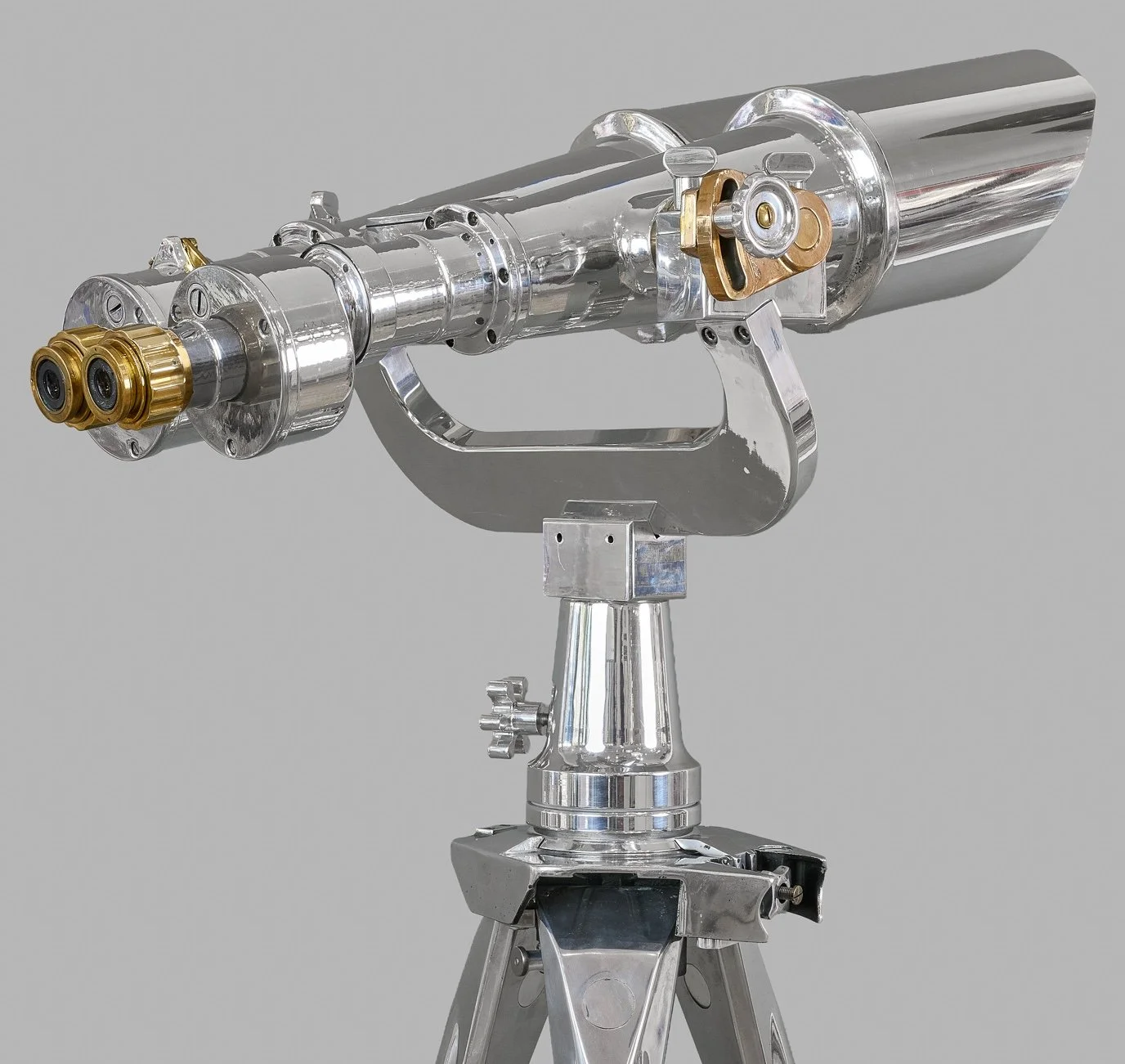
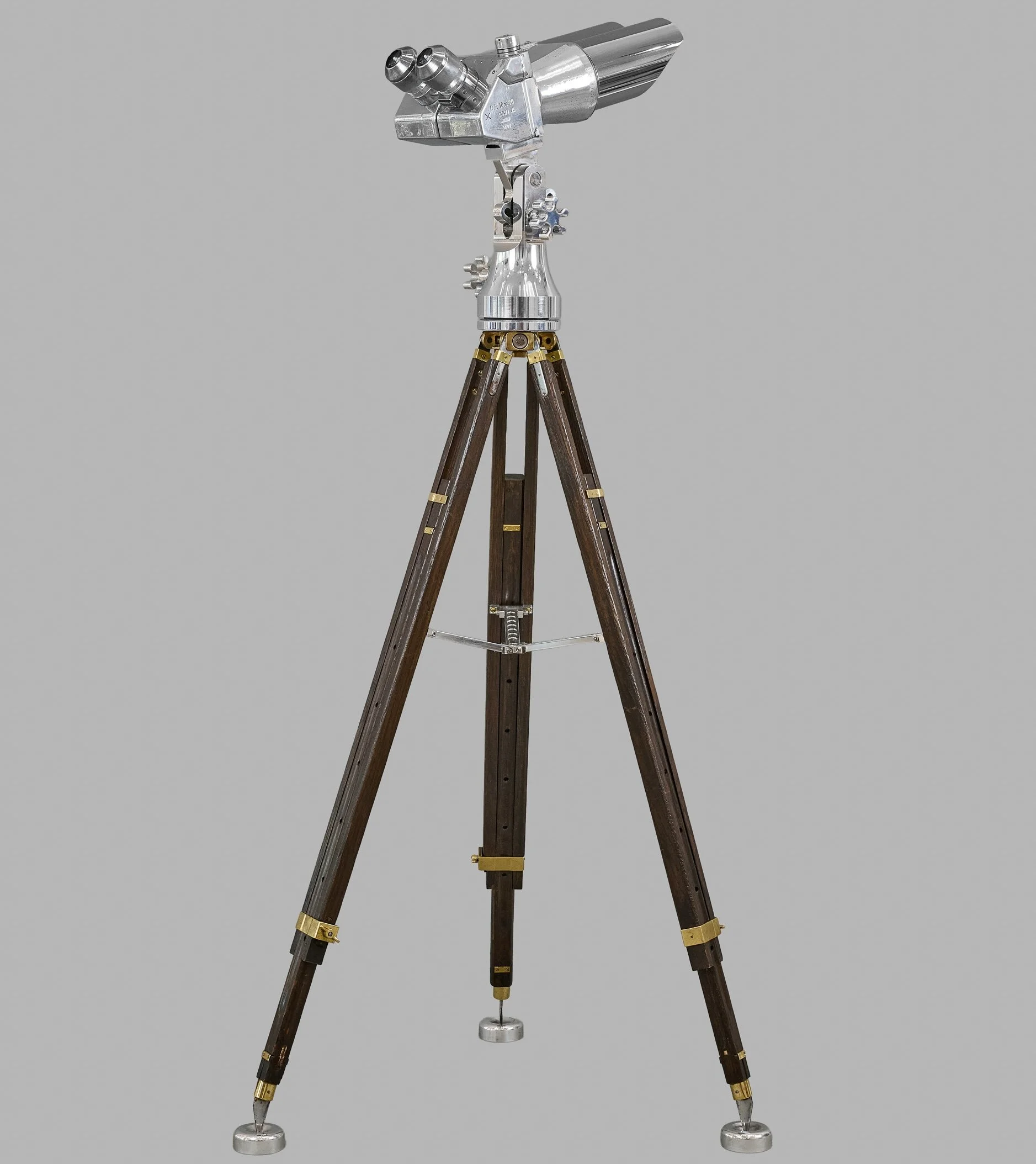
Nippon Kogaku (Nikon) 20×120, Imperial Japanese Navy, circa 1942–1944. The primary long-range observation and target acquisition instrument of the Imperial fleet, capable of resolving targets at distances exceeding twenty miles.
Post-War: Fuji Meibo and the Legacy of Japanese Naval Optics
The defeat of Japan in 1945 and the subsequent Allied occupation brought the Imperial military optical program to an abrupt end. Much was destroyed — instruments, records, and manufacturing equipment alike. But the optical expertise built over decades did not disappear with the militaristic context that had driven it. Fuji Photo Optical Co. Ltd, operating under the Fuji Meibo designation — the name written in Japanese as 明望, combining the characters for "bright" or "clear" (明) and "vision" or "aspiration" (望), a pairing that reads equally as "clear view" and "luminous hope" — emerged in the post-war period as the pre-eminent Japanese manufacturer of large aperture instruments for naval, observatory, and commercial use, and the instruments it produced in the 1950s, 1960s, and 1970s are widely regarded as among the finest large aperture binoculars ever made.
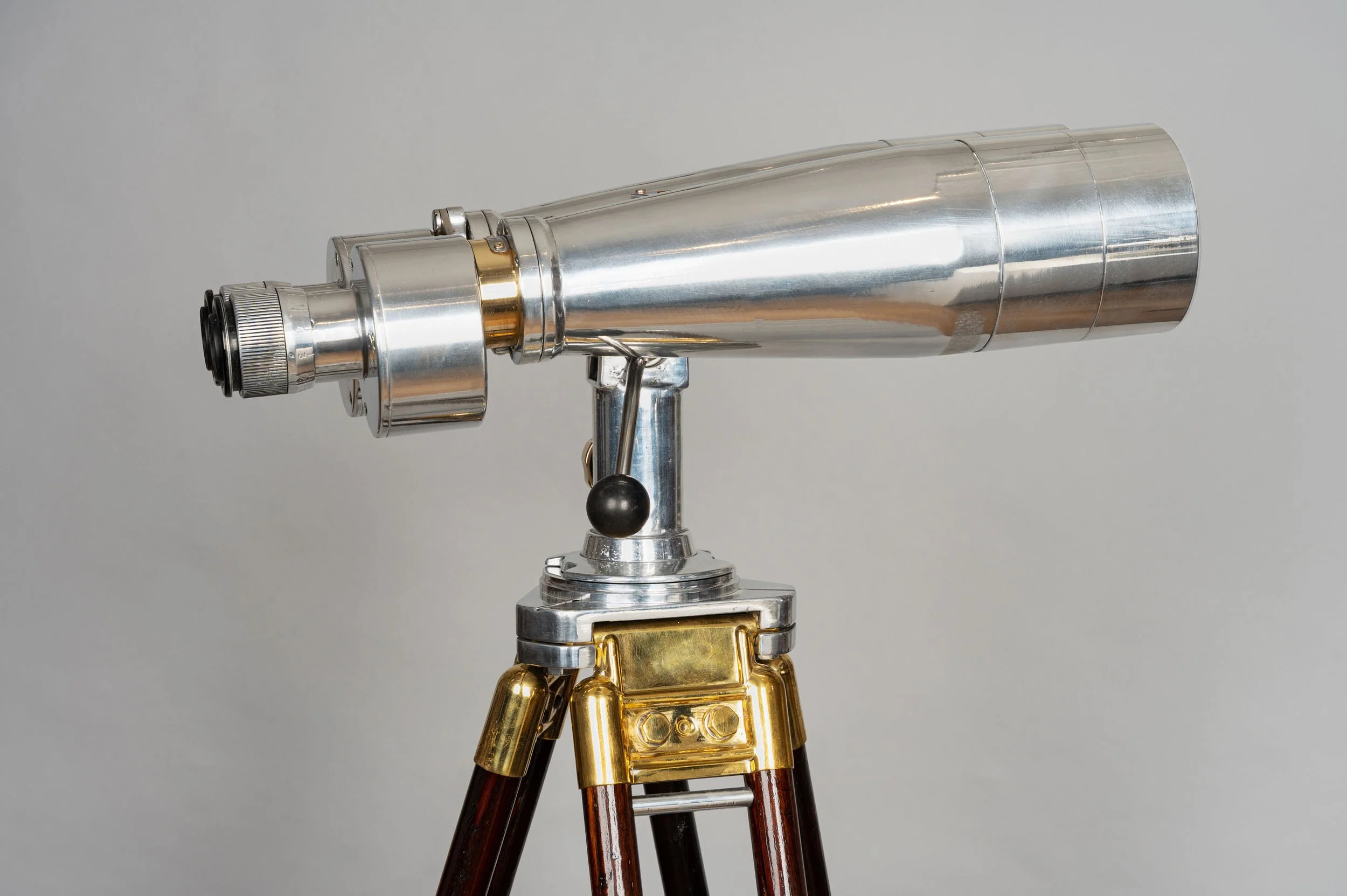
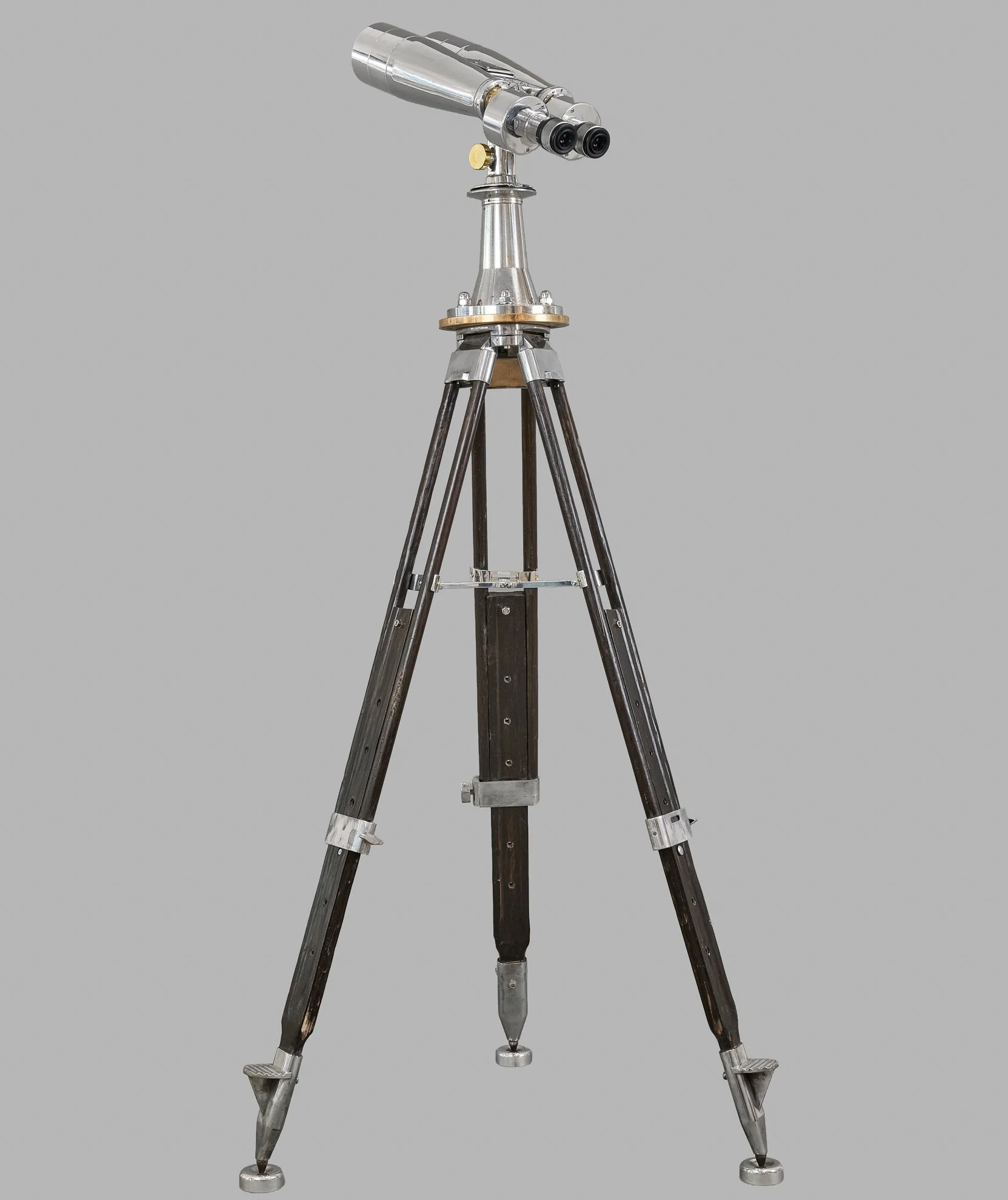
Fuji Meibo 15×80, Fuji Photo Optical Co. Ltd, Japan, circa 1970s. The post-war 15×80 on a period wood and brass tripod — the reference instrument for serious amateur astronomers and maritime observers worldwide.
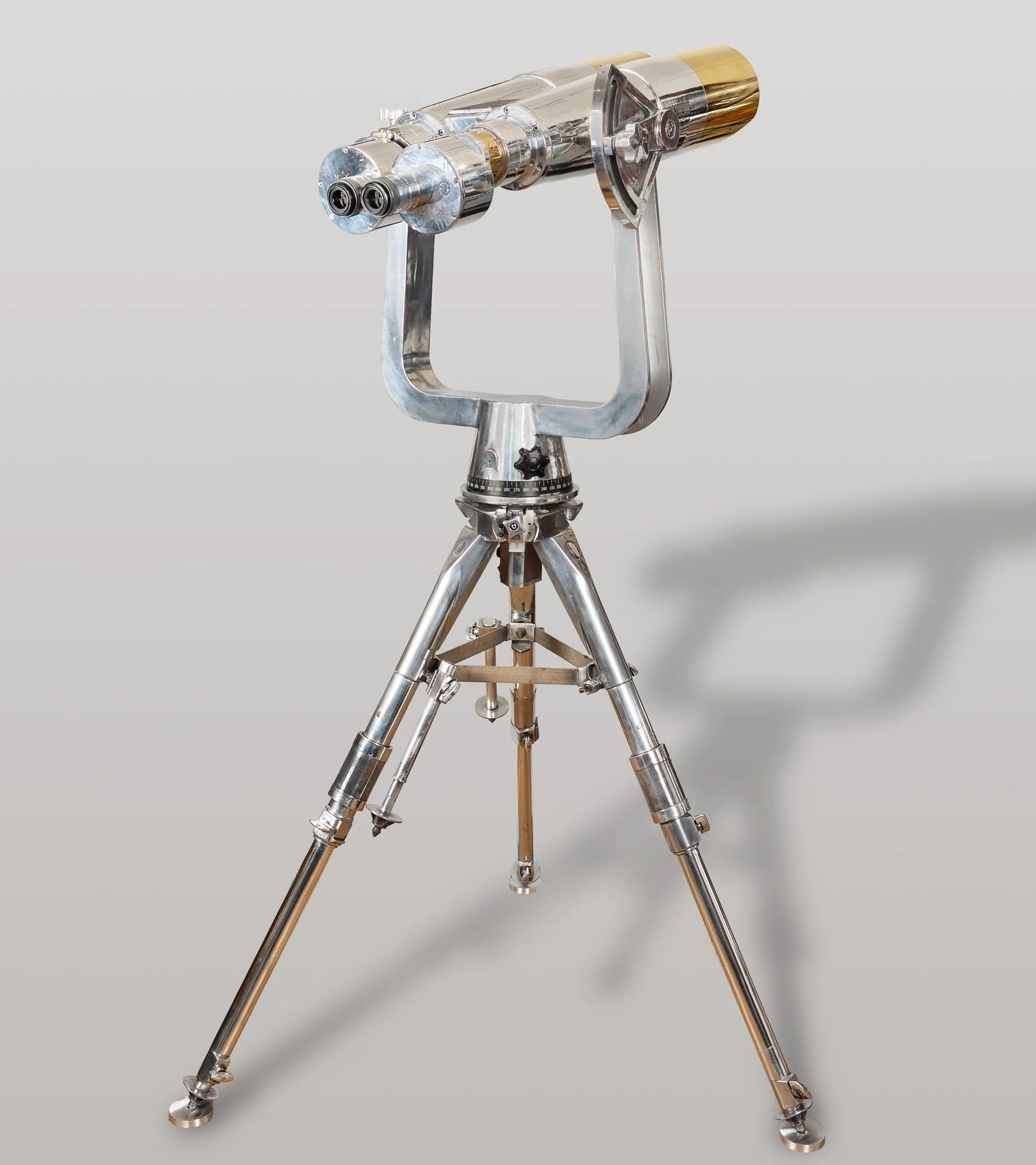
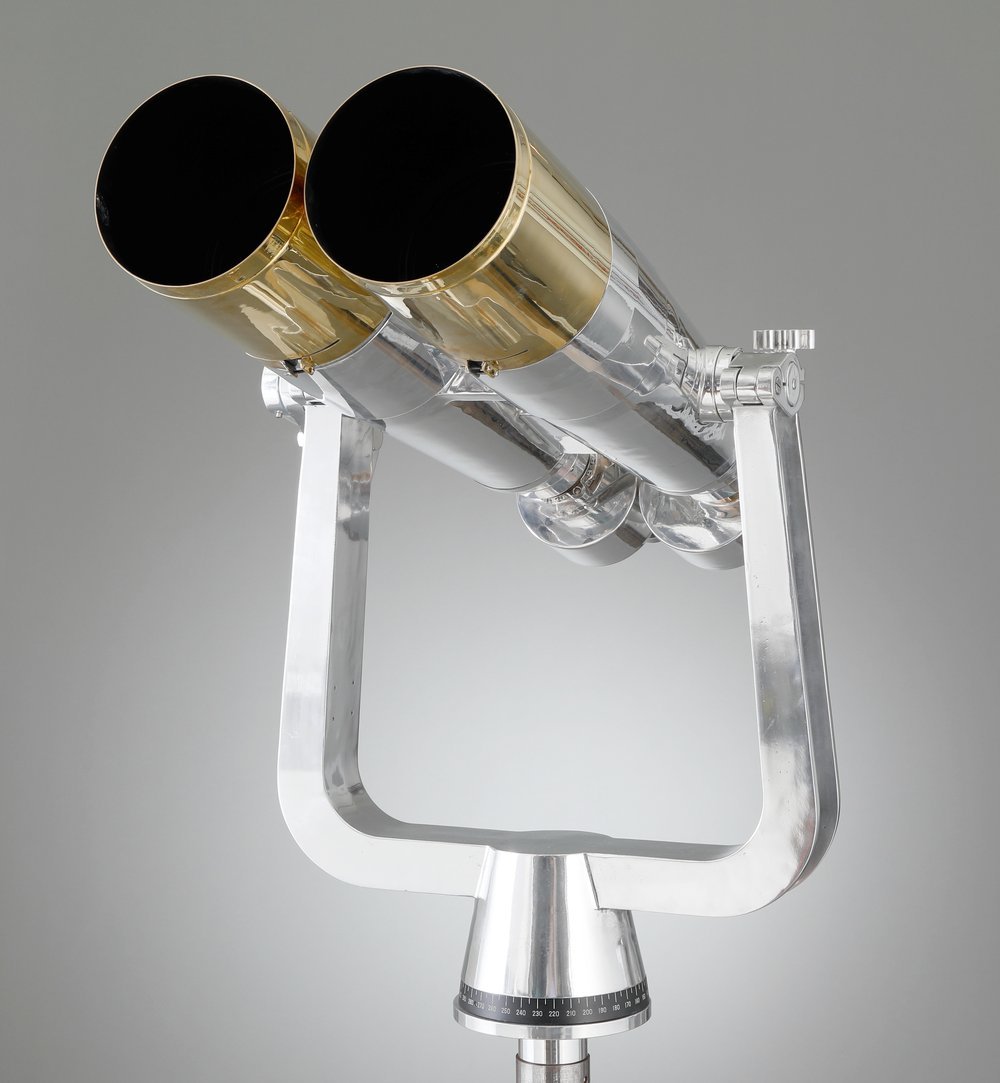
The largest instrument in the post-war Fuji Meibo range — the 25×150 bridge binocular — represents the ultimate expression of Japanese large aperture optical engineering. The 150mm format was produced in several configurations: 18.8×150, 20×150, and 25×150, all with 60-degree field of view and Porro II prism systems with either doublet or Cooke triplet objectives, all rated as excellent in optical performance. A further variant with turret-mounted eyepieces in 20× and 30× magnifications was also produced. The 150mm instruments weigh approximately 80 pounds without their mountings — formidable instruments requiring dedicated floor stands or fixed deck mounts. The instrument held by Daniels Antiques, dated circa 1970s, inscribed "Fuji Meibo," is a complete and exceptional example of this format, finished to the highest standard of post-war Fuji production in polished aluminum on an original adjustable gimbal floor stand.
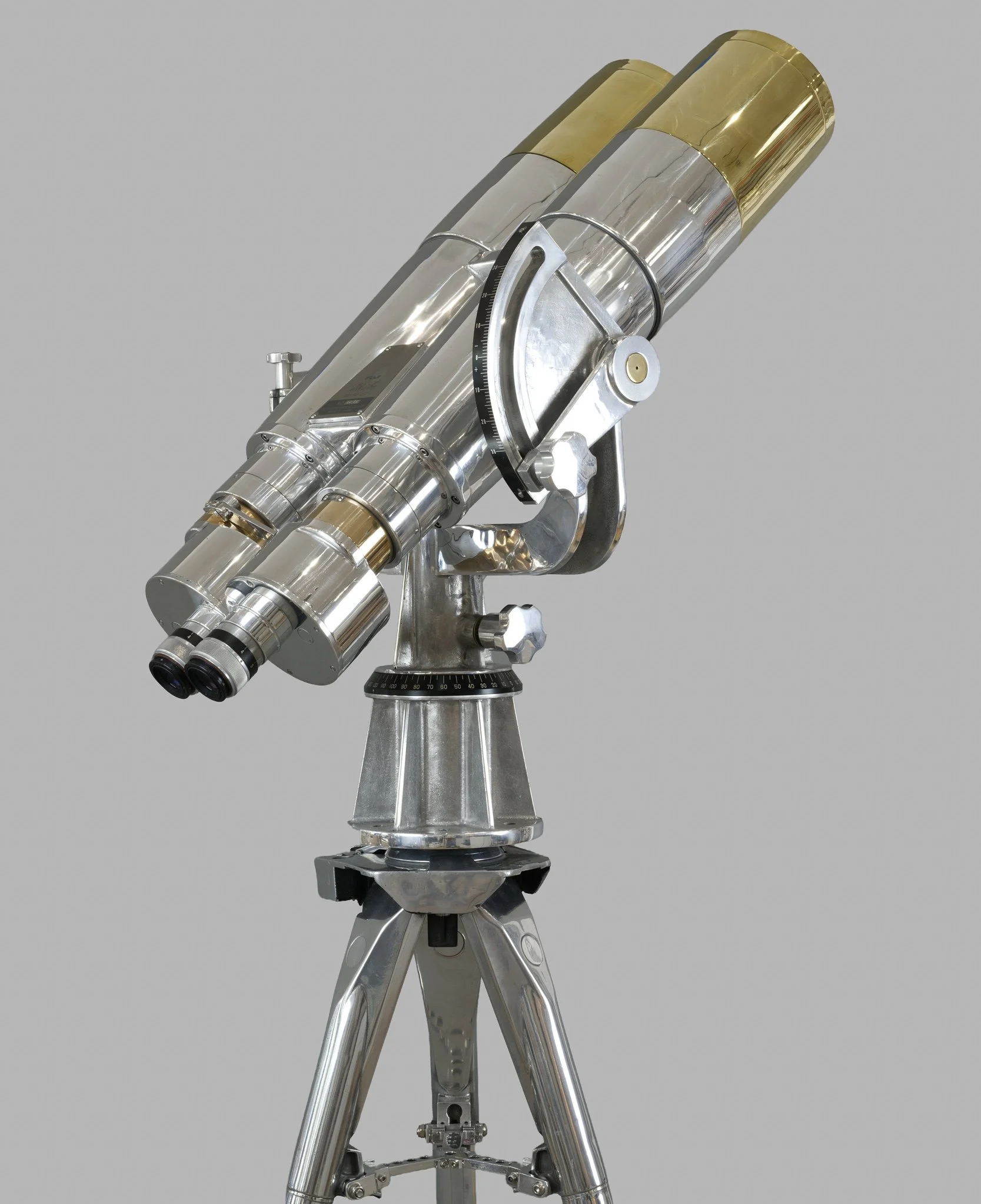
Fuji Meibo 25×150, Fuji Photo Optical Co. Ltd, Japan, circa 1970s. The summit of Japanese large-aperture optical production, on its original adjustable gimbal floor stand.
Collecting Japanese Naval Binoculars
The collector market for Japanese large aperture binoculars has grown significantly in recent years as the quality and historical significance of these instruments has become better understood. The wartime pieces — particularly the 20×120 in straight-through configuration and any instrument retaining its original mount and Japanese military acceptance markings — are the most actively sought. Survival rates are low: the destruction of Japanese military equipment during and after the war, and the subsequent scrapping of surplus instruments, mean that complete, undamaged examples are genuinely rare.
The post-war Fuji Meibo instruments are increasingly recognized as collectible objects in their own right — precision instruments of exceptional quality that represent the full flowering of the Japanese optical tradition freed from the constraints of wartime production. The 25×150 in particular, produced in very limited numbers for specialized applications, is effectively as rare in the collector market as many wartime instruments.
On the question of restoration, the specialist literature is unambiguous. Kevin Kuhne, writing in Seeger's authoritative reference, devotes a section of the Japanese binoculars chapter to preservation and concludes directly: "Many 'die-hard' collectors who refuse to have the instruments in their collection cleaned, repaired, or restored because it may disrupt the 'originality' and value of the specimen are actually doing more harm than good. If these wonderful instruments are to survive, we must all do our part, for we shall never see their like again" (Kuhne in Seeger, p. 280). The argument is practical as well as philosophical: after eight decades, the deterioration of sealing materials allows moisture into the optical system, promoting fungal growth that etches glass surfaces, while petroleum-based lubricants deposit films on optical elements, making cleaning essential. A properly restored instrument — optics recollimated, seals replaced — is not a compromised specimen but a preserved one, returned to something approaching its operational condition and capable of surviving for another generation of collectors.
What unites the wartime Nippon Kogaku instruments and the post-war Fuji Meibo pieces is the consistency of a tradition: a commitment to optical rigor, mechanical integrity, and the engineering conviction that light-gathering power was itself a form of strategic advantage. That tradition produced some of the finest large-aperture binoculars ever made, and the finest of those instruments — complete, properly mounted, historically documented — are increasingly beyond reach. Daniels Antiques holds one of the most significant collections of Japanese large aperture binoculars currently available on the private market, spanning the wartime production of the Imperial Japanese Navy through to the summit of the post-war Fuji Meibo range. Each piece is available for individual inquiry.
Related Items


Literature & Sources
Hans Seeger, Militärische Fernglässer und Fernrohre in Heer, Luftwaffe, und Marine. Hamburg: Seeger, 1996. The authoritative specialist reference for military binoculars. Two chapters are cited in this article: Kevin Kuhne, "Japanese Binoculars," pp. 265–272, and Section 3.5, "Preservation," p. 280; and Heinz Radimersky, "Binokulare Ziel- und Richtfernrohre von Seestreitkräften des 2. Weltkrieges," p. 393.
Peter Abrahams, "Outline of Japanese Binocular Production." Comprehensive history of Japanese optical manufacturing from 1873 to the post-war period.
United States Government, German Optical and Precision Instrument Industry Report, August 8, 1945. Documents Japanese procurement of approximately 200,000 pounds of optical glass from Schott Glass Works, 1939–1944. [Cited in Seeger, Section 3.2.]
Daniels Antiques specializes in objects of exceptional historical significance and rarity. Our collection of vintage military and naval optical instruments is available for viewing at our galleries in Aspen, Colorado, and Fort Lauderdale, Florida. Inquiries are welcome.
The Fuji Meibo 25×150 is among the largest and most powerful binoculars ever produced for naval service. It is an instrument of an entirely different order from conventional binoculars: 150-millimeter objective lenses in each barrel, 25x magnification, and a resolving power at extreme range that made it the premier long-distance observation instrument of the Japanese naval service. Manufactured by Fuji Photo Optical Co., Ltd. in Japan in the 1970s, the 25×150 was designed exclusively for fixed deck mounting, its scale and weight demanding a permanent platform, and its optical performance rewarding one.
The Fuji Meibo 25×150 represents the apex of Japan's Big Eye program — the largest naval observation instrument the Imperial fleet put to sea. For the full history of these extraordinary instruments, see our essay Japanese Big Eyes: The Imperial Navy's Giant Optics.
The sand-cast aluminum body has been hand-polished to a mirror finish, the surface worked to a brilliance that preserves all original casting details and markings. Polished brass sunshades to the objectives. The original gimbal mount, complete and operational, is retained. The instrument is presented on a Carl Zeiss field tripod of c.1940s manufacture, the pairing uniting two of the foremost names in twentieth-century optical engineering.
The optics are in excellent condition throughout.
Price on application