In early 1945, the United States Eighth Air Force bombed the Carl Zeiss optical works in Jena. Before the ruins fell behind the Iron Curtain, American forces evacuated the firm's senior scientists and engineers westward. By 1946, they had rebuilt in Oberkochen, Baden-Württemberg — Carl Zeiss reborn on the other side of the divide.
When West Germany joined NATO in 1955 and the Bundesmarine was created the following year, it turned to Zeiss for precision optics for fast-attack ships patrolling the Baltic Sea against the Soviet fleet. This binocular is a direct product of that transformation.
The full story of Carl Zeiss's remarkable postwar resurrection and the DF 8×60's role in Bundesmarine service is told in our essay Carl Zeiss Military Binoculars: A Cold War Relic.
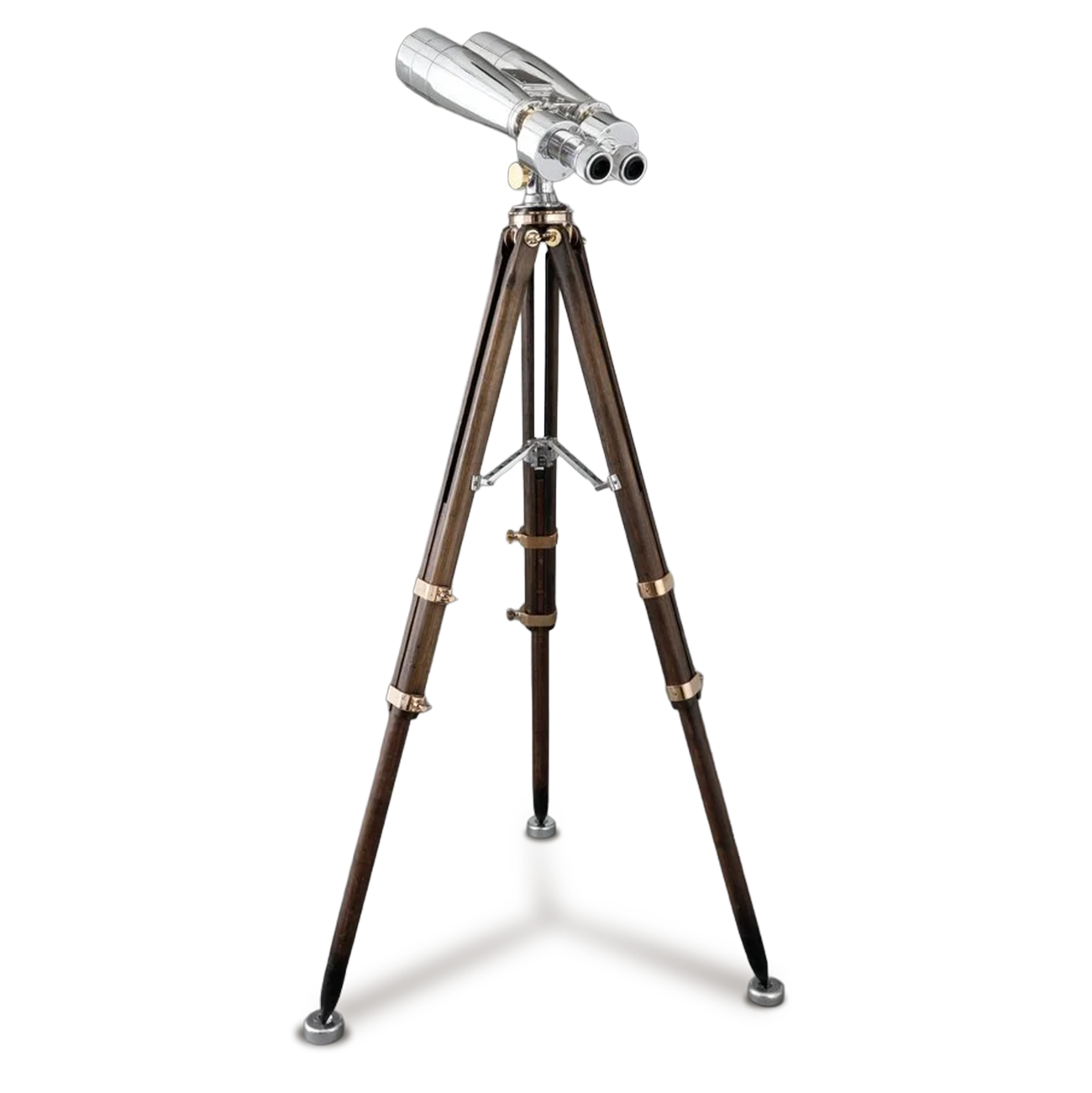
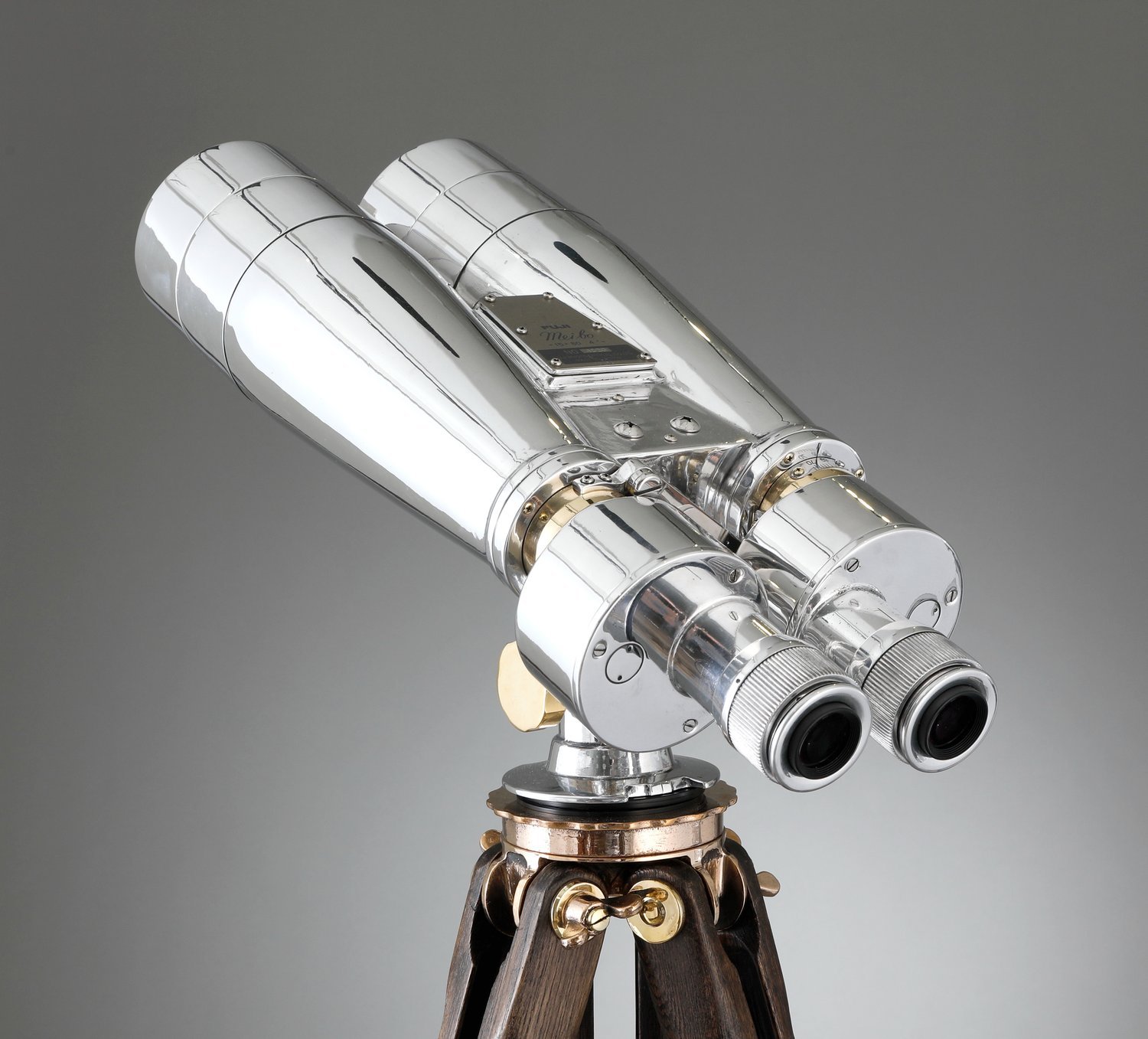
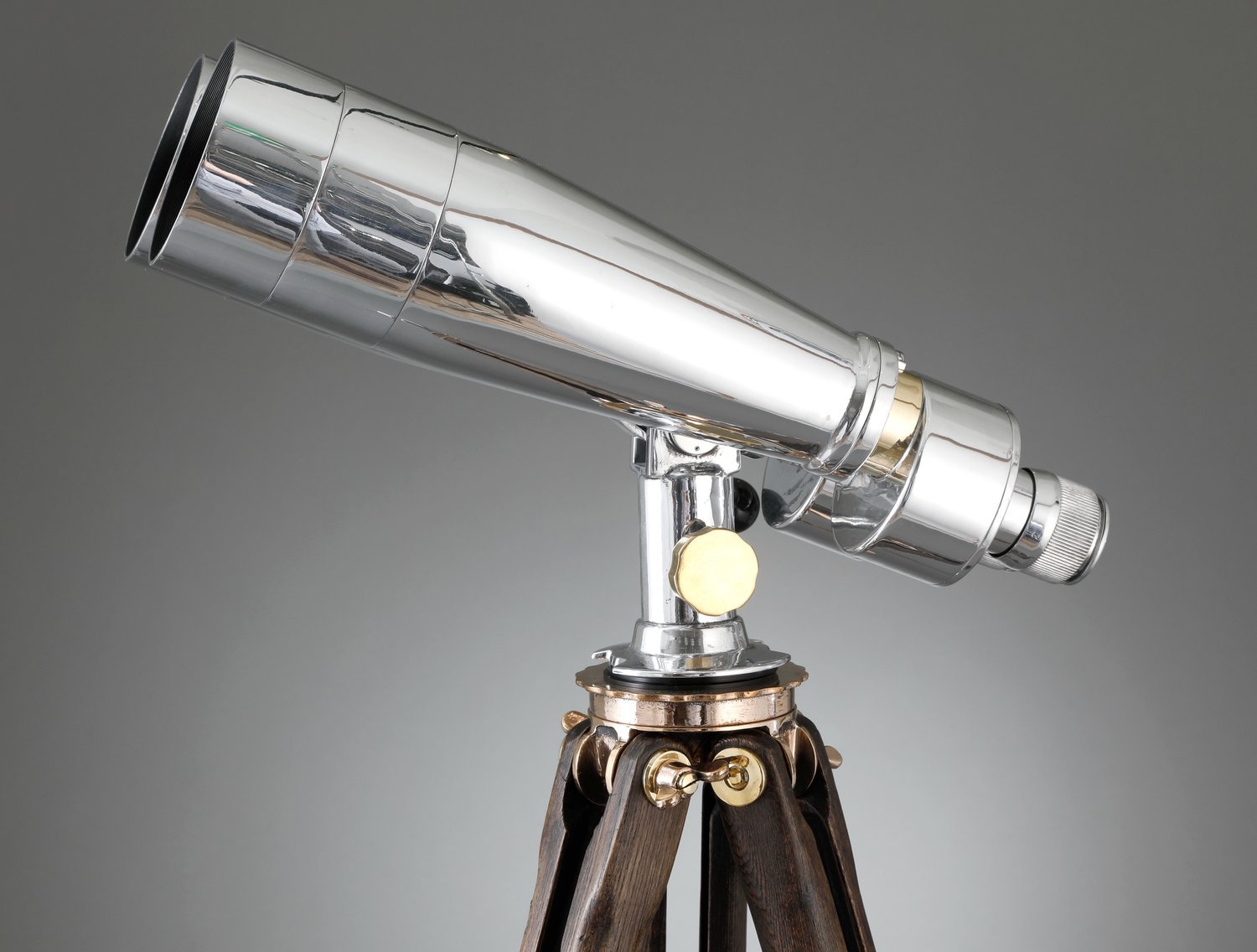
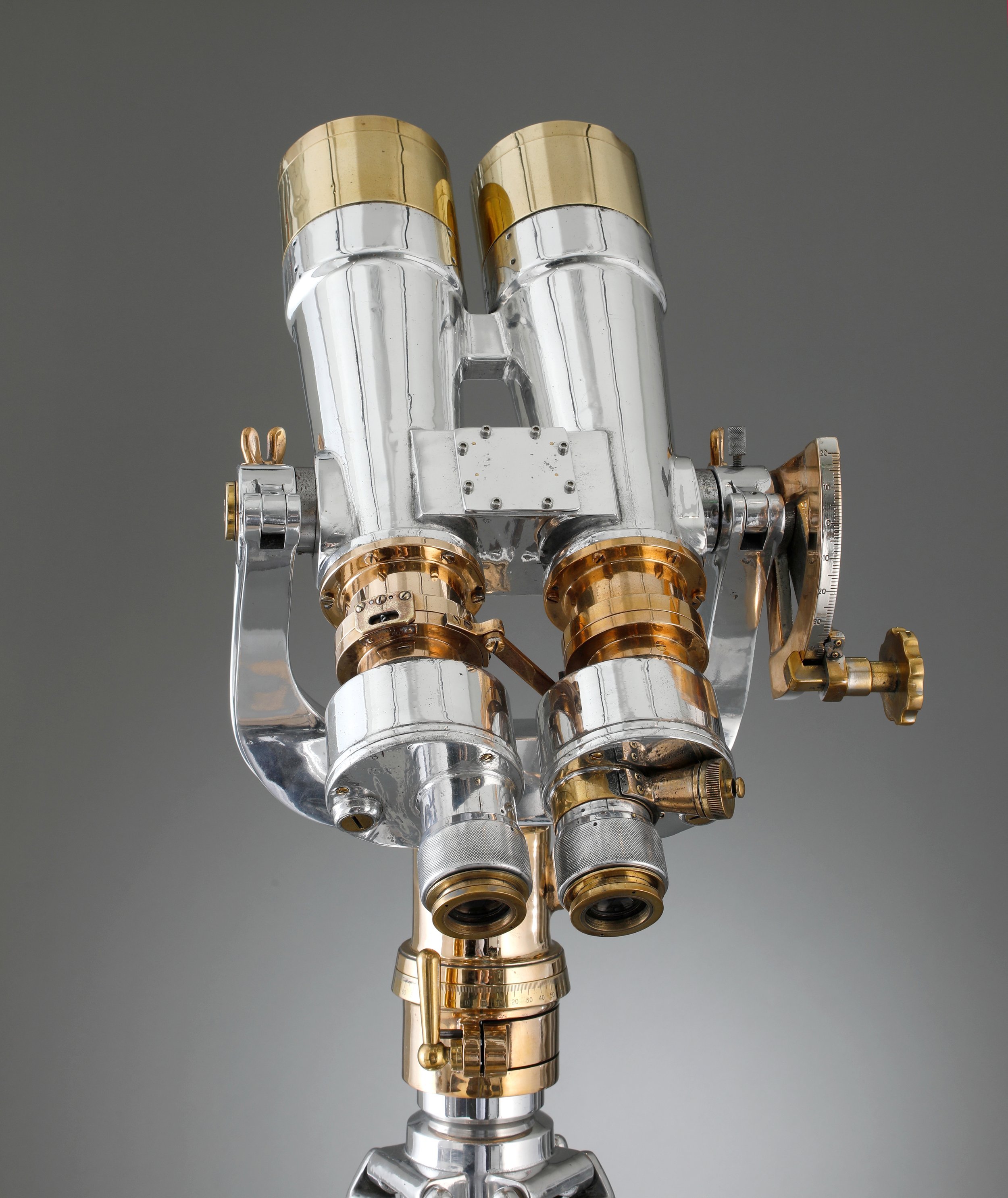
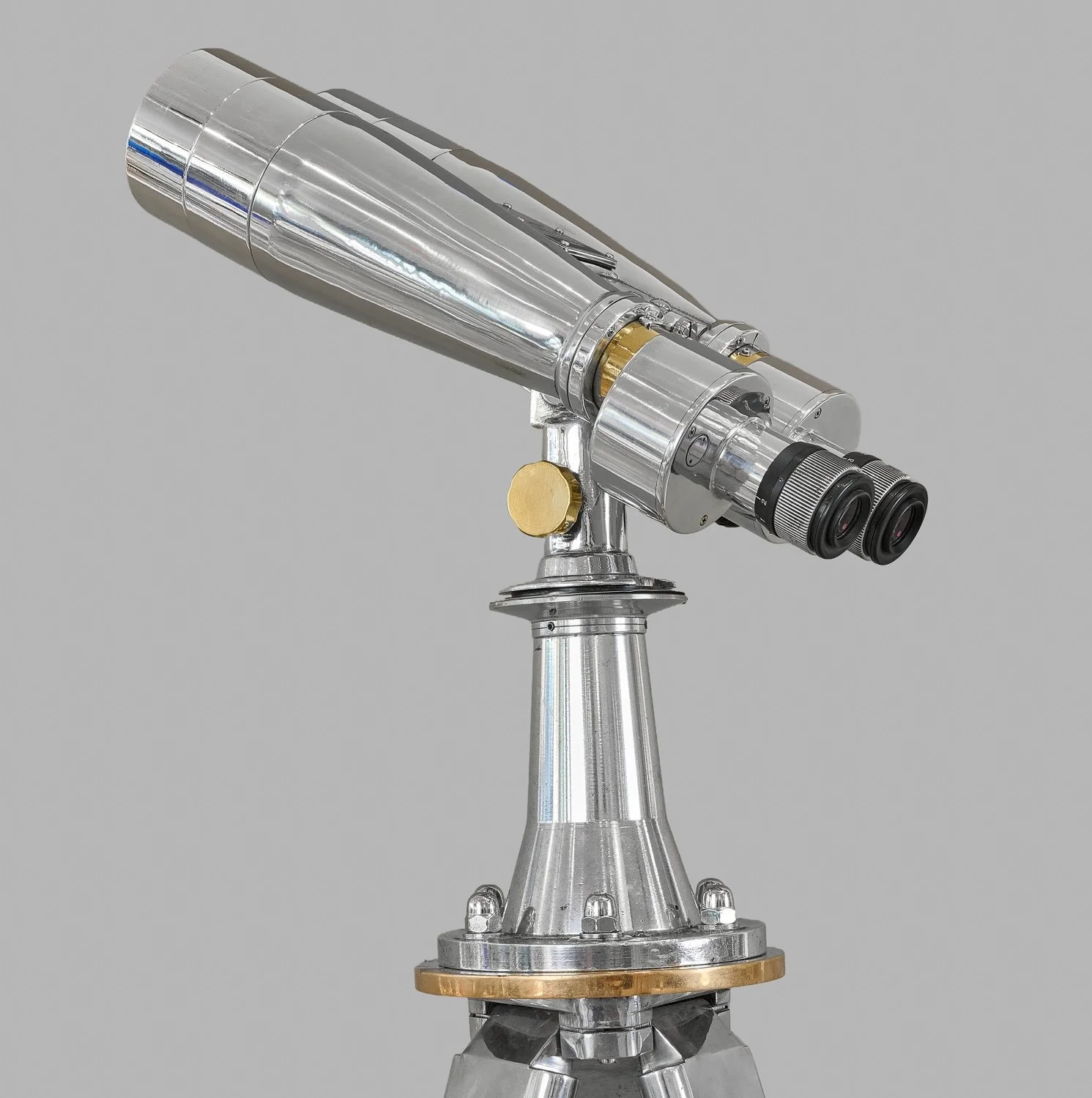
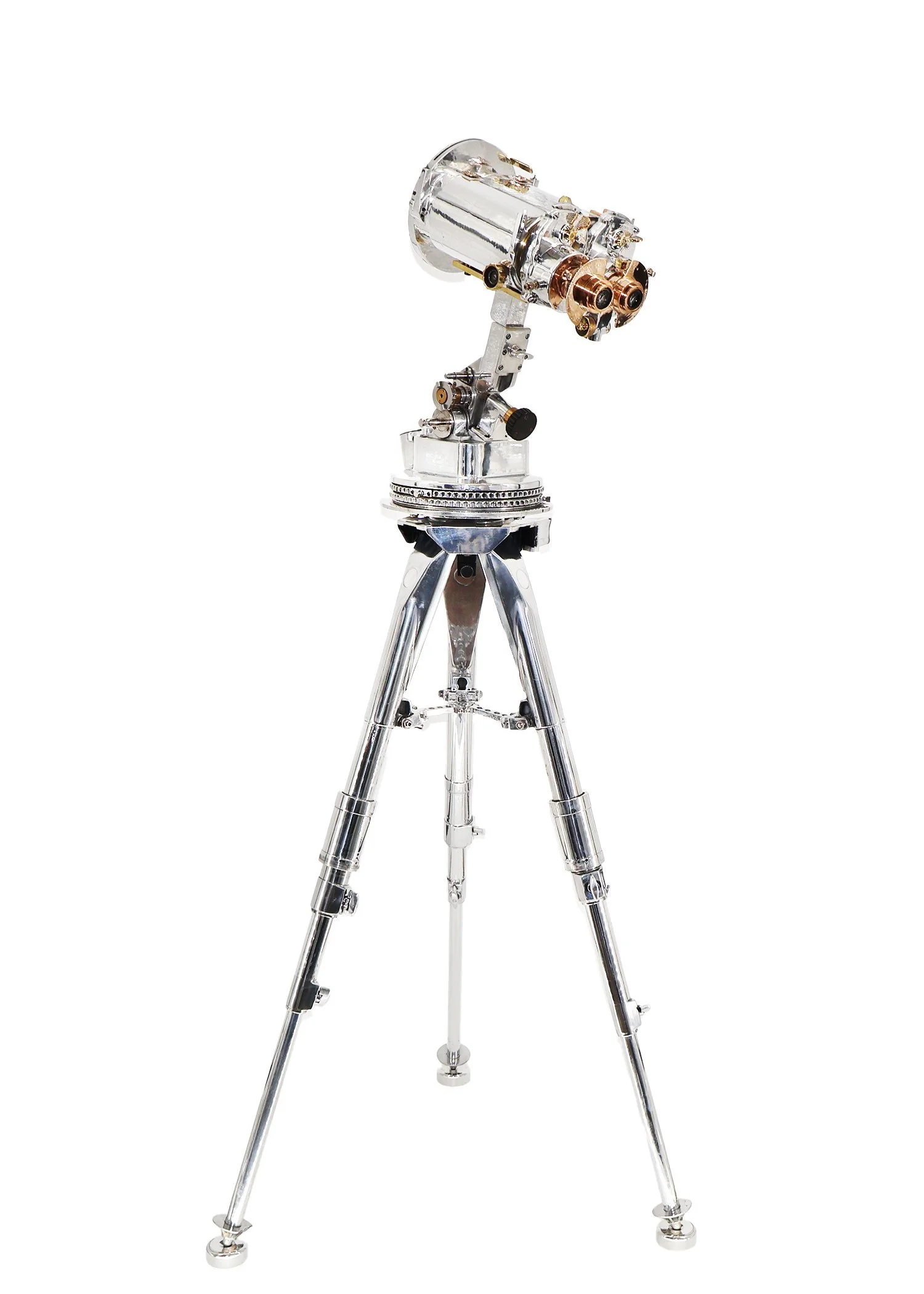
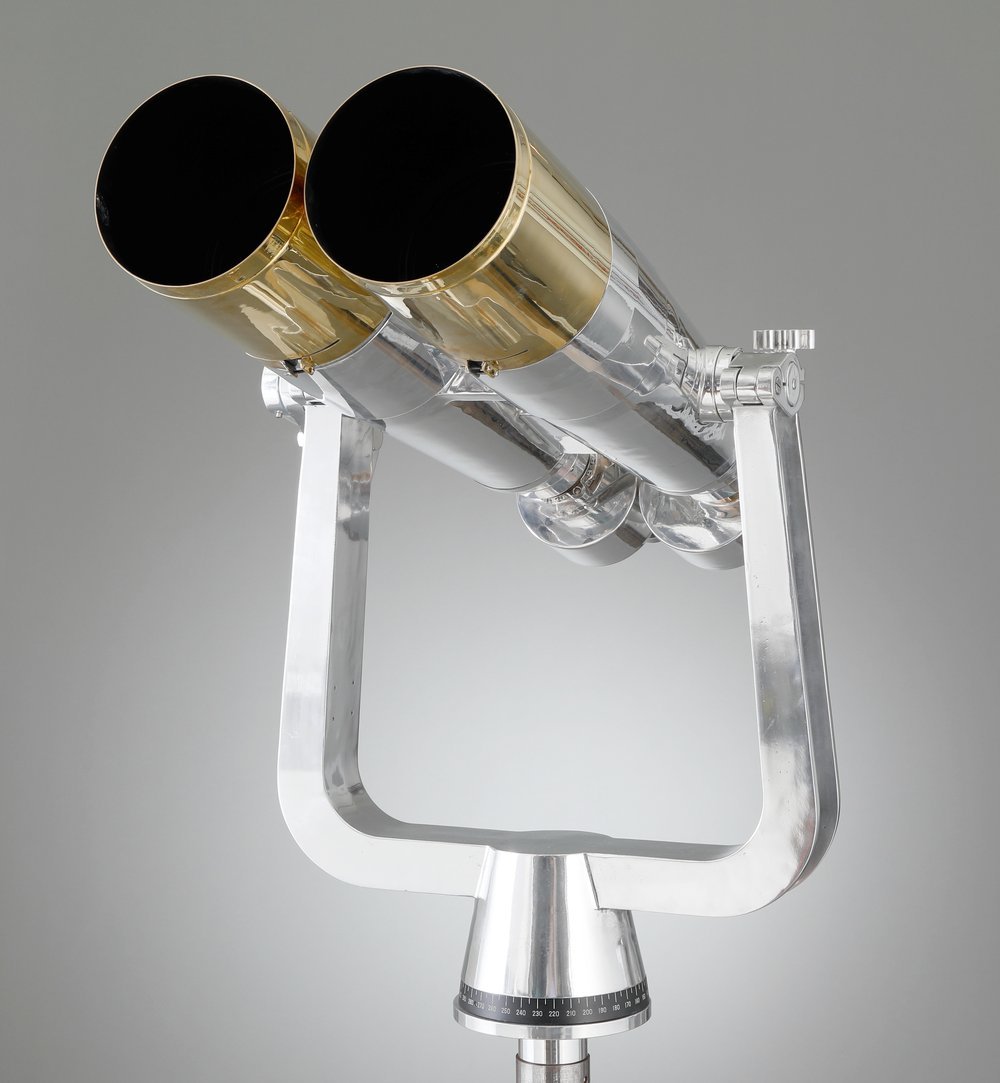
The DF 8×60 is a big eye binocular of the highest military specification — the optical head of the Rohrzielgerät RZA 5b torpedo aiming system, mounted aboard the Jaguar and Zobel-class fast attack torpedo boats operating in the Baltic. Its specifications reflect that mission precisely: 60mm objective lenses for exceptional light-gathering at dusk and first light; a field of view of 154 meters at 1,000 meters for rapid target acquisition; 22mm of eye relief for use with naval headgear; an illuminated reticle for reading bearing onto a contact and passing it to the fire-control system. The brass filter selector offers five positions — Klar, Orange, Filter, Neutral, Dunkel — covering every light condition from noon glare to the near-dark of a Baltic dawn.
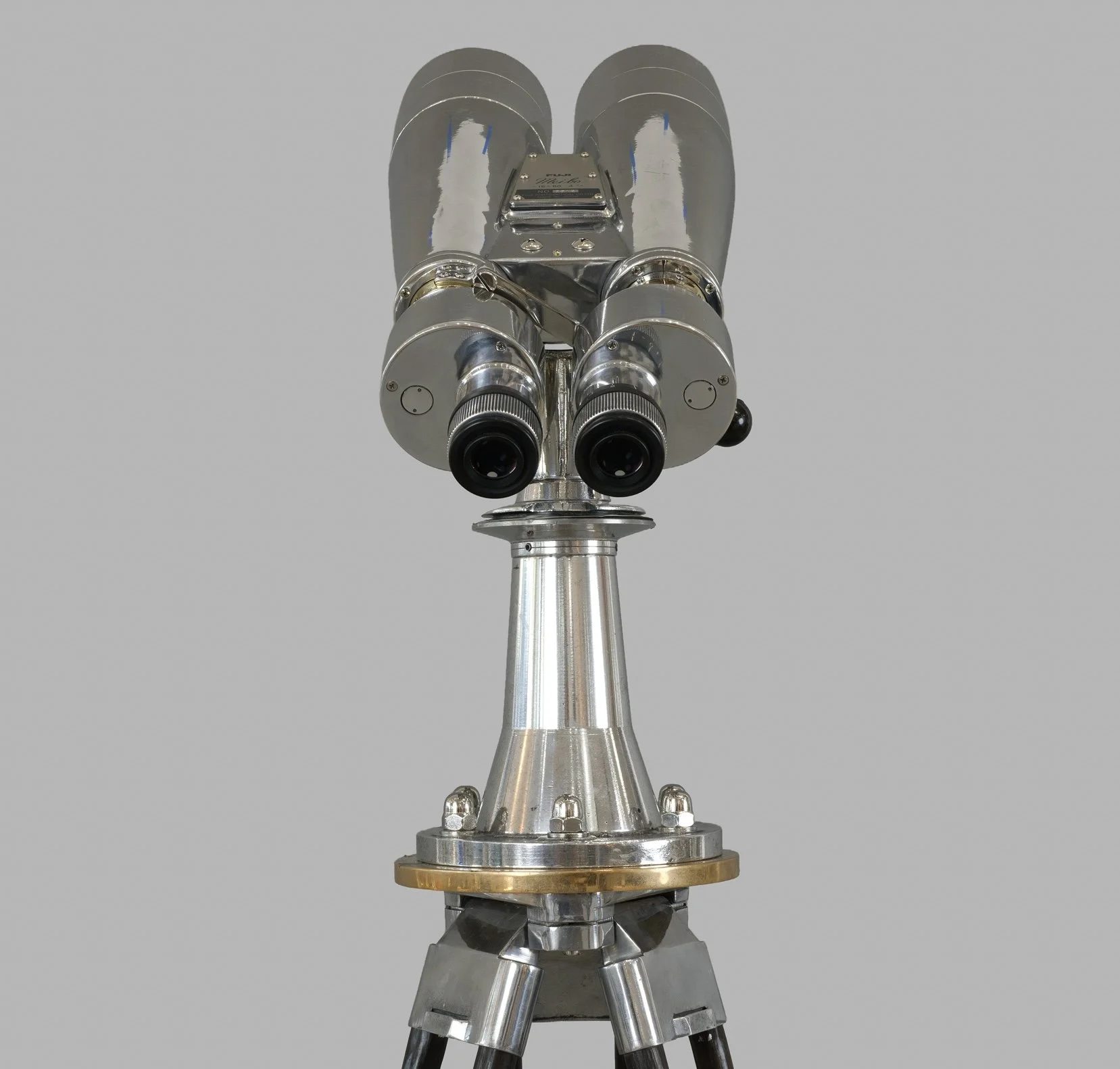
The body carries the Carl Zeiss Oberkochen maker's plate and retains its original NATO stock number — 1240-12-127-6687 — engraved and fully legible. The prefix 1240 designates the supply class of optical sighting and observation instruments; the country code 12 identifies the Federal Republic of Germany as the procuring nation. It is the documentary record of the instrument's formal military acceptance and Bundesmarine service, intact after more than sixty years.
Surviving examples of large-format West German military optics from this period in collector condition are genuinely scarce. Instruments of this class were used hard; when vessels were decommissioned, optics were typically stripped, refurbished, reissued, or disposed of through surplus channels without paperwork. Most comparable pieces reach the market with their NATO stock numbers worn or polished away, their provenance reduced to the maker's mark alone. This example retains both, and both are corroborated by Hans Seeger's Fernglaser und Fernrohre — the standard scholarly reference on German binoculars — in which the pattern is cataloged at p. 367, fig. 249b, with the original 1961 Zeiss factory data sheet.
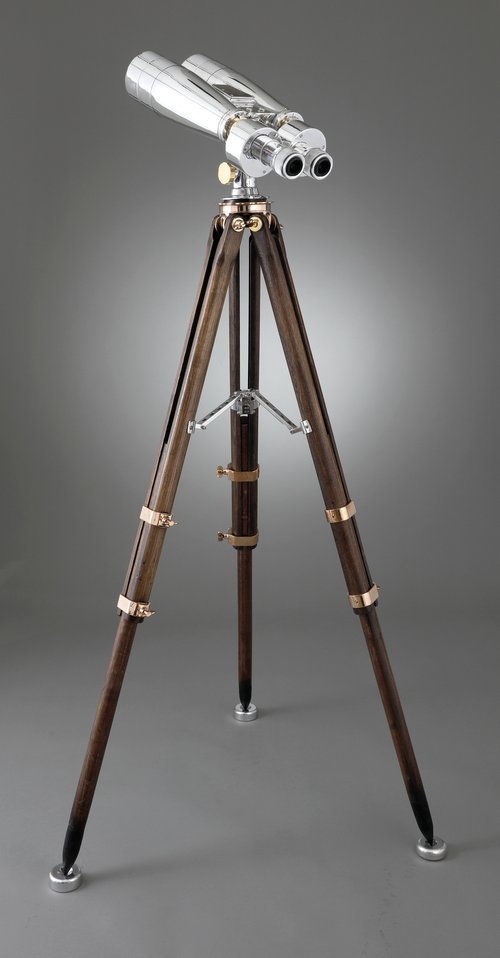
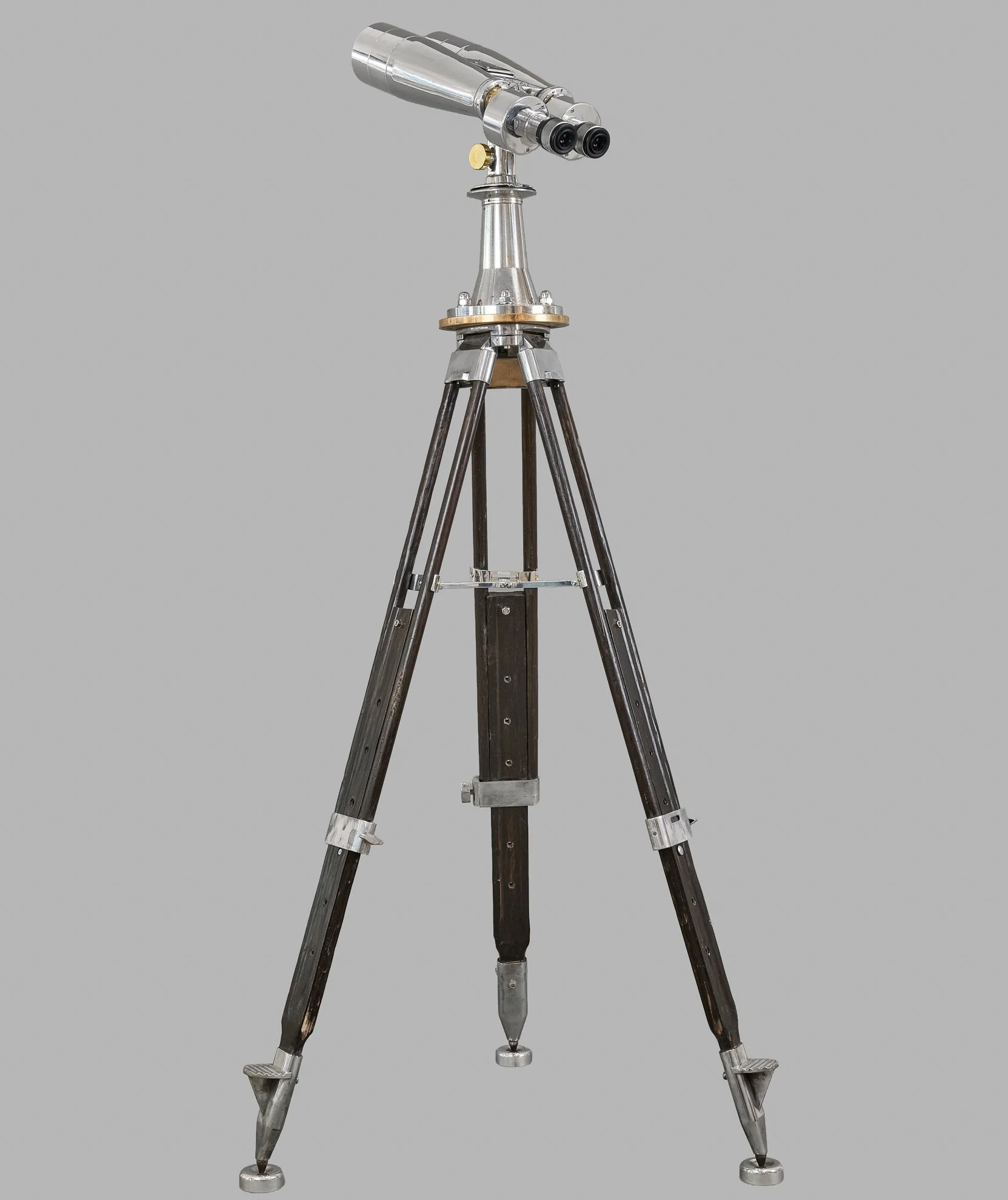
The instrument is presented on a period 1940s military field tripod. The complete display stands approximately five feet tall.
Maker: Carl Zeiss, Oberkochen, West Germany Date: c. 1962 Magnification: 8× Objective diameter: 60mm Field of view: 154m at 1,000m (8.8°) Eye relief: 22mm Filter positions: Klar · Orange · Filter · Neutral · Dunkel NATO stock number: 1240-12-127-6687 Tripod: Period military field tripod, c. 1940s Display height: approximately 5 feet
Condition: Binocular head in exceptional display condition. Original optics retaining coatings and full collimation. All mechanical functions — filter selector, dioptre adjustment, interpupillary adjustment — are operating correctly. NATO stock number plate and Carl Zeiss maker's plate are both present and fully legible. Period military tripod; all adjustments operational.
Literature: Seeger, Hans. Fernglaser und Fernrohre. The DF 8×60 pattern is cataloged at p. 367, fig. 249b, with the original 1961 Carl Zeiss Oberkochen factory data sheet.
In early 1945, the United States Eighth Air Force bombed the Carl Zeiss optical works in Jena. Before the ruins fell behind the Iron Curtain, American forces evacuated the firm's senior scientists and engineers westward. By 1946, they had rebuilt in Oberkochen, Baden-Württemberg — Carl Zeiss reborn on the other side of the divide.
When West Germany joined NATO in 1955 and the Bundesmarine was created the following year, it turned to Zeiss for precision optics for fast-attack ships patrolling the Baltic Sea against the Soviet fleet. This binocular is a direct product of that transformation.
The full story of Carl Zeiss's remarkable postwar resurrection and the DF 8×60's role in Bundesmarine service is told in our essay Carl Zeiss Military Binoculars: A Cold War Relic.
The DF 8×60 is a big eye binocular of the highest military specification — the optical head of the Rohrzielgerät RZA 5b torpedo aiming system, mounted aboard the Jaguar and Zobel-class fast attack torpedo boats operating in the Baltic. Its specifications reflect that mission precisely: 60mm objective lenses for exceptional light-gathering at dusk and first light; a field of view of 154 meters at 1,000 meters for rapid target acquisition; 22mm of eye relief for use with naval headgear; an illuminated reticle for reading bearing onto a contact and passing it to the fire-control system. The brass filter selector offers five positions — Klar, Orange, Filter, Neutral, Dunkel — covering every light condition from noon glare to the near-dark of a Baltic dawn.
The body carries the Carl Zeiss Oberkochen maker's plate and retains its original NATO stock number — 1240-12-127-6687 — engraved and fully legible. The prefix 1240 designates the supply class of optical sighting and observation instruments; the country code 12 identifies the Federal Republic of Germany as the procuring nation. It is the documentary record of the instrument's formal military acceptance and Bundesmarine service, intact after more than sixty years.
Surviving examples of large-format West German military optics from this period in collector condition are genuinely scarce. Instruments of this class were used hard; when vessels were decommissioned, optics were typically stripped, refurbished, reissued, or disposed of through surplus channels without paperwork. Most comparable pieces reach the market with their NATO stock numbers worn or polished away, their provenance reduced to the maker's mark alone. This example retains both, and both are corroborated by Hans Seeger's Fernglaser und Fernrohre — the standard scholarly reference on German binoculars — in which the pattern is cataloged at p. 367, fig. 249b, with the original 1961 Zeiss factory data sheet.
The instrument is presented on a period 1940s military field tripod. The complete display stands approximately five feet tall.
Maker: Carl Zeiss, Oberkochen, West Germany Date: c. 1962 Magnification: 8× Objective diameter: 60mm Field of view: 154m at 1,000m (8.8°) Eye relief: 22mm Filter positions: Klar · Orange · Filter · Neutral · Dunkel NATO stock number: 1240-12-127-6687 Tripod: Period military field tripod, c. 1940s Display height: approximately 5 feet
Condition: Binocular head in exceptional display condition. Original optics retaining coatings and full collimation. All mechanical functions — filter selector, dioptre adjustment, interpupillary adjustment — are operating correctly. NATO stock number plate and Carl Zeiss maker's plate are both present and fully legible. Period military tripod; all adjustments operational.
Literature: Seeger, Hans. Fernglaser und Fernrohre. The DF 8×60 pattern is cataloged at p. 367, fig. 249b, with the original 1961 Carl Zeiss Oberkochen factory data sheet.

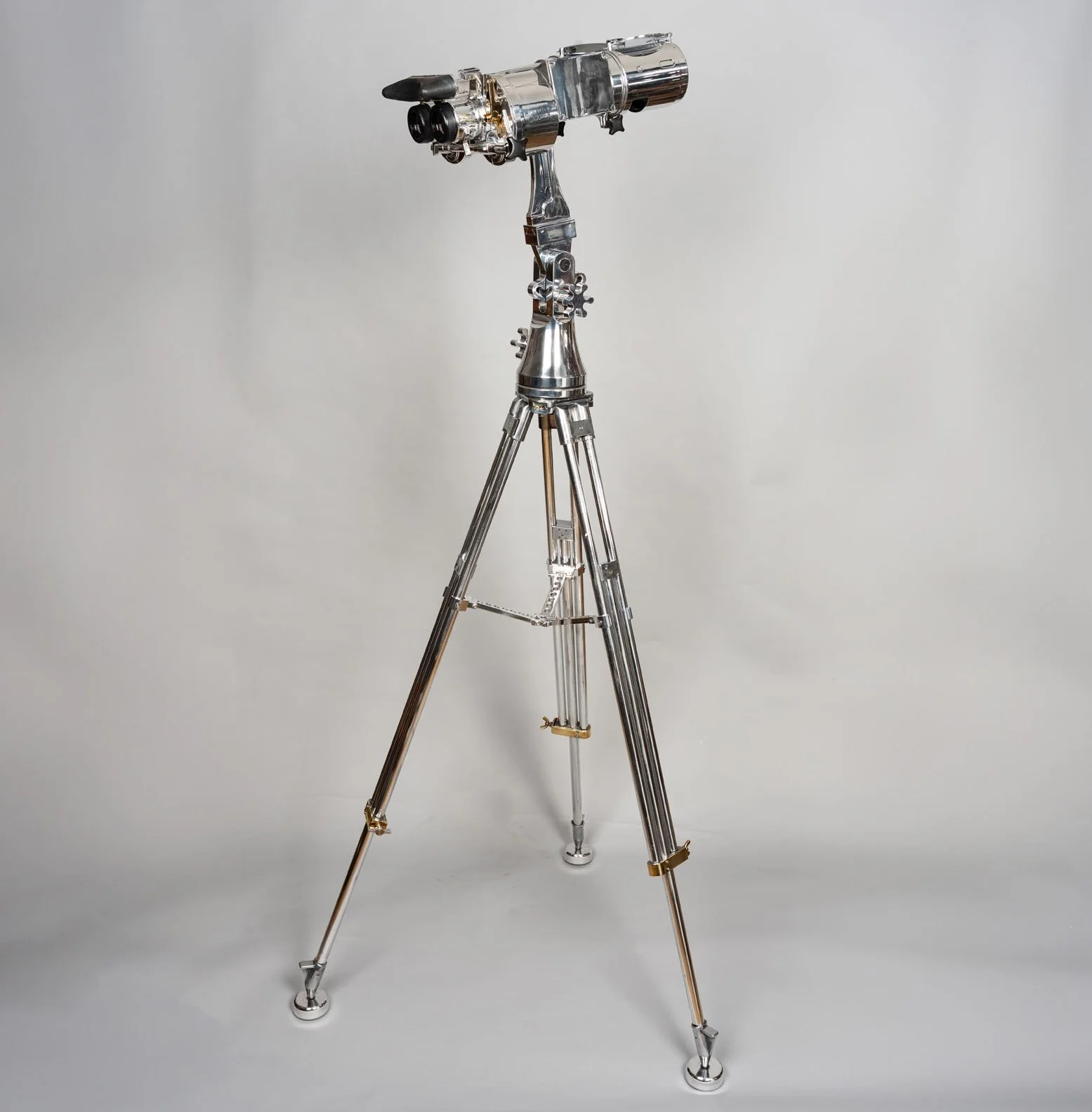 Image 1 of 5
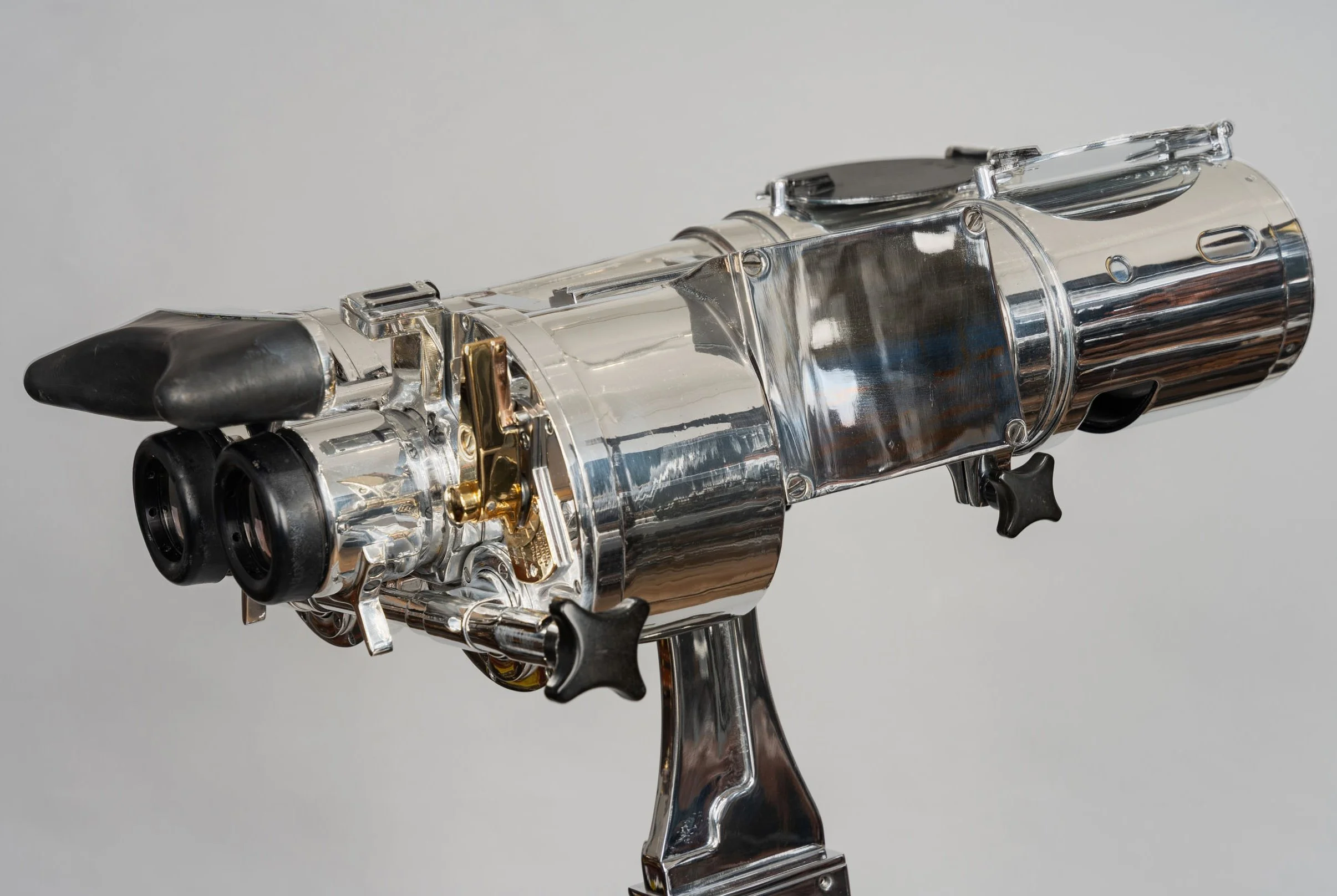 Image 2 of 5
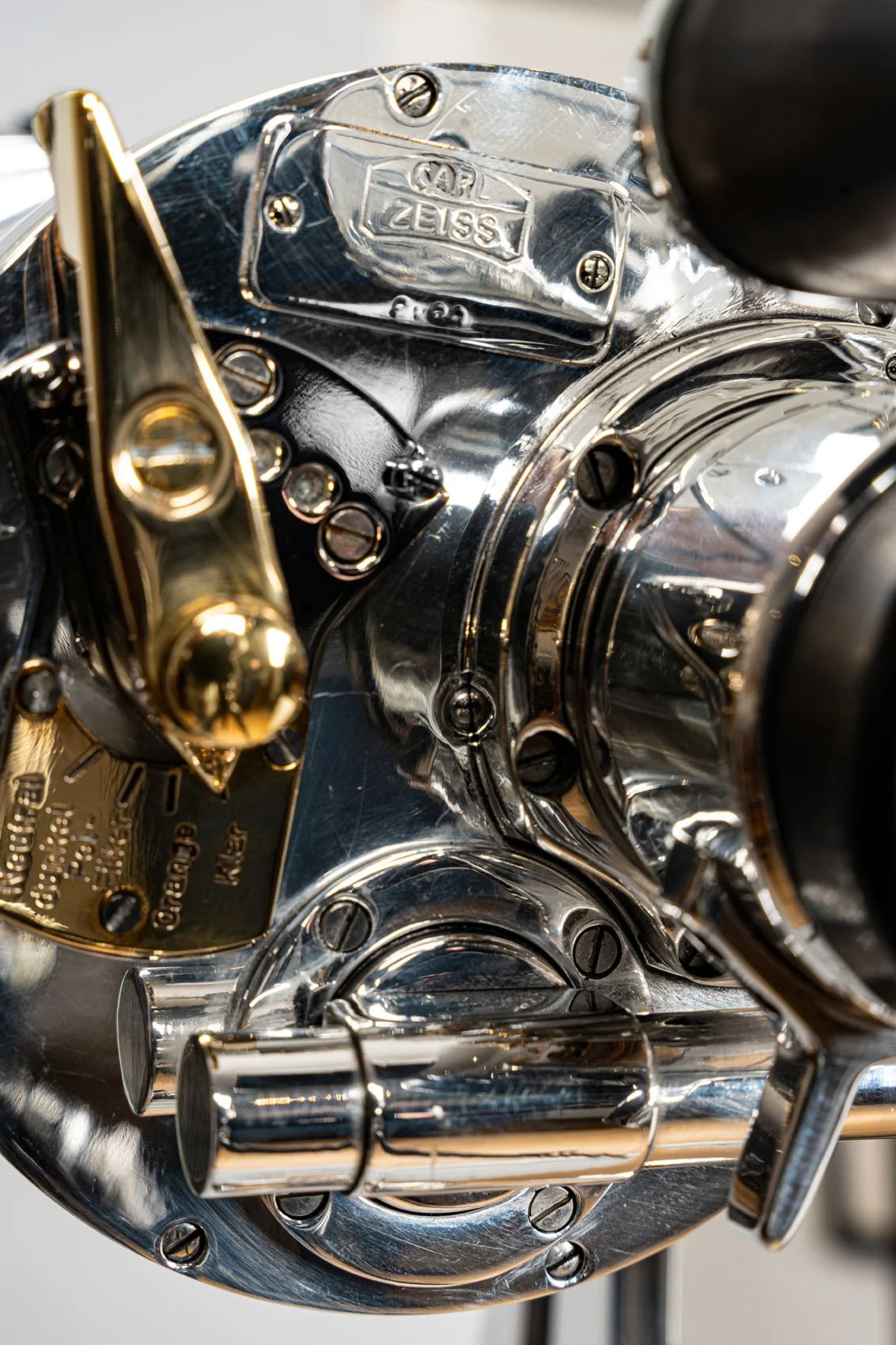 Image 3 of 5
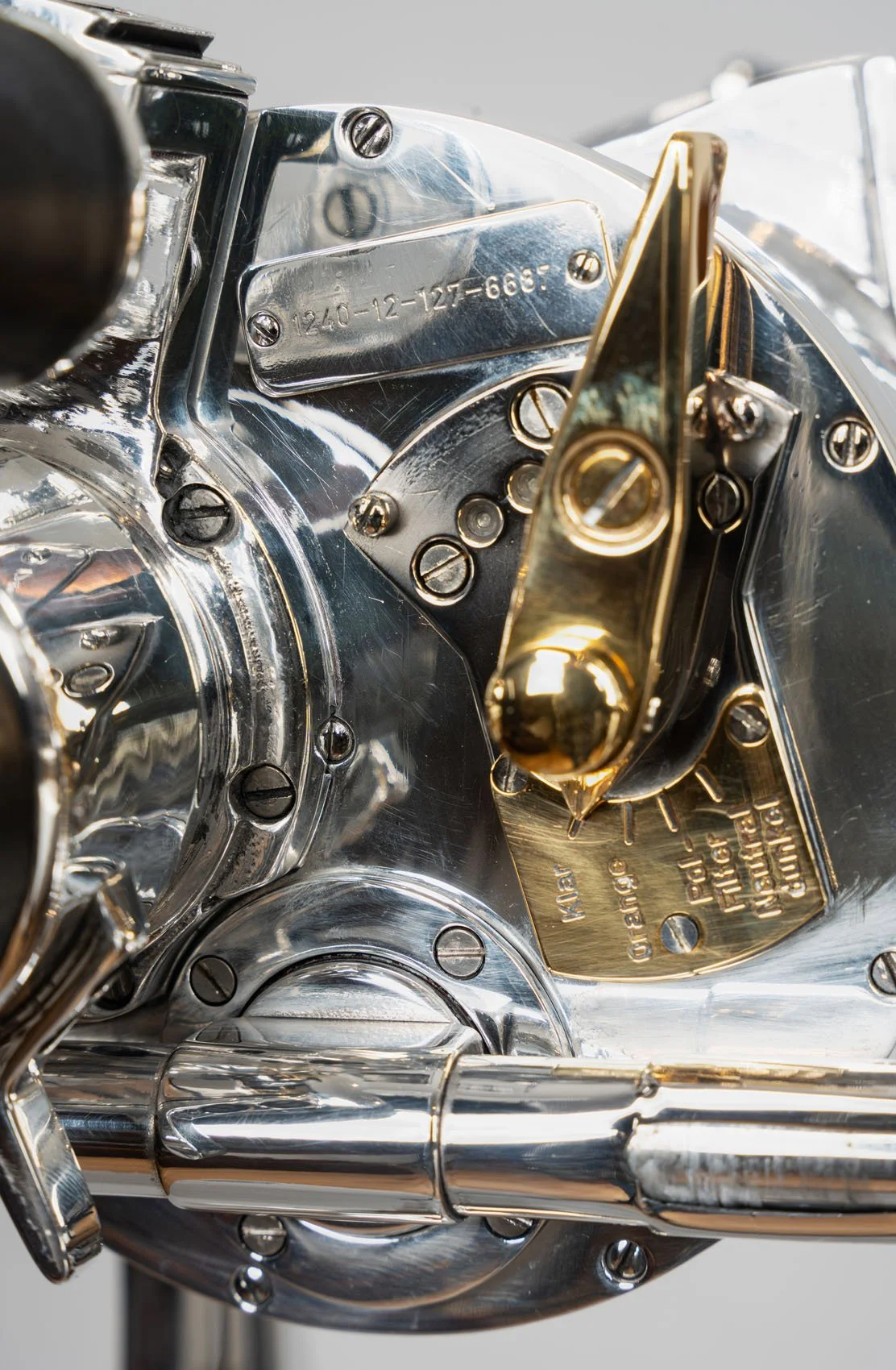 Image 4 of 5
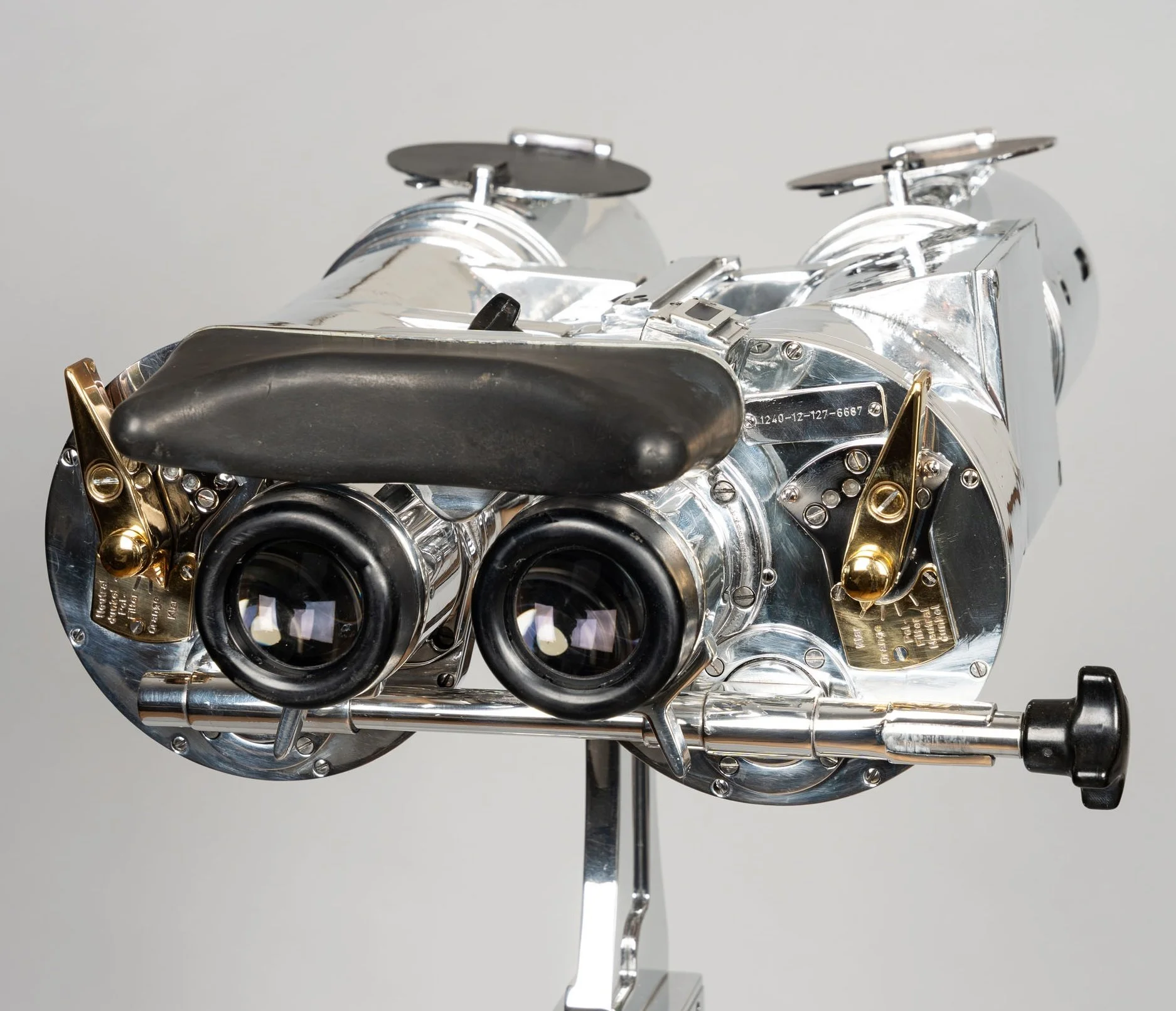 Image 5 of 5