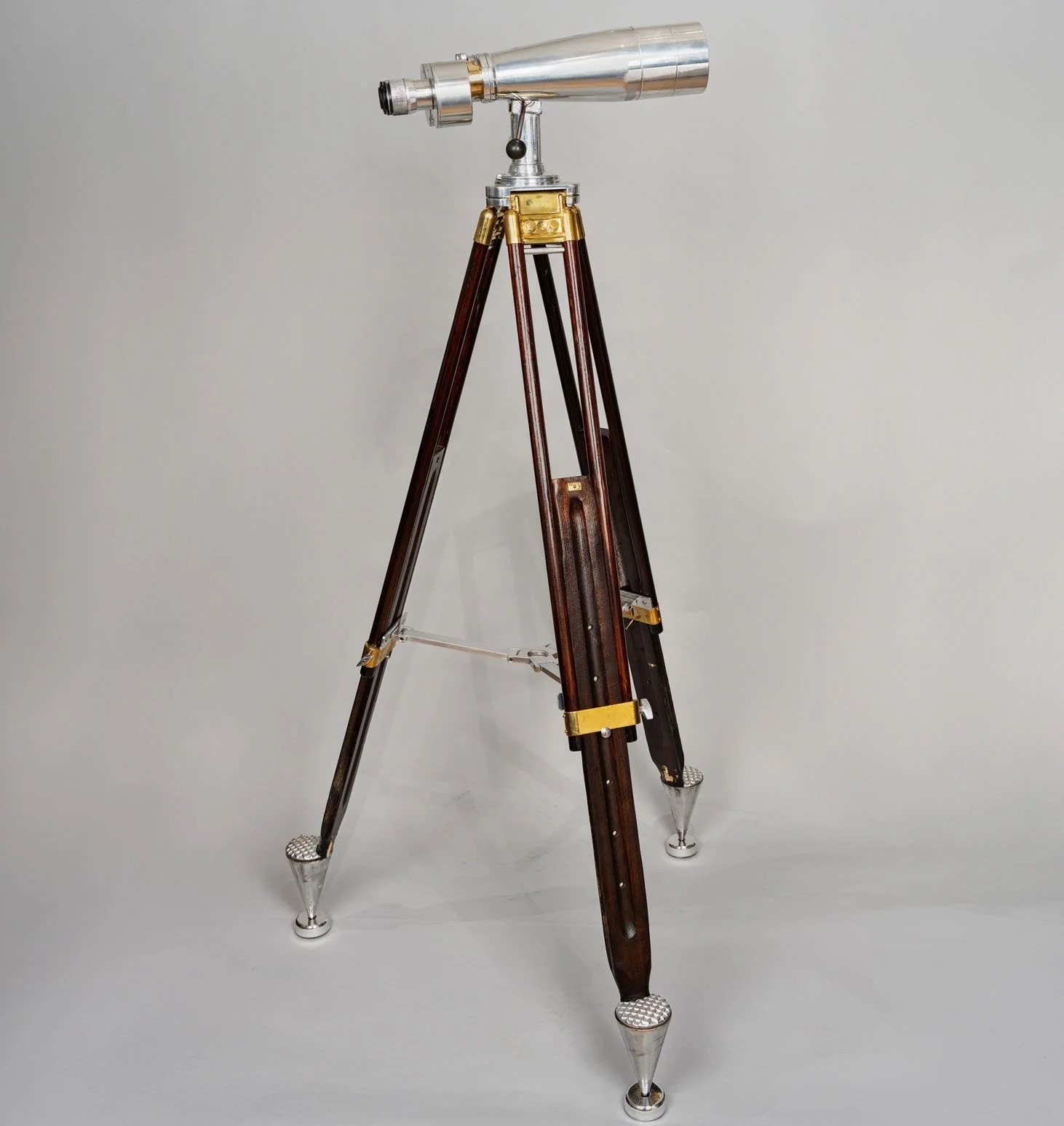
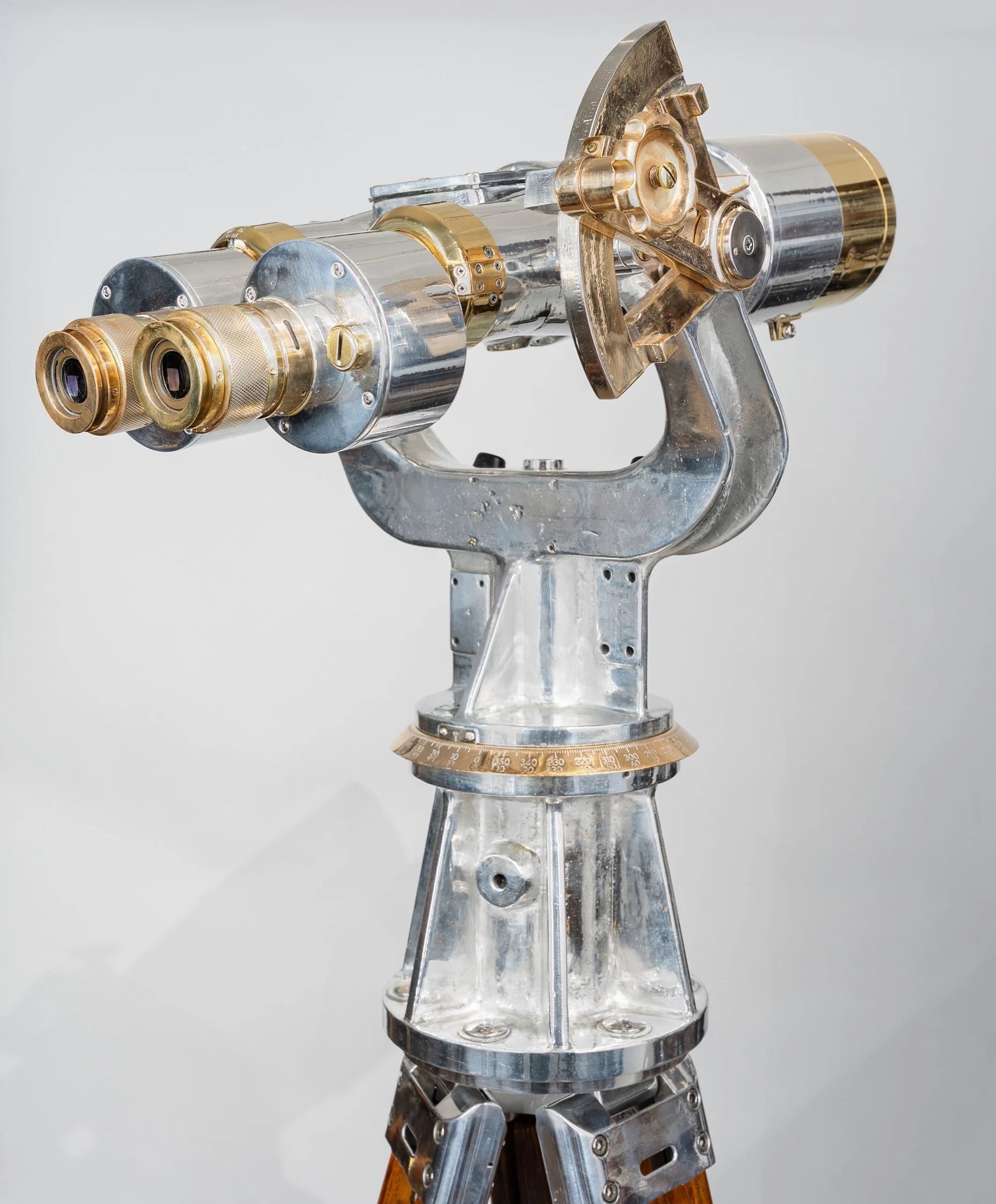
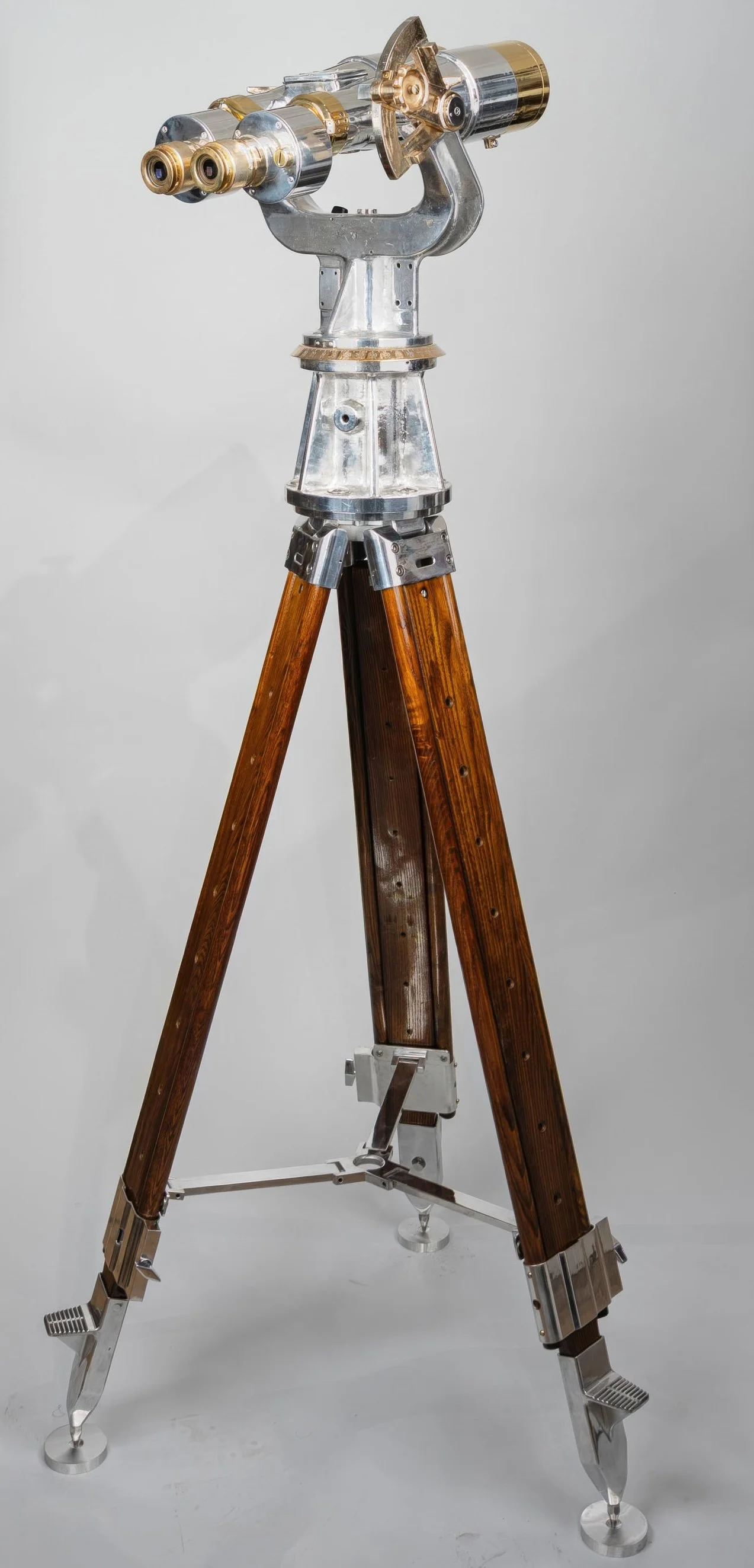
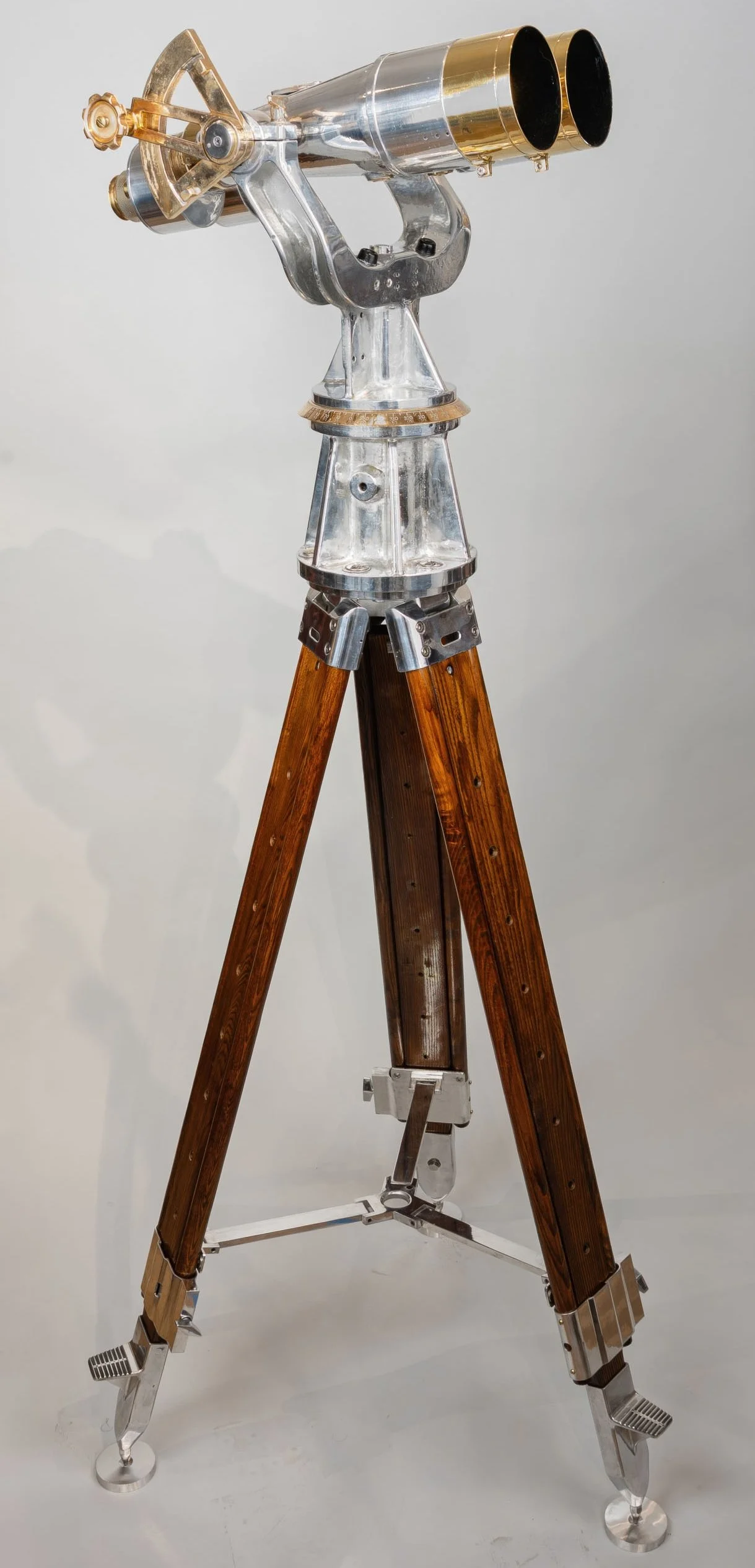
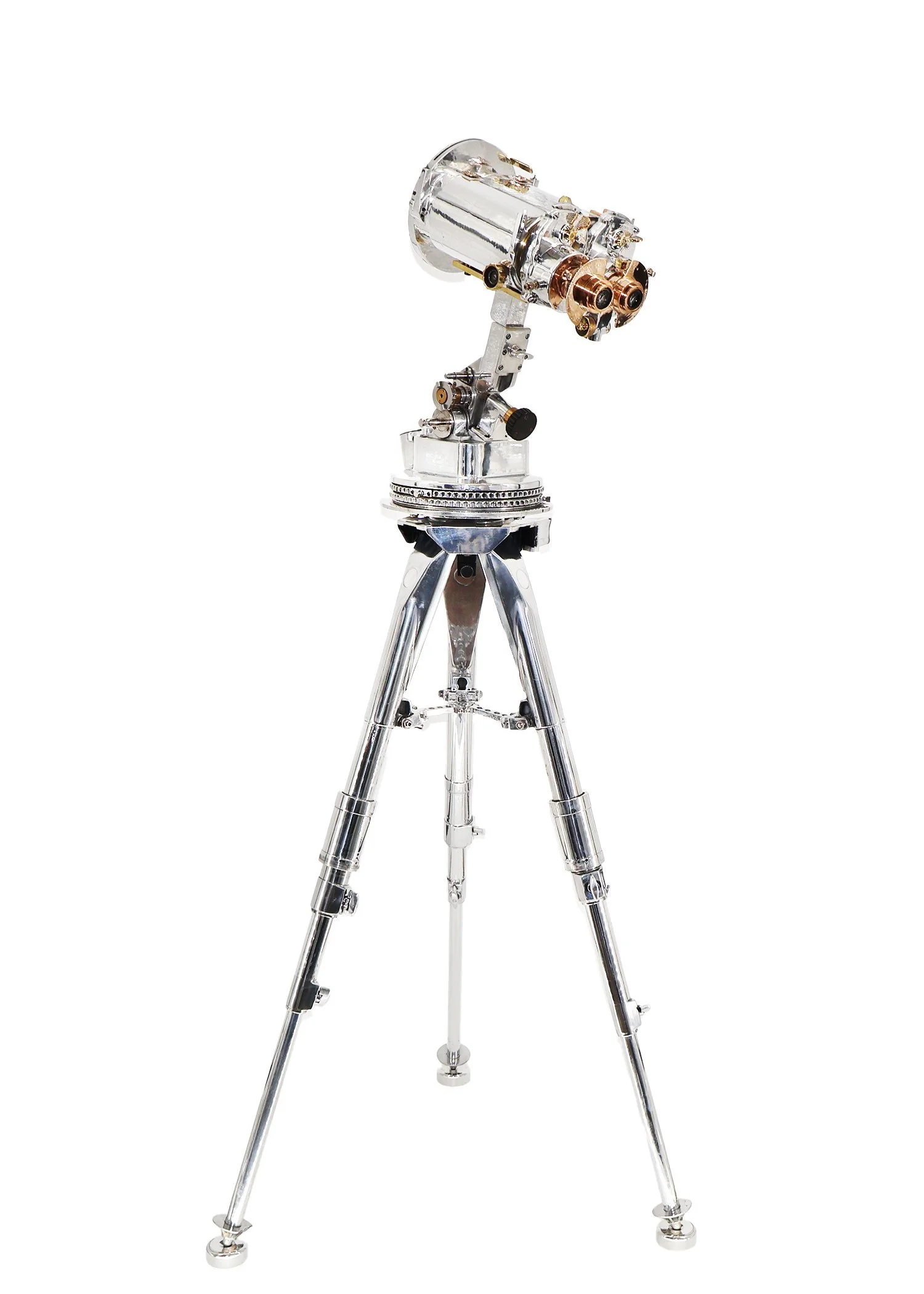
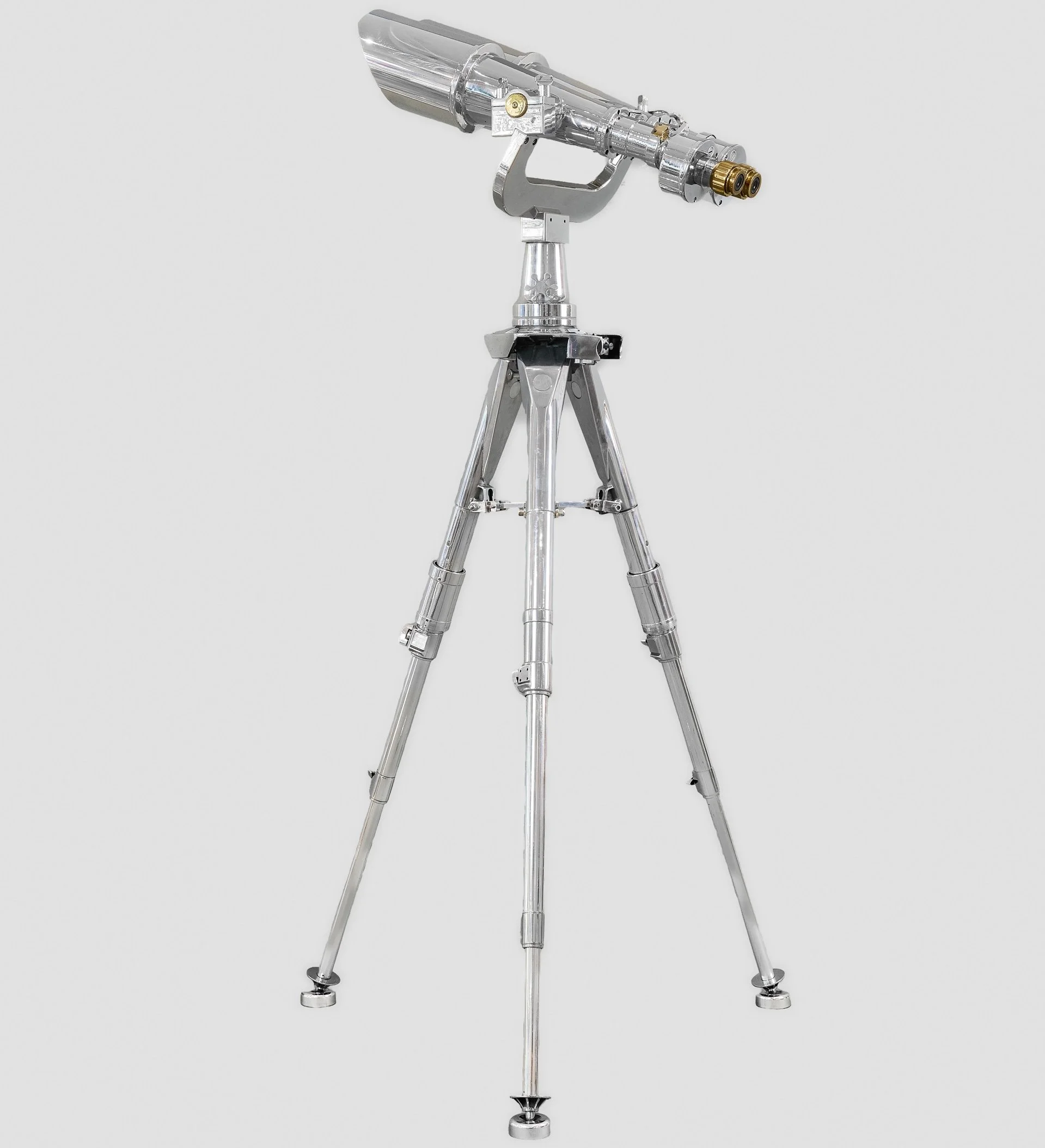
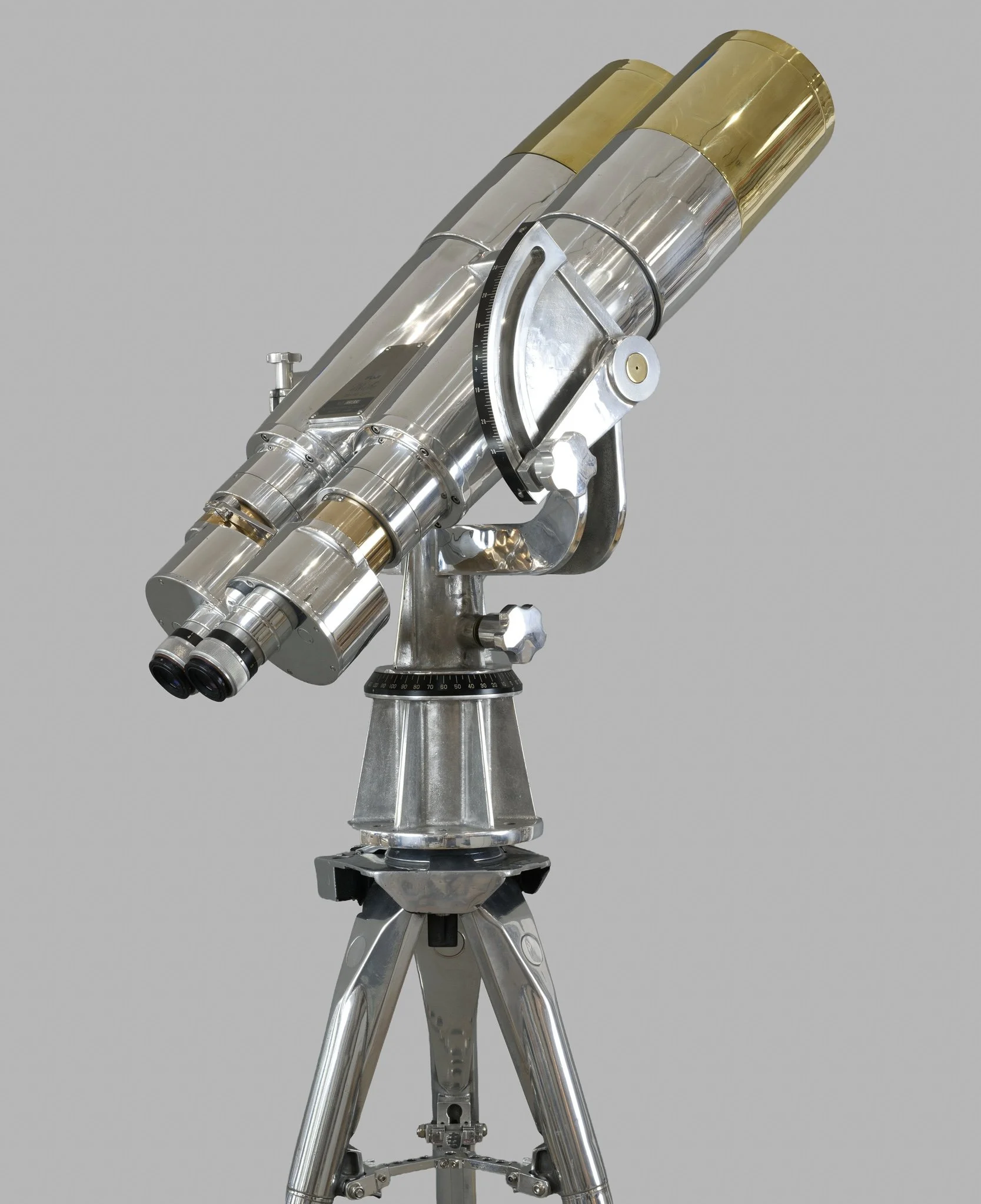
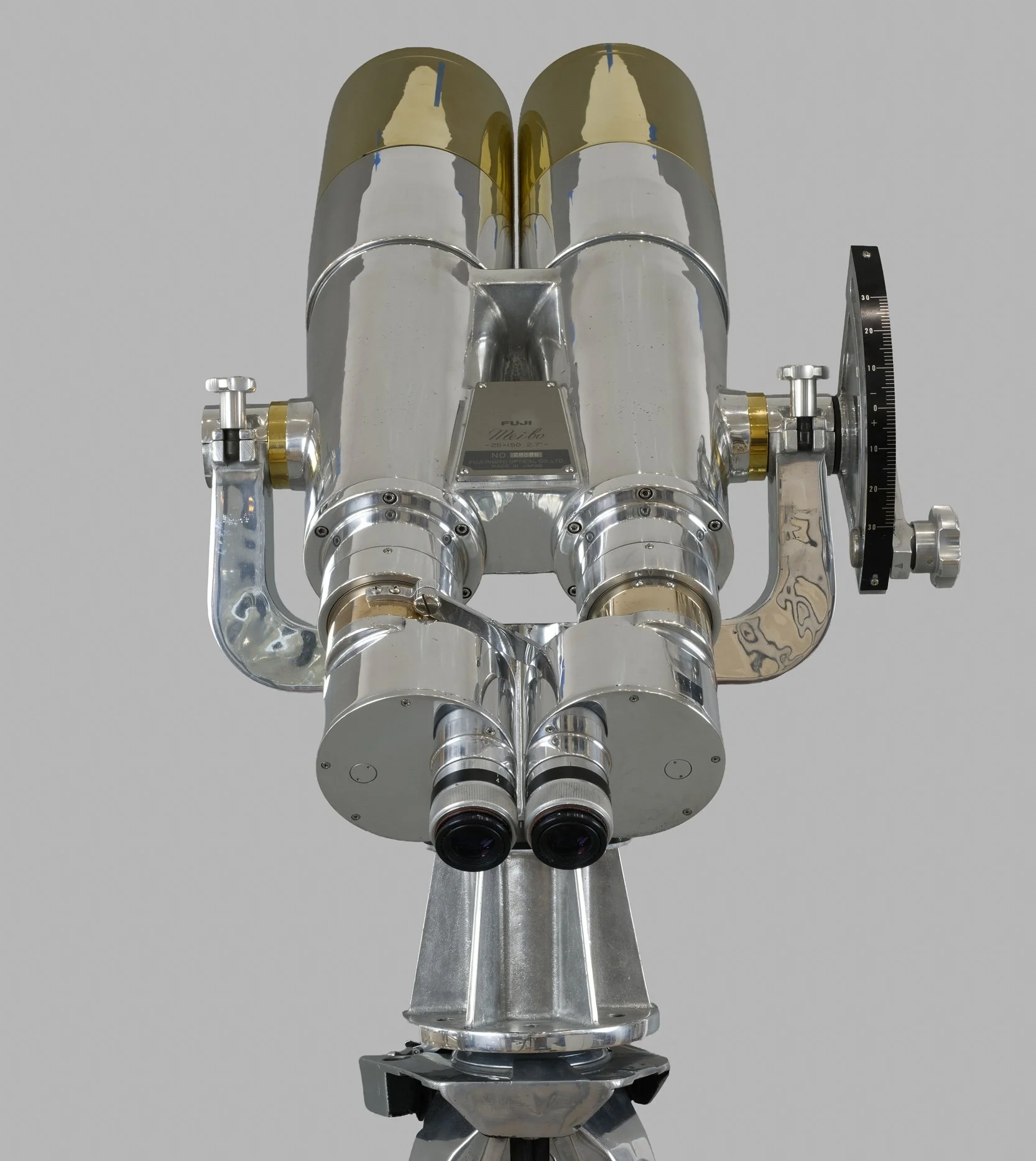
Produced by Carl Zeiss at their Oberkochen works in West Germany from circa 1962, the DF 8×60 was purpose-designed as an observation and fire control telescope for naval use — employed in connection with fire control systems and torpedo aiming devices, and built to a standard of precision that represented, in Seeger's assessment, among the most ambitious military and naval optics ever independently developed.
The full story of the DF 8×60's role aboard the Bundesmarine's Jaguar-class torpedo boats — and what makes this instrument among the most significant pieces of Cold War naval militaria — is told in our essay Carl Zeiss Military Binoculars: A Cold War Relic.
This example is of the type used aboard the Bundesmarine's Jaguar-class fast attack torpedo boats during the 1960s — nimble, heavily armed vessels that formed the backbone of West Germany's coastal defense fleet throughout the Cold War. The DF 8×60 served as both an observation glass and a fire-control instrument aboard these ships, connected directly to the RZA 5b torpedo-aiming device, making it an instrument of active operational significance rather than merely a standard-issue optic. The 8×60 configuration delivers 8× magnification through 60mm objectives, producing a 154-meter field of view at 1,000 meters and the exceptional light-gathering performance demanded by high-speed naval operations in the North Sea and the Baltic.
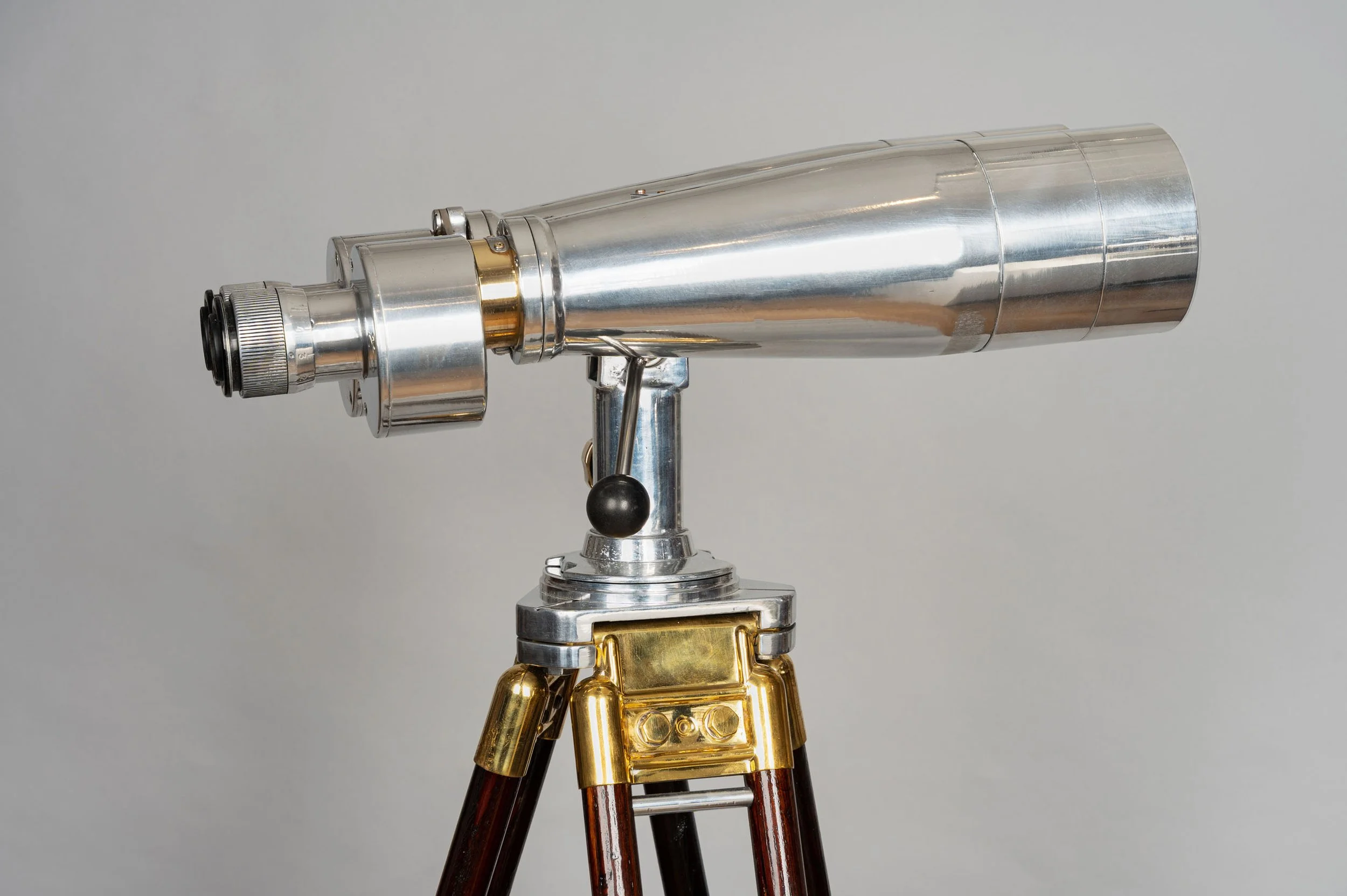
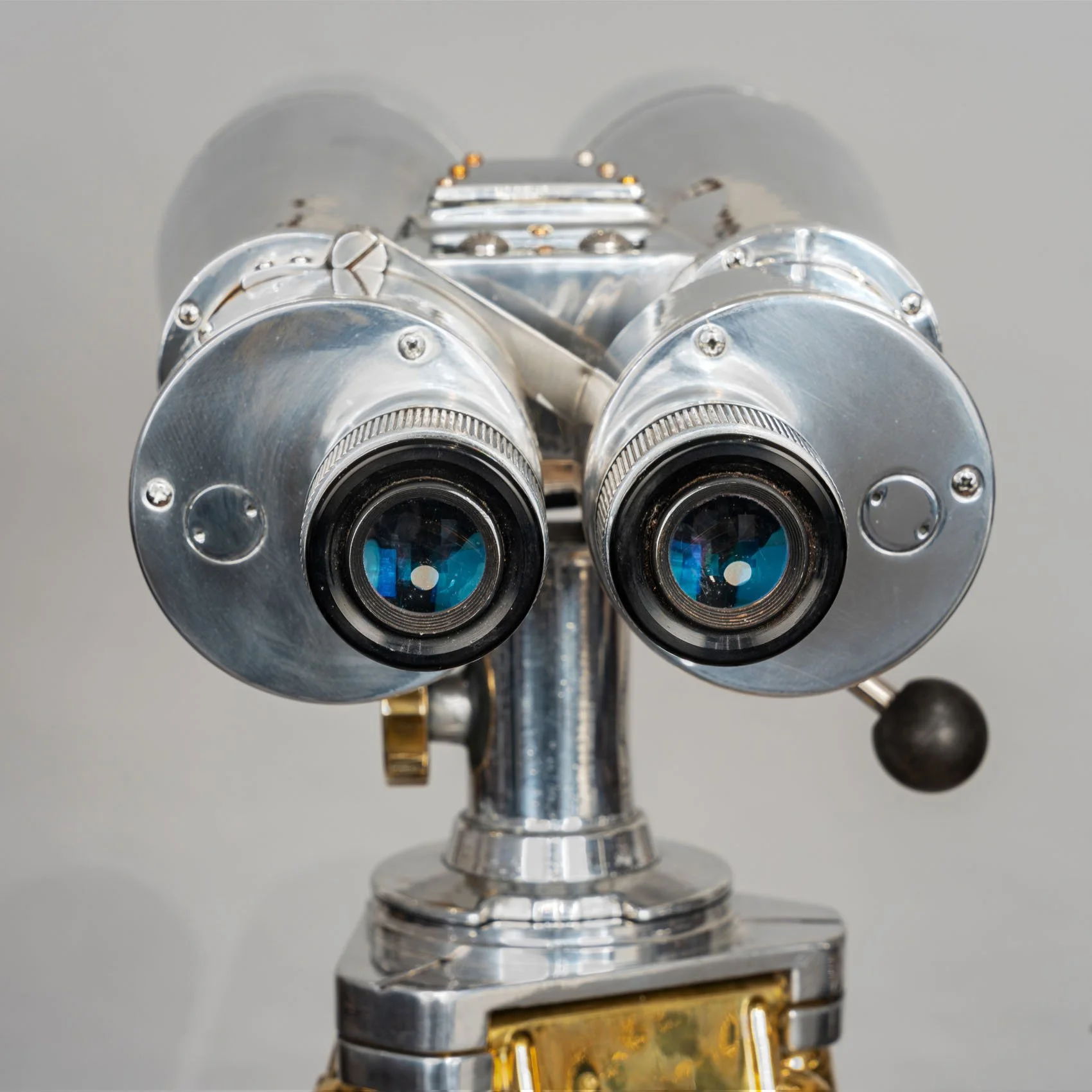
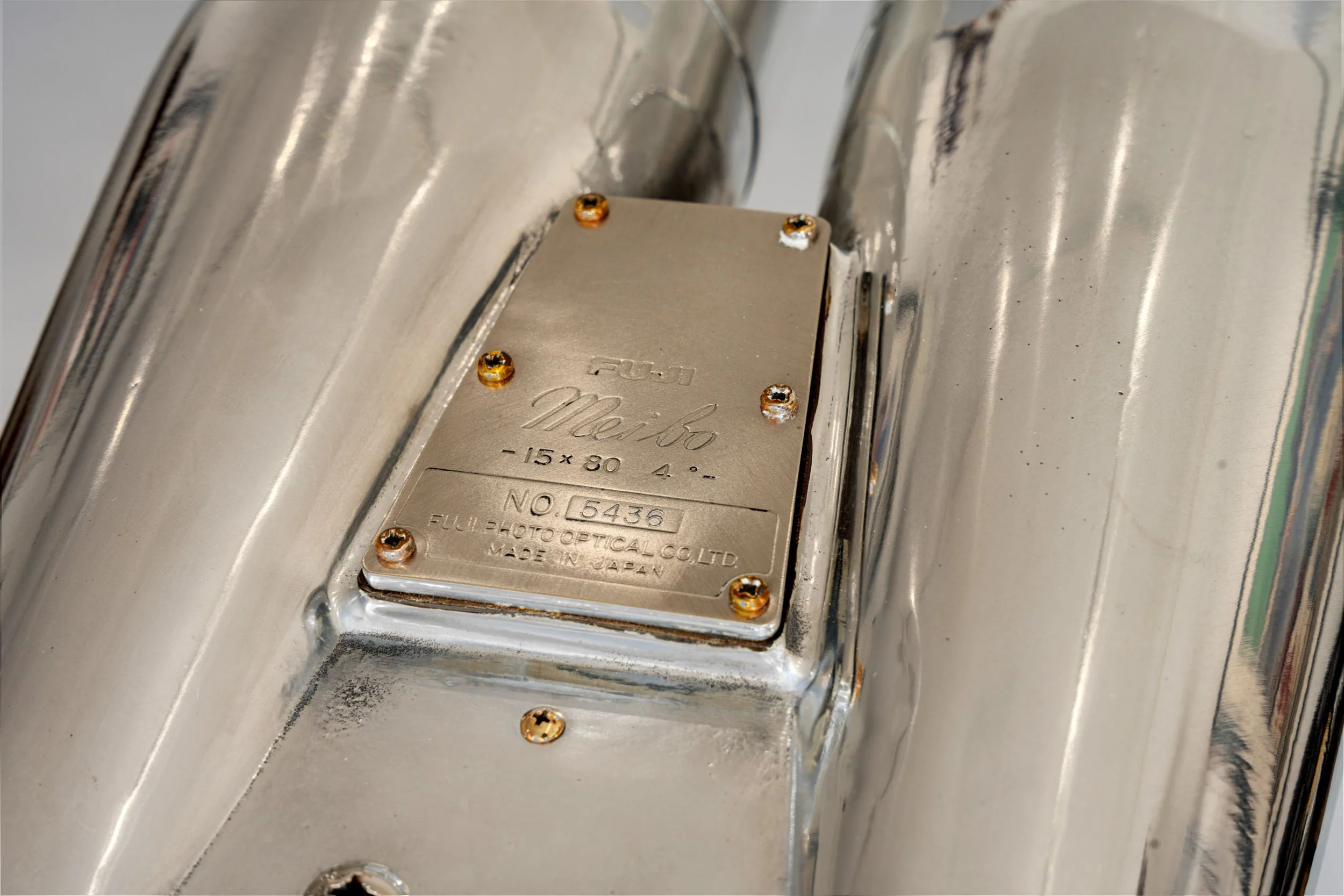
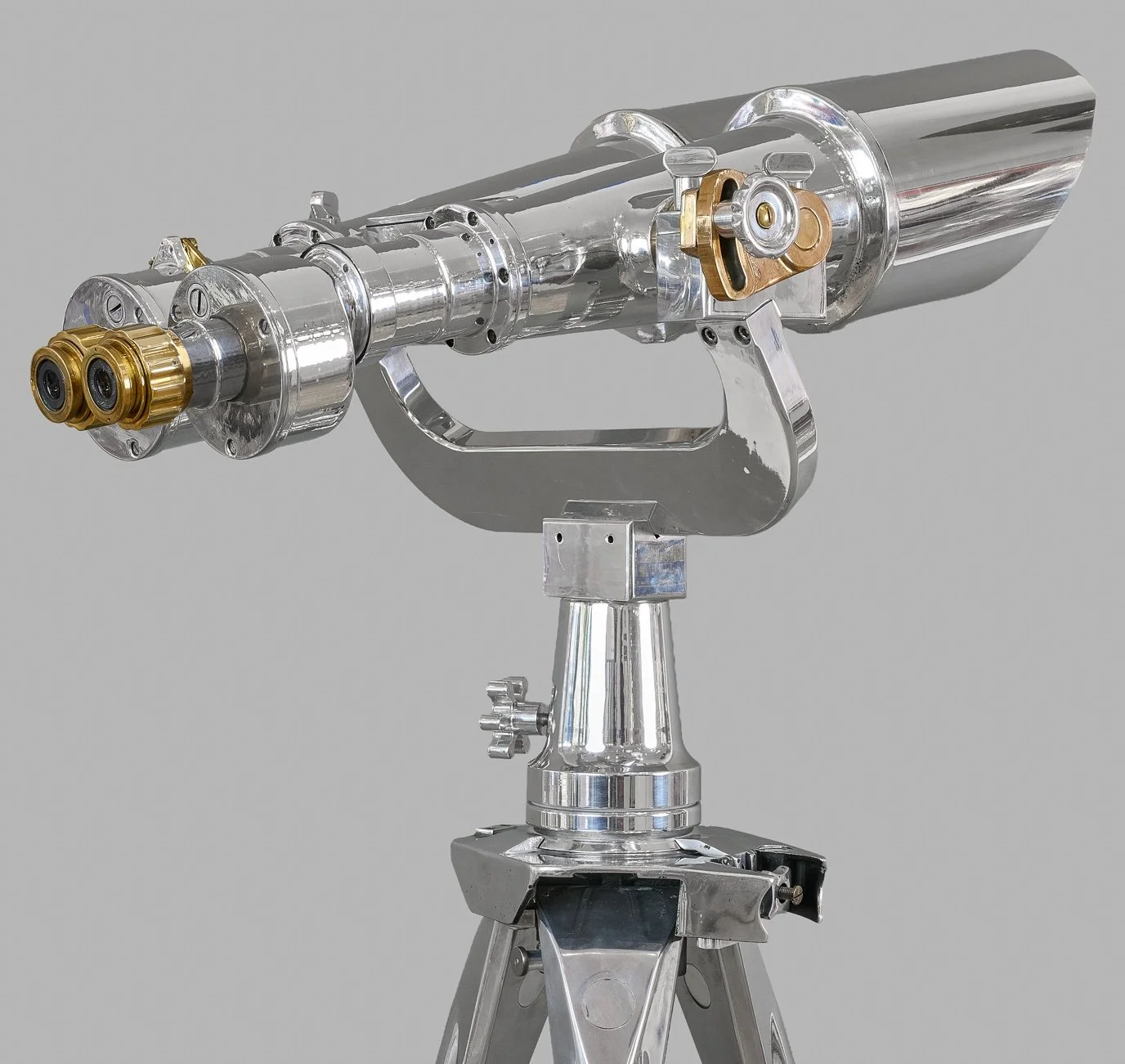
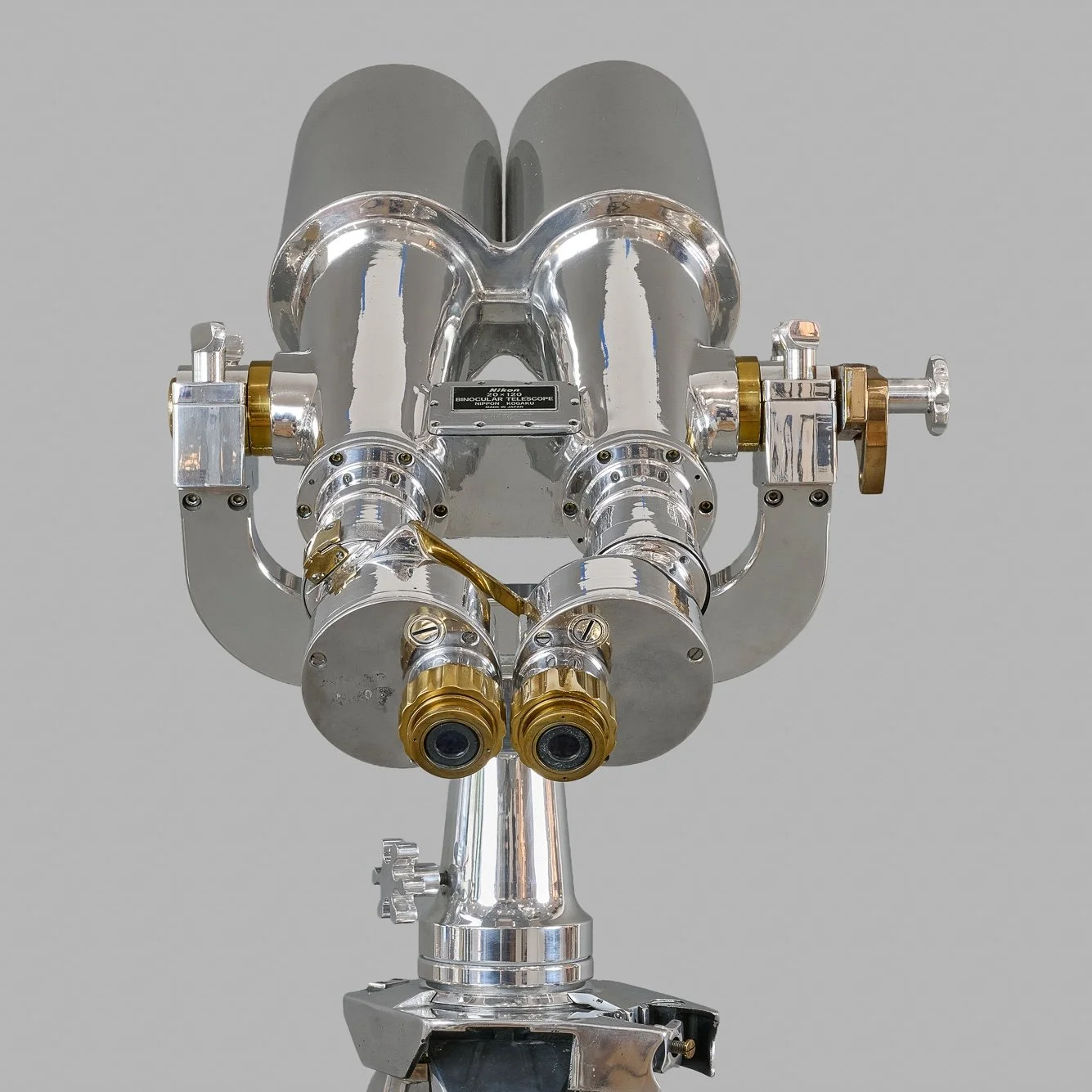
The 45° inclined binocular head allows comfortable observation of the horizon and elevated targets during extended watches. The coated optics are of the highest order, producing the brilliant, high-contrast image for which Zeiss instruments are universally regarded. The integrated five-position filter system — Klar (clear), Orange, Pol. Filter (polarising), Neutral, and Dunkel (dark) — are operated via a pair of elegant gold-toned selector levers, one to each barrel, allowing rapid adaptation to changing light and sea conditions. This system is fully documented in Seeger (Abb. 249b) as standard equipment on the DF 8×60 naval variant. The Carl Zeiss nameplate, engraved with serial number 542415, is mounted to the eyepiece housing and is in excellent condition.
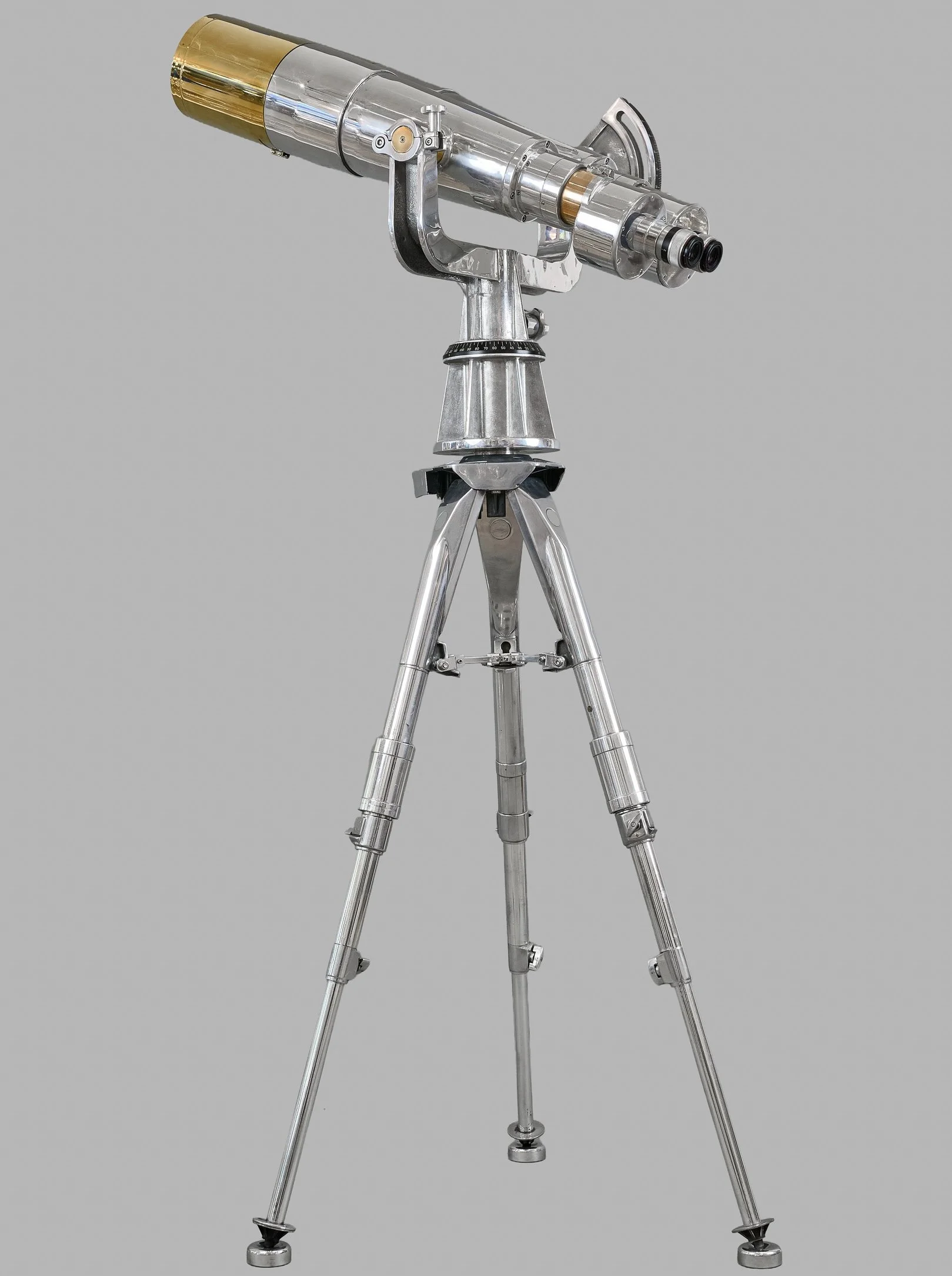
Hand-polished to a brilliant mirror finish, the instrument carries a commanding sculptural presence — a feat of precision engineering and an object of considerable beauty. Mounted on a period all-chrome extending tripod with a fully articulated head offering 360° rotation and elevation adjustment.
Maker: Carl Zeiss, Oberkochen, West Germany
Condition: Excellent; minor age patina; optics clear
Literature: Hans T. Seeger, Fernglaser und Fernrohre, pp. 365–367, Abb. 249a/b
Produced by Carl Zeiss at their Oberkochen works in West Germany from circa 1962, the DF 8×60 was purpose-designed as an observation and fire control telescope for naval use — employed in connection with fire control systems and torpedo aiming devices, and built to a standard of precision that represented, in Seeger's assessment, among the most ambitious military and naval optics ever independently developed.
The full story of the DF 8×60's role aboard the Bundesmarine's Jaguar-class torpedo boats — and what makes this instrument among the most significant pieces of Cold War naval militaria — is told in our essay Carl Zeiss Military Binoculars: A Cold War Relic.
This example is of the type used aboard the Bundesmarine's Jaguar-class fast attack torpedo boats during the 1960s — nimble, heavily armed vessels that formed the backbone of West Germany's coastal defense fleet throughout the Cold War. The DF 8×60 served as both an observation glass and a fire-control instrument aboard these ships, connected directly to the RZA 5b torpedo-aiming device, making it an instrument of active operational significance rather than merely a standard-issue optic. The 8×60 configuration delivers 8× magnification through 60mm objectives, producing a 154-meter field of view at 1,000 meters and the exceptional light-gathering performance demanded by high-speed naval operations in the North Sea and the Baltic.
The 45° inclined binocular head allows comfortable observation of the horizon and elevated targets during extended watches. The coated optics are of the highest order, producing the brilliant, high-contrast image for which Zeiss instruments are universally regarded. The integrated five-position filter system — Klar (clear), Orange, Pol. Filter (polarising), Neutral, and Dunkel (dark) — are operated via a pair of elegant gold-toned selector levers, one to each barrel, allowing rapid adaptation to changing light and sea conditions. This system is fully documented in Seeger (Abb. 249b) as standard equipment on the DF 8×60 naval variant. The Carl Zeiss nameplate, engraved with serial number 542415, is mounted to the eyepiece housing and is in excellent condition.
Hand-polished to a brilliant mirror finish, the instrument carries a commanding sculptural presence — a feat of precision engineering and an object of considerable beauty. Mounted on a period all-chrome extending tripod with a fully articulated head offering 360° rotation and elevation adjustment.
Maker: Carl Zeiss, Oberkochen, West Germany
Condition: Excellent; minor age patina; optics clear
Literature: Hans T. Seeger, Fernglaser und Fernrohre, pp. 365–367, Abb. 249a/b

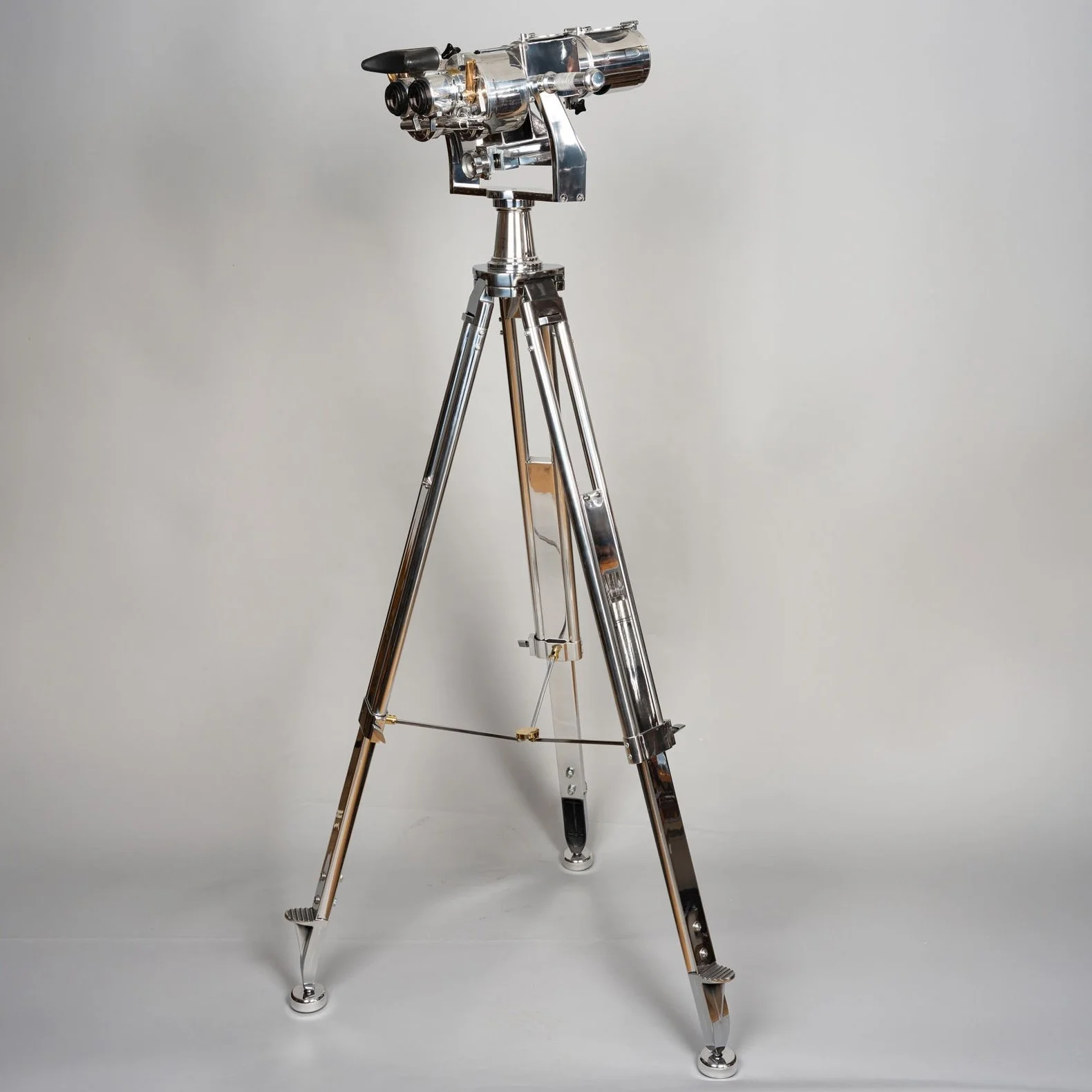 Image 1 of 5
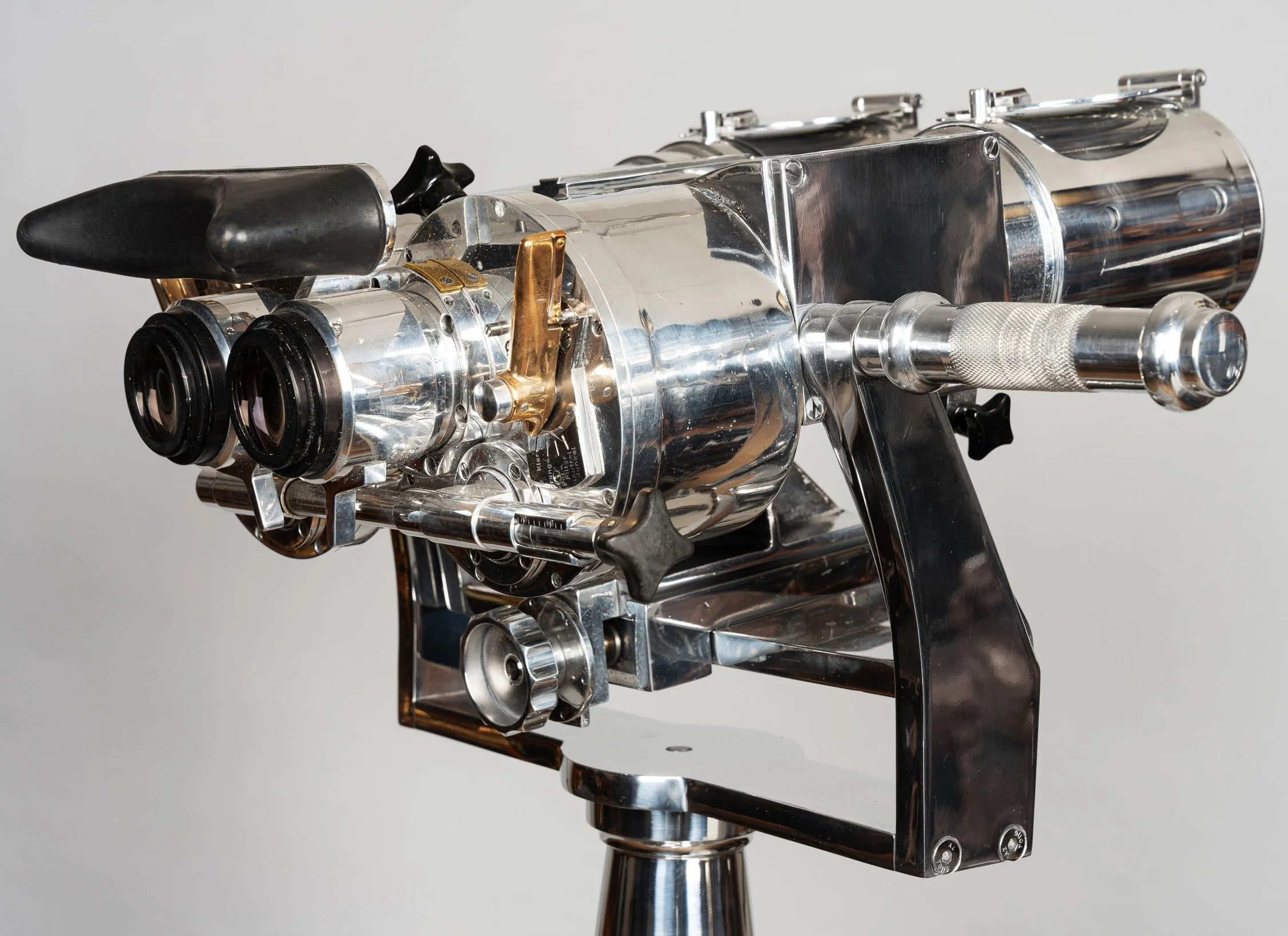 Image 2 of 5
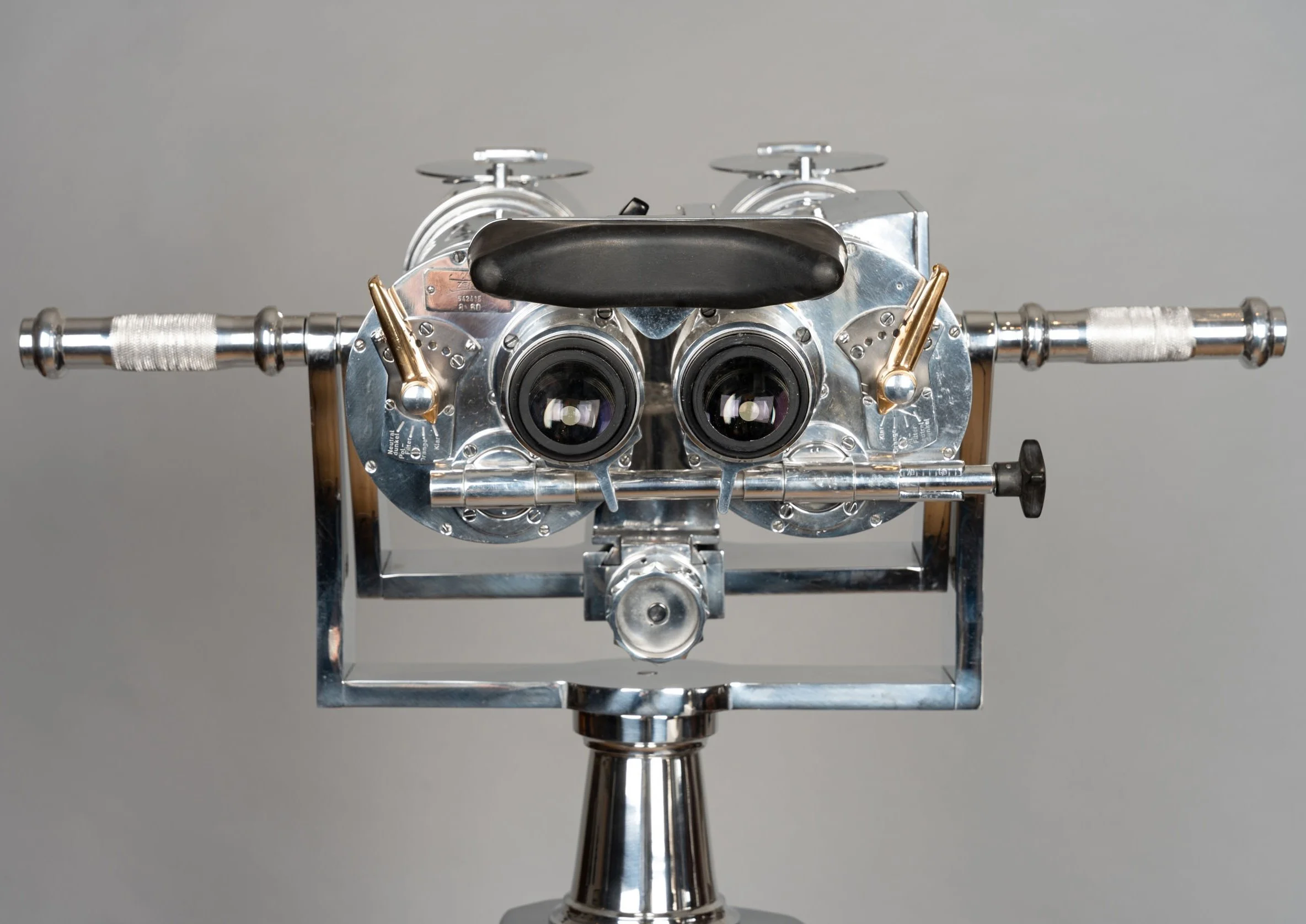 Image 3 of 5
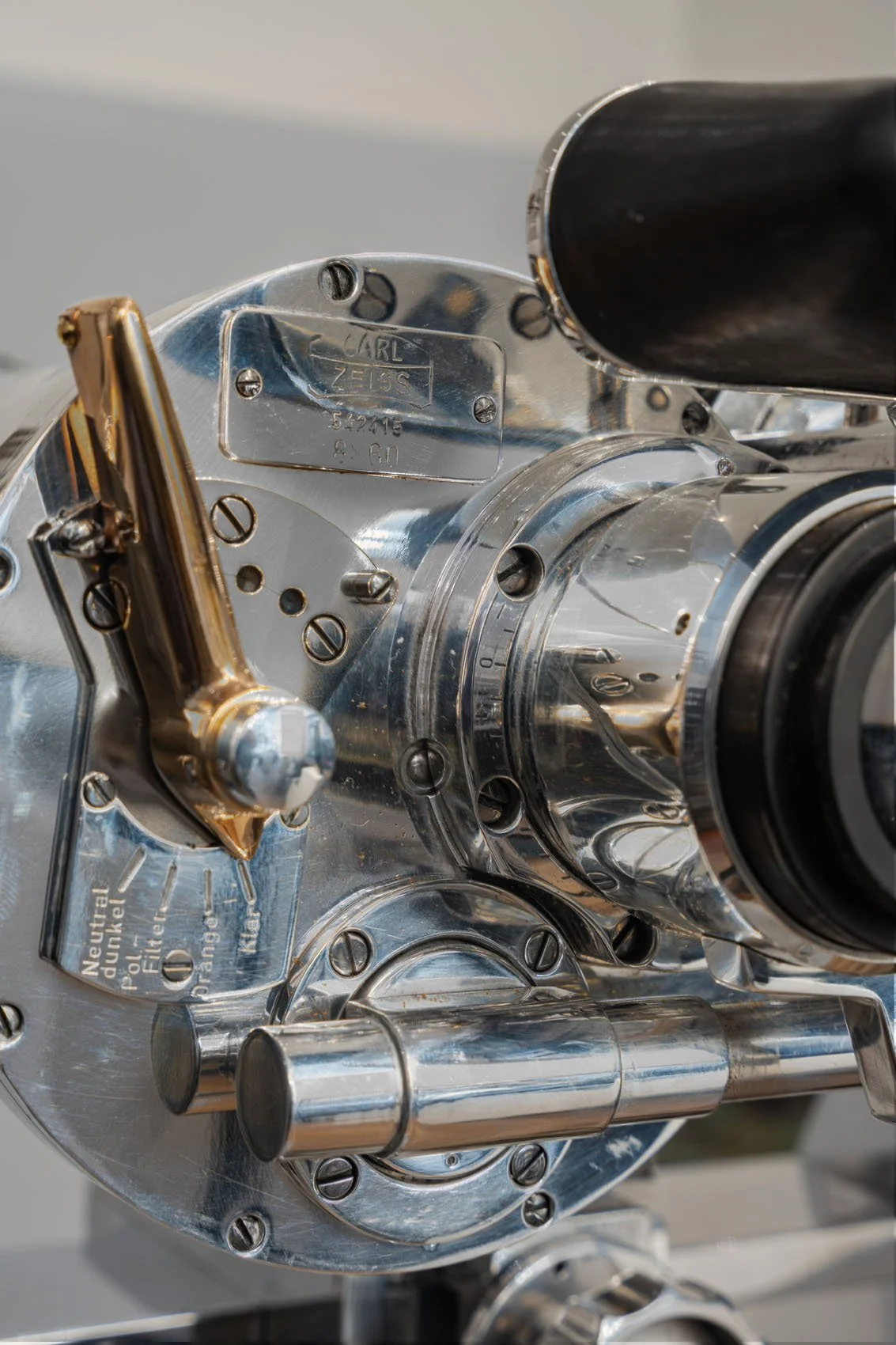 Image 4 of 5
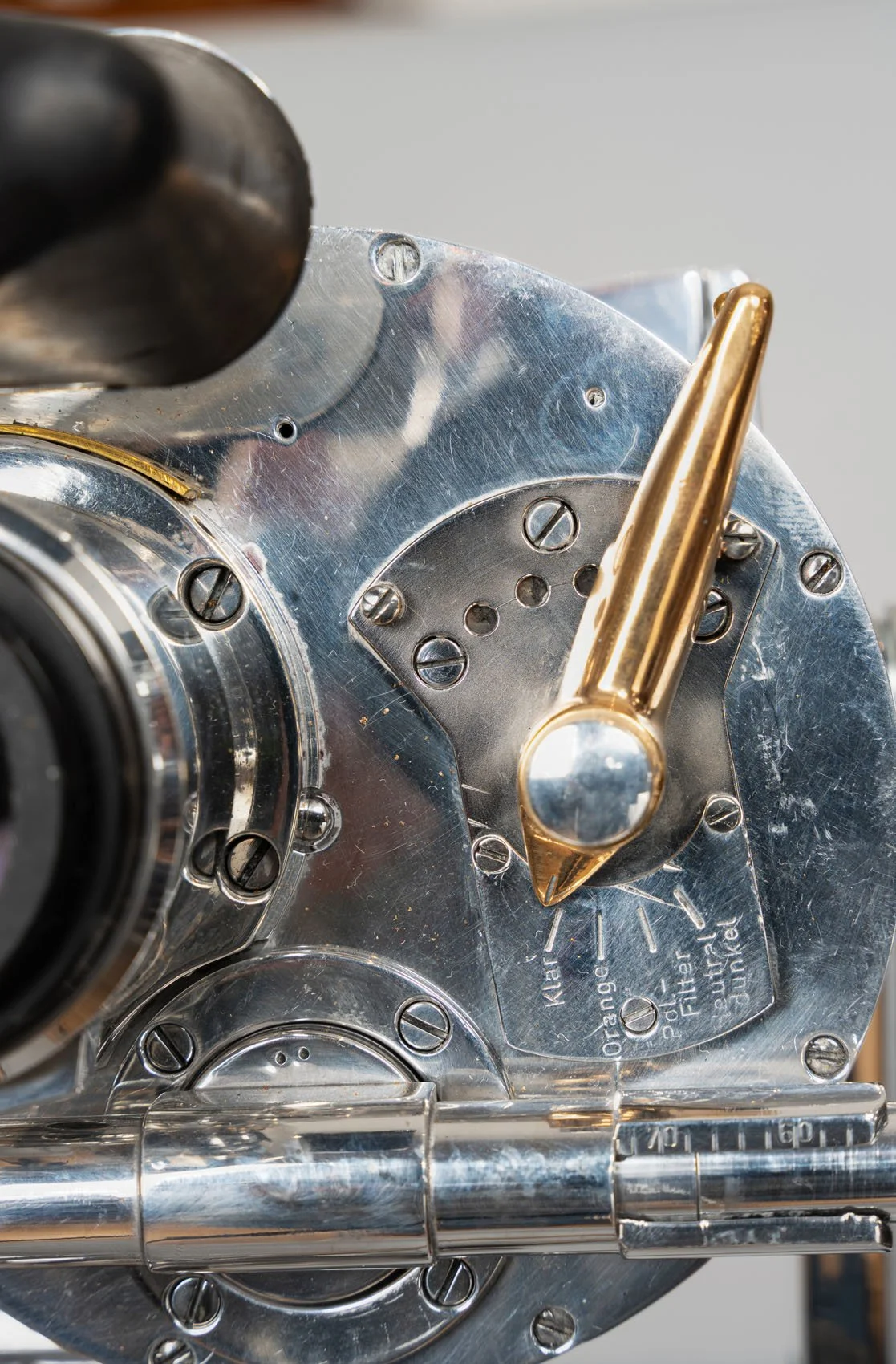 Image 5 of 5