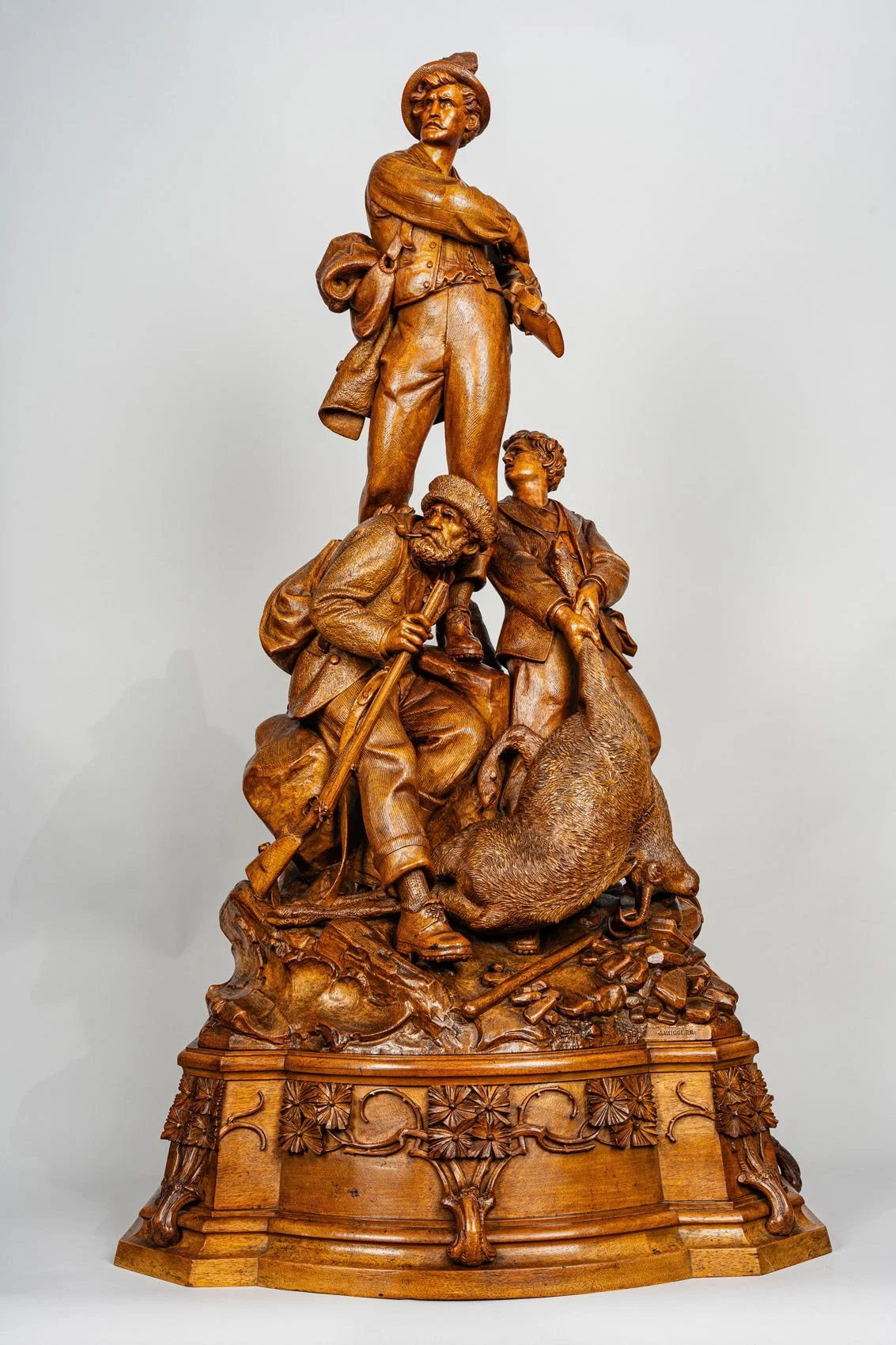
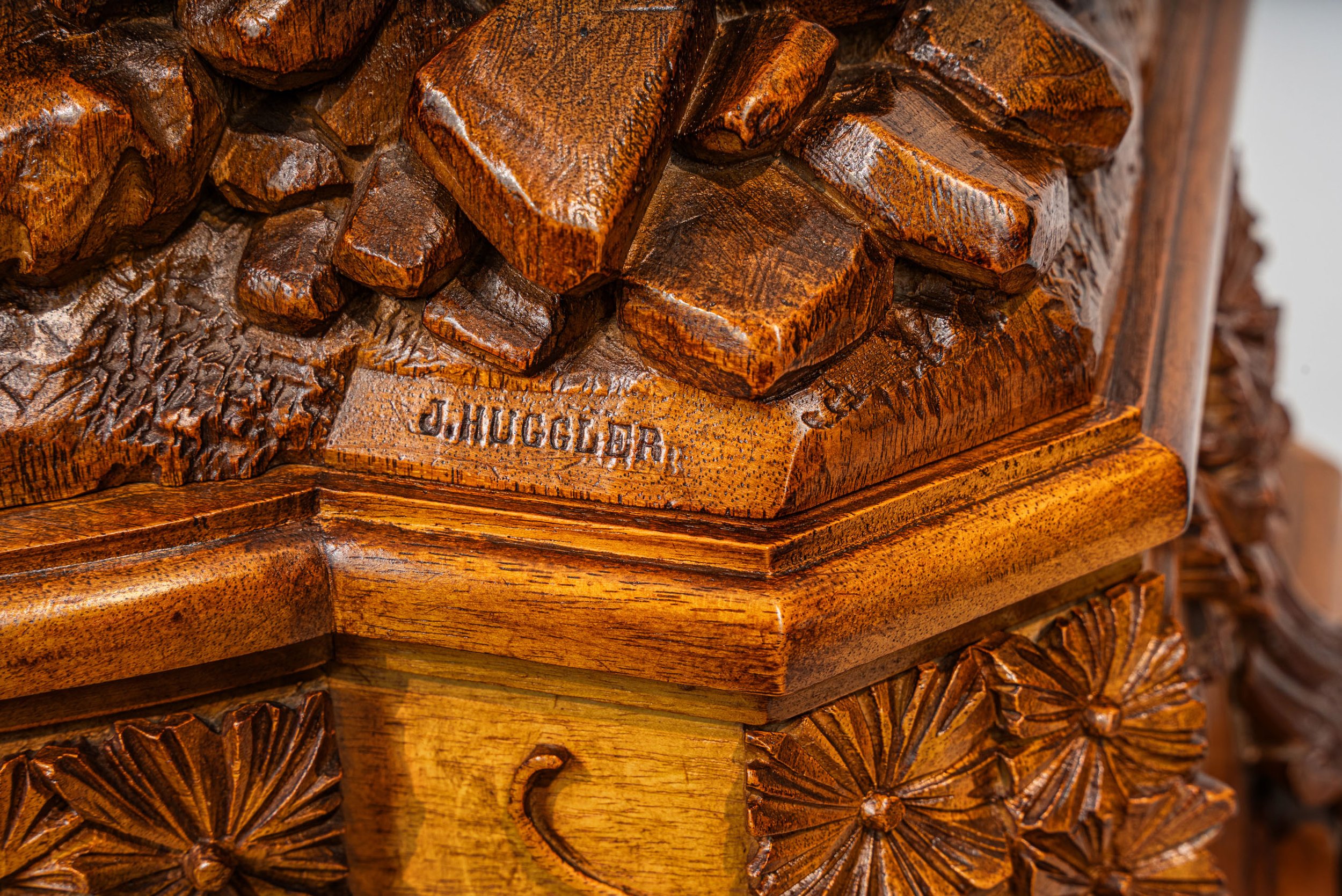
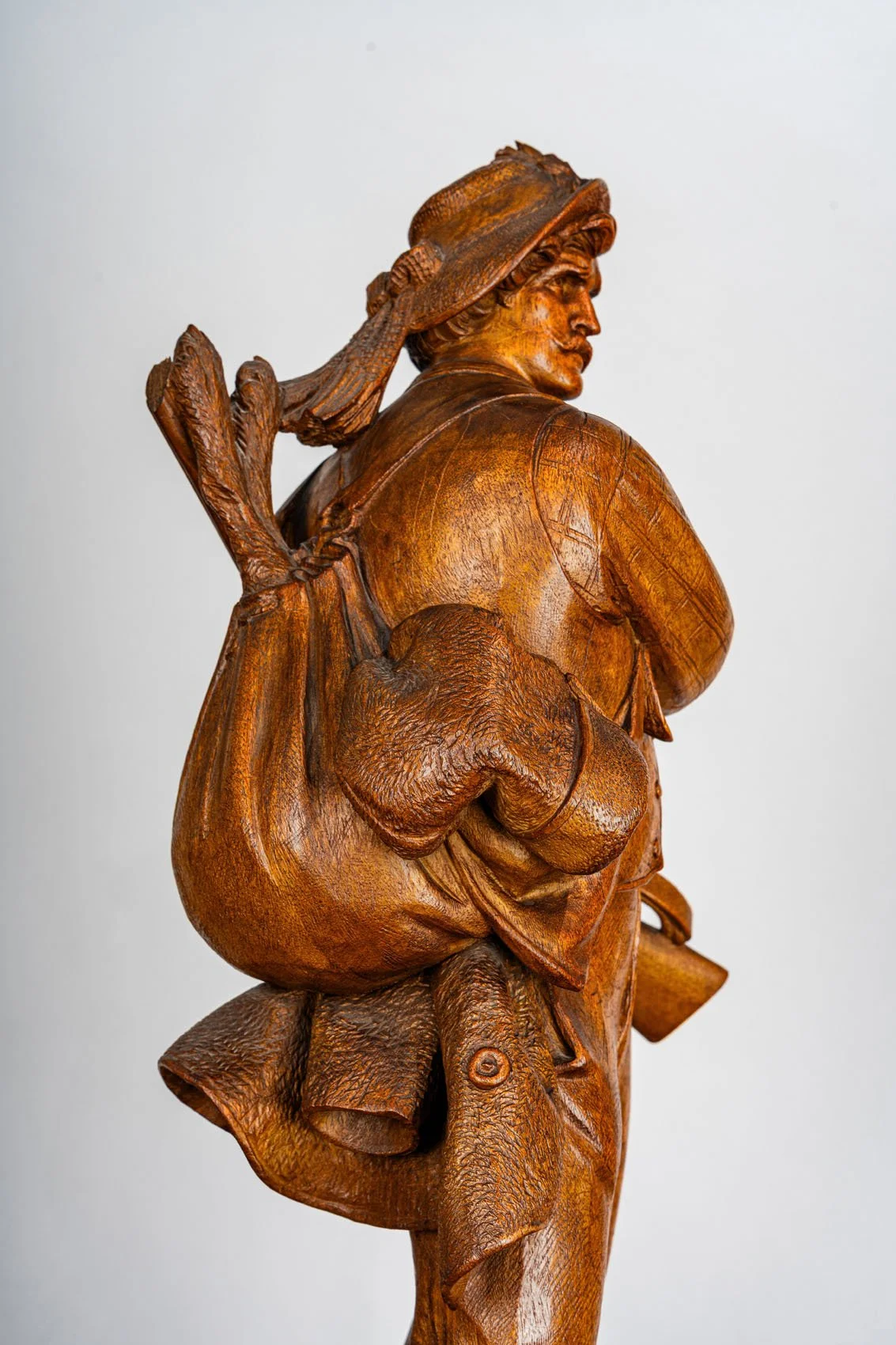
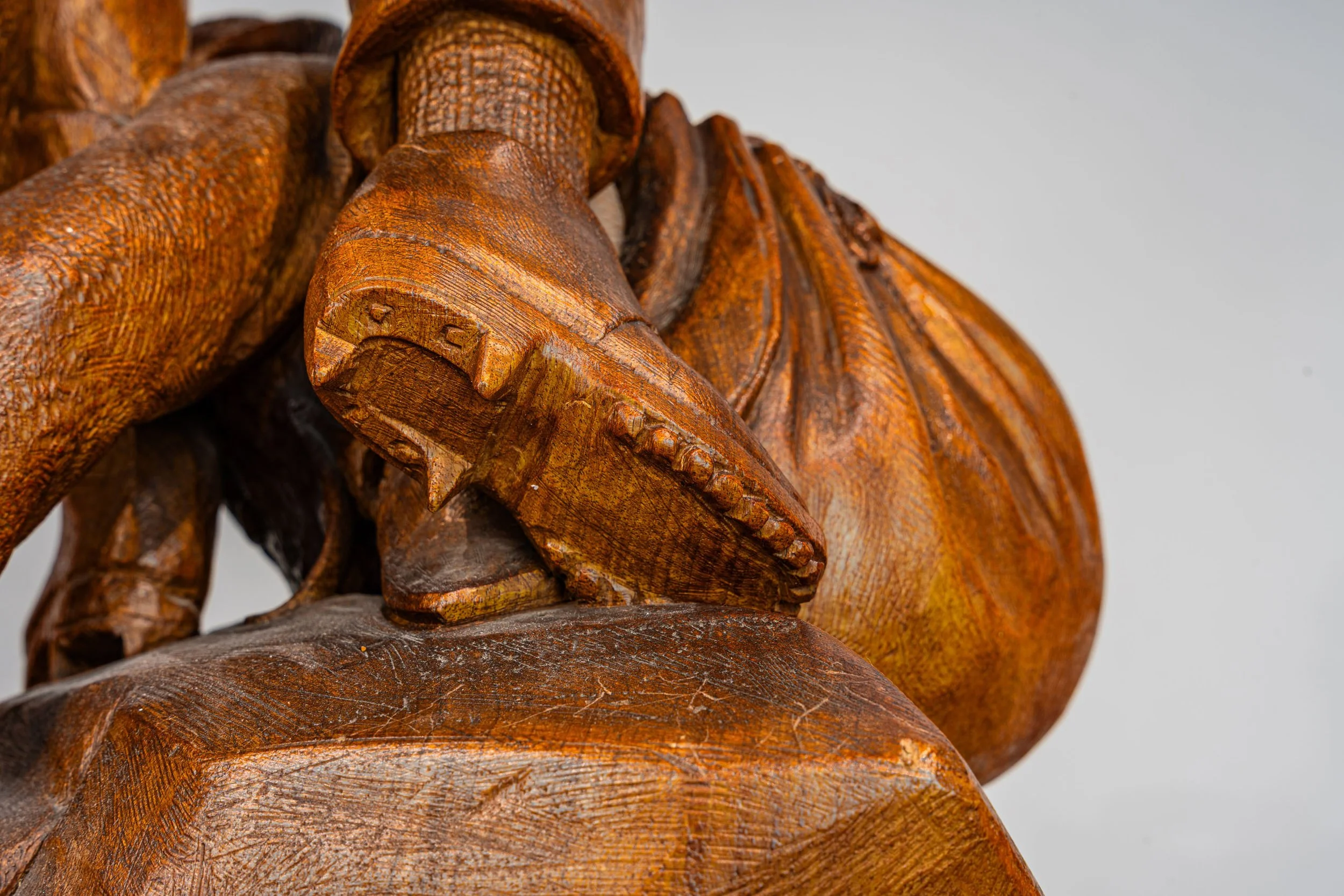
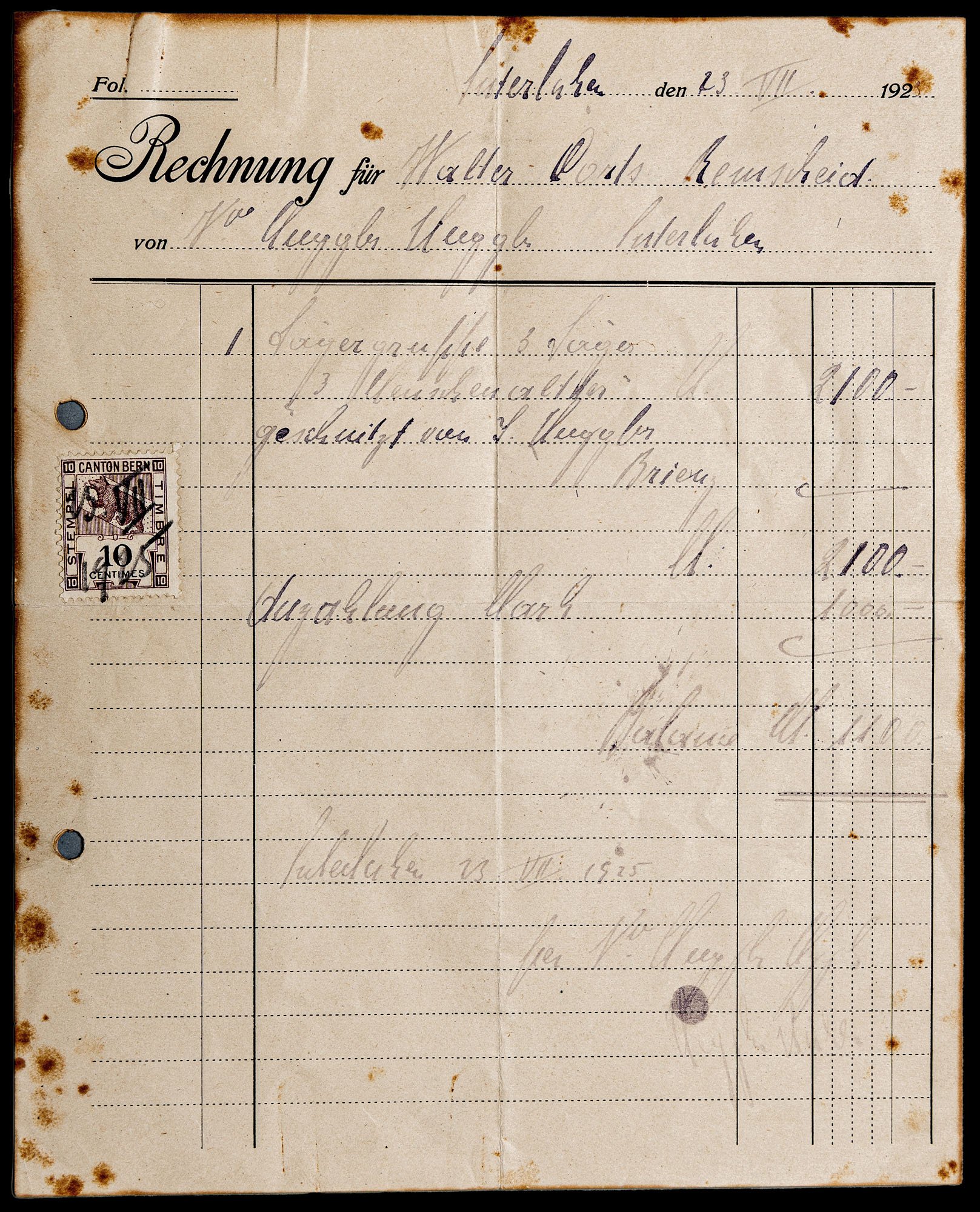
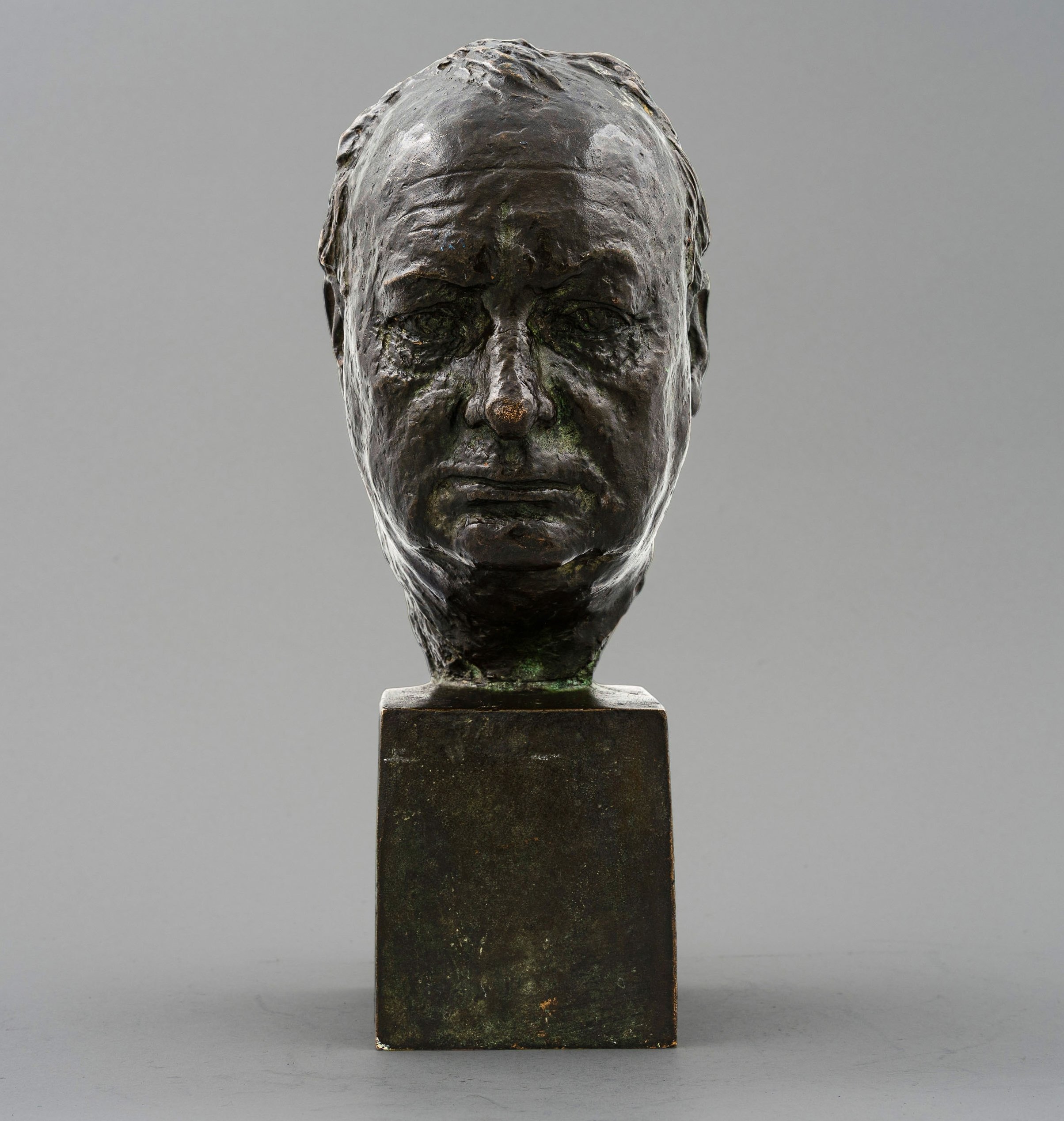
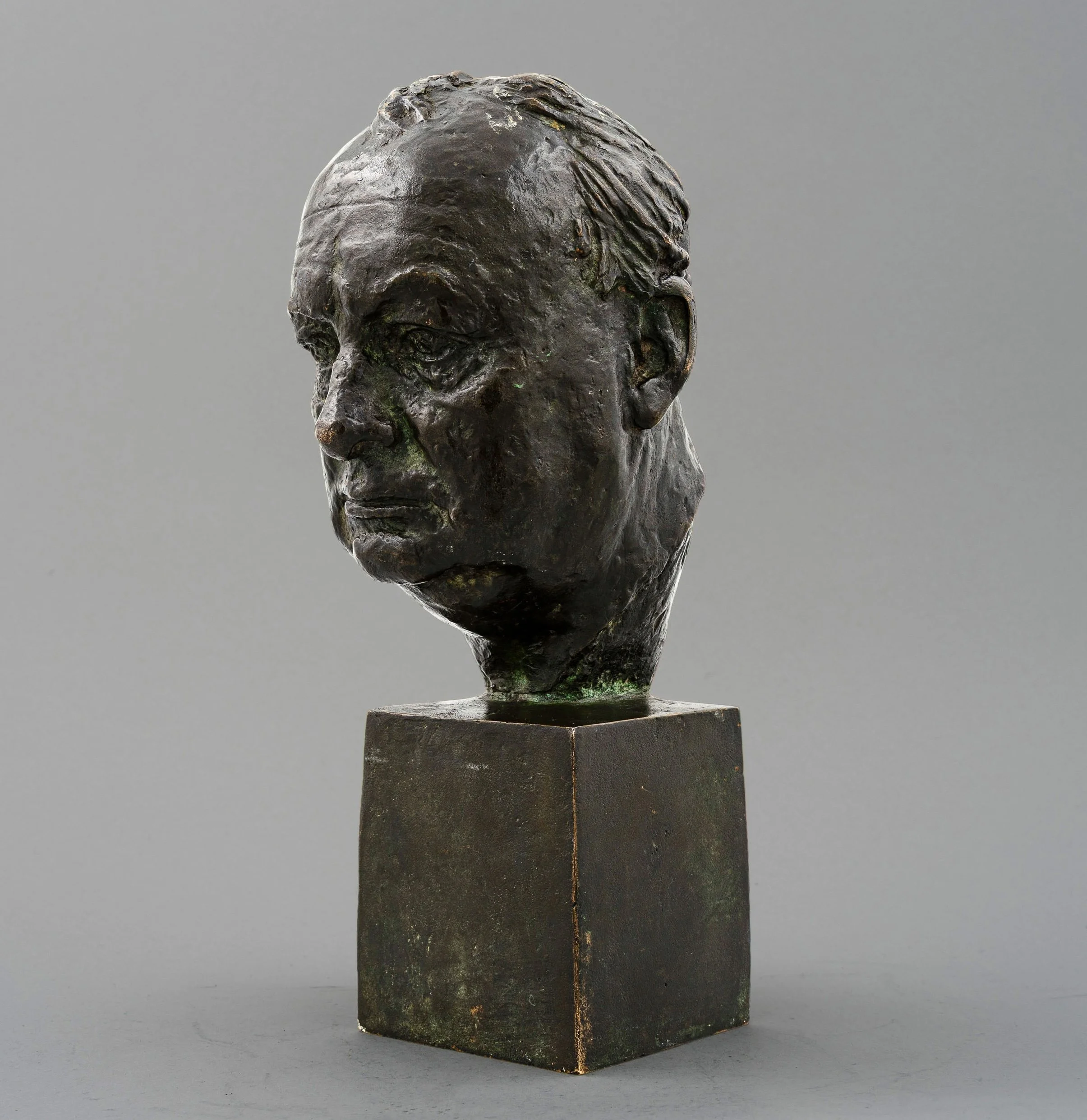
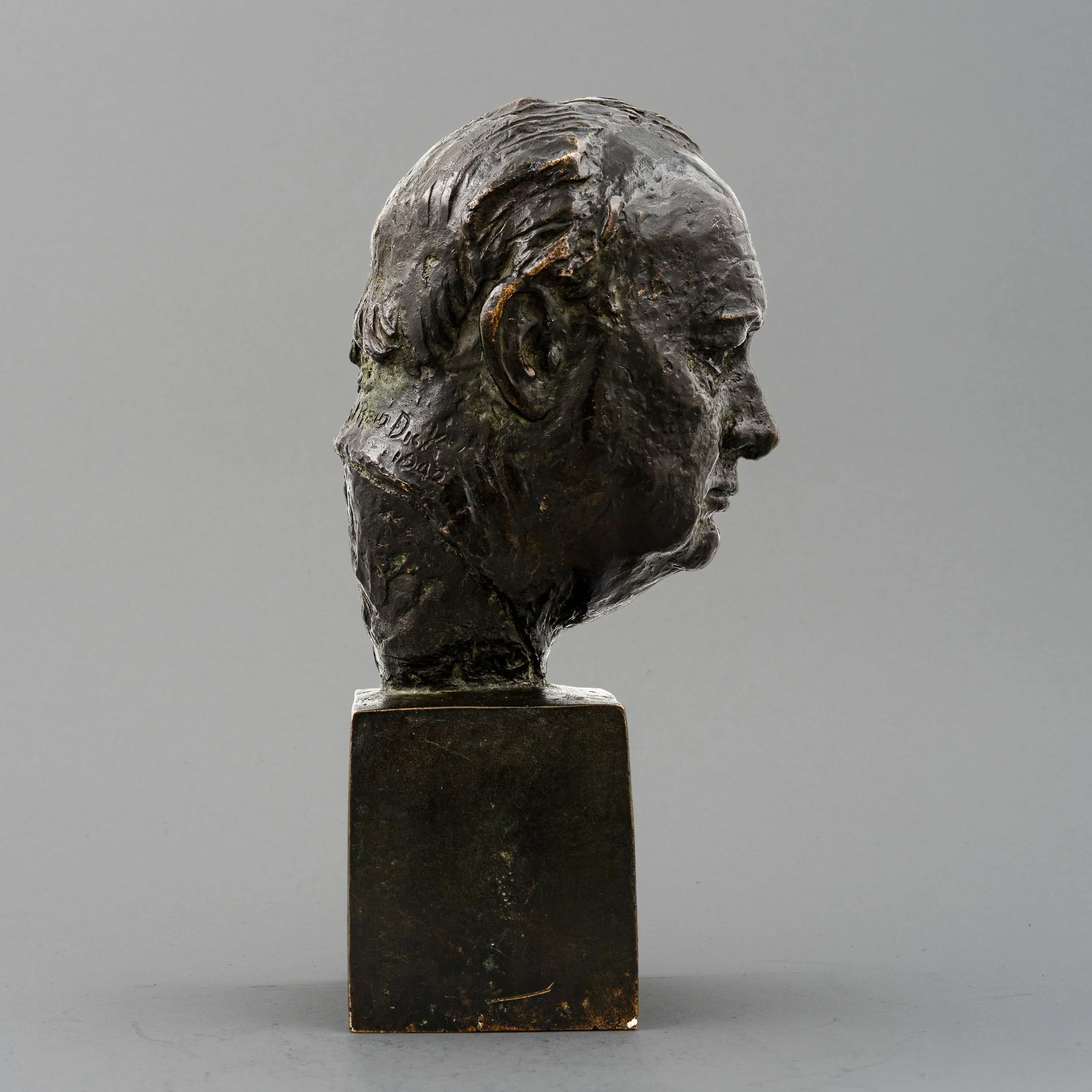
Abraham Lincoln, seated in thought, by Gutzon Borglum, the sculptor of Mount Rushmore. Cast by the Gorham Manufacturing Company, with the artist's incised signature on the bench top, the bronze stands 21 inches high, 29 inches wide, and 16 inches deep.
The composition reduces Borglum's Seated Lincoln of 1911, the life-size monument before the Essex County Courthouse in Newark, funded by a bequest of the merchant Amos Van Horn and unveiled by Theodore Roosevelt on Memorial Day of that year. Roosevelt's verdict, that it did not look like a monument at all, has been read as the highest praise ever since: Borglum had set the president on a bench at street level, and Newark has been sitting down beside him for over a century. Borglum authorized reductions of the composition, cast by Gorham for private collectors.
Unlike the heroic mode that defines Lincoln's public image, the work shows the president in private solitude. Borglum drew on accounts of Lincoln withdrawing to a garden bench through the darkest years of the Civil War, and the figure sits bareheaded, stovepipe hat set beside him, shoulders carrying a downward weight, head inclined over a lowered gaze, a man thinking, not performing. Borglum works here in the mode Rodin had made the sculptural language of the age, the seated figure turned entirely inward; where the Thinker is universal, Borglum's subject is particular and human. The debt was direct: trained in Paris at the Académie Julian, Borglum knew Rodin and kept the friendship until the older sculptor's death in 1917. The rich brown patina catches light across the coat folds and the planes of the face, lending warmth to a composition that depends on subtlety for its effect.
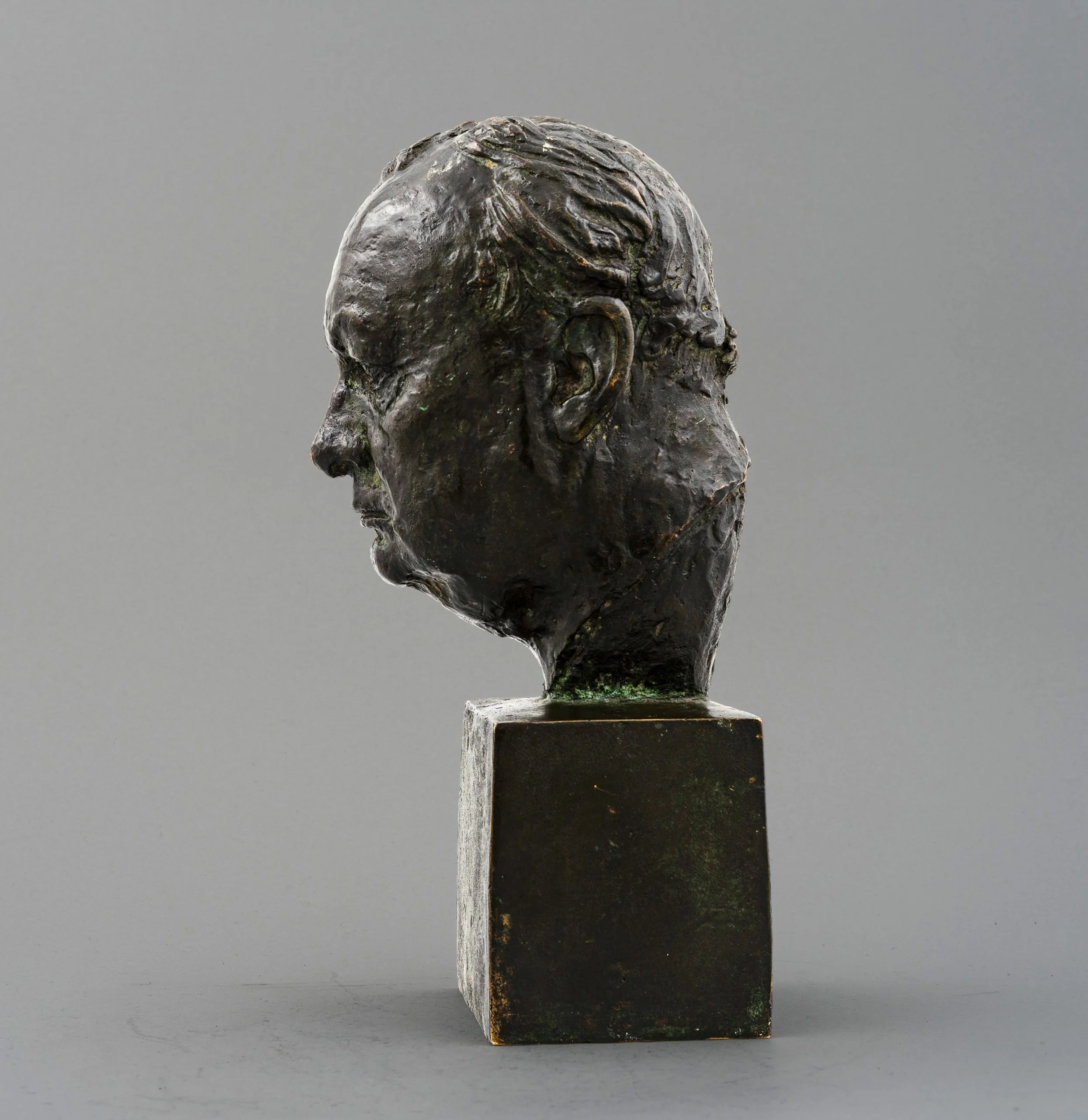
Borglum's engagement with Lincoln was lifelong. Of his marble head of 1908, carved from a three-foot block and now in the crypt of the United States Capitol, the president's son Robert Lincoln said, "I think it is the most extraordinarily good portrait of my father I have ever seen"; three decades later came the colossal Lincoln among the four presidents of Mount Rushmore. Seated Lincoln is the intimate counterpart to those undertakings, with Borglum as an interpreter of individual character rather than a carver of national symbols.
Provenance: Private collection, California.
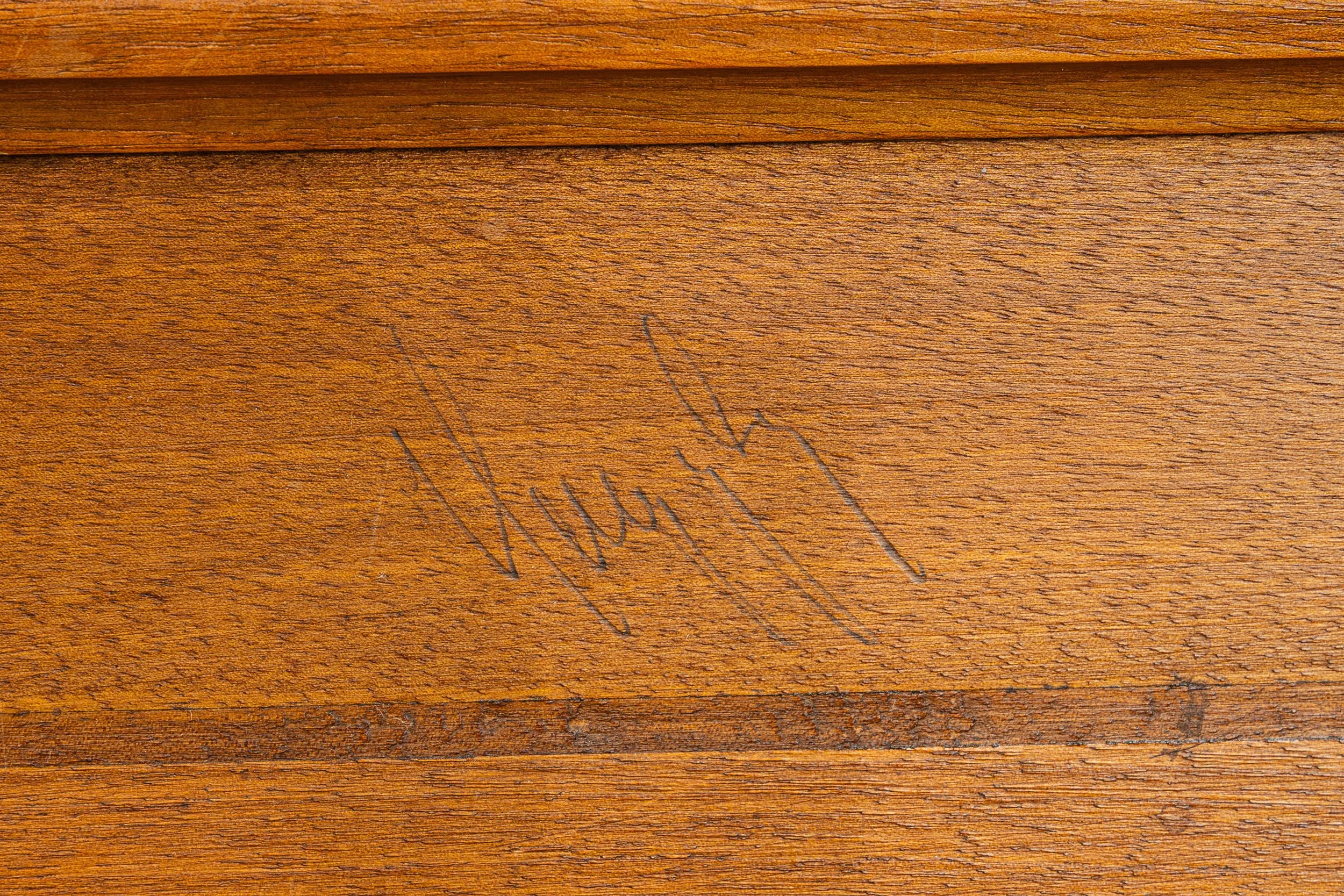
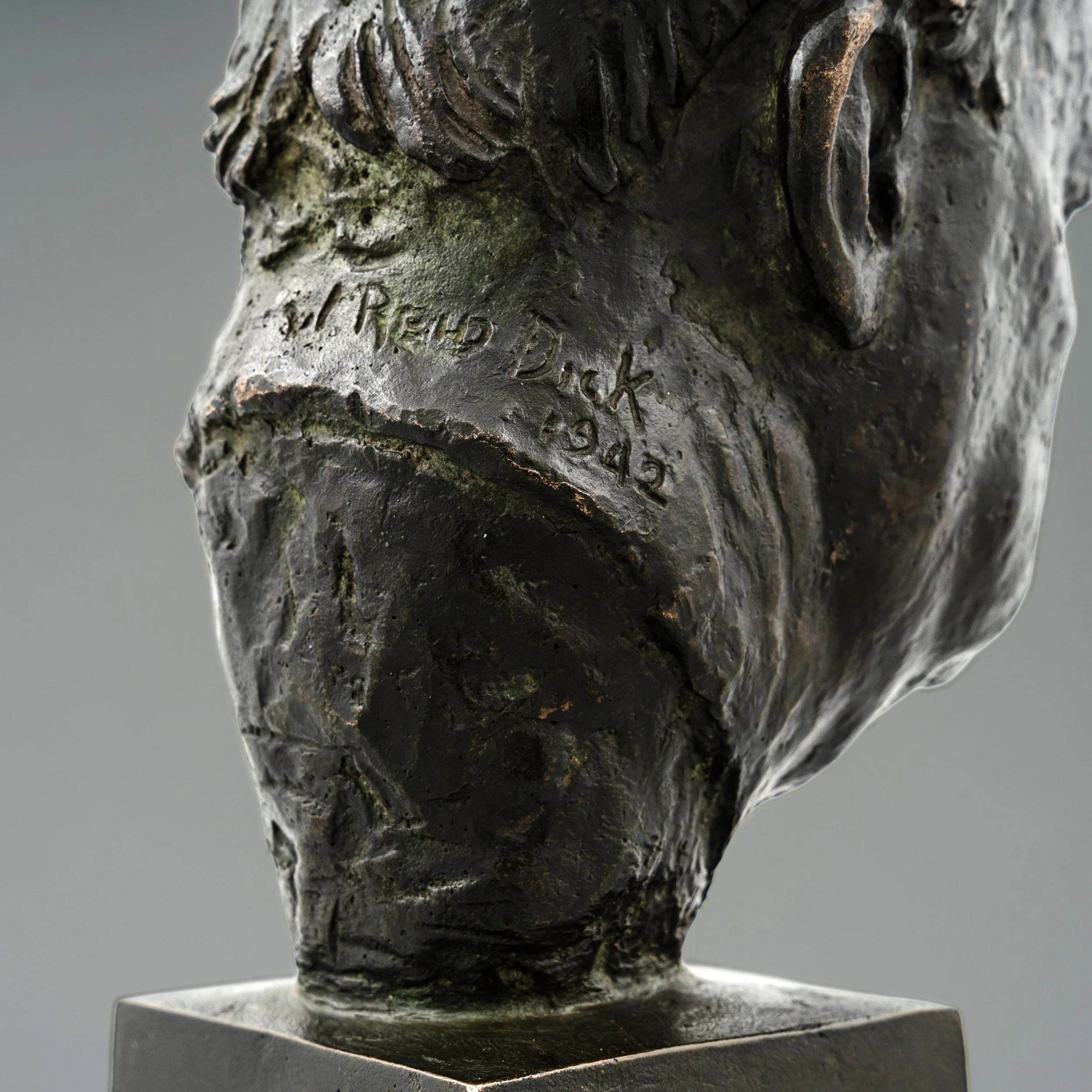
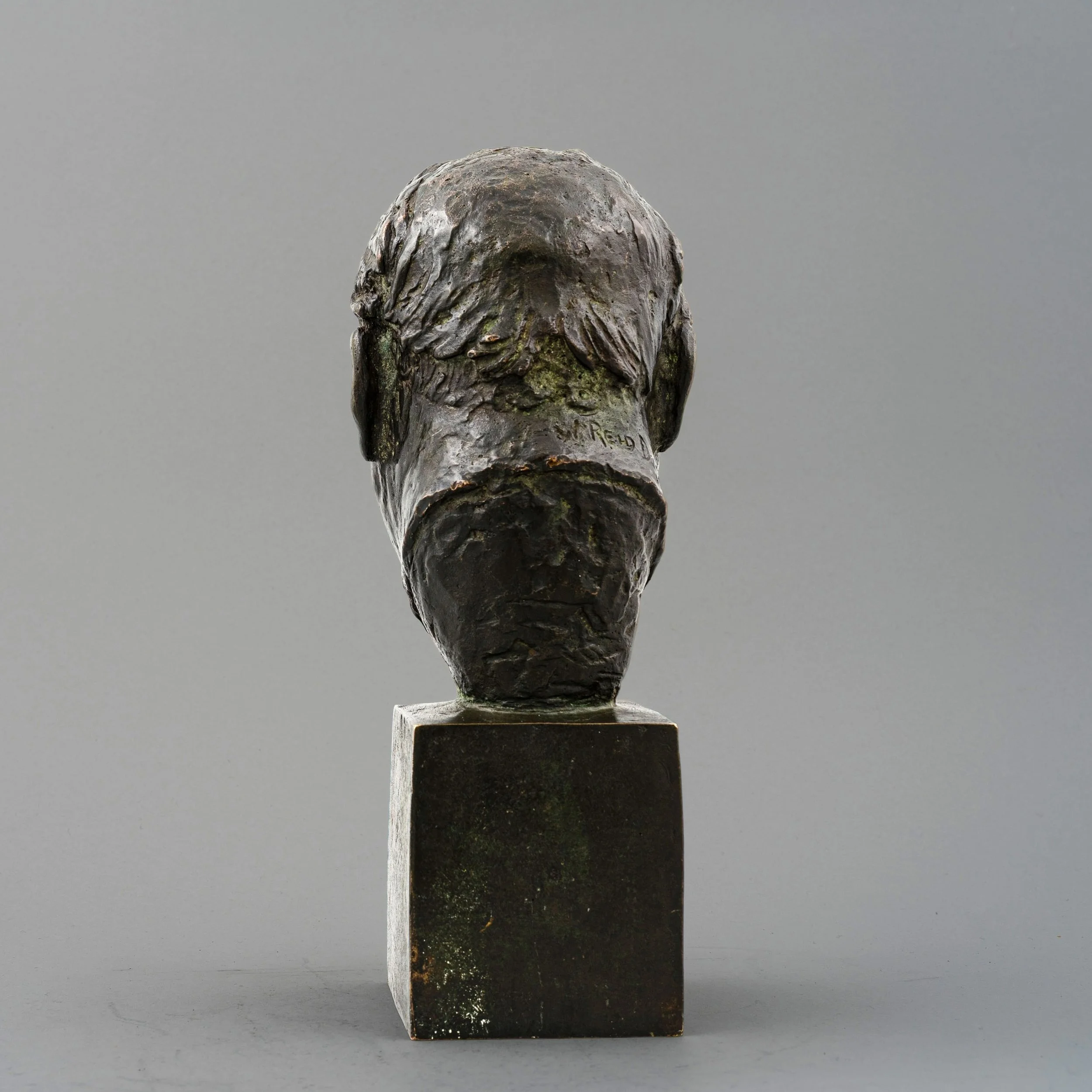
Signed Gutzon Borglum, incised on the bench top; stamped GORHAM CO. FOUNDERS with casting number Q501 to the underside.
Condition: Very good; rich original brown patina throughout, minor wear consistent with age, no restorations noted.
Abraham Lincoln, seated in thought, by Gutzon Borglum, the sculptor of Mount Rushmore. Cast by the Gorham Manufacturing Company, with the artist's incised signature on the bench top, the bronze stands 21 inches high, 29 inches wide, and 16 inches deep.
The composition reduces Borglum's Seated Lincoln of 1911, the life-size monument before the Essex County Courthouse in Newark, funded by a bequest of the merchant Amos Van Horn and unveiled by Theodore Roosevelt on Memorial Day of that year. Roosevelt's verdict, that it did not look like a monument at all, has been read as the highest praise ever since: Borglum had set the president on a bench at street level, and Newark has been sitting down beside him for over a century. Borglum authorized reductions of the composition, cast by Gorham for private collectors.
Unlike the heroic mode that defines Lincoln's public image, the work shows the president in private solitude. Borglum drew on accounts of Lincoln withdrawing to a garden bench through the darkest years of the Civil War, and the figure sits bareheaded, stovepipe hat set beside him, shoulders carrying a downward weight, head inclined over a lowered gaze, a man thinking, not performing. Borglum works here in the mode Rodin had made the sculptural language of the age, the seated figure turned entirely inward; where the Thinker is universal, Borglum's subject is particular and human. The debt was direct: trained in Paris at the Académie Julian, Borglum knew Rodin and kept the friendship until the older sculptor's death in 1917. The rich brown patina catches light across the coat folds and the planes of the face, lending warmth to a composition that depends on subtlety for its effect.
Borglum's engagement with Lincoln was lifelong. Of his marble head of 1908, carved from a three-foot block and now in the crypt of the United States Capitol, the president's son Robert Lincoln said, "I think it is the most extraordinarily good portrait of my father I have ever seen"; three decades later came the colossal Lincoln among the four presidents of Mount Rushmore. Seated Lincoln is the intimate counterpart to those undertakings, with Borglum as an interpreter of individual character rather than a carver of national symbols.
Provenance: Private collection, California.
Signed Gutzon Borglum, incised on the bench top; stamped GORHAM CO. FOUNDERS with casting number Q501 to the underside.
Condition: Very good; rich original brown patina throughout, minor wear consistent with age, no restorations noted.

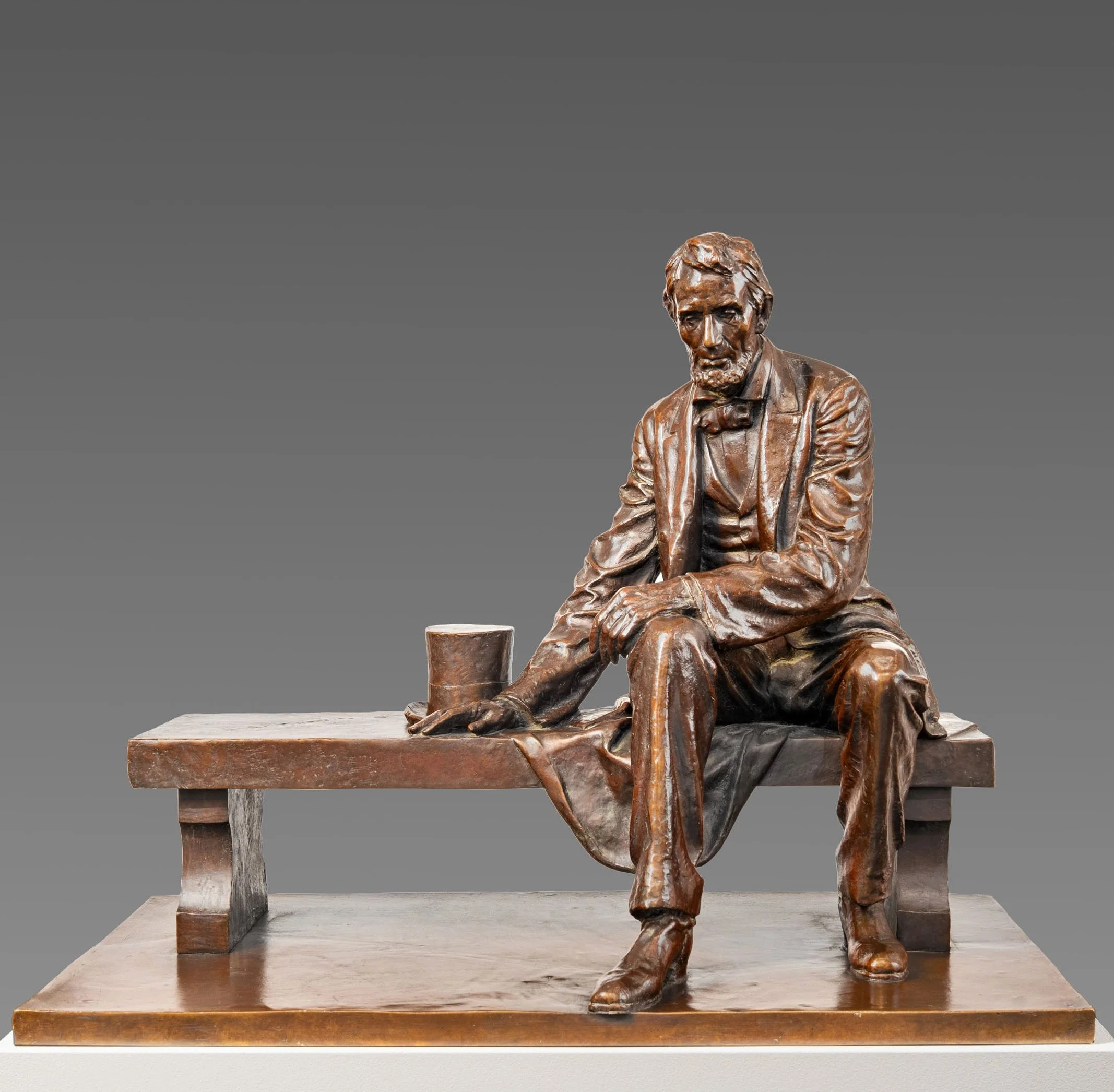 Image 1 of 4
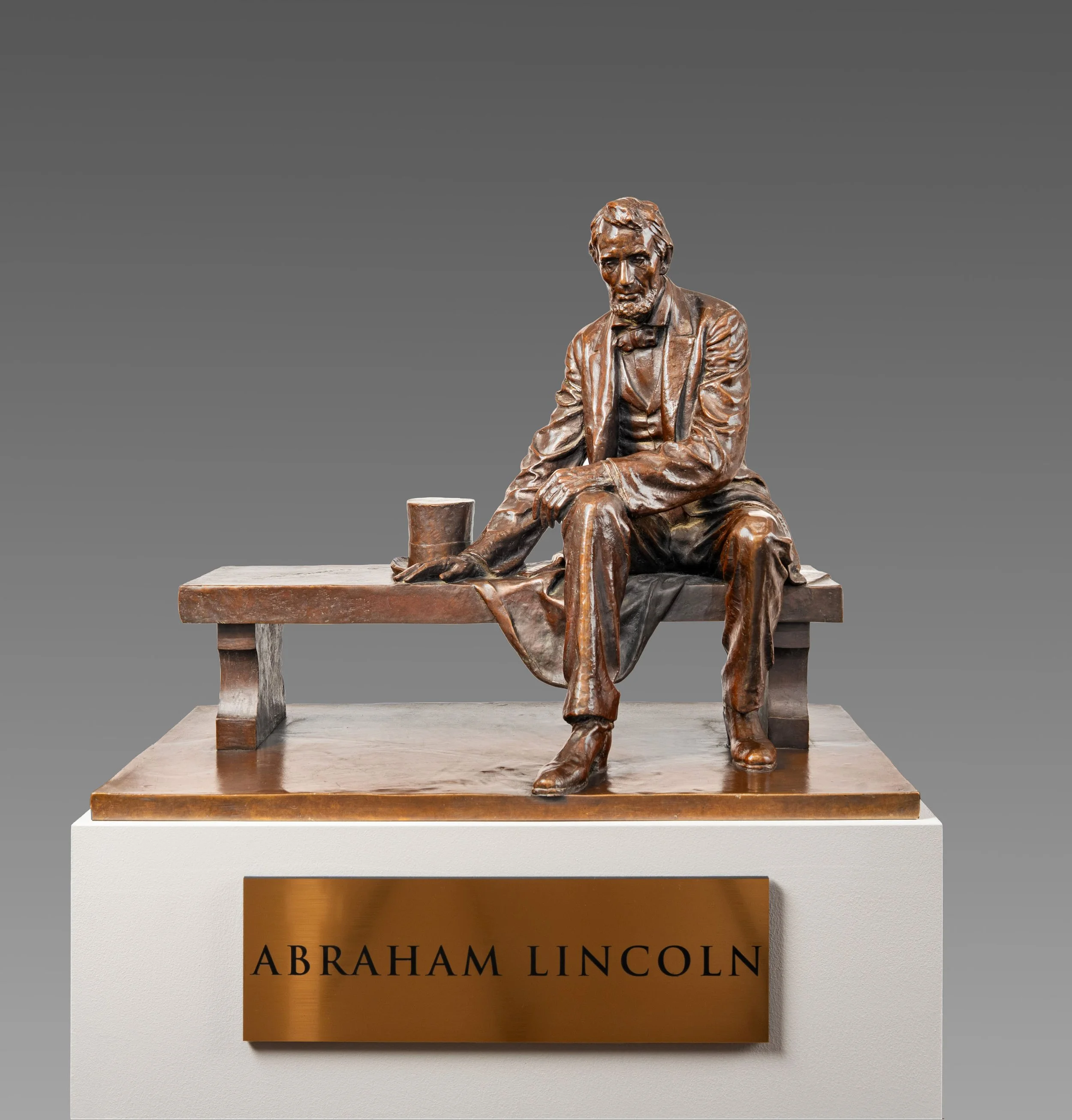 Image 2 of 4
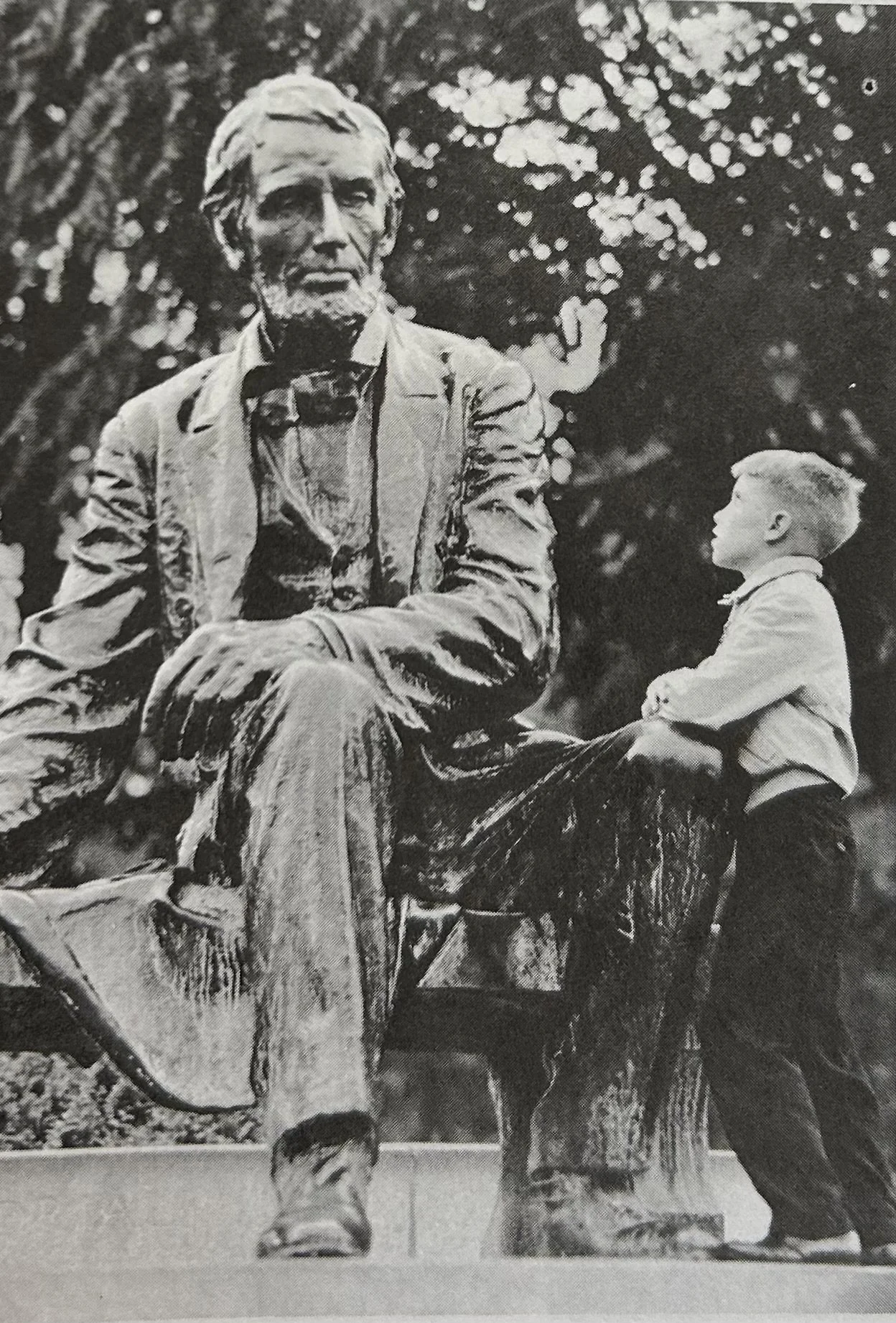 Image 3 of 4
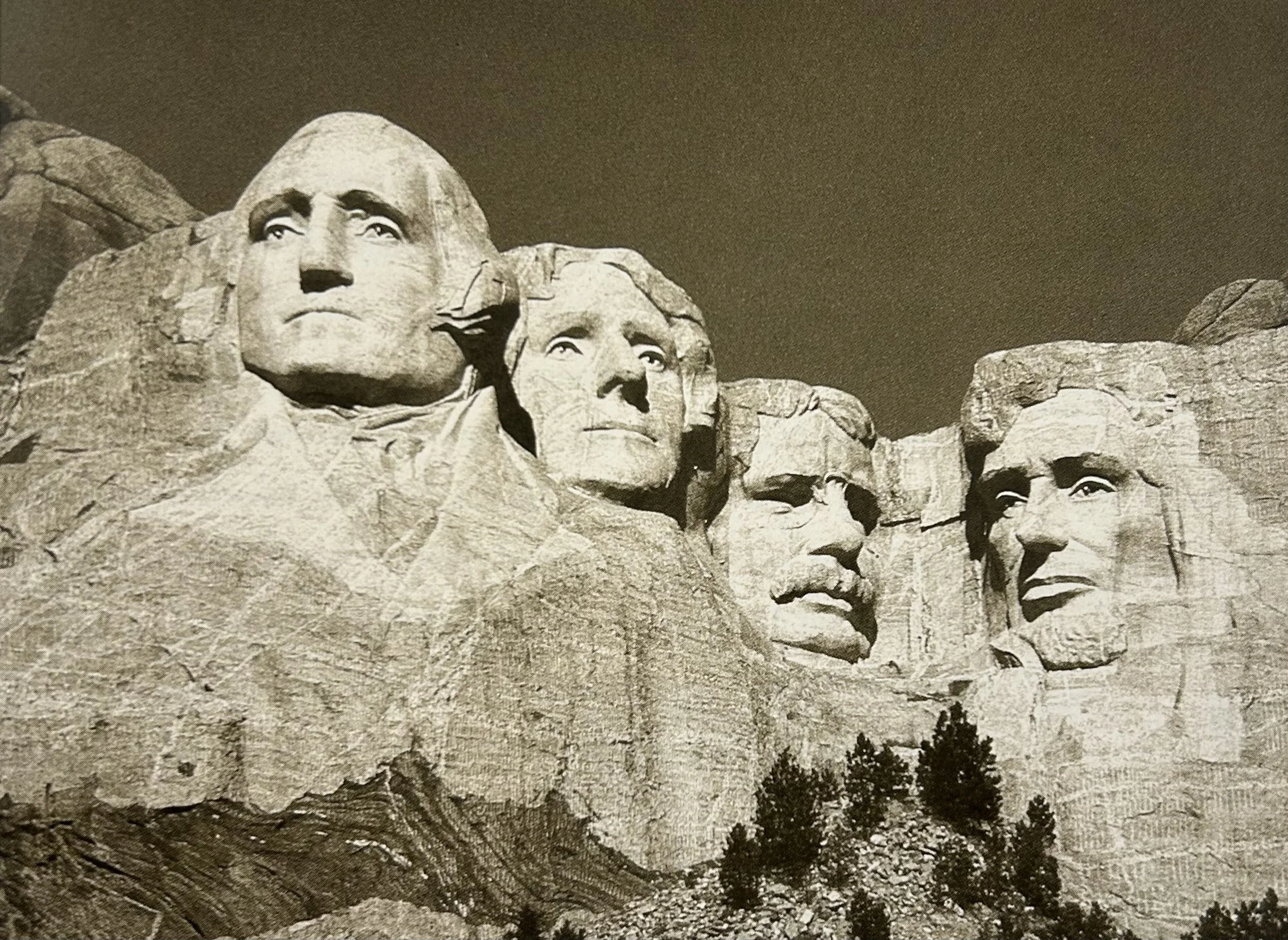 Image 4 of 4