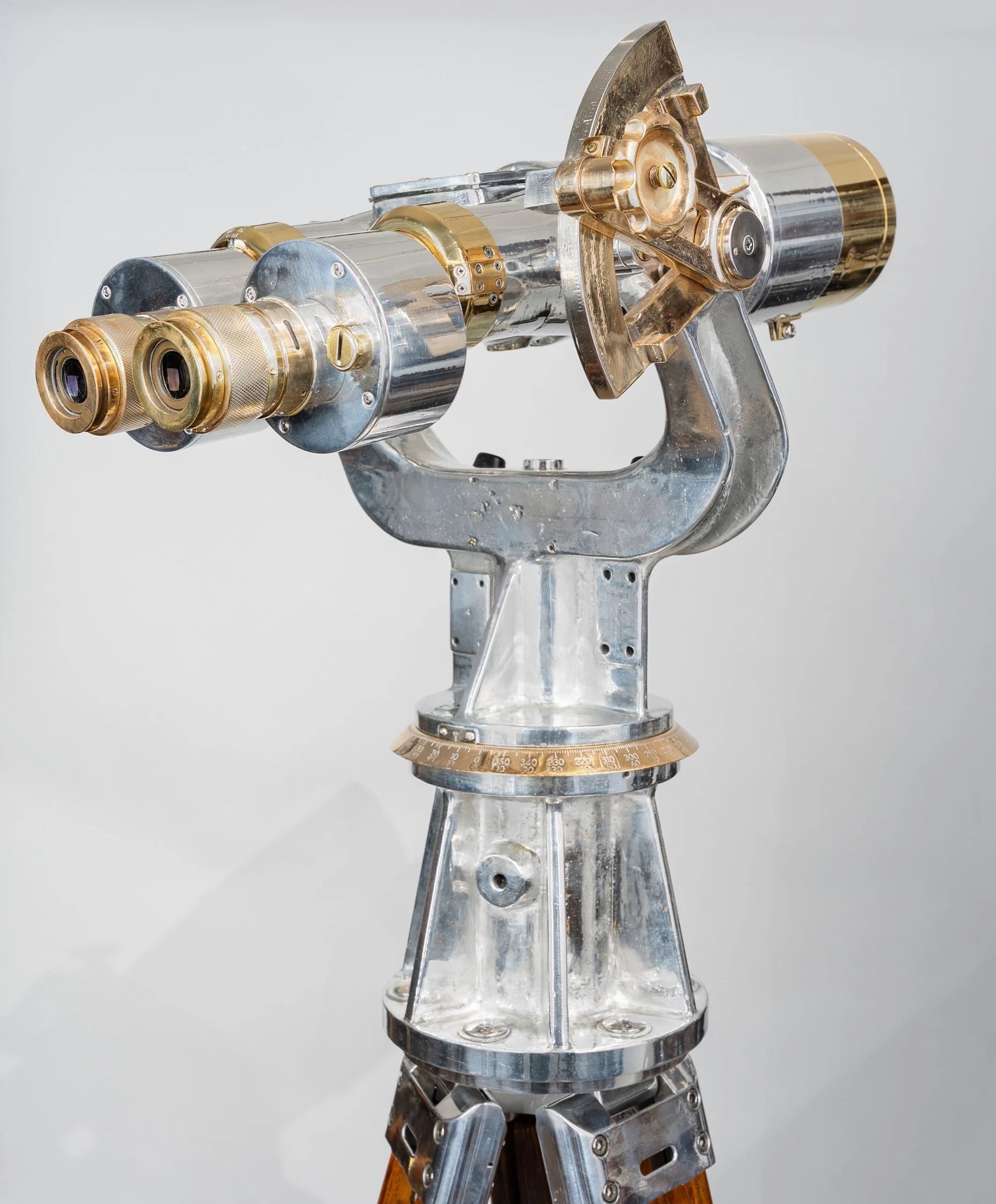
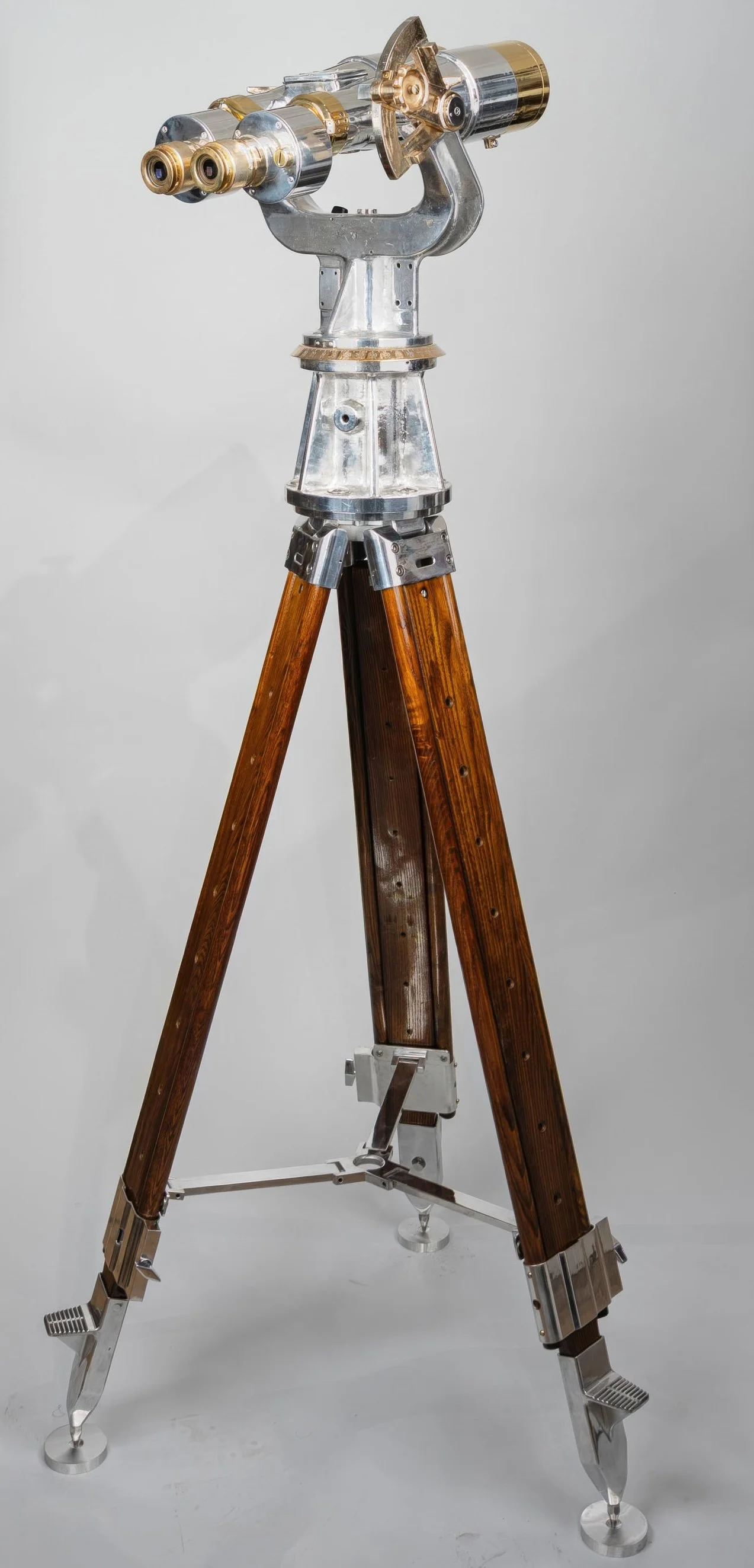
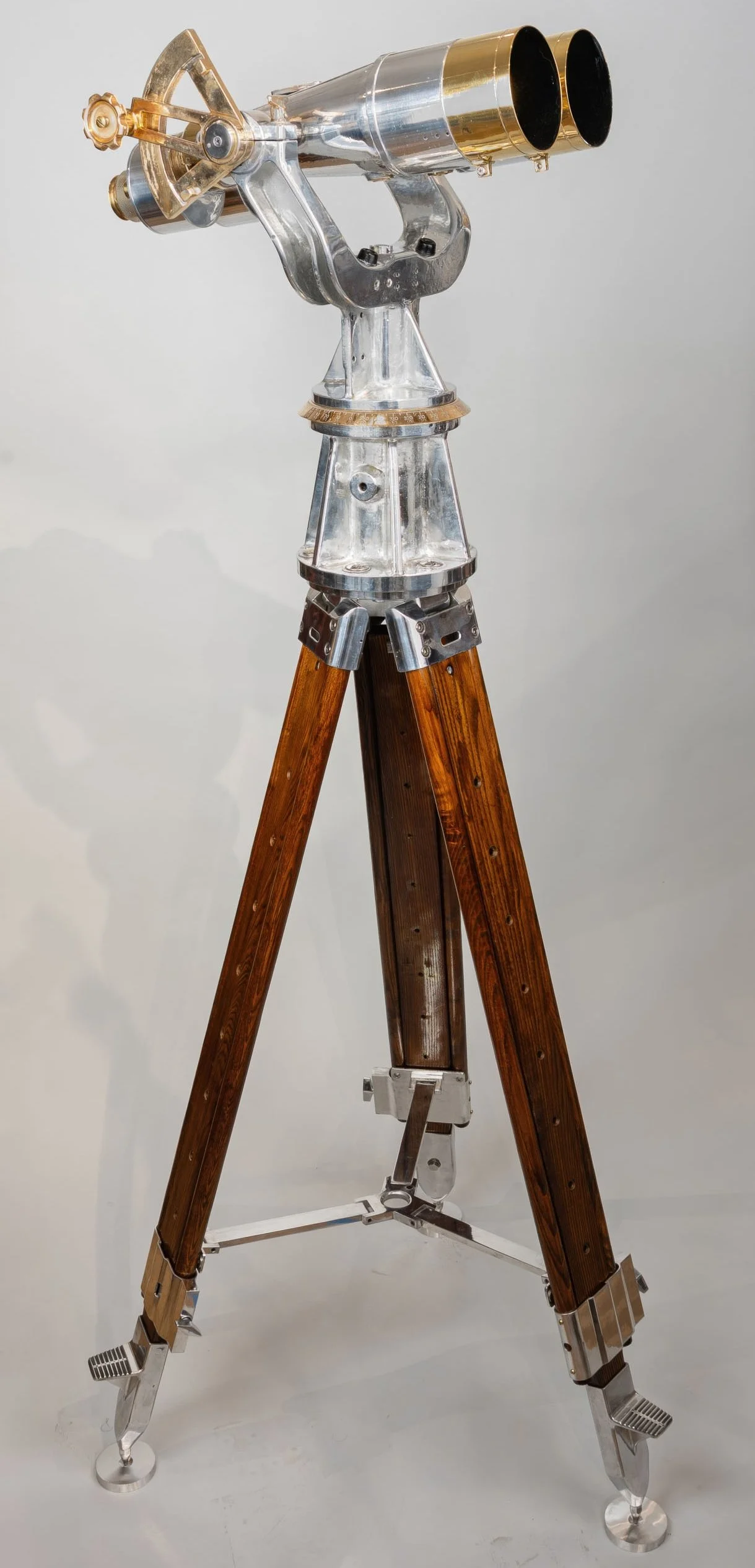
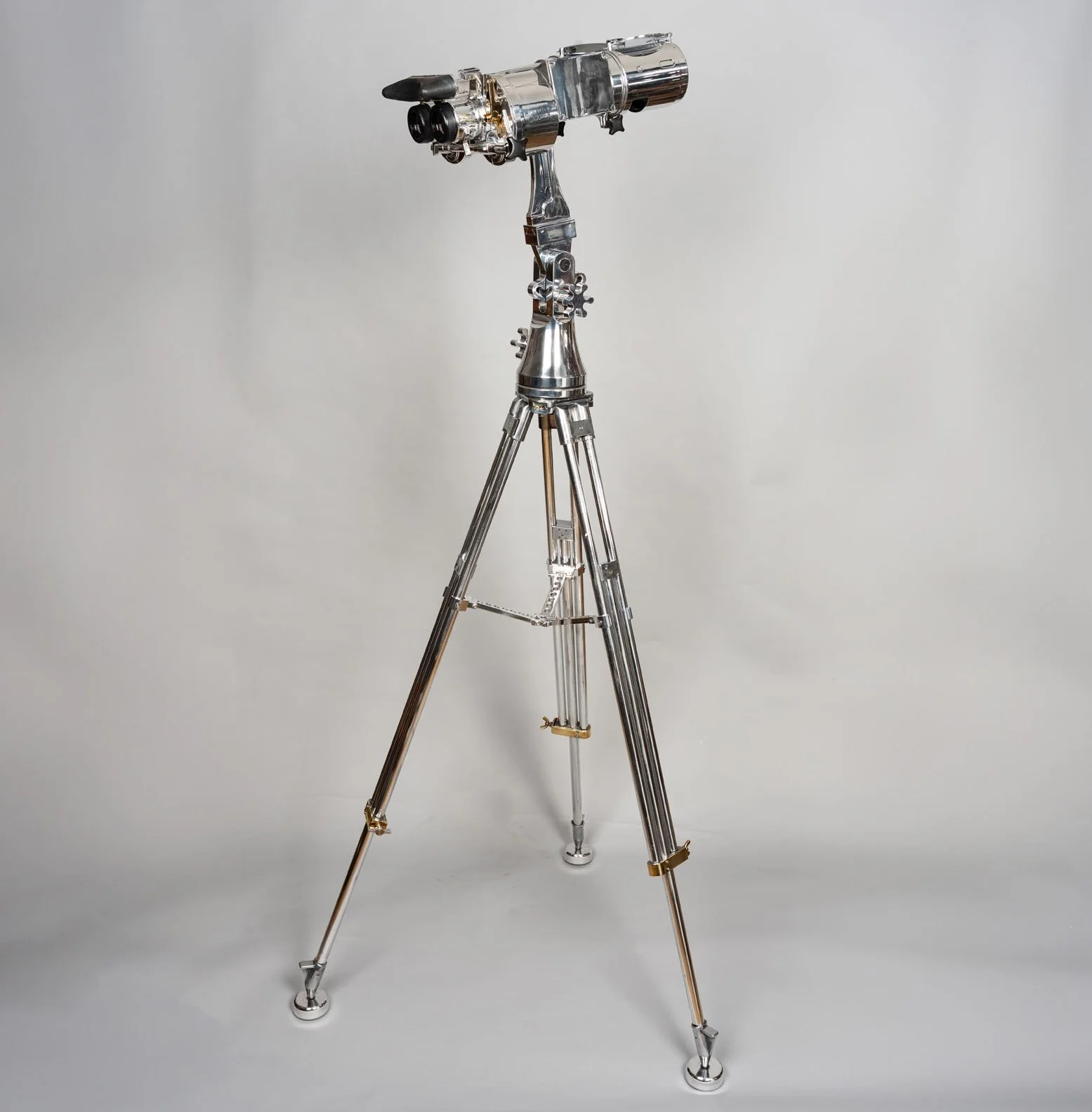
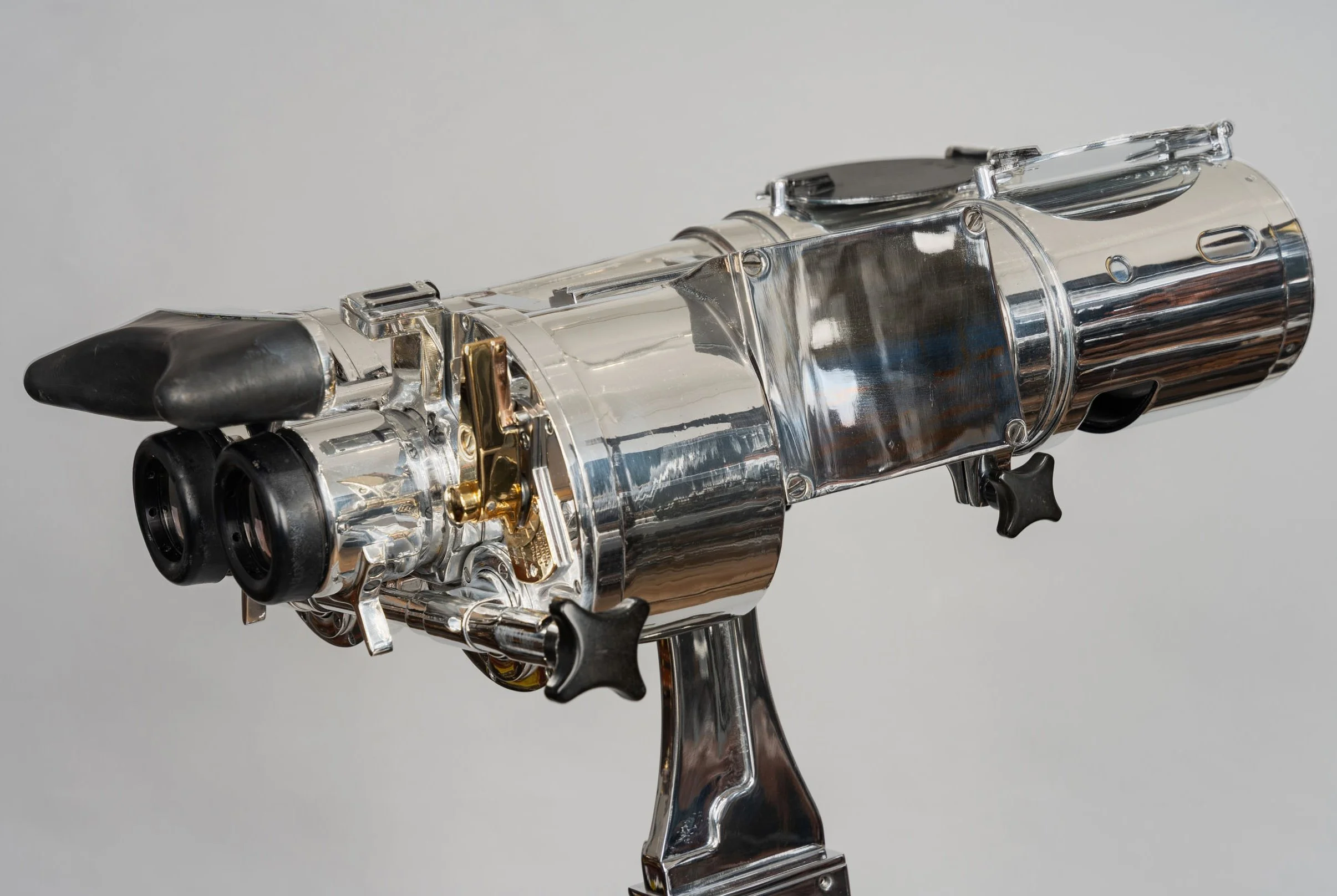
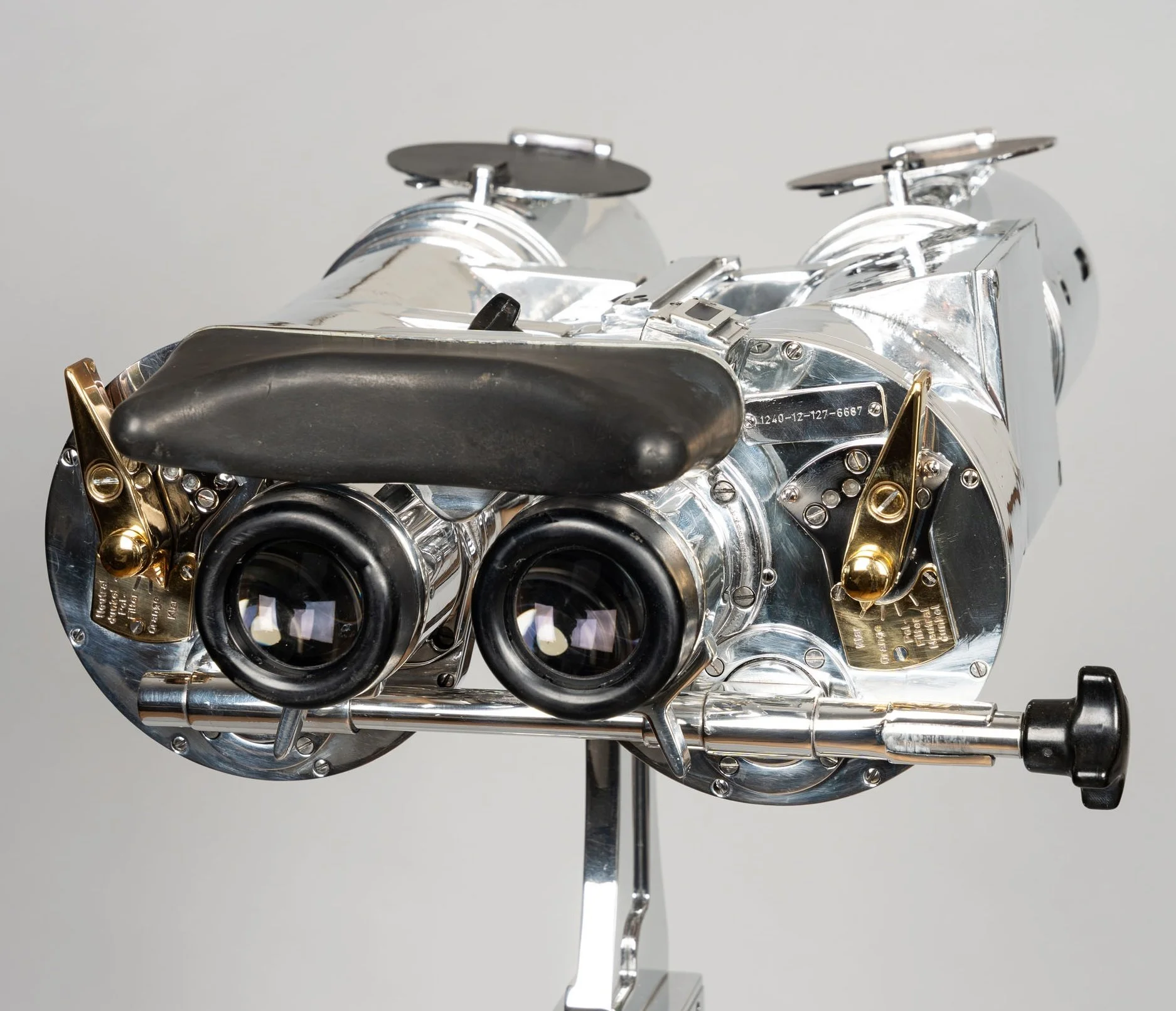
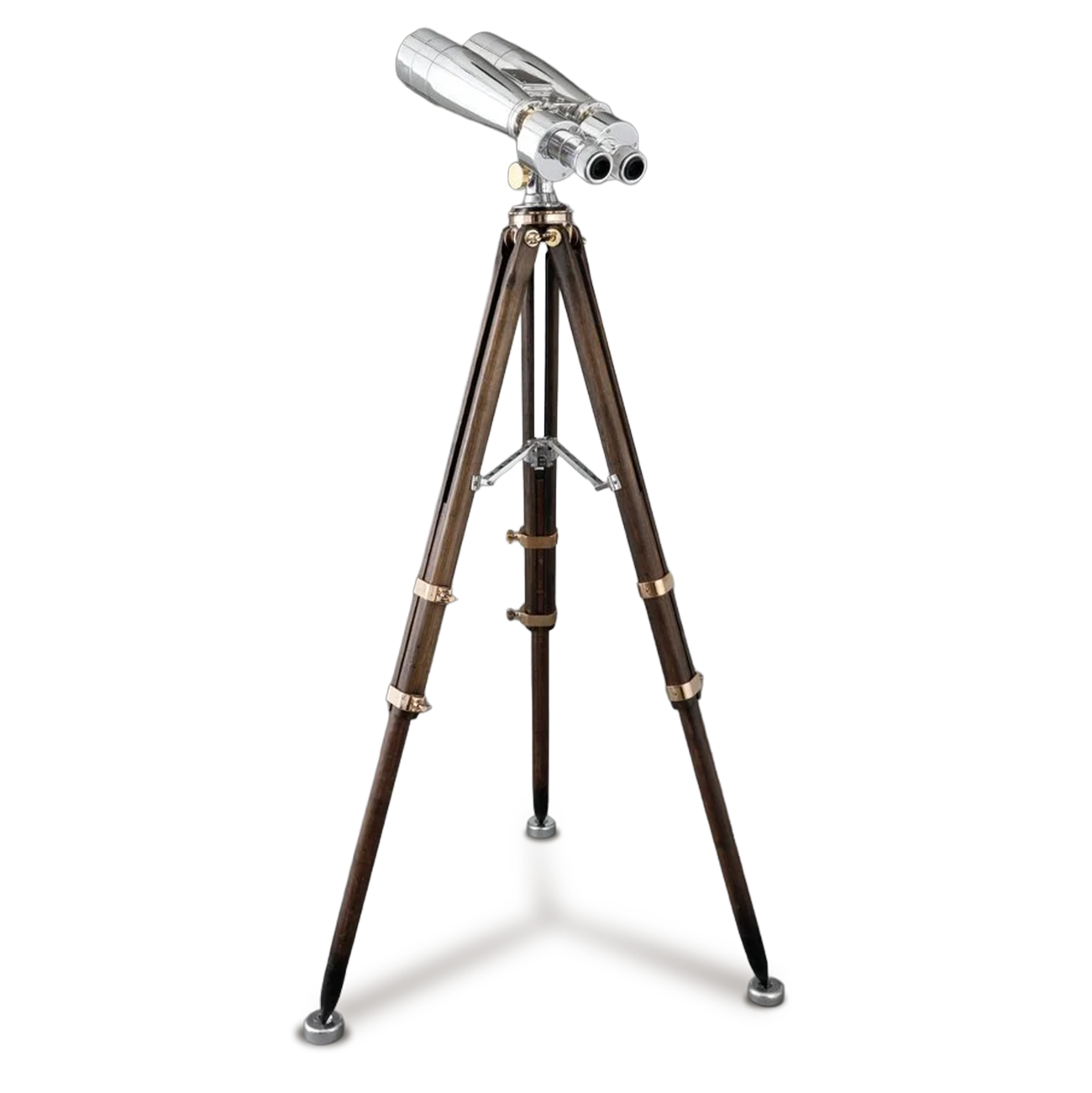
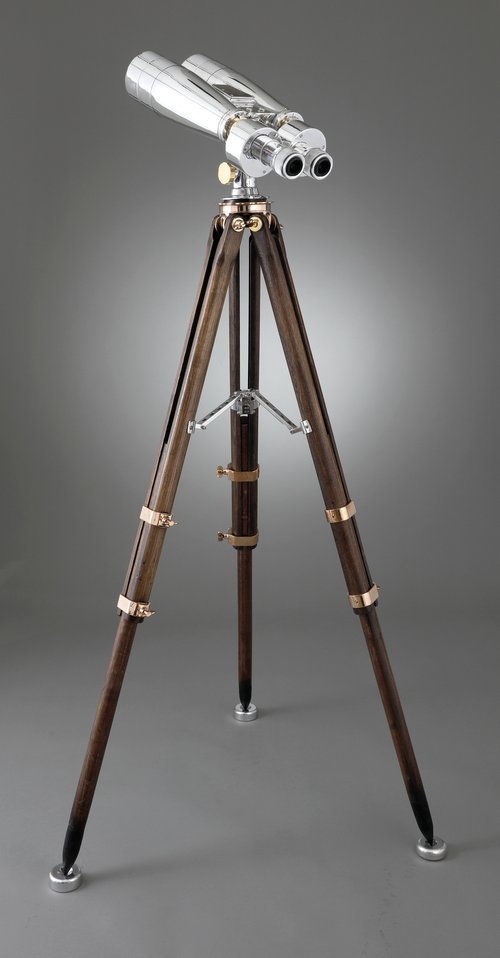
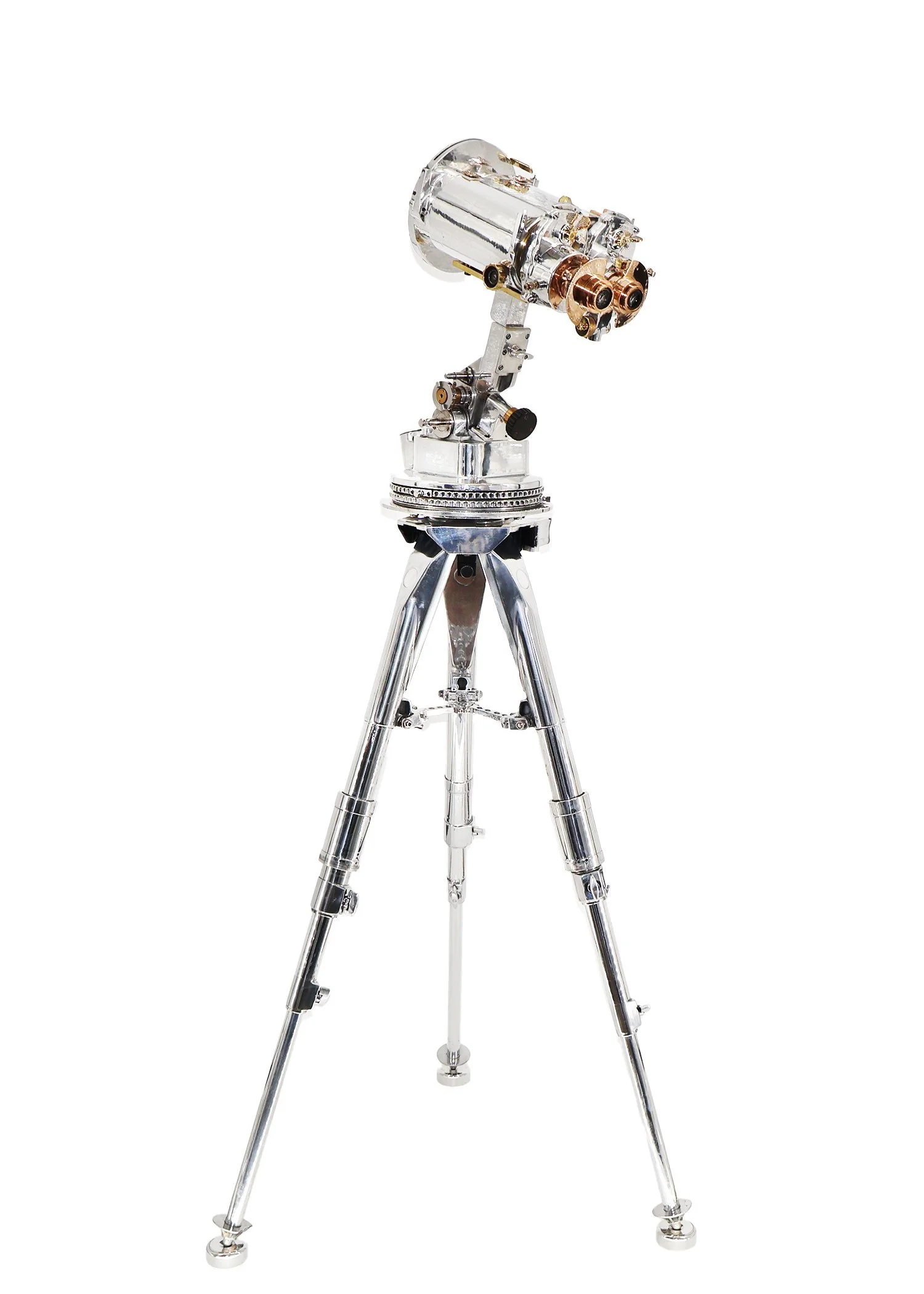
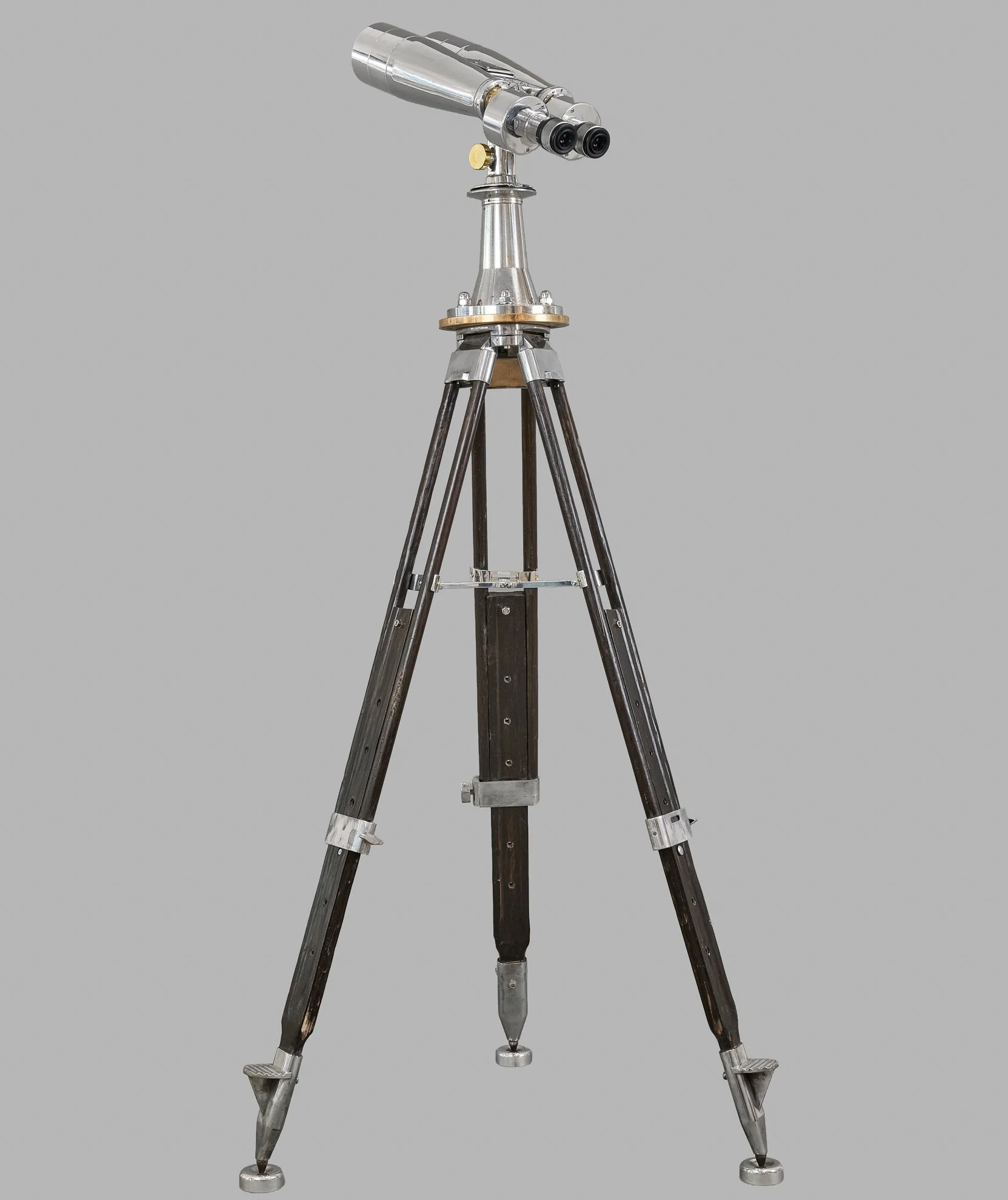
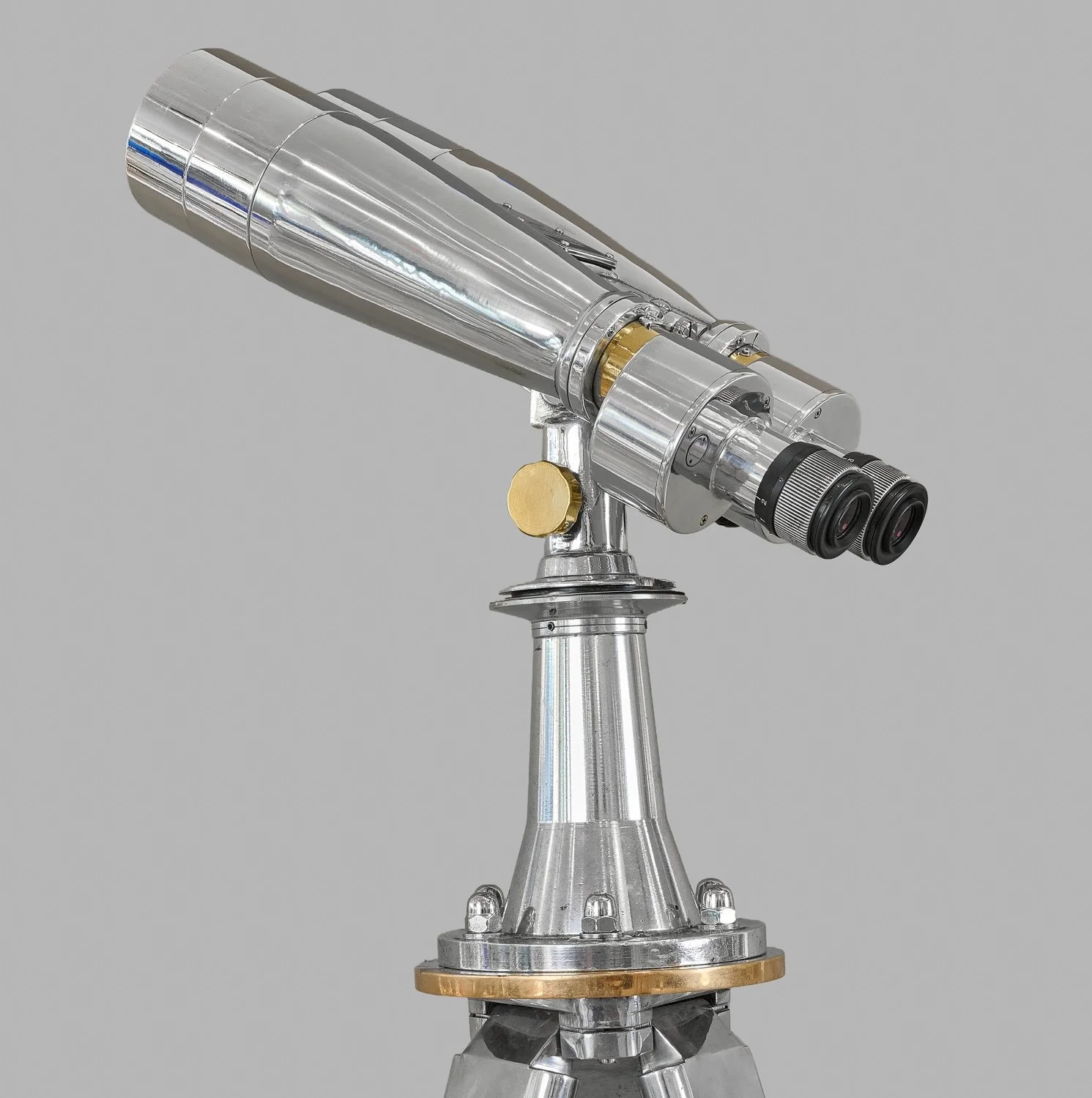
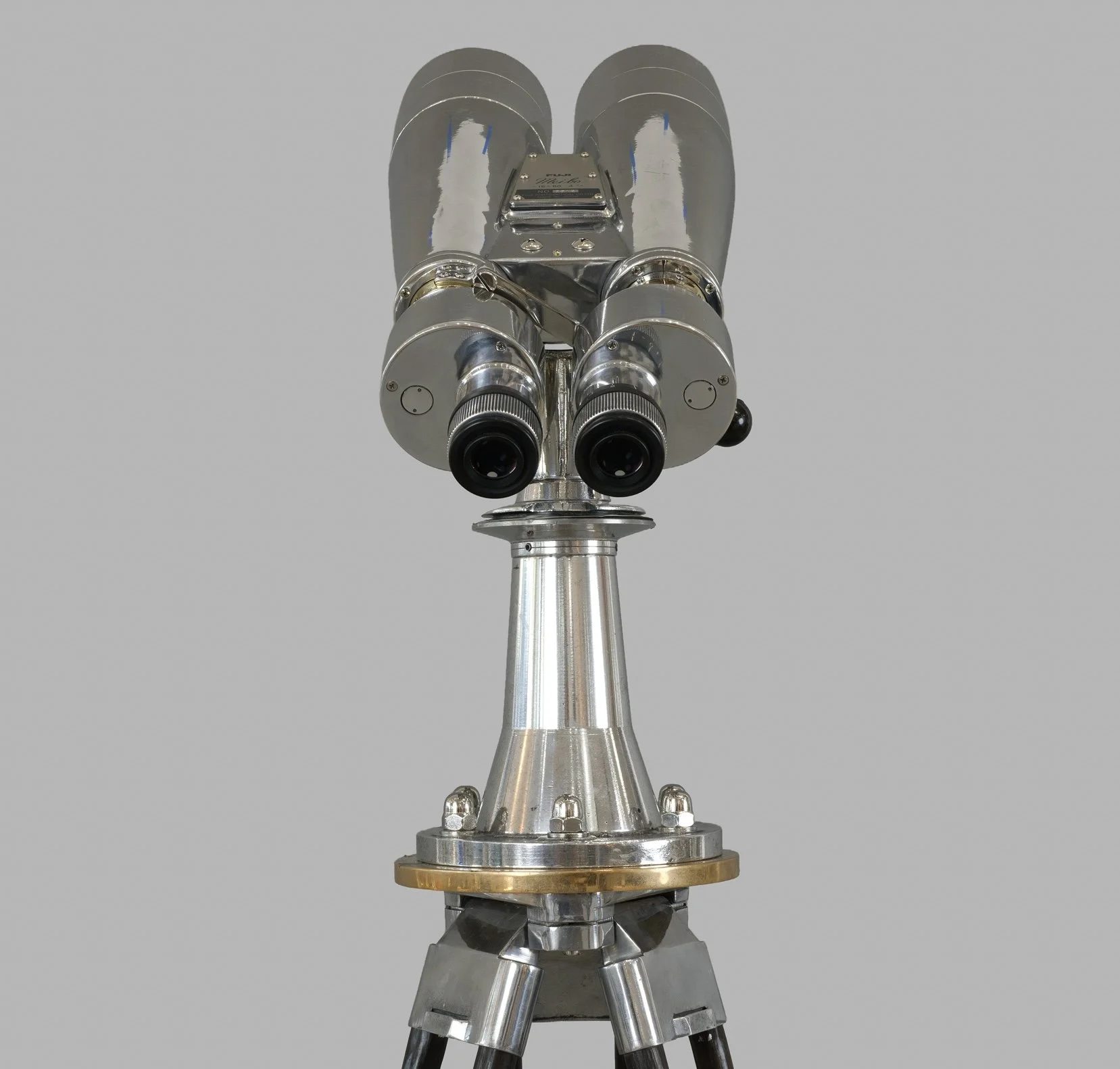
A pair of German military binoculars of 10 × 80 magnification, attributed to Joseph Schneider and dating to the 1940s.
Constructed for use during World War II, the binoculars exemplify the high standards of German optical production, which was internationally recognized for precision, durability, and optical clarity. Schneider was among the key manufacturers contributing to the wartime supply of advanced viewing instruments, including binoculars designed for extended field use.
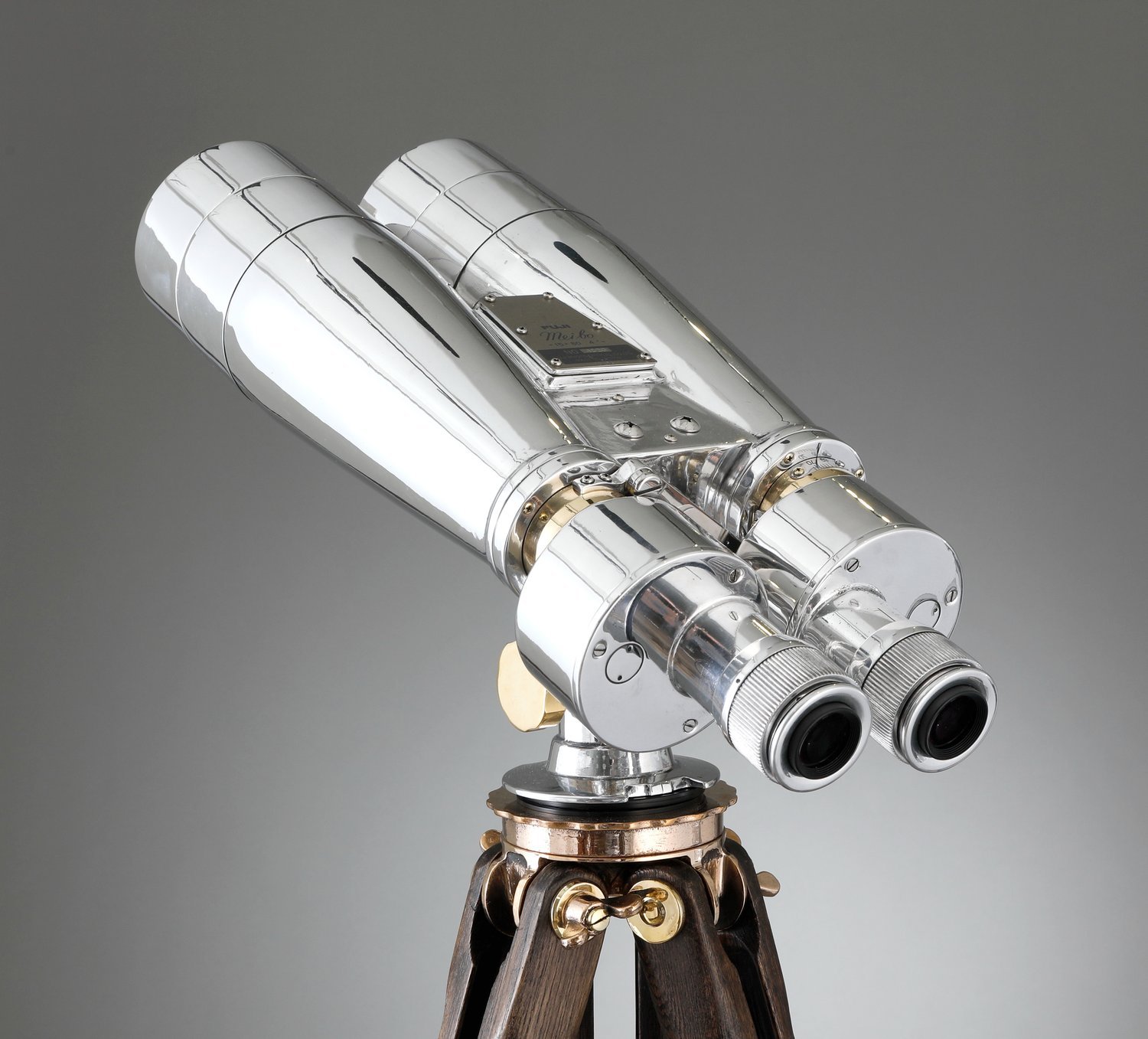
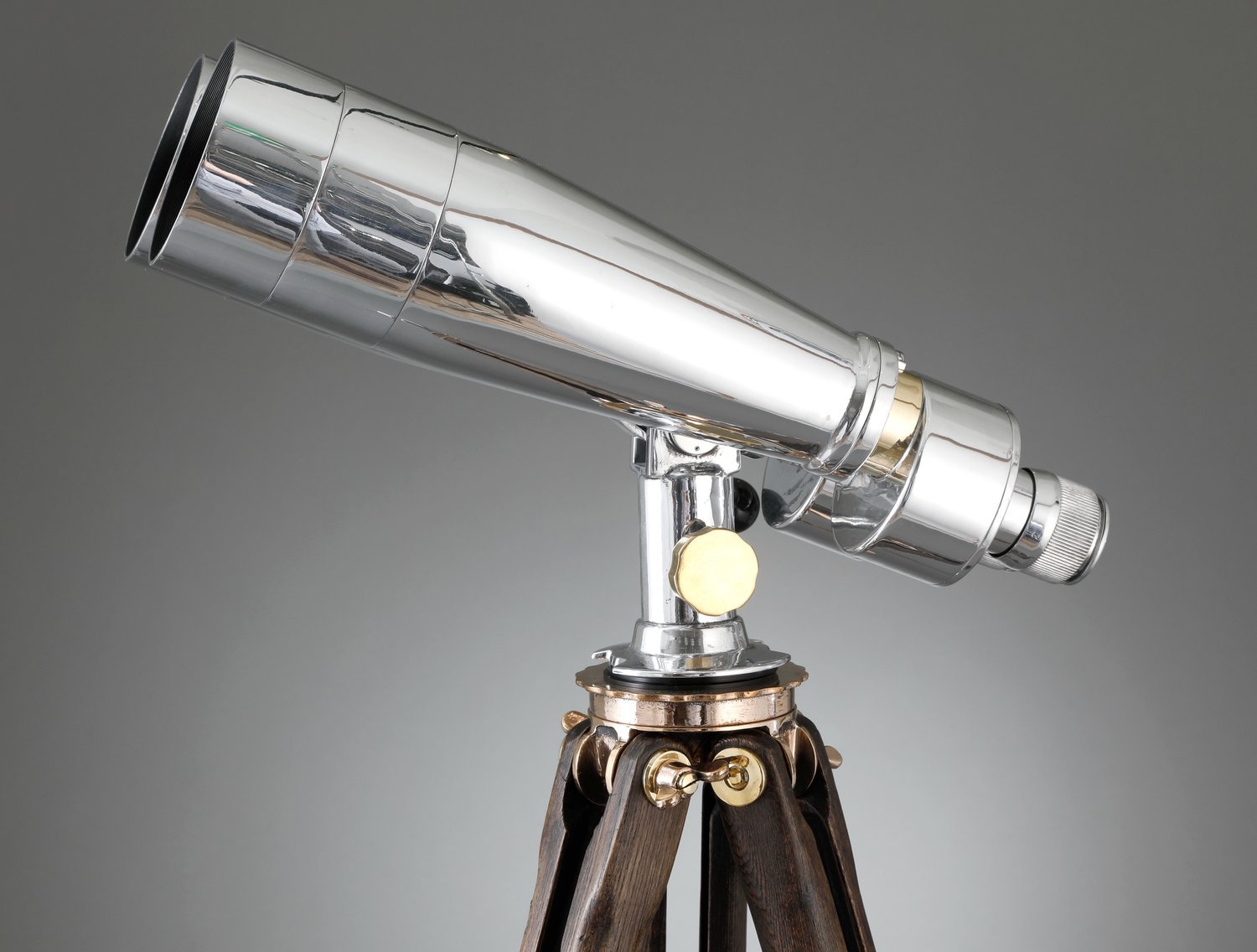
The present binoculars are configured with inclined eyepieces set at approximately 45 degrees, a feature developed to enhance observer comfort during prolonged surveillance. This design proved particularly effective in both anti-aircraft observation and general reconnaissance, where flexibility of viewing angle was essential.
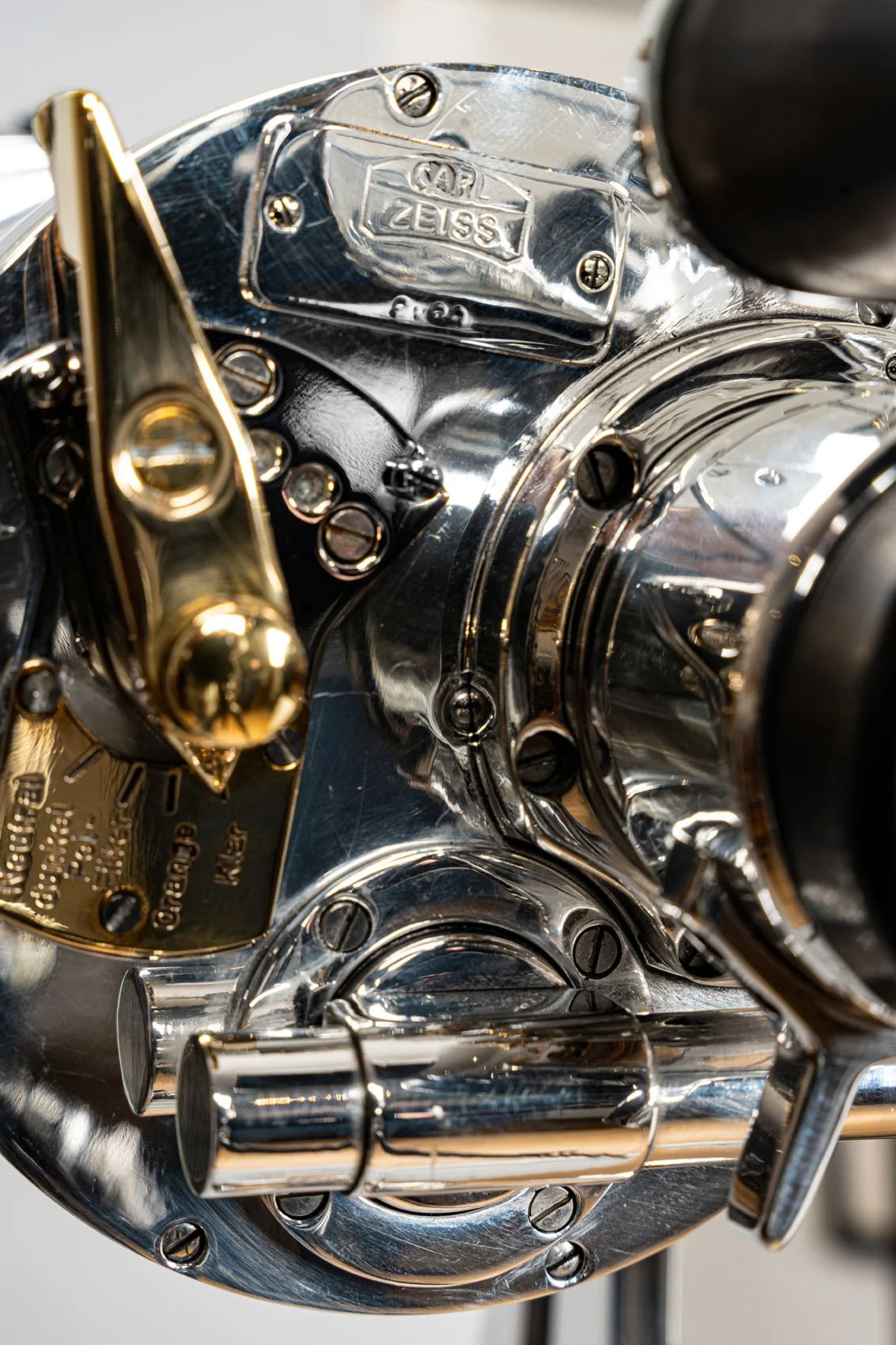
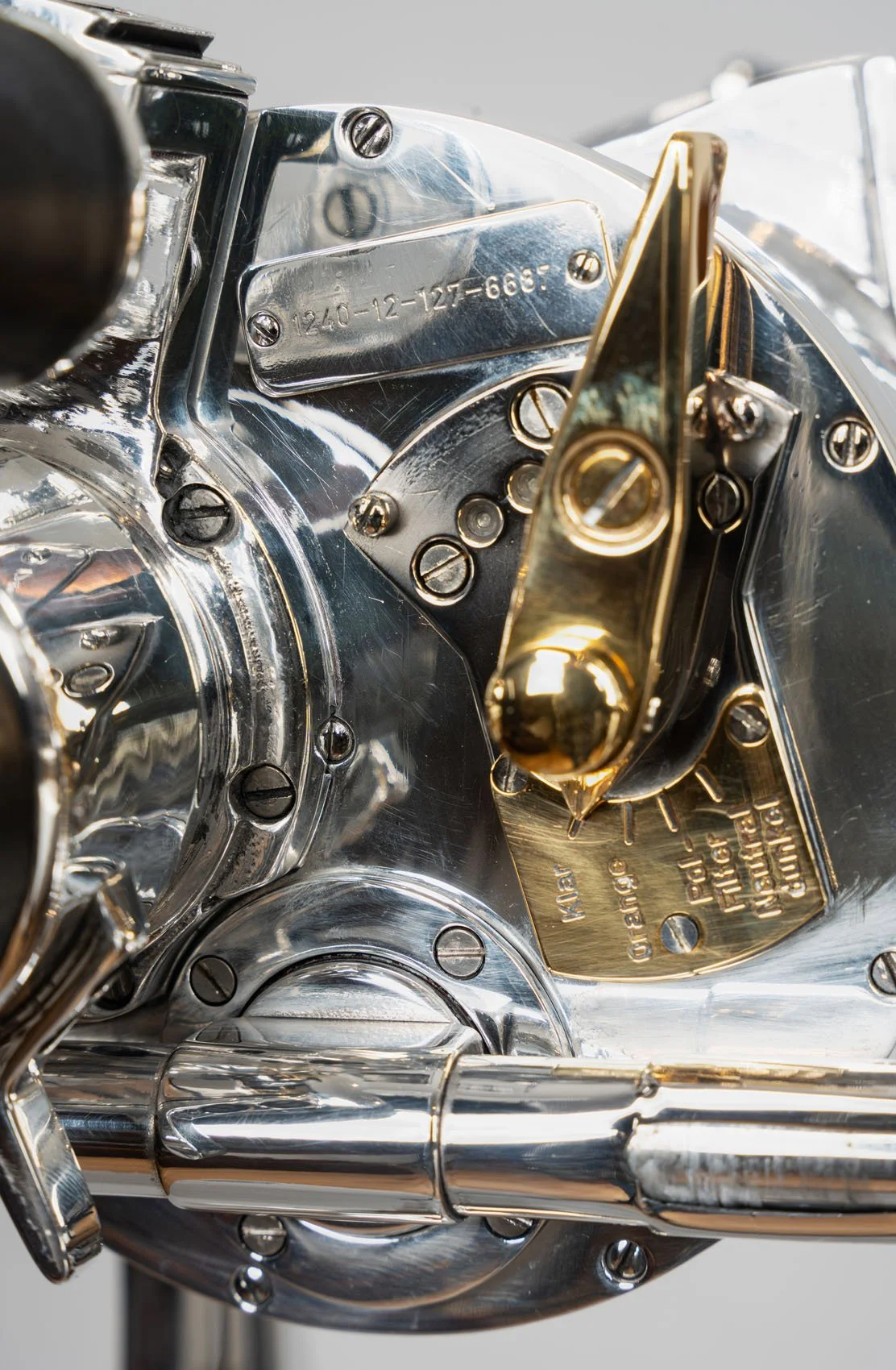
Notably, the instrument no longer retains its original maker’s markings, which were deliberately removed in the immediate postwar period, most likely by Dutch authorities. Such practices were common, as recovered equipment was often reconditioned and redistributed to offset wartime losses. This alteration, while obscuring direct attribution, contributes an additional historical layer reflecting the transitional period following the war.
The binoculars retain a strong sculptural presence, combining industrial form with functional precision, and stand as a compelling example of mid-20th century military engineering.
Literature
German Military Optical Instruments 1939–1945
Optics and Observation in Modern Warfare
Comparative examples in the Deutsches Museum
A pair of German military binoculars of 10 × 80 magnification, attributed to Joseph Schneider and dating to the 1940s.
Constructed for use during World War II, the binoculars exemplify the high standards of German optical production, which was internationally recognized for precision, durability, and optical clarity. Schneider was among the key manufacturers contributing to the wartime supply of advanced viewing instruments, including binoculars designed for extended field use.
The present binoculars are configured with inclined eyepieces set at approximately 45 degrees, a feature developed to enhance observer comfort during prolonged surveillance. This design proved particularly effective in both anti-aircraft observation and general reconnaissance, where flexibility of viewing angle was essential.
Notably, the instrument no longer retains its original maker’s markings, which were deliberately removed in the immediate postwar period, most likely by Dutch authorities. Such practices were common, as recovered equipment was often reconditioned and redistributed to offset wartime losses. This alteration, while obscuring direct attribution, contributes an additional historical layer reflecting the transitional period following the war.
The binoculars retain a strong sculptural presence, combining industrial form with functional precision, and stand as a compelling example of mid-20th century military engineering.
Literature
German Military Optical Instruments 1939–1945
Optics and Observation in Modern Warfare
Comparative examples in the Deutsches Museum

 Image 1 of 6
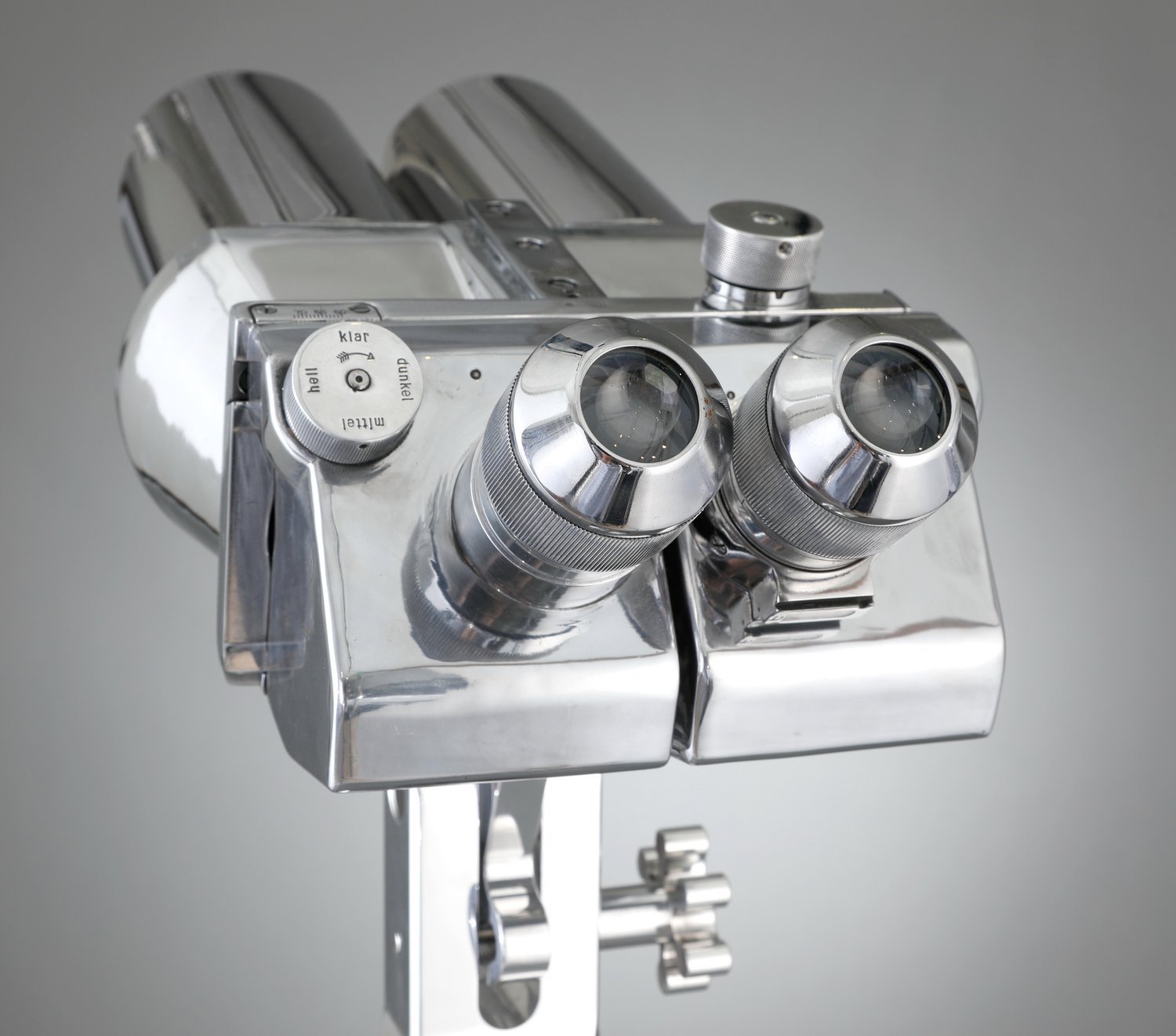 Image 2 of 6
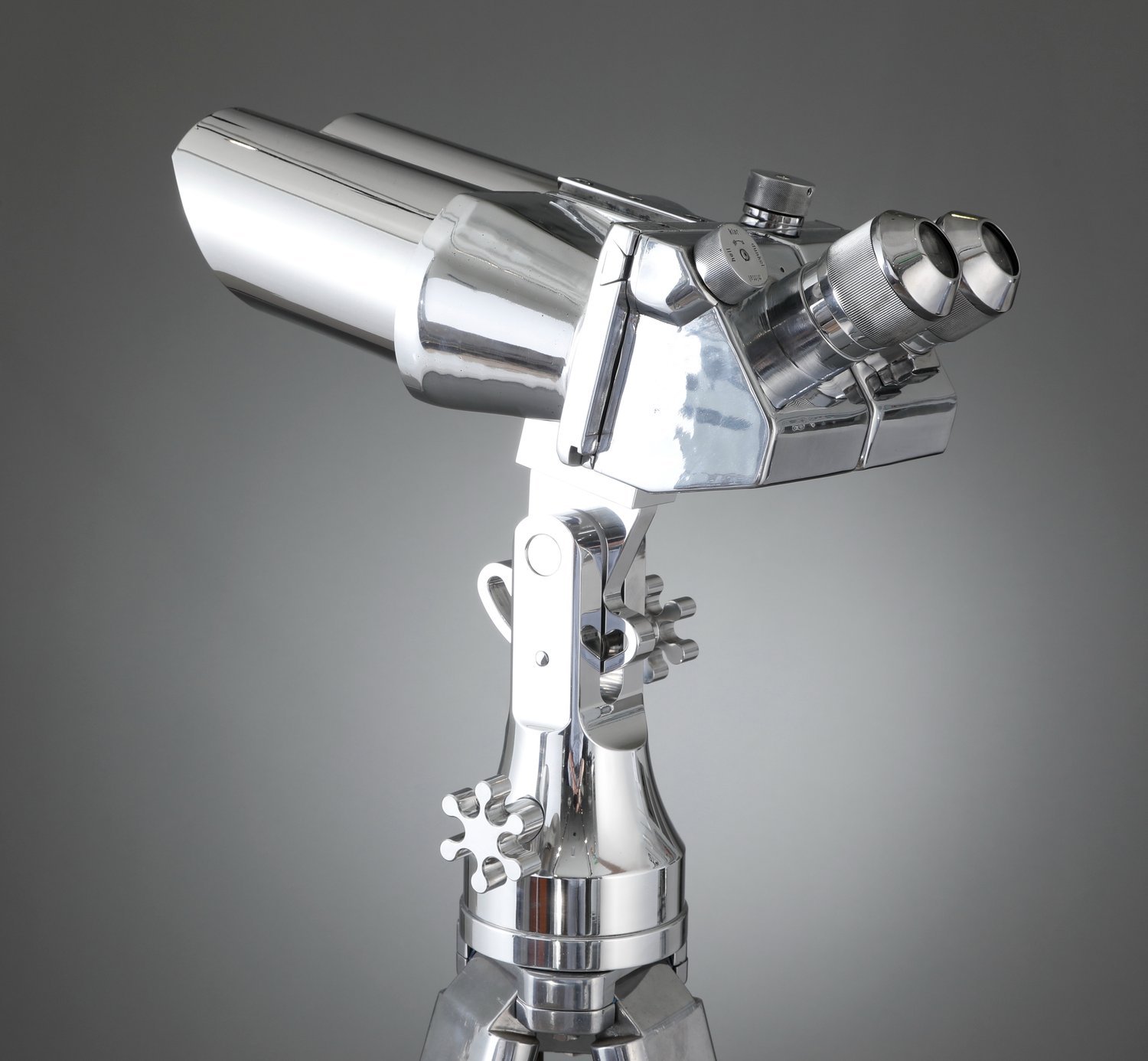 Image 3 of 6
 Image 4 of 6
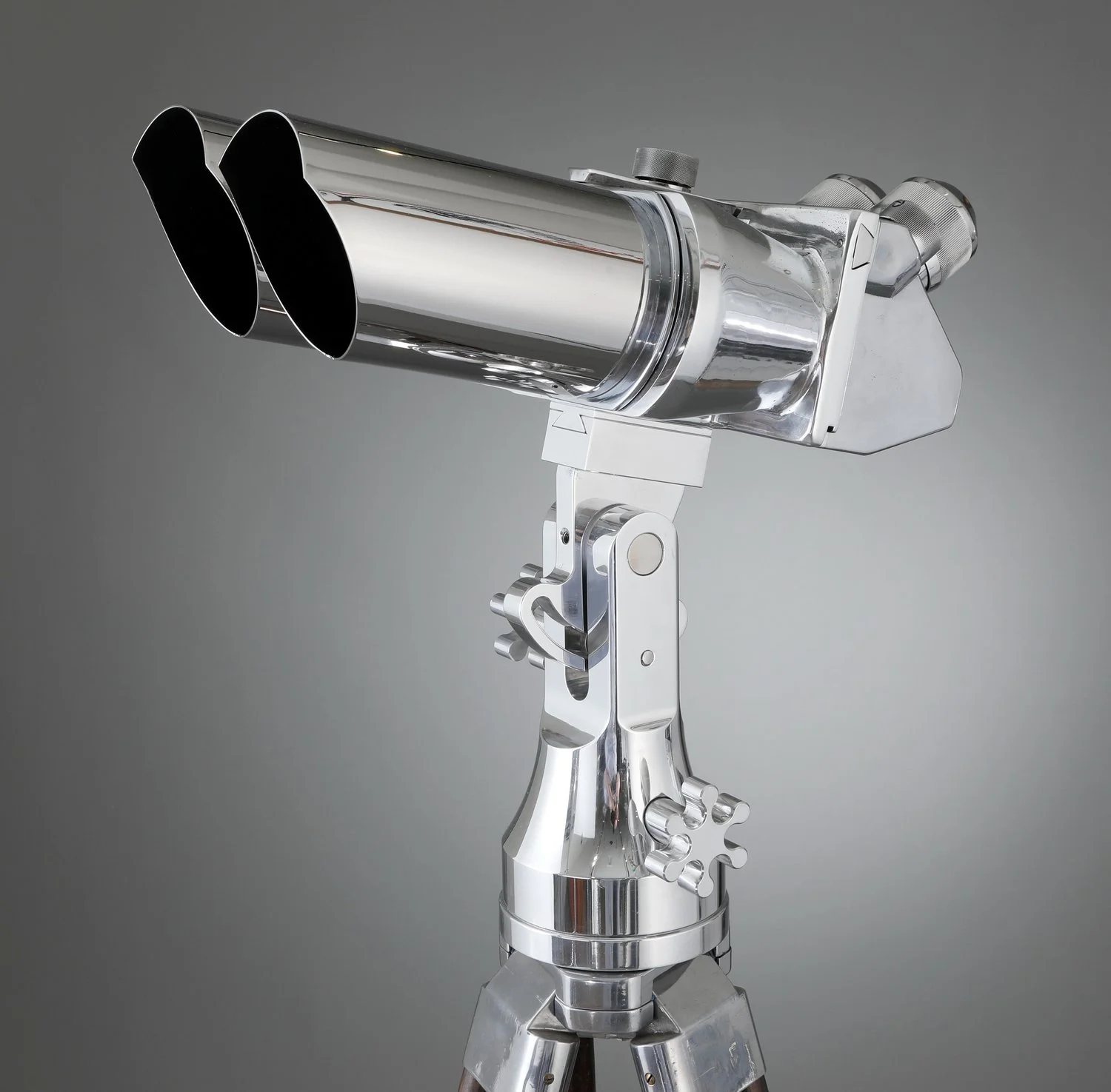 Image 5 of 6
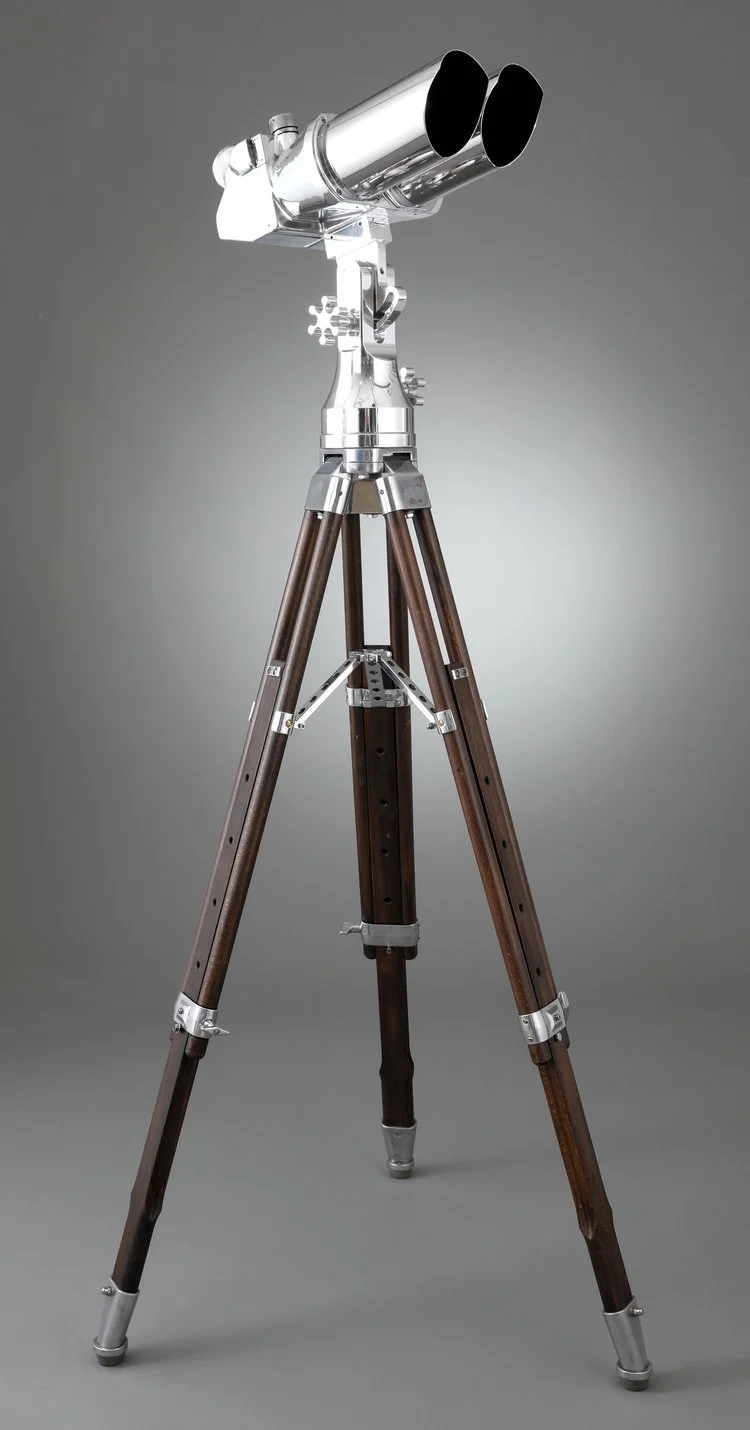 Image 6 of 6