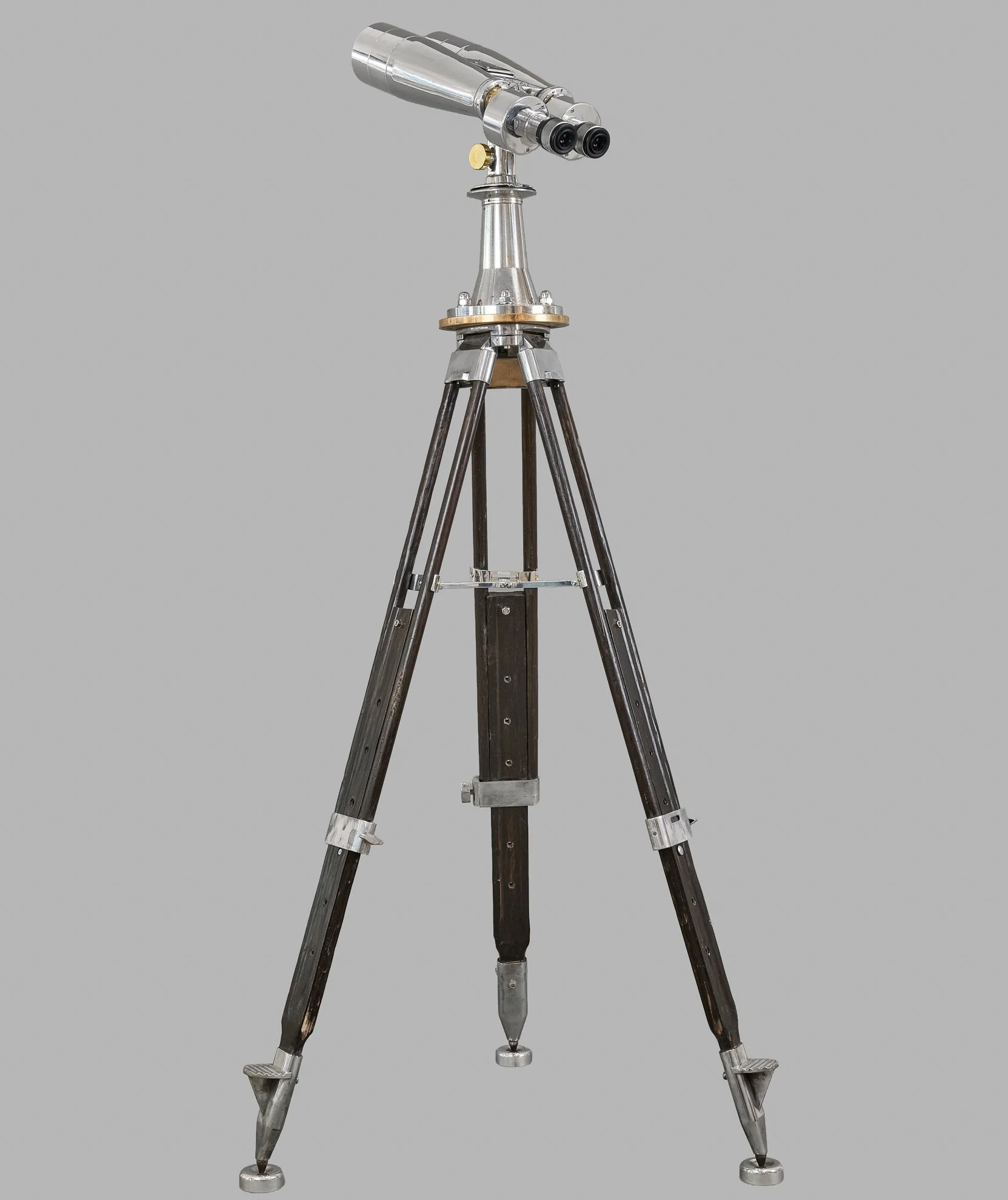
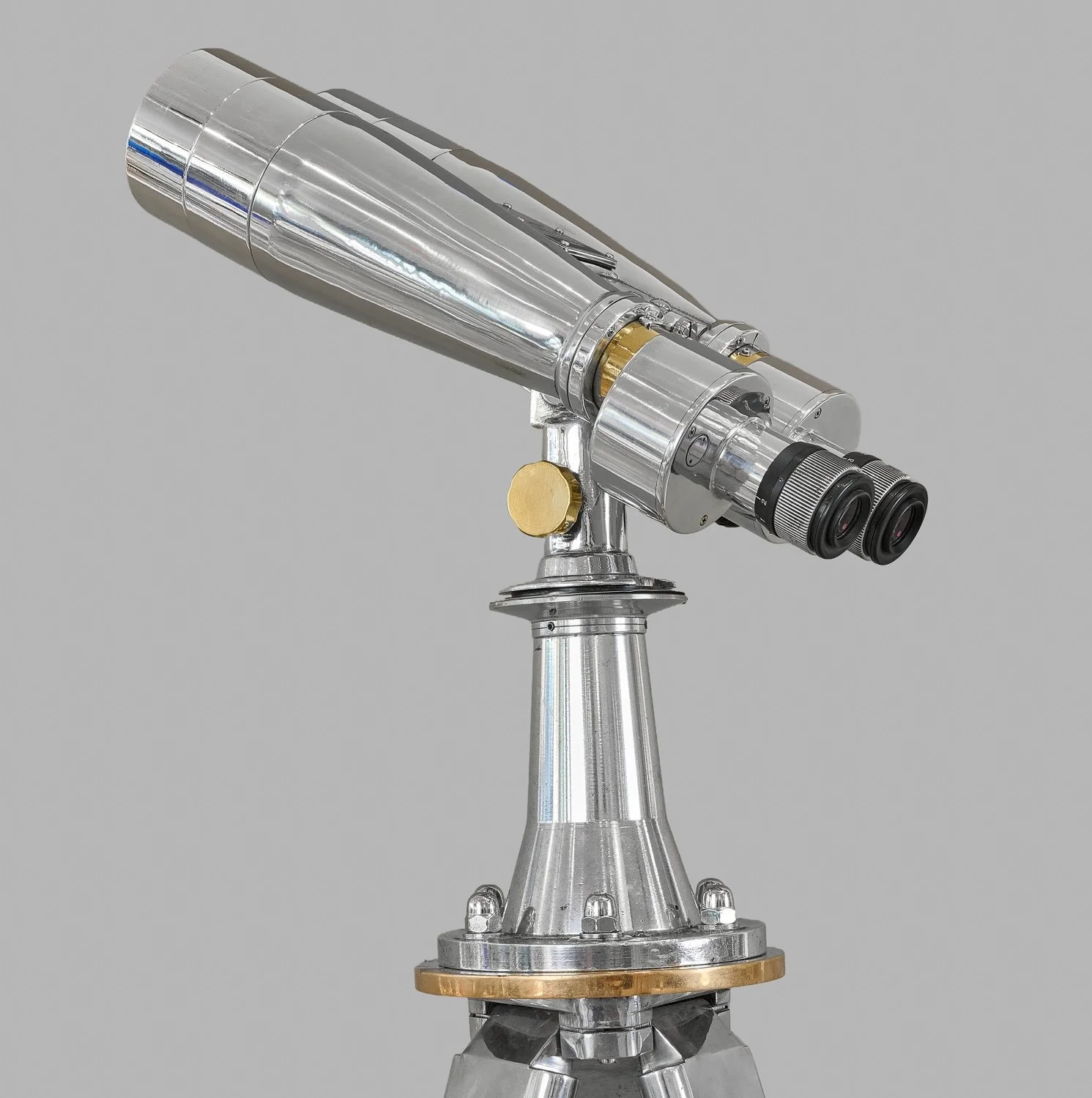
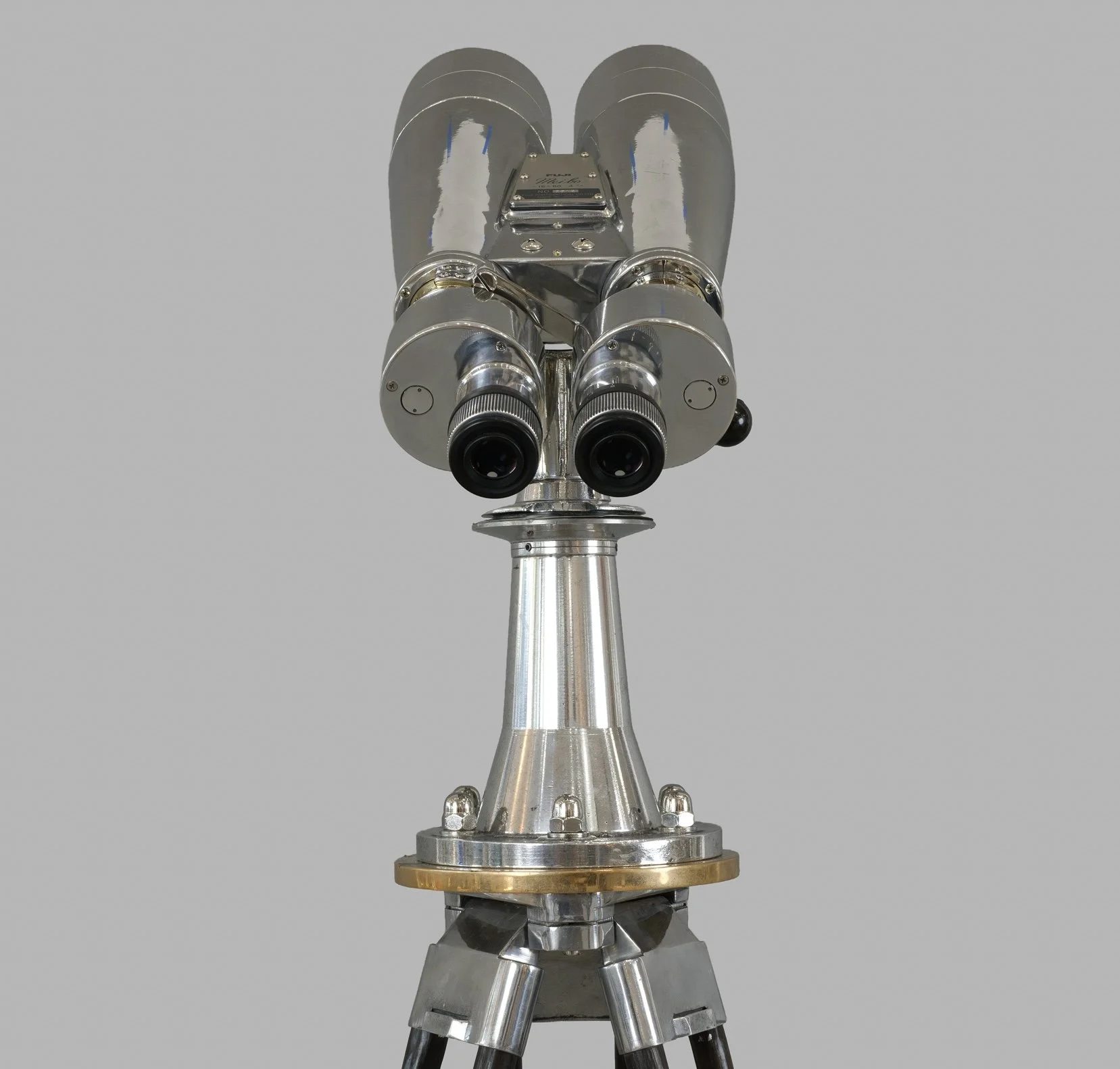
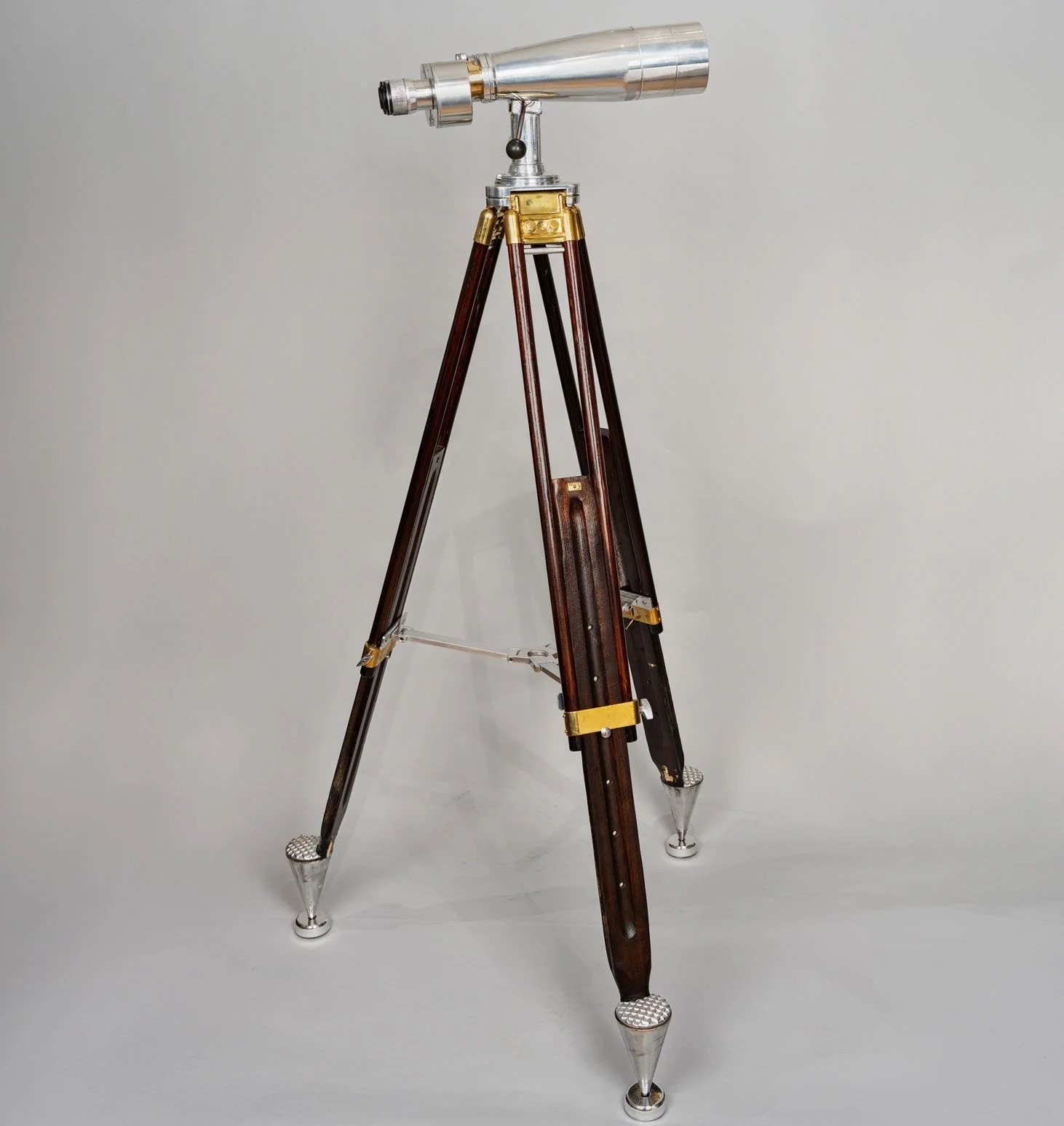
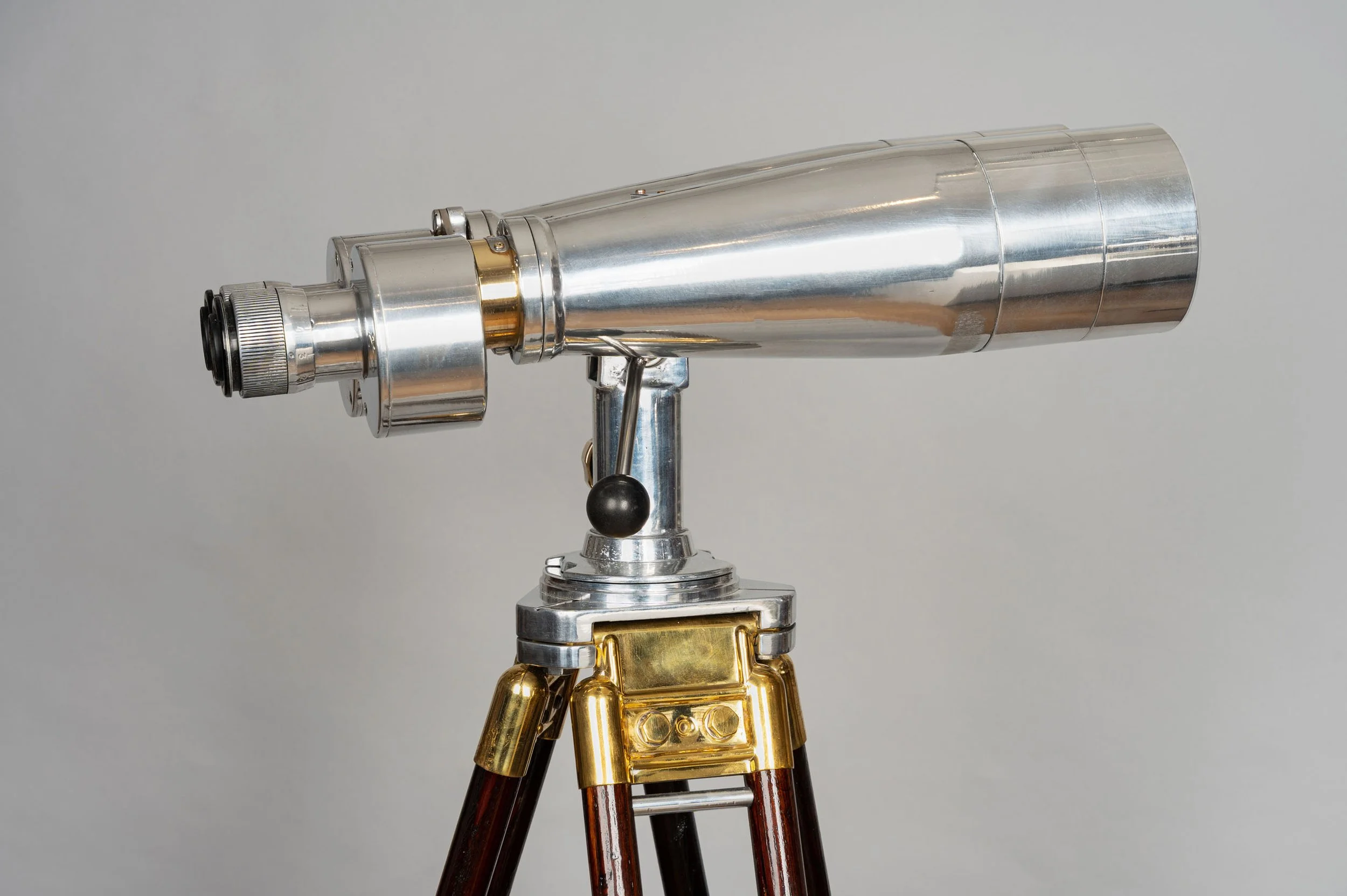
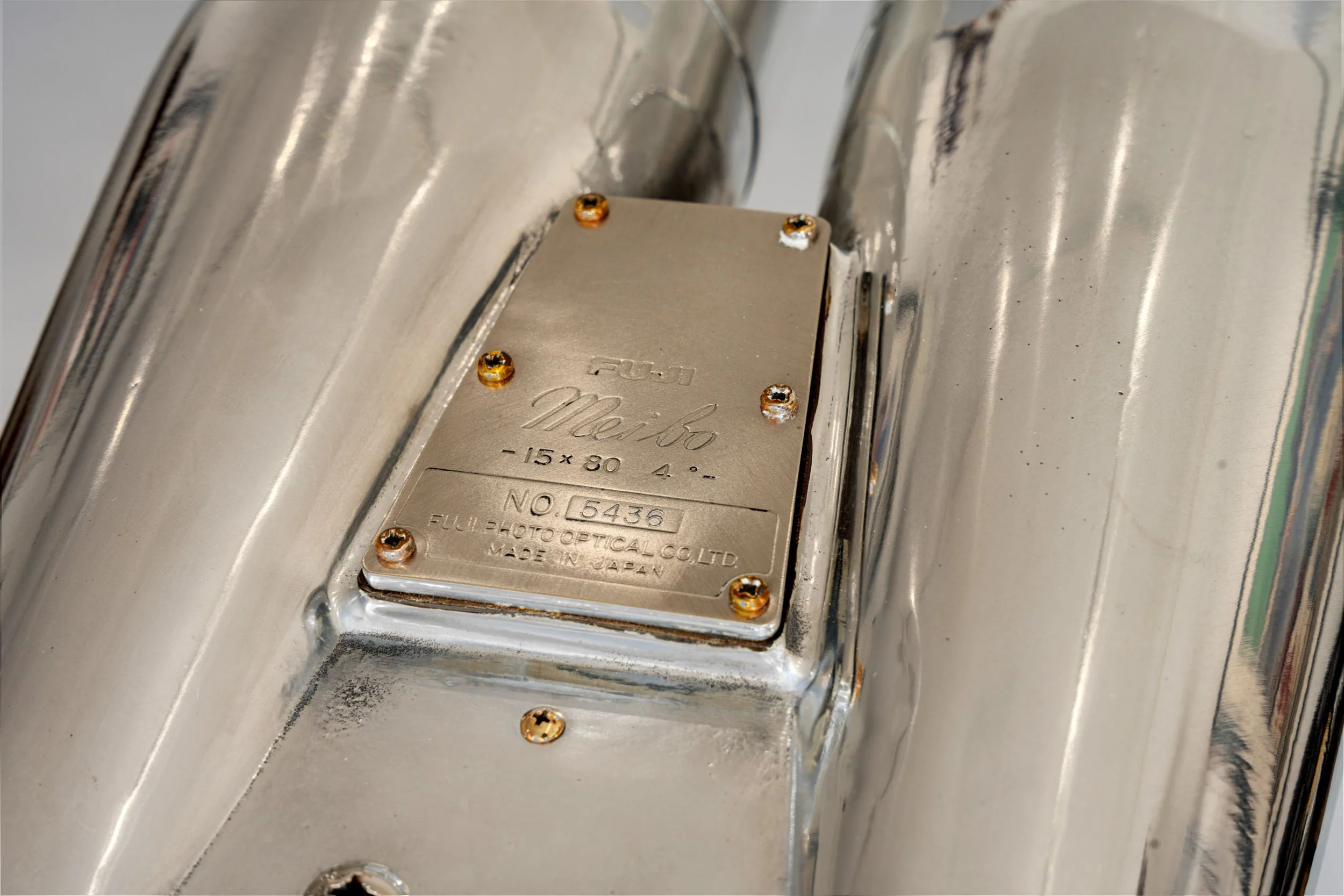
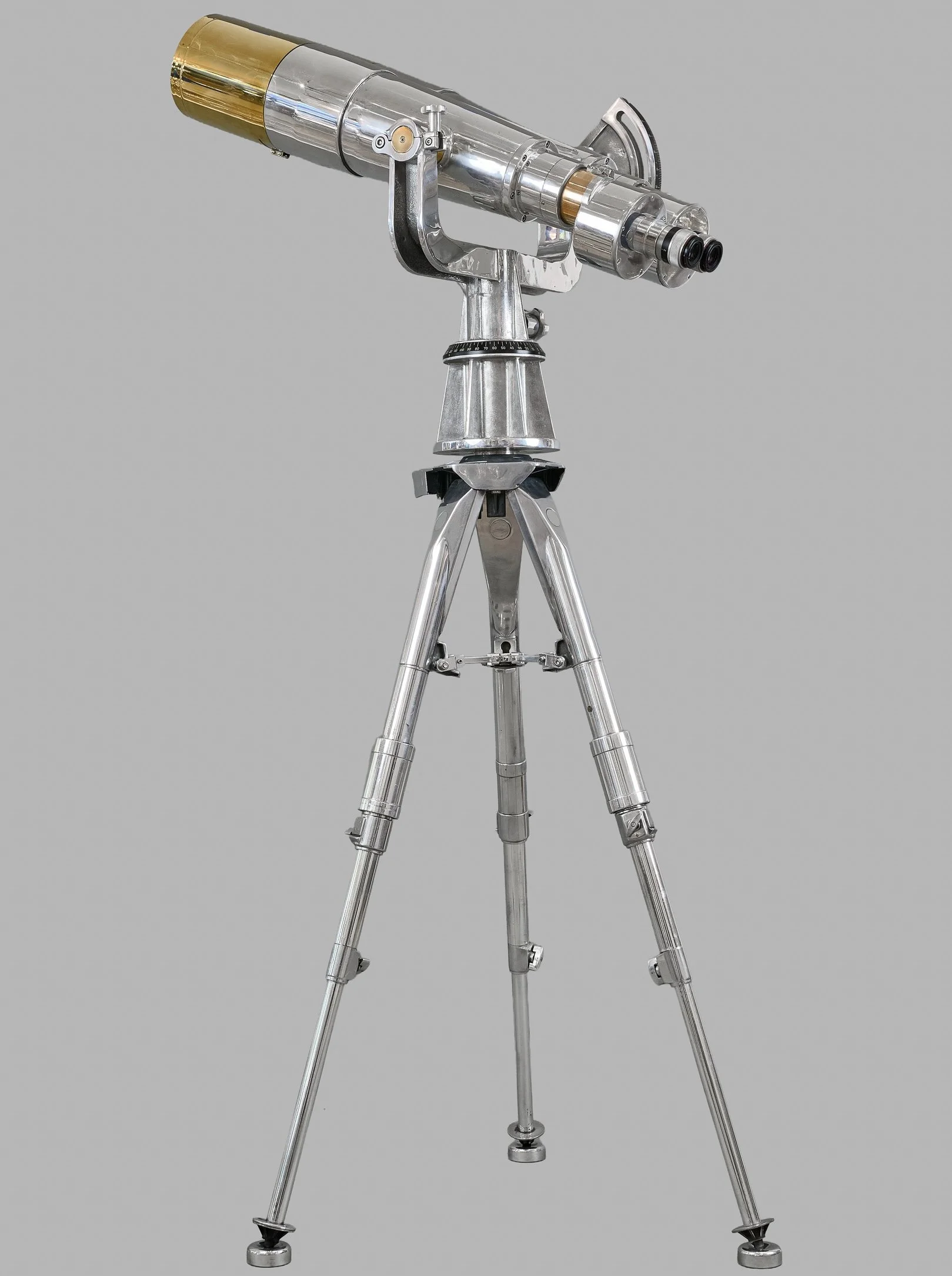
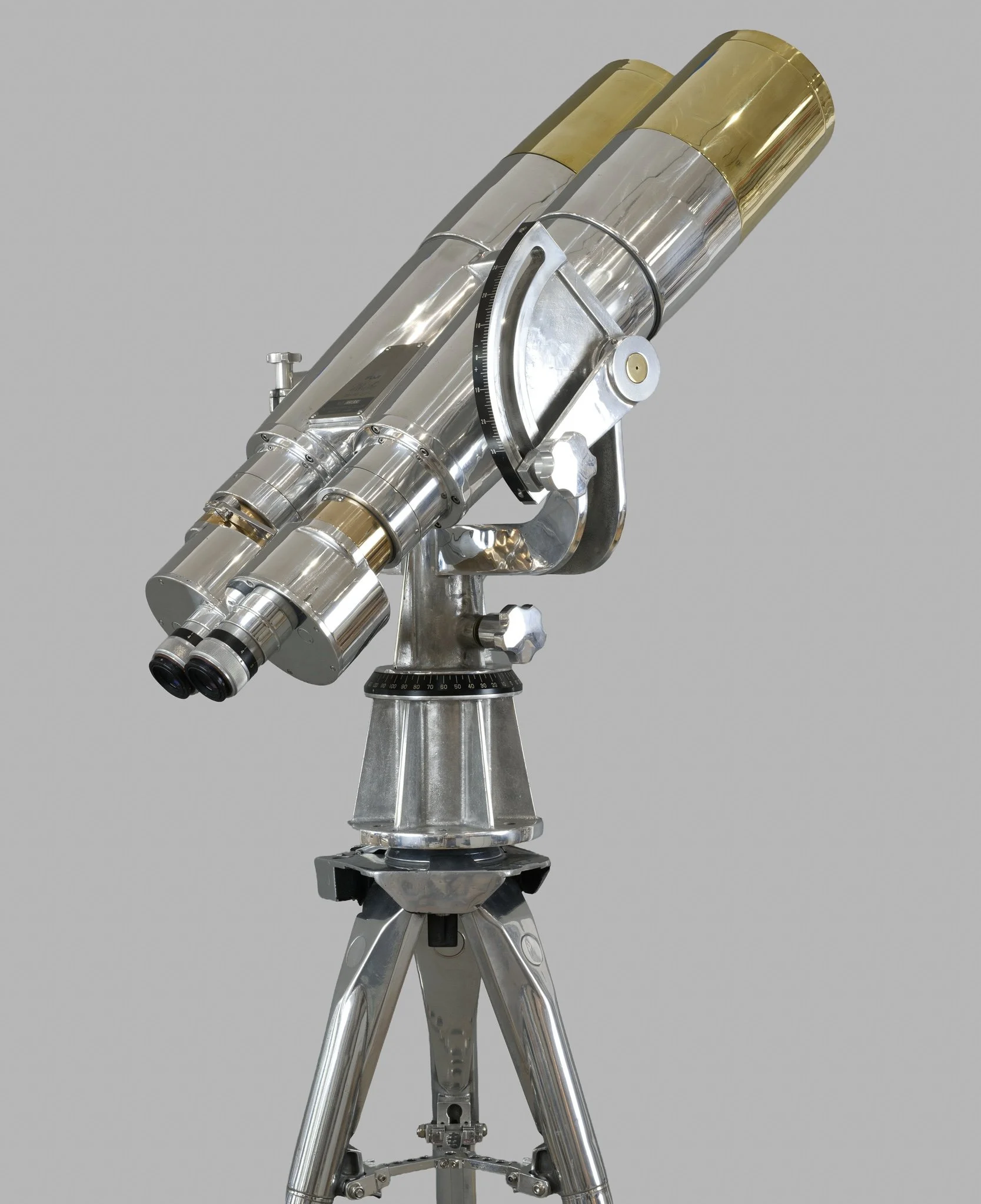
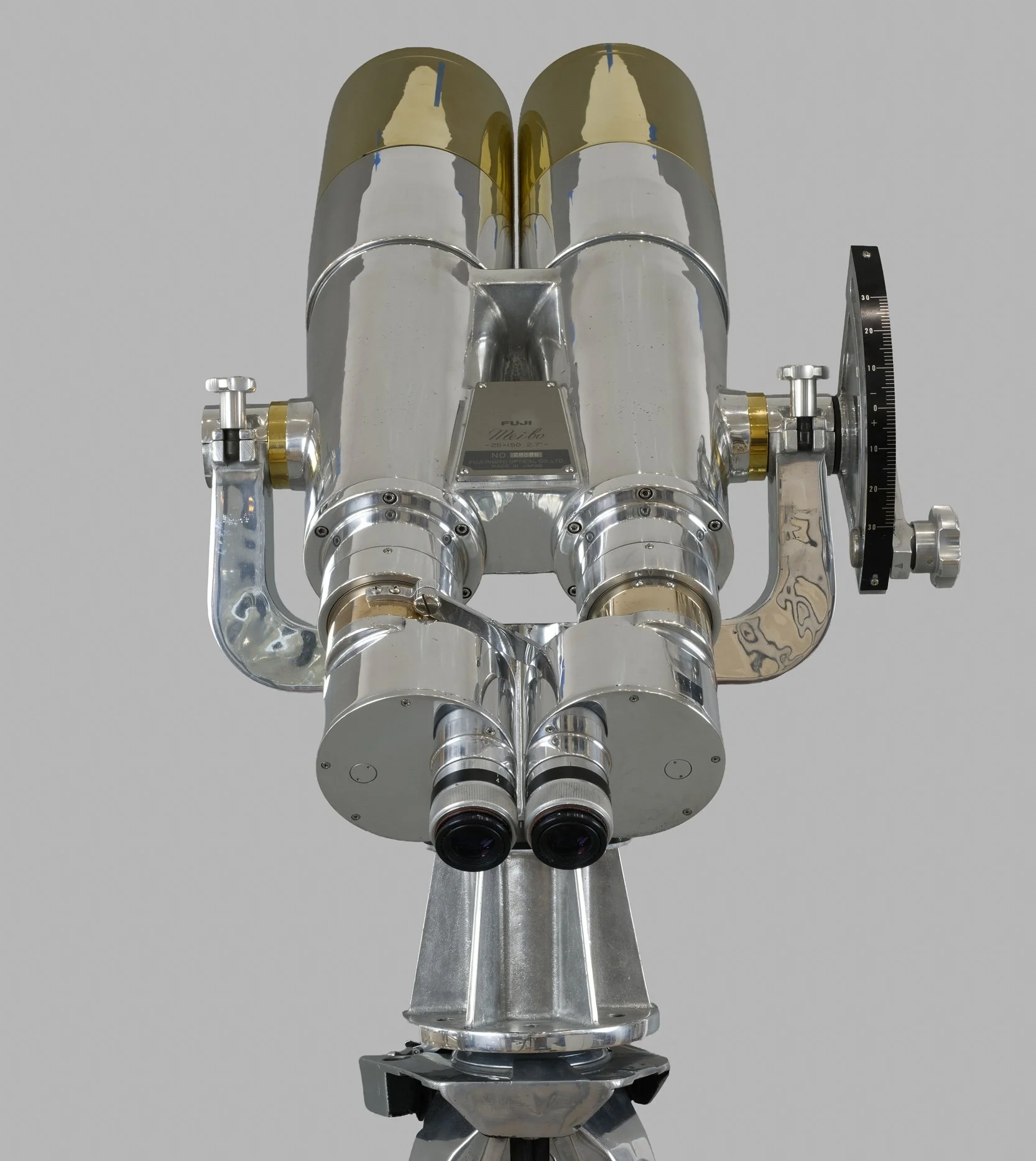
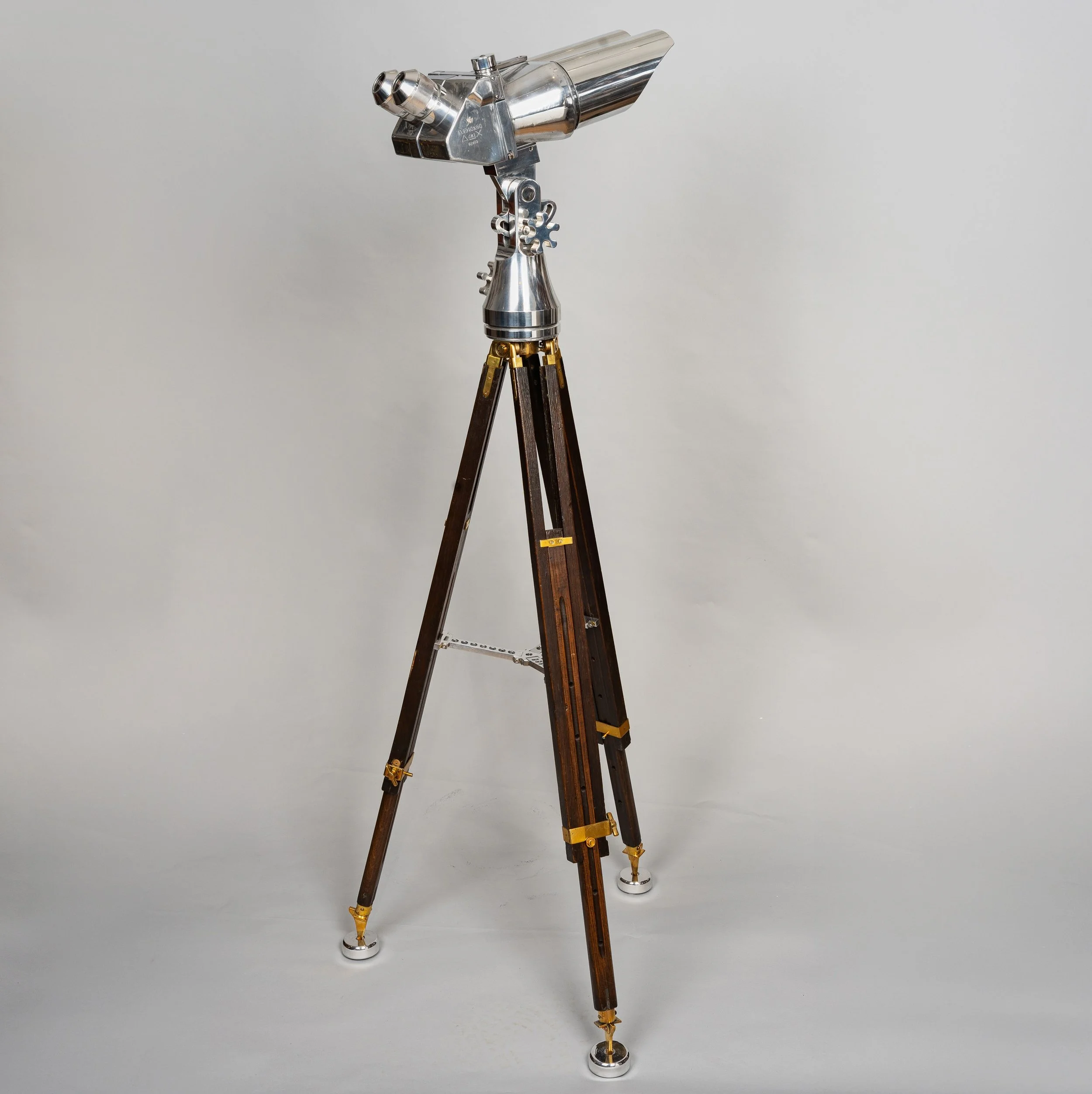
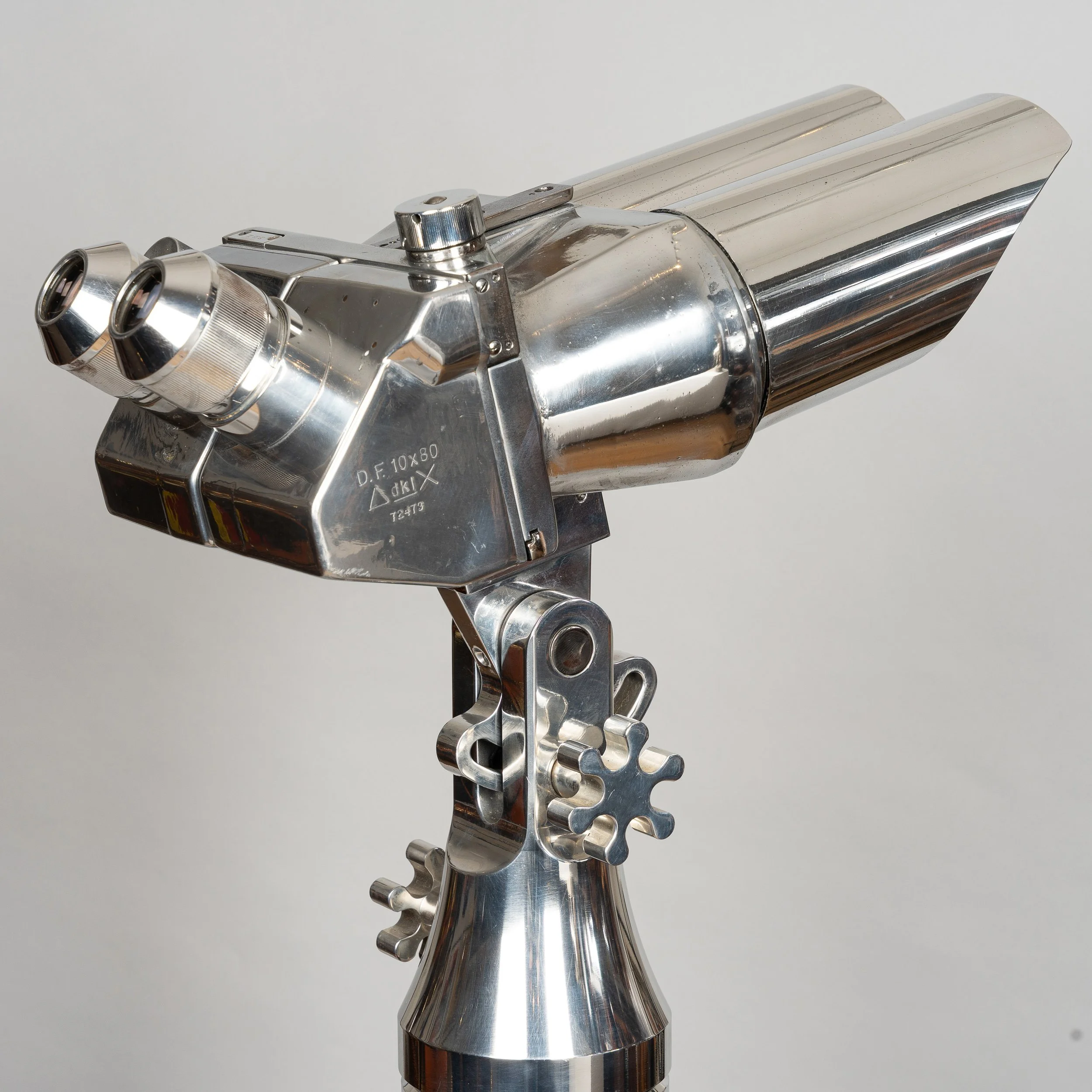
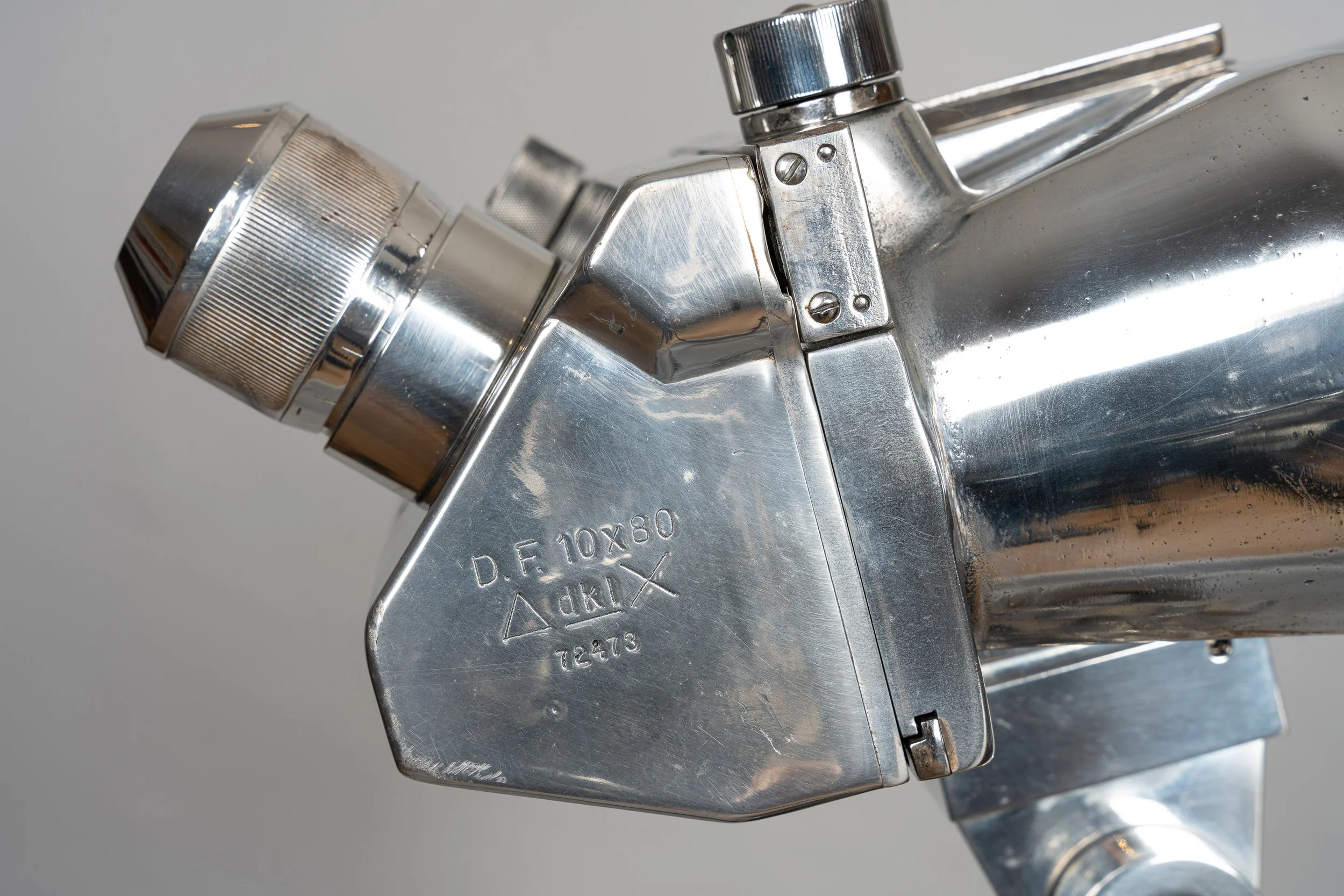
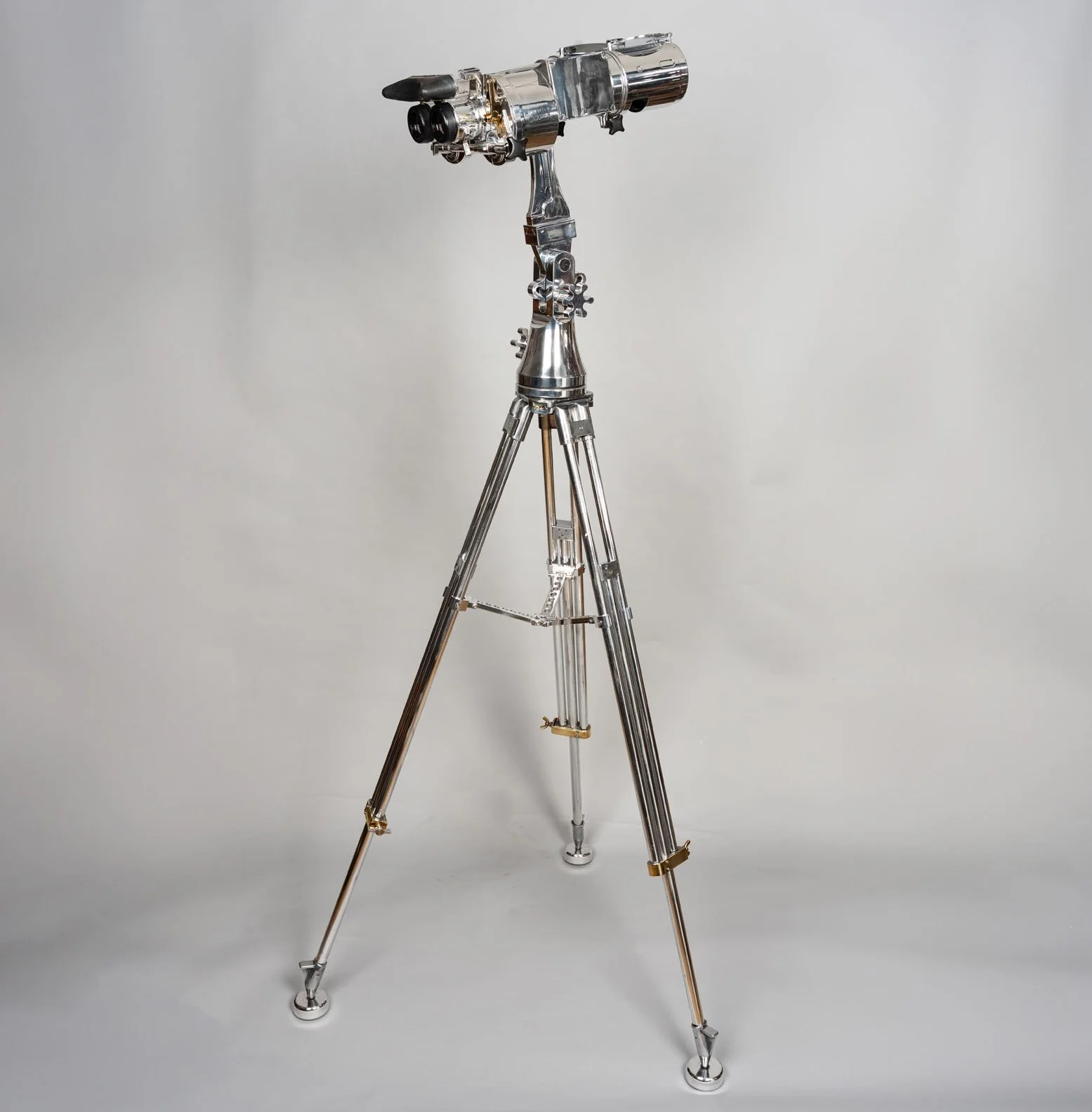
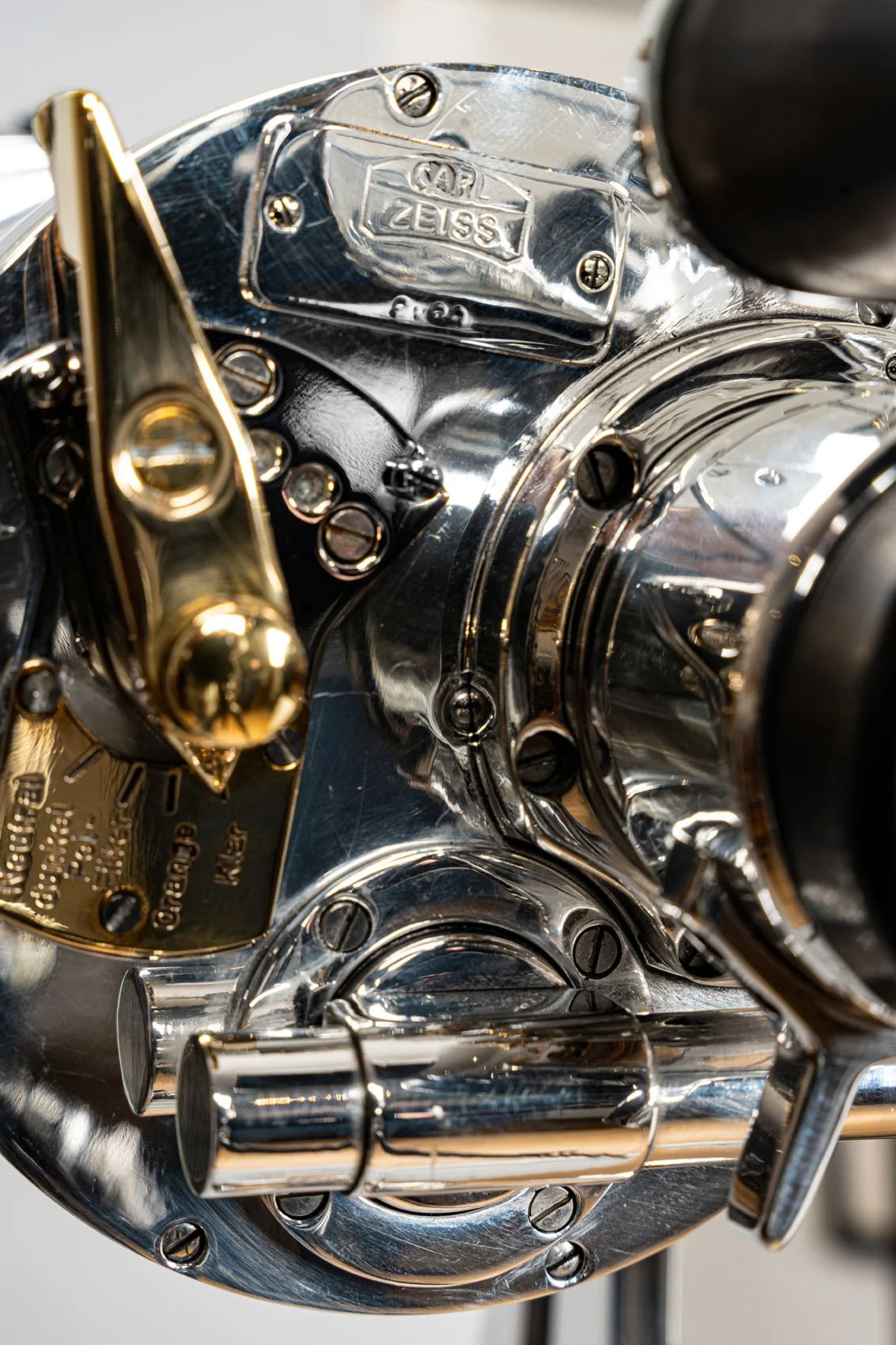
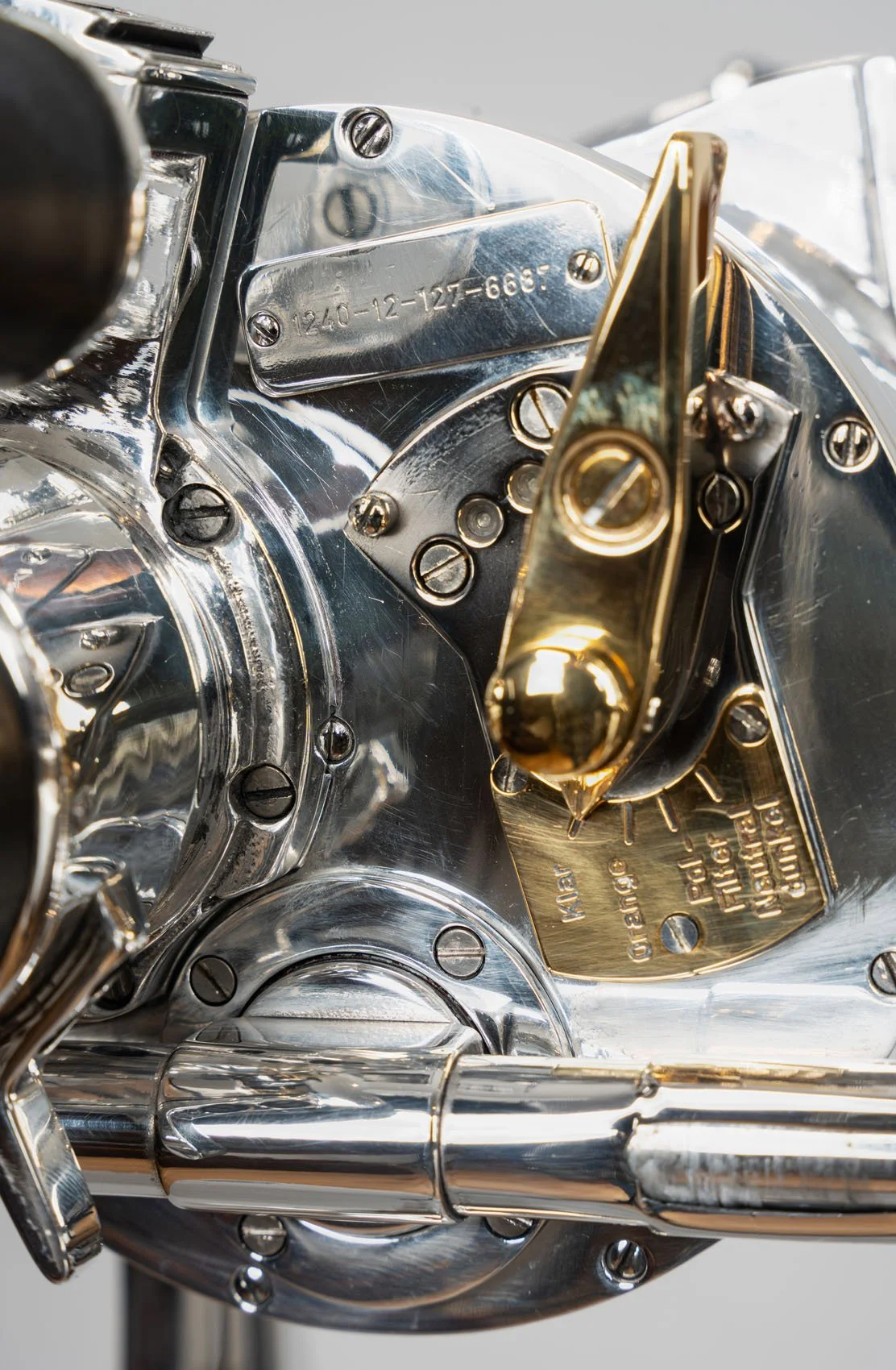
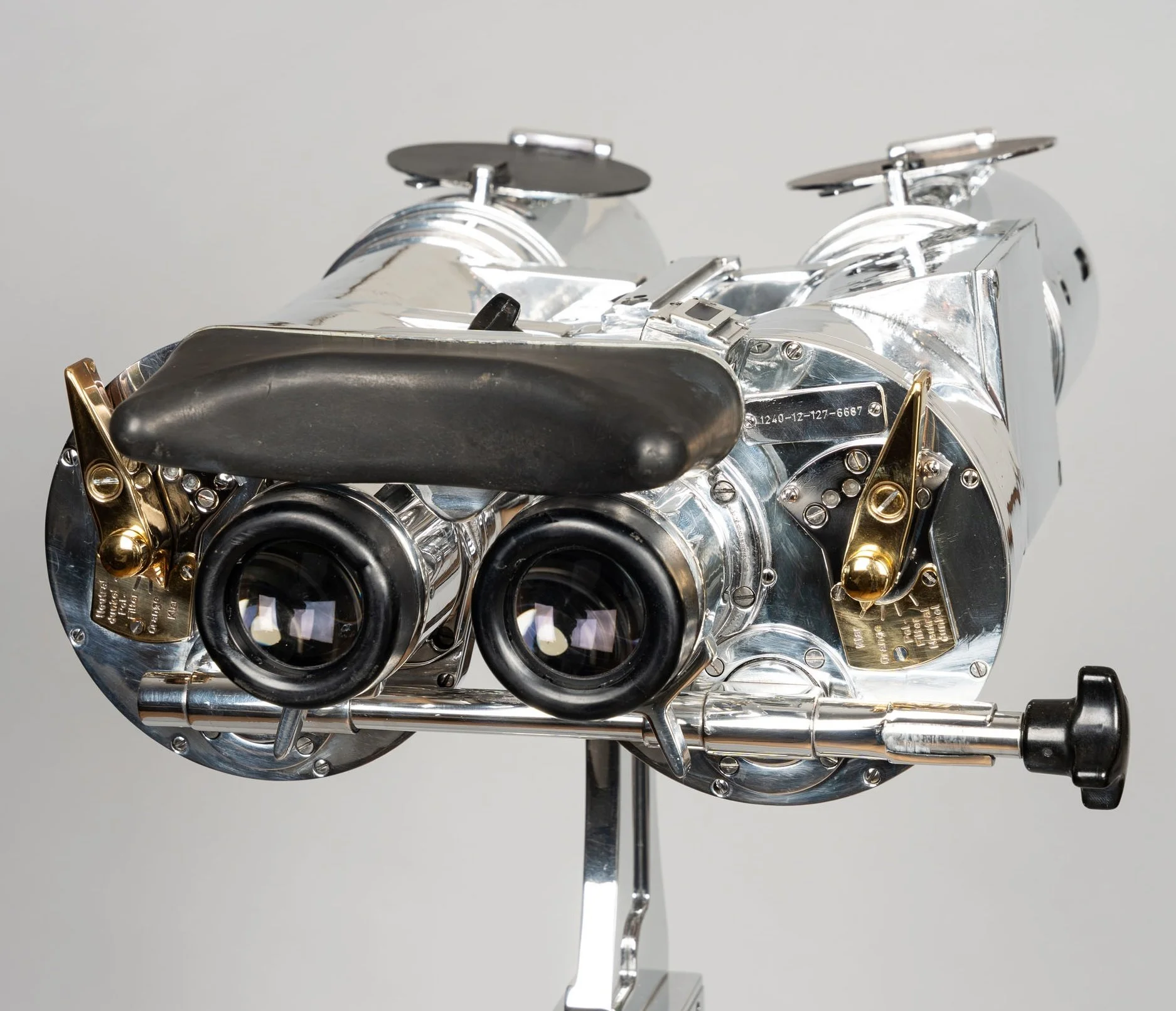
A pair of Japanese naval binoculars by Nikko, of 15 × 80 magnification, dated 1943.
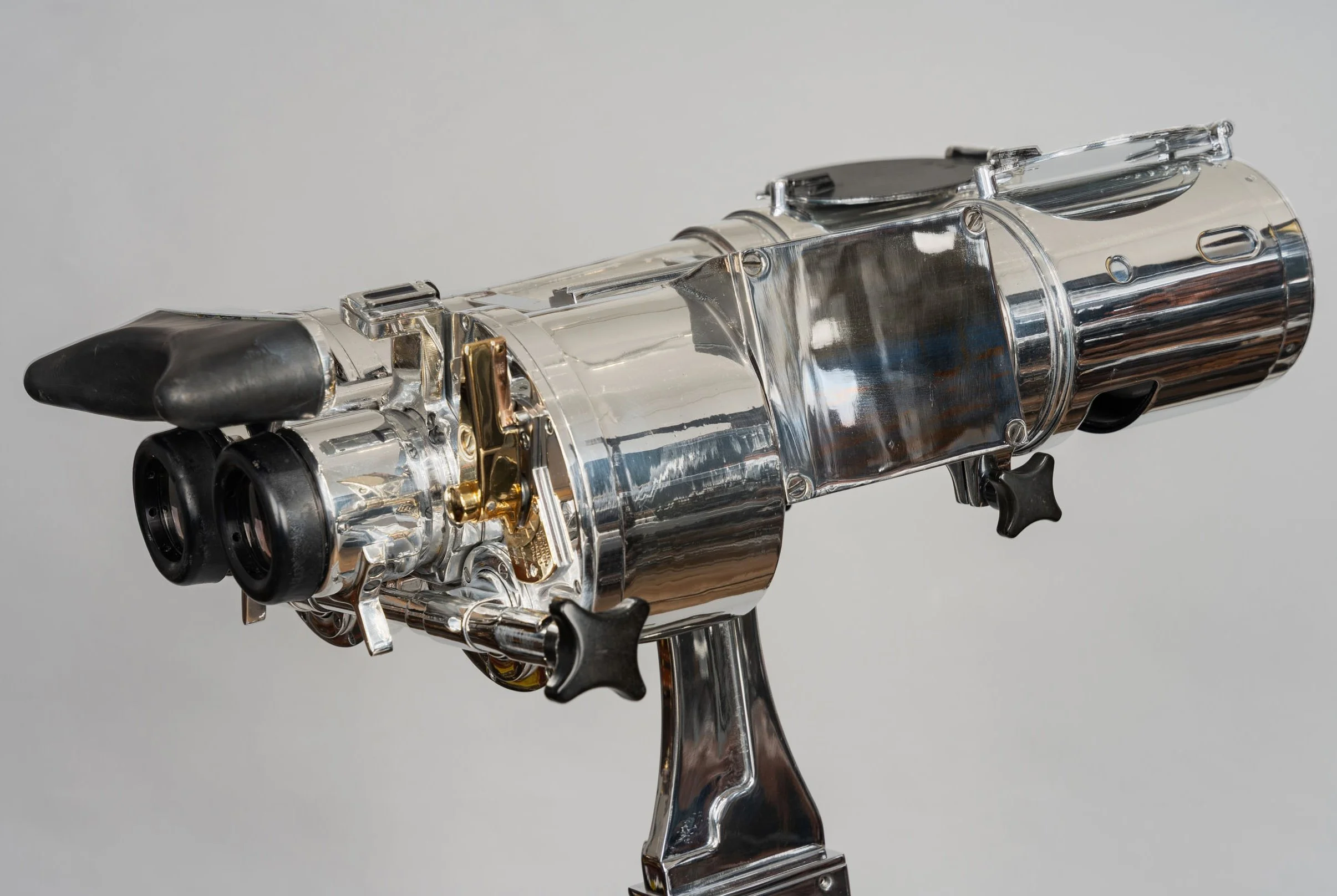
Of large-scale construction, measuring approximately 18 inches in length and weighing close to 25 pounds, the binoculars were designed for long-range naval surveillance, where stability and optical clarity were paramount. The instrument employs a Porro II prism system, paired with air-spaced achromatic objective lenses, allowing for excellent light transmission and image correction.
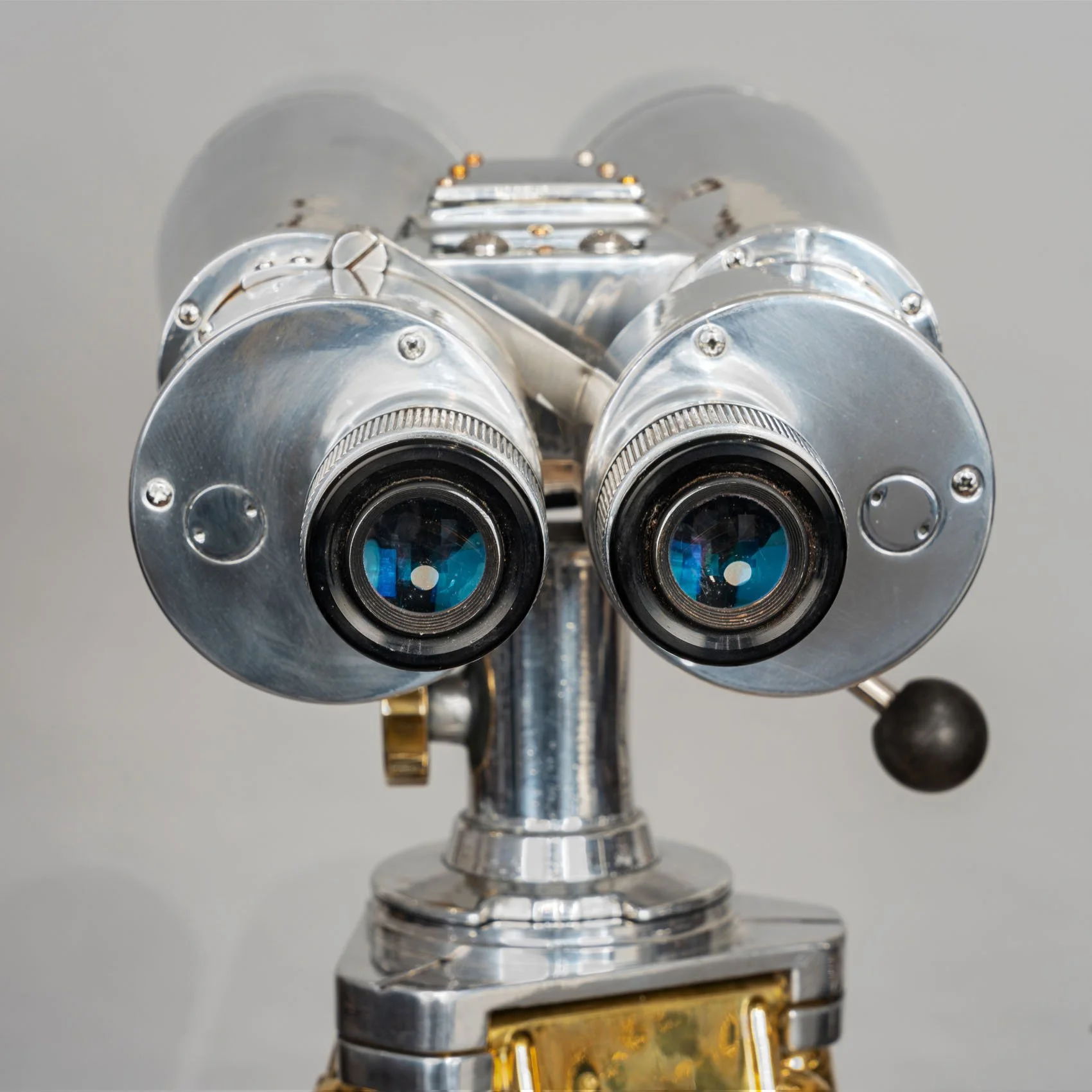
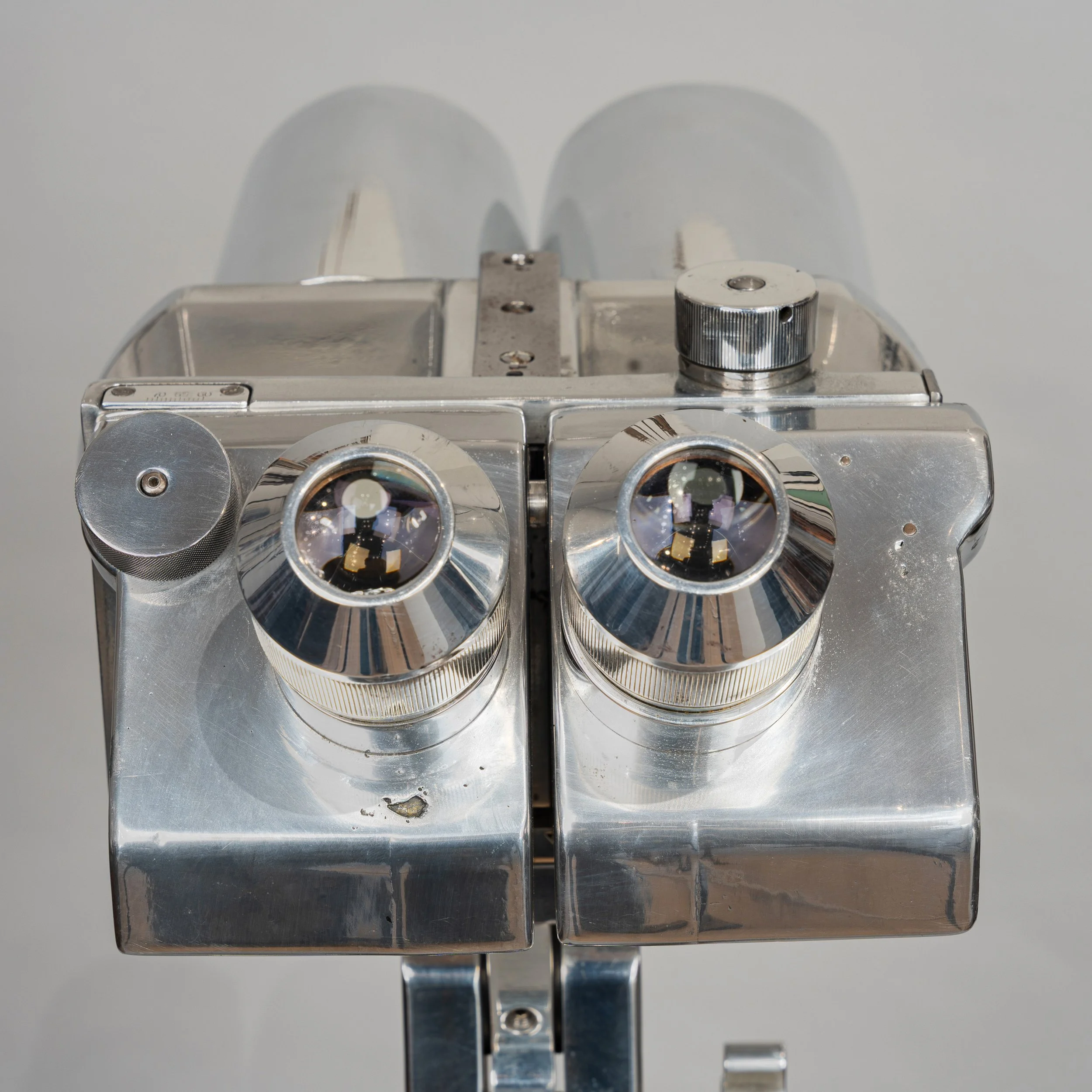
The binoculars are fitted with Erfle eyepieces, offering a notably wide field of view—approximately 60 degrees—an advanced feature for the period that significantly enhanced situational awareness during maritime observation.
Unlike inclined binocular designs, the present example retains a straight-through ocular configuration, emphasizing direct sight alignment and maximizing optical efficiency. This format was particularly suited to deck-mounted use, where stability and forward viewing were essential.
Japanese naval optics of this scale were produced in limited numbers and were typically allocated to major vessels. Their survival today is uncommon, particularly in examples that retain their structural integrity and optical performance.
Beyond their functional role, these binoculars possess a commanding physical presence, combining industrial precision with sculptural form, placing them firmly within the realm of museum-quality scientific instruments.
Literature
Japanese Naval Optical Instruments and Fire Control Systems
Military Optics of the Second World War
Comparative holdings in the Smithsonian Institution
A pair of Japanese naval binoculars by Nikko, of 15 × 80 magnification, dated 1943.
Of large-scale construction, measuring approximately 18 inches in length and weighing close to 25 pounds, the binoculars were designed for long-range naval surveillance, where stability and optical clarity were paramount. The instrument employs a Porro II prism system, paired with air-spaced achromatic objective lenses, allowing for excellent light transmission and image correction.
The binoculars are fitted with Erfle eyepieces, offering a notably wide field of view—approximately 60 degrees—an advanced feature for the period that significantly enhanced situational awareness during maritime observation.
Unlike inclined binocular designs, the present example retains a straight-through ocular configuration, emphasizing direct sight alignment and maximizing optical efficiency. This format was particularly suited to deck-mounted use, where stability and forward viewing were essential.
Japanese naval optics of this scale were produced in limited numbers and were typically allocated to major vessels. Their survival today is uncommon, particularly in examples that retain their structural integrity and optical performance.
Beyond their functional role, these binoculars possess a commanding physical presence, combining industrial precision with sculptural form, placing them firmly within the realm of museum-quality scientific instruments.
Literature
Japanese Naval Optical Instruments and Fire Control Systems
Military Optics of the Second World War
Comparative holdings in the Smithsonian Institution

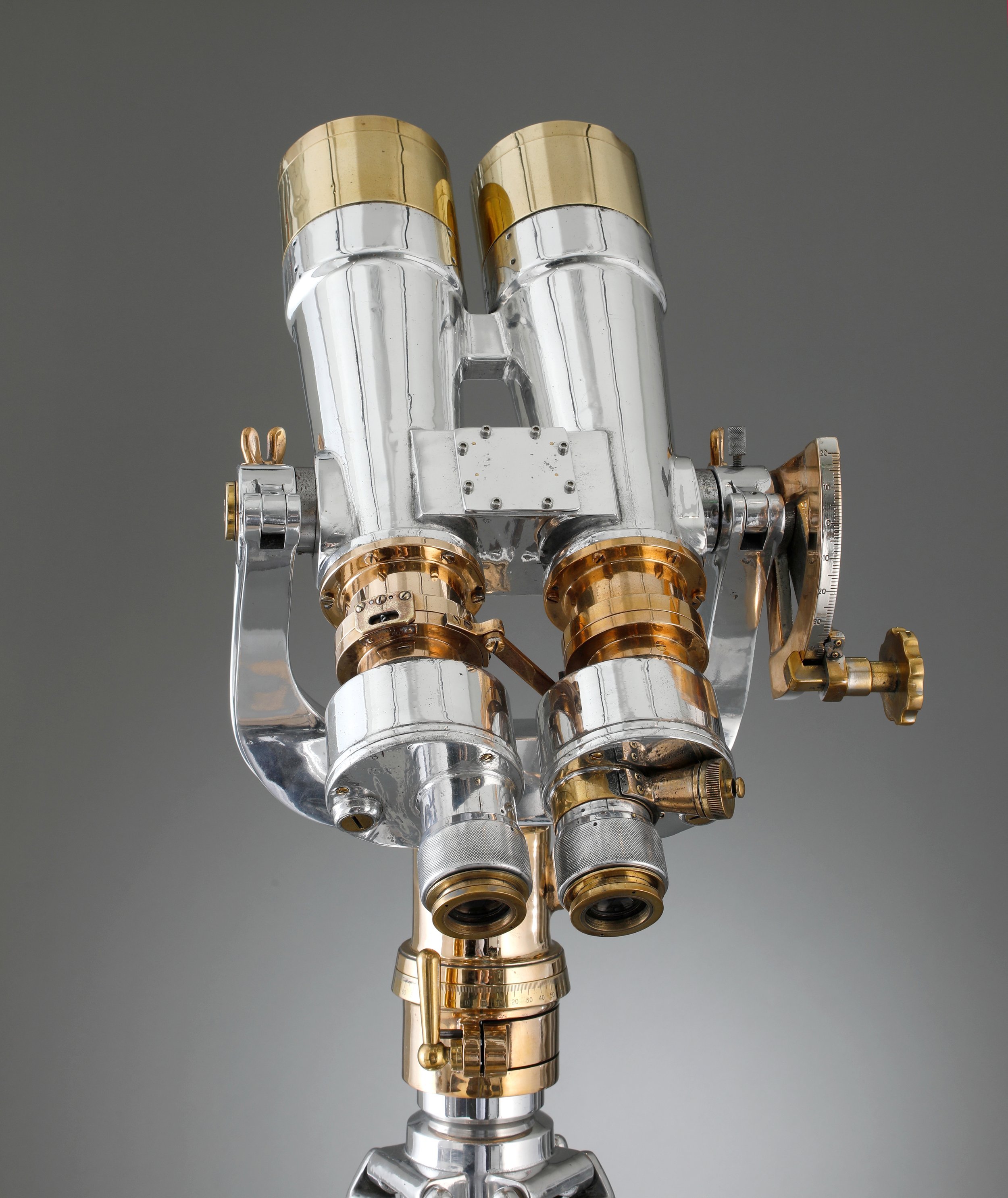 Image 1 of 1