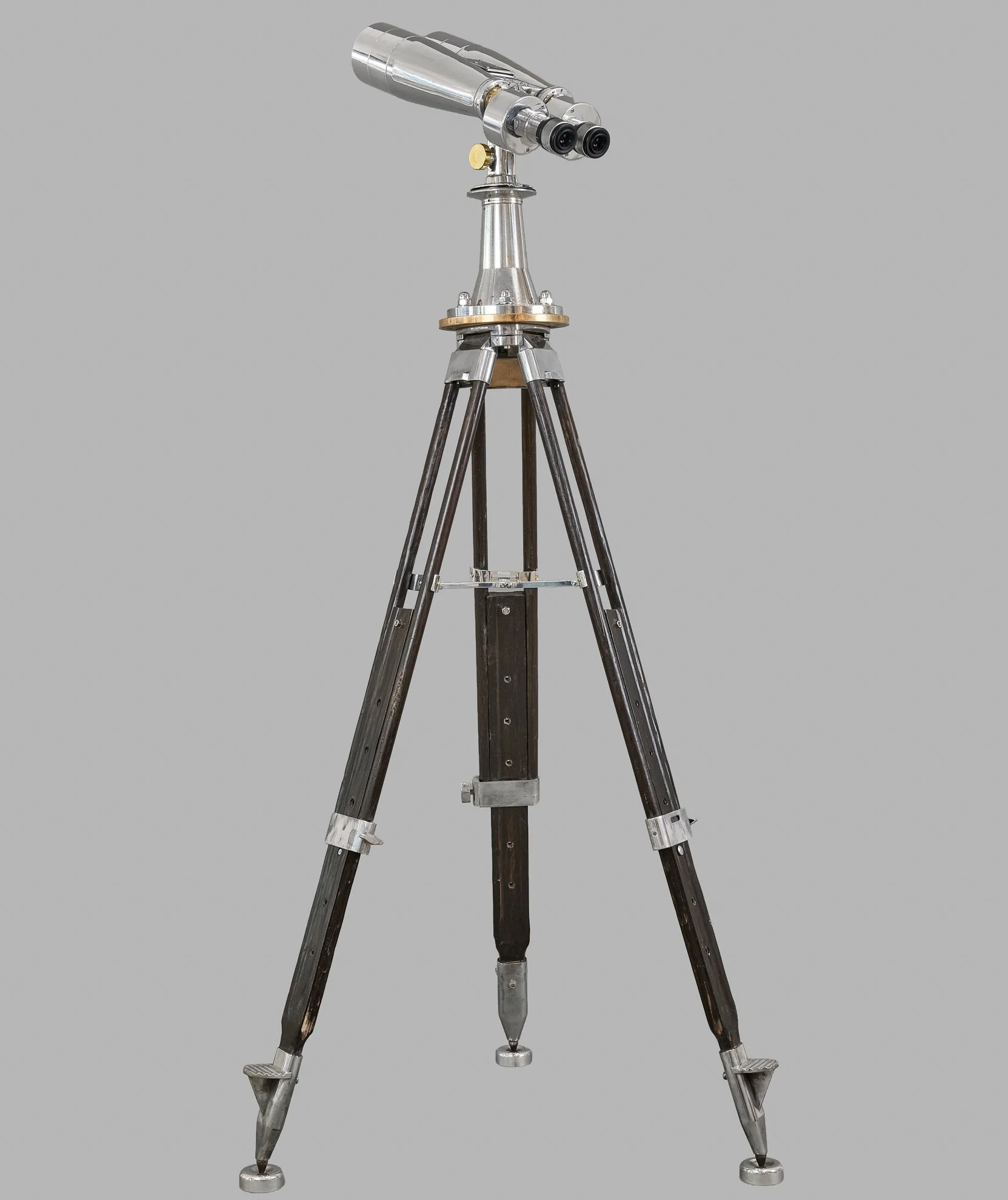
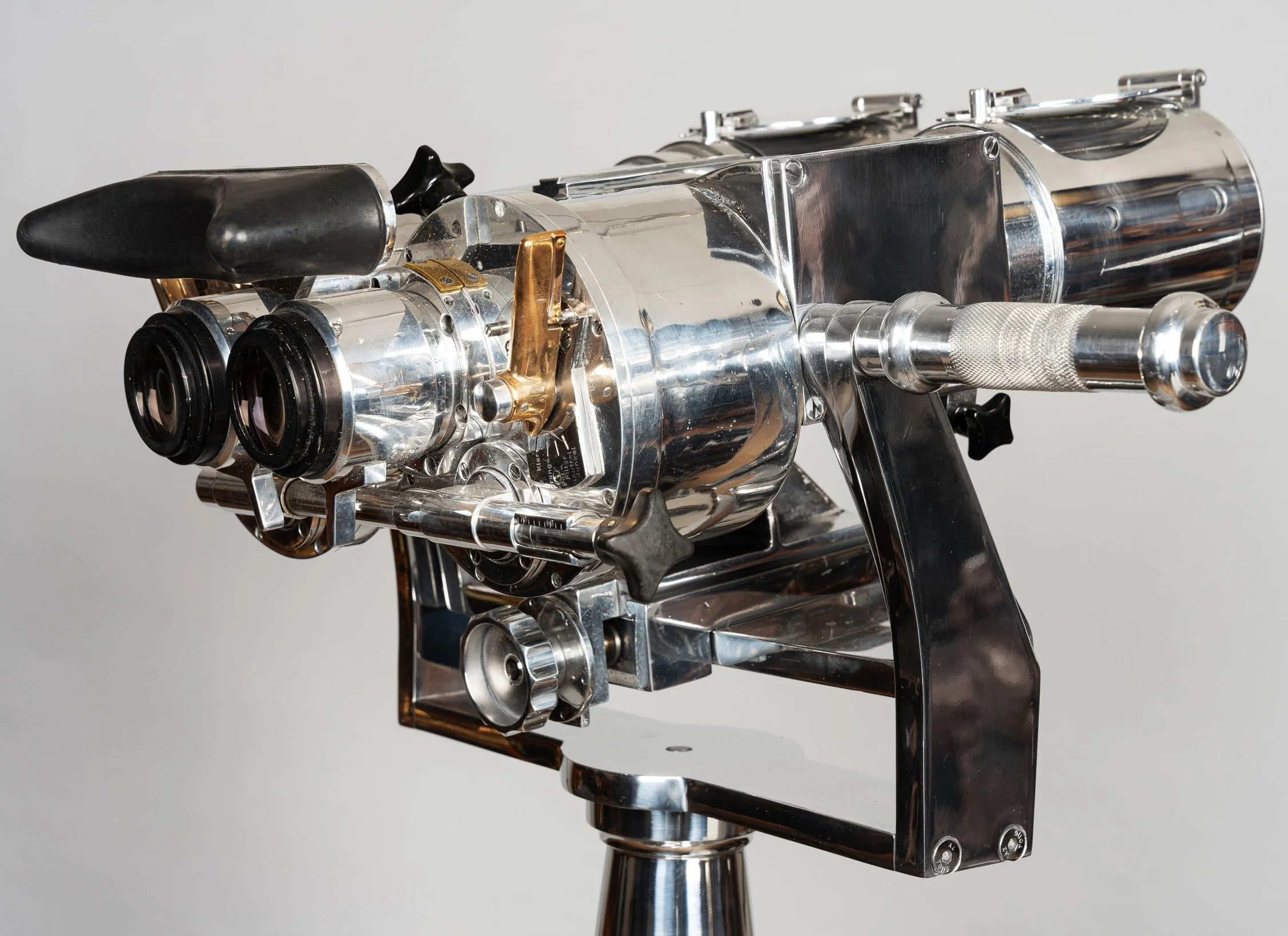
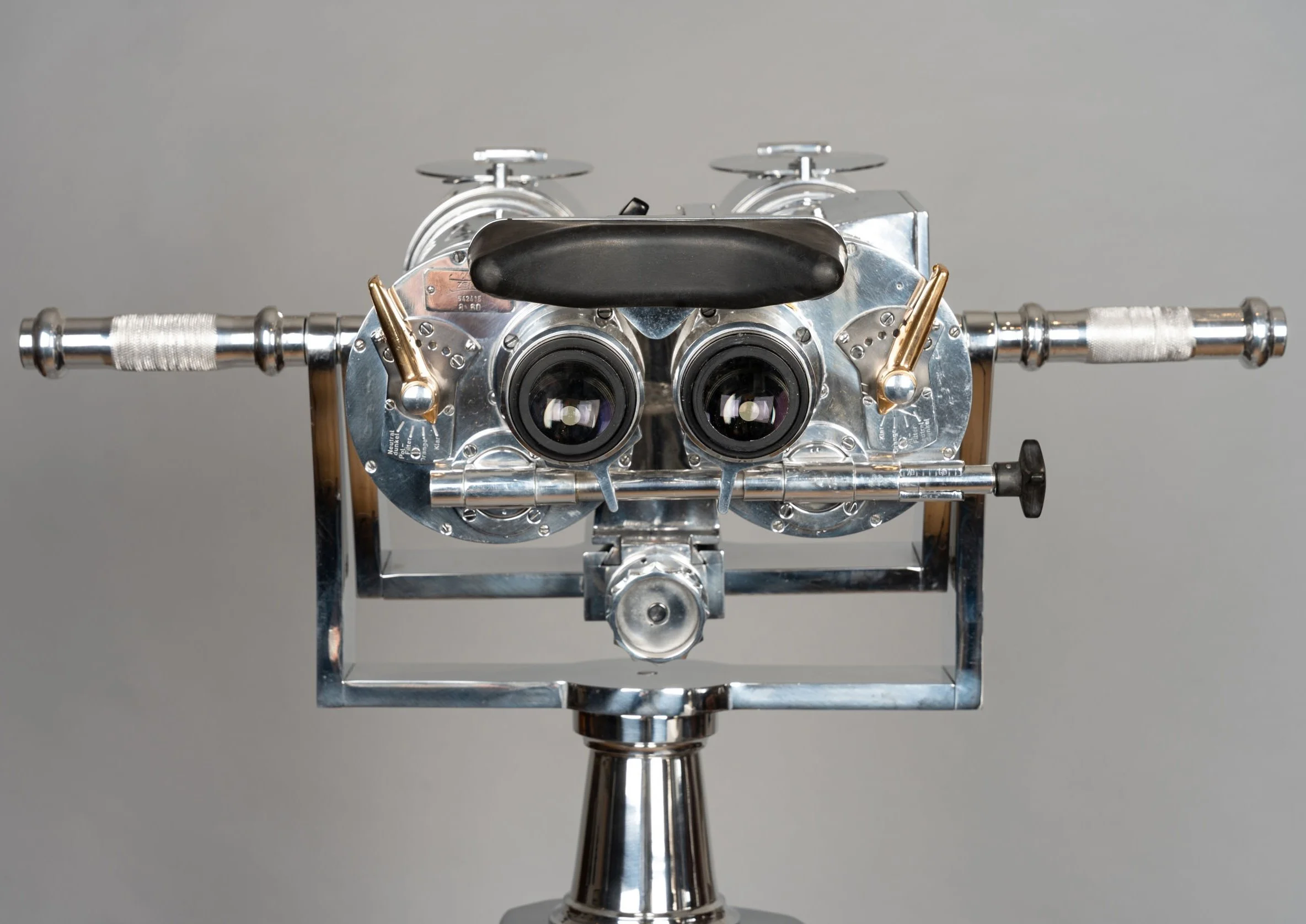
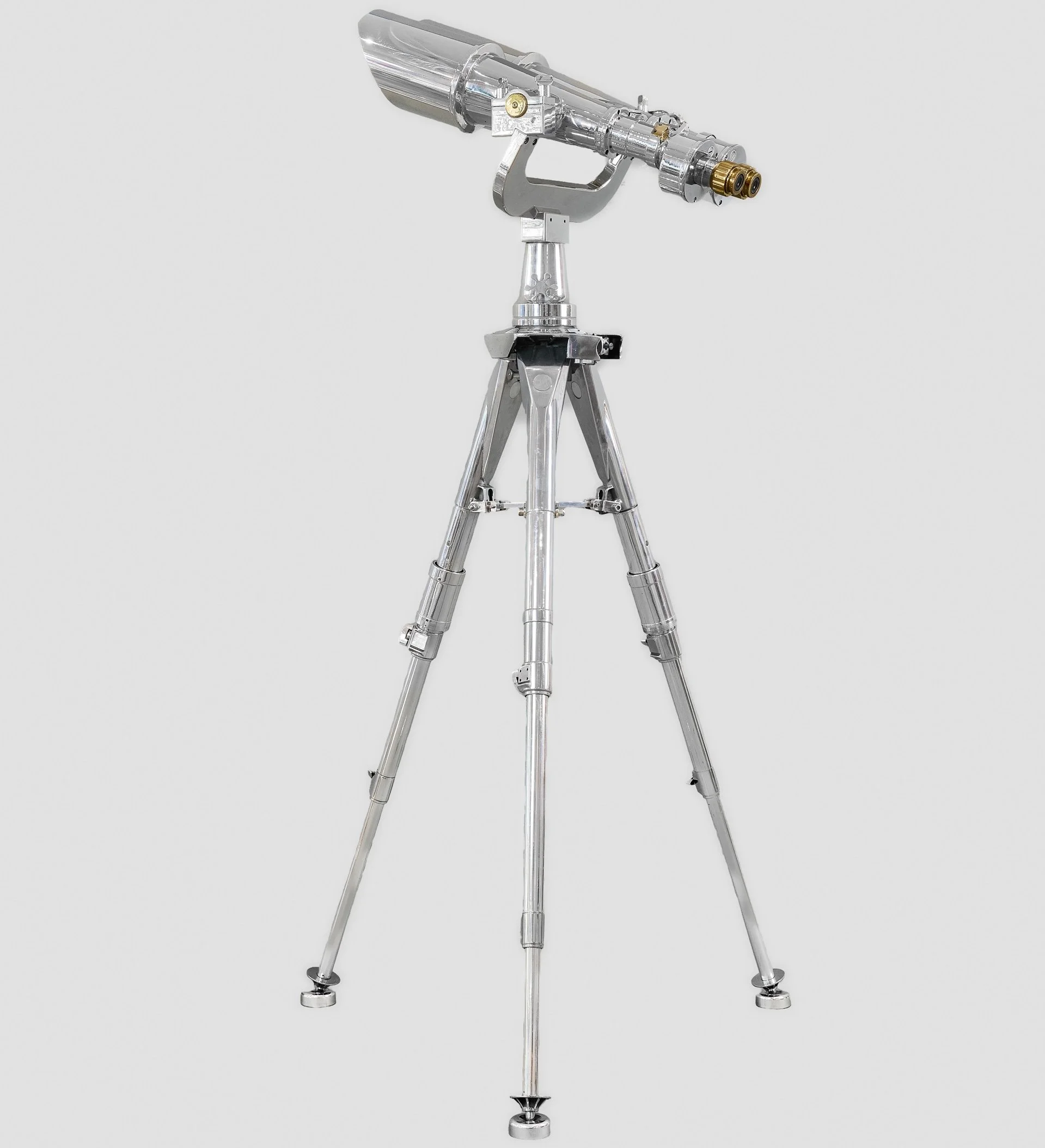
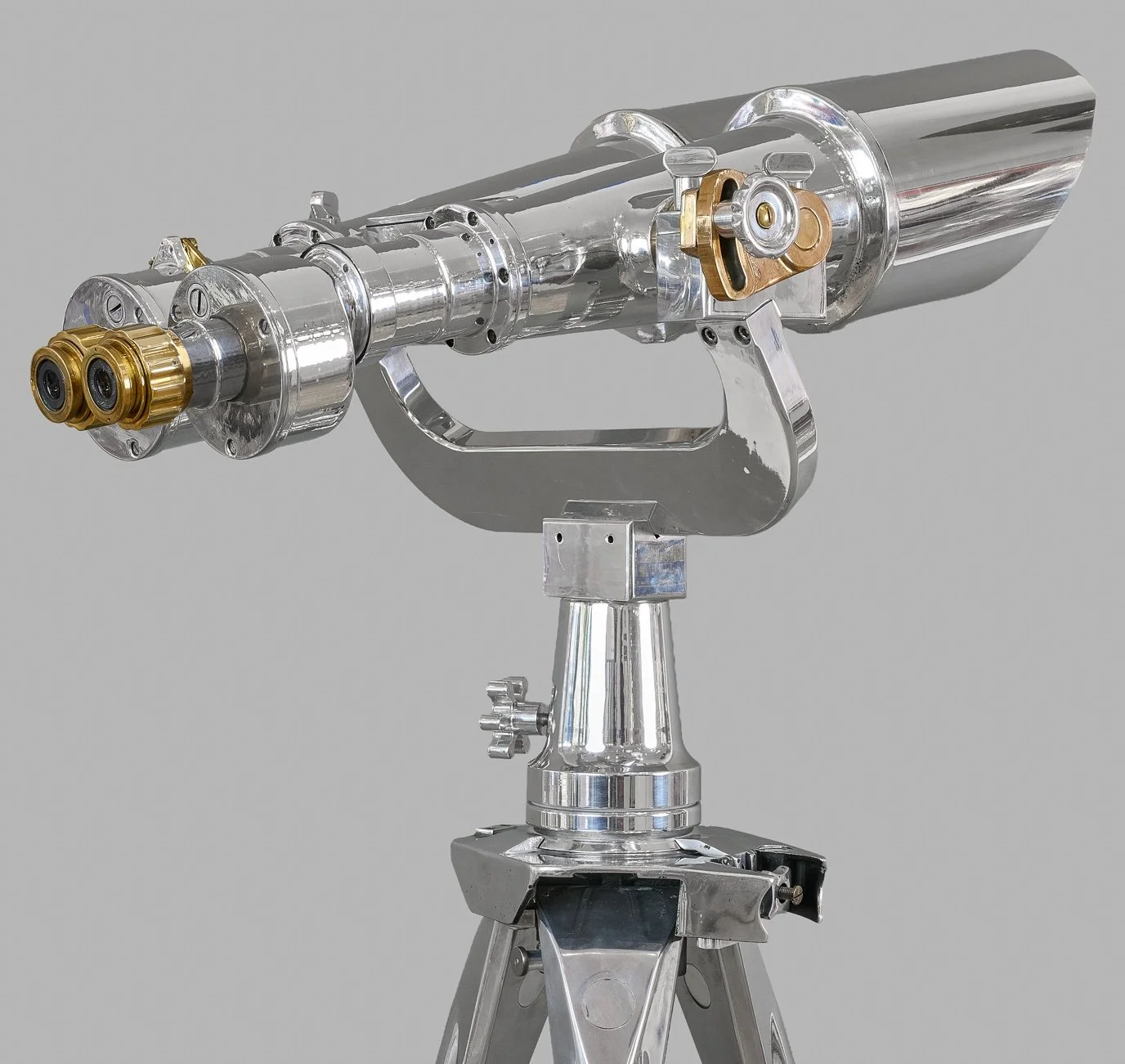
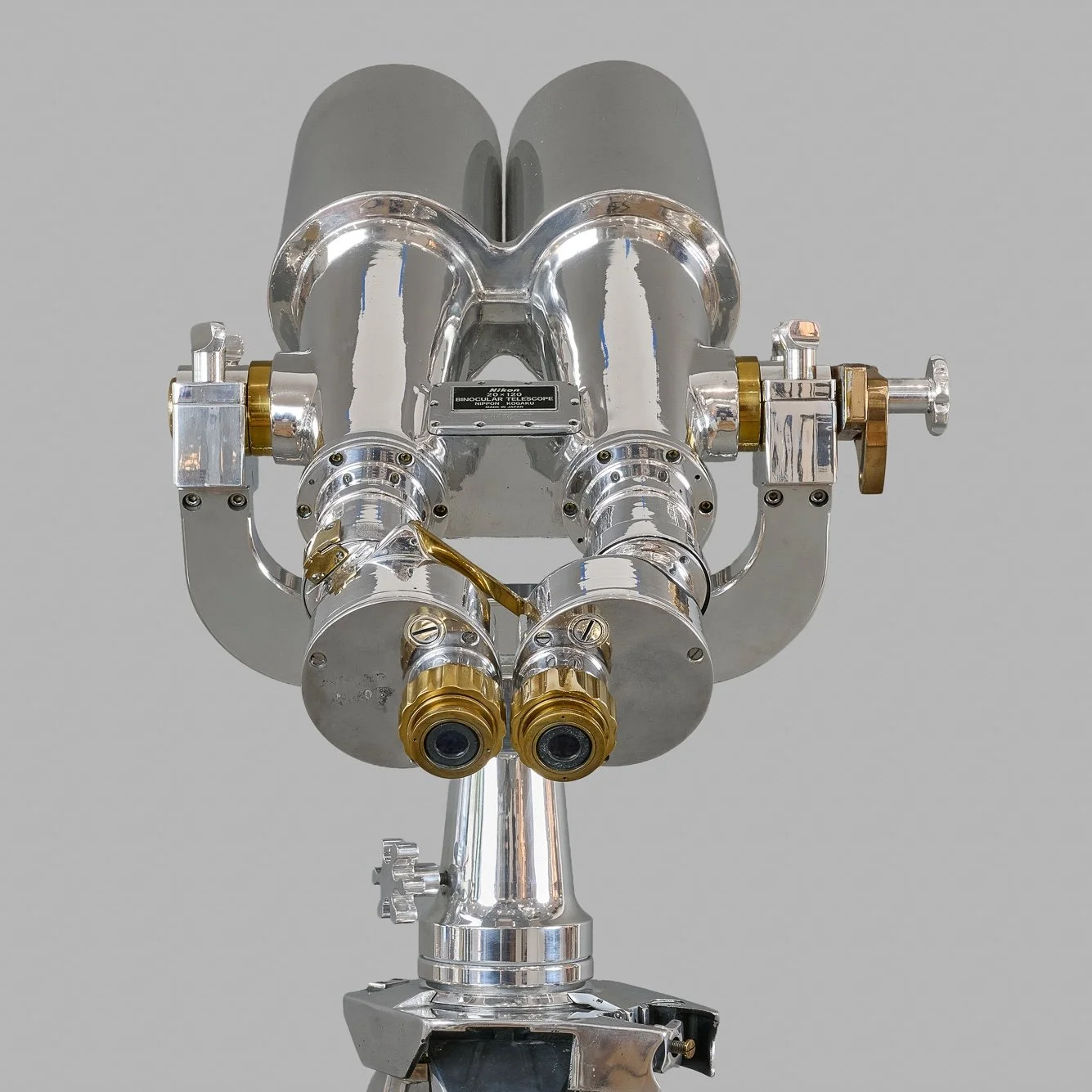
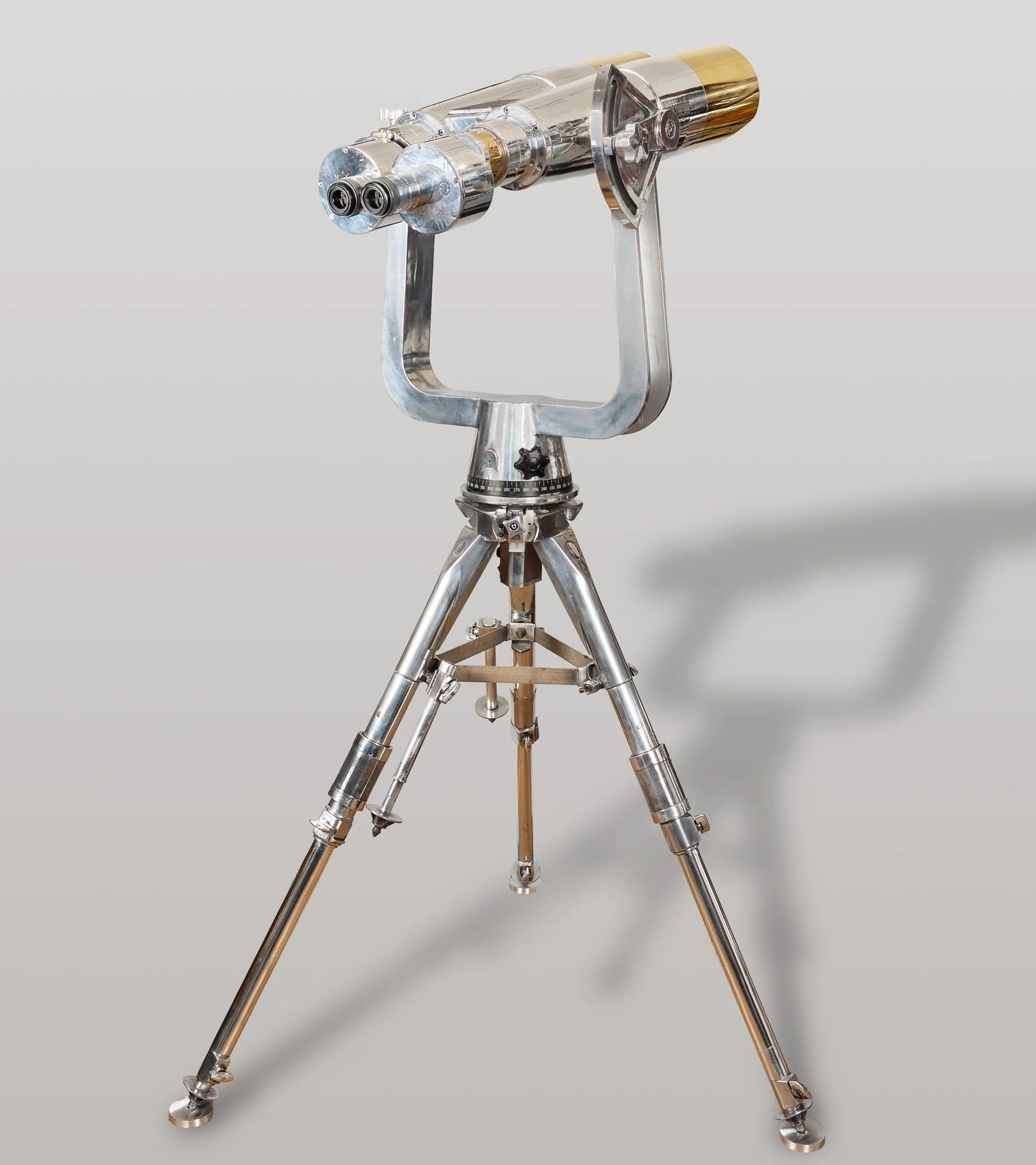
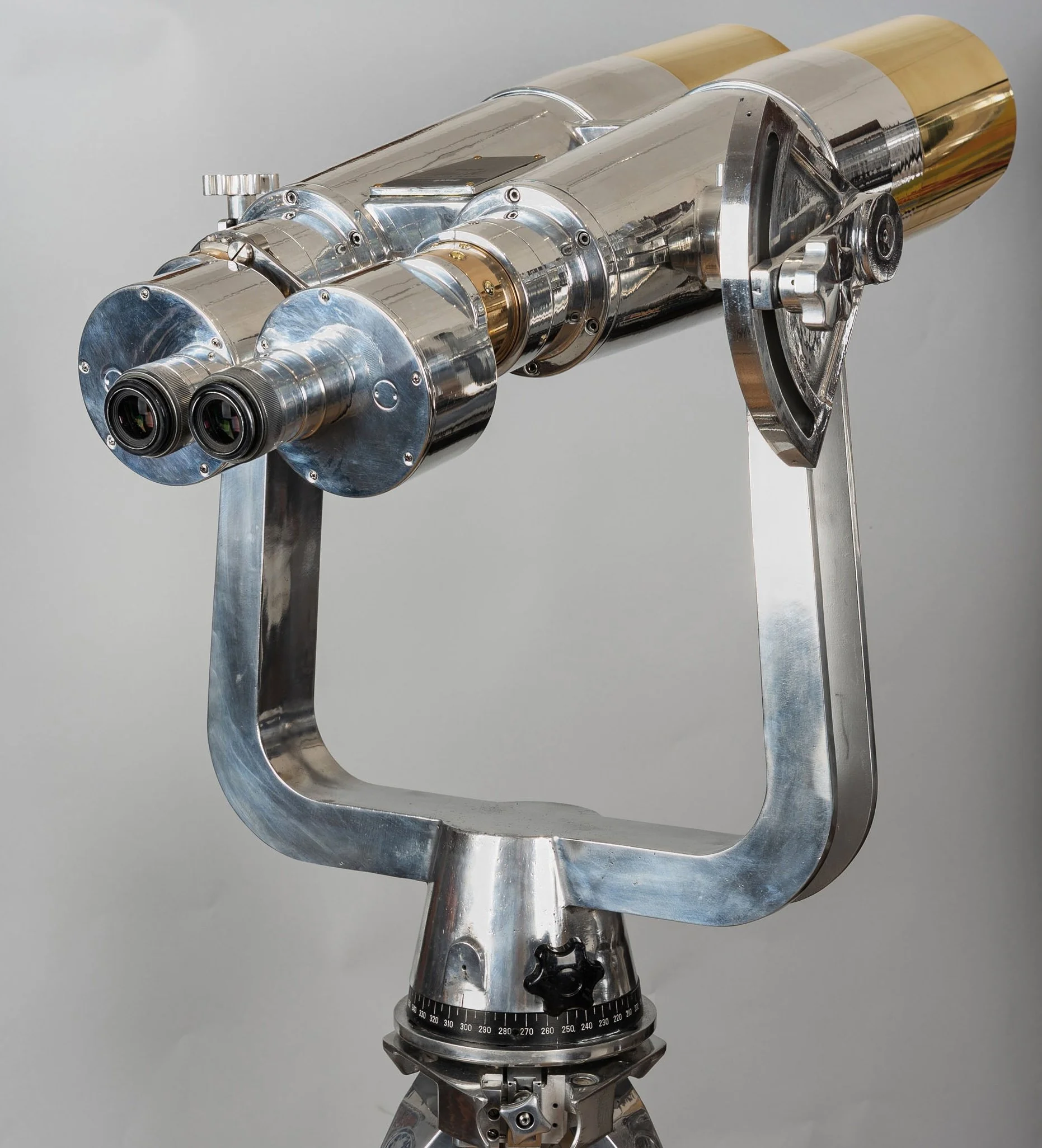
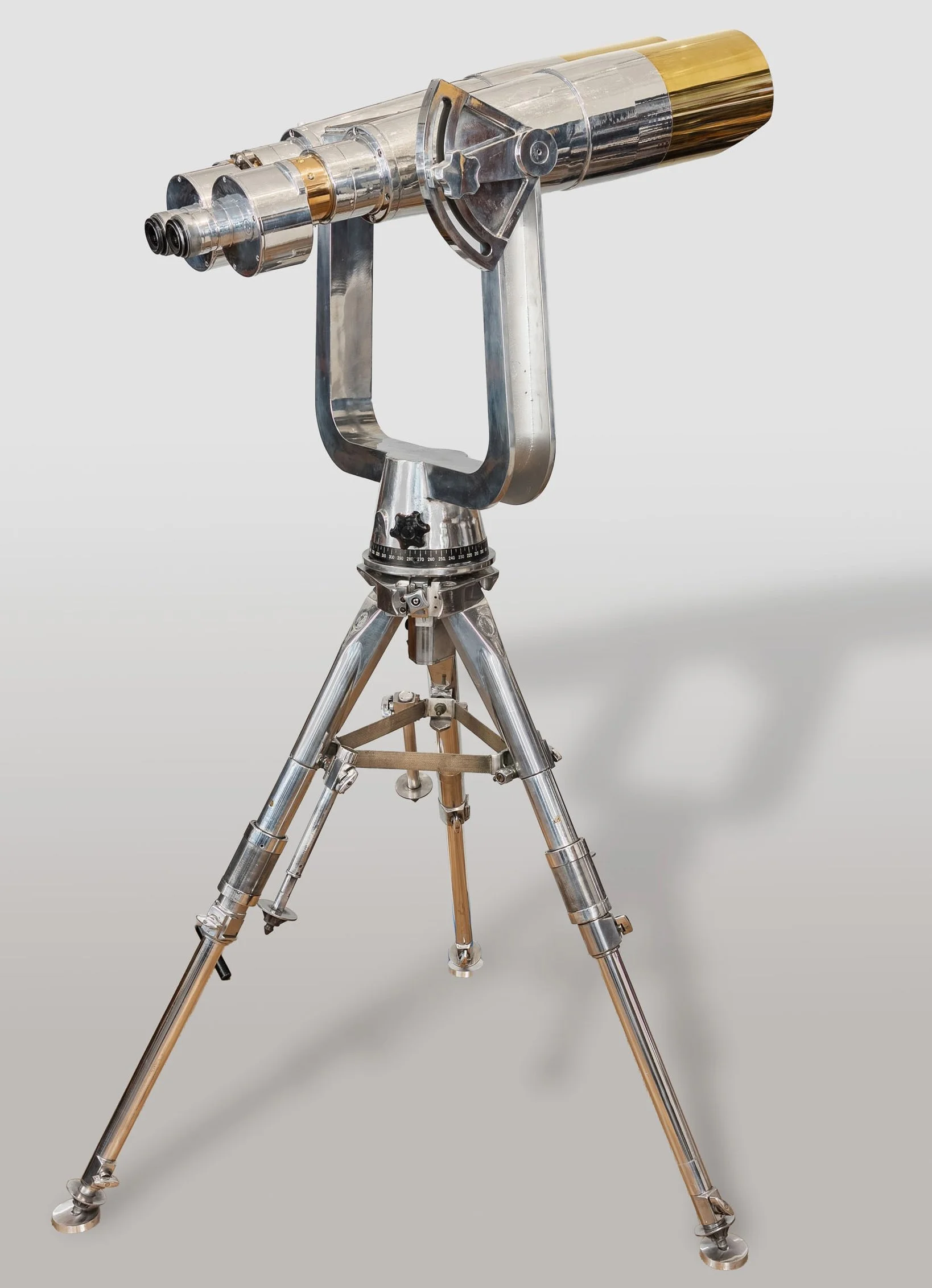
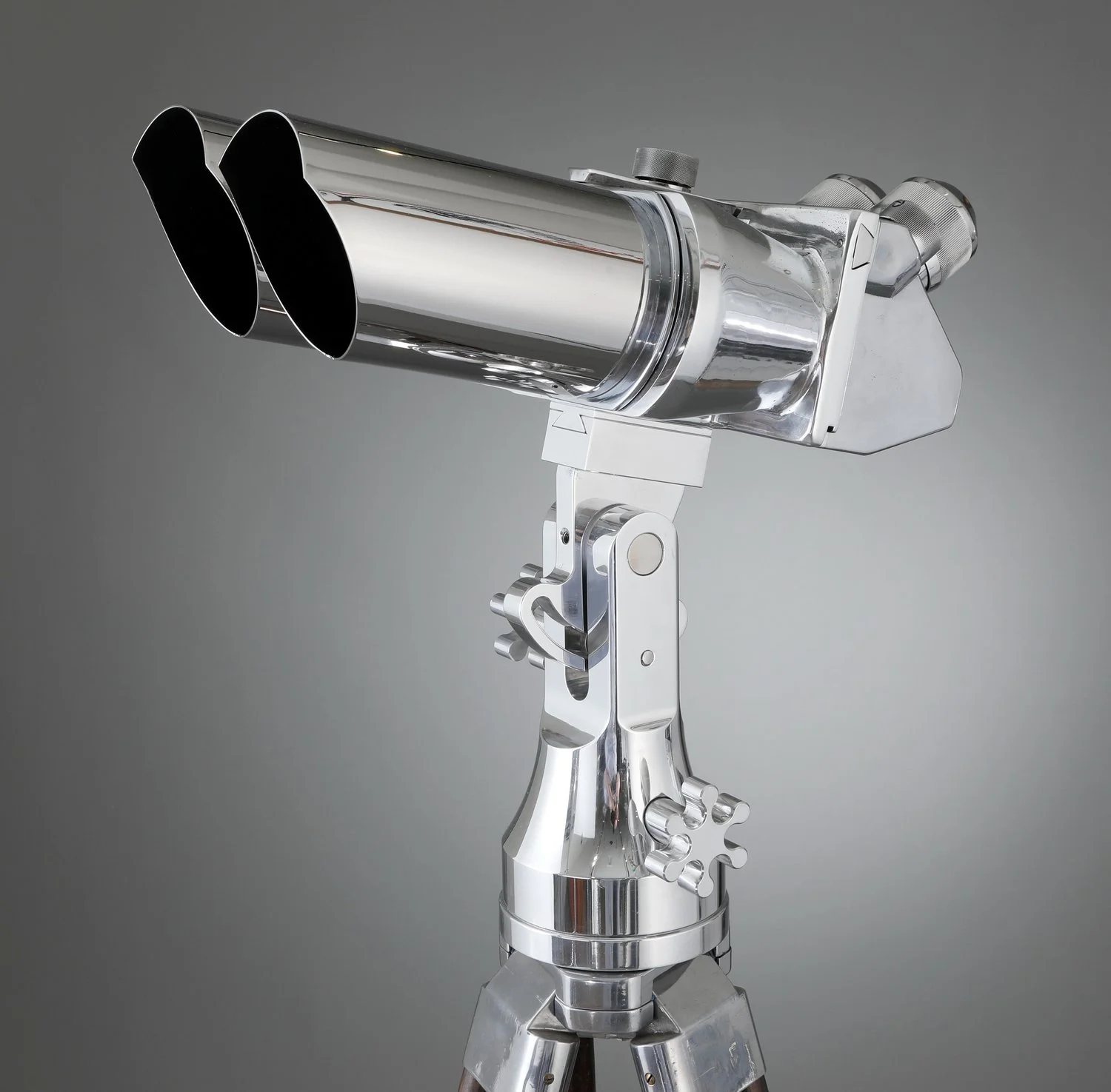
An exceptional example of the German anti-aircraft Flak binocular. The 10×80 Doppelfernrohr was developed following competitive trials in the early 1930s, in which Emil Busch, Möller Wedel and Ernst Leitz submitted designs for military evaluation; Busch's prototype was selected for its wider field of view and lower weight. Wartime production was then spread across several manufacturers under contract, with Schneider of Kreuznach, wartime code dkl, second only to Busch in output.
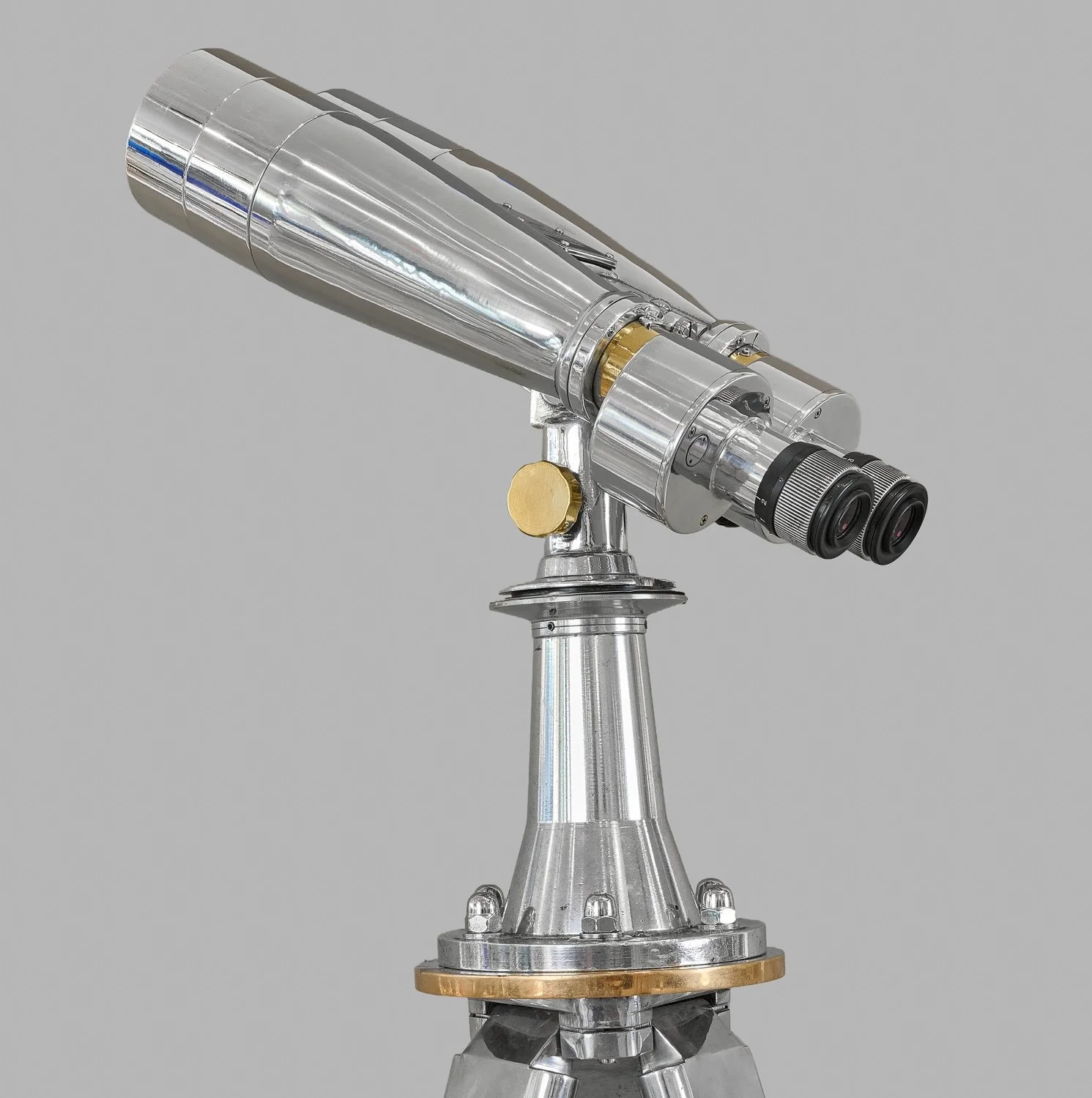
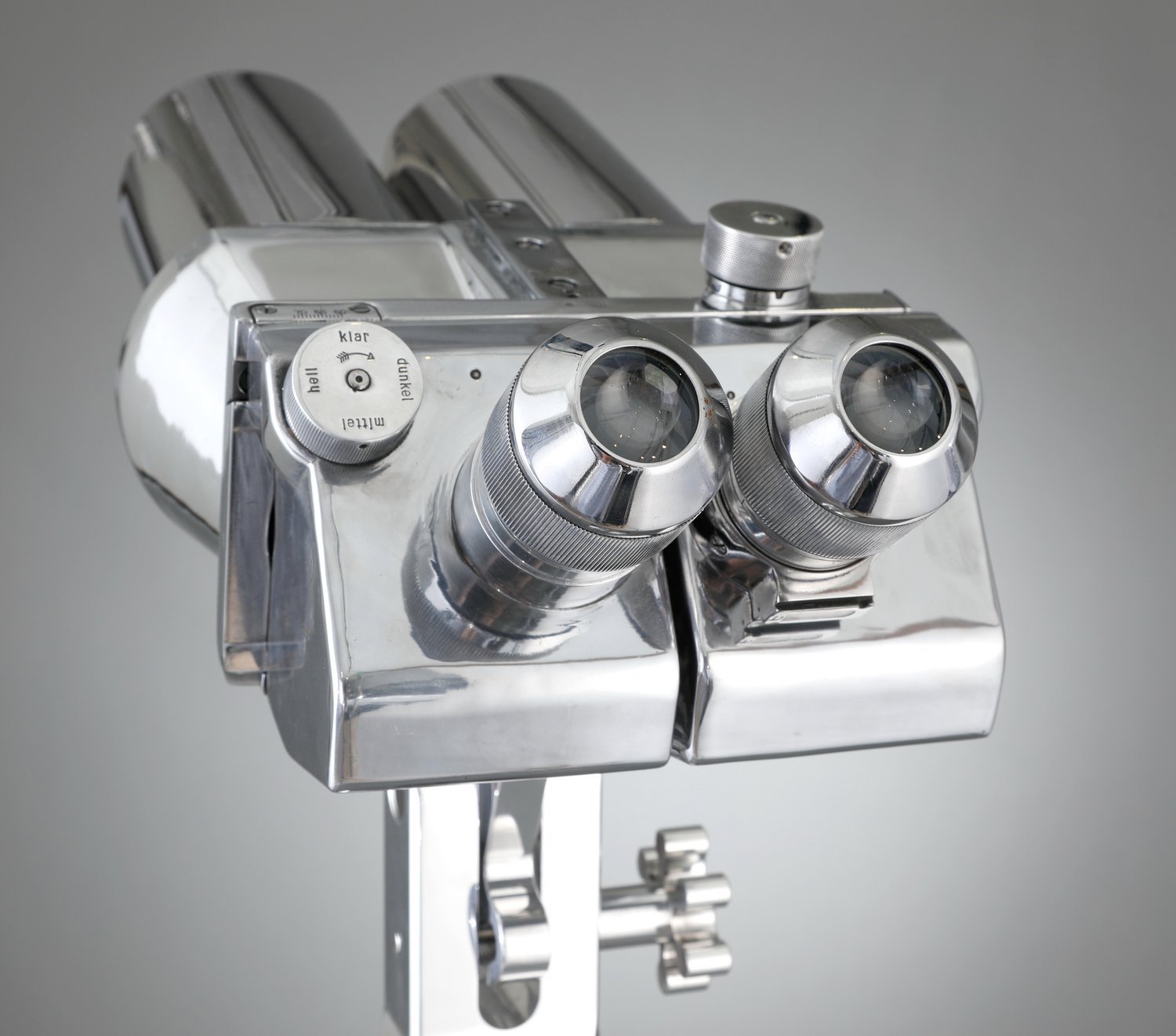
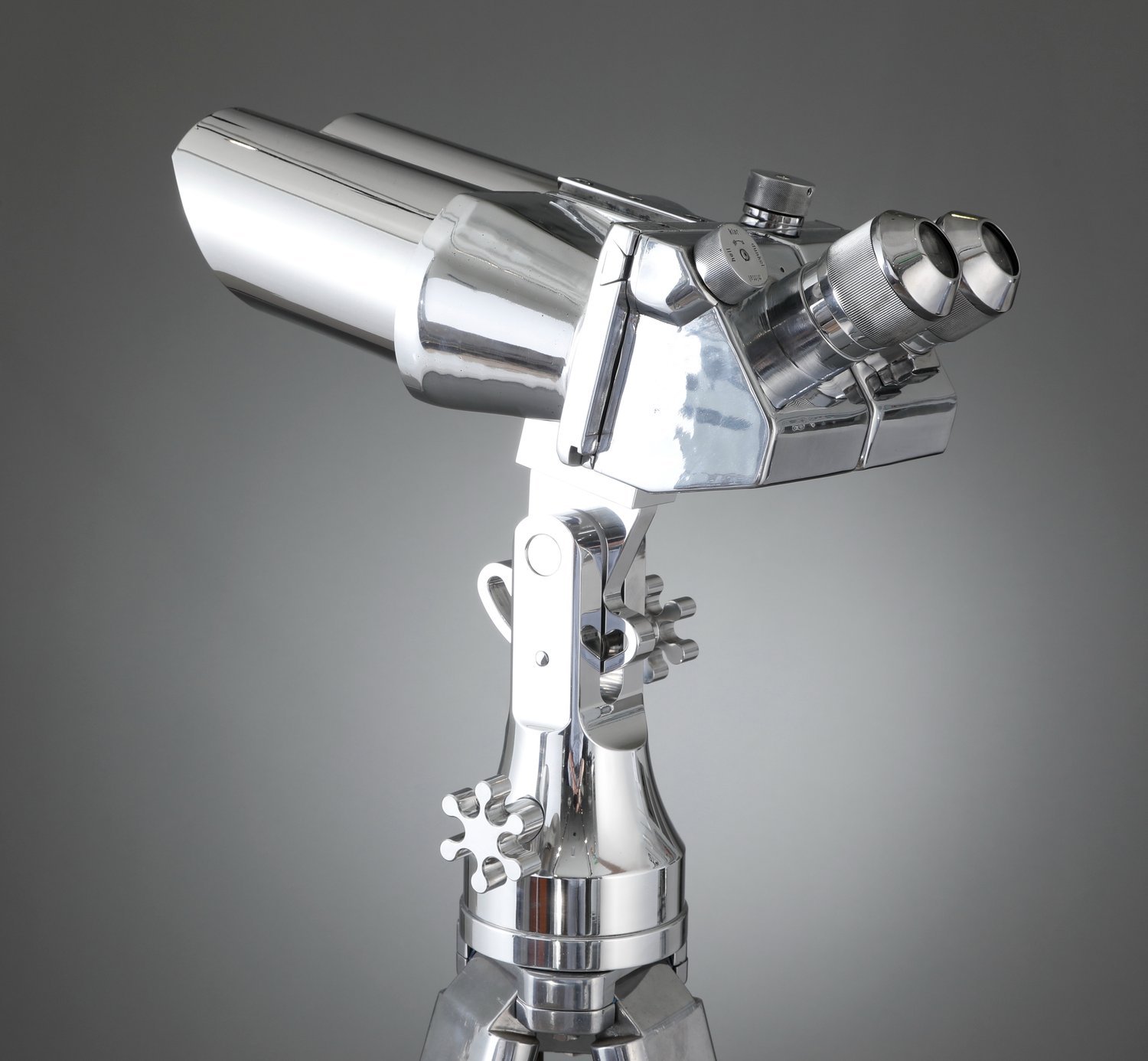
Designated D.F. 10×80 and known in service as the Flakglas, the instrument was engineered with a distinctive 45-degree inclined head for prolonged observation of aerial and terrestrial targets. It became the defining observation glass of the Flak arm, used for directing anti-aircraft fire and searchlights and deployed on every front from the Western Desert to Russia. It stands among the most recognizable optical instruments of the Second World War, prized for its history, its engineering and its sheer visual impact.
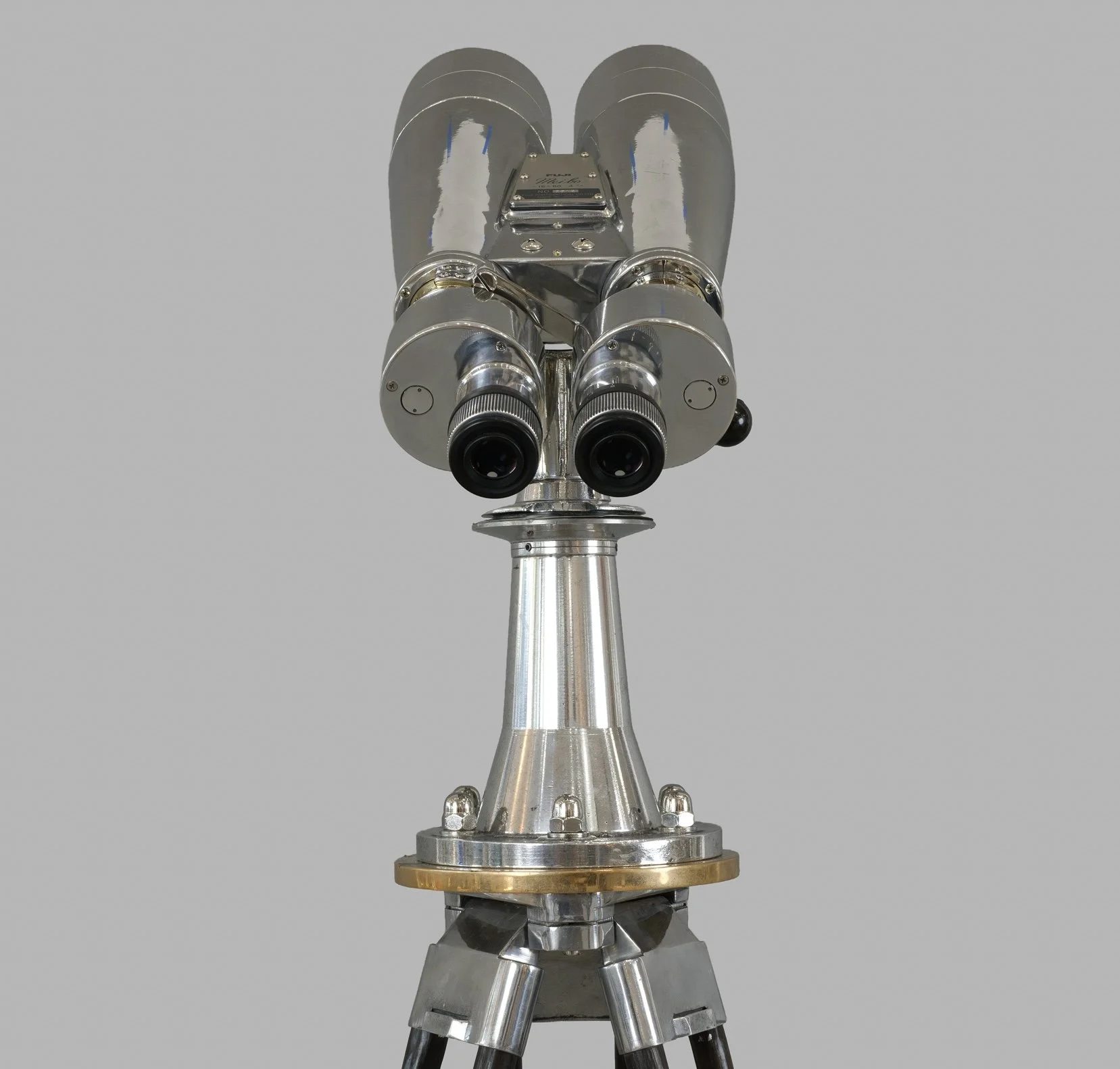
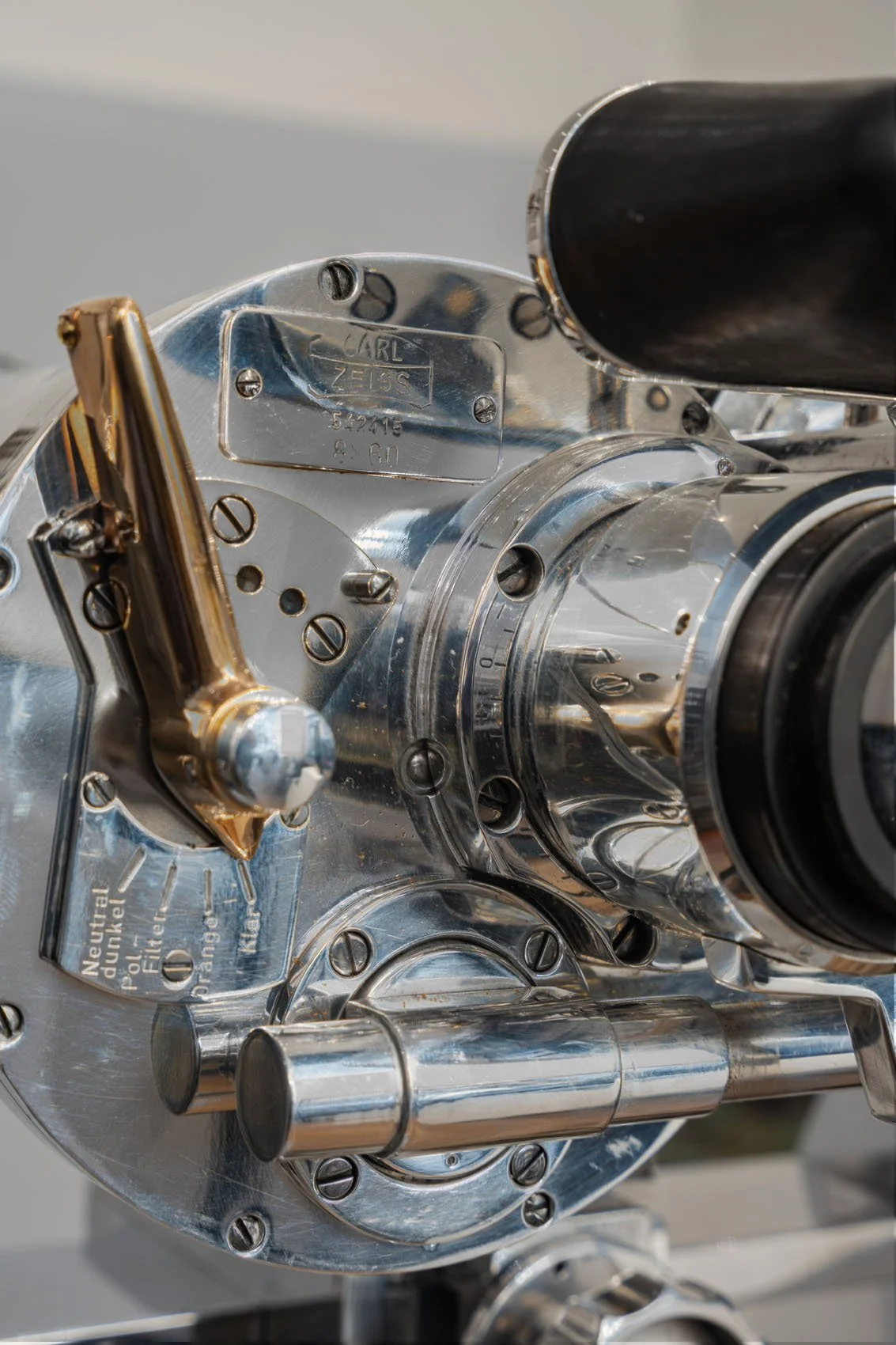
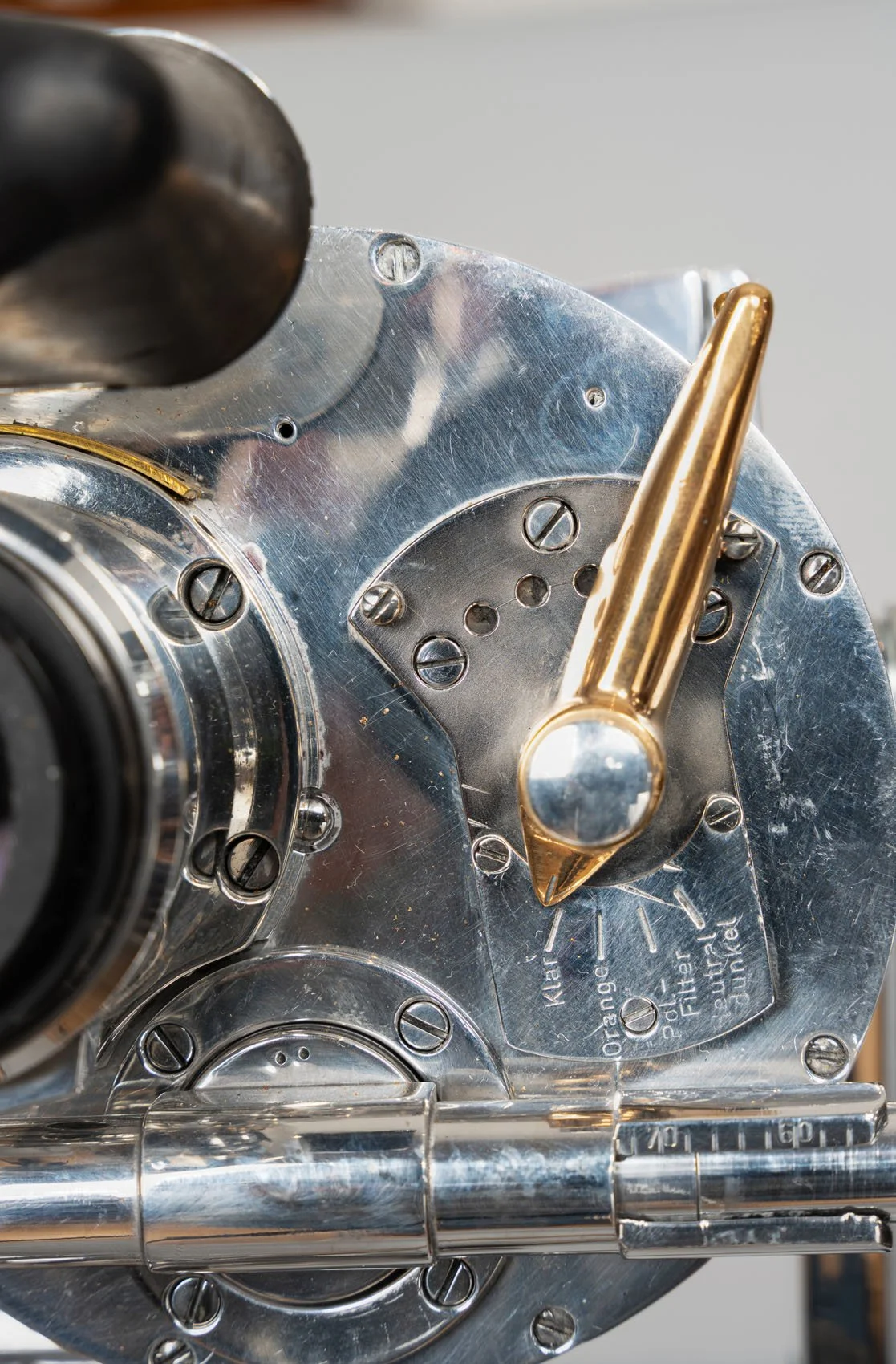
The present example bears the code dkl for Schneider Optische Werke, Kreuznach. Serial number 72473 is consistent with late-war manufacture of circa 1944. The sand-cast aluminum body has been hand-polished to a mirror finish, the engraved markings D.F. 10×80 / △ dkl X / 72473 crisp and fully legible.
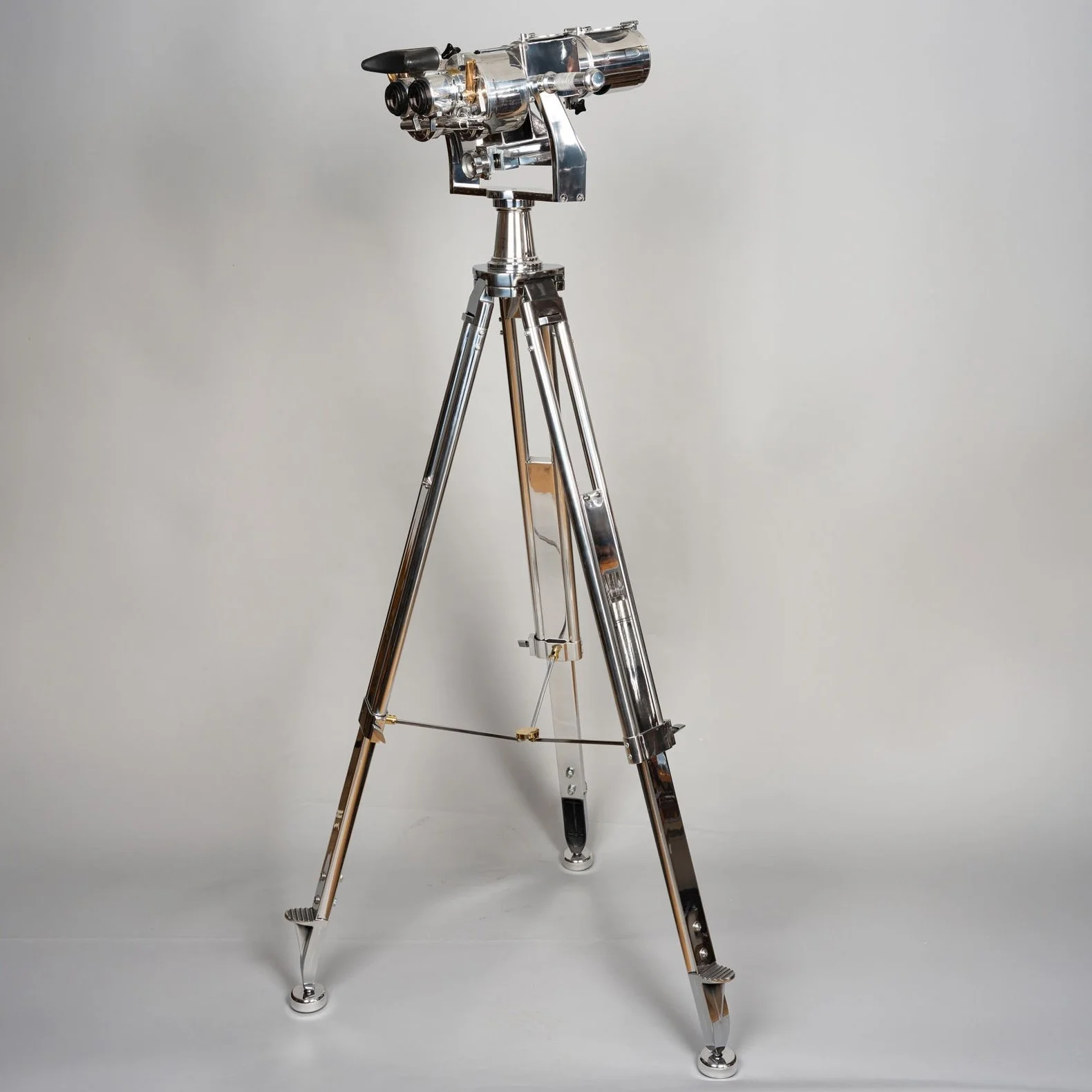
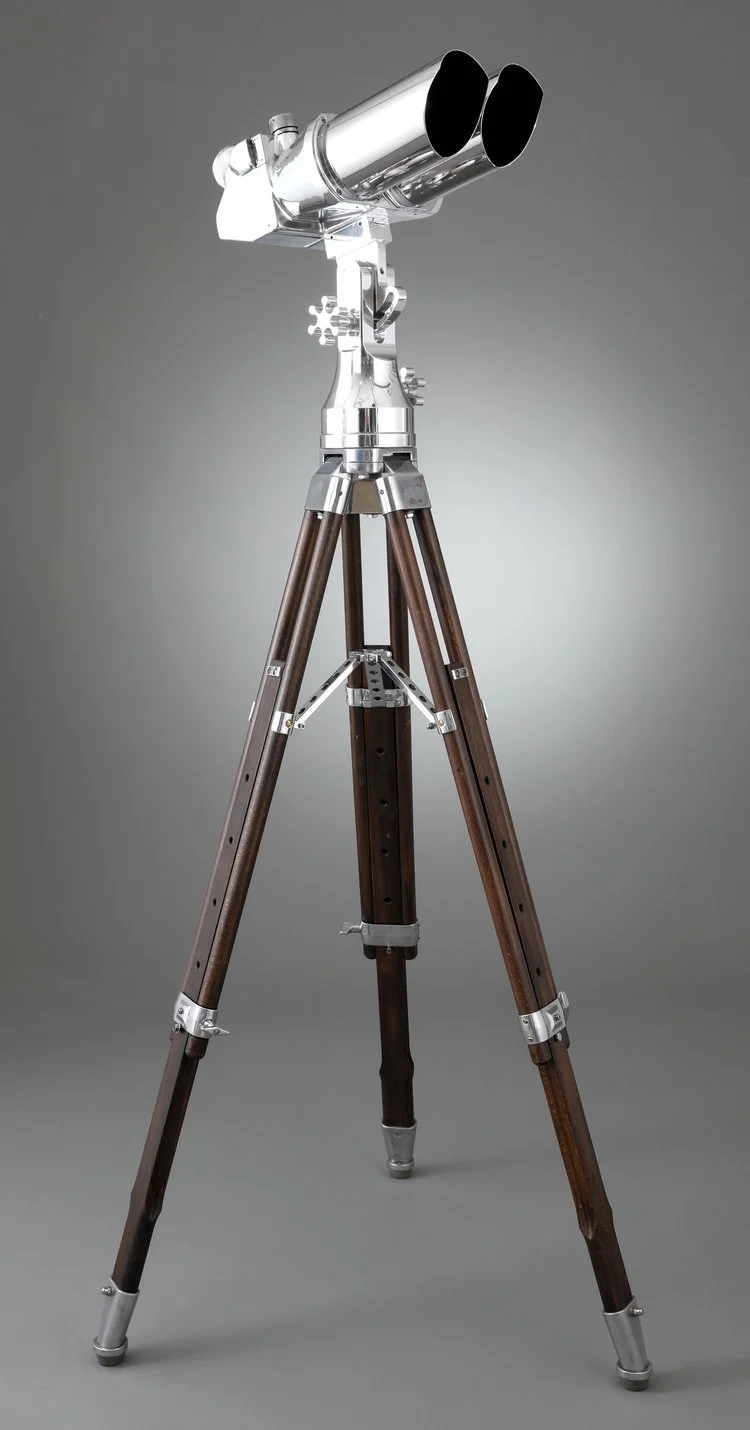
The binoculars are mounted on a period hardwood-and-brass tripod with extending legs, brass ferrules and chrome-capped feet, giving full 360-degree rotation and elevation adjustment via the original star-wheel locking mechanism.
Maker: Schneider Optische Werke, Kreuznach (wartime code dkl)
Date: circa 1944
Condition: Excellent; minor age patina; optics clear
Literature: Stephen Rohan, Eyes of the Wehrmacht; Hans T. Seeger, Militärische Ferngläser und Fernrohre in Heer, Luftwaffe und Marine, pp. 232–237
An exceptional example of the German anti-aircraft Flak binocular. The 10×80 Doppelfernrohr was developed following competitive trials in the early 1930s, in which Emil Busch, Möller Wedel and Ernst Leitz submitted designs for military evaluation; Busch's prototype was selected for its wider field of view and lower weight. Wartime production was then spread across several manufacturers under contract, with Schneider of Kreuznach, wartime code dkl, second only to Busch in output.
Designated D.F. 10×80 and known in service as the Flakglas, the instrument was engineered with a distinctive 45-degree inclined head for prolonged observation of aerial and terrestrial targets. It became the defining observation glass of the Flak arm, used for directing anti-aircraft fire and searchlights and deployed on every front from the Western Desert to Russia. It stands among the most recognizable optical instruments of the Second World War, prized for its history, its engineering and its sheer visual impact.
The present example bears the code dkl for Schneider Optische Werke, Kreuznach. Serial number 72473 is consistent with late-war manufacture of circa 1944. The sand-cast aluminum body has been hand-polished to a mirror finish, the engraved markings D.F. 10×80 / △ dkl X / 72473 crisp and fully legible.
The binoculars are mounted on a period hardwood-and-brass tripod with extending legs, brass ferrules and chrome-capped feet, giving full 360-degree rotation and elevation adjustment via the original star-wheel locking mechanism.
Maker: Schneider Optische Werke, Kreuznach (wartime code dkl)
Date: circa 1944
Condition: Excellent; minor age patina; optics clear
Literature: Stephen Rohan, Eyes of the Wehrmacht; Hans T. Seeger, Militärische Ferngläser und Fernrohre in Heer, Luftwaffe und Marine, pp. 232–237

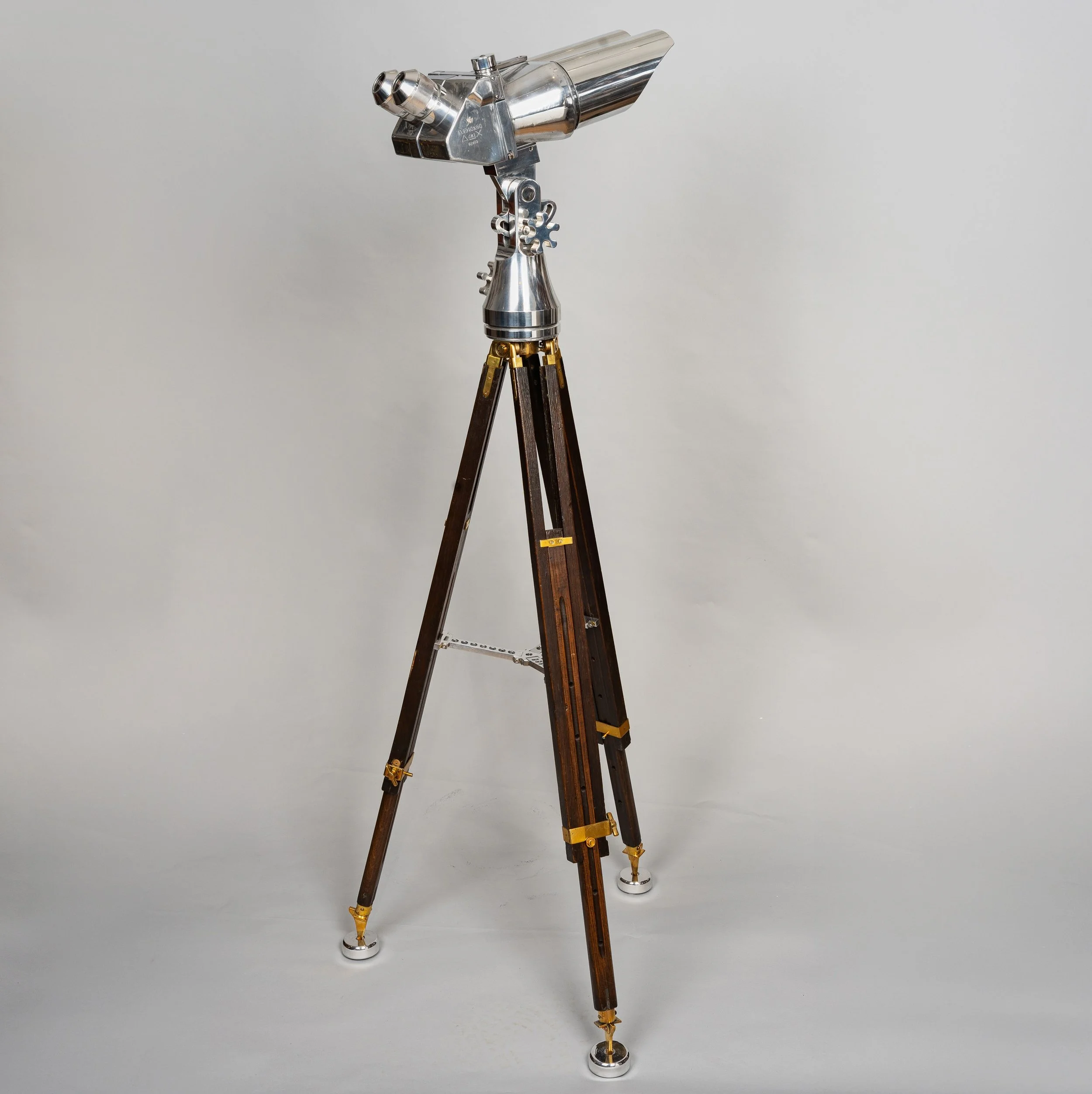 Image 1 of 4
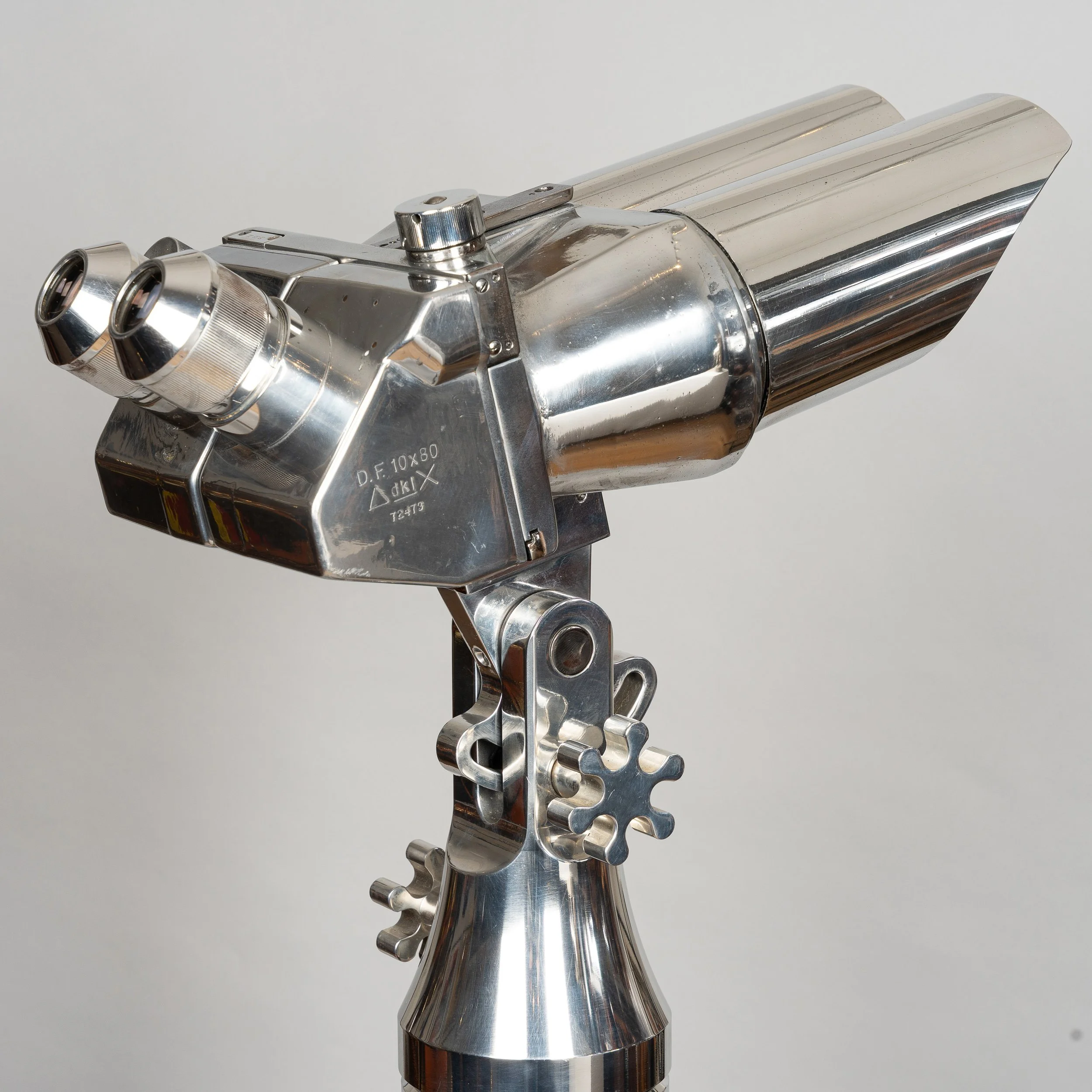 Image 2 of 4
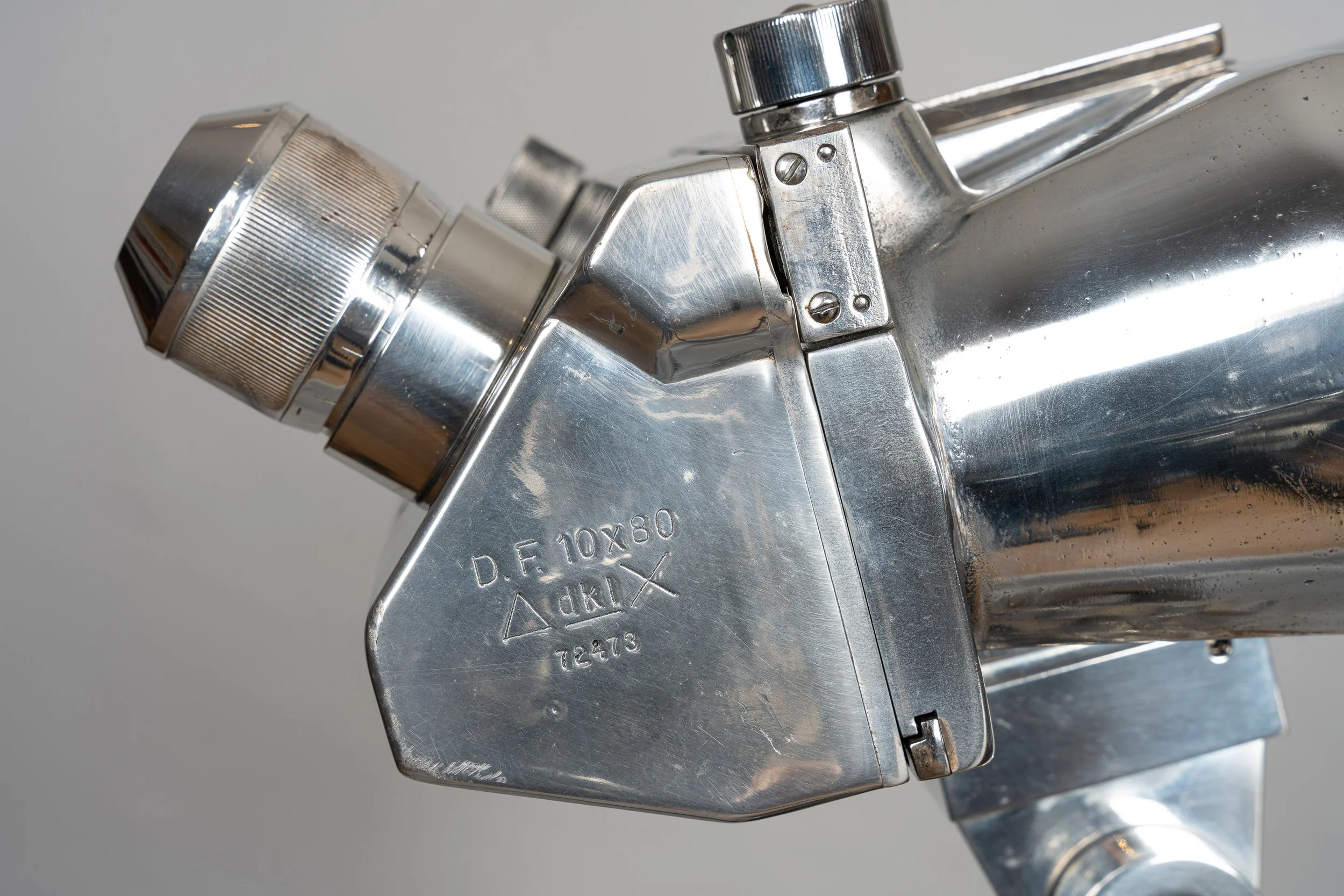 Image 3 of 4
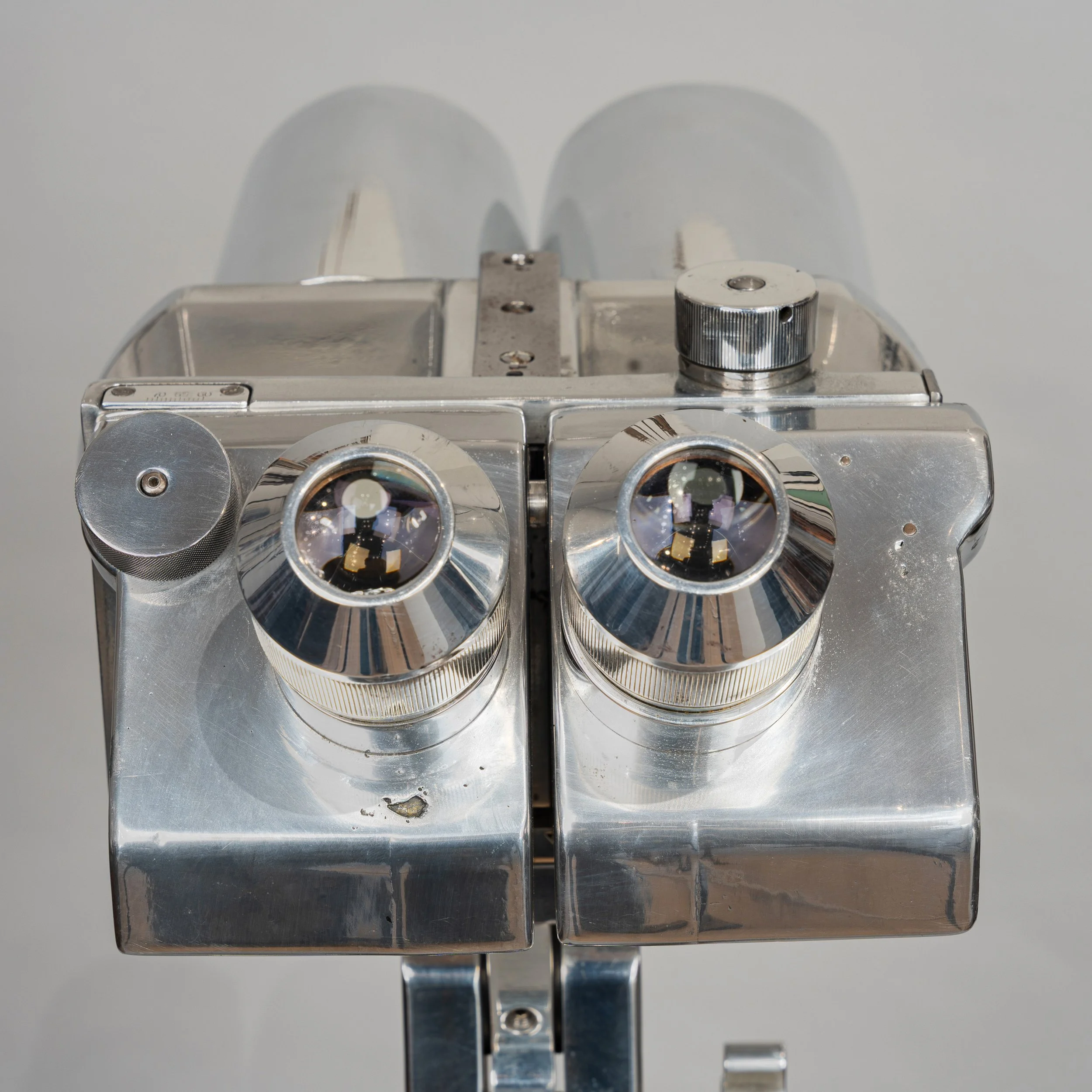 Image 4 of 4