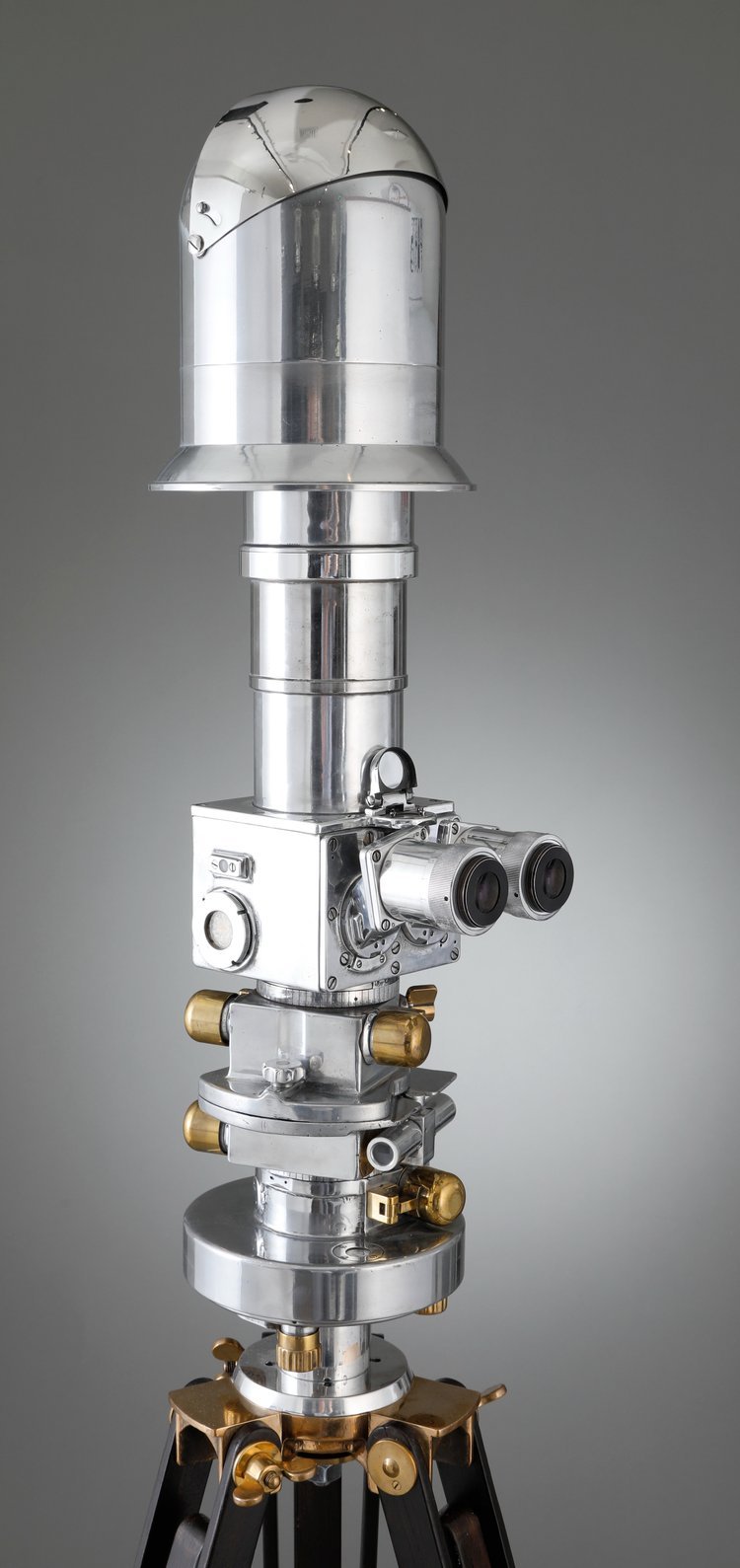
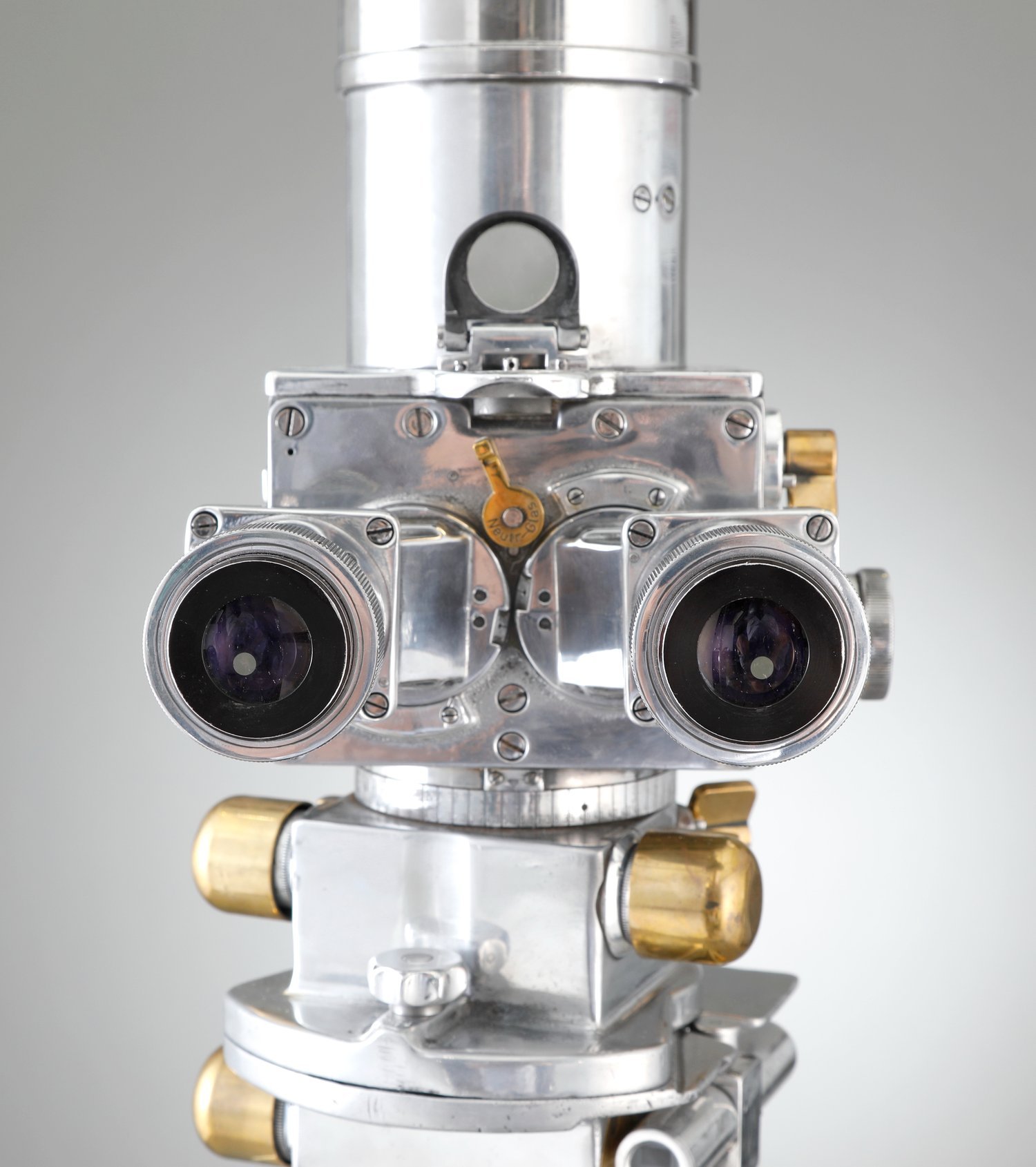
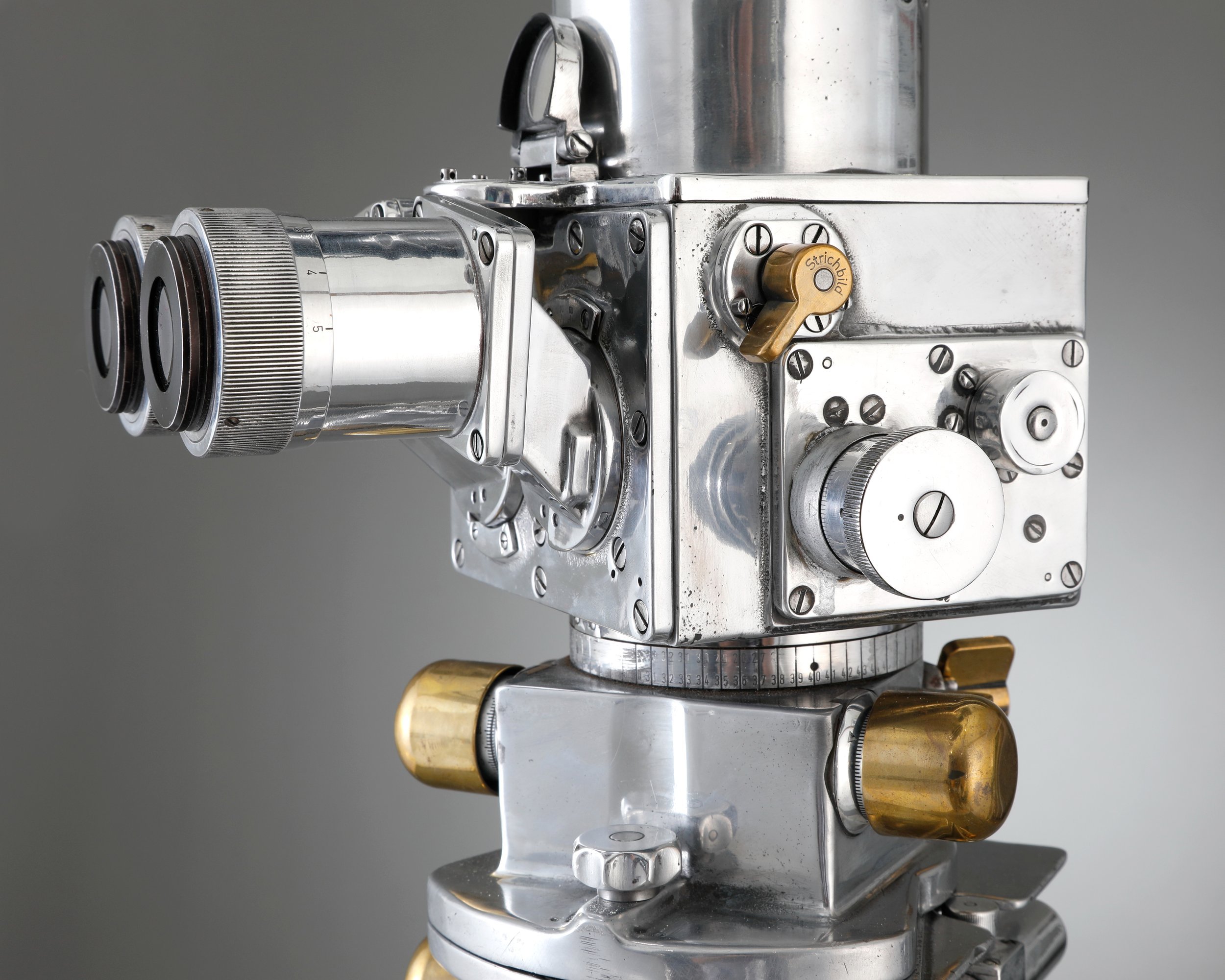
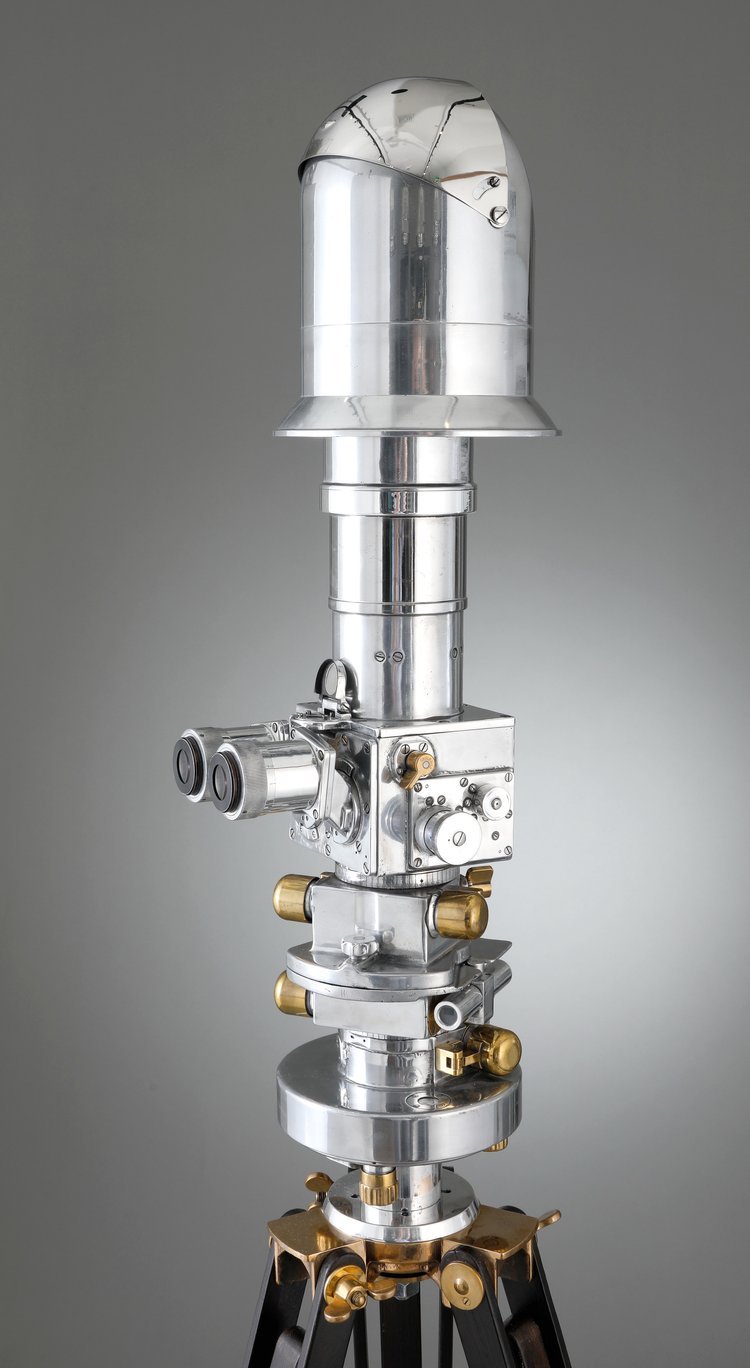
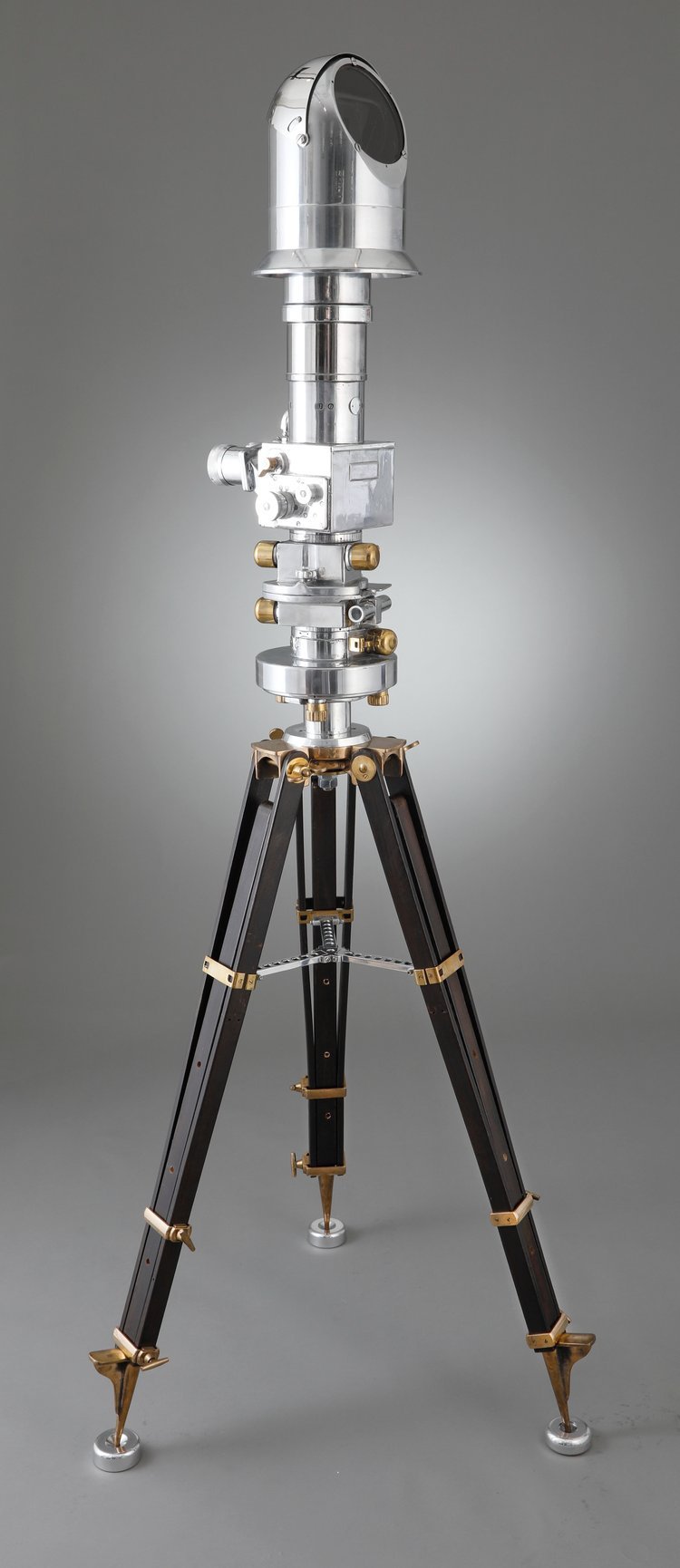
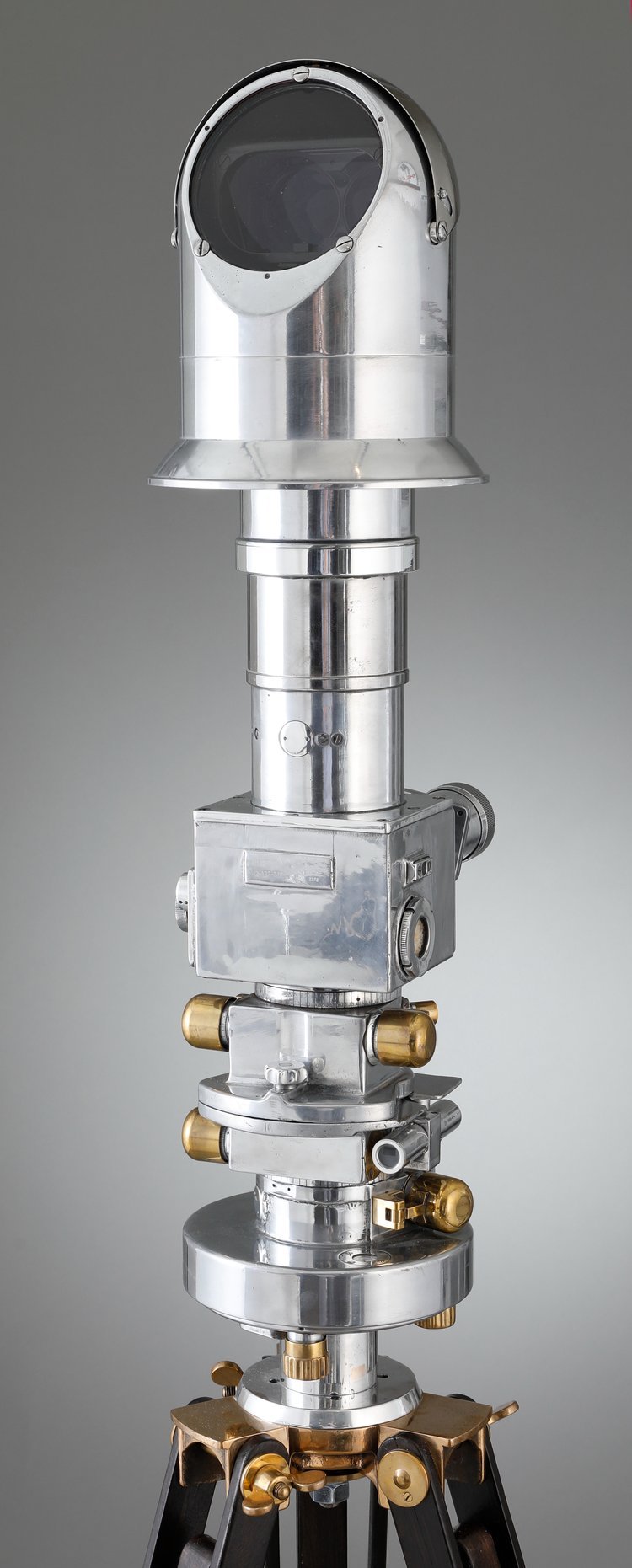
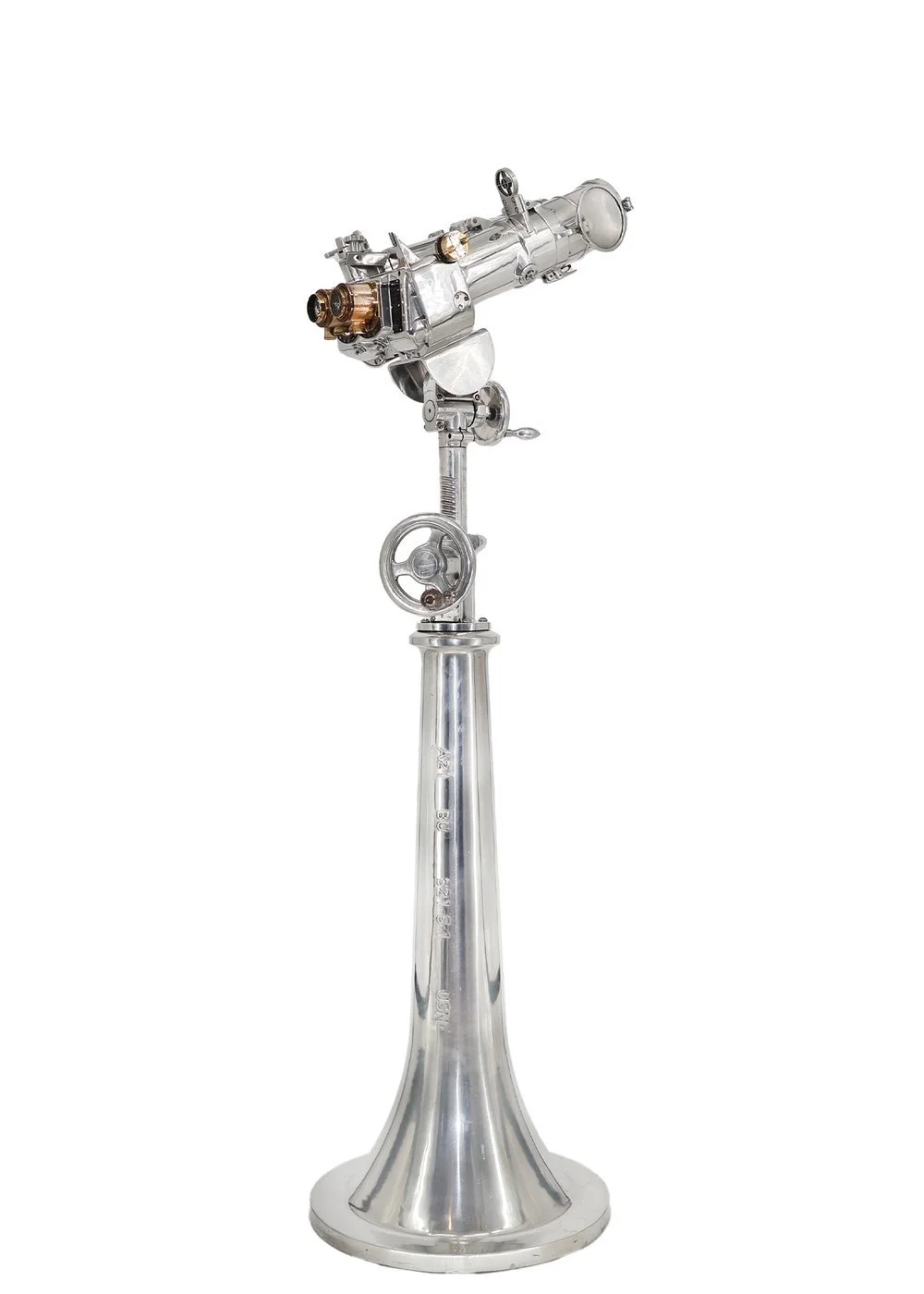
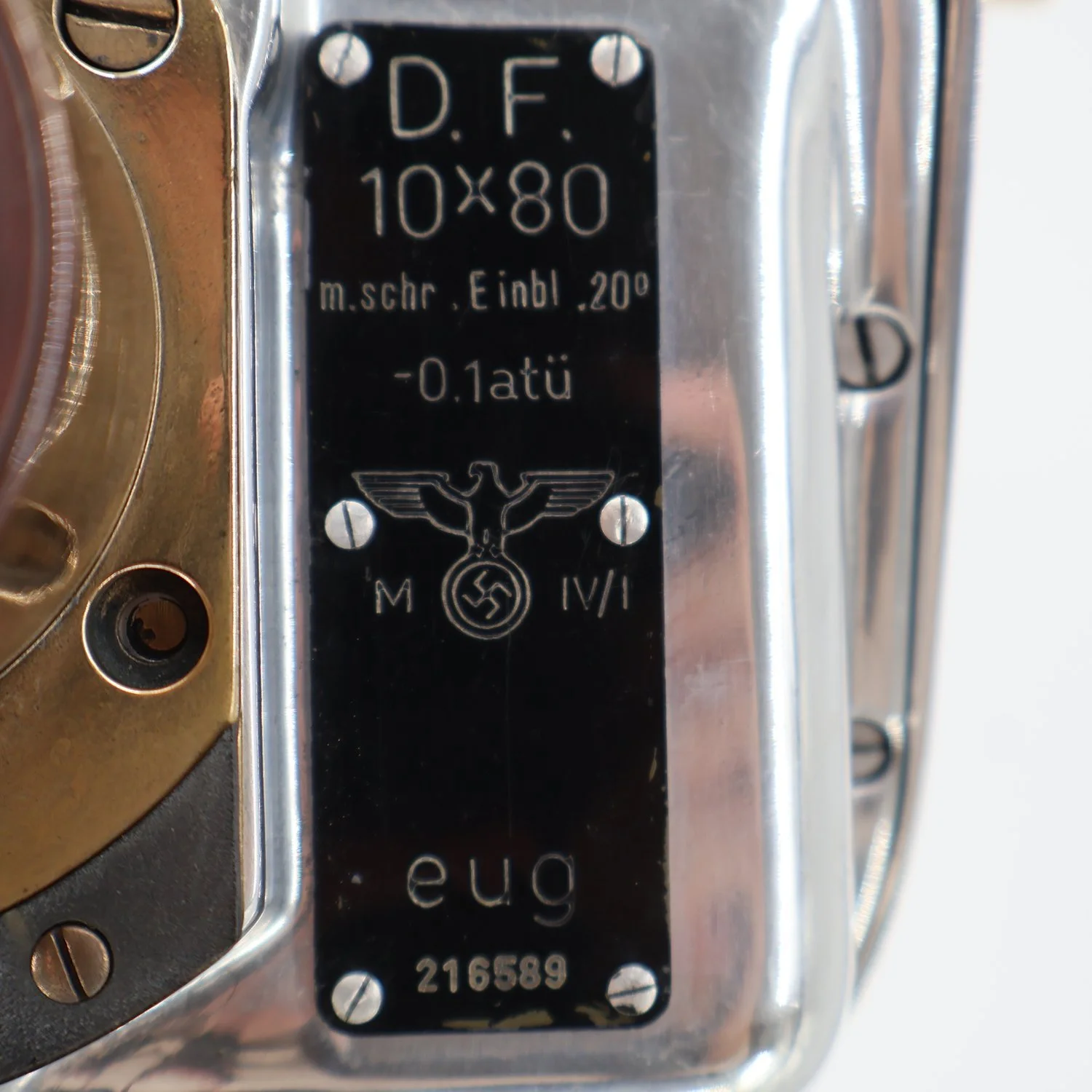
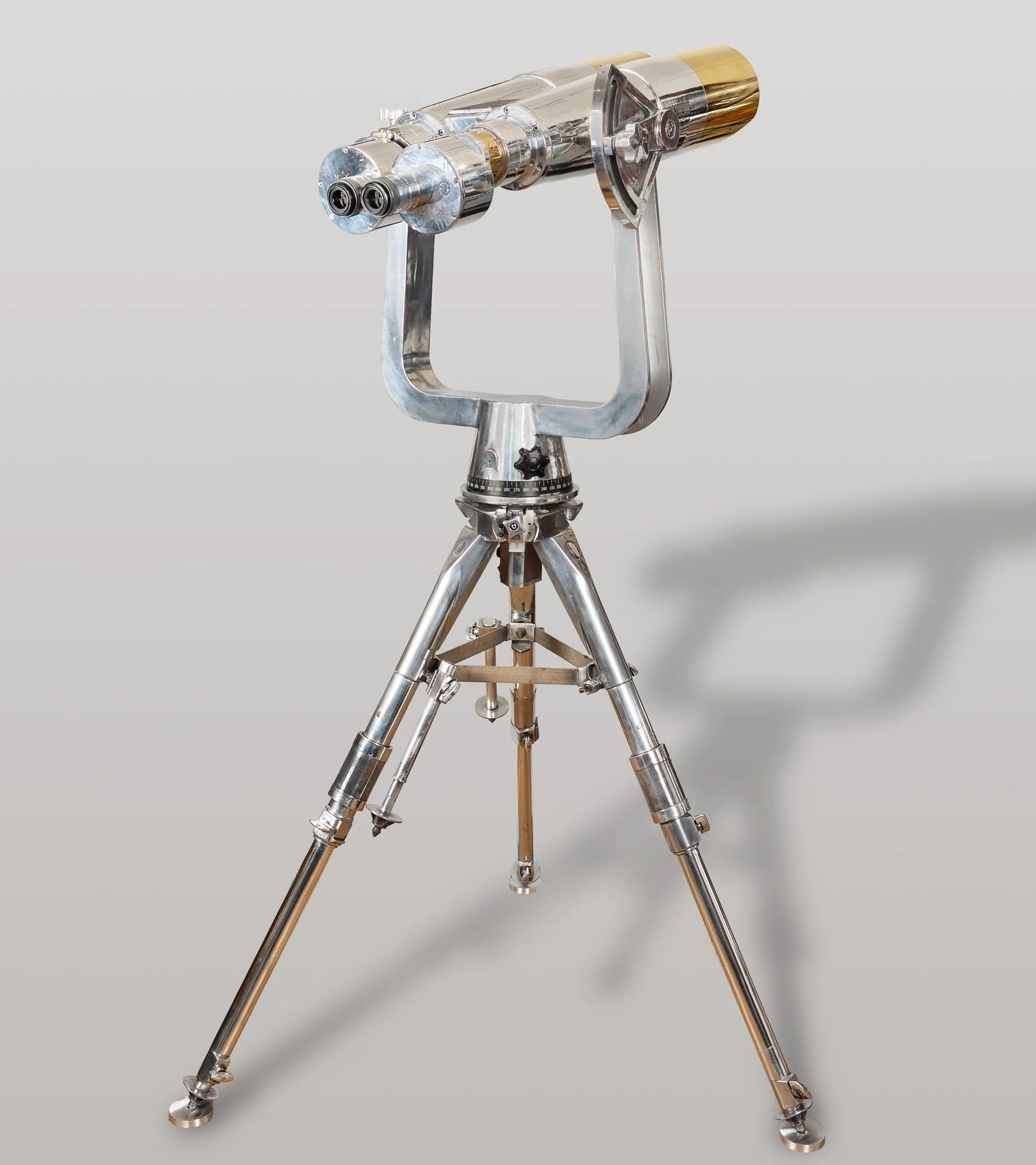
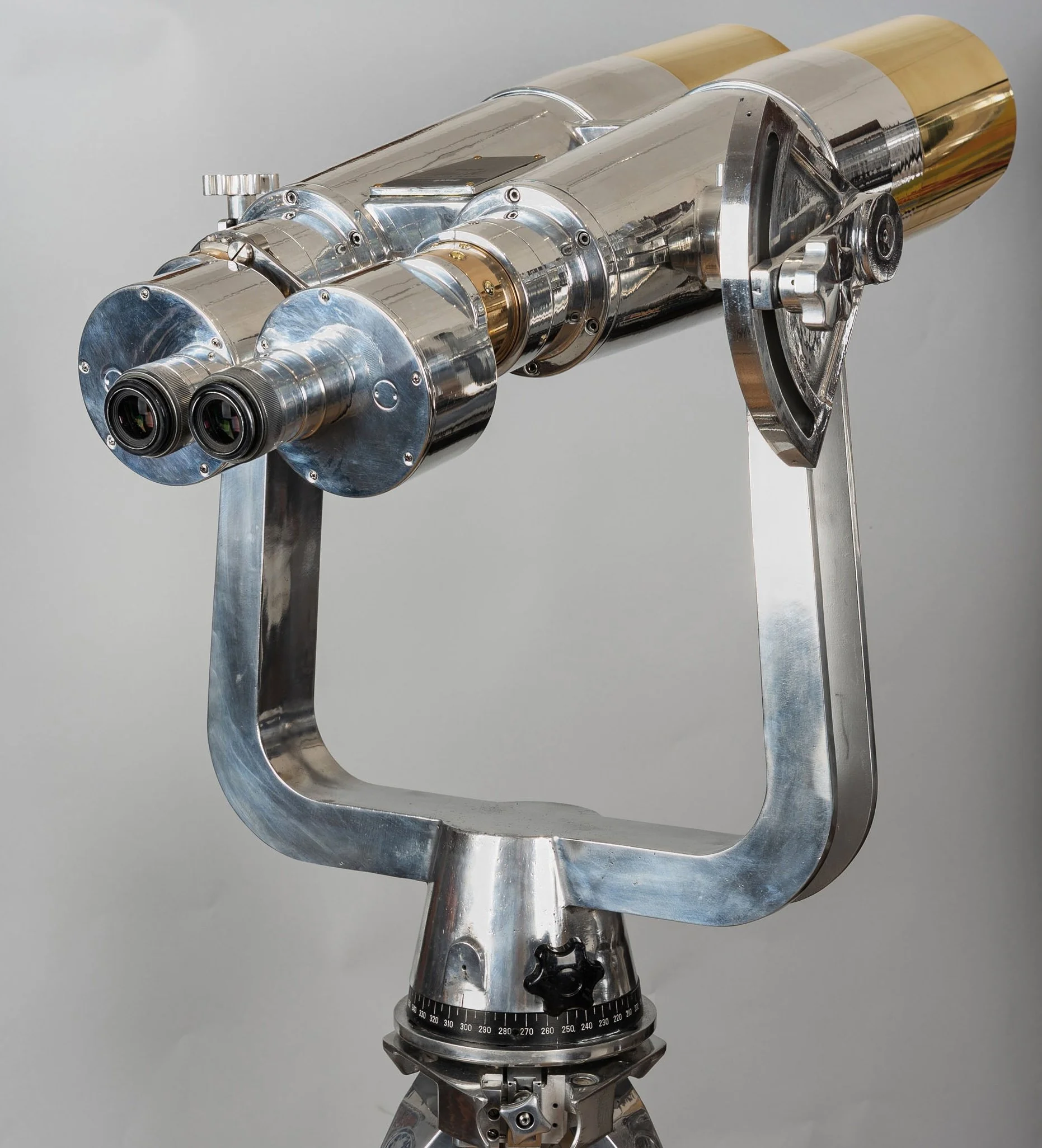
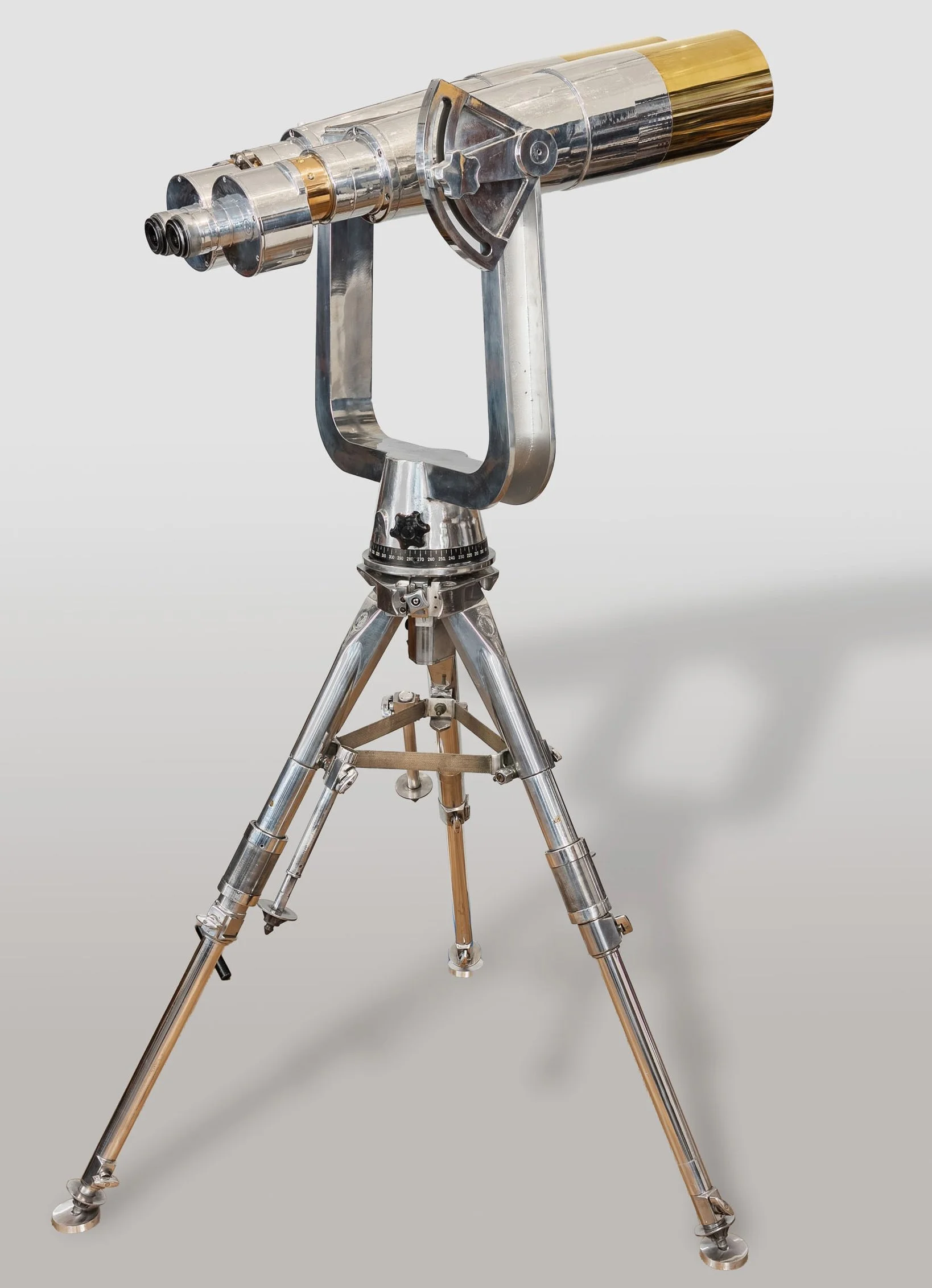
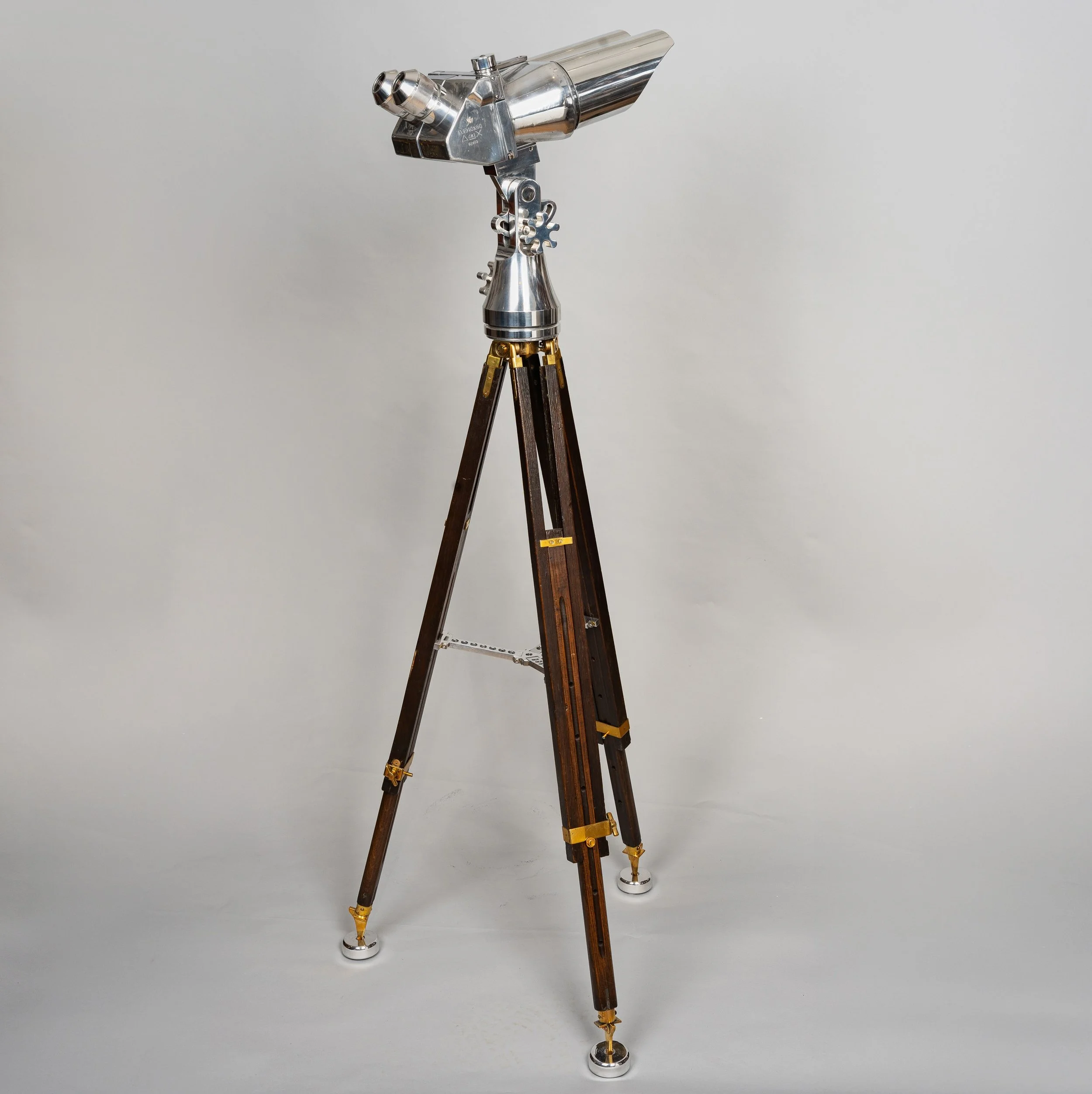
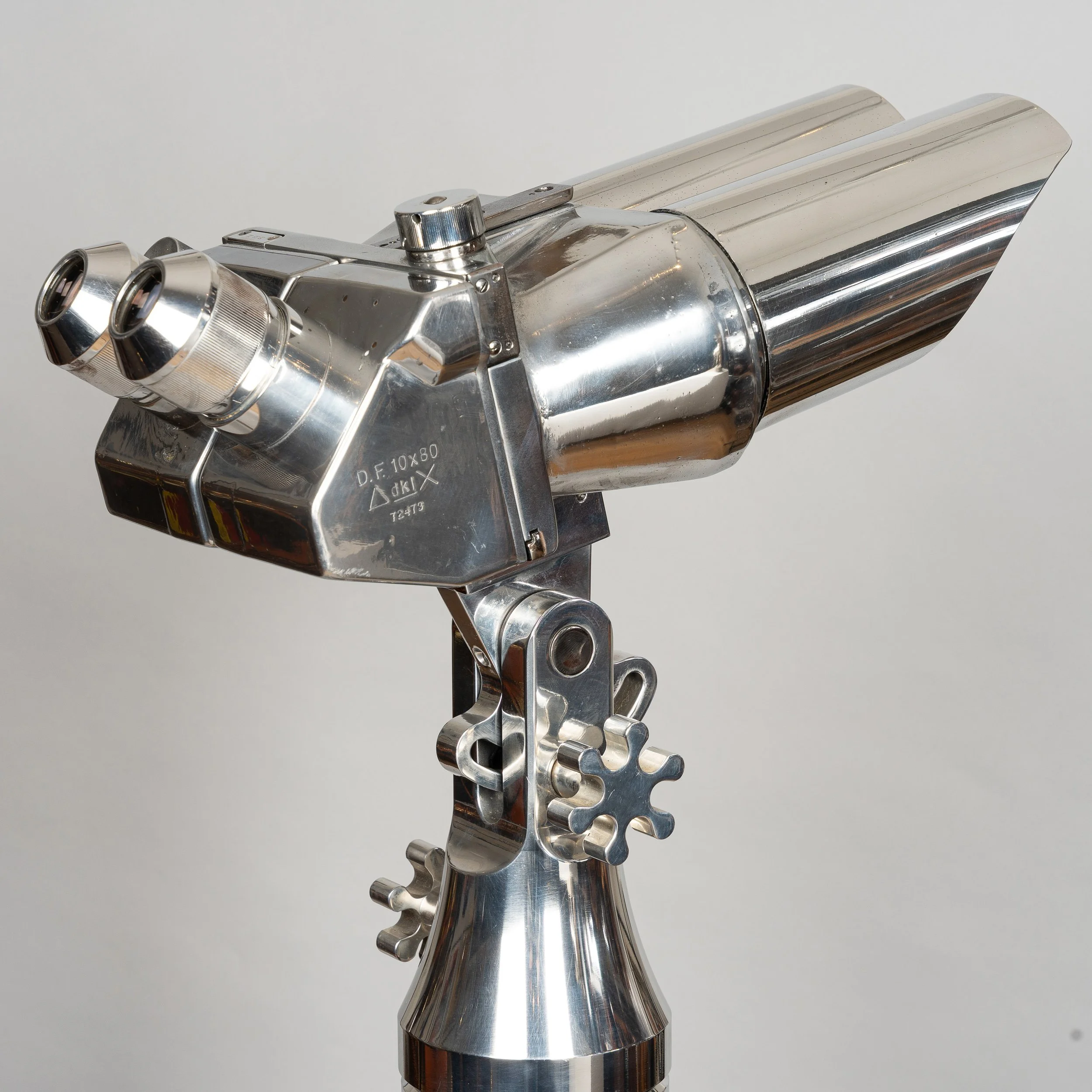
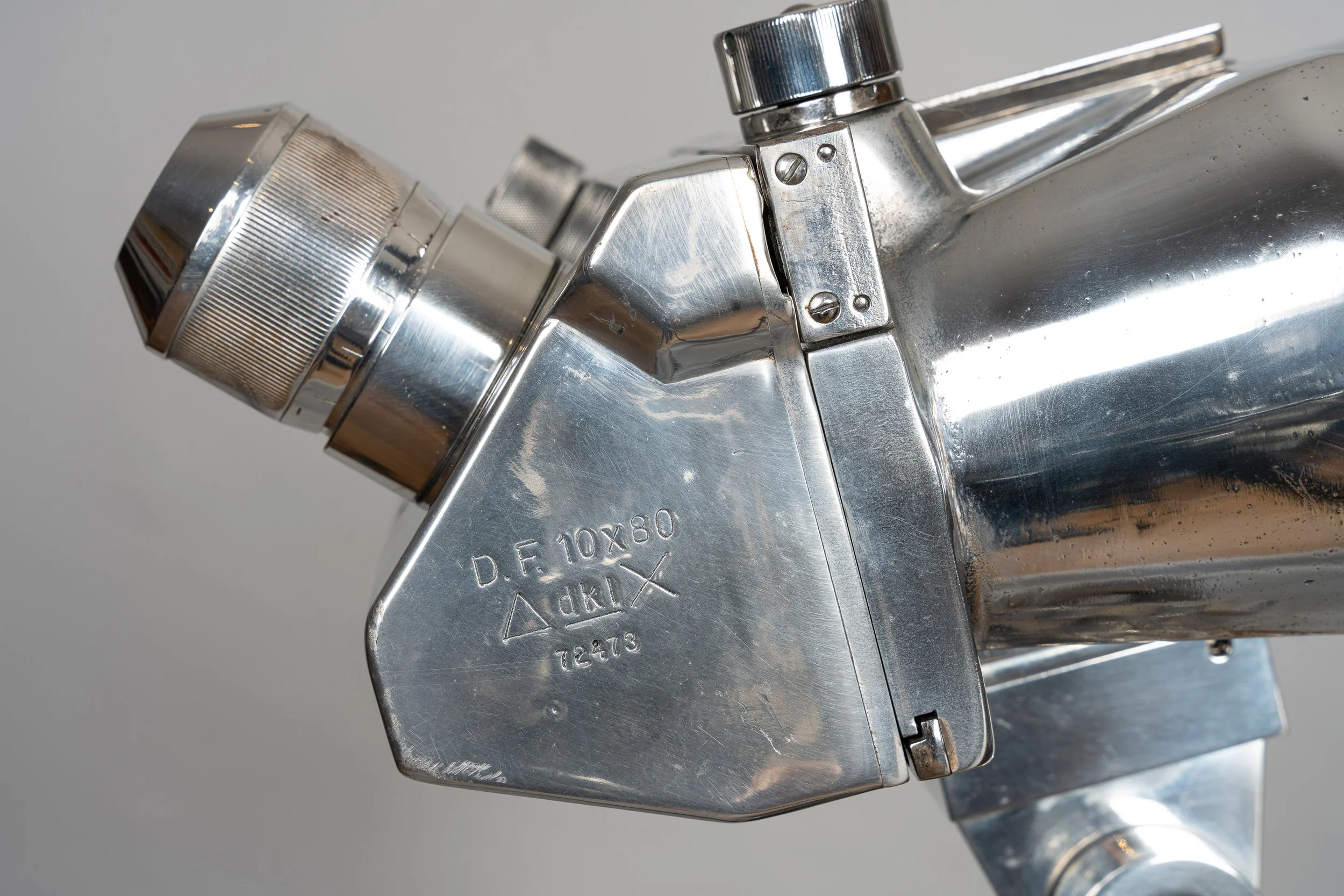
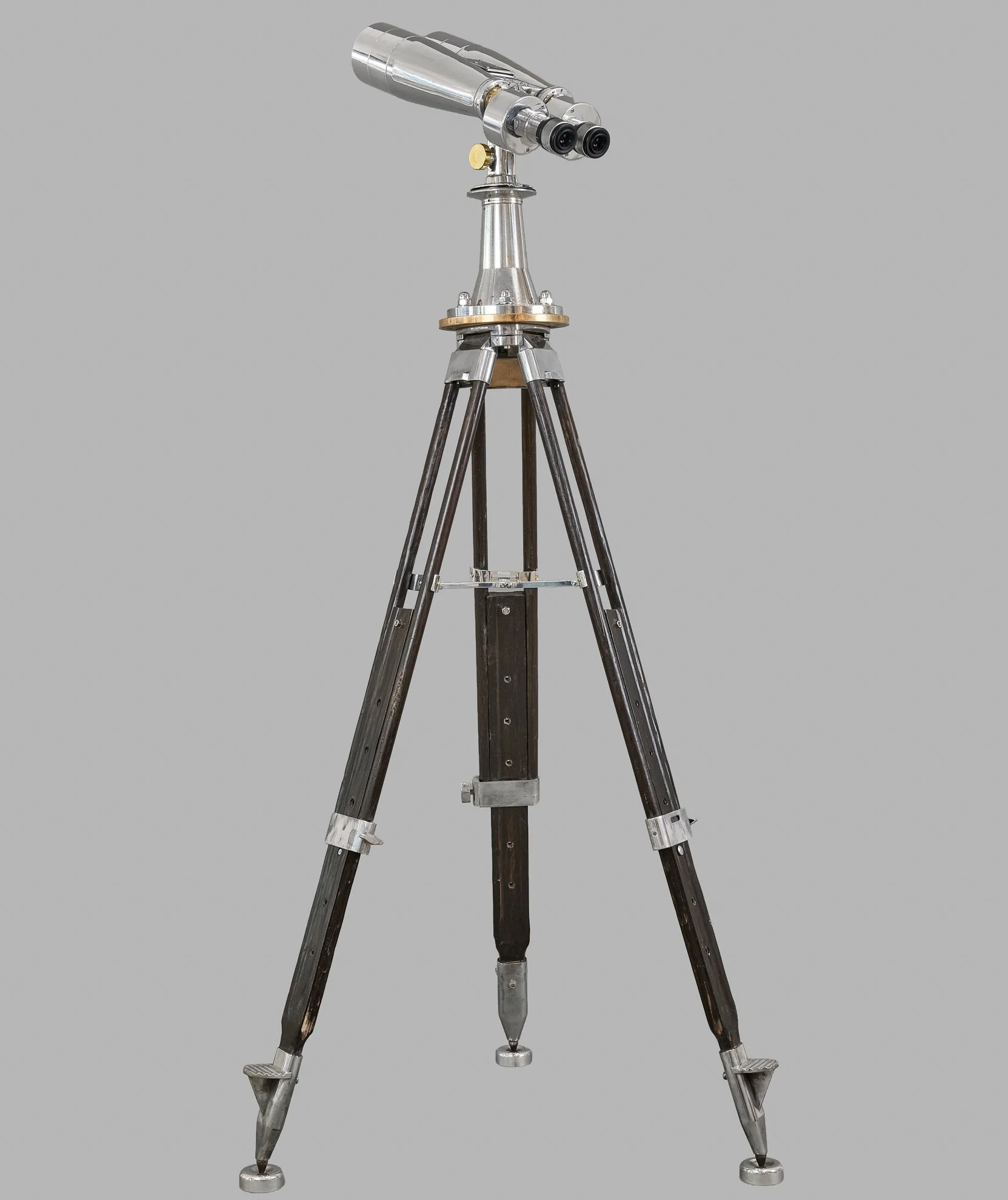
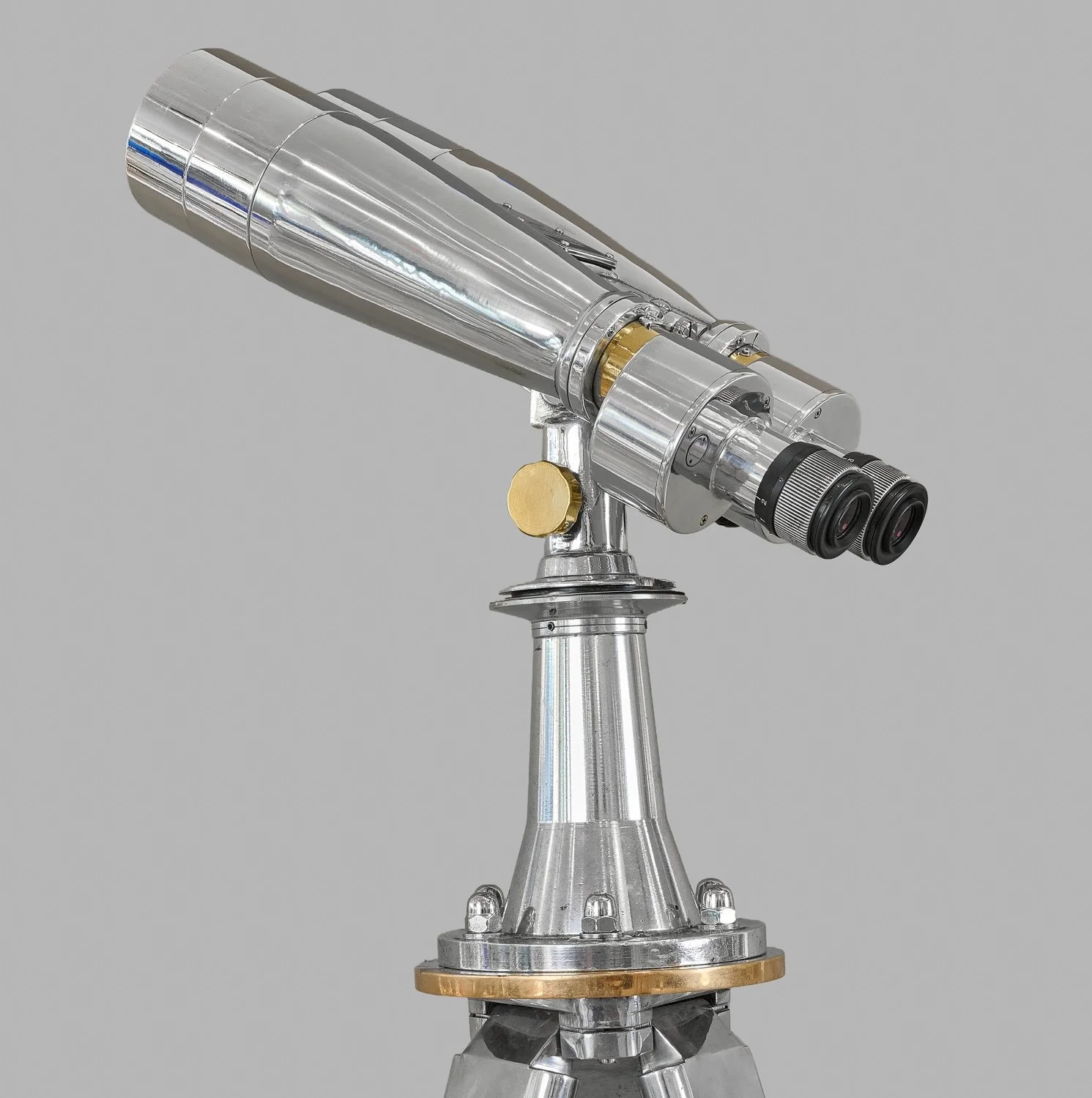
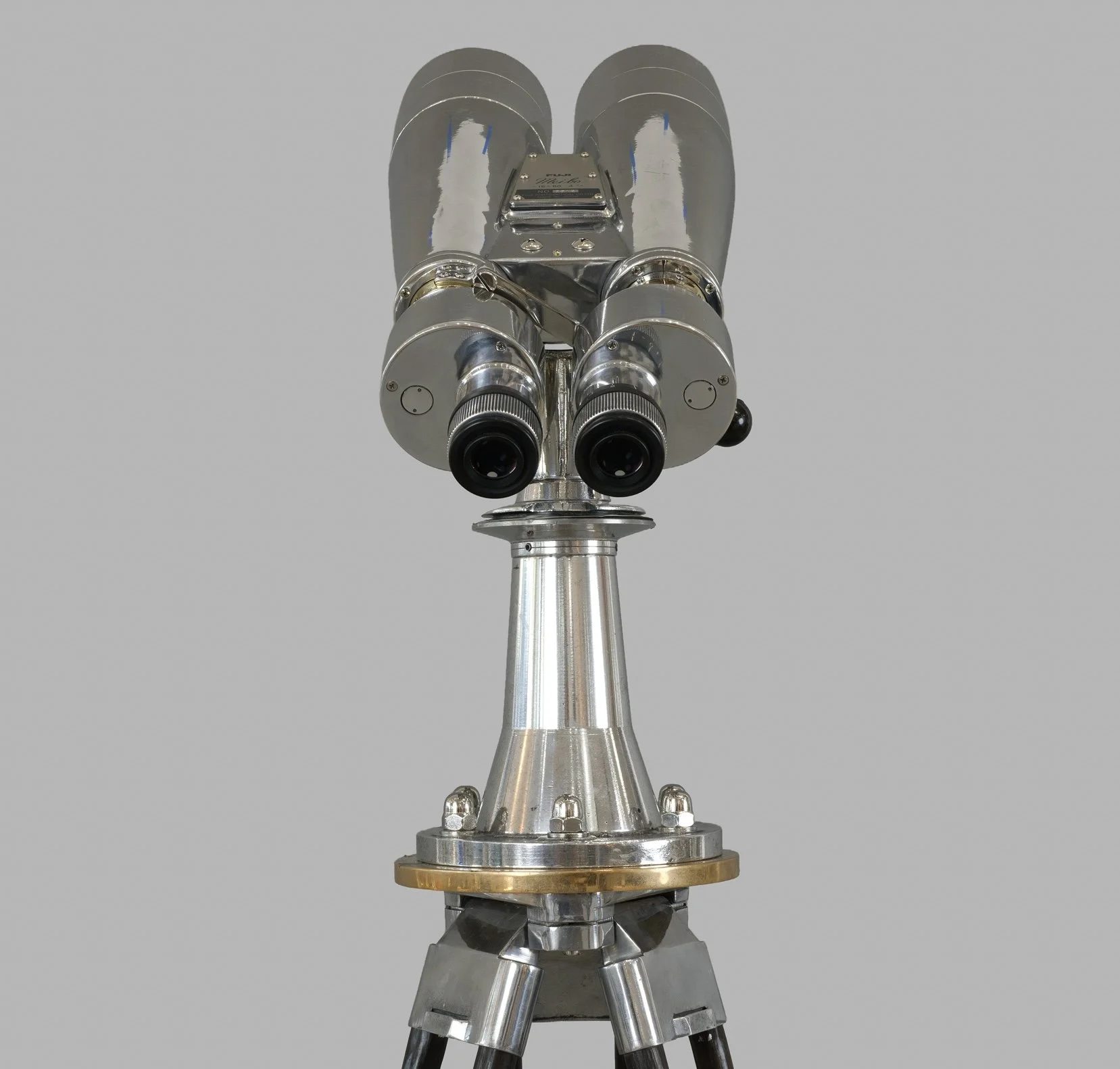
A monumental pair of Japanese naval binoculars by Fuji Meibo, with 25 × 150 magnification, constructed in polished steel and retaining their original deck-mounted gimbal and tripod support.
Of characteristic straight-body form, the present instrument embodies the refined engineering of Japanese naval optics developed during the period surrounding the World War II, where long-range visual clarity was critical for fleet coordination and engagement.
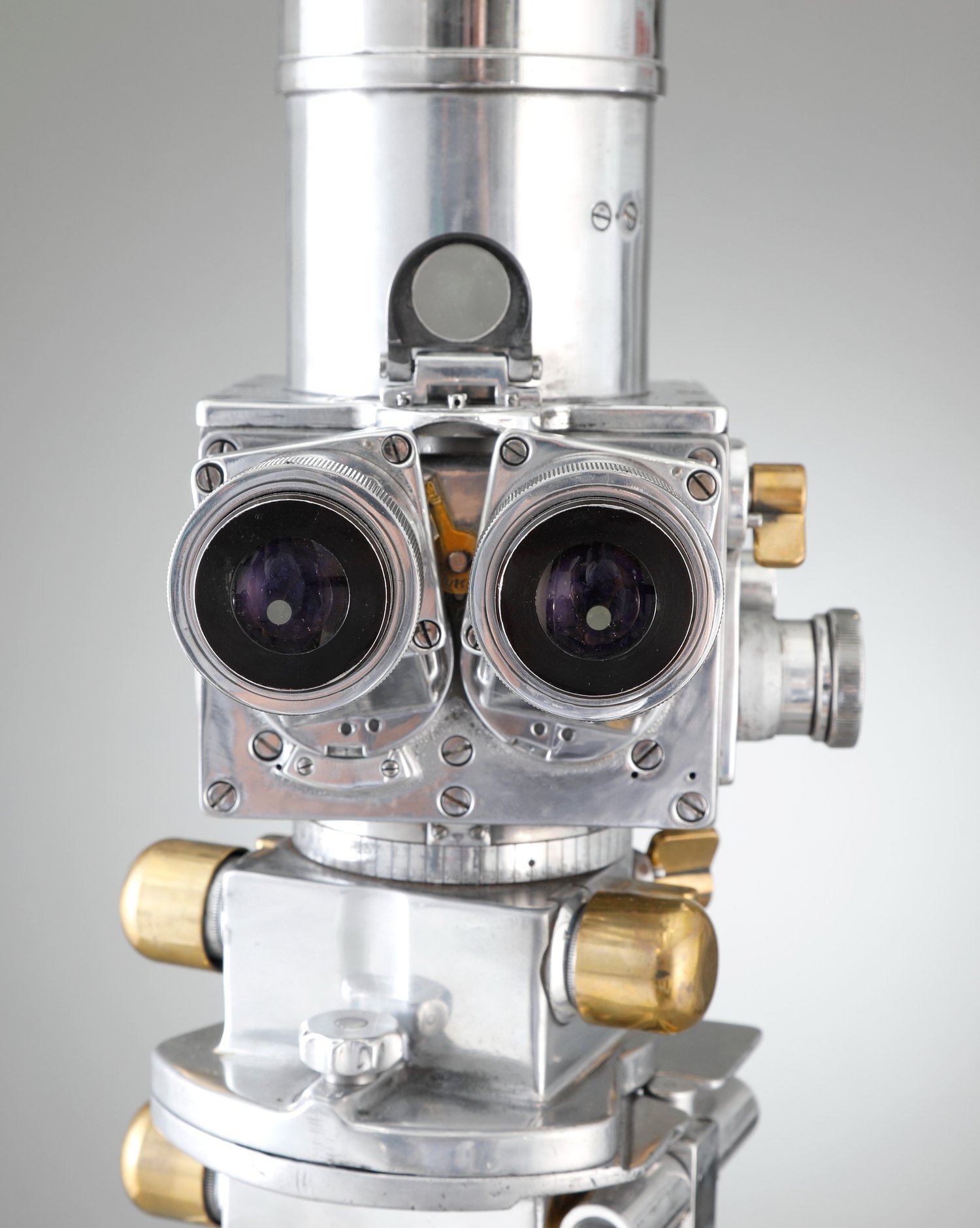
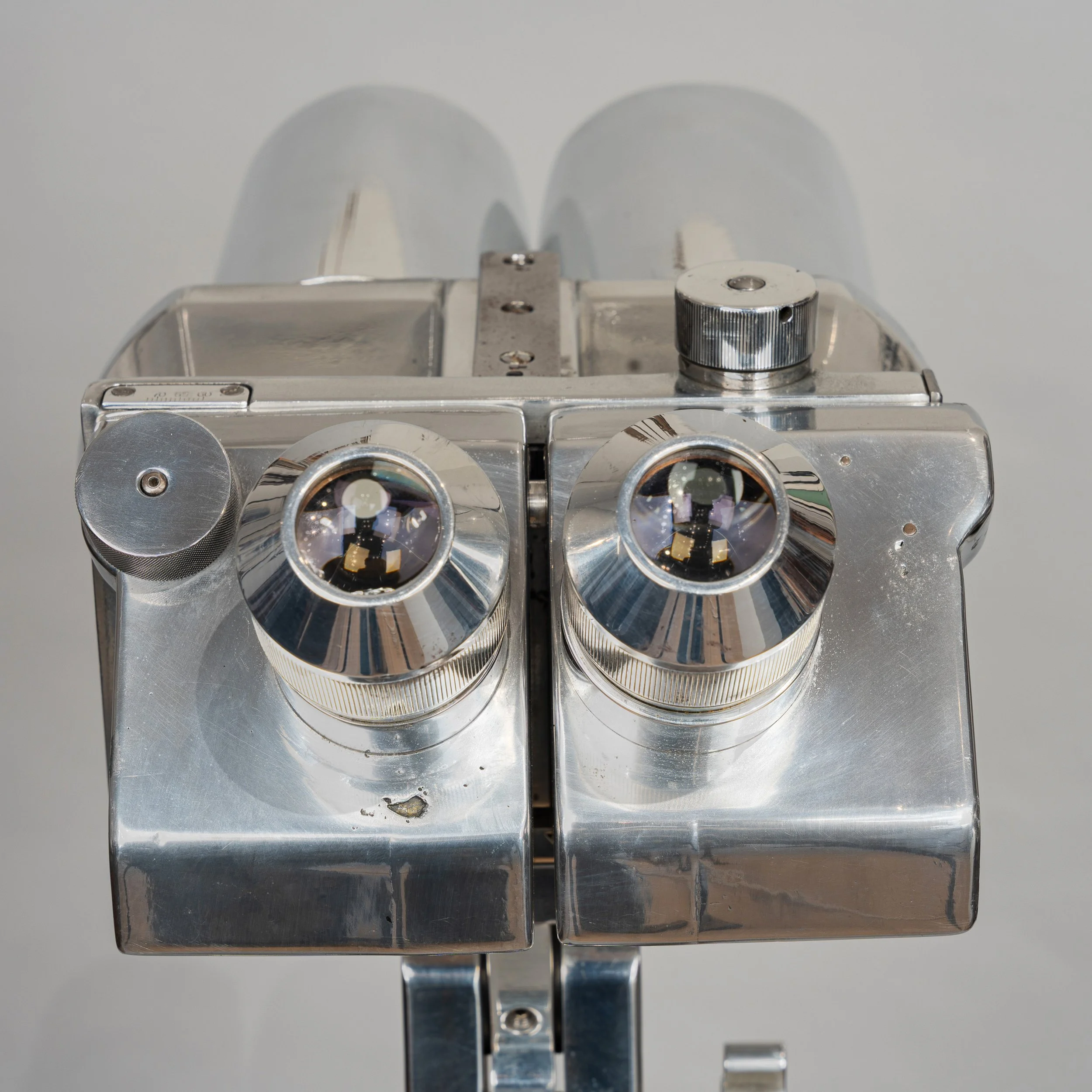
The binoculars retain entirely original optical elements, notable for their exceptional clarity and depth, a testament to the advanced optical manufacturing standards achieved in Japan during the period. The robust gimbal mounting—designed to stabilize the instrument against the constant motion of a warship—remains intact, offering both functional and sculptural presence.
Such instruments were typically allocated singly to major warships, particularly destroyers, where they served as primary long-range viewing devices. Their scarcity today reflects both their specialized use and the attrition of wartime matériel.
Beyond their technical function, the present example possesses a striking aesthetic quality: the interplay of machined steel, precision mechanics, and monumental scale elevates the object firmly into the realm of industrial sculpture.
Literature
Japanese Naval Optical Instruments and Fire Control Systems, naval archives publications
Military Optics of the Second World War, comparative studies of Allied and Axis instrumentation
Museum collections including the Smithsonian Institution (optical and military technology holdings)
A monumental pair of Japanese naval binoculars by Fuji Meibo, with 25 × 150 magnification, constructed in polished steel and retaining their original deck-mounted gimbal and tripod support.
Of characteristic straight-body form, the present instrument embodies the refined engineering of Japanese naval optics developed during the period surrounding the World War II, where long-range visual clarity was critical for fleet coordination and engagement.
The binoculars retain entirely original optical elements, notable for their exceptional clarity and depth, a testament to the advanced optical manufacturing standards achieved in Japan during the period. The robust gimbal mounting—designed to stabilize the instrument against the constant motion of a warship—remains intact, offering both functional and sculptural presence.
Such instruments were typically allocated singly to major warships, particularly destroyers, where they served as primary long-range viewing devices. Their scarcity today reflects both their specialized use and the attrition of wartime matériel.
Beyond their technical function, the present example possesses a striking aesthetic quality: the interplay of machined steel, precision mechanics, and monumental scale elevates the object firmly into the realm of industrial sculpture.
Literature
Japanese Naval Optical Instruments and Fire Control Systems, naval archives publications
Military Optics of the Second World War, comparative studies of Allied and Axis instrumentation
Museum collections including the Smithsonian Institution (optical and military technology holdings)

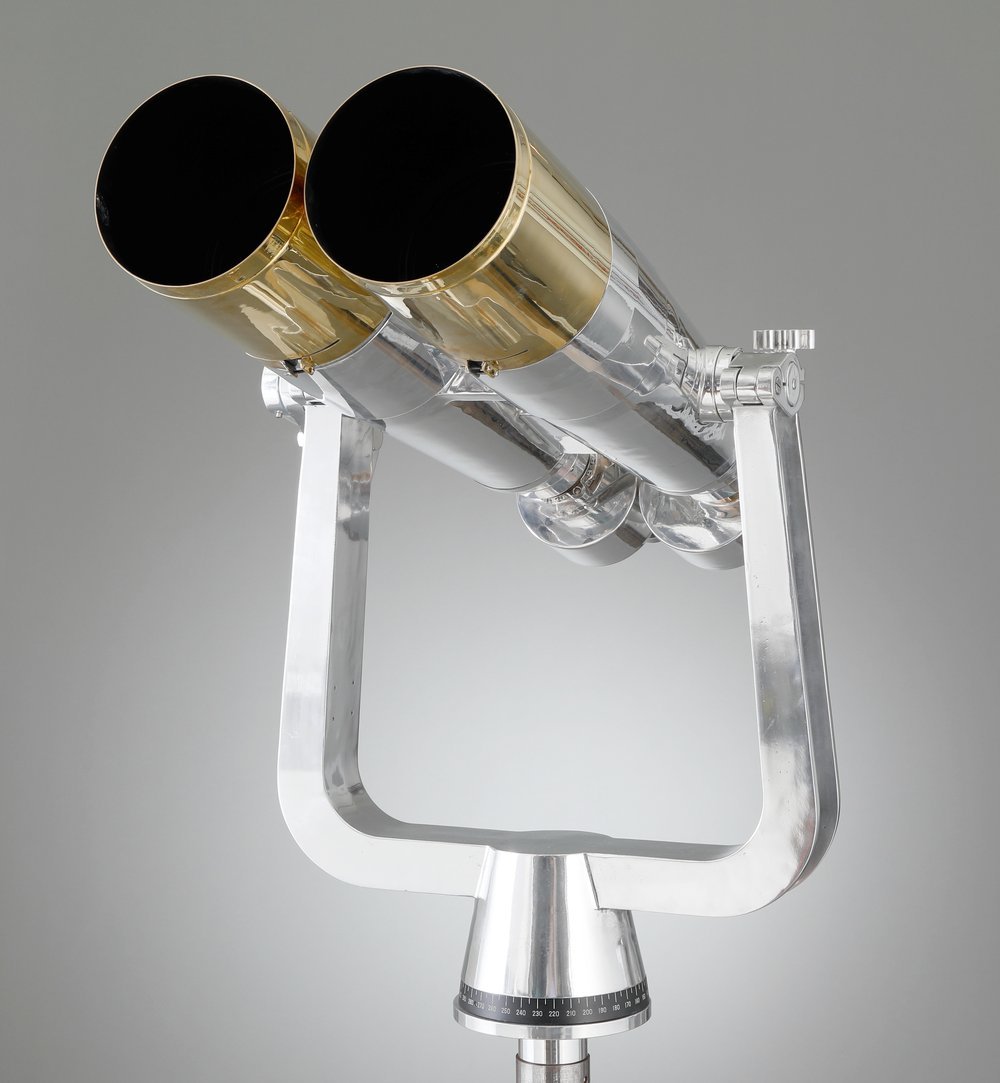 Image 1 of 1