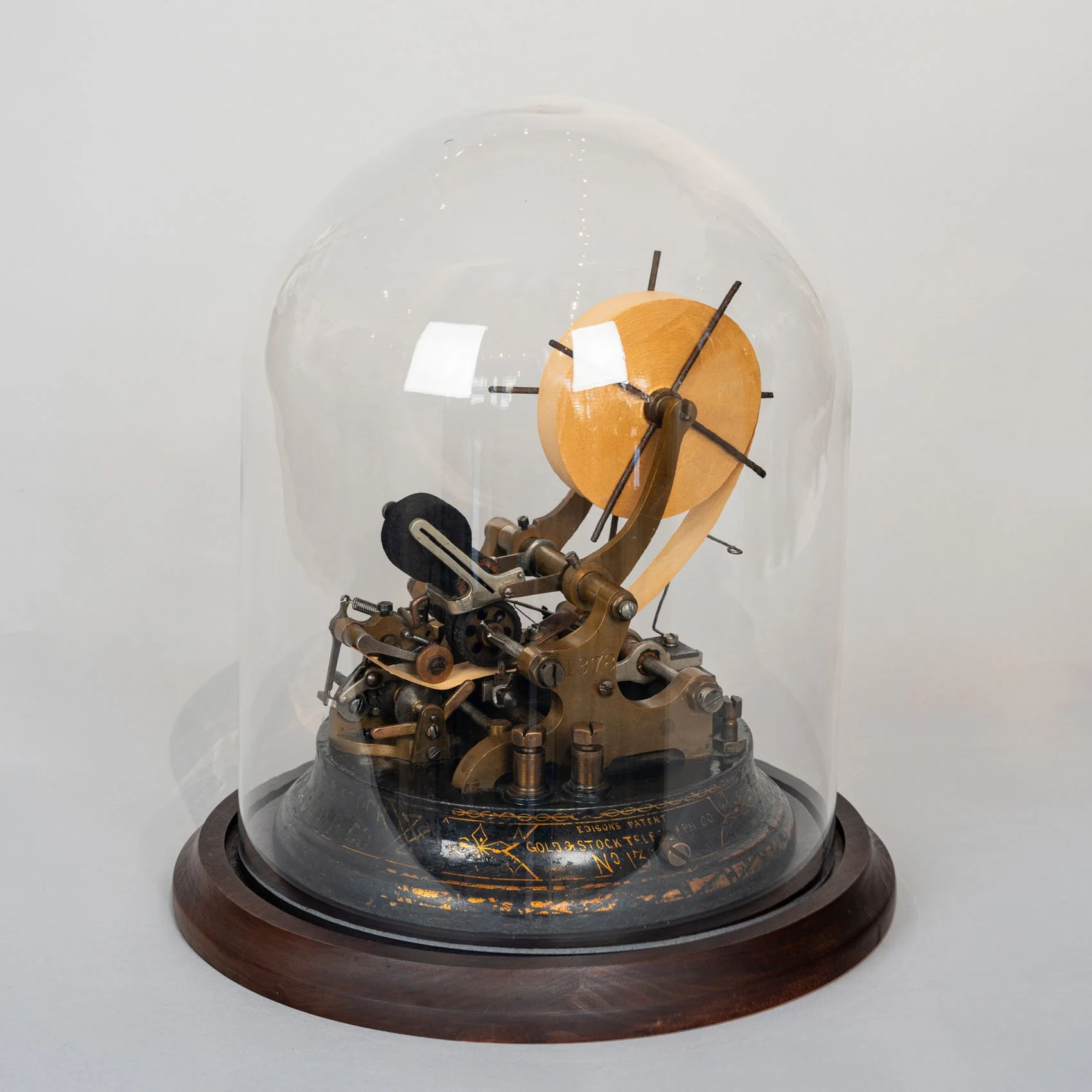
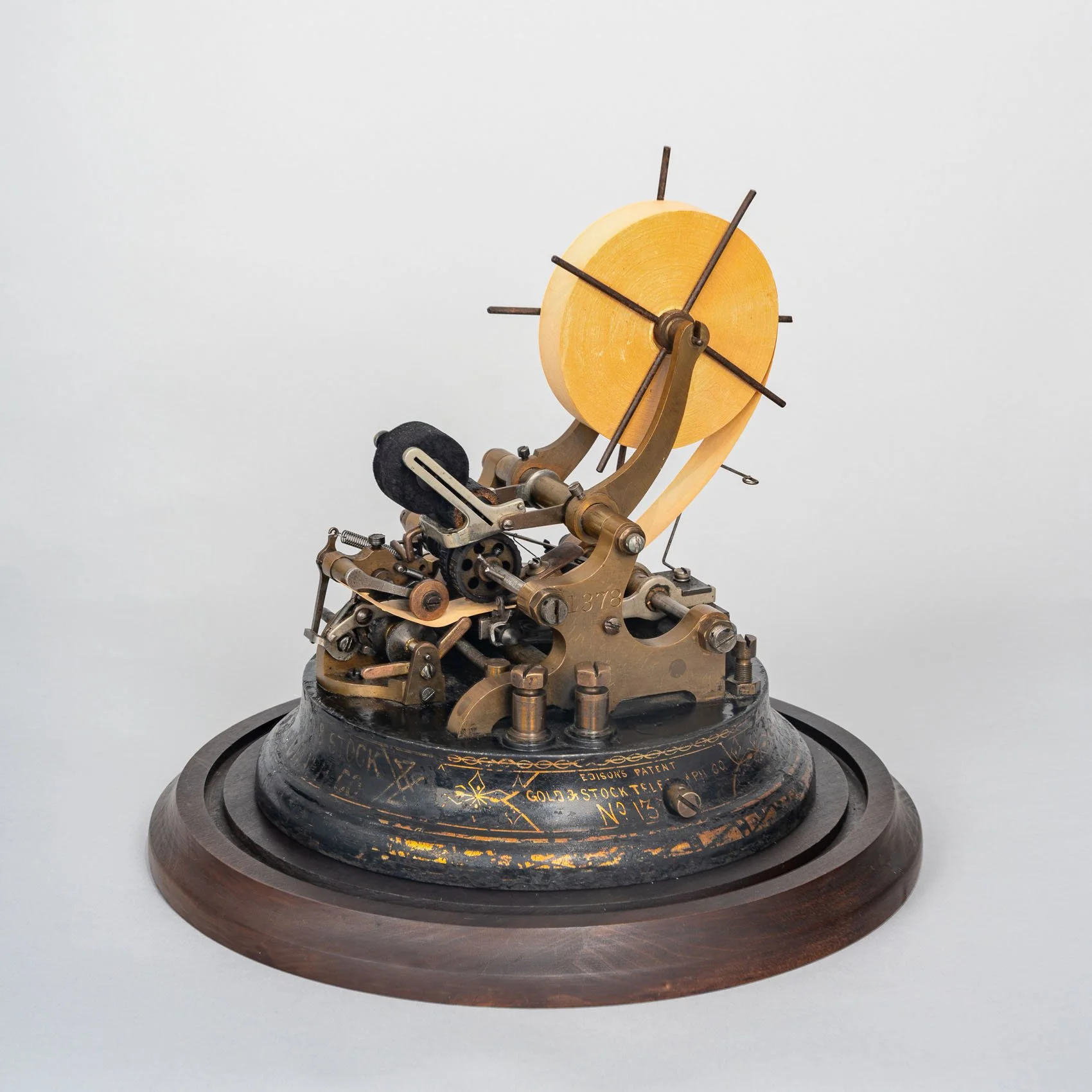
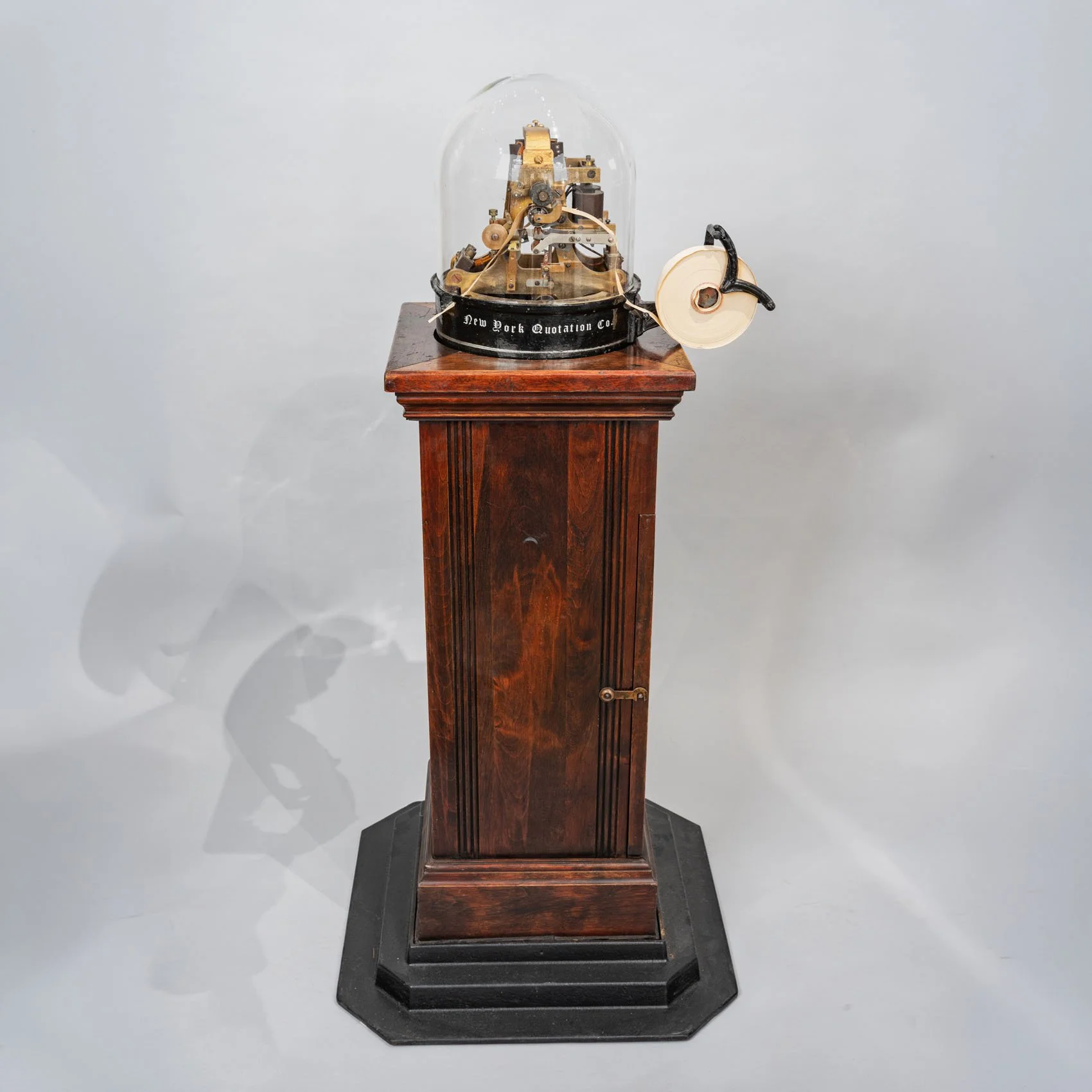
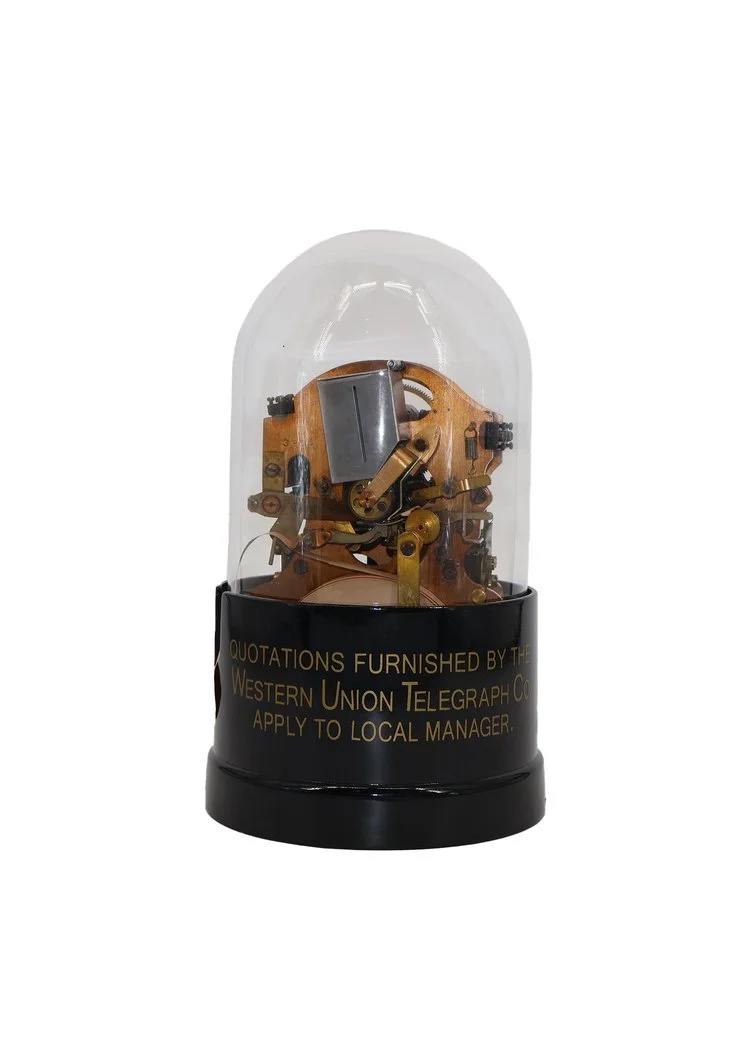
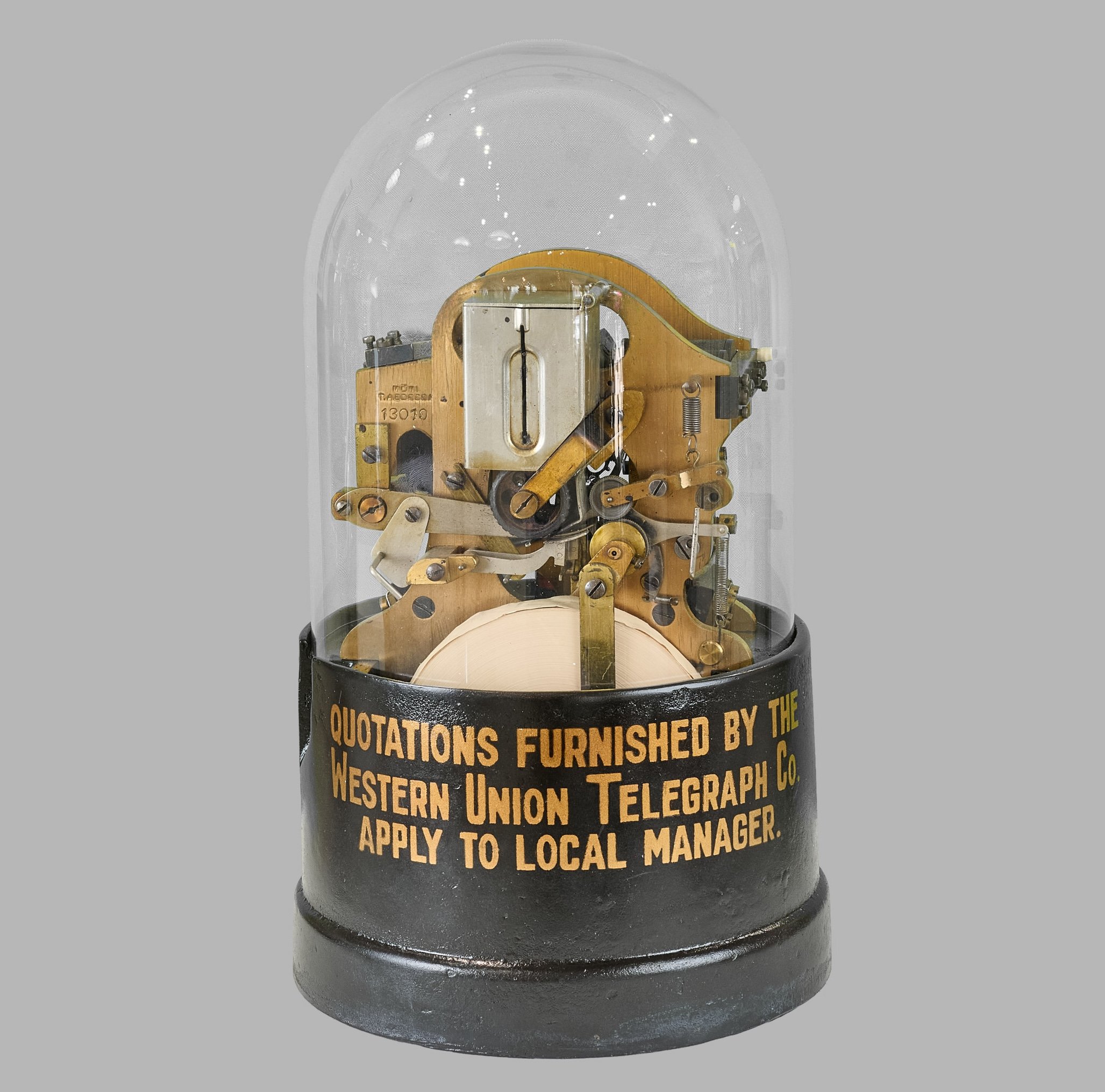
A genuine and characterful example of the self-winding electromechanical stock ticker that formed the operational backbone of American financial market communications in the early twentieth century — supplied as part of the nationwide quotation network operated by the Western Union Telegraph Company and preserved here in good original condition with its glass dome and base intact.
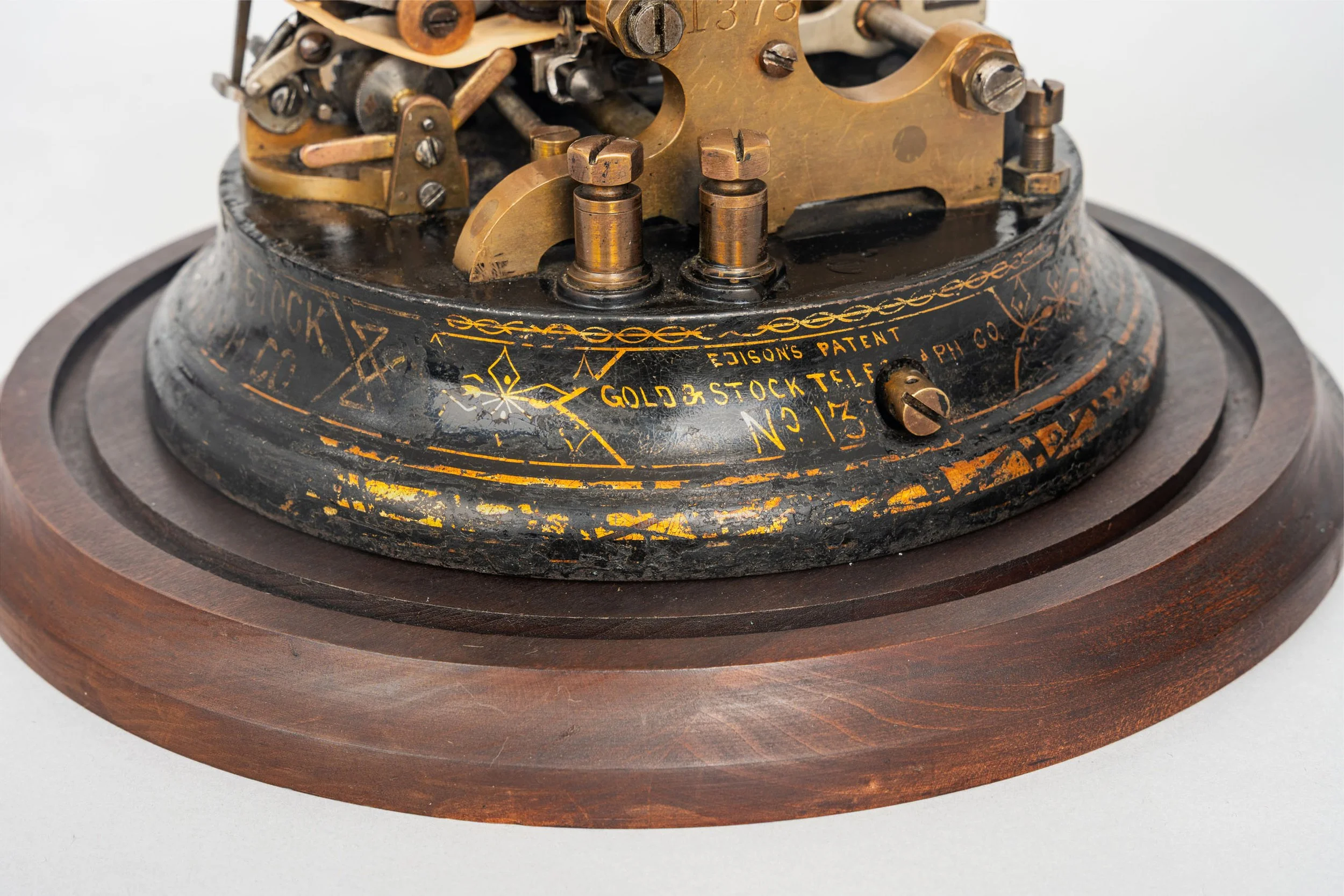
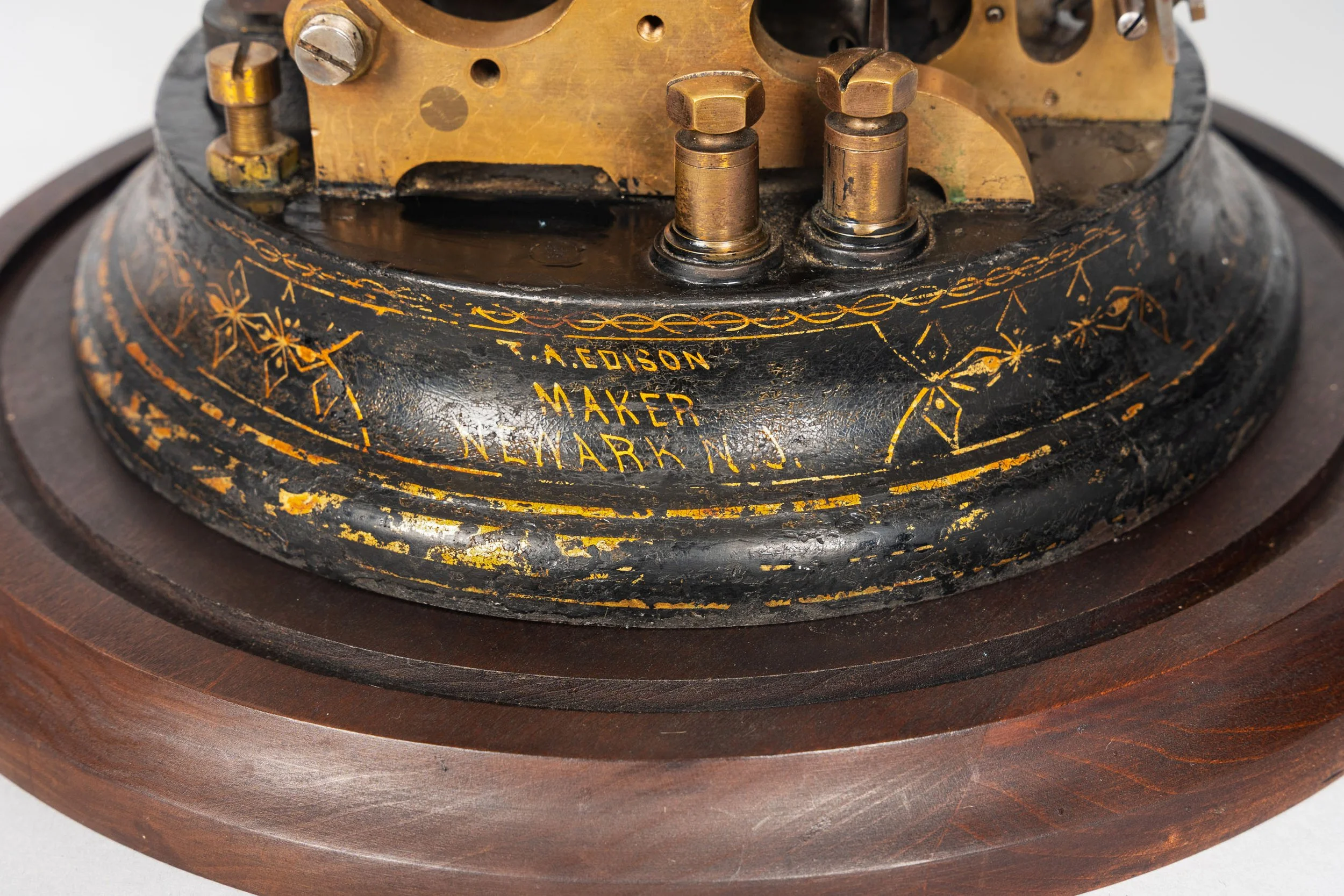
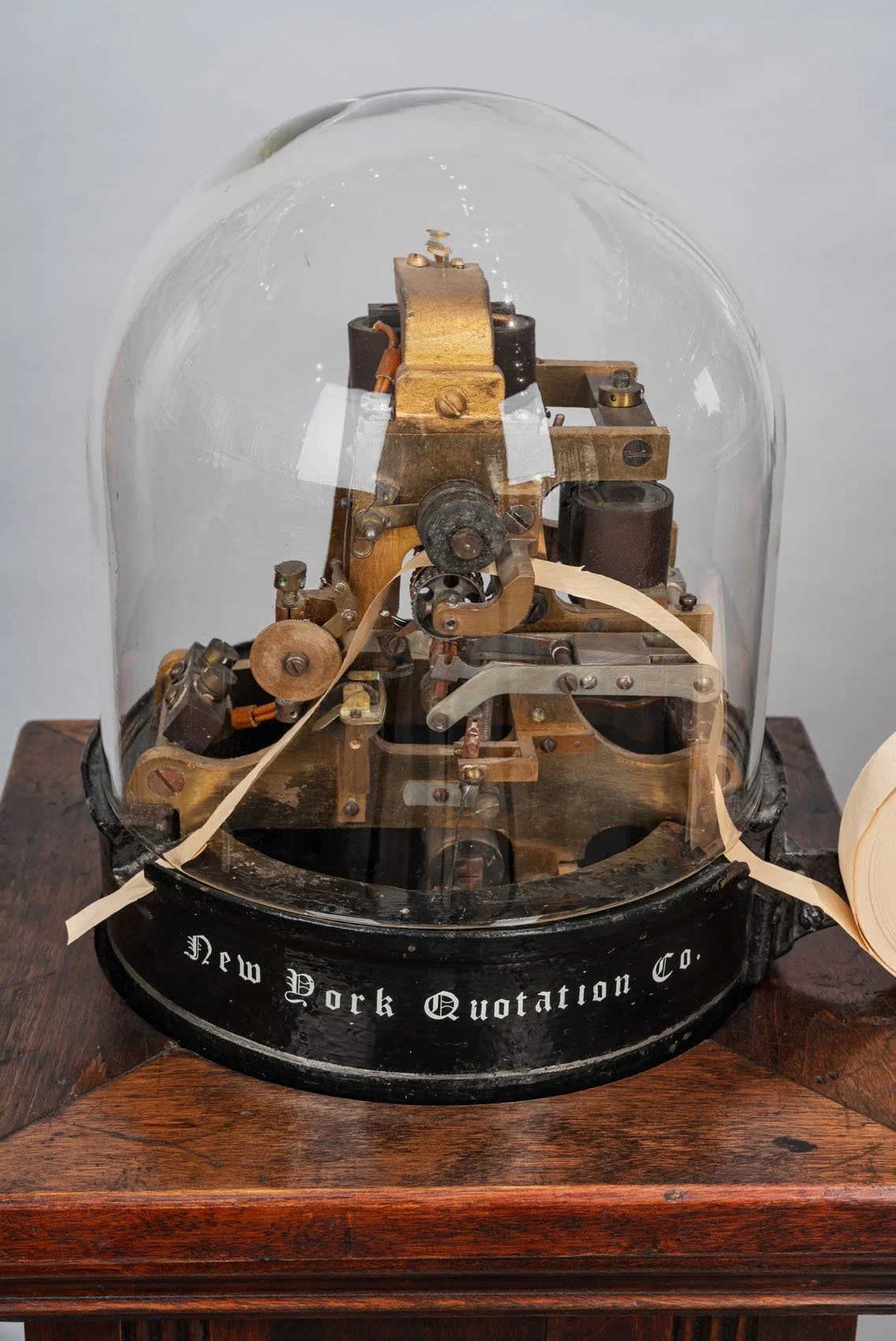
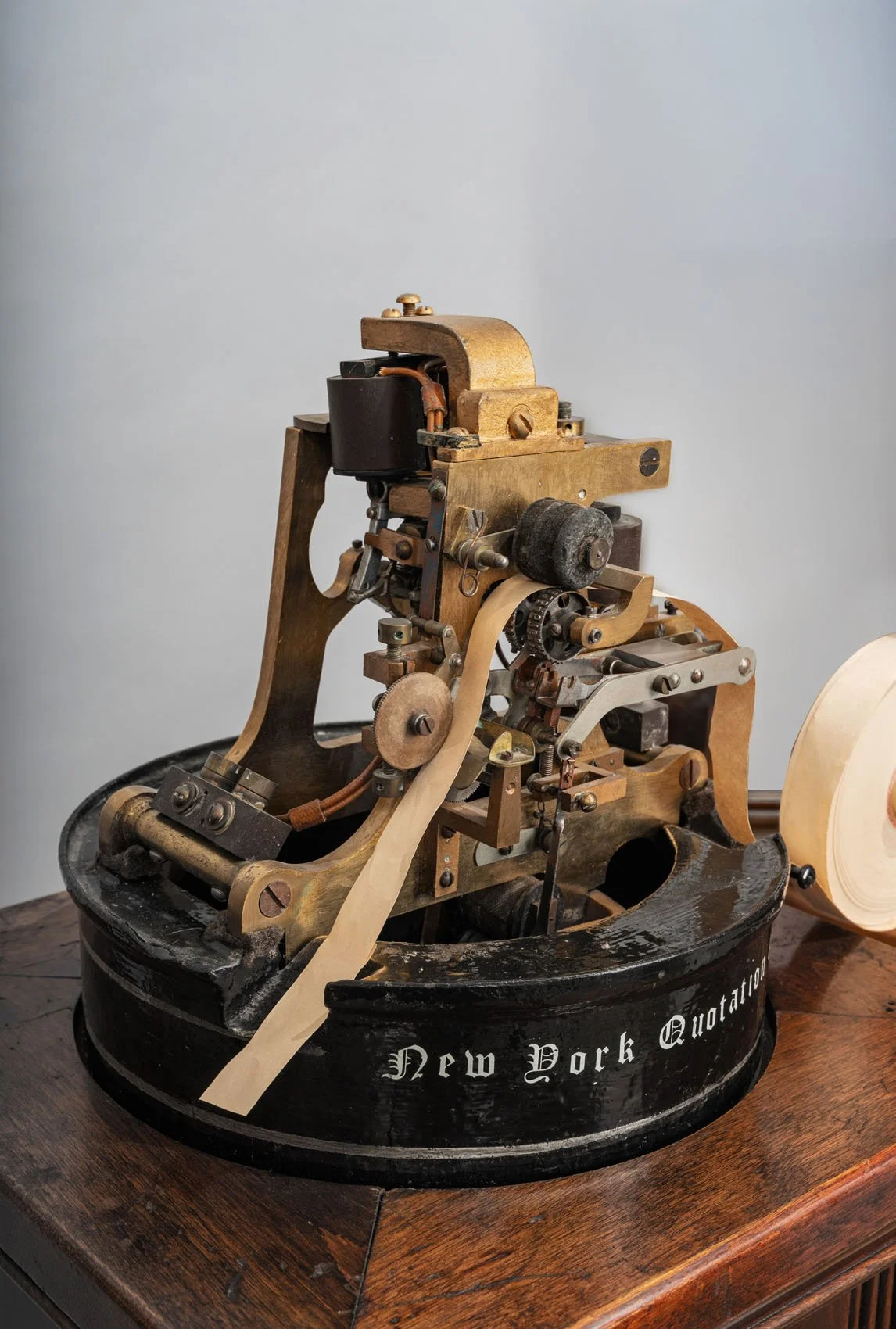
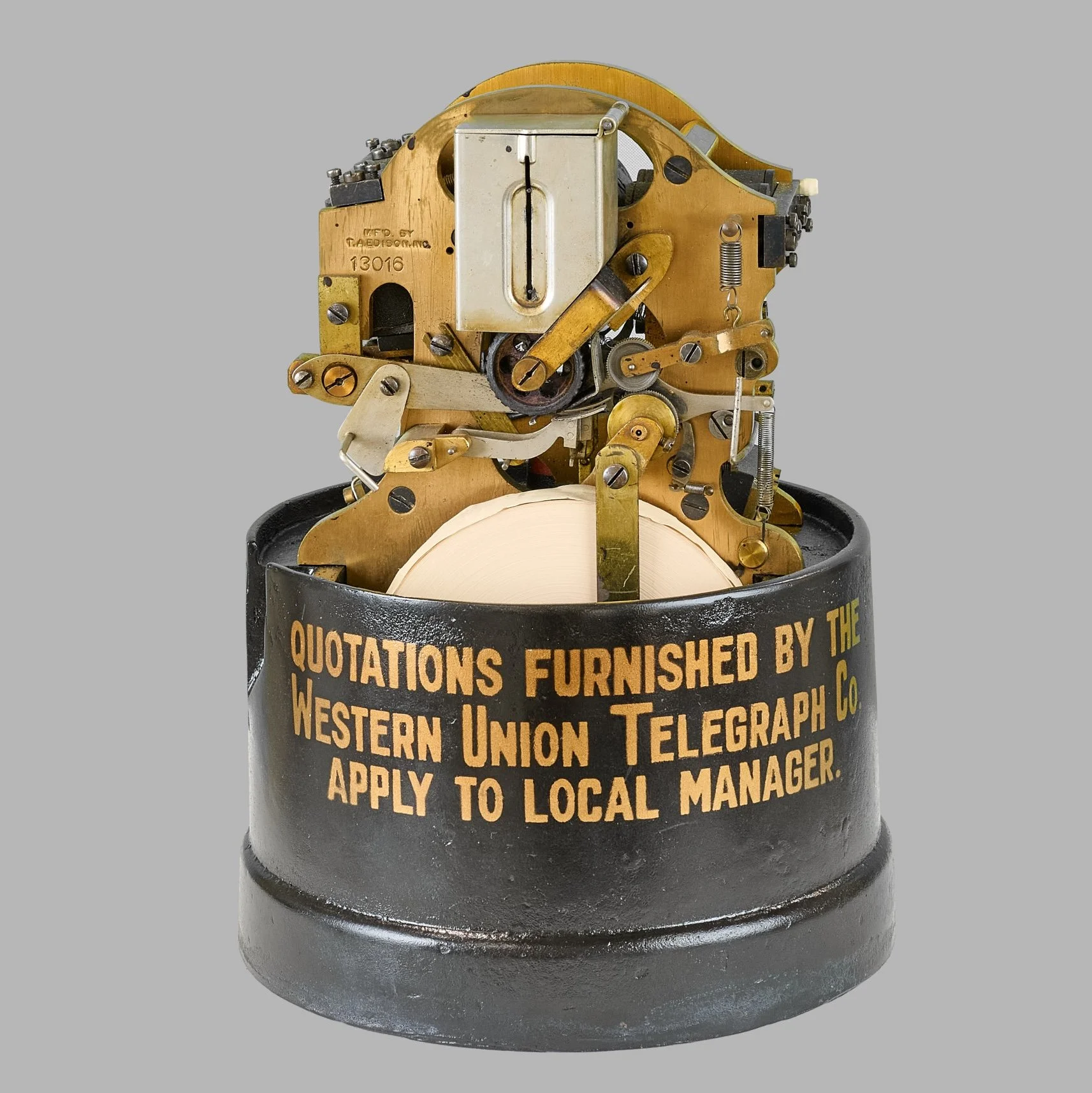
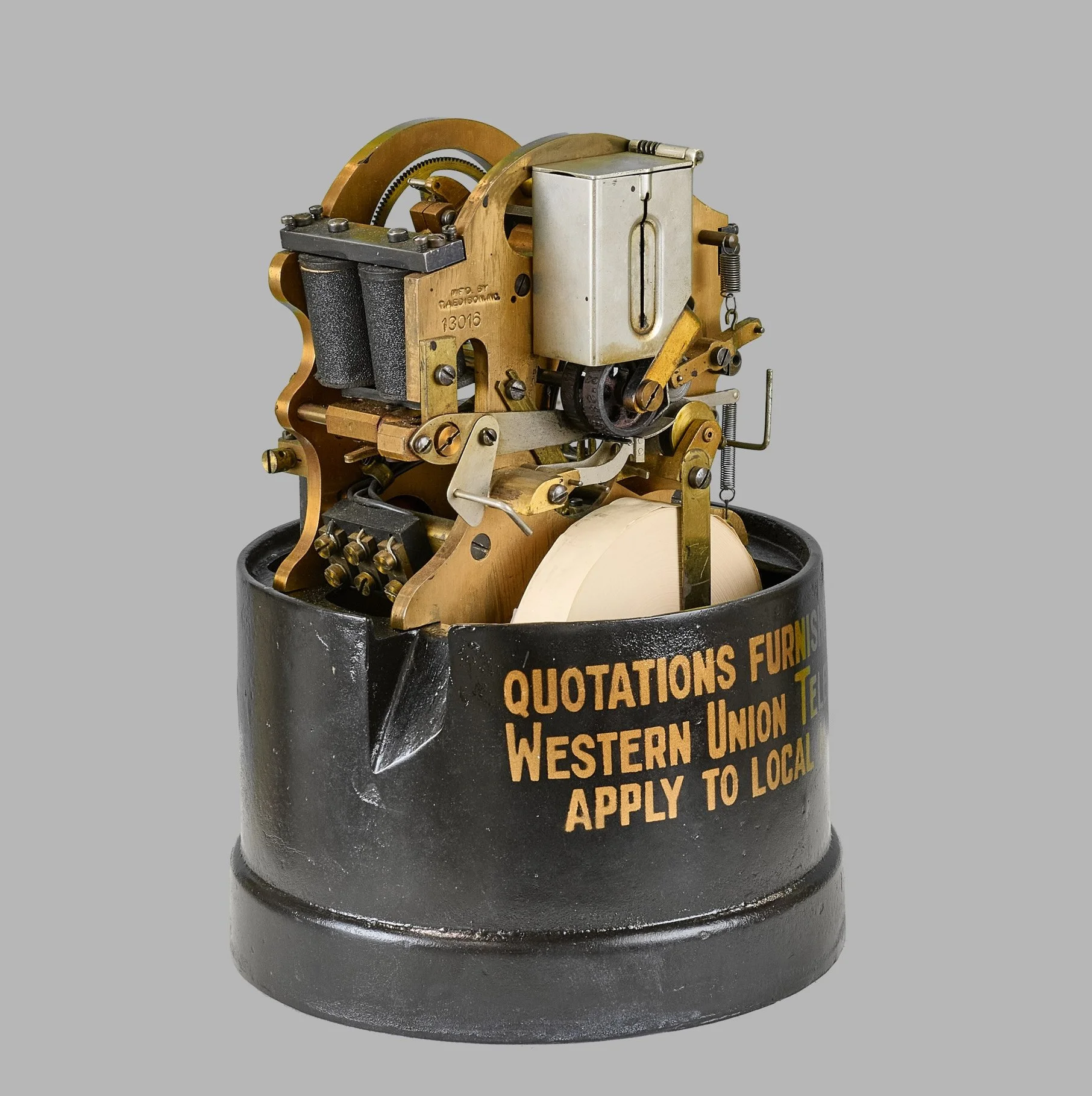
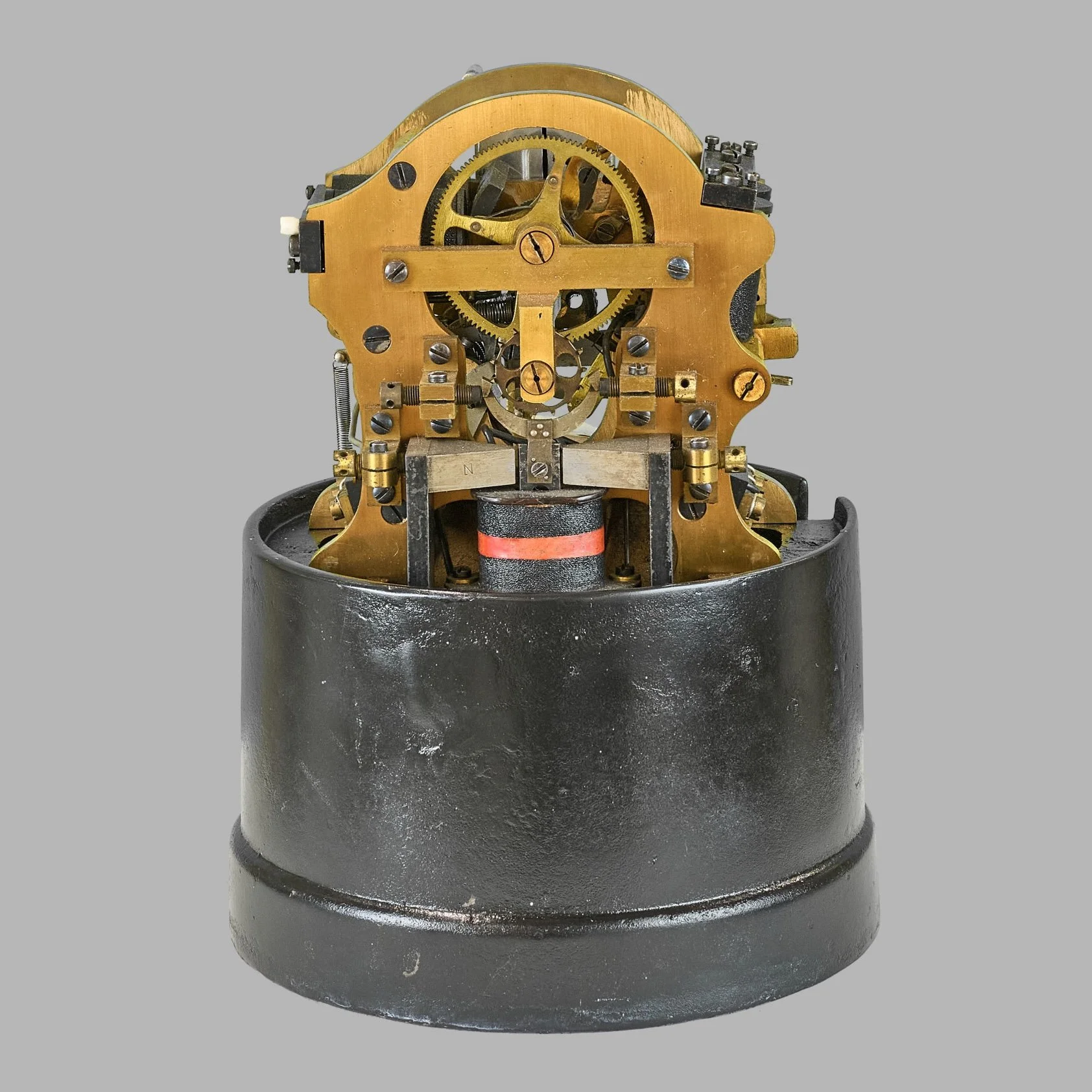
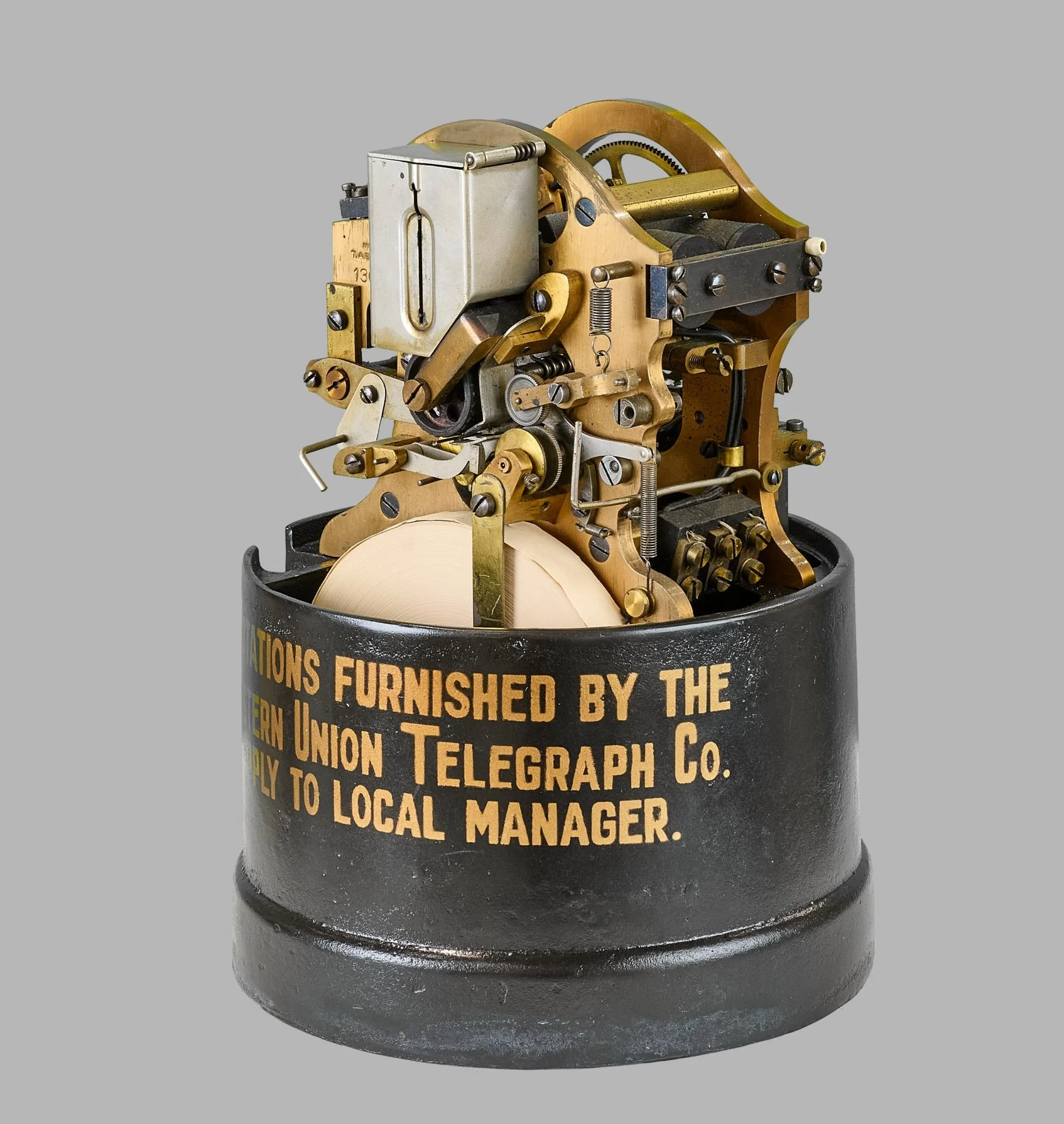
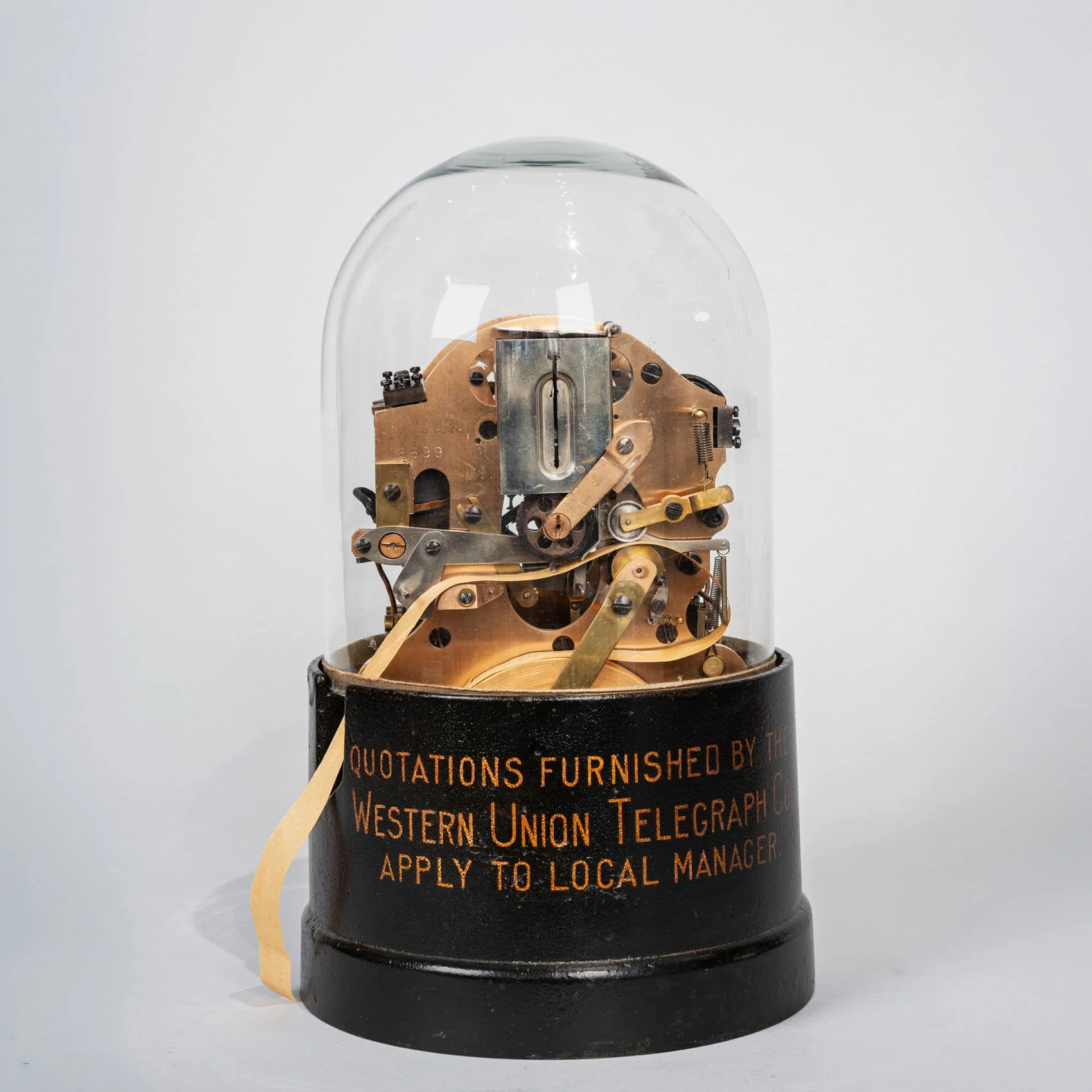
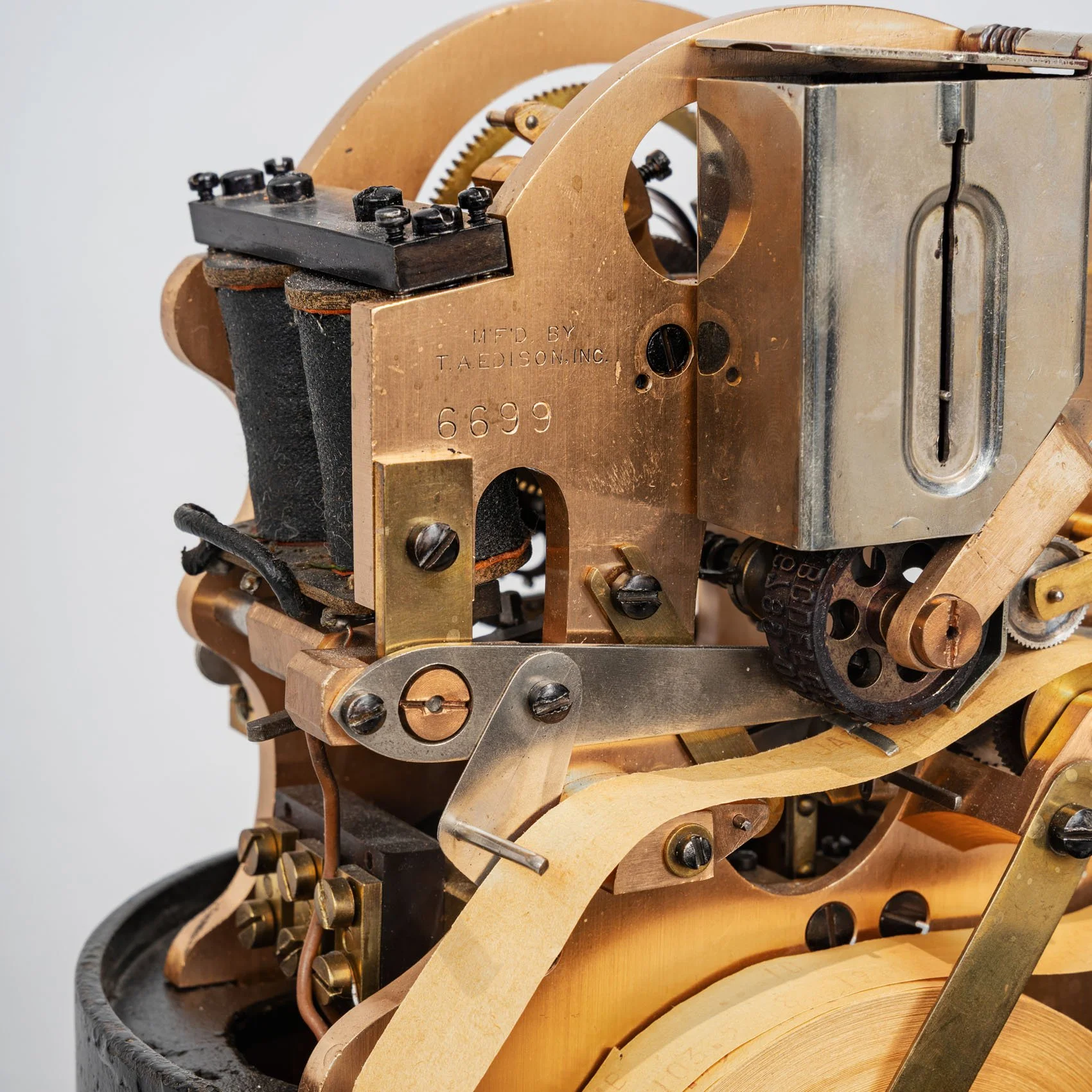
The mechanism is constructed in brass and steel, the frame unsigned — a detail consistent with a number of period Western Union tickers produced by manufacturers operating under contract to the company, whose instruments were frequently supplied without individual maker's stamps. It is mounted on its original japanned circular cast iron base bearing the period printed service inscription in gilt lettering: "QUOTATIONS FURNISHED BY THE WESTERN UNION TELEGRAPH CO. — APPLY TO LOCAL MANAGER" — the standard notice applied to instruments placed in brokerage offices and financial institutions as part of Western Union's commercial subscription service. The mechanism is enclosed beneath its original glass dome.
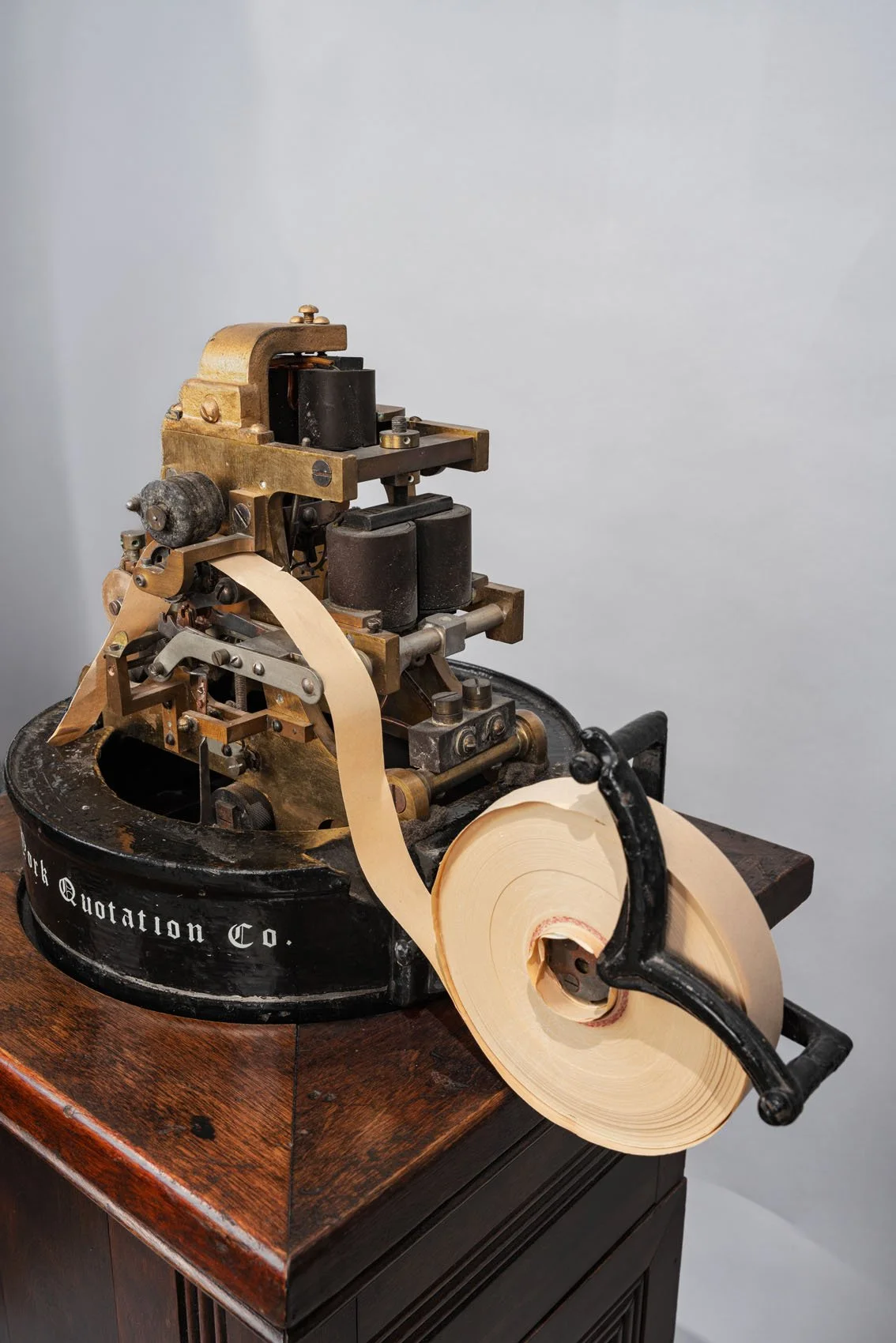
The self-winding system represented the defining technological advance of this generation of tickers, developed by George B. Scott and W. P. Phelps with subsequent refinements by J. C. Barclay and Jay R. Page in 1903, producing a more compact and reliable instrument than earlier manually-wound predecessors. As part of the Western Union network, the ticker received telegraphic impulses transmitting stock quotations from centralized exchanges and translated them into printed sequences of company abbreviations and prices on a continuous paper tape, delivering near real-time market information to subscribers and enabling the coordinated national market activity that characterised the early twentieth-century financial landscape.
The Western Union service inscription on the base is a notable survival. Applied to instruments installed in client premises, such inscriptions were routinely removed, painted over, or lost as machines passed through service, maintenance, and eventual decommissioning. Its clear retention here gives this example a directness and authenticity as a working object of American financial history.
The unsigned mechanism invites further research into its specific manufacture — a number of contractors supplied Western Union with ticker mechanisms during this period, and identification of the maker from mechanical characteristics remains an area of active interest among specialist collectors.
Condition: Good. Brass and steel mechanism present and intact with original patina consistent with age and use. Original glass dome present, no cracks or chips. Japanned cast iron base retains period "Western Union Telegraph Co." service inscription in good condition. All principal components present in honest unrestored condition.
A genuine and characterful example of the self-winding electromechanical stock ticker that formed the operational backbone of American financial market communications in the early twentieth century — supplied as part of the nationwide quotation network operated by the Western Union Telegraph Company and preserved here in good original condition with its glass dome and base intact.
The mechanism is constructed in brass and steel, the frame unsigned — a detail consistent with a number of period Western Union tickers produced by manufacturers operating under contract to the company, whose instruments were frequently supplied without individual maker's stamps. It is mounted on its original japanned circular cast iron base bearing the period printed service inscription in gilt lettering: "QUOTATIONS FURNISHED BY THE WESTERN UNION TELEGRAPH CO. — APPLY TO LOCAL MANAGER" — the standard notice applied to instruments placed in brokerage offices and financial institutions as part of Western Union's commercial subscription service. The mechanism is enclosed beneath its original glass dome.
The self-winding system represented the defining technological advance of this generation of tickers, developed by George B. Scott and W. P. Phelps with subsequent refinements by J. C. Barclay and Jay R. Page in 1903, producing a more compact and reliable instrument than earlier manually-wound predecessors. As part of the Western Union network, the ticker received telegraphic impulses transmitting stock quotations from centralized exchanges and translated them into printed sequences of company abbreviations and prices on a continuous paper tape, delivering near real-time market information to subscribers and enabling the coordinated national market activity that characterised the early twentieth-century financial landscape.
The Western Union service inscription on the base is a notable survival. Applied to instruments installed in client premises, such inscriptions were routinely removed, painted over, or lost as machines passed through service, maintenance, and eventual decommissioning. Its clear retention here gives this example a directness and authenticity as a working object of American financial history.
The unsigned mechanism invites further research into its specific manufacture — a number of contractors supplied Western Union with ticker mechanisms during this period, and identification of the maker from mechanical characteristics remains an area of active interest among specialist collectors.
Condition: Good. Brass and steel mechanism present and intact with original patina consistent with age and use. Original glass dome present, no cracks or chips. Japanned cast iron base retains period "Western Union Telegraph Co." service inscription in good condition. All principal components present in honest unrestored condition.

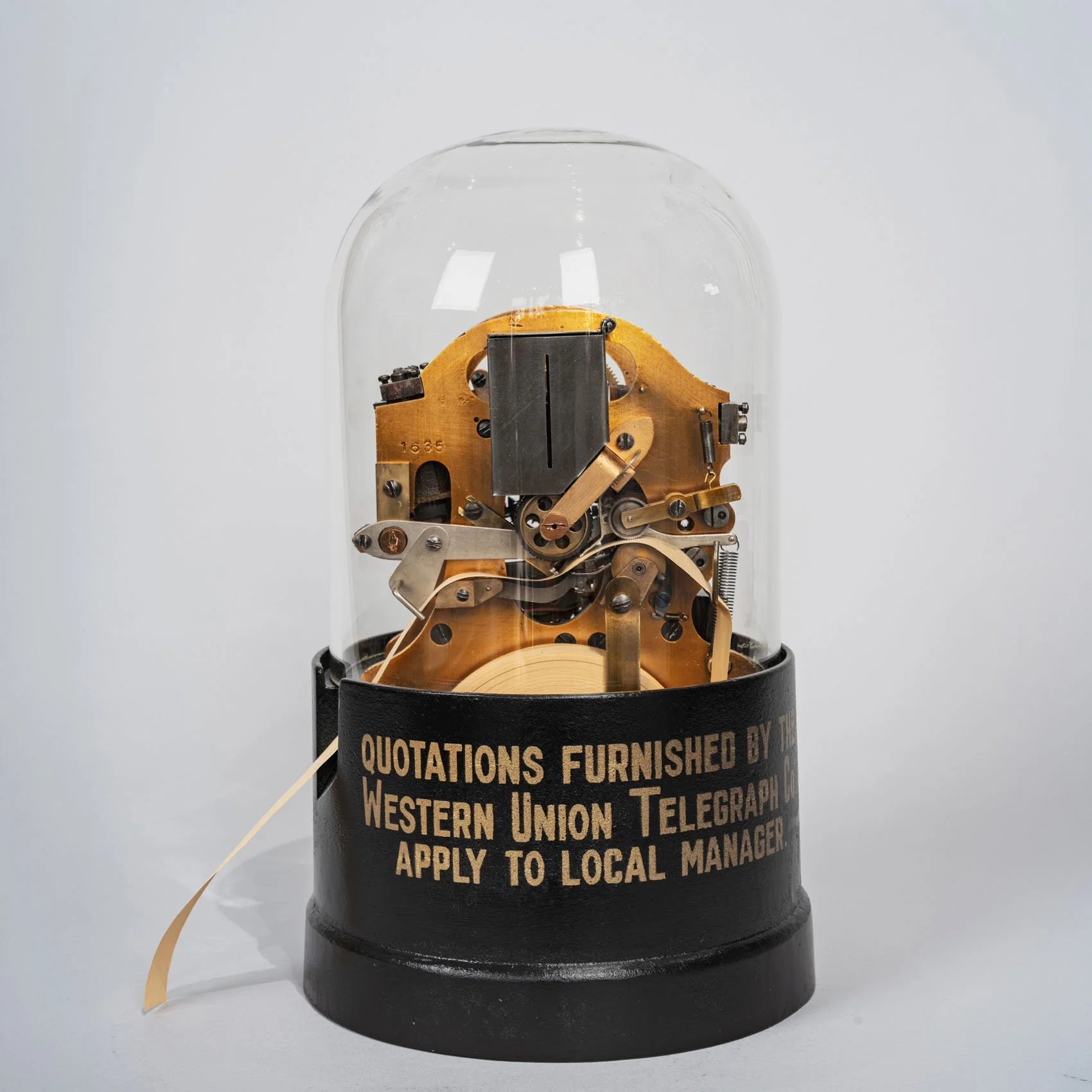 Image 1 of 1