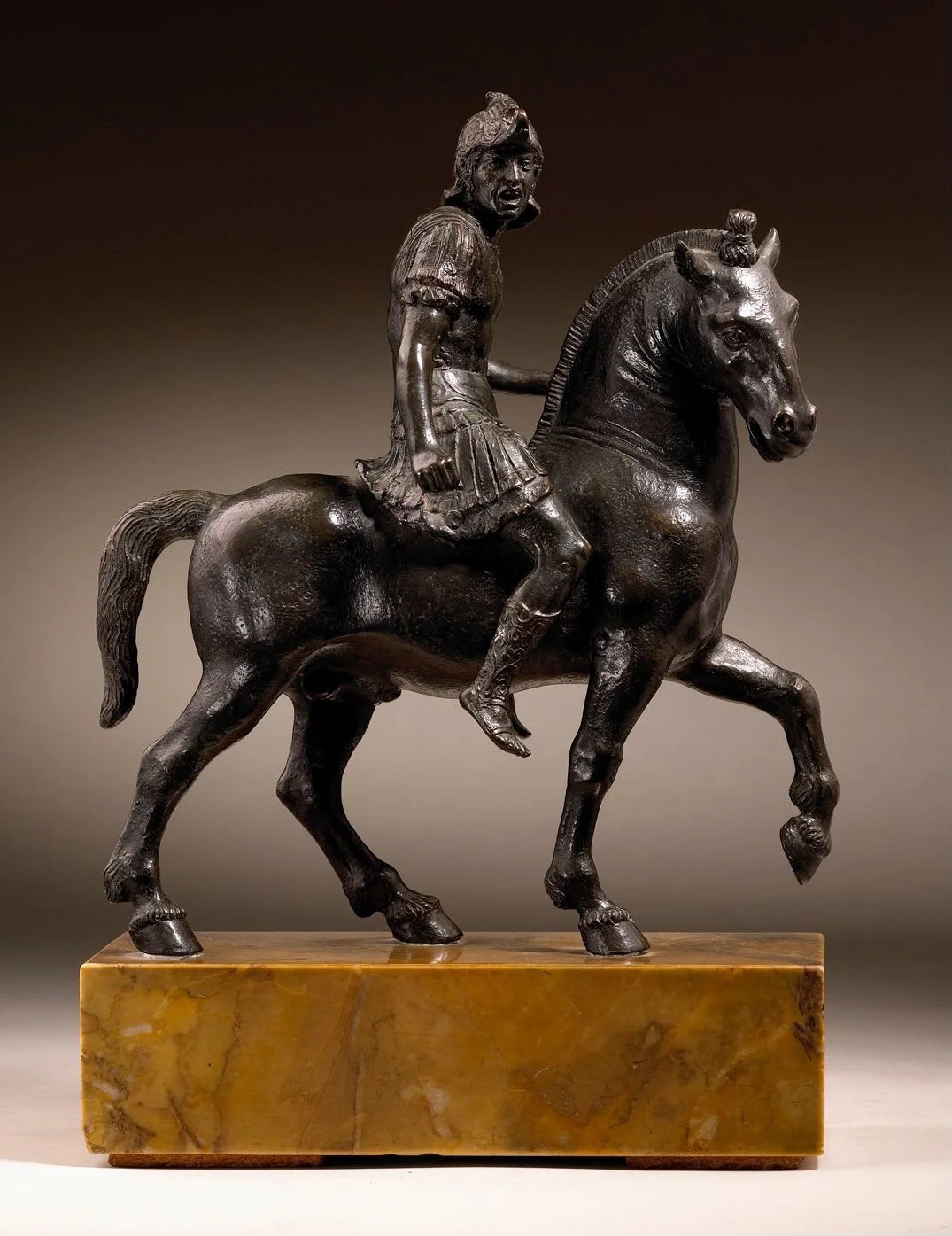
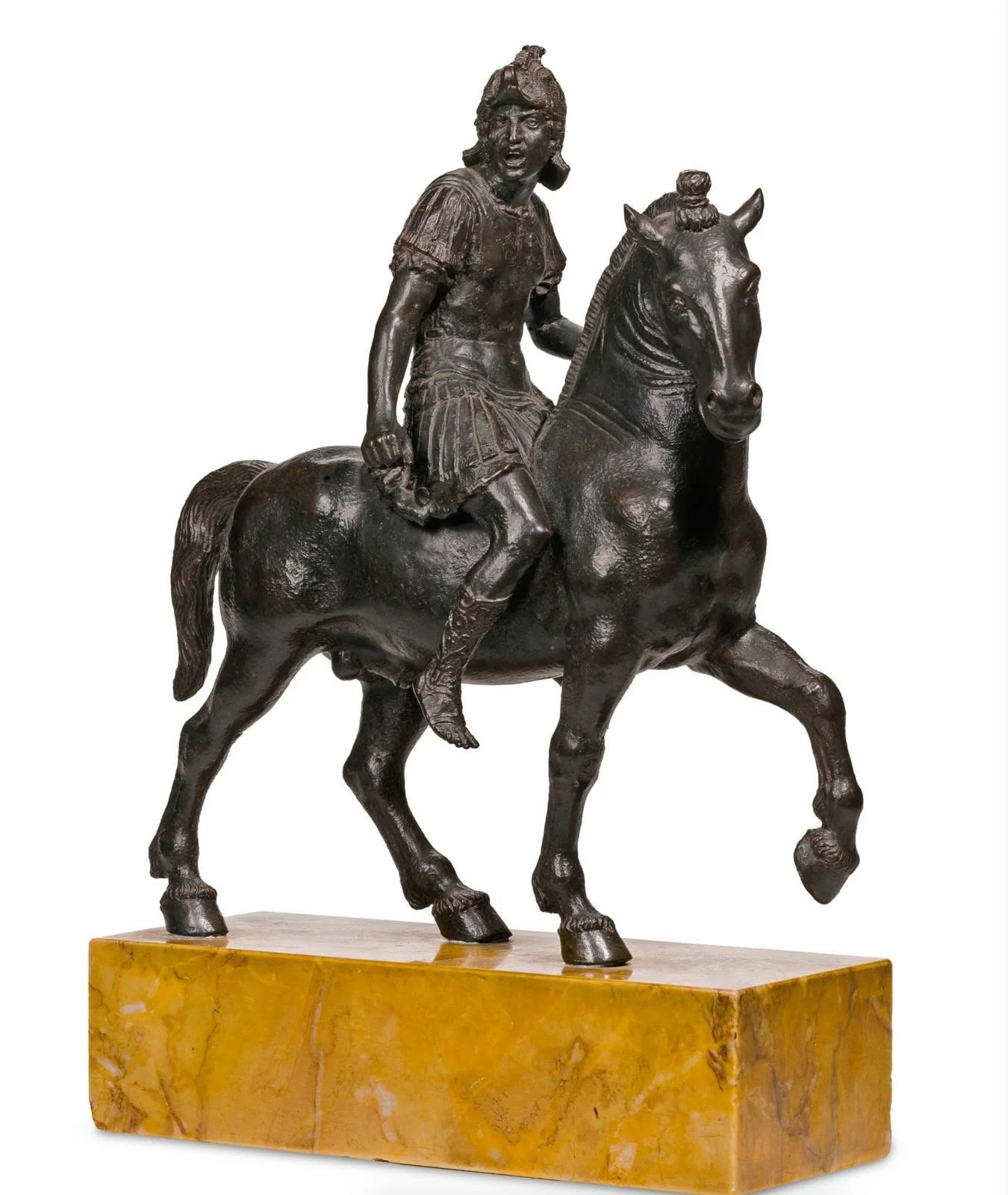
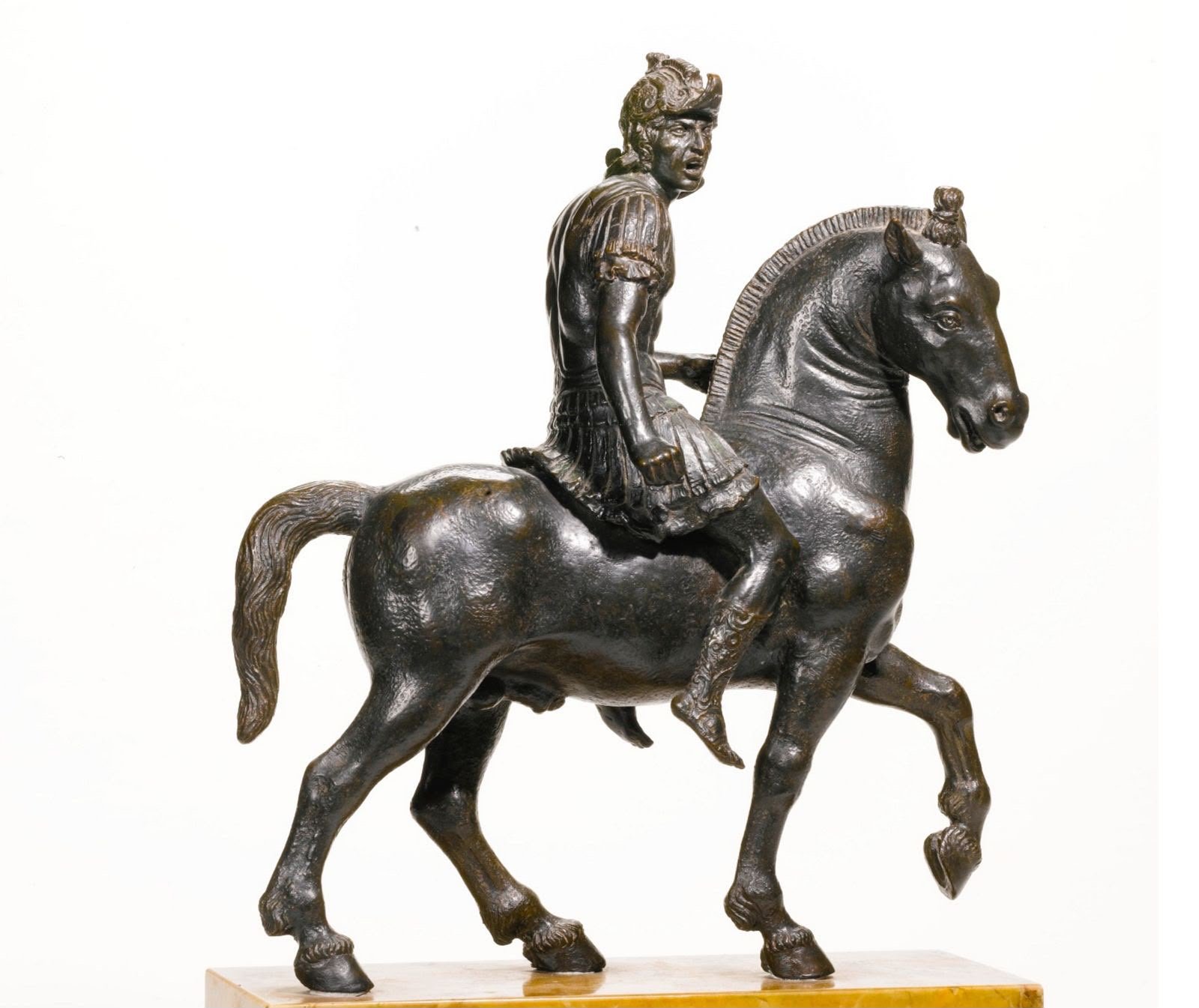
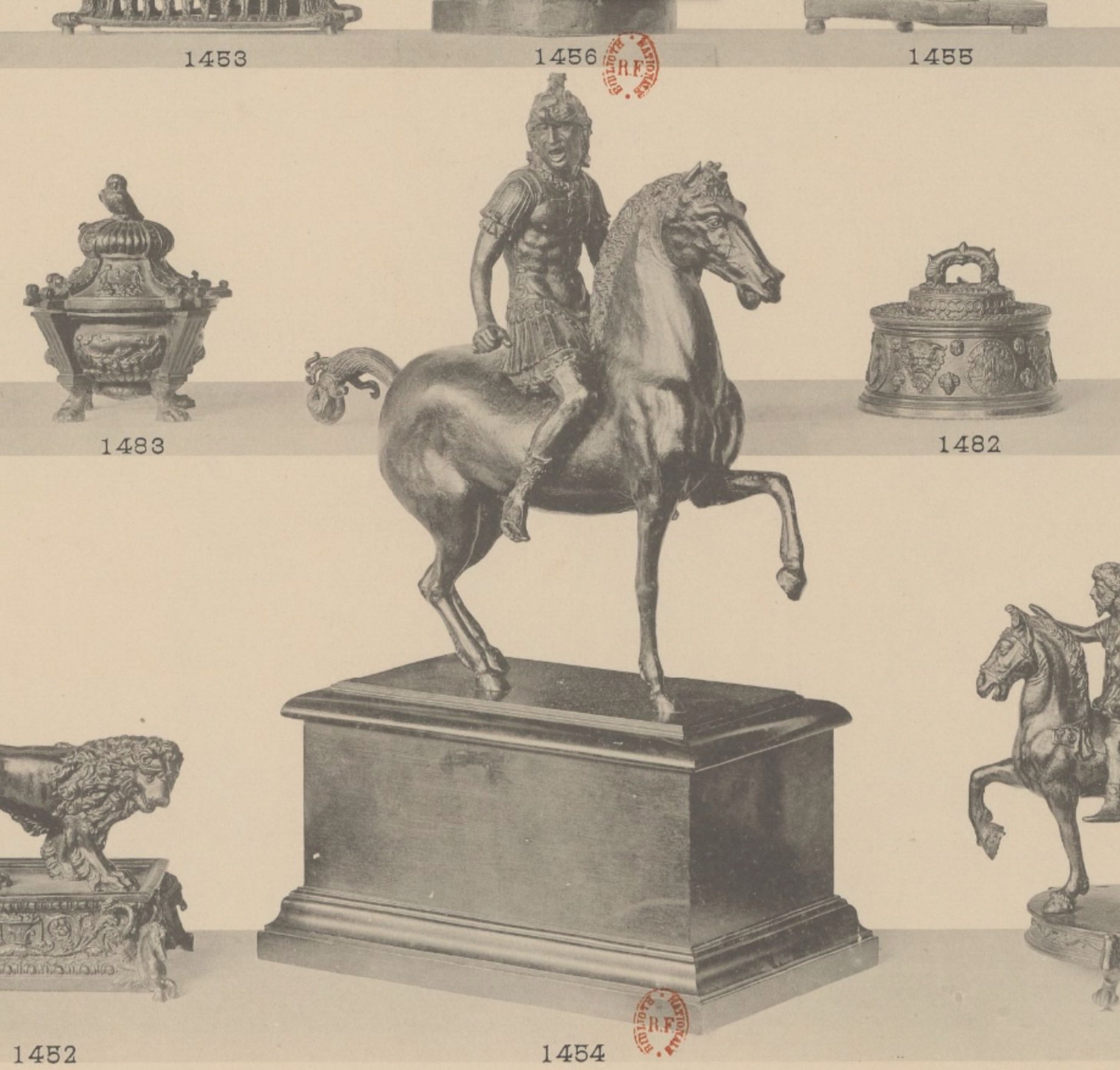
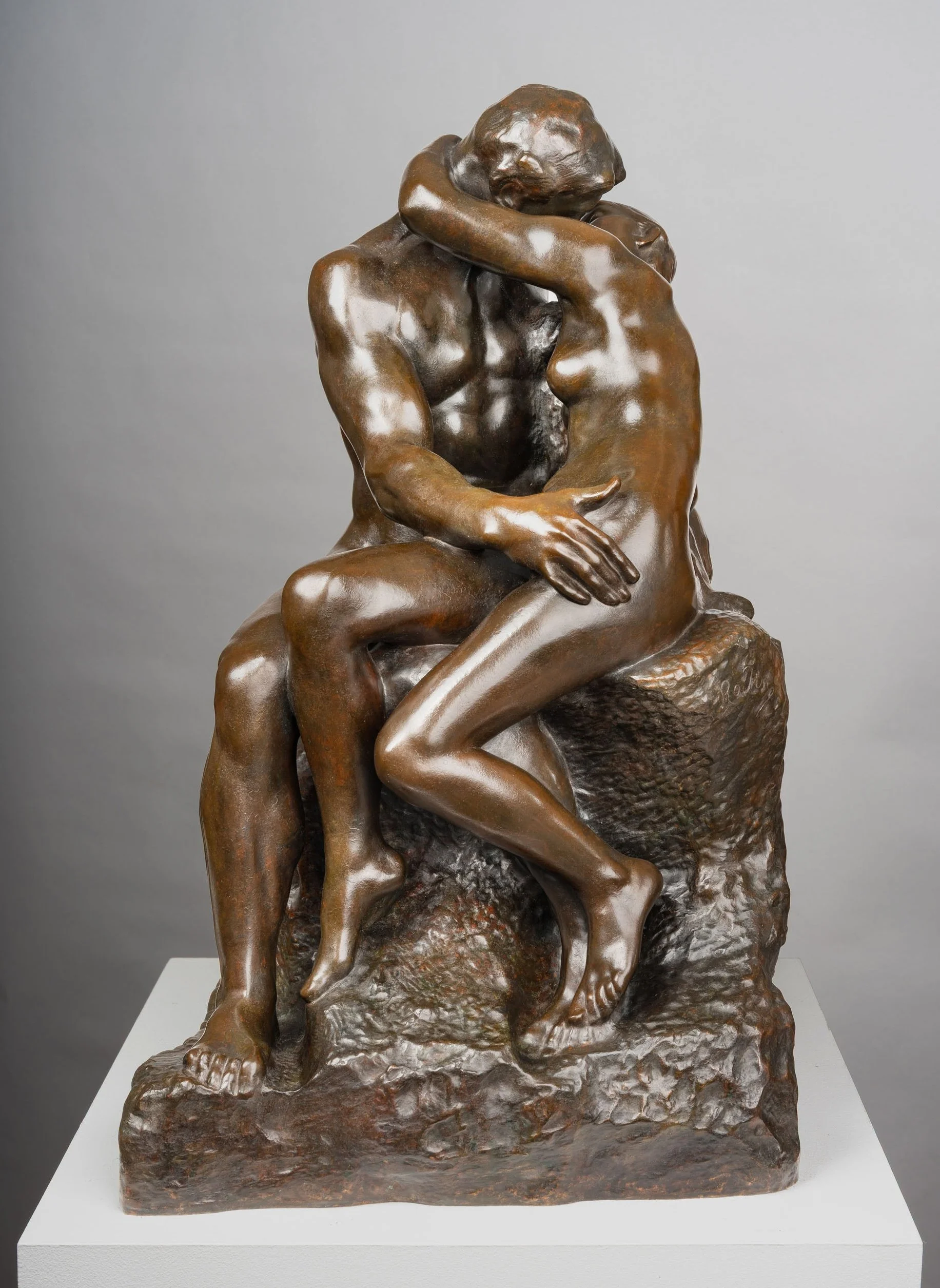
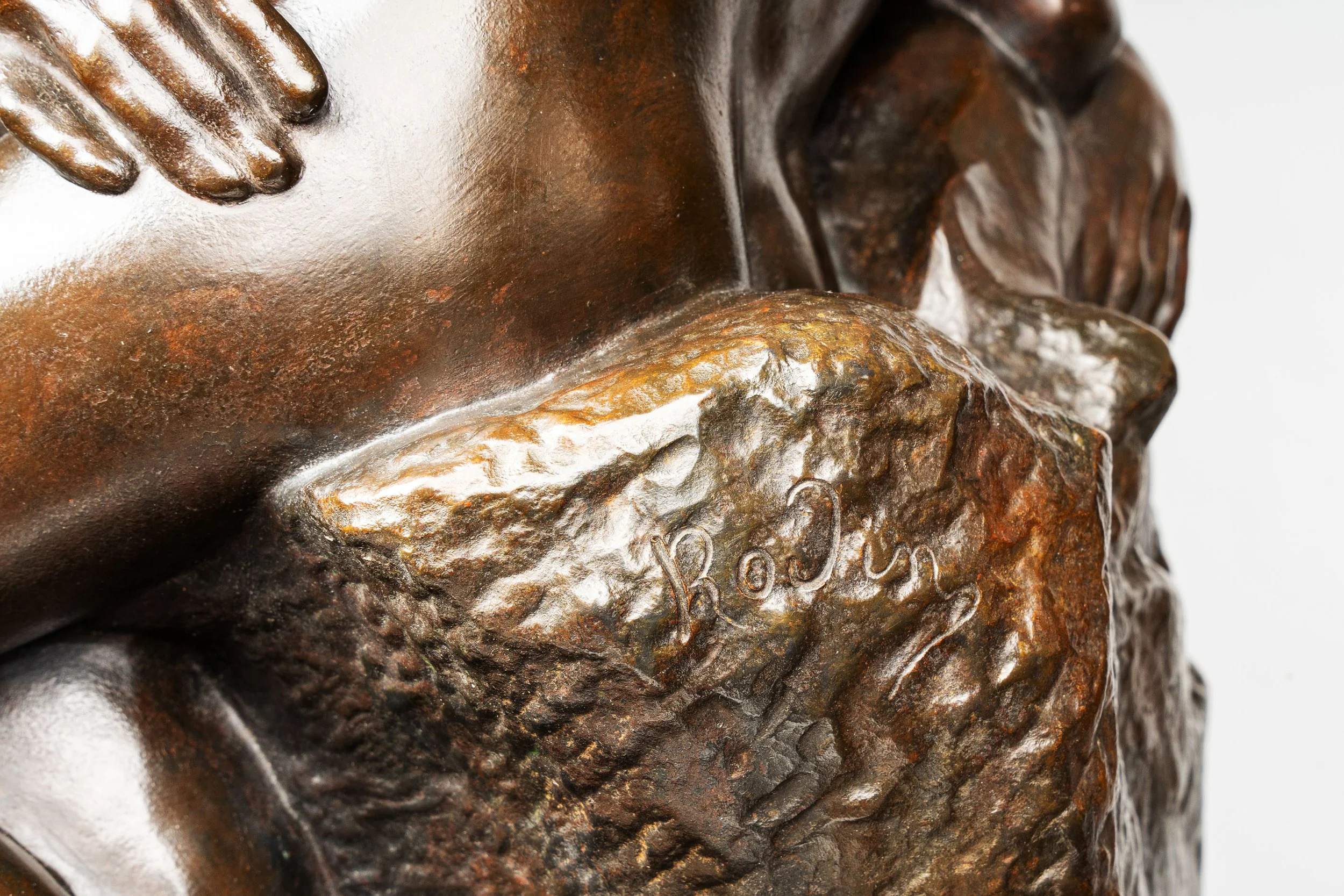
Auguste Rodin (1840 to 1917), L'Éternel Printemps (Eternal Spring), second état, second reduction, the size known to the foundry as taille no. 4. Bronze with rich mid and dark brown patina, signed Rodin and inscribed with the foundry mark F. BARBEDIENNE FONDEUR. Height 20 1/2 inches.
Among the most celebrated of all Rodin's sculptures, L'Éternel Printemps gives form to two lovers caught in a headlong embrace. The female figure descends from the Torse d'Adèle, a sensuous torso the sculptor modeled in the early 1880s and set into The Gates of Hell, her arms raised and her back arched; to this he joined a youthful male nude whose body answers the rising line of her form. Antoinette Le Normand-Romain has described the composition as one built upon an X, its elegant forms heightened by the languor of the bodies and the delicacy of the embrace, qualities that secured the work its early and lasting acclaim. Faint traces of wings on the man's back identify him as Cupid, while the woman leans into a tree-like support from which she seems half-emerging, a deliberate ambiguity that lends the group much of its poetic charge.
Conceived in 1884, the work belongs to the years of intense invention surrounding The Gates of Hell, Rodin's monumental portal after Dante's Inferno. A counterpart to Le Baiser, it carries an echo of Paolo and Francesca, the lovers Dante consigned to an eternal tempest of passion, and it marks the turn in Rodin's art away from the allegory of his earlier treatments of love toward a franker and more human sensuality, a shift often read in light of his relationship with Camille Claudel. Rodin himself traced the conception of the group to a first hearing of Beethoven's Second Symphony, recalling that he had pictured Eternal Spring, as he would afterward model it, while listening to the music. Known also as Zéphyr et la Terre and as Cupidon et Psyché, titles that lent the subject a mythological propriety, the group was ultimately withdrawn from the final scheme of the Gates as discordant with their tragic temper. Rodin developed it instead as an independent work, first cast in bronze in 1888, exhibited the following year at the Galerie Georges Petit, and shown again at the Salon of 1897.
On 6 July 1898, Rodin entered into a landmark agreement with the Leblanc-Barbedienne foundry, a renewable ten-year contract granting the firm the right to publish L'Éternel Printemps and Le Baiser in bronze, each in a graduated series of sizes. The reductions were drawn from a plaster of the second état by means of the mechanical pantograph of Achille Collas, the patented process Ferdinand Barbedienne had acquired in 1838, and which transformed the serial production of sculpture. This second reduction, the size known as taille no. 4, was conceived in 1900, and the present bronze was cast by the Barbedienne foundry between 1910 and 1918, the interior marks, the number 21, and the struck letter M, corresponding to a Barbedienne workshop of those years. The Comité Rodin records only thirty-two to thirty-three examples in this size, a figure that sets it well apart from the smaller and more numerous reductions.
It is this union of physical lyricism and emotional intensity that has drawn collectors to Eternal Spring since its conception, and that places it among Rodin's most enduring images of love. The F. Barbedienne mark identifies the present bronze as one of the casts of the edition produced under Rodin's own contract with the foundry.
Provenance
Galerie Zborowski, Paris; Galerie M. Bousso, Paris; Allan Frumkin Gallery, New York, acquired August 1966; sale, Sotheby Parke Bernet, New York, 13 May 1977, lot 605; private collection, United States.
Authentication
This work will be included in the forthcoming Catalog Critique de l'Œuvre Sculpté d'Auguste Rodin, being prepared by the Galerie Brame & Lorenceau under the direction of Jérôme Le Blay, under archive number 2019-5965B.
Literature (optional)
A. Le Normand-Romain, Rodin et le bronze, Catalogue des œuvres conservées au musée Rodin, vol. I, Paris, 2007, pp. 331 à 337 (another cast illustrated).
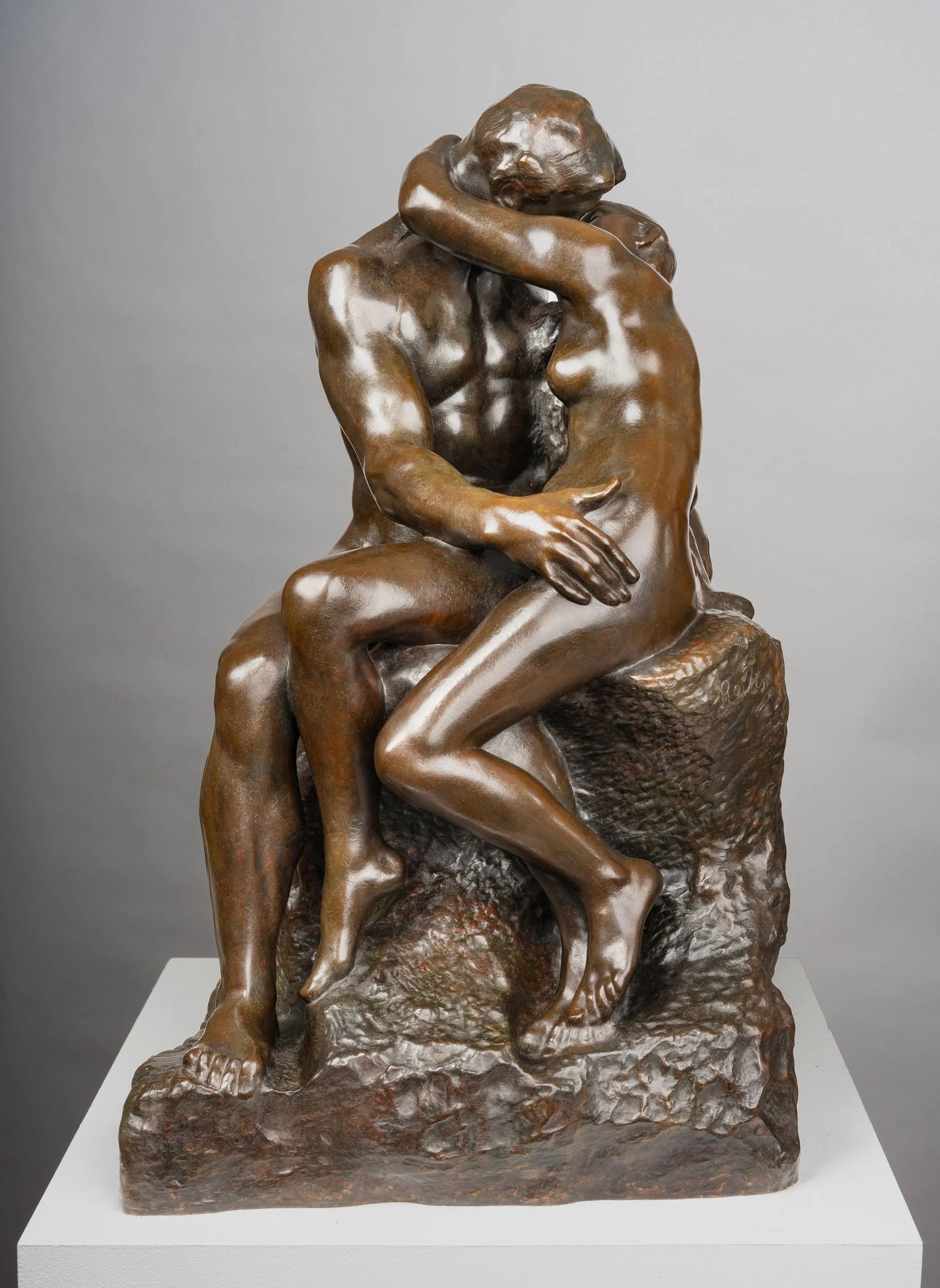
Auguste Rodin (1840 to 1917), L'Éternel Printemps (Eternal Spring), second état, second reduction, the size known to the foundry as taille no. 4. Bronze with rich mid and dark brown patina, signed Rodin and inscribed with the foundry mark F. BARBEDIENNE FONDEUR. Height 20 1/2 inches.
Among the most celebrated of all Rodin's sculptures, L'Éternel Printemps gives form to two lovers caught in a headlong embrace. The female figure descends from the Torse d'Adèle, a sensuous torso the sculptor modeled in the early 1880s and set into The Gates of Hell, her arms raised and her back arched; to this he joined a youthful male nude whose body answers the rising line of her form. Antoinette Le Normand-Romain has described the composition as one built upon an X, its elegant forms heightened by the languor of the bodies and the delicacy of the embrace, qualities that secured the work its early and lasting acclaim. Faint traces of wings on the man's back identify him as Cupid, while the woman leans into a tree-like support from which she seems half-emerging, a deliberate ambiguity that lends the group much of its poetic charge.
Conceived in 1884, the work belongs to the years of intense invention surrounding The Gates of Hell, Rodin's monumental portal after Dante's Inferno. A counterpart to Le Baiser, it carries an echo of Paolo and Francesca, the lovers Dante consigned to an eternal tempest of passion, and it marks the turn in Rodin's art away from the allegory of his earlier treatments of love toward a franker and more human sensuality, a shift often read in light of his relationship with Camille Claudel. Rodin himself traced the conception of the group to a first hearing of Beethoven's Second Symphony, recalling that he had pictured Eternal Spring, as he would afterward model it, while listening to the music. Known also as Zéphyr et la Terre and as Cupidon et Psyché, titles that lent the subject a mythological propriety, the group was ultimately withdrawn from the final scheme of the Gates as discordant with their tragic temper. Rodin developed it instead as an independent work, first cast in bronze in 1888, exhibited the following year at the Galerie Georges Petit, and shown again at the Salon of 1897.
On 6 July 1898, Rodin entered into a landmark agreement with the Leblanc-Barbedienne foundry, a renewable ten-year contract granting the firm the right to publish L'Éternel Printemps and Le Baiser in bronze, each in a graduated series of sizes. The reductions were drawn from a plaster of the second état by means of the mechanical pantograph of Achille Collas, the patented process Ferdinand Barbedienne had acquired in 1838, and which transformed the serial production of sculpture. This second reduction, the size known as taille no. 4, was conceived in 1900, and the present bronze was cast by the Barbedienne foundry between 1910 and 1918, the interior marks, the number 21, and the struck letter M, corresponding to a Barbedienne workshop of those years. The Comité Rodin records only thirty-two to thirty-three examples in this size, a figure that sets it well apart from the smaller and more numerous reductions.
It is this union of physical lyricism and emotional intensity that has drawn collectors to Eternal Spring since its conception, and that places it among Rodin's most enduring images of love. The F. Barbedienne mark identifies the present bronze as one of the casts of the edition produced under Rodin's own contract with the foundry.
Provenance
Galerie Zborowski, Paris; Galerie M. Bousso, Paris; Allan Frumkin Gallery, New York, acquired August 1966; sale, Sotheby Parke Bernet, New York, 13 May 1977, lot 605; private collection, United States.
Authentication
This work will be included in the forthcoming Catalog Critique de l'Œuvre Sculpté d'Auguste Rodin, being prepared by the Galerie Brame & Lorenceau under the direction of Jérôme Le Blay, under archive number 2019-5965B.
Literature (optional)
A. Le Normand-Romain, Rodin et le bronze, Catalogue des œuvres conservées au musée Rodin, vol. I, Paris, 2007, pp. 331 à 337 (another cast illustrated).

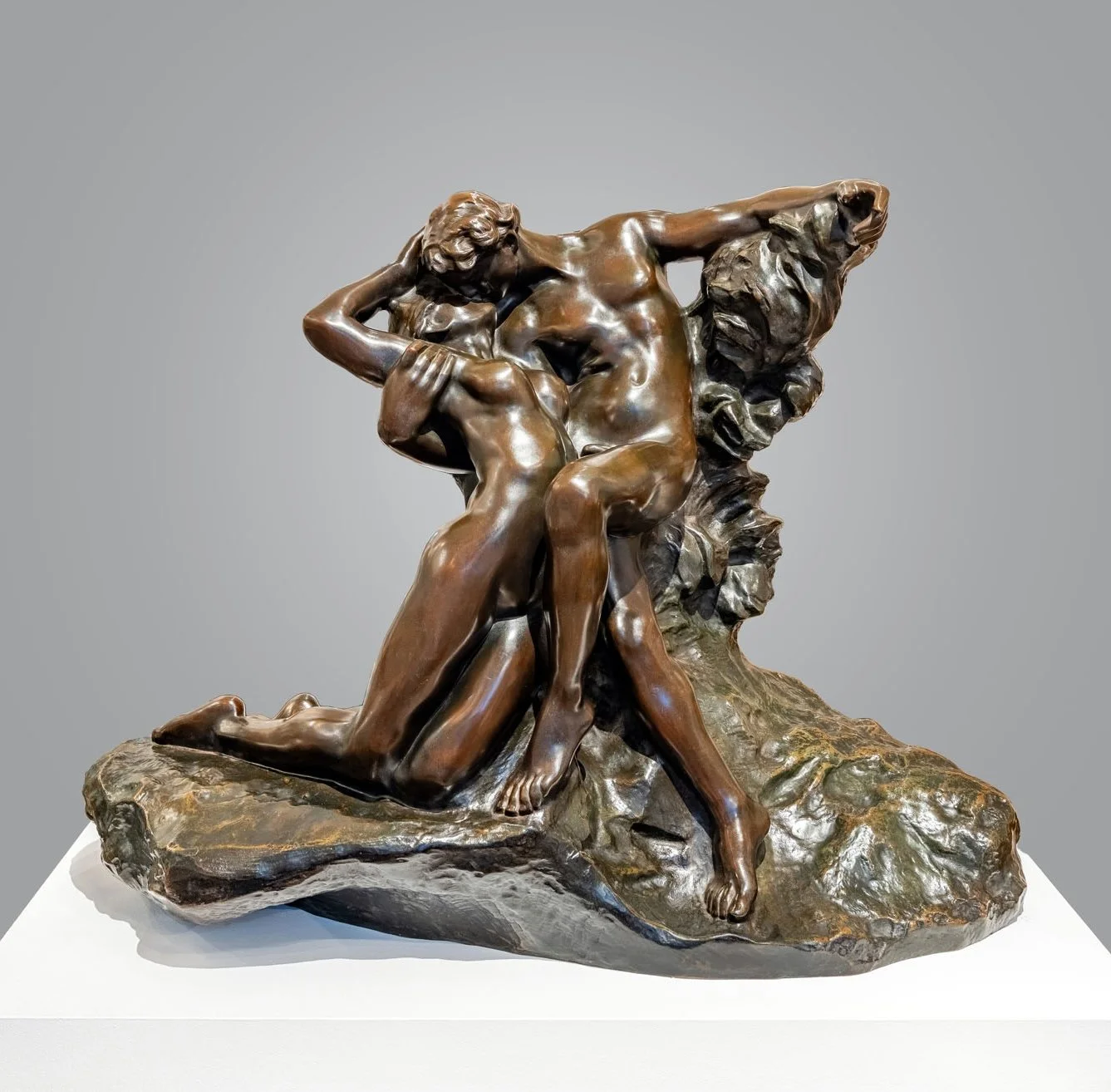 Image 1 of 6
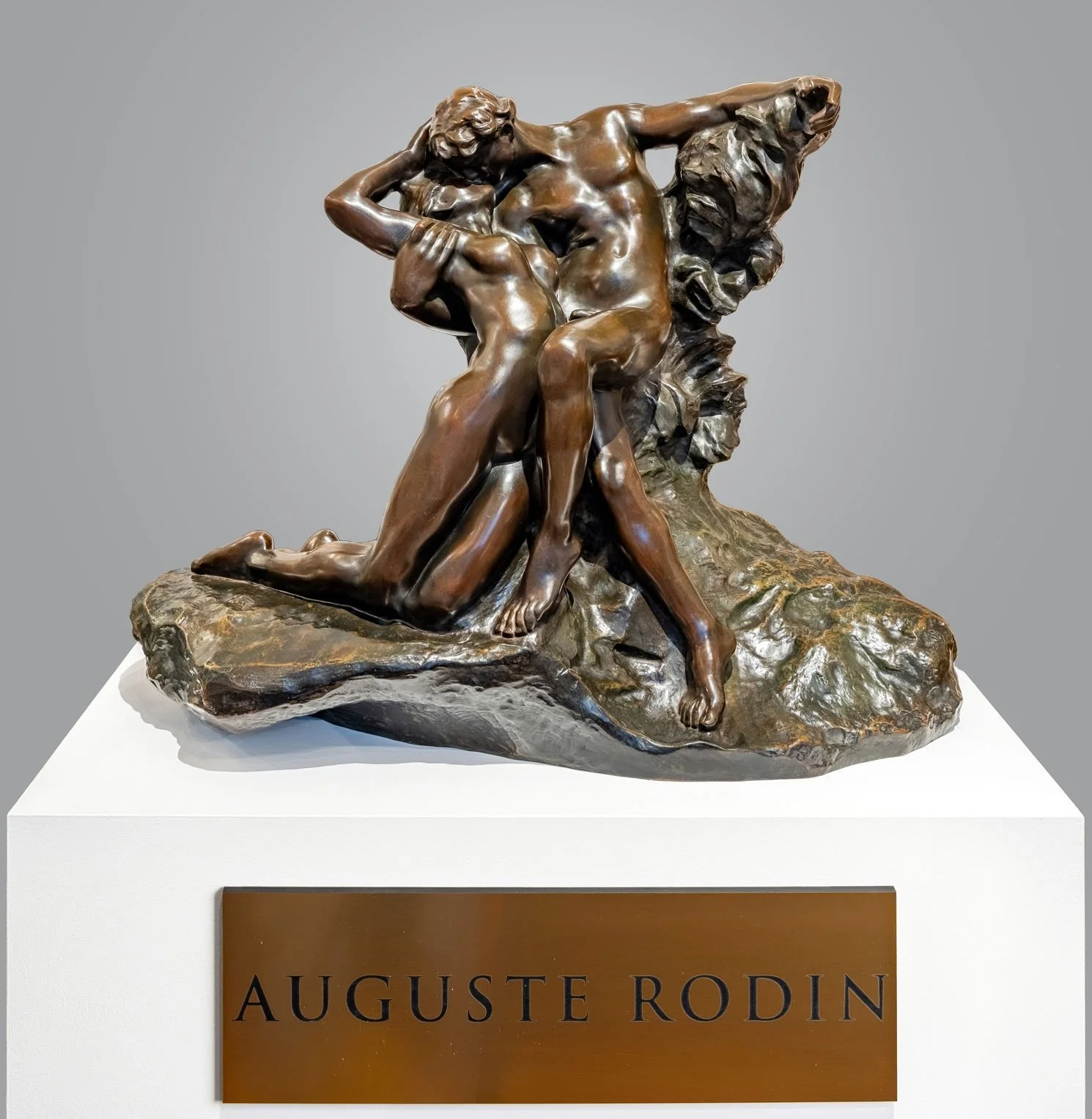 Image 2 of 6
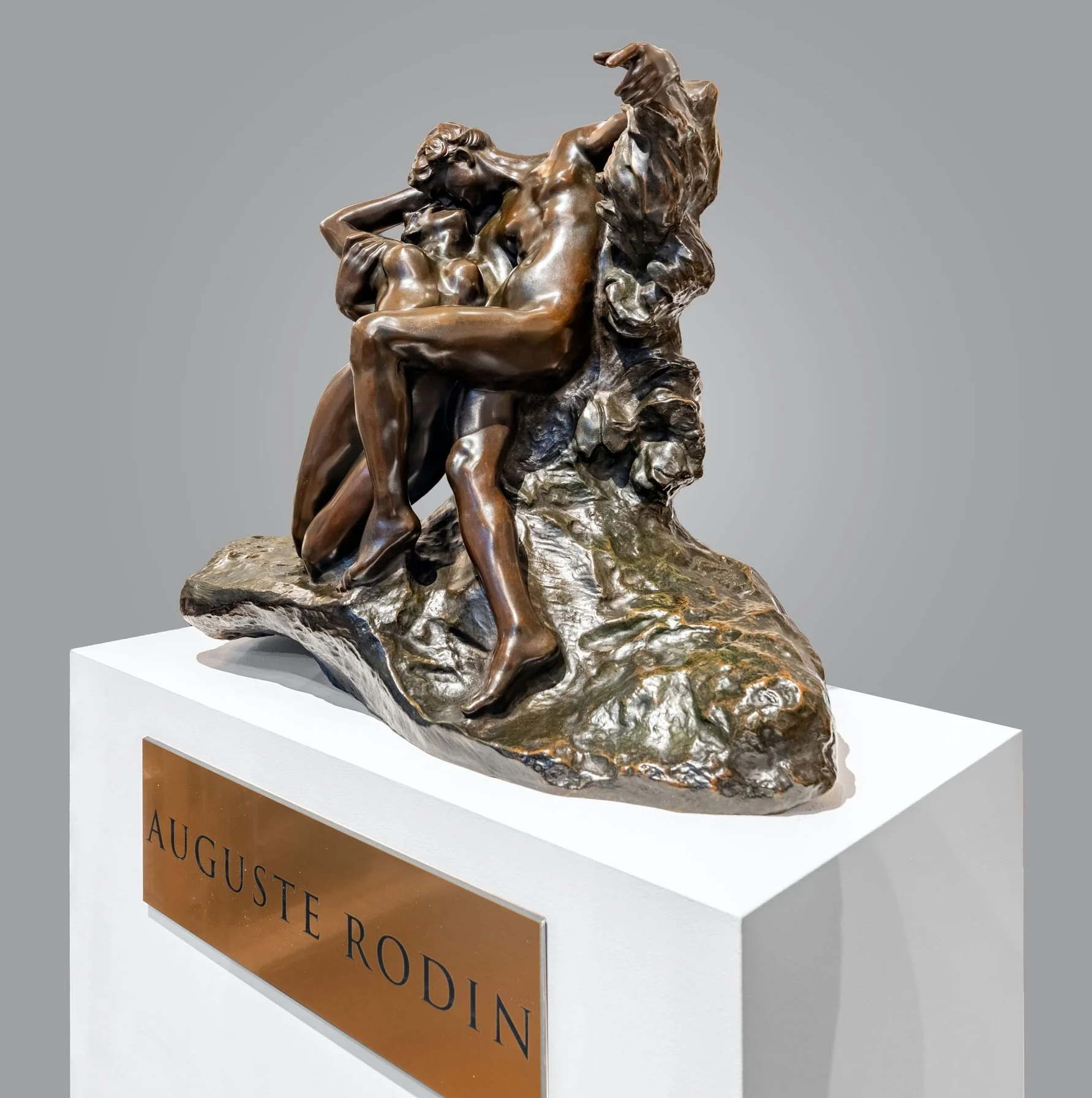 Image 3 of 6
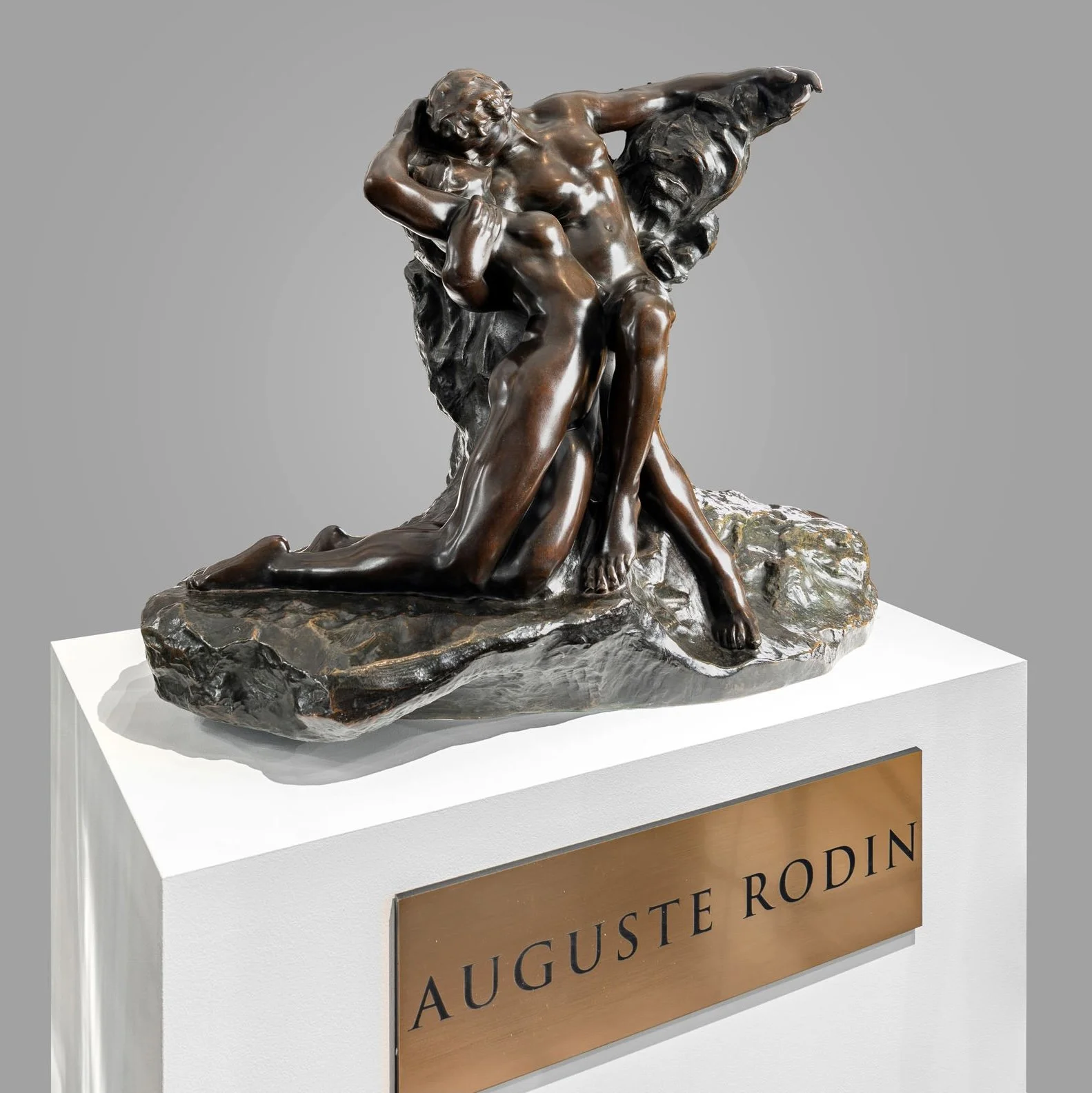 Image 4 of 6
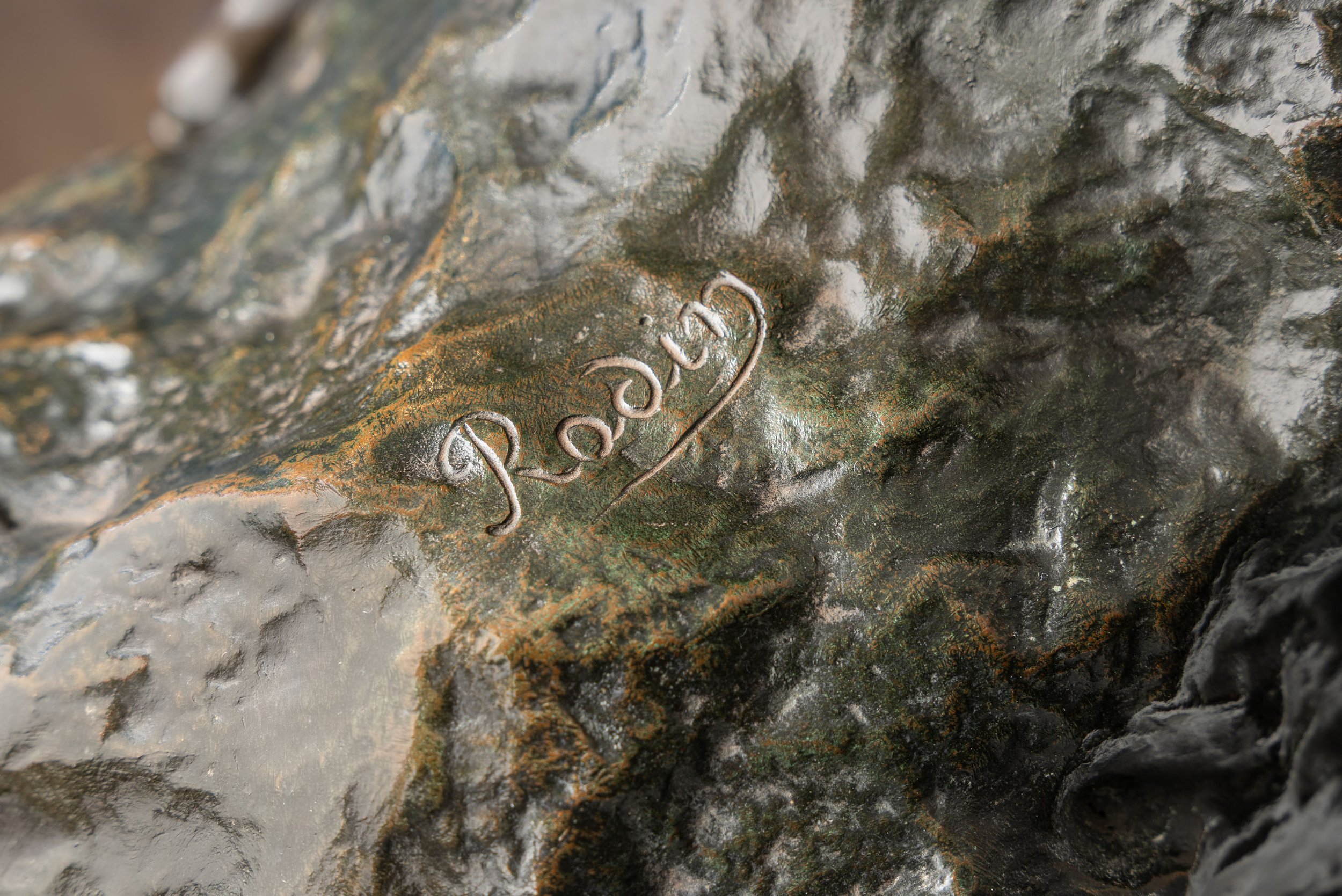 Image 5 of 6
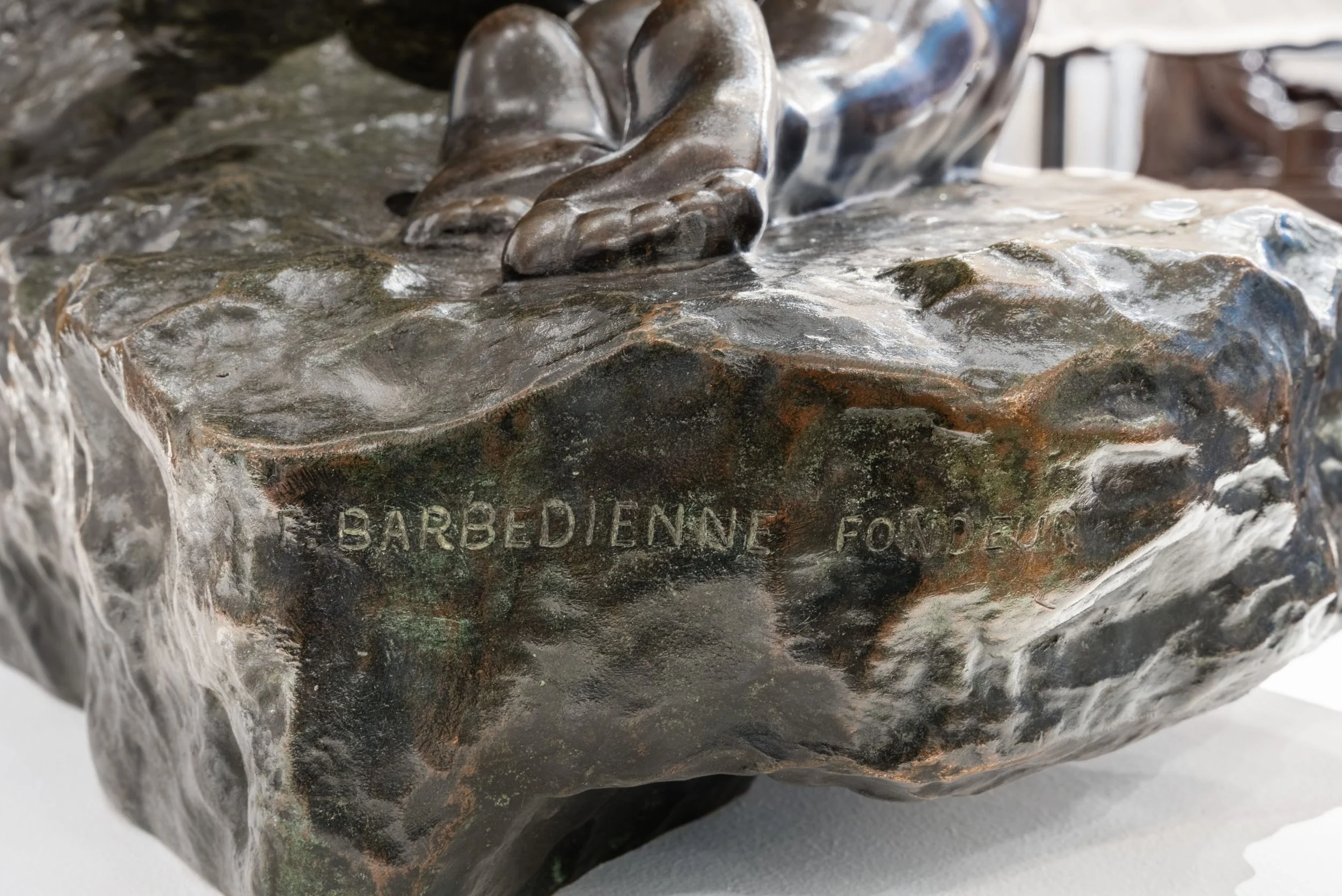 Image 6 of 6