The year 1915 occupies a precise and historically charged moment in the story of Louis Vuitton. Europe was at war, the great age of transatlantic leisure travel had been interrupted, and the house was producing luggage under conditions that would soon be reflected in the materials available to its craftsmen. Trunks from this specific year carry the marks of that transitional moment — the tighter, darker monogram canvas of the mid-1910s, the black-painted wood trim that replaced the natural slat framing of the pre-war years, and the dark lozine edging that characterises the house's wartime and immediate post-war production. They are, in their own way, documents of a world in the process of changing.
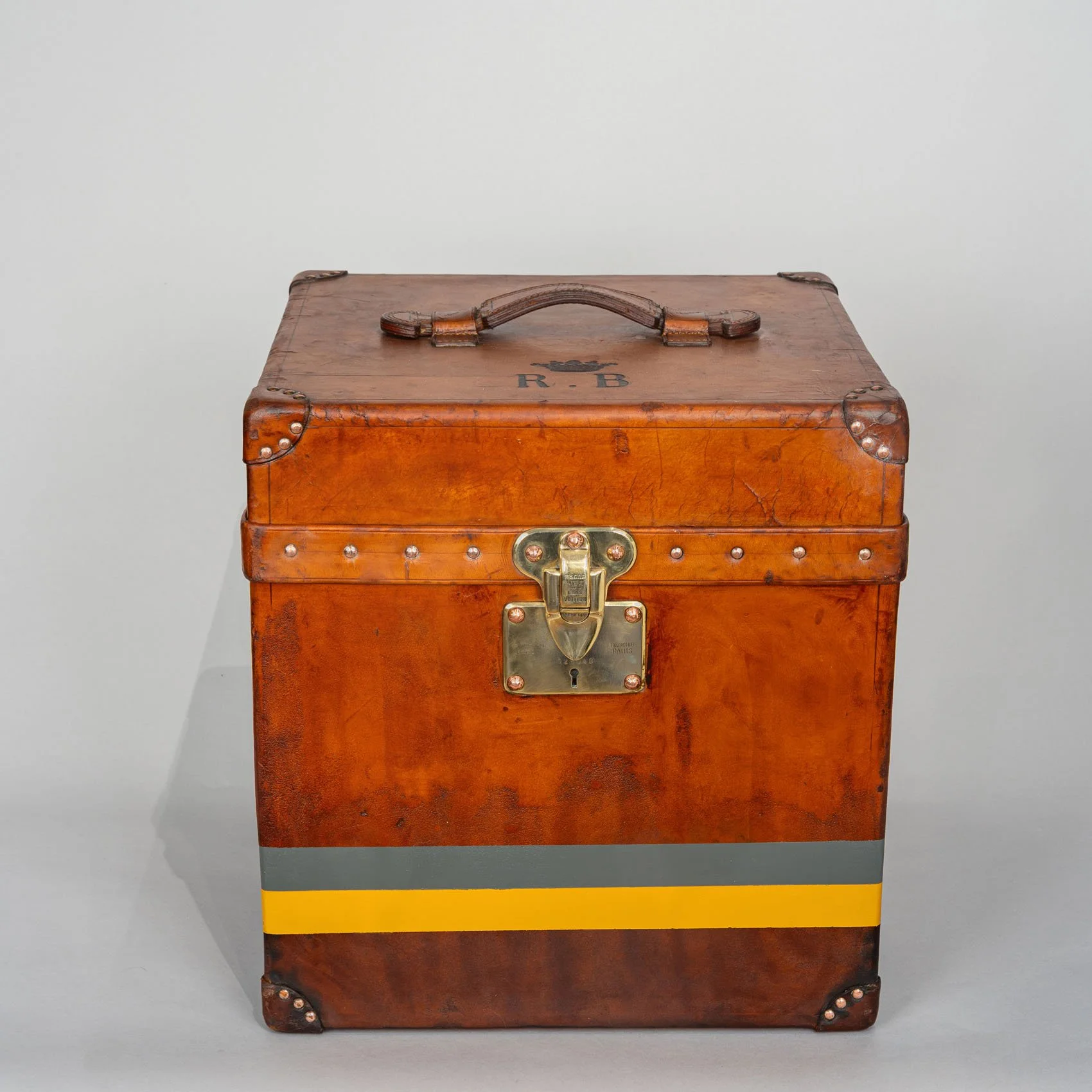
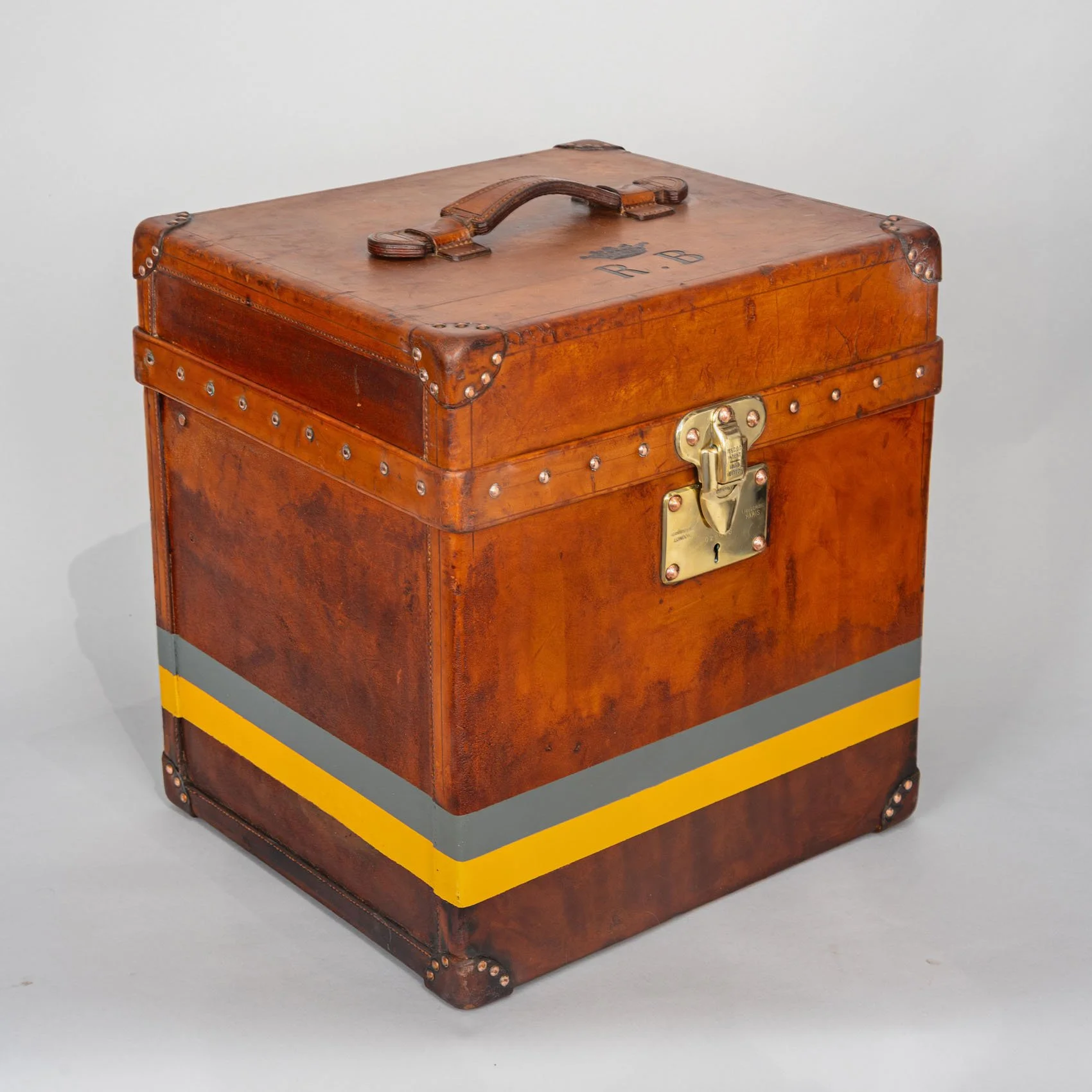
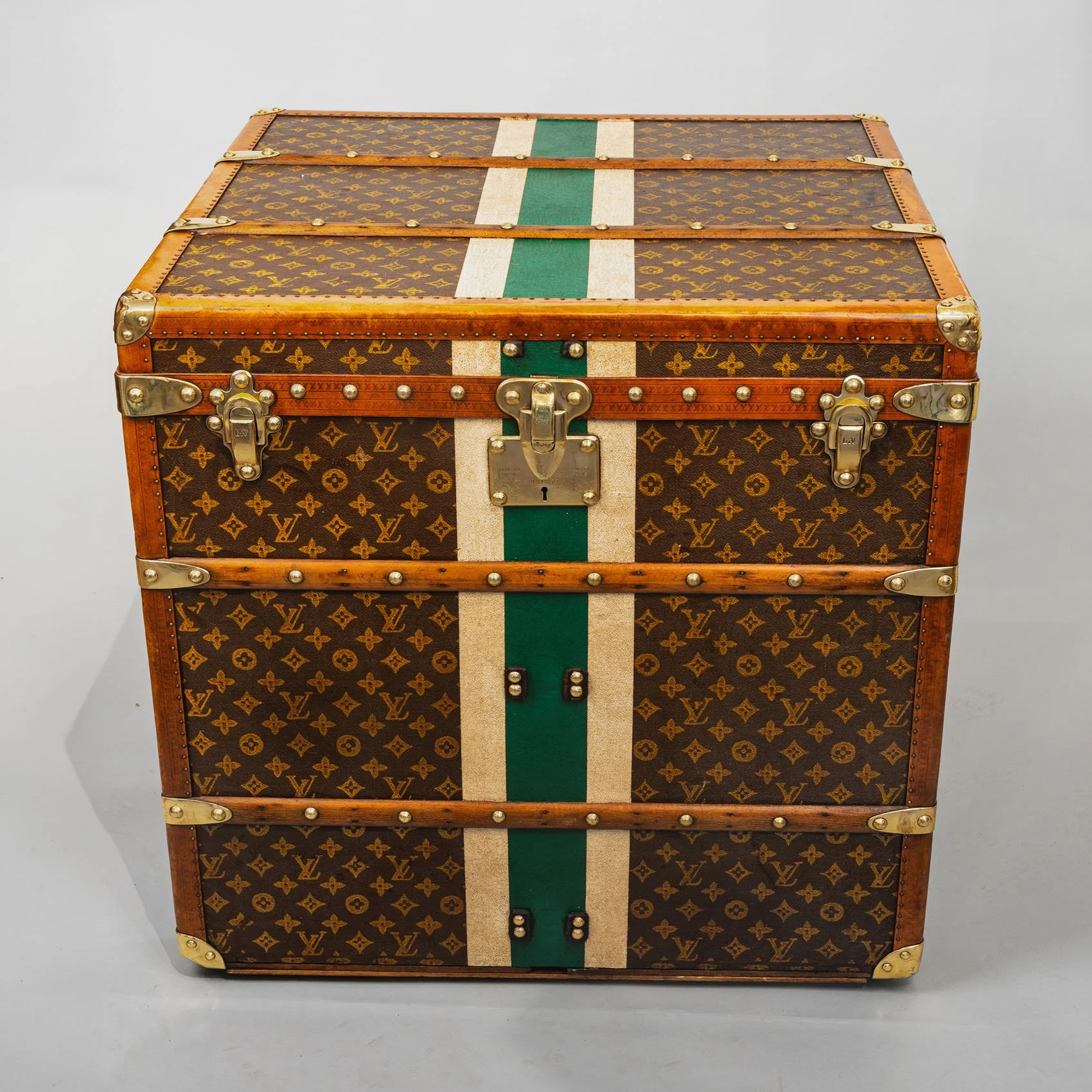
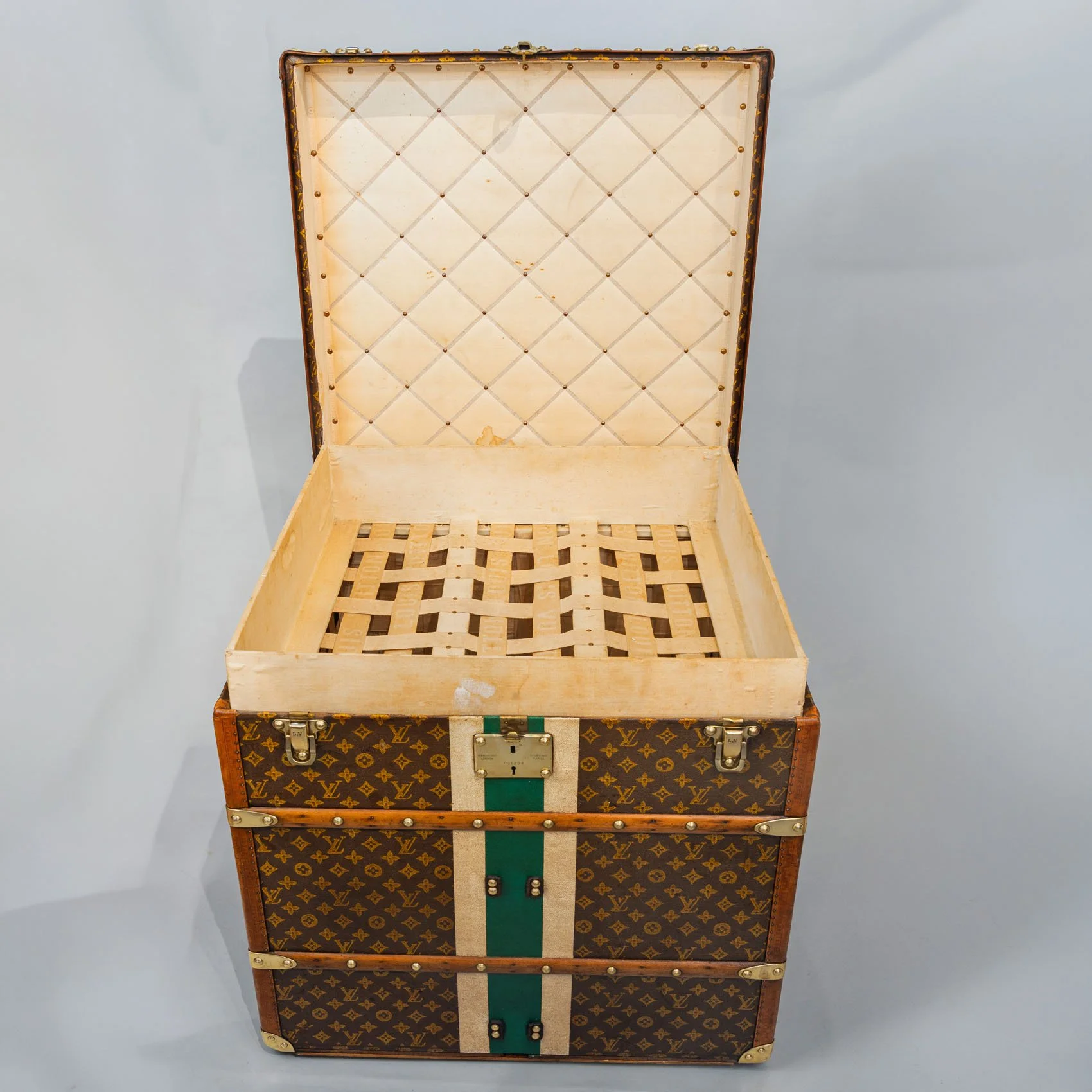
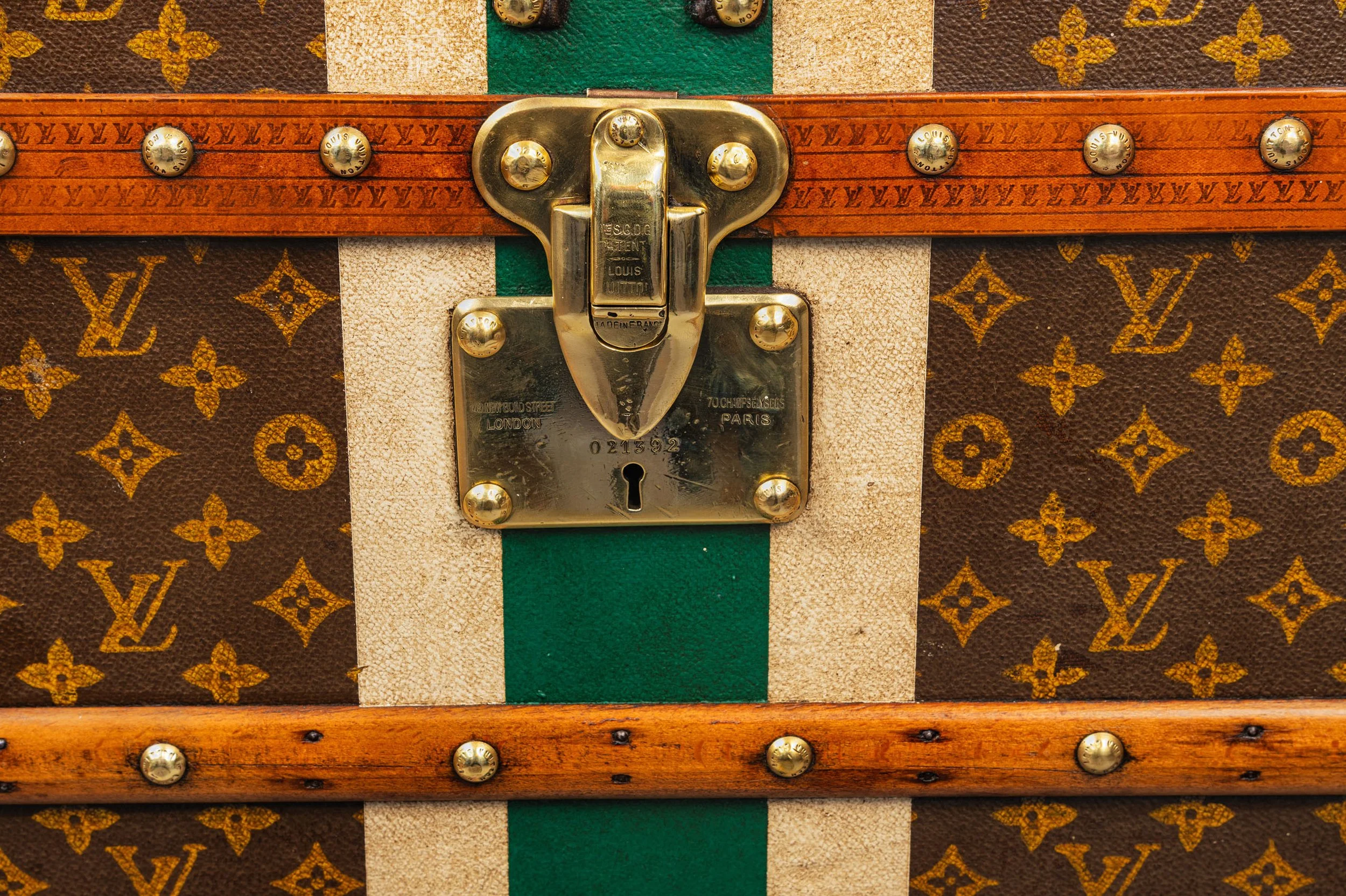
This handsome steamer trunk, dated 1915, presents in precisely that form. The exterior is executed in the monogram canvas of the period, structured with black-painted wood slat banding, dark lozine trim, brass corner guards, and the full complement of original hardware — central brass lock plate, flanking clasps, and a leather centre strap with brass buckles running from top to base, the characteristic configuration of the Vuitton steamer of this era. Side handles are present on both faces. The proportions are those of a substantial general-purpose steamer — wide, low, and capacious — designed for the hold of an ocean liner or the luggage van of a continental express train.
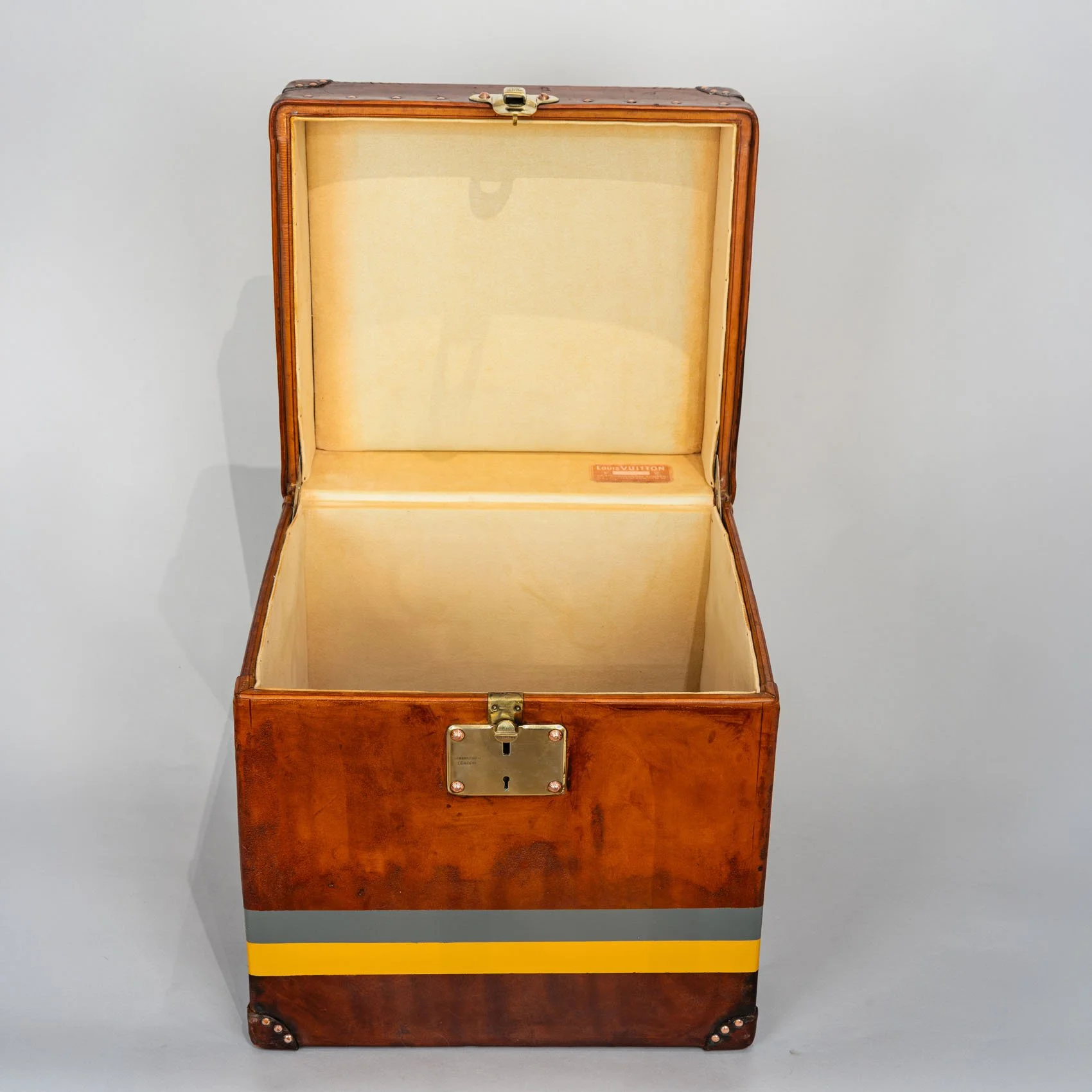
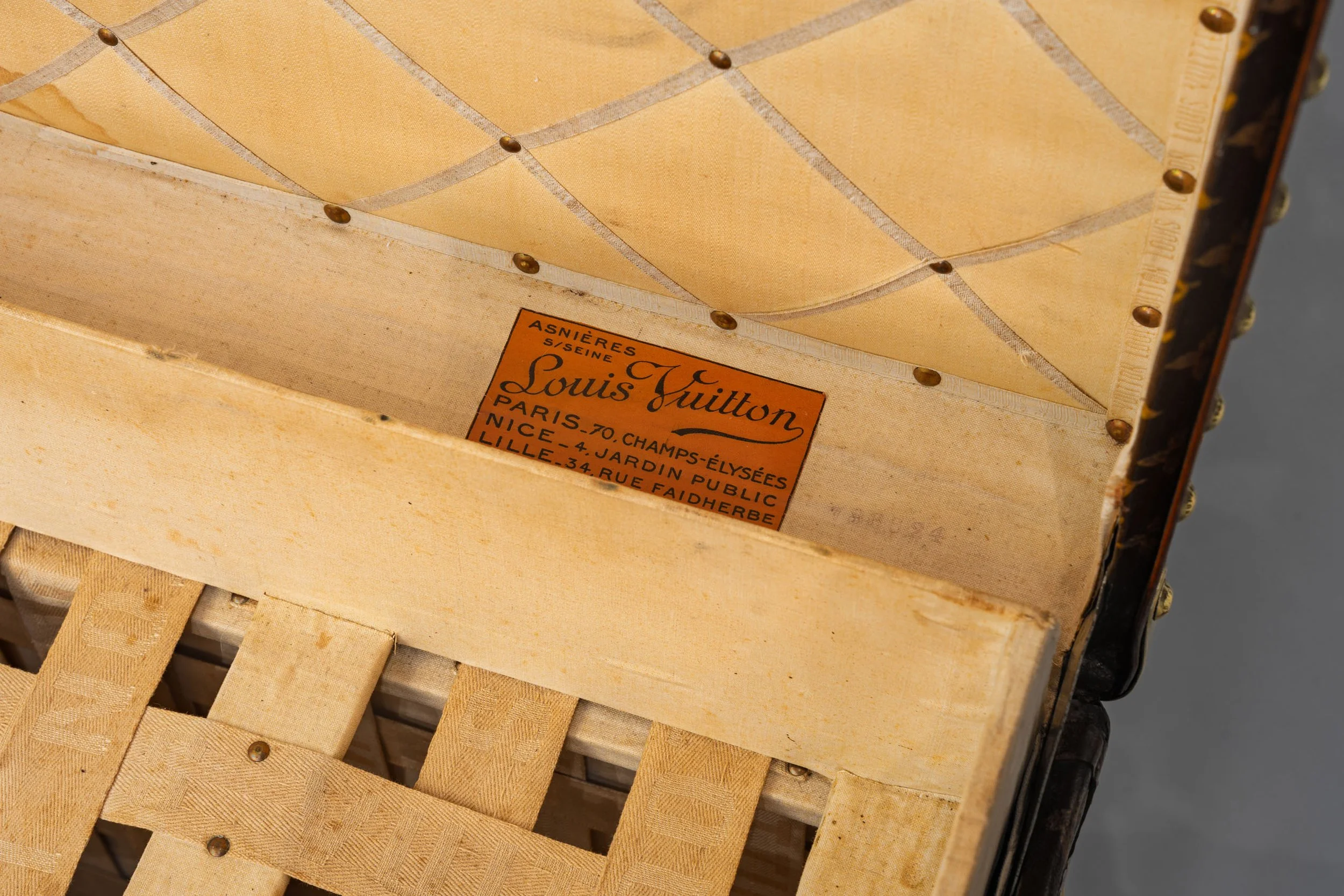
The interior is lined in Vuitton's cream canvas, clean and unfitted — a configuration intended to receive the full wardrobe of a traveler on an extended journey, augmented as needed by the individual fitted trays and organisers that Vuitton also produced and which were inserted at the owner's specification. The lid interior is clean and retains its original lining in good condition.
Steamer trunks from the mid-1910s, with original hardware intact and clear period dating, represent an increasingly scarce category within the Vuitton collecting market. The black trim and darker canvas of the wartime years give pieces from this period a visual character distinct from both the earlier natural-leather examples and the more standardised post-war production — serious collectors recognise and seek the distinction.
Condition: Very good, consistent with age. Monogram canvas strong and intact with rich patina characteristic of this period's production. Black-painted wood slat banding present and structurally sound. Dark lozine trim intact throughout. Brass hardware complete — corner guards, lock plate, clasps, and buckles all present. Central leather strap present with good structure. Interior cream canvas lining clean and intact. Lid lining present and in good condition. An honest, unrestored example in fine original state.
Literature:
Paul-Gérard Pasols, Louis Vuitton: Malletier à Paris, Paris, 1987
Florence Müller, Louis Vuitton: 100 Legendary Trunks, New York, 2010
Pierre Léonforte, Louis Vuitton: The Birth of Modern Luxury, Paris, 2004
The year 1915 occupies a precise and historically charged moment in the story of Louis Vuitton. Europe was at war, the great age of transatlantic leisure travel had been interrupted, and the house was producing luggage under conditions that would soon be reflected in the materials available to its craftsmen. Trunks from this specific year carry the marks of that transitional moment — the tighter, darker monogram canvas of the mid-1910s, the black-painted wood trim that replaced the natural slat framing of the pre-war years, and the dark lozine edging that characterises the house's wartime and immediate post-war production. They are, in their own way, documents of a world in the process of changing.
This handsome steamer trunk, dated 1915, presents in precisely that form. The exterior is executed in the monogram canvas of the period, structured with black-painted wood slat banding, dark lozine trim, brass corner guards, and the full complement of original hardware — central brass lock plate, flanking clasps, and a leather centre strap with brass buckles running from top to base, the characteristic configuration of the Vuitton steamer of this era. Side handles are present on both faces. The proportions are those of a substantial general-purpose steamer — wide, low, and capacious — designed for the hold of an ocean liner or the luggage van of a continental express train.
The interior is lined in Vuitton's cream canvas, clean and unfitted — a configuration intended to receive the full wardrobe of a traveler on an extended journey, augmented as needed by the individual fitted trays and organisers that Vuitton also produced and which were inserted at the owner's specification. The lid interior is clean and retains its original lining in good condition.
Steamer trunks from the mid-1910s, with original hardware intact and clear period dating, represent an increasingly scarce category within the Vuitton collecting market. The black trim and darker canvas of the wartime years give pieces from this period a visual character distinct from both the earlier natural-leather examples and the more standardised post-war production — serious collectors recognise and seek the distinction.
Condition: Very good, consistent with age. Monogram canvas strong and intact with rich patina characteristic of this period's production. Black-painted wood slat banding present and structurally sound. Dark lozine trim intact throughout. Brass hardware complete — corner guards, lock plate, clasps, and buckles all present. Central leather strap present with good structure. Interior cream canvas lining clean and intact. Lid lining present and in good condition. An honest, unrestored example in fine original state.
Literature:
Paul-Gérard Pasols, Louis Vuitton: Malletier à Paris, Paris, 1987
Florence Müller, Louis Vuitton: 100 Legendary Trunks, New York, 2010
Pierre Léonforte, Louis Vuitton: The Birth of Modern Luxury, Paris, 2004

 Image 1 of 2
 Image 2 of 2