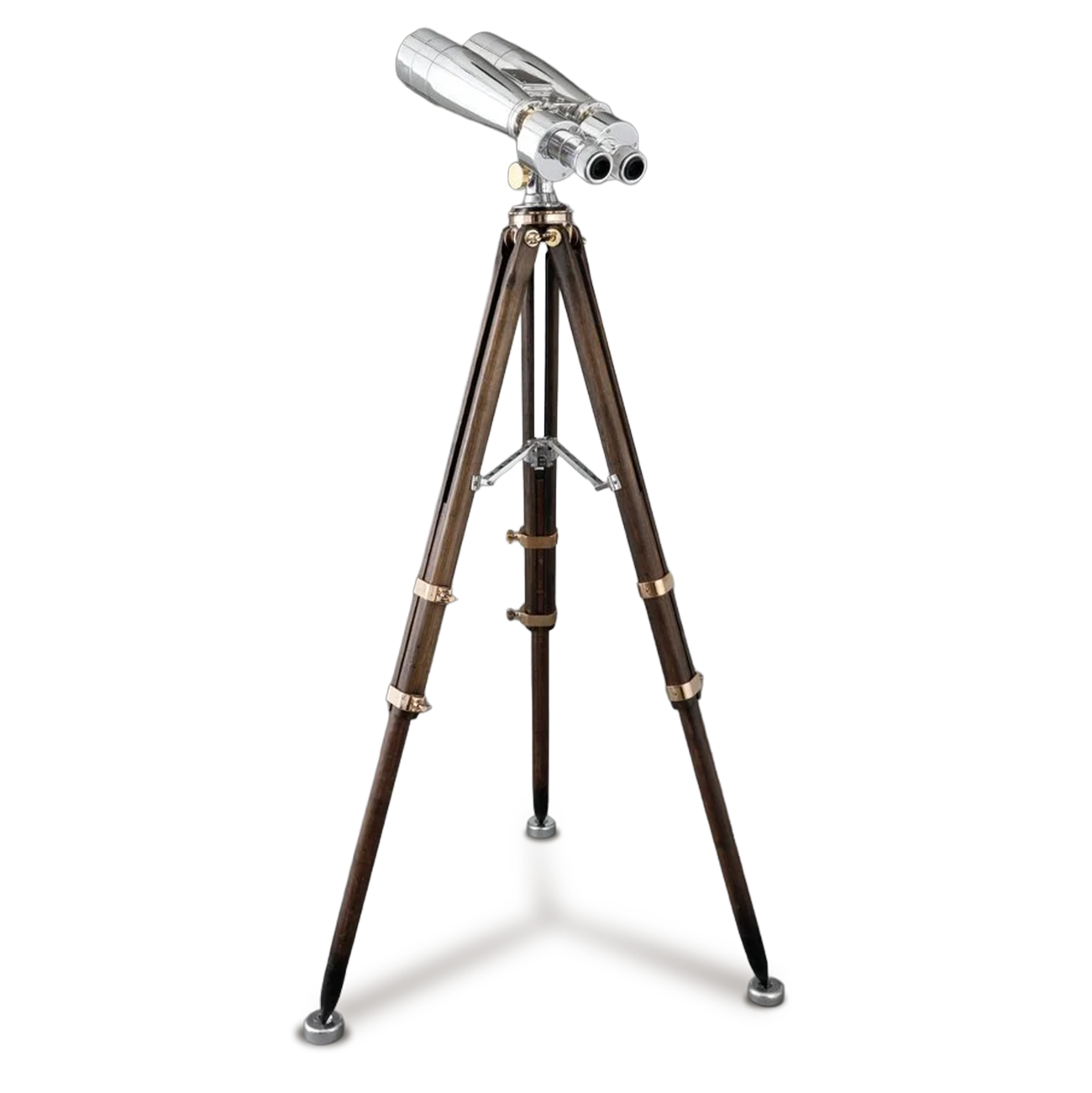
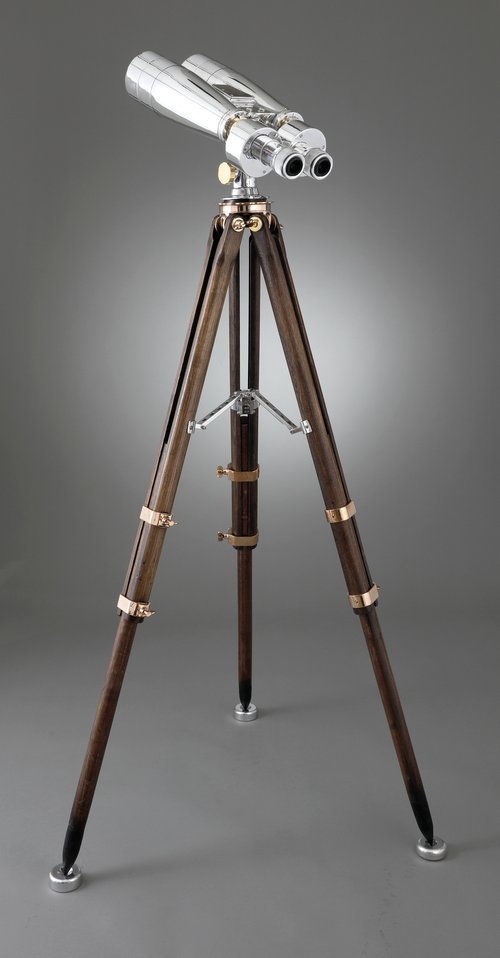
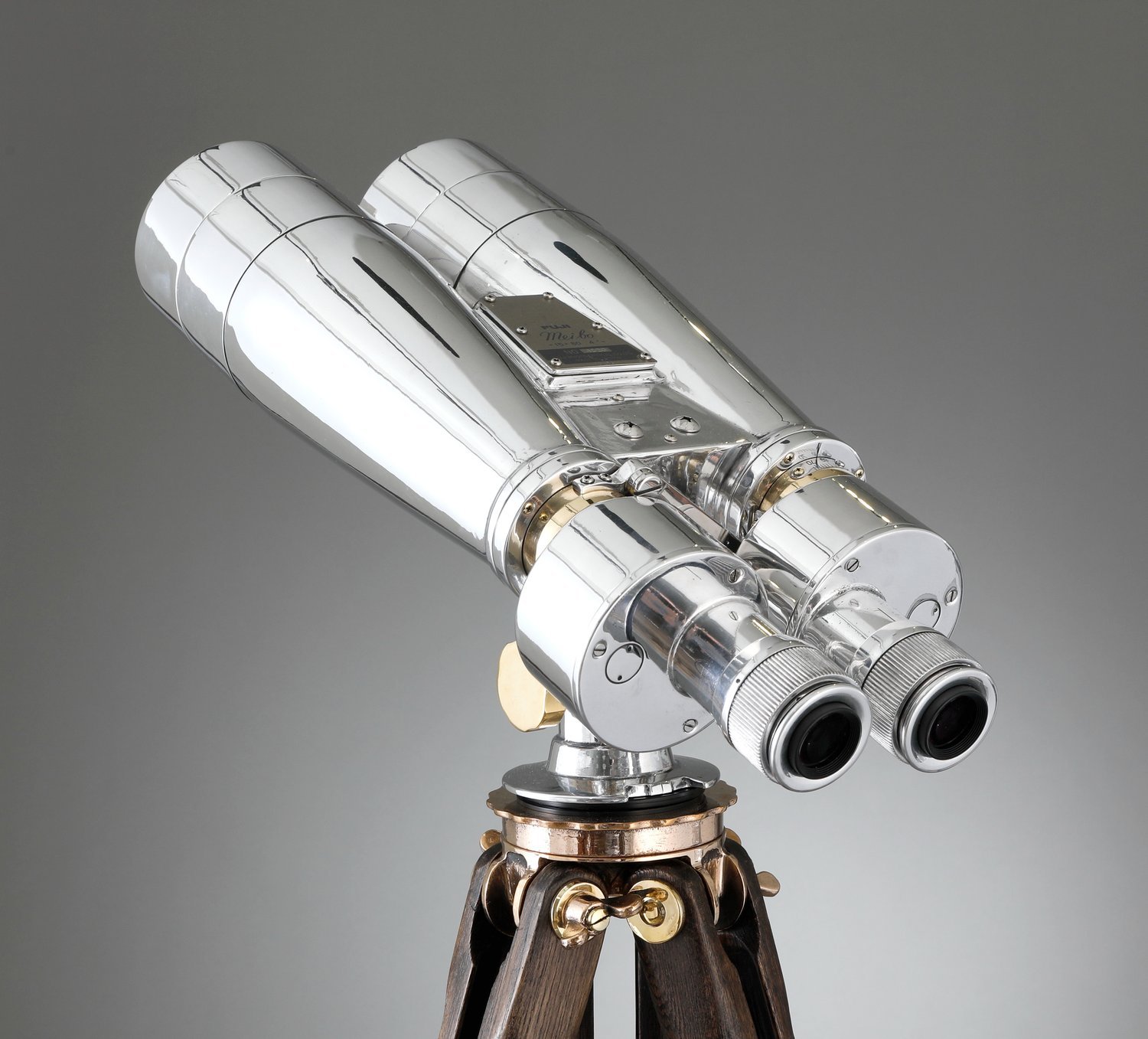
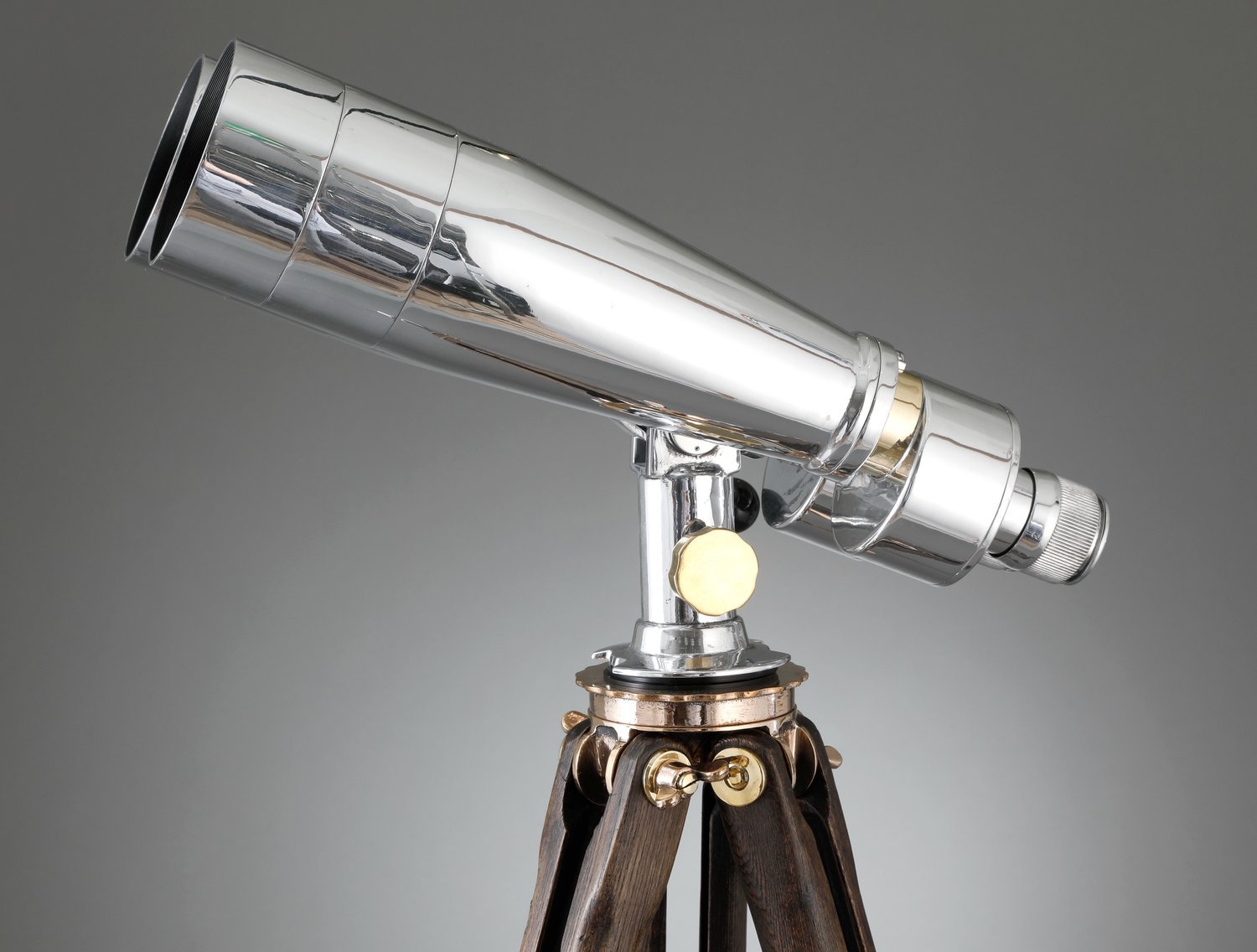
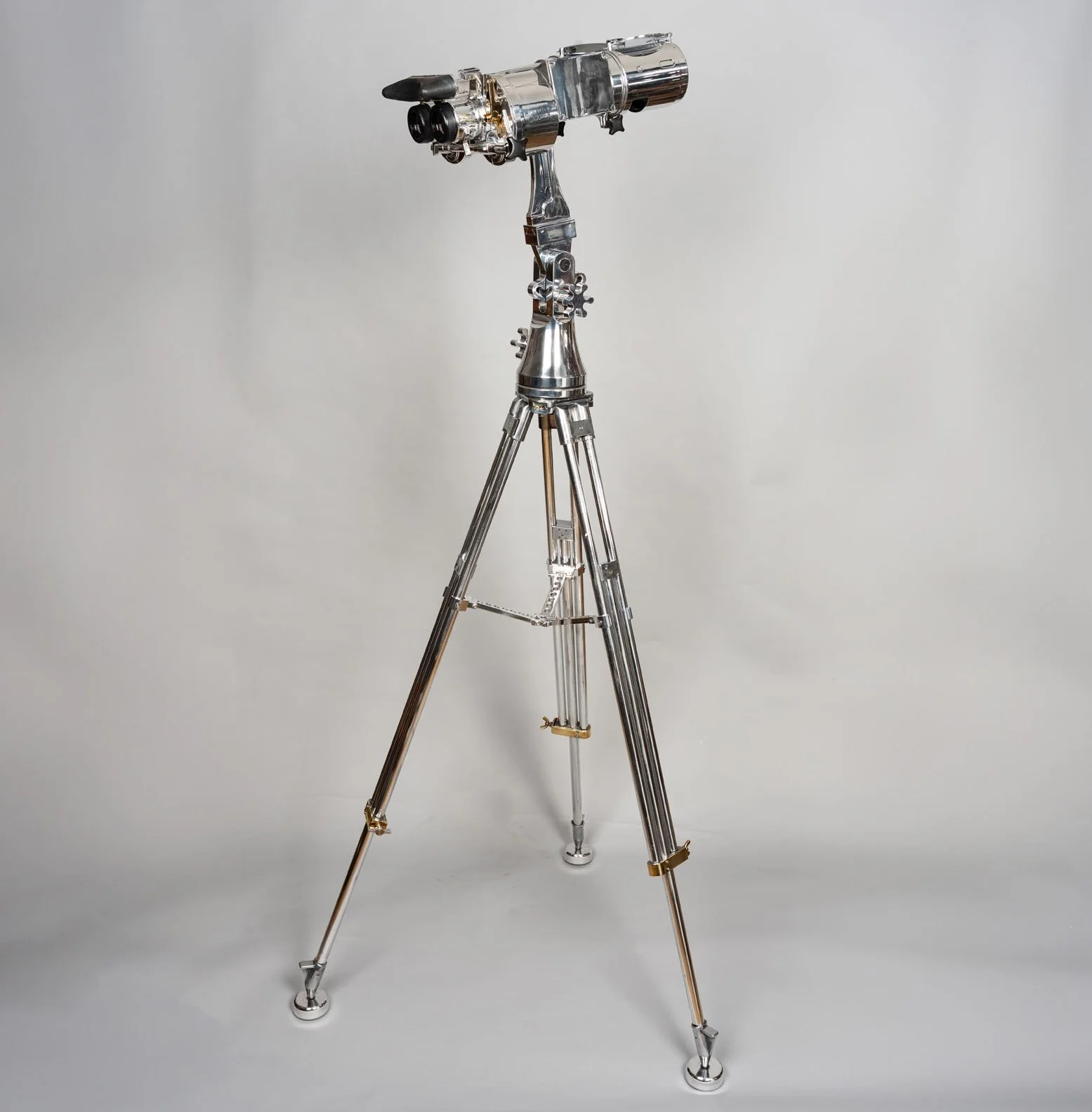
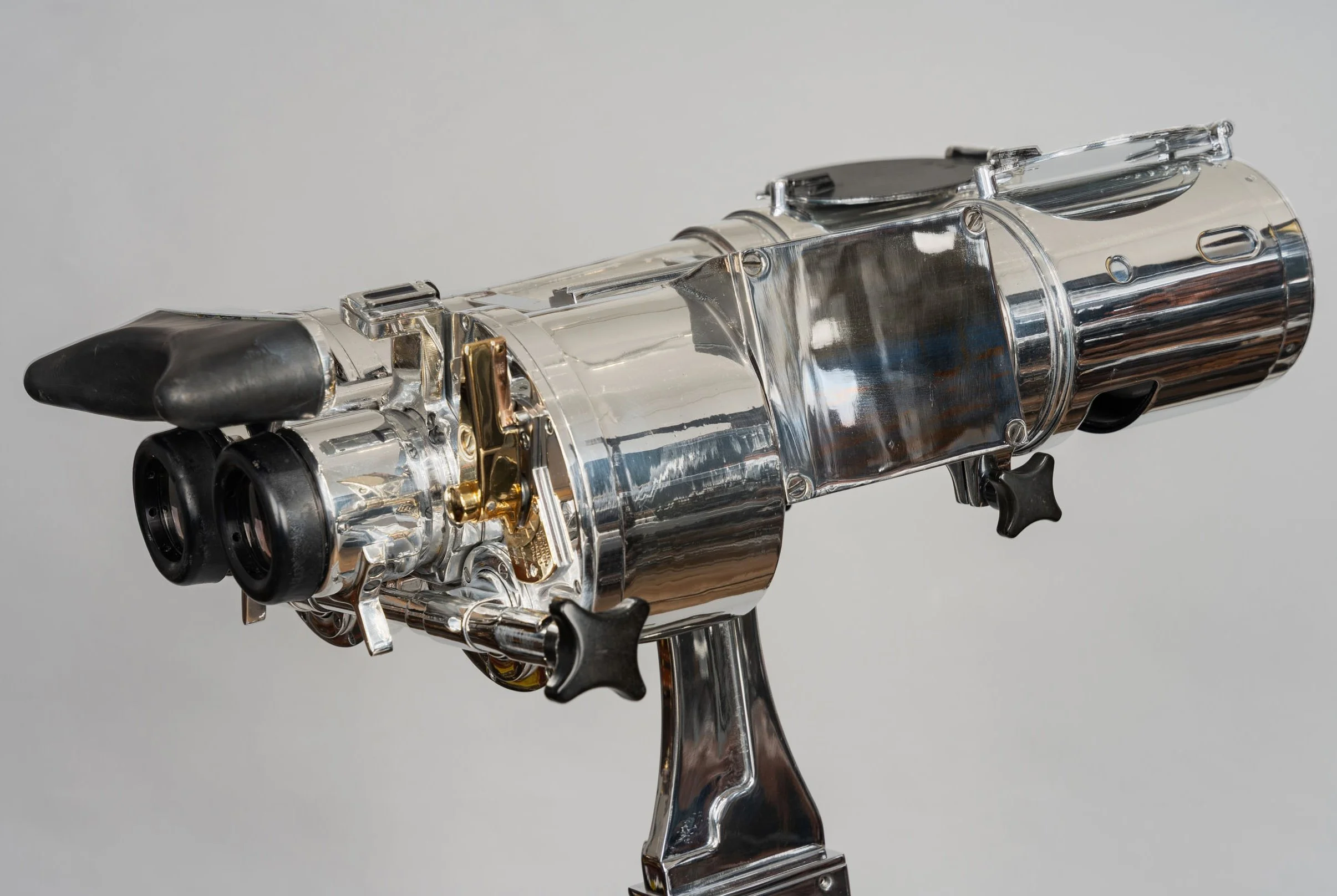
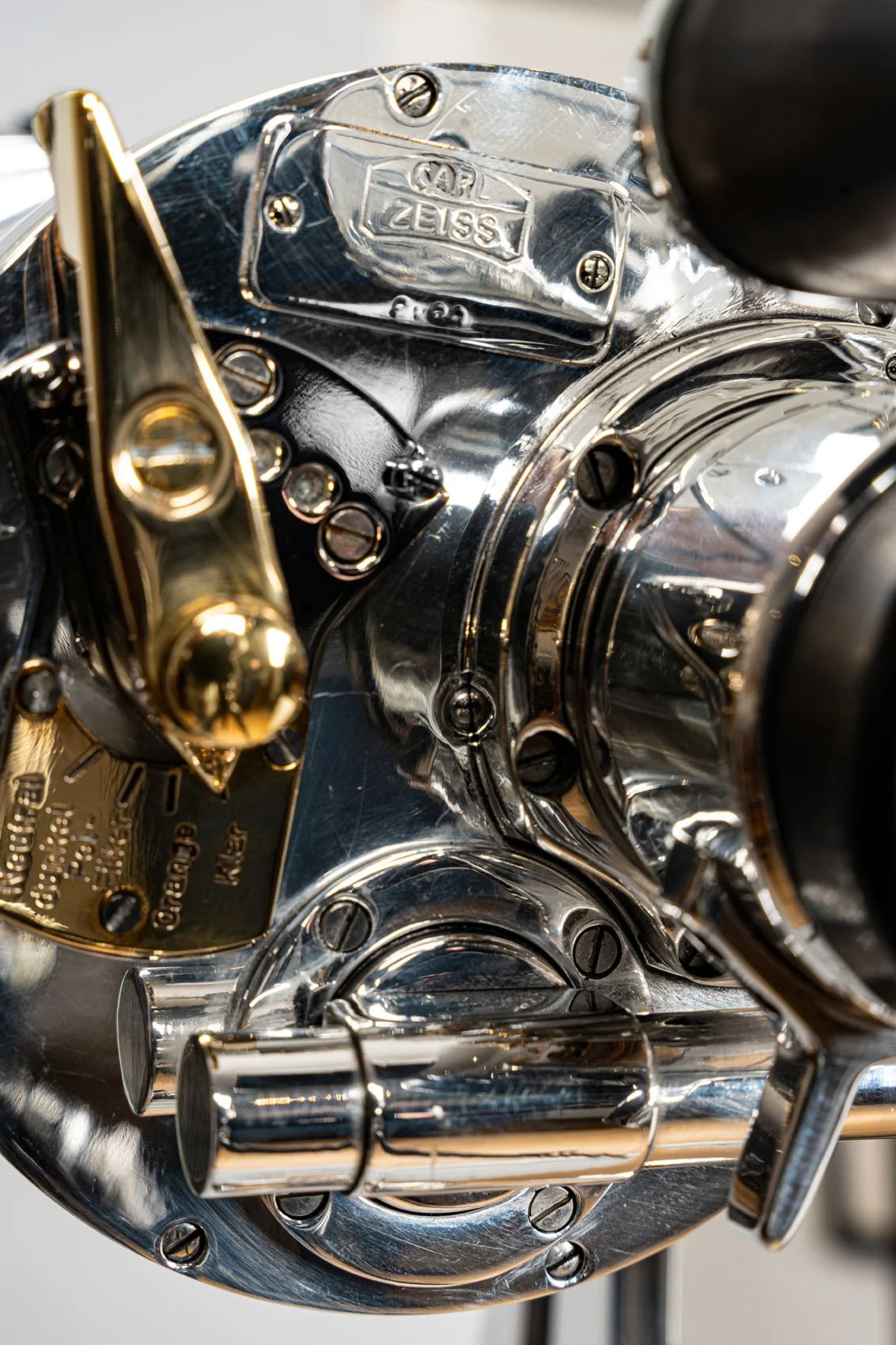
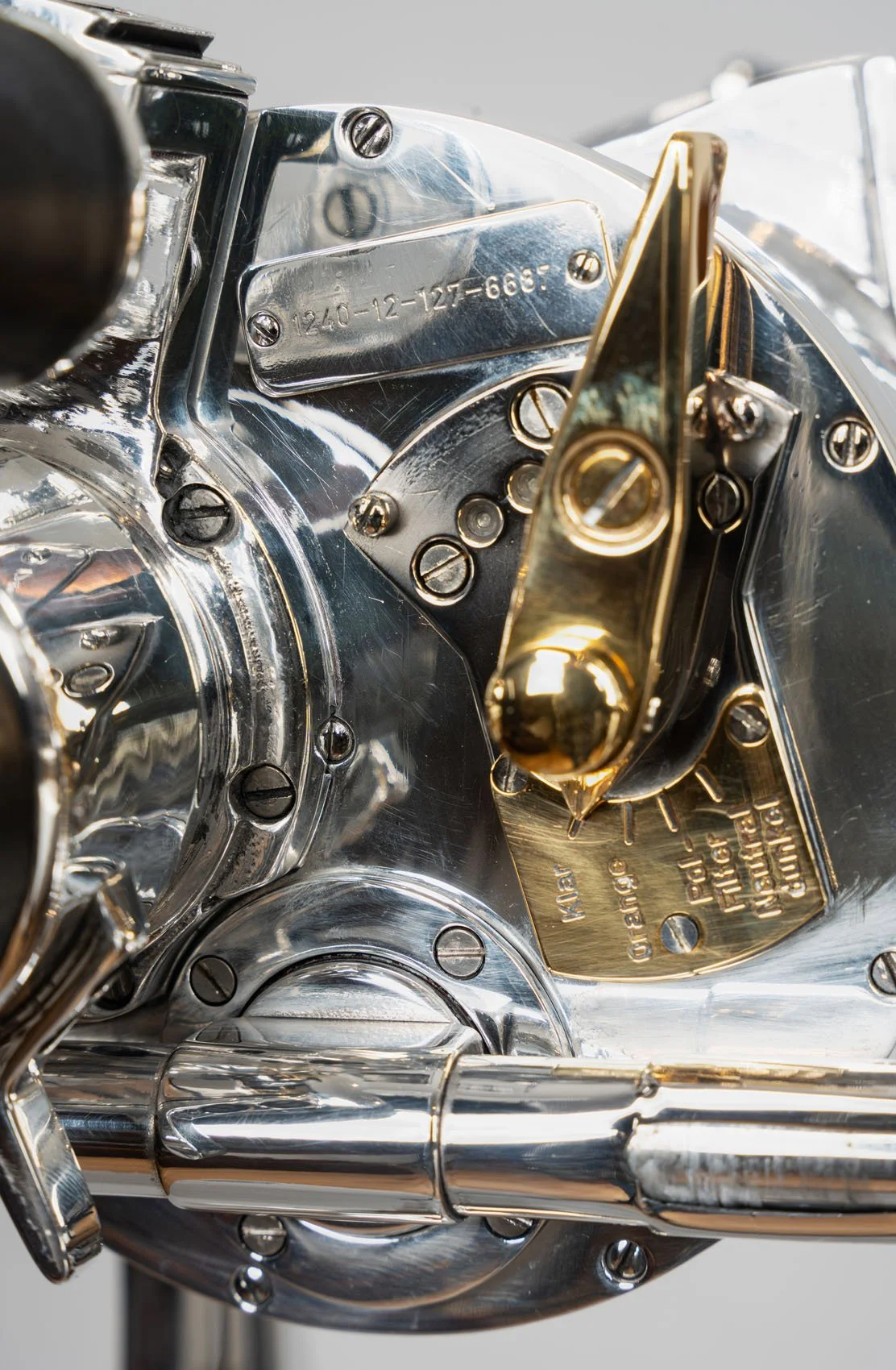
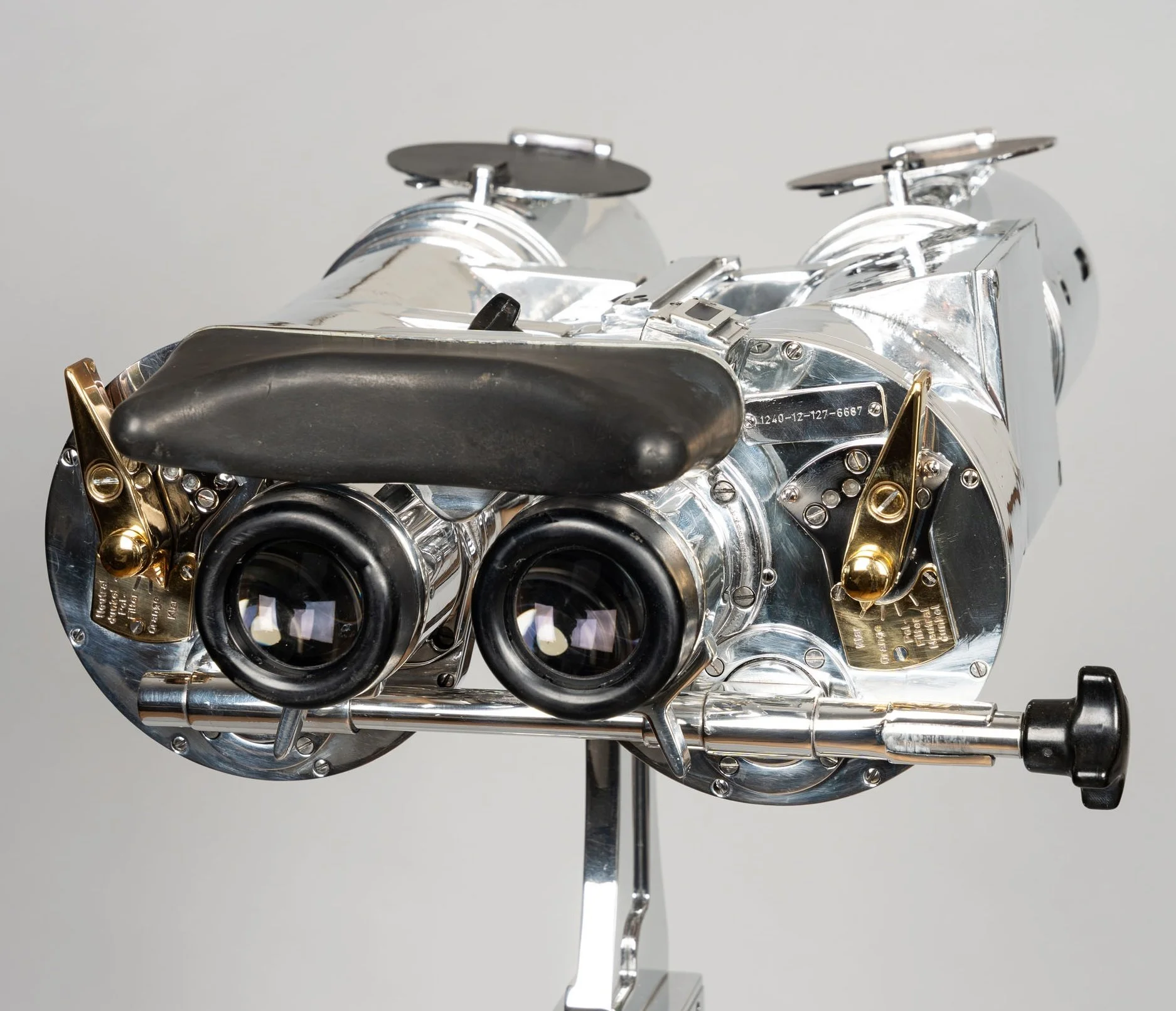
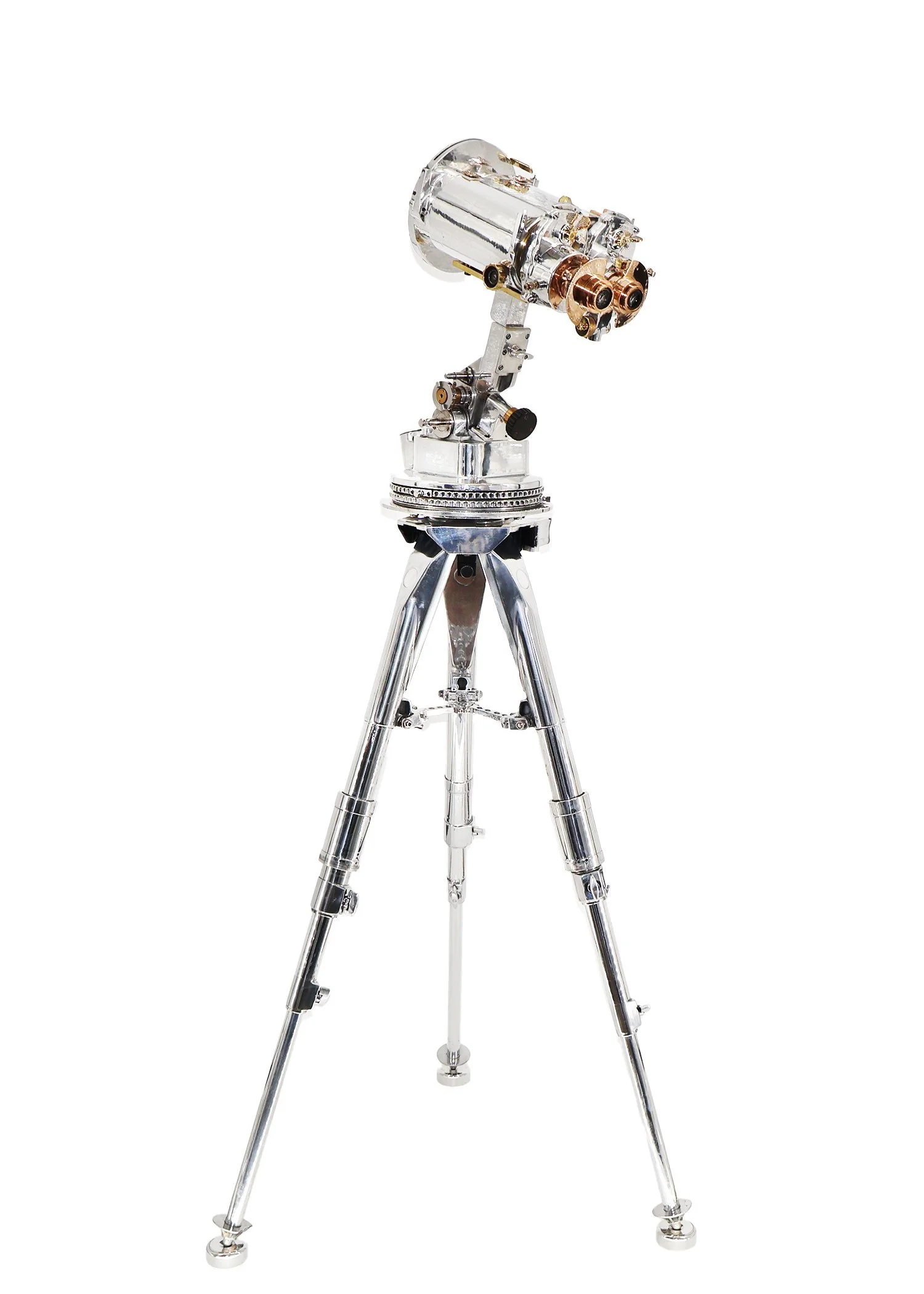
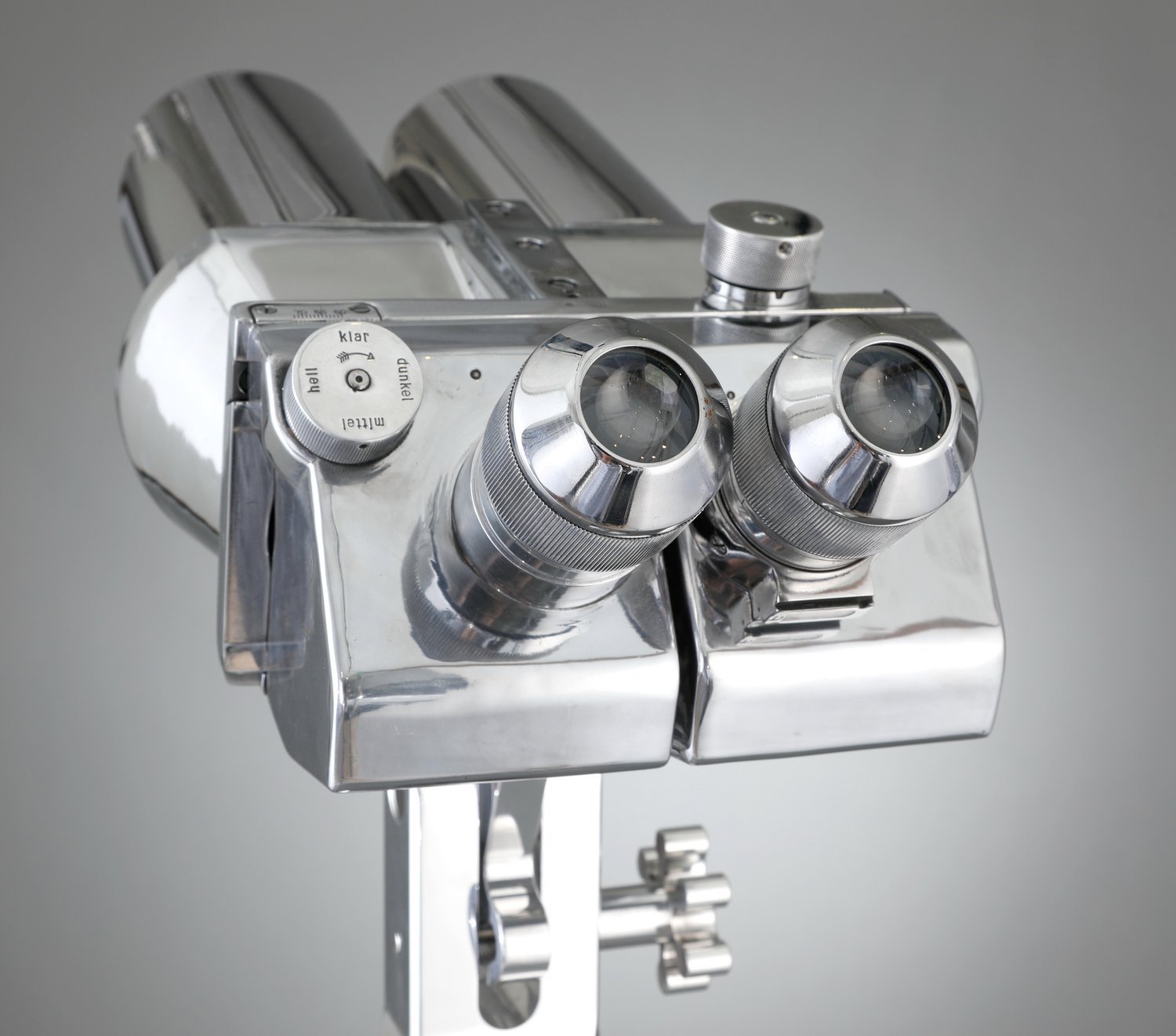
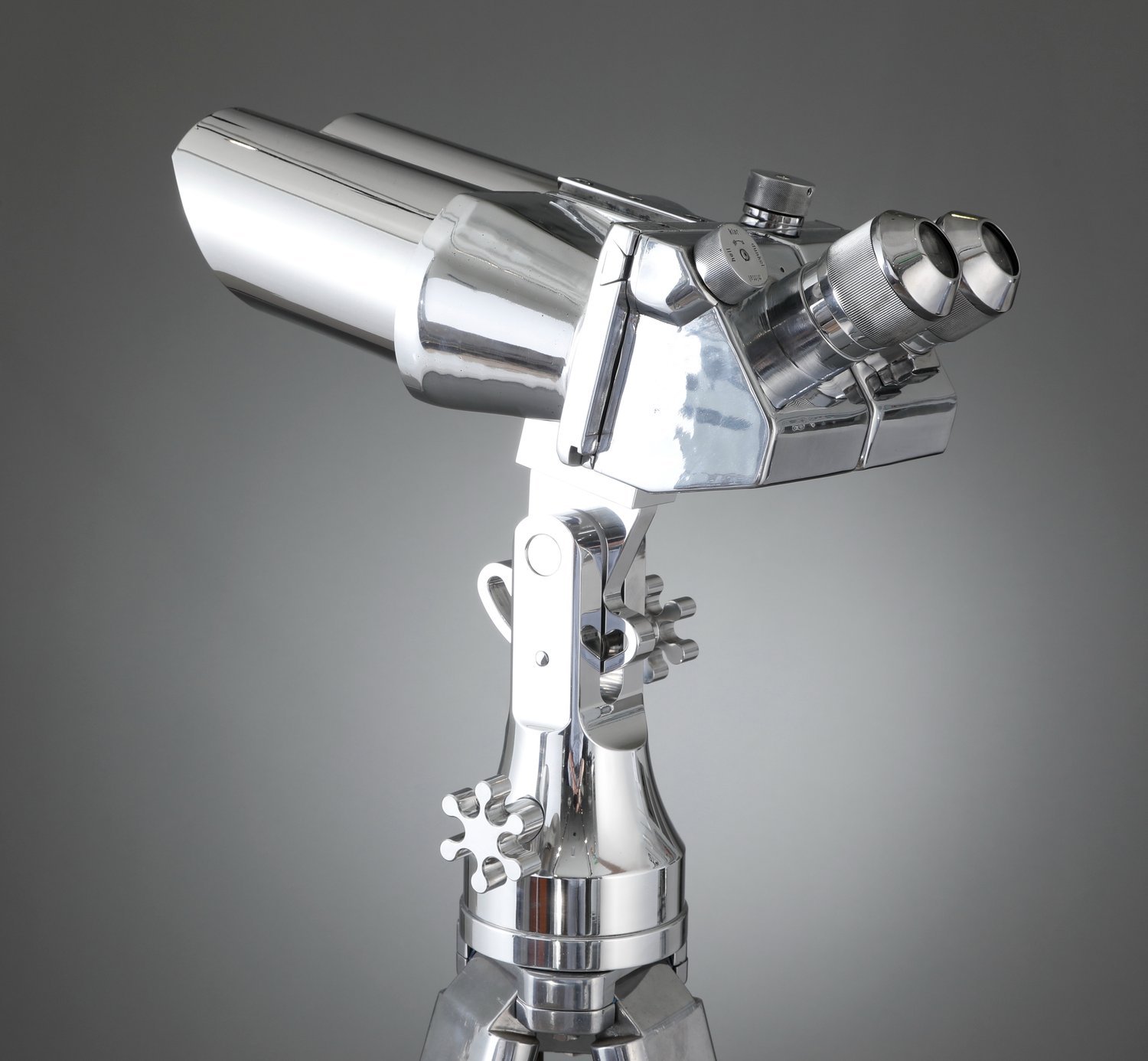
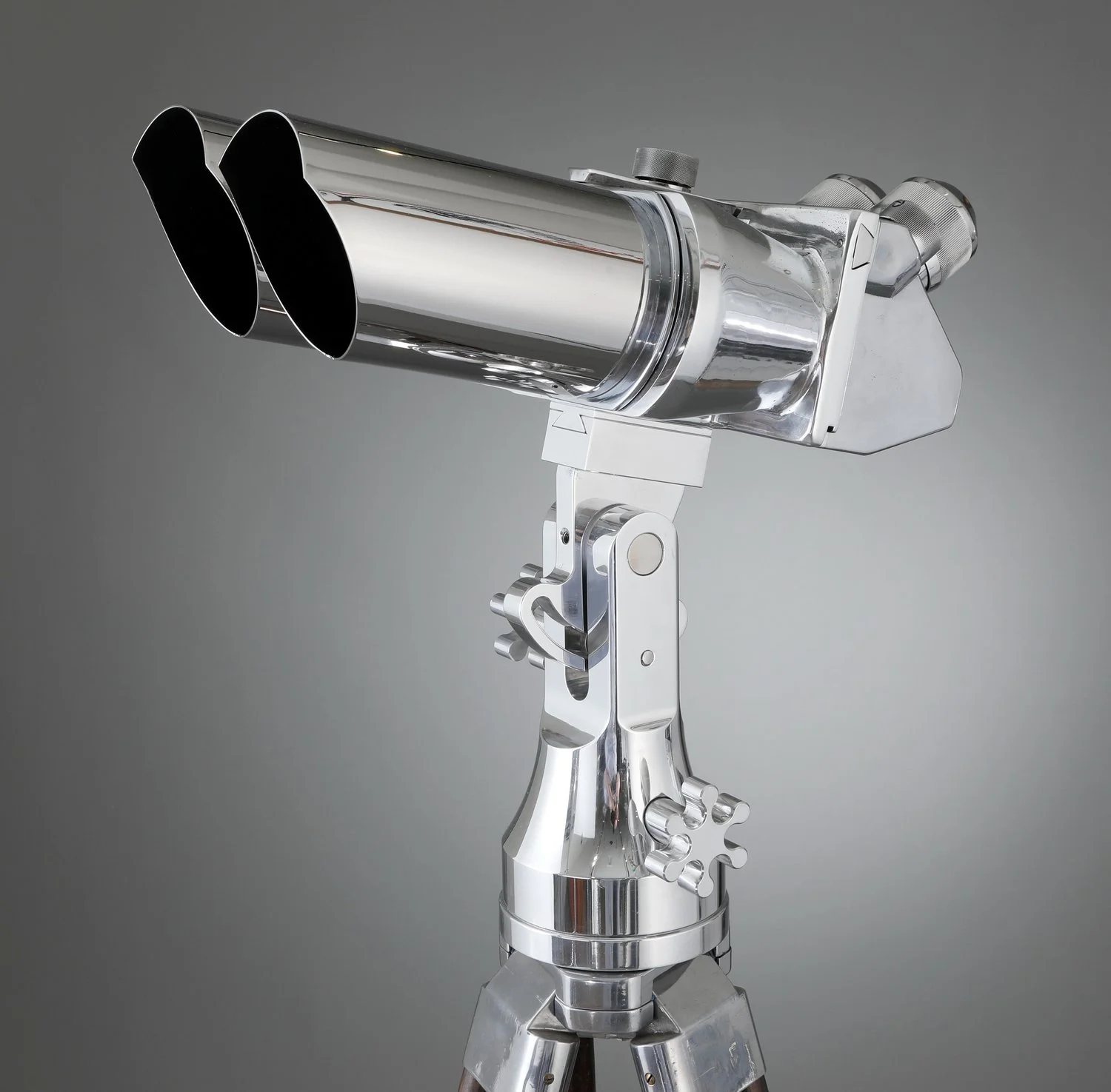
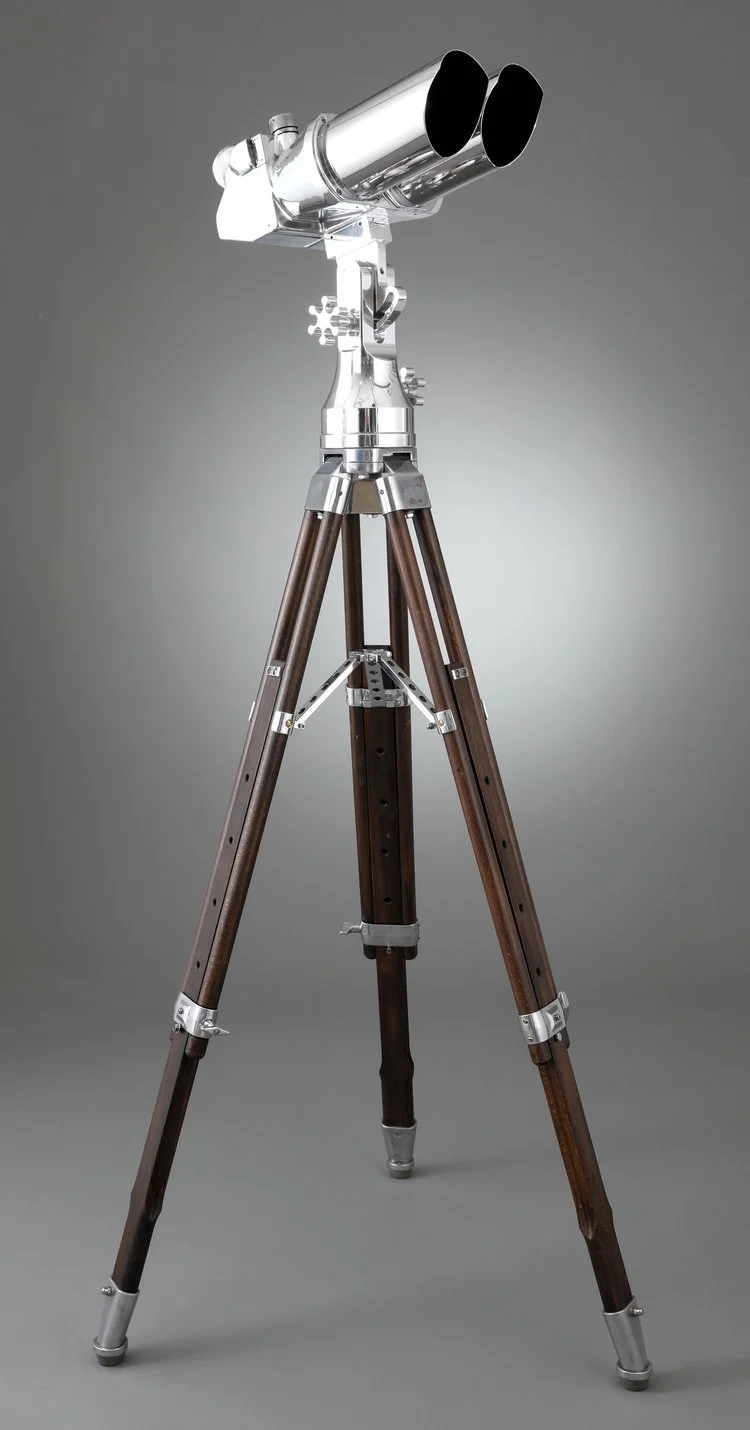
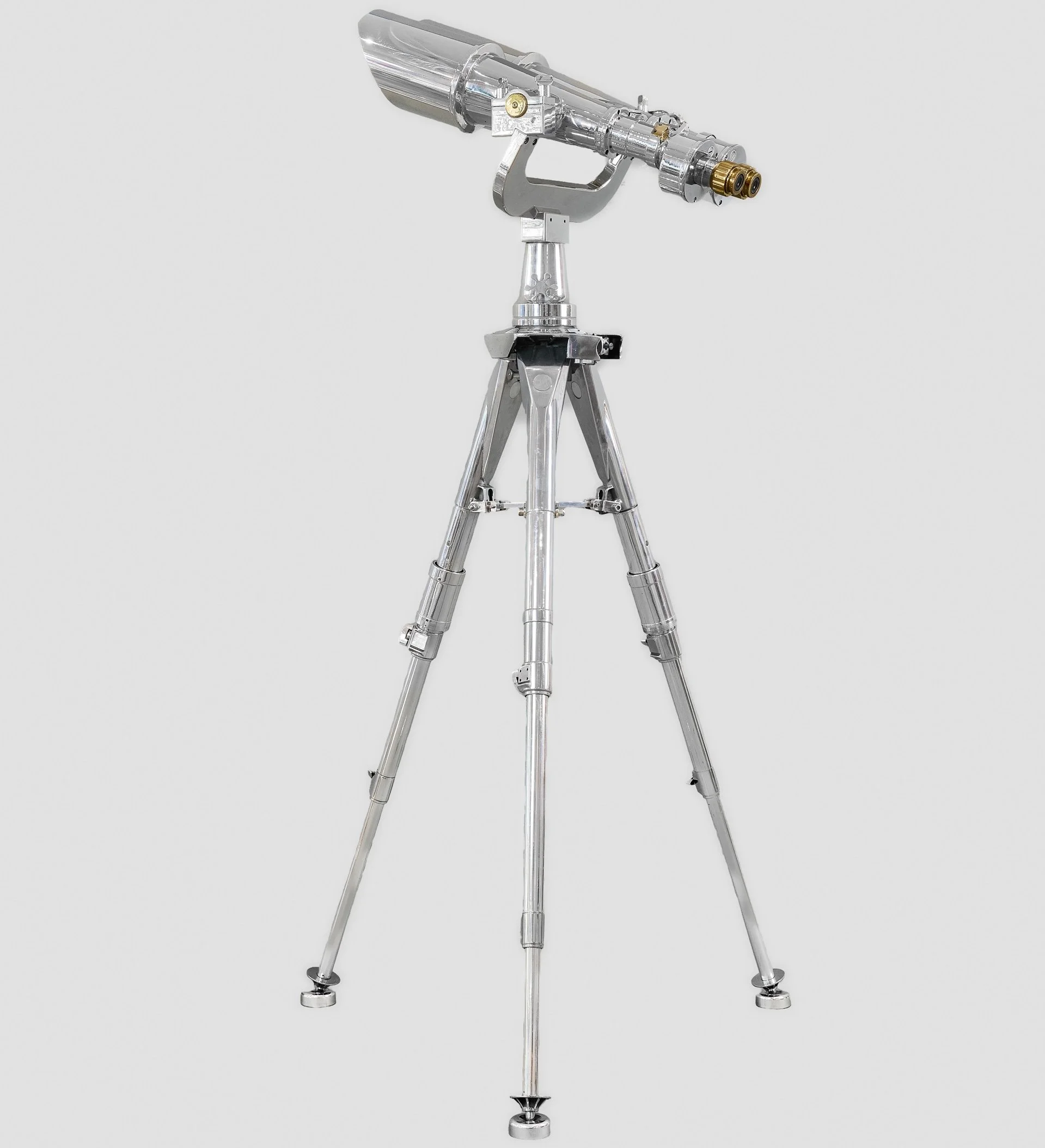
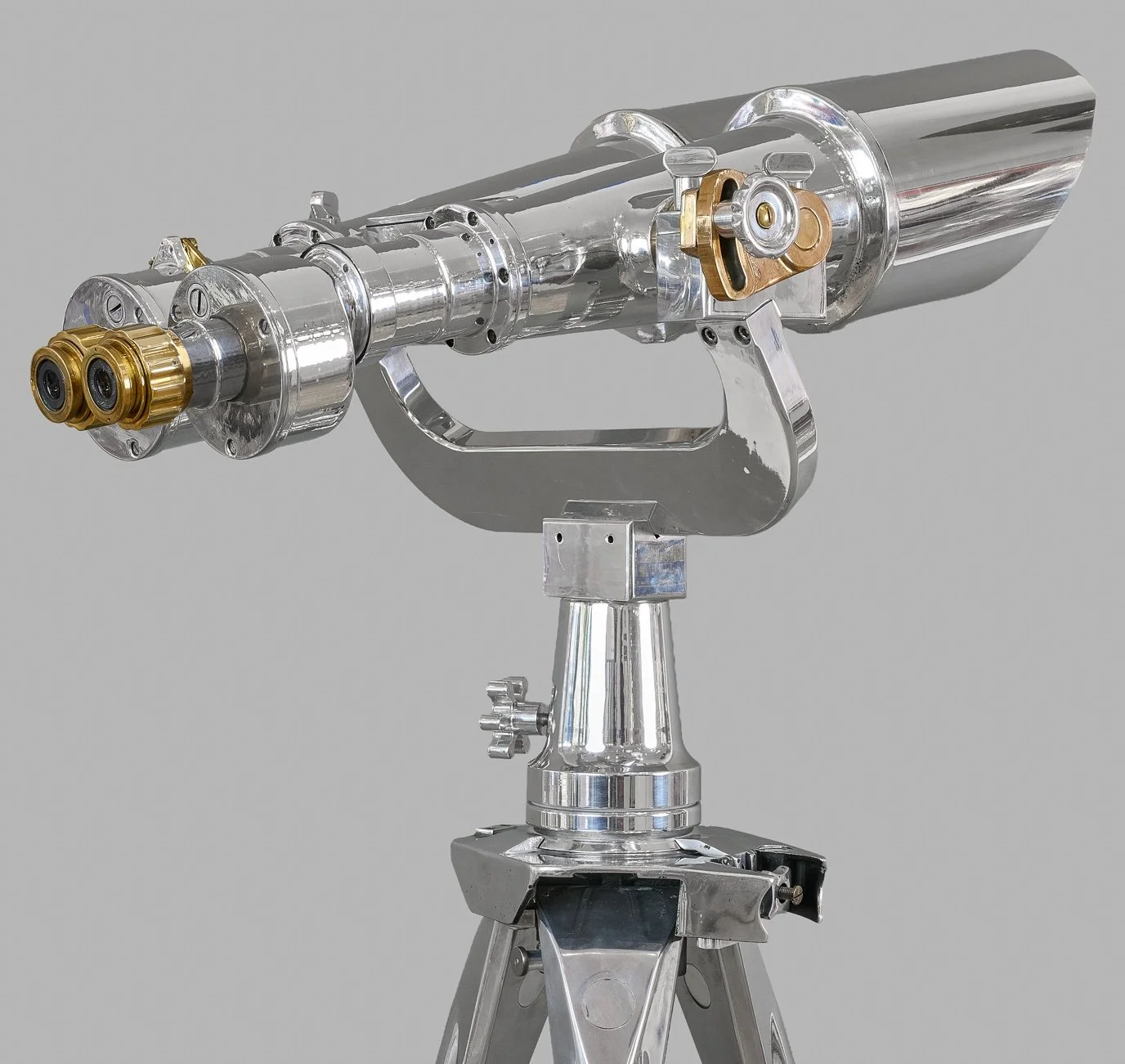
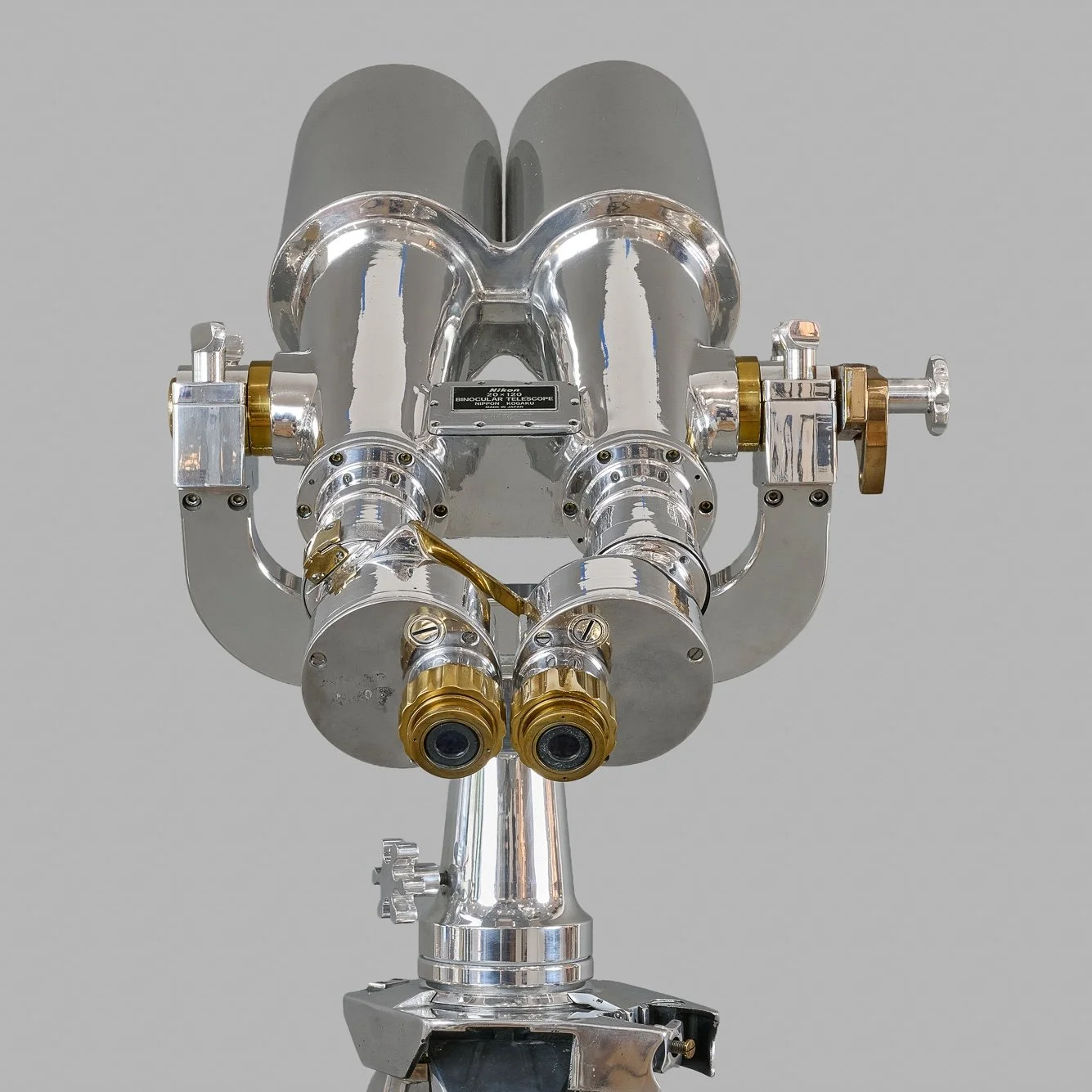
A pair of Kriegsmarine naval binoculars by Carl Zeiss, of 10 × 80 magnification, stamped with wartime code (blc) and dated 1940.
Manufactured in Jena during the early years of World War II, the present binoculars reflect the advanced optical engineering developed under the direction of Carl Zeiss, whose innovations defined military optics of the period.
The large objective lenses—measuring 80 mm—afford exceptional light transmission, a critical advantage in naval observation, particularly under dawn, dusk, and adverse weather conditions. The 10-power magnification provided stable, wide-field viewing suitable for rangefinding, reconnaissance, and target identification across open water.
During the war, German manufacturers adopted coded markings such as (blc) to obscure production origins; this code is firmly associated with Zeiss production, further reinforcing the instrument’s authenticity and historical context.
Zeiss instruments were deployed extensively across the German armed forces, including the Kriegsmarine, where optical superiority was essential for navigation, surveillance, and engagement. Their reputation for precision extended to a broad range of wartime applications, from submarine periscopes to advanced targeting systems.
Today, surviving examples of Kriegsmarine binoculars—particularly those retaining clear markings and early wartime dates—are increasingly scarce. The present example stands as both a functional scientific instrument and a powerful artifact of industrial and military history.
Literature
German Military Optical Instruments 1939–1945
Zeiss and the Development of Modern Optics, institutional publications
Collections of the Deutsches Museum and Smithsonian Institution (comparative optical instruments)
A pair of Kriegsmarine naval binoculars by Carl Zeiss, of 10 × 80 magnification, stamped with wartime code (blc) and dated 1940.
Manufactured in Jena during the early years of World War II, the present binoculars reflect the advanced optical engineering developed under the direction of Carl Zeiss, whose innovations defined military optics of the period.
The large objective lenses—measuring 80 mm—afford exceptional light transmission, a critical advantage in naval observation, particularly under dawn, dusk, and adverse weather conditions. The 10-power magnification provided stable, wide-field viewing suitable for rangefinding, reconnaissance, and target identification across open water.
During the war, German manufacturers adopted coded markings such as (blc) to obscure production origins; this code is firmly associated with Zeiss production, further reinforcing the instrument’s authenticity and historical context.
Zeiss instruments were deployed extensively across the German armed forces, including the Kriegsmarine, where optical superiority was essential for navigation, surveillance, and engagement. Their reputation for precision extended to a broad range of wartime applications, from submarine periscopes to advanced targeting systems.
Today, surviving examples of Kriegsmarine binoculars—particularly those retaining clear markings and early wartime dates—are increasingly scarce. The present example stands as both a functional scientific instrument and a powerful artifact of industrial and military history.
Literature
German Military Optical Instruments 1939–1945
Zeiss and the Development of Modern Optics, institutional publications
Collections of the Deutsches Museum and Smithsonian Institution (comparative optical instruments)

 Image 1 of 5
 Image 2 of 5
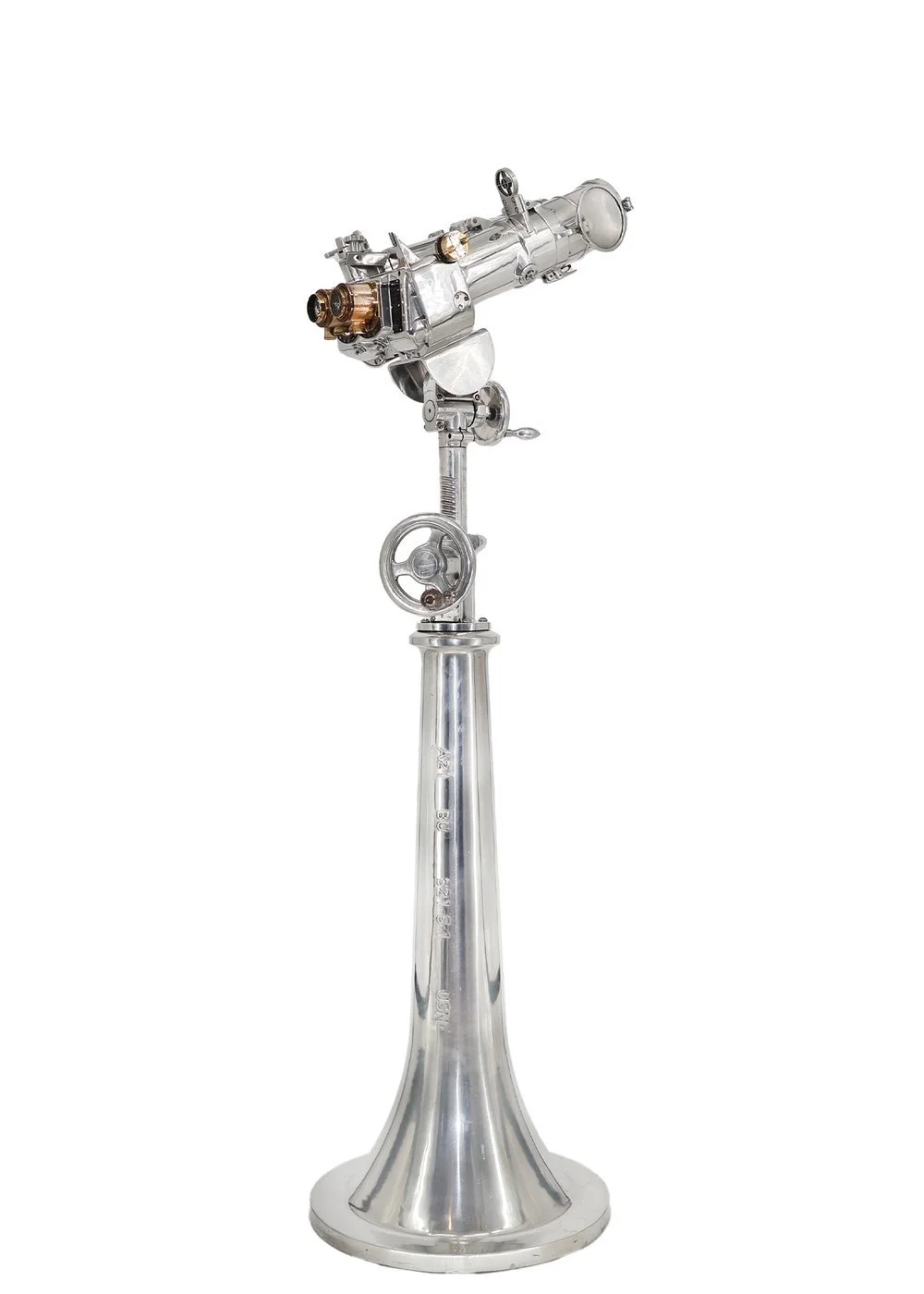 Image 3 of 5
 Image 4 of 5
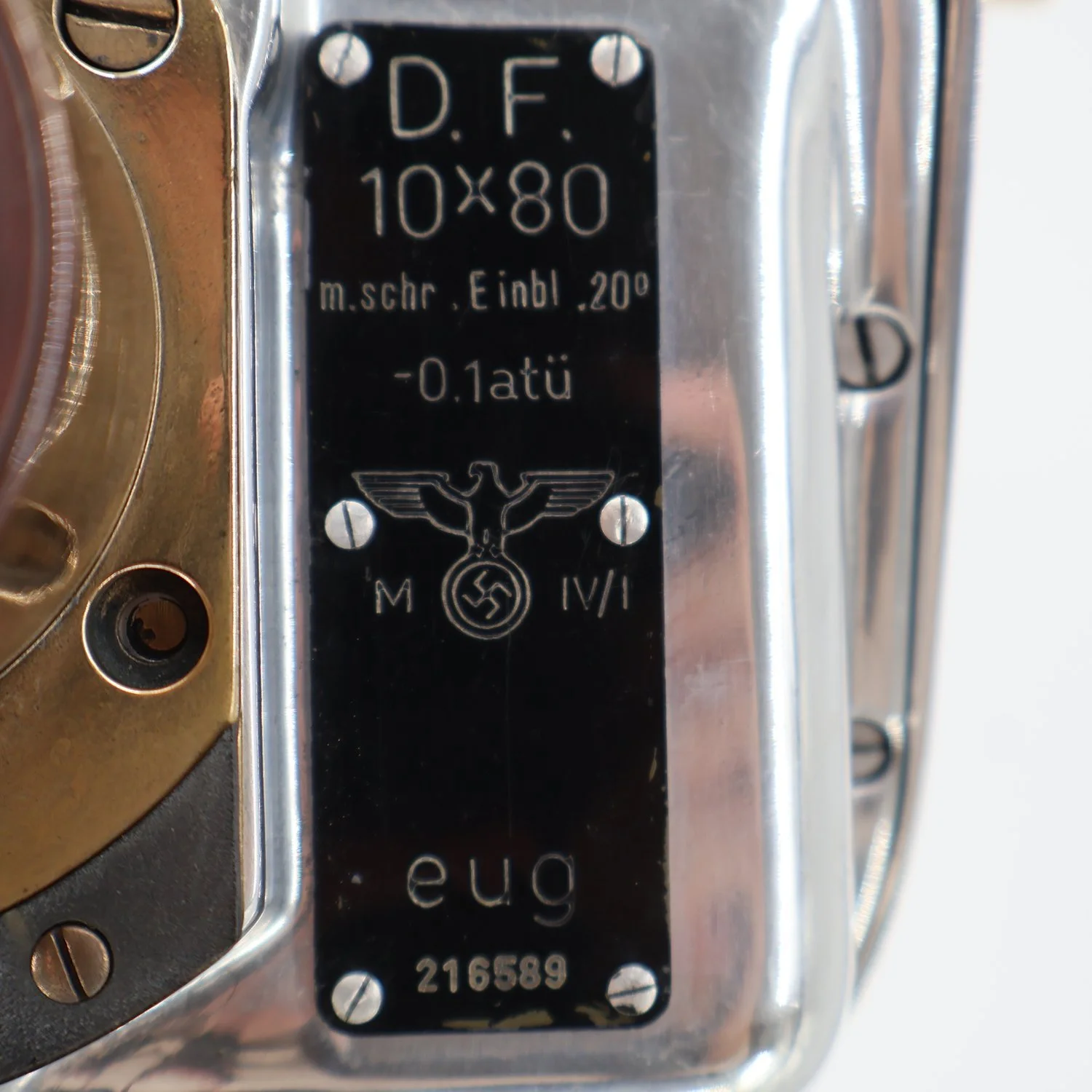 Image 5 of 5