A French Industrial Series compendium in the form of an ironclad battleship, attributed to A.R. Guilmet of Paris, the eight-day clock and aneroid barometer housed in the twin silvered engine drums amidships, a mercury thermometer mounted on the black central funnel between them.
The ship is complete from ram to rudder. The hull, patinated black between polished brass wales, carries a run of brass gun muzzles along each side; the bow ends in a riveted and silvered armored prow of the kind that gave the ironclad ram its menace, and brass anchors hang on their chains at bow and stern. The deck is fitted with rope-twist railings, a capstan, a ventilator cowl, and a pair of brass pennants at the masts, with the clock and barometer drums under domed brass caps, reading as the ship's engine housings. The whole rests on silvered stanchion supports above a stepped verde antico marble base with gilt brass feet.
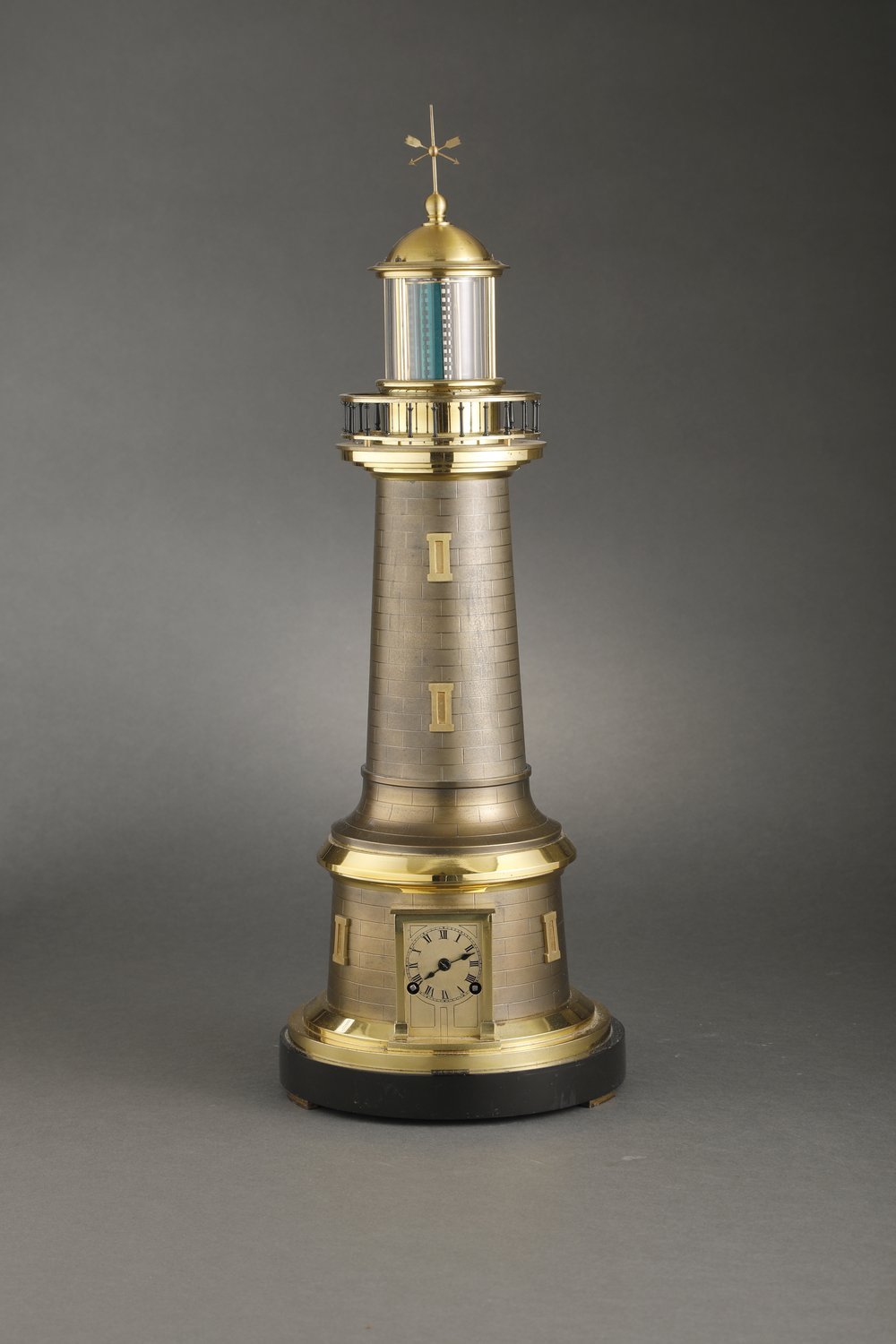
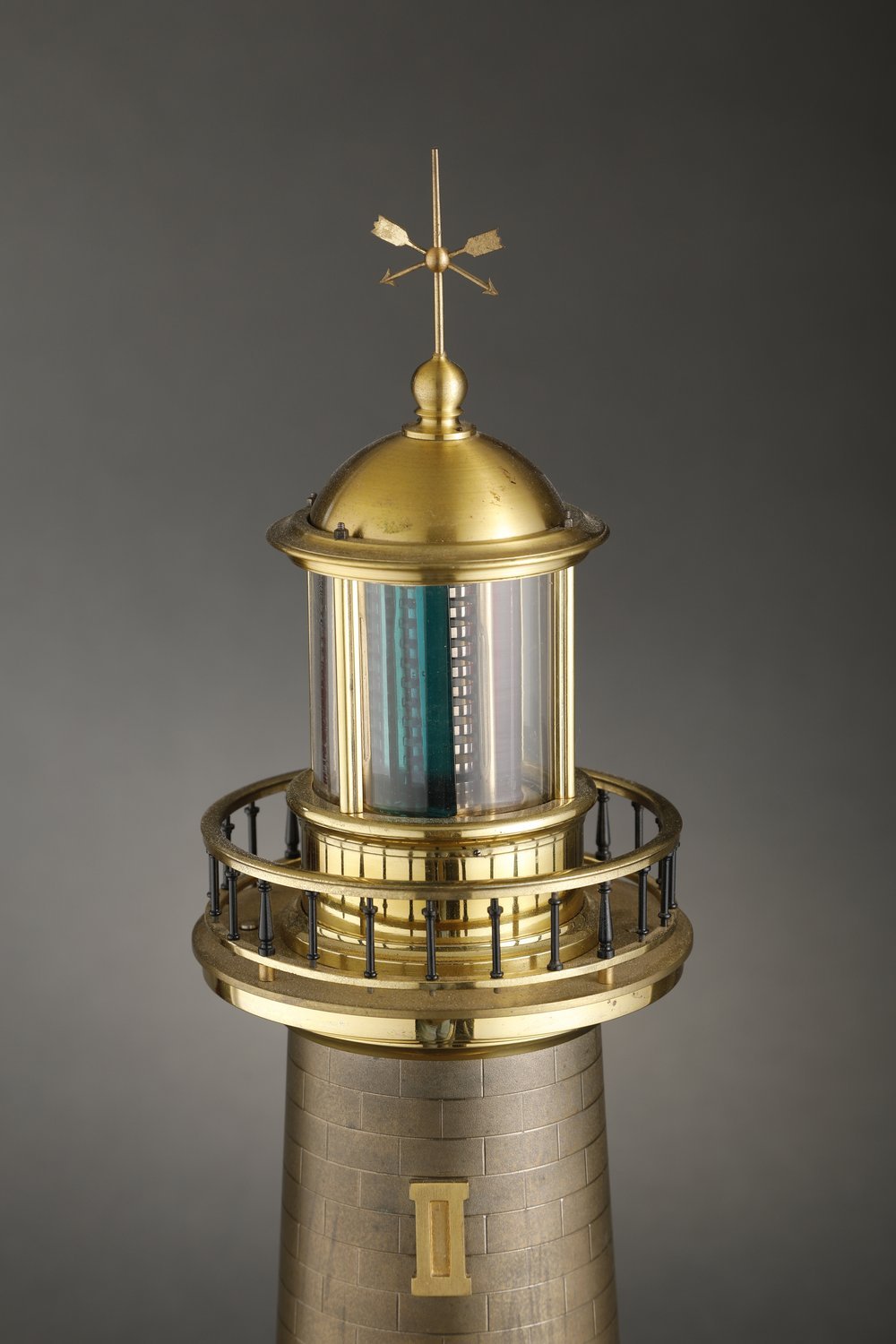
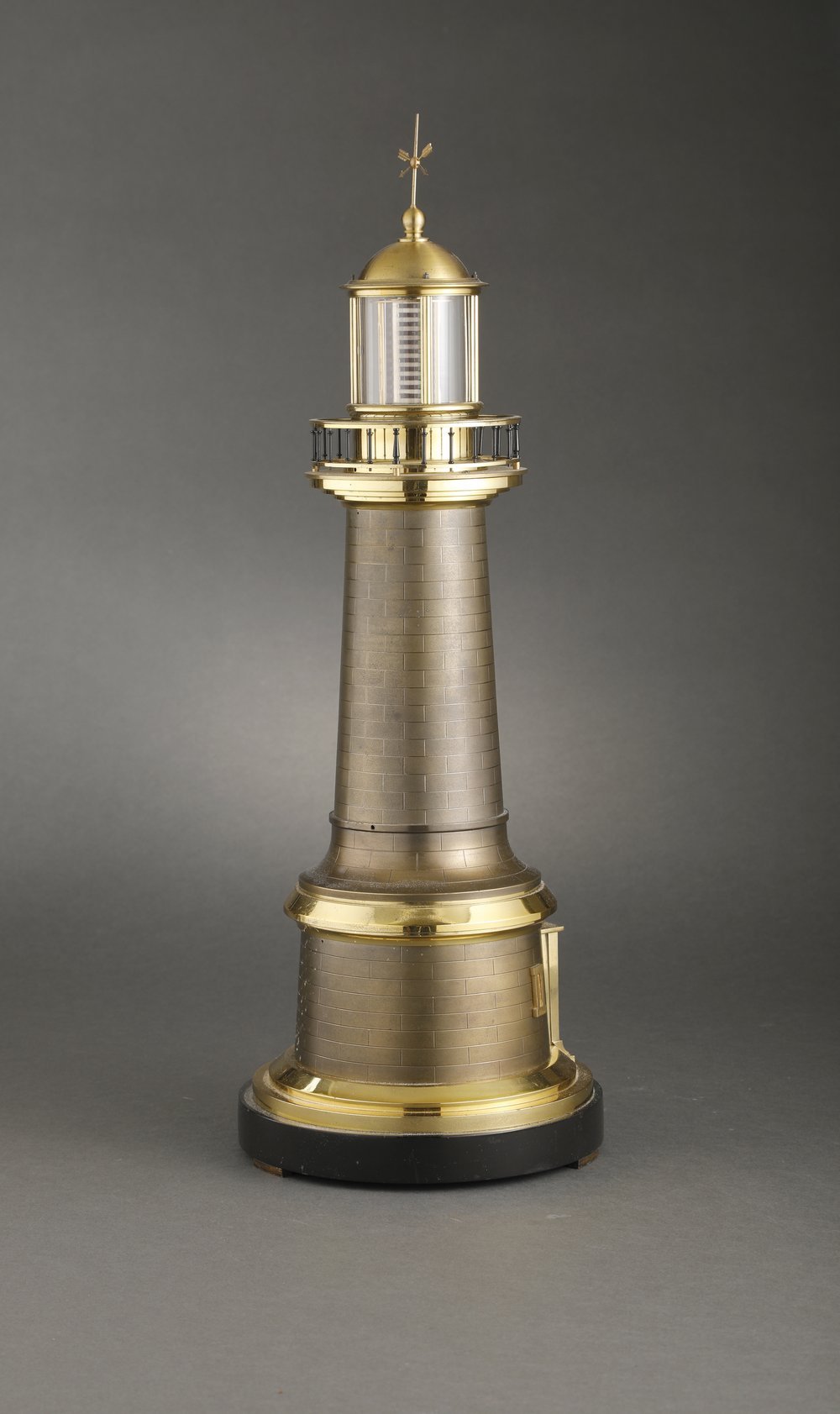
The Industrial Series was Paris horology's love letter to the machine age: clocks in the form of steam engines, lighthouses, locomotives and warships, produced in the 1880s and 1890s and associated above all with Guilmet, whose nautical group — quarterdeck, lighthouse, torpedo boat, battleship, submarine — stands at the summit of the genre. They were luxury objects from the first, made for the man who wanted the modern world on his mantelpiece, and they remain among the most theatrical of all nineteenth-century clocks. The battleship, bristling with guns and armored at the prow, captures the naval moment exactly: the decade when the world's fleets traded sail for steam and steel.
Condition: Exceptional - restored condition.
Literature: Derek Roberts, Mystery, Novelty and Fantasy Clocks, Atglen, 1999, pp. 253–270, for the Industrial Series.
A French Industrial Series compendium in the form of an ironclad battleship, attributed to A.R. Guilmet of Paris, the eight-day clock and aneroid barometer housed in the twin silvered engine drums amidships, a mercury thermometer mounted on the black central funnel between them.
The ship is complete from ram to rudder. The hull, patinated black between polished brass wales, carries a run of brass gun muzzles along each side; the bow ends in a riveted and silvered armored prow of the kind that gave the ironclad ram its menace, and brass anchors hang on their chains at bow and stern. The deck is fitted with rope-twist railings, a capstan, a ventilator cowl, and a pair of brass pennants at the masts, with the clock and barometer drums under domed brass caps, reading as the ship's engine housings. The whole rests on silvered stanchion supports above a stepped verde antico marble base with gilt brass feet.
The Industrial Series was Paris horology's love letter to the machine age: clocks in the form of steam engines, lighthouses, locomotives and warships, produced in the 1880s and 1890s and associated above all with Guilmet, whose nautical group — quarterdeck, lighthouse, torpedo boat, battleship, submarine — stands at the summit of the genre. They were luxury objects from the first, made for the man who wanted the modern world on his mantelpiece, and they remain among the most theatrical of all nineteenth-century clocks. The battleship, bristling with guns and armored at the prow, captures the naval moment exactly: the decade when the world's fleets traded sail for steam and steel.
Condition: Exceptional - restored condition.
Literature: Derek Roberts, Mystery, Novelty and Fantasy Clocks, Atglen, 1999, pp. 253–270, for the Industrial Series.

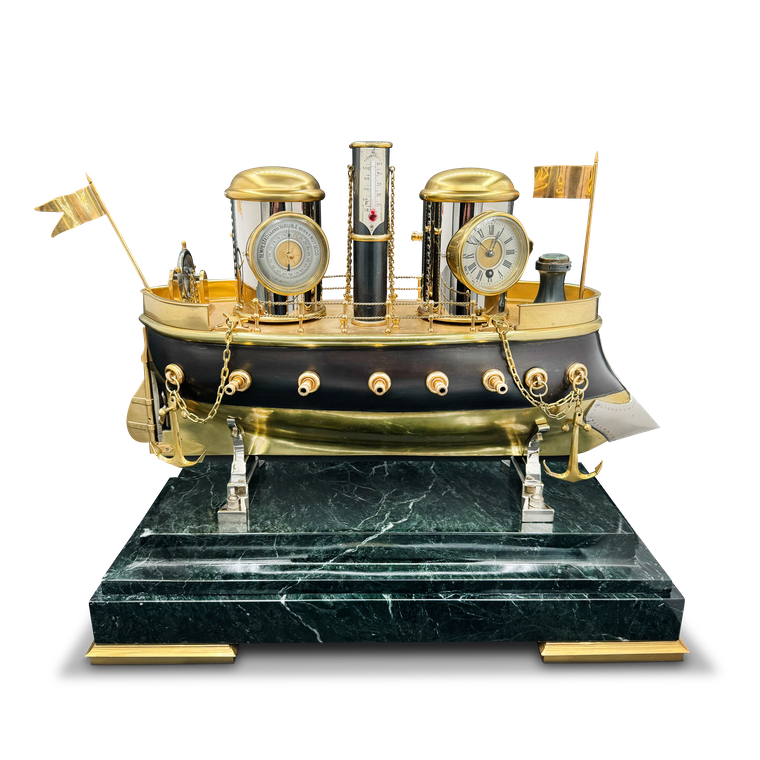 Image 1 of 3
 Image 2 of 3
 Image 3 of 3