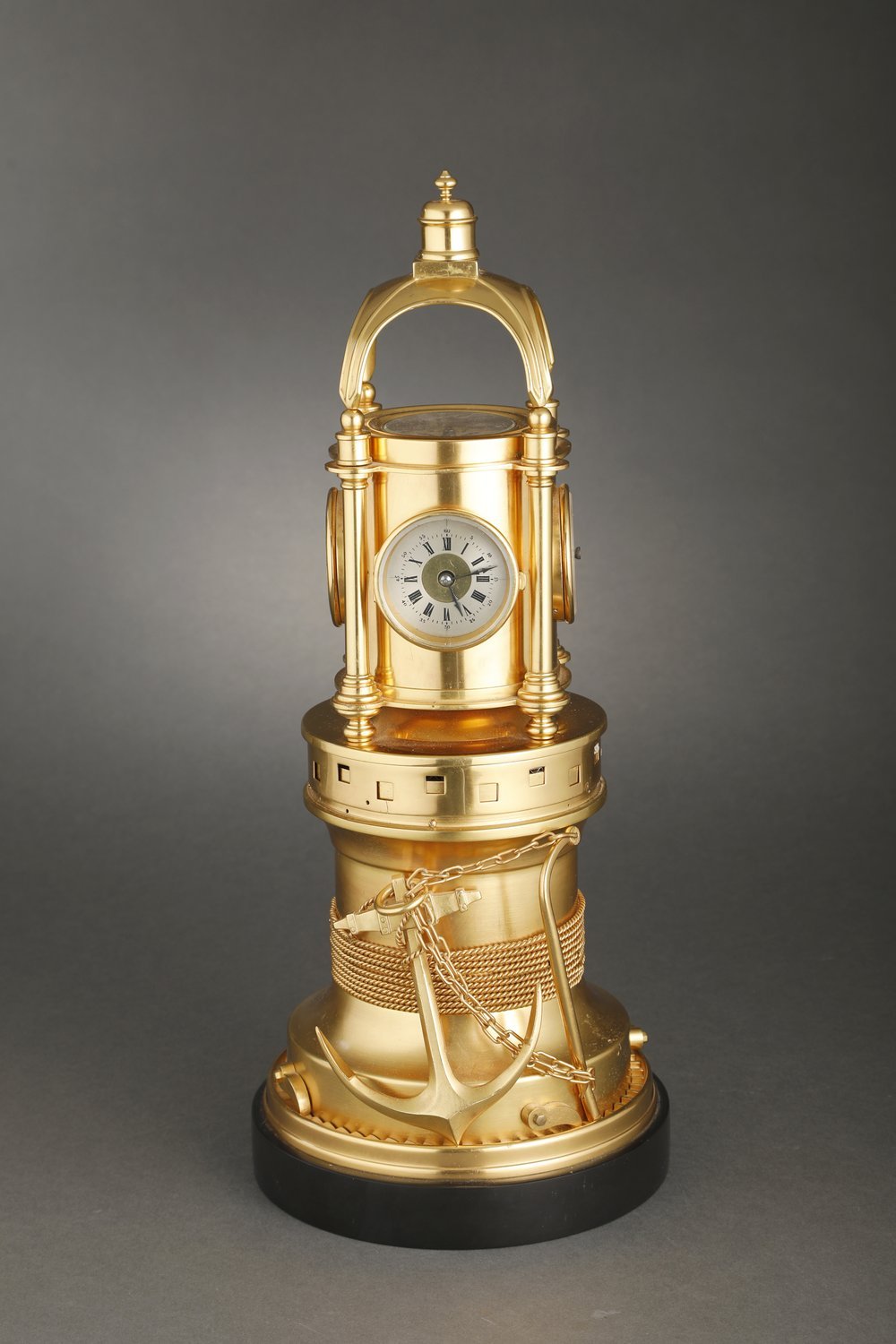
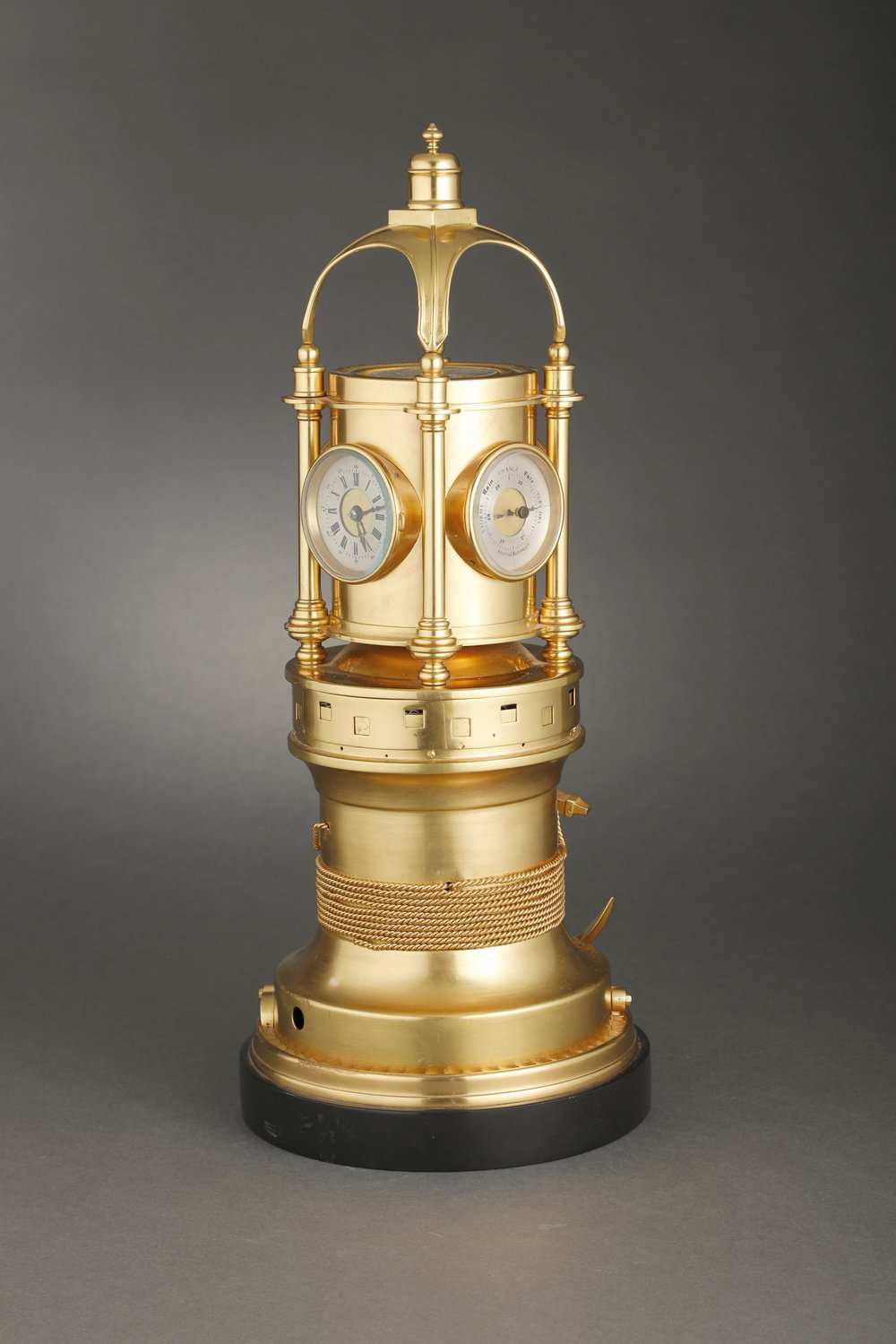
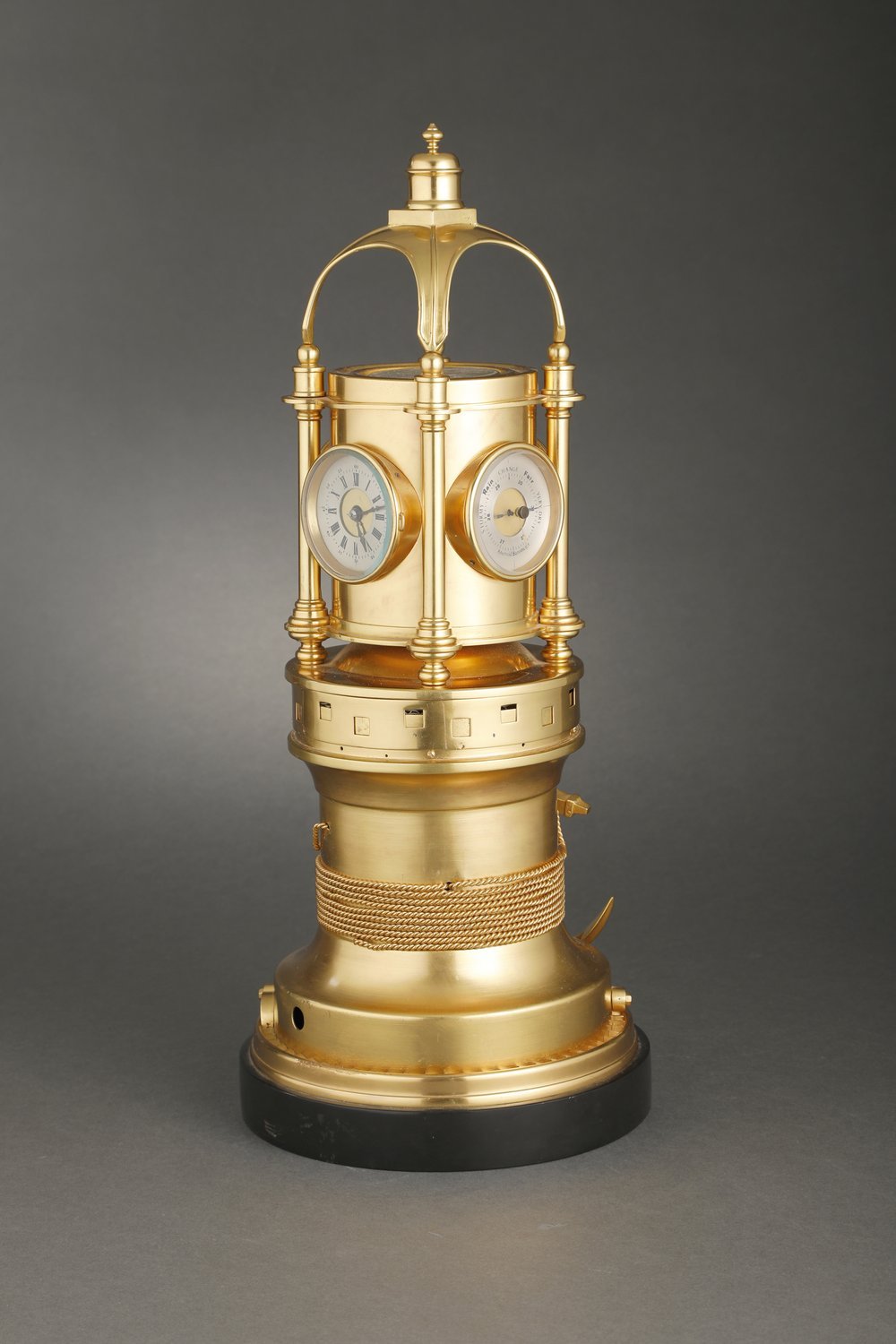
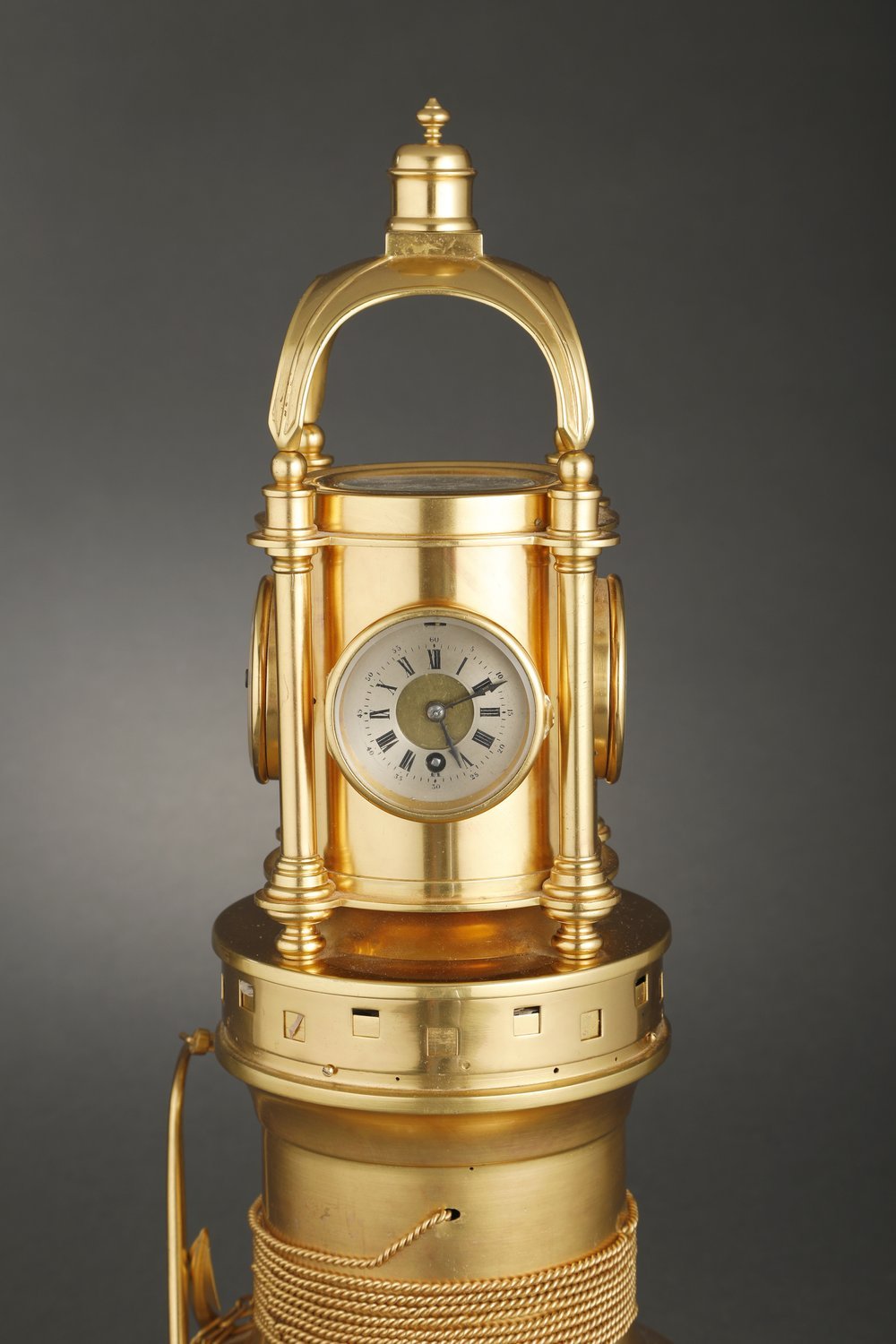
Ball clock, the spherical case glazed to front and back with beveled glass and held within a gilt-brass gimbal ring, raised on twin cast dolphins above a stepped brass plinth, the whole set on a rouge marble base with gilt-brass bracket feet.
The white enamel dial carries black Roman numerals and gilt spade hands within a knurled bezel, the case surmounted by a carrying ring above a turned collar and pivoting between turned finials at the sides. The reverse reveals the gilt spring-driven movement, with the going barrel, gear train, lever escapement, and large balance all visible through the rear glass, a deliberate display of mechanism that places the clock within the period's industrial taste.
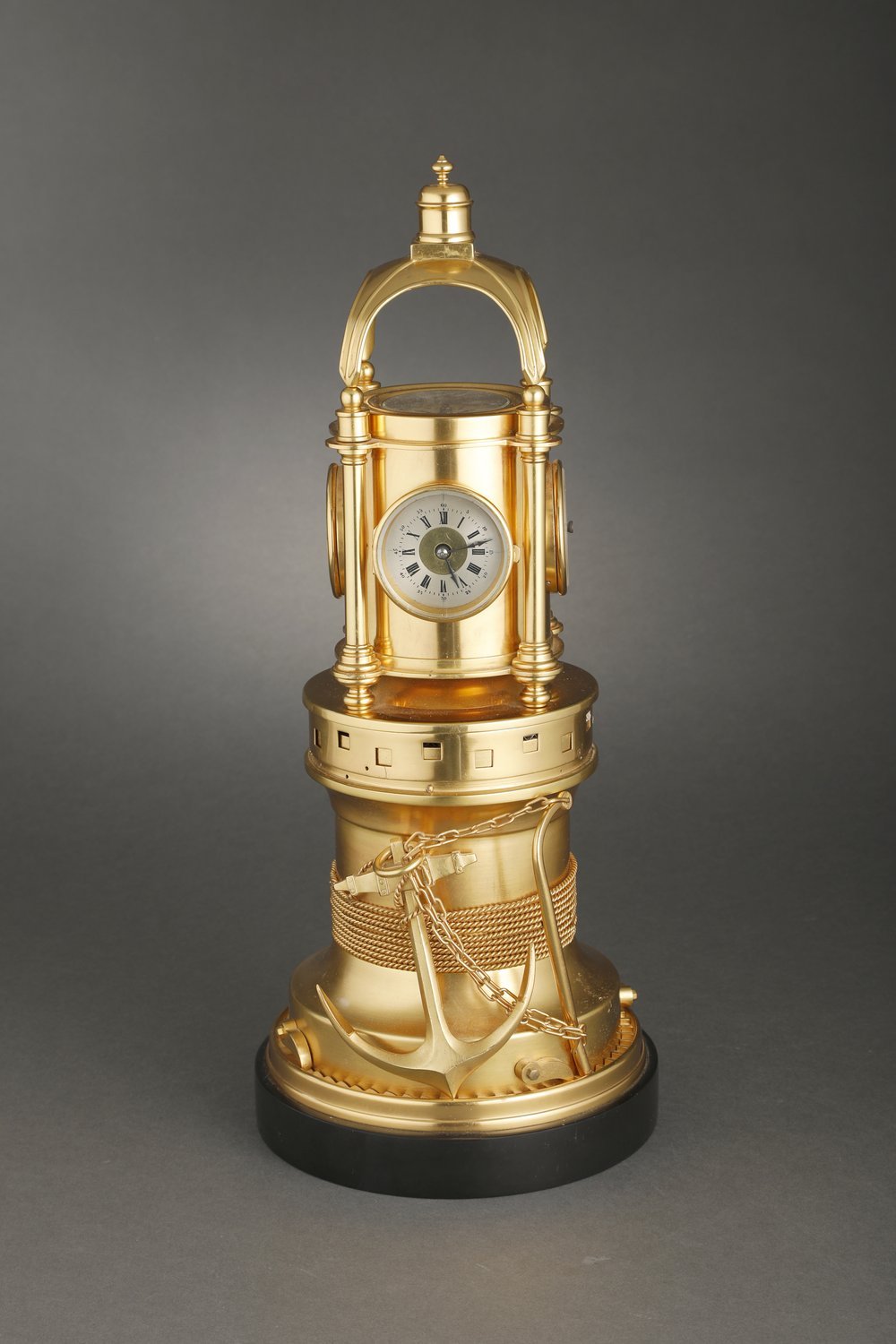
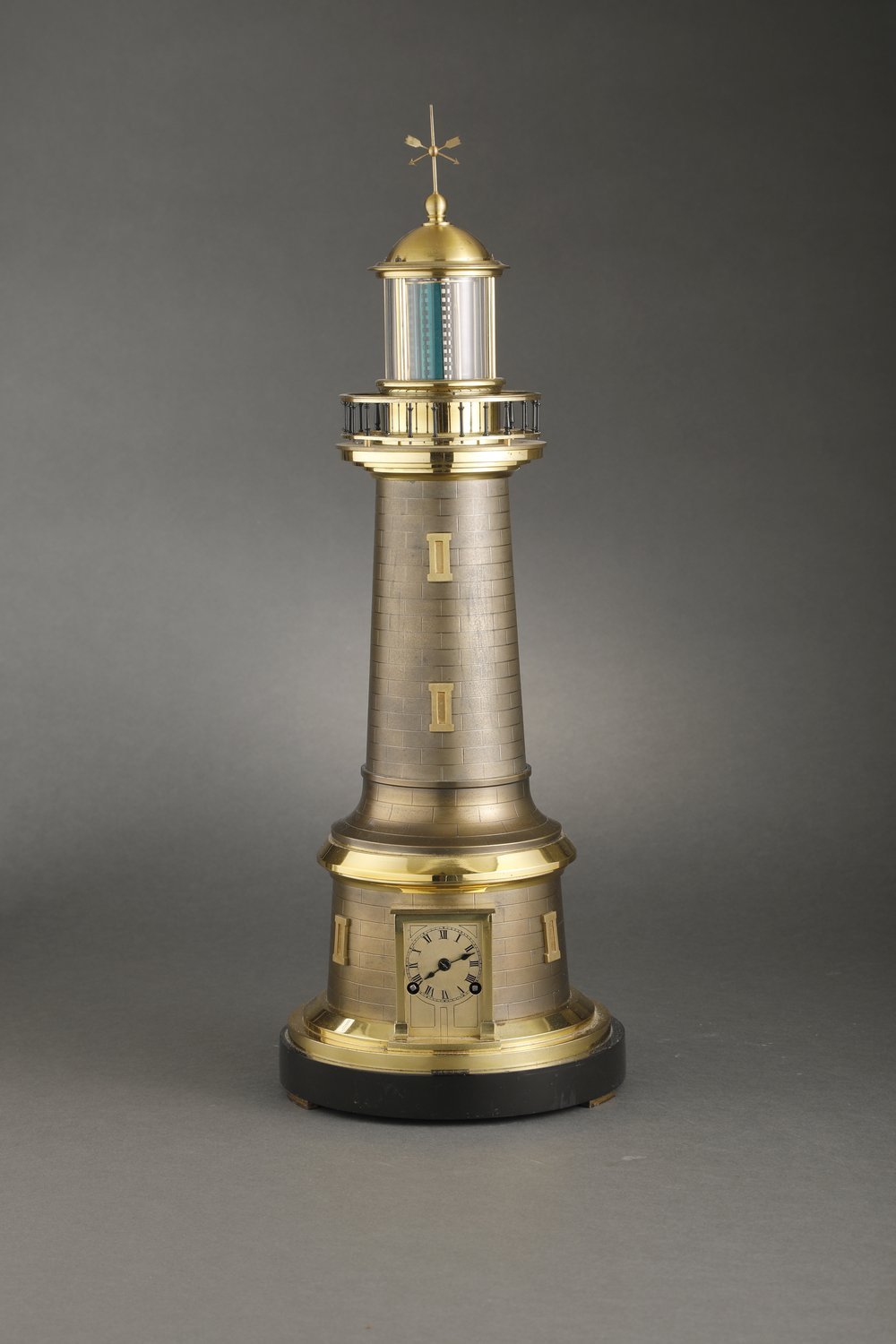
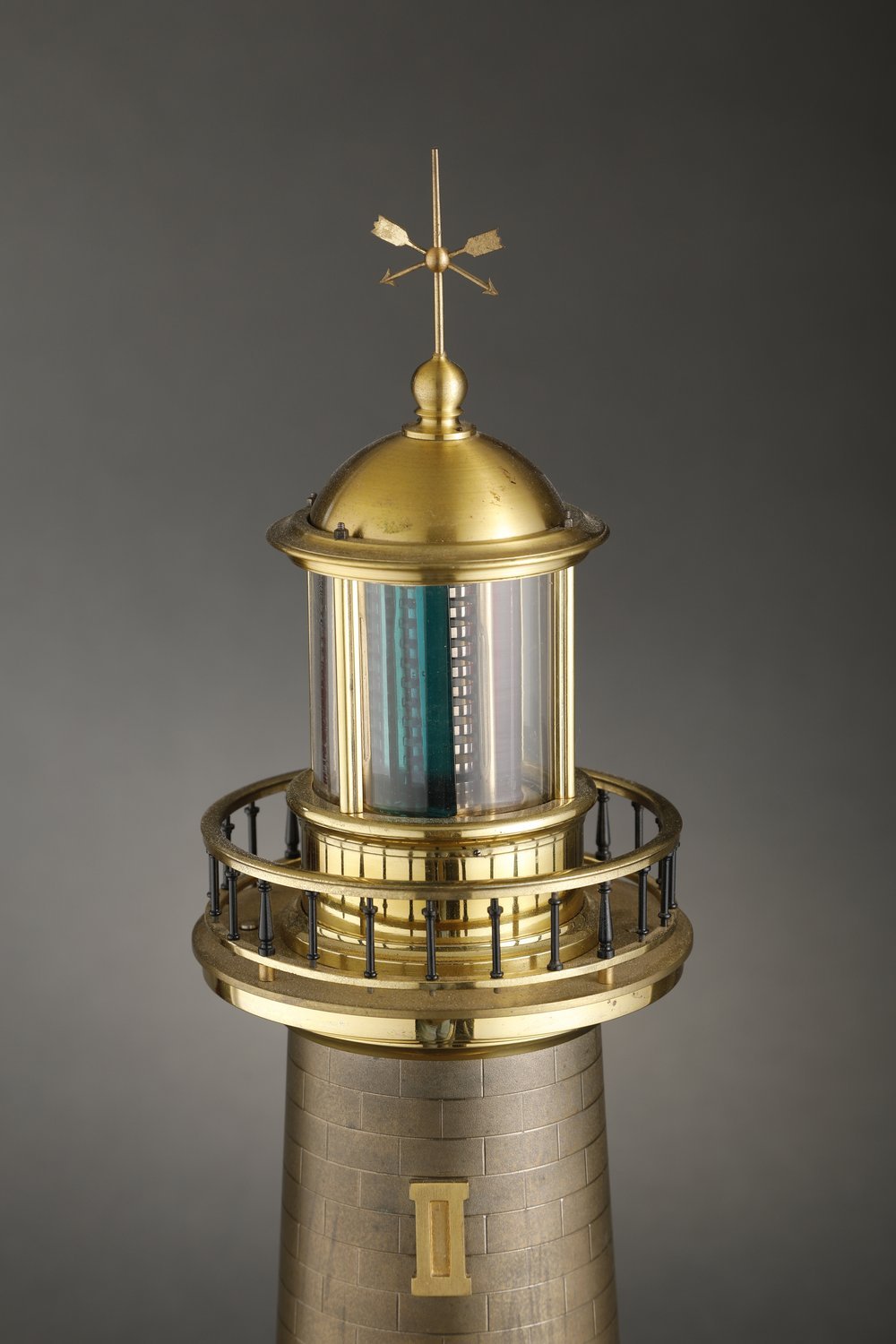
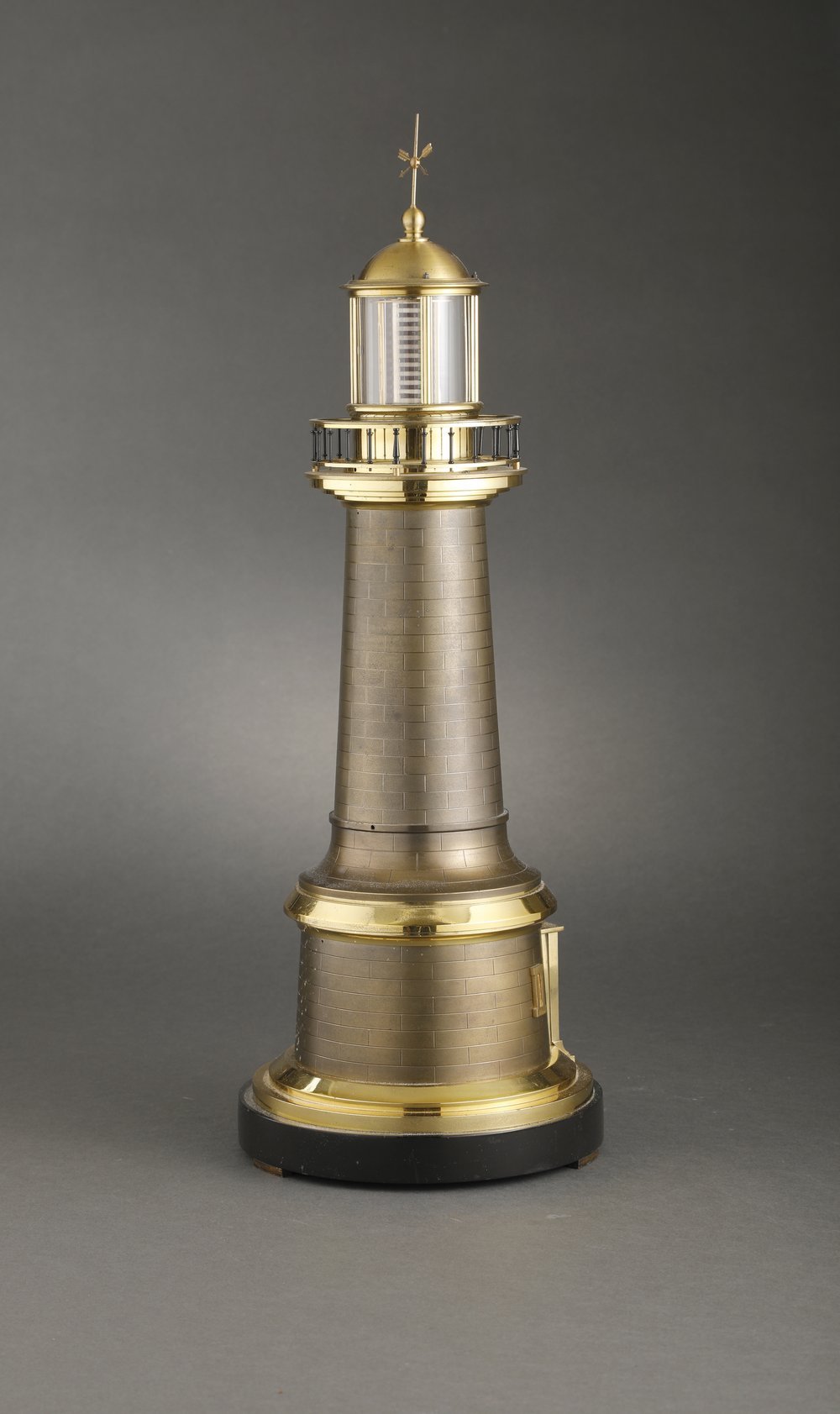
Clocks of this kind, taking their subject from machinery and engineering, form the group known to collectors as industrial clocks. They emerged in the second half of the nineteenth century, when a widening public took a keen interest in technical innovation and modernization, and much of their appeal lay in displaying the workings that ordinary clocks kept hidden.
Ball clock, the spherical case glazed to front and back with beveled glass and held within a gilt-brass gimbal ring, raised on twin cast dolphins above a stepped brass plinth, the whole set on a rouge marble base with gilt-brass bracket feet.
The white enamel dial carries black Roman numerals and gilt spade hands within a knurled bezel, the case surmounted by a carrying ring above a turned collar and pivoting between turned finials at the sides. The reverse reveals the gilt spring-driven movement, with the going barrel, gear train, lever escapement, and large balance all visible through the rear glass, a deliberate display of mechanism that places the clock within the period's industrial taste.
Clocks of this kind, taking their subject from machinery and engineering, form the group known to collectors as industrial clocks. They emerged in the second half of the nineteenth century, when a widening public took a keen interest in technical innovation and modernization, and much of their appeal lay in displaying the workings that ordinary clocks kept hidden.

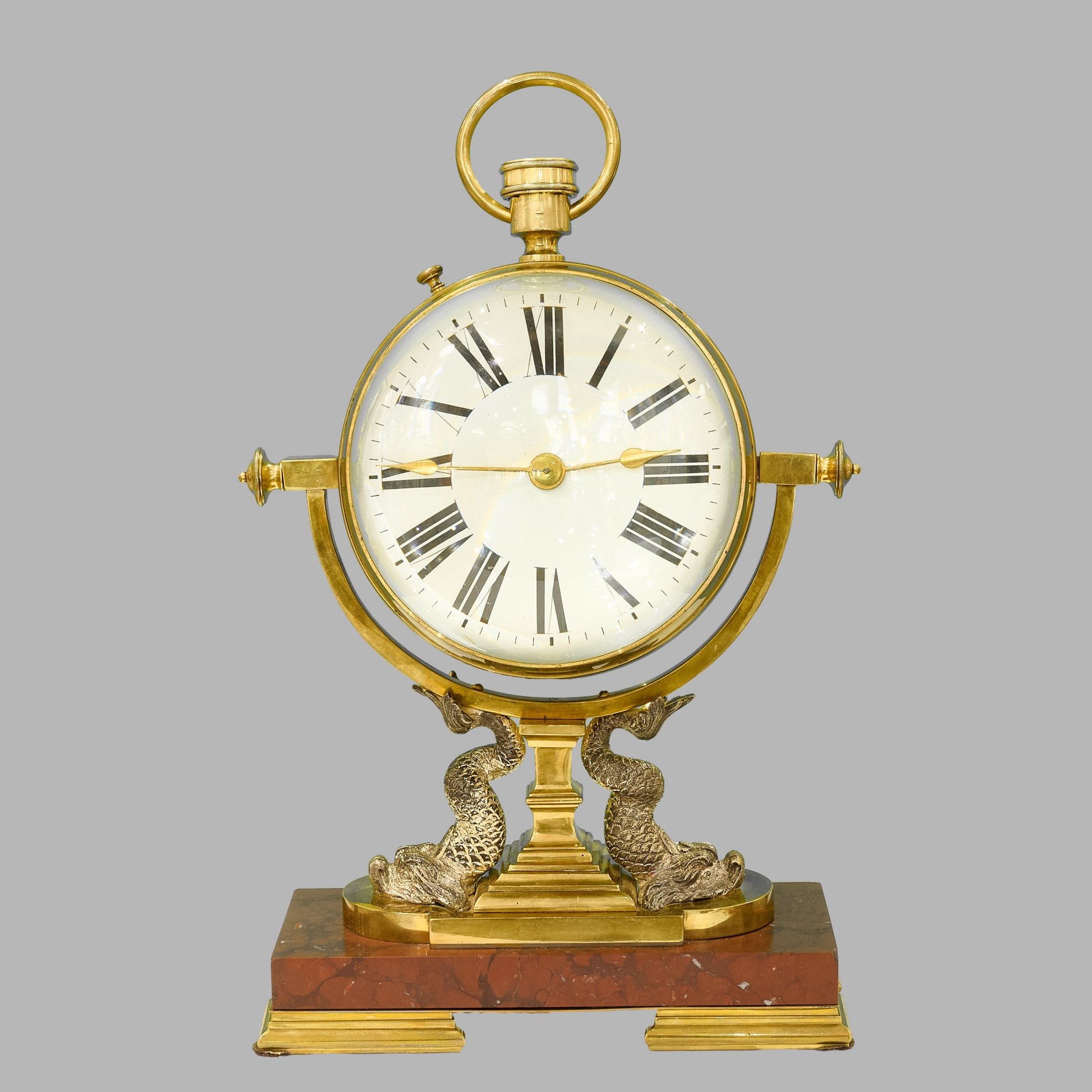 Image 1 of 4
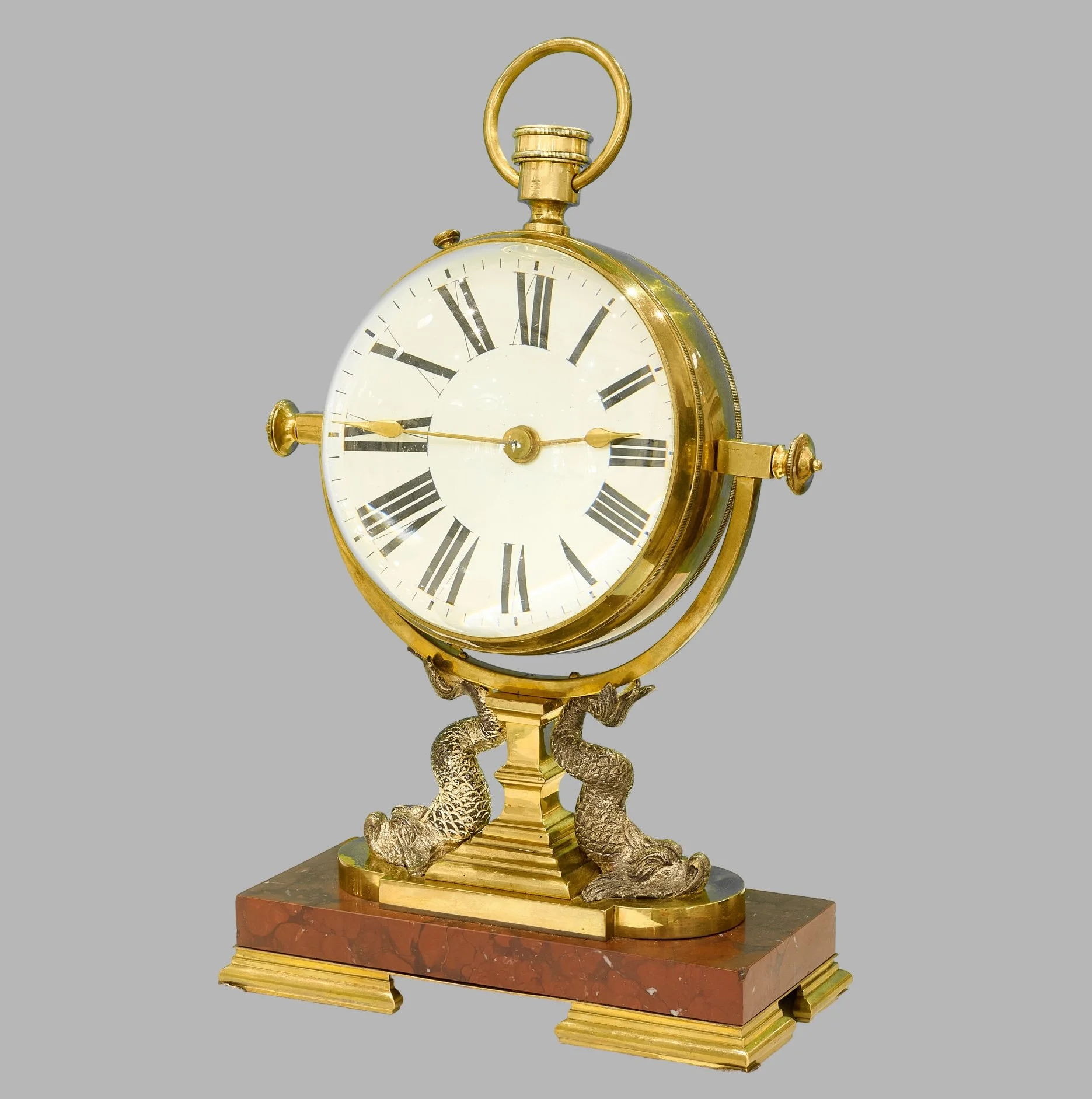 Image 2 of 4
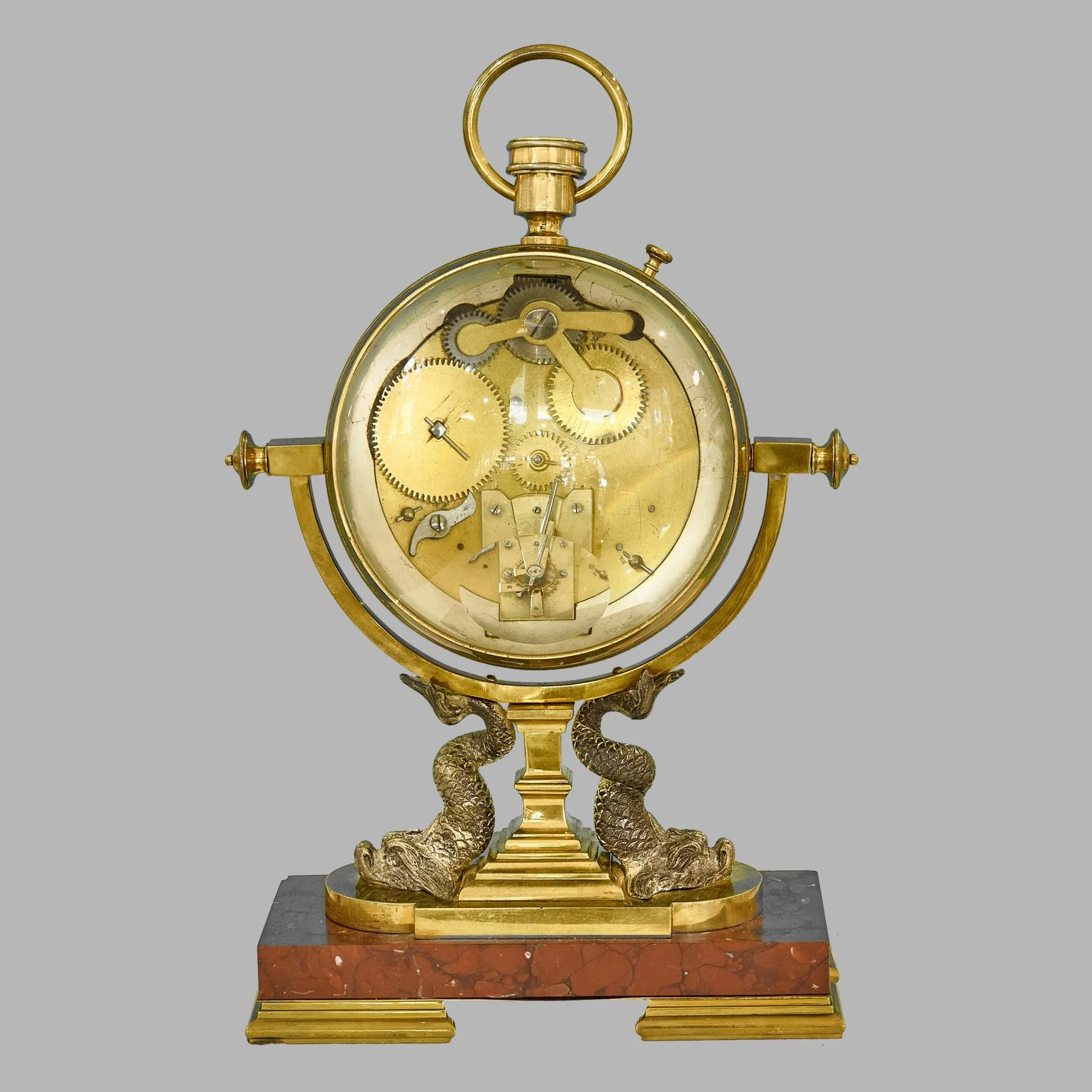 Image 3 of 4
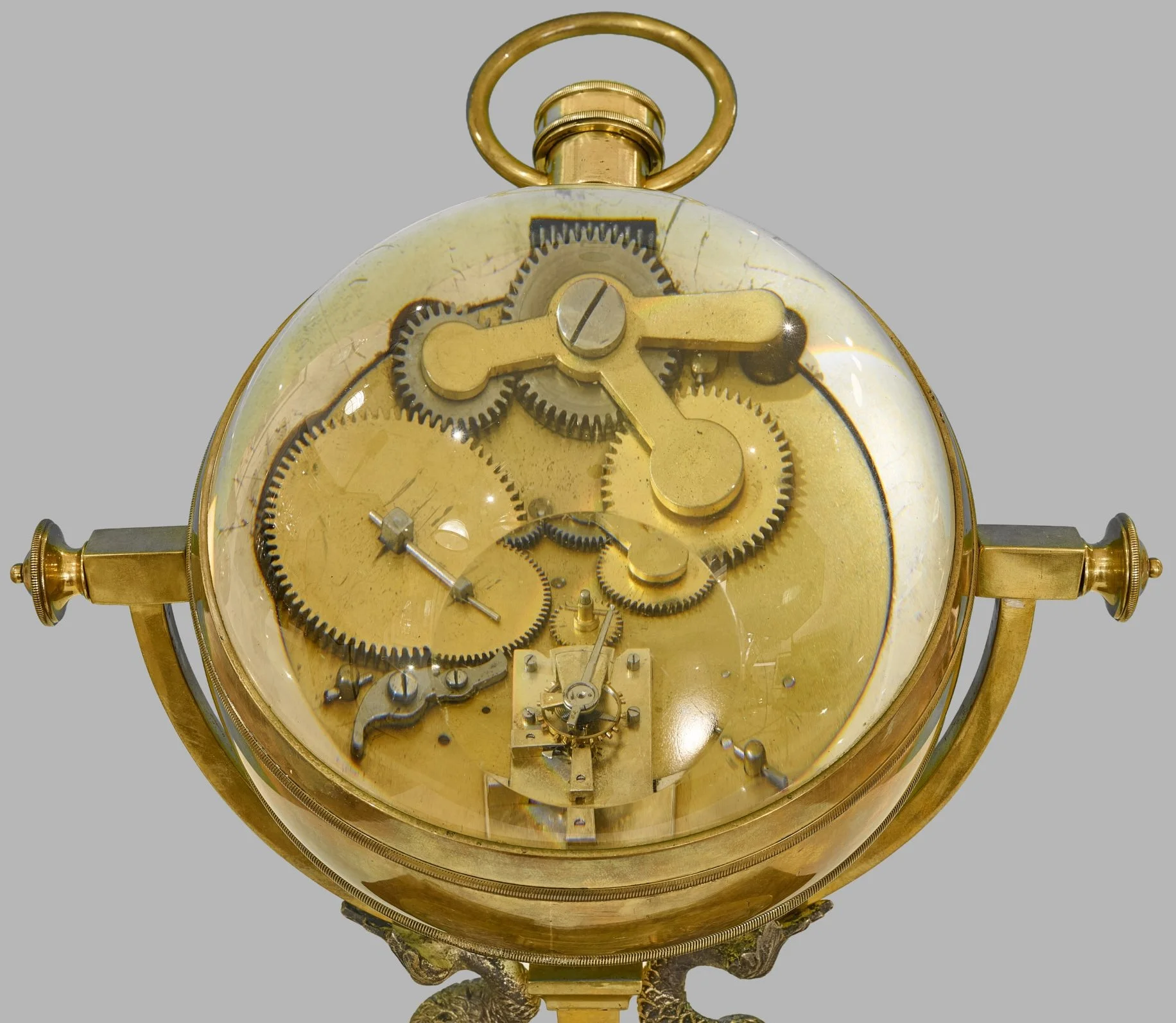 Image 4 of 4