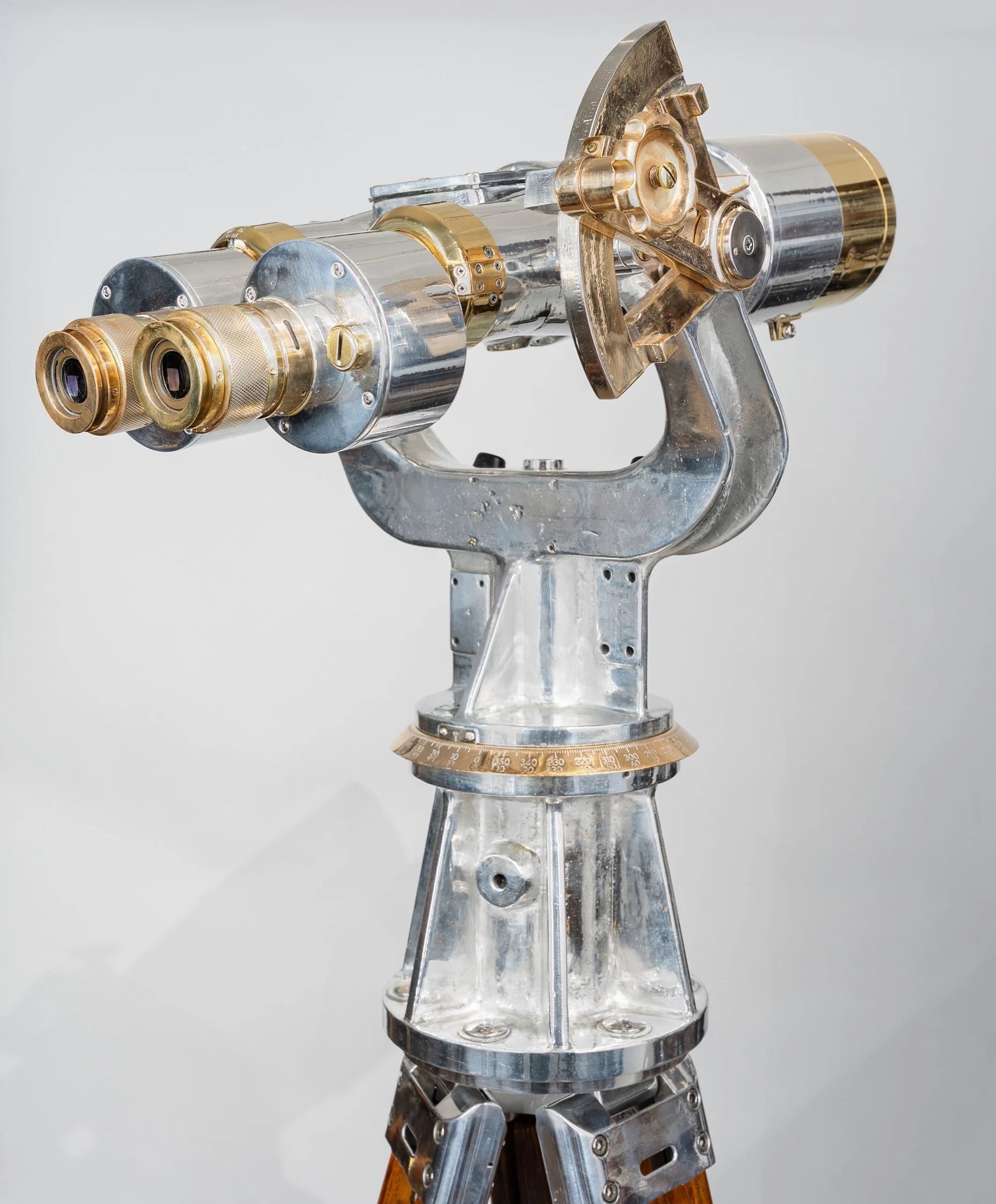
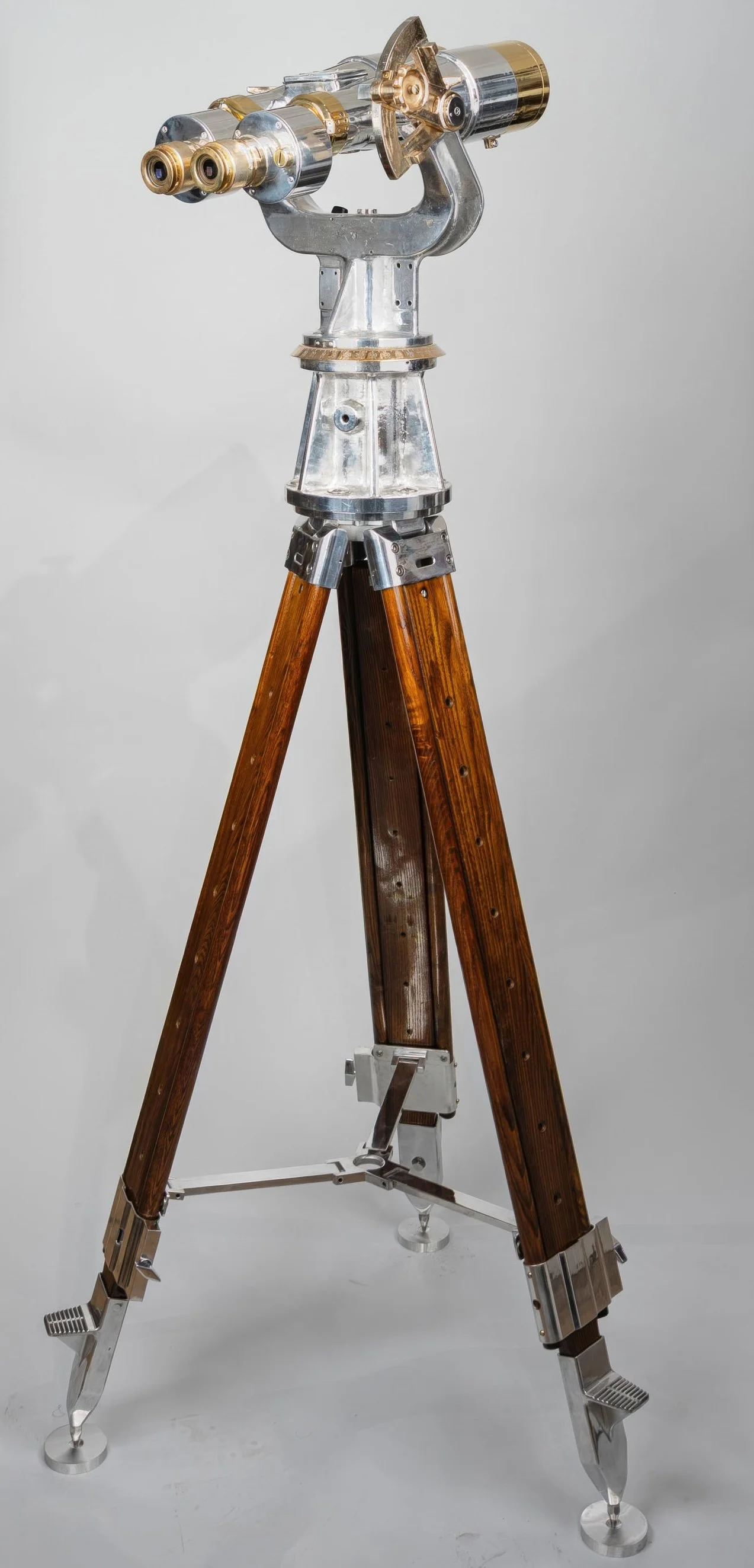
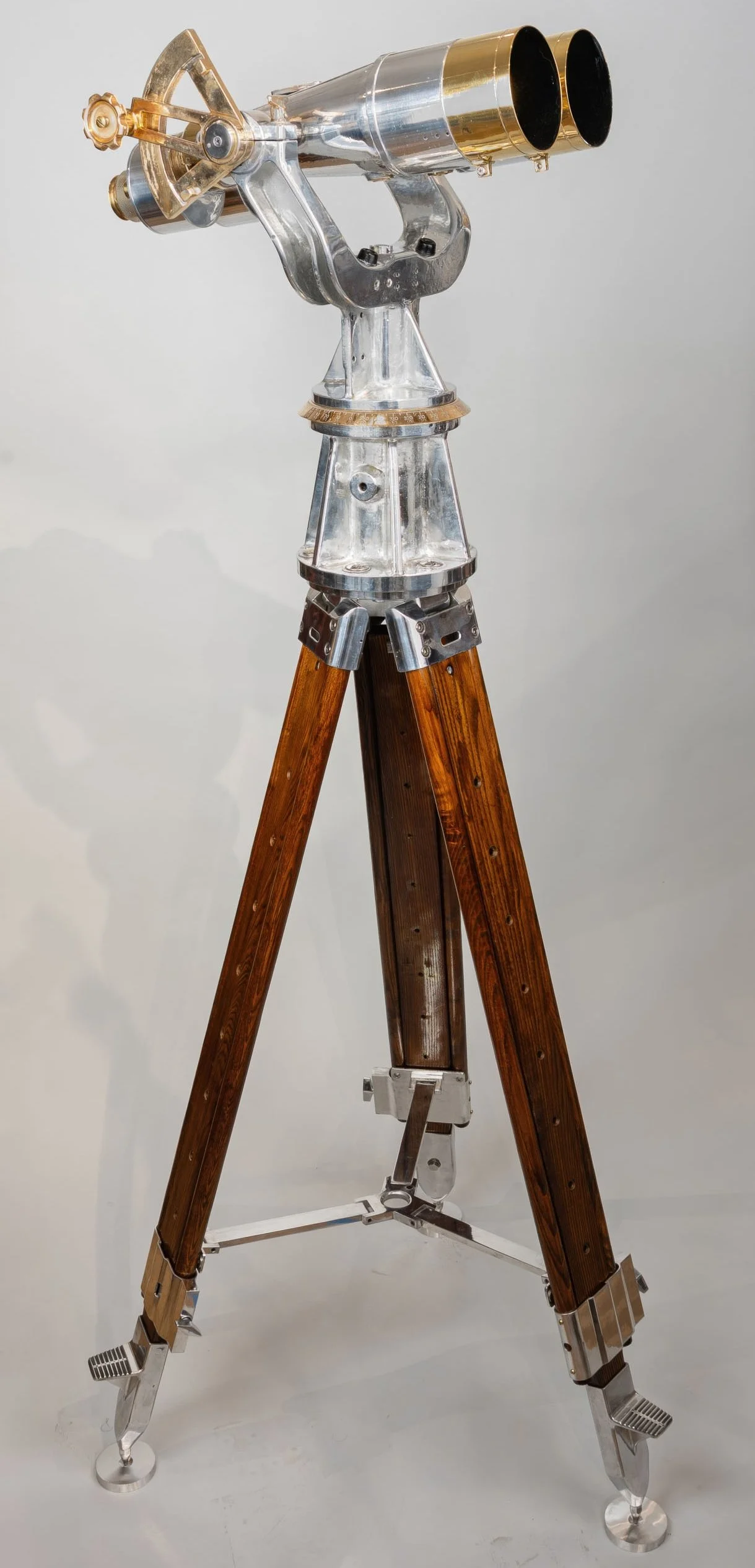
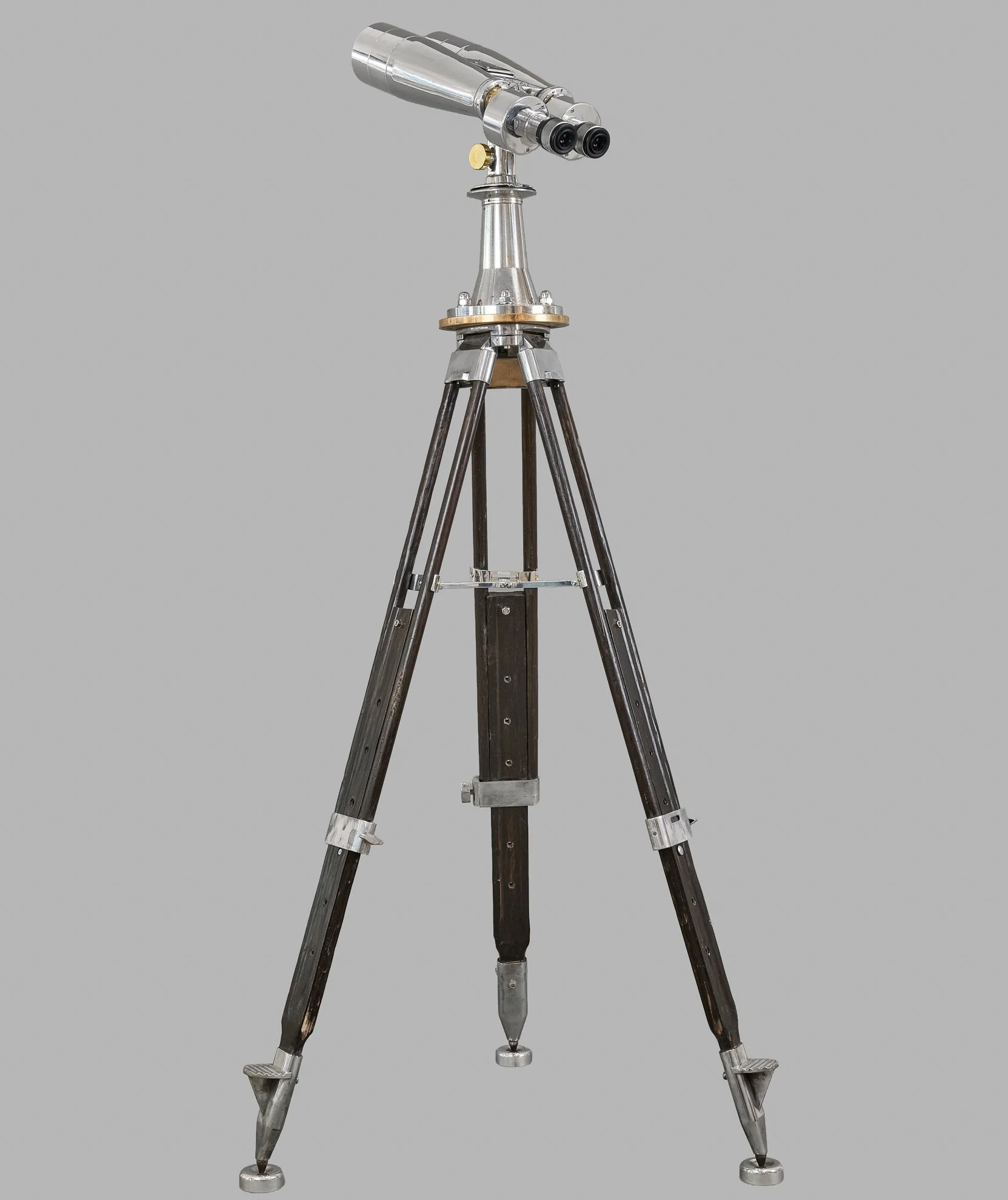
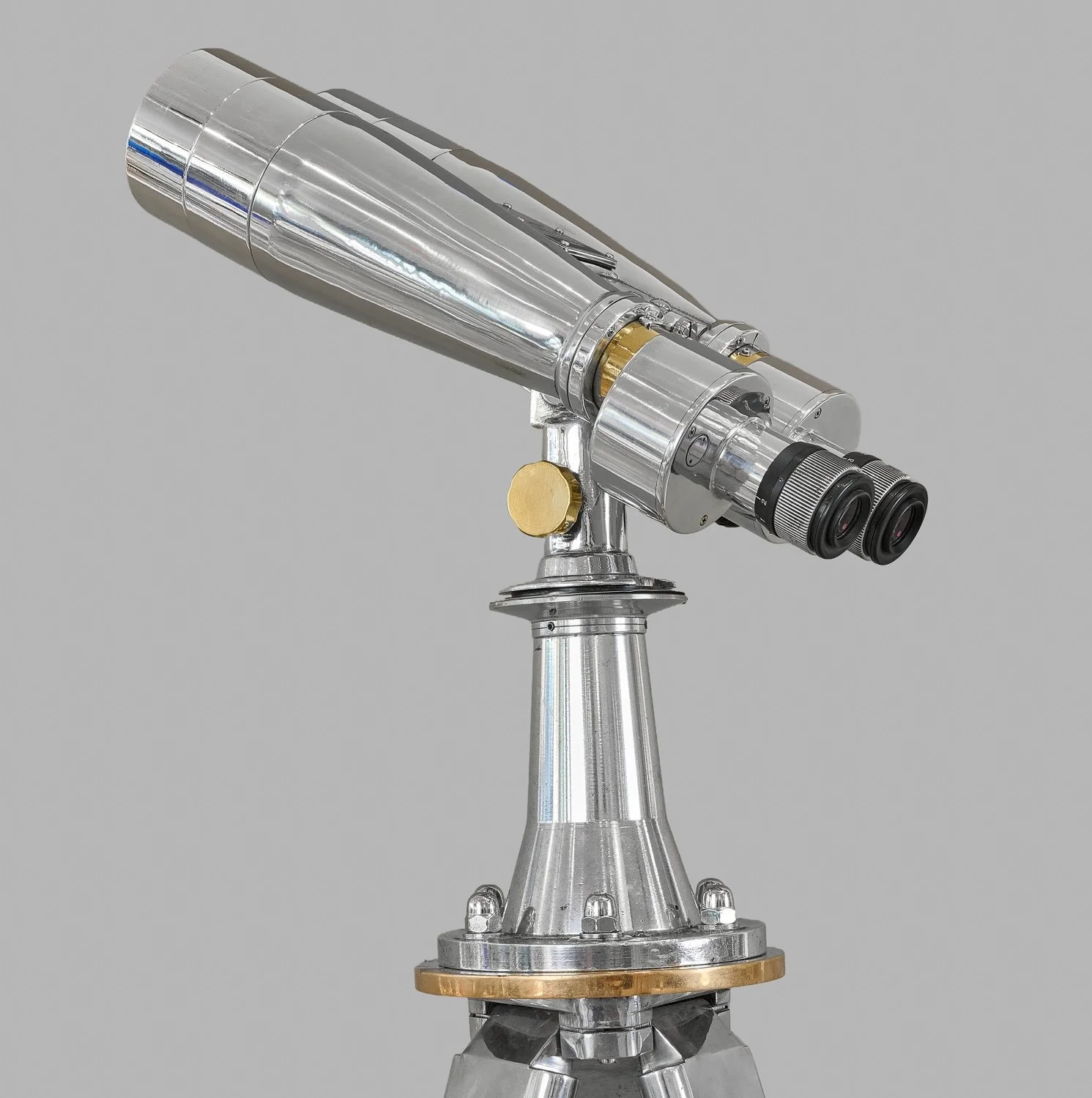
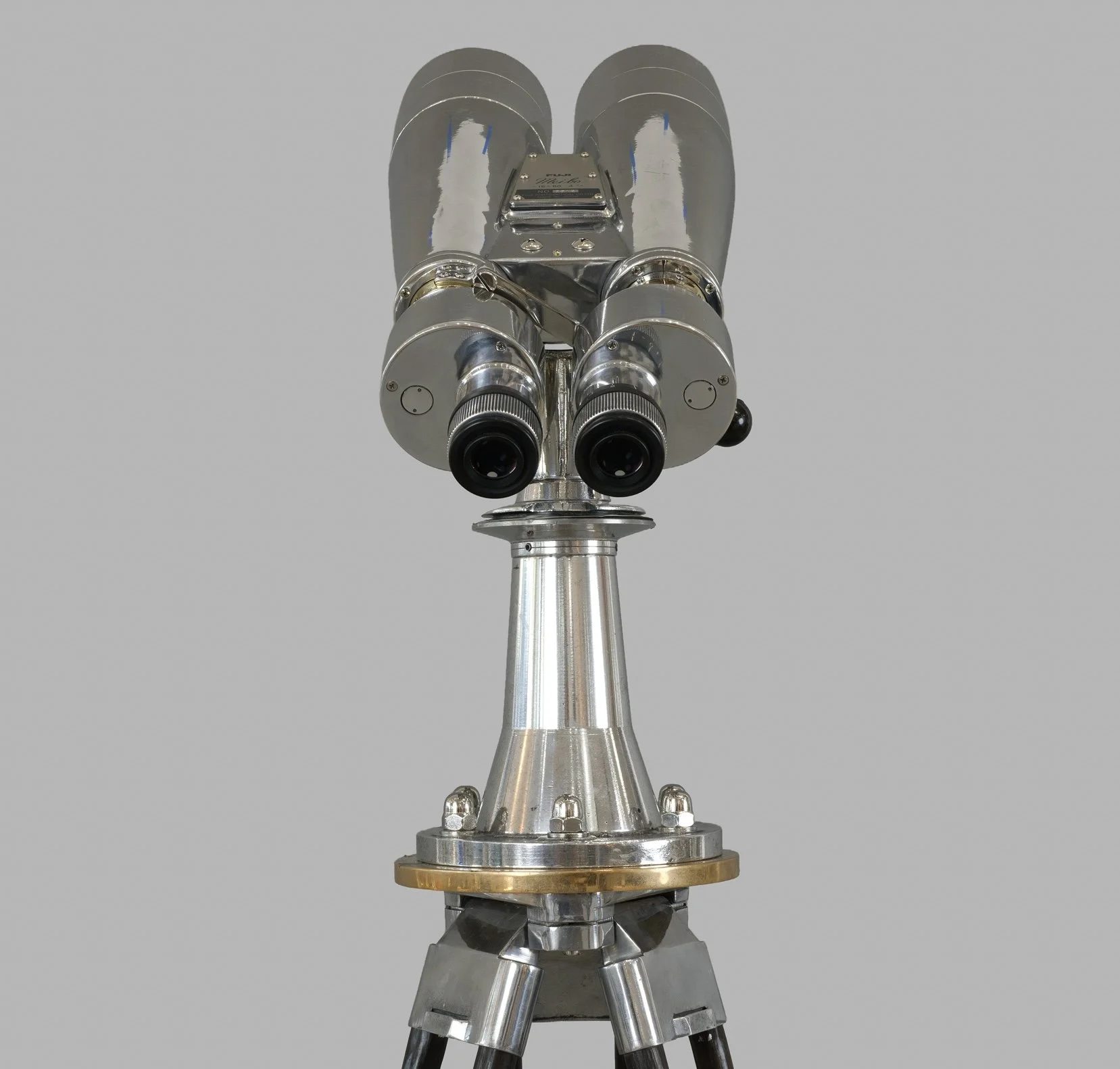
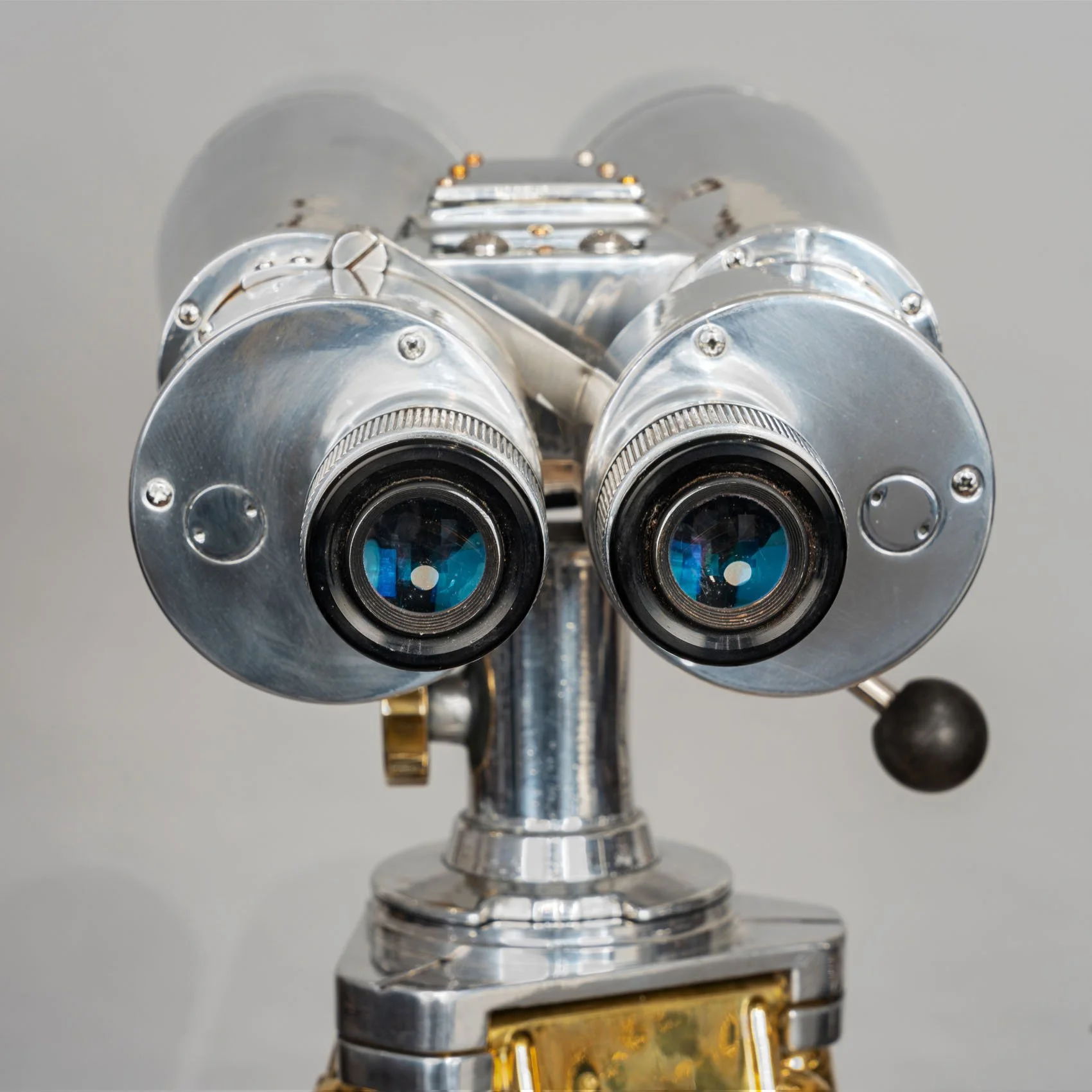
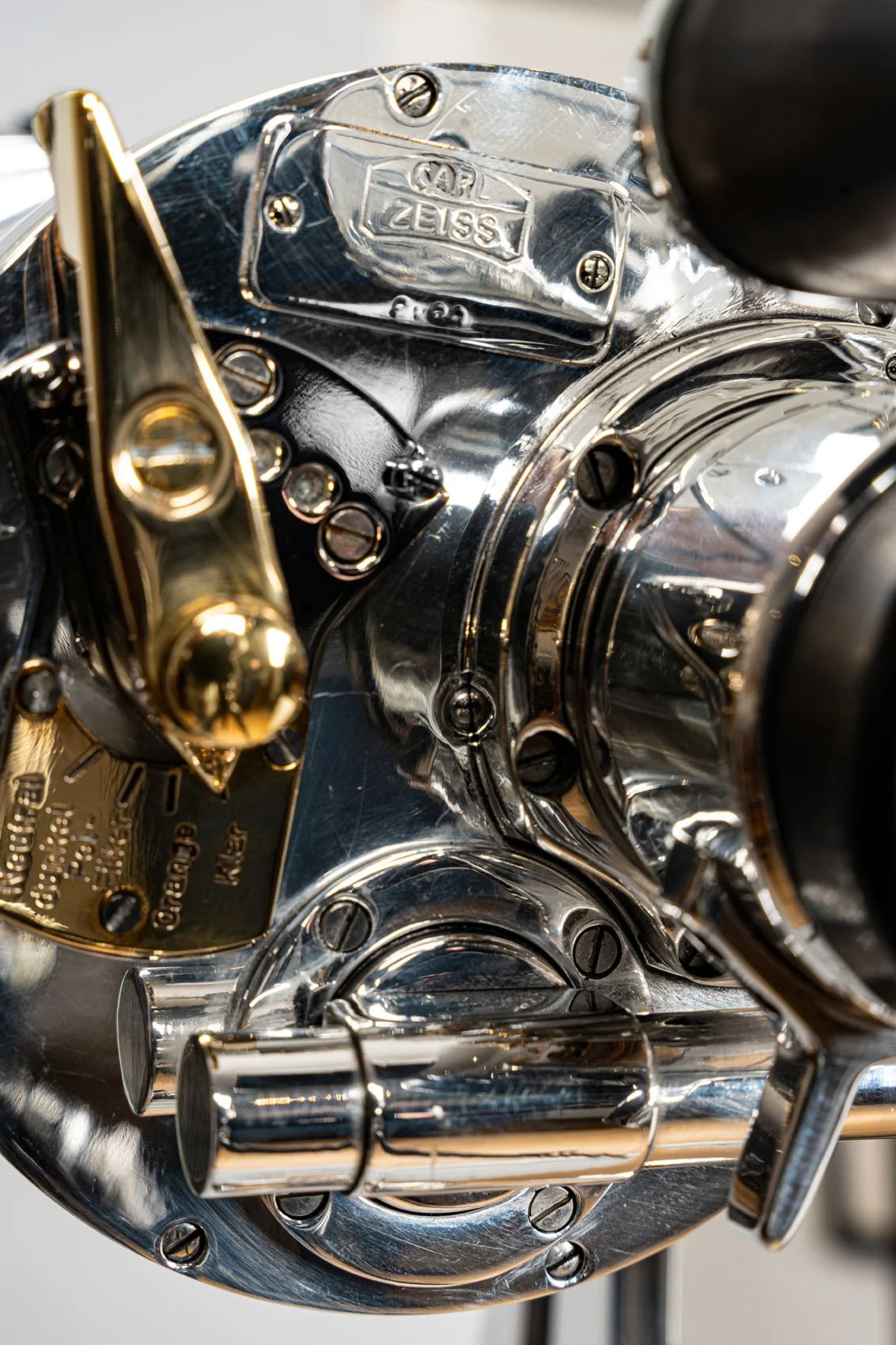
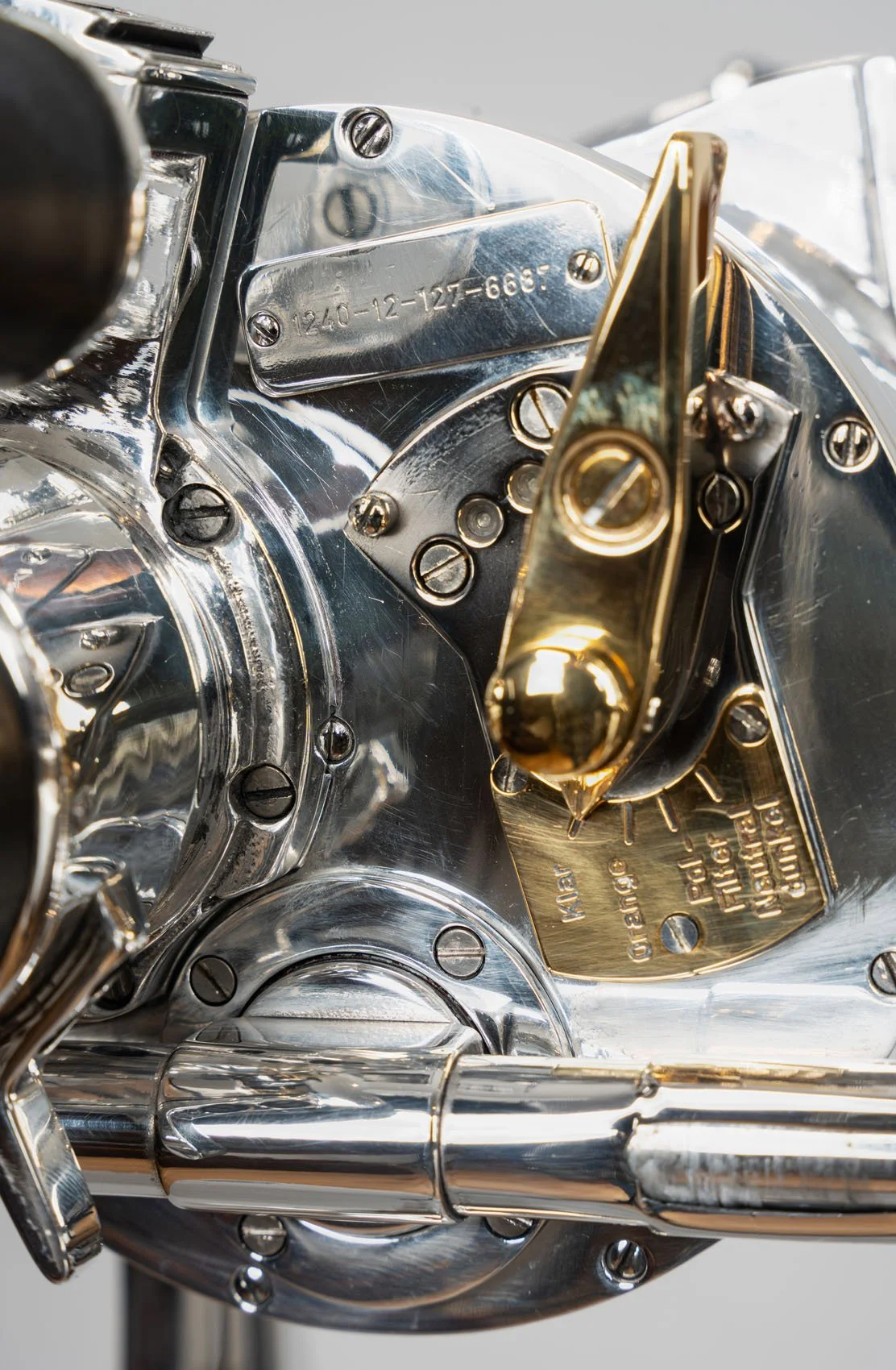
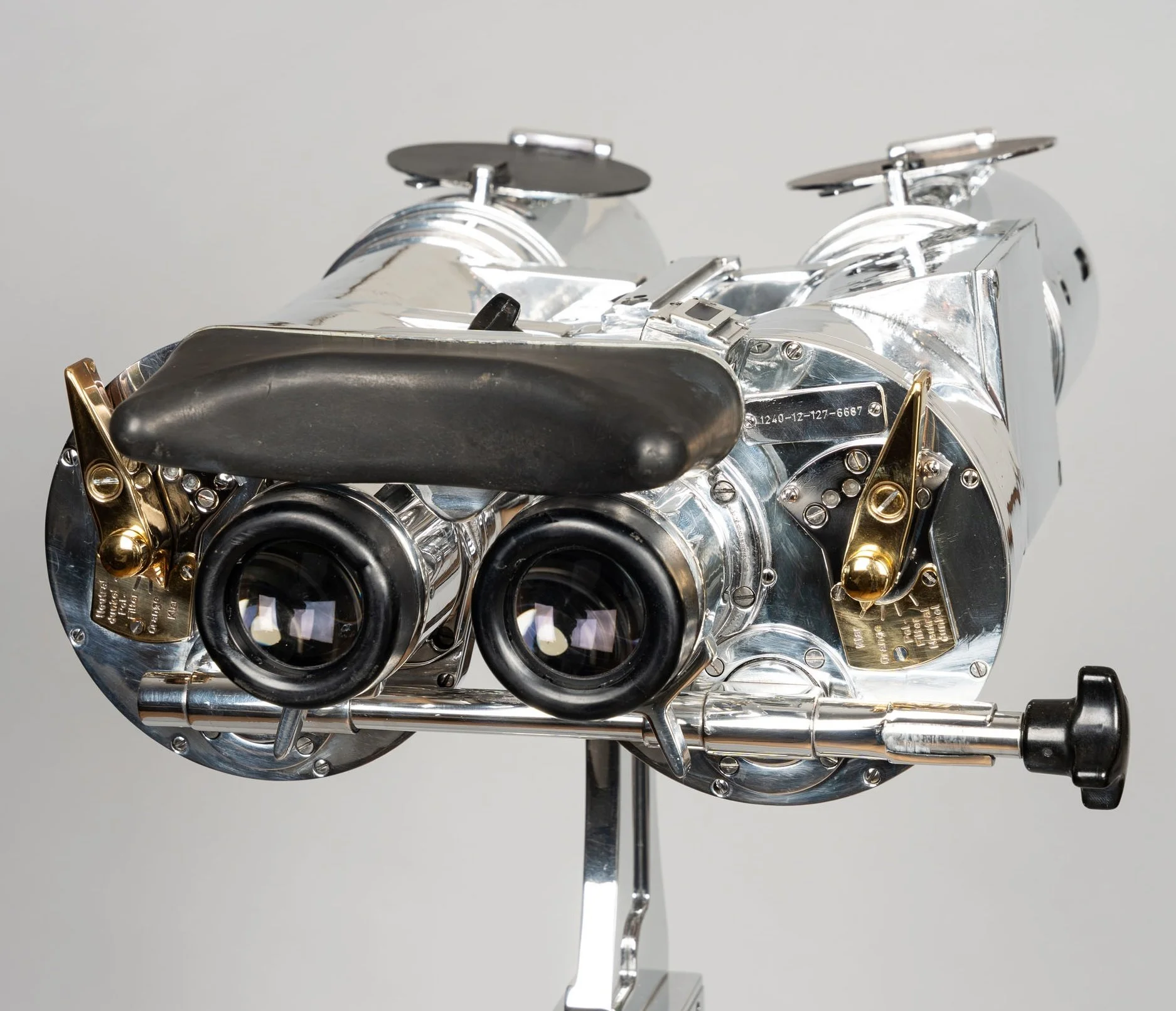
An exceptional example of the 10×80 Doppelfernrohr — the anti-aircraft Flak binocular that became the defining observation instrument of the German armed forces in the Second World War. Developed following competitive trials in the early 1930s, the type was selected from designs submitted by Emil Busch, Moeller Wedel, and Ernst Leitz. Busch's prototype was chosen for its superior field of view and reduced weight, with production subsequently distributed among six manufacturers under wartime contract.
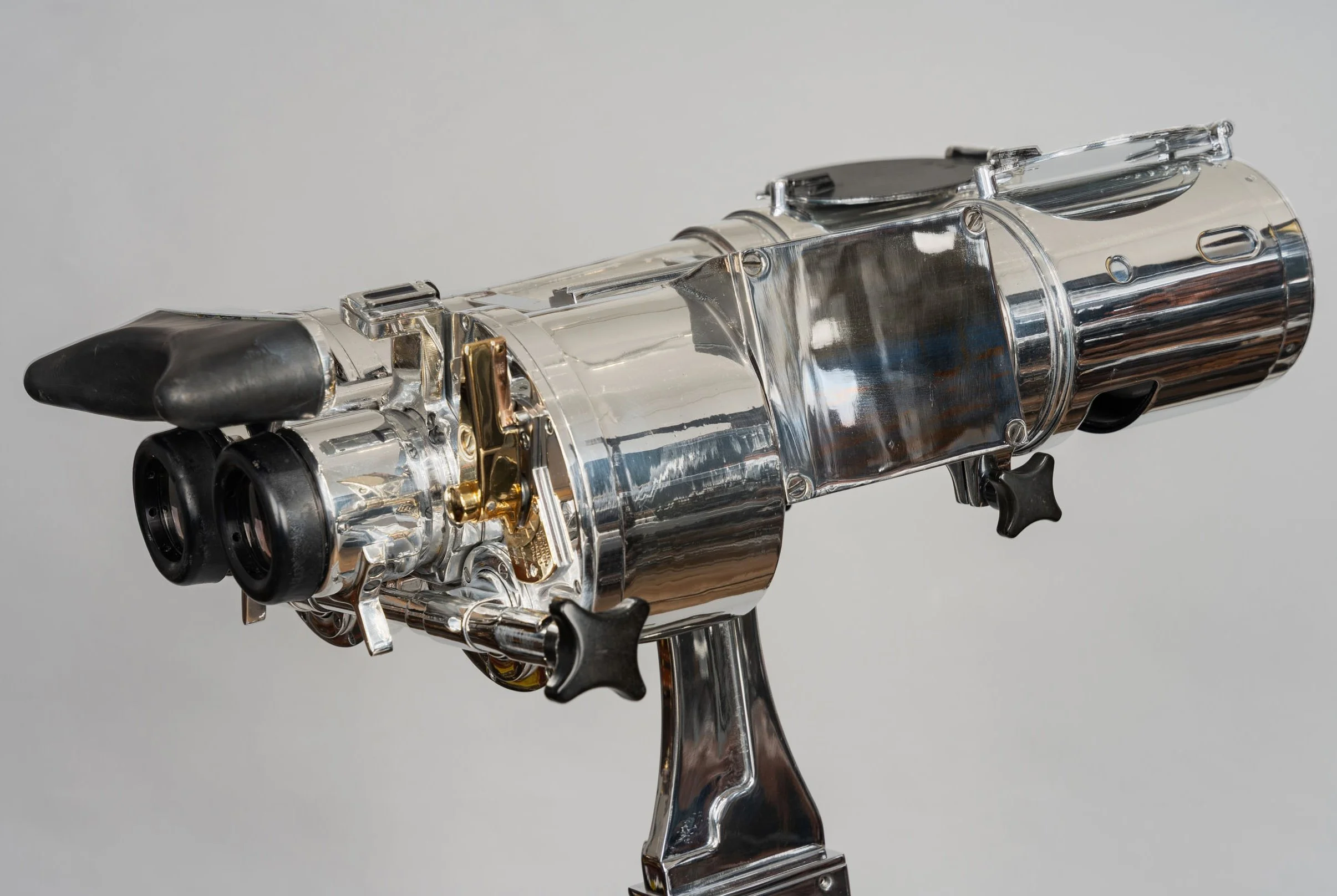
Engineered with a distinctive 45° inclined binocular head for prolonged observation of both terrestrial and aerial targets, the 10×80 was indispensable for coordinating artillery fire, anti-aircraft defense, and strategic surveillance. Originally designated the searchlight director, it became the standard observation glass of the Flak arm, deployed on every front from the Western Desert to the Eastern Front.
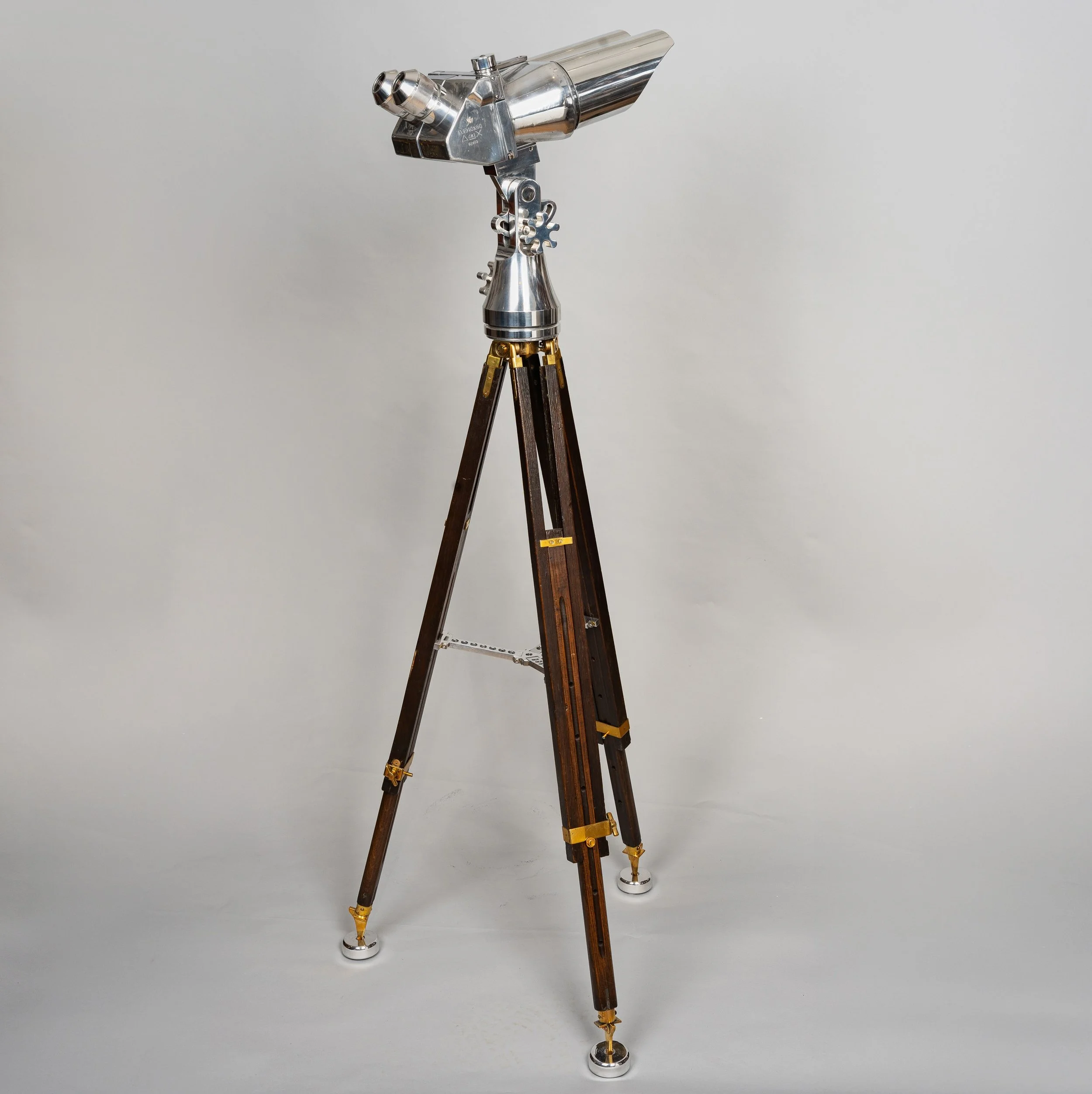
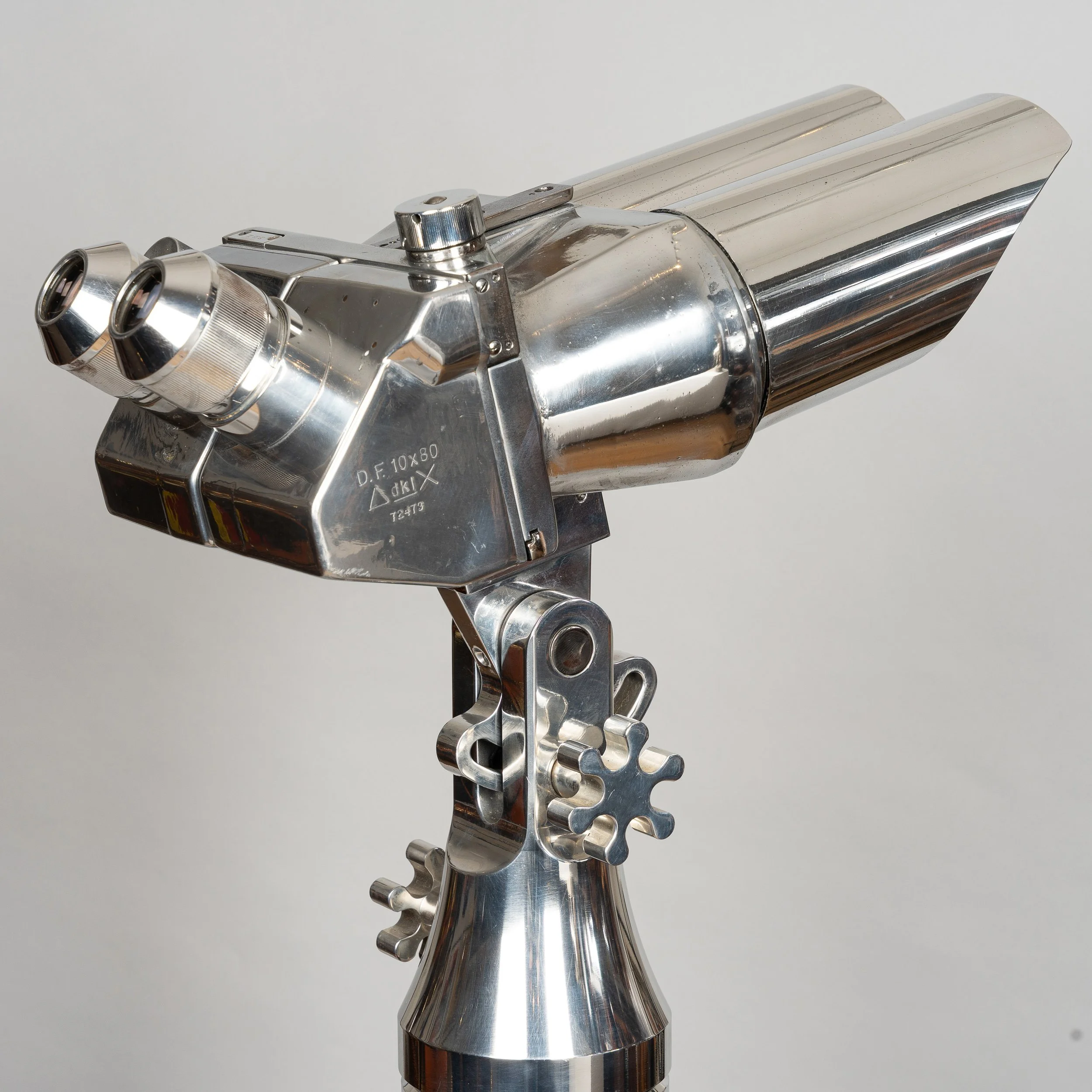
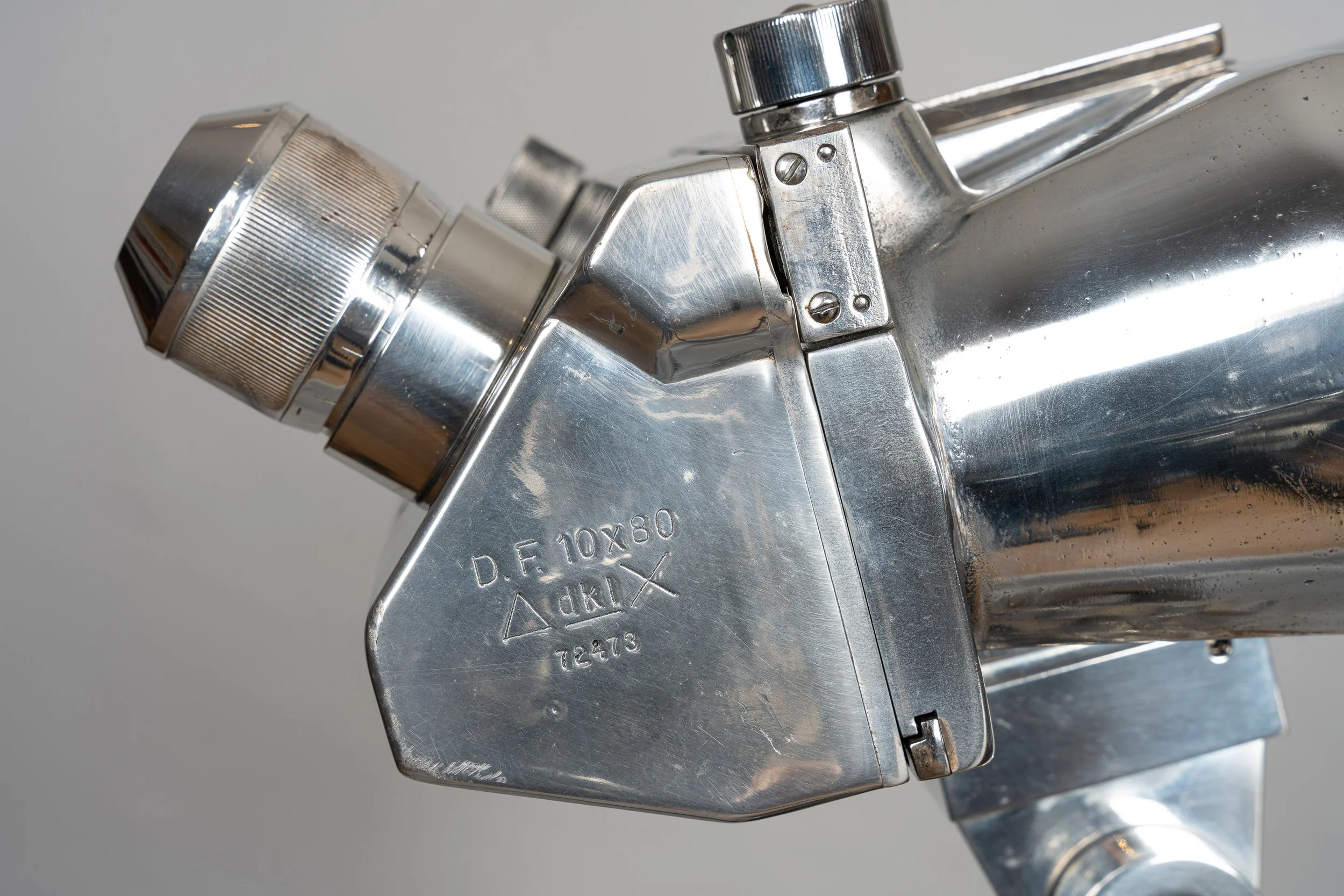
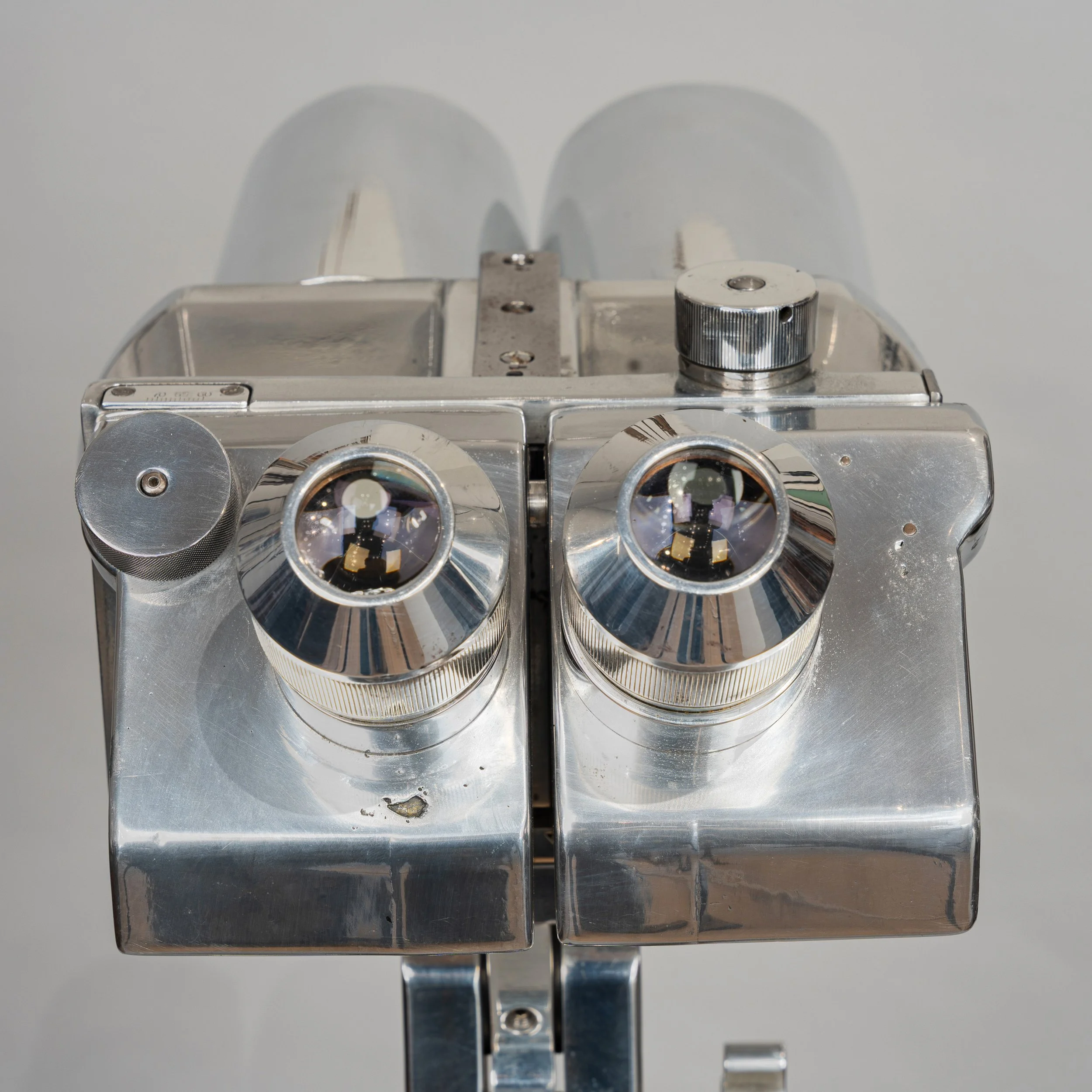
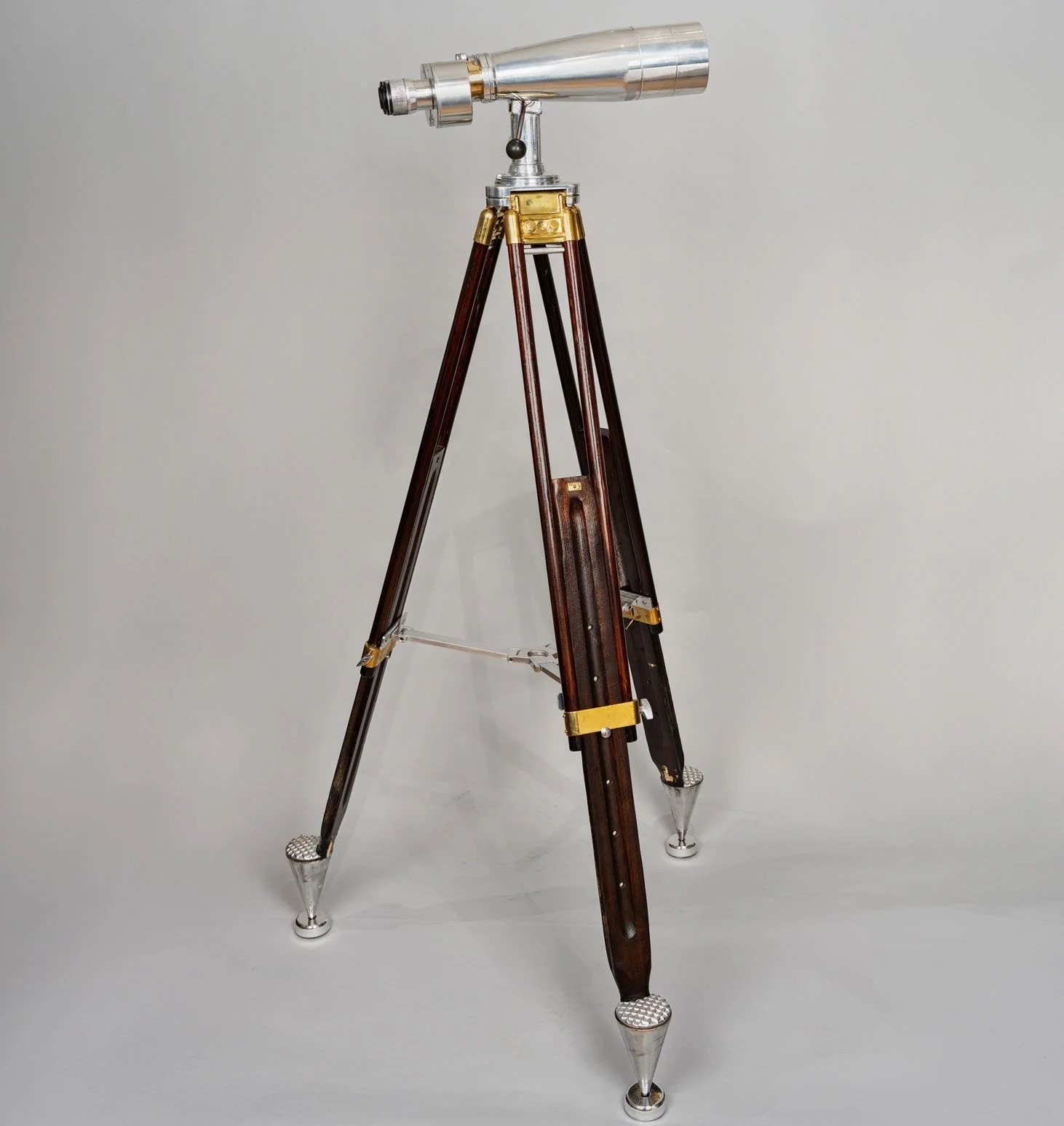
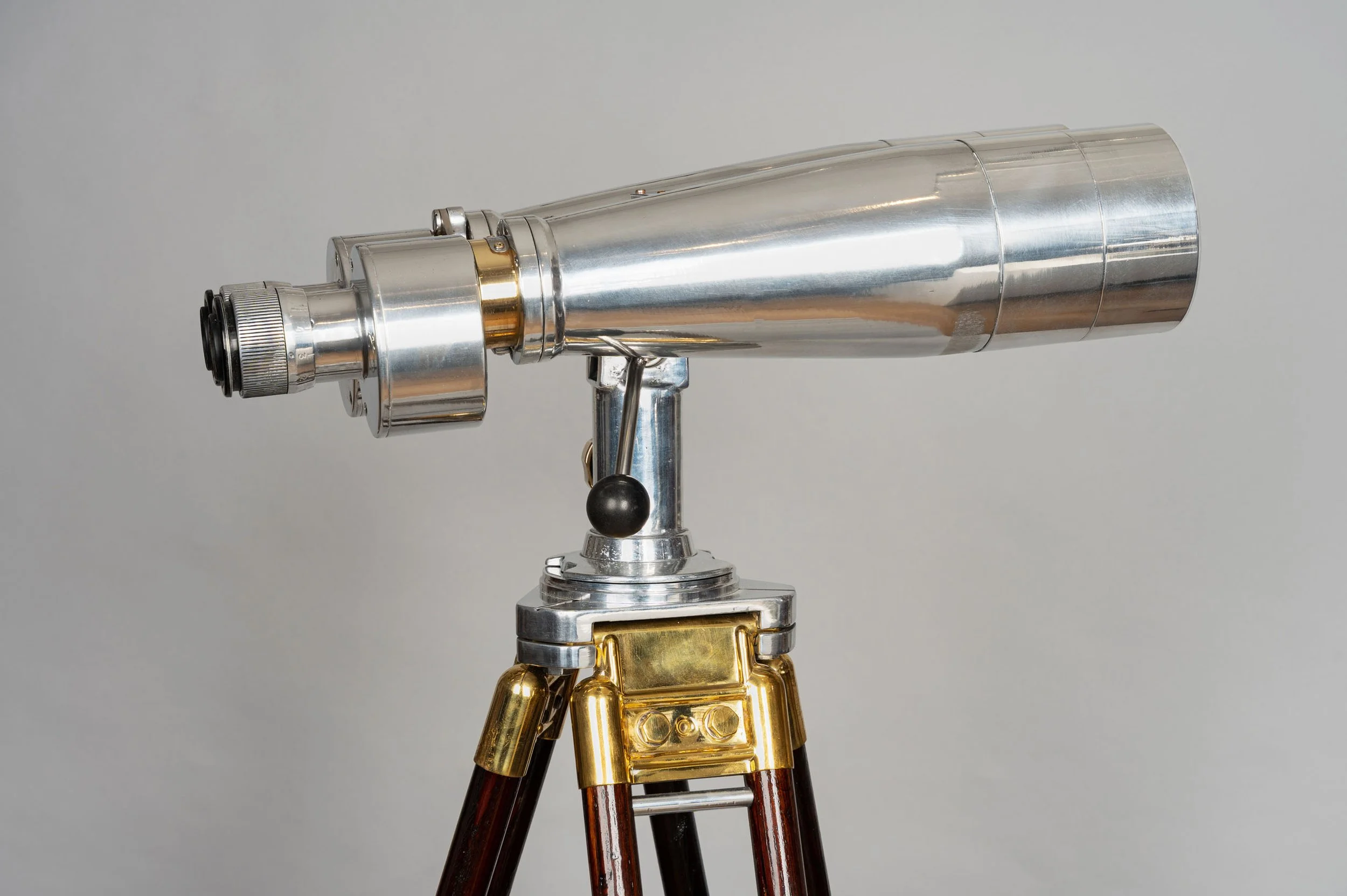
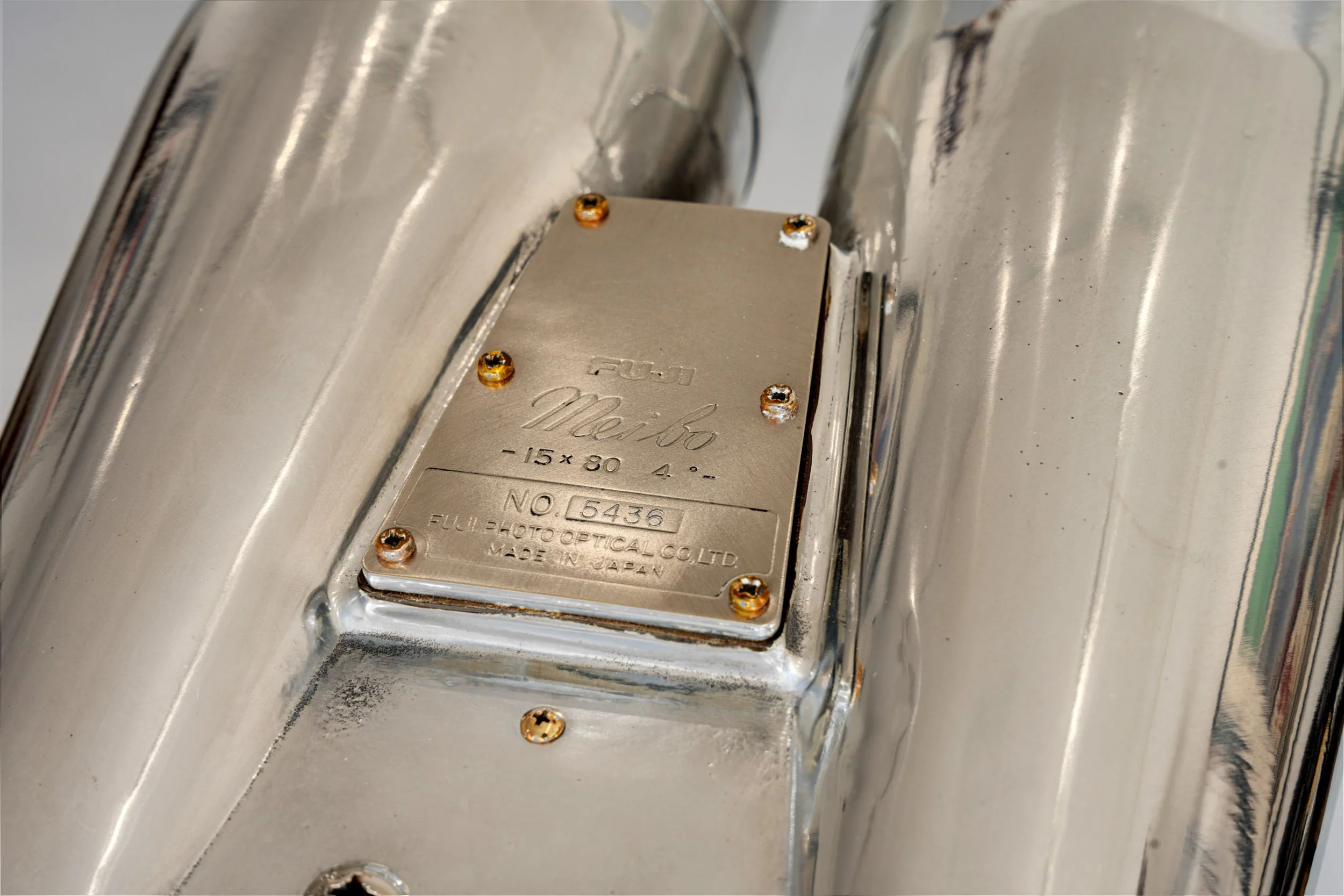
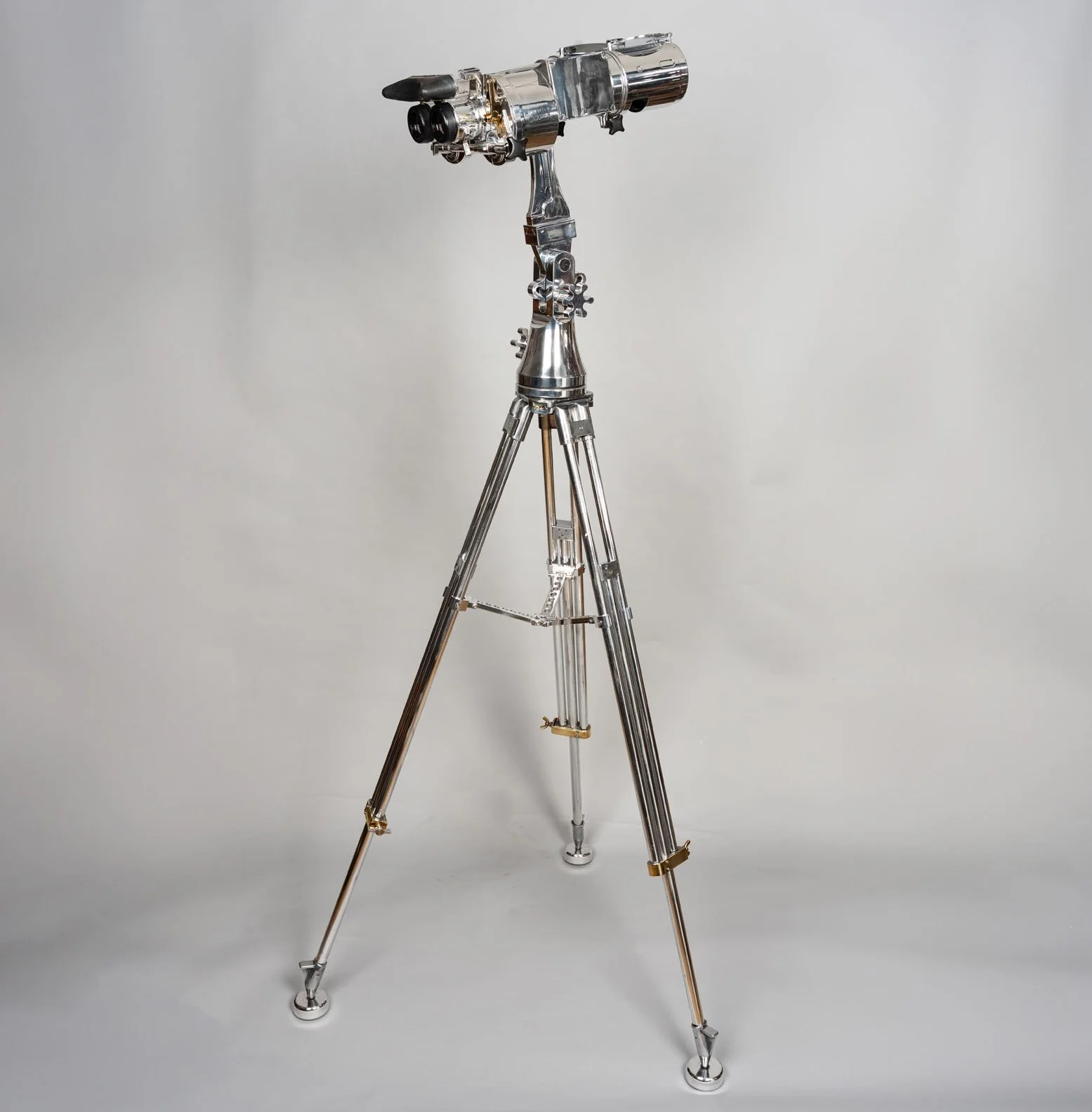
The present example bears the wartime code cxn, denoting manufacture by Emil Busch AG, Optische Industrie, Rathenow — the firm responsible for the original design and the largest share of total production. The body is sand-cast aluminum, hand-polished to a mirror finish, the engraved markings D.F. 10×80 / △ cxn crisp and fully legible. Mounted on a period hardwood-and-brass field tripod with extending legs, brass ferrules, chrome-capped feet, and full 360° rotation via the original star-wheel locking mechanism. The optics are in excellent condition.
An exceptional example of the 10×80 Doppelfernrohr — the anti-aircraft Flak binocular that became the defining observation instrument of the German armed forces in the Second World War. Developed following competitive trials in the early 1930s, the type was selected from designs submitted by Emil Busch, Moeller Wedel, and Ernst Leitz. Busch's prototype was chosen for its superior field of view and reduced weight, with production subsequently distributed among six manufacturers under wartime contract.
Engineered with a distinctive 45° inclined binocular head for prolonged observation of both terrestrial and aerial targets, the 10×80 was indispensable for coordinating artillery fire, anti-aircraft defense, and strategic surveillance. Originally designated the searchlight director, it became the standard observation glass of the Flak arm, deployed on every front from the Western Desert to the Eastern Front.
The present example bears the wartime code cxn, denoting manufacture by Emil Busch AG, Optische Industrie, Rathenow — the firm responsible for the original design and the largest share of total production. The body is sand-cast aluminum, hand-polished to a mirror finish, the engraved markings D.F. 10×80 / △ cxn crisp and fully legible. Mounted on a period hardwood-and-brass field tripod with extending legs, brass ferrules, chrome-capped feet, and full 360° rotation via the original star-wheel locking mechanism. The optics are in excellent condition.

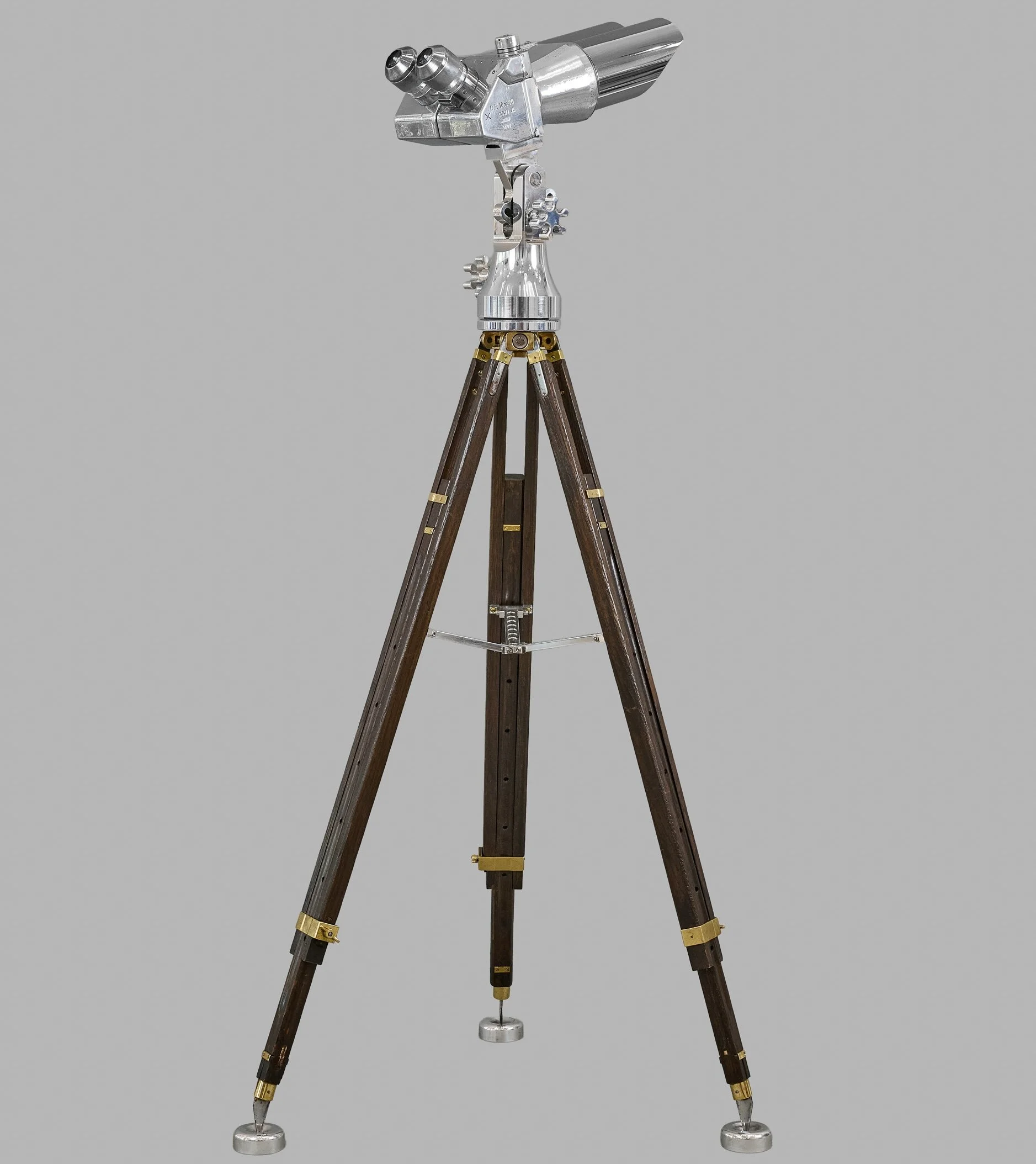 Image 1 of 3
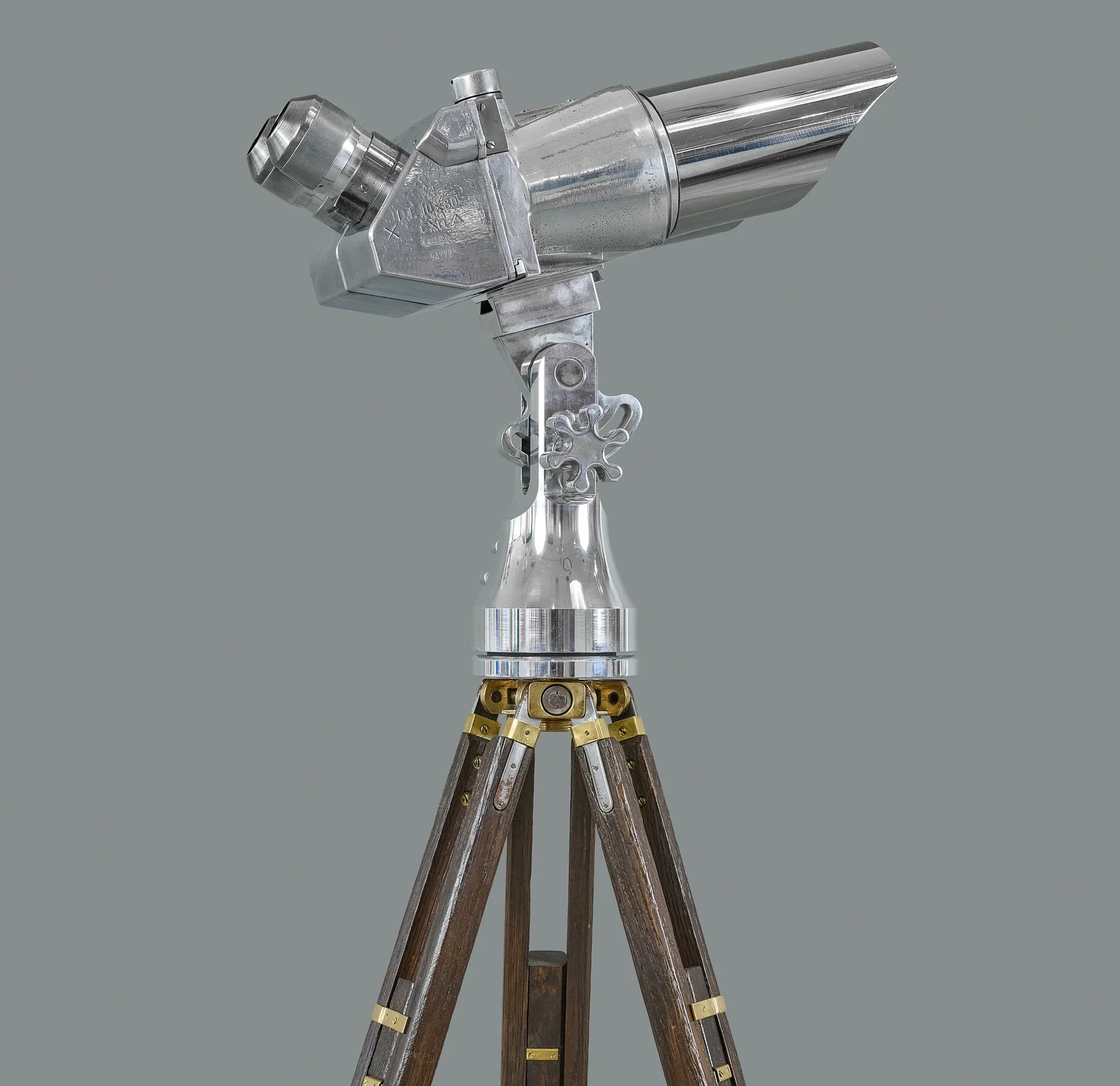 Image 2 of 3
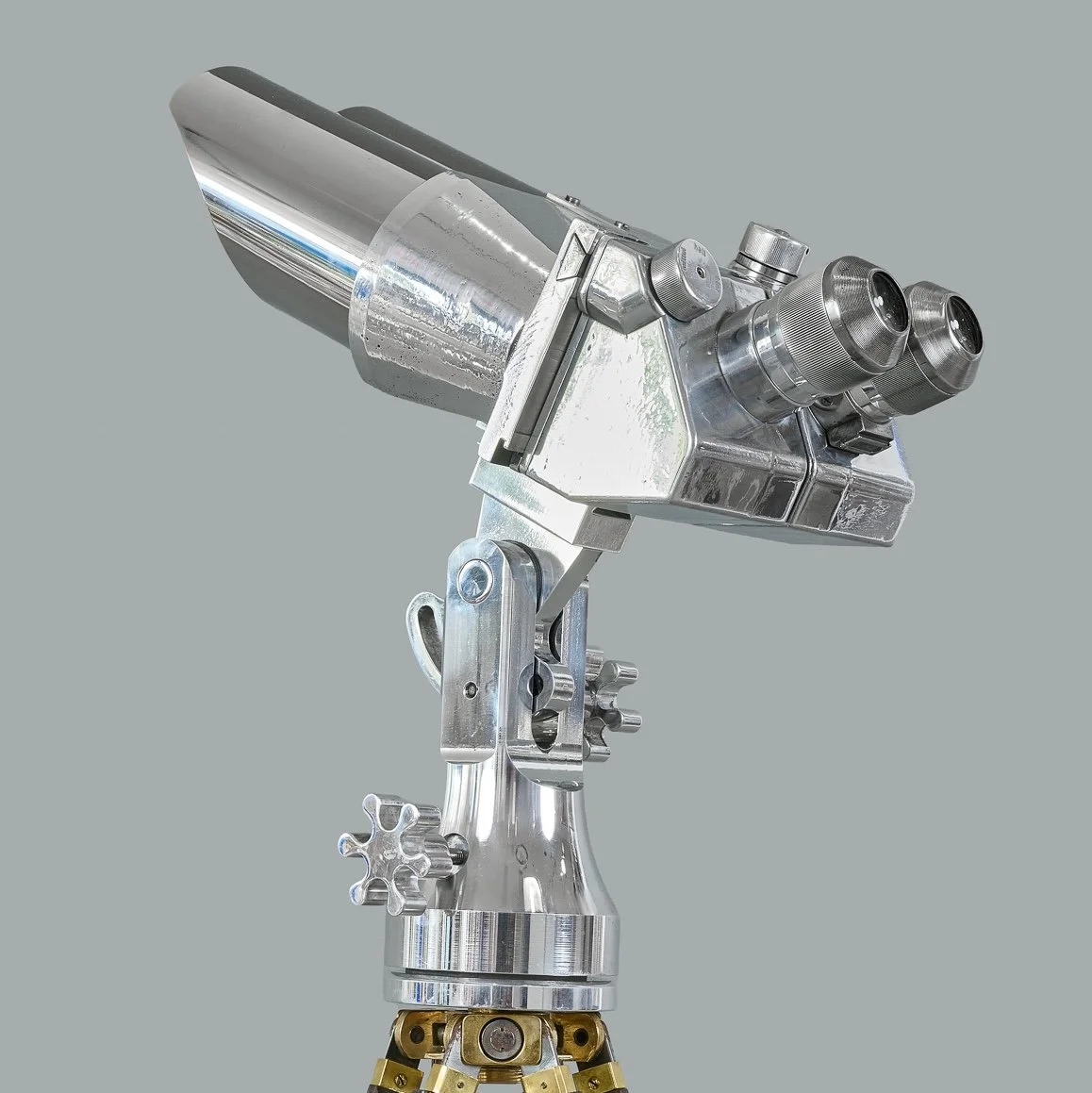 Image 3 of 3