Among the most coveted luxury objects of the twentieth century, the Dunhill Aquarium lighter stands apart as a functional work of art — a miniature hand-painted seascape captured within a polished lucite body and mounted with precision chrome hardware bearing the signature Dunhill lift-arm nameplate.
Each panel is reverse-carved in intaglio, then back-painted, giving the scenes a luminous three-dimensional depth that no surface decoration could replicate. The principal face shows a shoal of neon tetra-style tropical fish — their red and blue markings rendered with exceptional precision — suspended mid-water above a seabed of ochre and rust-coloured rock formations, with aquatic grasses and tendrils of red coral framing the composition. The reverse presents two larger fish — a vivid orange-red specimen and a companion in gold — moving through the same green-tinted water column. The wraparound scene, continuous across all four panels, is the hallmark of the finest Aquarium examples.
Lucite, developed during the Second World War for aircraft windshields and submarine periscopes, found its way into artists' workshops in the postwar years — its capacity to be carved, painted, and polished to a sparkling finish making it an ideal medium for this kind of work. The Aquarium collection was launched in 1949 and ceased at the end of the 1950s following the retirement of its creator, Ben Shillingford, whose mastery could never be equaled. No two Aquarium lighters are alike.
The most celebrated owner of a Dunhill Aquarium lighter was Sir Winston Churchill, who kept one on his desk — a detail that has only deepened the series' desirability among collectors of both Dunhill and Churchill memorabilia.
Condition: Very good. The Lucite body is clear and bright throughout with no cracks, chips, clouding, or hairline scratches. The hand-painted scene is vivid and fully intact on both principal faces — fish, flora, and seabed detail all crisp and unfaded.
Chrome hardware is strong, with good reflectivity, no pitting, and a sharp, legible Dunhill nameplate engraving. Mechanism fully functional.
Made in England. Circa 1950–1959.
Among the most coveted luxury objects of the twentieth century, the Dunhill Aquarium lighter stands apart as a functional work of art — a miniature hand-painted seascape captured within a polished lucite body and mounted with precision chrome hardware bearing the signature Dunhill lift-arm nameplate.
Each panel is reverse-carved in intaglio, then back-painted, giving the scenes a luminous three-dimensional depth that no surface decoration could replicate. The principal face shows a shoal of neon tetra-style tropical fish — their red and blue markings rendered with exceptional precision — suspended mid-water above a seabed of ochre and rust-coloured rock formations, with aquatic grasses and tendrils of red coral framing the composition. The reverse presents two larger fish — a vivid orange-red specimen and a companion in gold — moving through the same green-tinted water column. The wraparound scene, continuous across all four panels, is the hallmark of the finest Aquarium examples.
Lucite, developed during the Second World War for aircraft windshields and submarine periscopes, found its way into artists' workshops in the postwar years — its capacity to be carved, painted, and polished to a sparkling finish making it an ideal medium for this kind of work. The Aquarium collection was launched in 1949 and ceased at the end of the 1950s following the retirement of its creator, Ben Shillingford, whose mastery could never be equaled. No two Aquarium lighters are alike.
The most celebrated owner of a Dunhill Aquarium lighter was Sir Winston Churchill, who kept one on his desk — a detail that has only deepened the series' desirability among collectors of both Dunhill and Churchill memorabilia.
Condition: Very good. The Lucite body is clear and bright throughout with no cracks, chips, clouding, or hairline scratches. The hand-painted scene is vivid and fully intact on both principal faces — fish, flora, and seabed detail all crisp and unfaded.
Chrome hardware is strong, with good reflectivity, no pitting, and a sharp, legible Dunhill nameplate engraving. Mechanism fully functional.
Made in England. Circa 1950–1959.

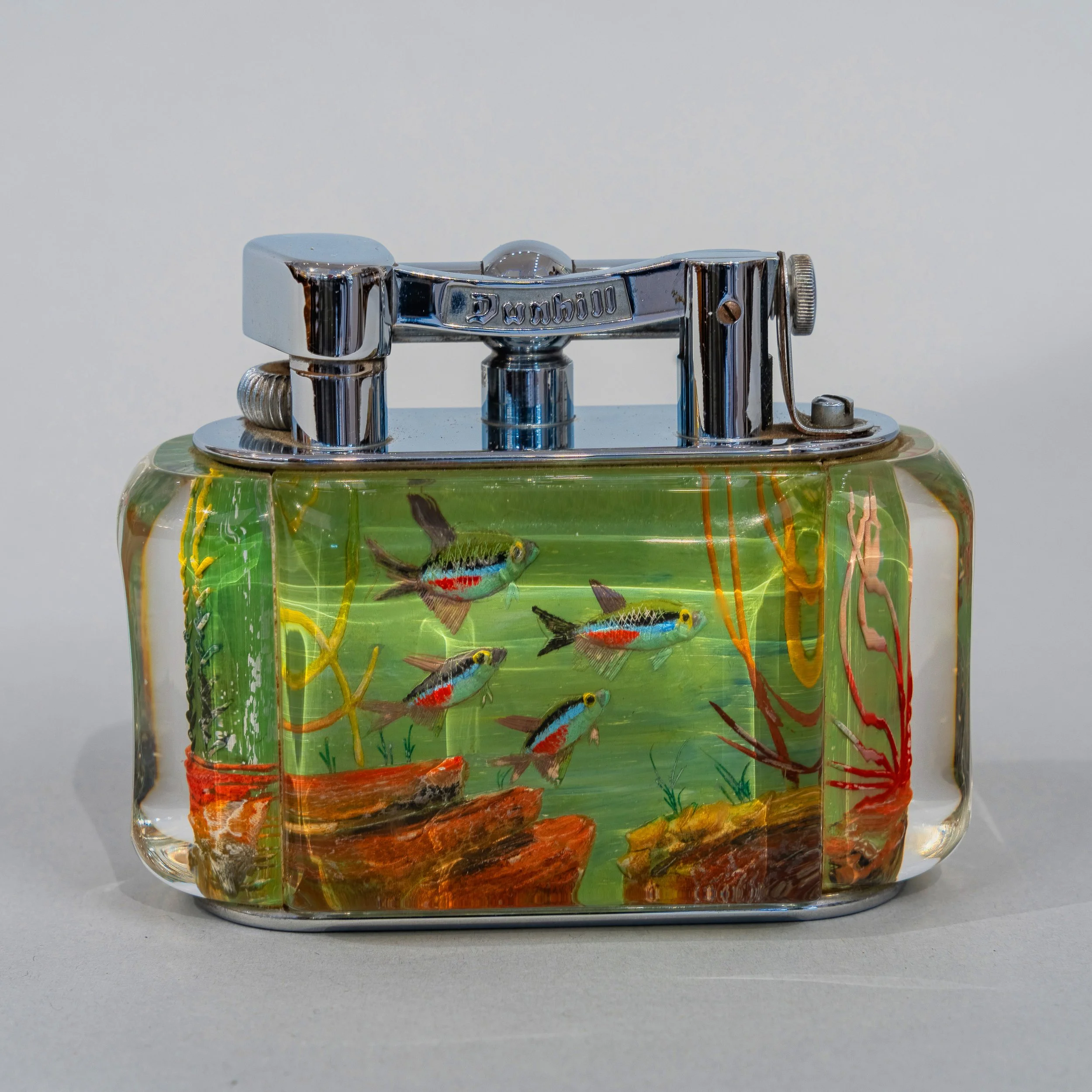 Image 1 of 2
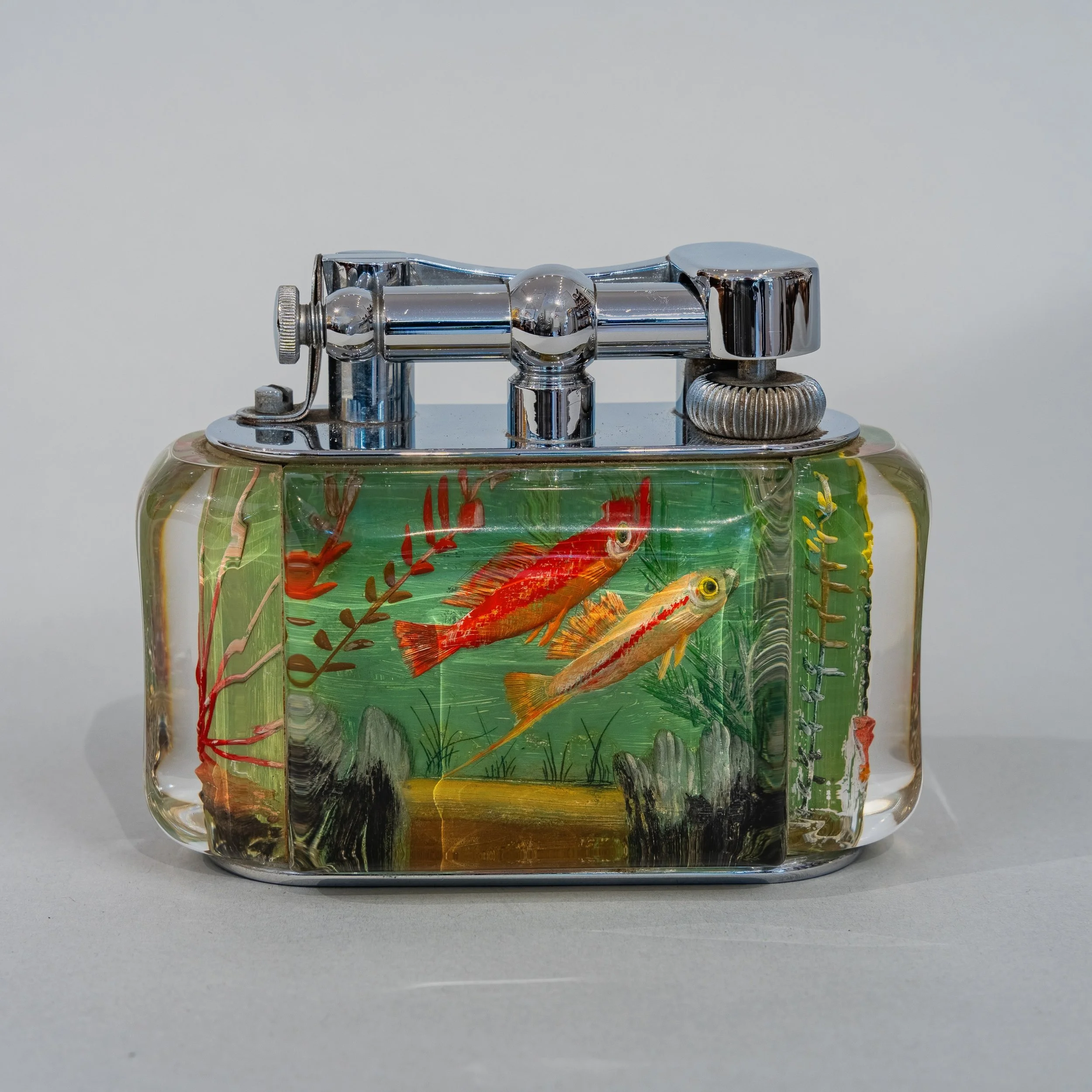 Image 2 of 2