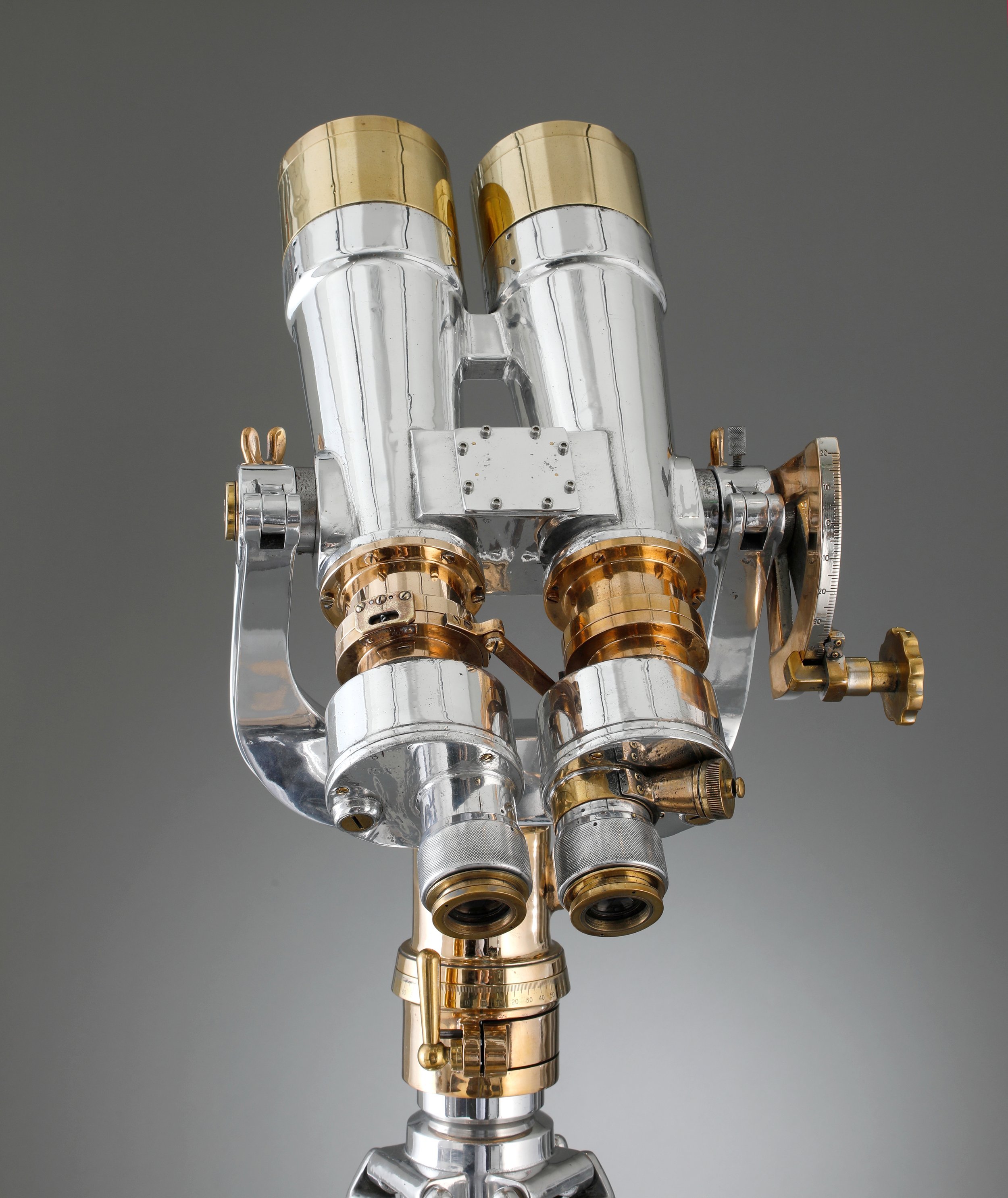
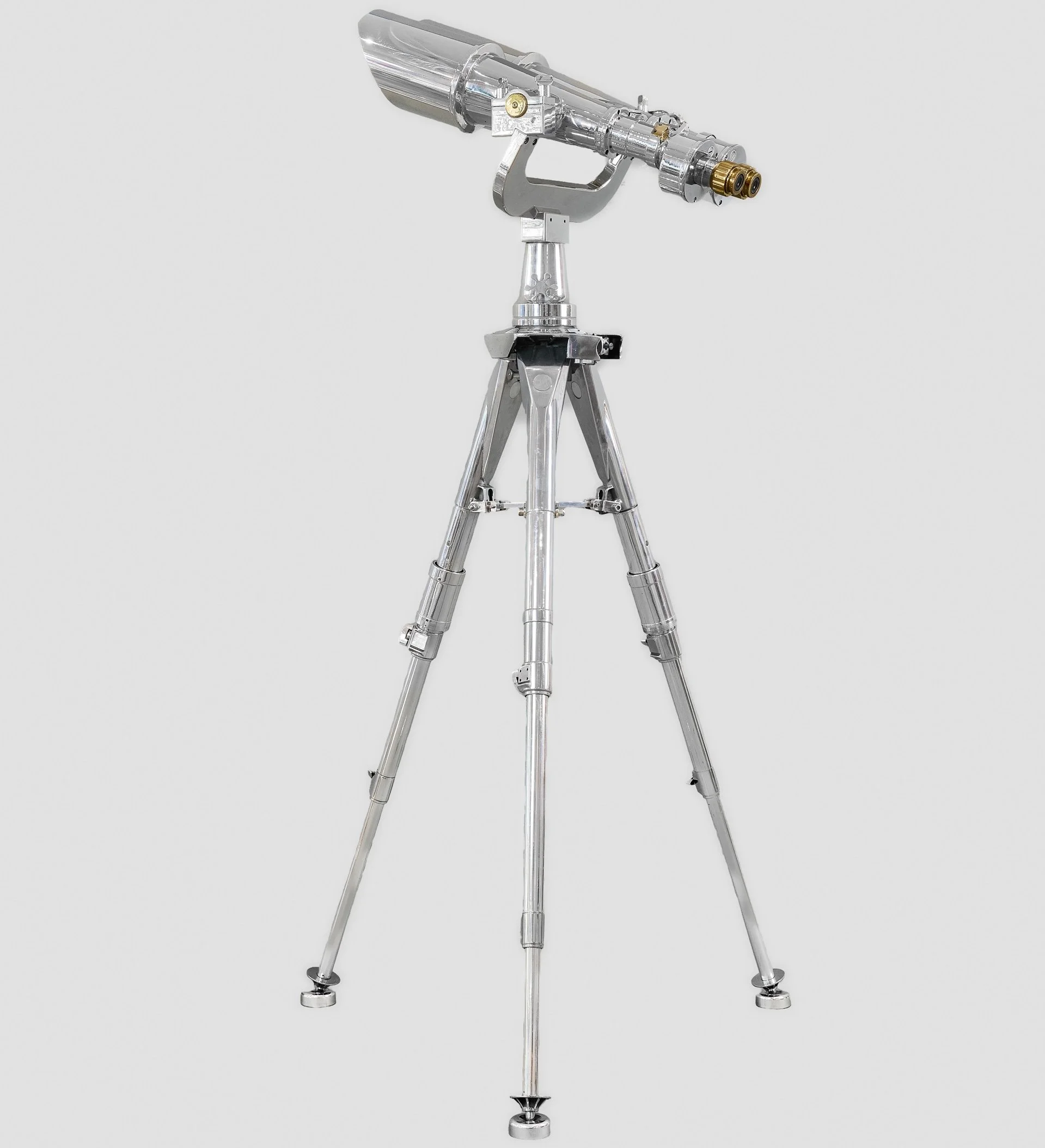
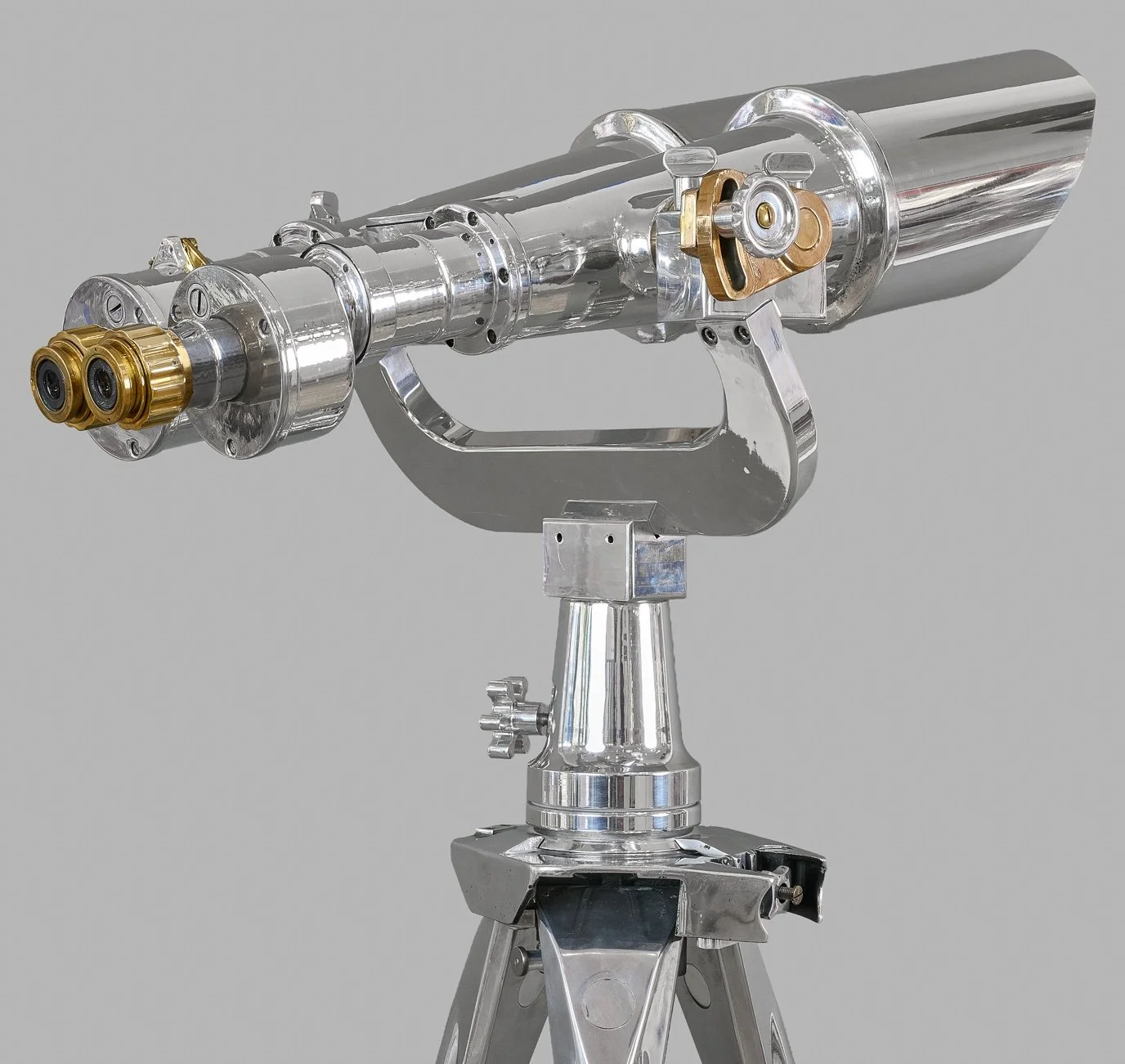
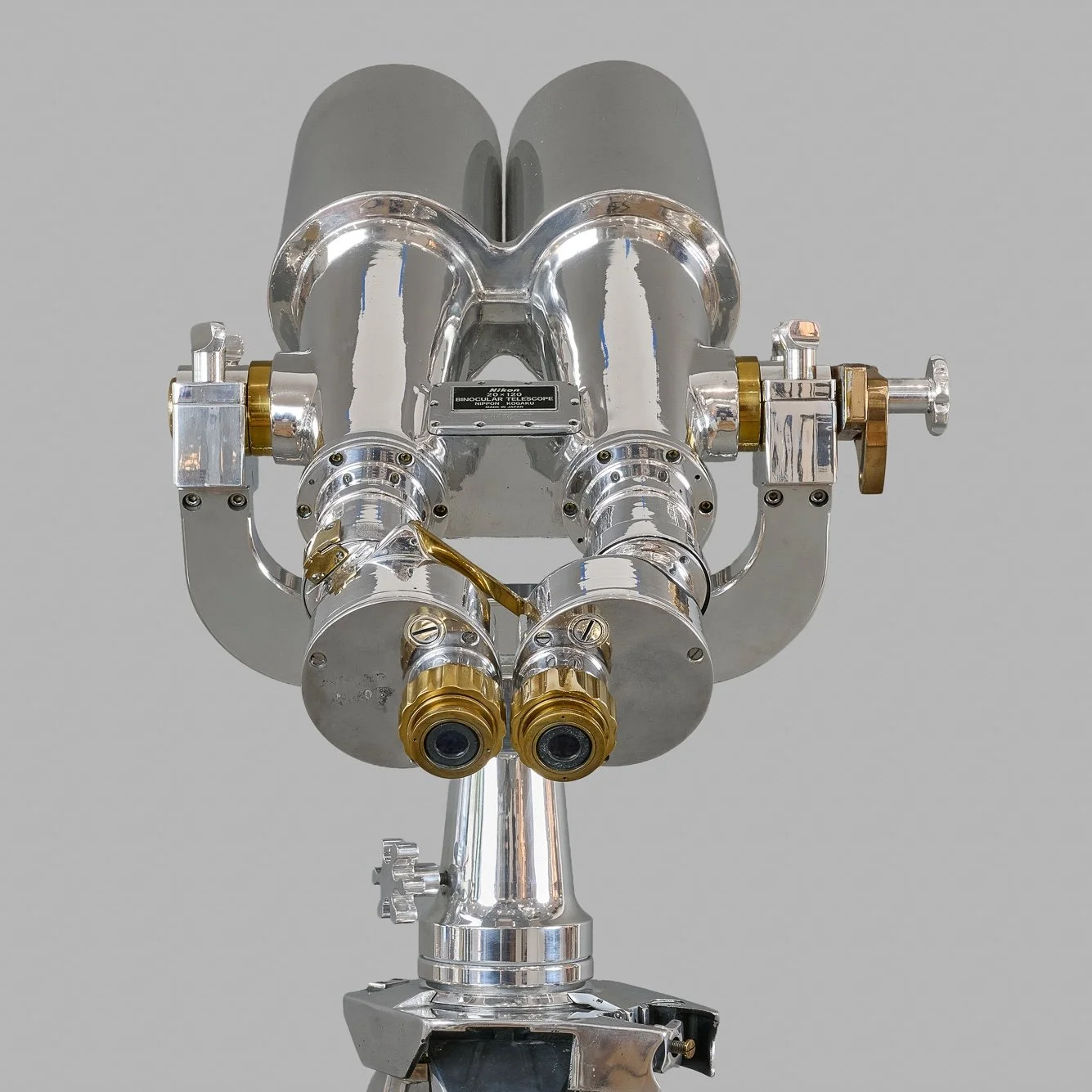
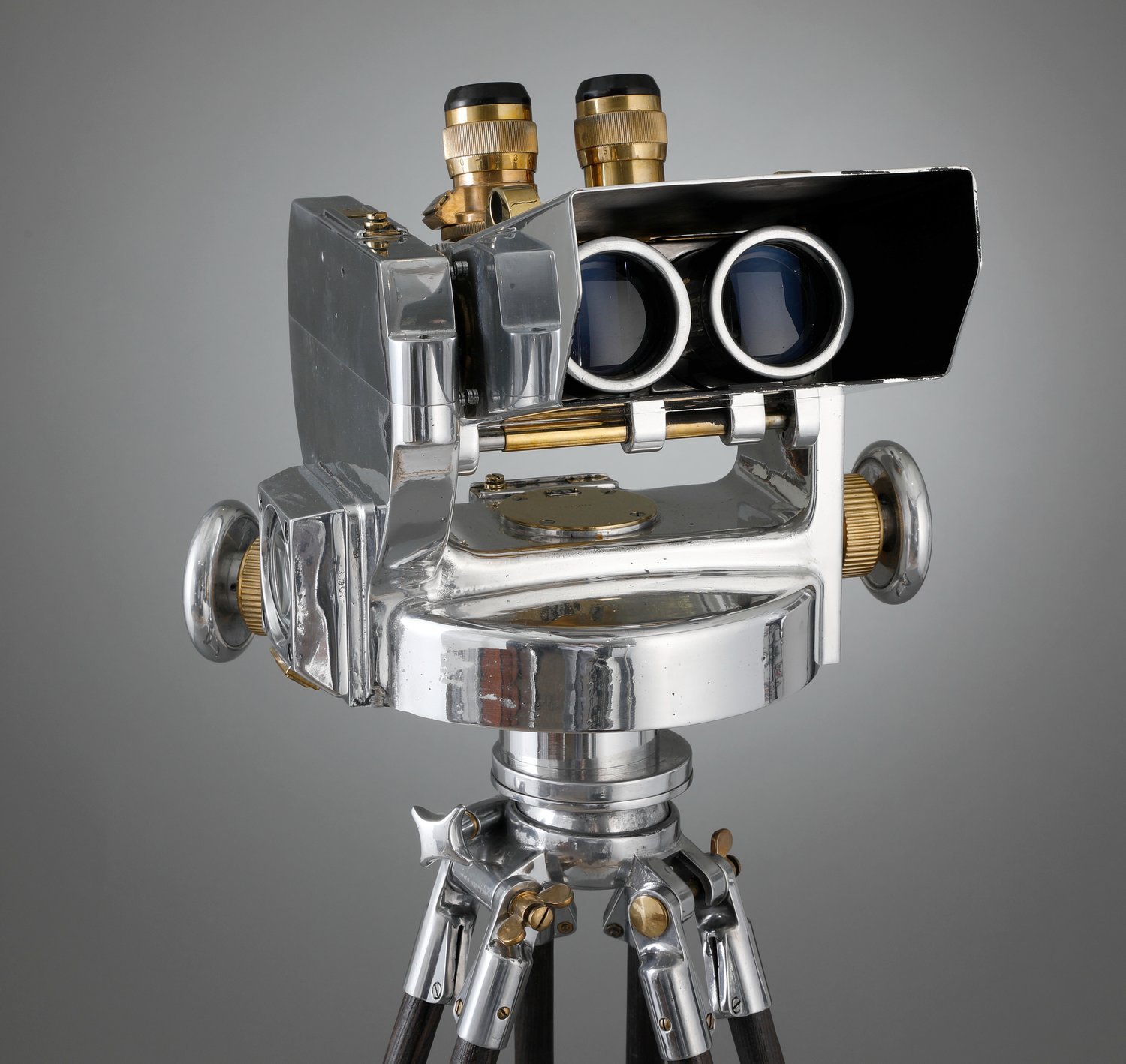
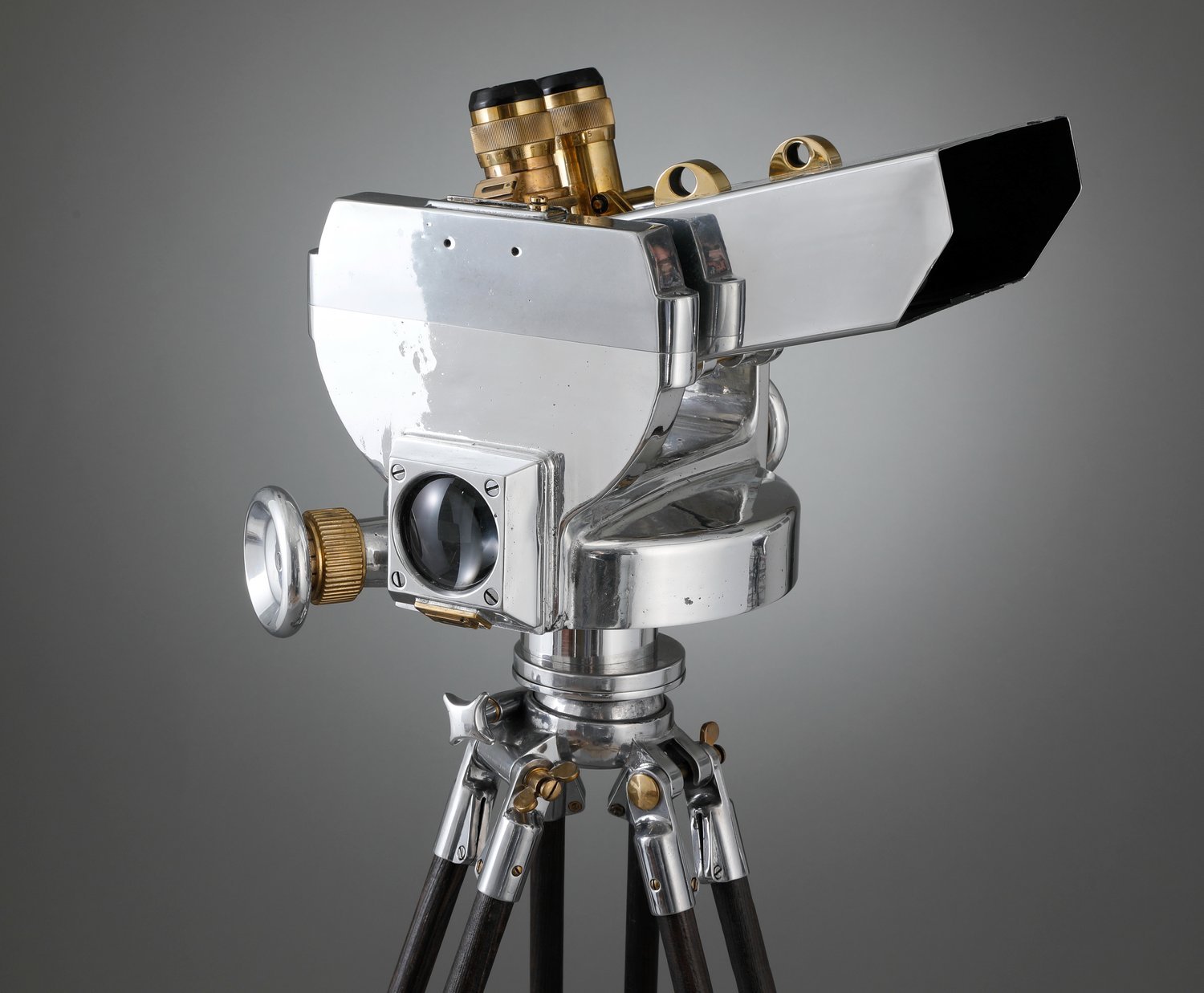
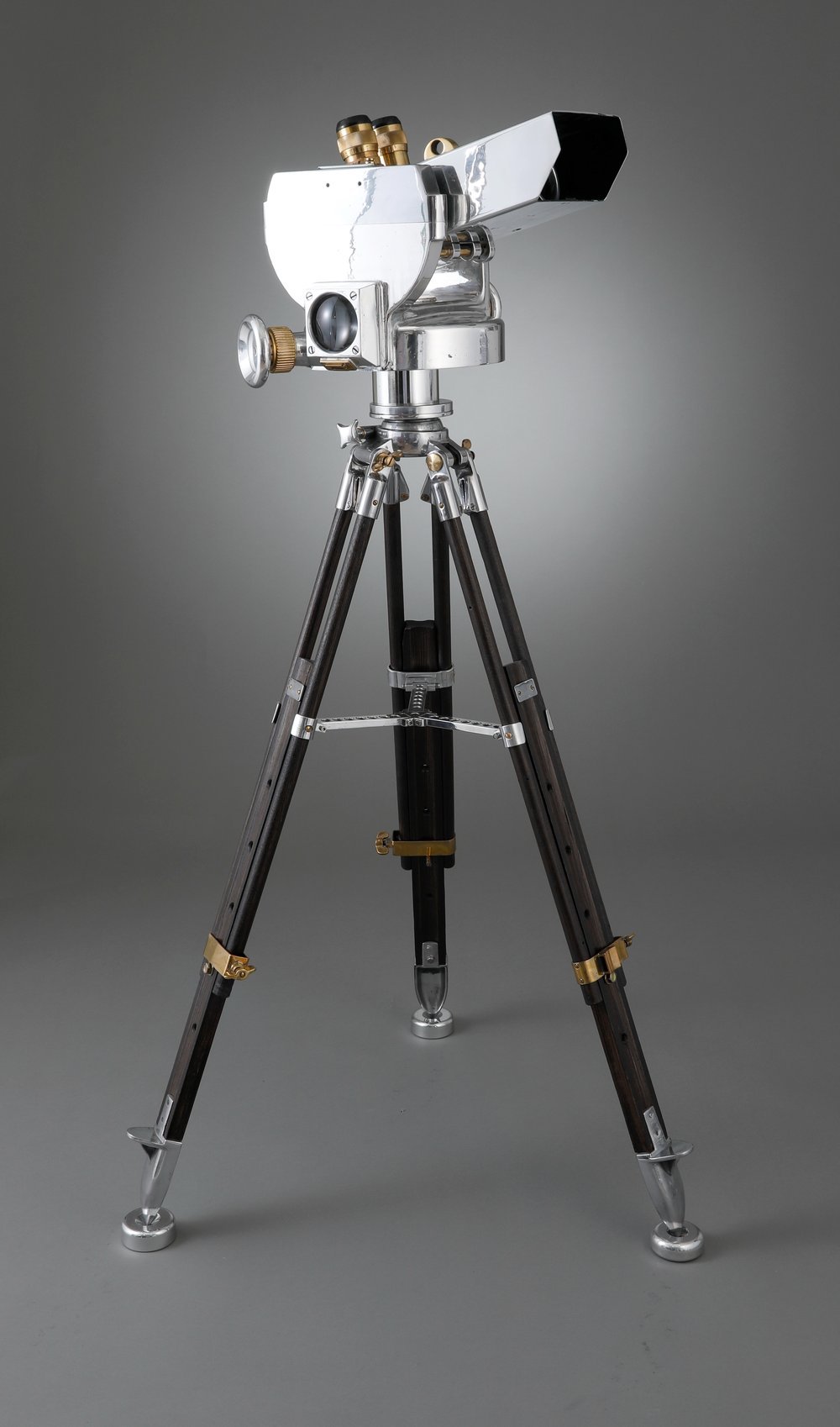
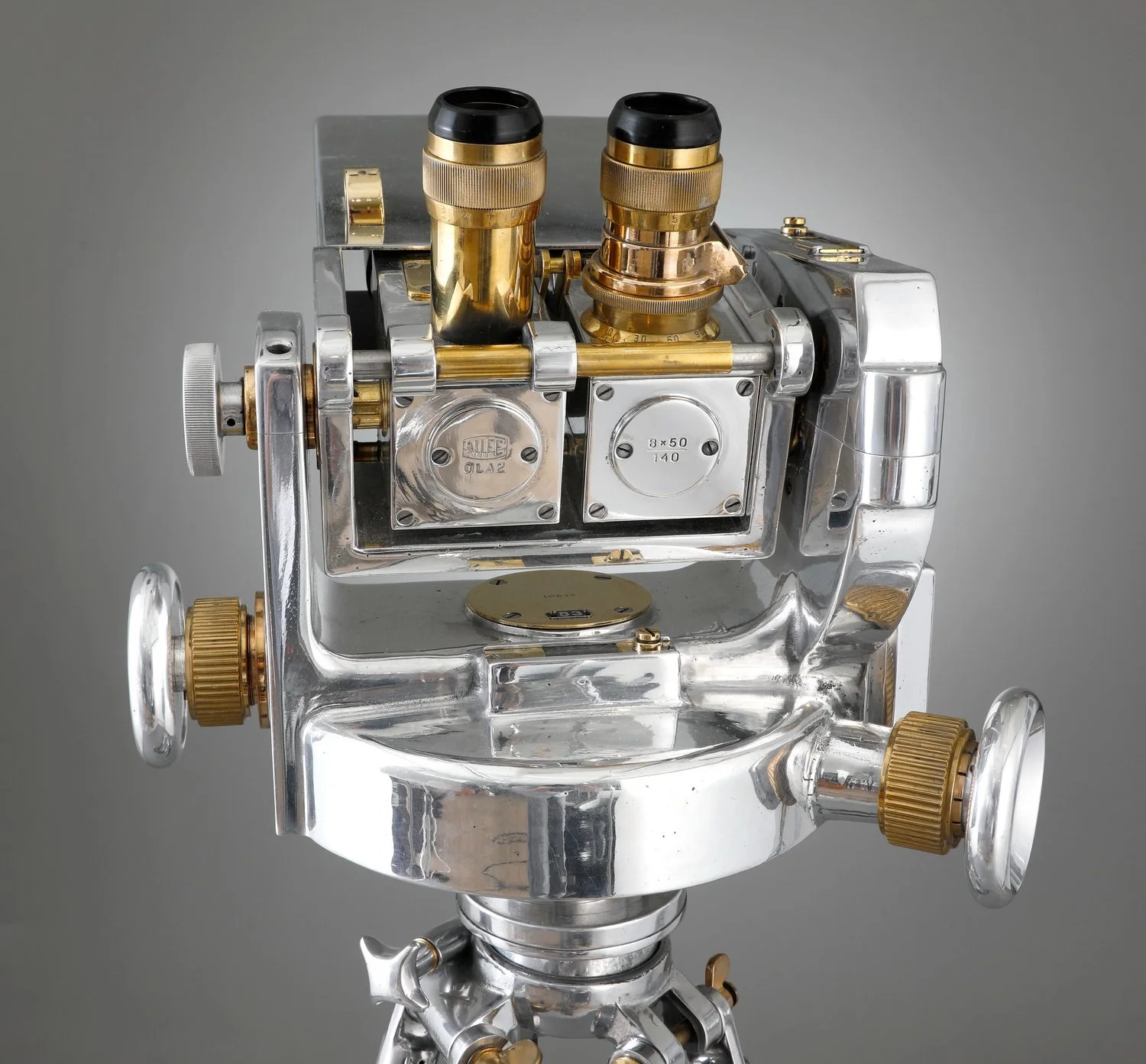
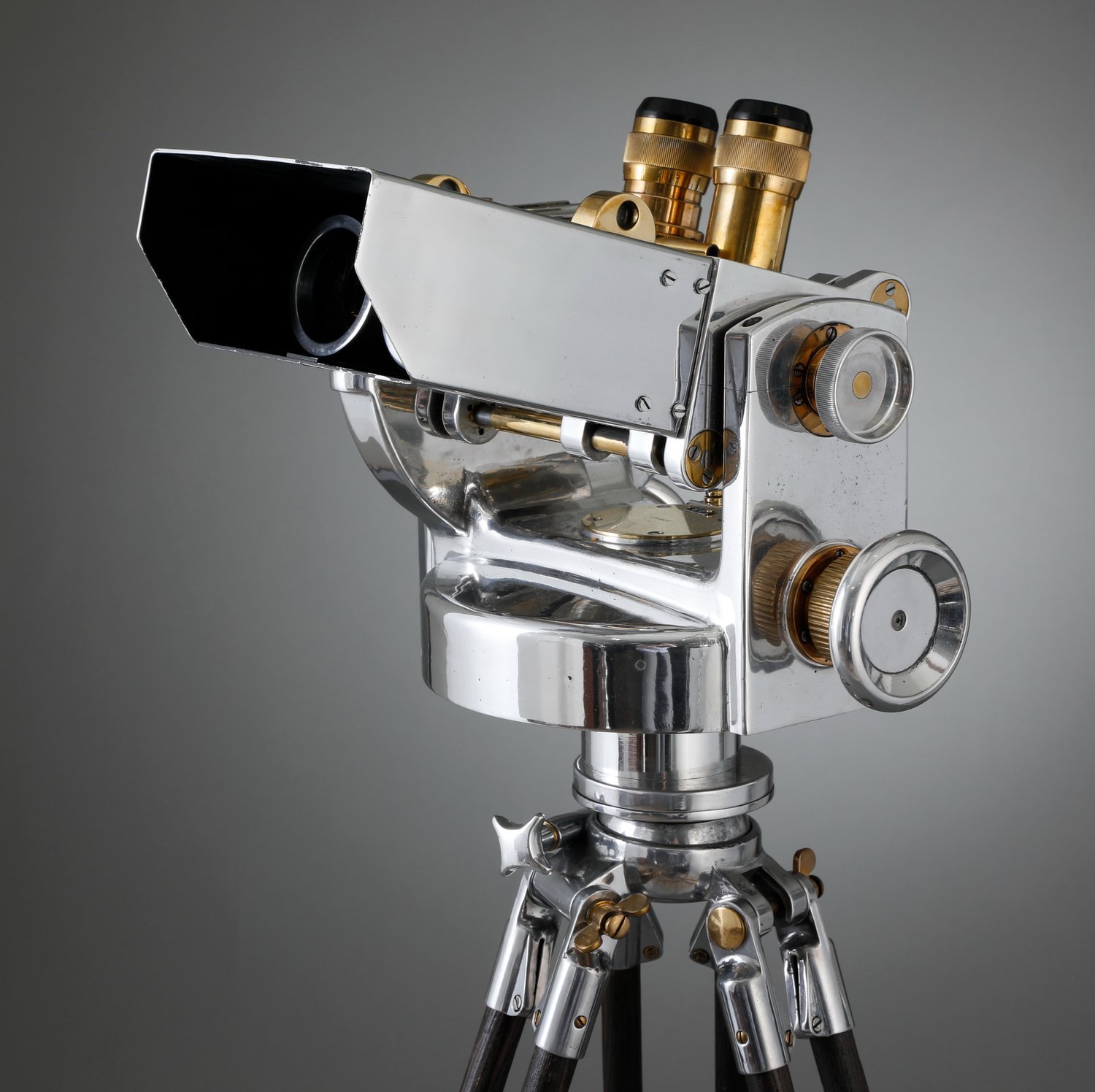
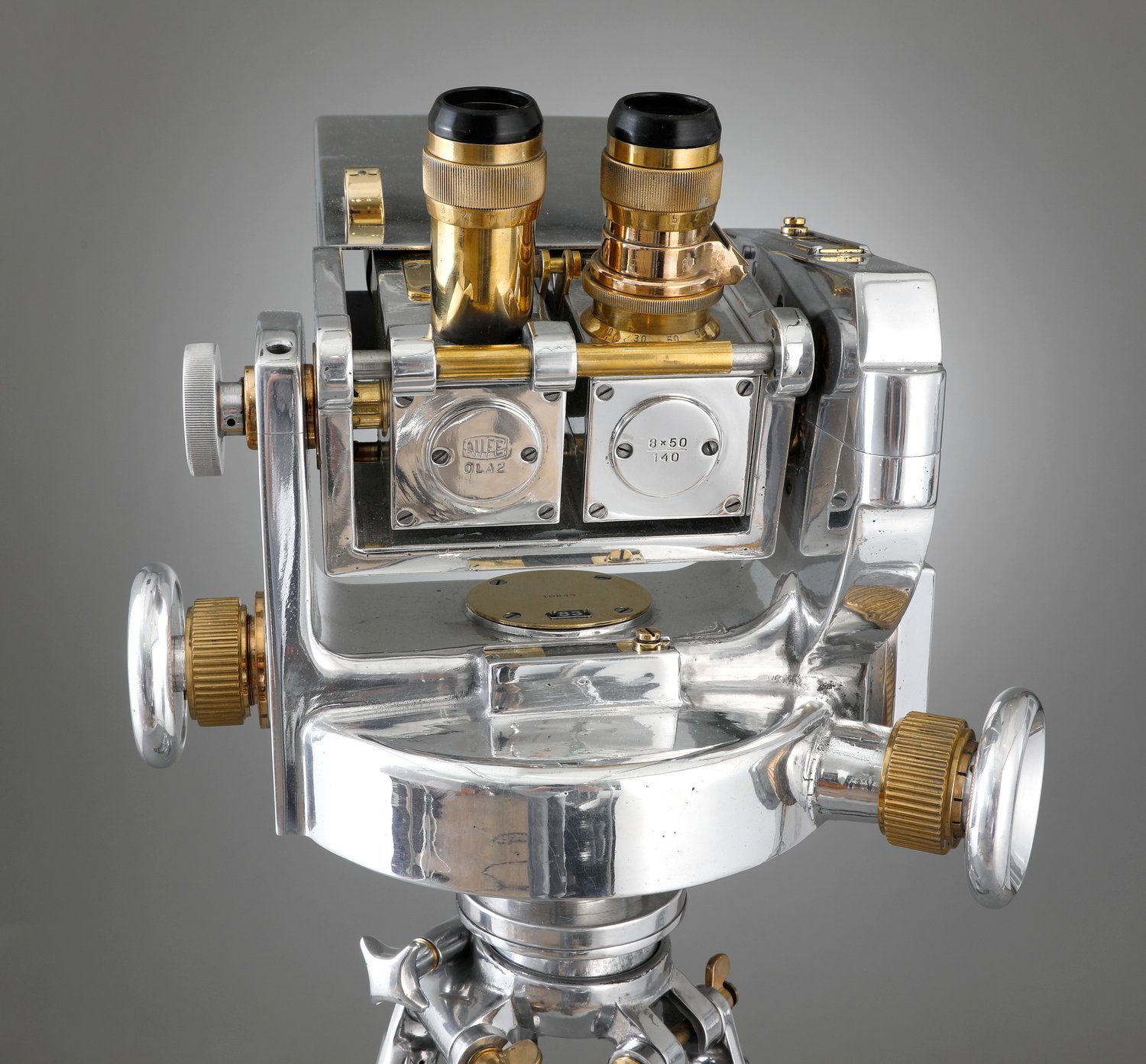
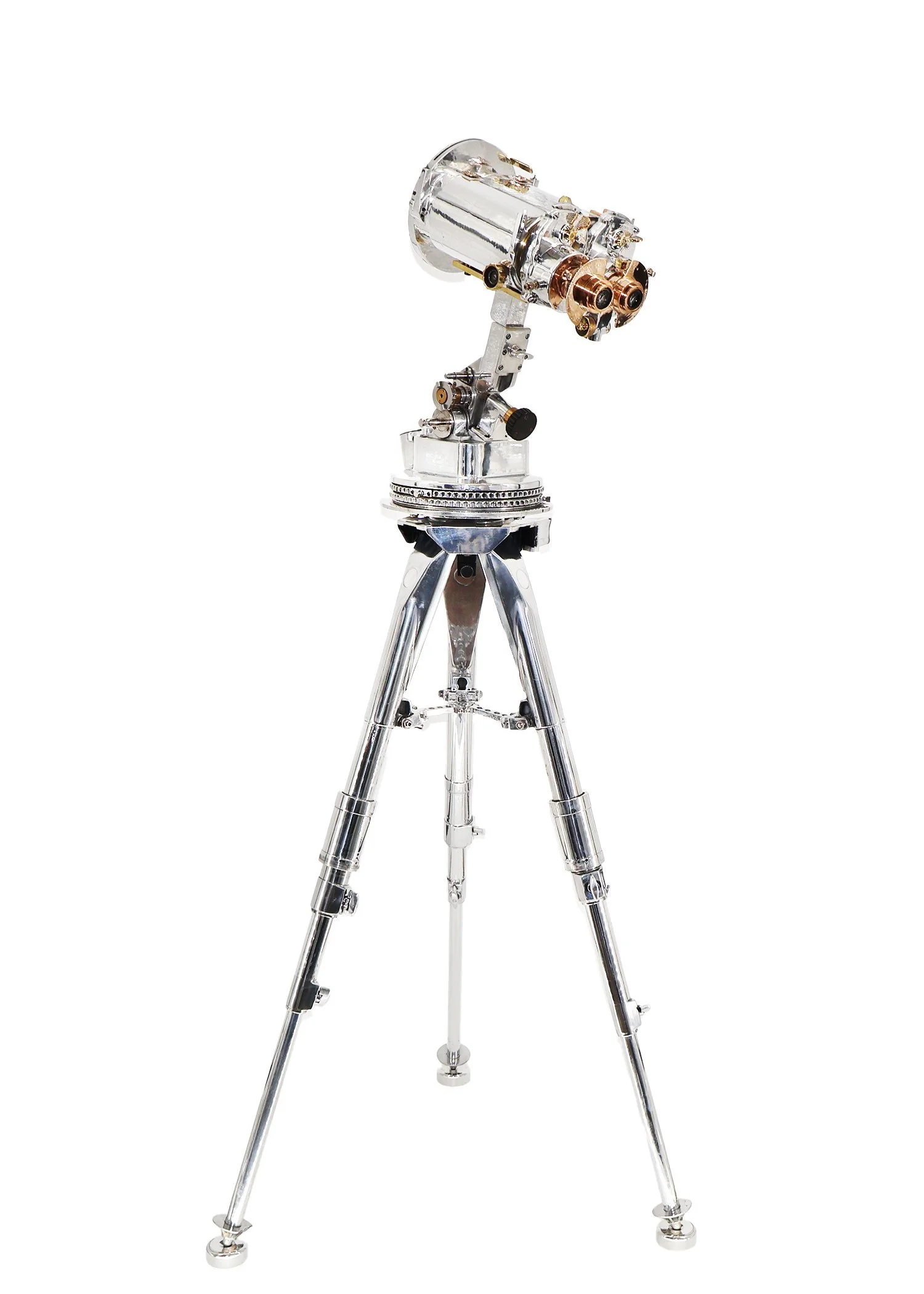
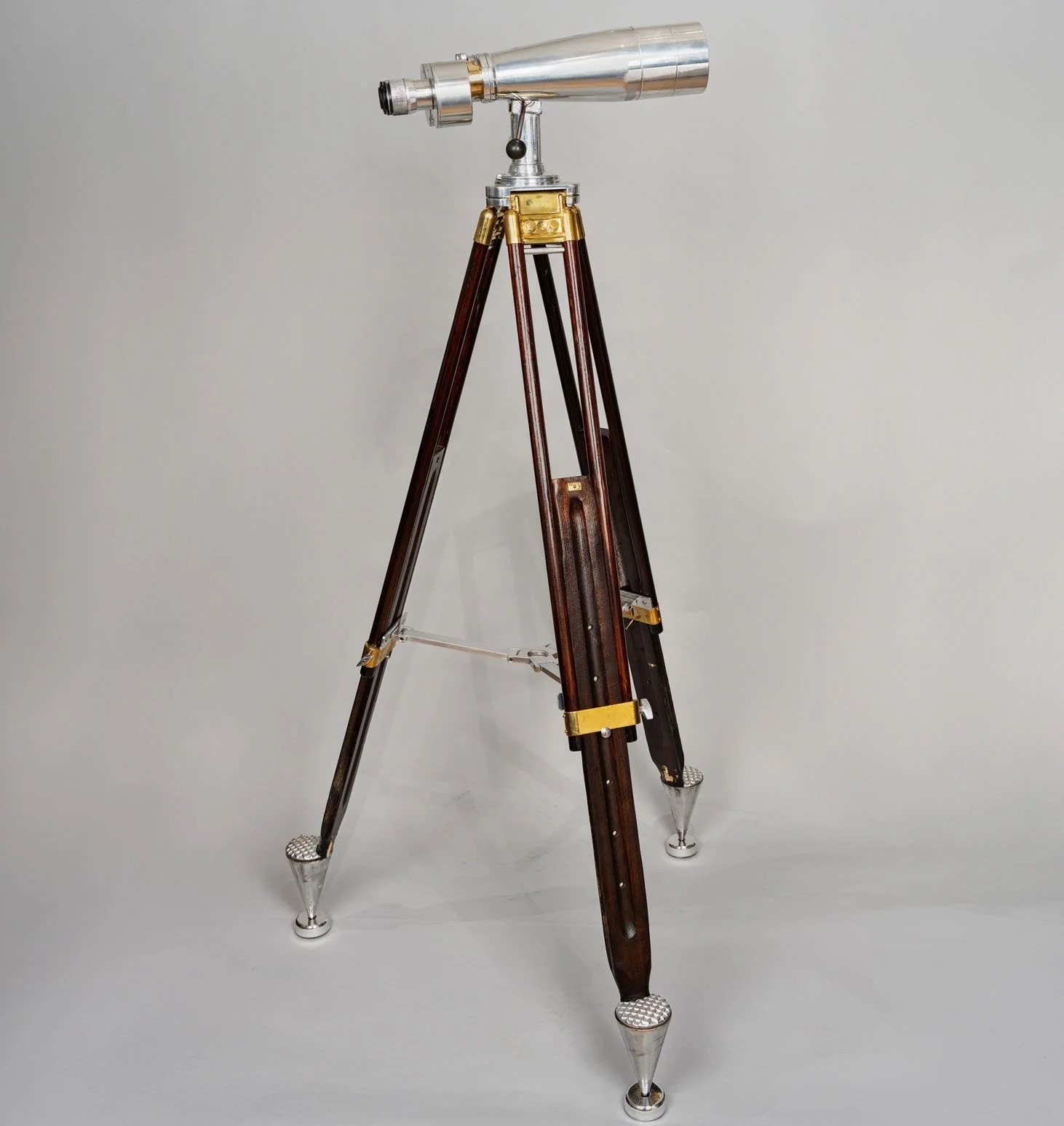
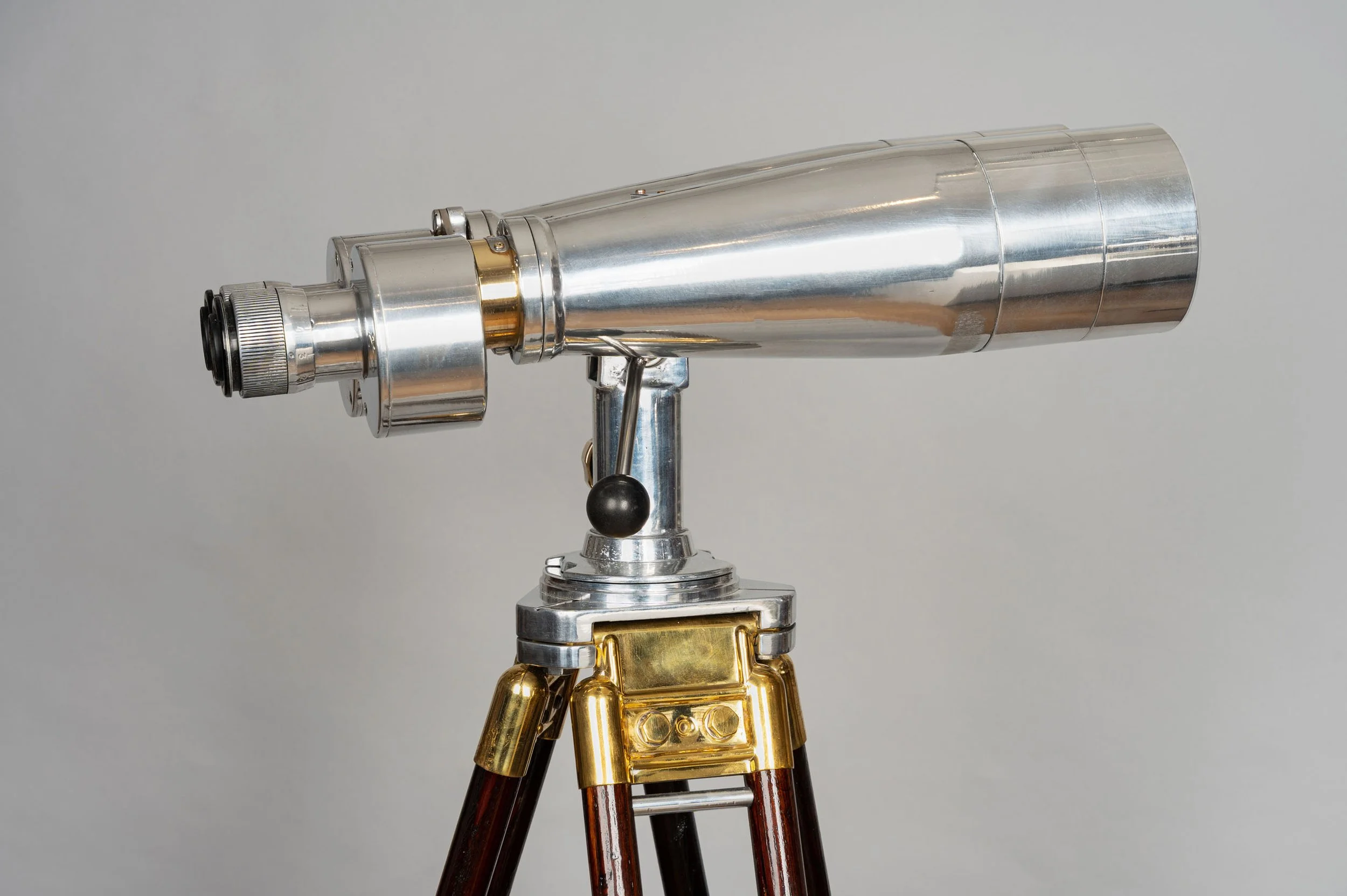
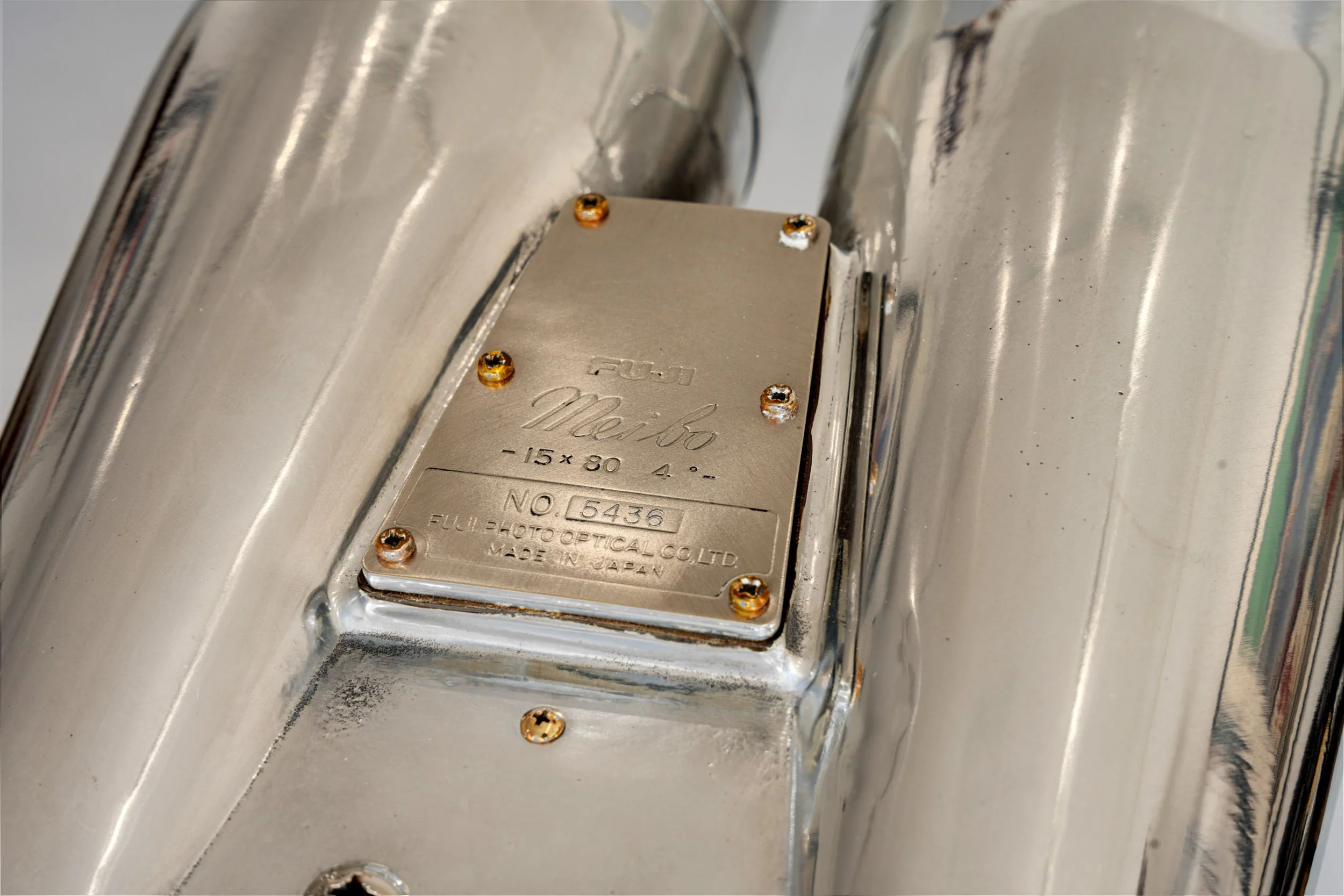
A periscope binocular by Carl Zeiss, of 10 × 50 magnification, produced during the Cold War period and associated with observation along the Berlin Wall.
The instrument is constructed to allow indirect viewing via a raised optical path, enabling the observer to remain below a visual barrier while maintaining a clear line of sight. This configuration proved especially useful in surveillance scenarios where exposure was to be minimized.
The binocular incorporates a manually adjustable viewing system, allowing the line of sight to be directed both vertically and horizontally. This flexibility enabled precise observation across a controlled field without requiring repositioning of the operator.
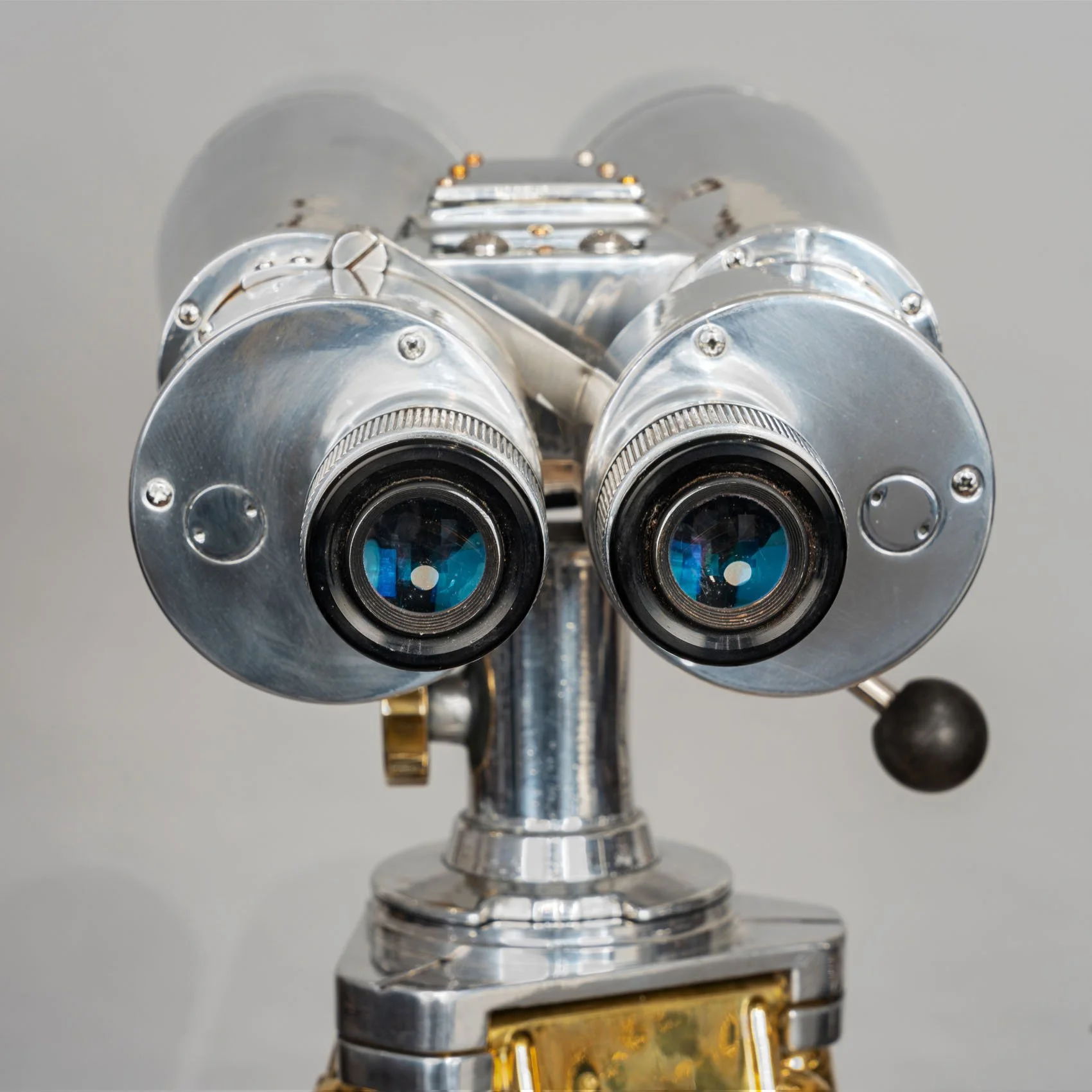
A rangefinding reticle, visible through the right ocular, further enhances the instrument’s functionality, permitting estimation of distances to observed subjects or objects—an essential feature in both military and border surveillance contexts.
The optical quality reflects the enduring reputation of Carl Zeiss, whose instruments have long been regarded as among the finest in the world. The present example stands as a compelling artifact of Cold War technology, uniting precision optics, mechanical ingenuity, and historical significance.
Literature
Optical Instruments of the Cold War Era
Surveillance and Observation Technologies 1945–1990
Comparative holdings in the Deutsches Museum
A periscope binocular by Carl Zeiss, of 10 × 50 magnification, produced during the Cold War period and associated with observation along the Berlin Wall.
The instrument is constructed to allow indirect viewing via a raised optical path, enabling the observer to remain below a visual barrier while maintaining a clear line of sight. This configuration proved especially useful in surveillance scenarios where exposure was to be minimized.
The binocular incorporates a manually adjustable viewing system, allowing the line of sight to be directed both vertically and horizontally. This flexibility enabled precise observation across a controlled field without requiring repositioning of the operator.
A rangefinding reticle, visible through the right ocular, further enhances the instrument’s functionality, permitting estimation of distances to observed subjects or objects—an essential feature in both military and border surveillance contexts.
The optical quality reflects the enduring reputation of Carl Zeiss, whose instruments have long been regarded as among the finest in the world. The present example stands as a compelling artifact of Cold War technology, uniting precision optics, mechanical ingenuity, and historical significance.
Literature
Optical Instruments of the Cold War Era
Surveillance and Observation Technologies 1945–1990
Comparative holdings in the Deutsches Museum

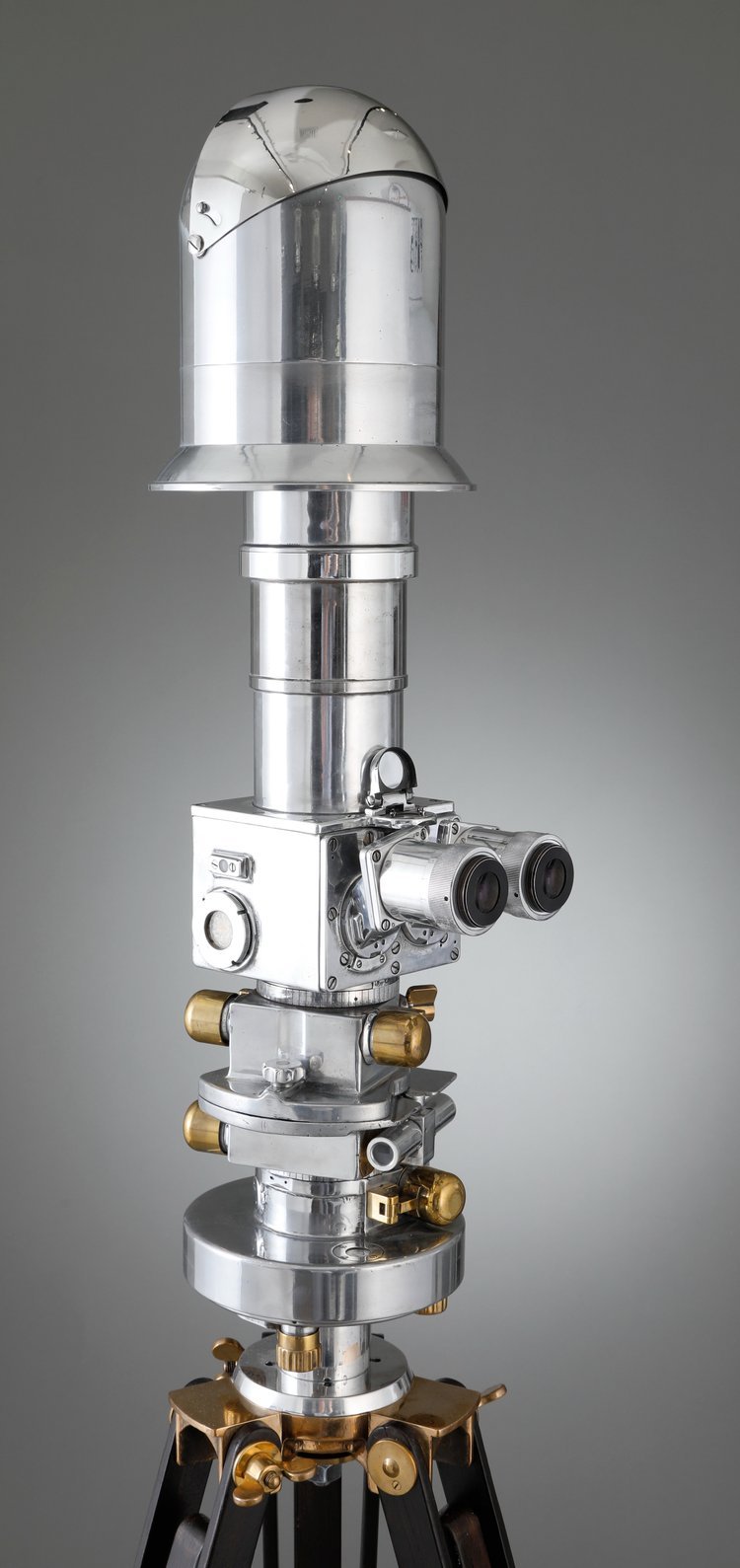 Image 1 of 7
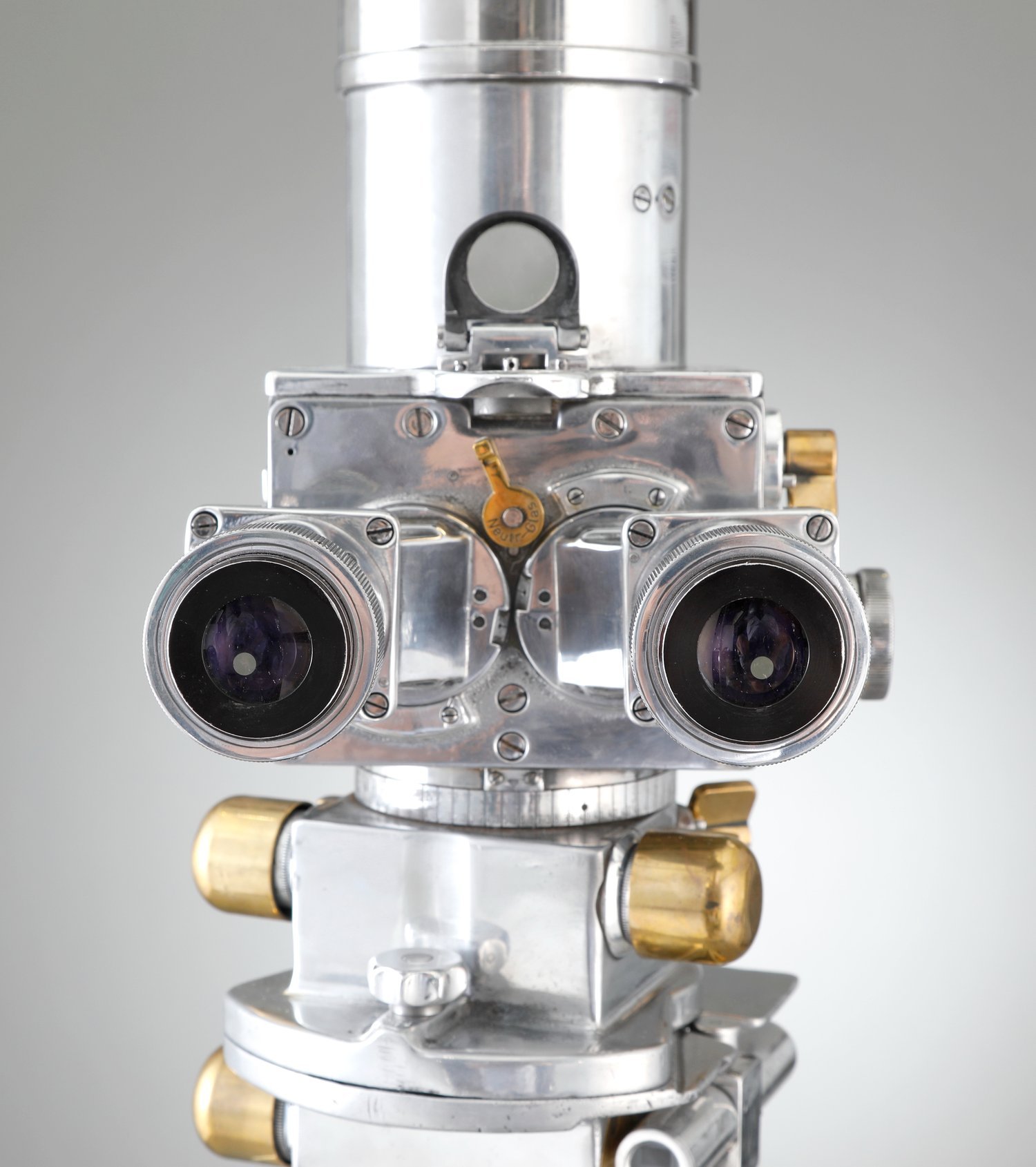 Image 2 of 7
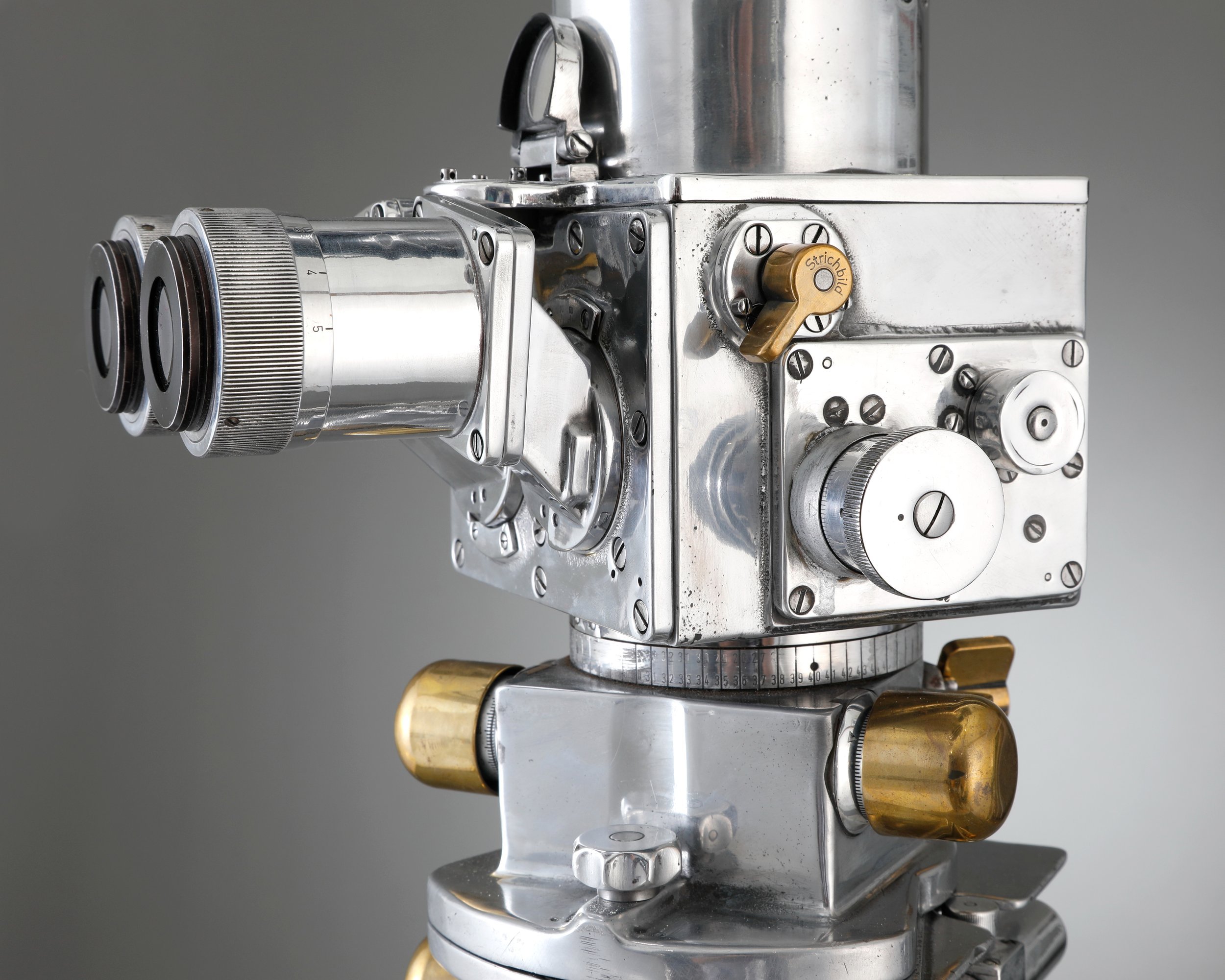 Image 3 of 7
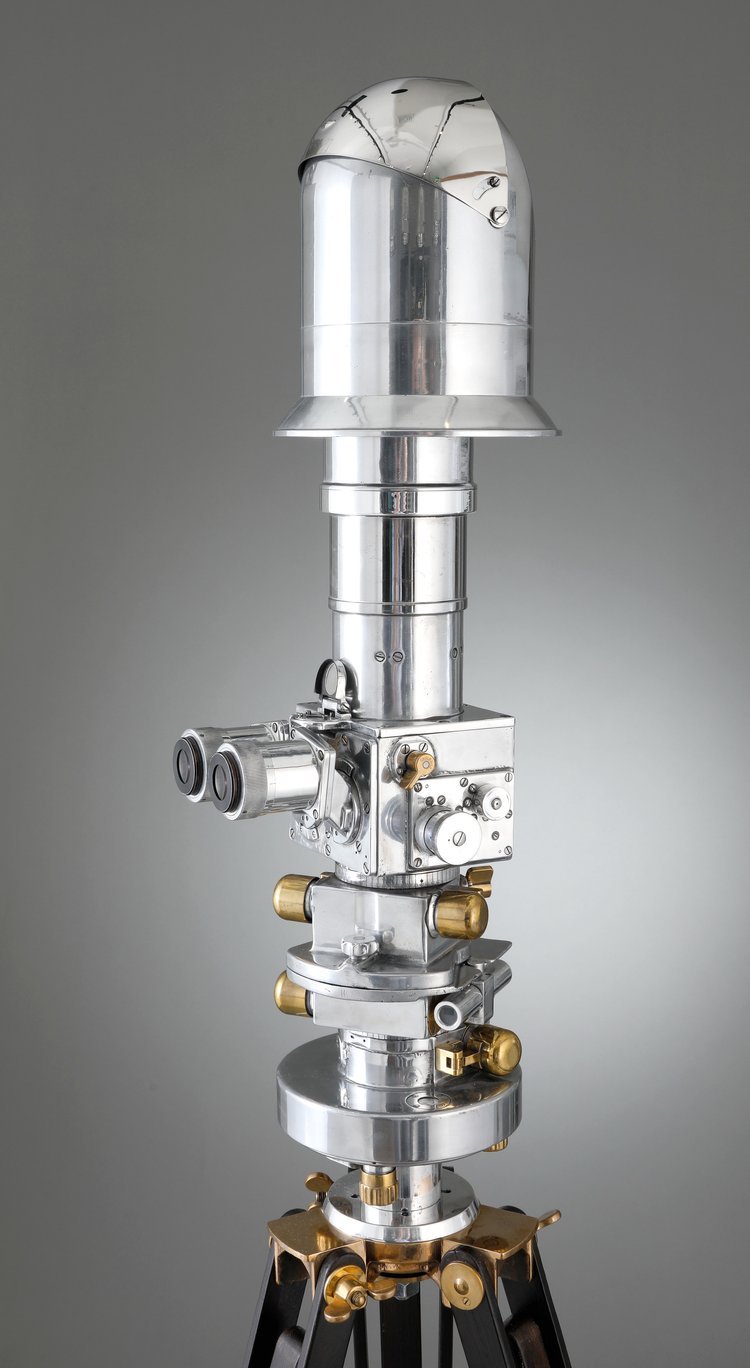 Image 4 of 7
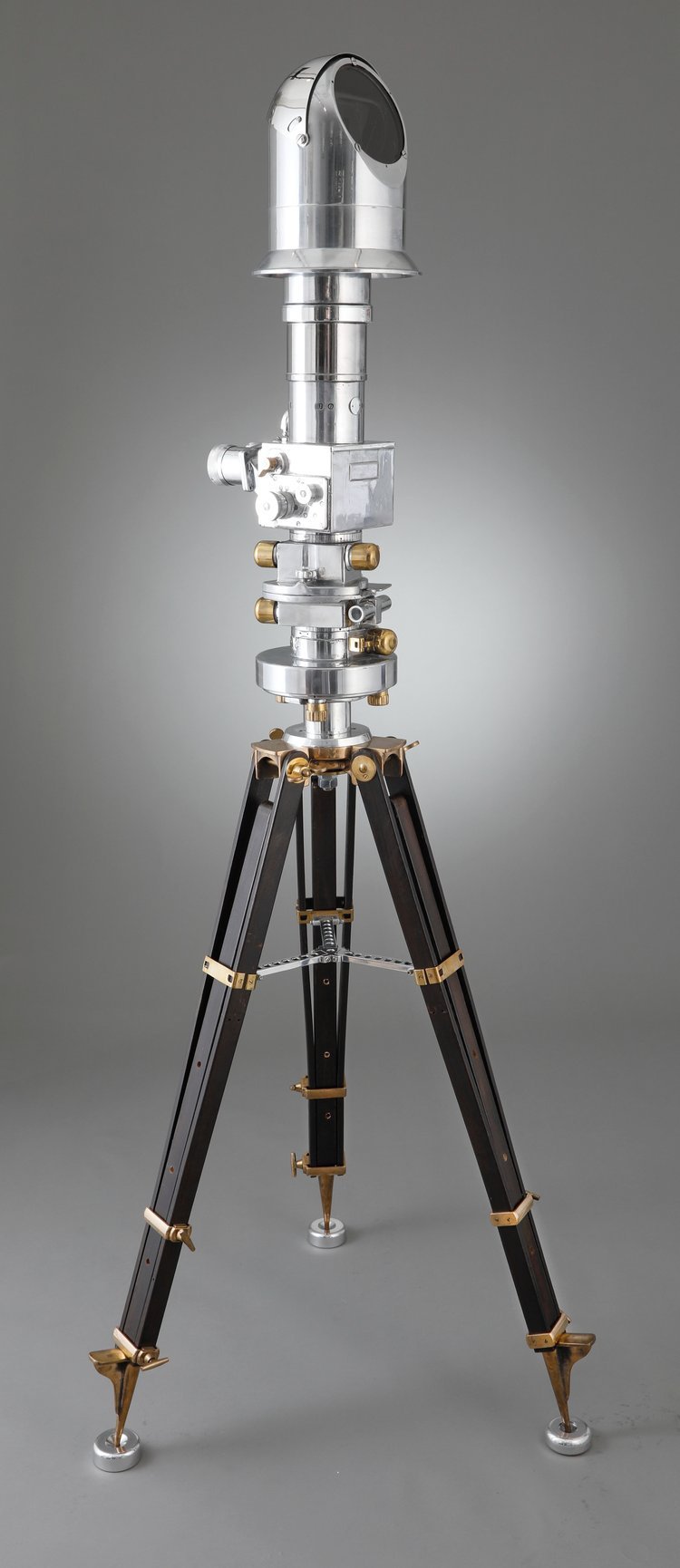 Image 5 of 7
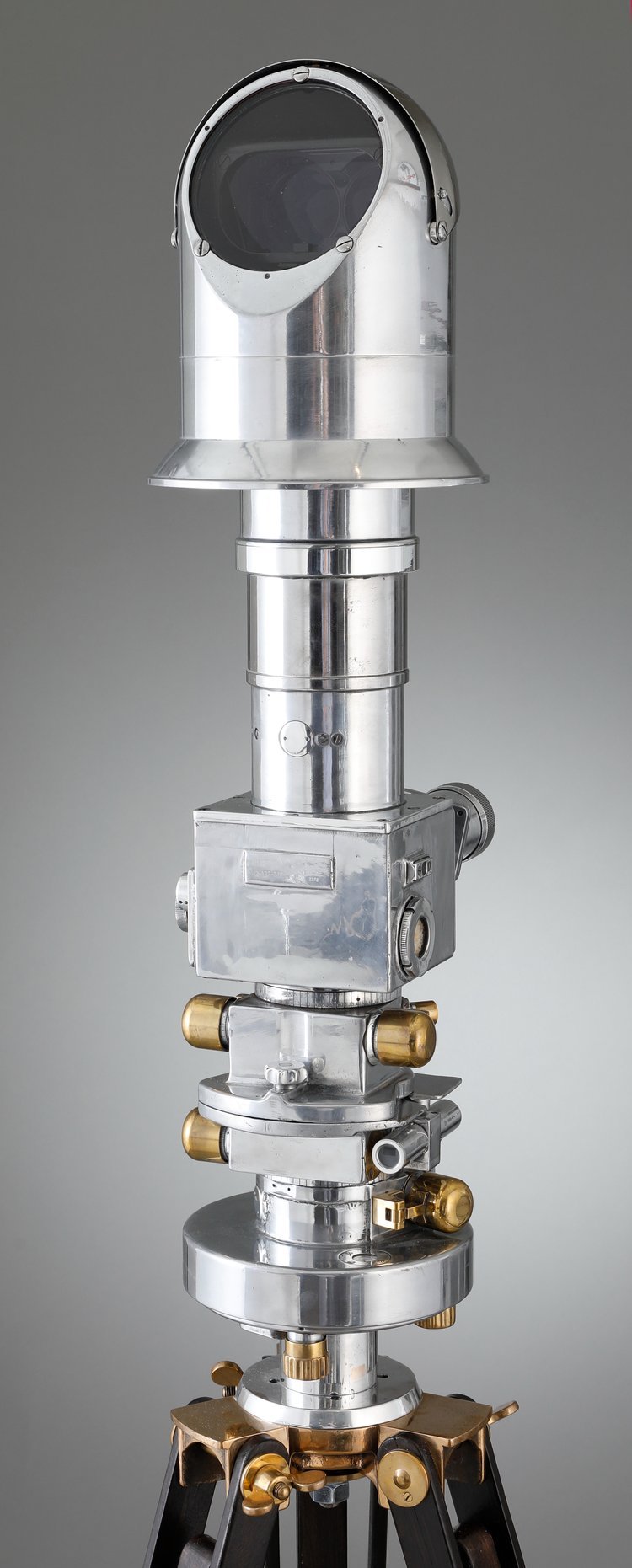 Image 6 of 7
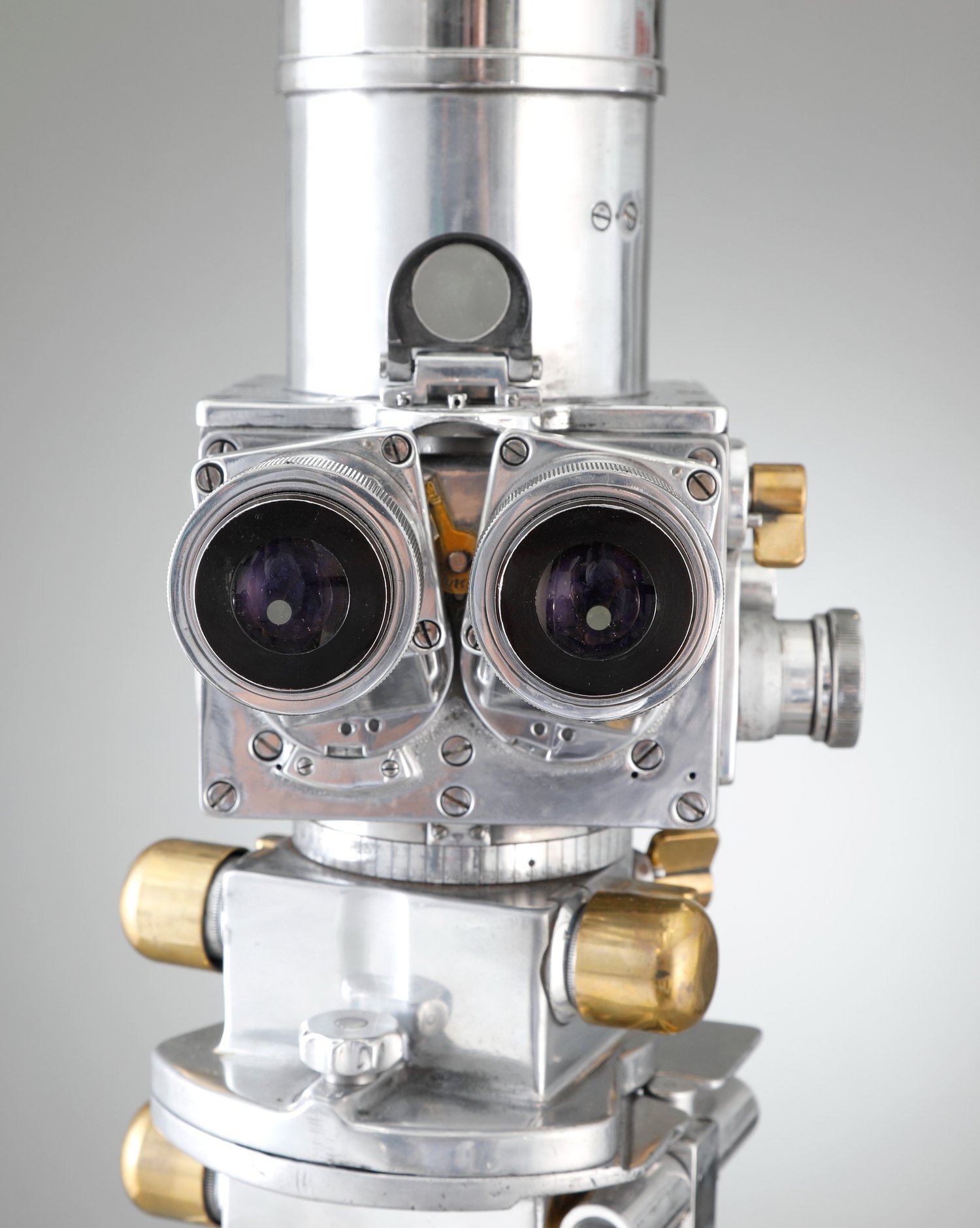 Image 7 of 7