Among the small bronzes of the Italian Renaissance, few are as instantly recognizable as the Shouting Horseman. A warrior in classical armor sits a bare-backed, pacing horse, his head turned, his mouth open in a cry the sculptor never explains. He is caught in a single charged instant, and the interest is not power but life.
The original model is the work of Andrea Briosco, called Riccio, the Paduan master who did more than any other sculptor to make the bronze statuette a serious art form. Cast around 1510 for the private studies of Padua's humanist collectors, it was made by the direct lost-wax method, in which the wax original perishes in the casting, so only a single bronze from Riccio's own hand can exist. That cast passed through the collection of Frédéric Spitzer in Paris and, by the Salting bequest of 1910, into the Victoria and Albert Museum in London, where it remains. In the museum's view, it is the only cast from Riccio's hand, and the other known examples are casts of the rider taken from it, in all likelihood made while the bronze was in Spitzer's keeping in the later nineteenth century and set upon a variety of horses. It is through those casts that the shout has carried onto collectors' shelves across Europe. The present cast belonged to Sir Leon Bagrit, the industrialist and collector who delivered the 1964 Reith Lectures on automation.
The Present Cast
A bronze equestrian group of the Shouting Horseman after Riccio, the warrior in crested helmet and pleated tunic seated bareback and without reins upon a pacing horse, the off foreleg raised, the mane cropped to a standing crest with a bound topknot at the poll, his head turned and mouth open in a cry. The rider is a separate cast, secured to the horse at the skirt by three pins, as the rider casts made in Spitzer's keeping were set upon their horses. Cast in the nineteenth century, with a dark brown patina, raised on a veined Siena marble plinth, the underside with old labels including Trinity Fine Art no. 1412. The bronze 10¾ inches high, approximately 13 inches overall.
The final two photographs show, for reference, the original bronze as illustrated in the Spitzer sale catalog, Paris, 1893, lot 1454, before its entry into the Victoria and Albert Museum with the Salting Bequest in 1910, and the related cast formerly in the collection of Otto Beit, London, as published by Leo Planiscig, Andrea Riccio, Vienna, 1927, fig. 242.
Provenance
Sir Leon Bagrit (1902–1979), London, until 1979
Trinity Fine Art
Sotheby's, London, The Winter Collection, 10 December 2015, lot 1
Sources
Victoria and Albert Museum, London, the Shouting Horseman, Andrea Riccio, Padua, circa 1510, Salting Bequest, 1910.
Pomponius Gauricus, De Sculptura, Padua, 1504.
Daniels Antiques is always interested in acquiring Renaissance bronzes and later casts after the great models. Please contact us if you have a piece to sell.
Among the small bronzes of the Italian Renaissance, few are as instantly recognizable as the Shouting Horseman. A warrior in classical armor sits a bare-backed, pacing horse, his head turned, his mouth open in a cry the sculptor never explains. He is caught in a single charged instant, and the interest is not power but life.
The original model is the work of Andrea Briosco, called Riccio, the Paduan master who did more than any other sculptor to make the bronze statuette a serious art form. Cast around 1510 for the private studies of Padua's humanist collectors, it was made by the direct lost-wax method, in which the wax original perishes in the casting, so only a single bronze from Riccio's own hand can exist. That cast passed through the collection of Frédéric Spitzer in Paris and, by the Salting bequest of 1910, into the Victoria and Albert Museum in London, where it remains. In the museum's view, it is the only cast from Riccio's hand, and the other known examples are casts of the rider taken from it, in all likelihood made while the bronze was in Spitzer's keeping in the later nineteenth century and set upon a variety of horses. It is through those casts that the shout has carried onto collectors' shelves across Europe. The present cast belonged to Sir Leon Bagrit, the industrialist and collector who delivered the 1964 Reith Lectures on automation.
The Present Cast
A bronze equestrian group of the Shouting Horseman after Riccio, the warrior in crested helmet and pleated tunic seated bareback and without reins upon a pacing horse, the off foreleg raised, the mane cropped to a standing crest with a bound topknot at the poll, his head turned and mouth open in a cry. The rider is a separate cast, secured to the horse at the skirt by three pins, as the rider casts made in Spitzer's keeping were set upon their horses. Cast in the nineteenth century, with a dark brown patina, raised on a veined Siena marble plinth, the underside with old labels including Trinity Fine Art no. 1412. The bronze 10¾ inches high, approximately 13 inches overall.
The final two photographs show, for reference, the original bronze as illustrated in the Spitzer sale catalog, Paris, 1893, lot 1454, before its entry into the Victoria and Albert Museum with the Salting Bequest in 1910, and the related cast formerly in the collection of Otto Beit, London, as published by Leo Planiscig, Andrea Riccio, Vienna, 1927, fig. 242.
Provenance
Sir Leon Bagrit (1902–1979), London, until 1979
Trinity Fine Art
Sotheby's, London, The Winter Collection, 10 December 2015, lot 1
Sources
Victoria and Albert Museum, London, the Shouting Horseman, Andrea Riccio, Padua, circa 1510, Salting Bequest, 1910.
Pomponius Gauricus, De Sculptura, Padua, 1504.
Daniels Antiques is always interested in acquiring Renaissance bronzes and later casts after the great models. Please contact us if you have a piece to sell.

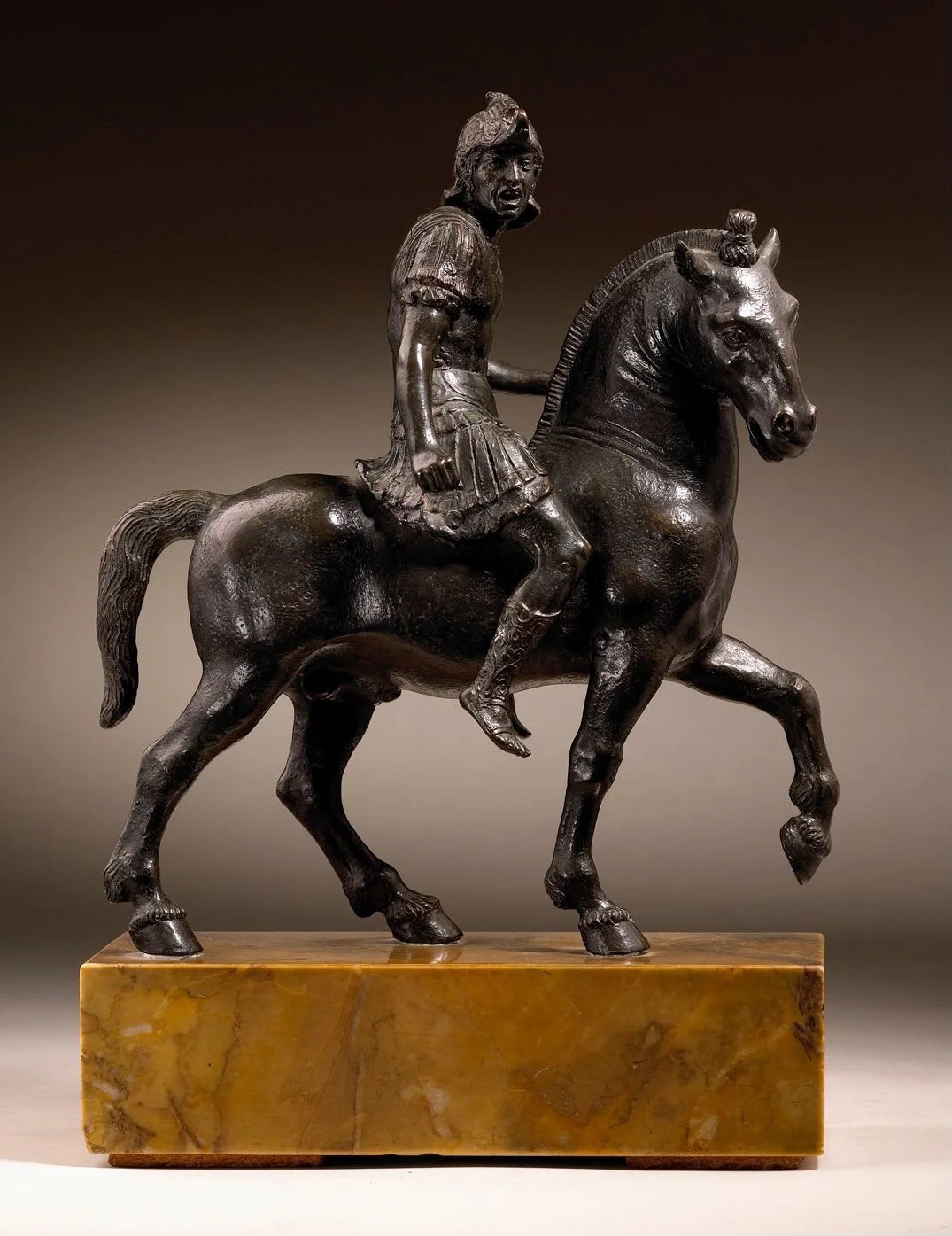 Image 1 of 5
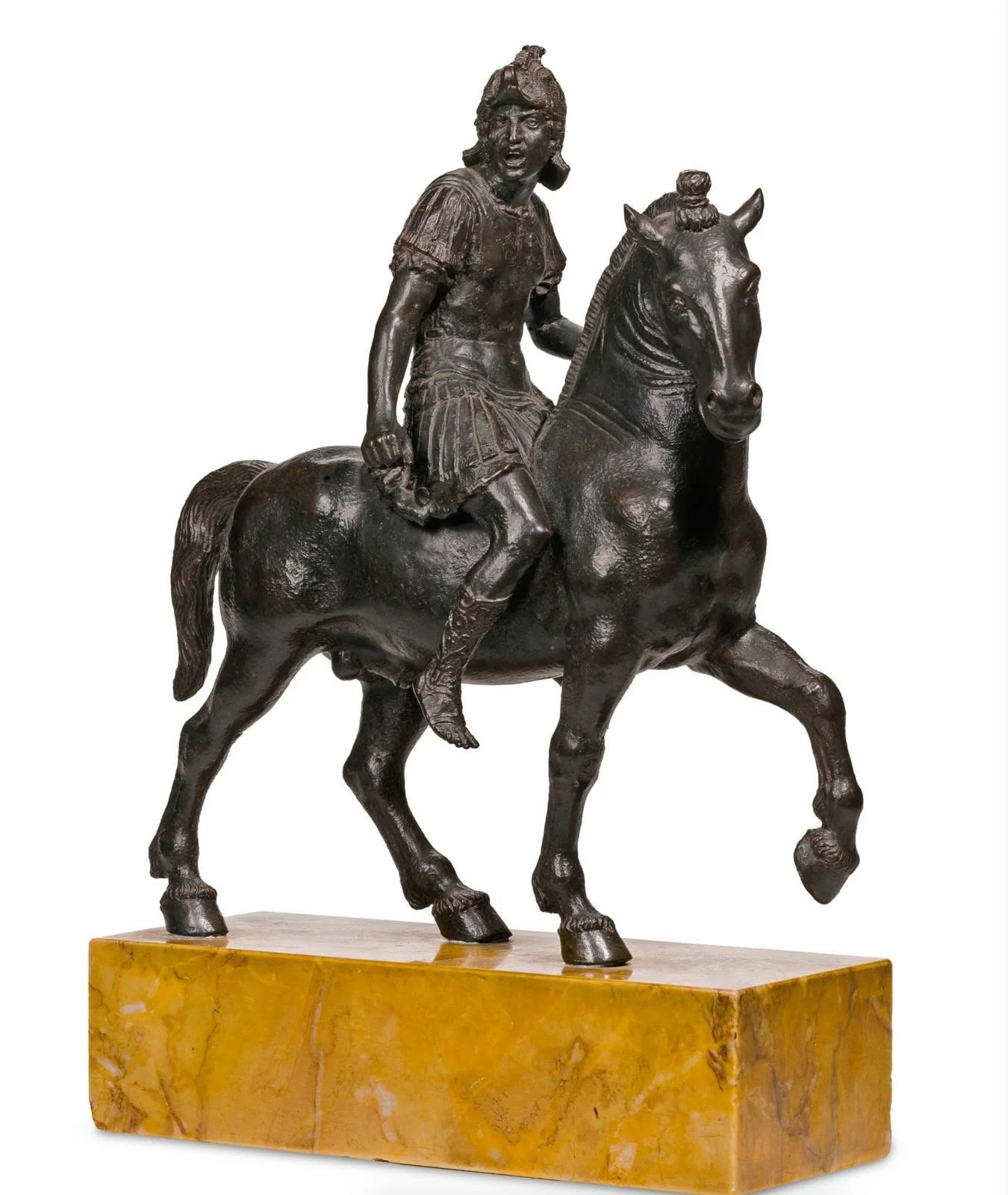 Image 2 of 5
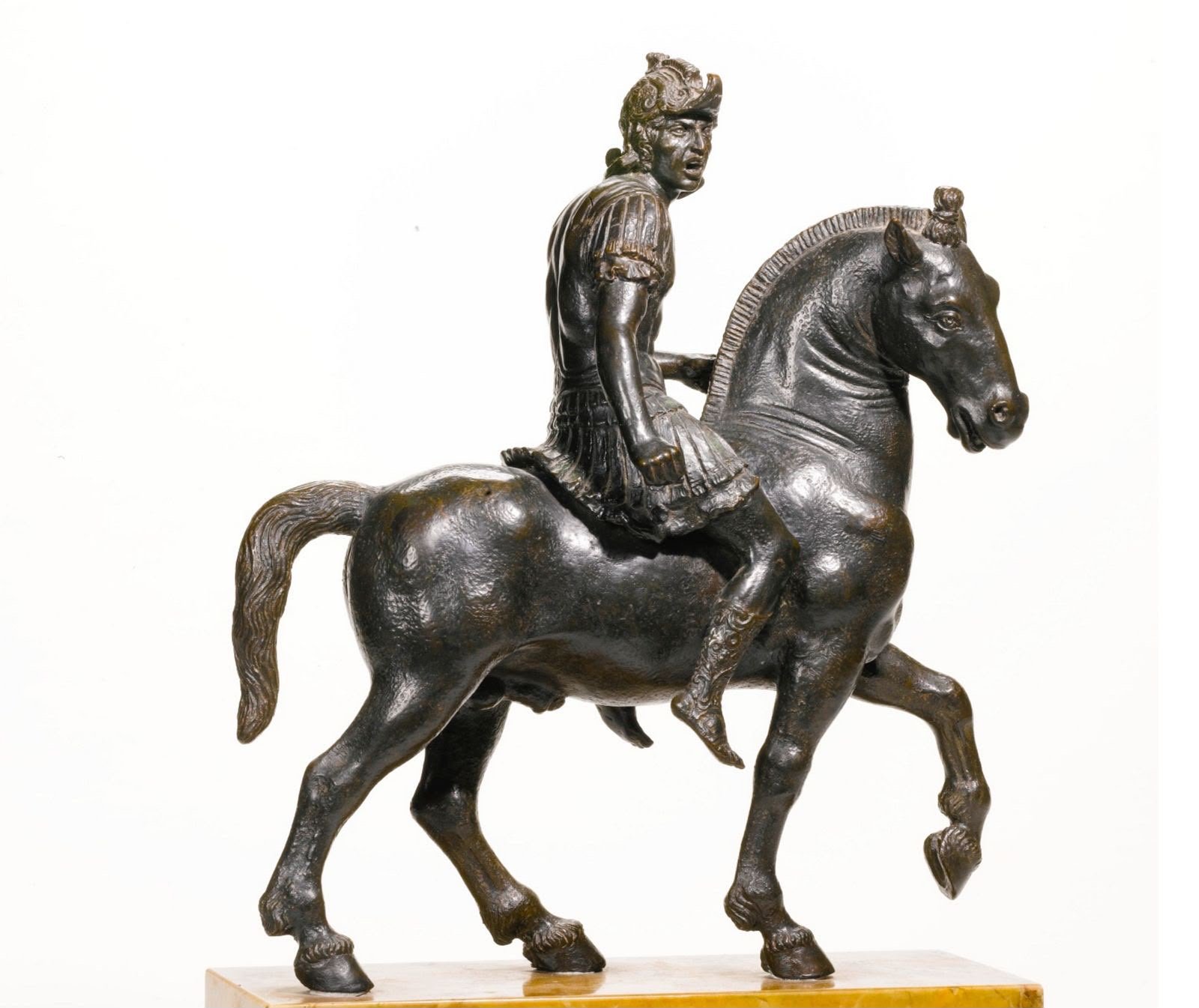 Image 3 of 5
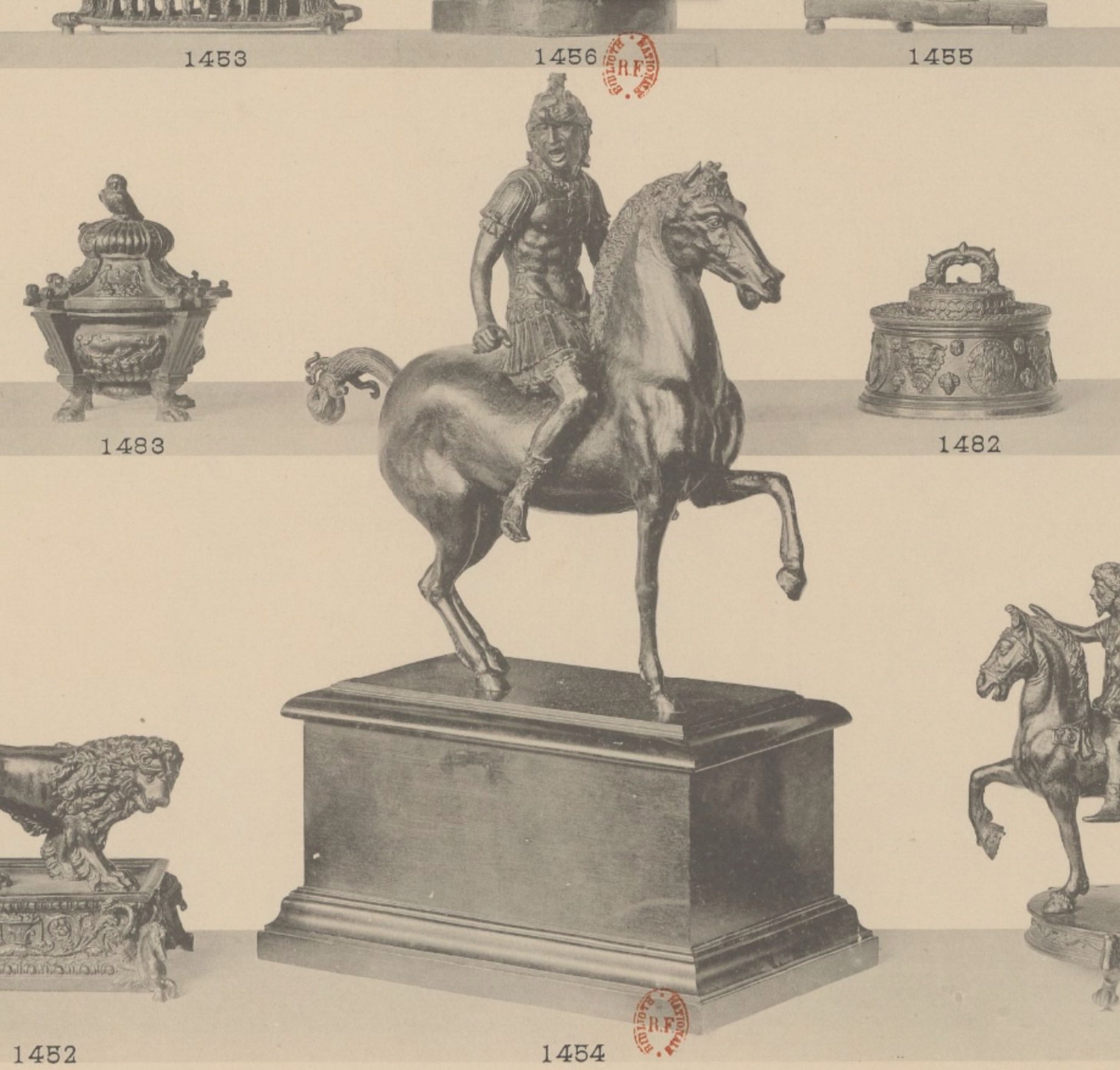 Image 4 of 5
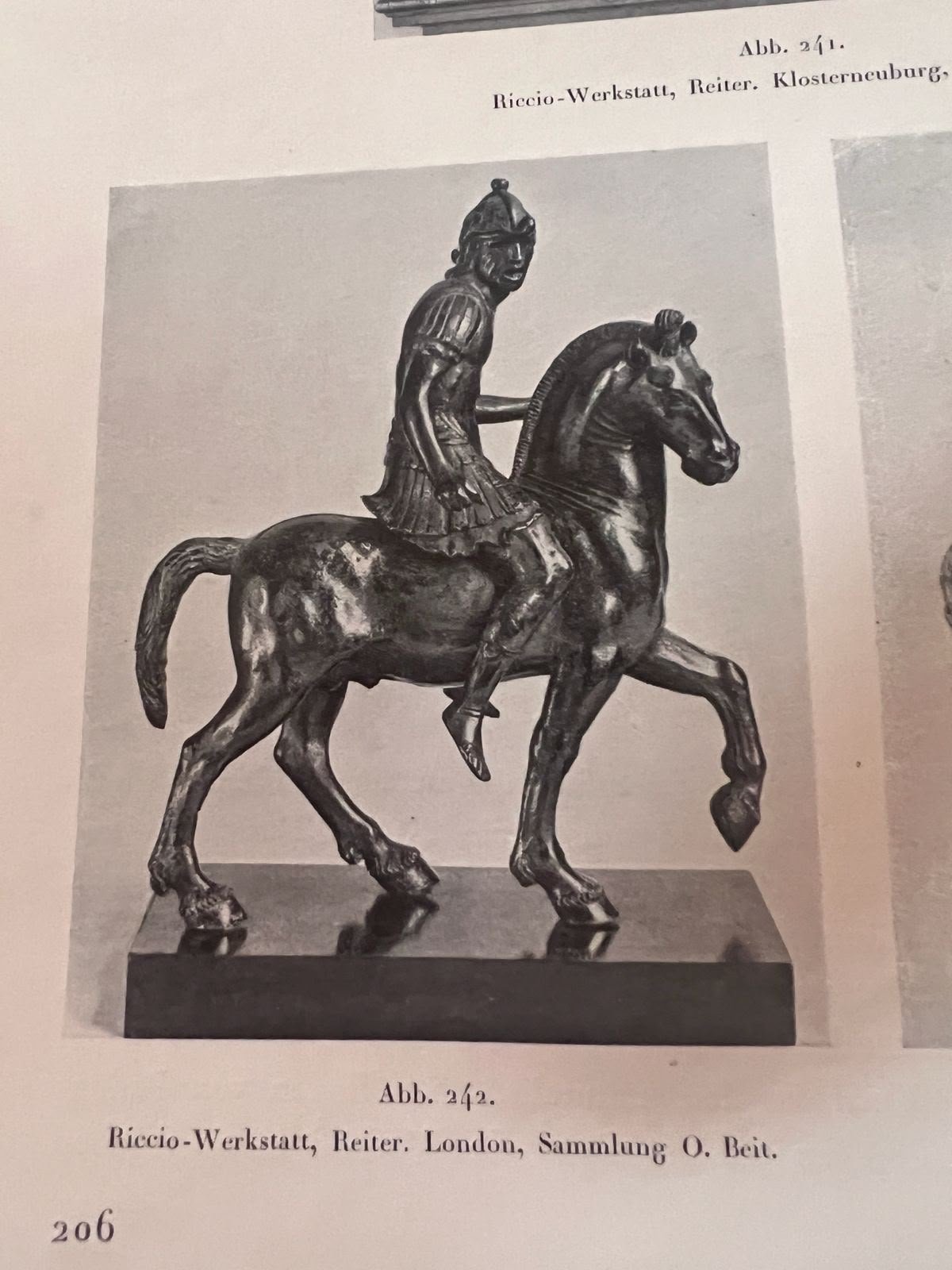 Image 5 of 5