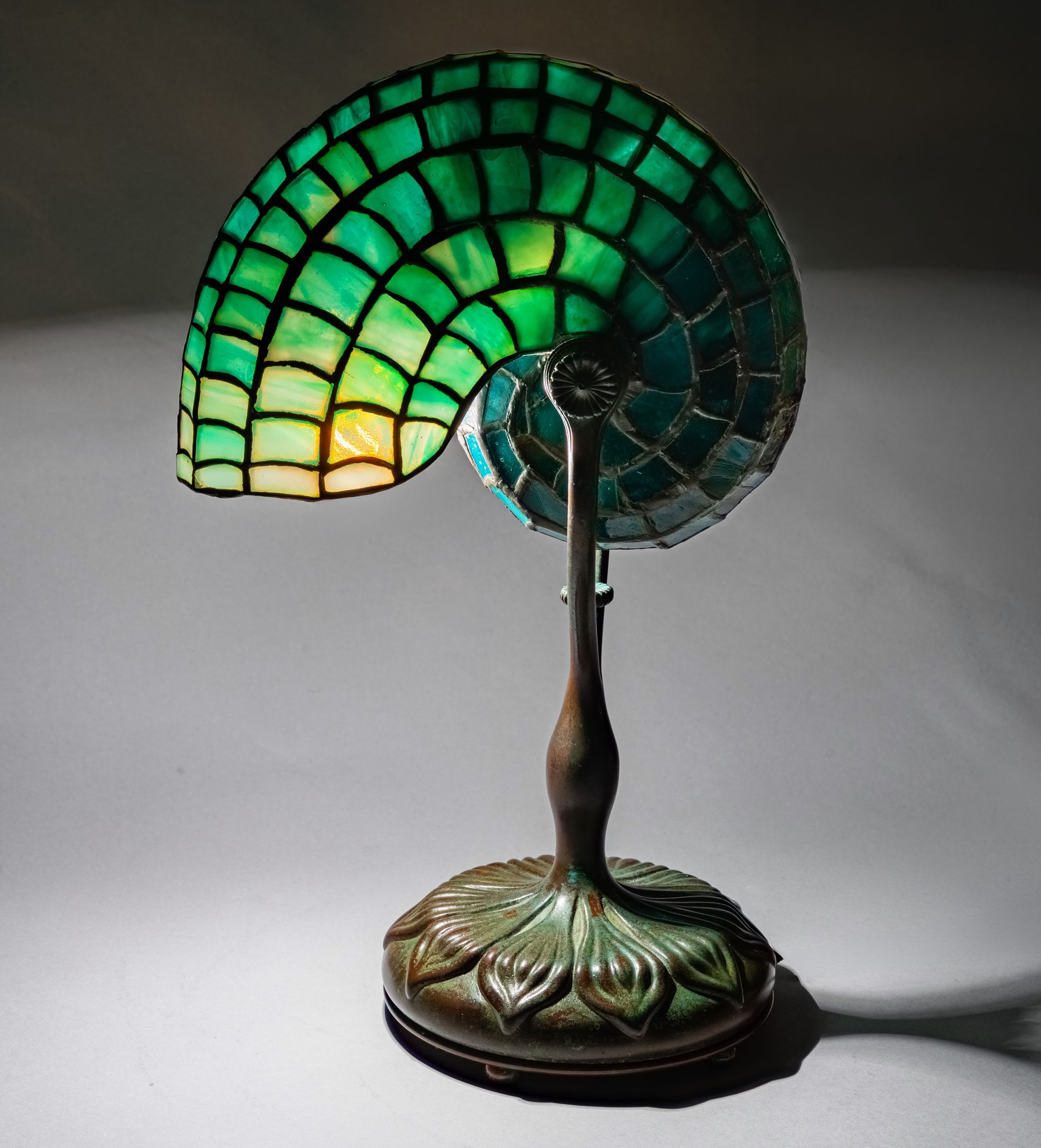
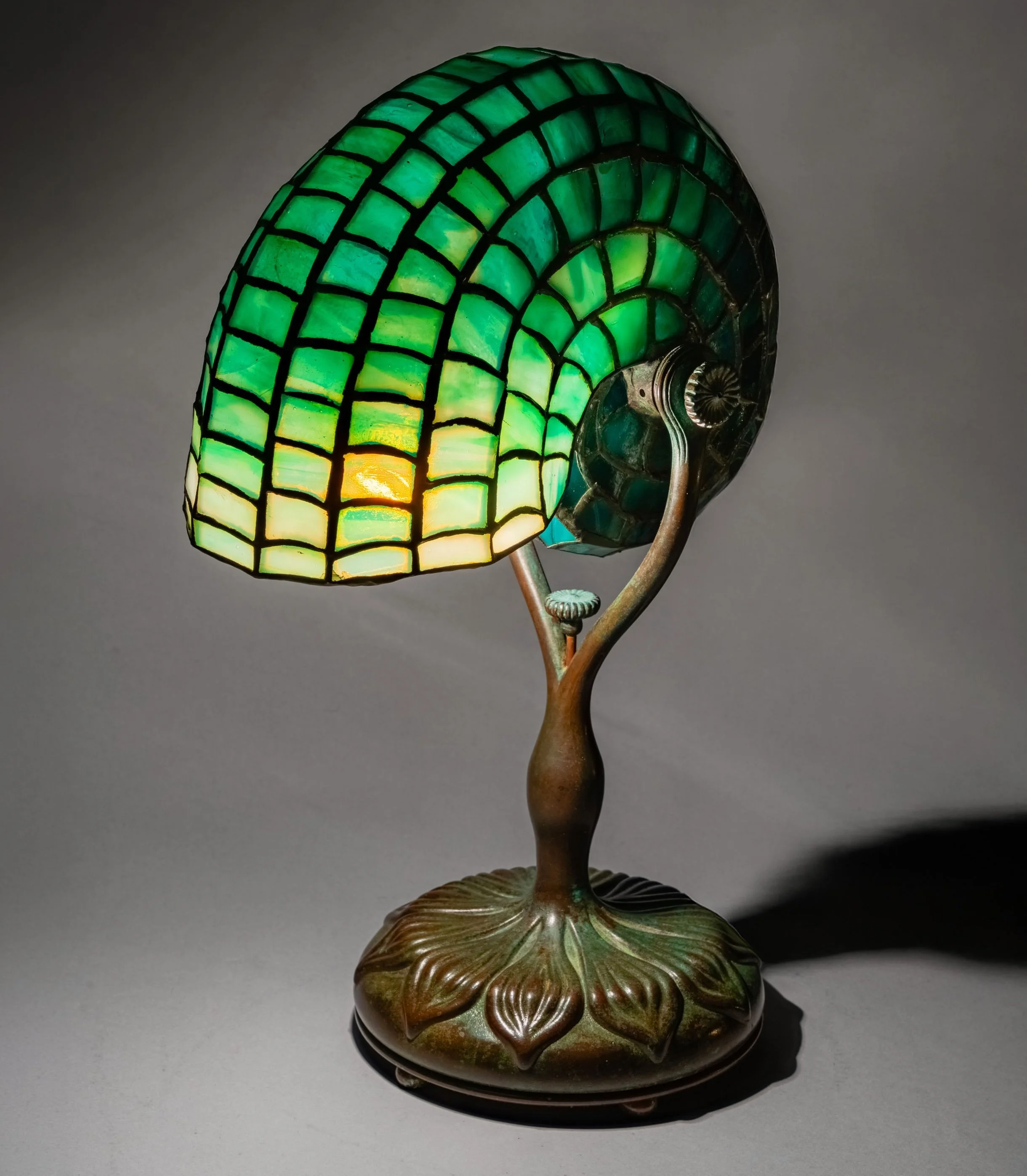
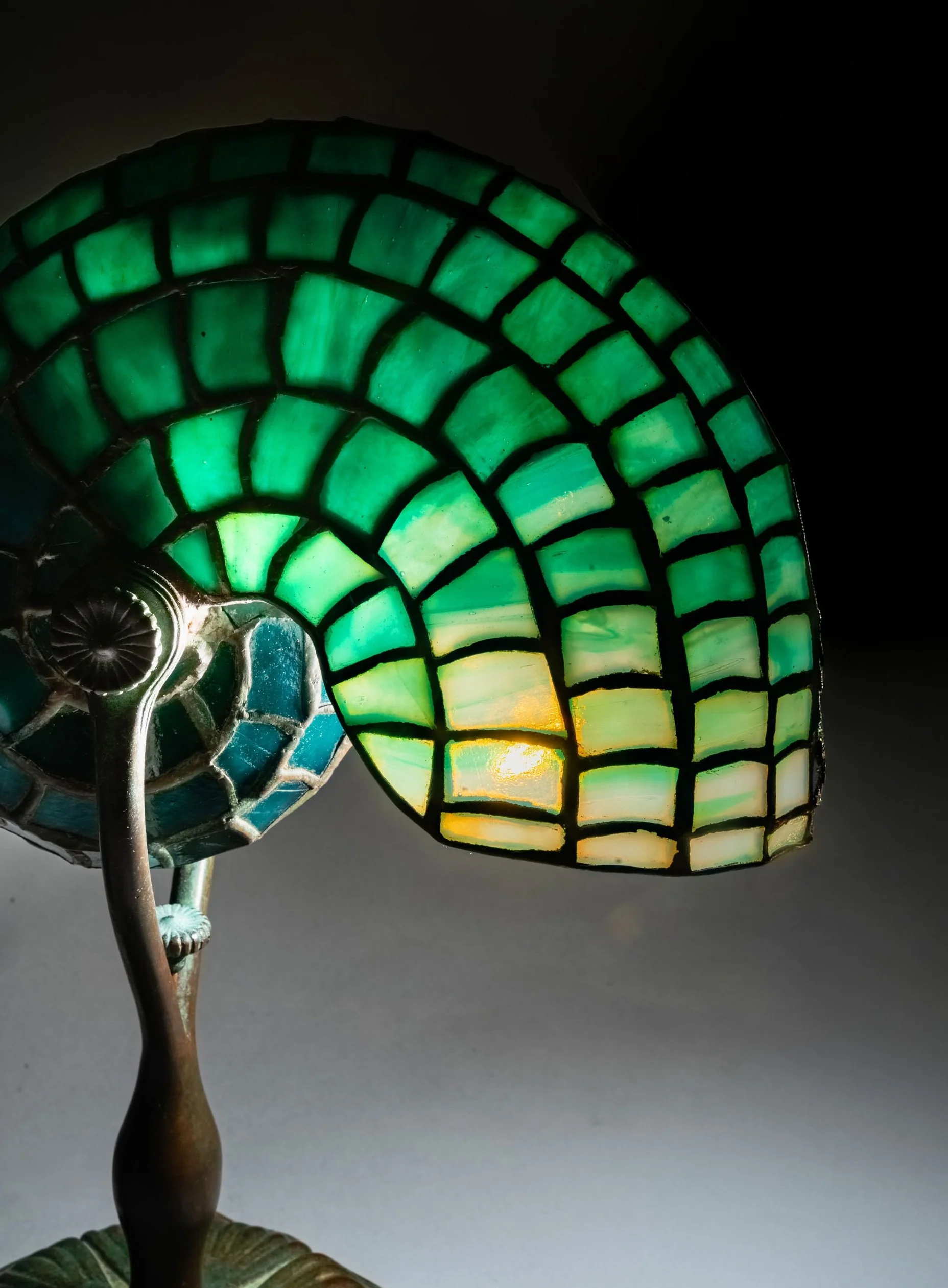
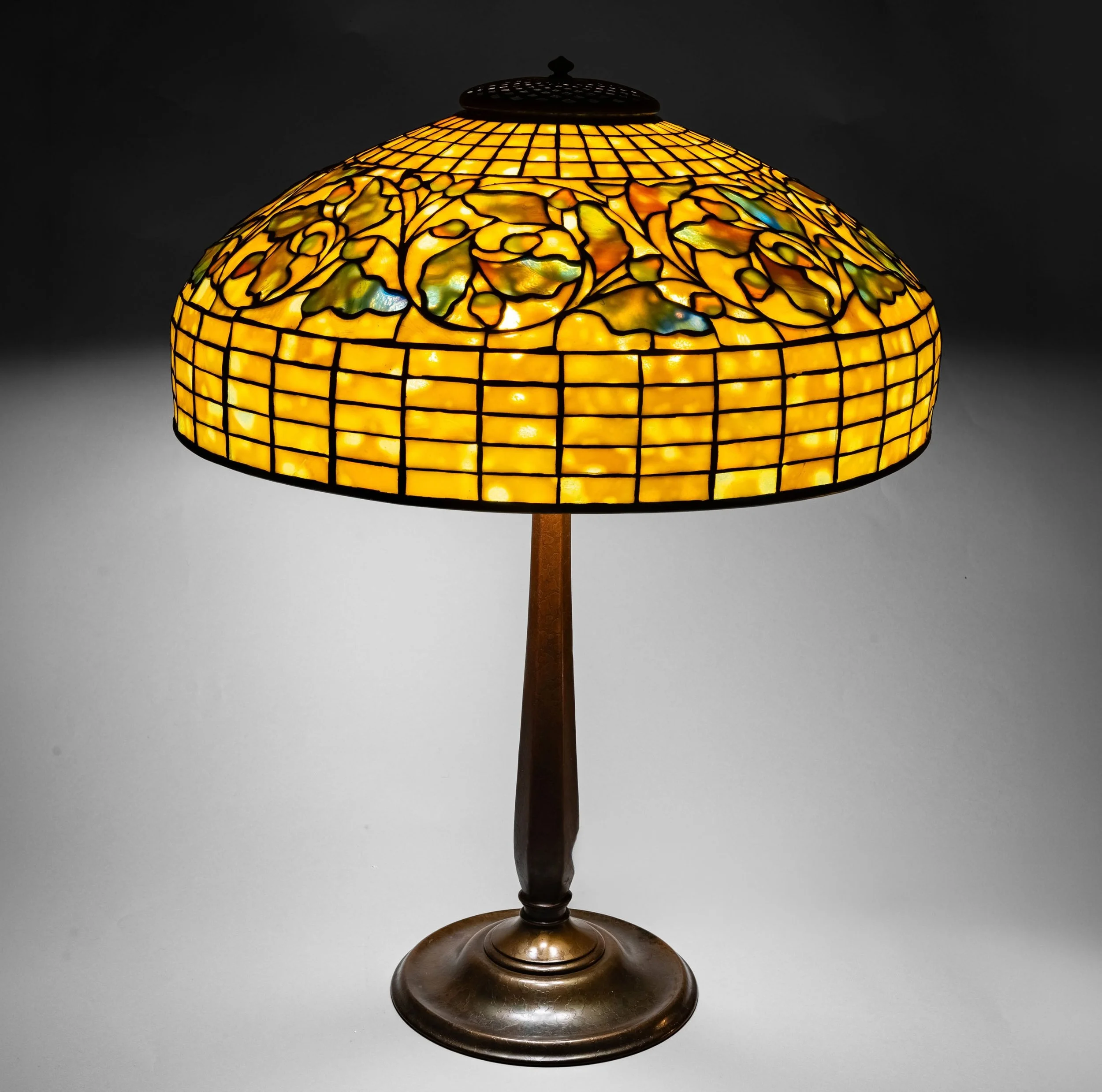
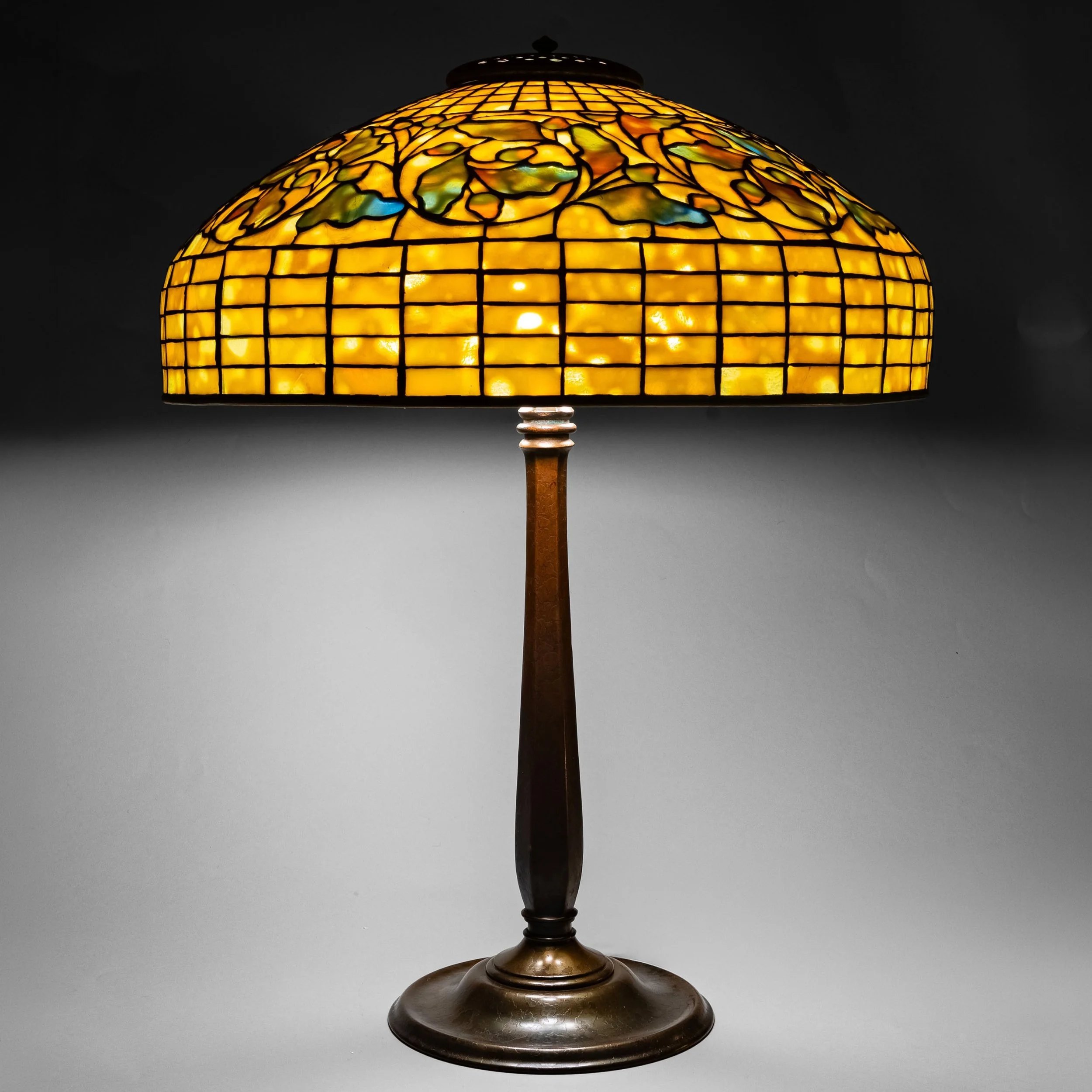
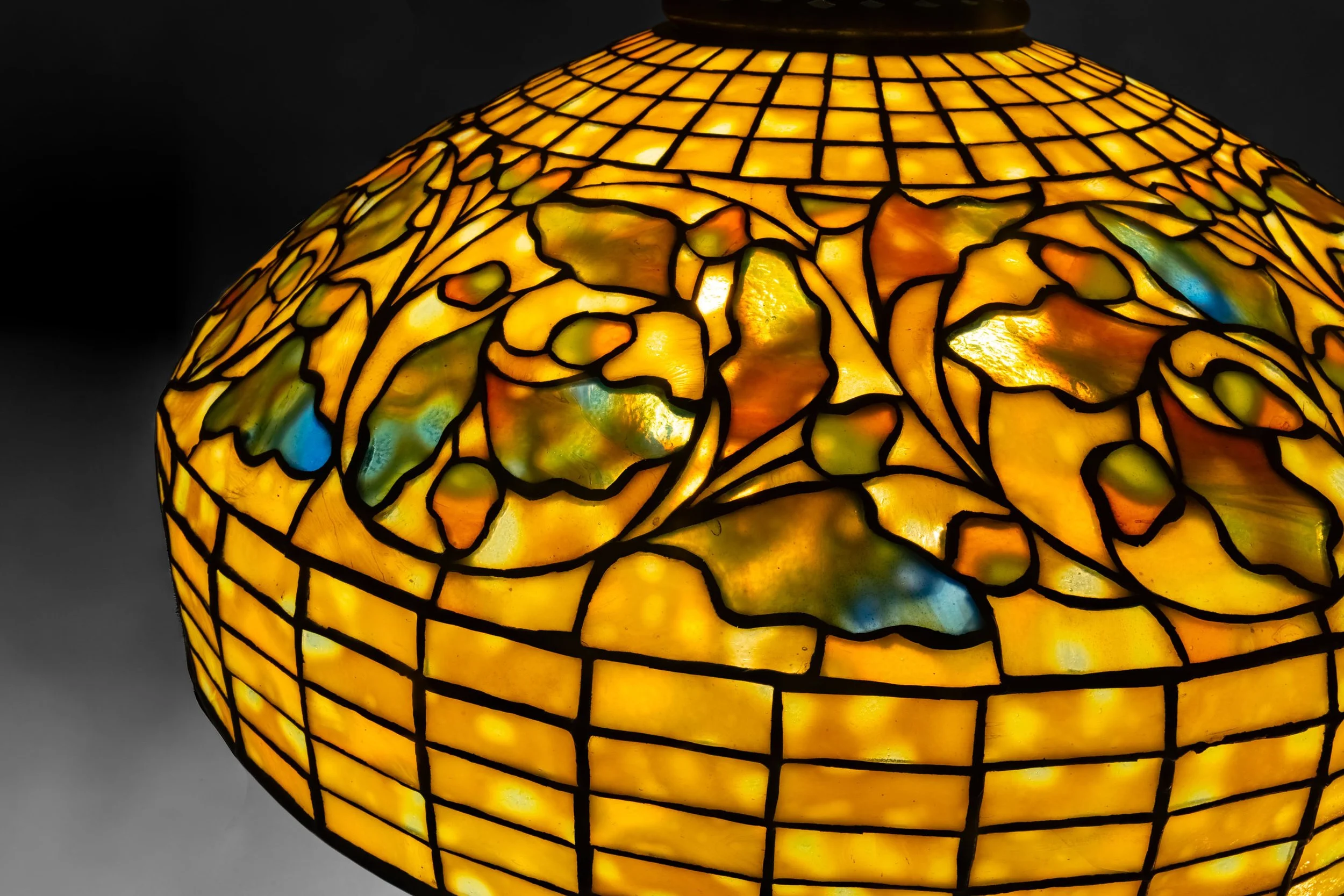
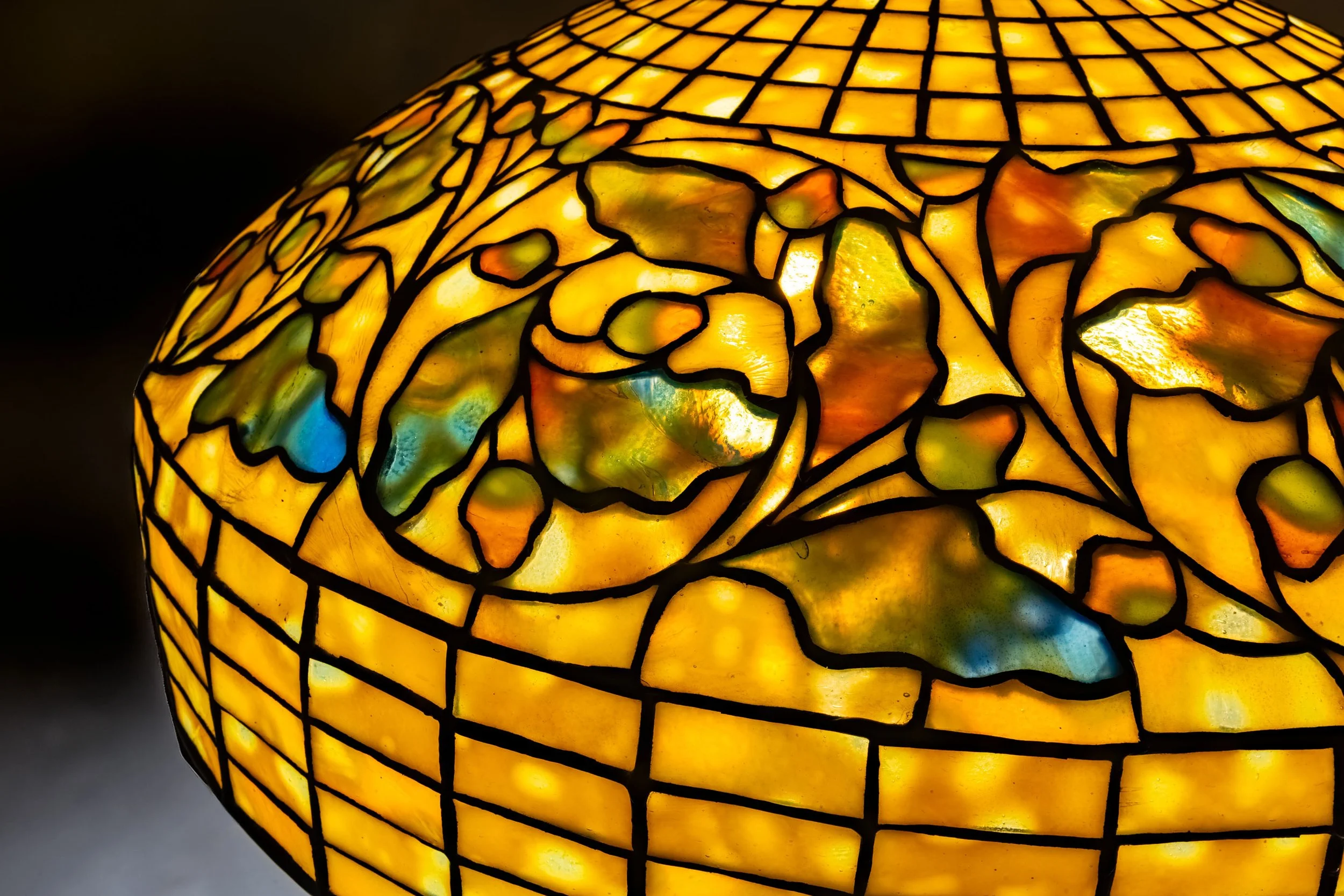
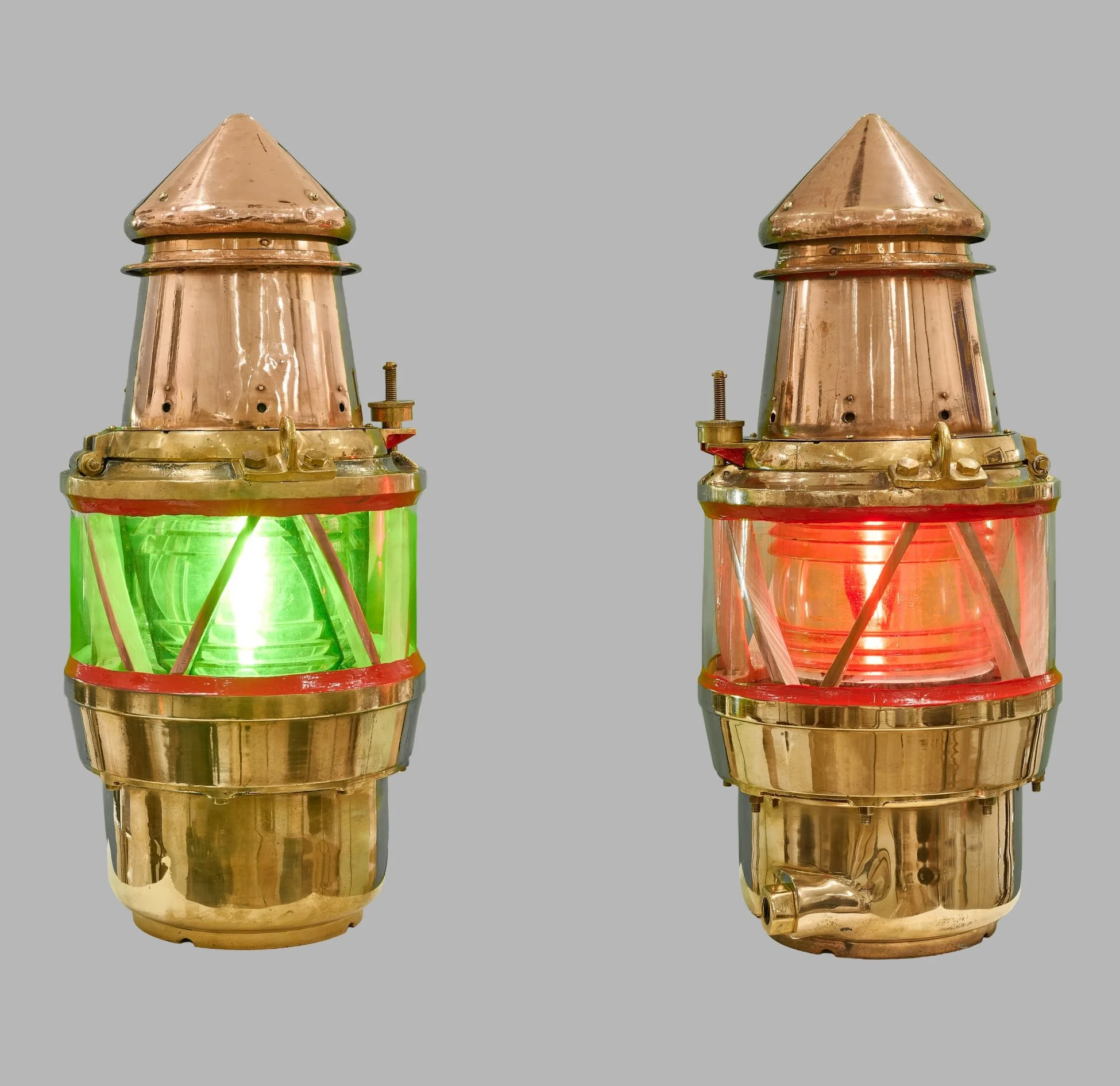
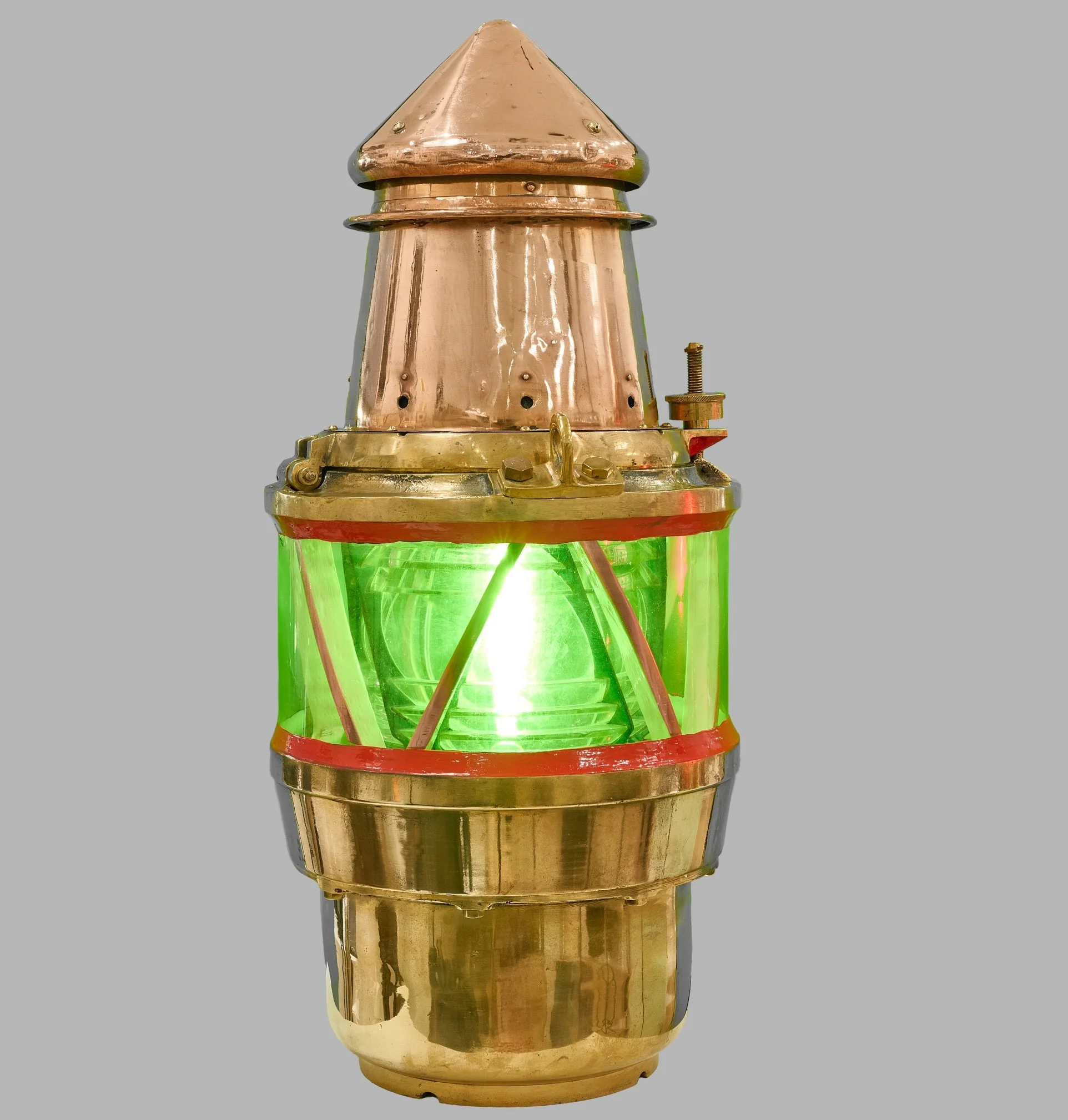
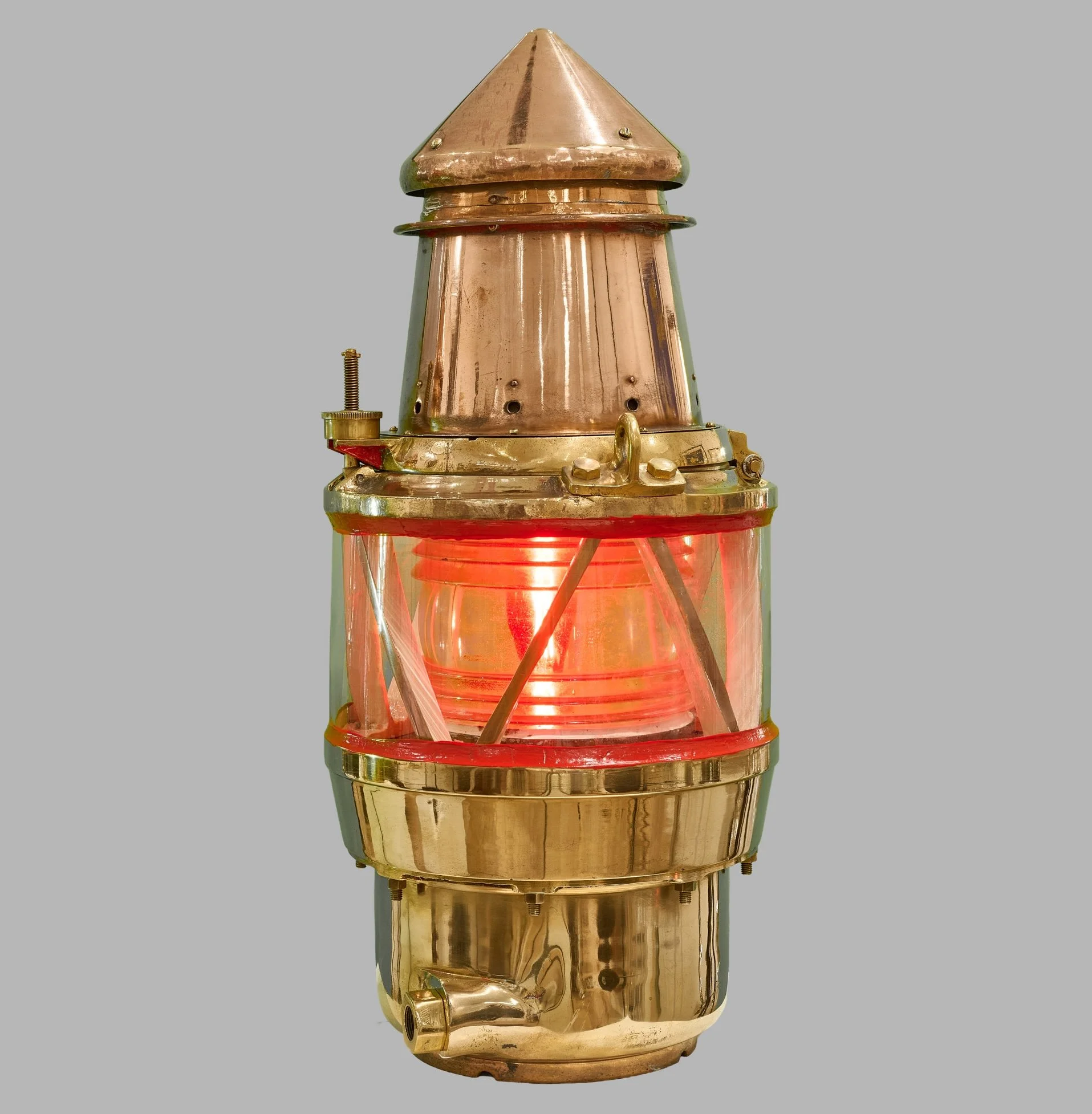
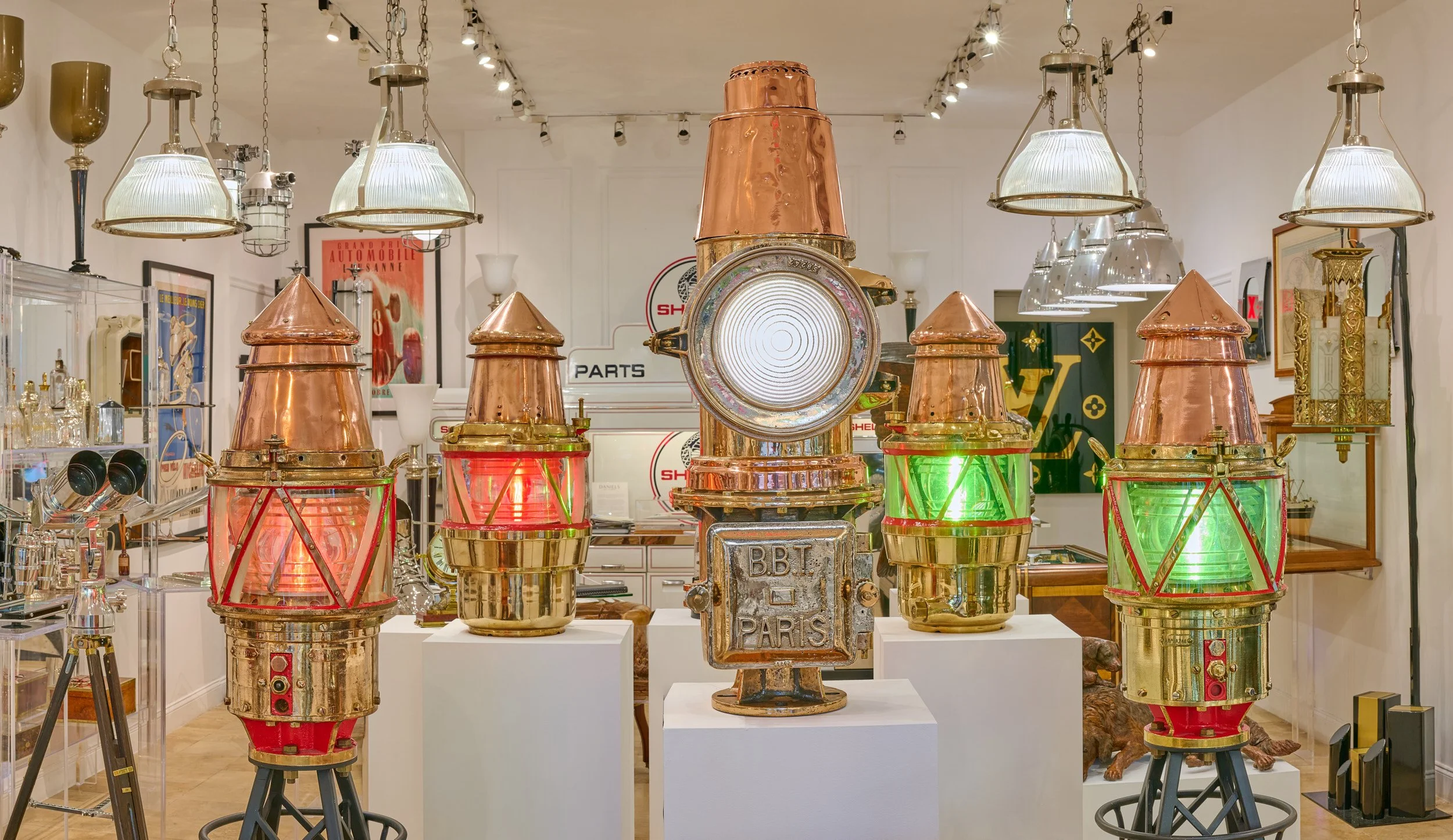
A monumental port leading light in brass and copper by Barbier, Bénard et Turenne of Paris — the world's pre-eminent manufacturer of lighthouse optics and maritime navigation equipment from the late nineteenth century until the firm's dissolution in 1982 — retaining its original Fresnel bullseye lens in perfect condition and all original fittings throughout. A piece of exceptional scale, presence, and historical significance.
The leading light was one of the most critical instruments for safe harbor navigation. Positioned at fixed points onshore — typically in pairs, at different elevations — leading lights guided vessels through channels and into port by alignment: when a mariner kept the two lights in vertical register, the vessel was on the correct approach. The Fresnel bullseye lens, with its characteristic concentric stepped rings ground to concentrate and project a beam of maximum intensity over the greatest possible distance, was the optical technology that made this possible. The lens in the present example is in remarkable original condition — the concentric ring formation crisp and undamaged, the glass clear, the brass housing retaining its serial number, 58242, stamped into it.
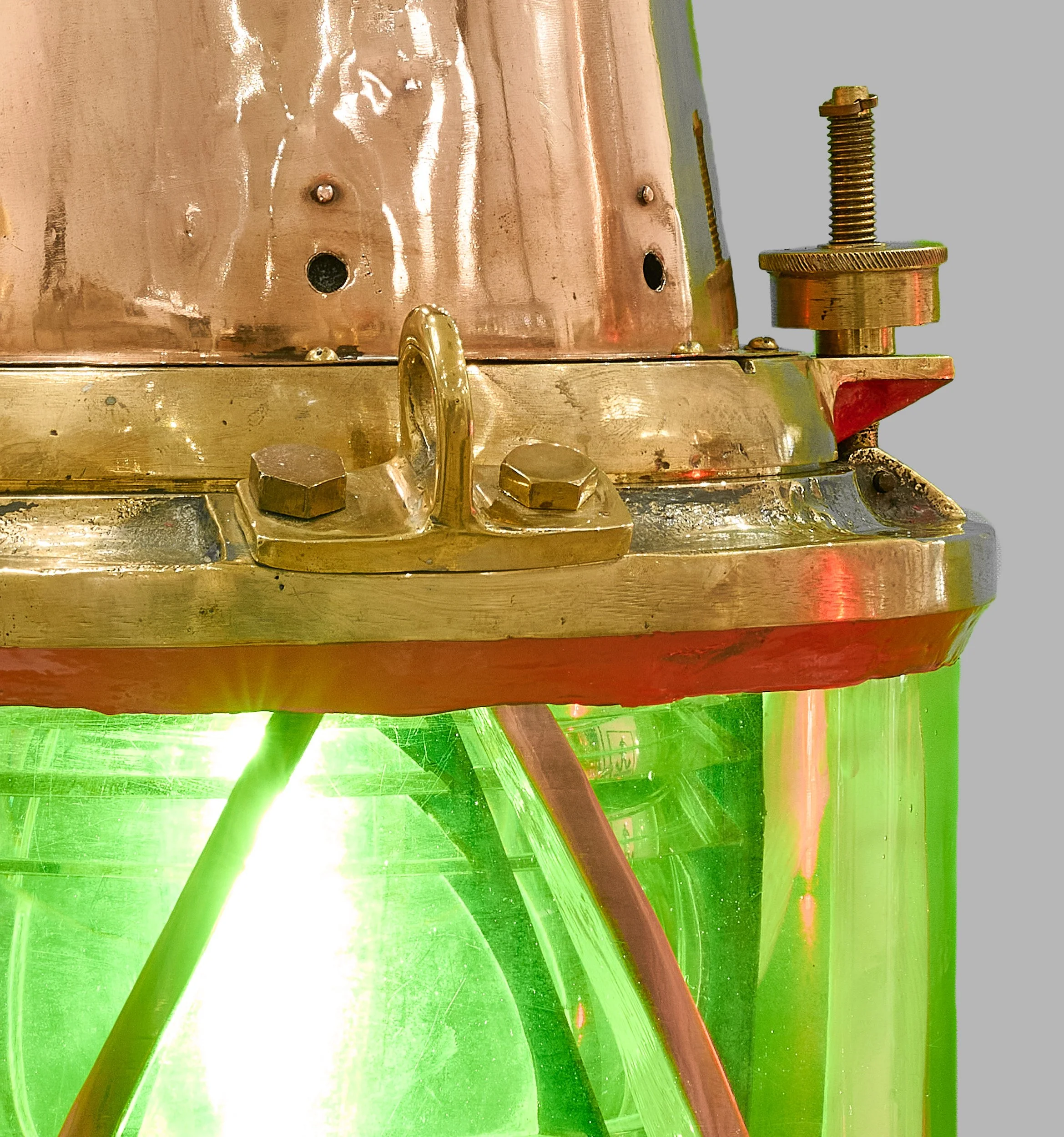
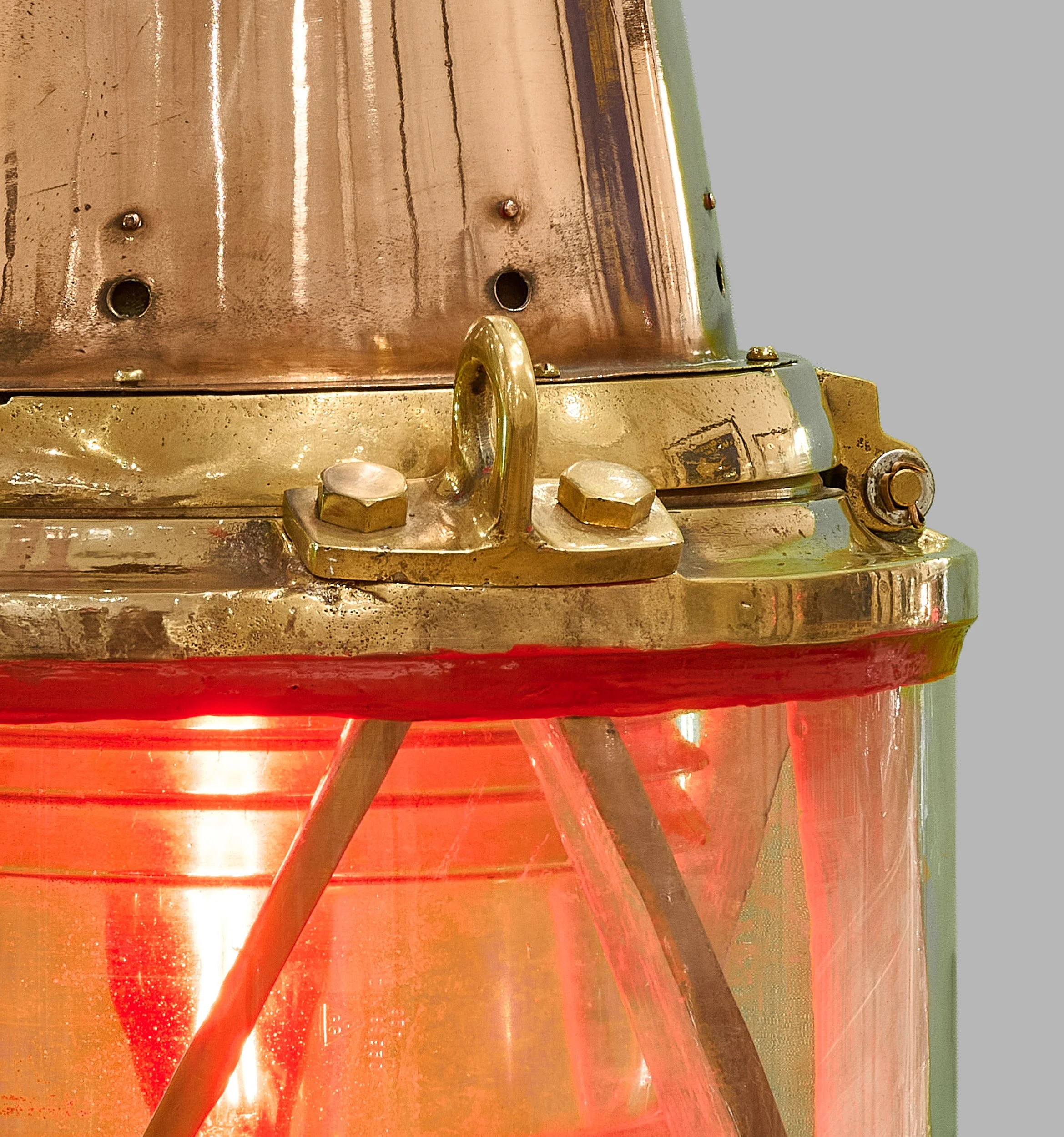
The construction is of the highest order. The upper section is formed in hand-raised copper — the conical chimney with its vented crown managing heat from the kerosene burner below, above a rotating brass collar, and the substantial brass lens housing with its hinged adjustment brackets. The lower body is a cylindrical brass fuel reservoir with a pressure gauge, adjustment valves, and service fittings, all intact, seated on a cast brass mounting flange pierced with bolt holes, attesting to the light's former installation on a harbor structure. The combination of polished brass and copper produces a visual authority entirely appropriate to an instrument designed to be seen and trusted at a distance in all weathers.
Barbier, Bénard et Turenne — founded in Paris in 1862 by Frédéric Barbier and Stanislas Fenestre, and reaching its final name in the early twentieth century — supplied lighthouse and harbor navigation equipment to ports across France and the French empire, and was the world leader in lighthouse construction in the late nineteenth century. Their equipment guided ships into every major French port for over a century.
Height approximately 45 inches. All original, including the Fresnel lens. The brass and copper have been polished. The mounting flange retains its original bolt holes, confirming active port installation. The lens housing is stamped with the original serial number 58242, which may be traceable in French maritime records to a specific port installation.
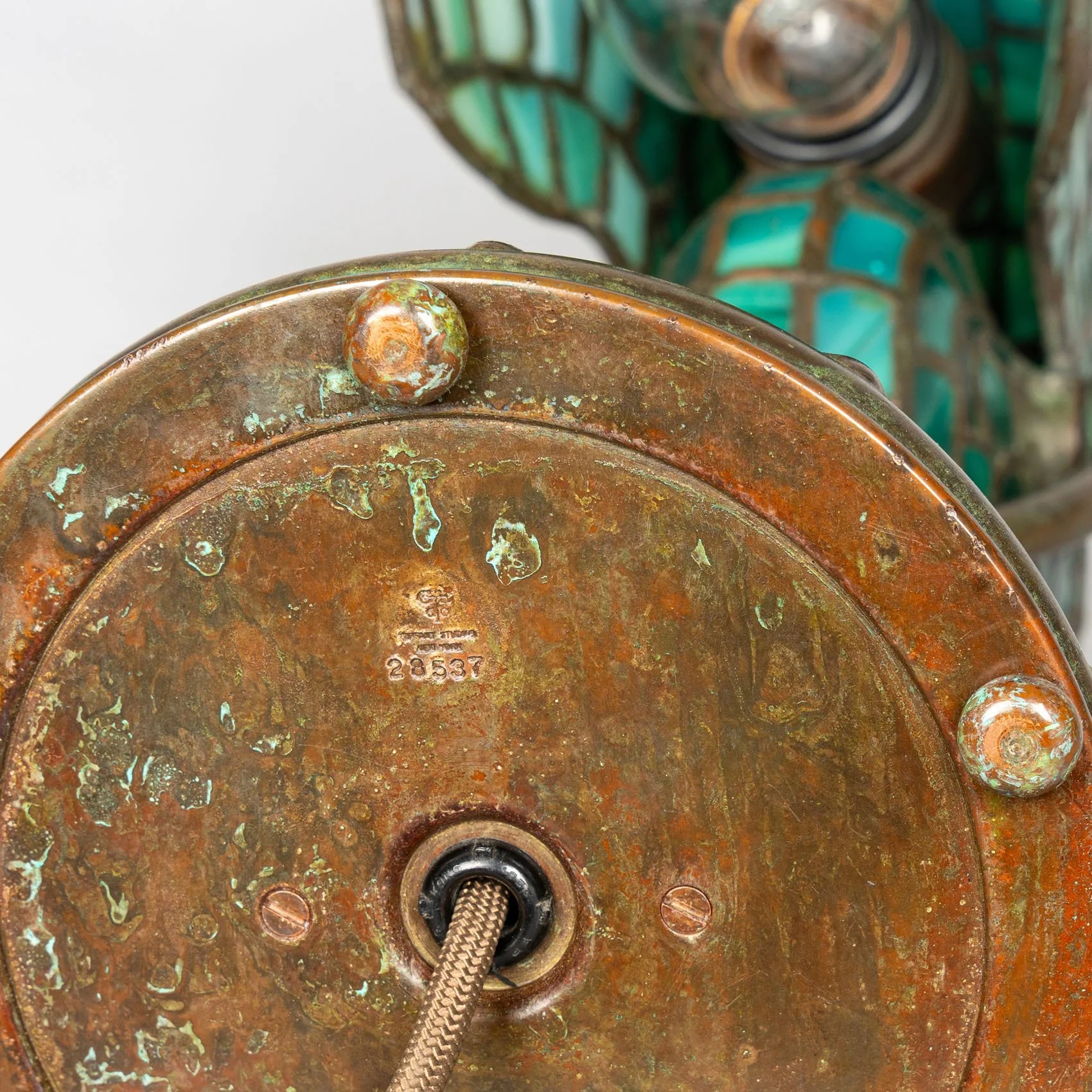
Marks: B.B.T. Paris, cast into the brass fuel housing.
Dimensions: Height approximately 48”.
Comparable: A 6th order copper and brass navigation light by B.B.T., circa 1900, made for the harbor of Rouen, 137 cm, Hatchwell Antiques, London.
Literature:La lumière au bout du monde: Barbier, Bénard, et Turenne, Constructeurs de Phares, Ecomusée d'Ouessant; Philippe Bénard and Francis Dreyer, Une aventure industrielle française: BBT 1862–1984, Du Palio (the full company history covering equipment records and serial number ranges by period).
Research note: The serial number 58242 stamped on the lens housing may be traceable through the archives of the Service des Phares et Balizes (1685–2008), held at the Archives Nationales, Paris, under catalog references F/14. Inquiries may establish the specific port installation for which this light was manufactured.
A monumental port leading light in brass and copper by Barbier, Bénard et Turenne of Paris — the world's pre-eminent manufacturer of lighthouse optics and maritime navigation equipment from the late nineteenth century until the firm's dissolution in 1982 — retaining its original Fresnel bullseye lens in perfect condition and all original fittings throughout. A piece of exceptional scale, presence, and historical significance.
The leading light was one of the most critical instruments for safe harbor navigation. Positioned at fixed points onshore — typically in pairs, at different elevations — leading lights guided vessels through channels and into port by alignment: when a mariner kept the two lights in vertical register, the vessel was on the correct approach. The Fresnel bullseye lens, with its characteristic concentric stepped rings ground to concentrate and project a beam of maximum intensity over the greatest possible distance, was the optical technology that made this possible. The lens in the present example is in remarkable original condition — the concentric ring formation crisp and undamaged, the glass clear, the brass housing retaining its serial number, 58242, stamped into it.
The construction is of the highest order. The upper section is formed in hand-raised copper — the conical chimney with its vented crown managing heat from the kerosene burner below, above a rotating brass collar, and the substantial brass lens housing with its hinged adjustment brackets. The lower body is a cylindrical brass fuel reservoir with a pressure gauge, adjustment valves, and service fittings, all intact, seated on a cast brass mounting flange pierced with bolt holes, attesting to the light's former installation on a harbor structure. The combination of polished brass and copper produces a visual authority entirely appropriate to an instrument designed to be seen and trusted at a distance in all weathers.
Barbier, Bénard et Turenne — founded in Paris in 1862 by Frédéric Barbier and Stanislas Fenestre, and reaching its final name in the early twentieth century — supplied lighthouse and harbor navigation equipment to ports across France and the French empire, and was the world leader in lighthouse construction in the late nineteenth century. Their equipment guided ships into every major French port for over a century.
Height approximately 45 inches. All original, including the Fresnel lens. The brass and copper have been polished. The mounting flange retains its original bolt holes, confirming active port installation. The lens housing is stamped with the original serial number 58242, which may be traceable in French maritime records to a specific port installation.
Marks: B.B.T. Paris, cast into the brass fuel housing.
Dimensions: Height approximately 48”.
Comparable: A 6th order copper and brass navigation light by B.B.T., circa 1900, made for the harbor of Rouen, 137 cm, Hatchwell Antiques, London.
Literature:La lumière au bout du monde: Barbier, Bénard, et Turenne, Constructeurs de Phares, Ecomusée d'Ouessant; Philippe Bénard and Francis Dreyer, Une aventure industrielle française: BBT 1862–1984, Du Palio (the full company history covering equipment records and serial number ranges by period).
Research note: The serial number 58242 stamped on the lens housing may be traceable through the archives of the Service des Phares et Balizes (1685–2008), held at the Archives Nationales, Paris, under catalog references F/14. Inquiries may establish the specific port installation for which this light was manufactured.

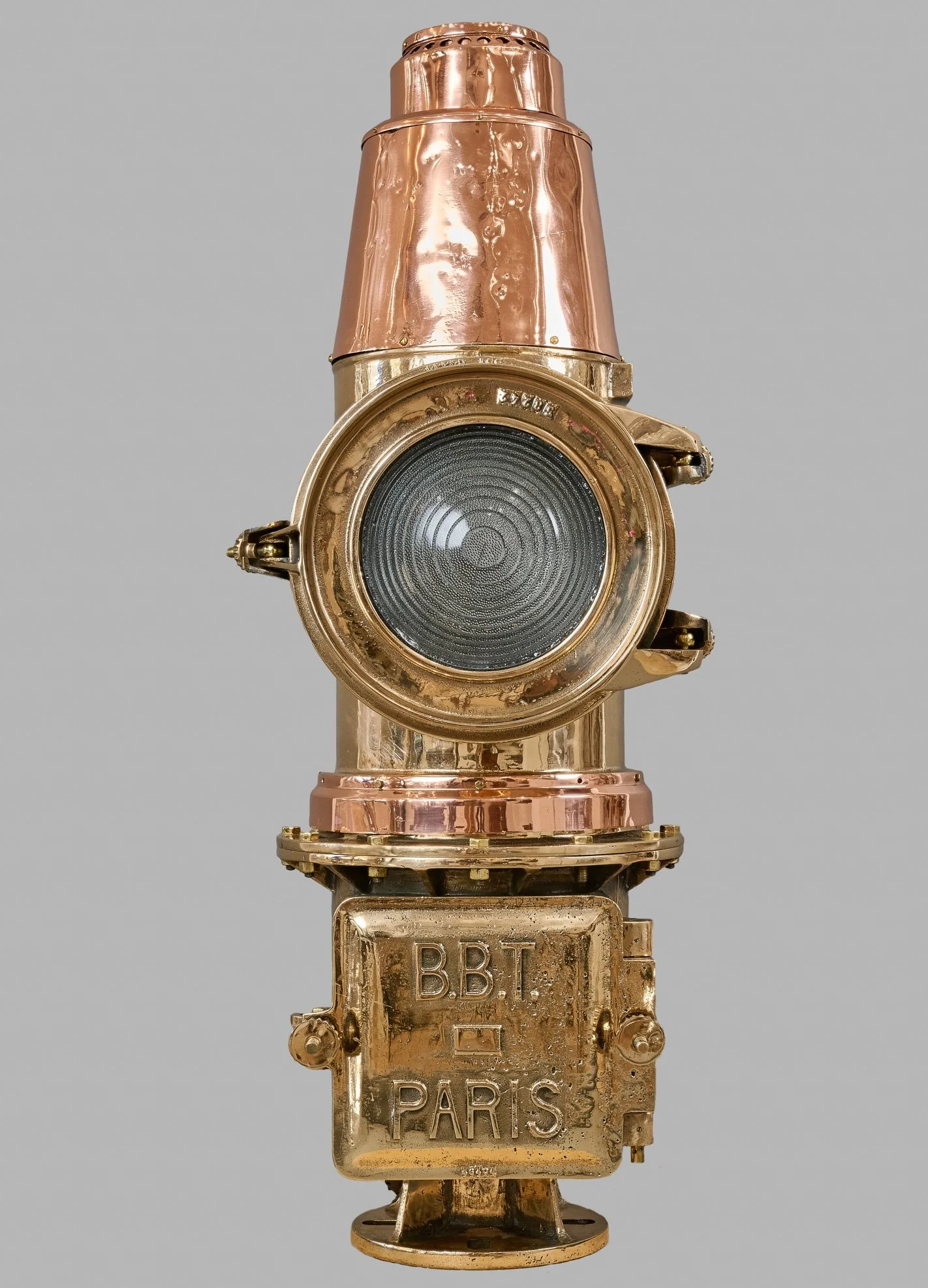 Image 1 of 4
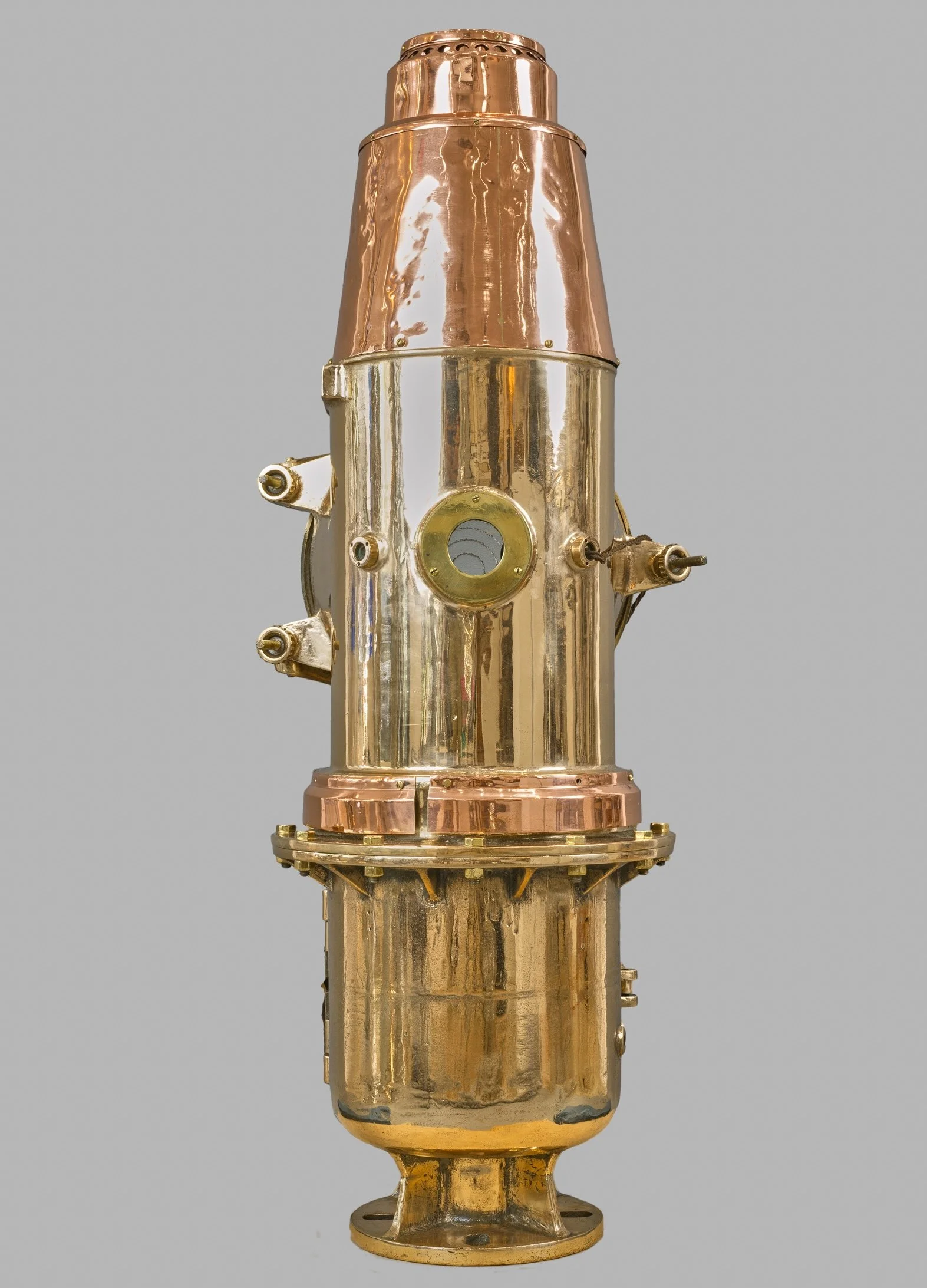 Image 2 of 4
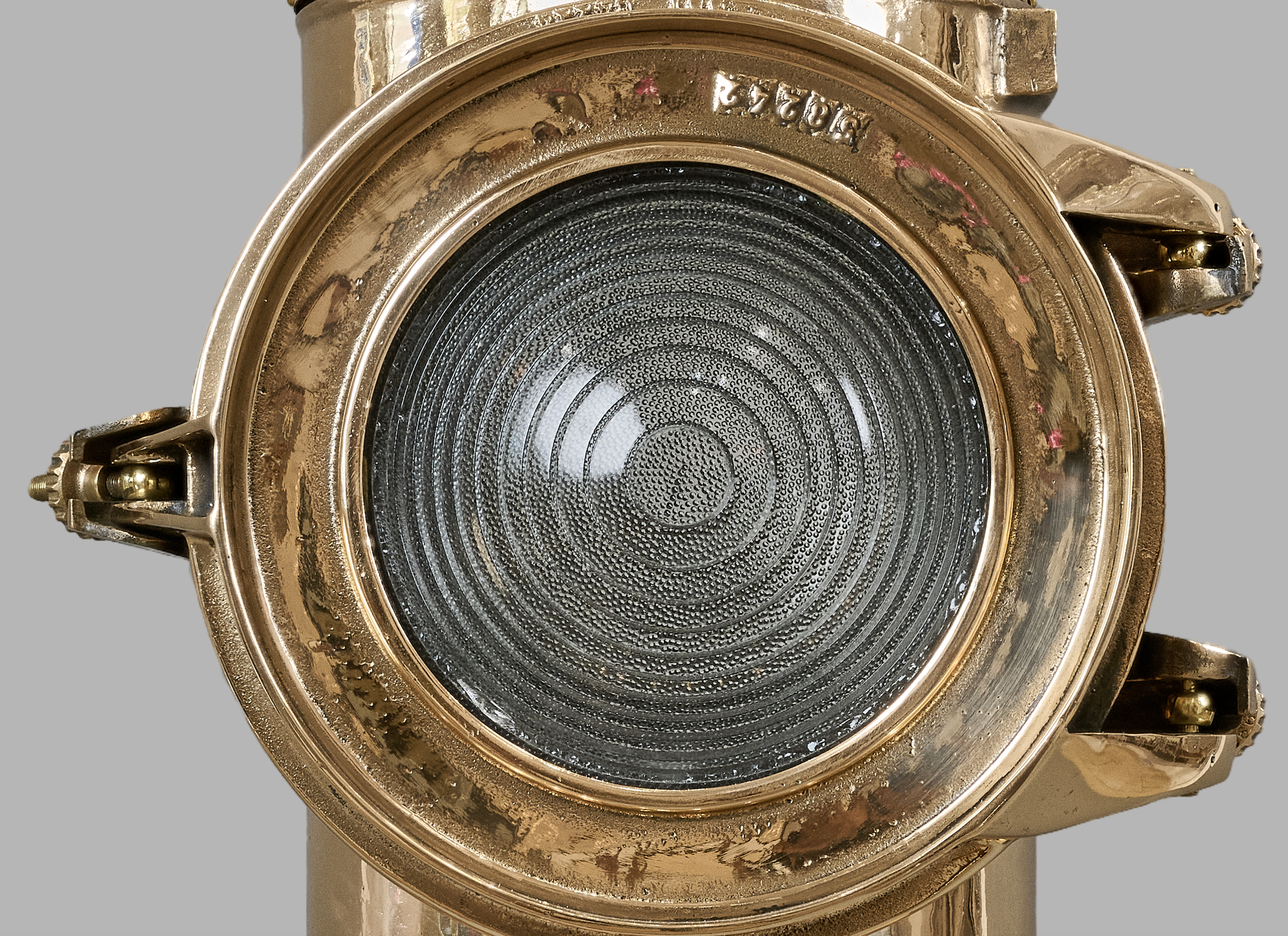 Image 3 of 4
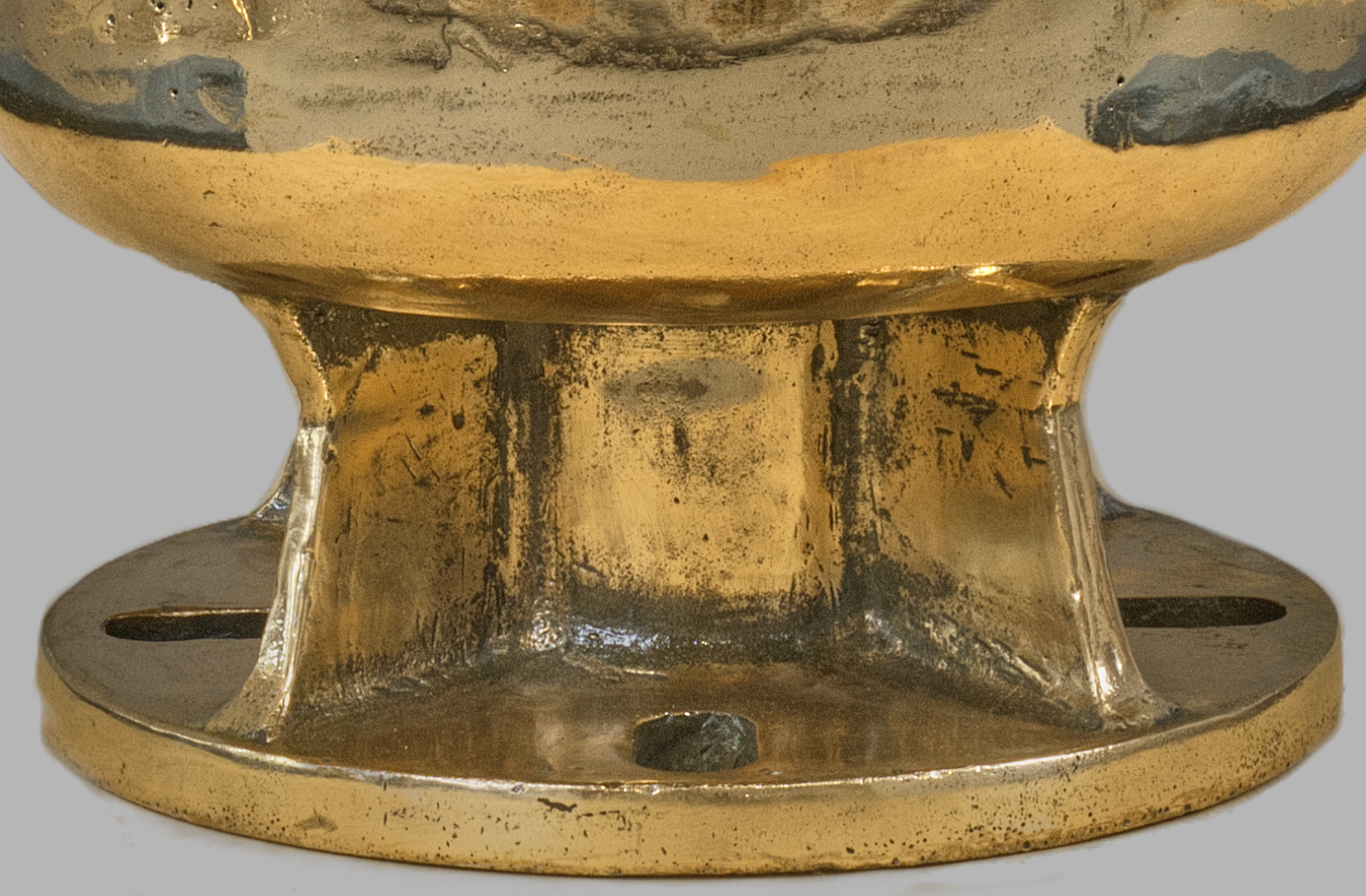 Image 4 of 4