Le Baiser, The Kiss, cast in bronze by the Barbedienne foundry with a dark brown original patina, signed Rodin to the front of the rock at right, inscribed F. Barbedienne, Fondeur to the left, and stamped with the letter C to the interior. It stands 23 1/2 inches high, 59.5 by 36.8 by 39.8 centimeters, the second reduction of the model, conceived in 1886 and cast within the artist's lifetime, between 1904 and 1918.
Few images in the history of sculpture have come to stand so completely for love itself. Rodin revered Dante, in whom he saw a sculptor as much as a poet, and the group depicts Paolo Malatesta and Francesca da Rimini, the lovers Dante places among the lustful in the second circle of his Inferno. Married to Paolo's brother, Francesca falls for Paolo as the two read together of Lancelot and Guinevere, and at the moment the knight kisses his queen, the book slips from their hands. That day, Francesca tells Dante that they will read no further. Rodin seizes that first kiss, the instant desire overcomes them, the same kiss that would cost them their lives, for when Francesca's husband discovered the lovers, he killed them both. The little book is the only trace of the story Rodin keeps, still slipping from Paolo's hand.
Stripping away the medieval dress and the props with which earlier artists had told the tale, Rodin renders the couple nude and timeless, and in doing so lifts them out of Dante altogether into a universal image of passion. Everything is carried by the bodies, Francesca's leg drawn over Paolo's, her arm reaching to bring his head to hers, the long serpentine line where the two figures seem to flow into one. The modeling gives the bronze the warmth of living flesh, the muscle and sinew seeming to rise from within rather than rest on the surface, exactly the lifelike quality Rodin pursued in all his work. Rilke, who served for a time as the sculptor's secretary, felt that the rapture of the kiss seemed to pass through every surface of the lovers' bodies.
Rodin first conceived the pair for La Porte de l'Enfer, the Gates of Hell, commissioned by the French state in 1880, but the tenderness of the embrace sat so strangely against the terror of the Gates that he lifted it out to stand alone. He showed a bronze of the group at the Galerie Georges Petit in Paris in 1887, and a plaster in Brussels, where it took the name by which it has been known ever since. The lifesize marble, commissioned by the state in 1888, became the centerpiece of the Salon of 1898, where it was hailed as la vraie Beauté and seen as the age's answer to the sculpture of antiquity, and went on to acclaim at the Exposition Universelle of 1900.
Such was the demand that on 6 July 1898, Rodin signed a ten-year contract with the Leblanc-Barbedienne foundry to issue Le Baiser and the Éternel Printemps as bronze reductions. The foundry produced the model in four sizes; this, the second reduction at sixty centimeters, was cast from 1904, and the Comité Auguste Rodin records between sixty-five and sixty-nine examples of the size before the edition closed in 1918. Cast within Rodin's lifetime and retaining its original dark brown patina, it is a documented Barbedienne lifetime reduction of the artist's most celebrated group.
The bronze is accompanied by a letter from the Comité Auguste Rodin at Galerie Brame and Lorenceau, which examined the work and found it consistent in every respect, the modeling, the mounting, the foundry mark, the signature, and the engraved interior inscriptions, with the casts of this Barbedienne edition made between 1904 and 1918. The Comité has recorded the work for inclusion in the forthcoming Catalog Critique de l'Œuvre Sculpté d'Auguste Rodin, prepared under the direction of Jérôme Le Blay, under number 2015-4697B. Its provenance is a private French collection, by descent, and the bronze has been checked against the Art Loss Register.
Literature (references for the model)
These document the composition of Le Baiser across its versions; the version illustrated is noted in each entry. For the bronze editions specifically, including the Barbedienne reductions, see Le Normand-Romain, 2007.
G. Grappe, Catalogue du Musée Rodin, Paris, 1927, p. 47, nos. 91-92 (marble version illustrated).
G. Grappe, Le Musée Rodin, Paris, 1947, p. 142 (marble version illustrated, pl. 71).
C. Goldscheider, Rodin, Paris, 1962, p. 49 (marble version illustrated).
A.E. Elsen, Rodin, New York, 1963, pp. 62-63 (larger bronze version illustrated, p. 63; dated 1880-1882).
R. Descharnes and J.-F. Chabrun, Auguste Rodin, London, 1967, p. 130 (marble version illustrated in situ at the Musée Rodin, Paris, p. 131).
I. Jianou and C. Goldscheider, Rodin, Paris, 1967, p. 100 (detail of marble version illustrated, pl. 54; marble version illustrated, pl. 55).
L. Goldscheider, Rodin Sculptures, London, 1970, p. 121, no. 49 (marble version illustrated).
J.L. Tancock, The Sculpture of Auguste Rodin, Philadelphia, 1976, pp. 72, 90 and 108, no. 151 (marble version illustrated in situ at the Salon of 1898, p. 77).
J. de Caso and P. Sanders, Rodin's Sculpture: A Critical Study of the Spreckels Collection, San Francisco, 1977, pp. 148-153, no. 22 (smaller bronze version illustrated, pp. 148 and 150).
R.M. Rilke, Rodin, Salt Lake City, 1982, pp. 38 and 104 (another cast illustrated, p. 39).
A.E. Elsen, The Gates of Hell by Auguste Rodin, Stanford, 1985, pp. 78 and 80-81 (another cast illustrated, p. 79, fig. 70).
N. Barbier, Marbres de Rodin: Collection du Musée Rodin, Paris, 1987, pp. 184 and 258, no. 79 (marble version illustrated, pp. 185 and 187).
A. Le Normand-Romain, Le Baiser de Rodin, Paris, 1995, pp. 20-21 (another cast illustrated, p. 20, fig. 2; plaster version illustrated, p. 20, fig. 3).
J. Vilain, Rodin at the Musée Rodin, Paris, 1996, p. 39 (large marble version illustrated in color).
A. Le Normand-Romain, Rodin, Paris, 1997, p. 49 (terracotta version illustrated in color, p. 48).
R. Butler and S.G. Lindsay, European Sculpture of the Nineteenth Century: The Collections of the National Gallery of Art, Washington, D.C., 2000, pp. 326 and 329-330 (another cast illustrated in color, pp. 327-328; plaster version illustrated, p. 329, fig. 1; marble version illustrated in situ at the Salon of 1898, p. 329, fig. 2).
A. Pingeot, "Rodin au Musée du Luxembourg" in La Revue du Musée d'Orsay, Fall 2000, pp. 67-70 and 74, no. 8 (marble version illustrated in situ at the Musée du Luxembourg, p. 74).
A.E. Elsen, Rodin's Art: The Rodin Collection of the Iris & B. Gerald Cantor Center for the Visual Arts at Stanford University, New York, 2003, pp. 214-215, no. 49 (another cast illustrated, p. 215, fig. 167).
R. Masson and V. Mattiussi, Rodin, Paris, 2004, p. 40 (detail of marble version illustrated in color, p. 41; terracotta version illustrated in color, p. 42).
A. Le Normand-Romain, The Bronzes of Rodin: Catalog of Works in the Musée Rodin, Paris, 2007, vol. I, p. 160 (other casts illustrated, pp. 159-161; marble version illustrated, p. 163, figs. 1-3).
A. Le Normand-Romain, Rodin, New York, 2014, pp. 133-134 (terracotta version illustrated in color, p. 132; marble version illustrated, pp. 133 and 135).
Le Baiser, The Kiss, cast in bronze by the Barbedienne foundry with a dark brown original patina, signed Rodin to the front of the rock at right, inscribed F. Barbedienne, Fondeur to the left, and stamped with the letter C to the interior. It stands 23 1/2 inches high, 59.5 by 36.8 by 39.8 centimeters, the second reduction of the model, conceived in 1886 and cast within the artist's lifetime, between 1904 and 1918.
Few images in the history of sculpture have come to stand so completely for love itself. Rodin revered Dante, in whom he saw a sculptor as much as a poet, and the group depicts Paolo Malatesta and Francesca da Rimini, the lovers Dante places among the lustful in the second circle of his Inferno. Married to Paolo's brother, Francesca falls for Paolo as the two read together of Lancelot and Guinevere, and at the moment the knight kisses his queen, the book slips from their hands. That day, Francesca tells Dante that they will read no further. Rodin seizes that first kiss, the instant desire overcomes them, the same kiss that would cost them their lives, for when Francesca's husband discovered the lovers, he killed them both. The little book is the only trace of the story Rodin keeps, still slipping from Paolo's hand.
Stripping away the medieval dress and the props with which earlier artists had told the tale, Rodin renders the couple nude and timeless, and in doing so lifts them out of Dante altogether into a universal image of passion. Everything is carried by the bodies, Francesca's leg drawn over Paolo's, her arm reaching to bring his head to hers, the long serpentine line where the two figures seem to flow into one. The modeling gives the bronze the warmth of living flesh, the muscle and sinew seeming to rise from within rather than rest on the surface, exactly the lifelike quality Rodin pursued in all his work. Rilke, who served for a time as the sculptor's secretary, felt that the rapture of the kiss seemed to pass through every surface of the lovers' bodies.
Rodin first conceived the pair for La Porte de l'Enfer, the Gates of Hell, commissioned by the French state in 1880, but the tenderness of the embrace sat so strangely against the terror of the Gates that he lifted it out to stand alone. He showed a bronze of the group at the Galerie Georges Petit in Paris in 1887, and a plaster in Brussels, where it took the name by which it has been known ever since. The lifesize marble, commissioned by the state in 1888, became the centerpiece of the Salon of 1898, where it was hailed as la vraie Beauté and seen as the age's answer to the sculpture of antiquity, and went on to acclaim at the Exposition Universelle of 1900.
Such was the demand that on 6 July 1898, Rodin signed a ten-year contract with the Leblanc-Barbedienne foundry to issue Le Baiser and the Éternel Printemps as bronze reductions. The foundry produced the model in four sizes; this, the second reduction at sixty centimeters, was cast from 1904, and the Comité Auguste Rodin records between sixty-five and sixty-nine examples of the size before the edition closed in 1918. Cast within Rodin's lifetime and retaining its original dark brown patina, it is a documented Barbedienne lifetime reduction of the artist's most celebrated group.
The bronze is accompanied by a letter from the Comité Auguste Rodin at Galerie Brame and Lorenceau, which examined the work and found it consistent in every respect, the modeling, the mounting, the foundry mark, the signature, and the engraved interior inscriptions, with the casts of this Barbedienne edition made between 1904 and 1918. The Comité has recorded the work for inclusion in the forthcoming Catalog Critique de l'Œuvre Sculpté d'Auguste Rodin, prepared under the direction of Jérôme Le Blay, under number 2015-4697B. Its provenance is a private French collection, by descent, and the bronze has been checked against the Art Loss Register.
Literature (references for the model)
These document the composition of Le Baiser across its versions; the version illustrated is noted in each entry. For the bronze editions specifically, including the Barbedienne reductions, see Le Normand-Romain, 2007.
G. Grappe, Catalogue du Musée Rodin, Paris, 1927, p. 47, nos. 91-92 (marble version illustrated).
G. Grappe, Le Musée Rodin, Paris, 1947, p. 142 (marble version illustrated, pl. 71).
C. Goldscheider, Rodin, Paris, 1962, p. 49 (marble version illustrated).
A.E. Elsen, Rodin, New York, 1963, pp. 62-63 (larger bronze version illustrated, p. 63; dated 1880-1882).
R. Descharnes and J.-F. Chabrun, Auguste Rodin, London, 1967, p. 130 (marble version illustrated in situ at the Musée Rodin, Paris, p. 131).
I. Jianou and C. Goldscheider, Rodin, Paris, 1967, p. 100 (detail of marble version illustrated, pl. 54; marble version illustrated, pl. 55).
L. Goldscheider, Rodin Sculptures, London, 1970, p. 121, no. 49 (marble version illustrated).
J.L. Tancock, The Sculpture of Auguste Rodin, Philadelphia, 1976, pp. 72, 90 and 108, no. 151 (marble version illustrated in situ at the Salon of 1898, p. 77).
J. de Caso and P. Sanders, Rodin's Sculpture: A Critical Study of the Spreckels Collection, San Francisco, 1977, pp. 148-153, no. 22 (smaller bronze version illustrated, pp. 148 and 150).
R.M. Rilke, Rodin, Salt Lake City, 1982, pp. 38 and 104 (another cast illustrated, p. 39).
A.E. Elsen, The Gates of Hell by Auguste Rodin, Stanford, 1985, pp. 78 and 80-81 (another cast illustrated, p. 79, fig. 70).
N. Barbier, Marbres de Rodin: Collection du Musée Rodin, Paris, 1987, pp. 184 and 258, no. 79 (marble version illustrated, pp. 185 and 187).
A. Le Normand-Romain, Le Baiser de Rodin, Paris, 1995, pp. 20-21 (another cast illustrated, p. 20, fig. 2; plaster version illustrated, p. 20, fig. 3).
J. Vilain, Rodin at the Musée Rodin, Paris, 1996, p. 39 (large marble version illustrated in color).
A. Le Normand-Romain, Rodin, Paris, 1997, p. 49 (terracotta version illustrated in color, p. 48).
R. Butler and S.G. Lindsay, European Sculpture of the Nineteenth Century: The Collections of the National Gallery of Art, Washington, D.C., 2000, pp. 326 and 329-330 (another cast illustrated in color, pp. 327-328; plaster version illustrated, p. 329, fig. 1; marble version illustrated in situ at the Salon of 1898, p. 329, fig. 2).
A. Pingeot, "Rodin au Musée du Luxembourg" in La Revue du Musée d'Orsay, Fall 2000, pp. 67-70 and 74, no. 8 (marble version illustrated in situ at the Musée du Luxembourg, p. 74).
A.E. Elsen, Rodin's Art: The Rodin Collection of the Iris & B. Gerald Cantor Center for the Visual Arts at Stanford University, New York, 2003, pp. 214-215, no. 49 (another cast illustrated, p. 215, fig. 167).
R. Masson and V. Mattiussi, Rodin, Paris, 2004, p. 40 (detail of marble version illustrated in color, p. 41; terracotta version illustrated in color, p. 42).
A. Le Normand-Romain, The Bronzes of Rodin: Catalog of Works in the Musée Rodin, Paris, 2007, vol. I, p. 160 (other casts illustrated, pp. 159-161; marble version illustrated, p. 163, figs. 1-3).
A. Le Normand-Romain, Rodin, New York, 2014, pp. 133-134 (terracotta version illustrated in color, p. 132; marble version illustrated, pp. 133 and 135).

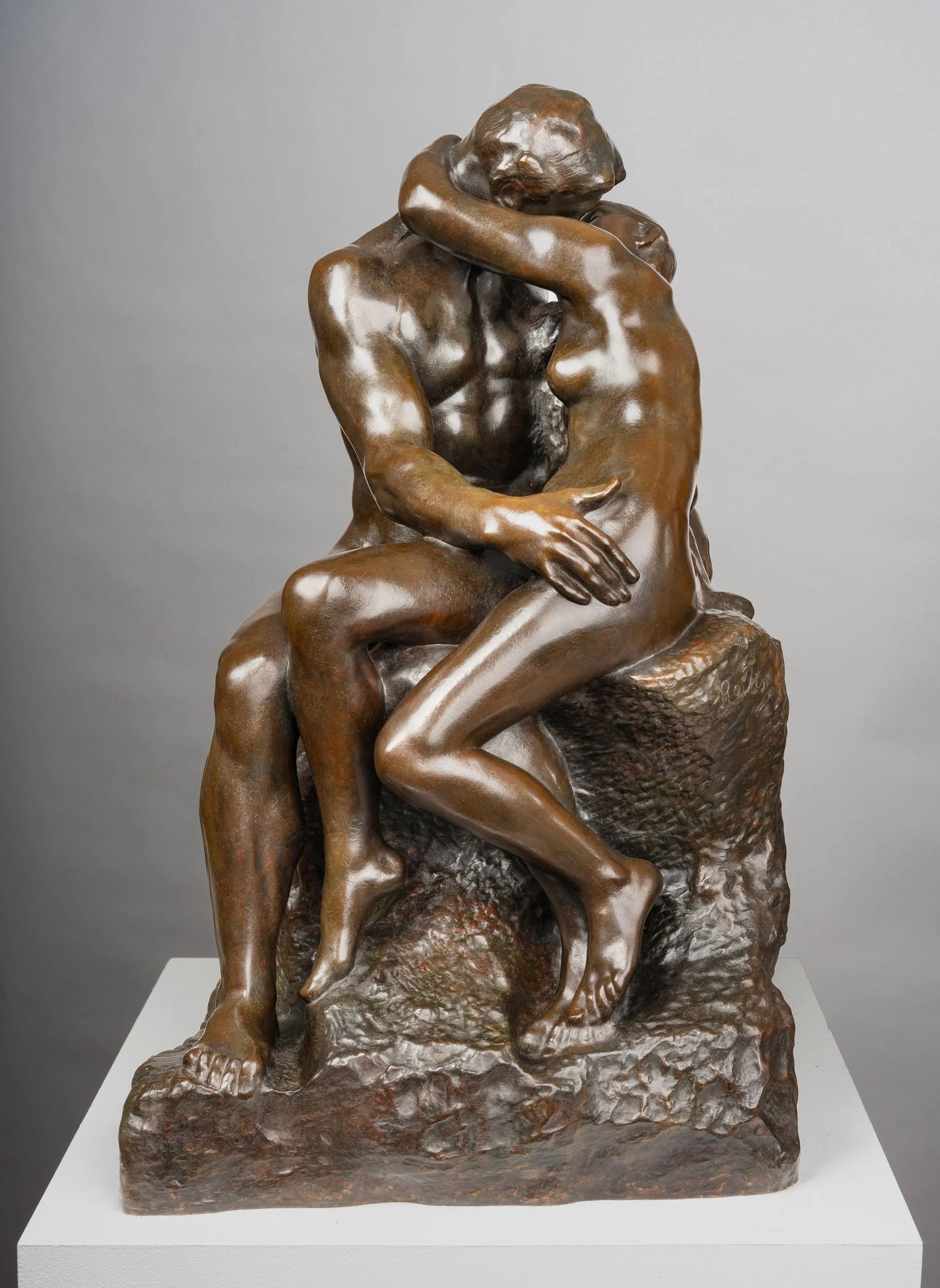 Image 1 of 2
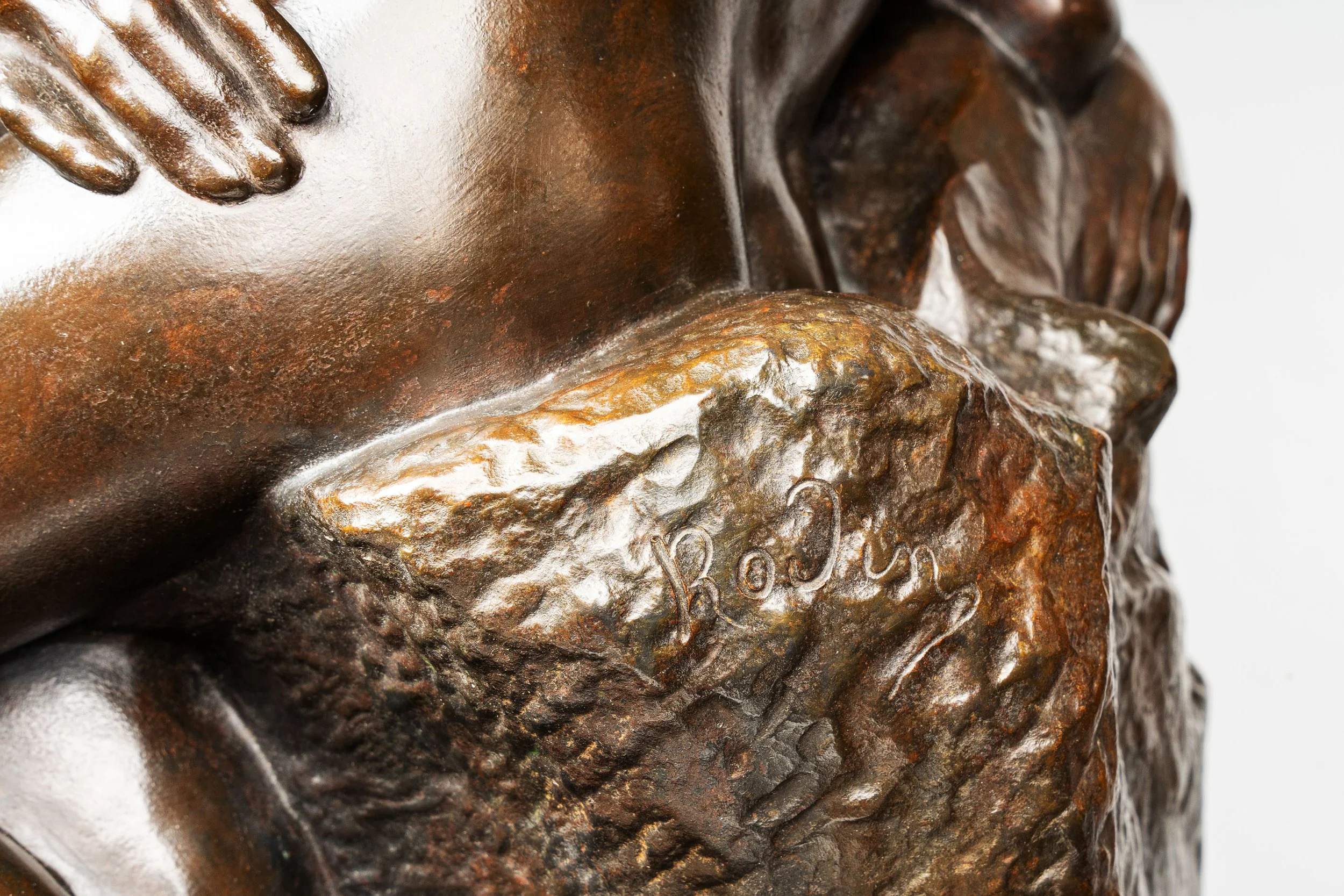 Image 2 of 2