This box is cut from rhodochrosite, the banded pink stone known to collectors as Inca Rose, and mounted in gilt brass by Asprey of London. The lid presents a remarkable face of the material, a rose-pink ground broken by concentric rings and soft grey veining where the stone was sawn across its botryoidal growth, no two passages alike. The sides carry the same figure, drawn into the feathered, fan-like formations that mark the finest examples of the stone.
Rhodochrosite of this quality comes from the Capillitas mines of Catamarca in northern Argentina, where it forms in stalactitic columns within old silver workings. Cut across, those columns yield the concentric rose pattern that has been prized for generations, the stone taking its popular name, Rosa del Inca, from the Inca who are said to have worked the deposits. Its color derives from manganese, and its relative softness asks for an accomplished lapidary, which the even surfaces and crisp mounts here reflect.
Asprey, long established on Bond Street and a holder of royal warrants, has been associated with fine objects of this kind since the nineteenth century. The interior is stamped Asprey & Co, the form of the mark the house used into the early twentieth century. The box is hinged in gilt brass, the underside of the lid set with a panel of white quartz, and the well lined in velvet, the whole assembled to the standard for which the house is known.
A hardstone box of this scale and figure is an uncommon thing, as much a specimen of natural beauty as an object of luxury. It sits equally well on a desk, a dressing table, or among a collection of objects of vertu, and rewards handling as few decorative objects do.
This box is cut from rhodochrosite, the banded pink stone known to collectors as Inca Rose, and mounted in gilt brass by Asprey of London. The lid presents a remarkable face of the material, a rose-pink ground broken by concentric rings and soft grey veining where the stone was sawn across its botryoidal growth, no two passages alike. The sides carry the same figure, drawn into the feathered, fan-like formations that mark the finest examples of the stone.
Rhodochrosite of this quality comes from the Capillitas mines of Catamarca in northern Argentina, where it forms in stalactitic columns within old silver workings. Cut across, those columns yield the concentric rose pattern that has been prized for generations, the stone taking its popular name, Rosa del Inca, from the Inca who are said to have worked the deposits. Its color derives from manganese, and its relative softness asks for an accomplished lapidary, which the even surfaces and crisp mounts here reflect.
Asprey, long established on Bond Street and a holder of royal warrants, has been associated with fine objects of this kind since the nineteenth century. The interior is stamped Asprey & Co, the form of the mark the house used into the early twentieth century. The box is hinged in gilt brass, the underside of the lid set with a panel of white quartz, and the well lined in velvet, the whole assembled to the standard for which the house is known.
A hardstone box of this scale and figure is an uncommon thing, as much a specimen of natural beauty as an object of luxury. It sits equally well on a desk, a dressing table, or among a collection of objects of vertu, and rewards handling as few decorative objects do.

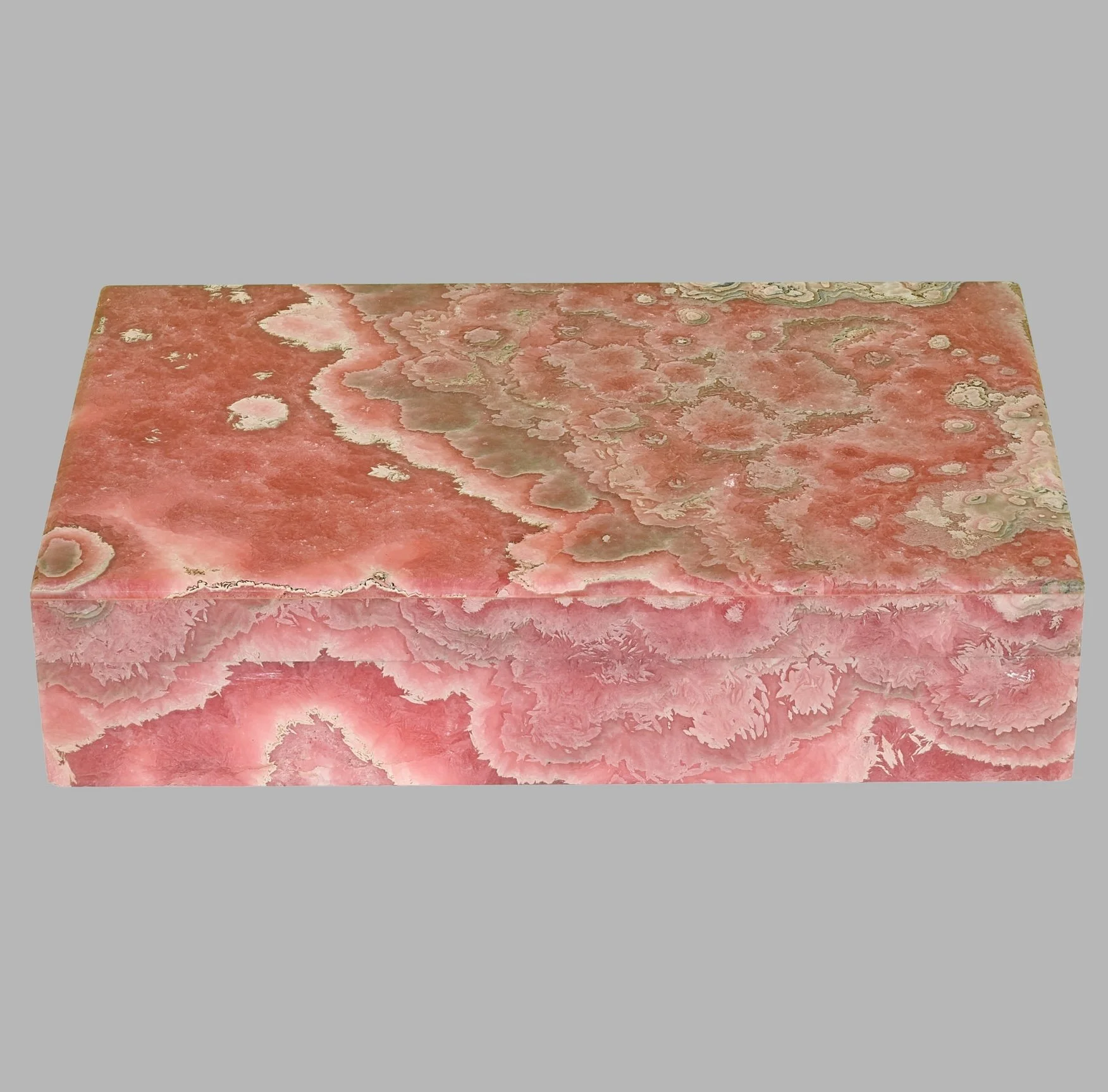 Image 1 of 2
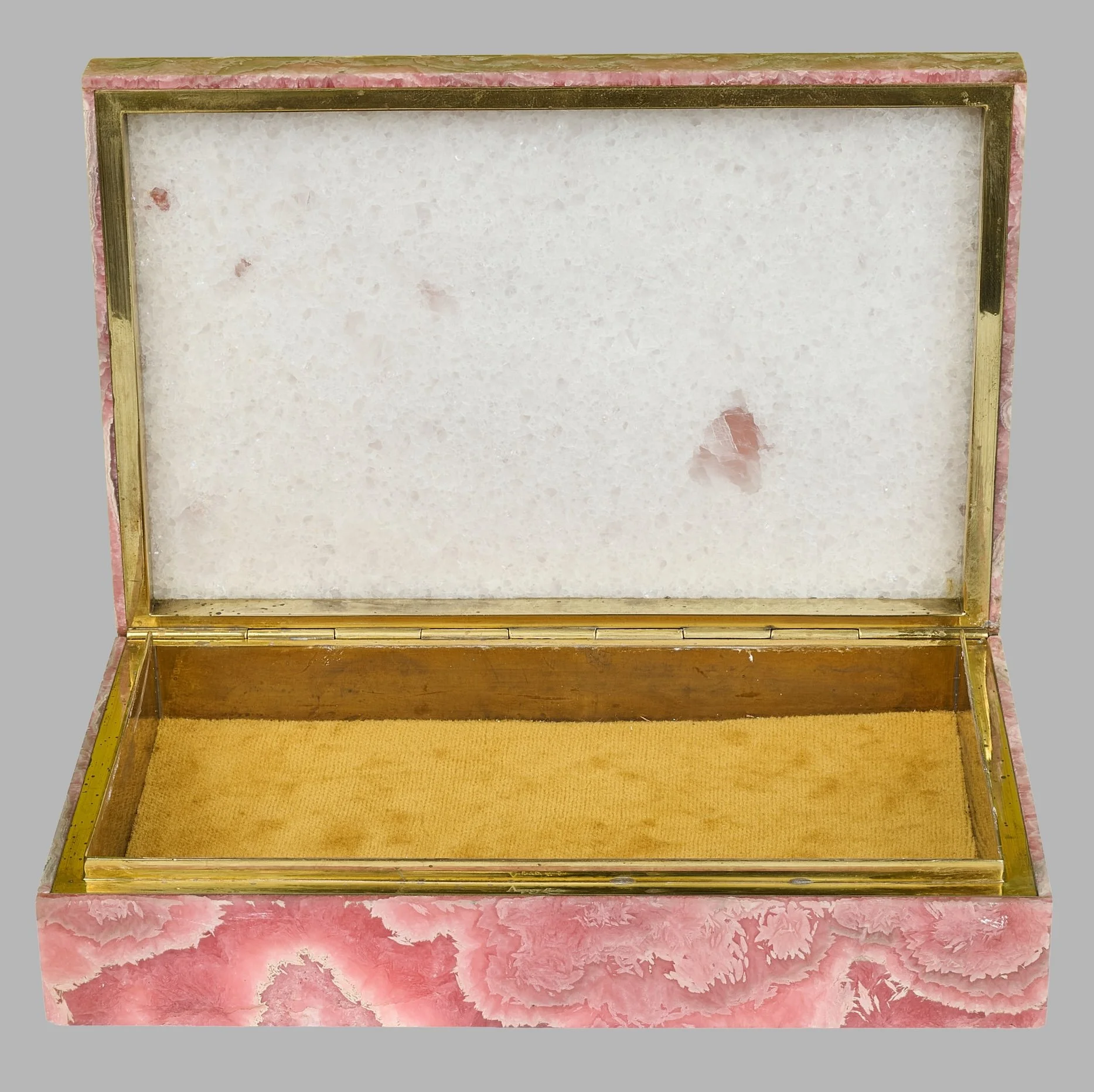 Image 2 of 2