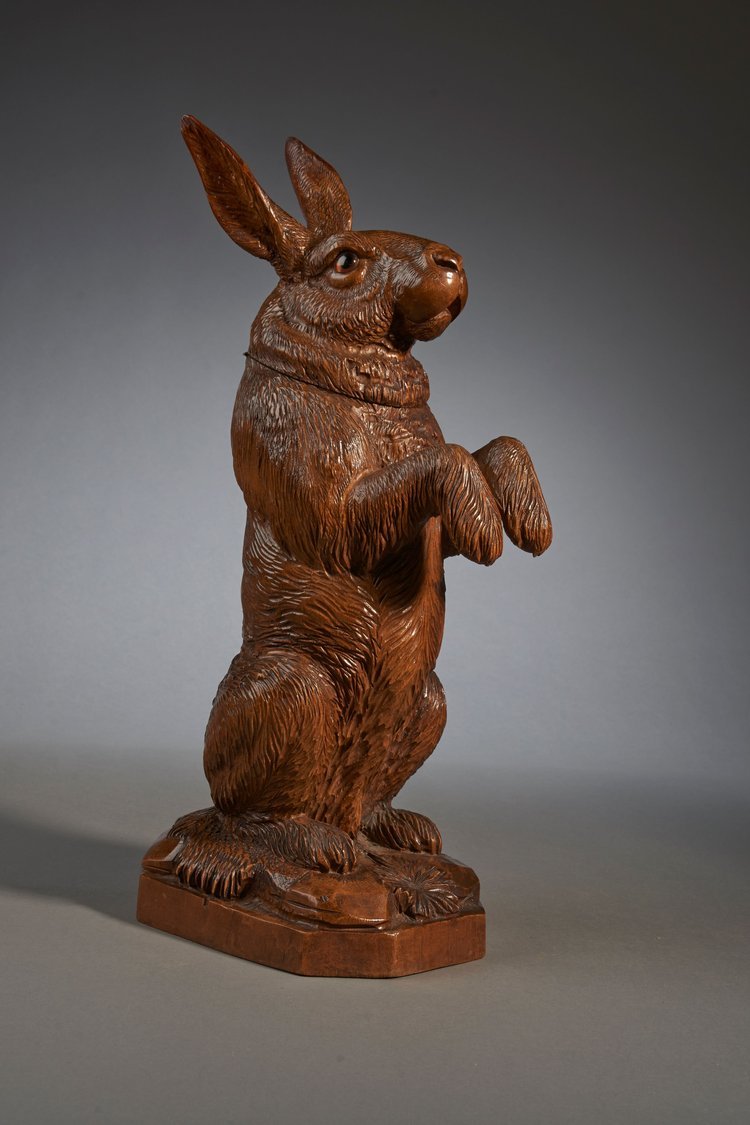
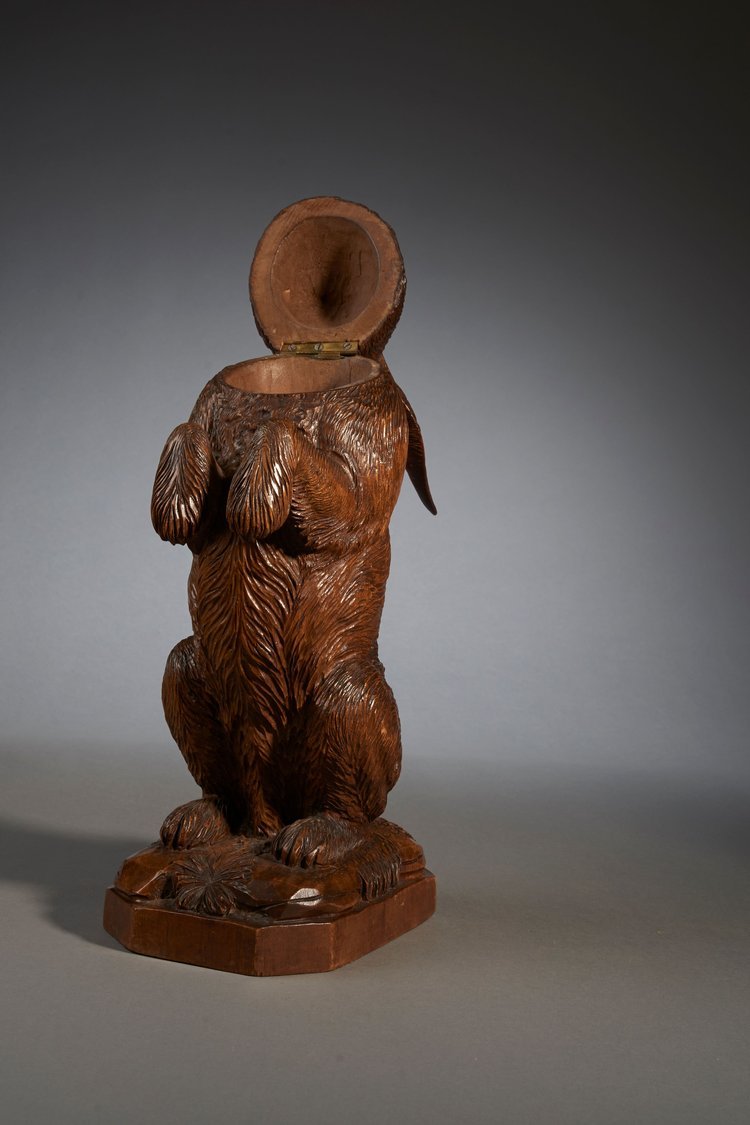
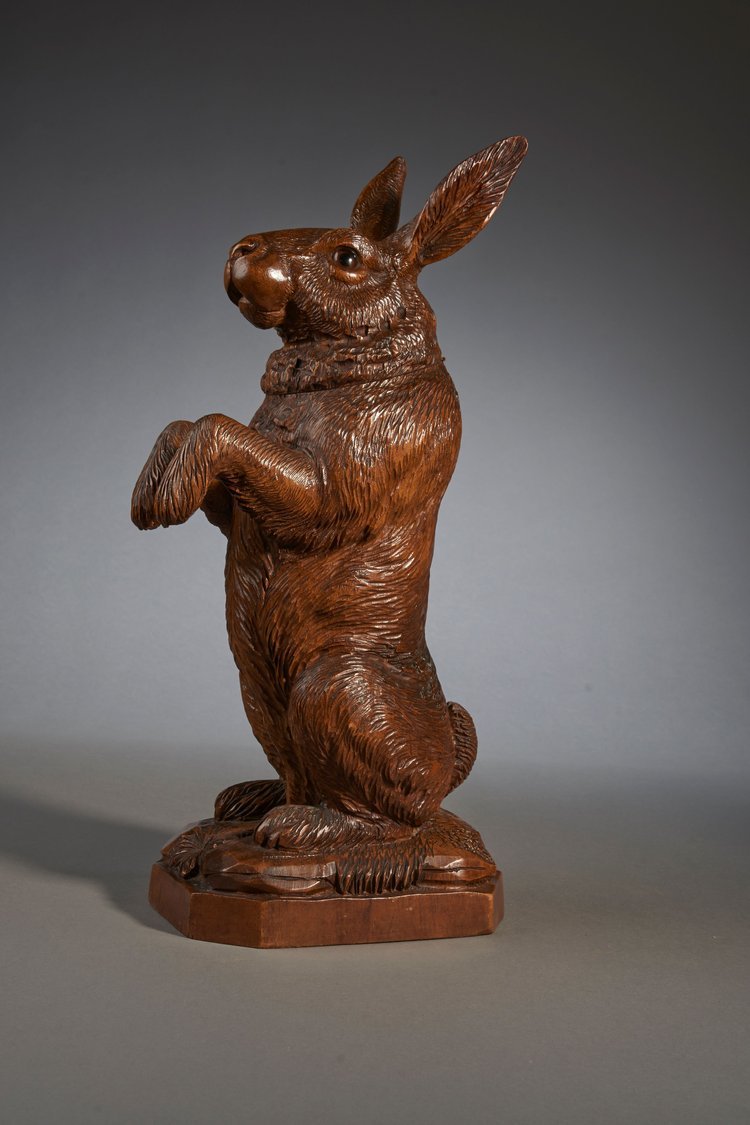
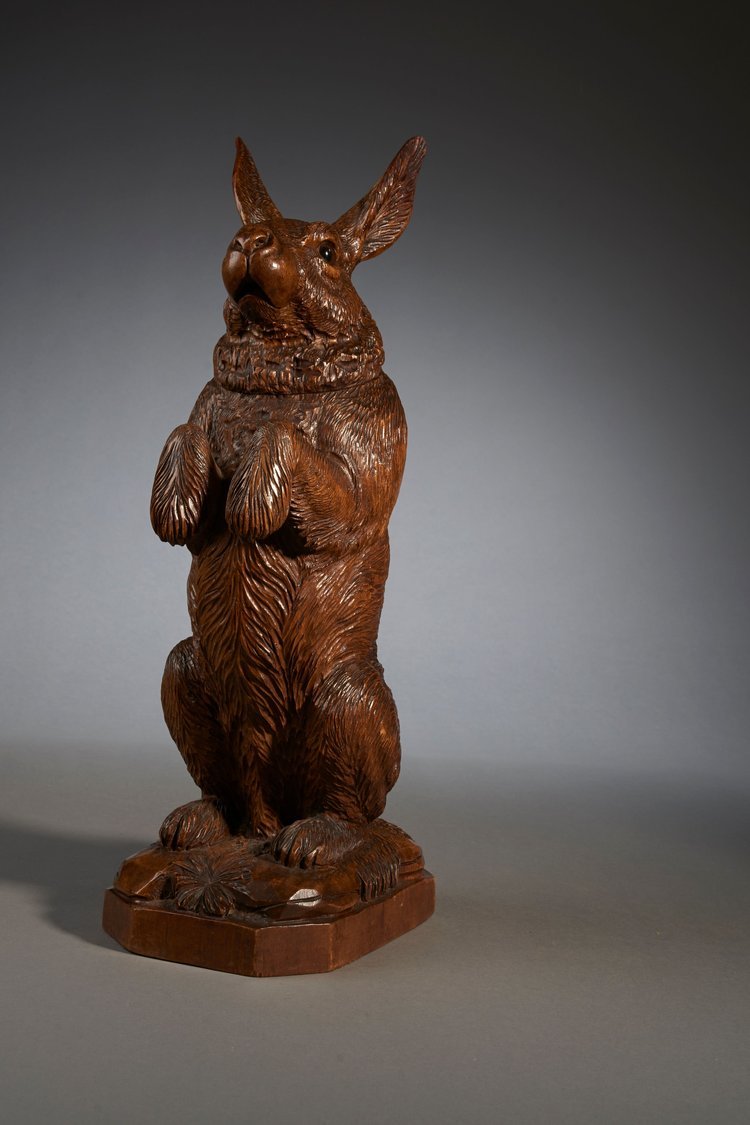
The bull is among the most demanding subjects in the entire repertoire of the animal carver — a form that requires, above all else, a command of mass. Where the bear invites drama and the dog invites sentiment, the bull demands something harder to achieve: the convincing representation of sheer physical weight, of muscle under tension, of an animal that carries within its body an almost geological density. The finest bull carvings of the Swiss tradition achieve this not through exaggeration but through observation — through the patient study of the living animal and the translation of that study into wood with the precision and confidence of a sculptor who understands what he is looking at.
The present work, signed by A. Spring of Interlaken and dating to circa 1900, belongs to that category. Carved in finely grained walnut — a material whose density and close grain permits the kind of sustained, precise work that this subject demands — the bull is depicted in a characteristic posture of alert, forward-weighted engagement: the massive head lowered, the neck muscled and tense, the shoulders bunched, the hindquarters gathered. It is the posture of an animal that has seen something and has not yet decided what to do about it — the moment of maximum potential energy, captured in wood with the authority of an artist who has observed his subject from life with the attentiveness that only genuine understanding produces.
The anatomical detail throughout is of the first order. The deeply curled poll — the dense, tight fleece of the bull's forehead — is carved with a precision that contrasts deliberately with the smoother, more taut surfaces of the neck and shoulders. The dewlap hangs with the weight of the living animal. The nostrils are flared. The eyes carry the focused, slightly alarmed expression of the beast at attention. The hooves — individually defined, pressing into the naturalistically carved grass and rocky ground of the base — are handled with the same quality of observation as the head. The tail curves upward at the rear with the characteristic restless movement of the alert animal. Every surface has been considered; nothing has been generalised.
The figure stands on an oblong naturalistically carved base — the ground rendered with grasses, pebbles, and rock — which is itself mounted on the original circular column pedestal, its shaft carved with vine and foliate ornament wrapping the full circumference, its capital handled in a stylised palm-leaf form of considerable decorative refinement. The column stands on a square plinth with moulded base. The whole composition — figure, base, column, and plinth — is an original and unified object, and its survival complete and intact is of considerable rarity.
A. Spring of Interlaken worked in the tradition of the great named Brienz masters — carvers whose animal studies were produced for exhibition and for the most demanding private commissions of the period, and whose signatures on a piece of this quality transform it from a fine decorative object into a documented work of art.
Carver: A. Spring, Interlaken, Switzerland Material: Walnut Dimensions: [INSERT: overall H × base W × base D] Circa: 1900
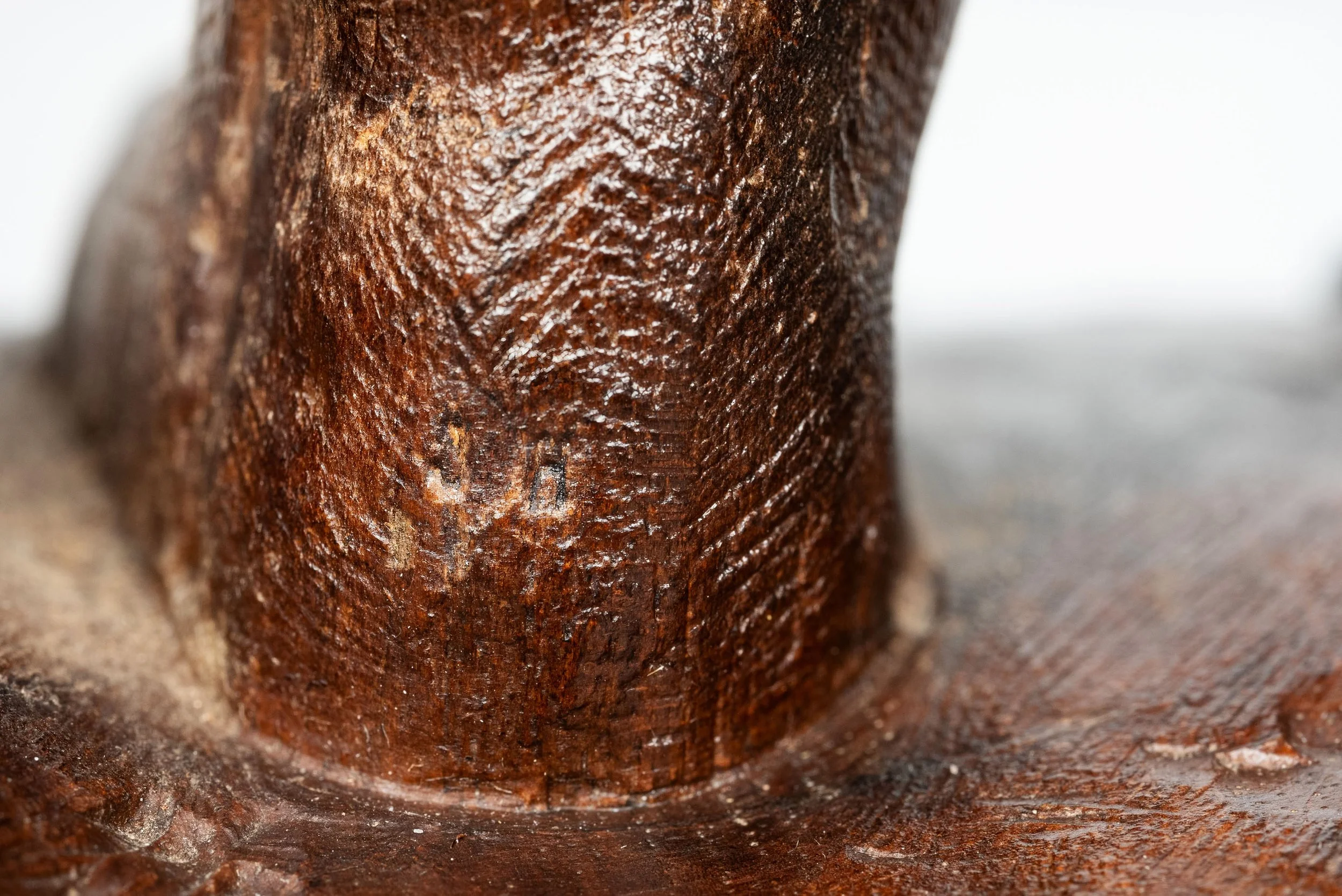
Condition: Very good. Walnut structurally sound throughout — bull figure, base, column, and plinth all intact with no cracks or losses of significance. Carving fully intact across all surfaces — poll, dewlap, musculature, hooves, and tail all crisp and complete. Naturalistic base with grasses and pebbles intact. Column shaft with vine ornament present throughout. Palm-leaf capital intact. Square plinth moulding intact. Deep, rich patina consistent with age and quality of original surface. Signature of A. Spring present.
Literature:
Jay Arenski, Simon Daniels, and Michael Daniels, Swiss Carvings: The Art of the Black Forest, 1820–1940, 2006
The bull is among the most demanding subjects in the entire repertoire of the animal carver — a form that requires, above all else, a command of mass. Where the bear invites drama and the dog invites sentiment, the bull demands something harder to achieve: the convincing representation of sheer physical weight, of muscle under tension, of an animal that carries within its body an almost geological density. The finest bull carvings of the Swiss tradition achieve this not through exaggeration but through observation — through the patient study of the living animal and the translation of that study into wood with the precision and confidence of a sculptor who understands what he is looking at.
The present work, signed by A. Spring of Interlaken and dating to circa 1900, belongs to that category. Carved in finely grained walnut — a material whose density and close grain permits the kind of sustained, precise work that this subject demands — the bull is depicted in a characteristic posture of alert, forward-weighted engagement: the massive head lowered, the neck muscled and tense, the shoulders bunched, the hindquarters gathered. It is the posture of an animal that has seen something and has not yet decided what to do about it — the moment of maximum potential energy, captured in wood with the authority of an artist who has observed his subject from life with the attentiveness that only genuine understanding produces.
The anatomical detail throughout is of the first order. The deeply curled poll — the dense, tight fleece of the bull's forehead — is carved with a precision that contrasts deliberately with the smoother, more taut surfaces of the neck and shoulders. The dewlap hangs with the weight of the living animal. The nostrils are flared. The eyes carry the focused, slightly alarmed expression of the beast at attention. The hooves — individually defined, pressing into the naturalistically carved grass and rocky ground of the base — are handled with the same quality of observation as the head. The tail curves upward at the rear with the characteristic restless movement of the alert animal. Every surface has been considered; nothing has been generalised.
The figure stands on an oblong naturalistically carved base — the ground rendered with grasses, pebbles, and rock — which is itself mounted on the original circular column pedestal, its shaft carved with vine and foliate ornament wrapping the full circumference, its capital handled in a stylised palm-leaf form of considerable decorative refinement. The column stands on a square plinth with moulded base. The whole composition — figure, base, column, and plinth — is an original and unified object, and its survival complete and intact is of considerable rarity.
A. Spring of Interlaken worked in the tradition of the great named Brienz masters — carvers whose animal studies were produced for exhibition and for the most demanding private commissions of the period, and whose signatures on a piece of this quality transform it from a fine decorative object into a documented work of art.
Carver: A. Spring, Interlaken, Switzerland Material: Walnut Dimensions: [INSERT: overall H × base W × base D] Circa: 1900
Condition: Very good. Walnut structurally sound throughout — bull figure, base, column, and plinth all intact with no cracks or losses of significance. Carving fully intact across all surfaces — poll, dewlap, musculature, hooves, and tail all crisp and complete. Naturalistic base with grasses and pebbles intact. Column shaft with vine ornament present throughout. Palm-leaf capital intact. Square plinth moulding intact. Deep, rich patina consistent with age and quality of original surface. Signature of A. Spring present.
Literature:
Jay Arenski, Simon Daniels, and Michael Daniels, Swiss Carvings: The Art of the Black Forest, 1820–1940, 2006

 Image 1 of 6
 Image 2 of 6
 Image 3 of 6
 Image 4 of 6
 Image 5 of 6
 Image 6 of 6