The anthropomorphic bear — dressed, posed, and equipped as a human being engaged in some thoroughly recognisable activity — was among the most beloved and characterful subjects in the repertoire of the Swiss Black Forest carver. Where the naturalistic bear demonstrated technical mastery, the dressed bear demonstrated something rarer: wit, observation of human behaviour, and the ability to inhabit a human figure with enough conviction to make the comedy land. The finest examples of this form achieve a quality of characterisation that places them in the same tradition as the great European ceramic and porcelain figures of the eighteenth century — objects in which an animal wearing a coat tells us more about the human condition than any straightforward portrait could.
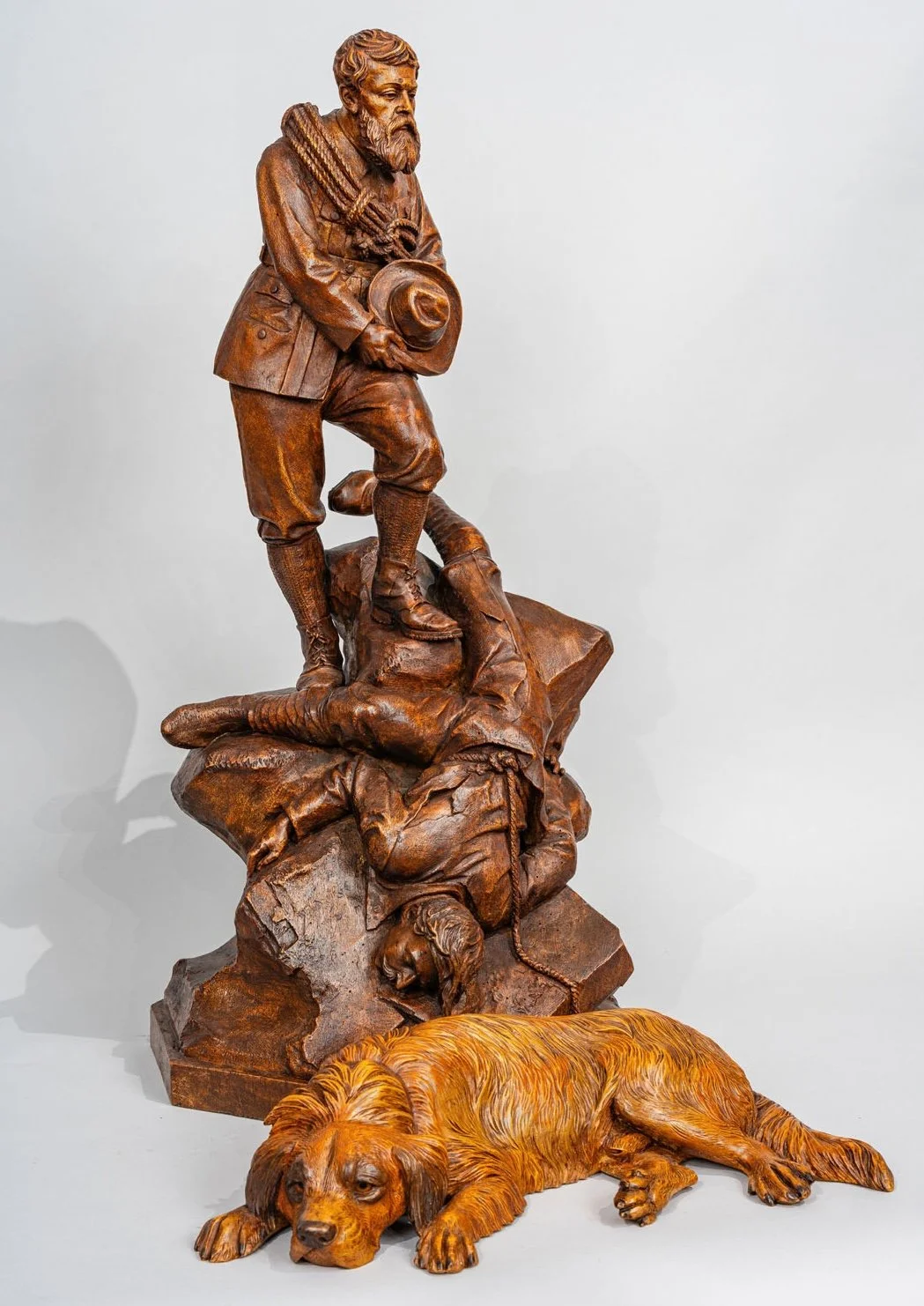
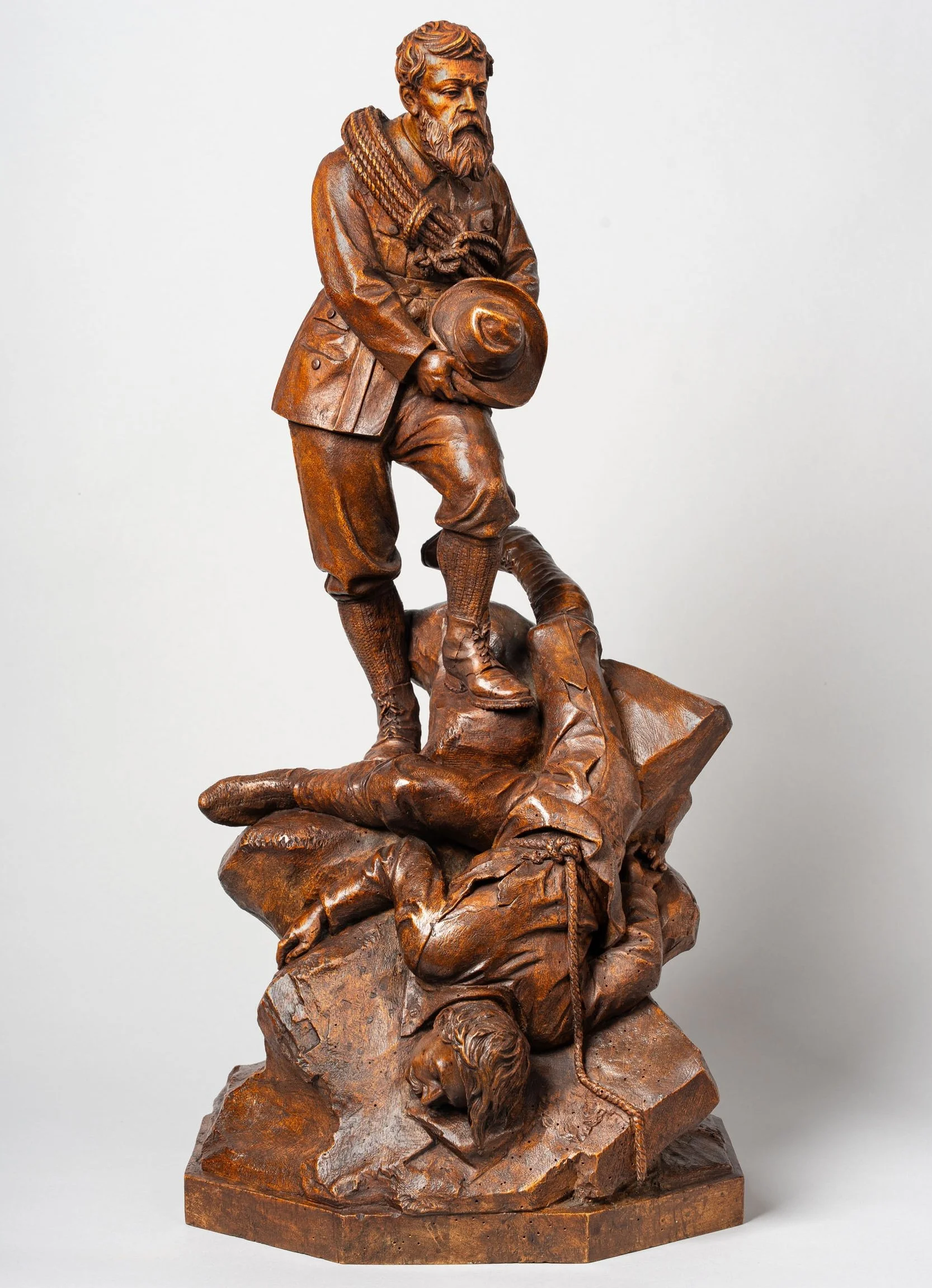
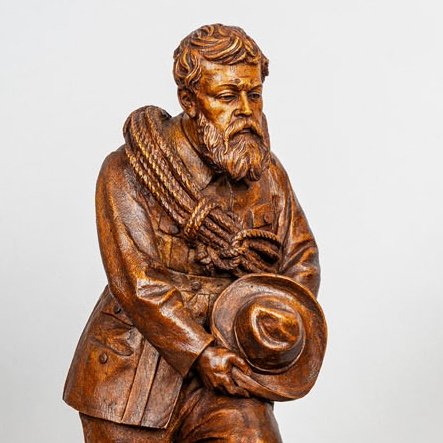
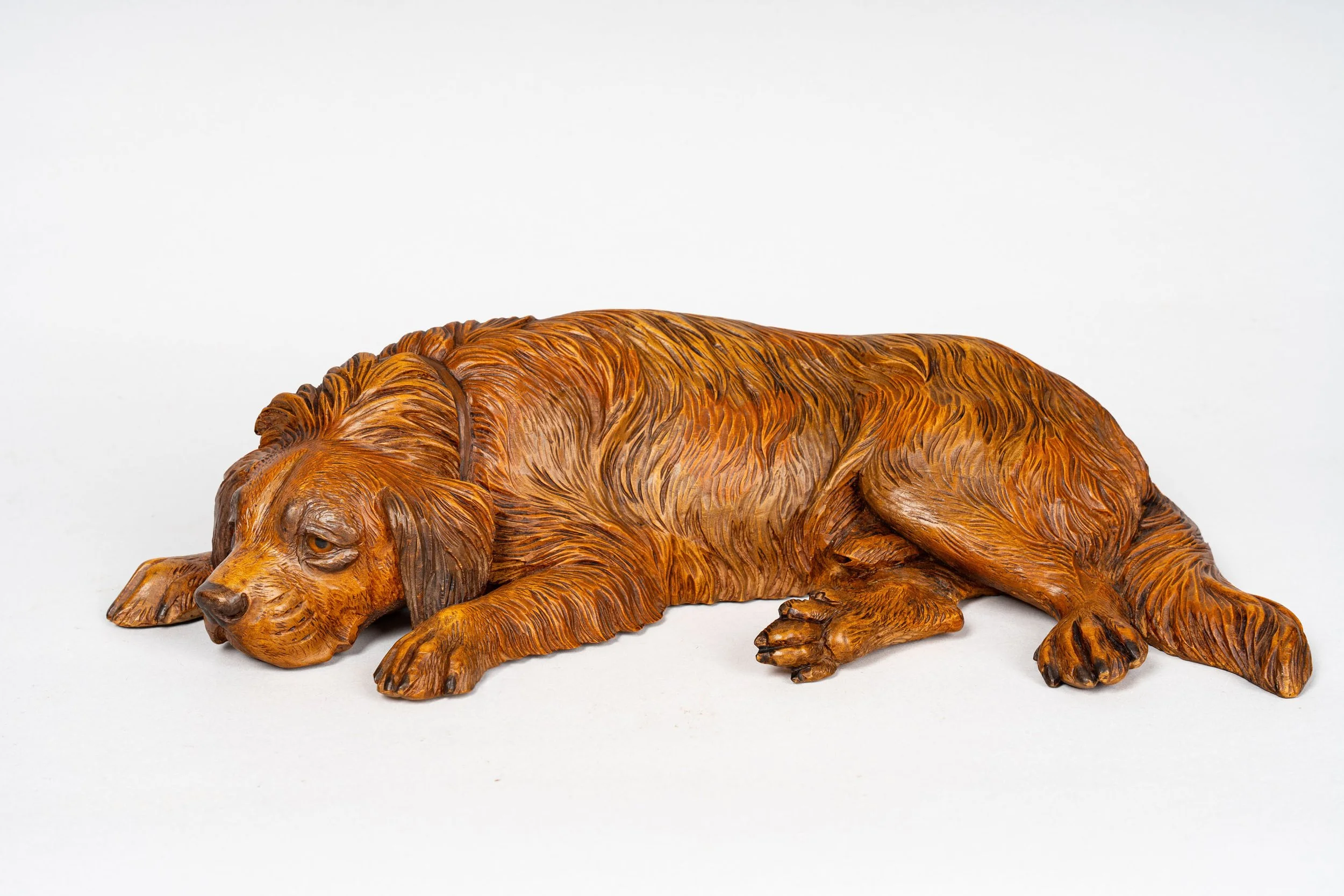
The present figure depicts a bear as the town crier — that quintessentially civic character, the official voice of public announcement, whose combination of self-importance, theatrical bearing, and civic authority made him an irresistible subject for caricature. Our bear has entered the role with complete commitment. He stands on a naturalistic rocky base, one leg raised and planted forward on an outcrop in the posture of a man in the full confidence of address. His right paw is raised, goblet in hand, in the gesture of a toast or a proclamation — the mouth open, the expression animated, the bearing that of a figure who is absolutely certain that what he has to say is worth hearing. In his left paw he holds a scroll or document — the official text of his announcement, carried with the gravity appropriate to the occasion.
His dress is rendered with the precision and pleasure that the finest Brienz carvers brought to their anthropomorphic subjects: a peaked cap tilted at a jaunty, self-assured angle; an open coat with lapels, the fabric texture conveyed through the characteristic pebbled ground of the best Swiss carving; visible fur at the chest and throat where the coat falls open. The glass eyes — a detail that distinguishes the more ambitious anthropomorphic pieces — give the face an unsettling directness, the bear meeting the viewer's gaze with the steady confidence of a man who has done this many times before. The stepped octagonal base provides a resolved and architecturally considered platform for the figure, consistent with the more refined production of the Brienz workshops.
As discussed in Swiss Carvings: The Art of the Black Forest, 1820–1940 by Jay Arenski, Simon Daniels, and Michael Daniels (Chapter 4, 'Curiosities', pp. 61–74), anthropomorphic subjects of this type represent one of the most distinctive and collectible categories within the Black Forest tradition — objects prized for their wit, their craftsmanship, and the inexhaustible pleasure they give to anyone who spends time in their company.
Material: Walnut Eyes: Glass Circa: 1890
Condition: Very good. Walnut structurally sound throughout with rich, warm patina. Carving fully intact — coat, lapels, cap, scroll, and goblet all crisp and complete. Glass eyes present and secure in both sockets. One leg raised on rocky outcrop intact. Stepped octagonal base structurally sound with honest wear consistent with age.
Literature:
Jay Arenski, Simon Daniels, and Michael Daniels, Swiss Carvings: The Art of the Black Forest, 1820–1940, 2006, Chapter 4, 'Curiosities', pp. 61–74
The anthropomorphic bear — dressed, posed, and equipped as a human being engaged in some thoroughly recognisable activity — was among the most beloved and characterful subjects in the repertoire of the Swiss Black Forest carver. Where the naturalistic bear demonstrated technical mastery, the dressed bear demonstrated something rarer: wit, observation of human behaviour, and the ability to inhabit a human figure with enough conviction to make the comedy land. The finest examples of this form achieve a quality of characterisation that places them in the same tradition as the great European ceramic and porcelain figures of the eighteenth century — objects in which an animal wearing a coat tells us more about the human condition than any straightforward portrait could.
The present figure depicts a bear as the town crier — that quintessentially civic character, the official voice of public announcement, whose combination of self-importance, theatrical bearing, and civic authority made him an irresistible subject for caricature. Our bear has entered the role with complete commitment. He stands on a naturalistic rocky base, one leg raised and planted forward on an outcrop in the posture of a man in the full confidence of address. His right paw is raised, goblet in hand, in the gesture of a toast or a proclamation — the mouth open, the expression animated, the bearing that of a figure who is absolutely certain that what he has to say is worth hearing. In his left paw he holds a scroll or document — the official text of his announcement, carried with the gravity appropriate to the occasion.
His dress is rendered with the precision and pleasure that the finest Brienz carvers brought to their anthropomorphic subjects: a peaked cap tilted at a jaunty, self-assured angle; an open coat with lapels, the fabric texture conveyed through the characteristic pebbled ground of the best Swiss carving; visible fur at the chest and throat where the coat falls open. The glass eyes — a detail that distinguishes the more ambitious anthropomorphic pieces — give the face an unsettling directness, the bear meeting the viewer's gaze with the steady confidence of a man who has done this many times before. The stepped octagonal base provides a resolved and architecturally considered platform for the figure, consistent with the more refined production of the Brienz workshops.
As discussed in Swiss Carvings: The Art of the Black Forest, 1820–1940 by Jay Arenski, Simon Daniels, and Michael Daniels (Chapter 4, 'Curiosities', pp. 61–74), anthropomorphic subjects of this type represent one of the most distinctive and collectible categories within the Black Forest tradition — objects prized for their wit, their craftsmanship, and the inexhaustible pleasure they give to anyone who spends time in their company.
Material: Walnut Eyes: Glass Circa: 1890
Condition: Very good. Walnut structurally sound throughout with rich, warm patina. Carving fully intact — coat, lapels, cap, scroll, and goblet all crisp and complete. Glass eyes present and secure in both sockets. One leg raised on rocky outcrop intact. Stepped octagonal base structurally sound with honest wear consistent with age.
Literature:
Jay Arenski, Simon Daniels, and Michael Daniels, Swiss Carvings: The Art of the Black Forest, 1820–1940, 2006, Chapter 4, 'Curiosities', pp. 61–74

 Image 1 of 3
 Image 2 of 3
 Image 3 of 3