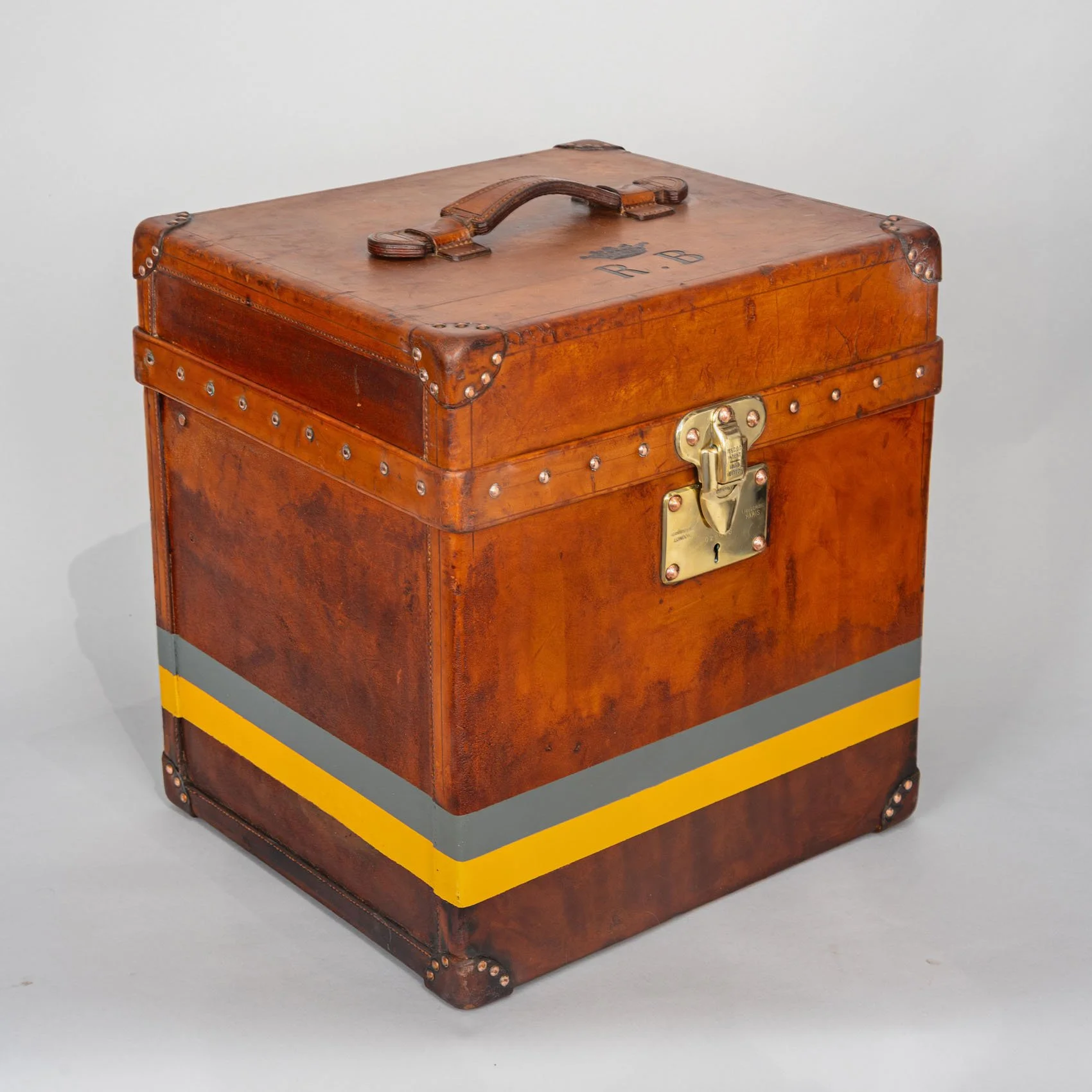
The shoe trunk is among the most purposeful and collectible specialized forms in the Louis Vuitton range — a case designed not for general luggage but for the precise and considered transport of footwear, at a time when the wardrobe of a well-dressed gentleman or lady traveling between continents might encompass a dozen or more pairs for different occasions and environments. This handsome example, dating to the 1920s, carries on its front face the owner's name stenciled in bold letters: CATTERSON — a named provenance that connects the trunk directly to a specific individual and elevates it from fine object to personal document.
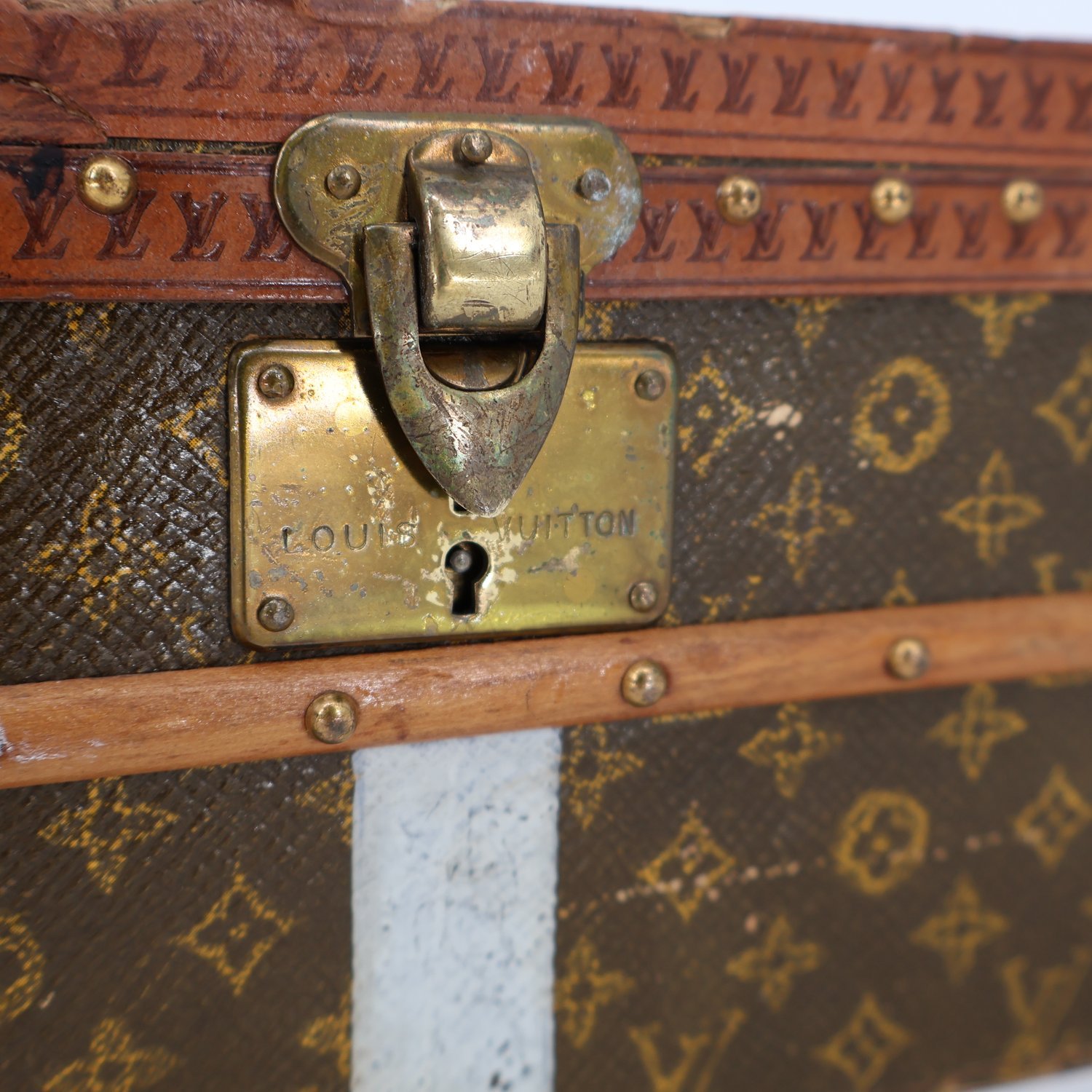
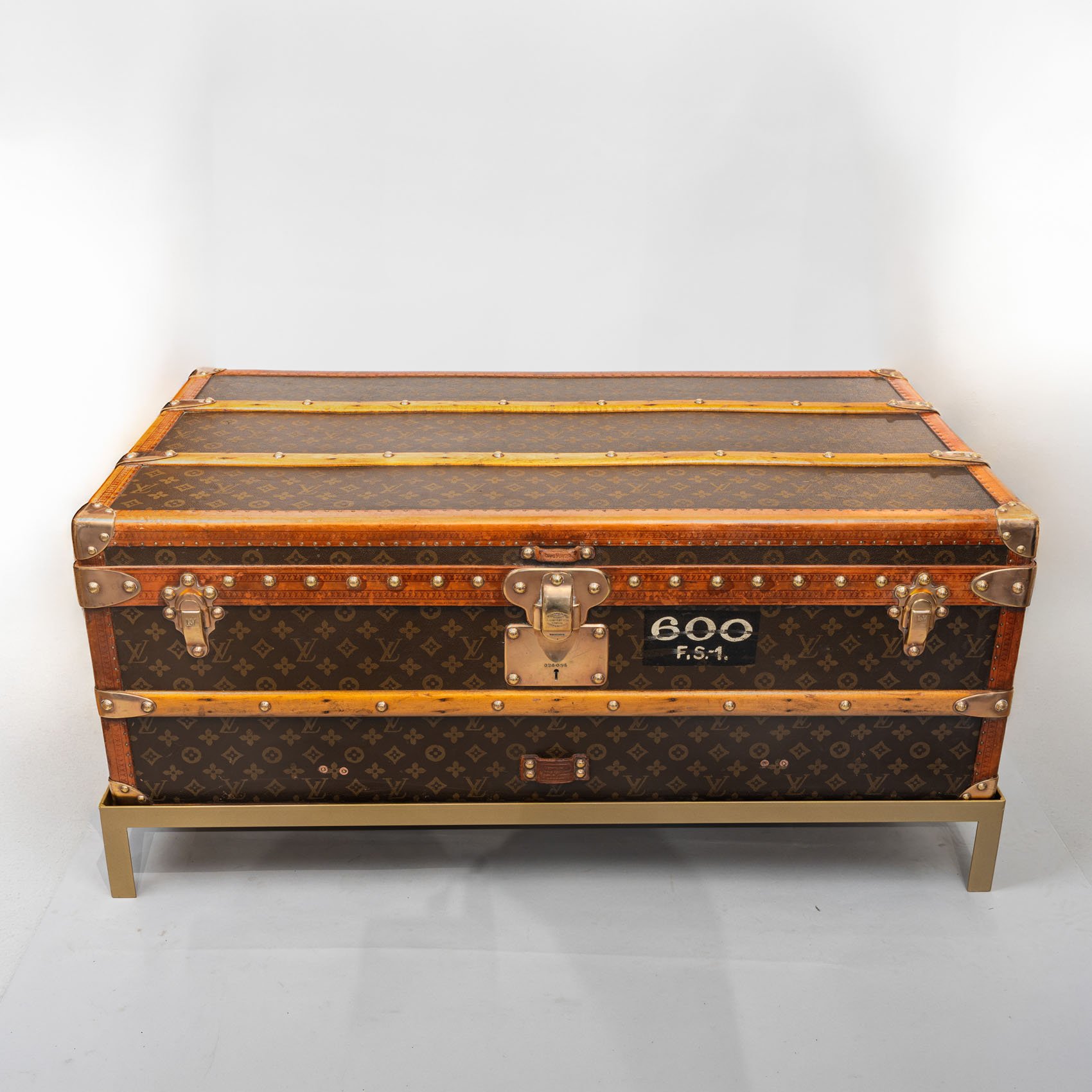
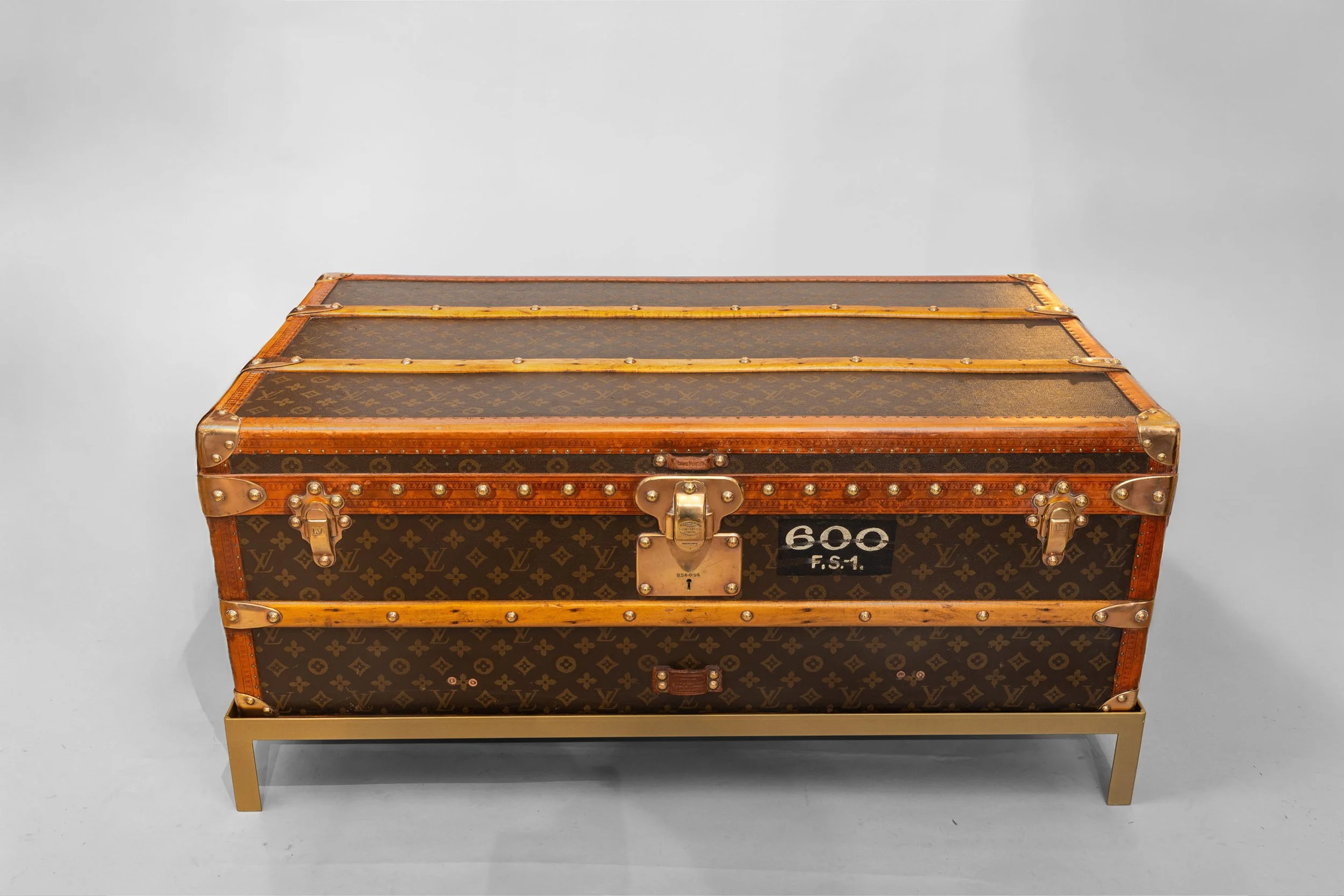
The exterior is executed in Louis Vuitton's monogram canvas in the warm, amber-toned register characteristic of the house's early 1920s production — richer and more saturated in tone than the darker canvas of the wartime years, and immediately distinguishable to the trained eye. The trunk is structured with natural wood slat banding — the return to natural materials after the black-painted wartime trim — leather edging, and the full complement of brass hardware: corner guards, studded borders, central lock plate and clasp, flanking clasps, and side handles. A secondary lock plate is present on the lower section. The construction is the characteristic flat-top configuration that Vuitton had made the industry standard since the late nineteenth century.
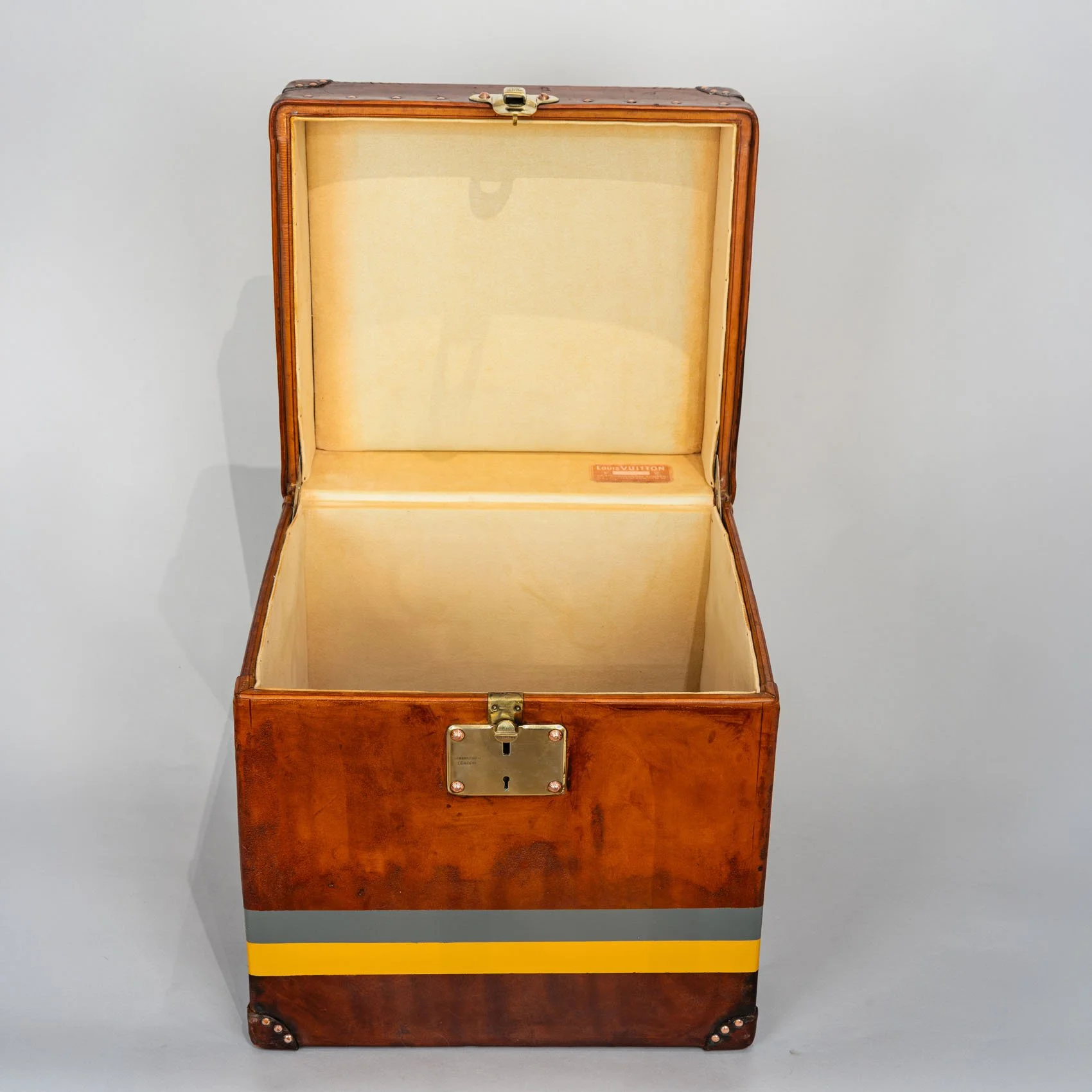
The interior is lined in Vuitton's signature orange canvas, vivid and clean, with a fitted divider tray providing organized storage for footwear. The lid interior is lined in the house's warm brown suede-effect fabric — a premium interior finish associated with this period's production — clean and fully intact.
Shoe trunks with named owner stencilling from the 1920s represent a category of increasing collector interest — the combination of a specialized form, period provenance, and intact interior configuration in this condition is genuinely uncommon on the current market.
Condition: Very good. Monogram canvas strong and vibrant with the characteristic warm amber tone of 1920s production. Leather edging and natural wood slat banding structurally intact. Brass hardware complete and bright — corner guards, clasps, lock plates, studs, and side handles all present. Owner's stenciling "CATTERSON" bold and fully legible. Interior orange canvas lining vivid and clean. Fitted divider tray present and intact. Lid suede-effect brown lining clean and fully intact. An excellent unrestored example.
Literature:
Paul-Gérard Pasols, Louis Vuitton: Malletier à Paris, Paris, 1987
Florence Müller, Louis Vuitton: 100 Legendary Trunks, New York, 2010
Pierre Léonforte, Louis Vuitton: The Birth of Modern Luxury, Paris, 2004
The shoe trunk is among the most purposeful and collectible specialized forms in the Louis Vuitton range — a case designed not for general luggage but for the precise and considered transport of footwear, at a time when the wardrobe of a well-dressed gentleman or lady traveling between continents might encompass a dozen or more pairs for different occasions and environments. This handsome example, dating to the 1920s, carries on its front face the owner's name stenciled in bold letters: CATTERSON — a named provenance that connects the trunk directly to a specific individual and elevates it from fine object to personal document.
The exterior is executed in Louis Vuitton's monogram canvas in the warm, amber-toned register characteristic of the house's early 1920s production — richer and more saturated in tone than the darker canvas of the wartime years, and immediately distinguishable to the trained eye. The trunk is structured with natural wood slat banding — the return to natural materials after the black-painted wartime trim — leather edging, and the full complement of brass hardware: corner guards, studded borders, central lock plate and clasp, flanking clasps, and side handles. A secondary lock plate is present on the lower section. The construction is the characteristic flat-top configuration that Vuitton had made the industry standard since the late nineteenth century.
The interior is lined in Vuitton's signature orange canvas, vivid and clean, with a fitted divider tray providing organized storage for footwear. The lid interior is lined in the house's warm brown suede-effect fabric — a premium interior finish associated with this period's production — clean and fully intact.
Shoe trunks with named owner stencilling from the 1920s represent a category of increasing collector interest — the combination of a specialized form, period provenance, and intact interior configuration in this condition is genuinely uncommon on the current market.
Condition: Very good. Monogram canvas strong and vibrant with the characteristic warm amber tone of 1920s production. Leather edging and natural wood slat banding structurally intact. Brass hardware complete and bright — corner guards, clasps, lock plates, studs, and side handles all present. Owner's stenciling "CATTERSON" bold and fully legible. Interior orange canvas lining vivid and clean. Fitted divider tray present and intact. Lid suede-effect brown lining clean and fully intact. An excellent unrestored example.
Literature:
Paul-Gérard Pasols, Louis Vuitton: Malletier à Paris, Paris, 1987
Florence Müller, Louis Vuitton: 100 Legendary Trunks, New York, 2010
Pierre Léonforte, Louis Vuitton: The Birth of Modern Luxury, Paris, 2004

 Image 1 of 2
 Image 2 of 2