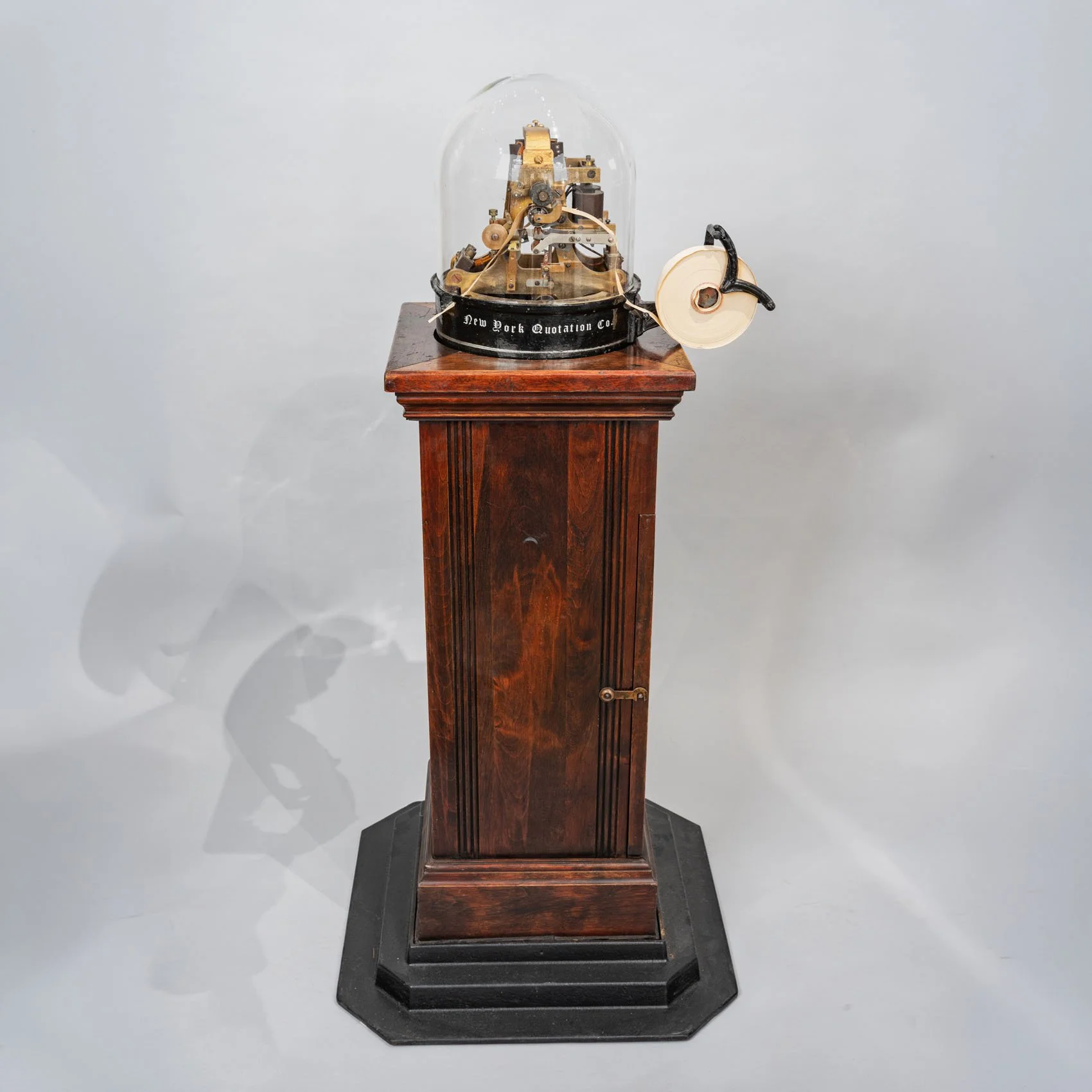
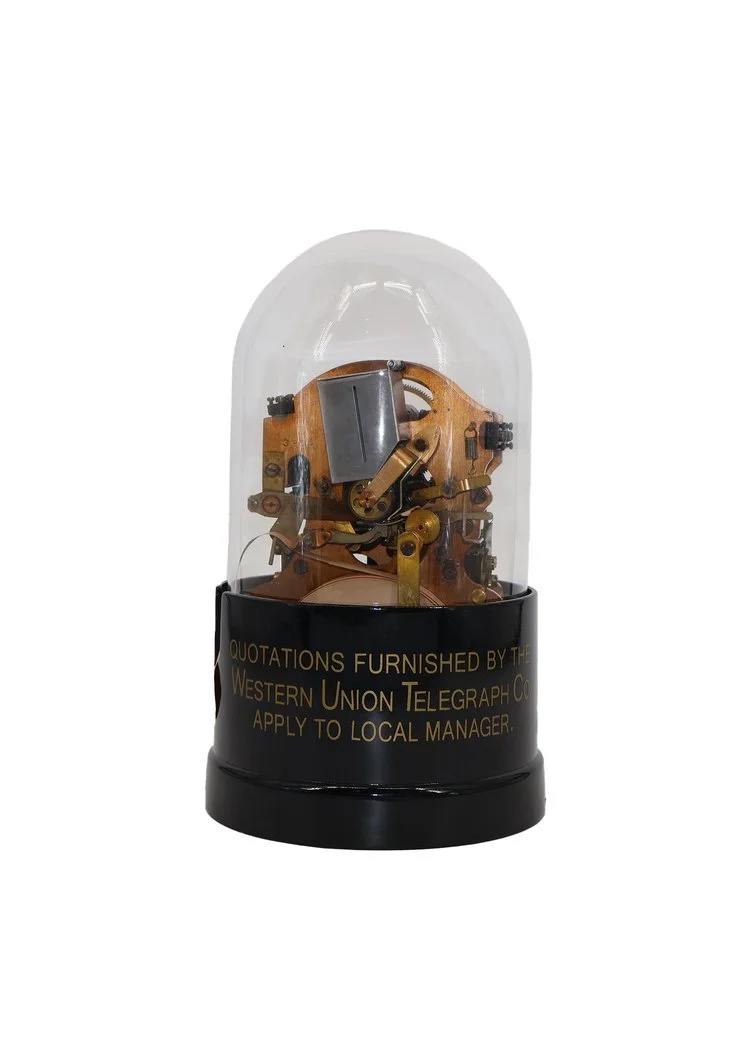
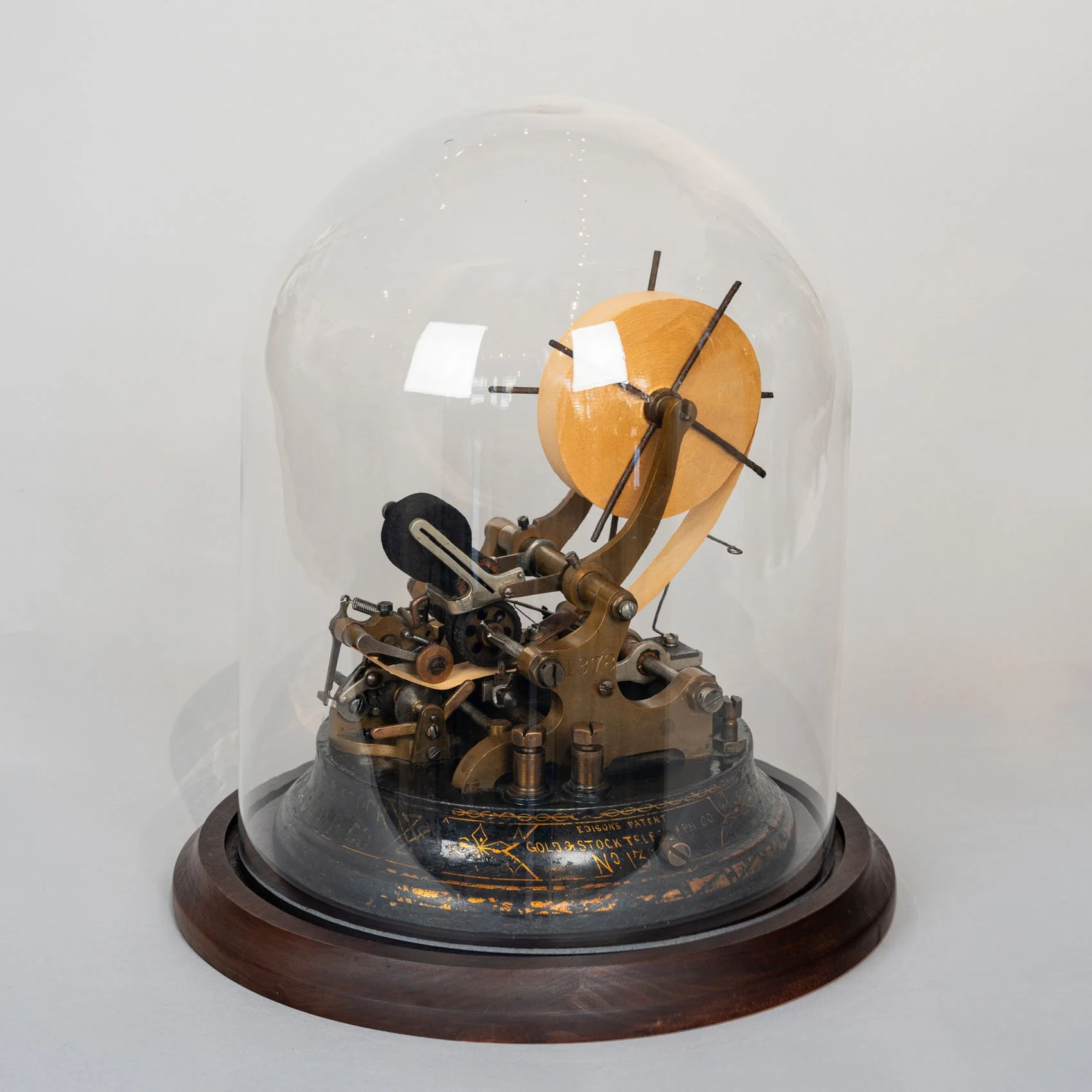
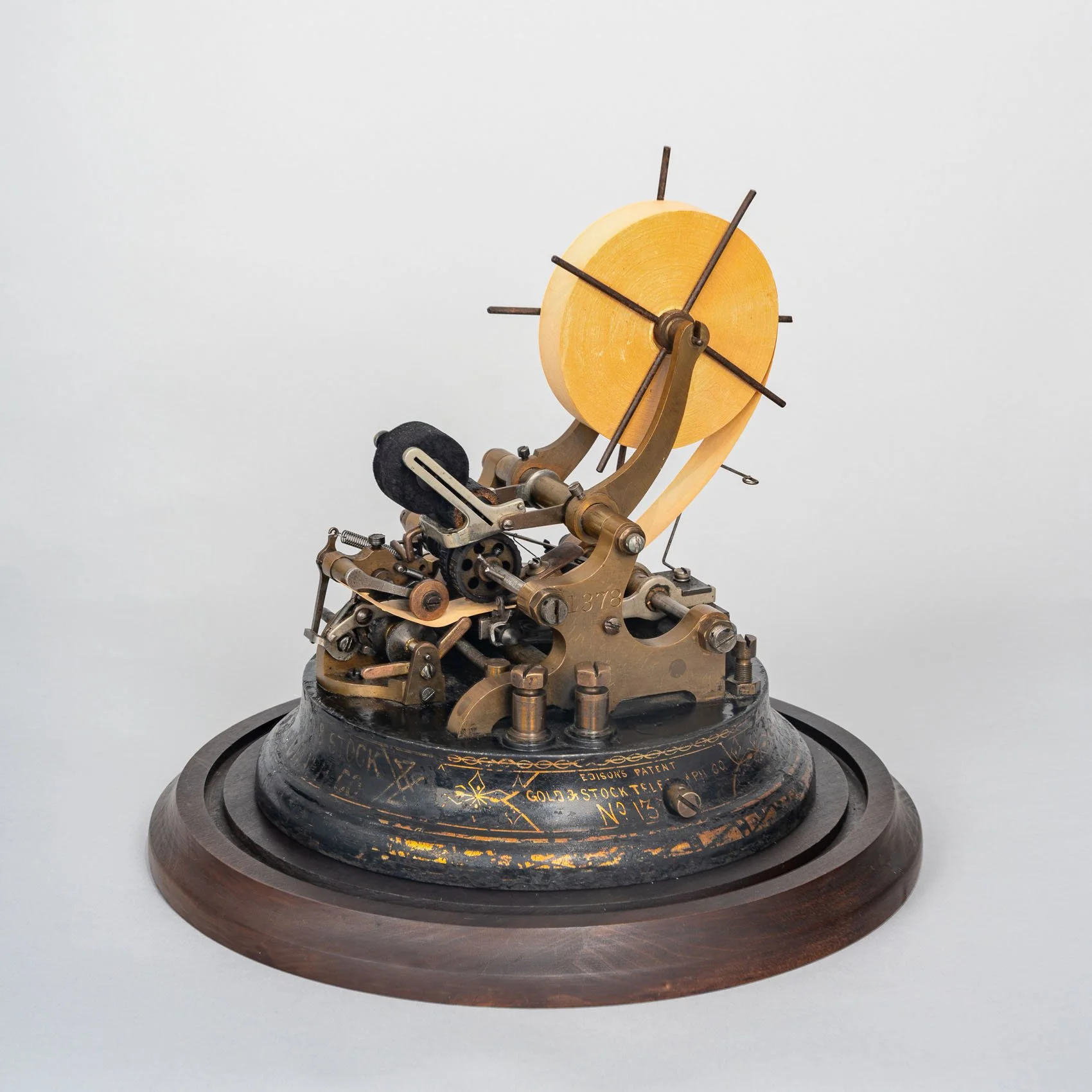
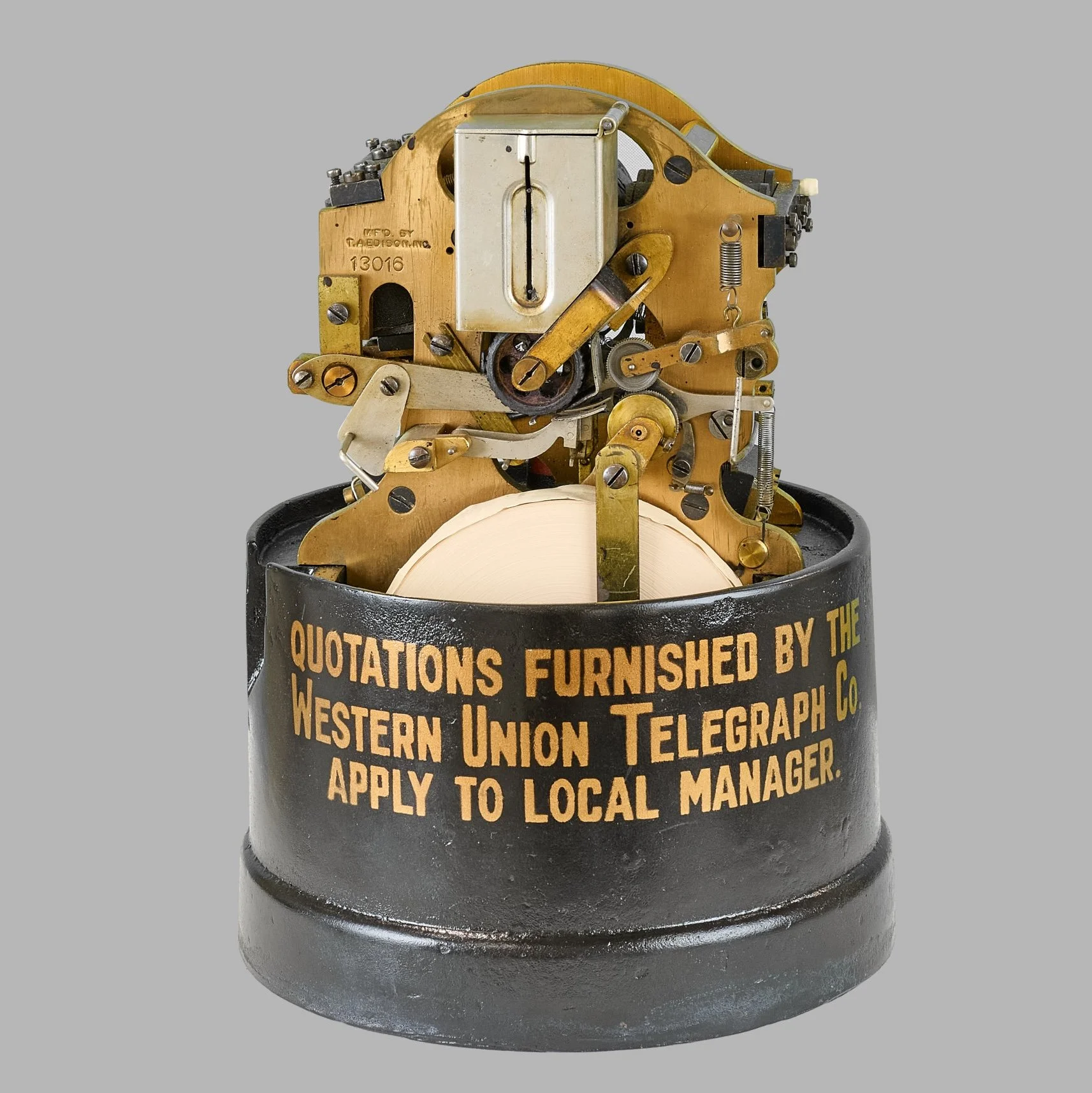
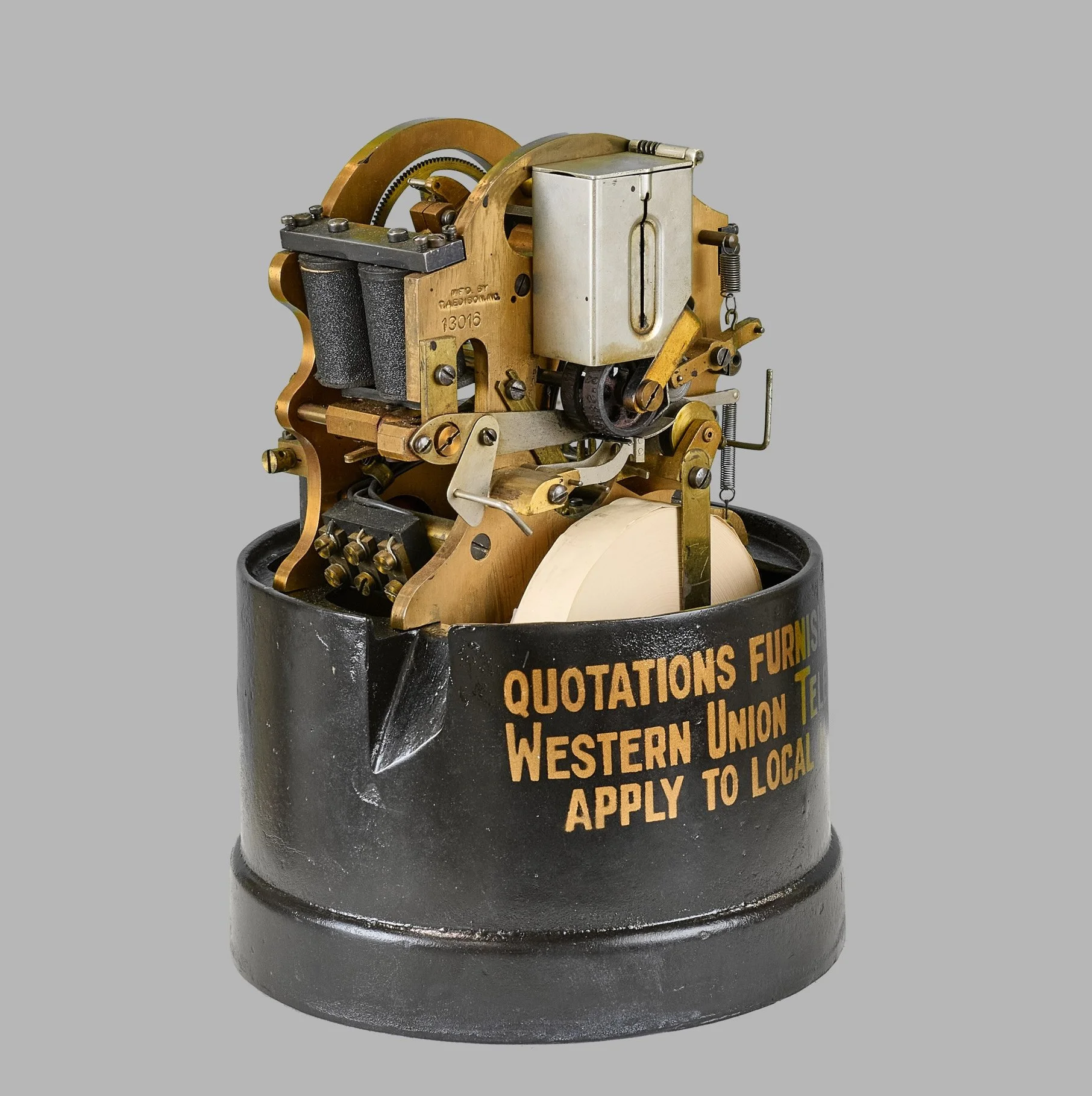
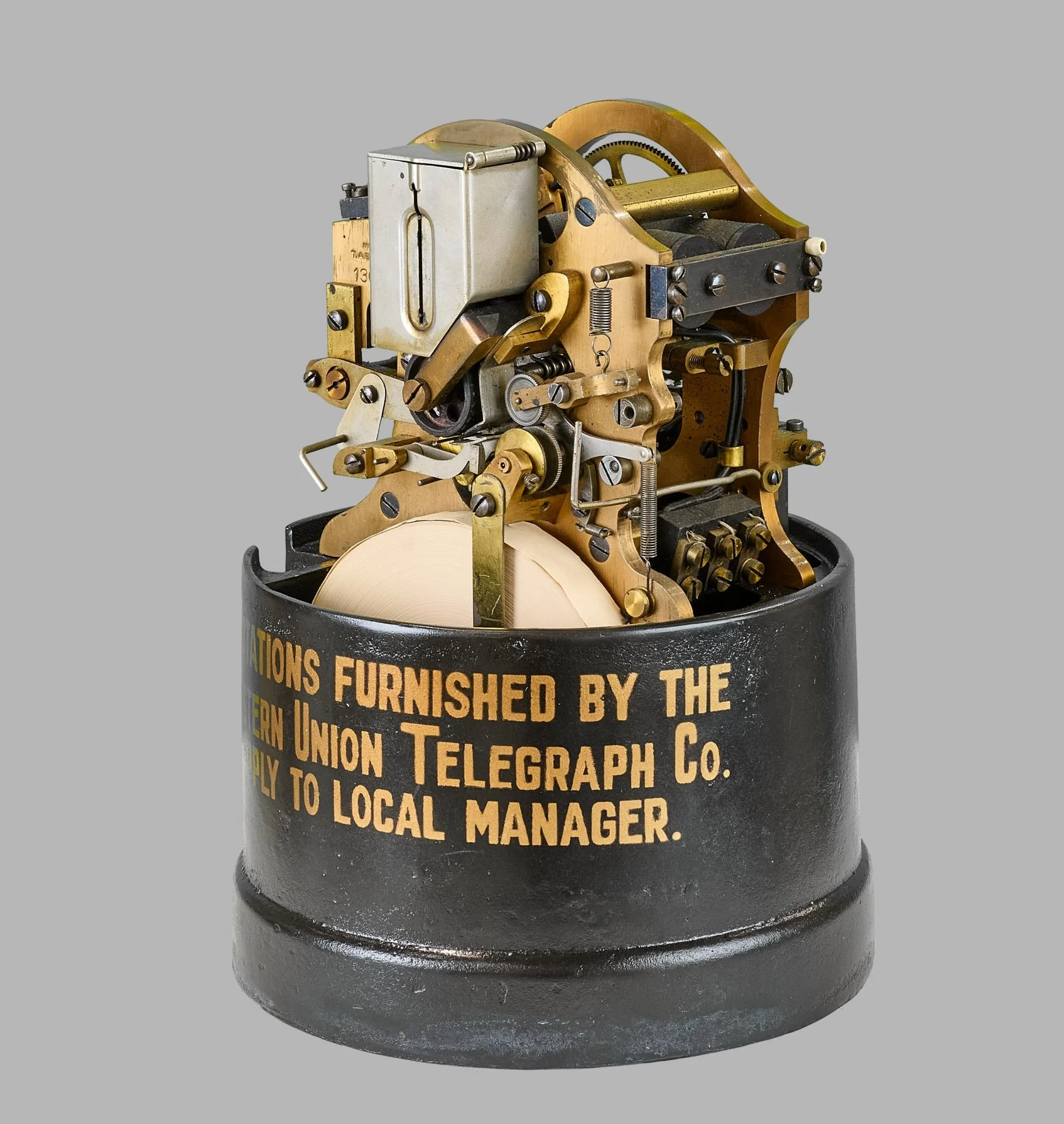
A rare and historically significant instrument of American financial and technological history — the Western Union Universal Stock Ticker, Model 3A, produced in 1887 under the patent system developed by Thomas Edison, whose 1872 patent established the universal standard for the electrical transmission of financial data and transformed the infrastructure of American markets.
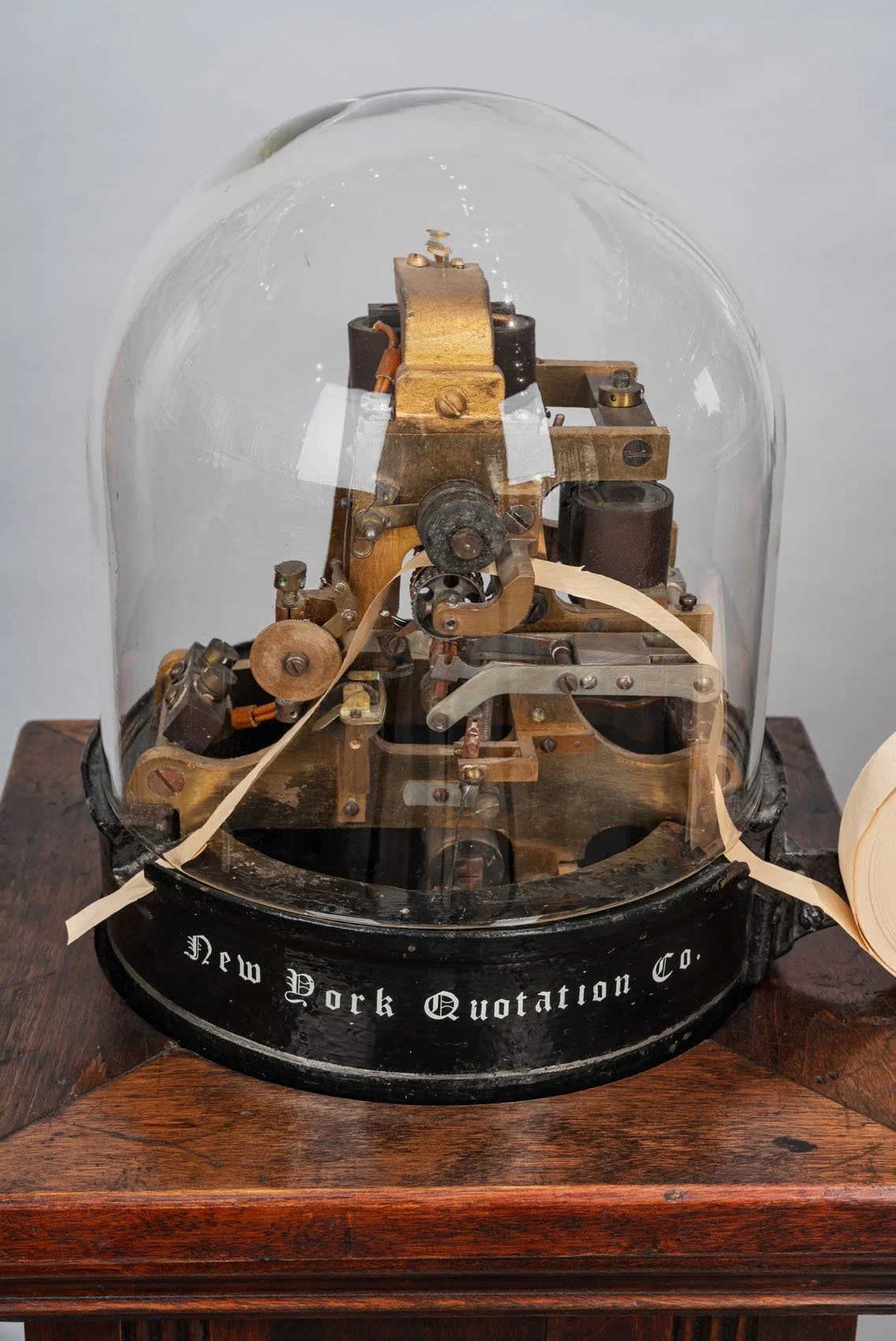
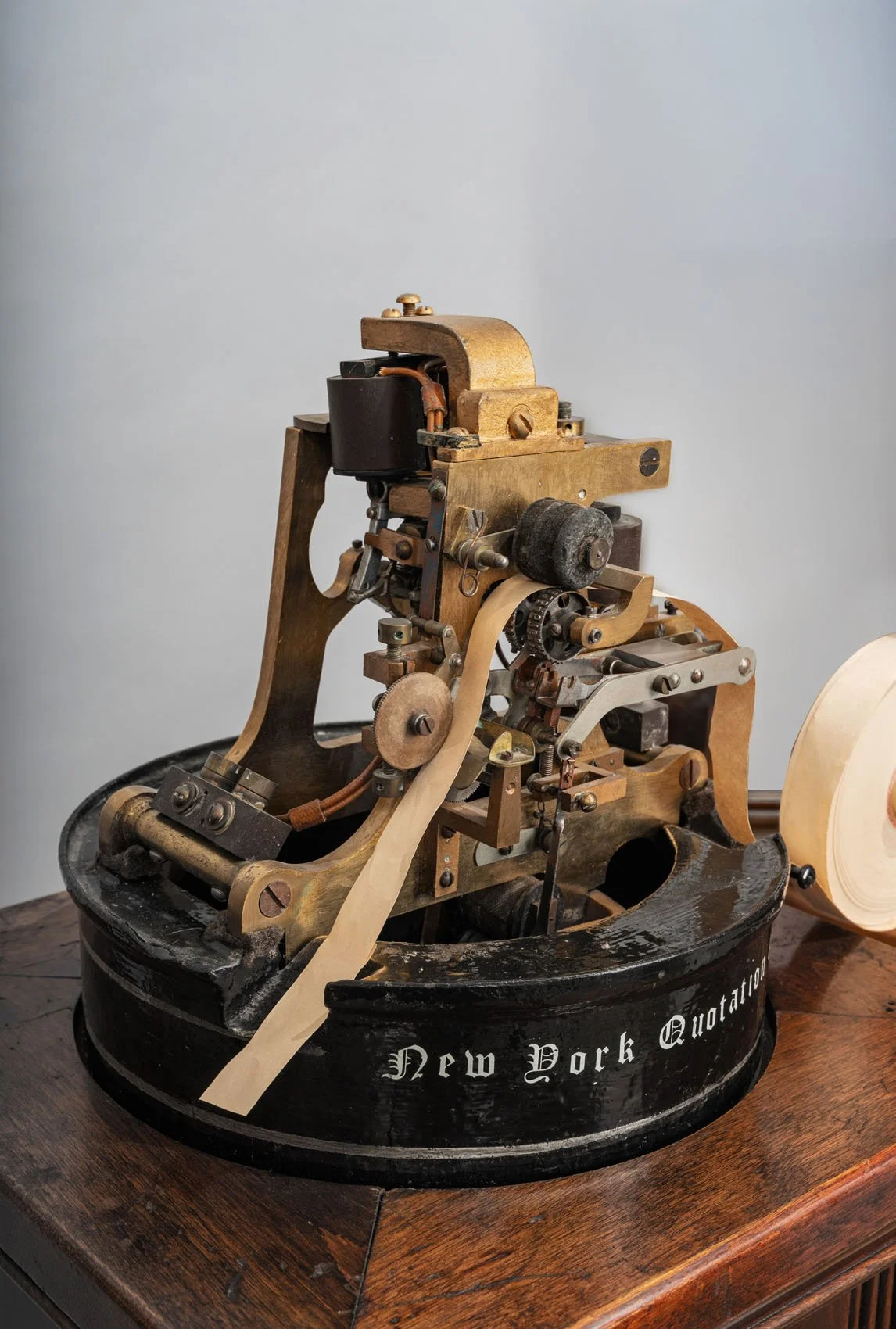
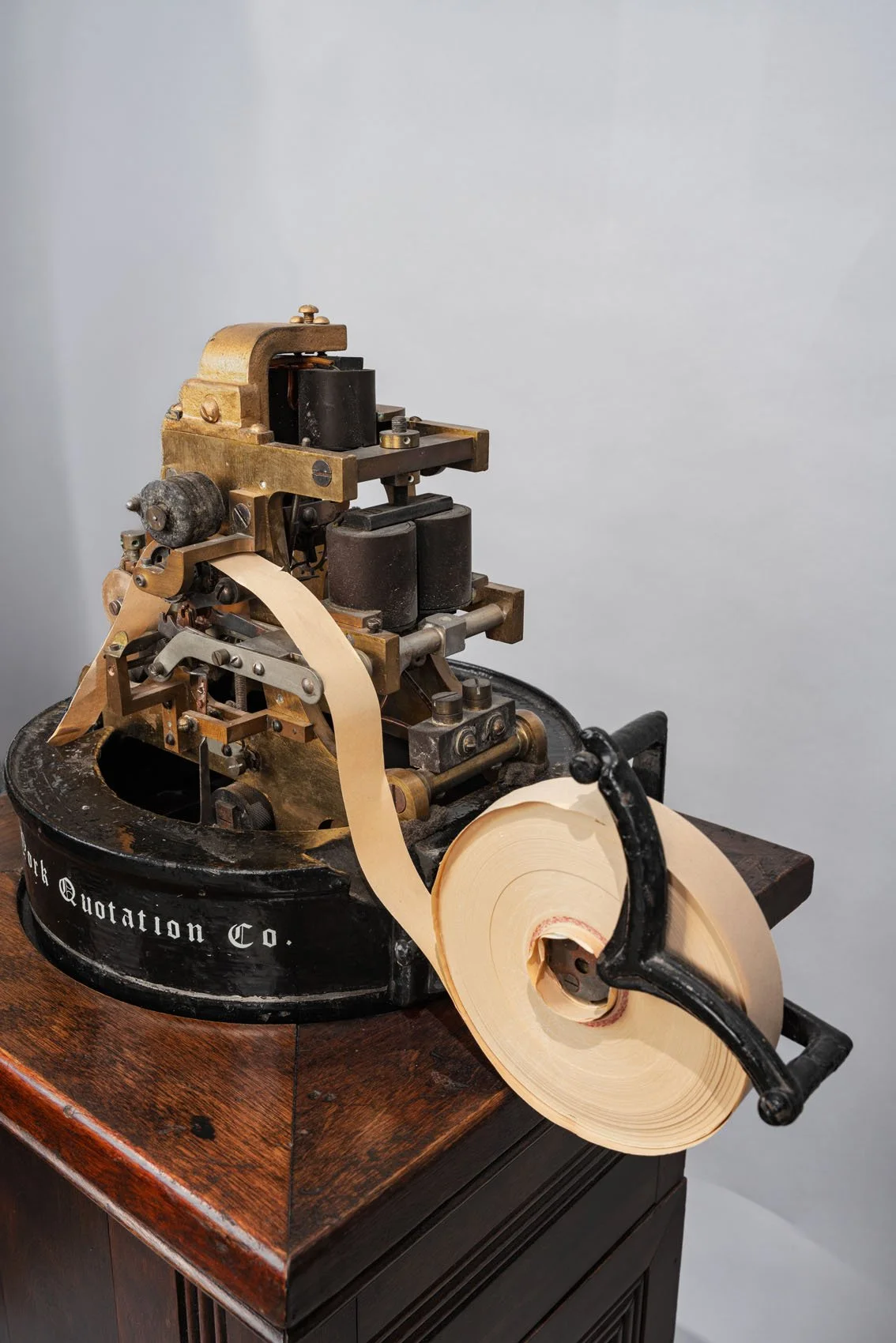
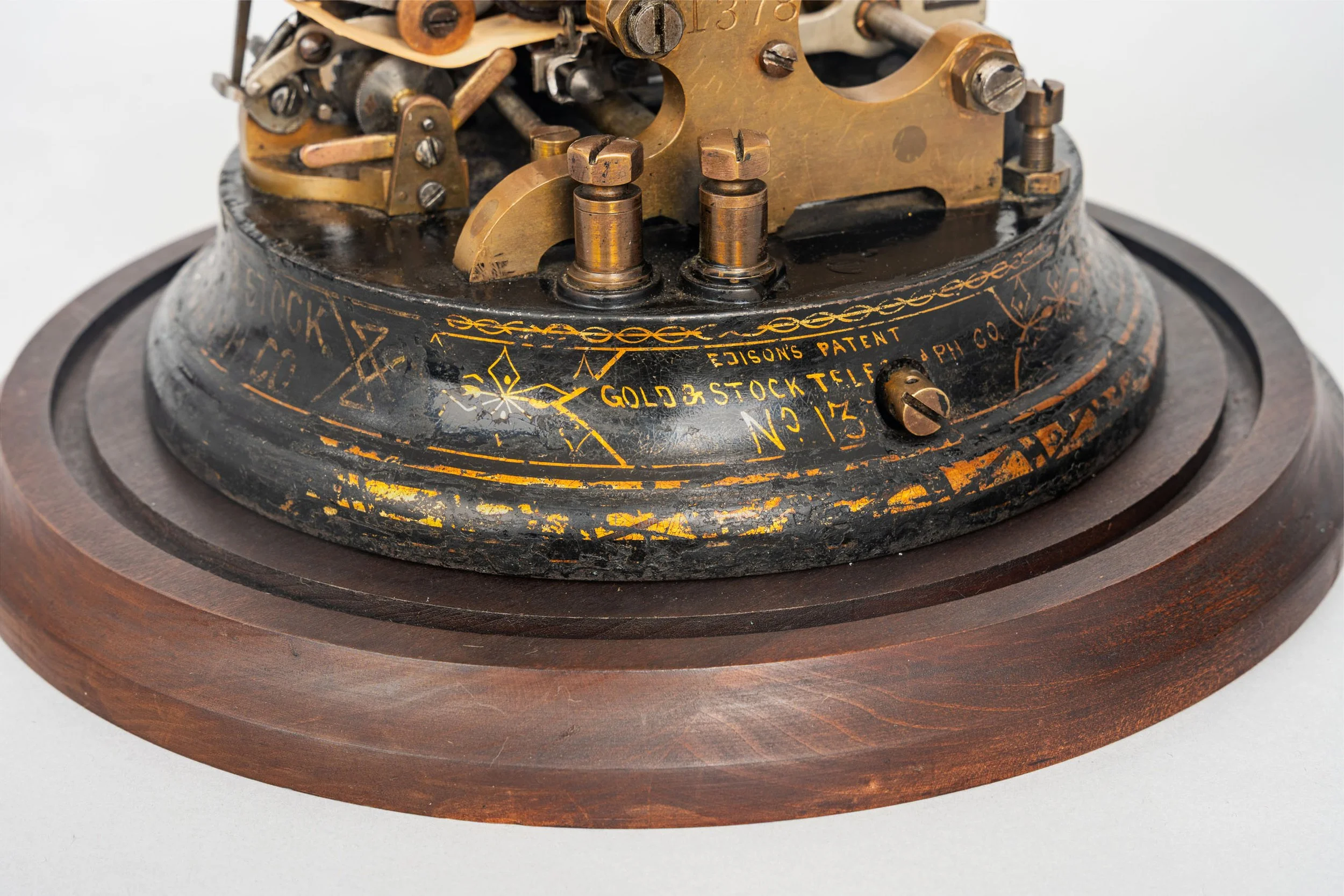
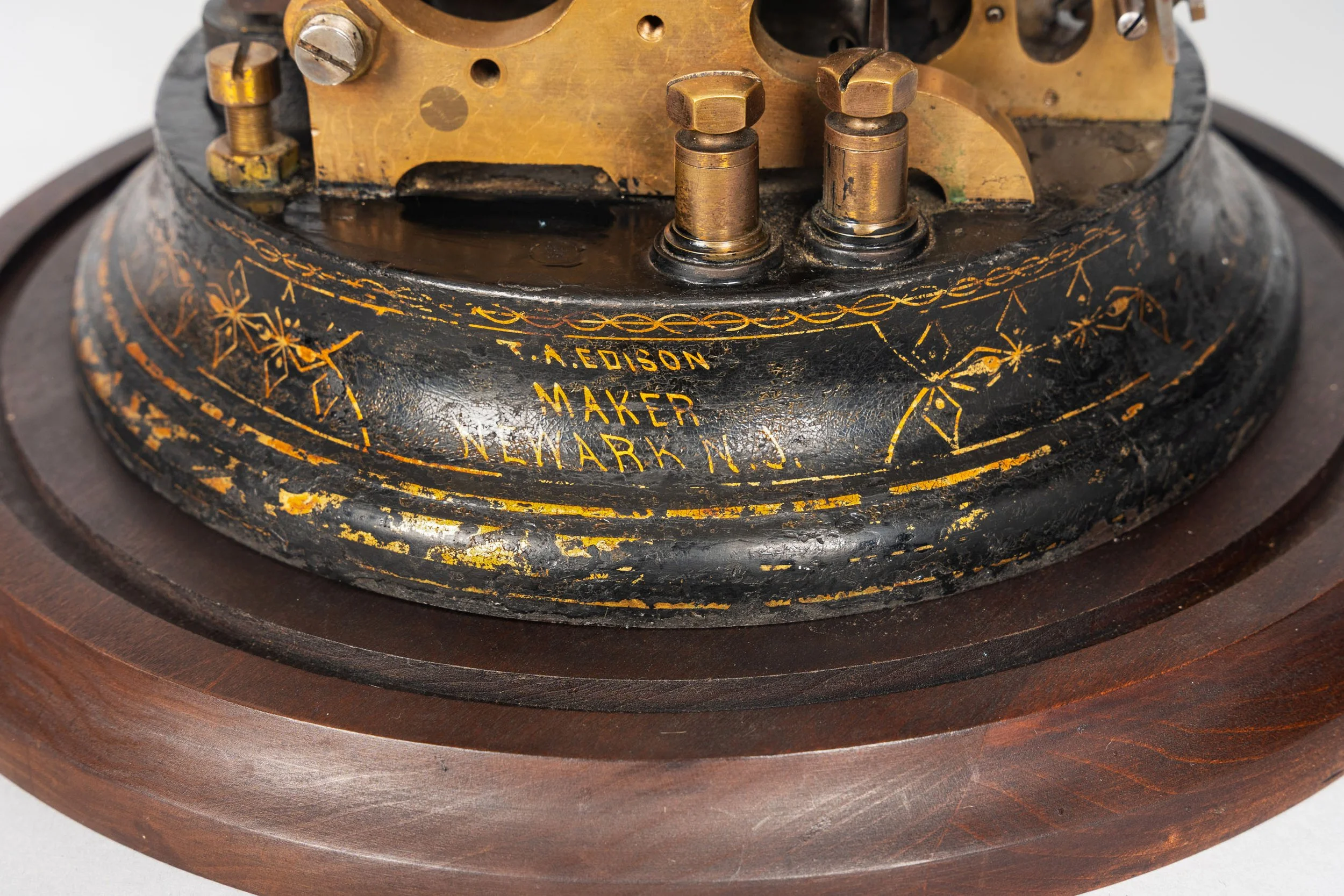
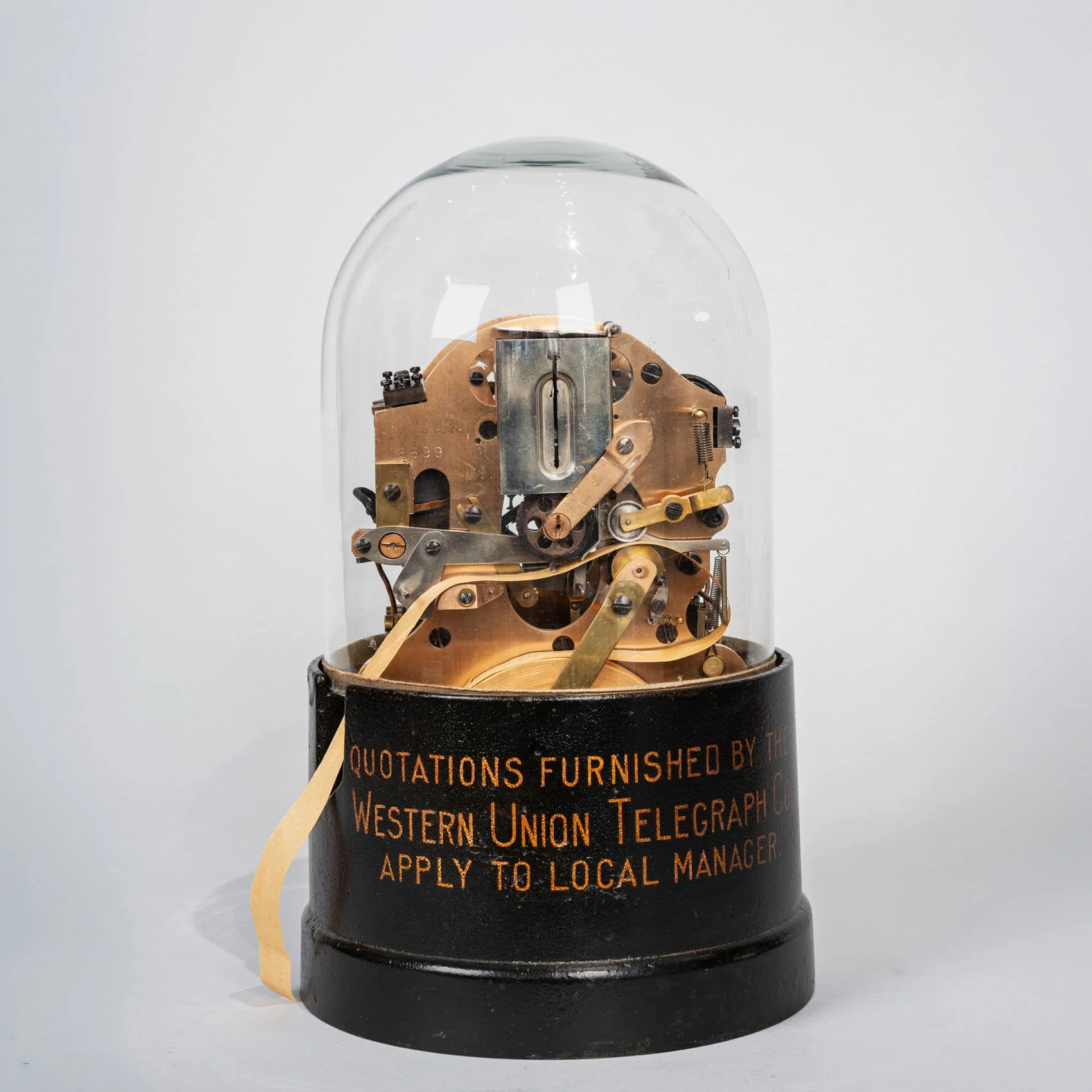
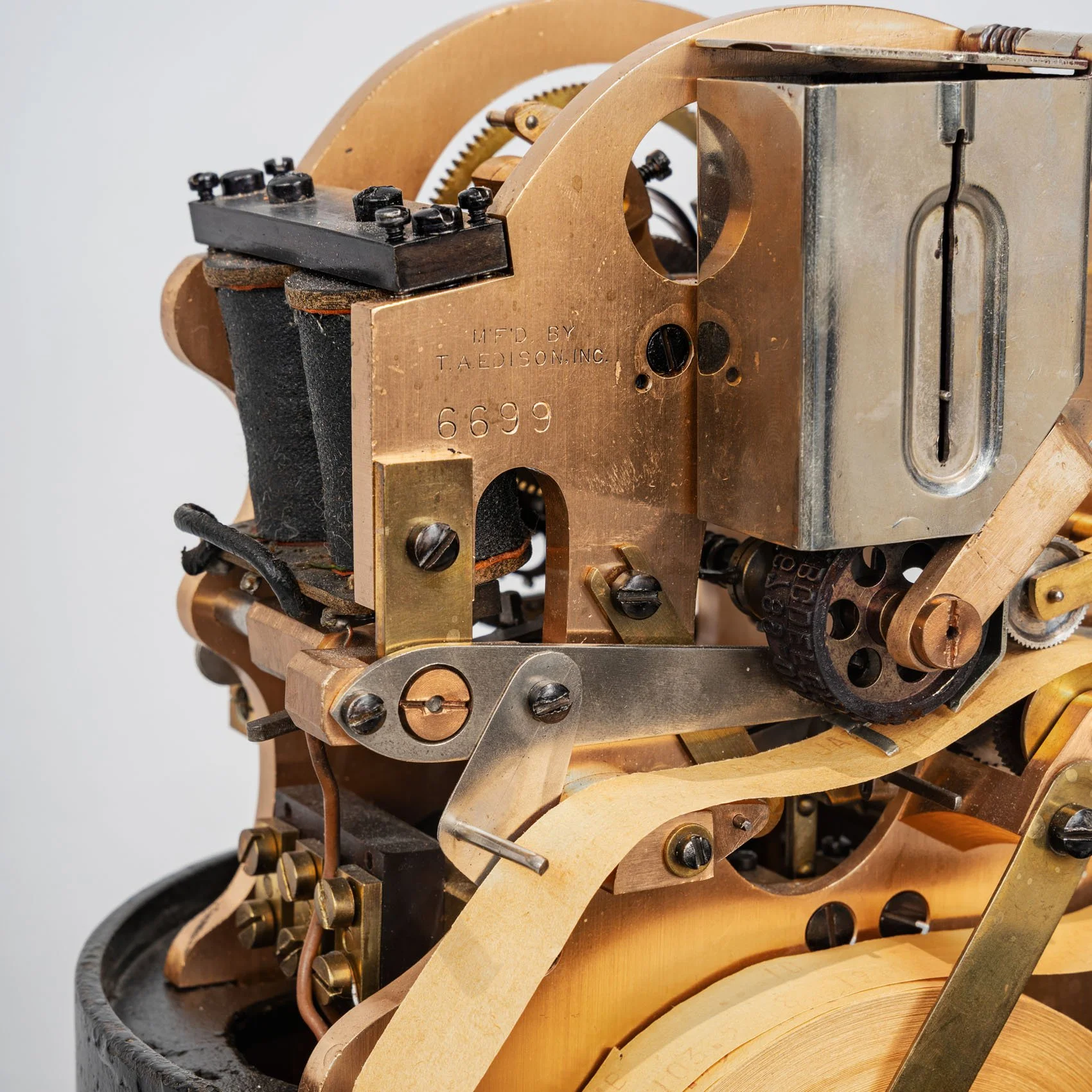
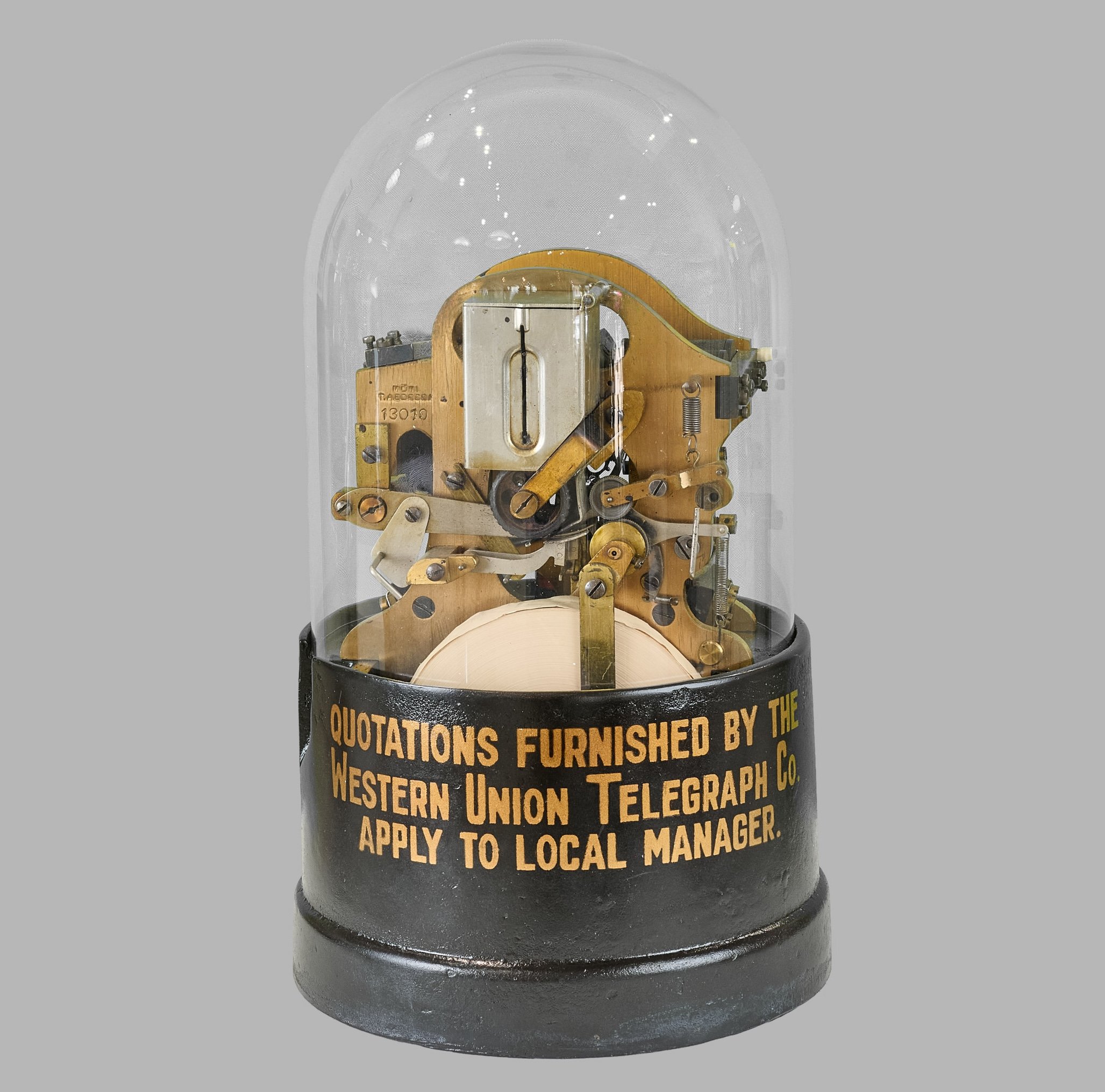
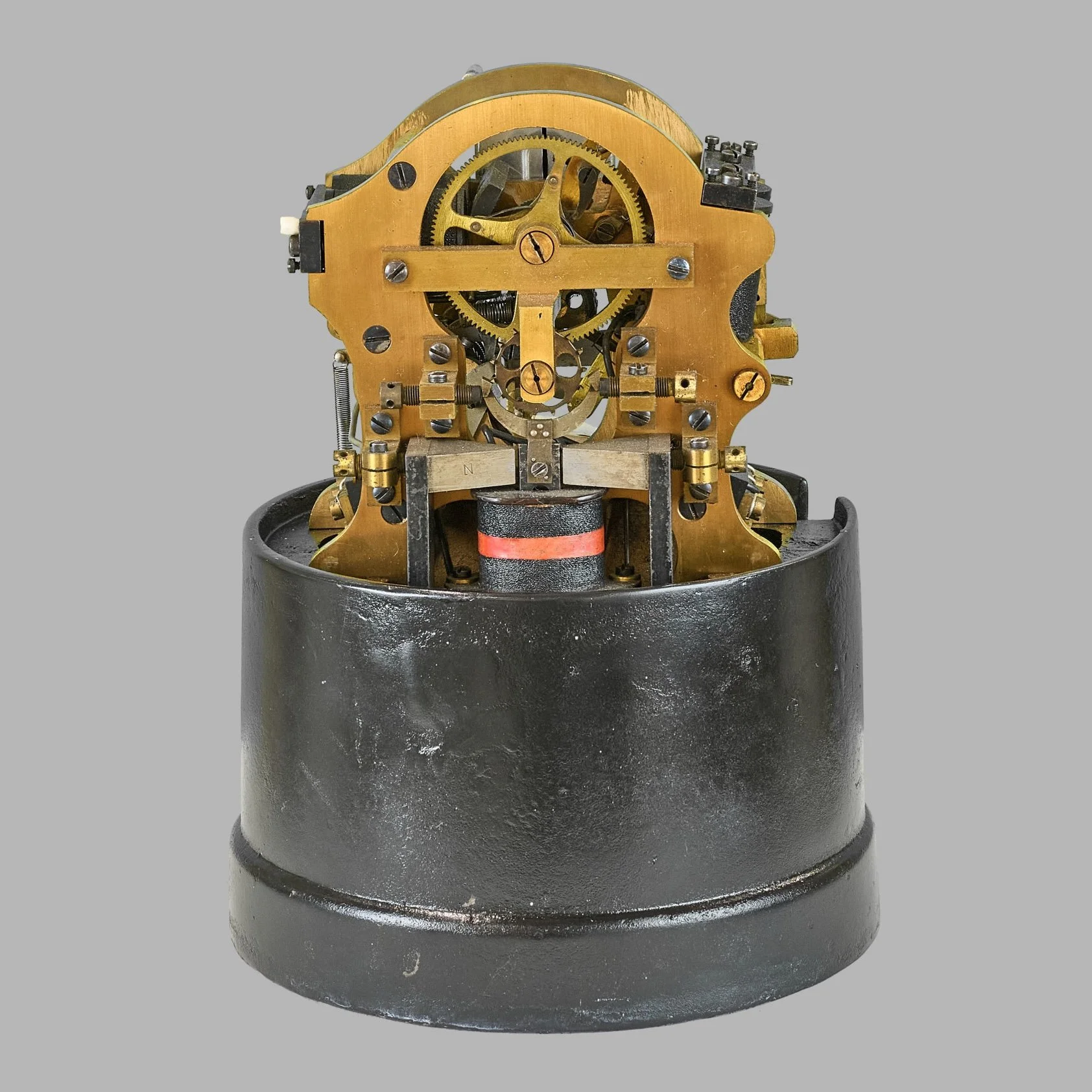
The mechanism is constructed in brass and steel throughout, stamped UNIVERSAL TICKER 3A – 22 OHMS and D. & H. PRECISION TOOL CO., NEWARK, N.J., and mounted on its original japanned circular base with gilt "Western Union Telegraph Co." lettering. The instrument is preserved beneath its original protective glass dome. Serial number 4880 is visible on the brass frame. The mechanism is complete and fully intact, with electro-magnetic actuation governing a horizontal escapement and twin type wheel system — translating telegraphic impulses into printed sequences of stock symbols and prices on a continuous paper tape, the defining technology of nineteenth-century market reporting.
The technical refinements embodied in the Model 3A — including the screw-thread unison mechanism associated with Edison's improvements — addressed the critical problem of synchronization between transmitting and receiving instruments, ensuring accuracy and reliability across extended telegraph networks. This was not a peripheral improvement but a decisive engineering solution that made coordinated national market reporting possible for the first time.
By the final decades of the nineteenth century, instruments of this type formed the communications backbone of American financial markets. Installed in brokerage offices and financial institutions across the country, they received transmitted quotations from centralized exchanges including the New York Stock Exchange, enabling a degree of synchronicity in market activity previously unattainable. The adoption of the Universal Ticker marked the definitive transition from localized and delayed reporting toward a coordinated national system of real-time information exchange.
Beyond its functional role, the stock ticker occupies a singular place in the history of communications technology. It stands among the earliest instruments to automate the transmission and recording of data over distance, anticipating every subsequent development in electronic communication and real-time information systems. Its output — an unbroken stream of printed financial data — created the visual and temporal language of modern markets that persisted well into the twentieth century.
The manufacturer's stamp — D. & H. Precision Tool Co., Newark, New Jersey — identifies the instrument as a product of one of the leading precision engineering firms supplying the telegraph industry in this period, and adds a further layer of industrial provenance to an already richly documented piece.
A comparable example is held in the permanent collection of the Smithsonian Institution's National Museum of American History (Collection Record No. 332283), confirming the Model 3A's established place in the canon of American communications history and the significance of the type as an object of national historical importance.
Condition: Very good to excellent. Brass and steel mechanism complete and fully intact, all components present, with rich original patina throughout. Serial number 4880 stamped clearly. Original glass dome in excellent condition, no cracks or chips. Japanned base retains original gilt "Western Union Telegraph Co." lettering with some loss to painted surface consistent with age and use. Presented unrestored in honest original condition.
References
Thomas Edison, Improvement in Printing Telegraphs, U.S. Patent No. 126,532 (1872).
George B. Prescott, History, Theory, and Practice of the Electric Telegraph, Boston, 1860 (expanded later editions discussing ticker systems).
Robert Sobel, The Big Board: A History of the New York Stock Market, New York, 1965.
Thomas P. Hughes, American Genesis: A Century of Invention and Technological Enthusiasm, New York, 1989.
James W. Carey, Communication as Culture: Essays on Media and Society, Boston, 1989.
Smithsonian National Museum of American History, Collection Record No. 332283.
A rare and historically significant instrument of American financial and technological history — the Western Union Universal Stock Ticker, Model 3A, produced in 1887 under the patent system developed by Thomas Edison, whose 1872 patent established the universal standard for the electrical transmission of financial data and transformed the infrastructure of American markets.
The mechanism is constructed in brass and steel throughout, stamped UNIVERSAL TICKER 3A – 22 OHMS and D. & H. PRECISION TOOL CO., NEWARK, N.J., and mounted on its original japanned circular base with gilt "Western Union Telegraph Co." lettering. The instrument is preserved beneath its original protective glass dome. Serial number 4880 is visible on the brass frame. The mechanism is complete and fully intact, with electro-magnetic actuation governing a horizontal escapement and twin type wheel system — translating telegraphic impulses into printed sequences of stock symbols and prices on a continuous paper tape, the defining technology of nineteenth-century market reporting.
The technical refinements embodied in the Model 3A — including the screw-thread unison mechanism associated with Edison's improvements — addressed the critical problem of synchronization between transmitting and receiving instruments, ensuring accuracy and reliability across extended telegraph networks. This was not a peripheral improvement but a decisive engineering solution that made coordinated national market reporting possible for the first time.
By the final decades of the nineteenth century, instruments of this type formed the communications backbone of American financial markets. Installed in brokerage offices and financial institutions across the country, they received transmitted quotations from centralized exchanges including the New York Stock Exchange, enabling a degree of synchronicity in market activity previously unattainable. The adoption of the Universal Ticker marked the definitive transition from localized and delayed reporting toward a coordinated national system of real-time information exchange.
Beyond its functional role, the stock ticker occupies a singular place in the history of communications technology. It stands among the earliest instruments to automate the transmission and recording of data over distance, anticipating every subsequent development in electronic communication and real-time information systems. Its output — an unbroken stream of printed financial data — created the visual and temporal language of modern markets that persisted well into the twentieth century.
The manufacturer's stamp — D. & H. Precision Tool Co., Newark, New Jersey — identifies the instrument as a product of one of the leading precision engineering firms supplying the telegraph industry in this period, and adds a further layer of industrial provenance to an already richly documented piece.
A comparable example is held in the permanent collection of the Smithsonian Institution's National Museum of American History (Collection Record No. 332283), confirming the Model 3A's established place in the canon of American communications history and the significance of the type as an object of national historical importance.
Condition: Very good to excellent. Brass and steel mechanism complete and fully intact, all components present, with rich original patina throughout. Serial number 4880 stamped clearly. Original glass dome in excellent condition, no cracks or chips. Japanned base retains original gilt "Western Union Telegraph Co." lettering with some loss to painted surface consistent with age and use. Presented unrestored in honest original condition.
References
Thomas Edison, Improvement in Printing Telegraphs, U.S. Patent No. 126,532 (1872).
George B. Prescott, History, Theory, and Practice of the Electric Telegraph, Boston, 1860 (expanded later editions discussing ticker systems).
Robert Sobel, The Big Board: A History of the New York Stock Market, New York, 1965.
Thomas P. Hughes, American Genesis: A Century of Invention and Technological Enthusiasm, New York, 1989.
James W. Carey, Communication as Culture: Essays on Media and Society, Boston, 1989.
Smithsonian National Museum of American History, Collection Record No. 332283.

 Image 1 of 4
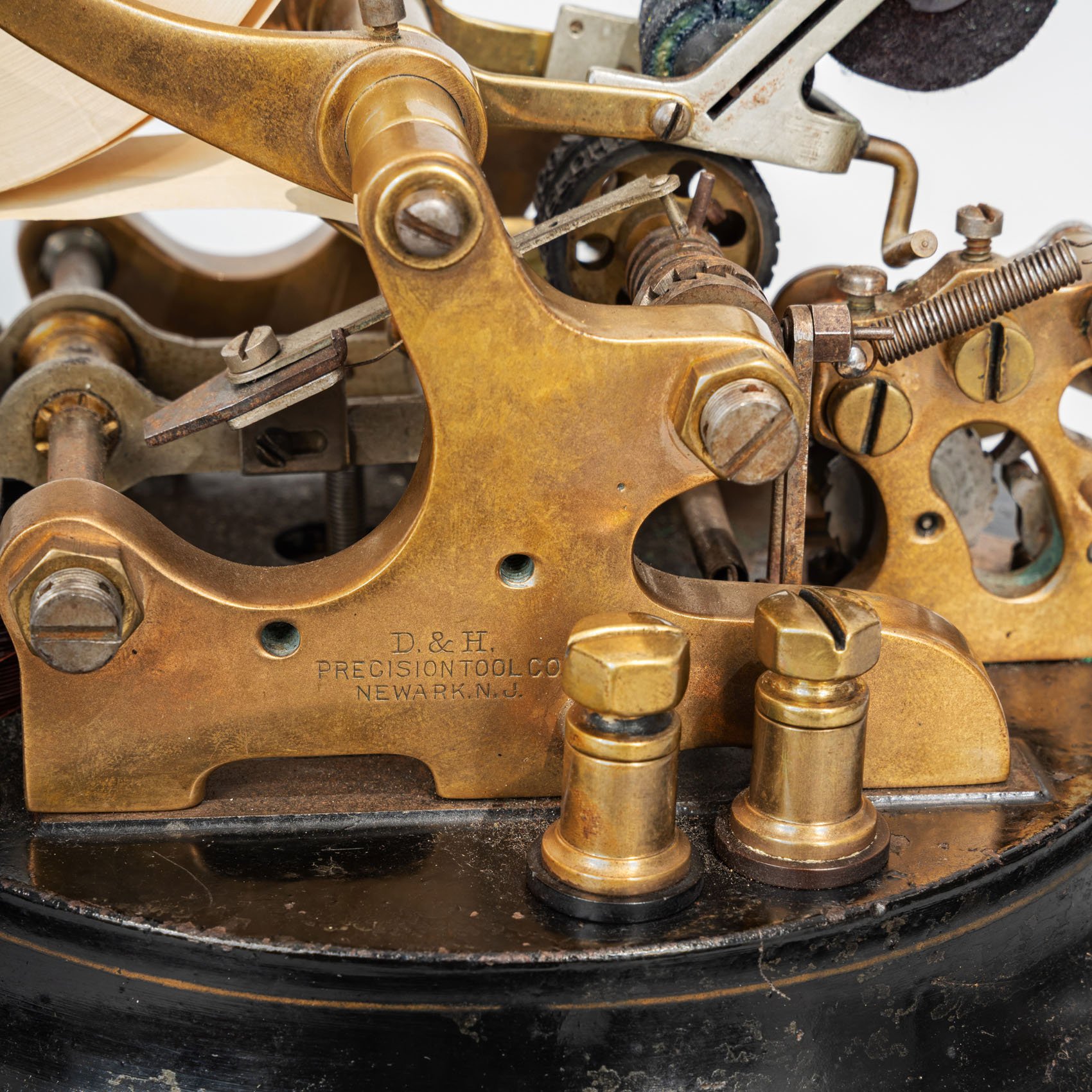 Image 2 of 4
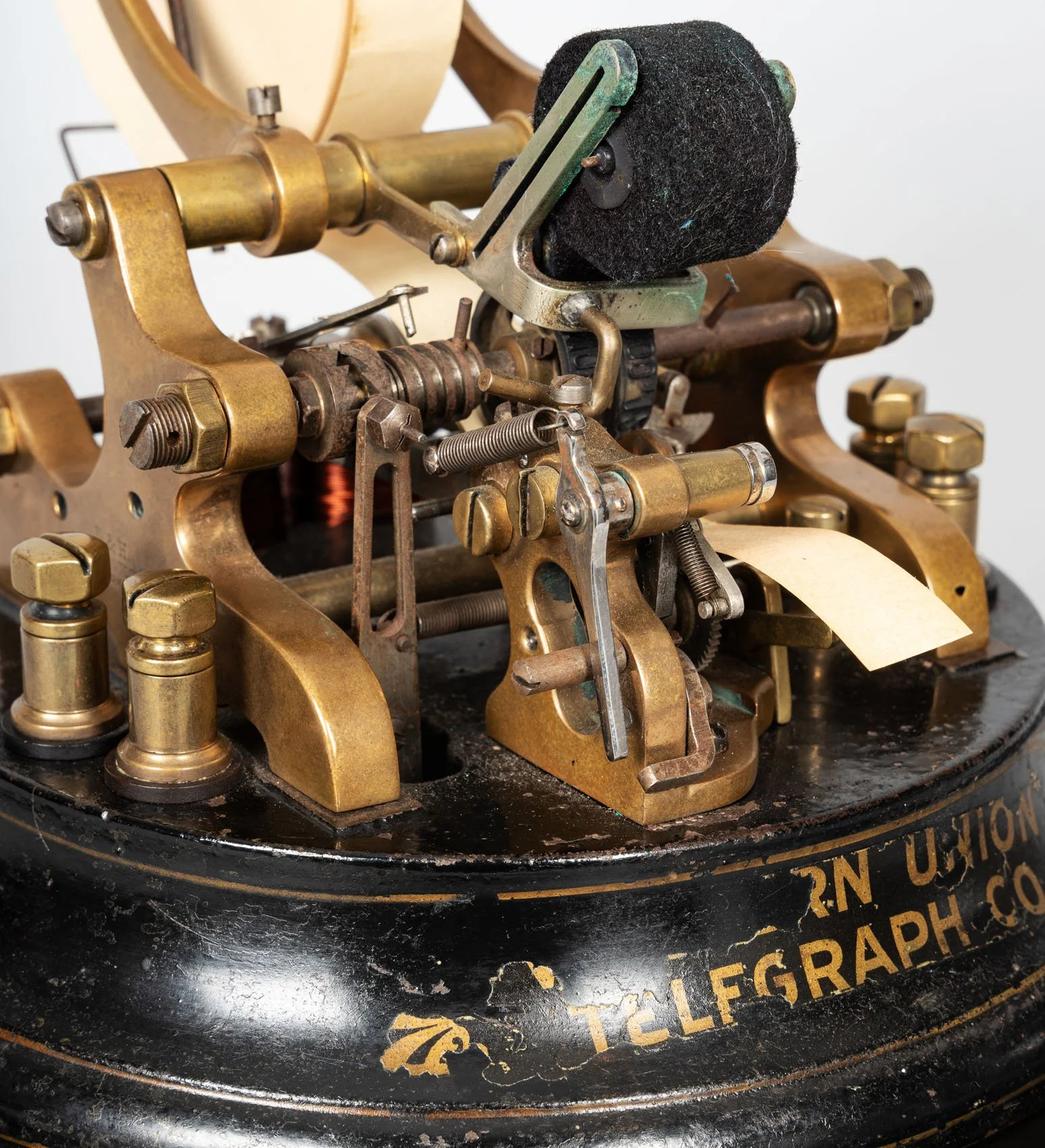 Image 3 of 4
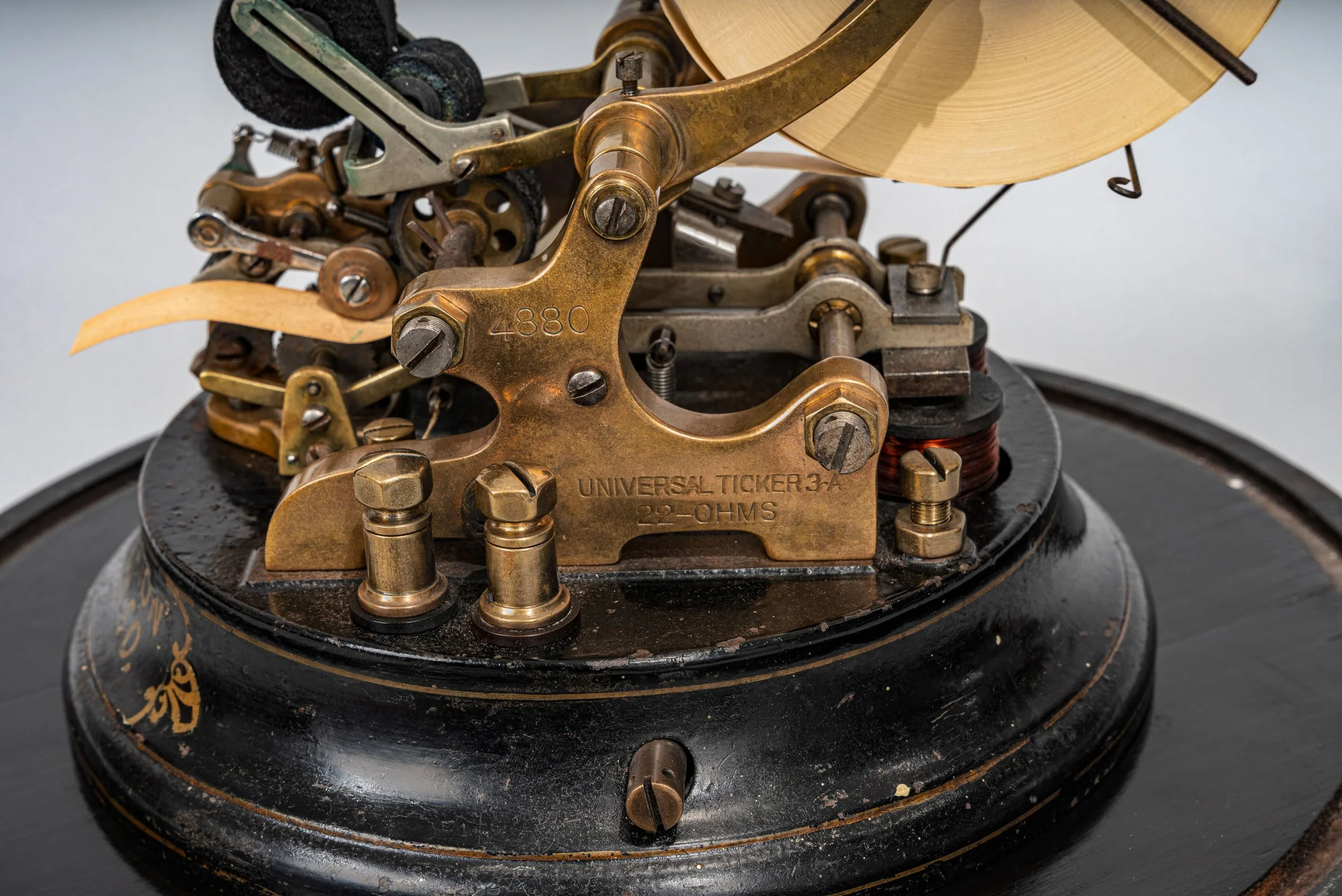 Image 4 of 4