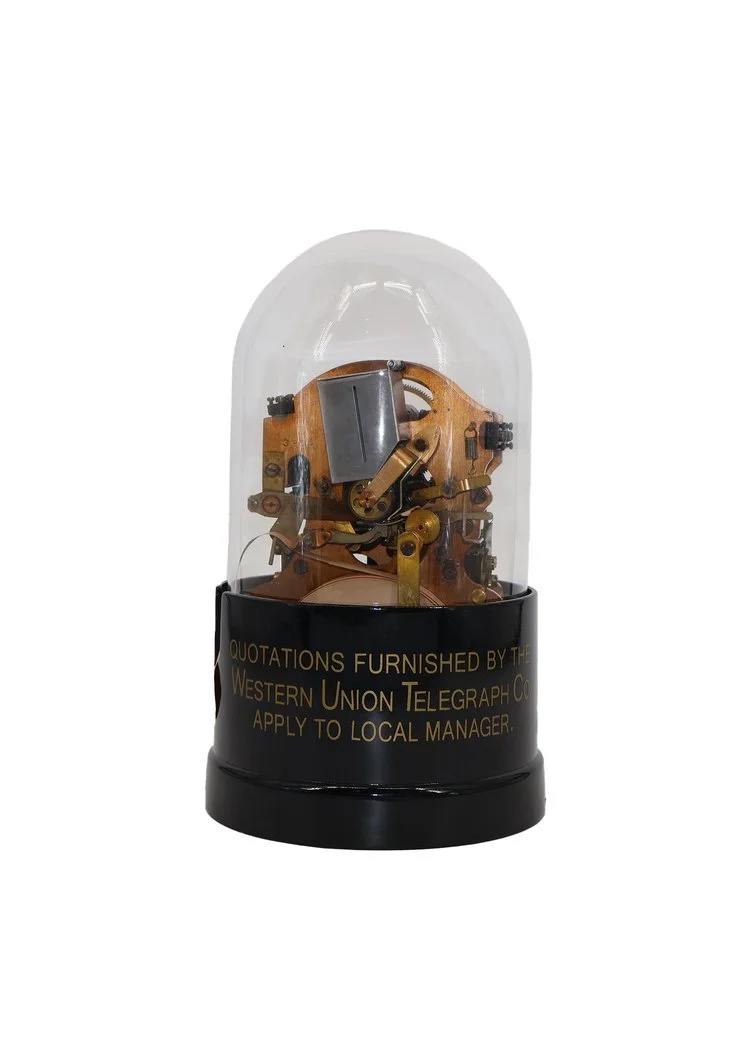
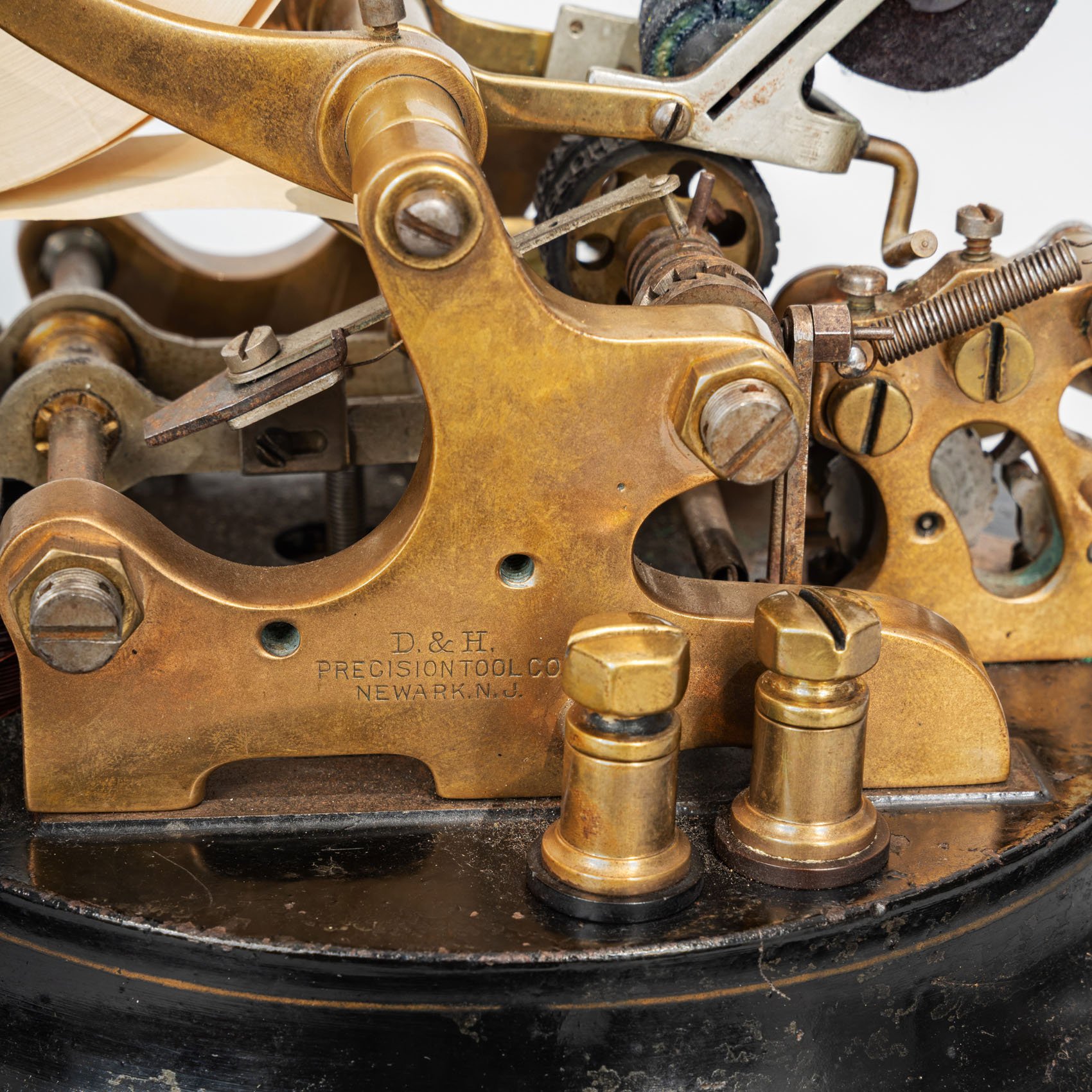
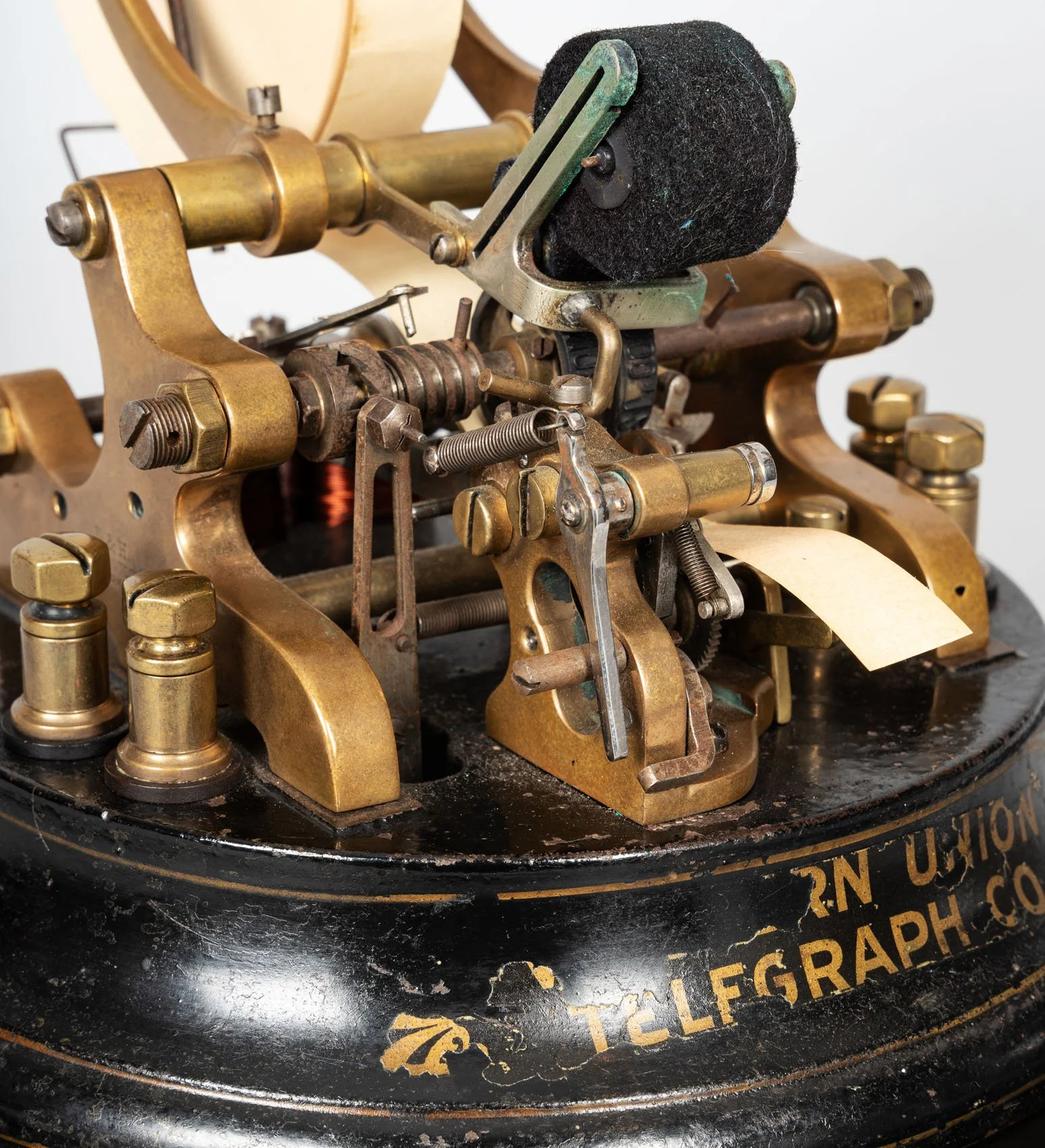
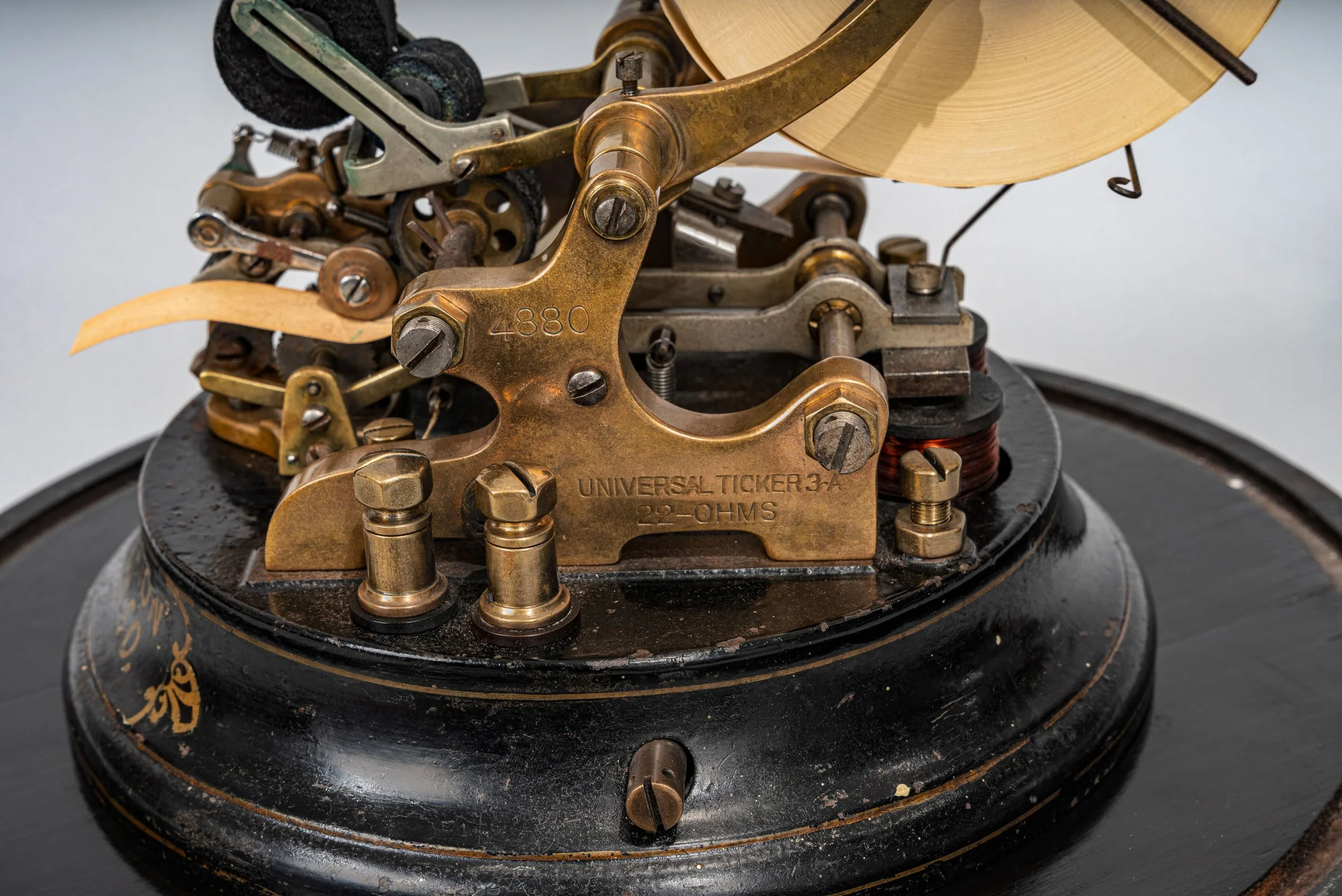
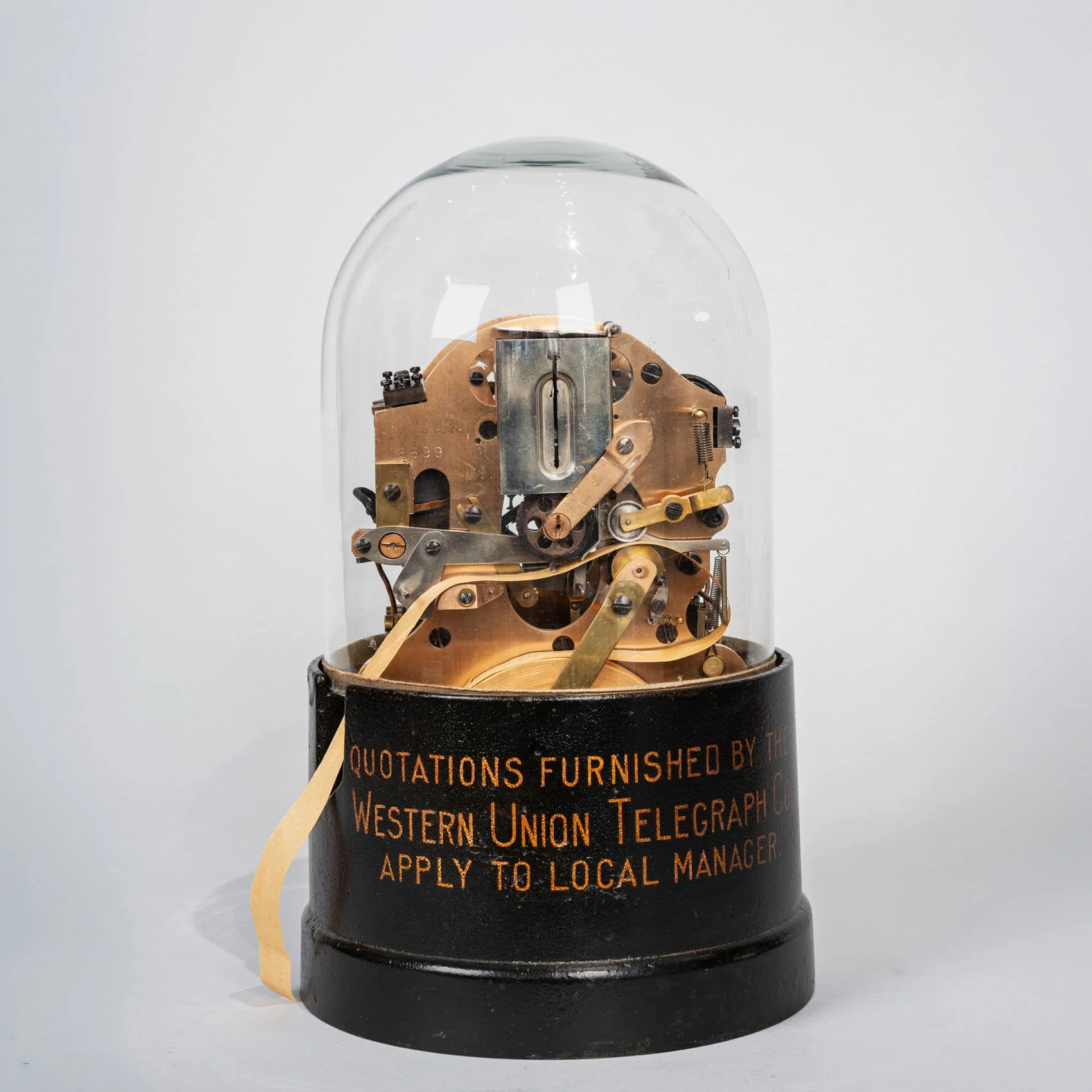
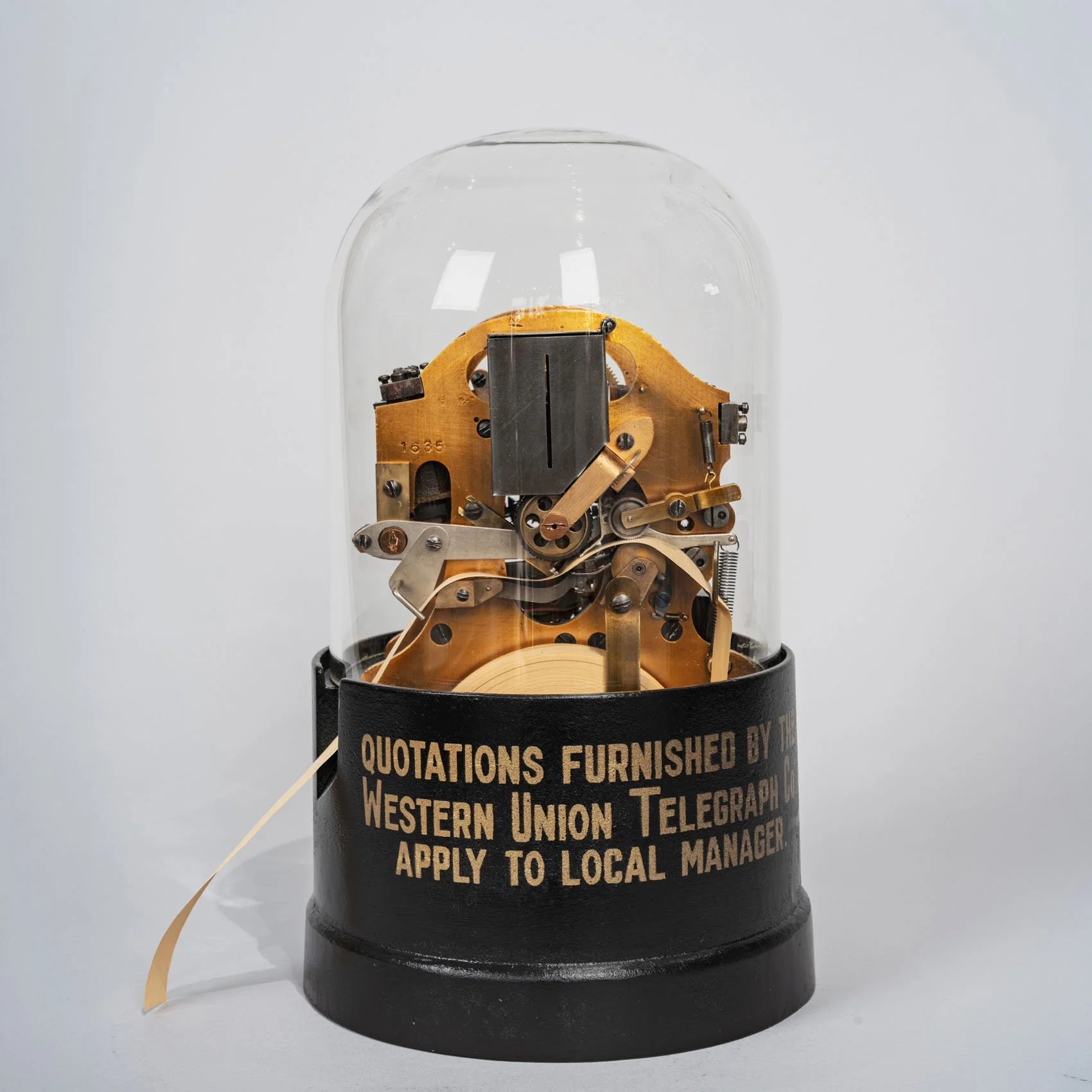
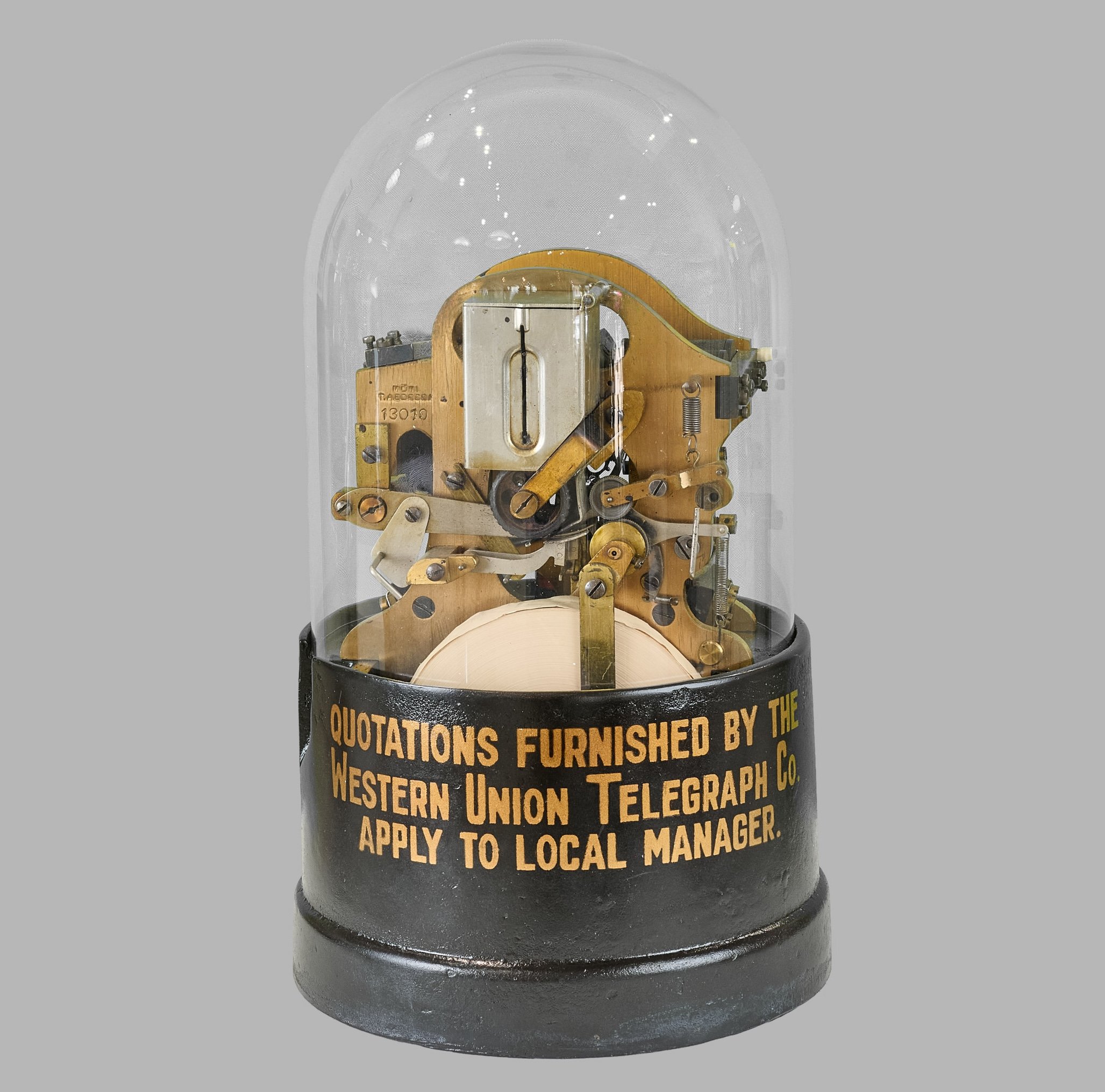
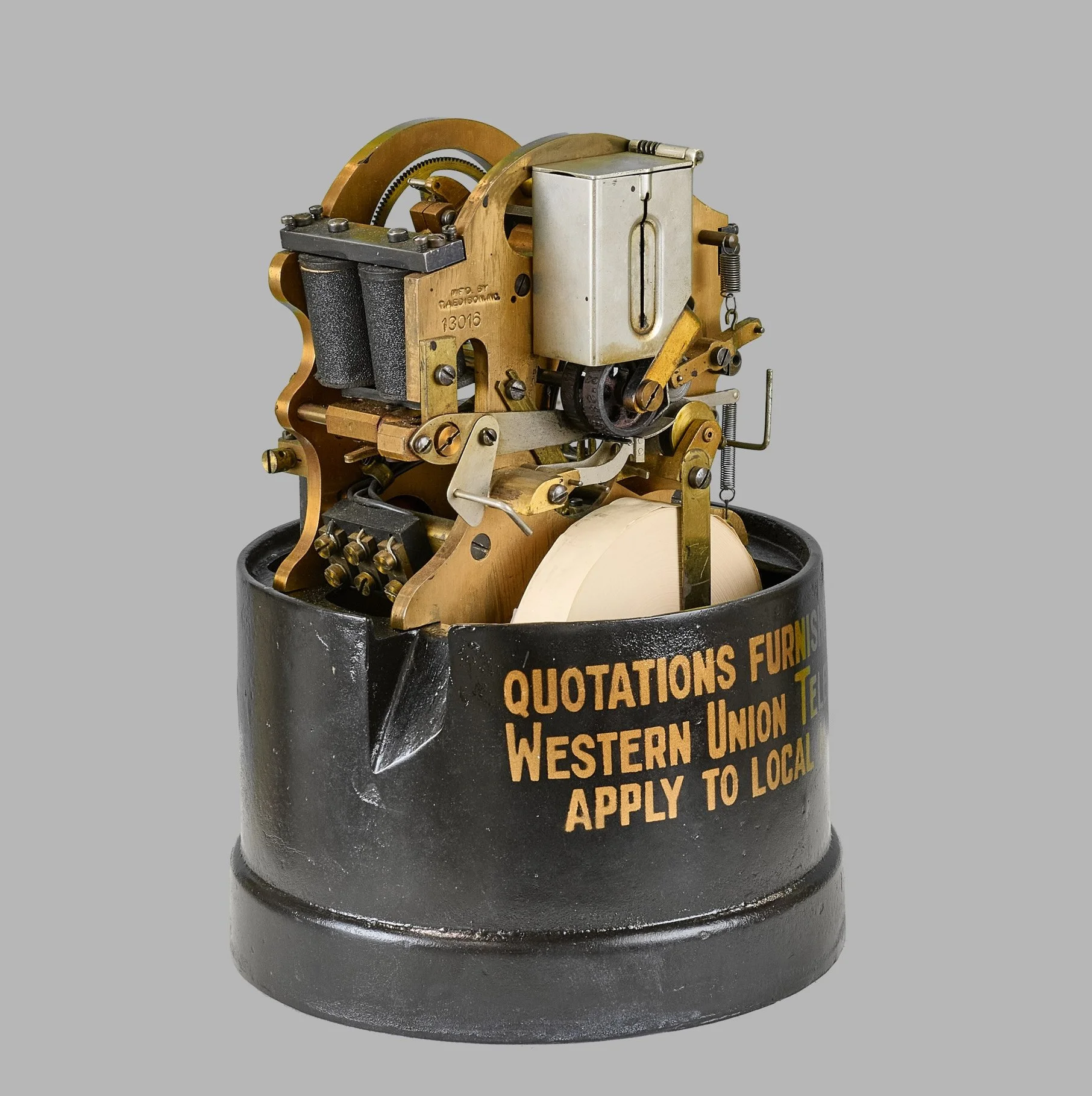
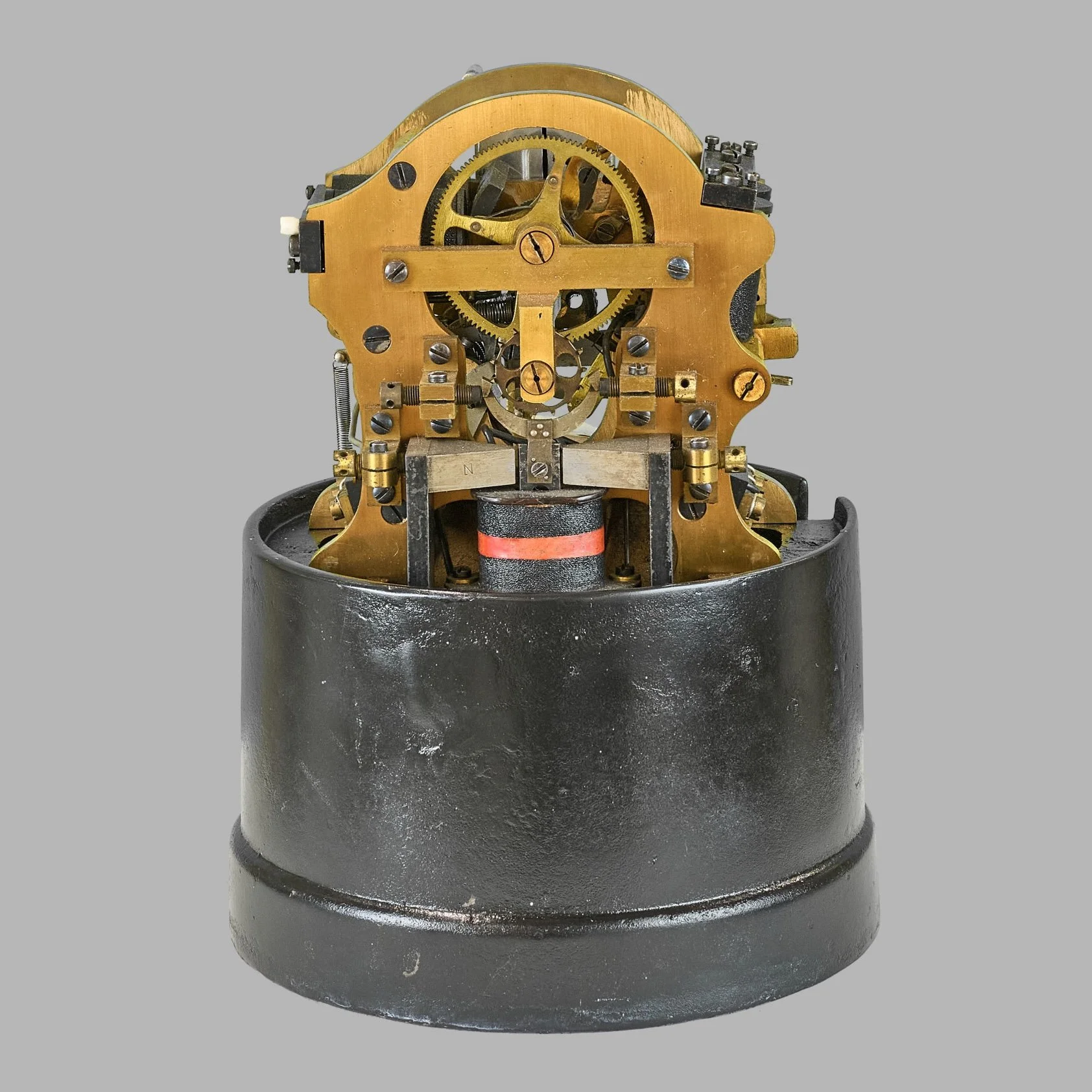
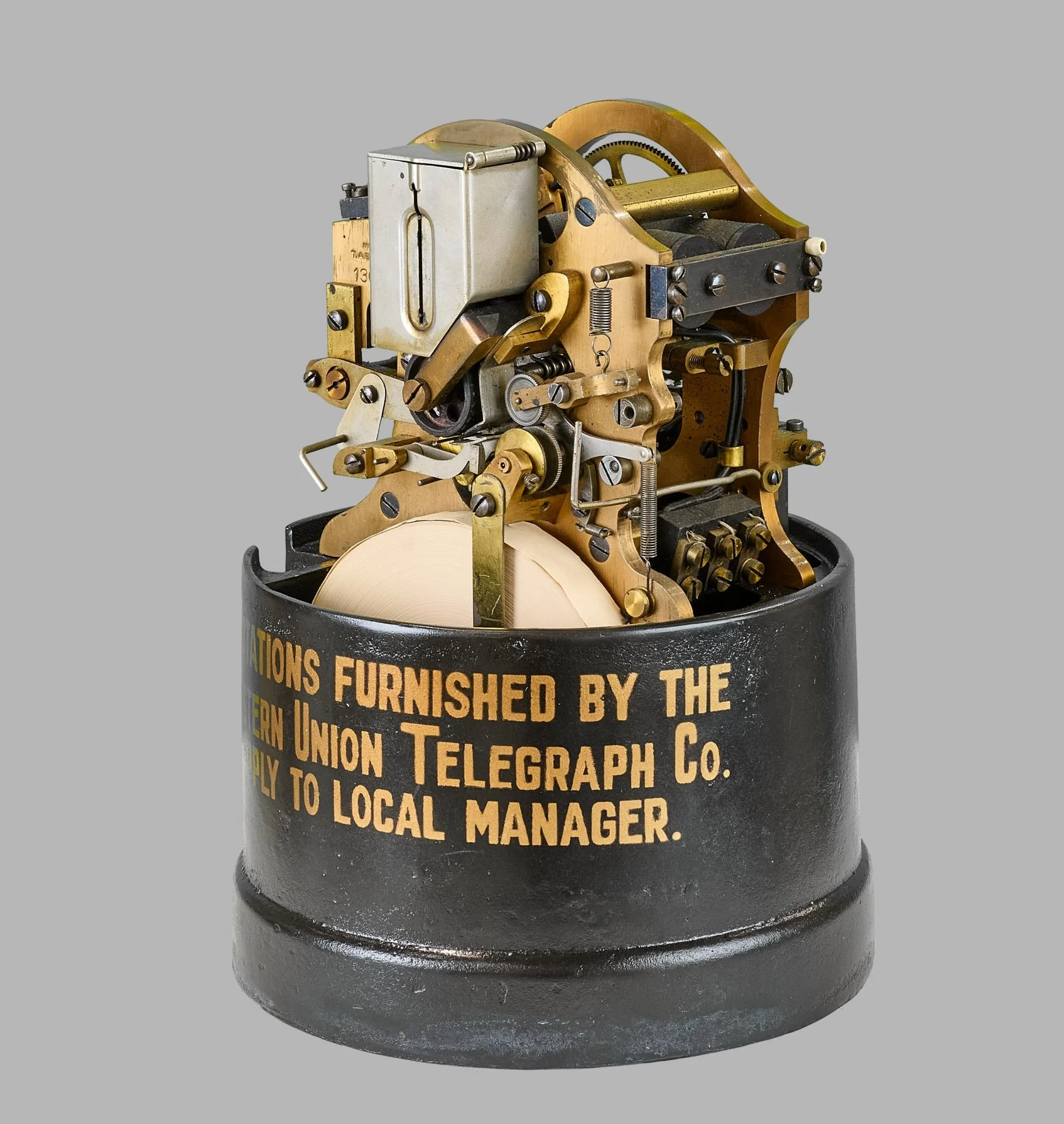
An electromechanical stock ticker manufactured for the New York Quotation Company, circa 1890, complete with its glass dome, original walnut pedestal, cast iron octagonal base, and external paper tape spool.
The brass-and-steel mechanism is mounted on a japanned circular base inscribed in period script "New York Quotation Co." and enclosed beneath a hand-blown glass dome. The tape spool, carried on a cast iron arm beside the pedestal, retains its original paper tape, a detail seldom found in surviving examples.
In 1890, the New York Stock Exchange consolidated control of market data transmission under the newly formed New York Quotation Company, the foundation of centralized and standardized market reporting. Connected to a dedicated telegraph network, these instruments translated electrical impulses into printed abbreviations on a continuous paper tape, delivering near real-time prices to Wall Street offices. Unlike the widely distributed tickers of the Western Union Telegraph Company, New York Quotation Company instruments were installed only in offices directly connected to the Exchange.
Pedestals and stands were integral to daily operation but were routinely discarded as equipment was replaced, and complete examples with their original mounts are now scarce.
The instrument stands 44 inches overall on a base 20 inches square. Condition is excellent for its age: the mechanism is complete, with rich original patina throughout; the glass dome is free of cracks or chips; and the walnut pedestal and cast-iron base are structurally sound. The instrument is entirely unrestored.
This instrument is featured in The Pulse of Wall Street, our article on the stock ticker and the origins of modern market reporting.
An electromechanical stock ticker manufactured for the New York Quotation Company, circa 1890, complete with its glass dome, original walnut pedestal, cast iron octagonal base, and external paper tape spool.
The brass-and-steel mechanism is mounted on a japanned circular base inscribed in period script "New York Quotation Co." and enclosed beneath a hand-blown glass dome. The tape spool, carried on a cast iron arm beside the pedestal, retains its original paper tape, a detail seldom found in surviving examples.
In 1890, the New York Stock Exchange consolidated control of market data transmission under the newly formed New York Quotation Company, the foundation of centralized and standardized market reporting. Connected to a dedicated telegraph network, these instruments translated electrical impulses into printed abbreviations on a continuous paper tape, delivering near real-time prices to Wall Street offices. Unlike the widely distributed tickers of the Western Union Telegraph Company, New York Quotation Company instruments were installed only in offices directly connected to the Exchange.
Pedestals and stands were integral to daily operation but were routinely discarded as equipment was replaced, and complete examples with their original mounts are now scarce.
The instrument stands 44 inches overall on a base 20 inches square. Condition is excellent for its age: the mechanism is complete, with rich original patina throughout; the glass dome is free of cracks or chips; and the walnut pedestal and cast-iron base are structurally sound. The instrument is entirely unrestored.
This instrument is featured in The Pulse of Wall Street, our article on the stock ticker and the origins of modern market reporting.

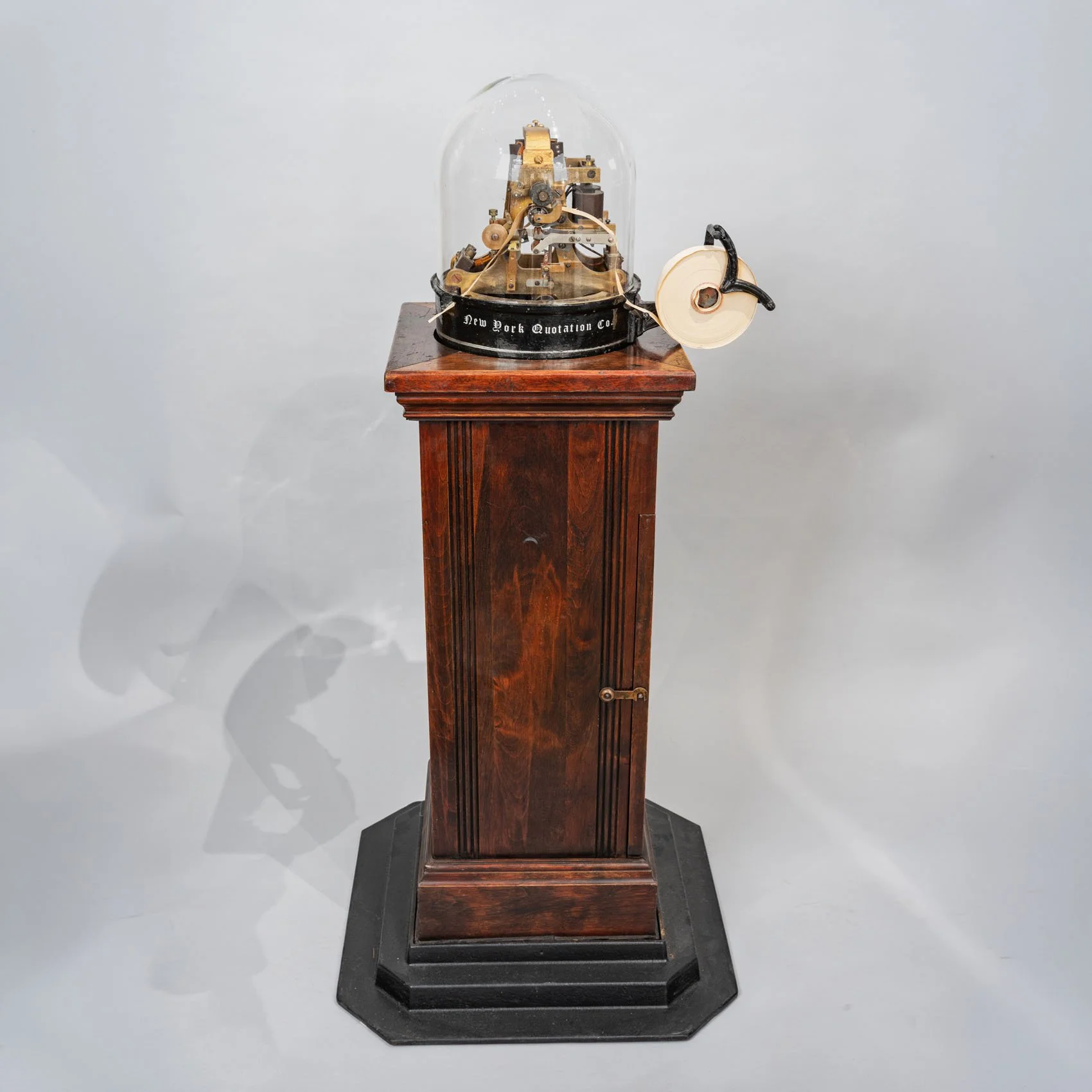 Image 1 of 4
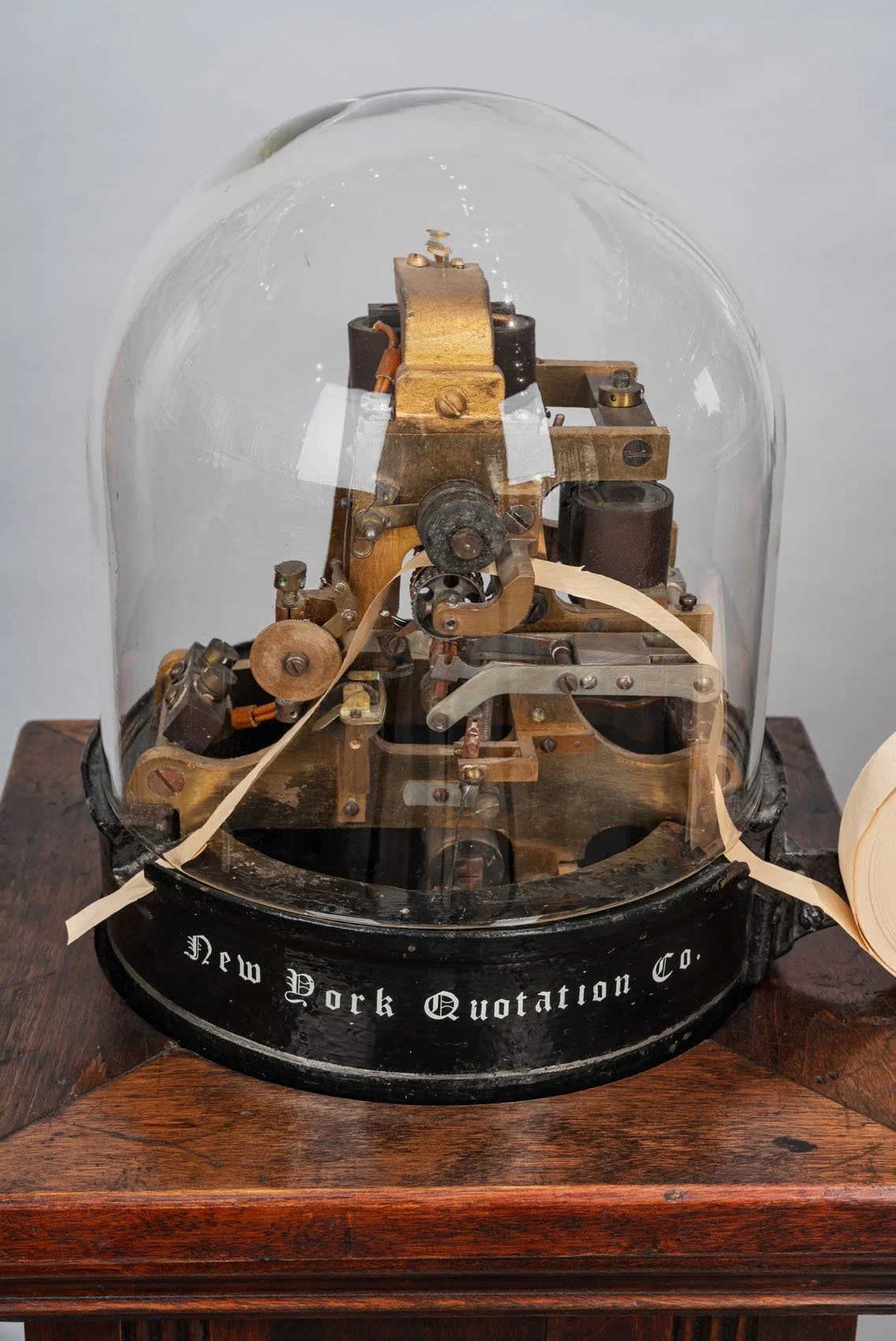 Image 2 of 4
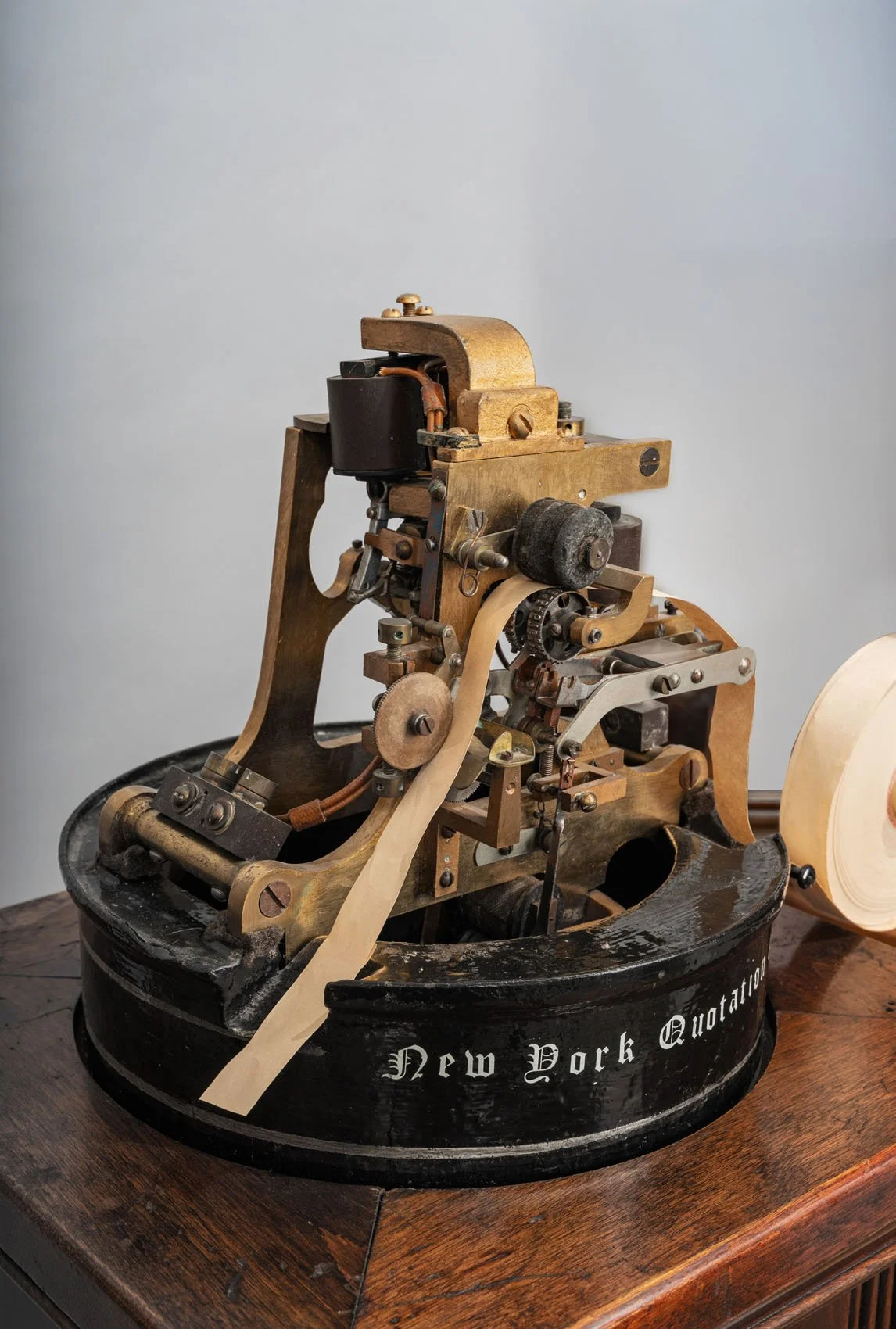 Image 3 of 4
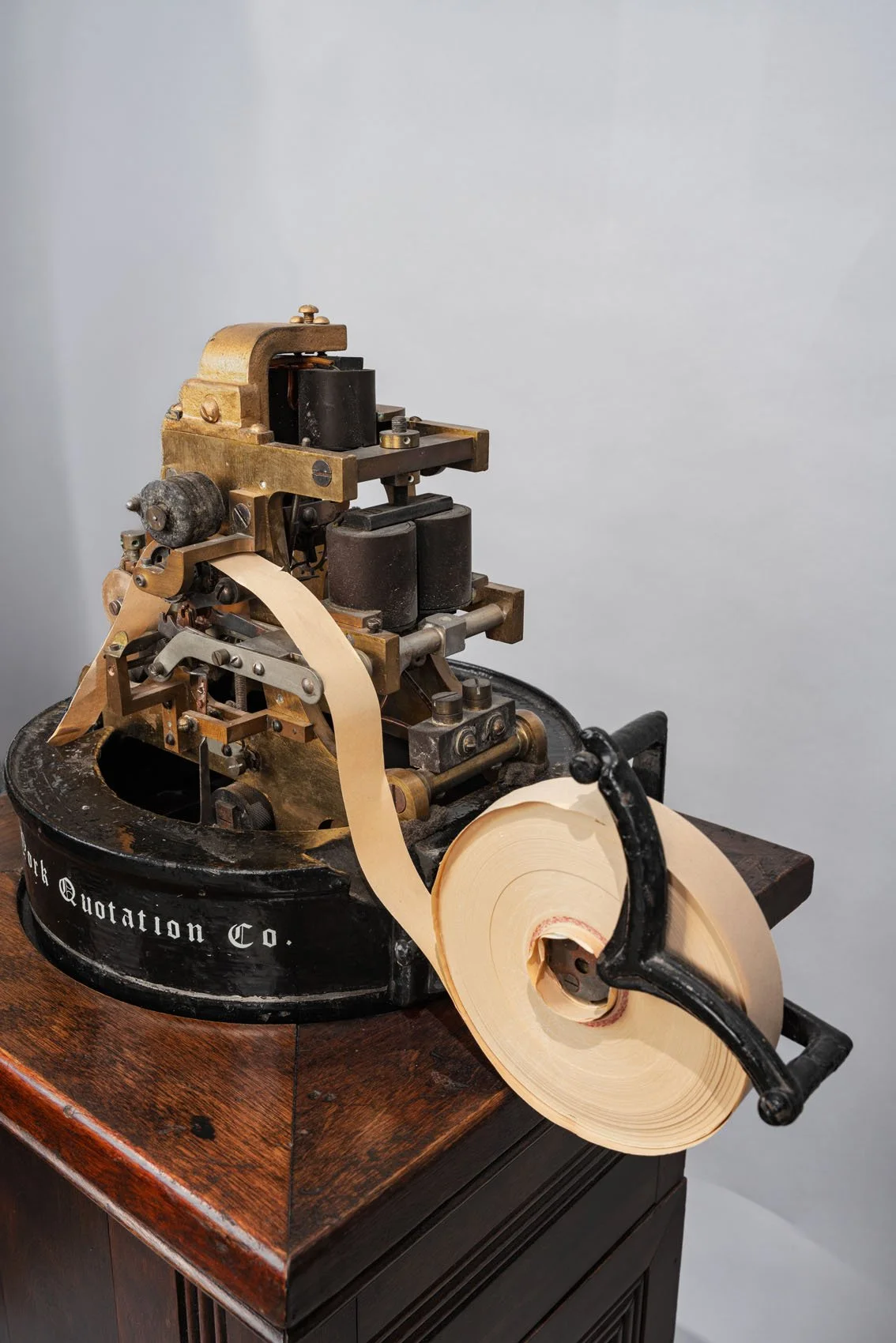 Image 4 of 4