Autograph letter signed (“W”), to Lord Beaverbrook,
House of Commons letterhead
Dated 13 December 1926
Dimensions: 187 x 118 mm
A highly engaging and characteristically witty autograph letter by Winston S. Churchill to his close friend and political ally Lord Beaverbrook, expressing delight at the gift of a newly installed refrigerator.
Written from the House of Commons on 13 December 1926, the letter captures Churchill in a moment of domestic enthusiasm, revealing both his humor and his appreciation for modern convenience. Referring to the recently installed Frigidaire, he writes:
“The Frigidaire laid beautiful ice eggs all yesterday. But even more important it reduces soda water & champagne to exactly the right level, & no dilution by ice of the latter is required.”
The passage is notable for its vivid phrasing—“ice eggs”—and for its unmistakably Churchillian focus on the refinement of drink. The letter humorously underscores how quickly this American luxury appliance found favor in elite British households, while also offering a rare glimpse into Churchill’s private life and habits.
Churchill continues with warm gratitude:
“Thank you once more for installing it. It is a most welcome gift.”
The tone reflects the deep personal and political relationship between Churchill and Beaverbrook (Max Aitken), one of the most powerful press magnates of the period and a key supporter of Churchill throughout his career. Their correspondence is among the most important political exchanges of early 20th-century Britain.
The letter also contains a political aside, referencing the young Robert Boothby:
“You will be glad to know that young Boothby… is coming to me as parliamentary private secretary.”
This brief note situates the letter within Churchill’s broader political network, adding further historical significance.
As was customary in his correspondence with Beaverbrook, Churchill signs simply and familiarly:
“W”
This letter exemplifies Churchill’s unique literary voice—combining humor, precision, and personality—and stands apart from more formal wartime correspondence. It offers collectors a rare opportunity to acquire a document that is both historically grounded and richly human.
Provenance:
Sotheby’s, 5 July 1977, sale of Churchill letters to Beaverbrook, lot 163
Literature:
Martin Gilbert, Winston S. Churchill, Volume V, Companion Part 1 (1979), p. 894
Autograph letter signed (“W”), to Lord Beaverbrook,
House of Commons letterhead
Dated 13 December 1926
Dimensions: 187 x 118 mm
A highly engaging and characteristically witty autograph letter by Winston S. Churchill to his close friend and political ally Lord Beaverbrook, expressing delight at the gift of a newly installed refrigerator.
Written from the House of Commons on 13 December 1926, the letter captures Churchill in a moment of domestic enthusiasm, revealing both his humor and his appreciation for modern convenience. Referring to the recently installed Frigidaire, he writes:
“The Frigidaire laid beautiful ice eggs all yesterday. But even more important it reduces soda water & champagne to exactly the right level, & no dilution by ice of the latter is required.”
The passage is notable for its vivid phrasing—“ice eggs”—and for its unmistakably Churchillian focus on the refinement of drink. The letter humorously underscores how quickly this American luxury appliance found favor in elite British households, while also offering a rare glimpse into Churchill’s private life and habits.
Churchill continues with warm gratitude:
“Thank you once more for installing it. It is a most welcome gift.”
The tone reflects the deep personal and political relationship between Churchill and Beaverbrook (Max Aitken), one of the most powerful press magnates of the period and a key supporter of Churchill throughout his career. Their correspondence is among the most important political exchanges of early 20th-century Britain.
The letter also contains a political aside, referencing the young Robert Boothby:
“You will be glad to know that young Boothby… is coming to me as parliamentary private secretary.”
This brief note situates the letter within Churchill’s broader political network, adding further historical significance.
As was customary in his correspondence with Beaverbrook, Churchill signs simply and familiarly:
“W”
This letter exemplifies Churchill’s unique literary voice—combining humor, precision, and personality—and stands apart from more formal wartime correspondence. It offers collectors a rare opportunity to acquire a document that is both historically grounded and richly human.
Provenance:
Sotheby’s, 5 July 1977, sale of Churchill letters to Beaverbrook, lot 163
Literature:
Martin Gilbert, Winston S. Churchill, Volume V, Companion Part 1 (1979), p. 894

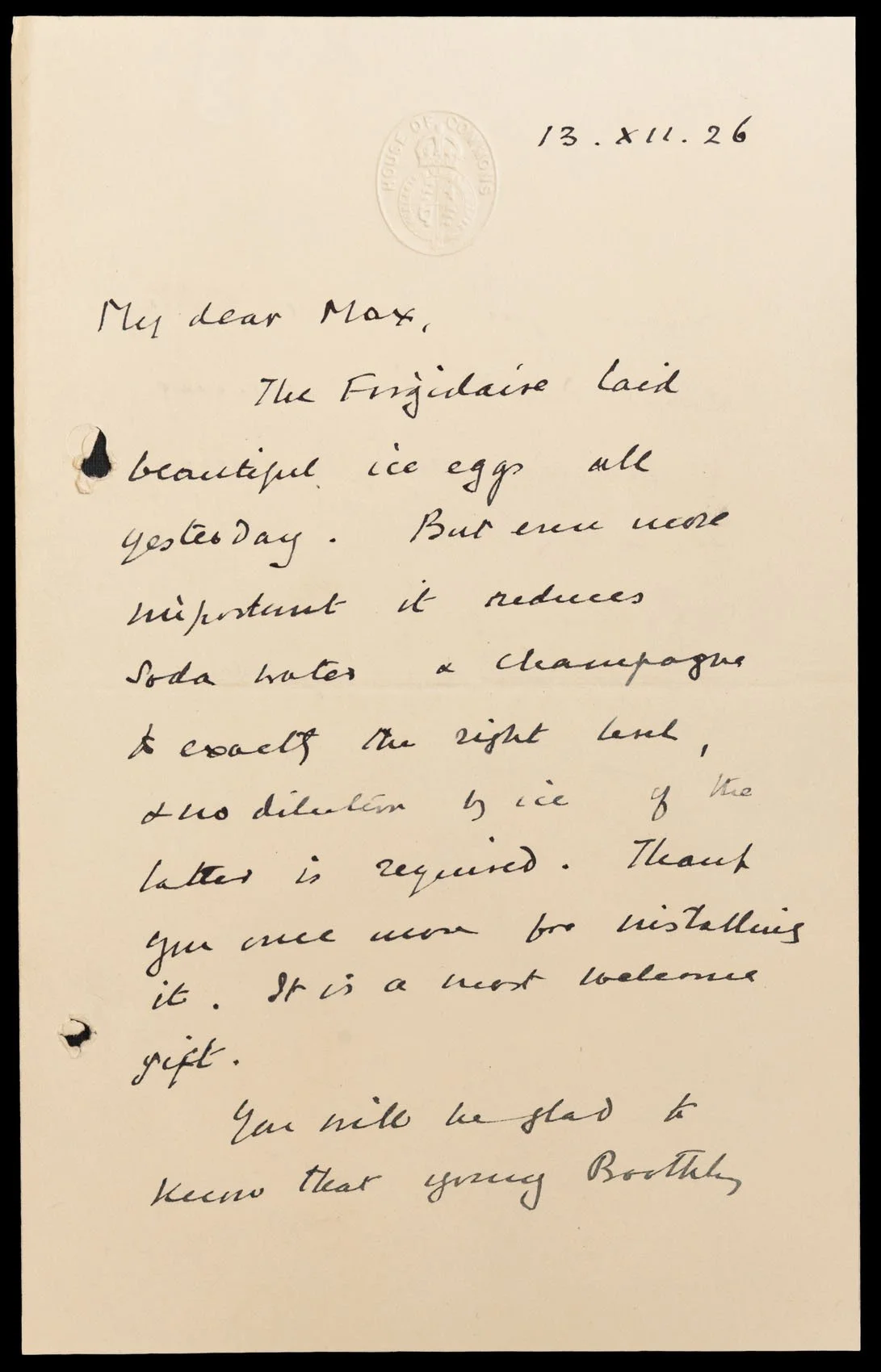 Image 1 of 2
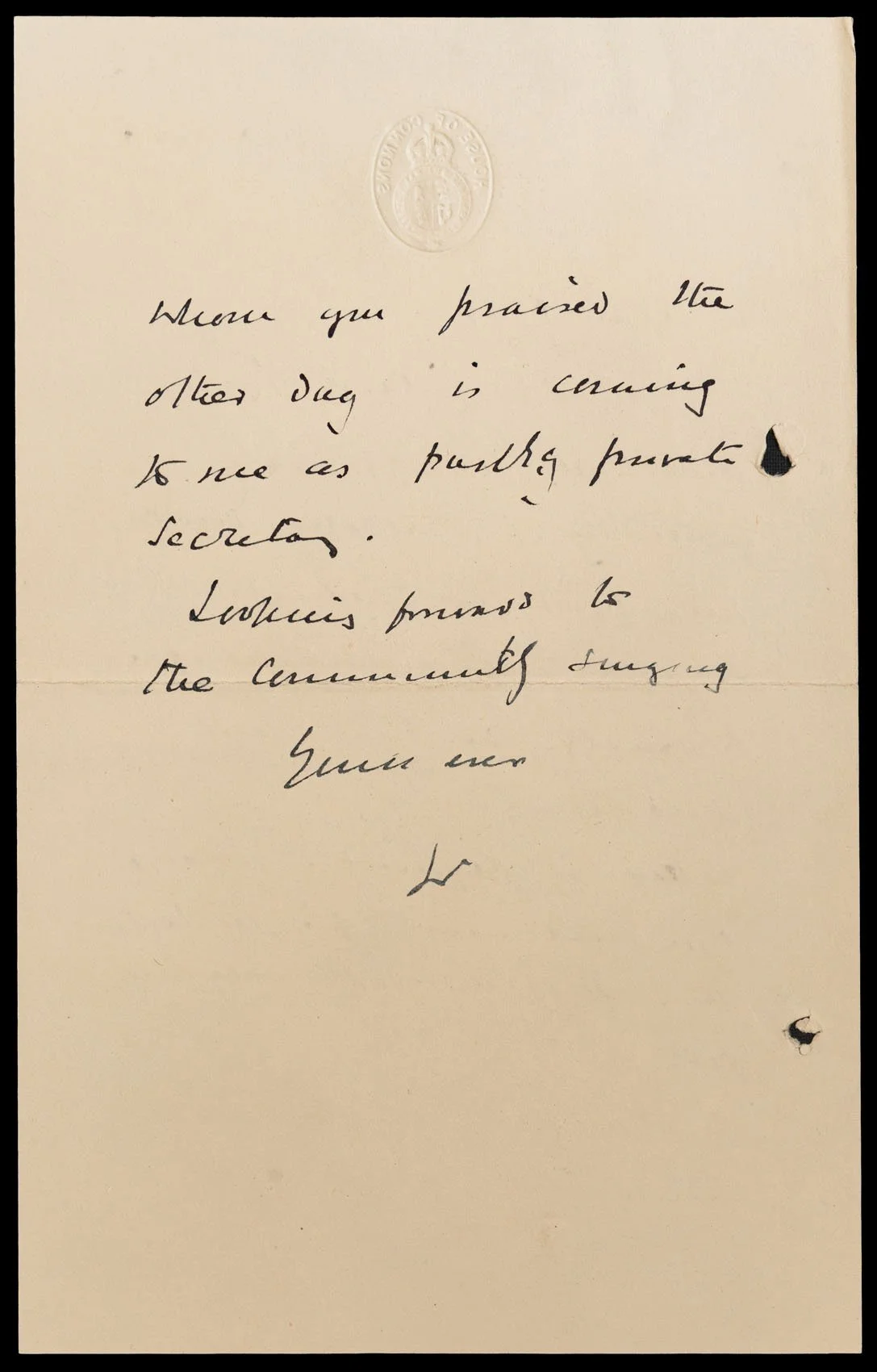 Image 2 of 2