AN EARLY UNIVERSAL STOCK TICKER BY Thomas Edison
GOLD & STOCK TELEGRAPH COMPANY, NEW YORK, CIRCA 1870s
A rare and historically significant early stock ticker, the cast iron base with original black japanned finish and gilt lettering inscribed “T.A. Edison, Maker, Newark N.J.” and “Gold & Stock Telegraph Co. No. 13”, supporting a finely engineered brass movement with dual ink rollers and clockwork-driven transmission mechanism, surmounted by a paper spool issuing the continuous printed tape of stock quotations. Mounted on a turned wooden base and preserved beneath a glass dome.
This example represents one of the earliest forms of the universal stock ticker developed by Thomas Edison in the late 1860s, a transformative innovation in financial communication that enabled near real-time transmission of stock prices across brokerage offices. Instruments of this type were employed primarily by the Gold & Stock Telegraph Company, whose network dominated the distribution of financial data in New York during the post-Civil War period.
Unlike later, more standardized “black box” tickers of the early 20th century, these early Edison machines were produced in relatively small numbers and were largely confined to Wall Street and major financial institutions. Their survival is consequently rare, particularly in such complete and visually compelling condition, retaining original surface decoration and clear inscriptions.
As both a technological milestone and an object of industrial design, the present ticker embodies the intersection of innovation and commerce in late 19th-century America, marking a pivotal moment in the evolution of global financial markets.
Literature
Edison Stock Ticker Patent No. 13, illustrating the early development of the universal stock ticker mechanism.
AN EARLY UNIVERSAL STOCK TICKER BY Thomas Edison
GOLD & STOCK TELEGRAPH COMPANY, NEW YORK, CIRCA 1870s
A rare and historically significant early stock ticker, the cast iron base with original black japanned finish and gilt lettering inscribed “T.A. Edison, Maker, Newark N.J.” and “Gold & Stock Telegraph Co. No. 13”, supporting a finely engineered brass movement with dual ink rollers and clockwork-driven transmission mechanism, surmounted by a paper spool issuing the continuous printed tape of stock quotations. Mounted on a turned wooden base and preserved beneath a glass dome.
This example represents one of the earliest forms of the universal stock ticker developed by Thomas Edison in the late 1860s, a transformative innovation in financial communication that enabled near real-time transmission of stock prices across brokerage offices. Instruments of this type were employed primarily by the Gold & Stock Telegraph Company, whose network dominated the distribution of financial data in New York during the post-Civil War period.
Unlike later, more standardized “black box” tickers of the early 20th century, these early Edison machines were produced in relatively small numbers and were largely confined to Wall Street and major financial institutions. Their survival is consequently rare, particularly in such complete and visually compelling condition, retaining original surface decoration and clear inscriptions.
As both a technological milestone and an object of industrial design, the present ticker embodies the intersection of innovation and commerce in late 19th-century America, marking a pivotal moment in the evolution of global financial markets.
Literature
Edison Stock Ticker Patent No. 13, illustrating the early development of the universal stock ticker mechanism.

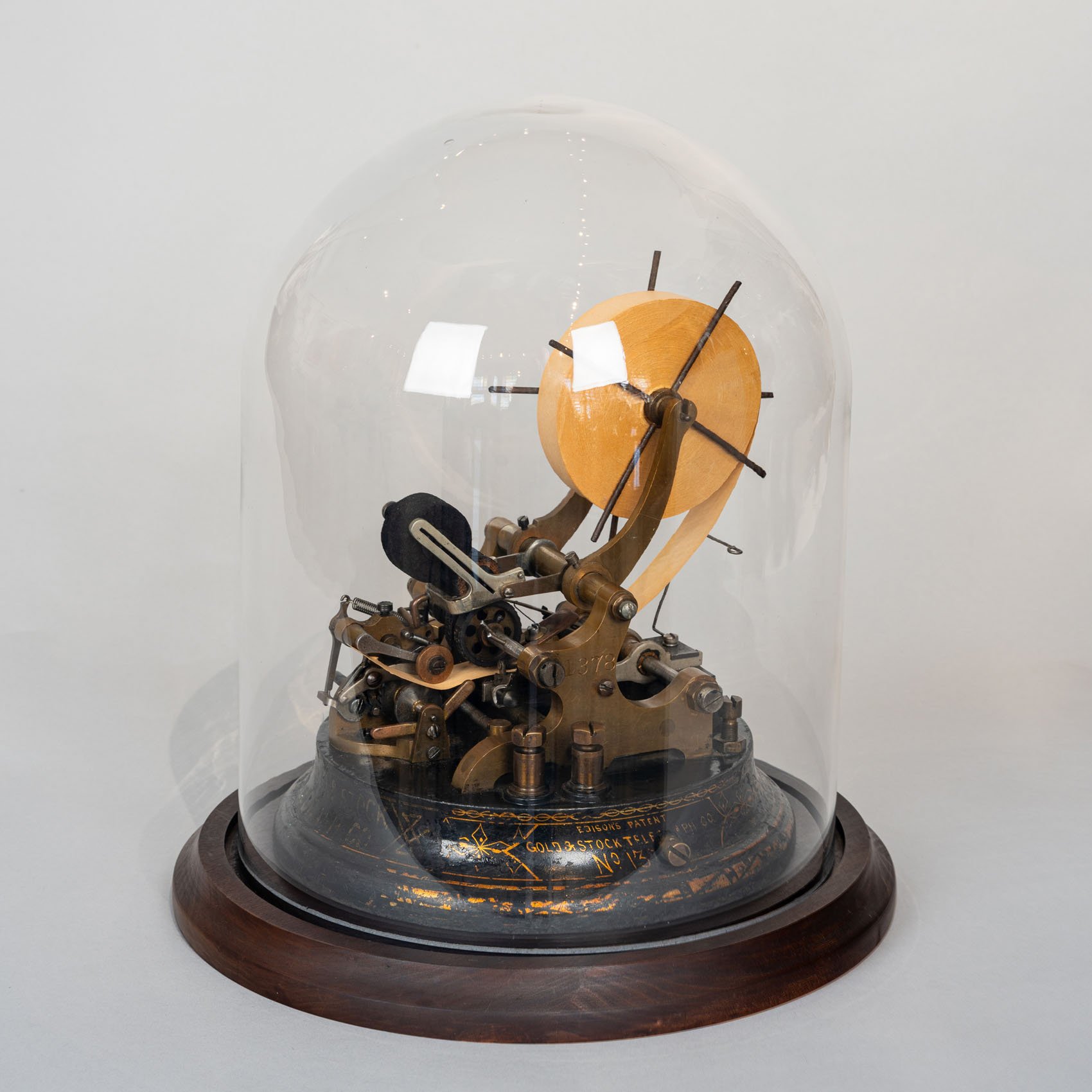 Image 1 of 4
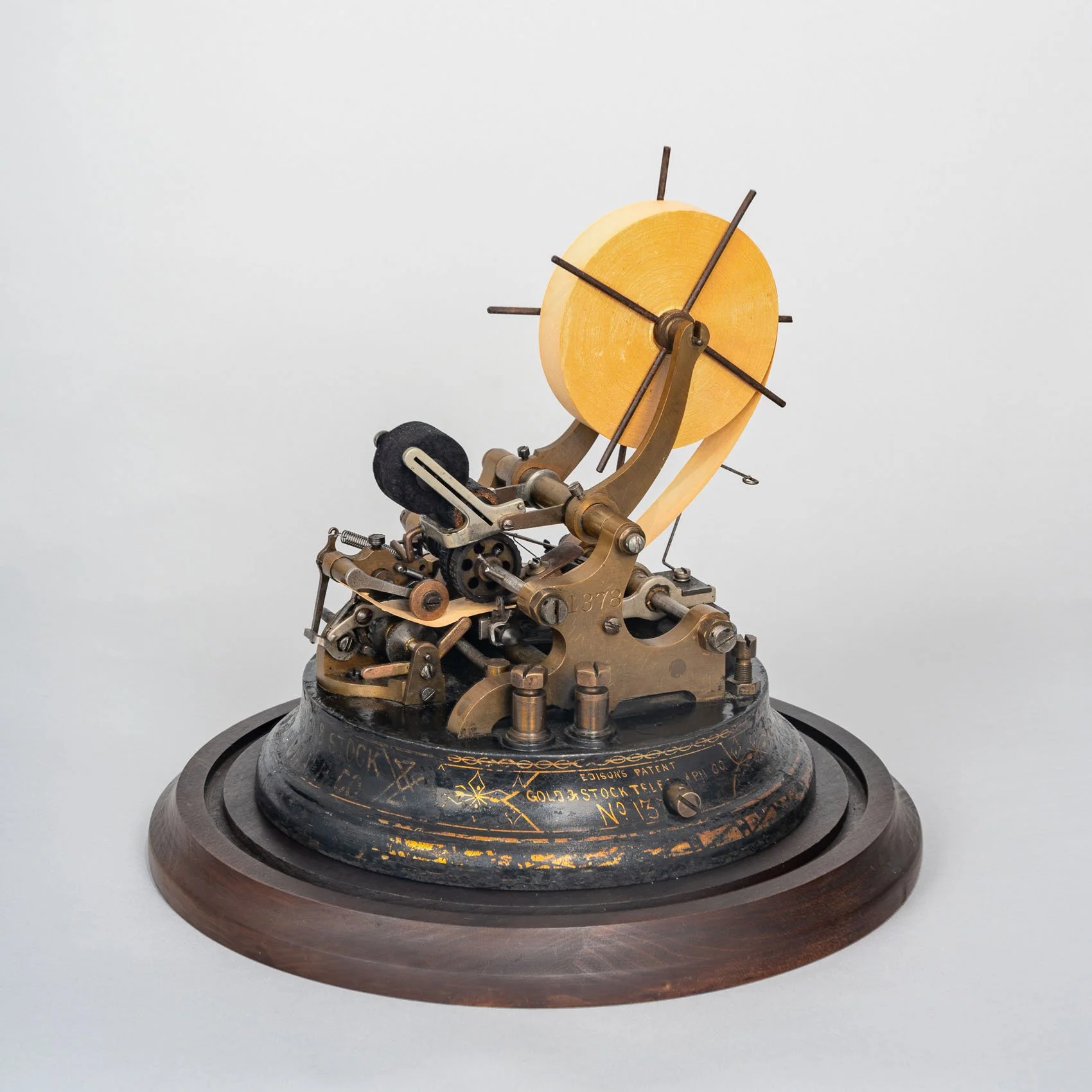 Image 2 of 4
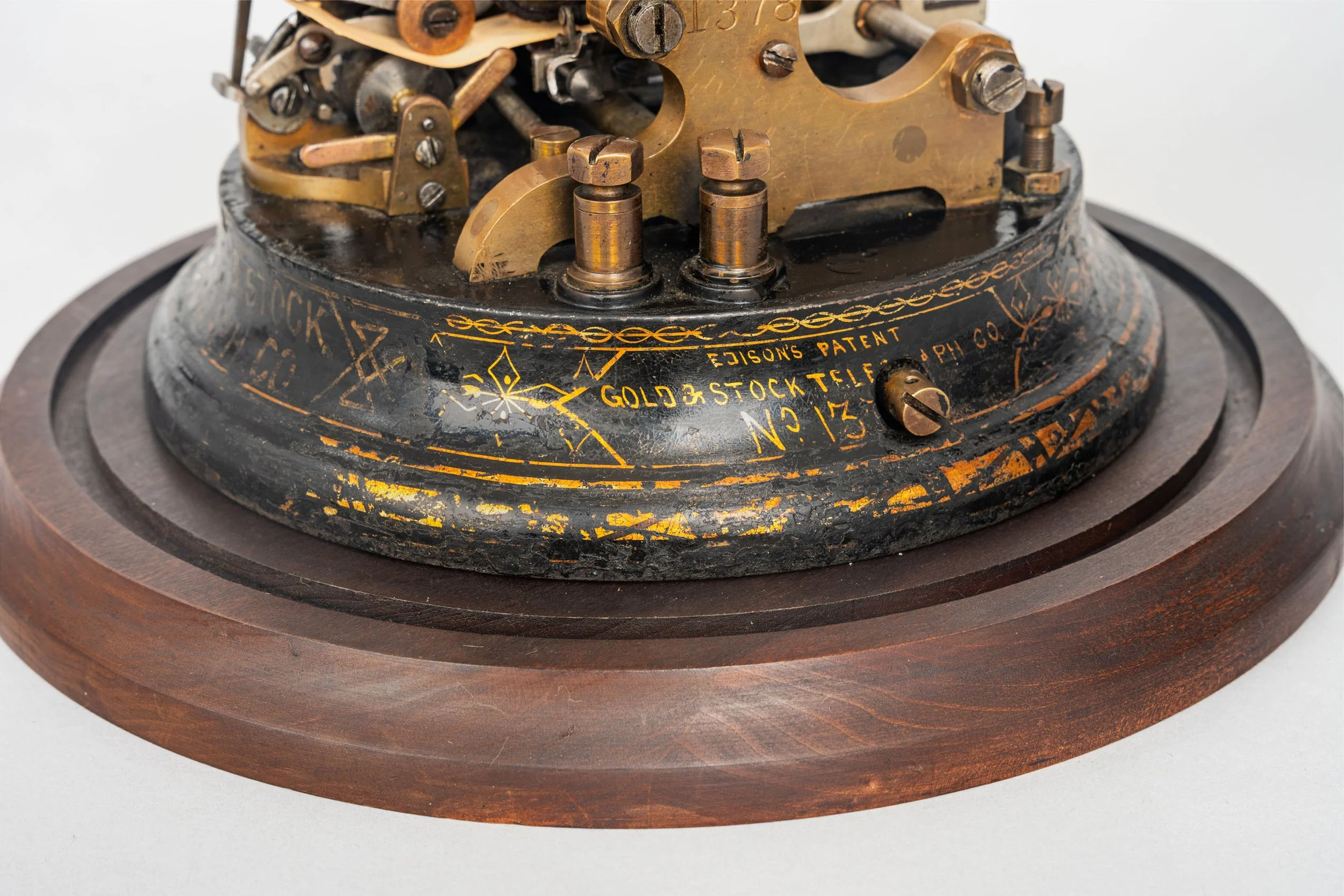 Image 3 of 4
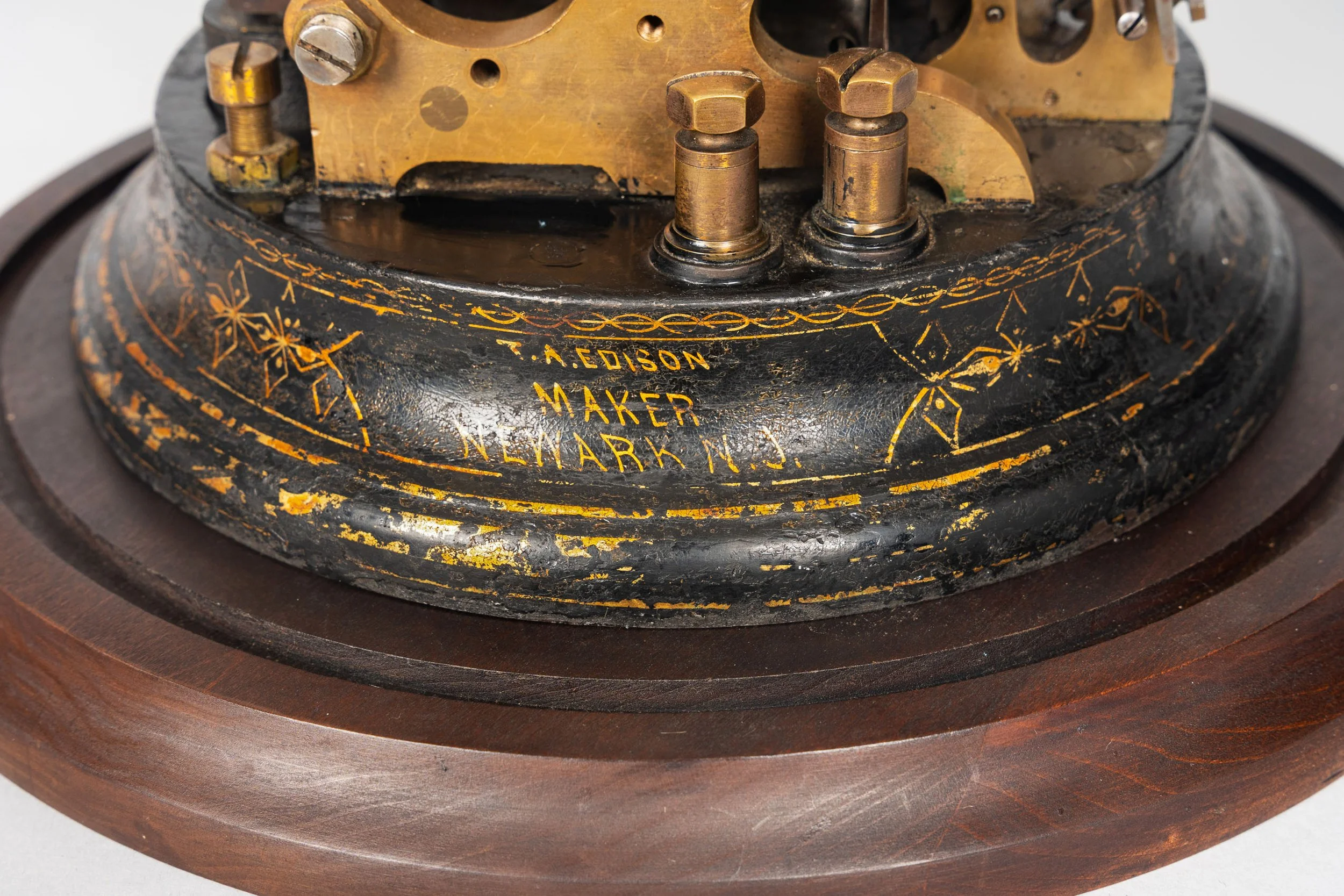 Image 4 of 4