New York Quotation Company, New York, circa 1890
A brass and steel electro-mechanical stock ticker, mounted on a japanned circular base inscribed New York Quotation Co., enclosed beneath a glass dome and retained on its original wooden pedestal with cast iron base, with external paper tape spool.
This instrument formed part of the centralized quotation system established by the New York Stock Exchange in 1890, when control of market data transmission was consolidated under the New York Quotation Company. Connected to a dedicated telegraph network, it received electrical impulses representing stock prices and translated them into printed abbreviations on a continuous paper tape, providing near real-time market information.
Unlike the widely distributed tickers of the Western Union Telegraph Company, the New York Quotation Stock Tickers were confined to Wall Street offices, reflecting the Exchange’s control over the dissemination of financial data.
The mechanism illustrates late 19th-century electromechanical engineering, integrating telegraphic transmission with synchronized printing components. The survival of the original pedestal and cast-iron base is notable, as such elements were integral to daily use but are seldom preserved.
The establishment of the New York Quotation Company marked a decisive shift toward centralized and standardized market reporting. A comparable example is exhibited at the New York Stock Exchange, underscoring the model’s direct association with the Exchange.
A rare surviving example, representing the consolidation of financial communications and the emergence of continuous, systematized market data in the modern era.
New York Quotation Company, New York, circa 1890
A brass and steel electro-mechanical stock ticker, mounted on a japanned circular base inscribed New York Quotation Co., enclosed beneath a glass dome and retained on its original wooden pedestal with cast iron base, with external paper tape spool.
This instrument formed part of the centralized quotation system established by the New York Stock Exchange in 1890, when control of market data transmission was consolidated under the New York Quotation Company. Connected to a dedicated telegraph network, it received electrical impulses representing stock prices and translated them into printed abbreviations on a continuous paper tape, providing near real-time market information.
Unlike the widely distributed tickers of the Western Union Telegraph Company, the New York Quotation Stock Tickers were confined to Wall Street offices, reflecting the Exchange’s control over the dissemination of financial data.
The mechanism illustrates late 19th-century electromechanical engineering, integrating telegraphic transmission with synchronized printing components. The survival of the original pedestal and cast-iron base is notable, as such elements were integral to daily use but are seldom preserved.
The establishment of the New York Quotation Company marked a decisive shift toward centralized and standardized market reporting. A comparable example is exhibited at the New York Stock Exchange, underscoring the model’s direct association with the Exchange.
A rare surviving example, representing the consolidation of financial communications and the emergence of continuous, systematized market data in the modern era.

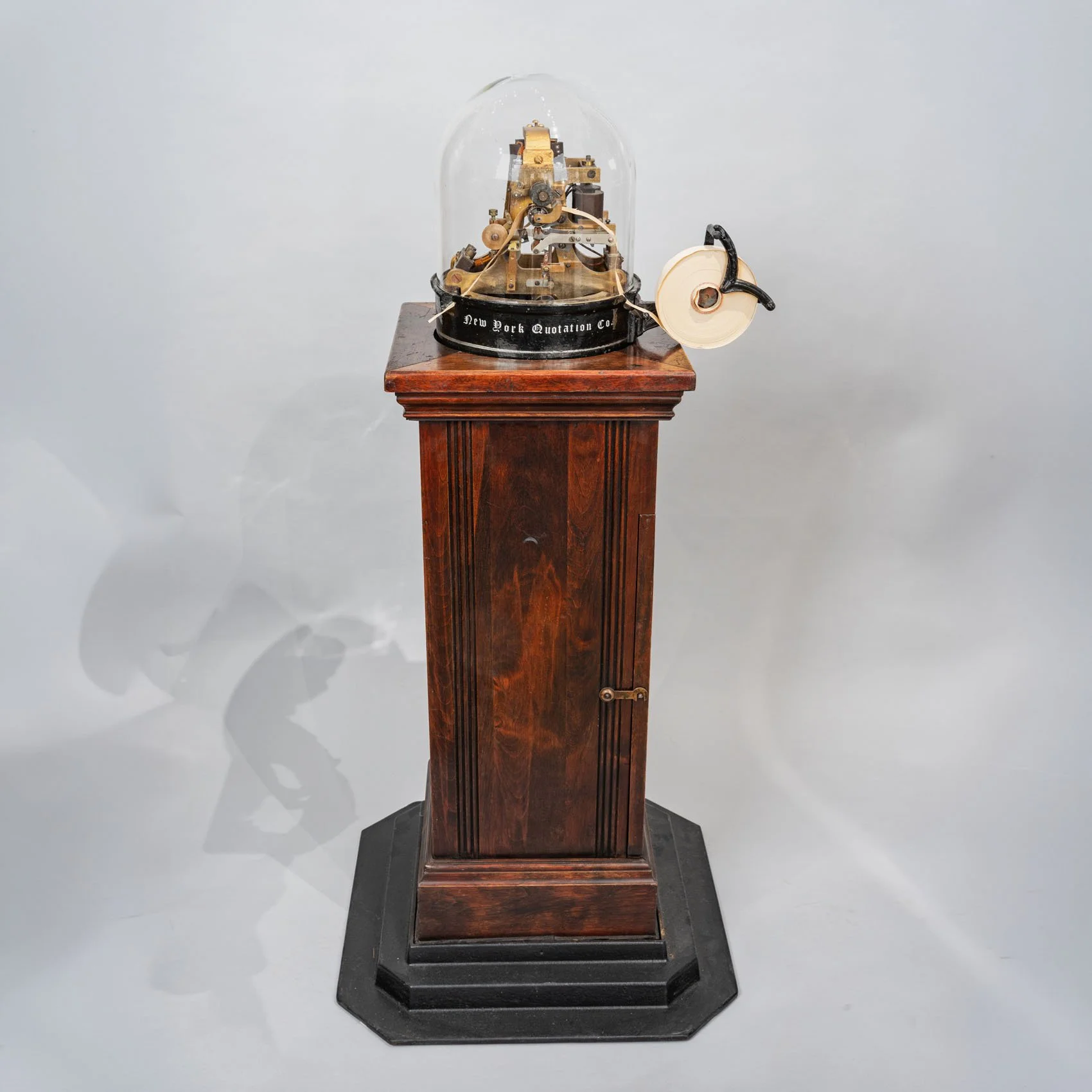 Image 1 of 4
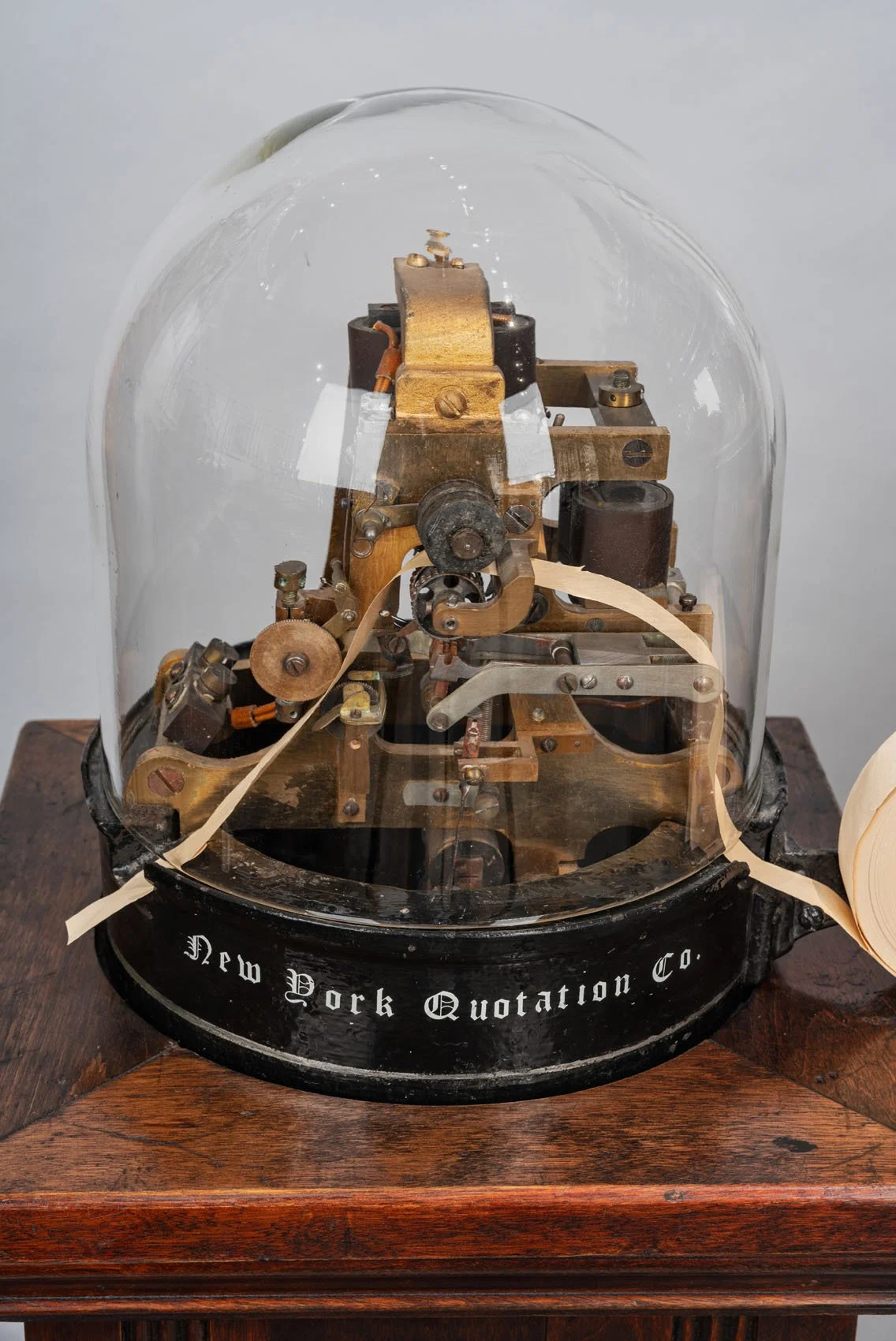 Image 2 of 4
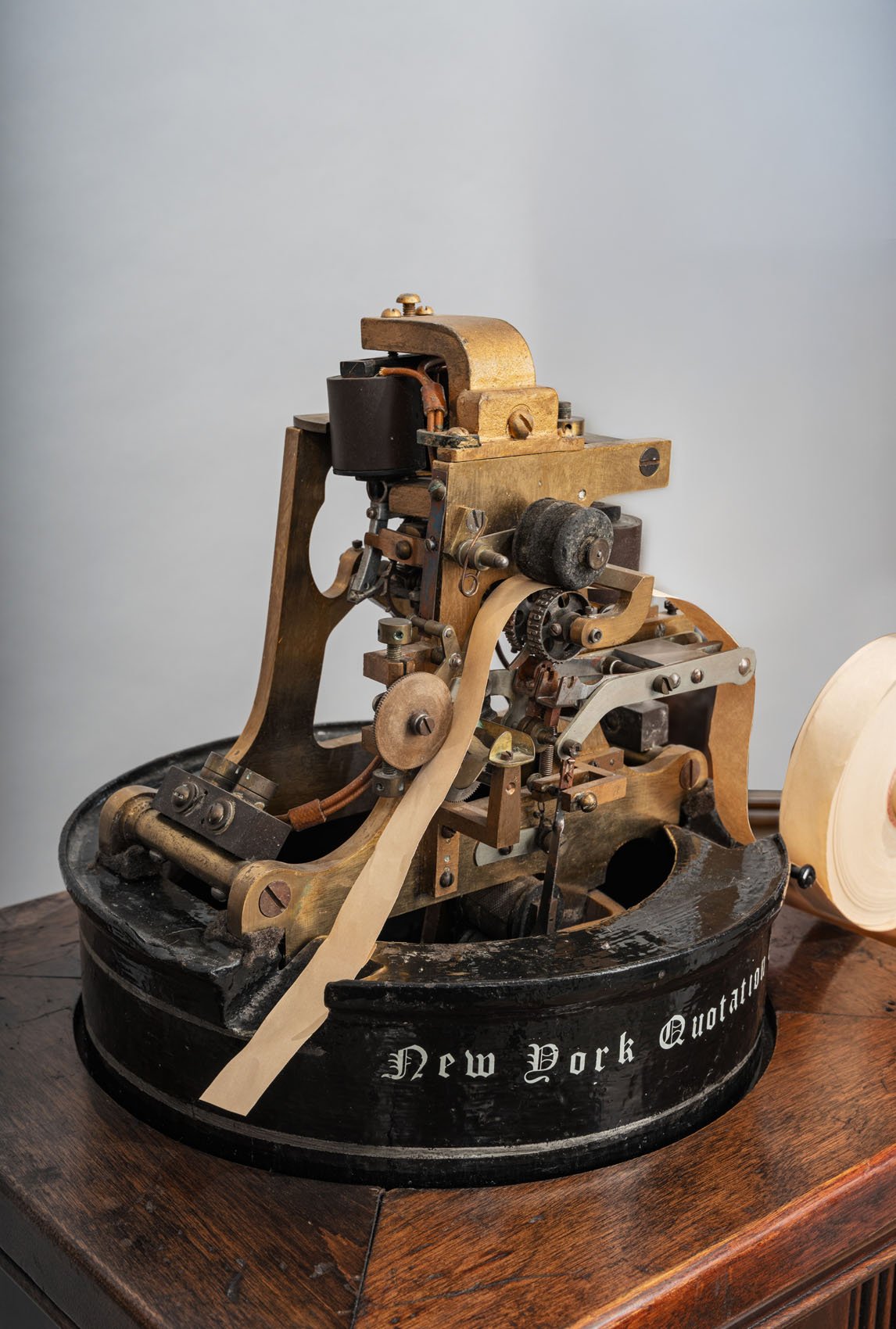 Image 3 of 4
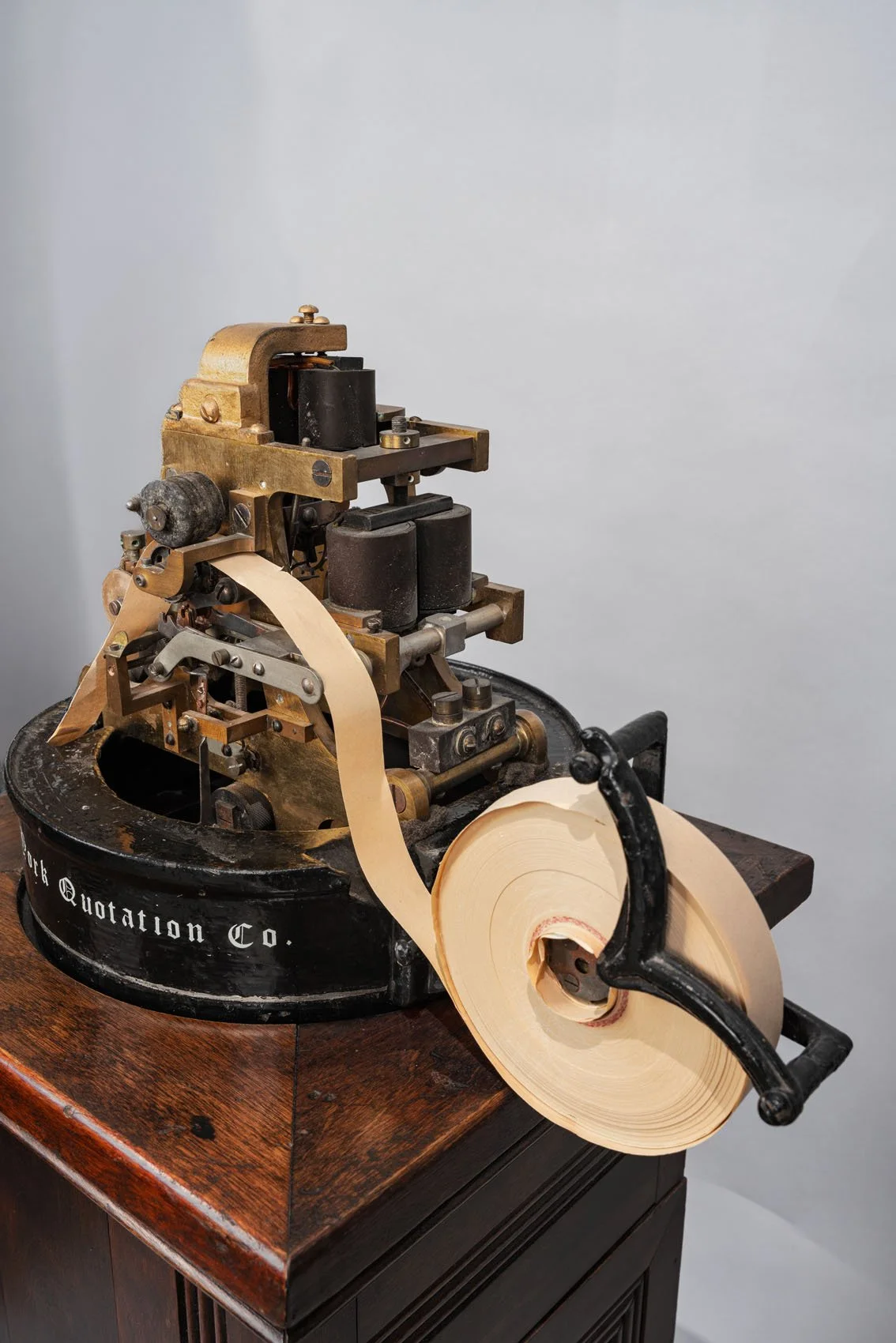 Image 4 of 4